A soldier, an enemy, a moment of hesitation: That’s the extent of the plot in «La guerra di Piero,» and that is precisely where its power lies. Fabrizio De André, the singer-songwriter from Genoa, recorded the anti-war song in Rome in July 1964; it was released as a single that same year on the Karim label. The title translates to „Piero’s War,“ and the song tells, in 13 verses, the story of the death of a young man who refuses to shoot.
When it was first released, the record hardly sold at all. It wasn’t until the protest movement of 1968 that «La guerra di Piero» became what it is today: one of De André’s best-known songs, featured in many school textbooks.
«La guerra di Piero» by Fabrizio De André: Facts and Figures
A single, two studio versions, a famous concert: the key facts about De André's anti-war song.
| Feature | Information |
|---|---|
| Performer | Fabrizio De André |
| Lyrics and Music | Fabrizio De André, music in collaboration with Vittorio Centanaro |
| Arrangement | Vittorio Centanaro (1964), Gian Piero Reverberi (1968) |
| Single | Karim KN 194, paired with «La ballata dell’eroe» |
| Album | «Tutto Fabrizio De André» (1966), re-recorded for «Volume III» (1968) |
| Literary Models | Arthur Rimbaud, Italo Calvino |
As of October 2026 · Information based on Wikipedia and antiwarsongs.org.
How did *La guerra di Piero* come about?
Fabrizio De André was born on February 18, 1940, in the Pegli district of Genoa and, along with Gino Paoli, Luigi Tenco, and Bruno Lauzi, was part of the so-called Genoese School, which revitalized Italian songwriting in the 1960s. His great role model was the French chansonnier Georges Brassens. De André had already sung about the war in 1961, in «La ballata dell’eroe,» the ballad of the fallen hero.
For *La guerra di Piero*, he drew on a story from his own family. Francesco Amerio, his mother’s brother, had fought throughout the entire campaign in Albania during World War II and returned from a camp. His stories and his subsequent life without a stable foundation had a profound impact on his nephew.
It was recorded in Rome in July 1964. De André played guitar; the second guitar and the arrangement were handled by Vittorio Centanaro (1929–2011), a classically trained guitarist from his circle of friends in Genoa, while Werther Pierazzuoli played bass. The single was released in 1964 on the Karim label as catalog number KN 194, with «La ballata dell’eroe» on the B-side. In the first pressing, “Piero” was actually only on the B-side; it wasn’t until later pressings that it became the A-side.
At first, the song wasn’t a hit. De André himself told the Genoa newspaper *Corriere Mercantile* in 1968 that the record had practically not sold at all and had only become popular with the wave of protest surrounding Bob Dylan and Donovan. In 1966, the track appeared on *Tutto Fabrizio De André*, his first album; in 1968, he re-recorded the song for *Volume III*, this time with Gian Piero Reverberi as the arranger.
What is «La guerra di Piero» about?
«La guerra di Piero» tells the story of the death of an ordinary soldier who spares an enemy and is shot for it. The song does not refer to any specific war, but to war itself, and it does not depict it from a bird's-eye view, but from the perspective of an individual.
Two voices share the lyrics: a narrator addressing Piero, and Piero himself. Starting in 1968, it was sung by left-wing students as well as Catholic groups; later, it found its way into elementary school reading books. De André liked to joke about this, saying that this way, children would learn to hate the song from an early age.
The Lyrics, Verse by Verse
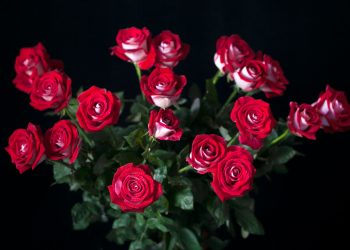
You can find the full lyrics on Spotify and Apple Music; here, we're focusing on the images. The song begins at the end: Piero lies buried in a grain field, surrounded by red flowers, the poppies, the poppy. The narrator hopes that in the future, the river will carry only fish and no more dead soldiers. De André found this image in the work of Italo Calvino, the writer who penned the lyrics to the anti-war song «Dove vola l’avvoltoio?» in 1958.
Then the story jumps back in time. Piero marches toward the front, tired and sullen, and spots a man down in the valley who is just as bad-tempered as he is. Only the uniform is a different color. Piero hesitates because he sees him not as an enemy, but as a fellow human being. The other man doesn’t hesitate.
As he lies dying, Piero thinks of his beloved Ninetta and of how much courage it takes to die in May, when everything is in bloom. At the end, De André repeats the first verse word for word. The circle is complete. Critics have heard an echo in this quiet grave of Arthur Rimbaud, the French poet whose 1870 poem «Le dormeur du val» depicts a dead soldier in the grass.
A large part of the melody was composed by Vittorio Centanaro. However, he did not register as the composer because he was not a member of SIAE, the Italian copyright collective. De André had repeatedly urged him to join. Centanaro later said that otherwise he would have profited from the song’s success himself.
What does «La guerra di Piero» sound like?
The first recording, from 1964, features just two acoustic guitars and a bass. Centanaro’s classically trained guitar playing gives the song the feel of an old ballad. The verses consist of four-line stanzas with paired or cross rhymes, and the rhythm remains steady, like a marching step.
The second studio version from 1968 is a bit faster. Later live versions, particularly those by the progressive rock band PFM (Premiata Forneria Marconi), feature a full band lineup.
«La guerra di Piero» on video
At the very top of this post, you can hear the 1968 studio recording from the album «Volume III.» Below that, you can see De André performing with PFM at the concert on January 3, 1979, in Genoa. In 2020, director Walter Veltroni used footage shot in Pavilion C of the Fiera di Genova—the seaside exhibition grounds—to create the documentary *Il concerto ritrovato* (The Rediscovered Concert).
Available for listening on streaming services:
Listen to the first version from 1964 first
Check out the 1964 recording on the album *Tutto Fabrizio De André*. It’s slower than the better-known version above, and the two guitars sound as if De André and Centanaro were sitting right there in the room with you.
After that, it’s worth jumping ahead to the 1979 concert with PFM. Fifteen years have passed since then, and what was once a quiet ballad has become a song for the big stage. For us, this comparison best illustrates how the song has grown alongside its audience.
Who covered «La guerra di Piero»?
In 1979, actress and singer Milly, a star of Italian revue, performed the song on RAI television to mark April 25, Liberation Day. In 2003, the Calabrian band Il Parto delle Nuvole Pesanti recorded it for a tribute album named after a line from the song.
In 2005, the Modena City Ramblers, the folk band from Emilia, recorded the song together with Piero Pelù, the lead singer of the Florentine rock band Litfiba, for their album *Appunti partigiani*. In 2008, PFM revisited the song—which they had performed on stage with him three decades earlier—for their album *PFM canta De André*.

Genoa: Birthplace of the Song and Setting of 1979
Without Genoa, «La guerra di Piero» wouldn’t exist. De André grew up in the Ligurian port city; it was here that he found the friends with whom he made music, and it was here that he performed the song on January 3, 1979, in front of a home crowd with PFM. He immortalized the alleys of the old town in «Via del Campo» celebrated in one of his best-known songs about people on the margins of society.
What you'll find in the carruggi, the narrow streets of the Old Town, the Porto Antico, and everything you need to know before your trip can be found in our Genoa travel guide.

Genoa City Guide
Genoa: The Proud Heart of the Italian Riviera With a population of around 560,000, Genoa, the capital of Liguria, is the vibrant heart of northwestern Italy. Geographically, the city impresses with its prominent location on...
Conclusion: a quiet song against the loud war
«La guerra di Piero» doesn’t need a single slogan to speak out against war, and that’s exactly why Italians have been singing it for over sixty years. If you like De Andrés’s narrative style, listen to this next «The Fisherman», his ballad about a fisherman and a fugitive, or «Generale» by Francesco De Gregori, the Roman singer-songwriter, which also tells the story of ordinary soldiers at war. You can find all the song profiles in our overview of the Italian music.
FAQ: Frequently Asked Questions About «La guerra di Piero»
Sources and Further Information
- Wikipedia (Italian): La guerra di Piero (accessed in October 2026)
- Wikipedia (Italian): La guerra di Piero/La ballata dell’eroe (Single) (accessed in October 2026)
- Wikipedia (en.): La guerra di Piero (accessed in October 2026)
- Songs Against War: Piero's War (accessed in October 2026)
- Wikipedia (Italian): Fabrizio De André and PFM, The Rediscovered Concert (accessed in October 2026)
- Wikipedia (Italian): Fabrizio De André (accessed in October 2026)