A narrow alley in Genoa’s Old Town, barely any light, clotheslines hanging overhead—and right in the middle of it all, the people whom high society would rather ignore. That’s exactly where «Via del Campo,» one of Fabrizio De André’s early masterpieces from 1967, takes you. The song turns a real street into a metaphor: that beauty and dignity emerge precisely where you least expect them. Here you’ll learn how «Via del Campo» came to be, what the lyrics are about, and why a single closing line has become a proverb that’s still on everyone’s lips in Italy today.
«Via del Campo» – Profile
- Artist: Fabrizio De André
- Published: 1967 (A-side of the single «Via del Campo» / «Bocca di rosa,» later included on the album «Volume 1°»)
- Lyrics/Music: Lyrics by Fabrizio De André, music by Enzo Jannacci (based on «La mia morosa la va alla fonte»), arrangement by Gian Piero Reverberi
- Genre: Cantautore / Italian folk
- Special features: Named after a real alley in Genoa's Old Town; today, the «Via del Campo 29 rosso» museum there commemorates De André
The Story Behind the Song
When Fabrizio De André wrote «Via del Campo,» he was 27 years old and still far from being the legend that the Genoese cantautore is celebrated as today. The title isn’t made up: Via del Campo is a real alley in the Carruggi, the winding historic center of Genoa. In the 1960s, it was a place for the common people—prostitutes, day laborers, and outcasts. It was precisely this world that De André, who himself came from a well-to-do family, made the focus of his life’s work.
«Via del Campo» was released in 1967 as the A-side of a single—with «Bocca di rosa» on the B-side—and was included on the album «Volume 1°» that same year.
A Borrowed Melody: The Story of Enzo Jannacci
The music of «Via del Campo» has its own, almost novel-like backstory. The melody was composed by Enzo Jannacci, who had used it in the mid-1960s for a play titled «La mia morosa la va alla fonte.» At the time, Jannacci claimed the tune was very old—supposedly an anonymous melody from centuries past. The young De André was so enthusiastic that he adopted it shortly thereafter for «Via del Campo.».
Later, the matter was cleared up: The melody was by no means centuries old, but rather Jannacci’s own creation. De André acknowledged this and officially credited his colleague with the authorship of the music—to this day, Jannacci is listed as the composer. The arrangement for the recording was done by Gian Piero Reverberi.
What is «Via del Campo» about?
In «Via del Campo,» De André guides you through the alley like a storyteller, introducing you to its residents one by one. There’s a graceful woman with big eyes whom everyone stares at; there’s a delicate girl with a gaze as gray as the pavement; and there’s—named quite openly—a prostitute. In between, a dreamer appears, a man in love who believes he can marry this woman, and who is shattered by the reality of the street.
What sets it apart is the tone: De André does not pass judgment. He portrays people on the margins with an almost tender dignity, while quietly exposing the hypocrisy of a society that looks down on them. This perspective on the «least among us» becomes the central theme of his entire body of work.
Lyrics & Meaning
The text was written by Fabrizio De André and is protected by copyright; therefore, we will not reproduce it line by line here, but will instead explain the most important images and their meanings.
The Opening (The Beautiful Stranger). Right at the start, a graceful woman walks down Via del Campo, and everyone in the alley follows her with their eyes. She bestows the same fleeting spell on everyone—desired yet unattainable.
The Second Figure (Innocence and Harshness). Then a young girl enters the frame, with delicate features and eyes as gray as the street itself. In this image, vulnerability and the harshness of life lie side by side.
The striking scene (the illusion). This same woman is ultimately called by her real name: a prostitute whom one need only take by the hand. The dreamer in love, who wants to marry her, ends up with nothing but disappointment—his hope was an illusion from the very beginning.
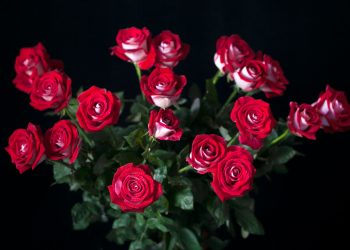
The End (the famous painting). The song concludes with perhaps De Andrés’s most famous line of all: the image that nothing living grows from precious diamonds, while flowers bloom from manure—from that which is lowly and despised. This encapsulates the song’s entire message: beauty, poetry, and true life do not arise from wealth and privilege, but precisely where society chooses to see only filth.
«Via del Campo» on video: Fabrizio De André live with PFM (1979)
This live recording of Fabrizio De André performing with the band Premiata Forneria Marconi (PFM), recorded on January 3, 1979, in Genoa—the city where the alley is actually located—shows just how powerful «Via del Campo» is on stage. Here, the quiet ballad from 1967 is transformed into a rich, atmospheric piece, carried by the audience’s admiration for one of their greatest poets.
Listen: Spotify · Apple Music
What Makes «Via del Campo» Special
- A Street Becomes a Legend – Thanks to the song, the real Via del Campo in Genoa has become a place of pilgrimage. Today, the «Via del Campo 29 rosso» museum, located in Gianni Tassio’s former record store, commemorates Fabrizio De André.
- The Borrowed Melody – The fair recognition of Enzo Jannacci as the original author is one of the most oft-told anecdotes in Italian music history.
- A Programmatic Beginning – With «Via del Campo,» De André became an advocate for the outcasts; the song foreshadows what would come to define his entire body of work.
- Interpreted in many ways – Enzo Jannacci recorded the song himself (2000, album *Faber, amico fragile*); in 2023, rappers Madame and Izi performed «Via del Campo» on stage at the Sanremo Festival.
- A line that has become a catchphrase – The image of flowers growing out of manure is still referenced in Italy today, far beyond the song itself.
This makes «Via del Campo» far more than just an early critical success from 1967—it is the seed of an entire philosophy that made Fabrizio De André the conscience of Italian music. If you want to delve deeper into his world, take a look at our profile of «Bocca di rosa» by Fabrizio De André or browse through our posts about Italian music.