A kiss, closed eyes and suddenly a thousand blue soap bubbles rise: «Le mille bolle blu» needs no more plot than that. Mina, the singer from Cremona who was 20 at the time, performed it at the 1961 Sanremo Festival and released it as an Italdisc single the same year. The title means “The thousand blue bubbles”, and that image carries the whole song.
It came only 5th in the contest, but «Le mille bolle blu» went straight to the top of Italians' memories. One small gesture in particular made the song unforgettable: on every long blu Mina placed a finger against her lips. More than sixty years later, it remains one of her best-known recordings.
«Le mille bolle blu» by Mina: facts and figures
A festival entry, two writers and an orchestra leader: the key facts about Mina's 1961 Sanremo song.
| Feature | Information |
|---|---|
| Performer | Mina, alternating with Jenny Luna at the festival |
| Lyrics and Music | Lyrics Vito Pallavicini, music Carlo Alberto Rossi |
| Arrangement | Tony De Vita and his orchestra |
| Single | Italdisc 1961, B-side «Che freddo» |
| Album | «Due note», 1961 |
| Festival | 11th Sanremo Festival in 1961, 5th place |
As of November 2026 · Information from Wikipedia, Sorrisi e Canzoni TV and il Resto del Carlino.
How did «Le mille bolle blu» come about?
Mina Mazzini was born on 25 March 1940 in Busto Arsizio, an industrial town in the province of Varese, and grew up in Cremona, the violin-making city on the Po. In 1960, she appeared on the Sanremo stage for the first time, at Italy's most important song contest. A year later, she returned with two songs: «Io amo, tu ami» and «Le mille bolle blu».
Vito Pallavicini, a lyricist from Vigevano in Lombardy, wrote the words; this was his first major success. The music was by Carlo Alberto Rossi, the pianist and composer from Rimini. Tony De Vita arranged the song and also accompanied Mina with his orchestra on the record.
At the time, each festival song had two versions. Mina shared «Le mille bolle blu» with singer Jenny Luna; Betty Curtis and Luciano Tajoli won with «Al di là». The song was considered a favourite but finished 5th, while «Io amo, tu ami» took 4th place. Mina was so disappointed that she never entered the Sanremo contest again.
The single was released by Italdisc in 1961, with «Che freddo» on the B-side. That song had been composed by Edoardo Vianello, the Roman singer who later defined summer with «Pinne, fucile ed occhiali» . «Le mille bolle blu» also appeared on Mina's album «Due note» and was successful in Spain and Sweden.
What is «Le mille bolle blu» about?
«Le mille bolle blu» expresses the feeling of a kiss through an image: close your eyes and see a thousand blue bubbles rising. It is not about fidelity, farewell or jealousy, but one happy moment that sweeps you off your feet.
That lightness made the song unusual in 1961. Many festival entries still told stories of grand love with grand gestures. Pallavicini, by contrast, writes about falling in love as though it were a dizzy spell, playfully and almost like a child, and Mina sings with a wink.
The Lyrics, Verse by Verse
You can find the full lyrics on Spotify and Apple Music; here we focus on their imagery. The first verse begins with a kiss and closed eyes. Instead of darkness, the singer sees countless blue bubbles rising around her.
The chorus quite literally revolves around this image. The bolle, the bubbles, fly around the singer and she feels rocked by them as if on a swing. The repetition of the word blu is more sound than meaning: Mina draws it out until it seems to float like a bubble itself.
In the second verse, the image becomes a dream. The singer dances above the clouds, harps sound inside her, and every new kiss brings new, almost wild images. In the end, the bubbles seem to call to her and drift higher on the wind until they disappear into the sky. The song ends not with a punchline, but with that floating sensation.
Vito Pallavicini, the lyricist behind the blue bubbles, later helped write some of Italy's best-known songs. He wrote the words for «Azzurro», composed by Paolo Conte for Adriano Celentano, and for «Nostalgia canaglia» by Al Bano and Romina Power.
Why did the song sound so modern in 1961?
The Sanremo audience was used to traditional melodies and did not immediately recognise the modernity of «Le mille bolle blu». The initial response was rather subdued; only later did it become one of Mina's signature songs. Her voice turned it into a symbol of the changing times.
Much of that was down to the way she sang. Mina plays with the word blu, stretching it out and making it vibrate as if she were blowing bubbles. She also put a finger to her lips and wore a white dress with pale blue dots. At the time, the gesture was seen as a cheeky jab at the polite festival audience. That image has endured far more strongly than the placing.
«Le mille bolle blu» in the video
At the top of this article is Mina's recording of «Le mille bolle blu» on her official YouTube channel. Below, you can hear the version by Lodovica Comello, the singer and actress from San Daniele del Friuli who became known through the Disney series «Violetta». She sang the song on the cover night of the 2017 Sanremo Festival, turning it into a modern pop song.
Available for listening on streaming services:
Listen closely to that one word
Play Mina's recording above first and listen only to the blu in the chorus. How long she holds it, how it trembles and lifts off again: that is the real hook.
Then switch to Lodovica Comello's version. She sings the same word briefly and crisply, with the rhythm carrying it instead. The direct comparison shows how much of the song lies not in the score but in Mina's voice alone.
Who has covered «Le mille bolle blu»?
Several rival recordings appeared as early as 1961, as was common then. Jenny Luna recorded her festival version for Juke Box, singer Germana Caroli made one for Durium, and in Germany the Jo Chapman Orchestra recorded the song for RCA. Dalida, the French singer of Italian heritage born in Cairo, and Argentine singer Violeta Rivas have also sung it.
The best-known recent version is by Lodovica Comello. In 2017, she said she would arrange the song as though it belonged to a modern pop artist. That brought it to a young audience who had never seen Mina on stage.
The title lived on beyond music, too. Advertisements for household goods, record collections and television programmes borrowed it, while Rai 1 broadcast a show called «Le mille bolle blu» from 1983 to 1984. In 1993, Leone Pompucci directed the film «Mille bolle blu», set during the summer of 1961 in an apartment building in Rome's Prati district. It won him the David di Donatello, Italy's leading film award, for best new director.

Sanremo: the stage of the blue bubbles
It all began in Sanremo, the flower city on the Ligurian Riviera near the French border. In 1961, the festival was still held in the Casinò di Sanremo, the white Art Nouveau building in the centre. A recording of Mina's performance there on 28 January 1961 survives today on a Rai DVD.
Today, the festival moves into the Teatro Ariston every February, and the whole city celebrates. If you want to explore the palm-lined promenade, the winding old town of La Pigna and the seaside gardens, our guide to Flower city Sanremocan help. You can find ticket information and an explanation of the contest in our article about the Sanremo Music Festival.
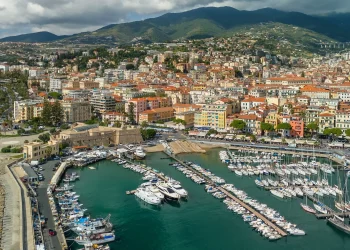
Flower city Sanremo: luxury, blossoms and dolce vita on the Riviera
Sanremo: A Blend of Glamour and Tradition—A Stroll Through the City of Flowers Sanremo, the sparkling jewel on the Ligurian coast, embodies the timeless charm of the Italian Riviera like no other place....
Conclusion: a kiss, a word, a classic
«Le mille bolle blu» lost at Sanremo in 1961 yet still won a place in Italian culture: Mina turned a playful love song into a performance people still imitate. To hear more of her voice, listen next to «Se telefonando» or her duet «Parole parole» with Alberto Lupo. You can find all our song profiles in our overview of Italian music.
FAQ: Frequently asked questions about «Le mille bolle blu»
Sources and Further Information
- Wikipedia (Italian): Le mille bolle blu/Che freddo (accessed November 2026)
- Wikipedia (English): Le mille bolle blu (accessed November 2026)
- Sorrisi e Canzoni TV: The songs that made Mina a star (accessed November 2026)
- Sorrisi e Canzoni TV: Lodovica Comello sings «Le mille bolle blu» (accessed November 2026)
- il Resto del Carlino: Carlo Alberto Rossi and Sanremo (accessed November 2026)
- Wikipedia (English): Mille bolle blu (film, 1993) (accessed November 2026)