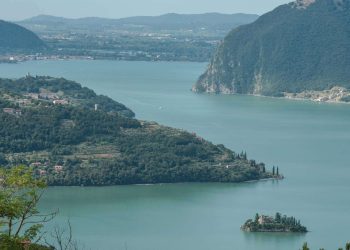

Stresa – Anyone standing at the dock and watching the boat sail into Isola Bella will immediately understand why this lake has been attracting visitors for two hundred years. Lake Maggiore is 212.5 square kilometers Italy's second-largest lake; it stretches over 66 kilometers from the Po Valley to Switzerland, and it is divided among three administrative regions: Piedmont in the west, Lombardy in the east, and the Canton of Ticino in the north.
That's exactly what makes him hard to pin down. The the most beautiful places on Lake Maggiore They aren’t strung out in a line like those on Lake Garda, but are spread across two shores, two countries, and three islands. This list organizes them into a loop: twelve towns, from Arona in the south through the Borromean Islands and the Swiss northern shore, all the way back to Angera. It also includes verified admission prices for the gardens and castles, boat fares, and an honest assessment of the lake’s shortcomings. You can find more about the region in the Lake Maggiore Travel Guide.
Lake Maggiore at a Glance
The lake lies 194 meters above sea level and stretches from Sesto Calende from the mouth of the Ticino River to Magadino in the canton of Ticino. Four-fifths of its water area lies within Italian territory, while one-fifth belongs to Switzerland. It is fed by the Ticino and the Toce—the river from the Ossola Valley—and flows back into the Ticino toward the Po.
As of September 2026 · Data from CIPAIS, the International Commission for the Protection of Italian-Swiss Waters.
- Garden lovers: nowhere else in Italy are there so many large gardens so close together
- Families with children: flat pebble beaches, a zoo, boats, and cable cars
- Travelers without a car: Trains, boats, and buses serve both banks
- For those who want to see two countries on one vacation
- Photographers in the spring, when camellias and azaleas are in bloom
- Beachgoers: The ground consists of gravel, grass, and a platform
- For those visiting in the winter: the major attractions close in early November
- Budget travelers on the Swiss side
- For anyone who wants to see it all in one weekend: the lake is 66 kilometers long
- Mountain hikers seeking peaks: this guide is all about lakeshores and mountains with scenic views
Here's how this list is sorted
This list is no ranking. First place is no better than twelfth place. The route follows the shore: first along the Piedmontese western shore from south to north, then across the northern tip of Switzerland, and back south along the Lombard eastern shore. This way, it can be viewed as a loop, and anyone who only has a week can simply cut it short at the bottom.
Any place that meets two conditions is included: It is accessible without a car, whether by boat, train, bus, or cable car, and it has something concrete to offer instead of just a pretty view. That's why the Hermitage of Saint Catherine of the Rock, the rock monastery on the eastern shore—a place that’s missing from most lists of the lake. And that’s why a few names that are usually included are missing here.
Which 12 places on Lake Maggiore are must-sees?
From south to north and back again: Arona, Stresa, the Borromean Islands, Verbania, Cannero Riviera, Cannobio, Ascona, Locarno, Luino, Laveno-Mombello, Santa Caterina del Sasso, and Angera. Each of these twelve places has something that sets it apart from the other eleven: a statue, a garden, a market, a ferry. And each has a side that doesn’t appear on postcards.
1. Arona – the Giant on the South Shore
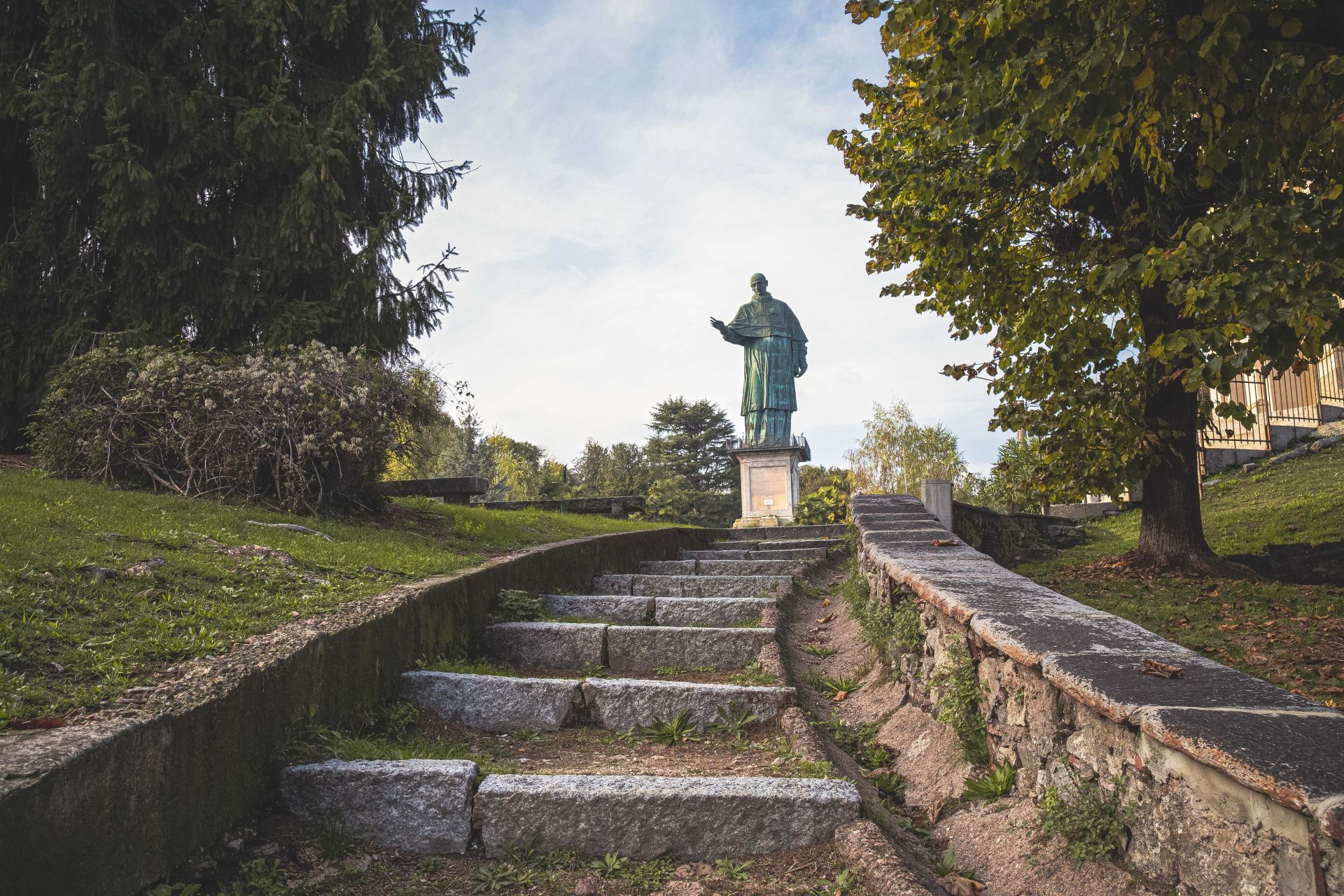
Arona is located where the lake is at its widest and the mountains recede. Most people just drive through because they want to continue on to Stresa. That's a mistake, because here stands the Colossus of San Carlo, the colossal statue of St. Charles Borromeo that visitors can walk through, known locally simply as Sancarlone called. Around 35 meters The monument is large, and you don’t just stand in front of it—you go right inside: You climb a spiral staircase and then a steep, secured ship’s ladder all the way up to the head. From the eyes, nostrils, and ears, you look out over the lake.
This isn't for everyone, and the operator says so too: Children under six aren't allowed up there, and anyone who feels uncomfortable in tight spaces is better off staying on the terrace. 10,00 € The climb to the interior of the statue costs, 7,00 € Only the terrace surrounded by the botanical garden. Tickets are available exclusively at the on-site ticket office. It is open from early March through early November, daily from 10 a.m. to 6:30 p.m. in July and August. However, access to the statue is closed between 1 p.m. and 2 p.m.
2. Stresa – The Belle Époque and the Pier Leading to the Islands
Stresa is where most people begin their vacation on Lake Maggiore, and there’s a practical reason for that: this is where the train from Milan stops, this is where the boats to the islands depart, and the two are less than a quarter of an hour apart. The lakeside promenade still features the grand hotels of the Belle Époque, in Grand Hôtel des Îles Borromées Ernest Hemingway lived there.
The second reason to spend a day in Stresa is the Pallavicino Parka 18 hectares A large landscape park above the town, managed by the Borromeo family since 2017. Llamas, alpacas, fallow deer, and Tibetan dwarf goats roam among centuries-old chestnut trees, copper beeches, and sequoias; the grounds also include a farm and a playground. 18,00 € Admission costs; children ages 6 to 15 pay 13,00 €.
Good to Know: The Local Mountain Mottarone At 1,491 meters, it is still accessible only by car or on foot. The Stresa–Alpino–Mottarone cable car is closed, and no one is giving a reopening date. Those who still want to enjoy the view of seven lakes can drive up the winding road or take the cable car from the east shore up to Sasso del Ferro.
3. The Borromean Islands—three islands, one ticket
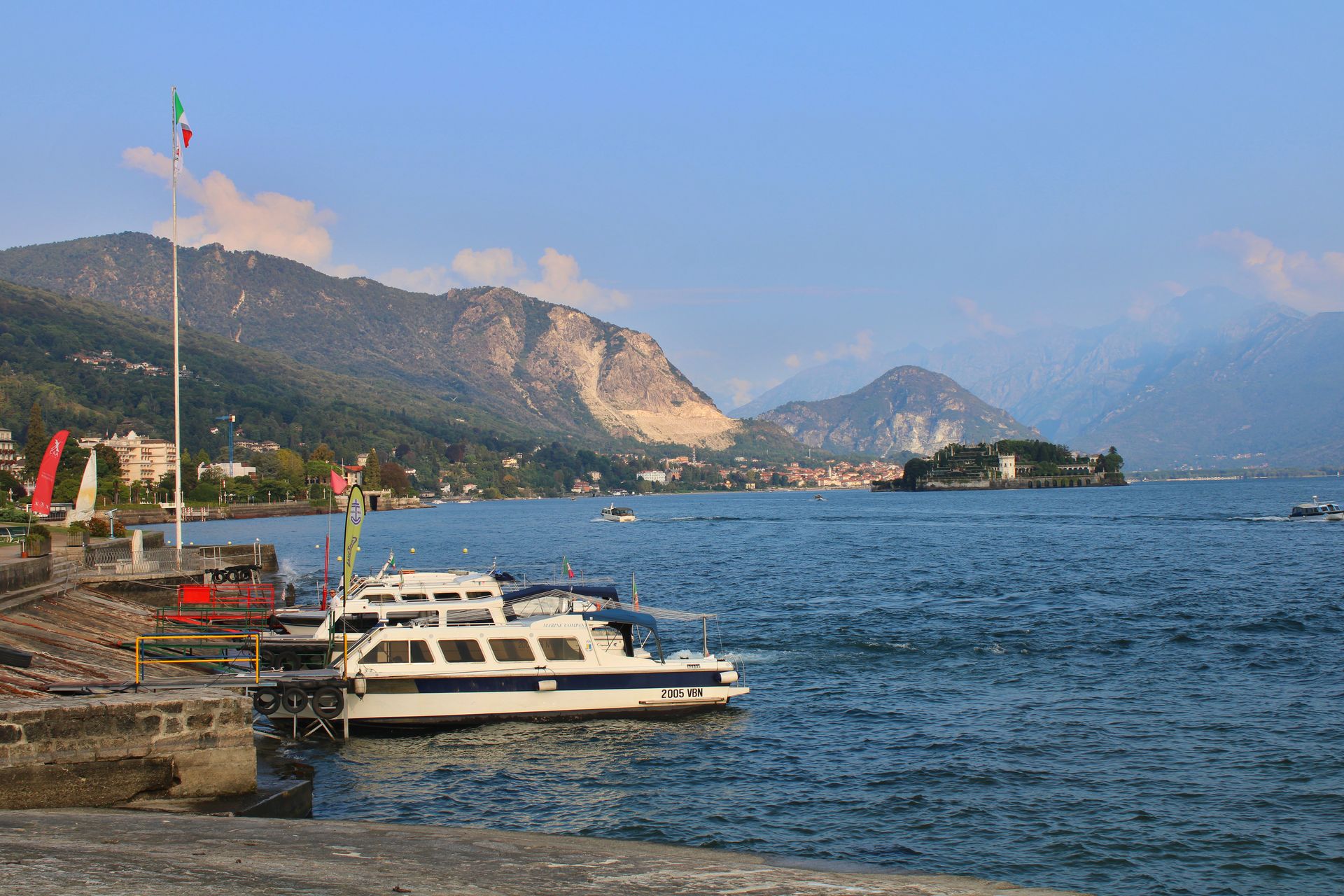
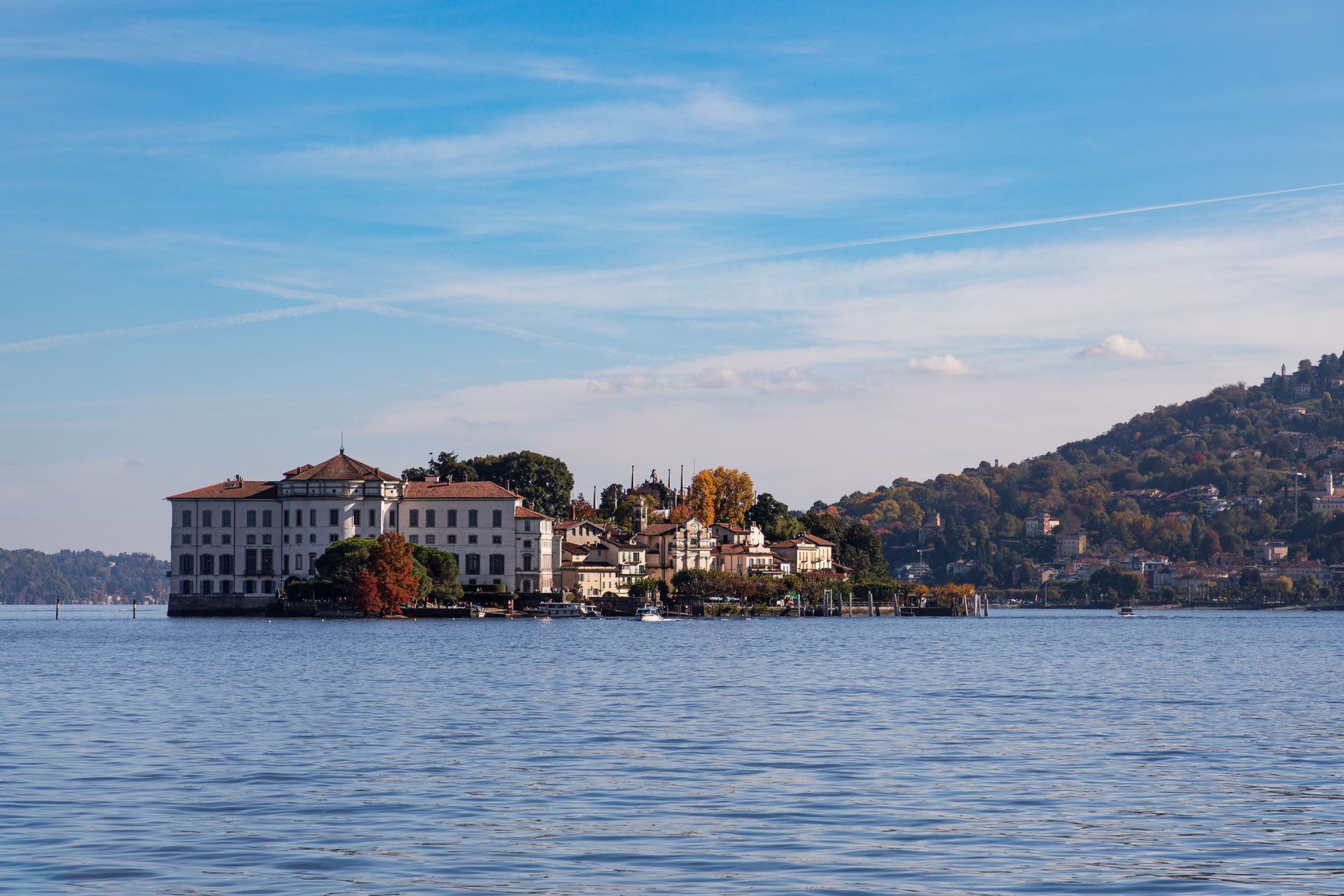
Off the coast of Stresa lie the three islands that have made the lake famous, and they are so different that it’s worth comparing them. The Isola Bella is a Baroque garden shaped like a ship: ten terraces, a palace with over twenty halls, six grottoes below the waterline, and white peacocks among the statues. The Isola Madre At eight hectares, it is the largest and quietest: an English landscape garden featuring about 150 varieties of camellias and a Kashmir cypress, whose seeds were brought from the Himalayas in 1862. The Fishermen's Island has no palace, but rather fishermen's cottages, trattorias, and the church San Vittore with an 11th-century apse. It is the only permanently inhabited island in the archipelago.
Admission is pricey: 27,00 € for Isola Bella, 23,00 € for Isola Madre, 40,00 € for both of them together. You can visit Isola dei Pescatori for free; you only pay for the ferry ride. It's open from March 12 through November 8, 2026. For more information, see the Travel Guide to the Lake.

4. Verbania—the largest city and its garden
Verbania is the largest town on the lake, yet it doesn't overwhelm you. It consists of three villages that have grown together: Pallanza along the promenade, Intra with the harbor and the car ferry, Suna in between. Between Pallanza and Intra lies the very reason why garden lovers travel to Lake Maggiore in the first place: the Villa Taranto Botanical Gardens, 16 hectares with about 20,000 plant species and varieties, laid out beginning in 1931 by the Scotsman Neil McEacharn.
15,00 € Admission at the box office costs, 14,00 € online. The season runs from March 6 to November 1, 2026, with additional weekend dates in November and December. There’s a boat dock right across from the main entrance, so you don’t have to drive there.
The honest truth: Verbania itself is a working-class town with shipyards and a supermarket—not a picture-perfect postcard setting. That’s exactly what makes it so pleasant in August: reasonable prices, open shops, and restaurants where it’s not just vacationers who are sitting around. You can find out what else the town has to offer in our article on the Attractions in Verbania.

5. Cannero Riviera – two castles in the middle of the water
Between Verbania and Cannobio lies a stretch of shoreline where lemons and olives grow because the mountains block the north wind. Cannero Riviera is the main town along this stretch, and off its shore rise the Castles of Cannero Rising from the lake: two castle ruins on two rocky islets, notorious in the 15th century as the stronghold of the Mazzarditi brothers, later taken over by the Borromeo family.
For centuries, they could only be viewed from a boat. After a long restoration, they are now open to the public, and the tour is offered as a package: 26,00 € for adults and 21,00 € For children ages 6 to 15; this includes the boat ride, admission, and an audio guide. You can board the boat in Cannero itself, in Cannobio, or in Luino.
The town itself is small and has no major attractions, but it does have a promenade where hardly anyone is out in the evenings. Further south, it borders Oggebbio even quieter, with olive groves and old cobblestone paths. With what Cannero what else it has to offer, that'll give you a whole day.

6. Cannobio – Lido, Sunday Market, and a Gorge
Cannobio is the last Italian town before the Swiss border and the best proof that a resort town on Lake Maggiore can thrive. The Lido di Cannobio On the northern edge of town, the beach is spacious, slopes gently, and consists of fine gravel and sand—the most family-friendly combination on the entire lake. In the afternoons, a breeze regularly picks up, and then the water belongs to the surfers.
On Sunday The palm-lined waterfront promenade transforms into a market that’s famous even in Switzerland; on Thursday mornings, there’s also a smaller food market. If you’ve had enough of the water, you can drive a short distance to the Valle Cannobina, the side valley behind the village, to the Sant’Anna Gorge, a narrow gorge with a small church perched above it. And anyone who feels like climbing can make the ascent in a good half hour to Carmine Superiore, a medieval hamlet high above the lake. The complete list can be found in our article on Cannobio.

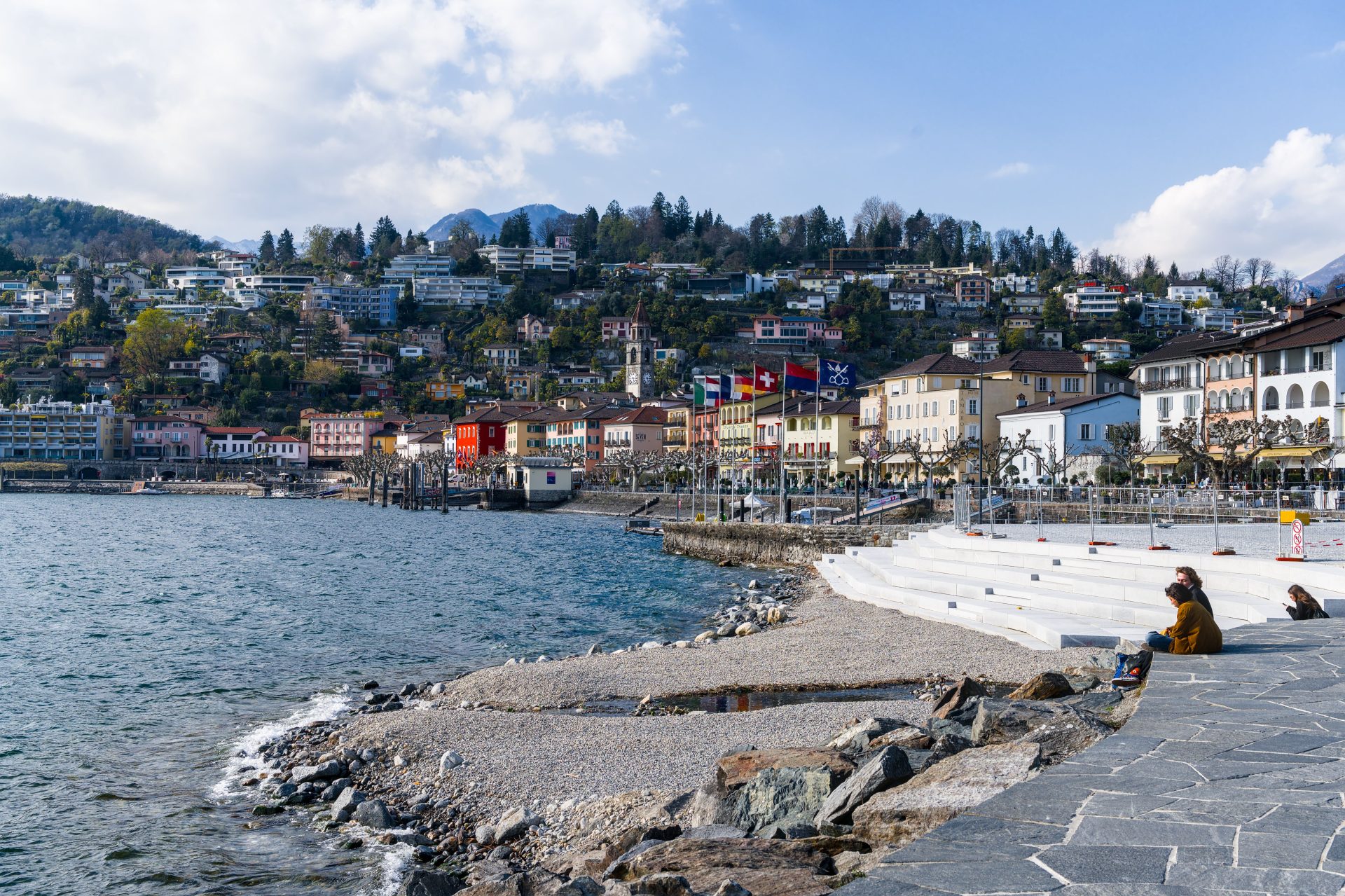
7. Ascona – the piazza right on the waterfront
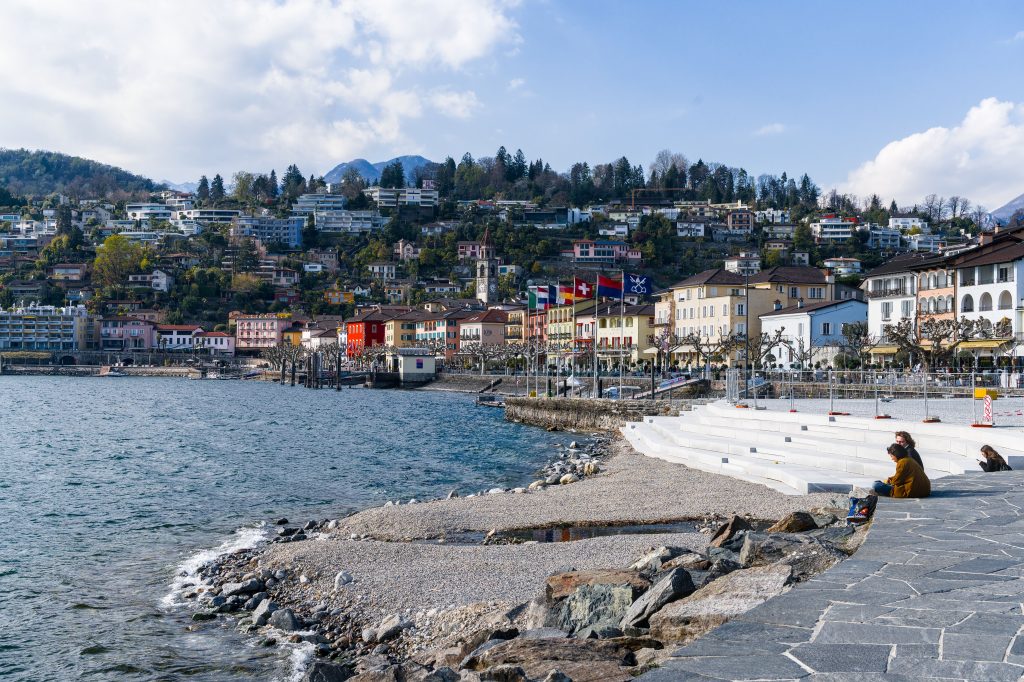
Once you cross the border, not only does the currency change, but so does the atmosphere. Ascona is located in the canton of Ticino, where Italian is spoken, and it looks like an Italian town that’s been tidied up a bit. Its center is the Piazza Motta, a long row of pastel-colored houses right along the waterfront promenade, with tables set up in front of them all the way to the water.
Two things make Ascona more than just a coffee stop. First, the Lido with a long sandy beach and grassy areas for sunbathing under the trees. Second, the Brissago Islands, the two islands off the shore where the Canton of Ticino maintains its botanical garden: Admission CHF 10, Free for children 16 and under, open from March 18 through November 8, 2026, every day. You can only get there by boat, which makes for a pleasantly leisurely visit.
There's a market on Tuesdays. And yes, it's more expensive than three kilometers further south. But in return, you get a stretch of the riverbank where no cars drive.
8. Locarno – Cliffs, a cable car, and Europe’s largest movie screen
Locarno is the town at the northern end and the place where the lake feels the least Italian—yet still has a southern feel. Its heart is the Piazza Grande, a long cobblestone square with arcades, where every August the Locarno Film Festival is setting up its outdoor movie theaters. The date for 2027 has already been set: August 4–14.
The pilgrimage church looms over the city Our Lady of the Rock on a rocky outcrop. You can get there on foot or by funicular from Locarno: CHF 5.40 simple, CHF 8.00 Round trip; in the summer, every 15 minutes starting at 8:05 a.m.; in July and August, service runs until 11:40 p.m. The cars date from 1958 and travel over a viaduct with eleven arches. The train is not wheelchair-accessible.
If you want to go higher, take the cable car in Orselina to Cardada and from there, take the chairlift up to the Cimetta: CHF 32 to and from Cardada, CHF 39 up to Cimetta. The lift will operate from March 16 through November 8, 2026; after that, the mountain will remain closed until just before Christmas.

9. Luino—the largest market on the lake
Back on Italian soil, this time on the eastern shore of Lake Como in Lombardy. Luino would be an unremarkable little town with arcades and a long lakeside promenade, if it weren't for on Wednesdays draws people from half of northern Italy and half of Switzerland to this place. The weekly market in Luino is one of more than 350 booths, it winds through the alleys of the Old Town all the way to the water, and it is old: Emperor Charles V approved it on September 5, 1541 At the request of the Counts of Rusca.
Good to know: On Wednesdays, the road along the shore is congested and every parking spot is taken. If you want to see the market, take the boat or the train. Luino is located along the route over the Simplon Pass, and the train station is a ten-minute walk from the market.
On the other six days, Luino is a quiet town with a promenade that’s well-lit in the evening and offers the shortest route to Malcantone in Switzerland. A boat also departs from the harbor for the Castelli di Cannero on the other side of the lake.
10. Laveno-Mombello – Car Ferry and Scenic Hill
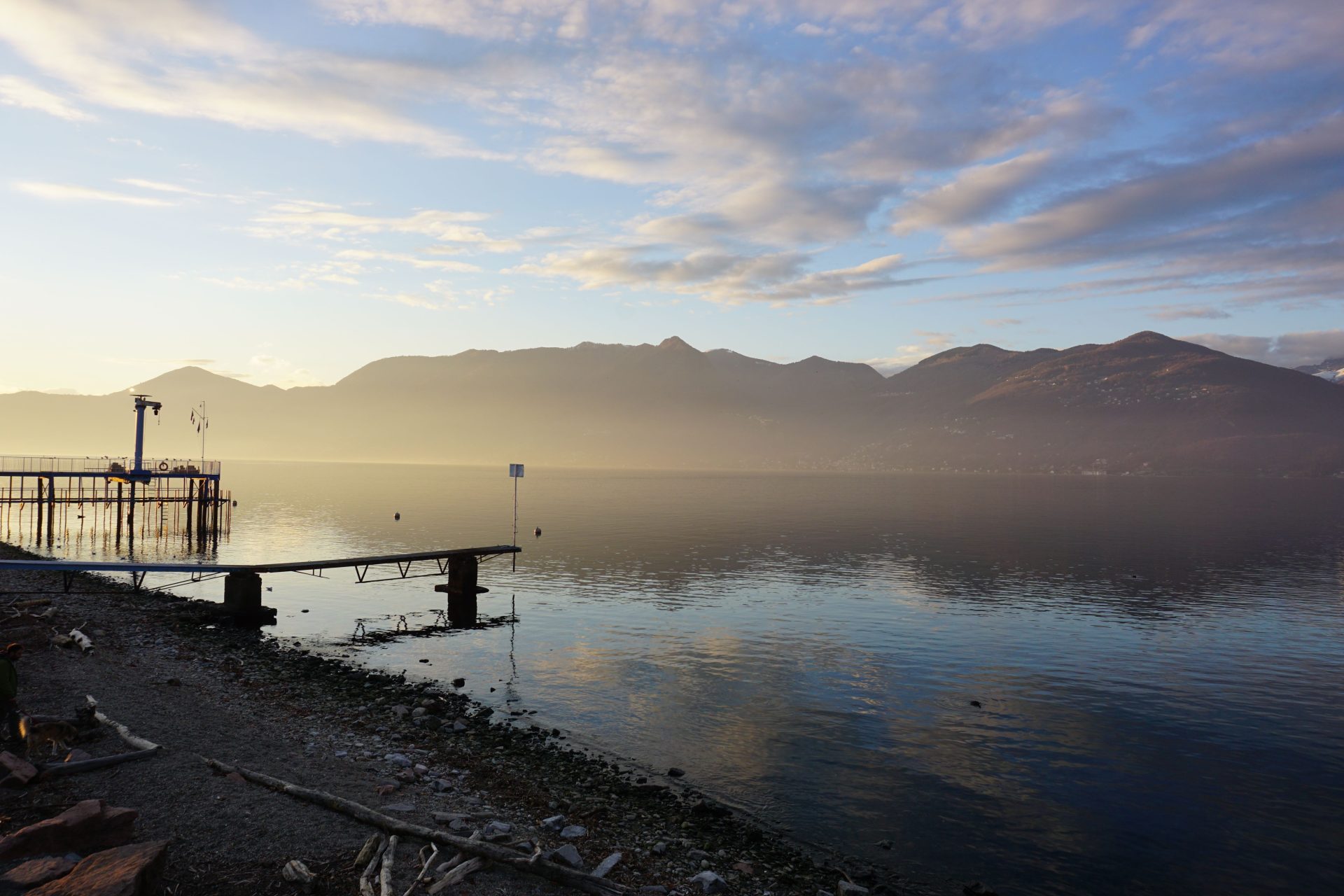
Laveno-Mombello is where the eastern shore really comes into its own. From here, the only Car ferry across the lake to Intra near Verbania, about 20 minutes Ferry service runs every half hour on the hour, with the first departure at 5 a.m. If you want to see both shores, this saves you an hour of driving around the lake.
The second reason is the Sasso del Ferro, the local mountain behind the town. The cable car up to Poggio Sant’Elsa rides in open two-seaters to an altitude of over 1,000 meters; at the top, a panoramic restaurant awaits, along with the best view of the central lake basin and the Borromean Islands. A round-trip ticket costs 14,00 €, simply 10,00 €; Children 12 and under, members of the Italian Alpine Club (CAI), and groups of 25 or more pay 10,00 € respectively 7,00 €. The season runs from April 1 through November 2, Monday through Friday starting at 11 a.m., and on weekends starting at 10 a.m.
No vehicles are allowed on the Intra–Laveno ferry 2.20 meters high. If you have a RV, roof box, or bike rack on the roof, you’ll have to drive around the lake once. Cars up to 3.50 meters in length cost €9.10 with the driver; each additional passenger costs €4.00.
11. Santa Caterina del Sasso – the monastery carved into the cliff face
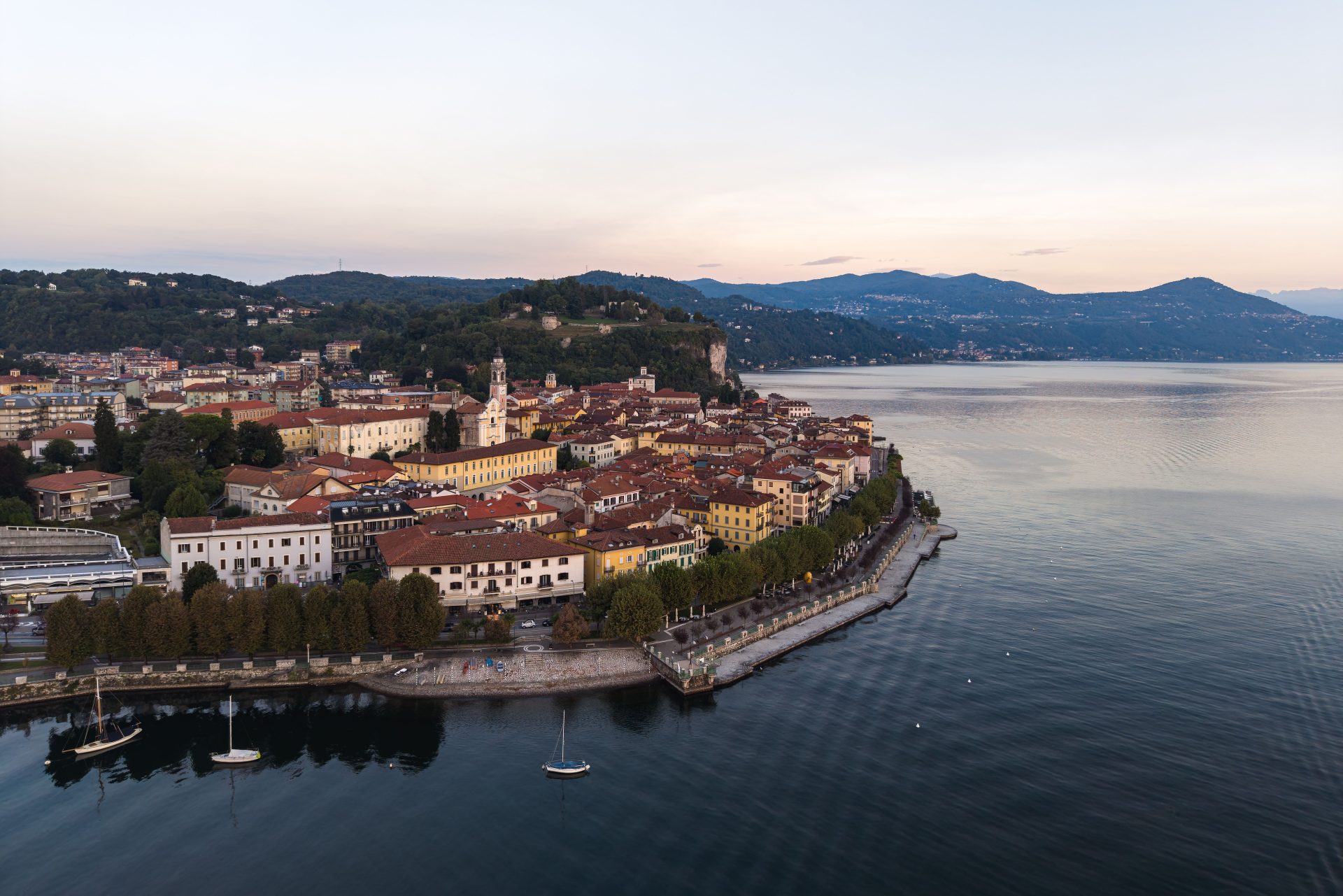
Between Laveno and Angera lies the town that doesn't appear on any series of postcards featuring the lake, yet is still the most impressive. The Hermitage of Saint Catherine of the Rock in the community Leggiuno Since the 12th century, it has clung to a vertical rock face directly above the water: a church, a cloister, and a loggia that seems to grow out of the rock.
The entrance from above leads down the wall via a long staircase; if you want to skip it, take the elevator for 1,00 € per ride, which is free for people with mobility impairments and their companions. Admission costs 5,00 €, reduced 3,00 €, Admission is free for those under 18. It is open daily from 9:30 a.m. to 7:30 p.m. from mid-March to mid-October; in winter, it opens at 1:30 p.m. on weekdays.
The best way to get there is by boat, which departs from Arona, Stresa, and Laveno-Mombello. That way, you'll see the complex just as it was intended: from below, from the water.

12. Angera – the castle across the way
The loop comes to an end at the southern end. Angera lies directly across from Arona, and towering above the town is the Rocca Borromeo perched on its rocky outcrop, with swallowtail battlements and a history that reads like the history of Lombardy: first mentioned in a document in 1066, owned by the archbishops of Milan, falling to the Visconti in 1277 after the Battle of Desio, and purchased by Vitaliano I Borromeo in 1449 for 12,800 imperial lire purchased, and has been in the same family continuously since the early 16th century.
Inside, the fresco cycle depicts the Hall of Justice That very battle of 1277. Twelve rooms further on, the castle houses the Museum of Dolls and Toys, the doll and toy museum founded in 1988 by Princess Bona Borromeo Arese, with over 1,400 dolls From the 18th century to the present day. Outside, nestled between the vineyard and the crenellated wall, lies a 2,000-square-meter medieval garden.
18,00 € Admission costs; children ages 6 to 15 pay 13,00 €. There are combination tickets that include the islands. And for kids, this castle by the lake is the place where they whine the least.


Lake Maggiore Travel Guide
Lake Maggiore Travel Guide: the most beautiful places, the Borromean Islands, the best time to visit, and how to get there—an overview of all Lake Maggiore articles from italien.news.
How much is admission to the gardens and castles on Lake Maggiore?
Lake Maggiore isn't a cheap lake, and that's all thanks to one family: Isola Bella, Isola Madre, Parco Pallavicino, Rocca di Angera, and the Castelli di Cannero all belong to the Borromeo family and operate under the brand Terre Borromeo. If you buy all five, the total for two people will quickly come to €200. It's worth choosing in advance or buying a combo ticket.
In addition, there are two major attractions that are not included: Villa Taranto in Verbania and the rock monastery of Santa Caterina del Sasso. And on the Swiss side, the Brissago Islands, which belong to the canton of Ticino.
| Offer | Price |
|---|---|
| Isola Bella, Palace and Gardens | €27.00 Adults · €18.00 Ages 6–15 |
| Isola Madre, Palace and Garden | €23.00 Adults · €15.00 Ages 6 to 15 |
| Combined Ticket for Isola Bella and Isola Madre | €40.00 Adults · €23.00 Children |
| Terre Borromeo Three-Park Pass | €55.00 Adults · €28.00 Children |
| Parco Pallavicino, Stresa | €18.00 Adults · €13.00 Children |
| Rocca di Angera with its Doll Museum | €18.00 Adults · €13.00 Children |
| Castelli di Cannero by Boat with an Audio Guide | €26.00 Adults · €21.00 Children |
| Villa Taranto, Verbania | €15.00 at the box office · €14.00 online |
| Colosso di San Carlo, Arona | €10.00 with statue · €7.00 terrace only |
| Hermitage of Saint Catherine of the Rock | €5.00 for adults · Free for children 18 and under |
| Laveno Cable Car to Sasso del Ferro | €14.00 round trip · €10.00 one way |
| Brissago Islands, Botanical Garden | CHF 10 for adults · Free for children 16 and under |
The lakeside promenades from Stresa to Cannobio, the Piazza Grande in Locarno, the Lido di Cannobio, the Isola dei Pescatori, and every view of the Castelli di Cannero from the shore are free of charge. Children 5 and under get free admission to the Terre Borromeo sites; admission to Santa Caterina is free for those under 18; and anyone with a card from the Italian National Trust (FAI) pays €4.00 instead of €5.00 there.
How much does a trip across Lake Maggiore cost?
On Lake Maggiore, the boat isn't just a sightseeing trip—it's a means of transportation. It is operated by the Government Administration of Lake Navigation, the state-run shipping company for the northern Italian lakes, and its fare system works differently than expected: There are no single tickets for a round-trip, but rather a One-day pass for a section of the routewhich free movement. You can get on and off as often as you like within this section.
For Stresa and the three islands, Section 5 is sufficient for 19,50 €. If you want to ski the entire Italian ski area, you'll pay 34,50 €. The fares have been in effect since April 1, 2026; the summer schedule ran from March 29 to October 4, 2026.
| Ride | Price |
|---|---|
| One-Day Pass for the Entire Italian Basin | €34.50 · €17.30 for ages 4 to 11 |
| One-Day Ticket to Stresa and the Three Islands | €19.50 · €9.80 for ages 4 to 11 |
| One-way trip from Stresa to Isola Bella | €5.00 · €2.50 (children) |
| One-way trip from Stresa to Isola Madre | €6.00 · €3.00 (children) |
| Intra Car Ferry to Laveno, cars up to 3.50 m | €9.10 with a driver |
| Car ferry, passenger cars from 3.50 to 4.50 m | €11.40 with a driver |
| Car ferry, passenger cars over 4.50 m | €14.80 with a driver |
| Car ferry, each additional passenger | €4.00 · €2.00 (children) |
| Locarno Funicular to Madonna del Sasso | CHF 8.00 round trip · CHF 5.40 one way |
| Cardada and Cimetta from Orselina | CHF 39 round trip · CHF 32 to Cardada only |
Children under the age of four ride for free on the ferries if they do not need their own seat. And anyone who goes ashore on the Borromean Islands must pay an additional €0.50 landing fee per island to the municipality of Stresa—a fee that is not listed on any ticket but is still due.

When is the best time to visit Lake Maggiore?
The answer depends less on the weather than on a specific date: On November 8, 2026, the Terre Borromeo attractions will close, and a few days later, Cardada closes as well. If you want to see the islands, gardens, and castles, you should travel between March and early November. Any time before or after that is a trip to the lake, not to its sights.
Within this window, there are two good time slots and one that's very full.
| Period | What to Expect |
|---|---|
| March and April | The gardens are open from March 6 through 18; camellias and the first azaleas are in bloom. It’s cool and not very crowded; boats on the summer schedule begin running at the end of March. |
| May and June | The best time for gardens and hikes. The rhododendrons are in full bloom, the terraces are open, and the water is still cool. |
| July and August | Bathing season and peak tourist season. Stresa and Ascona are packed, and lodging is expensive, but the Stresa Festival and the Locarno Film Festival are in full swing. |
| September and October | The water is warm, the mountains are clear, and the crowds are gone. Starting October 25, the islands will close earlier; Arona will also close earlier starting October 26. |
| November through February | The islands, gardens, and mountain railways are closed. The car ferry continues to run, Luino holds its market, and the lakeside towns belong to their residents once again. |
July and August are ideal for a beach vacation, while May, June, and September are best for everything else. You can check the current situation at any time at Weather at Lake Maggiore.
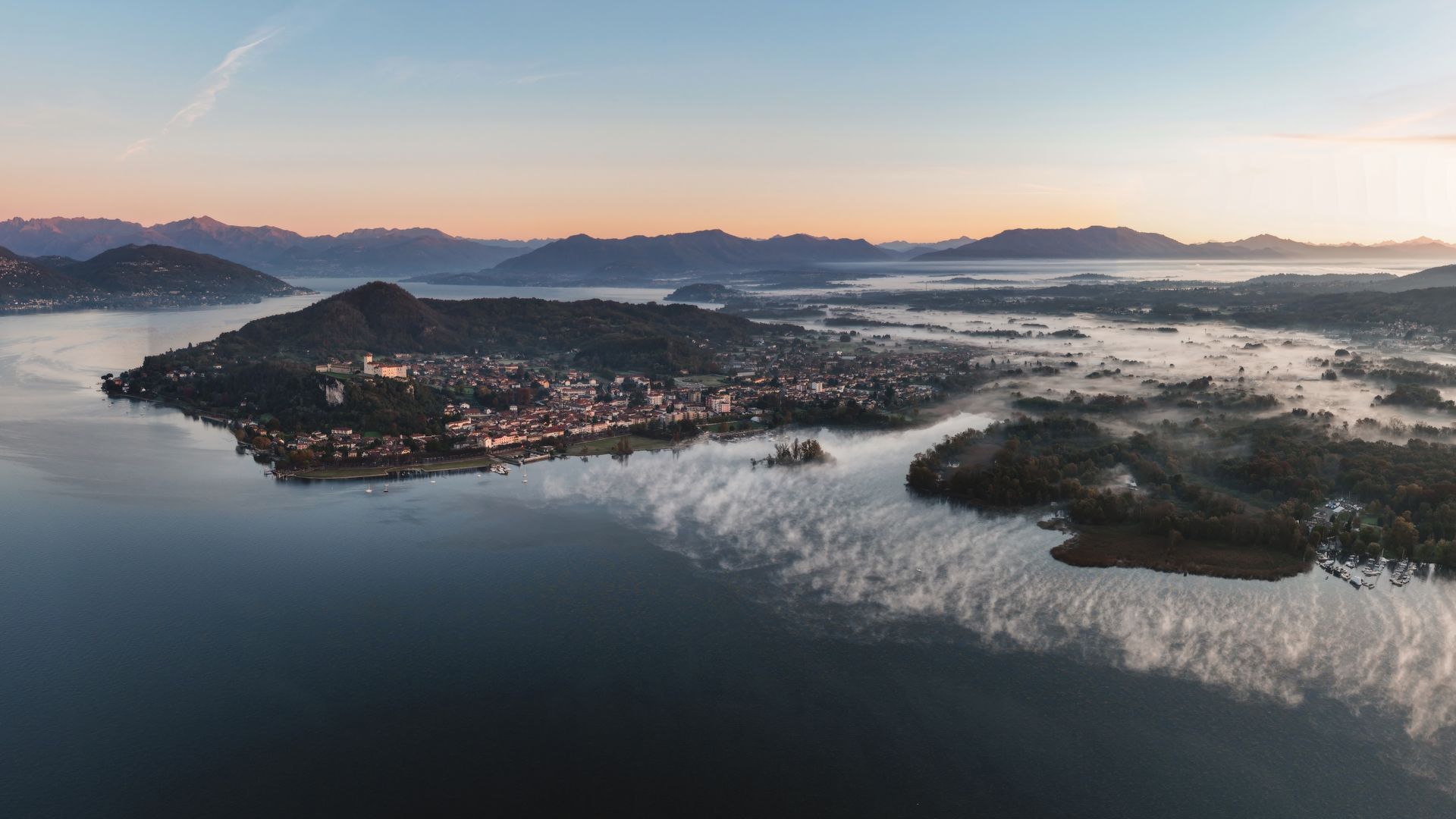
How do you get to Lake Maggiore without a car?
Lake Maggiore is one of the few Italian lakes where a vacation without a car is not only possible but actually more enjoyable. The train line Milan–Domodossola It runs along the entire western shore and stops in Arona, Stresa, Baveno, and Verbania-Pallanza; it is served by EuroCity, RegioExpress, and regional trains. On the eastern shore, the Simplon Line runs via Luino; in Ticino, the TILO regional trains—the cross-border commuter service between Lombardy and Ticino—take you to Locarno.
From the airport Milan-Malpensa drives the Alibus Lake Maggiore operated by S.A.F. from Terminal 1 to the Stresa train station, approximately one hour and ten minutes for 14,00 €, operating from April 1 through October 31, 2026. If you're coming from Switzerland, you're in for the most beautiful journey imaginable: the Vigezzina-Centovalli Railway, a narrow-gauge railway line from Domodossola through the Vigezzo Valley to Locarno.
The ship takes over once you arrive. If you're staying overnight in Ticino, the hotel will also provide you with the Ticino Ticket: Free rides on public transportation in the canton and over 170 discounts on mountain railways and boat trips; free for guests at over 500 partner businesses.
Anyone driving to Ticino by car needs the Swiss highway vignette: CHF 40, valid from December 1, 2025, through January 31, 2027. There are no short-term vignettes; anyone driving without one will be charged an additional CHF 200. The e-vignette is purchased for the license plate via the Via portal of the Federal Office for Customs and Border Security. And be sure to bring a few francs with you: While euros are often accepted in Ascona and Locarno, change is given in francs.
Our advice: take the east bank
Most travelers stay between Arona and Cannobio—that is, along the 40 Piedmontese kilometers featuring the islands, gardens, and grand hotels. That’s understandable, but it’s still only half the journey.
The eastern shore of Lake Como in Lombardy is the quieter, warmer, and significantly more affordable part of the lake. There you’ll find the rock-hewn monastery of Santa Caterina, the Rocca di Angera, the hill overlooking Laveno with its panoramic views, and the largest market on the lake. And you can get there in twenty minutes: The car ferry from Intra to Laveno runs every half hour starting at 5:00 a.m. Take it once in the morning, have lunch over there, and come back in the evening. That’s the day you’ll remember the most afterward.

Verbania Attractions: 7 Highlights & Hidden Gems on Lake Maggiore
Verbania Attractions on Lake Maggiore: from the Botanical Gardens of Villa Taranto to the Borromean Island of Isola Madre and the Belle Époque shores of Pallanza and Intra—including prices, hours, how to get there, and...
What You Should Know About Lake Maggiore
1. There are almost no sandy beaches. What brochures call “beach” is actually gravel, a grassy area, or a concrete platform. The most pleasant exception is the Lido di Cannobio, with its fine gravel and gentle slope into the water, along with the Lido di Ascona and Feriolo Bay near Baveno. If you want sand under your feet, plan to visit these three spots and you’ll be satisfied.
2. The cost of admission adds up faster here than anywhere else. Almost everything you'll want to see is owned by a family and costs between 18 and 27 €. Two adults with two children will pay over 120 € for a day trip that includes Isola Bella and Isola Madre. The combination ticket pays off starting with the second destination, and Isola dei Pescatori is free.
3. The Mottarone cable car is not running. For years, the most famous mountain offering a view of Stresa has been accessible only by car or on foot. Those who want to enjoy the scenic drive should instead take the Sasso del Ferro route via Laveno or the Cardada route via Locarno. Both offer the same view from the other side.
4. It ends in early November. On November 8, the islands, the Rocca, and Parco Pallavicino will close, followed shortly thereafter by the Brissago Islands and the mountain railways in Ticino. A November weekend by the lake is lovely, but it’s a weekend for walking. The gardens won’t reopen until mid-March.
5. Two countries means two price levels. Lunch in Ascona costs noticeably more than in Cannobio, twelve kilometers further south. If you stay overnight in Ticino, you’ll receive a free Ticino Ticket, which lets you ride buses and trains for a week at no cost. Over the course of seven days, this largely evens things out.
Our takeaway: twelve places, two countries, one trip
Lake Maggiore is the most diverse of the northern Italian lakes because it doesn’t have to choose: in the south, it lies flat in the Po Valley; in the center, the Borromean Islands boast their Baroque gardens; and in the north, the mountains of Ticino rise out of the water. If you have a week, take the tour in this order and you’ll end up right back where you started.
The next step is simple: Choose a lakeside town as your base—Stresa for the islands, Cannobio for the beach and peace and quiet, or Laveno for both, with the ferry right outside your door. And book early if you’re coming in July or August. You can find more destinations in the region in the Lake Maggiore Travel Guide and in Piedmont Travel Guide.

Piedmont Travel Guide
Piedmont Travel Guide: The Most Beautiful Places, Best Time to Visit, How to Get There, and Accommodations—an overview of all Piedmont articles from italien.news.
Map: Lake Maggiore, Piedmont, and Lombardy
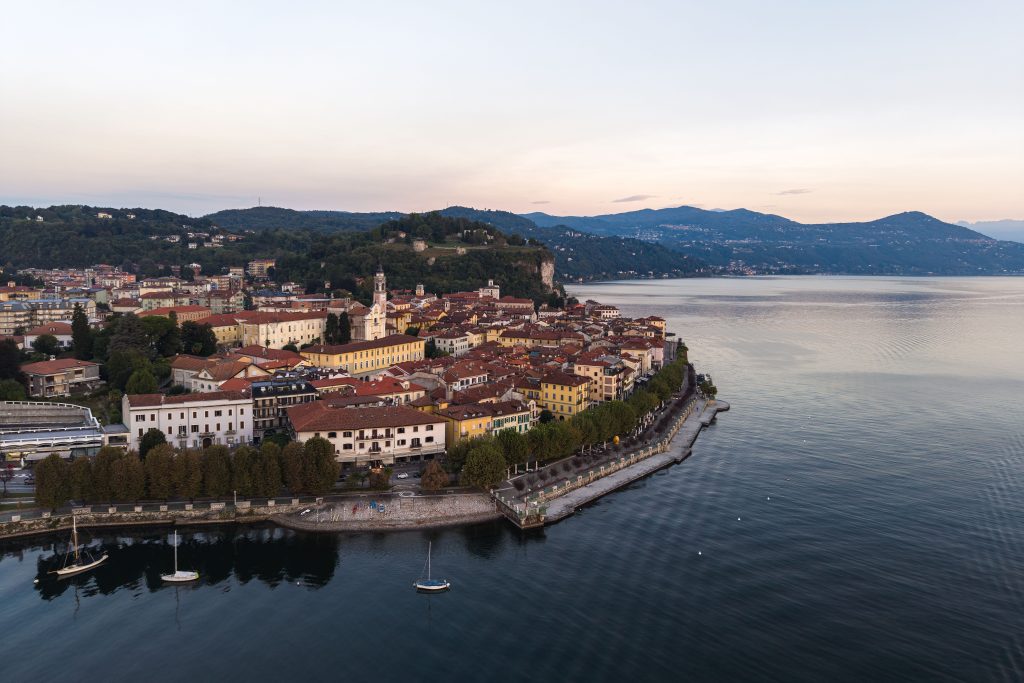
Photo Gallery: Places on Lake Maggiore




FAQ – Frequently Asked Questions About Lake Maggiore
Experiences & sights
Prices, hours of operation, and schedules are subject to change. Please check the official websites for the latest information before your trip. Italien.news is not the operator of the attractions and accommodations mentioned. This post contains affiliate links: If you book through them, we receive a small commission, but the price remains the same for you.
Sources and Further Information
- CIPAIS – Lake Maggiore, Lake Data (accessed in September 2026)
- CIPAIS – Morphometry of Lake Maggiore (accessed in September 2026)
- Terre Borromeo – Isola Bella, Isola Madre, Rocca di Angera (accessed in September 2026)
- Terre Borromeo – Parco Pallavicino, Prices and Hours (accessed in September 2026)
- Terre Borromeo – Castelli di Cannero, Prices (accessed in September 2026)
- Villa Taranto Botanical Gardens, Verbania (accessed in September 2026)
- Colosso di San Carlo, Arona – Hours and Tickets (accessed in September 2026)
- Eremo di Santa Caterina del Sasso – Admission (accessed in September 2026)
- Eremo di Santa Caterina del Sasso – Hours of Operation (accessed in September 2026)
- Lake Navigation – Lake Maggiore Fares Effective April 1, 2026 (accessed in September 2026)
- Navigazione Laghi – Vehicle Rates for 2026 (accessed in September 2026)
- Lake Navigation – Lake Maggiore Schedules (accessed in September 2026)
- Lago Maggiore Cable Car – Laveno, Sasso del Ferro (accessed in September 2026)
- Brissago Islands – Canton of Ticino, Admission (accessed in September 2026)
- Locarno–Madonna del Sasso Funicular (accessed in September 2026)
- Cardada Impianti Turistici – Prices and Schedule (accessed in September 2026)
- Ticino Turismo – Ticino Ticket (accessed in September 2026)
- ch.ch – Swiss Highway Vignette (accessed in September 2026)
- Lombardy Region – Luino and Its Weekly Market (accessed in September 2026)
- Stresa Festival (accessed in September 2026)
- Ascona-Locarno Tourism (accessed in September 2026)