August 2, 2025 marked the 45th anniversary of the devastating attack at Bologna train station. Several thousand people gathered in the central square to commemorate the 85 people who died and over 200 who were injured. The terrorist attack in 1980 is still considered the worst act of terrorism in Italy since the Second World War.
Representatives of the Italian government marched at the head of the funeral procession, including Research Minister Anna Maria Bernini, Bologna's Mayor Matteo Lepore, Regional President Michele De Pascale and the leader of the Democratic Party (PD), Elly Schlein.
In a written message, President Sergio Mattarella also addressed the participants, describing the massacre as an "inhuman, neo-fascist coup attempt" that posed a massive threat to Italy's democratic values.
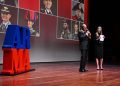
In her speech, Prime Minister Giorgia Meloni paid tribute to the victims and described the attack as one of the "darkest chapters" in Italian history. She emphasized her solidarity with the families of the victims, who deserve respect and support to this day.
At the same time, however, her words triggered controversial reactions. Paolo Bolognesi, the chairman of the victims' association, urgently warned the Prime Minister against relativizing the fascist origins of the attack. "Condemning the massacre without recognizing its political context would only be superficial and dangerous," said Bolognesi.
The mayor of Bologna, Matteo Lepore, found even clearer words: "We will fight at all levels to ensure that the full court rulings are accessible." Under no circumstances should the government attempt to conceal historical facts. The background to this is a controversial decree by the Italian government which, according to critics, restricts public access to certain historical documents.
The atmosphere during the ceremony showed how politically charged the topic is. In her speech, Research Minister Anna Maria Bernini firmly rejected any connection between the current government and the events of that time. "We are on the side of the victims and their families without any ifs or buts," she said.
The chairwoman of the PD, Elly Schlein, on the other hand, called on all government representatives to finally publish the historical court rulings on the massacre in full and to face up to these findings.
Giuseppe Conte, the leader of the Five Star Movement, spoke of a "neo-fascist massacre" that had been planned with the support of state agencies and the secret masonic lodge P2. He appealed to politicians to finally put an end to half-truths and political myth-making.
Deputy Prime Minister Matteo Salvini, for his part, recalled the "deep wound" left by the attack and emphasized that remembrance was a lasting duty. The relatives of the victims had to fight for decades for compensation and recognition.
On August 2, 1980, two bombs hidden in suitcases exploded in the station's waiting hall. The explosion destroyed large parts of the station building and severely damaged a waiting train. The detonation could be heard for miles and caused chaos and panic throughout the city. The victims were mainly holidaymakers and families who were waiting for their trains.
The perpetrators were finally identified and convicted in long and complex court proceedings. Between 1988 and 1994, Italian courts sentenced three neo-fascists - including the married couple Valerio Fioravanti and Francesca Mambro - to life or long prison sentences. In July 2024, the Supreme Court in Rome confirmed the life sentence for the former neo-fascist Paolo Bellini. Despite the convictions, some of the background remains unclear to this day.