


Holy Week transforms Sicily into a stage for a week. Men in hoods march silently through Enna carrying torches; in Trapani, twenty groups of Baroque figures wander through the alleys for nearly 24 hours; in Prizzi, devils dance across the piazza; and in the end, almost everywhere the same scene unfolds: The Madonna sheds her black veil when she encounters the risen Christ. Easter falls on Sunday, March 28; the ceremonies begin on Palm Sunday, March 21; in some places, they even start a week earlier.
The Settimana Santa, Holy Week is no mere museum piece in Sicily. It is carried on by brotherhoods—some of which have existed since the 13th century—and by families in which roles are passed down from father to son. Added to this is Easter cuisine, ranging from cassata to Easter pastries with baked-in eggs. Much of this tradition dates back to the island’s Spanish period, some to Byzantium, and some to antiquity.
This guide takes you through the most impressive Easter Week rituals in Sicily: Enna, Caltanissetta, Prizzi, Trapani, Palermo, Piana degli Albanesi, and Leonforte, plus eight other locations in an overview. You’ll find out what happens on which day, where to stand, how to get there from Palermo or Catania, where to stay, and what’s on the menu. All dates are for Easter 2027; the traditions have remained the same for generations.

Easter Week in Sicily at a Glance
Seven days, seven locations, and an island that recounts the Passion through processions, funeral marches, and celebrations of joy. Key dates for Easter 2027:
| Topic | Here's what you can expect |
|---|---|
| Easter Dates for 2027 | Palm Sunday, March 21 · Holy Wednesday, March 24 · Holy Thursday, March 25 · Good Friday, March 26 · Easter Sunday, March 28 · Easter Monday, March 29 |
| Highlights | Enna (Good Friday, Hooded Procession) · Trapani (Good Friday, Misteri, nearly 24 hours) · Caltanissetta (Holy Wednesday through Good Friday) · Prizzi (Easter Sunday, Devil’s Dance) · Piana degli Albanesi (Easter Sunday, Byzantine Rite) |
| Length of stay on site | At least four days, from Ash Wednesday to Easter Sunday; ideally, a full week |
| Arrival | Direct flights to Palermo and Catania from Germany, Austria, and Switzerland; car rentals available locally; Palermo is about 130 km from Enna and about 95 km from Trapani |
| Weather at the End of March | Palermo: around 16 °C during the day; Enna (at 931 m): around 10 °C, with temperatures in the single digits in the evening; be sure to pack an umbrella and a warm jacket |
| Costs | All processions are free; accommodations in Enna and Trapani are booked up months in advance for Good Friday |
As of November 2026 · Information based on the organizers' 2025 and 2026 programs and climate data from the Servizio Meteorologico (1971–2000)
Why is Holy Week in Sicily so special?
Because it is not just one church that celebrates here, but an entire city. The commemoration of Christ’s Passion, Death, and Resurrection has roots in Sicily that date back to the Middle Ages and has been passed down from generation to generation over the centuries. The oldest brotherhood in Enna, the Confraternity of the Most Holy Savior, traces its founding back to the year 1261. However, most of the rituals in their present form originated under the Spaniards, who ruled Sicily from the 15th to the 18th century and brought with them a fondness for penitential processions, hoods, and sorrowful Madonnas.
All of this is supported by the confraternities, the lay brotherhoods, which have their own churches, their own colors, and their own hierarchy in every town. Anyone in Enna who puts on a hood on Good Friday does so because his father and grandfather did the same. In Caltanissetta, the craft guilds have been carrying their candles through the city since 1551; in Trapani, the groups of statues have belonged to the ceti, the fishing, baking, and salt-harvesting trades. The festival belongs to them, not to the tourism industry.
The Sicilian writer Leonardo Sciascia described this phenomenon in his essay on Sicily’s religious festivals: During a festival, he argued, Sicilians emerge from their solitude and become part of a group, part of a city. That is exactly what you feel when 2,500 veiled figures pass silently by you in Enna and all you can hear are the funeral marches played by the town band. The solemnity arises from the participation of the faithful, who express their grief and joy over death and resurrection with their bodies and voices, drawing the spectators into these emotions.
And then there’s the profane: devils in iron masks who steal souls on Easter Sunday in Prizzi, „Jews“ blowing trumpets in San Fratello, and an orange tree that the bachelors of Terrasini lift with one arm. Sicily has never viewed the Passion merely as a liturgical ritual, but as theater, as a competition, and as a feast. That’s why this guide also includes the cassata, the chocolate egg from Modica, and the Easter bread with the baked-in egg.

Enna: What happens on Good Friday during the Processione degli Incappucciati?
Round 2,500 people wearing hoodies from 16 Fraternities On Good Friday, March 26, 2027, they will walk in silence from the cathedral to the cemetery and back. The Procession of the Hooded Ones, the Procession of the Veiled, is the largest Good Friday procession in Sicily and the reason why Enna is fully booked during Holy Week. The city lies at an elevation of 931 meters in the center of the island and is the highest provincial capital in Italy; the fog for which it is known makes the torchlight procession even more impressive.
The brotherhoods of Enna wear white robes and colorful capes, along with a hood featuring a white visor covering the face. The order in which they march, the processional order, has been established for centuries and is observed by the Council of Rectors supervised by the Council of 16 Brotherhood Leaders, which was established by the Spanish viceroy in 1714. The Addolorata, the Sorrowful Madonna, is modeled after the Macarena of Seville. It doesn’t get much more Spanish than that.
The week begins on Palm Sunday at 10 a.m. with the entry of Jesus: An actor rides a donkey from the Santuario di Papardura up to the Church of San Sebastiano, accompanied by twelve „apostles.“ Starting at 4 p.m., the Collegio dei Rettori will process from Montesalvo to the cathedral; afterward, the brotherhoods will hold their hours of adoration until Ash Wednesday, which ure, in a set order. On Ash Wednesday, a live reenactment of the Stations of the Cross takes place in Pergusa, down by the lake. On Holy Thursday, every church holds a Sepolcro a decorated altar dedicated to the repose of the dead, and the people of Enne traditionally visit three of them, staying out late into the night.
Where’s the best place to be on Good Friday? The Veneration of the Cross begins at 3:00 p.m. in the cathedral; starting at 4:30 p.m., the first brotherhoods from San Leonardo set out and join the procession. Around 6:15 p.m., the Addolorata arrives at the cathedral via Via Roma, and at 7:00 p.m., the main procession begins on the Piazza Duomo with the Spina Santa, a 16th-century silver reliquary containing a thorn from the Crown of Thorns, the processional platforms bearing the dead Christ and Our Lady of Sorrows, and the city band playing funeral marches. The procession is about 3.7 kilometers long and proceeds along Via Roma, Piazza Vittorio Emanuele, and Viale Diaz to the cemetery, where the bishop bestows the blessing with the Spina Santa at around 8:45 p.m. There, the bearers lower their visors; on the return journey, their faces are veiled once again.
Good to know: The stores close on Good Friday afternoon, the Old Town effectively becomes a pedestrian zone, and at 931 meters, temperatures drop into the single digits at 7:00 p.m. in late March. Be sure to bring a warm jacket and gloves; the torchlight procession on Via Roma makes up for every cold finger. Up to 20,000 spectators flock to the city that evening.
On Easter Sunday at 6 p.m., the somber mood in Piazza Duomo lifts: At A Paci, during the Peace Procession, the Madonna—carried by the Brotherhood of San Giuseppe—meets the Risen Christ of the Brotherhood of SS. Salvatore. The black veil falls, and the bells ring. A week later, on White Sunday, the Spartenza with the field blessing at the Castello di Lombardia. Enna’s Holy Week is listed in the Register of the Intangible Cultural Heritage of the Region of Sicily.
Holy Week in Enna, Trailer Featuring the Brotherhoods · © youtube.com
Holy Week in Enna, 2027
The times are taken from the 2025 and 2026 schedules, which remain the same from year to year. The Collegio dei Rettori publishes the 2027 schedule during Lent.
| Day | Program |
|---|---|
| Palm Sunday, March 21 | 10 a.m.: Procession of Jesus on a donkey from Papardura to San Sebastiano, blessing of the palms; 4 p.m.: Procession of the Collegio dei Rettori to the cathedral, followed by hours of adoration |
| Monday through Wednesday | Worship services by the 16 brotherhoods in the cathedral; on Holy Wednesday, a live Stations of the Cross in Pergusa |
| Maundy Thursday, March 25 | Mass of the Lord's Supper with the washing of the feet; Sepolcri in all churches; the urn of the dead Christ in SS. Salvatore; a procession to three altars lasting into the night |
| Good Friday, March 26 | 3:00 p.m. Adoration of the Cross; 4:30 p.m. Departure of the brotherhoods; 7:00 p.m. Main procession from Piazza Duomo; around 8:45 p.m. Blessing at the cemetery; return after midnight |
| Easter Sunday, March 28 | 6:00 p.m. A Paci in Piazza Duomo: Encounter between the Madonna and the Risen Christ |
| White Sunday, April 4 | 6:00 p.m. Spartenza with a blessing of the fields at the Castello di Lombardia |
As of November 2026 · Information based on the 2025/2026 programs of the Collegio dei Rettori, EnnaPress, and Enna Live
Is the Villa Romana del Casale worth a day trip from Enna?
Yes, on one of the quiet days between Palm Sunday and Ash Wednesday. The Villa Romana del Casale Near Piazza Armerina, the late-antique villa featuring the world's largest surviving Roman floor mosaics is located about 35 kilometers south of Enna and is a UNESCO World Heritage Site. Admission costs 14 €, reduced rate of 7 € for 18- to 24-year-olds; free for those under 18. It is open from 9 a.m. to 5:30 p.m. until the last Saturday in March, and from 9 a.m. to 7 p.m. starting on the last Sunday in March—that is, starting on Easter Sunday 2027. You won’t have time to visit on Good Friday itself; plan your visit to the villa for Tuesday or Wednesday.

Villa Romana del Casale: Mosaics, Tickets, and How to Get There
Over 3,000 square meters of Roman mosaics under a protective roof: how much it costs to visit the Villa Romana del Casale, when it’s open, and how to get there.
Caltanissetta: Why does Holy Week here last from Palm Sunday through Easter?
Because Caltanissetta has its own highlight on almost every day of Holy Week. The provincial capital, located in the heart of the island about 35 kilometers west of Enna, transforms into an open-air theater that has been listed in the region’s Register of Intangible Cultural Heritage since 2006. The processions were banned in 1801, revived in 1841, and given new figures after the Gessolungo mining disaster in 1881. The sulfur mine is part of this city’s history, and it reappears in several scenes during Holy Week.
The event kicks off on Palm Sunday with the Jesus of Nazareth, which stands on a flower-adorned boat-shaped stand, the abbarcu, a procession through the city commemorating the entry into Jerusalem. On Monday and Tuesday, amateur actors perform the Scinnenza, a living Passion. Then comes Holy Wednesday, the day of the Real Maestranza: Round 400 tradespeople Dressed in 18th-century clothing, they make their way to the cathedral, led by the Captain, who is chosen each year from a different craft guild and wears a sword and a tricolor sash. The Maestranza was founded in 1551 as a citizen militia to fight corsairs; since 1848, its members have carried candles instead of rifles. At 10 a.m., the mayor hands the keys to the city to the Capitano; at 11 a.m., the penitential procession follows, with participants wearing black gloves and bow ties, which are exchanged for white ones inside the cathedral.
That evening, the town belongs to the boys: During the procession of the Varicedde Starting at 8 p.m., they carry 19 small replicas of the large sculptural groups from Piazza Garibaldi. The tradition began in the early 20th century because apprentices were excluded from the main procession and simply created their own. Today, it’s the most charming evening of the week.
The most eagerly anticipated moment is Maundy Thursday, with the Procession of the Vare: 16 Vare, life-size sculptural groups made of wood, plaster, and papier-mâché, created by the Neapolitans Francesco and Vincenzo Biangardi between 1883 and 1902, roll through the city starting at 8:00 p.m. from the Triton Fountain in Piazza Garibaldi. Each Vara has its own marching band; the procession through the city lasts until the early hours of the morning, and the farewell, which Spartenza, ends around 5 o'clock. Those who stick it out will experience the city at 3 a.m. with brass band music and Rosolio.
Good Friday is the day of the Black Christ, the Black Christ: a late-medieval crucifix which, according to legend, was found by wild herb gatherers, the Fogliamari, which was found in a grotto and has turned black from candle smoke. It has been kept in the Chiesa Santuario Signore della Città, which has served as the church of the sulfur miners since 1859. At dusk, around 7 p.m., the Fogliamari carry the crucifix barefoot and under a golden canopy through the city, accompanied by the lamentations, the ancient lamentations sung in the local dialect. Leading the procession is the Real Maestranza with lances wrapped in black; purple cloths hang from the balconies. On Easter Sunday at 12 noon, the bishop gives the blessing in Piazza Garibaldi, and doves take flight.

Prizzi: What happens at the Ballo dei Diavoli on Easter Sunday?
On Easter Sunday, two devils dressed in red and Death, dressed in yellow, run through Prizzi, capturing souls and trying until late into the night to prevent the meeting between the Madonna and the risen Christ. The Ball of the Devils, in the dialect U Ballu di Diavuli, is Sicily's wildest Easter celebration and takes place in a mountain village at an elevation of 1,045 meters, about 84 kilometers south of Palermo. By rental car, it takes about 1 hour and 20 minutes; the AST bus on Route 703 runs only twice a day.
The devils wear red robes, goatskins, and iron masks with ram’s horns, gaping mouths, and tongues hanging out. Death is dressed in yellow, wears a leather mask, and carries a crossbow. In the morning, they parade through town, visiting houses and „capturing“ spectators, who are locked up in a bar or a house and must pay a ransom to be freed—usually a drink or a few coins. At 11 a.m., the Diavulicchi the little rascals who are practicing on Corso Umberto I what they'll one day take over.
The main event begins at 3:30 p.m. in the piazza with the actual Ballu, the dance. Starting at 5 p.m., the ‚Ncontri", the processions: The statue of the Madonna, accompanied by two angels, and the statue of the Risen Christ come together several times at various points throughout the town—on Corso Umberto I, at Spiazzo Barone, on Via Matteotti, and on Via Mercadante. Each time, the devils intervene; each time, they dance; each time, they are driven back by the angels. It is not until around 11:45 p.m., during the final encounter in Piazza Sant’Anna, that the angels finally defeat the devils; the 2026 program specifies this takes place in the evening, while older descriptions mention the late afternoon. The custom dates back centuries and was already described in the 19th century by folklorist Giuseppe Pitrè.
Good to know: The first performances in the late afternoon are much less crowded than the finale, and you get to see the masks up close. After the Angels' victory, the venue hands out cannatedde, the Easter pastry with a baked-in egg, is given out free of charge to visitors. Easter Sunday in Prizzi cannot be combined with a visit to Piana degli Albanesi; the towns are 50 kilometers apart, and both main events take place on the same afternoon. You can read the full itinerary with background information in our article on the Ball of the Devils in Prizzi.

Ballo dei Diavoli in Prizzi, Easter Sunday 2024 · © youtube.com
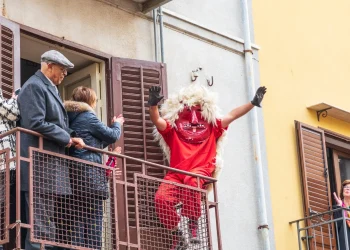
Ballo dei Diavoli: Sicily's wildest Easter festival in Prizzi
Prizzi – At six o’clock on Easter Sunday morning, there is a knock at the doors. Whoever opens them comes face to face with two devils wearing iron masks and Death carrying a crossbow. The Ballo dei...
Trapani: How long does the Processione dei Misteri last on Good Friday?
From 2:00 p.m. on Good Friday until the morning of Holy Saturday, that is, almost 24 hours. The Processione dei Misteri The Trapani procession is the longest religious procession in Italy and one of the oldest: The first documented reference is a notarial deed dated April 20, 1612, in which the „Ascent to Calvary“ group was entrusted to day laborers. By 1772, all the groups had been completed. The tradition came with the Spaniards, who brought their casazas, who brought the Passion Plays to Sicily.
To be carried through the city 20 Mysteries: 18 groups of figures depicting scenes from the Passion, as well as statues of the Dead Christ and Our Lady of Sorrows. The life-size figures, made of cypress wood, cork, canvas, and glue, date from the 17th and 18th centuries and still belong to the ceti, the trades: fishermen, bakers, barbers, watchmakers, salt workers. The name „Misteri“ is derived from these trades, which in the dialect misteri, Commerce, were called. The groups are supported by the massari, the carriers that respond to the signal from the corporal Hear: A blow with the ciaccola, a wooden clapper, and the group begins to play.
What makes the procession unique is the annacata, the swaying step of the pallbearers in time with the funeral marches. The word comes from naca, the cradle. The bands play all night long, the groups wind their way through the old town, and thousands of spectators from all over the world line Corso Vittorio Emanuele. The figures leave at 2:00 p.m. from the Church of the Holy Souls in Purgatory at Piazza Purgatorio; in 2026, due to restoration work, they started at the Chiesa del Collegio as a one-time exception. The route goes along Corso Vittorio Emanuele and through Piazza Vittorio Emanuele, through the alleys of the Old Town at night, and through the fishermen’s quarter at dawn Barracche. The return was scheduled for 8:30 a.m. on Holy Saturday in 2026; in other years, it lasted until around noon.
Even the weeks leading up to it are dedicated to the Misteri: On Fridays during Lent, the groups gather at the scinnute removed one by one from their pedestals and displayed in the church. On Holy Tuesday, the Madre Pietà dei Massari through the city, on Wednesday the Madre Pietà del Popolo, on Easter Sunday, the risen Christ. Those who arrive early will find the city already in a state of excitement, but without the crowds of Good Friday. Everything else Trapani has to offer—from the salt flats to the cable car to Erice—can be found in our guide to the Sights in Trapani.
Good to know: On Good Friday, most of the Old Town is closed to cars. In 2026, parking at Piazzale Ilio was recommended, and free shuttle buses on lines 2 and 10 ran until 2:45 a.m. In the Old Town, the sale of alcohol in glass bottles or cans was prohibited from 6:00 p.m. on Good Friday until 6:00 a.m. on Holy Saturday. Trapani-Birgi Airport is located about 20 kilometers outside the city.

The procession of the Misteri from the church in Trapani, Good Friday 2023 · © youtube.com
An Overview of the Major Good Friday Processions
Enna, Trapani, and Caltanissetta all fall on the same evening. The schedule will help you decide if you only have one Good Friday.
| Location | Start | Here's what you can expect |
|---|---|---|
| Enna | 7:00 p.m., Piazza Duomo | About 2,500 hooded figures from 16 brotherhoods, torches, silence, a 3.7-kilometer walk to the cemetery and back; return after midnight |
| Trapani | 2:00 p.m., Piazza Purgatorio | 20 Baroque groups of figures, funeral marches, the bearers' rocking gait; nearly 24 hours until Holy Saturday morning |
| Caltanissetta | around 7 p.m., Signore della Città | The Black Christ, carried barefoot, accompanied by the lamentations of the Fogliamari; the 16 Vare set out as early as Maundy Thursday at 8 p.m. |
| Leonforte | 6:00 p.m. Descent from the Cross | Descent from the Cross accompanied by cries of „misiricordia,“ a 7-kilometer procession to 13 churches, with many participants walking barefoot |
| Erice | 2:00 p.m., San Giuliano | Six groups of figures along a loop trail through the medieval mountain town—compact and close by |
As of November 2026 · Information based on the organizers' 2025/2026 programs
Palermo: Where can you experience Good Friday in the capital?
In the neighborhoods, not in a single large procession. Palermo doesn't have a central Processione dei Misteri like Trapani; instead, on Good Friday, starting around 4 p.m., about 30 processions processions by individual parishes and brotherhoods through the old town districts. The city’s first Misteri procession took place in 1590, organized by the Spanish-influenced brotherhood of the Soledad. It is precisely this brotherhood that Confraternity of Our Lady of Sorrows of Soledad, ...to this day, it sets out around 5 p.m. from the Church of San Nicola da Tolentino at Via Maqueda 159, passing through the Ballarò market district, past the Casa Professa, and along Corso Tukory. Their procession is known for its silence and prayer, which clearly distinguish it from the theatricality of other Easter celebrations.
Which procession is right for you? In the Kalsa, the old Arab harbor district, attracts the Cocchieri, the Brotherhood of the Coachmen, starting at 4:30 p.m. from Santa Maria dell’Itria on Via Alloro, through Piazza Kalsa to Via dello Spasimo. The Our Lady of Sorrows at Cassari starts at 4 p.m. at Santa Maria La Nova near the Vucciria, which Addolorata alla Guilla at 5 p.m. in the Capo neighborhood, the Bakers' Guild of the Panettieri at 4:30 p.m. at Sant’Isidoro in the Albergheria. In 2026, the procession of the Padri Camilliani stopped at 6:00 p.m. at the Quattro Canti, where the mayor laid a wreath. You can come across three or four of these processions on foot in a single afternoon; the old town is small enough.
In the Palermo Cathedral The archbishop presides over the major liturgical celebrations: Palm Sunday at 10:30 a.m., blessing in Piazza Sett’Angeli; Holy Thursday at 6:00 p.m., Mass of the Lord’s Supper; Good Friday at 6:00 p.m., Liturgy of the Passion; Holy Saturday at 10:30 p.m., Easter Vigil; and Easter Sunday at 11:00 a.m., Pontifical Mass. A special case in Palermo is the Calata r’a tila On Holy Saturday at San Domenico: The cloth that has covered the altar throughout Lent is removed, and the Risen One appears.
Good to know: In 2026, the city suspended the ZTL—the access restriction in the Old Town—from 8:00 a.m. on Maundy Thursday until 6:00 a.m. on Holy Saturday due to the processions. Don’t count on the same rule applying in 2027; park on the outskirts—you’ll be walking through the Old Town anyway. For the remaining days, our 3-Day Travel Guide to Palermo.

Good Friday Procession of the Confraternita de la Soledad in Palermo, 2023 · © youtube.com
Piana degli Albanesi: How do the Arbëreshë celebrate Pashkët?
According to the Greek-Byzantine rite, in Albanian and Greek, with red eggs and women in 15th-century traditional costumes. Piana degli Albanesi is located just 24 kilometers south of Palermo at an elevation of 740 meters; the bus from Prestia e Comandè takes about 50 minutes from Piazzetta Cairoli. The town was founded in 1488 by Albanians who had fled the Ottomans; the Arbëreshë, as the Italo-Albanians call themselves, have preserved their language, rituals, and traditional dress to this day. Since 1937, Piana has been the seat of its own eparchy, and the Cathedral of San Demetrio boasts the largest wooden iconostasis in Sicily.
Here, Holy Week begins as early as the Friday before Palm Sunday with the Lazëri: A choir of young men sings the Song of Lazarus in front of the cathedral and, at night, in front of people’s homes, where they are treated to eggs and sweets. On Palm Sunday, the bishop rides on a donkey from San Nicola to the cathedral. On Holy Thursday, he takes off his vestments and washes the papàs, the priests' feet. On Good Friday, the faithful process through the town carrying the flower-adorned urn of the dead Christ and the Addolorata, accompanied by the vajtimet, Albanian funeral chants, and wooden rattles instead of bells.
On Holy Saturday at noon, the bells ring again, and starting at noon, people eat the red eggs, which symbolize blood, life, and resurrection. At midnight, the cathedral gates open, and the call Christ is risen, “Christ is risen,” is chanted in Greek and Albanian. Easter Sunday begins at 10:30 a.m. with the Pontifical Mass, during which the Gospel is read in several languages. Afterward, the local women, dressed in their traditional costumes—heavy silk with gold embroidery and silver belts—process along Corso Giorgio Kastriota to Piazza Vittorio Emanuele and hand out red eggs to visitors. To conclude, the brezi A silver traditional belt will be given away in a raffle.

Byzantine Easter in Piana degli Albanesi falls on the same day as the Catholic holiday because the eparchy follows the Gregorian calendar. This makes the town the perfect addition for anyone living in Palermo: Good Friday in the historic districts, Midnight Mass in Piana, and the traditional costume parade on Easter Sunday. You’ll just have to skip Prizzi, though, since the Ballo dei Diavoli takes place at the same time.
Good to know: The parade on Easter Sunday attracts many photographers, and the women in traditional dress are parishioners on their way out of Mass—not actresses. Keep your distance, don’t use a flash, and ask before taking a portrait. You’ll receive the red eggs as a gift; according to an old custom, they’re tapped against one another, and whoever keeps the unbroken egg will have good luck for the year.

Leonforte: What makes Holy Week in this small town near Enna so special?
The fact that the entire village takes part here, with hardly any tourists watching. Leonforte, a small town with about 12,000 residents, 22 kilometers northeast of Enna, was founded in 1610 by the Branciforte princes. Five brotherhoods carry out the Holy Week celebrations: SS. Sacramento, Maria SS. Addolorata, Maria SS. della Mercede, Maria SS. Annunziata, and Santa Croce. For weeks, their members sew, rehearse, and build until the alleys become a stage and the faithful become performers.
Leonforte begins its Holy Week before the canonical date: On the fifth Sunday of Lent, Passion Sunday, following the evening Mass, the procession of the Ecce Homo. The Brotherhood of the Mercede carries the Scourged Christ at the pillar; in the courtyard of their church, he meets the Addolorata from Santo Stefano. On the eve of the festival, bonfires made of wood and straw burn in the church square and throughout the neighborhoods, and the neighbors pray the Creed together. In 2027, this opening ceremony will take place on March 14, the bonfires from the night before. For Leonforte, Easter thus lasts two weeks.

Good Friday is called u mulimentu and dates back to the year 1650. At 11 a.m., the figure of Christ is nailed to the cross, and Our Lady of Sorrows approaches it three times. At dusk, between 6:00 and 7:30 p.m., priests take the body down from the cross, while the crowd misiricordia calls out. Then the procession begins, with everyone 13 churches in the town and is a good seven kilometers long. Many walk barefoot, the band plays the funeral march „Ione,“ and a group of 21 young singers carries the lamento the unison chant, which is passed down as a living tradition in Leonforte.
The streets become a stage, the village an auditorium, and the lights festive illuminations. For many in the community, Holy Week is a rediscovery of what binds them together: their heritage, their identity, and a shared rhythm of sorrow and joy that coincides with the beginning of spring. The entire population is both a participant and a protagonist—from the members of the brotherhoods to the performers to the extras.

On Easter Sunday, the mood takes a turn: U ‚Ncuontru, the encounter, takes place in the afternoon in Piazza Cappuccini. The statue of the Archangel Michael swings back and forth three times between the Madonna and the Risen Christ, then the black veil falls. Saint James convinces the doubting Saint Thomas on the third attempt, and the procession proceeds along Corso Umberto to Piazza Matrice, where flag-wavers perform their feats and fireworks bring the event to a close. Between Good Friday and Easter Sunday, there are less than 48 hours in Leonforte, yet it feels like two different worlds.
Good to know: There are hardly any hotels in Leonforte. Stay in Enna and drive the 25 minutes along the country road; on Good Friday, you can spend the afternoon in Leonforte and the evening in Enna starting at 7 p.m., if you skip the Descent from the Cross at 6 p.m. More about the Good Friday in Leonforte is mentioned in our own post.

Easter Sunday in Leonforte, the gathering in Piazza Cappuccini · © youtube.com

Good Friday in Leonforte - discover Sicily's most secret Easter tradition
Good Friday in Leonforte: A Procession Amid Torches, Lamentations, and Baroque Splendor There are places in Sicily that almost everyone knows: Taormina, Syracuse, and the Valley of the Temples, for example. And then...
What other Easter traditions in Sicily are worth the detour?
Eight other towns celebrate Holy Week in such a unique way that they would be worth a trip on their own. In the southeast, in the Baroque Triangle of the Val di Noto, in Modica, the Madonna kisses her son, in Scicli The „living man“ is carried through the city on the shoulders of the bearers, and in Ispica, the faithful rush to the altar at four in the morning. In the Nebrodi Mountains, the „Jews“ of San Fratello disrupt the liturgy with trumpets, and at the foot of Mount Etna, Adrano has been performing the Diavolata. In the west, the women of Marsala wear gold jewelry during the procession; in Erice, six groups parade through the medieval streets; and in Terrasini, bachelors hoist an orange tree.
Eight More Easter Traditions in Sicily
All dates refer to Holy Week 2027 (Maundy Thursday, March 25; Good Friday, March 26; Easter Sunday, March 28). The times are taken from the 2024–2026 programs.
| Location | When | Here's what you can expect |
|---|---|---|
| Modica (RG) | Easter Sunday, 12:00 p.m. | Madonna Vasa Vasa: In Piazza Monumento on Corso Umberto I, the Madonna removes her black veil and kisses the Risen One; white doves take flight; further encounters at San Pietro and Santa Maria |
| Scicli (RG) | Easter Sunday, 1:00 p.m. | U Gioia or Uomo Vivo: The 18th-century statue of the Risen Christ is carried through the city at a brisk pace, accompanied by shouts of „Gioia! Gioia!“ as children are lifted high; the evening procession runs from 10:30 p.m. until after 3 a.m. |
| Ispica (RG) | Maundy Thursday, 1:30 a.m. | U Patri a Culonna: Procession from the rock-hewn church of Santa Maria della Cava; at 4:00 a.m., three knocks on the door and a rush of the faithful toward the altar; Good Friday at 11:00 a.m., the „Blue Friday“ of the Nunziatari with Romans on horseback |
| San Fratello (ME) | Ash Wednesday through Good Friday | Festa dei Giudei: Men in red-and-yellow hooded costumes, with leather tongues and feathered helmets, disrupt the liturgical services with trumpets and chains; of medieval origin |
| Adrano (CT) | Easter Sunday, 12:00 p.m. | Diavolata: A religious play from 1752 performed in Piazza Umberto, featuring Lucifer, Astaroth, Beelzebub, Death, and humanity; in the end, the Archangel Michael triumphs; the roles are passed down through families |
| Marsala (TP) | Maundy Thursday, starting at 1:00 p.m. | Procession of the Confraternita Sant’Anna featuring hundreds of costumed participants divided into five groups; the „Veroniche“ wear their families’ gold jewelry as headdresses |
| Erice (TP) | Good Friday, 2:00 p.m. | Mysteries of Erice: Six groups of statues starting at San Giuliano on Via Roma, a loop route via Via Vittorio Emanuele, the Chiesa Madre, and Piazza Umberto I |
| Terrasini (PA) | Easter Sunday, 3:30 p.m. | Festa di li Schietti: On Holy Saturday, a bitter orange tree is cut down and decorated; on Easter Sunday, the unmarried men hoist it in front of their beloved’s balcony and in a one-armed competition in Piazza Duomo. |
As of November 2026 · Information according to Quotidiano di Ragusa, Balarm, LaPresse, and the organizers (2024–2026 programs)
What do you eat for Easter in Sicily?
Above all, sweets—and dozens of varieties of them—because the end of Lent has always been celebrated with sugar in Sicily. The island's most famous pastry is the Sicilian Cassata: Sponge cake, sweetened sheep's milk ricotta, green-colored marzipan, candied fruit, and icing. It dates back to Palermo's Arab period, and its name likely derives from the Arabic qas’at, the bowl, back. For centuries, it was reserved for monasteries and was baked only at Easter; a synod in Mazara reportedly declared it an indispensable part of the festivities in 1575. Its current Baroque decoration was created by the Palermo-based pastry chef Salvatore Gulì in 1873.
The second major Easter motif is the lamb from pasta reale, the Sicilian almond marzipan. The Pecorella or the Easter Lamb It sits on a green sugar meadow, has a little flag, and is filled with pistachio cream. The home of the marzipan lamb is Favara near Agrigento, where the nuns of the Collegio di Maria developed the recipe in the 19th century; since 1997, the town has celebrated its Easter Lamb Festival. In Trapani, the Cassatelle in addition, deep-fried crescent-shaped pastries filled with ricotta, sugar, and chocolate chips; in Prizzi, the cannatedde and in Piana degli Albanesi, the red eggs, which are eaten starting at noon on Holy Saturday.
Things are heating up in Aragona, near Agrigento: The Taganu, named after the clay pot in which it is baked, is a casserole made with rigatoni, eggs, fresh sheep's milk cheese, and tuma, which is traditionally baked on Holy Saturday and turned out like a panettone. The recipe calls for one kilo of pasta per 30 eggs. After forty days of fasting, it was considered a treat; today, it’s the Easter Sunday meal for half the province.

Why is chocolate from Modica so popular at Easter?
Because the Easter eggs from Modica are famous throughout Italy and taste different from anything you'd find at the supermarket. The Modica Chocolate It has held the European Protected Geographical Indication (PGI) designation since 2018 and is produced using a method that the Spanish brought to the Modica region from the Aztecs in the 16th century: The cocoa mass is processed cold, at a maximum of 35 to 40 degrees, without conching. The sugar does not melt during this process; the crystals remain intact, and that is precisely what gives it its grainy, almost sandy texture. Classic flavors include cinnamon and vanilla, along with modern additions such as chili, orange, or carob. The pastry shops on Corso Umberto I sell Easter eggs and lambs made from this chocolate during Holy Week; on Easter Sunday at noon, you’ll be standing there anyway when the Madonna Vasa Vasa kisses her son.

Cuddura cu l’ova: What’s the story behind this Sicilian Easter cake?
A shortcrust pastry shaped like a wreath, basket, heart, or dove, into which a hard-boiled egg—shell and all—is baked. The Cuddura with Egg It is Sicily's most traditional Easter pastry, and each region calls it by a different name: Egg bread in Palermo, Egg bread, Bird with Eggs, in Catania, cìciuliu in Enna and pupi cu l’ova, Dolls with Eggs, in Nicosia. The name comes from the Ancient Greek collate, the loaf of bread that the Greeks offered as a sacrifice to their gods. This pastry is especially popular in Messina and the surrounding area, where you can find it in every bakery during Holy Week.
The symbolism is simple: the egg represents new life and resurrection, while the braided dough symbolizes community. In some villages, brides-to-be brought the cuddure They took them to Easter Mass, had them blessed, and gave them to their fiancés as a good omen for the wedding. To this day, children receive them from their godparents and grandparents, decorated with colorful sprinkles. Cuddura is eaten on Easter Sunday and especially during the picnic on Easter Monday, which Pasquetta, when half of Sicily heads out into the countryside with baskets.
The preparation is simple: Make a dough like you would for cookies, braid or shape it, place the egg on top—held in place by two crossed strips of dough—and then bake it in the oven. You often hear that the number of eggs must be odd; in bakeries today, there’s usually just one egg in the middle. Along with the Cuddura, at Easter there are the dinner sandwicheswhich marzipan lambs and the baked Baked Cassata on the table, and anyone who's in Messina should try all four.

How are you getting to Sicily for Holy Week?
The easiest way is to take a direct flight to Palermo and rent a car at the airport. After Palermo Lufthansa flies from Frankfurt and Munich; Eurowings from Cologne/Bonn and Stuttgart; Ryanair from Berlin, Cologne/Bonn, Frankfurt-Hahn, Karlsruhe/Baden-Baden, Memmingen, and Nuremberg; Austrian and Ryanair from Vienna; Swiss from Zurich; and easyJet from Basel and Geneva. After Catania Eurowings from Düsseldorf, Edelweiss from Zurich, and easyJet from Berlin are also available. The flight time from Munich is about 2 hours, and from Frankfurt about 2.5 hours. Catania is the closest airport for Enna, Caltanissetta, and Leonforte, while Palermo is the closest for Trapani, Prizzi, and Piana.
Do you need a car? It’s not absolutely necessary for Enna and Trapani, but you’ll need one for Prizzi, Leonforte, Piana, and the small towns in the southeast. The distances are manageable: Palermo to Enna is about 133 kilometers and 1 hour and 40 minutes via the A19; Palermo to Trapani is about 94 kilometers and 1 hour and 15 minutes via the A29; Palermo to Caltanissetta is about 133 kilometers; and Catania to Enna is about 85 kilometers and one hour. From Enna, it’s 25 minutes to Leonforte and a good 35 minutes to Caltanissetta. Renting a car during the Easter holidays costs significantly more than in the off-season; on Ferragosto 2026, the surcharge for the same car was 55 percent in Palermo and 69 percent in Trapani. Book early.
If you don't have a car, you can take the regional train from Palermo to Enna in 1 hour and 49 minutes; tickets start at €12, and there are four to five trains a day. Important: The Enna train station is located about five kilometers below the city in the valley; from there, you can take a taxi or the bus to Enna Alta. The SAIS and Flixbus buses are more convenient; they travel to Enna Bassa in about 1 hour and 45 minutes, with fares starting at €8. As of 2027, the train does not yet run continuously to Trapani; the route via Milo has been closed since 2013 and is not scheduled to reopen until 2028. Take the Segesta Autolinee bus from Via Belgio in Palermo—the trip takes about 1 hour and 10 minutes, with buses running roughly every hour. Prestia e Comandè runs to Piana degli Albanesi from Piazzetta Cairoli in 50 minutes; the AST Line 703 runs to Prizzi twice daily in 1 hour and 50 minutes.
In Palermo, the ZTL, the traffic restrictions in the Old Town, Monday through Friday from 8 a.m. to 8 p.m. and Saturday from 8 a.m. to 1 p.m., plus a nighttime ZTL on Friday and Saturday from 11 p.m. to 6 a.m. The Kalsa, Albergheria, and Capo neighborhoods are located within the zone. Anyone who still needs to drive in must purchase a day pass in advance through the „ZTL Palermo“ portal or at a Tabacchi; without a pass, entry costs €81 or more. A more practical option is a hotel outside the ZTL with a garage or a parking garage on the outskirts.
A Week of Easter in Sicily in Seven Days
Good Friday falls on the same evening in Enna, Trapani, Caltanissetta, and Leonforte; therefore, one week is sufficient for a one-way trip. The itinerary focuses on the island’s interior, with Palermo as the starting and ending point, and can be adjusted to head west in the second option.
| Day | Program |
|---|---|
| Saturday, March 20 | Arrival in Palermo, rental car, first evening in the Old Town |
| Palm Sunday, March 21 | Palm Sunday blessing in Piazza Sett’Angeli in front of the cathedral; Monreale in the afternoon; alternatively, 10 a.m. Procession of Jesus in Enna |
| Monday, March 22 | Trip to Enna, Castello di Lombardia, Rocca di Cerere; Enna as a base for four nights |
| Tuesday, March 23 | Villa Romana del Casale in Piazza Armerina (€14, 9 a.m. to 5:30 p.m.), evening adoration services at the Cathedral of Enna |
| Ash Wednesday, March 24 | Caltanissetta: 10 a.m. Real Maestranza, 8 p.m. Varicedde; 35-minute drive back to Enna |
| Maundy Thursday, March 25 | Afternoon: In Caltanissetta, starting at 8:00 p.m., the Processione delle Vare; or in Enna, the procession to the Sepolcri, continuing into the night |
| Good Friday, March 26 | In the morning, Leonforte (Crucifixion ceremony at 11 a.m.); starting at 7 p.m., the Processione degli Incappucciati in Enna |
| Holy Saturday, March 27 | Trip to Palermo, Calata r’a tila in San Domenico, 10:30 p.m. Easter Vigil at the cathedral or midnight in Piana degli Albanesi |
| Easter Sunday, March 28 | Piana degli Albanesi: 10:30 a.m., Pontifical Mass and traditional costume parade; or Prizzi, starting at 3:30 p.m., Ballo dei Diavoli |
| Western Route | Trapani: Holy Wednesday at Madre Pietà del Popolo; Holy Thursday in Marsala; Good Friday at 2:00 p.m. for the Misteri until Holy Saturday morning; Easter Sunday in Terrasini or Prizzi |
As of November 2026 · Travel times according to Rome2rio and Trenitalia; tour operators’ 2025/2026 itineraries
Where are you staying during Easter week in Sicily?
In Enna or Trapani, if you want to experience Good Friday there—but you’ll need to book several months in advance. Both cities have limited accommodations: Enna Alta has almost exclusively small guesthouses and B&Bs in historic buildings, while Trapani has a few hotels in the old town. Caltanissetta never really became a hotel hub, but there are good guesthouses in the center. Palermo offers the widest selection and, along with Piana, Prizzi, and Terrasini, is the best place to stay for the Easter weekend. The following accommodations are all located within walking distance of the processions.
| Accommodations | Here's what you can expect |
|---|---|
| Dimora del Duomo Enna, Piazza Duomo | Historic residence right next to the cathedral, rooms with views of the city or Mount Etna, guest rating of 9.5 out of 10; no private parking; the procession starts right outside the front door |
| Antica Dimora Historic Building Enna, 12 Via Santa Agrippina | B&B in an old townhouse in Enna Alta, with a guest rating of 9.8 out of 10, making it the highest-rated B&B in the city; double rooms starting at around €95 during the off-season |
| Andrea Hotel Room Trapani, 31 Viale Regina Margherita | A four-star hotel on the edge of the Old Town next to Villa Margherita, featuring a rooftop terrace with a pool and bar; guest rating of 9.1 out of 10 based on over 2,000 reviews |
| Palazzo Gatto Art Hotel & SPA Trapani, 9 Via della Cuba | A four-star hotel in a palazzo in the Centro Storico near the harbor, featuring a small spa with a hot tub and steam room, artwork in the rooms, and a rooftop terrace; guest rating: 9.0 out of 10 |
| Giovita Room and Suite Centro Sicilia Caltanissetta, 16 Via XX Settembre | Six rooms in the city center, less than 400 meters from the cathedral and the Route des Vare, breakfast at the bar next door, guest rating of 9.1 out of 10; check-in from 3:00 p.m. to 8:00 p.m. |
| Palazzo Natoli Boutique Hotel Palermo, Via SS. Salvatore 6 | A four-star hotel with twelve rooms in an 18th-century palazzo on the Cassaro, two minutes from the cathedral, featuring a café serving breakfast and aperitifs, with a guest rating of 9.4 out of 10 |
The rates are current as of November 2026. In Enna, prices for a double room in the fall ranged from €95 to €130; during Holy Week, expect to pay significantly more and be subject to minimum stay requirements. If you’re flexible, stay in Piazza Armerina or Caltanissetta and travel to Enna on Good Friday; you can park below the old town, which is closed to traffic starting in the afternoon anyway.
Where can you find good places to eat in Enna, Trapani, and Palermo?
During Holy Week, the kitchens are bustling; on Good Friday, many restaurants serve meatless meals; and on Easter Sunday, it’s nearly impossible to get a table without a reservation. Sicilian cuisine has you covered: Pasta with Sardines with sardines, wild fennel, and raisins in Palermo, Couscous with Fish with fish broth in Trapani, Piacentine from Enna, the saffron-colored sheep's milk cheese with black pepper, in Enna. Three places along the procession routes that have proven to be worth visiting:
| Restaurant | Here's what you can expect |
|---|---|
| The Myth of Kore Enna, 62 Viale Paolo e Caterina Savoca | Pizzeria and restaurant just a few steps from the Castello di Lombardia; homemade pasta; pizza with Piacentinu Ennese DOP for €14; tagliatelle with eggplant cream for €16; octopus on a bed of potato cream for €15; closed on Thursdays; call ahead on holidays |
| Antichi Sapori Trapani, 191 Corso Vittorio Emanuele | A former fishermen’s tavern with Arabic-style vaults located along the procession route; run by the Lorito brothers since 2002, serving couscous with fish and busiate with fish from the Aegadian Islands; be sure to make a reservation on Good Friday |
| Trattoria Ai Cascinari Palermo, Via D’Ossuna 43 | A long-established trattoria in the Capo neighborhood, serving swordfish involtini with pistachios, eggplant meatballs, and seasonal artichokes; a meal for two with wine costs around 60 €, open for lunch only on weekends; closed Mondays and Tuesdays |
For cooking classes, street food tours in Palermo, or a tasting at the salt flats of Trapani, it's worth checking out Tiqets Palermo; many activities there can be booked without waiting in line.
What should you keep in mind during the Easter processions in Sicily?
That Holy Week is a religious celebration for Sicilians, not a spectacle, and that while spring has arrived on the coast by the end of March, winter still reigns in the island's interior. In Palermo and Trapani, the high temperatures in March average 16 to 17 °C, with nighttime temperatures ranging from 9 to 10 °C and seven to nine days of rain per month. Enna, at an elevation of 931 meters, averages 10 °C during the day and 4 °C at night in March; fog is common, and there is historical evidence of snow on Good Friday. The 1782 procession was canceled due to a snowstorm, and the 2009 procession was canceled due to a storm. So pack for both: sunglasses for the port of Trapani and a hat for Piazza Duomo in Enna.
There are simple rules for the processions themselves. Clothing: Shoulders and knees should be covered, especially in churches and at brotherhood gatherings; shorts and flip-flops are inappropriate for both the season and the occasion. Behavior: As the figures pass by, no one talks on the phone, no one laughs, and no one takes a selfie in front of the Addolorata; in Enna, silence reigns, while in Caltanissetta, people sing—and both have their place. Punctuality: The best spots on Piazza Duomo in Enna are taken an hour before the parade begins; in Trapani, Corso Vittorio Emanuele starts filling up as early as noon. Photography: Allowed, but without a flash and without running through the ranks; the carriers can't see much through their sights anyway.
And then just go with the flow. The moments that stick with you are rarely the ones you planned: a lament drifting out of a side street, a porter offering you coffee in Trapani at six in the morning, a nonna pressing a red egg into your hand in Piana. Easter in Sicily is an invitation, not an event that requires a ticket.
What You Should Know About Holy Week in Sicily
1. You can't see everything. Enna, Trapani, Caltanissetta, and Leonforte celebrate their climax on the same Good Friday evening, while Prizzi and Piana degli Albanesi do so on the same Easter Sunday afternoon. Pick one region and come back for the other. Enna and Caltanissetta can be combined because the Vare processions take place as early as Maundy Thursday.
2. The 2027 schedules are coming out late. As of November 2026, no town had published its schedule; most don’t do so until Lent. The schedules have remained the same for decades, though times may vary by half an hour. Before you leave, check the websites of the brotherhoods and parishes linked in the Resources box.
3. Enna is cold and steep. The city lies at an elevation of 931 meters; Via Roma climbs steadily, and the procession lasts past midnight. If you’re not very good at walking, find a good spot in Piazza Duomo or at the cemetery instead of walking along with the procession. The train station is five kilometers below the town; you can’t get up there without a taxi or bus.
4. Trapani is a long night. The Misteri last nearly 24 hours, the Old Town is closed off, and the bars are packed. If you only catch the procession at 2 p.m., you’ve missed the best part: the Annacata at dawn, when the bearers are exhausted and the music grows quieter. Plan to stay up all night or get up early.
5. Everything is free, but nothing is cheap. There is no admission fee for the processions, but accommodations in Enna and Trapani cost twice as much during Holy Week as they do in the off-season, and rental cars are also more expensive during the holidays. Book your flight, car, and room by January at the latest, and the week will remain affordable.
Trapani at dawn on Holy Saturday
Most visitors come to Trapani to watch the Misteri procession at 2:00 p.m. and spend the first few hours on Corso Vittorio Emanuele. Then it gets crowded, loud, and late. But the most beautiful moment comes between 5 and 8 a.m. on Holy Saturday, when the processions make their way through the Barracche fishing district back to Piazza Purgatorio. The bearers have carried the floats all night, the bands play more softly, the streets are half-empty, and the light comes from the sea.
Set your alarm for half past four, have a coffee on Via Torrearsa, and head out to meet the groups. In front of the church gate, you’ll witness each group’s final “Annacata”—the swaying step with which the Massari bid farewell to their Mistero before it disappears into the church for a year. After that, you’ll be back at the hotel around 9:00 a.m. and have the rest of Holy Saturday to travel to Palermo or Piana.

Hoods, Devils, and Cassata: Is Easter Week in Sicily worth it for your next trip?
Yes, if you want to do more than just see Italy—you want to experience it—and if a village filled with funeral processions means more to you than a beach full of lounge chairs. Easter Week in Sicily is the most intense week on the island’s calendar: 2,500 hooded figures in Enna, 24 hours of Misteri in Trapani, 16 Vare in Caltanissetta, devils in Prizzi, red eggs in Piana degli Albanesi. None of this is staged for tourists; you can experience it all for free if you follow the locals’ rules.
No, not if you’re looking for beach weather or want to spend seven days hopping from one beach to another. At the end of March, the sea is a chilly 14 degrees; in Enna, fog sometimes hangs over Piazza Duomo; and the hotels in the towns hosting the processions are expensive and booked up early. But if you have a week to spare, a warm jacket, and book early, you’ll experience the island just as the Sicilians themselves do: as a celebration. Next, pick your Good Friday—Enna or Trapani—and build the rest of your week around it.

Take the next step
Book a room in Enna, Trapani, or Palermo before Holy Week gets fully booked, and explore the things to do around Palermo—from a street food tour to a day trip to Monreale and Cefalù.
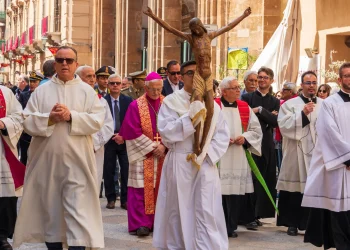
Easter in Italy: Processions, Traditions and the Easter Table
Italy – On Maundy Thursday, the bells fall silent; on Good Friday, hooded men carry torches through the streets; and on Easter Sunday, a fireworks cart explodes in front of Florence Cathedral. Easter, Pasqua in Italian,...

FAQ: Frequently Asked Questions About Holy Week in Sicily
Experiences & Tours in Sicily
Dates, times, prices, and schedules are subject to change. The brotherhoods and parishes will publish the programs for Easter 2027 during Lent; be sure to check them on the linked pages before your trip. Accommodation and restaurant recommendations are based on guest reviews and research from November 2026. We receive a small referral commission through the affiliate links on this page; this does not affect the price you pay.
Sources and Further Information
- Holy Week in Enna: Brotherhoods, Itinerary, and History (accessed November 2026)
- EnnaPress: Good Friday 2026 Program in Enna (accessed November 2026)
- Villa Romana del Casale: Hours and Admission Prices (accessed November 2026)
- Holy Week in Caltanissetta: Real Maestranza, Vare, Black Christ (accessed November 2026)
- Pro Loco Hippana: Program for Holy Week 2026 in Prizzi (accessed November 2026)
- Unione Maestranze Trapani: Misteri and Scinnute (accessed November 2026)
- Italia.it: Mysteries of Trapani, History and Itinerary (accessed November 2026)
- Archdiocese of Palermo: Holy Week Services 2026 (accessed November 2026)
- Balarm: Holy Week Among the Arbëreshë in Piana degli Albanesi (accessed November 2026)
- Holy Week in Leonforte: Ecce Homo, Good Friday, ‚Ncuontru" (accessed November 2026)
- Quotidiano di Ragusa: Madonna Vasa Vasa in Modica 2026 (accessed November 2026)
- Quotidiano di Ragusa: U Gioia in Scicli 2026 (accessed November 2026)
- LaPresse: Festa di li Schietti in Terrasini 2026 (accessed November 2026)
- Tp24: Visitor Information for the Misteri 2026 (Parking, Road Closures) (accessed November 2026)
- FS Italiane: Restoration of the railway line from Palermo to Trapani via Milo (accessed November 2026)
- UnipolMove: Palermo ZTL, Hours and Daily Pass (accessed November 2026)
- Modica IGP Chocolate: Production and Protection Since 2018 (accessed November 2026)
- Cuddura: Origin of the Name and Regional Names (accessed November 2026)
- Meteorological Service: Climate Data for Enna, 1971–2000 (accessed November 2026)
- Meteorological Service: Climate Data for Palermo Boccadifalco, 1971–2000 (accessed November 2026)
