Seven songs in the Genoese dialect, not a single word of Italian: that was the sound of an album released in 1984, the success of which not even its creator had anticipated. The title track, «Creuza de mä,» opens the album. Fabrizio De André wrote the lyrics, and violinist Mauro Pagani composed most of the music; the album was released by Dischi Ricordi in March 1984. Translated, the title roughly means „Path to the Sea,“ and that’s exactly where the story begins: with sailors coming ashore at night.
Today, «Creuza de mä» is considered one of the most important works in Italian music. In 2012, Rolling Stone Italia ranked the album No. 4 on its list of the best Italian albums of all time. In 2020, Mina, Vasco Rossi, and many others sang the song at the opening of the new highway bridge in Genoa; in 2025, it returned to the Sanremo stage with Bresh and Cristiano De André.
«Creuza de mä» by Fabrizio De André: Facts and Figures
One album, one language, two songwriters: key facts about the title track of Fabrizio De André's most famous album.
| Feature | Information |
|---|---|
| Performer | Fabrizio De André |
| Text | Fabrizio De André |
| Music | Mauro Pagani and Fabrizio De André |
| Production | Mauro Pagani and Fabrizio De André |
| Album | «Crêuza de mä,» Dischi Ricordi, March 1984, opening track |
| Language | Genoese, the Ligurian dialect of Genoa |
| Rankings | No. 4 on the list of the 100 best Italian albums, Rolling Stone Italia 2012 |
As of November 2026 · Information sourced from Wikipedia, Rolling Stone Italia, and Il Fatto Quotidiano.
How did «Creuza de mä» come about?
Fabrizio De André was born in Genoa on February 18, 1940, and became famous for songs such as «La canzone di Marinella» to become Italy's most important singer-songwriter. In the early 1980s, he was searching for a new sound. He found it with Mauro Pagani, the violinist and co-founder of the rock band Premiata Forneria Marconi, who had long been exploring the music of the Mediterranean.
The division of labor was clear. De André wrote all the lyrics, while Pagani developed the music and arrangements from his simple melodic sketches. Both are considered songwriters and producers. Pagani had doubts as to whether anyone outside of Genoa would even understand the lyrics. De André countered that even a listener in Sicily would grasp the meaning without knowing a single word. For everyone else, he included his own Italian translations with the record.
In March 1984, «Crêuza de mä» was released as De André’s eleventh studio album on Dischi Ricordi, the long-established Milanese music label. An album recorded in dialect defied all market conventions, and De André himself did not expect high sales figures. Critics, on the other hand, immediately hailed the album. American musician David Byrne, lead singer of the Talking Heads, called it one of the most important releases of the decade in *Rolling Stone*.
What is «Creuza de mä» about?
«Creuza de mä» tells the story of sailors and fishermen from Genoa who, after a hard day's work at sea, return to shore at night and gather at a tavern for a meal. For one evening, their austere lives become a little easier.
The title itself is already evocative. A crêuza In the Genoese dialect, it refers to a narrow, often cobblestone path between walls that connects coastal villages with the hinterland. De André emphasized that the common translation as a “mule trail” isn’t quite accurate: it refers to the path that separates two properties. In a figurative sense, it also refers to the streaks that wind and currents draw on a calm sea, which look like roads you could drive on.
The Lyrics, Verse by Verse
You can find the full lyrics on Spotify and Apple Music; here, we’re focusing on the visuals. The first verse depicts the men on their way home from the sea. They’ve been away so long that they feel like strangers in their own harbor, and they wonder who they’ll meet that evening: smugglers, young women from good families, the characters of the port city.
The destination is Andrea’s house, a tavern. Andrea is a fictional character and not a sailor; perhaps he represents De André himself. The text lists real and fictional dishes and hints that a cat—not a rabbit—is simmering in the pot. The sailors’ distrust of the mainland is a joke here, but a joke with a grain of truth.
The chorus has almost no meaning. De André and Pagani sing syllables that don’t form any words and sound more like Sardinian than Ligurian. That’s precisely why it sticks in your head: it’s pure sound, like a call across the water.
At the end of the song, you can hear real vendors from the fish market in Genoa calling out their wares. Pagani recorded them on site and later explained that they were all singing in D major, even though most of them didn't know what a key was.
How does the Mediterranean sound in this song?
The song begins with the sound of a gaida, a Greek bagpipe. After that, a recurring motif played on a plucked violin carries the piece—the Pagani ndelele ... Oud, bouzouki, mandolins, and drums from the eastern Mediterranean replace the usual pop lineup.
The rhythm doesn't follow the radio either. The verses are in 4/4 time, while the chorus alternates between measures with five, six, and four beats. Anyone trying to clap along will lose their count, and that's exactly what makes it so captivating. Italian critics hailed it as a milestone in world music.
«Creuza de mä» on video
At the very top of the post is a live recording of Fabrizio De André from his official channel. Below that, you can see his son, Cristiano De André—a singer and multi-instrumentalist in his own right—performing the song on January 7, 2025, on the Rai program «Gli occhi del musicista.» A few weeks later, he sang it at the Sanremo Festival.
Available for listening on streaming services:
Listen to the whole album in one sitting, with headphones
The album is just over 33 minutes long. Listen to all seven songs in the correct order.
At the end of the title track, listen for the shouts from the fish market and then for the transition into «Jamín-a.» If you listen with headphones, you’ll hear how many little instruments Pagani has hidden in the background. There’s no better way to get to know Genoa before your trip.
Who covered «Creuza de mä»?
Mauro Pagani himself re-recorded the entire album in 2004. In 2014, to mark the 30th anniversary, he also remixed the original tapes.
The most moving new version was released in 2020. On the initiative of Dori Ghezzi, the singer and widow of De André, and under Pagani’s direction, some of Italy’s greatest voices recorded the song for the inauguration of the new Genova San Giorgio Bridge on August 4, 2020. Among those participating were the singers Mina and Ornella Vanoni, rock star Vasco Rossi, Zucchero, Gianna Nannini, the singer-songwriters Francesco Guccini and Ivano Fossati, jazz trumpeter Paolo Fresu, and Cristiano De André. The bridge replaces the Morandi Bridge, whose collapse in 2018 claimed the lives of 43 people.
At the 2025 Sanremo Festival, rapper Bresh—who is from Genoa himself—and Cristiano De André performed the song on the night of the cover versions. Due to technical problems, the two took the stage at the Teatro Ariston a total of three times that evening to perform the song.
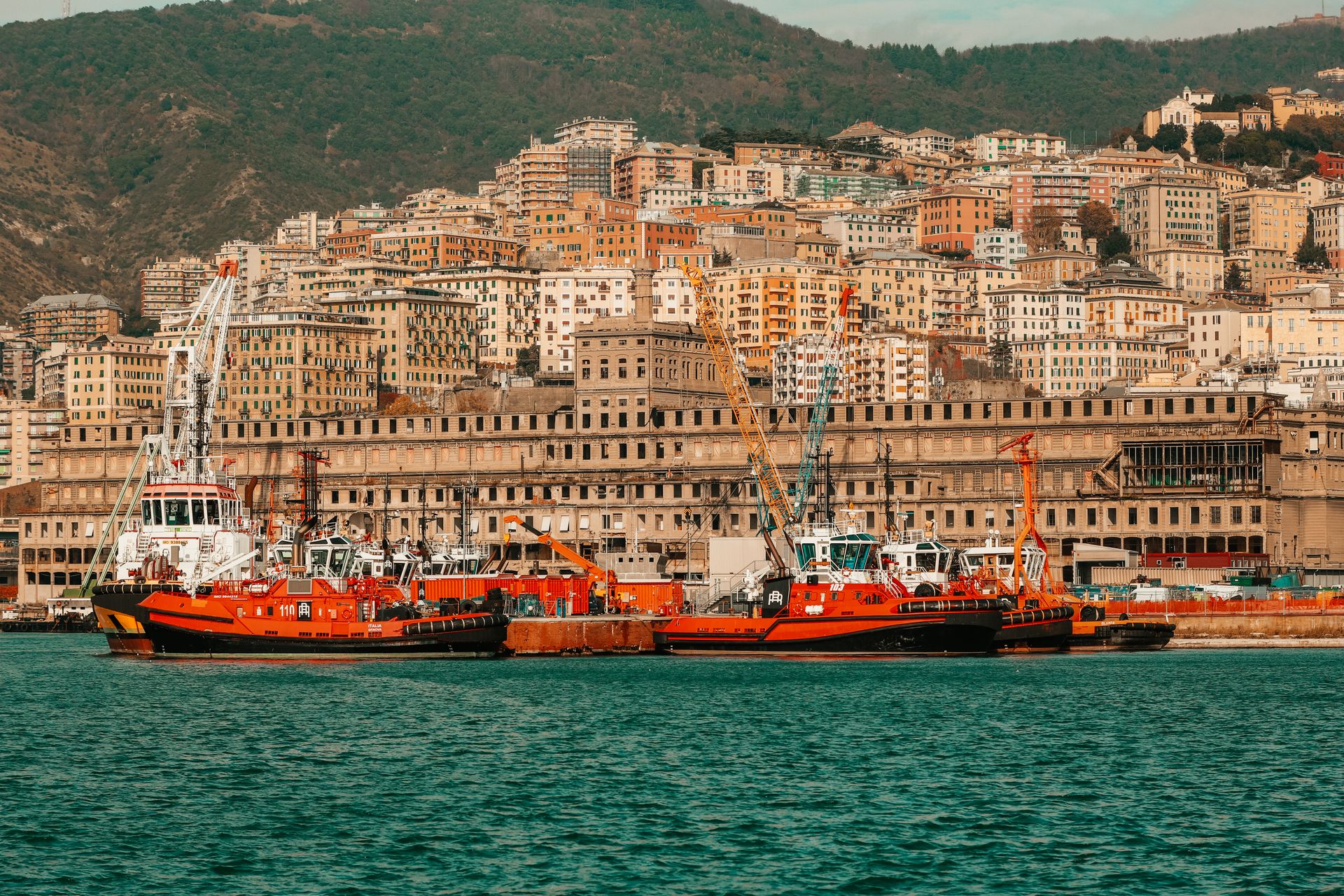
Genoa, the City Behind the Song
Five of the seven songs on the album are about Genoa, and «Creuza de mä» begins where the city meets the water. The sailors come ashore at the harbor; the shouts at the end come from the fish market in Piazza Cavour on the edge of the old town. Anyone walking today through the narrow alleys that caruggi, which leads down to the harbor, follows the same paths.
Right nearby is the old harbor, which architect Renzo Piano has transformed into a vibrant neighborhood. You can find out what you should see there in our article about the Porto Antico. You can find attractions, neighborhoods, and practical tips for your visit in our Genoa City Guide.

Genoa City Guide
Genoa: The Proud Heart of the Italian Riviera With a population of around 560,000, Genoa, the capital of Liguria, is the vibrant heart of northwestern Italy. Geographically, the city impresses with its prominent location on...
Conclusion: a song that opens Genoa up to the Mediterranean
«Creuza de mä» shows that a song doesn’t need intelligible words to be understood. Since 1984, the song has captured the essence of an entire port city. If you want to delve deeper into De André’s Genoa, listen to this next «Via del Campo» About the Famous Alley in the Old Town or the Ballad «The Fisherman». You can find all the song profiles in our overview of the Italian music.
FAQ: Frequently Asked Questions About «Creuza de mä»
Sources and Further Information
- Wikipedia (Italian): Creuza de mä (accessed November 2026)
- Wikipedia (English): Crêuza de mä (accessed November 2026)
- Rolling Stone Italia: Mina, Vasco, and Guccini Sing "Crêuza de mä" for the Genoa Bridge (accessed November 2026)
- Il Fatto Quotidiano: "Creuza de mä" Re-recorded for the San Giorgio Bridge (accessed November 2026)
- Il Fatto Quotidiano: Bresh and Cristiano De André at Sanremo 2025 (accessed November 2026)