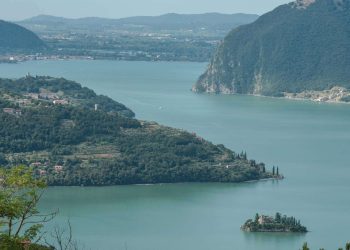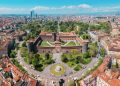

Brescia – Most people don't get off the train between Milan and Lake Garda, and that's exactly why you're standing here in front of a Roman temple without having to wait in line.
Brescia's main attractions are all located within a small area: The Capitolium from A.D. 73, the Monastery Museum Santa Giulia and the castle on the Colle Cidneo You can get there on foot in a quarter of an hour. A combined ticket for €19.00 grants you access to the Archaeological Park and four museums—and it's valid through August 22, 2027.
This guide shows you the seven highlights, including prices and opening hours, how to get from the train station to the city center, the rules for the restricted-traffic zone, and the days when you don't have to pay anything at all.
Brescia at a Glance
Brescia is located in Lombardy between Lake Iseo and Lake Garda. The Archaeological Park and the four municipal museums are covered by two combined tickets; both are valid through August 22, 2027, and each grants you one admission per venue. All venues are closed on Mondays, but the castle is open 365 days a year.
As of September 2026 · Prices and hours as provided by Fondazione Brescia Musei, Brescia Mobilità, and the City of Brescia.
- Fans of Roman and medieval history
- City travelers with two days to spare
- For those who want to combine Lake Garda with culture
- Budget-conscious: one ticket, five houses
- Monday Visitors
- Anyone who wants to drive right up to the door
- Beach vacationers who aren't interested in taking day trips
- Anyone who wants to see ancient theaters
How much do the attractions in Brescia cost?
A combined ticket for €19.00 covers almost everything you'll want to see in Brescia: the Archaeological Park Brixia with the Capitolium, plus the Santa Giulia Museum, the Art Gallery Tosio Martinengo Art Gallery, the Weapons Museum Luigi Marzoli Arms Museum and the Risorgimento Museum in the Castello. If you skip the park, you'll pay €15.00. Both tickets grant you one admission to each venue and are valid through August 22, 2027—so you don't have to see everything in one day.
How much you pay for tickets in Brescia
| Offer | Price |
|---|---|
| Combined Ticket: Archaeology Park and Four Museums | €19.00 · €16.00 for those 65 and older |
| Multi-ride ticket, under 26 years of age | 12,00 € |
| Ticket for the four museums (park not included) | €15.00 · €12.00 for those 65 and older |
| Museum ticket, for those under 26 | 8,00 € |
| Groups of three or more people | €14.00 with parking · €10.00 without |
| Subway and bus, 90 minutes in Zone 1 | 1,70 € |
| 24-Hour Metro and Bus Pass | 3,80 € |
| Parking within the Venetian walls | 3.00 € per hour |
As of September 2026 · Museum admission prices according to Fondazione Brescia Musei; transit fares and parking rates according to Brescia Mobilità.
Admission is free on several days throughout the year: February 15 for the feast day of the city’s patron saints, International Museum Day on May 18, Christmas Day, Women’s Day, Mother’s Day, and Father’s Day—and on your own birthday. Admission is also free for children under five and for the third and subsequent children in a family up to age 18.
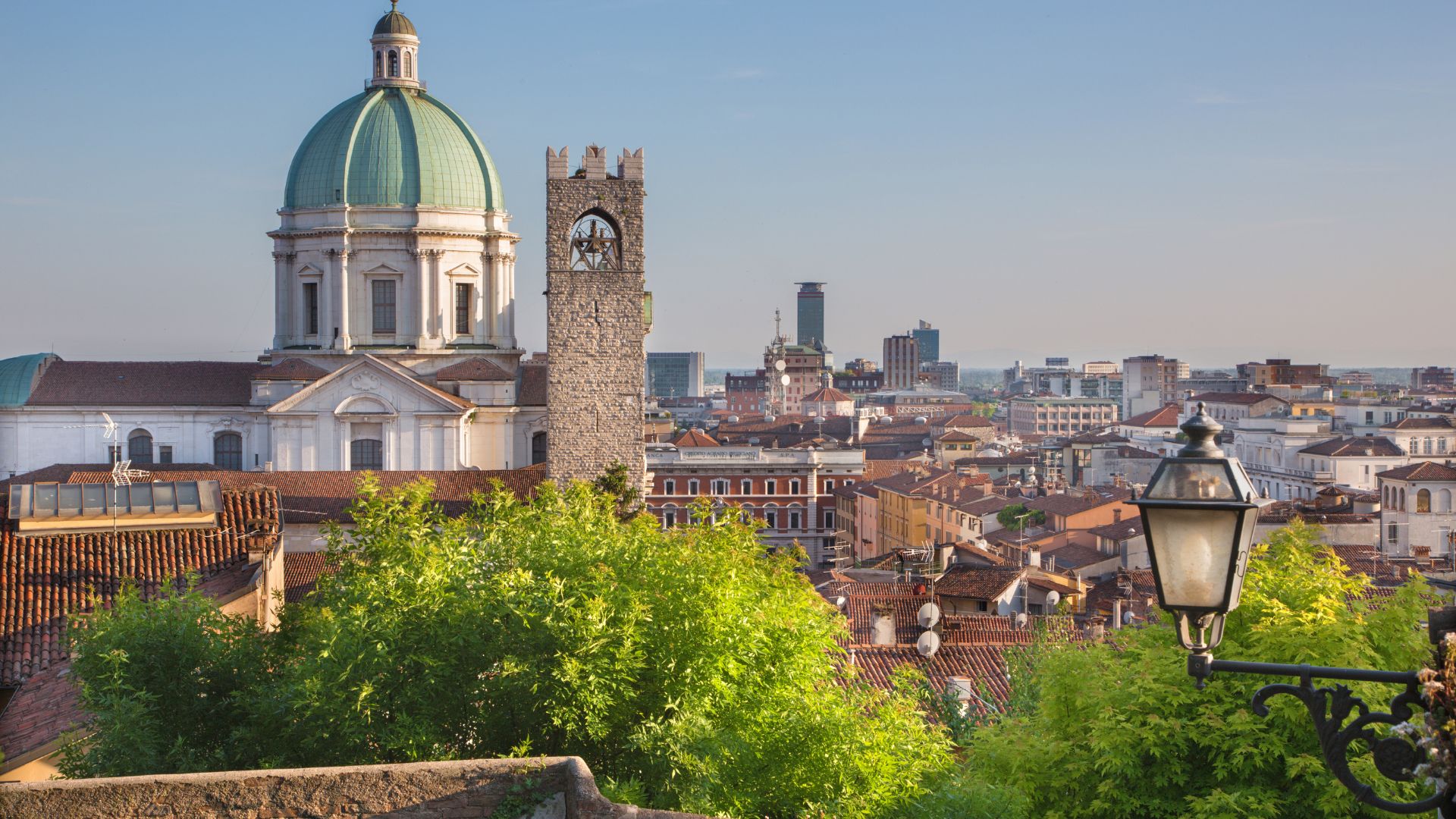

Lombardy Travel Guide
Lombardy Travel Guide: The Most Beautiful Places from Milan to Lake Como, Best Time to Visit, How to Get There, and Accommodations—an overview of all Lombardy articles from italien.news.
What are the 7 must-see attractions in Brescia?
The tour takes in seven locations, six of which lie along a single axis. The Via dei Musei – the street that runs right through the Old Town – lies on top of the Roman pavement decumanus maximus, the ancient main street of Brixia. If you follow it, you'll go from the Archaeological Park through the Monastery Museum all the way to the trail up to Burgberg without ever having to change direction.
1. Brixia, the Archaeological Park with the Capitolium
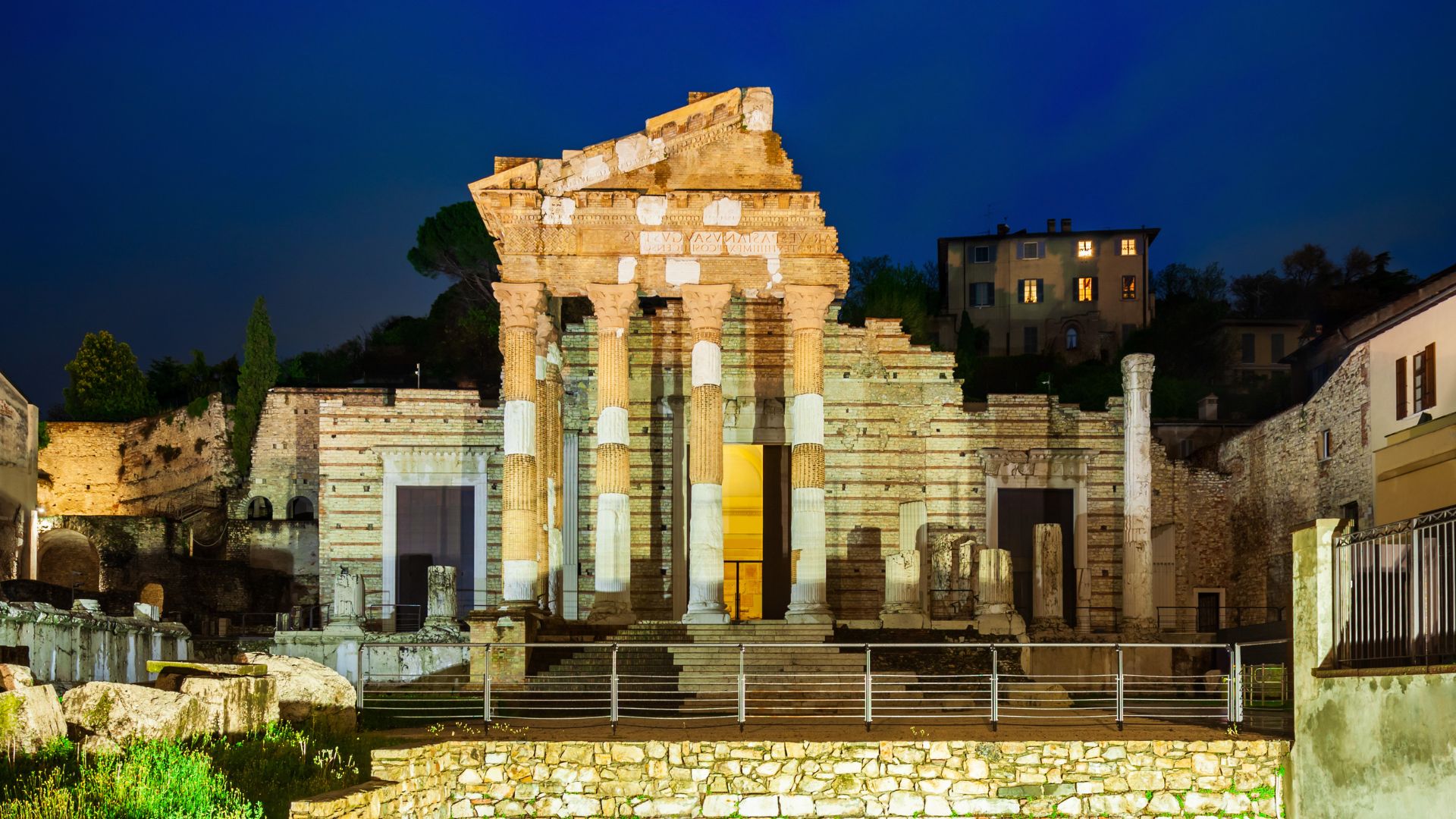
Right in the heart of the historic Old Town lies one of Italy's best-preserved Roman city centers. The Capitolium, the Temple of the Capitoline, was consecrated in A.D. 73; next to it stand a shrine dating from the 1st century B.C. and the remains of a theater dating from the 1st to the 3rd centuries A.D.
The centerpiece has been back in the Temple Cell since December 17, 2020: the Vittoria Alata, a winged bronze statue of the goddess of victory. Archaeologists found it on July 21, 1826, in the ruins of the temple. It took two years to restore it, and the Opificio delle Pietre Dure, the state-run restoration workshop in Florence; the Spanish architect then designed Juan Navarro Baldeweg redesign the space for her.
Good to know: The Roman theater is closed due to construction. You can still see the temple, the sanctuary, and the bronze goddess—and for the rest of the site, a view from the street is all you need anyway.
2. Museo di Santa Giulia, the monastery of the last Lombard king
The monastery is just a few steps away San Salvatore–Santa Giulia, the king Desiderius —the last ruler of the Lombards—founded in 753. Today it serves as the city museum, and has been a UNESCO World Heritage Site since 2011 The Lombards in Italy: Places of Power, a serial site consisting of seven components.
There are three items you should look for: the Croce di Desiderio, a 9th-century Carolingian processional cross set with 212 gemstones, cameos, and glass pastes; the Lipsanoteca, an ivory box from the 4th century; and the Domus dell’Ortaglia, two Roman residential buildings dating from the 1st to the 4th century, located beneath the monastery garden—featuring mosaic floors and murals still in place.
Plan to spend more time here than at the other buildings. The museum spans cloisters, churches, and excavation levels; two hours go by quickly.
3. The Castello on Colle Cidneo
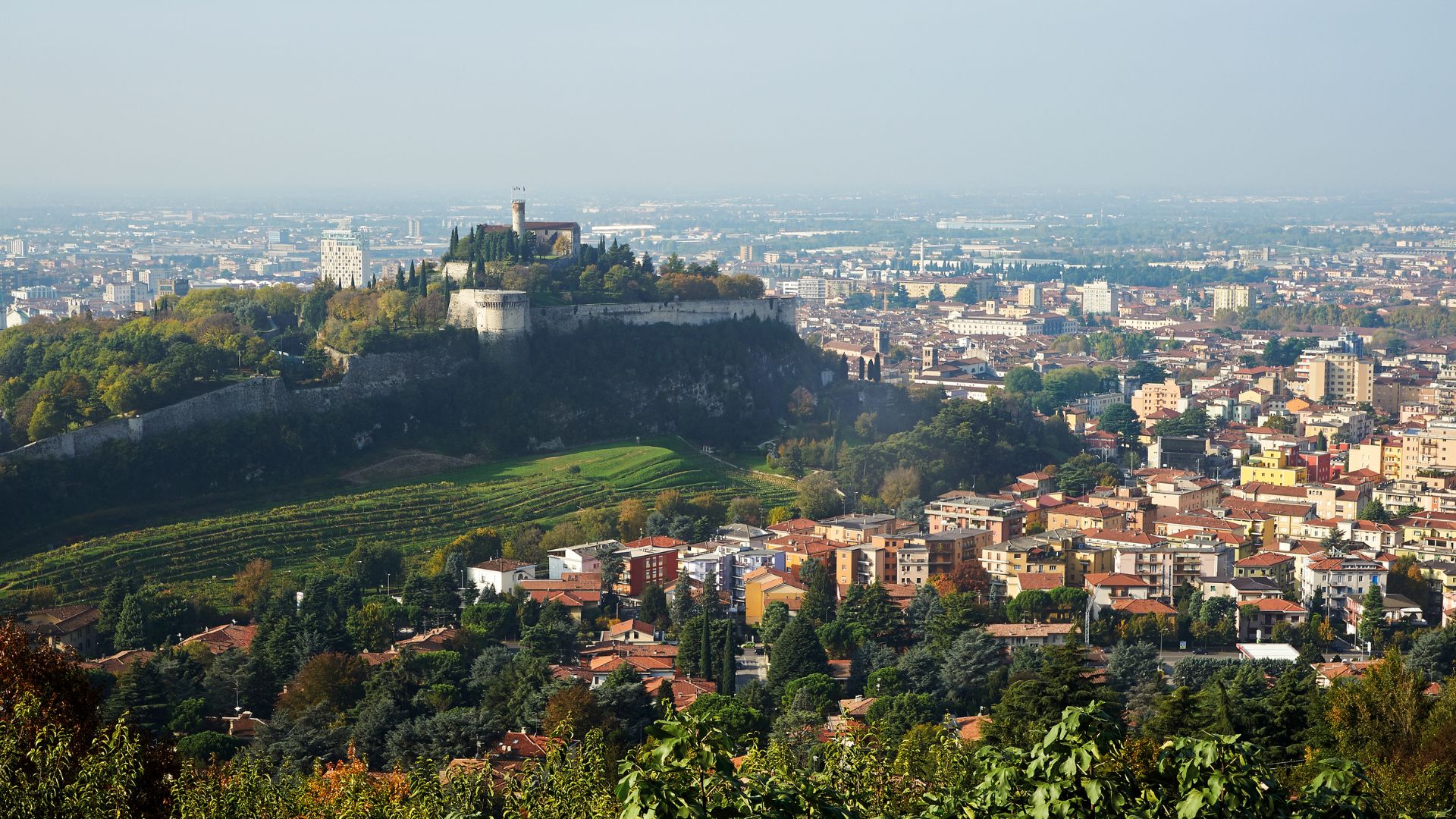
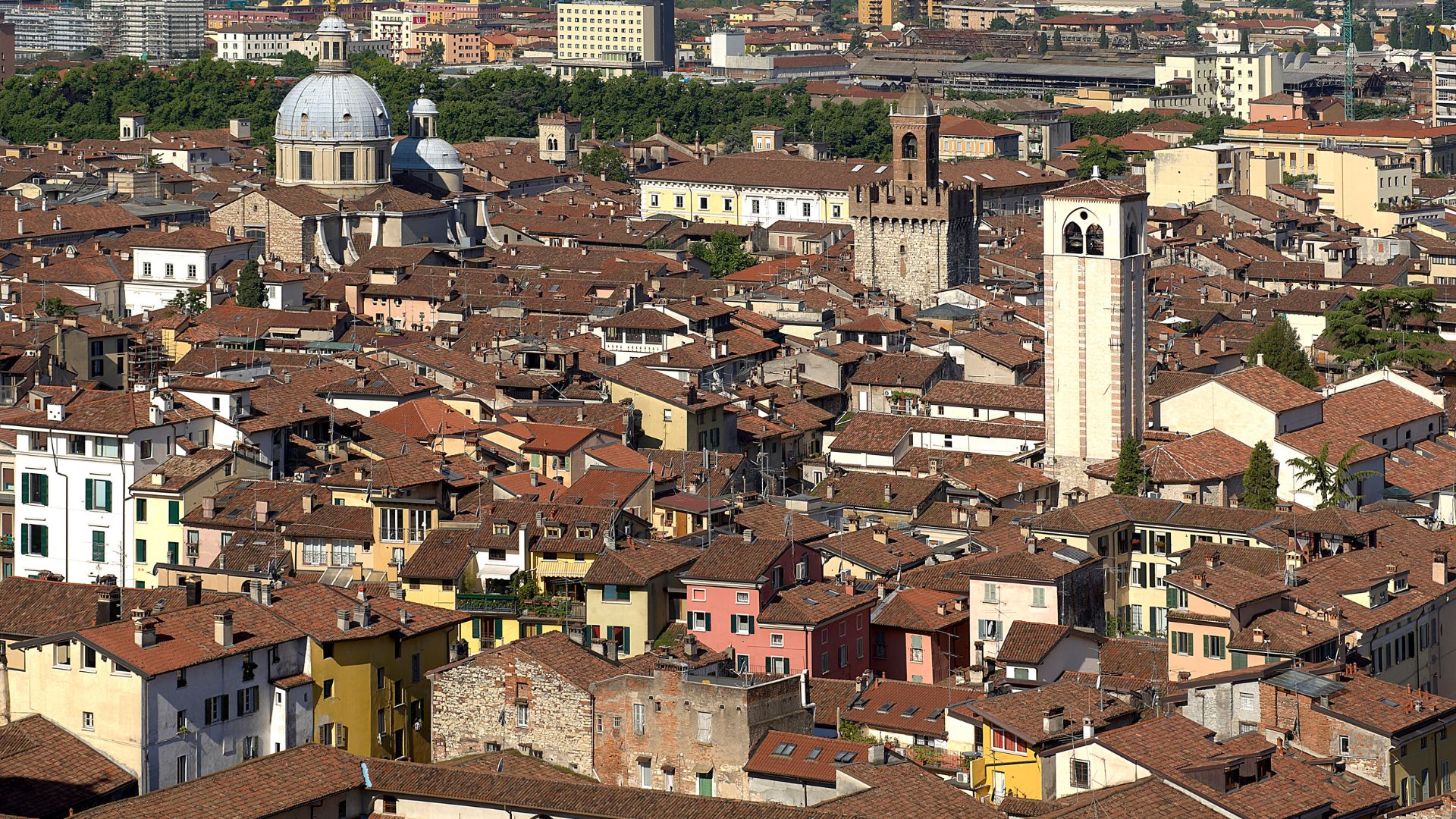
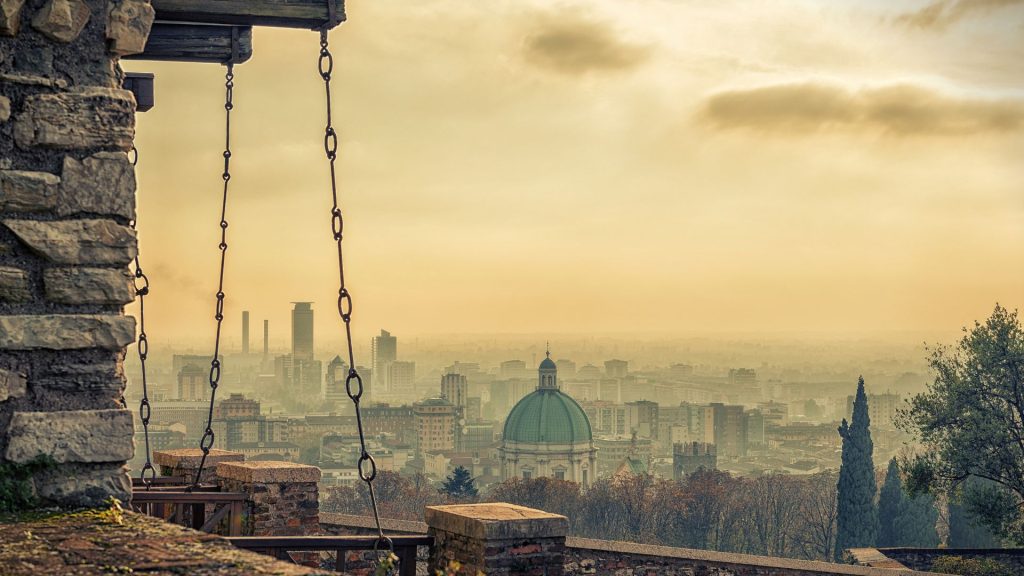
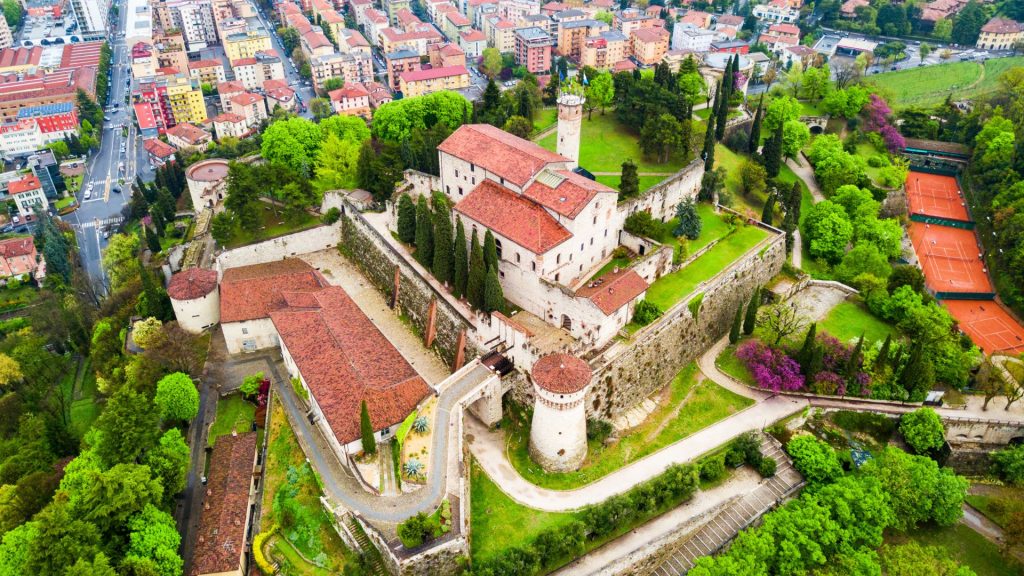
One of the largest fortifications in northern Italy overlooks the Old Town. The Mastio, the medieval core building, bears the Tower of the Prisoners – the prison tower – and a drawbridge; the Torre Mirabella Next to it are the last remaining ruins of the church Santo Stefano in Arce. The massive bastions and the monumental gateway date back to the approximately four centuries during which Venice ruled the city.
Inside, you'll find two museums included in the combined ticket: the Weapons Museum Luigi Marzoli and the Museum of the Risorgimento: Leonessa of Italy. The nickname Lioness of Italy, Italy's "Lioness," addresses the uprising of the Ten Days Back to "Ten Days in Brescia": A Secret Committee Led by the Patriot Tito Speri and the curates of Serle, Don Pietro Boifava, was formed in 1848; the uprising against the Austrians began on March 23, 1849.
The area itself has no restricted hours: It’s open 365 days a year from 6 a.m. to 11 p.m., except during events. From the train station, it’s about a 20-minute walk uphill; from the metro station, San Faustino There are ten.

4. Piazza della Loggia, the square with the clock tower
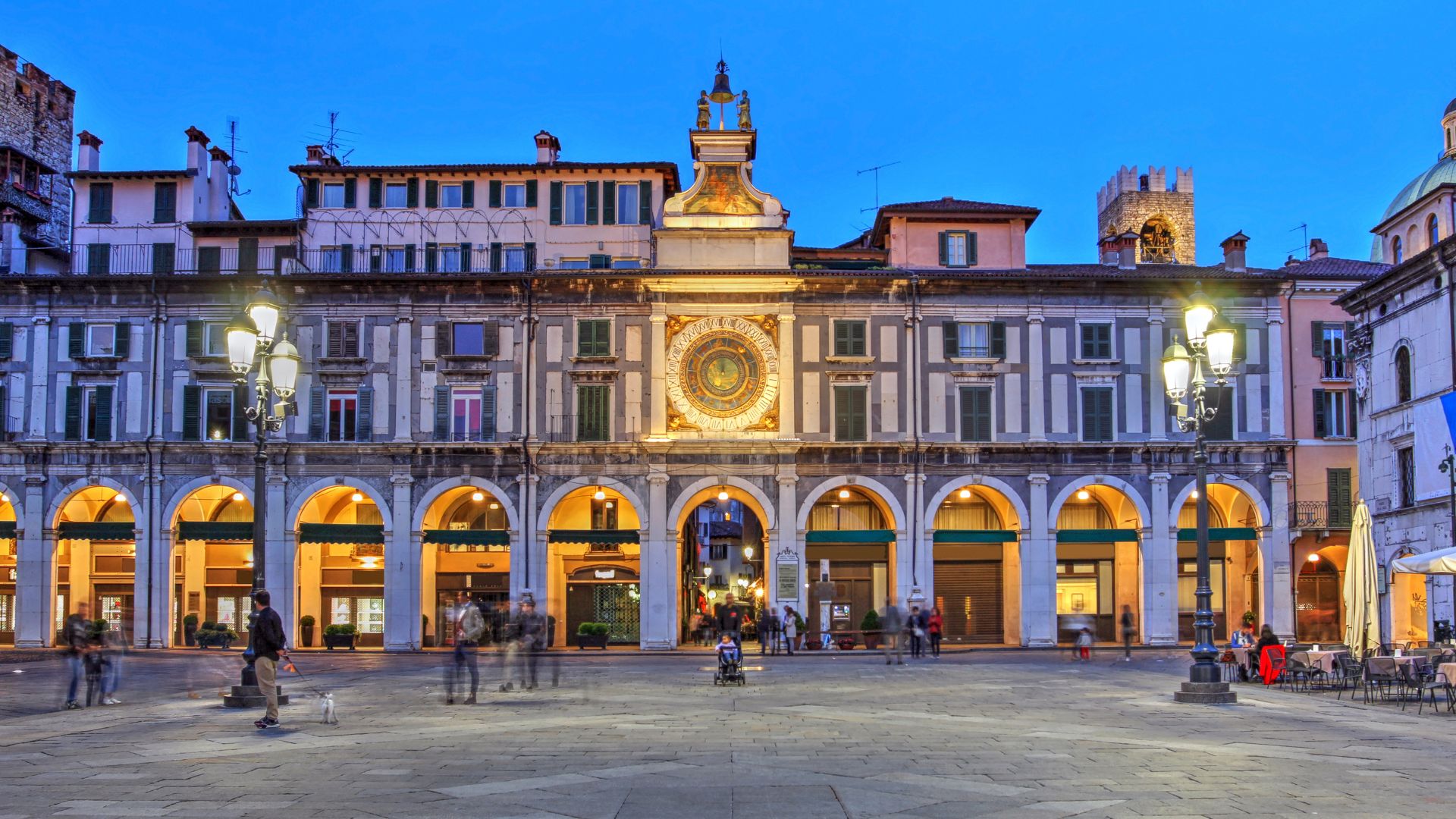
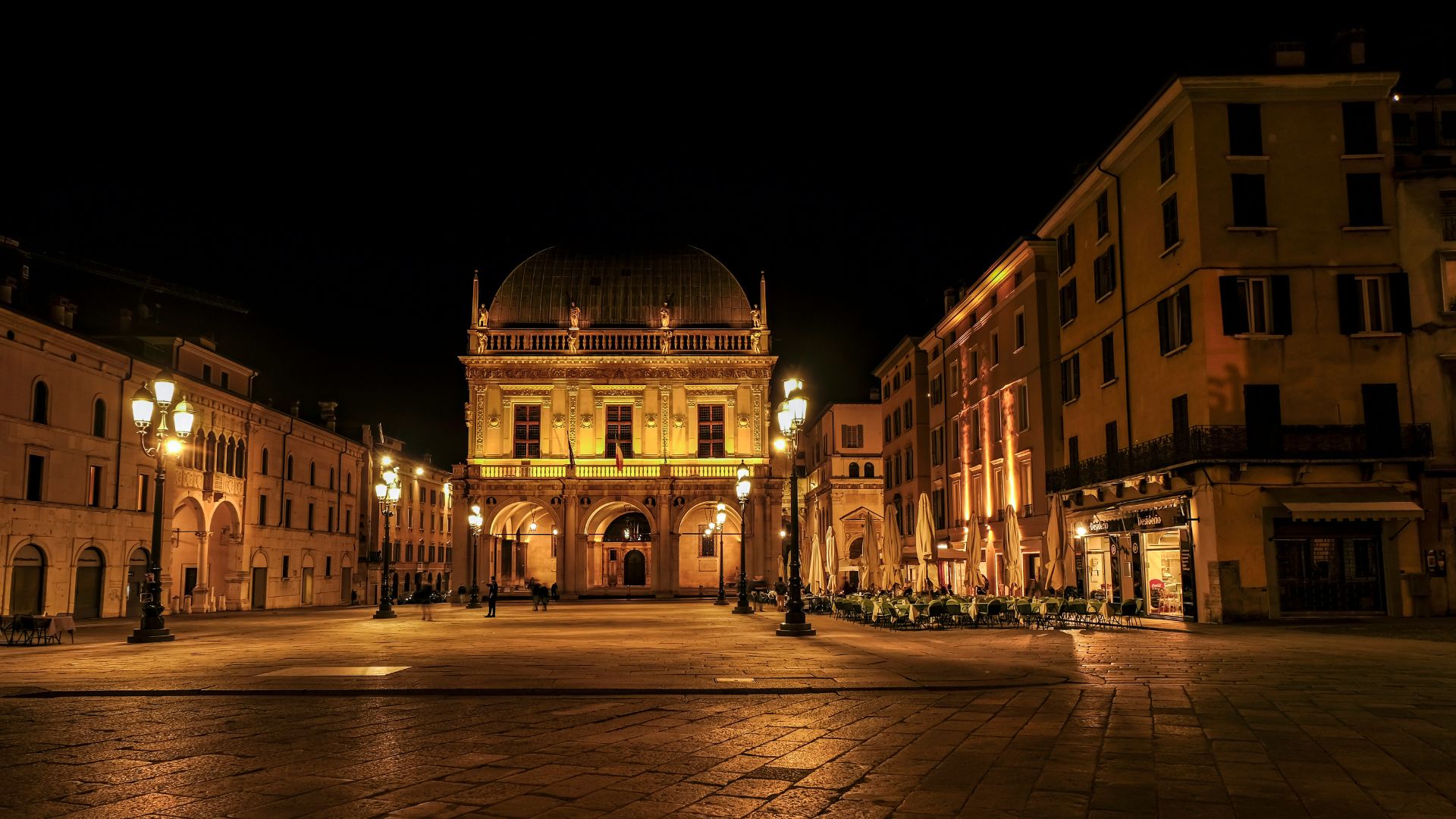
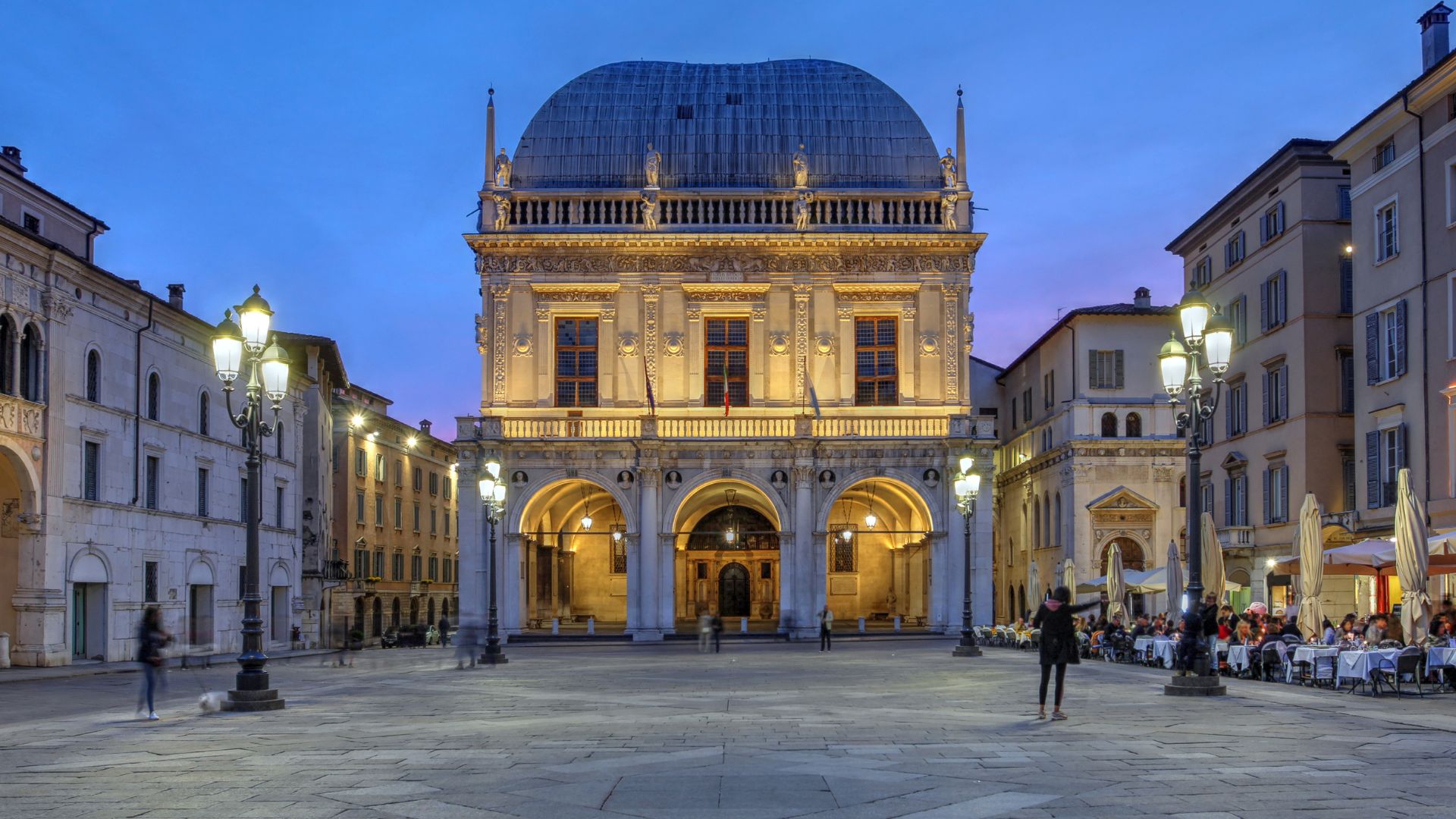
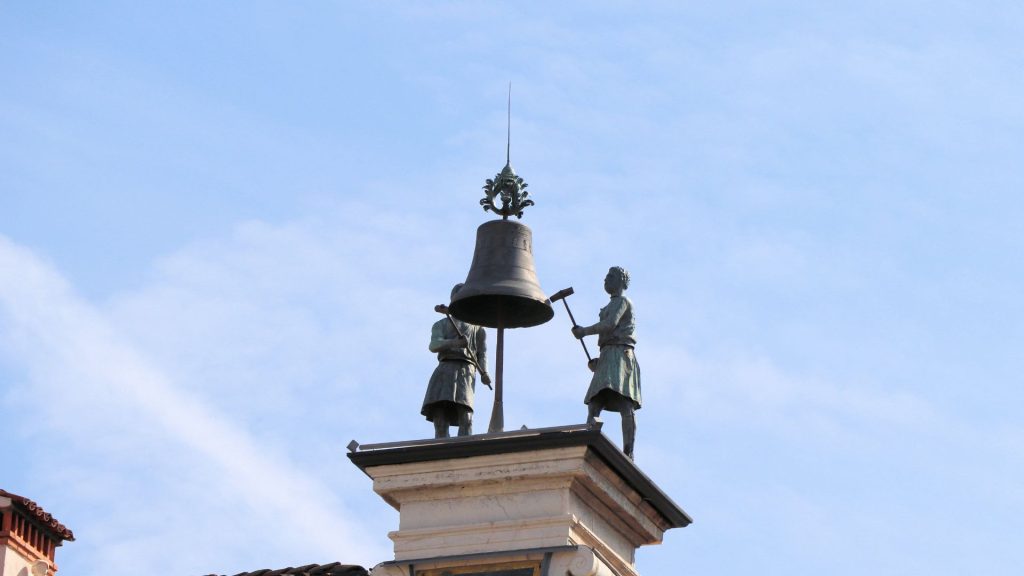
The Piazza della Loggia is the place where Brescia reveals its true self. On one side stands the Palazzo della Loggia, where the city administration is located—the address of the Comune is simply Piazza della Loggia 1. Across the street stands the Clock Tower, the clock tower, which features an astronomical dial, and on its roof, two bronze figures strike the hour, which the people of Brescia Macc de le ure call them—the clock-watchers.
The square is located right in the middle of the pedestrian zone, with cafés lining the arcades. To enjoy a coffee at the edge of the square, you don't need a ticket or to check the hours—just an evening when the lights come on.
5. Duomo Vecchio and Duomo Nuovo, two cathedrals side by side
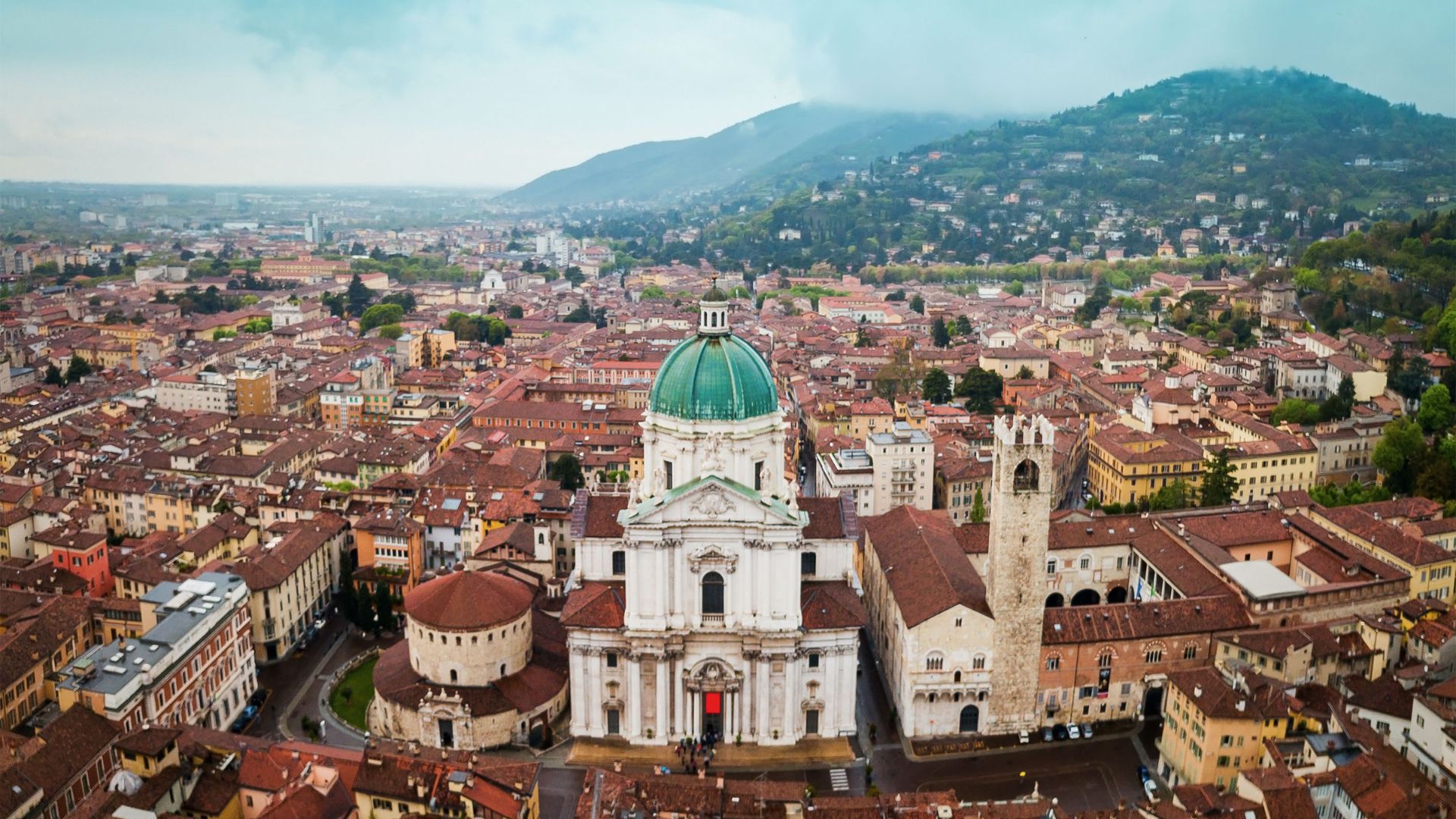
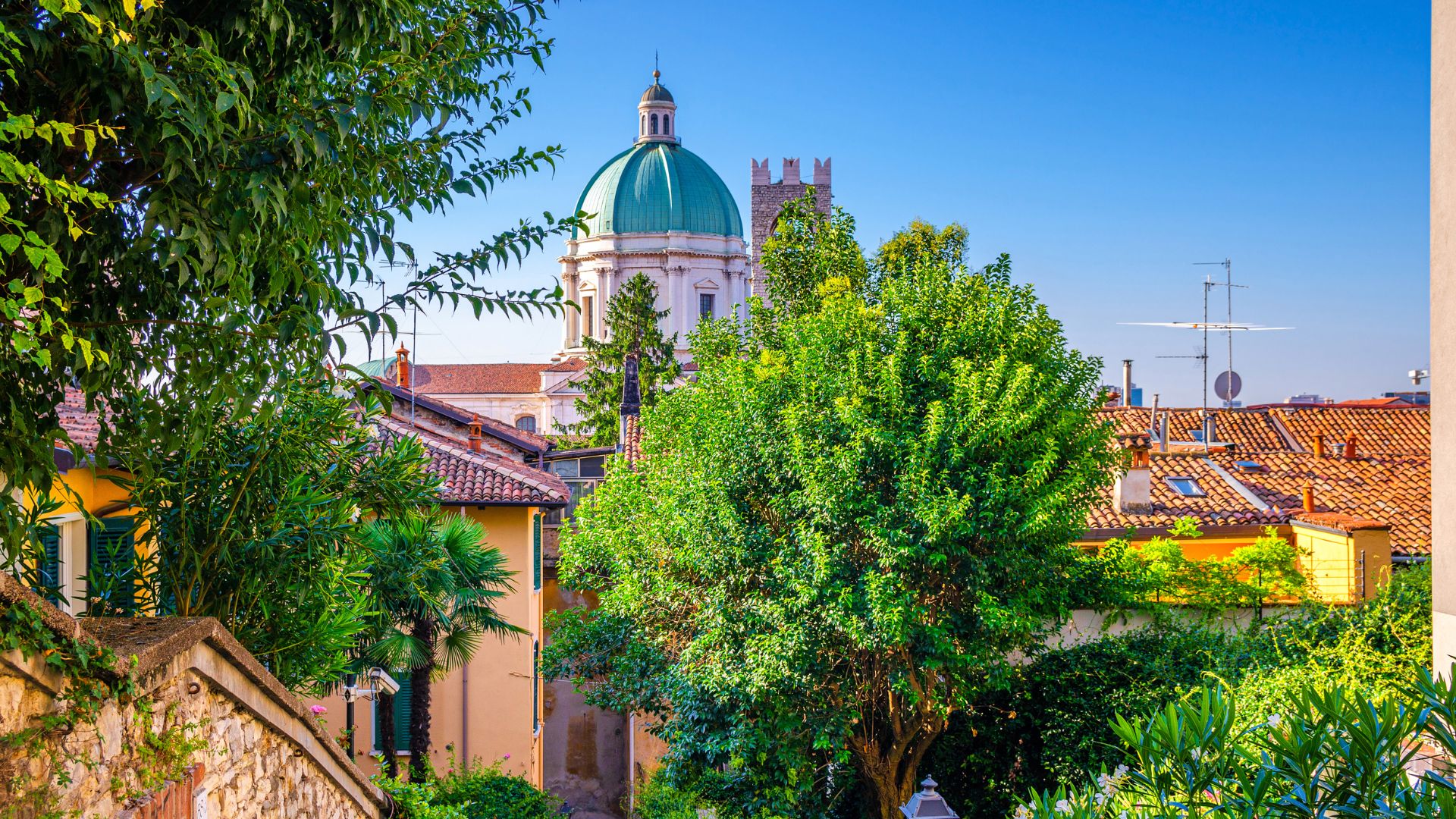
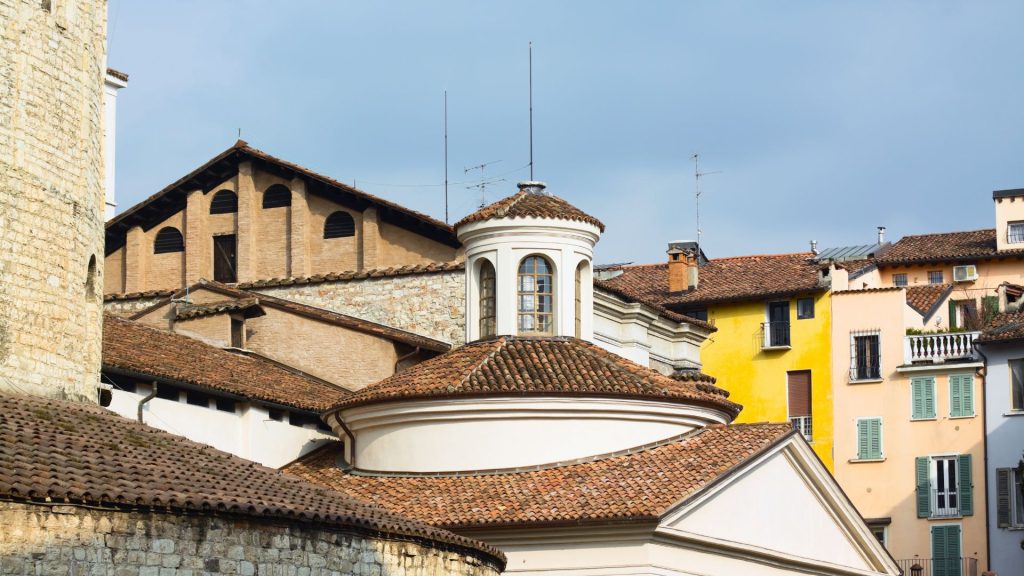
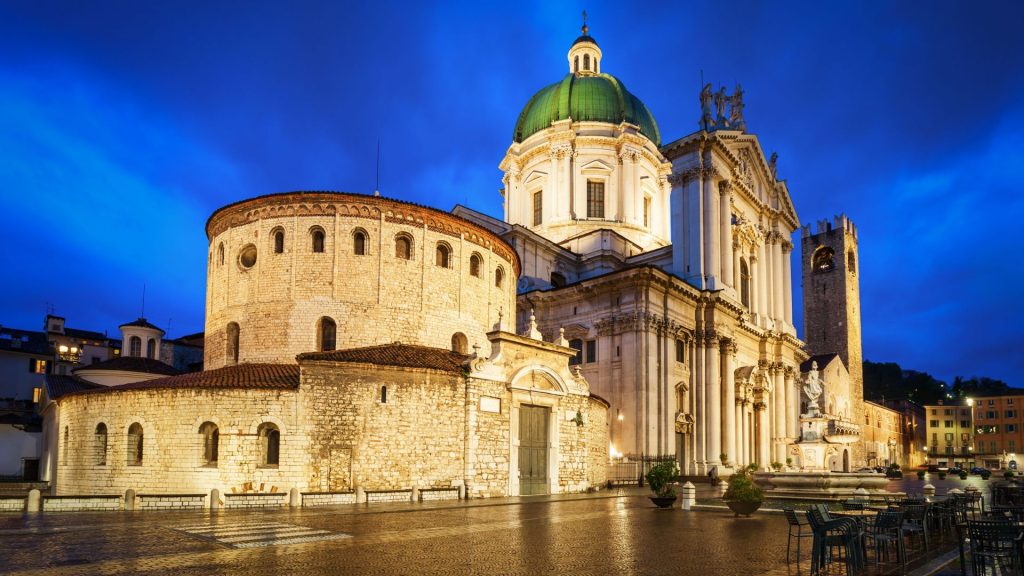
At the Piazza Paolo VI There are two domes standing side by side. The Old Cathedral, also known as La Rotonda ...is a Romanesque round building that you enter by descending a flight of steps. Next to it stands the New Cathedral whose bright dome you can recognize from any vantage point in the city.
The Diocese of Brescia lists the following hours for the cathedral, or the Duomo Nuovo: Monday through Friday from 7:00 a.m. to 6:45 p.m., and Saturdays and Sundays from 7:00 a.m. to 7:30 p.m. The Duomo Vecchio is open daily from 9:30 a.m. to 6:00 p.m.
Good to know: Both are active churches, and parts of them are cordoned off during Mass. If you want to see the rotunda in peace, visit in the morning between services—the Duomo Vecchio is usually almost empty then.

6. Pinacoteca Tosio Martinengo, the city's art museum
The Tosio Martinengo Art Gallery is the city art gallery and is located in the southeastern part of the Old Town, just a few steps from the Arnaldo Square far away—the square with the long row of arcades, where the bars fill up in the evening.
For holders of a combined ticket, the gallery is the quietest spot of the day: It follows the same hours as the other museums but is significantly less crowded than Santa Giulia. If you’ve had enough of stones after two hours of exploring the excavation levels, you’ll find paintings and benches here.

7. Piazza della Vittoria: The Other Side of the City
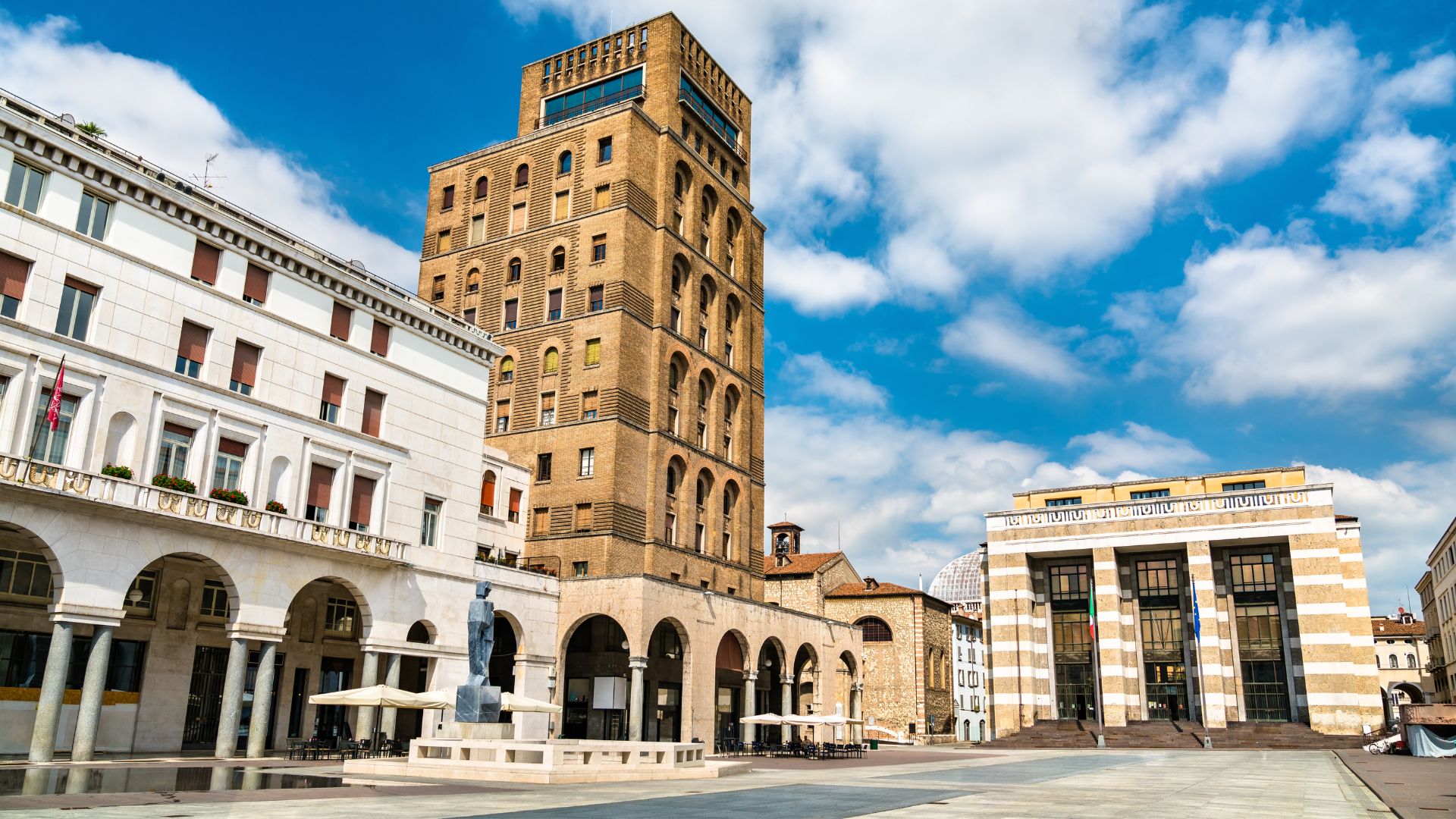
Just a few steps away from the loggia, Brescia enters a new era. The Piazza della Vittoria is a square made of marble and featuring right angles, built in the 20th century, with the Torrione as an eye-catcher—the brick high-rise at one end of the square.
Many visitors walk right through here without even looking, because the square seems austere compared to the medieval Loggia. That's exactly what makes it interesting: six centuries separate these two squares, and it's just a five-minute walk between them. The subway station Vittoria is located right below it—from here, it's a 15-minute walk to the castle.

Magical Lombards: 7 places of power as UNESCO World Heritage Sites
The UNESCO World Heritage Site „The Lombards in Italy—Seats of Power (568–774 CE)” comprises seven outstanding monuments from Late Antiquity and the Early Middle Ages. They reflect the political, religious, and cultural development...
How do you get to Brescia and around the city?
The easiest way is by train: The train station is located on the southern edge of the Old Town; from there, it’s about a 20-minute walk to the Burgtor. If you’re flying, you have a choice of three airports—the Fondazione Brescia Musei lists the distance as 20 kilometers for Brescia, Gabriele D'Annunzio, 56 kilometers for Bergamo Orio al Serio and 70 kilometers for Verona, Valerio, Catullus.
A driverless metro runs in the city. It operates from 5 a.m. to midnight, and until 1 a.m. on Saturdays, except on Saturdays that fall on a holiday. For the entire route between the terminal stations Prealpino and Sant’Eufemia-Buffalora It takes about 30 minutes; between two stations, it takes one and a half to two minutes. A 90-minute ticket costs €1.70 and is valid for both the metro and the bus; a day pass costs €3.80, and a weekly pass costs €14.00. You must validate your ticket—in the metro, do so before the red line on the floor.
It's best not to drive right up to the door. Both metro terminal stations have large parking garages: Prealpino on Via Triumplina, with about 1,000 seats, and Sant’Eufemia-Buffalora across from the terminal station, with about 400 spaces. If you still want to go downtown, you'll find the parking garage at the train station Station with a capacity of about 1,000 seats and at the Arnaldo Square the Arnaldo Park with about 300.
On the street, Zone A—all parking spaces within the Venetian walls—costs €3.00 per hour; fees apply from 9 a.m. to 8 p.m. every day except holidays, and you may not park there for more than two hours. Further out, the rates are €2.10 (Zone B, maximum of three hours) and €1.60 (Zone C). Bikes are available via BiciMia, the city's bike-sharing system with 98 stations: The first 45 minutes are free; it costs €1.00 for up to two hours and €2.00 for up to three hours.
The Old Town is a ZTL – one Zona a Traffico Limitato, which only authorized vehicles are permitted to enter. Twenty-four access points are monitored by cameras. In the inner area surrounding the museums and the historic center, the restrictions apply around the clock. If your hotel is located in the zone, have the hotel register you before your arrival; the permit office is located in the parking garage at Piazzale Arnaldo and is open Monday through Friday from 9 a.m. to 12 p.m. and from 2 p.m. to 4 p.m.

What should you definitely try in Brescia?
Brescia’s cuisine comes from the countryside and the mountains, not from the sea. The plates are filled with meat, polenta, and cheese from the valleys north of the city, accompanied by a sparkling wine that has earned Italy’s highest designation of origin.
The court to which the city is affiliated is the Brescian spit roast: a skewer of various cuts of meat, with sage leaves tucked in between, that rotates over the fire for hours and is served with polenta. This isn’t just an appetizer—it’s an entire evening. A tip for last-minute diners: You’ll rarely be able to get the spiedo on the spot. Many places only prepare it on certain days or by advance order—a call the day before will save you a detour.
The casoncelli, Brescia-style casonsei, are stuffed dumplings and a subject of dispute: Bergamo also claims them as its own. What's more interesting is how they have changed over time. Until the 19th century, the filling was sweet and sour, made with pears, almonds, and crushed mostaccioli — that's how the Regione Lombardia website describes it. Today, it's filled with meat or sausage stuffing, seasoned with pepper, cinnamon, and nutmeg. A good match for the traditional version is a Lugana or a San Martino della Battaglia.
Next to them are the malfatti, Spinach and cheese gnocchi, braised in oil Beef in Olive Oil from nearby Rovato, the slow-cooked stracotto and the bertagnì, deep-fried stockfish. If you're short on time at lunchtime, you can get casoncelli almost anywhere; for everything else, you'll need a table in the evening.
When it comes to cheese, two names are worth the detour. The Silter DOP is a hard cheese made exclusively from raw milk; it comes from the Valle Camonica and from the Sebino, the area around Lake Iseo, where it ages for at least one hundred days and tastes sweet when young, becoming spicy to peppery over the months. Its name comes from the silter, the aging cellars of the Alpine valleys. The Bagòss from Bagolino in the Càffaro Valley is a hard mountain cheese to which saffron is added—hence its color.
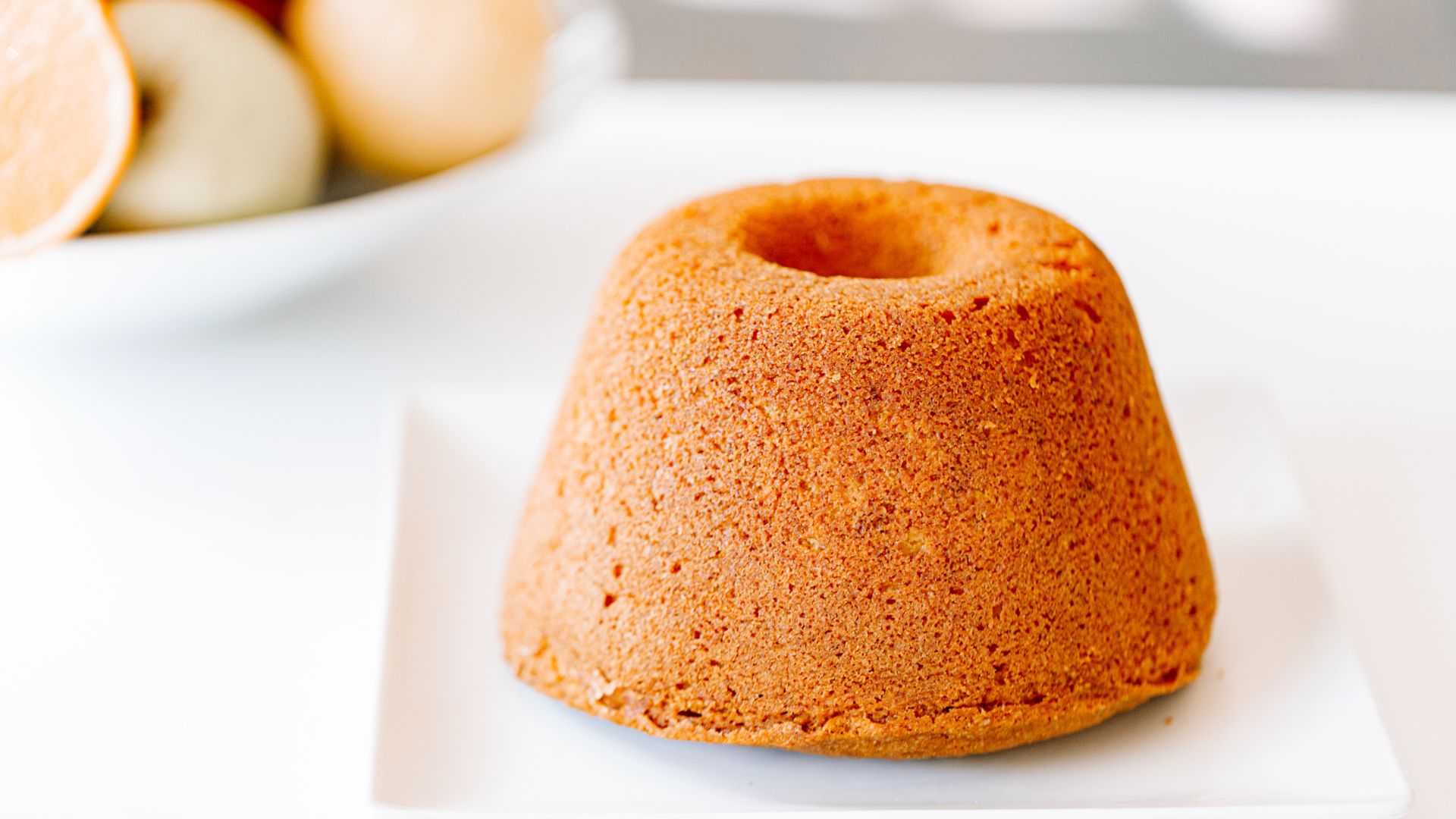
And then the Bossolà, the city’s traditional pastry: a ring baked in a wreath-shaped pan, made in equal parts of white flour and potato starch, plus sugar, butter, four eggs, and the grated zest of a lemon and an orange. The egg whites are beaten to stiff peaks and folded in; it is baked at 170 degrees for about 40 minutes. In the past, it was leavened with baking soda and cream of tartar; potato starch is a more recent addition and makes it lighter. The surface is often glazed with egg white and sprinkled with coarse sugar and chopped almonds. In the 19th century, it was considered a festive treat; today, it’s more commonly eaten for breakfast or in the afternoon—with milk, or better yet, with tea.
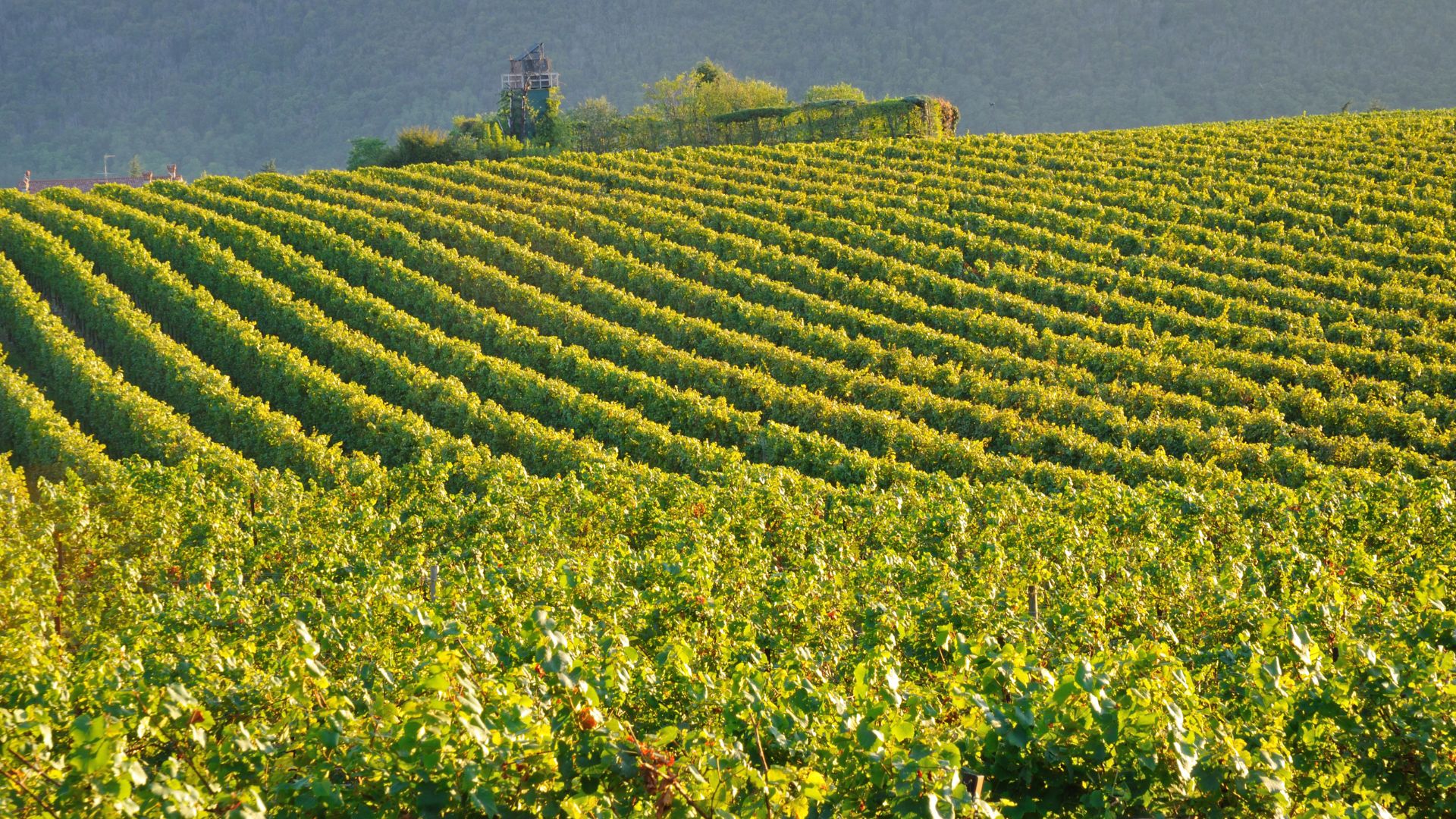
People drink whatever grows outside the city. Franciacorta, the bottle-fermented sparkling wine from 19 municipalities between Brescia and the southern shore of Lake Iseo, has held DOCG status since 1995 and was the first Italian wine to receive Italy’s highest designation of origin exclusively for bottle fermentation. The blend consists of Chardonnay, Pinot Nero, and Pinot Bianco, along with the ancient variety Erbamat.
Anything bearing the Brescia seal
The province has more protected designations than most visitors realize—seven wine regions, two cheeses, and one olive oil, all within an hour's drive.
| Product | Here's the story behind it |
|---|---|
| Franciacorta DOCG | A bottle-fermented sparkling wine from 19 municipalities between the city and Lake Iseo, which has held Italy’s highest designation of origin since 1995. |
| Silter DOP | A hard cheese made exclusively from raw milk from the Valle Camonica and the Sebino regions, aged for at least 100 days. |
| Bagòss from Bagolino | A hard mountain cheese with saffron from the Valle del Càffaro and the Val Sabbia, recognized by the region as a traditional cheese. |
| Olio Laghi Lombardi DOP | Extra virgin olive oil from the hillsides of northern Italy’s lakes, listed in the product catalog for the province of Brescia. |
| Lugana DOC | A white wine from the southern shore of Lake Garda—the classic pairing for traditional casoncelli. |
| Riviera del Garda Classico and Valtènesi DOC | Wines from the western shore of Lake Garda, between Salò and Desenzano. |
| Botticino, Cellatica and Capriano del Colle DOC | Three small red wine-growing regions just outside the city—Botticino also supplies the marble used to build half of Brescia. |
As of September 2026 · Information provided by the Lombardy Region, the BuonaLombardia portal, and the Lombardy product map.
Where's the best place to eat in Brescia?
Three restaurants represent three ways to dine in Brescia: the old osteria, the restaurant on the main square, and the place known for its meat skewers. All three serve Brescian cuisine; two are located in the old town, and one is outside it.
| Restaurant | Here's what you can expect |
|---|---|
| Osteria al Bianchi 32 Via Gasparo da Salò | An old-fashioned osteria in the Old Town serving homemade pasta: casoncelli, malfatti, Beef in Olive Oil, stracotto and deep-fried stockfish. Closed on Tuesdays and Wednesdays. |
| Caffè Floriam Restaurant 3 Via Gasparo da Salò | A historic restaurant on Piazza della Loggia, serving dishes based on Brescian recipes, with outdoor seating. Just a few minutes' walk from the Duomo, Santa Giulia, and the Archaeological Park. |
| The Comedy of the Pots 125 Via Zara | A trattoria outside the Old Town, specializing in Brescian spit roast. Make a reservation by phone; you'll need to take the bus or drive to get there. |
Hours and days off vary by season, and the meat skewers require advance notice—a call the day before will clarify both.
Where's the best place to stay in Brescia?
If you want to explore the Old Town on foot, stay within the Venetian walls—that way, you won't need a car or the metro. Three hotels cover three price ranges, all located in the historic center.
| Accommodations | Here's what you can expect |
|---|---|
| Hotel Vittoria Via X Giornate 20 | A five-star hotel with 64 rooms and suites in an early 20th-century palazzo, just a few steps from Piazza della Loggia. On-site bar and restaurant, rooftop terrace with views of the city. |
| Albergo Orologio 17 Via Cesare Beccaria | A three-star, small guesthouse in the pedestrian zone. Single, double, and triple rooms with breakfast; within walking distance of the Duomo, the Capitolium, Santa Giulia, and the trail up Colle Cidneo. |
| Paolo VI Center 30 Via Gezio Calini | A historic palazzo with its own city garden and an on-site restaurant; some rooms offer views of Colle Cidneo and the castle. In addition to rooms, the property also offers apartments for longer stays. |
All three are located within the no-driving zone. If you're arriving by car, let the hotel know your license plate number in advance—that way, your entry will be registered, and the camera at the entrance won't be an issue.
When is the best time to visit Brescia?
Between June and September, the museums are open the longest: from 10 a.m. to 7 p.m., with last admission at 6:15 p.m. From October 1 through May 31, they close one hour earlier, at 6:00 p.m., with last admission at 5:15 p.m. Everything is closed on Mondays, unless Monday is a holiday.
Early summer is the busiest time of year: Starting May 22, the summer program kicks off on Burgberg We Love Castello featuring concerts, movies, and dining options through mid-September, and during the same time frame, the Mille Miglia in the city. If you prefer a quieter atmosphere, come in the fall: Museum hours are shorter then, but the streets are less crowded, and people are out reading in Franciacorta.
And if you're in northern Italy in February, the 15th is worth a visit—on the feast day of the city's patron saints, admission to all the museums is free. It'll be cold then, but you'll be spending the day indoors anyway.
What holidays and events should you plan for?
Four events mark the city's calendar, and three of them take place in the spring and summer.
On February 15 Brescia celebrates its patron saints. The city's museums are open free of charge on this day, including the Archaeological Park with the Vittoria Alata.
The Mille Miglia will take place May 22–29, 2027—the anniversary edition, one hundred years after the first race in 1927. Since 1977, the Freccia Rossa, the "Red Arrow," once again a regularity rally for historic cars, held annually since 1987. The start and finish are in Brescia; the organizer has not yet released the detailed schedule.
We Love Castello The festival takes place on Burgberg from late May to mid-September; the sixth edition will run from May 22 to September 14, 2026. Admission to the grounds is free, but individual events may require a fee.
And looking back on 2023 You'll come across plaques everywhere: This year, Brescia shared the title of Italian Capital of Culture with Bergamo. Much of what you see today—from the new Capitolium walking tour to the signage—dates back to that time.
What You Should Know About Brescia
Five tips to make a trip to Brescia easier—and ones you rarely find in brochures.
1. Monday is the wrong day. All five museums in the city’s museum system are closed on Mondays, unless Monday is a holiday. The Burgberg is still open, though: If you have to plan a visit for a Monday, make it a day for Castello, squares, and alleyways, and save the museums for Tuesday.
2. The Roman theater is closed. The theater area of the Archaeological Park is closed due to construction work. You can still see the temple, the Republican sanctuary, and the Vittoria Alata—and the view of the excavation from street level remains unobstructed.
3. The no-driving zone is in effect around the clock in the city center. In the area around the museums and the historic center, only authorized vehicles are allowed to drive all day; 24 access points are monitored by cameras. If you park at the parking garage of a Metro terminal and take the subway for the last few kilometers, you can avoid this issue entirely.
4. Parking in the city center is limited to two hours. Inside the Venetian city walls, parking costs €3.00 per hour and is subject to a time limit—which isn’t enough for a day at the museum. The large parking garages at the train station and at Piazzale Arnaldo do not have this time limit.
5. The multi-ride ticket is not a one-day pass. It's valid through August 22, 2027, but gives you one admission per museum—once you leave Santa Giulia, you can't go back in. This isn't a drawback, but an invitation: You can spread your visits to the five museums over two trips without having to pay twice.

Who should consider studying in Brescia?
For fans of antiquity. A Capitoline seal from A.D. 73 right in the heart of the inhabited city, along with a bronze goddess in the temple’s inner sanctum: there’s nothing else quite like it in northern Italy.
For city travelers with two days. Day one: Archaeological Park and Santa Giulia; day two: the castle, squares, and Pinacoteca—all with one ticket and without driving a single meter.
For vacationers at Lake Garda when it rains. If the weather takes a turn for the worse at the lake, Brescia is the next place to spend a whole day indoors.
For connoisseurs. Franciacorta begins right outside the city gates, and the spiedo bresciano is a good reason to stay an extra night.
Not really suitable for short-term visitors arriving by car. If you only have two hours and want to drive right up to the door, you'll spend that time looking for a parking spot. If you take the train, on the other hand, you'll be at the Burgtor 20 minutes after arriving.
Combine a visit to Brescia with Franciacorta, Lake Garda, and Milan
Brescia is located between two lakes and two major cities, which makes it a starting point rather than a destination. To the west begins the Franciacorta, the wine-growing region of the sparkling wine of the same name, which stretches across 19 municipalities to the southern shore of Lake Iseo—read more in our overview of the Wine Routes in Italy.
It's not far east to the Lake Garda and Peschiera del Garda, whose fortress walls are also a UNESCO World Heritage Site. To the west, the railroad heads toward Milan, for which three days is a good amount of time, and to the south of it, there's Pavia A second Lombard city that most travelers skip. If you want to get a sense of the entire region, you'll find an overview in the Lombardy Travel Guide.
On your birthday, the museum tour in Brescia is free
In the Fondazione Brescia Musei’s list of free admission days, between the festival honoring the city’s patron saints and International Museum Day, there’s an entry that’s easy to overlook: the visitor’s birthday. Anyone who presents their ID at the ticket window on their birthday can enter the Archaeological Park, Santa Giulia, the Pinacoteca, and the two museums in the castle without a ticket.
For two travelers with the right dates, that’s a savings of €19.00—and a reason to plan the city trip for that exact time, rather than just sometime in the future.
Our take: Brescia is the city where you have the Romans all to yourself
Brescia doesn't make a big fuss about itself. That's exactly why you're standing here in front of a Capitol seal from A.D. 73 without having to push your way through a line, and why you can find a cross set with 212 gemstones in the monastery museum—a cross that hardly anyone outside Lombardy has ever heard of.
Mathematically, it’s clear: €19.00 for five museums and an archaeological park, valid through August 22, 2027, plus a €1.70 transit pass covering the metro and bus. If you stay for one night, the cost of the ticket, transportation, and dinner will be less than what a single museum admission costs in Milan.
The next step: Plan your visit for a Tuesday through Sunday, book a night in the Old Town, and check the Weather in Brescia – When it rains, the city is actually the better choice.

Pavia on the Ticino: A Magnificent Monastery, a Hundred Towers, and Subtle Art
Magnificent monasteries, Romanesque basilicas, and Italy’s oldest university: Pavia’s highlights, including prices, opening hours, and honest tips—plus how to get there from Milan, the best places to eat and stay, and the smartest...
Map: Brescia, Lombardy
Photo Gallery: Brescia



FAQ - Frequently Asked Questions About Brescia
Prices, hours of operation, and schedules are subject to change—check the official websites for the latest information before you travel.
Sources and Further Information
- Fondazione Brescia Musei – Tickets and Prices (accessed in September 2026)
- Fondazione Brescia Musei – Visit: Museum Hours (accessed in September 2026)
- Fondazione Brescia Musei – Brescia Castle (accessed in September 2026)
- Brescia Mobilità – Transit Tickets (accessed in September 2026)
- Brescia Mobility – Map and ZTL Checkpoints in Brescia (accessed in September 2026)
- Diocese of Brescia – Opening Hours of Churches in the Historic Center (accessed in September 2026)
- Lombardy Region, BuonaLombardia – Bossolà (accessed in September 2026)