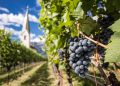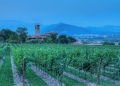

The “wine routes” in Italy are not a marketing term, but a legal category. On July 27, 1999, the Italian legislature, through the Law 268, The „Disciplina delle strade del vino“ law specifies the conditions under which a route may bear this name. Since then, every brown sign featuring a grape has been backed by a registered association or a protection consortium that brings together wineries, inns, and municipalities. For you, this means: You’re not just driving aimlessly, but following a signposted route where the businesses are ready to welcome visitors.
This guide will walk you through 15 Routes in 13 Regions, from the 150 kilometers of the South Tyrolean Wine Route to the Cannonau Route in the mountainous region of Nuoro. For each route, you’ll find out who it’s named after, the best place to start, which grape variety sets the tone, and what to expect along the way. Plus, prices, dates, and that one mistake almost everyone makes the first time.
Italy's Wine Routes by the Numbers
According to the Ministry of Agriculture, Italy leads the way 411 wines with a protected designation of origin and another 111 with protected geographical indications. The wine routes each group together a handful of these and make them accessible by car. Two of the regions through which they pass are listed as UNESCO World Heritage Sites.
As of August 2026 · Information provided by MASAF, UNESCO, and the organizations that manage the routes.
- Connoisseurs who would rather visit three wineries at a leisurely pace than ten in a rush
- Fall travelers who want to experience harvests and festivals
- Photographers who find terraces, cypress trees, and volcanic slopes more inspiring than beaches
- Couples who have time for long lunches
- Travelers without a car, since there are hardly any routes that can be traveled in their entirety by bus and train
- Families with young children who have nothing to do in the basement
- Short trips lasting less than two days
- Winter travelers, because many small businesses are closed then
How much does a day on a wine route in Italy cost?
The route itself is free, and that’s the real appeal: You follow a signposted route, stop wherever you like, and pay only for what you actually do. A visit to a wine museum costs around €9.00, while a guided cellar tour with a tasting of five wines costs about €150.00 for a small group. If you just taste wines at the bar of a cooperative winery, you’ll only pay the price of a bottle.
The following prices are based on two establishments that are representative of this price range: the Wine Museum at Barolo Castle and the Kaltern Winery on the South Tyrolean Wine Road.
| Offer | Price |
|---|---|
| WiMu, the Wine Museum at Castello Falletti in Barolo | €9.00 Adults |
| Women, age 65 and older | 7.00 € |
| WiMu, children ages 6 to 14 | €1.00 for the first child · €3.00 for each additional child |
| WiMu, children up to age 5 | free |
| WiMu, groups of 12 or more with prior registration | €6.00 per person |
| WiMu, school classes | 3.00 € per person |
| WiMu, Family Rate Every Second Sunday of the Month | €18.00 for 2 adults and 1 child · €21.00 with 2 children |
| Kaltern Winery, guided tour and tasting of five wines, 1.5 hours | Starting at €150.00 for up to 6 people · €25.00 per additional person |
| Kaltern Winery, „Rent a Sommelier“ | Starting at €200.00 for up to 6 people · €35.00 per additional person |
| Wine Tasting at the Kaltern Winery Bar | without an appointment during business hours |
| Transfer from the Giarre-Riposto train station to Linguaglossa for the wine train on Mount Etna | €50.00 round trip for up to 5 people; cash payable to the driver |
The roads themselves, the scenic overlooks, the town centers, and the first sip at the bar in most cooperative wineries are free. Still, expect to spend a double-digit amount per person per day once you add a guided tasting to the mix.

Barbaresco Attractions: 5 Highlights in the Langhe Wine Village
Barbaresco has 618 residents and a wine known to half the wine-loving world. We’ll show you the 5 most beautiful sights in this wine village in the Langhe, how much it costs to visit the tower with its panoramic terrace, where...
Which 15 wine routes in Italy are worth the trip?
The route runs from north to south and ends with the two islands. Each route is managed by a registered association or a conservation consortium that maintains maps, hours of operation, and membership lists. If you check the route there in advance, you’ll save yourself the trouble of searching for it once you’re there.
1. Strada del Barolo e Grandi Vini di Langa: Nebbiolo in a UNESCO World Heritage Site
The Langhe, the range of hills south of Alba in Piedmont, have been a UNESCO World Heritage Site since 2014. The site, „Paesaggi vitivinicoli del Piemonte,“ was inscribed under criteria iii and v, comprising six components: five wine-growing regions and the Castello di Grinzane Cavour. It is the only World Heritage site in Italy that was specifically designated for a wine-growing landscape and includes a castle.
The route is sponsored by the association Barolo and Great Wines of Langa Route headquartered in Castiglione Falletto. It was founded in 2006 and will celebrate its 20th anniversary in 2026 under the title „Io, Barolo.“ The primary grape variety is Nebbiolo, from which both Barolo and Barbaresco are produced here. In the Castello Falletti In Barolo, the WiMu Wine Museum and the Enoteca Regionale del Barolo are located under one roof; the Enoteca is open Thursday through Sunday from 10:30 a.m. to 6:30 p.m.
Good to know: The Enoteca Regionale del Barbaresco in the neighboring town is housed in a former church San Donato, has been in operation since July 5, 1986, and represents 142 member businesses. It does not have set hours, but is open daily in the summer. A quick phone call beforehand will save you a trip. To find out what the place is like, check out our guide to Barbaresco and its sights.

2. South Tyrolean Wine Route: 150 kilometers through 16 wine-growing towns
The South Tyrolean Wine Route is the longest route in this guide and one of the oldest in the country. It stretches across 150 kilometers through 16 municipalities, from the wine village Nals in the north, through the provincial capital of Bolzano, all the way to Salurn, where South Tyrol borders Trentino. On its approximately 4,400 hectares They account for about 75 % of South Tyrol's total vineyard area, and 75 wineries belong to the association.
The 16 towns are Andrian, Auer, Bolzano, Branzoll, Eppan, Kaltern, Kurtatsch, Kurtinig, Margreid, Montan, Nals, Neumarkt, Pfatten, Salurn, Terlan, and Tramin. The name of the town Tramin immediately explains one of the region’s signature grape varieties: Gewürztraminer. In addition, there is Pinot Blanc as the second major white variety, along with Lagrein and Vernatsch—two indigenous reds that are rarely found outside of South Tyrol.
What sets this route apart from all the others is the concentration of attractions in such a small area. The distance between two wineries is rarely more than a few minutes, with castles dotted in between, and with the Lake Kaltern The warmest swimming lake in the Alps is right along the route. So you can enjoy a tasting in the morning and go swimming in the afternoon—something you can't do anywhere else.

3. Strada del Prosecco: Italy's first wine route
If any route deserves the title „Italy’s oldest wine route,“ it’s this one. Today’s association Prosecco and Wines of the Conegliano-Valdobbiadene Hills Route was formed in 2003, but explicitly sees itself as the successor to the White Wine Routewhich 1966 which was inaugurated and which he himself described as the „prima arteria enologica italiana“—Italy’s first oenological artery. Large sections of the historic route have been incorporated into today’s route.
The main path is about 90 kilometers between Conegliano and Valdobbiadene, plus three themed side routes through the surrounding hills. Since 2019, these hills have been listed on the UNESCO World Heritage List as „Le Colline del Prosecco di Conegliano e Valdobbiadene,“ inscribed under Criterion v, with a core zone of just over 20,300 hectares. The reason is the ciglione, the grass-covered terraced slopes that winemakers have used for centuries to cultivate the steep hillsides.
The Conegliano Valdobbiadene Prosecco Superiore DOCG exclusively in the 15 municipalities of the denomination and made exclusively from the Glera grape variety. The association's office is located in the Villa dei Cedri It’s located in Valdobbiadene and is staffed Monday through Friday from 9 a.m. to 12:30 p.m. and from 3 p.m. to 6 p.m. There, you can also pick up a list of the member businesses’ opening hours—and you’ll need it: The places here are small and usually operate by appointment only.

4. Valpolicella Wine Route: Amarone north of Verona
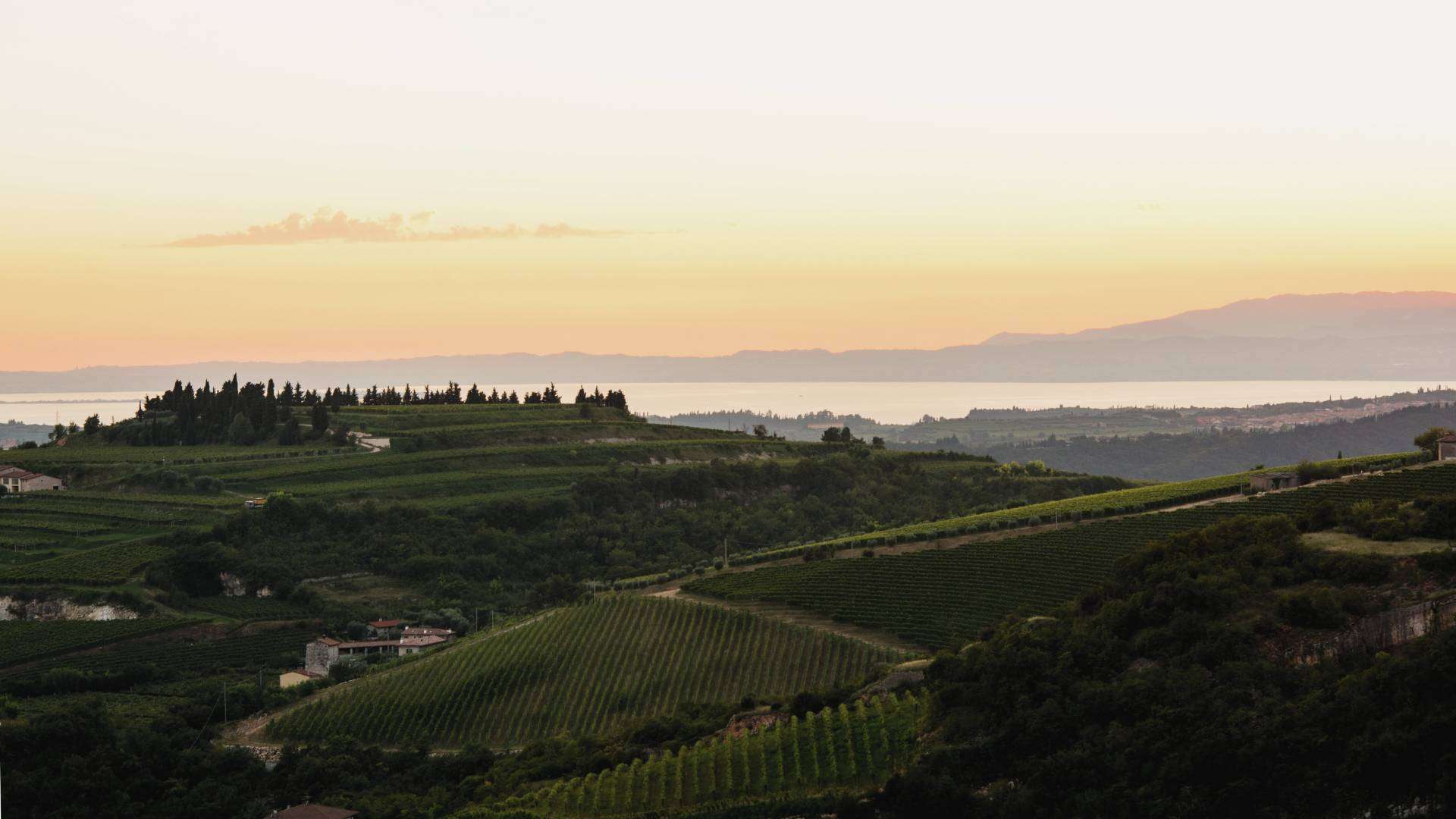
Valpolicella begins practically on the outskirts of Verona and extends northward through several side valleys. The association that manages the wine route connects about twenty municipalities, from Dolcè and Pescantina to the west as far as Montecchia di Crosara in the east. The primary grape varieties are Corvina, Corvinone, and Rondinella—three indigenous reds used to produce the full range of wines, from light Valpolicella to full-bodied Amarone.
Amarone owes its intensity to an unconventional process: After harvest, the grapes are left to dry on racks for months, losing water while concentrating their sugar and aromas. This appassimento This technique is the reason why an Amarone has significantly more alcohol and body than a regular red wine made from the same grapes. While you’re there, you can visit the drying racks at many wineries; they’re most impressive between October and January, when they’re full.
Good to know: The Wine Route covers a larger area than the wine-growing region. With Soave, Cazzano di Tramigna and Montecchia di Crosara Three member municipalities are already located in the Soave region. For you, this is actually an advantage, because you can sample a full-bodied red and one of Veneto’s most famous white wines all along the same route. Just don’t assume that every winery along the route also produces Amarone.
5. Strada del Franciacorta: Bottle Fermentation on Lake Iseo
Franciacorta is located between the southern shore of Lake Iseo and the city of Brescia, and is the smallest of Italy's major sparkling wine regions. The Franciacorta Route Association was founded in 2000 and is headquartered in Erbusco. It is specifically intended as a point of contact for visitors and puts together suggested itineraries, which is helpful here because the businesses are scattered across a flat, confusing hilly landscape.
Franciacorta is made from Chardonnay, Pinot Nero, and Pinot Bianco, with the latter accounting for up to 50 %; in recent years, the indigenous variety has also been included Erbamat approved. The consortium's rules are strict: hand-harvesting, secondary fermentation in the bottle, and yeast aging for at least 18 months. For vintage wines, it's 30 months; for the Riserva, it's 60. That's why a Franciacorta tastes different from a Prosecco, even though both are sparkling wines.
If you visit in September, you'll find the Franciacorta Festival at Cantina, during which about 80 wineries open their doors at the same time. We've already selected from the 2026 program Villa Franciacorta with its tethered balloons presented.
6. Via Chiantigiana: Tuscany’s most famous route
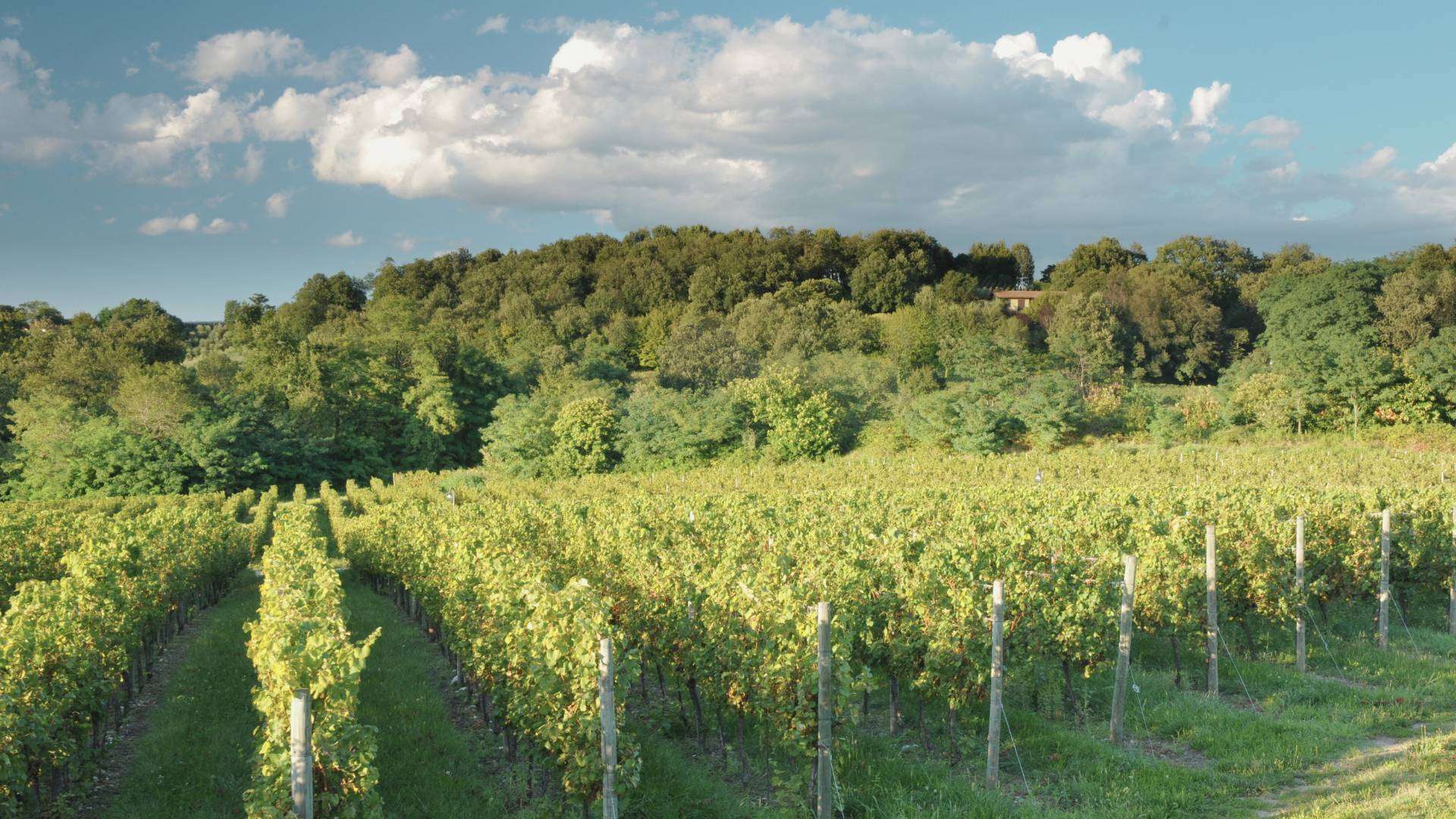
The Via Chiantigiana, officially State Road SR 222, connects Florence with Siena and runs through the heart of the Chianti Classico region. It is Italy's busiest wine route and, as a result, gets quite crowded in the summer. Its most famous stop is Greve in Chianti with its triangular town square and arcades.
The region has the oldest documented demarcation in the world of wine: As early as 1716 Grand Duke Cosimo III issued an edict defining where Chianti begins and where it ends. The designation „Classico“ for the historic core region has been in use since 1932 Official. The Consorzio Vino Chianti Classico was founded on May 14, 1924 in Radda founded by 33 producers who chose the black rooster as their symbol, the Gallo Nero; every bottle of this brand has borne this label since 2005.
Chianti Classico was recognized as a DOC in 1967 and upgraded to DOCG in 1984. The primary grape variety is Sangiovese, with at least 80 %, since 1996, the wine has also been allowed to be a single-varietal wine, and since 2013, there has been the Gran Selezione a top-tier category above the Riserva. These three tiers explain why you can find three very different wines made from the same grape variety at the same winery.
7. Strada del Vino Nobile di Montepulciano: Nine Towns in the Valdichiana
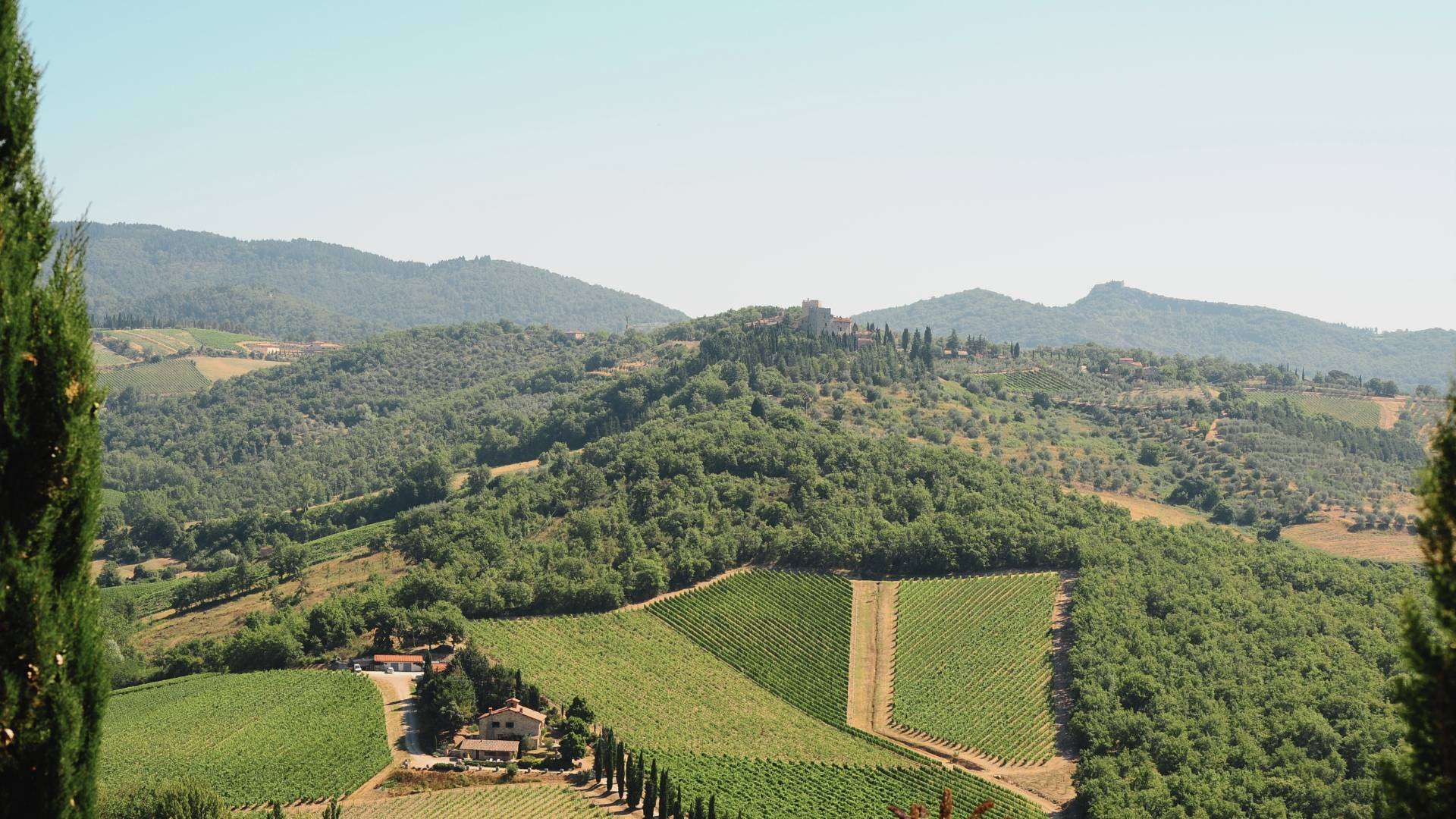
About 100 kilometers southeast of Chianti lies the second Tuscan route featured in this guide. The association The Nobile di Montepulciano Wine Route and the Flavors of the Valdichiana Senese has been in existence since 1998 and is located at the Piazza Grande in Montepulciano and connects nine municipalities: Cetona, Chianciano Terme, Chiusi, Montepulciano, San Casciano dei Bagni, Sarteano, Sinalunga, Torrita di Siena, and Trequanda.
Vino Nobile is made from Sangiovese, although here Prugnolo Gentile That is, a local clone with its own name. Don’t confuse this wine with Montepulciano d’Abruzzo: one is a town in Tuscany, the other a grape variety in Abruzzo, and they have nothing to do with each other. This naming confusion is the most common mistake on Italian wine menus.
Montepulciano itself is the real reason for the trip. This Renaissance town is perched on a narrow ridgeline, and some of its historic palaces have cellars carved into the rock, where barrels still rest today. So you descend into a wine cellar right in the middle of the old town. With the thermal baths of Chianciano and San Casciano dei Bagni There are two spas along the route, which makes this trip appealing to travelers who want to do more than just sample the waters.
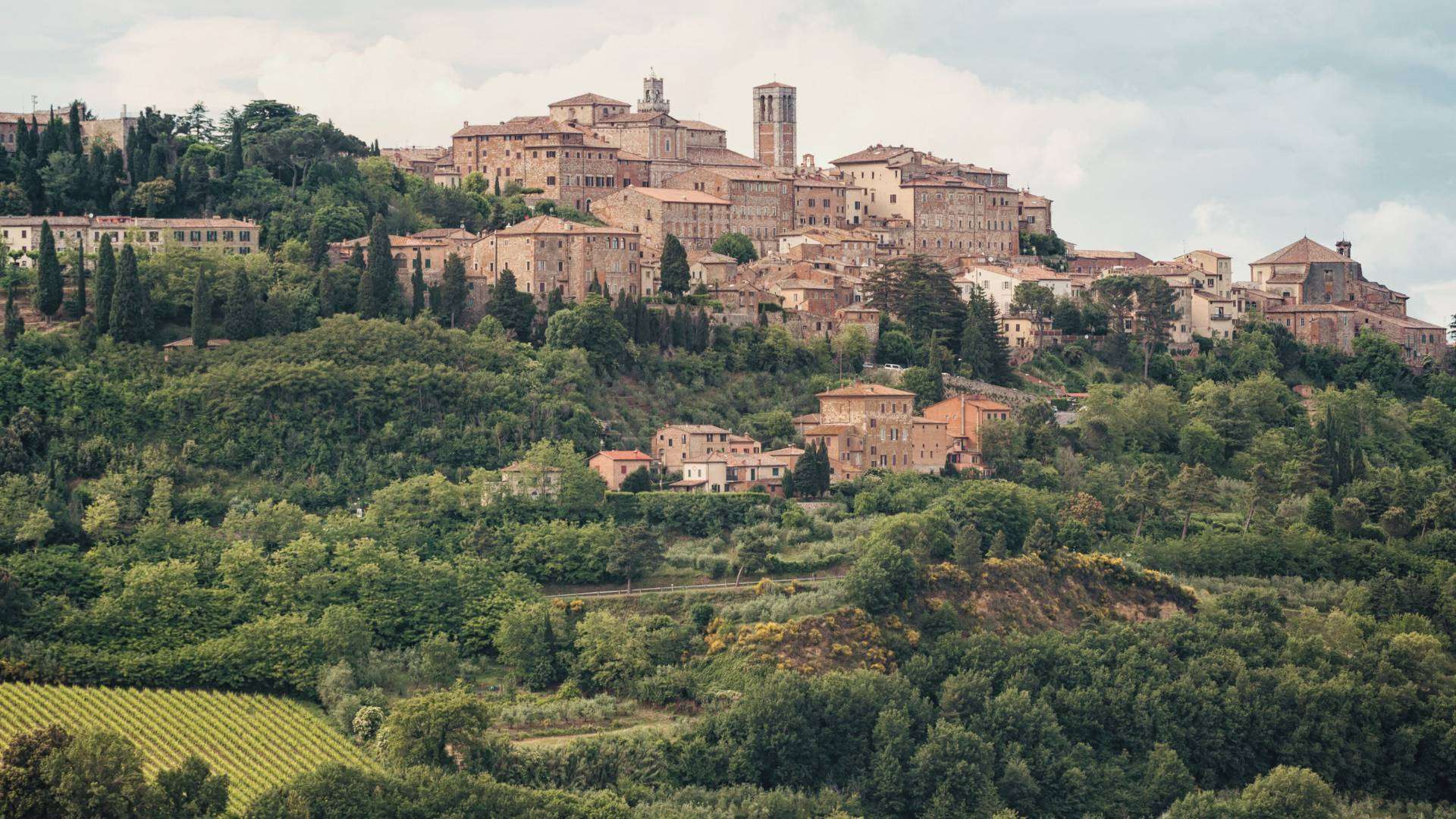
8. Strada del Sagrantino: Four Municipalities Around Montefalco
Umbria is the smallest of the major wine regions featured in this guide, and the Sagrantino Road is correspondingly compact. The club is located at the Piazza del Comune in Montefalco and, according to its own statements, covers four municipalities From: Bevagna, Giano dell’Umbria, Gualdo Cattaneo, and Montefalco. In addition to wine, he specifically mentions extra virgin olive oil and Jacquard weaving as local products.
Sagrantino is a unique case among Italy's grape varieties. It contains more tannins than almost any other, which is why the Montefalco Sagrantino DOCG must age for years before it's ready to drink. If you want to ease into it slowly, start with the Montefalco DOC, in which Sagrantino makes up only a portion of the blend.
Montefalco itself is known as the „Balcony of Umbria,“ and for once, that’s no exaggeration: From the town, you can see across the entire valley from Spoleto to Perugia. If you want to see more of the region, you’ll find an overview in our Umbria Travel Guide.
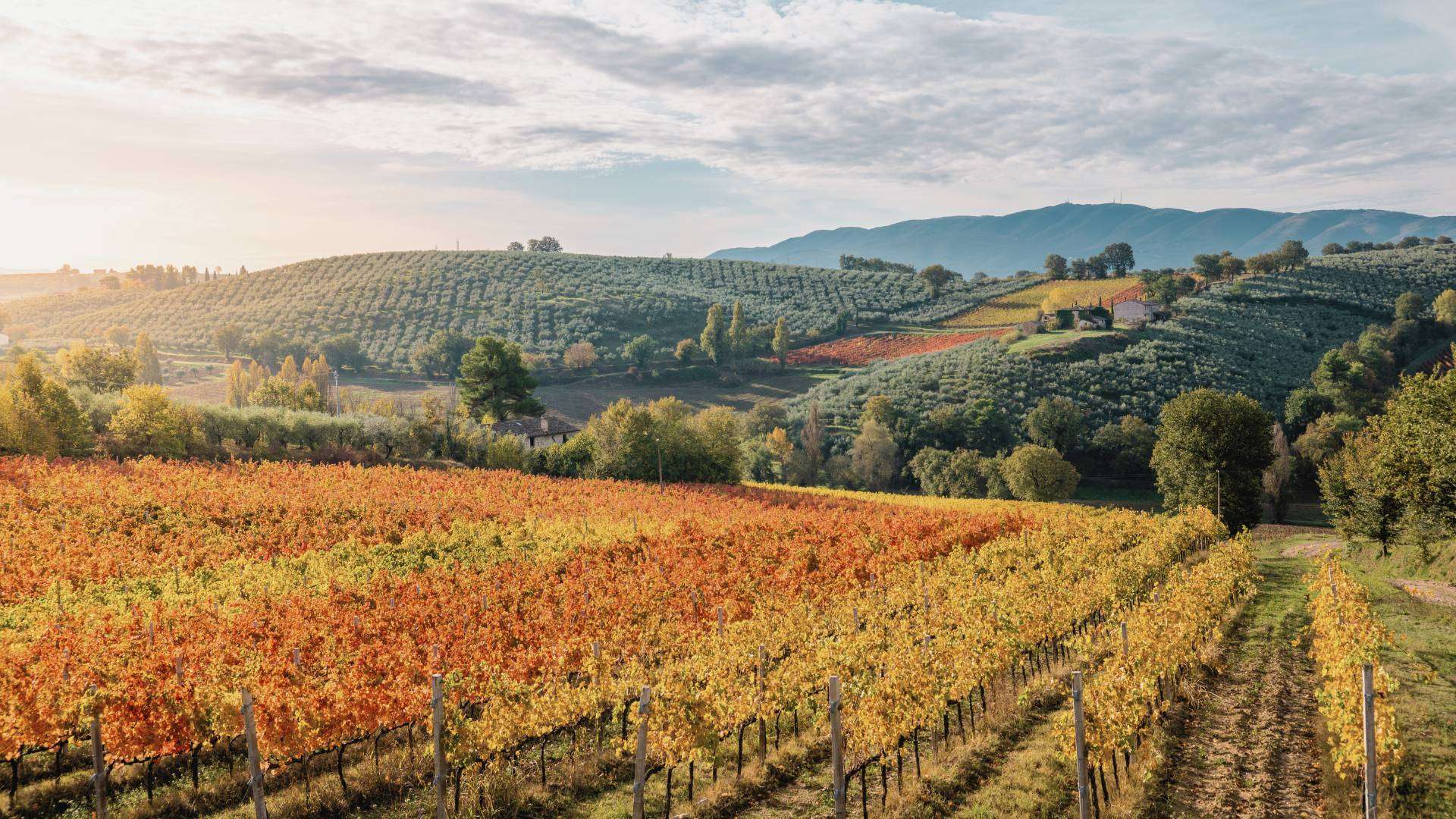
9. Verdicchio dei Castelli di Jesi: White Wine from the Marche Region
The Marche region is the quietest wine region in this guide and the only one where a white wine sets the tone. The area of the Castelli di Jesi, named after the fortified villages surrounding the city Jesi, is located in the hinterland of Ancona, a good half hour from the Adriatic Sea.
The responsible party is the Marche Institute for the Protection of Wines, or IMT for short, is a consortium founded in 1999 and headquartered in Jesi. It oversees over 7,500 hectares in the provinces of Ancona, Macerata, Fermo, and Pesaro-Urbino, has over 515 member businesses, and protects 16 Designations of Origin, including four DOCG and twelve DOC. It thus covers approximately 45 % of the region's vineyard area.
The flagship variety is Verdicchio, from which both the Verdicchio dei Castelli di Jesi DOC as well as the higher-ranked Castelli di Jesi Verdicchio Riserva DOCG is produced. The wine has a distinctive bitter aftertaste that you have to like. It pairs well with fish from the nearby Adriatic coast and is one of the few Italian white wines that tastes better after ten years in the cellar than after two. For more information about the region, see the Marken Travel Guide.
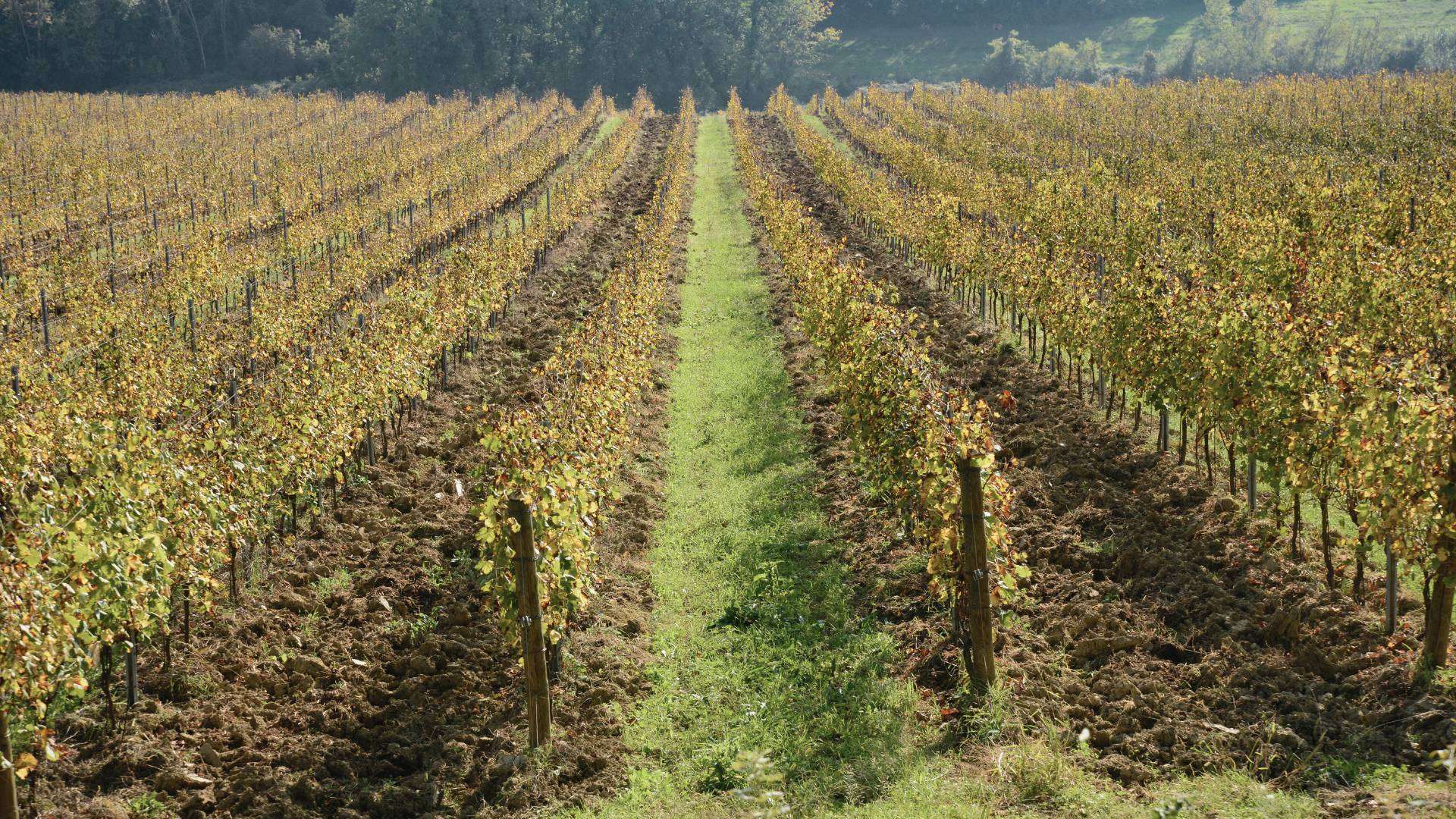
10. Colline Teramane: Montepulciano between Gran Sasso and the Adriatic Sea
The Teramo Hills These are the hills of the province of Teramo in northern Abruzzo, nestled between the Gran Sasso massif and the Adriatic Sea. This location is what makes it so special: there’s hardly any other place in Italy where vineyards are so close to a 3,000-meter peak and, at the same time, so close to the sea.
The flagship variety is called Montepulciano, and here it is actually a grape variety, not a place. Montepulciano d’Abruzzo from the Colline Teramane is the region’s top wine and has its own DOCG designation. It’s dark, smooth, and generally much more affordable than comparable reds from Tuscany, making Abruzzo the best destination for travelers looking for plenty of wine for little money.
Good to know: The source article on which this guide is based covers the Roman ruins of Alba Fucens listed as a destination on this route. That's not true. Alba Fucens is located near Massa d'Albe in the province of L'Aquila, on the other side of the Gran Sasso, and has nothing to do with the Colline Teramane. What is actually nearby is the fortress of Civitella del Tronto, one of Europe's largest fortifications, less than half an hour from the vineyards. Learn more about the region at Abruzzo Travel Guide.
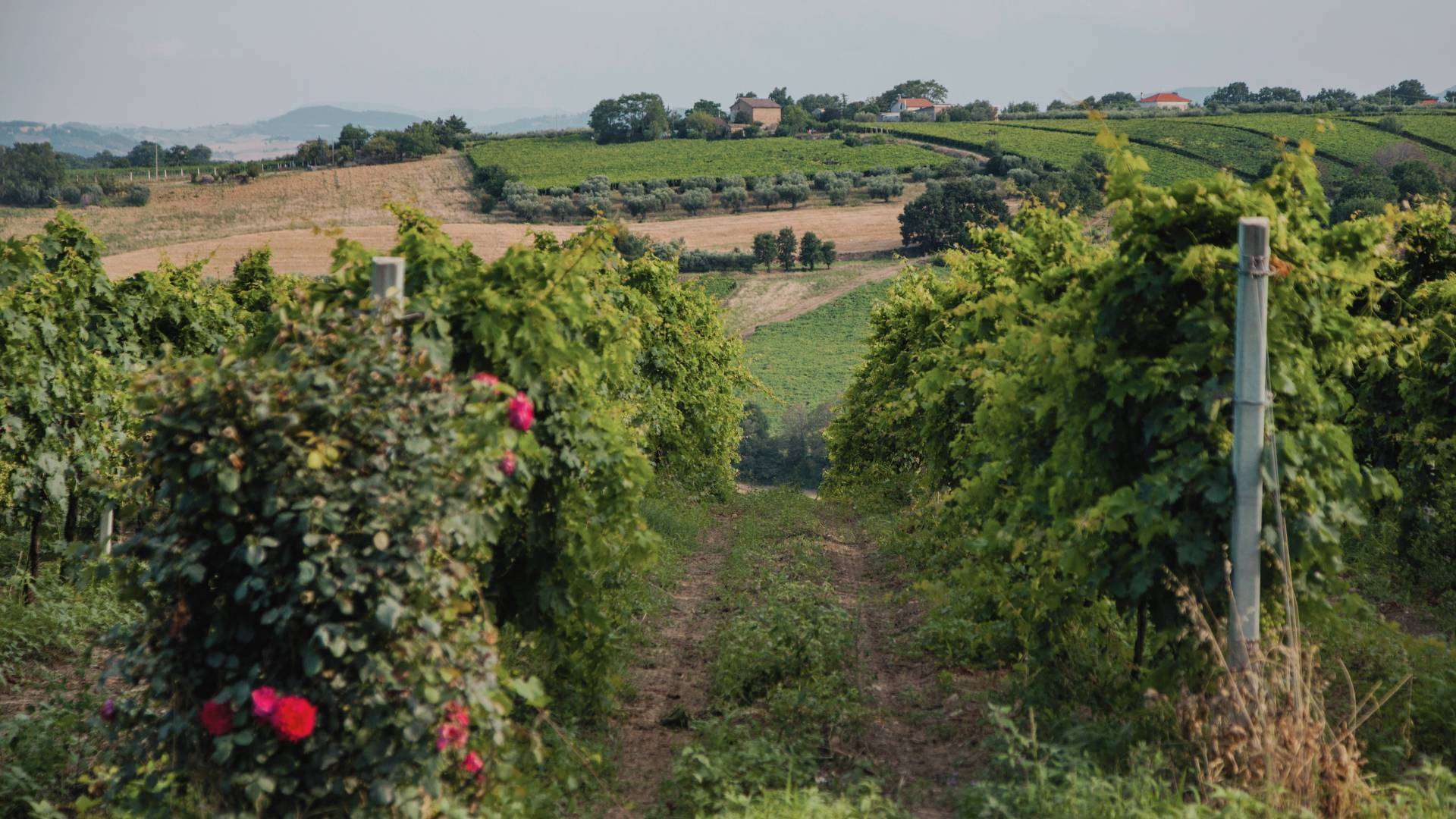
11. Irpinia Wine and Flavors Route: Three DOCG Wines in a Small Area
The Irpinia is the mountainous hinterland of Avellino in Campania, a good hour east of Naples. It is one of the few regions in Italy where, within a very small area, three DOCG Side by side: Fiano di Avellino and Greco di Tufo, both white wines, and Taurasi, a red wine made from the Aglianico grape.
There is a geological reason for this concentration. Irpinia is located at a high elevation, is cooler than the rest of Campania, and has volcanic soils. The Greco di Tufo even takes its name from the tuff in which it grows. Taurasi, on the other hand, is considered the longest-aging red wine in southern Italy and takes years to fully develop.
Good to know: The route is called Irpinia Wine and Flavors Route, sometimes in the plural as „Strade.“ The name „Strada dei Vini e dei Sapori dei Feudi di Avellino,“ which is circulating online, does not appear on any official website. If you search for it, you won’t find anything. Use the correct name, and your search will lead you to the right place. An overview of the region can be found in the Campania Travel Guide.
12. Primitivo di Manduria: 18 municipalities in Salento
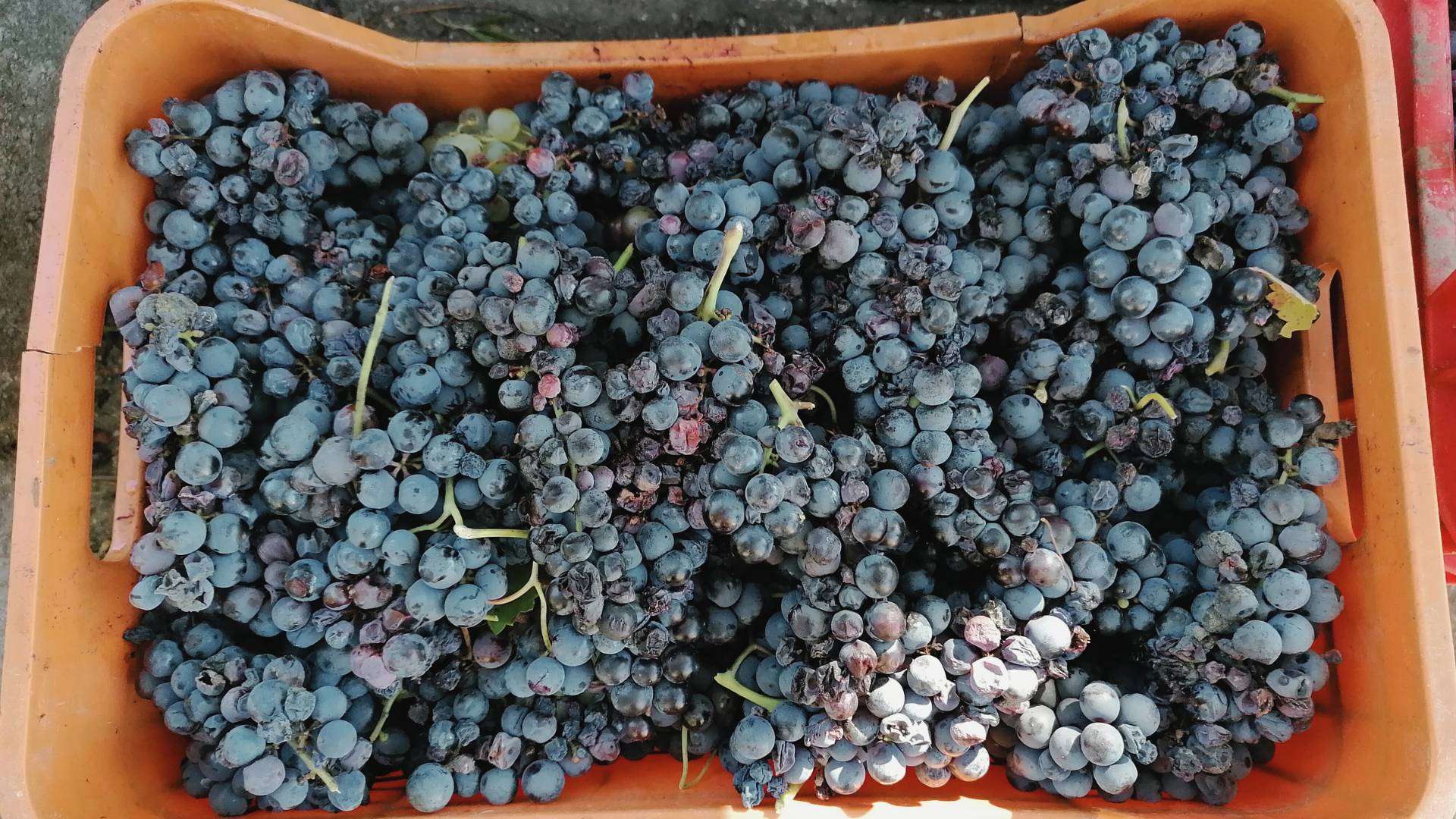
Primitivo is the best-known wine from Apulia, and Manduria It is the capital of the province of Taranto. The Consortium for the Protection of Primitivo di Manduria oversees the denomination and lists in its regulations 18 municipalities: fifteen in the province of Taranto, including Manduria, Sava, Avetrana, Maruggio, and Lizzano, as well as the Talsano district of Taranto; plus three in the province of Brindisi: Erchie, Oria, and Torre Santa Susanna.
According to the regulations, wine must At least 85 % Primitivo must be used; the remainder may come from other non-aromatic red grape varieties. Characteristic of the region are the old vines in the alberello, the freestanding, wire-free bush training system that looks like a low bush and works better than vine rows in the heat of Apulia.
Salento is the only route in this guide that offers real beach potential: the Ionian Sea is within sight, and towns like Lecce with their Baroque architecture are easily accessible. If you want to combine wine and swimming, you'll find the most relaxing combination here. The Puglia Travel Guide has the details.

13. Etna Wine Route: Vines on the Active Volcano
On Mount Etna, grapes grow on a volcano that erupts regularly. The soil consists of weathered lava, the vineyards are located significantly higher than anywhere else in Sicily, and the nights are cool. The result is wines with a level of acidity and clarity that one would not expect in southern Italy.
The route is named Etna Wine and Flavors Route APS headquartered in Milo on the eastern slope of the mountain. The primary grape varieties are the red Nerello Mascalese and the white Carricante, both of which are found exclusively on Mount Etna. The region is divided into contrade divided into small vineyards with their own names, which appear on the labels; this is reminiscent of Burgundy and is otherwise rarely found in Italy.
What makes this route special is that you can travel it without a car. The club operates the Etna Wine Train, a ride on the narrow-gauge railcar Ferrovia Circumetnea from the train station Linguaglossa, Thursdays and Saturdays from March through November. This includes a bus transfer to two wineries, two tastings—each featuring two glasses of Etna DOC and a plate of regional specialties—and a stop in a historic town center, either Castiglione di Sicilia or Randazzo. Reservations must be made at least 48 hours in advance.

14. Collio: White Wine on the Slovenian Border
The Collio is a narrow range of hills in Friuli-Venezia Giulia that lies directly on the border with Slovenia and, on the other side, is known as Brda continues. The agency responsible is the Collio Wine Protection Consortium headquartered in Cormonsthat Founded in 1964 and celebrated its 60th anniversary in 2024.
Many connoisseurs consider Friuli to be Italy’s finest white wine region, and Collio is at its heart. The most important native variety is Friulano, along with Ribolla Gialla, which is increasingly being used to make orange wines—that is, white wines made with extended maceration. The soil here has its own name: ponca, a crumbly marl sandstone that gives the wines their salty note.
The Collio is the quietest route in this guide. There are no tour buses, no lines, and no places that serve as backdrops. What you’ll find are small wineries where the winemaker pours the wine himself. A good place to stay is Gorizia ...the divided city at the foot of the hills.

15. Cannonau Wine Route: The Nuoro Mountain Region
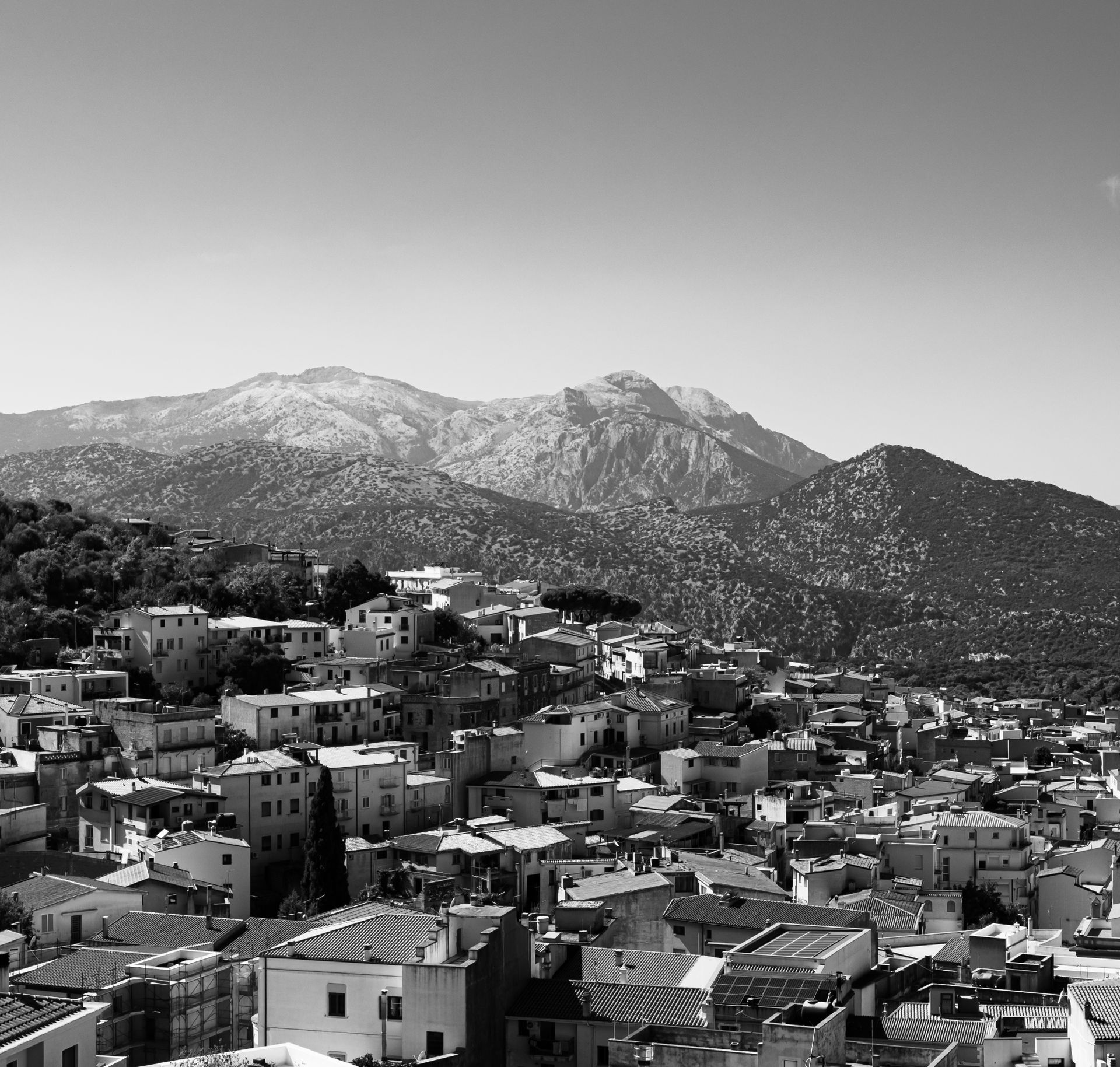
Sardinia is one of the few regions to have established its own system: The region’s Department of Agriculture has set up seven wine routes decided to focus on each designation of origin, including Cannonau, Vermentino, Carignano, Nuragus, Malvasia, and Vernaccia. The Cannonau Wine Route was proposed by the provinces of Nuoro and Ogliastra and recognized by a decree of the assessor dated January 14, 2009.
Cannonau is Sardinia's flagship wine, a full-bodied red known elsewhere as Grenache or Garnacha. It grows here in the mountainous region of the Barbagia and the Ogliastra, which is a far cry from the beaches the island is otherwise known for. Places like Dorgali, Oliena and Jerzu are located along this route.
This wine route is the most remote one in the guide, and that’s both its drawback and its charm. The roads are winding, the wineries are small, and without an appointment, you’ll often find yourself facing closed gates. In return, you’ll get to see a side of Sardinia that most vacationers never reach: mountain villages, holm oak forests, and pastoral culture. The Sardinia Travel Guide classifies the island.
You drive along a wine route by car, and that’s exactly where the problem lies. Decide ahead of time as a group who will be driving, and stick to that plan. Every winery has a spittoon available, and no one will mind if you use it. If you’re traveling alone, plan your wine tasting for the afternoon and find a place to stay within walking distance.

Lake Kaltern on the South Tyrolean Wine Road
Gently nestled in the striking hilly landscape of the Überetsch region, Lake Kaltern stands out as a sparkling jewel along the South Tyrolean Wine Route. It is a place where time seems to stand still...
How do you get to the wine routes in Italy?
Almost every route begins at an airport no more than an hour’s drive away. For the Langhe in Piedmont, Turin is the closest; for South Tyrol, Bolzano or Verona; for Valpolicella, Verona as well; and for the Prosecco hills, Treviso or Venice. The quickest way to reach Franciacorta is via Bergamo; Chianti via Florence or Pisa; Montefalco via Perugia; the Castelli di Jesi via Ancona; the Colline Teramane via Pescara; Irpinia via Naples; Manduria via Brindisi or Bari, Mount Etna via Catania, Collio via Trieste, and the Cannonau region via Olbia or Cagliari.
A rental car is practically a must on all routes except for the one to Mount Etna. The businesses are located between the villages, and the local bus—if there is one at all—runs two to three times a day. The exception is the South Tyrolean Wine Route: It follows the Adige Valley, has a continuous rail line, and is easy to explore by train and bike.
If you want to travel without a car, you have three viable options: the wine train on Mount Etna, the Adige Valley in South Tyrol, and guided day trips from Florence, Verona, or Alba. All three cost more than traveling on your own, but at least you don’t have to worry about who will drive.
Be sure to contact every winery you plan to visit. The large cooperatives have a sales room with set hours, while the smaller estates often have only a doorbell. An email two days in advance is sufficient, and German is usually no problem in South Tyrol, on Lake Garda, and in the Collio region.
When is the best time to take a wine tour in Italy?
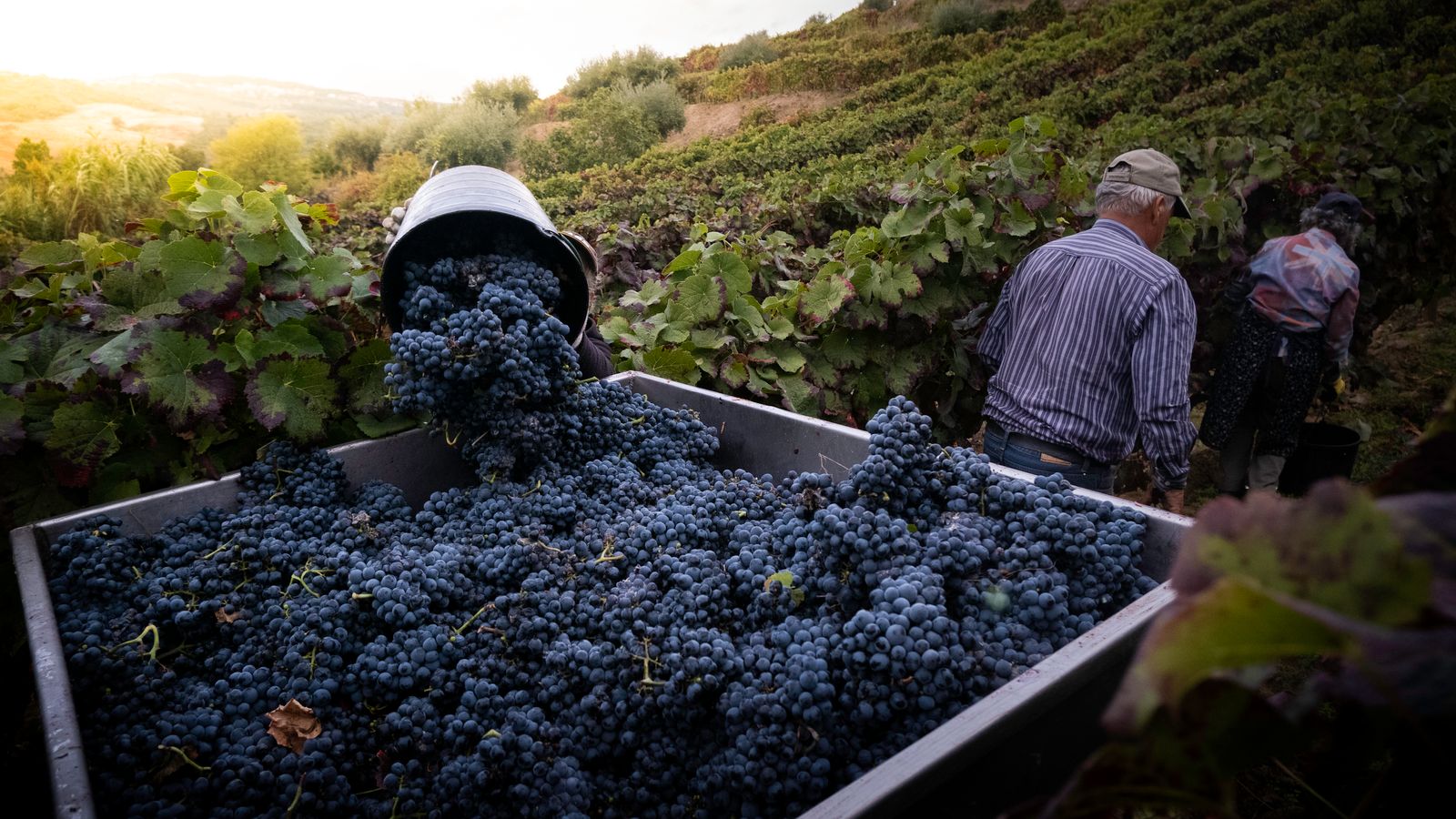
September and October are the busiest months: that’s when the harvest is in full swing, the wineries are bustling, and the smell of must is everywhere. The downside is that the winemakers are busy working and have less time for visitors. If you want to enjoy a leisurely wine tasting, come in May or June, when the wineries are open and the roads are empty.
| Period | Here's what you can expect |
|---|---|
| March and April | The wineries are reopening, and pruning is underway in the vineyards. Cool, quiet, affordable. |
| May and June | The best time for wine tasting. On the last weekend in May, hundreds of wineries open their doors simultaneously as part of Cantine Aperte. |
| July | Hot, very hot in the south. It’s best to do tastings in the morning or in the evening. |
| august | Around August 10, Calici di Stelle—a wine tasting under the stars—takes place. In the south and in the sparkling wine regions, the harvest is already underway. |
| September | The main harvest and most of the festivals. In Franciacorta, about 80 wineries open their doors for the festival. |
| october | Lese in the north, Nebbiolo in Piedmont, and the truffle season around Alba. The colors are at their best right now. |
| November through February | The quiet season. Many small businesses only accept visitors by appointment, and some close entirely. The exception is San Martino in November. |
The start of the harvest shifts by one to two weeks each year. If you want to see the harvest, check with the farm two weeks in advance.
What dates should you mark on your calendar for 2026 and 2027?
Four events mark the Italian wine calendar, and three of them won't cost you anything except for the trip there. They're the easiest way to visit several wineries in a single day without having to contact each one individually.
Open Wineries is the largest of them. On the last weekend in May, the member businesses of the Movimento Turismo del Vino across Italy, in 2026 these were May 30 and 31. The same association organizes Open Cellars During the Grape Harvest in September and October, Open Wineries in San Martino around November 11 and a Christmas date. Under the title Open Vineyards Guided tours of the vineyards themselves are offered from spring through fall.
Calici di Stelle It takes place on the night of August 10, when the Perseids are visible. Wineries and town centers set up tables and glasses outdoors, and visitors can enjoy wine tastings under the open sky. Throughout July and August, there are also additional individual events at the wineries.
Vinitaly Verona is home to the major trade show, which will take place in 2027 from April 11–14 takes place. It is aimed at retailers, but at the same time, there is a public event in the Old Town, through which we Vinitaly and the City as we have already reported.
On top of that, there's the Franciacorta Festival at Cantina In mid-September, when about 80 houses open their doors at the same time, and in September, the Douja d’Or in Asti, Piedmont's oldest wine competition.
What You Should Know About Italy's Wine Routes
Five points you won't find in any brochure—and that will change the way you plan.
1. You won't get very far without a car. The wineries are located between the villages, and scheduled buses rarely run there. There are two exceptions: the South Tyrolean Wine Route, with its continuous rail line through the Adige Valley, and Mount Etna, with the Circumetnea Wine Train. If that’s important to you, start with one of those two.
2. Registration is the norm. The romantic notion of spontaneously knocking on a farm gate works at cooperative wineries with a retail space, but hardly anywhere else. Small estates don’t have a reception area of their own; instead, there’s a winemaker who happens to be in the cellar at the time. A quick email two days in advance will open doors that would otherwise remain closed.
3. Not every route is equally well developed. South Tyrol, Chianti, and the Prosecco hills have signage, maps, and information centers. Irpinia, the Colline Teramane, and the Cannonau region mainly have wine. That’s not a shortcoming, but a different kind of journey: fewer amenities, more genuine conversation by the barrel.
4. Tasting prices are rarely listed online. If a price is listed, you'll find it in this guide. At most venues, you'll be told the price when you sign up, and it depends on how many wines you taste and whether food is included. Just ask when you make your reservation.
5. Many places are closed from November through February. Large resorts remain open, while smaller ones take a break. Anyone who still wants to ski in the winter should plan their trip around the dates when the resorts are open anyway, especially San Martino in November.
Which wine route is best for whom?
For your first foray into the world of wine: The South Tyrolean Wine Route. Short distances, German-speaking wineries, a swimming lake, and castles—the perfect balance for anyone who doesn’t want to spend the whole day tasting wine.
For connoisseurs who know what they're looking for: The Langhe region in Piedmont. Barolo and Barbaresco are a quarter of an hour apart, and at Castello Falletti, you'll find both under one roof.
For anyone who has that image in their mind: The Via Chiantigiana. Cypress trees, stone houses, hills stretching to the horizon. That's exactly why it's so crowded in the summer.
For sparkling wine lovers: Franciacorta and the Prosecco hills. Two completely different answers to the same question, and both can be combined into a long weekend.
For travelers seeking peace and quiet: the Collio region in Friuli or the Cannonau region in Sardinia. No tour buses, no crowds—just wineries where the owner pours the wine himself.
For wine and the sea: Manduria in Salento or Mount Etna. Both are so close to the coast that you can fit in a wine tasting and a day at the beach on the same day.
Travel in November, not in September
In September, everyone wants to see the harvest, and that's when the winemakers are the busiest. Around November 11, Open Wineries in San Martino, the quietest of the major events organized by the Movimento Turismo del Vino. The cellars are full, the new vintage is aging in barrels, the work is done, and there are no groups in the tasting rooms—just three people.
On top of that, the hills are empty in November. In Chianti, on a Tuesday in November, you’ll have a road all to yourself that’s jam-packed with traffic in August. Accommodations are cheaper, and the cuisine shifts to whatever the region has to offer in winter: truffles in Piedmont, chestnuts in Umbria, and game in Friuli.
Here's the catch: Some of the small businesses have closed. That's why November only works if you plan ahead. Pick four places, contact them, and spend the rest of the day focusing on the two or three that say yes.
Combine the wine routes with Alba, Verona, and Bolzano
None of these routes takes a whole week, and none of them needs to. Each one is located near a city that serves as a base for the rest of the trip.
In Piedmont, that's Alba with its white truffles and the fall market, plus Turin as the starting point; the overview can be found in the Piedmont Travel Guide. In Veneto, [name] takes over Verona this role for Valpolicella and Treviso for the Prosecco hills, as described in the Veneto Travel Guide. In South Tyrol, it is Bolzano, which lies right in the middle of the Wine Route and even has its own winery; more on this in the South Tyrol Travel Guide.
In Tuscany, Florence and Siena lie at either end of the Via Chiantigiana, and Montepulciano is just over an hour away from both; the Tuscany Travel Guide lists the options. On Mount Etna, they are Catania and Taormina; in Salento, Lecce; and in Collio, Gorizia. Anyone who wants to follow the related wine news can find it all in one place at Wine from Italy.

Gorizia Attractions: 7 Highlights on the Border
Castle, border post, and Collio: Gorizia showcases the entire 20th century within just two square kilometers—and admission is practically free.
Our takeaway: 15 routes, three trips
Italy’s wine routes are not destinations, but a concept. Since 1999, each one has been backed by an association or consortium that ensures signs are in place, maps are available, and wineries are accessible. This takes care of the very part of a wine tour that would otherwise make it exhausting: the search.
If you do the math, you’ll come out ahead. The road is free, the wine museum in Barolo costs €9.00, and even a guided tasting of five wines for a group of six people is about the same as a nice restaurant bill. A wine tour only gets expensive if you load up on cases of wine—and that’s not the road’s fault.
Don't pick three routes to start with—pick just one, and set aside two days for it. If you're not sure which one to choose: South Tyrol for an easy start, the Langhe for the great wines, or Chianti for the image you have in your mind. Everything else will fall into place over the second glass.
FAQ - Frequently Asked Questions About Italy's Wine Routes
Experiences & sights
Sources and Further Information
- South Tyrolean Wine Route, South Tyrolean Wine Route Association (accessed August 2026)
- Prosecco and Wines of the Conegliano-Valdobbiadene Hills Route (accessed August 2026)
- Franciacorta Protection Consortium: Method and Stages (accessed August 2026)
- Chianti Classico Wine Consortium, History of Chianti Classico (accessed August 2026)
- WiMu, Barolo Wine Museum, Tickets and Info (accessed August 2026)
- Autonomous Region of Sardinia, The Seven Wine Routes of Sardinia (accessed August 2026)
Prices, hours, and dates are subject to change; please check the information on the official websites of the consortia and businesses before your trip.