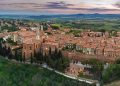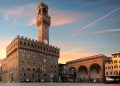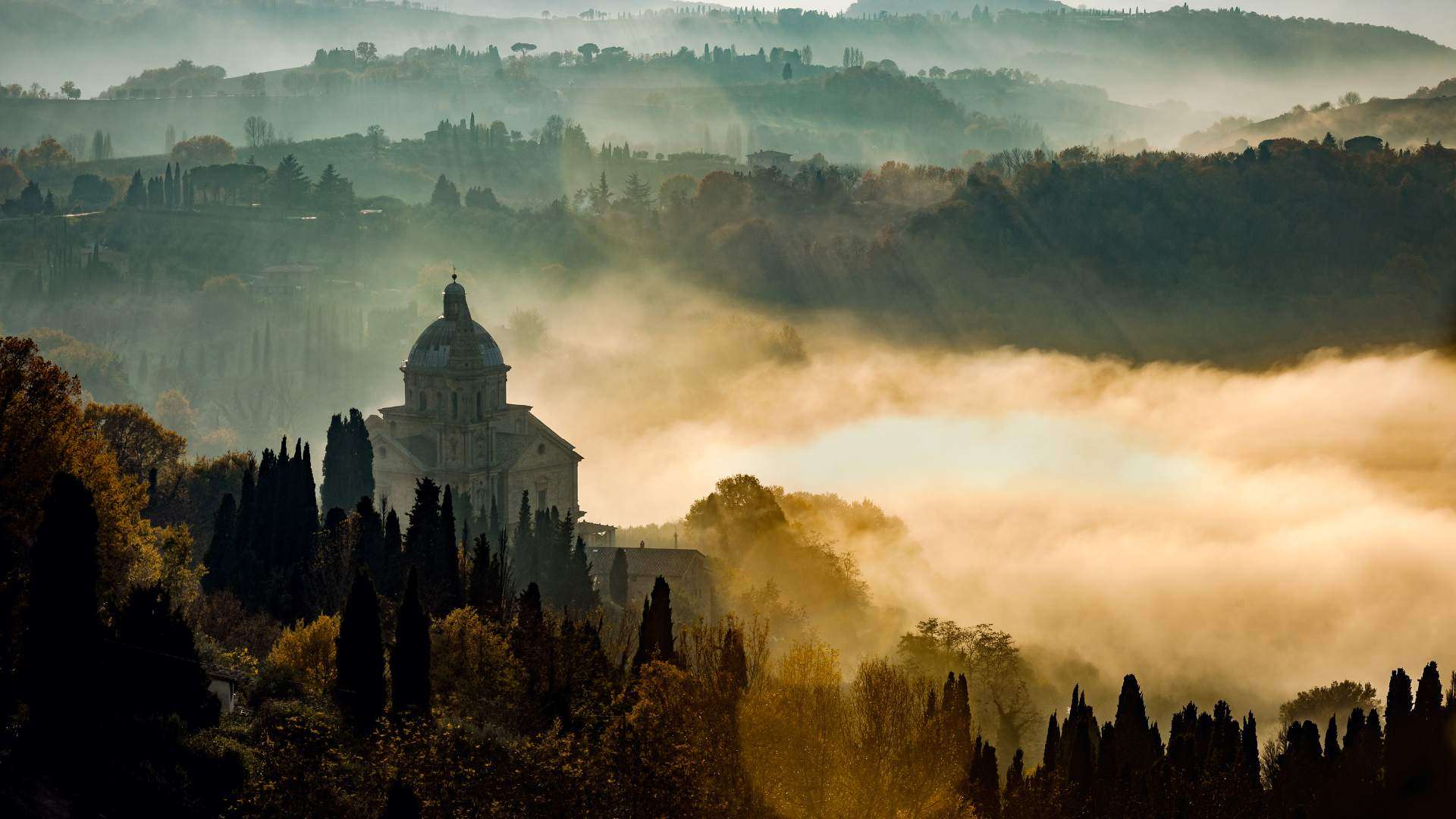

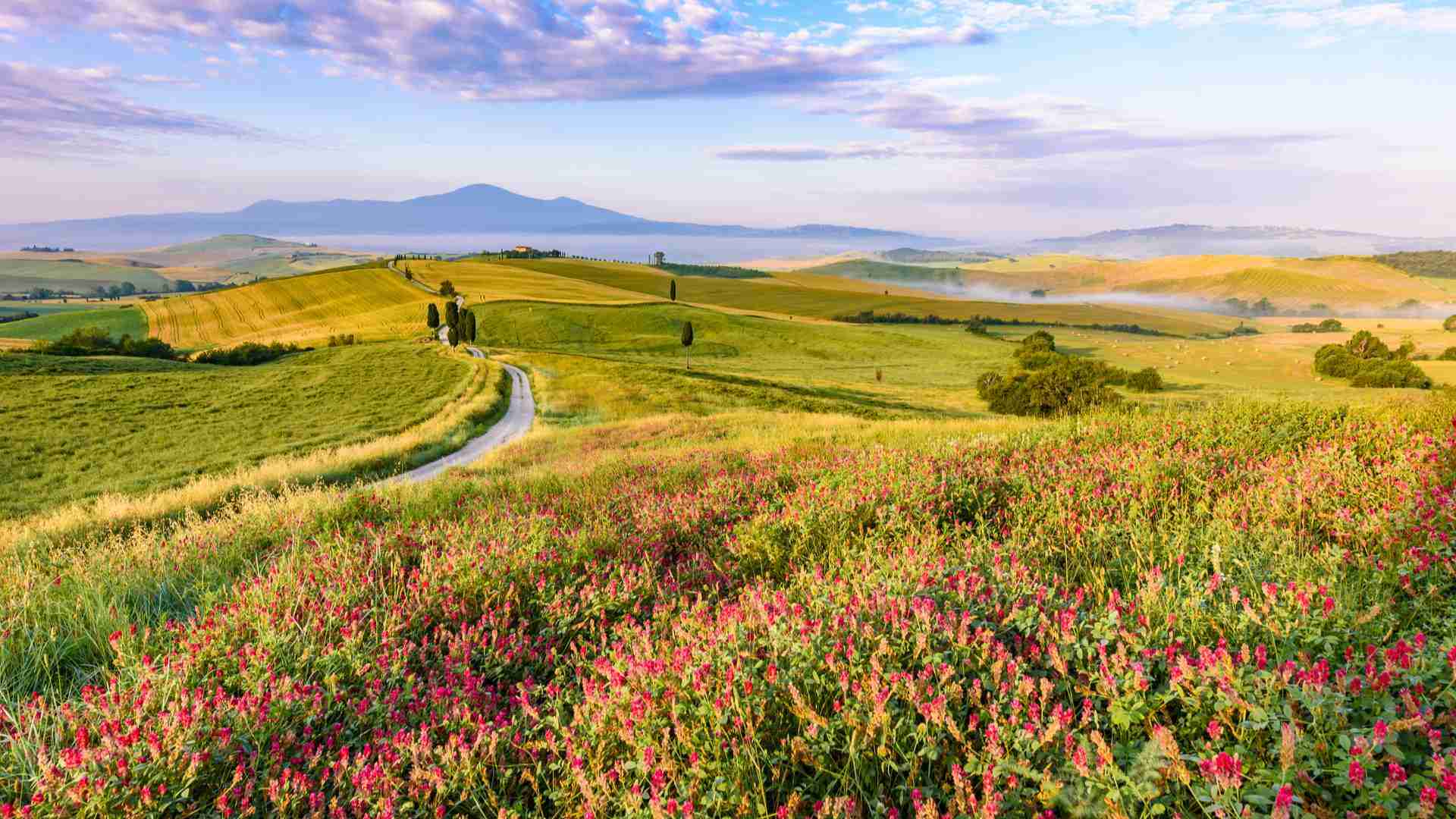
Pienza – From the terrace behind the Palazzo Piccolomini, the view stretches across a valley that looks like something out of a painting. But there’s nothing painted about it: what you see has been a UNESCO World Heritage Site since 2004. The protected area covers 61,188 hectares between Siena and Monte Amiata, spread across five municipalities— Pienza, Montalcino, San Quirico d'Orcia, Castiglione d’Orcia and Radicofani.
This guide takes you through the nine towns that make up the Val d’Orcia, lists the admission fees and opening hours you’ll need to plan your day around, and tells you when the hills are truly golden and when they lie brown after the harvest.
The Val d’Orcia is not a single town, but a river valley comprising five municipalities, two world-class wine-growing regions, and a thermal village whose town square is a water basin. If you know the facts behind these figures, you’ll plan your trip differently: A combination ticket in Pienza costs €12.00 and is valid for two days; the spring in Bagno Vignoni flows from the rock at a temperature of about 50 degrees; and the Brunello vineyard area accounts for only half of the vineyards around Montalcino.
The Val d’Orcia in Numbers
The key facts about the cultural landscape, its towns, and its wines—as described by UNESCO, local municipalities, and wine consortia themselves.
As of September 2026 · Information provided by UNESCO, the Municipality of Pienza (in collaboration with Pienza Città di Luce), the Municipality of Montepulciano, the Brunello di Montalcino Wine Consortium, and the Orcia Wine Consortium.
- Photographers with a Patience for Morning Light
- Wine lovers who want to compare Brunello and Vino Nobile
- Couples with rental cars and no set plans
- Pilgrims on the Via Francigena
- Travelers without a car
- Families looking for fun in the water
- For those who love nightlife and big cities
Where is the Val d’Orcia, and which towns are part of it?
The Val d’Orcia is located in the southern part of the province of Siena, between the city of Siena to the north and the Mount Amiata in the south, and is named after the Orcia River, which flows through it. The World Heritage Site includes five municipalities: Pienza, Montalcino, San Quirico d’Orcia, Castiglione d’Orcia, and Radicofani. The UNESCO has listed the valley on its World Heritage List since 2004, with a core zone of 61,188 hectares and a buffer zone of 5,660 hectares.
Something you won't find on any World Heritage map, but you will find on every valley tour: Montepulciano. The town lies east of the region; although it is not administratively part of it, it is nonetheless the best vantage point from which to view the valley. The same is true of the wine: The growing region of the Orcia DOC, the valley’s newest designation of origin, encompasses twelve municipalities and thus extends far beyond the five World Heritage sites, including Buonconvento and Trequanda.
The valley axis is the SR2 Cassia, the ancient Roman road from Siena to Rome. Along this road lie San Quirico d’Orcia and, five kilometers further south, the thermal spa town Bagno Vignoni. Everything else branches off to the side: Pienza and Montepulciano to the east, Montalcino to the west, Castiglione d’Orcia and Radicofani to the south. It’s about forty kilometers from one end to the other—if you want to check off five towns in a single day, you’ll be spending most of your time on the road.
Why a Rural Landscape Was Designated a World Heritage Site
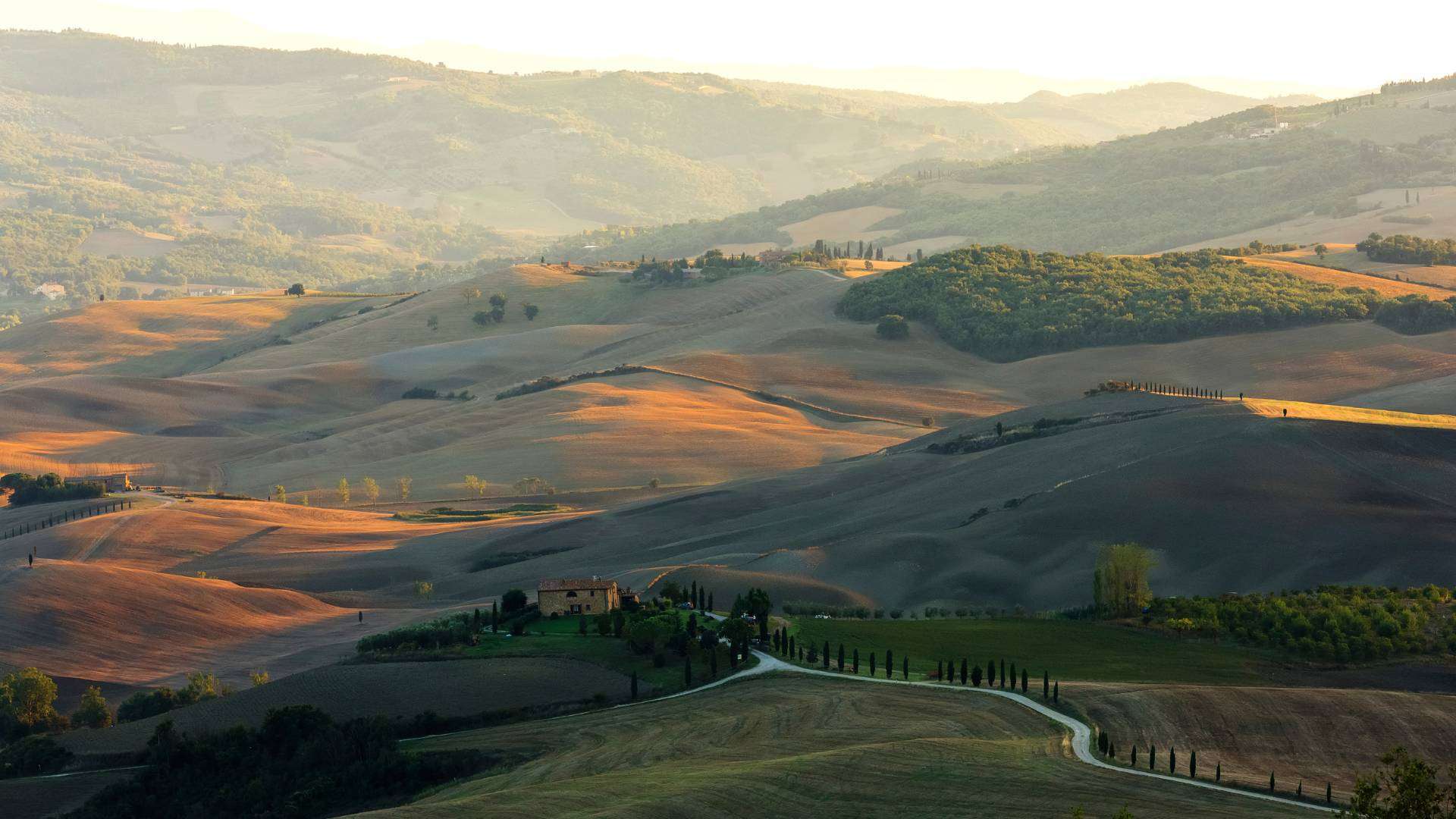
UNESCO inscribed the Val d’Orcia under criteria (iv) and (vi)—that is, as an example of a landscape that illustrates a chapter in human history, and as a place with significance that extends beyond its boundaries. What is protected here is not a single building, but the interplay of fields, rows of cypress trees, farmsteads, and mountain villages.
The reason for this dates back to the 14th and 15th centuries. The Republic of Siena systematically settled and cultivated the valley, and Sienese painters depicted this order in their art: the landscape of good governance. A short time later, a pope set the same idea in stone. Pius II, born as Enea Silvio Piccolomini In the village of Corsignano, he had his birthplace transformed into a model Renaissance town and named it after himself—Pienza.
Today, the area is managed through a joint management plan developed by the five municipalities, which includes a set of land-use regulations for the Val d’Orcia region. That may sound like just a piece of paper, but it has a visible effect: you won’t find any industrial parks on the outskirts of town in the valley, and there are hardly any new buildings in the fields. The fact that the hills look just like they do on postcards is by design, not by chance.
How much do the attractions in Val d’Orcia cost?
Individually, the admission fees are low, but they add up. Pienza sells only one combined ticket for €12.00, which is valid for two days. In Montalcino, the fortress costs €4.00 and the museum complex €10.00; in Montepulciano, the tower costs €5.00. The most expensive item is the thermal bath: a full day in Bagno Vignoni costs between €55.00 and €138.00.
Prices in Val d’Orcia
All prices are for adults without a discount, unless otherwise noted.
| Offer | Price |
|---|---|
| Pienza, All-Inclusive Pass (Palazzo Piccolomini, Duomo, Crypt, Diocesan Museum) | €12.00 · reduced rate €8.00 · schools €5.00 |
| Montalcino, Fortezza | €4.00 · reduced price €2.00 |
| Montalcino, the Sant’Agostino Complex with four museums | €10.00 · reduced price €8.00 |
| Montalcino, Fortezza, and Complesso in One Day | 14,00 € |
| Montepulciano, Town Hall Tower | €5.00 · Terrace and reduced rate €2.50 |
| Montepulciano, Crociani Civic Art Museum | €6.00 · reduced rate €4.00 |
| Montepulciano: The Tower and Museum Combined | €8.00 · reduced price €6.00 |
| Bagno Vignoni, La Posta Hotel, full day | 55.00 € · half day 40.00 € |
| Bagno Vignoni, Albergo Le Terme, Day Pass Friday through Sunday | €138.00 · evenings starting at 7:00 p.m. €44.00 |
| Bus, Intercity Ticket, Autolinee Toscane | Starting at €1.60 · Paying the driver: starting at €3.00 |
As of September 2026 · Information provided by Pienza Città di Luce, the Municipality of Montepulciano, the Municipality of Montalcino, La Posta Hotel, Albergo Le Terme, and Autolinee Toscane.
You don't need a ticket for what most people remember the longest: the view of the Chapel of Our Lady of Vitaleta, the Piazza delle Sorgenti, and the Parco dei Mulini in Bagno Vignoni and the alleys of the old towns. Children get in for less or for free almost everywhere, though the age limits vary from place to place—up to age five in Pienza, and up to age ten in Montepulciano.
Montalcino Attractions: 7 Highlights & Honest Tips
The Seven Highlights of Montalcino, Including 2026 Prices, Opening Hours, How to Get There Without a Car, and Everything You Need to Know About Brunello.
Which 9 places in Val d’Orcia are must-sees?
The World Heritage Site consists of five municipalities, plus a neighborhood, an abbey, a chapel in the countryside, and a town located just outside the site. Together, they make up nine destinations that will take you three days to visit. The order listed below is not based on any ranking but rather on geography: from east to south.
1. Pienza, the town that a pope had rebuilt
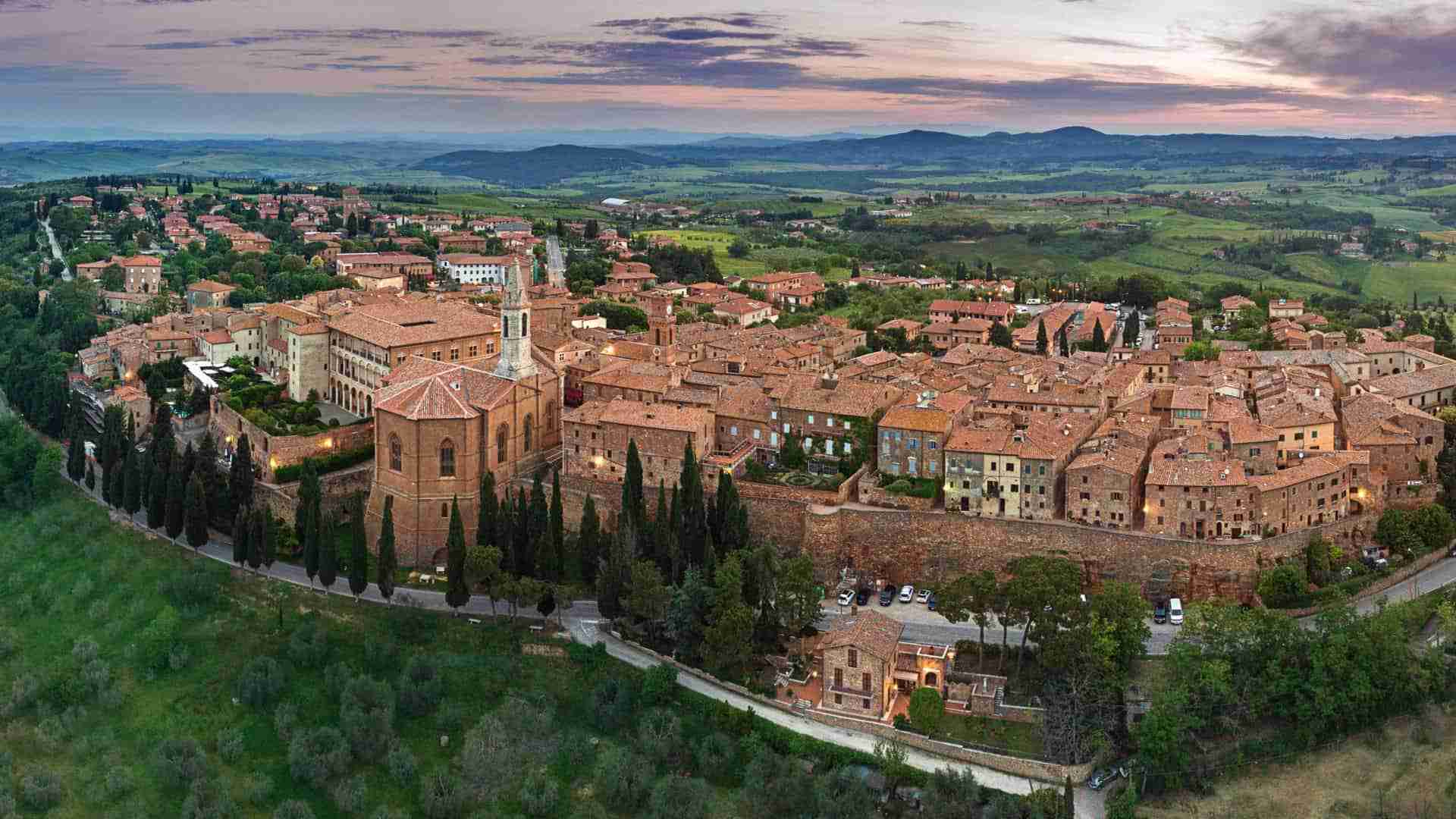
Pienza is not a town that grew organically, but rather a design. Starting in 1459, Pius II had his birthplace rebuilt into the ideal Renaissance city, and because the money ran out after his death, the design remained as it was: a square, a cathedral, a palace—all part of a single, cohesive whole. From the garden and the loggia of the Palazzo Piccolomini, from the papal family's residence, you can see the entire valley.
Admission is available exclusively through the All-Inclusive Pass €12.00, reduced rate €8.00. It is valid for two days and includes admission to the Palazzo Piccolomini and its garden, the cathedral, the crypt, and the labyrinth, as well as the Palazzo Borgia The tour starts at the Museo Diocesano, and the audio guide is included. It is open daily from March 30 to November 1, from 10 a.m. to 6:30 p.m.; last admission at 6 p.m. From November 2 through March 21, hours are 10 a.m. to 4:30 p.m.; closed on Tuesdays. The cathedral alone is open daily from 8 a.m. to 7 p.m.
Good to know: There are no single-day tickets, so you’ll still pay €12.00 even if you’re only interested in the Palazzo. However, you can spread out the pass over two days and come back on the second morning when the bus groups aren’t there yet. And the Pecorino di Pienza, the sheep's-milk cheese from the surrounding hills, is practically free in the shops on Corso Rossellino—as long as you're just trying it.
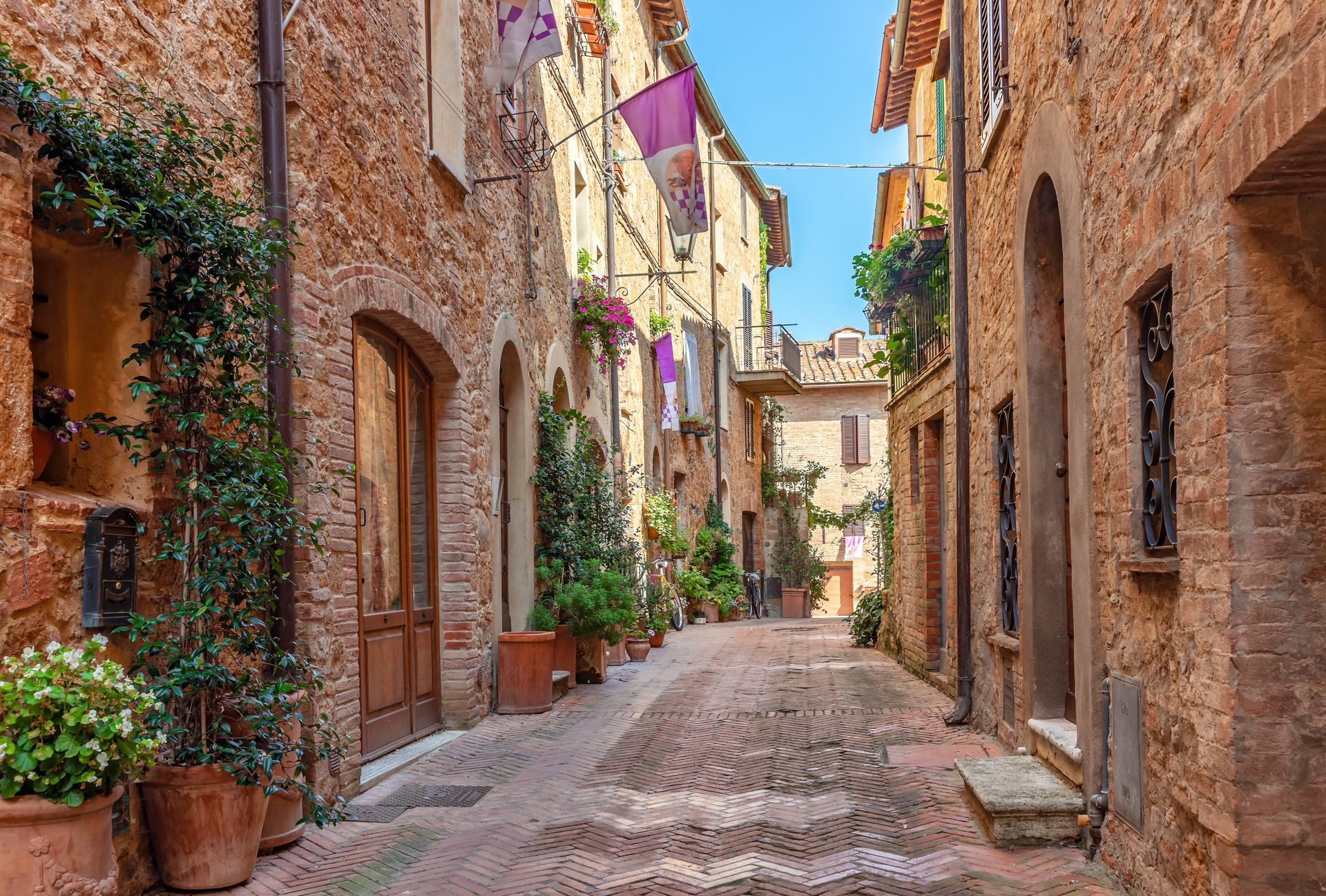
2. Montalcino, the fortress overlooking the vineyards
Montalcino sits perched on a hill in the western part of the valley, and anyone standing atop the walled ramparts of the Fortezza As you climb, you’ll see why: From here, you can take in the entire wine region. Construction of the fortress began in 1361, when the town was still part of the Republic of Siena. The tour costs €4.00, with a reduced rate of €2.00; children six and under are admitted free.
The second mandatory stop is the Sant’Agostino Complex, a monastery complex with four museums included in a single ticket for €10.00. It is closed on Tuesdays and Wednesdays. If you want to see both on the same day, the ticket costs €14.00. It's best to park your car at the Prato Spedale From there: two hours of free parking with a parking disc; it's a five-minute walk from there.
Good to know: The Fortezza will be closed from October 20 through 31, 2026—which, of all times, happens to fall during the most beautiful week of fall. For more information on the individual properties, opening hours, and wineries, see our separate article on the Sights in Montalcino.
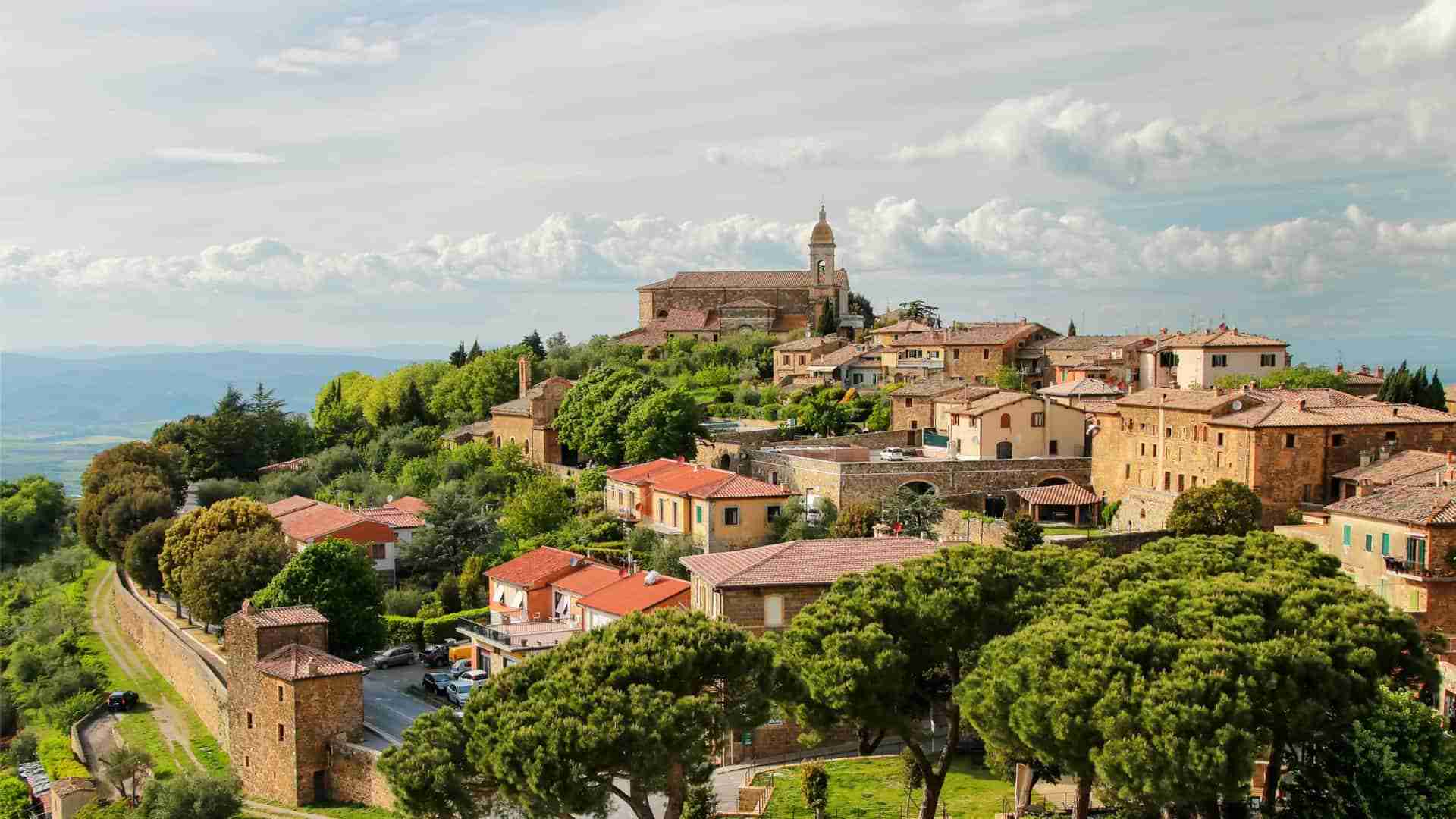
3. The Abbey of Sant’Antimo
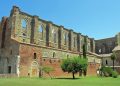
Just under ten kilometers south of Montalcino stands the Abbey of Sant’Antimo, a Romanesque monastery church made of light-colored travertine, nestled among olive groves. It’s the quietest spot in the entire valley, and it’s free to visit: You walk through the doorway, sit down, and that’s it.
It is open daily from April 1 through September 30 from 10 a.m. to 6:30 p.m., in October until 6 p.m., and from November 1 through March 31 from 10:30 a.m. to 5 p.m. On Sundays and holidays during the winter months, you can’t enter until 11:00 a.m., after the 10:00 a.m. Mass ends. A video guide is available for checkout at the Welcome Desk at the church entrance.
The church is maintained by the Missionaries of St. John the Baptist, a congregation founded in Mexico in 1945. Prayer times structure the day: Lauds at 8 a.m., the Angelus at noon, and Vespers with the Rosary at 5:30 p.m. Feel free to plan your visit around these times—the singing in this room is the reason most people stay longer than they planned.
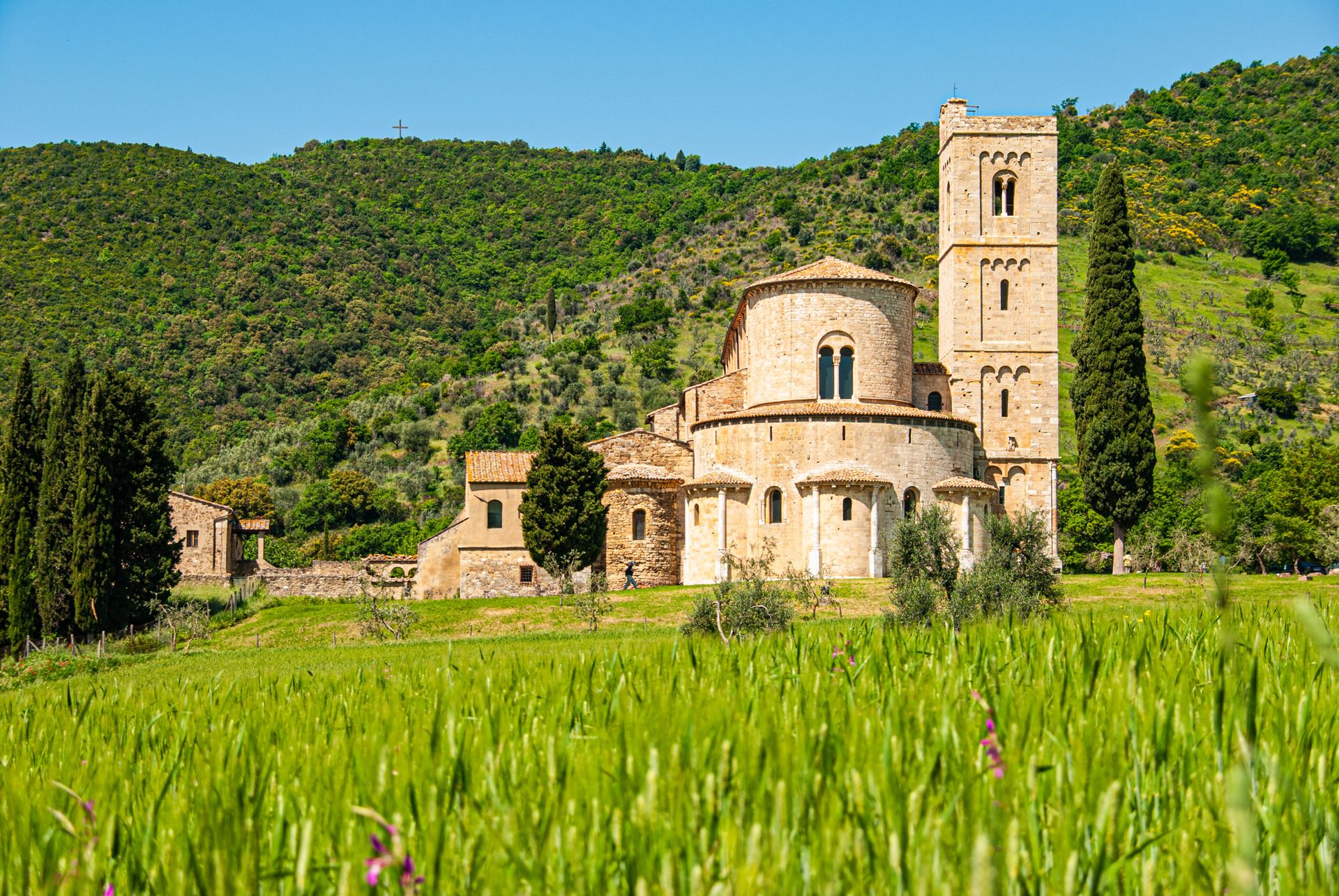
4. Montepulciano, the noblest of cities
Montepulciano is located east of the World Heritage Site on a long tuff ridge, and the town makes no secret of its self-confidence: The Piazza Grande At the very top, it is flanked by Renaissance palaces; below that is the Palazzo Comunale, whose tower you can climb. Admission is €5.00; access to the terrace only or with a discount is €2.50; children 10 and under get in free. It is open daily from April 1 through November 2, from 10 a.m. to 6 p.m., with last admission at 5:45 p.m. The tower is closed in case of bad weather.
The Crociani Civic Art Museum Admission to the Palazzo Neri-Orselli on Via Ricci costs €6.00, and it is closed on Tuesdays. A combined ticket for the tower and museum costs €8.00. The ticket office and tourist information center are located on the first floor of the Palazzo Comunale.
The city is famous for the Vino Nobile di Montepulciano, a red wine made from at least 70 % Sangiovese, which you can find here Prugnolo Gentile . Its designation of origin decree dates from July 12, 1966, and on July 1, 1980, it became the first wine in Italy to be permitted to bear the DOCG label, the highest designation of origin. It must age for at least two years starting on January 1 following the harvest, as Riserva three.
Just outside the city walls, the Renaissance church stands alone in the fields San Biagio, a central structure with a dome set on a cruciform floor plan. It’s a twenty-minute walk downhill from Piazza Grande—and the walk back is the price you pay for the photo everyone takes from here.

5. San Quirico d’Orcia and the Horti Leonini
San Quirico d’Orcia has been the hub of the valley for over a thousand years: As archbishop Sigeric of Canterbury In 990, as he was making his way home from Rome, he recorded the place as the twelfth stop on his route—the Via Francigena. In 1155, Emperor Frederick I Barbarossa received the Pope’s envoys here, and the city festival in June still commemorates this event today.
There are two things worth seeing. The Collegiate Church of Saints Quirico and Giulitta, the town's main church, features three portals from three different eras—Romanesque, Gothic, and Baroque—side by side on a single building. And the Horti Leonini, a 16th-century Renaissance garden, which Diomede Leoni which he had built within the city walls, are among the few green spaces in the valley where you can just sit and relax.
Good to know: The historic center has a restricted-traffic zone, monitored by two traffic cameras located on Via Dante Alighieri and Via dei Fossi. If you're staying overnight in town, just register your license plate with the local business in advance, and you're all set. You can find more about the town in the article on San Quirico d'Orcia.
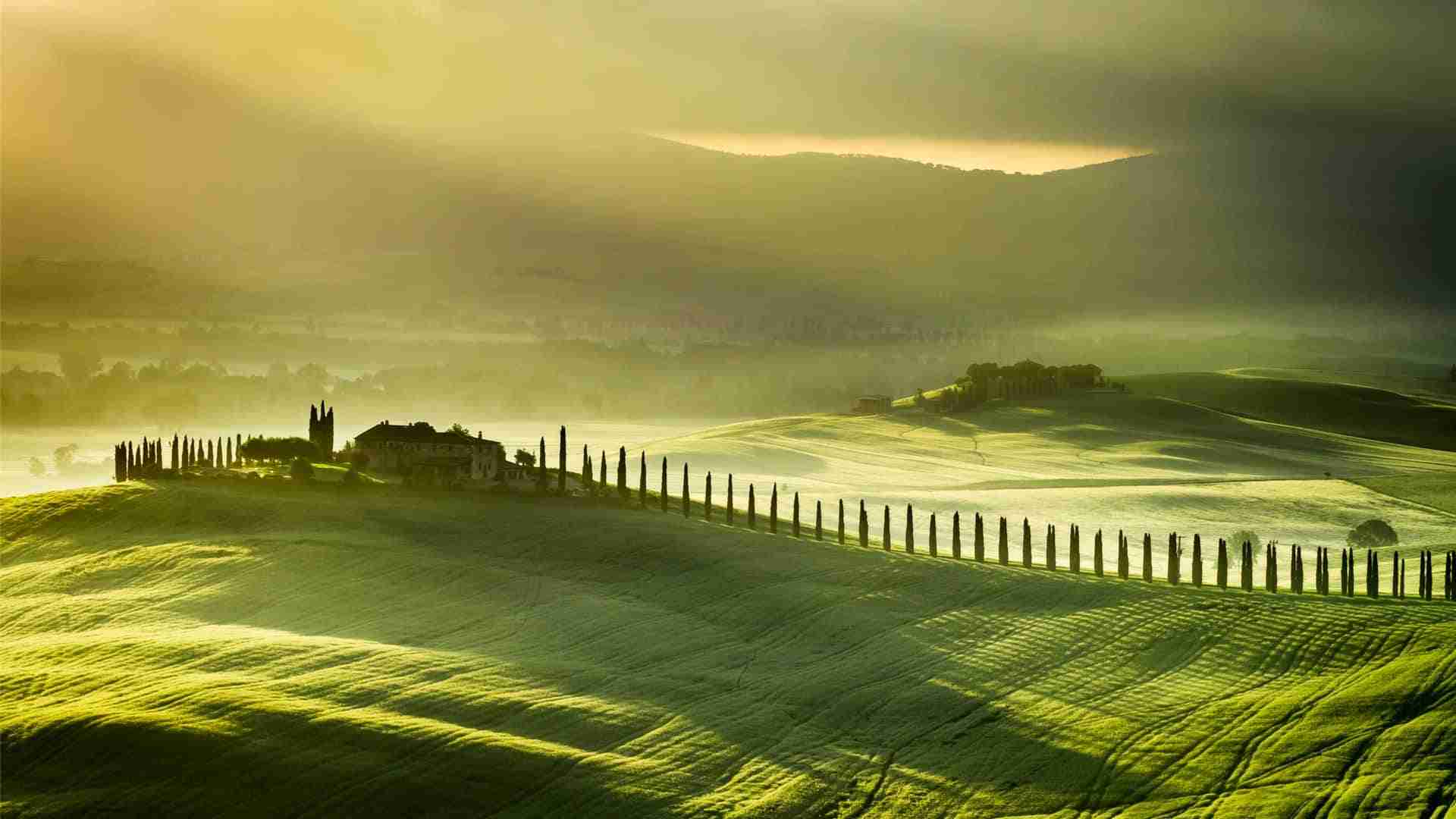
6. Bagno Vignoni, the village with a pool instead of a town square
Five kilometers south of San Quirico, on the SR2 Cassia, lies its hamlet of Bagno Vignoni. Where other villages have a town square, this one has a rectangular pool: the Piazza delle Sorgenti. The water emerges from the travertine at about 50 degrees, and on cool mornings, steam hangs over the entire town. Catherine of Siena visited here several times between 1362 and 1367.
People don't bathe in the pool, but in the thermal baths of the buildings surrounding it. The La Posta Hotel Allows day visitors ages 14 and older to enter for €55.00 for a full day and €40.00 for a half day; on Thursdays, one of the three pools is closed for maintenance. The Albergo Le Terme charges €138.00 per day from Friday through Sunday and €44.00 after 7:00 p.m. The pool at the ADLER Spa Resort THERMAE maintains a temperature of 36 degrees across a water surface area of approximately 1,000 m².
Just below the village, the warm water cascades over the sinter terraces of the Parco dei Mulini where there are four historic mills, two of which are carved into the rock. Admission to the park is free, and it’s the place where you can enjoy the thermal waters without paying an entrance fee. All prices, opening hours, and rules are listed in detail in the article on Bagno Vignoni.
Swimming is prohibited in the large pool in Piazza delle Sorgenti and in Parco dei Mulini. The municipality of San Quirico d’Orcia imposes fines ranging from €25.00 to €500.00 for violations, in accordance with its Ordinance No. 22 of March 31, 2010. To go swimming, head to one of the three facilities.
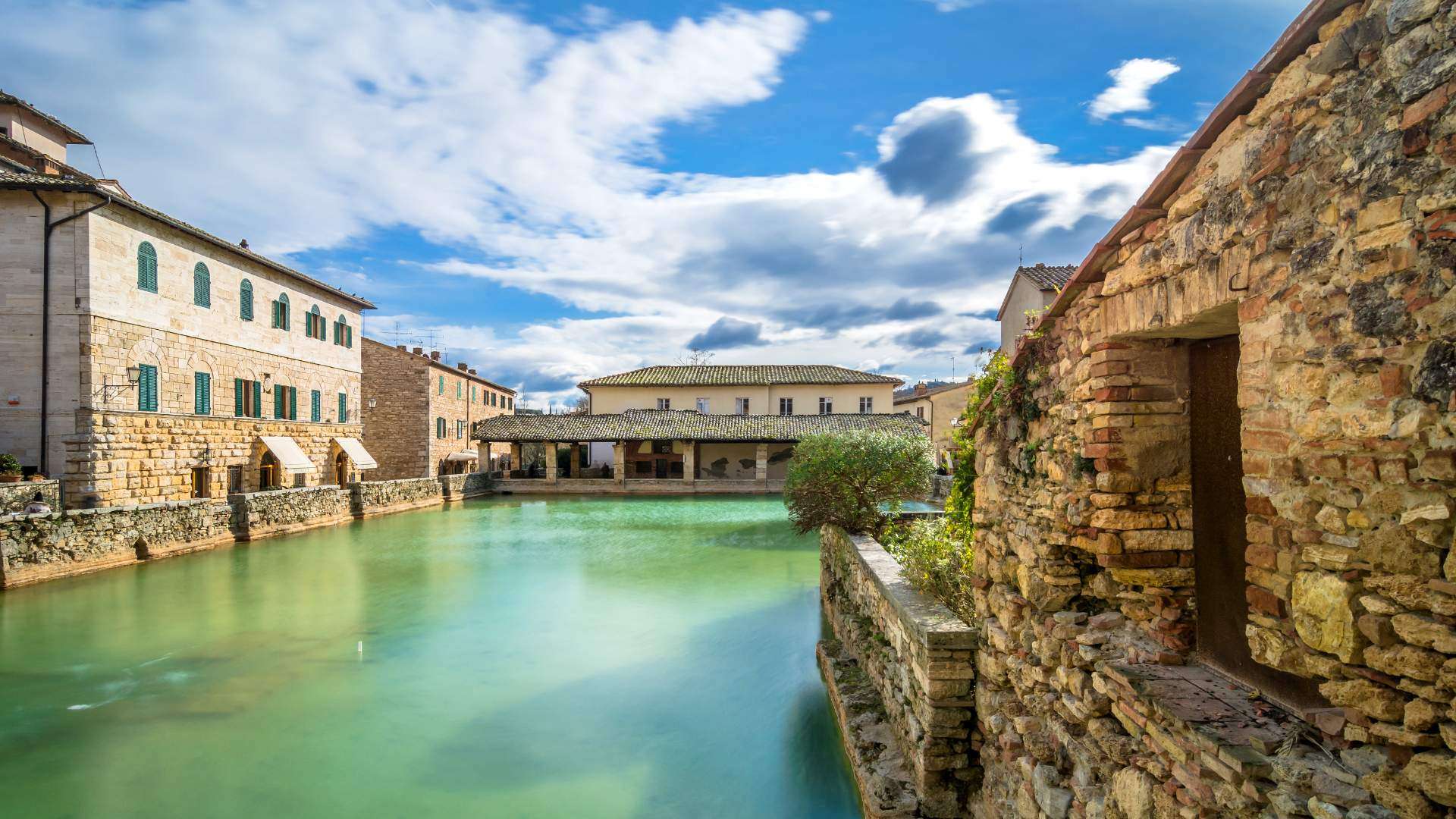
7. The Chapel of Our Lady of Vitaleta
Halfway between Pienza and San Quirico d’Orcia, on the country road, there is SP146 A tiny chapel standing alone in a field, flanked by cypress trees: the Chapel of Our Lady of Vitaleta. It is the most photographed sight in Tuscany, and it is smaller than any photo would suggest.
The earliest documented records date back to the 16th century. It did not take on its current form until the 1880s, following a restoration by the architect Giuseppe Partini. The statue of the Madonna, which, according to tradition, was created by Andrea della Robbia originated from, is now housed in the Church of San Francesco in San Quirico d’Orcia; its attribution to him is disputed in art history.
The interior belongs to private individuals and is not open to the public. That’s no loss, because the reason to come here is outside. Those who make the trip usually have the chapel all to themselves in the first light of dawn; more background information can be found in the article on Chapel of Our Lady of Vitaleta.
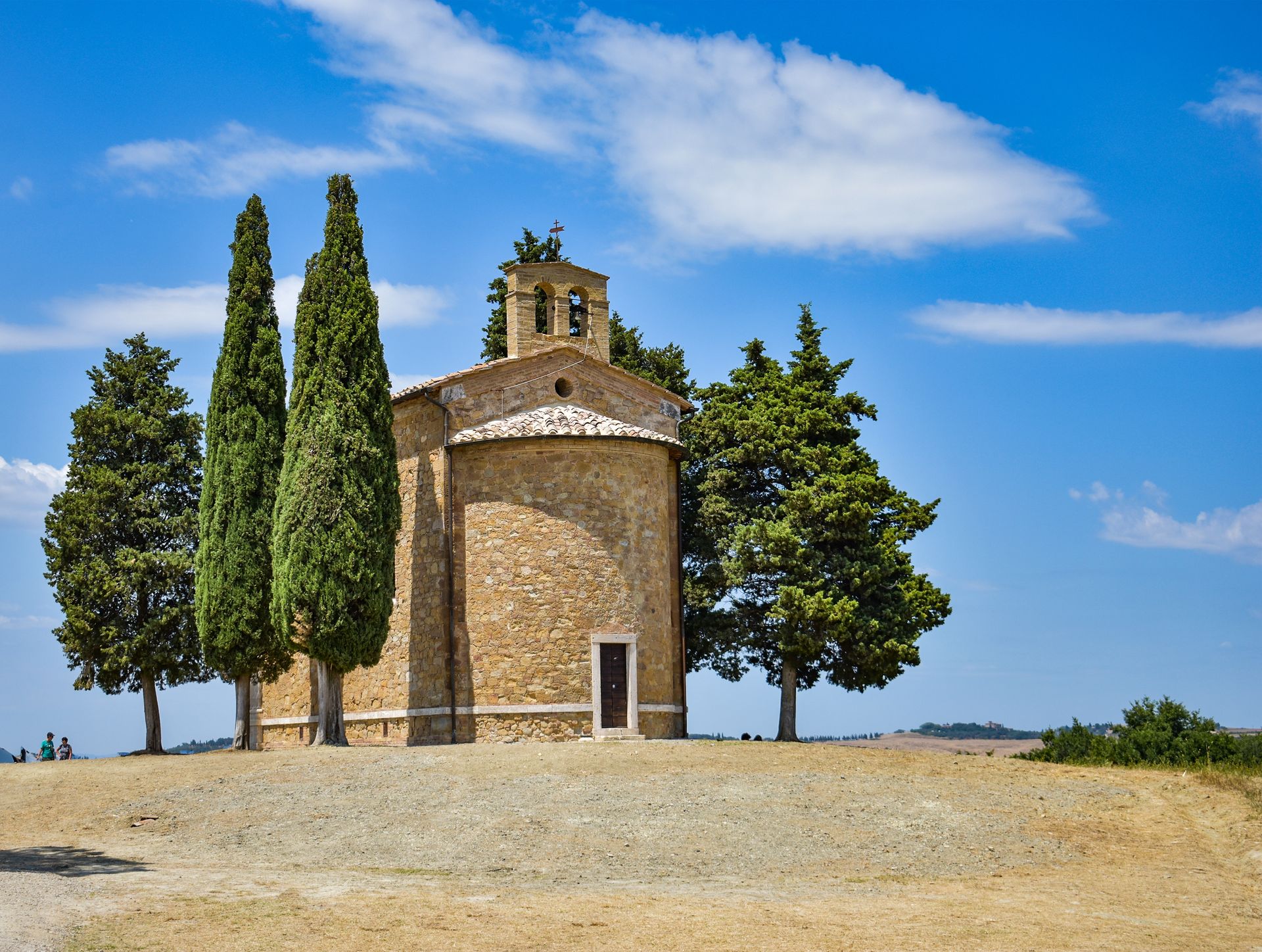
There is no parking lot—just a gravel pull-off on SP146, and it’s full by sunset. From the dirt road, it’s a 15- to 20-minute walk—about one kilometer with no shade. Wear sturdy shoes, keep farm access roads clear, and don’t walk into the fields.
8. Castiglione d’Orcia and the travertine terraces of Bagni San Filippo
Castiglione d’Orcia is the southernmost of the five World Heritage municipalities and the least visited. It includes Campiglia d'Orcia, and from there the road leads down to Bagni San Filippo – the place where the Val d’Orcia looks the least like Tuscany.
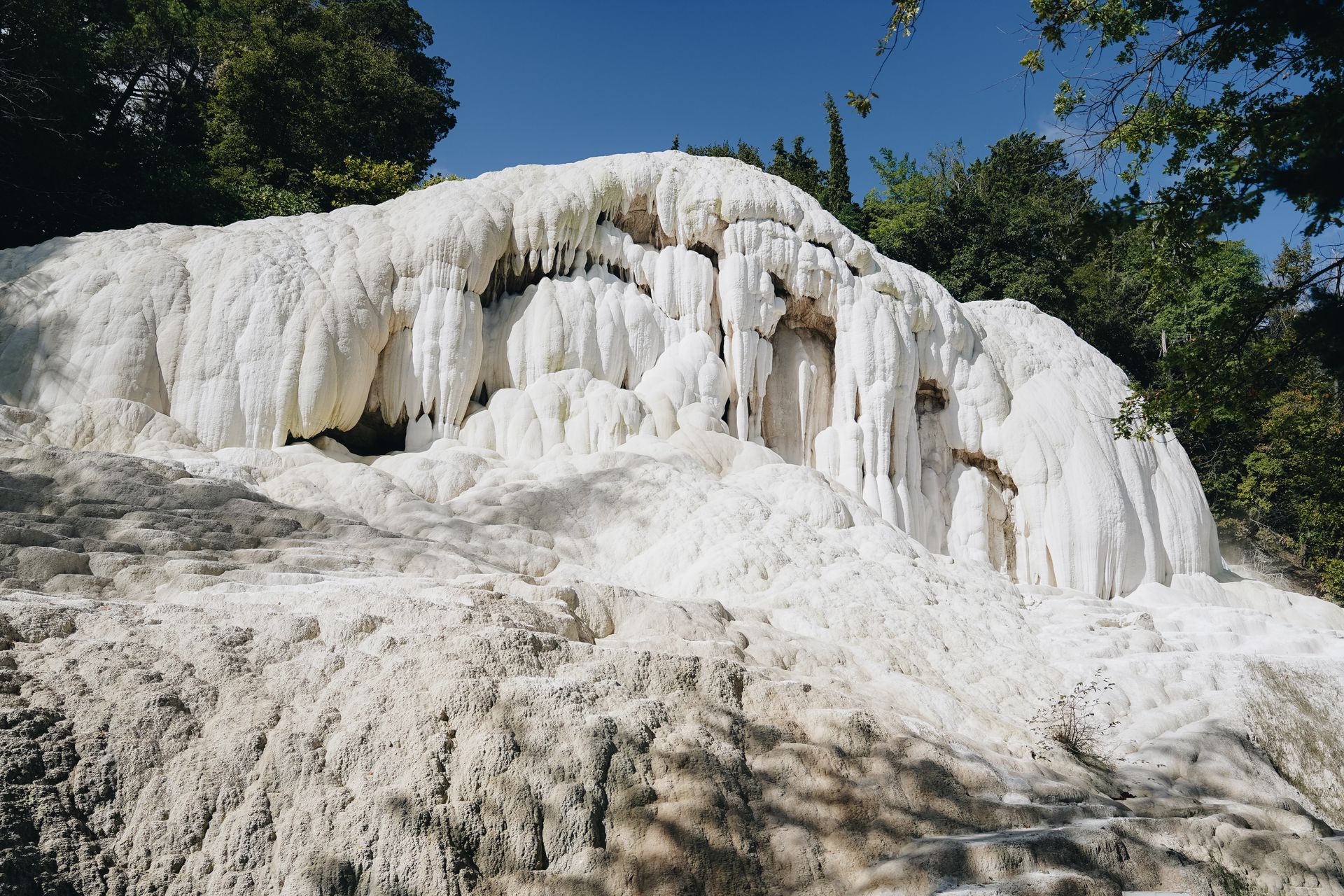
At the entrance to town, a road branches off to the left strada bianca, an unpaved gravel road, leading to the Fosso Bianco ...a stream running through the forest. Several hot springs converge there, forming a series of natural pools. Over thousands of years, the calcareous water has built up white sinter formations, which the locals have given names: white whale, the white whale, and the glacier, the glacier.
The thermal waters were already known in Roman times. Cosimo I had the baths renovated in 1566; Grand Duke Ferdinand II followed suit in the 17th century, and in the 18th century, the architect Leonardo De Vegni Here is the Tatar plastic a technique in which reliefs are formed from the limestone deposits left by spring water. Above it lies the grotto of the Servite monk Filippo Benizi, who, according to tradition, retired here in 1267; it is carved into a large block of limestone and remains a place of pilgrimage to this day.
9. Radicofani, high above the valley
Radicofani is the fifth World Heritage town and the place most often skipped on the valley loop. It lies in the very south on a basalt cone, high above the rolling hills through which the Orcia River flows, and the silhouette of its castle ruins can be seen even from the Cassia.
For pilgrims, however, the town is a staple stop: on the Via Francigena, this is where the stage that begins in San Quirico d’Orcia ends, and the next one continues on to Acquapendente in Lazio. Anyone exploring the valley on foot simply can't miss Radicofani.
Good to know: The drive from Pienza takes a good three-quarters of an hour along winding country roads, and there are hardly any places to eat once you get there. But you’ll usually have the view of the entire southern Val d’Orcia all to yourself—and on clear days, it stretches all the way to Monte Amiata.
Cypress Trees, Crete Senesi, and the Colors of the Seasons
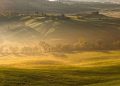
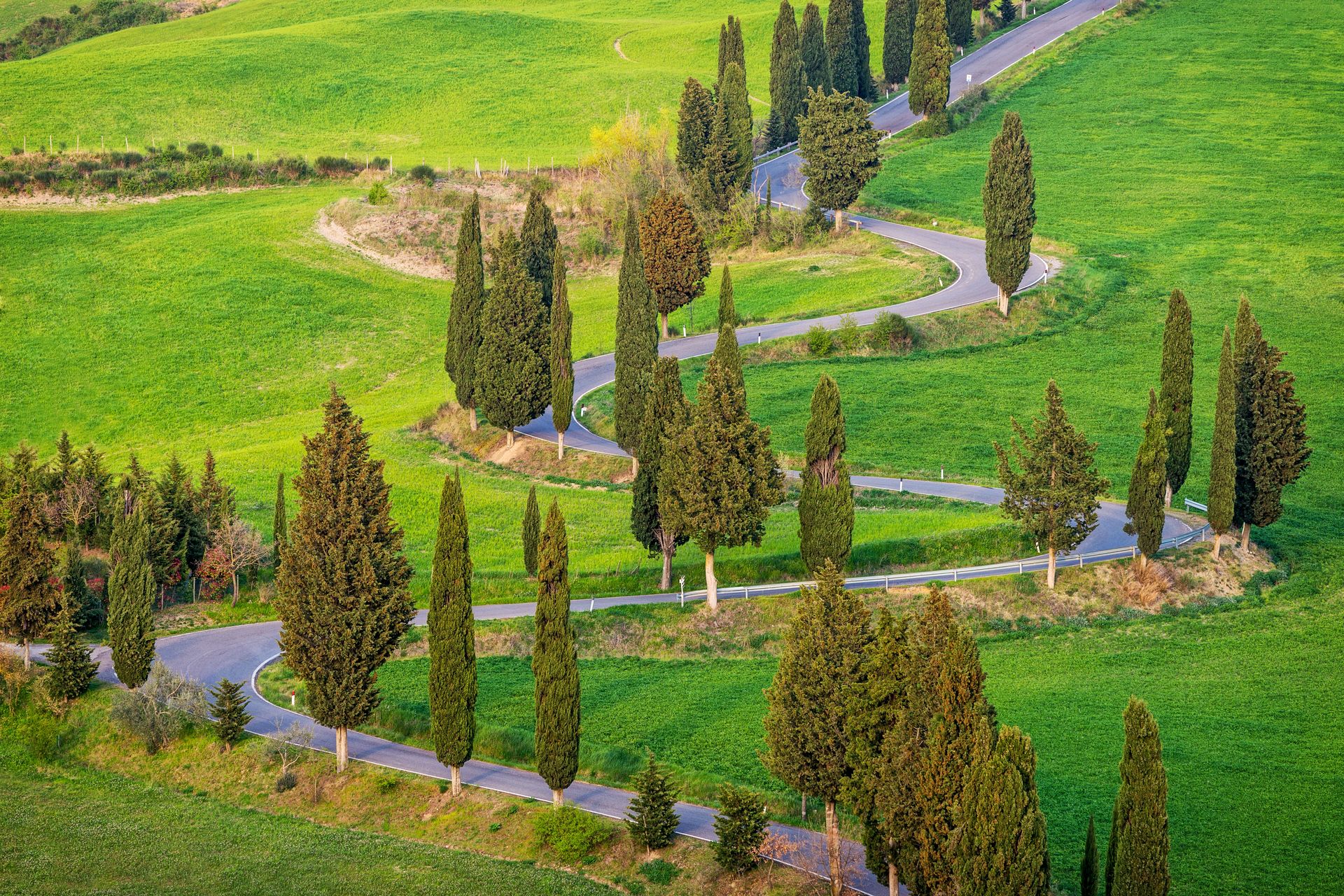
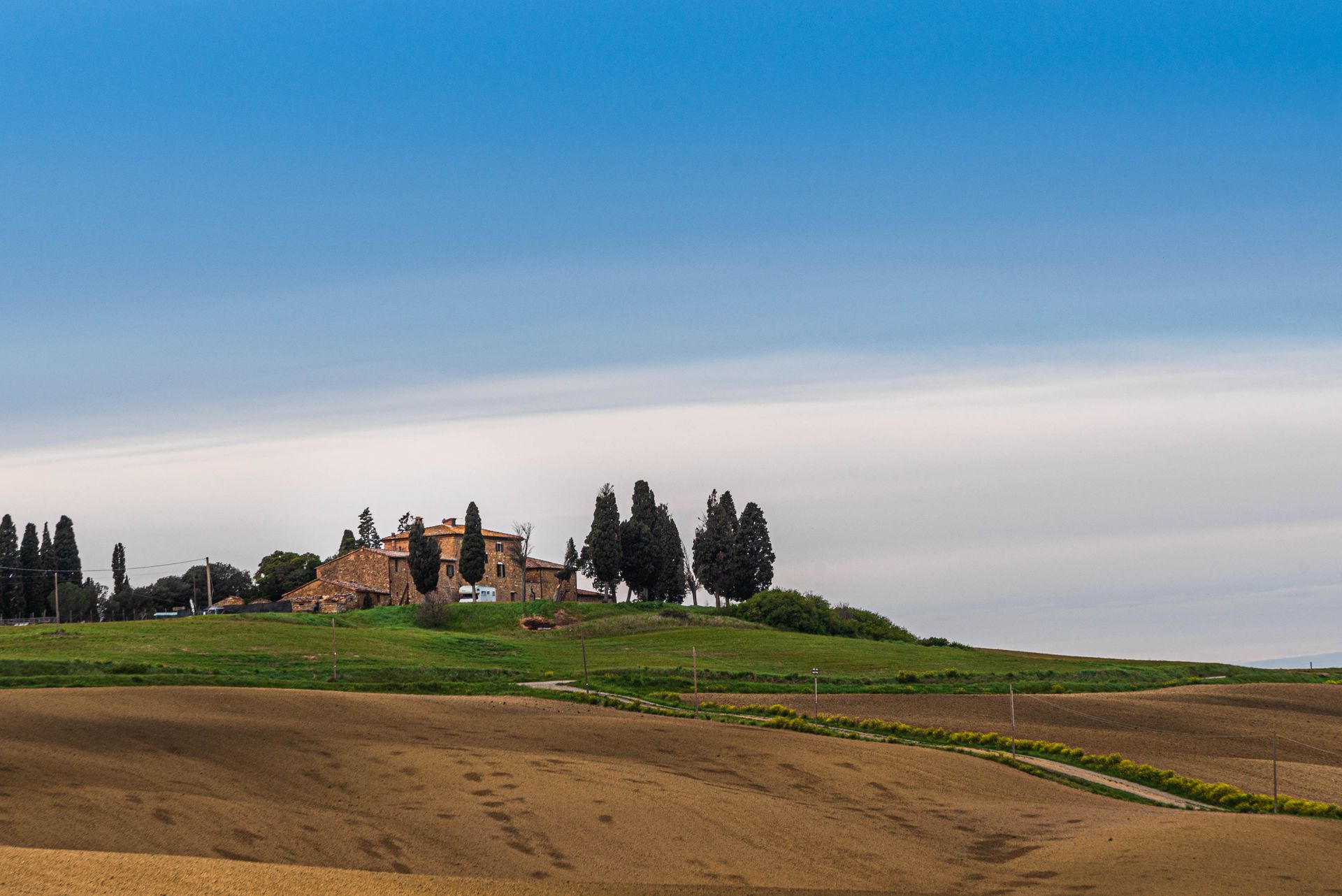
The hills of the Val d’Orcia are farmland, and that is precisely what gives them their color. In the spring, they are green; in June, the grain turns golden; after the harvest, they lie there brown and streaked; and in the fall, the green returns with the new planting. So the window for that postcard-perfect color is narrow.
The motifs are easy to list: solitary cypress trees along country roads, clusters of cypresses around old farmsteads, the chapel at Vitaleta, farmhouses on hilltops. They appear to be carefully arranged because they are—cypress trees traditionally marked the entrance to a property and the boundary of a farmstead. The light is best during the first hour after sunrise, when ground fog hangs in the valleys.
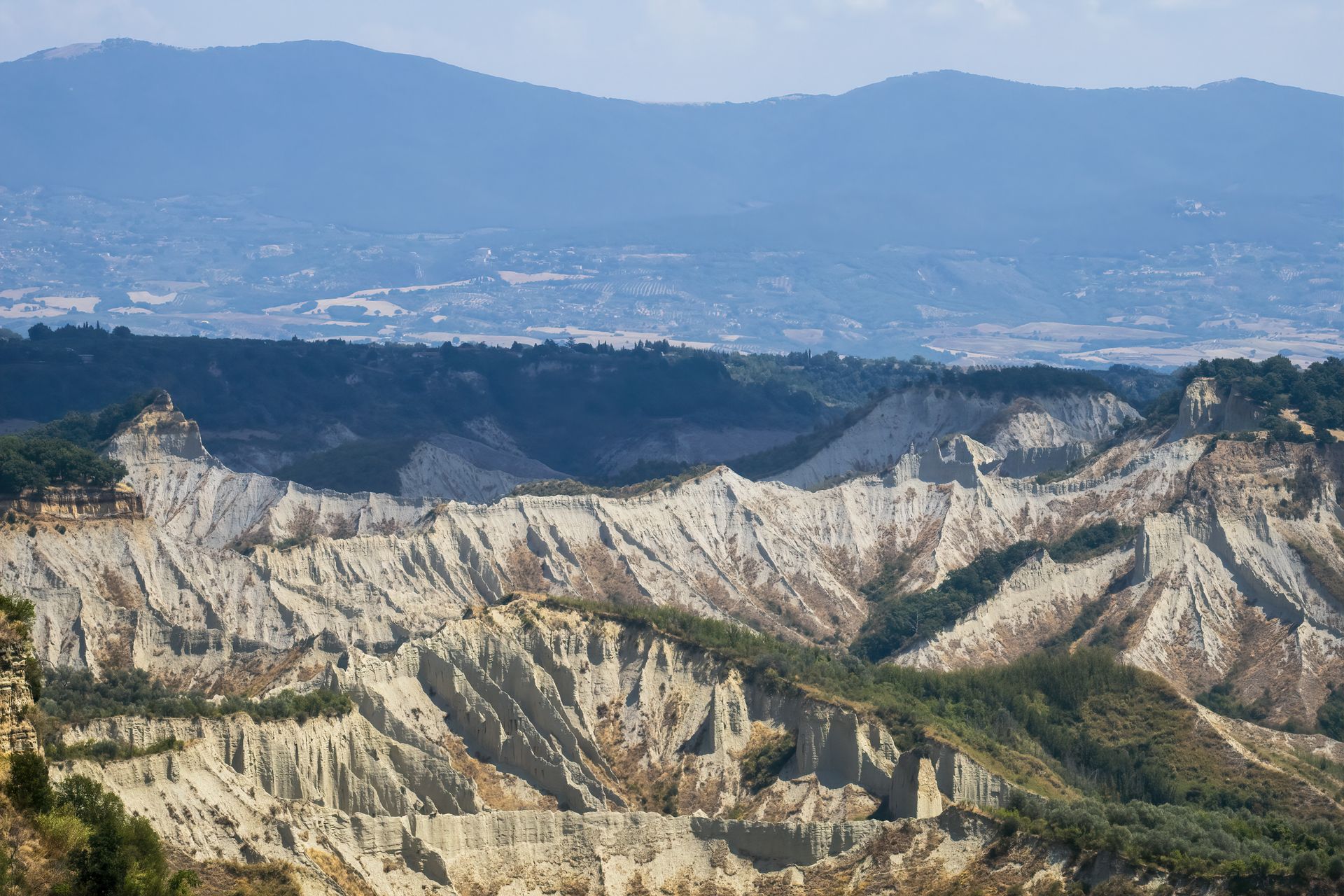
Often mentioned in the same breath, but geographically a different region: the Crete Senesi. This barren, shimmering gray clay hill landscape begins north of Buonconvento, between the Val d’Orcia and Siena, and is not part of the World Heritage site. It’s still worth the detour: over the course of twenty kilometers, the landscape shifts from gentle rolling hills of grain to an almost treeless lunar landscape.
Which wines come from the Val d’Orcia?
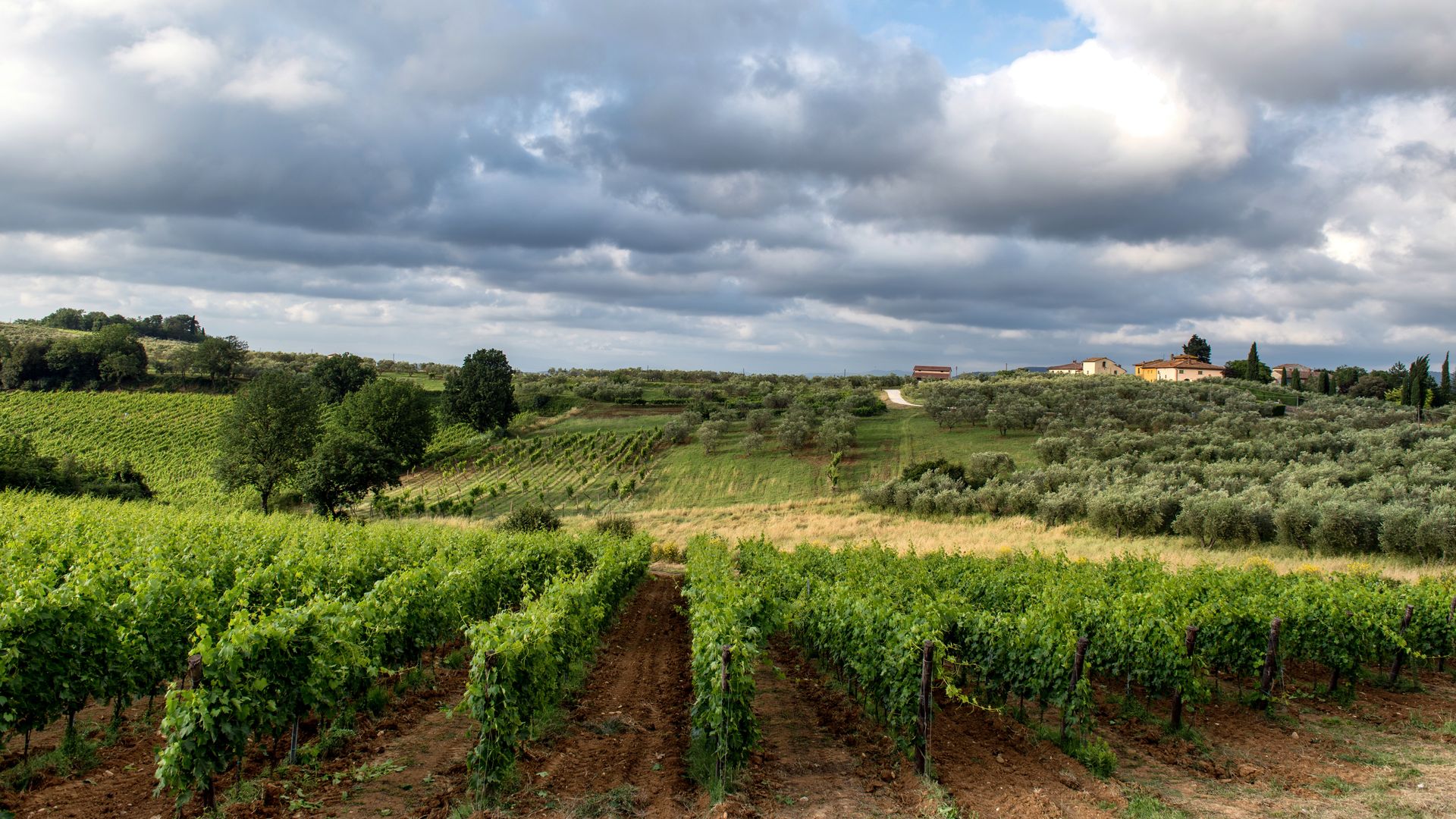
The valley is home to two of Italy's most famous red wines and three other designations of origin that hardly anyone knows about. To the west lies Montalcino with its Brunello; to the east, Montepulciano with its Vino Nobile; and in between, the Orcia DOC has covered twelve municipalities since February 14, 2000. Of the 4,400 hectares of vineyards around Montalcino, 2,100 hectares are dedicated to Brunello and 860 to Rosso di Montalcino.
| Origin | Here's what's inside |
|---|---|
| Brunello di Montalcino DOCG | 100 % Sangiovese, known here as Brunello. Aged for at least two years in oak barrels and four months in the bottle; six months for the Riserva. Available for sale starting January 1 of the fifth year following the harvest. |
| Rosso di Montalcino DOC | The same Sangiovese from the same vineyards, but released earlier: starting September 1, following the harvest. Has been a separate designation since the 1984 vintage. |
| Vino Nobile di Montepulciano DOCG | At least 70% % Sangiovese; locally, Prugnolo Gentile. Aged for at least two years starting January 1 following the harvest; as a Riserva, aged for three years, including six months of bottle aging. |
| Orcia DOC | At least 60 % Sangiovese; for Orcia Sangiovese, at least 90 %. Recognized on February 14, 2000; production area covers twelve municipalities. |
| Moscadello di Montalcino DOC | A white dessert wine made from Moscato Bianco, recognized in 1984. It is the town’s oldest specialty and the rarest. |
| Sant’Antimo DOC | Since the 1996 vintage, the youngest of the four Montalcino appellations, named after the abbey in the southern part of the municipality. |
Brunello is limited to 80 double-zentner of grapes per hectare, and that yield produces 68 % of wine. Both factors keep the price high. If you want to get to know the style without paying the price, try Rosso di Montalcino: same grape variety, same vineyard, less barrel aging, and ready to drink sooner. For more itineraries through Italy’s wine regions, see our overview of the Wine Routes in Italy.
Two dates are particularly worth noting. The harvest begins in early September and lasts about three weeks; in 2026, most wineries in Montalcino headed to the vineyards starting on September 7. In November, the consortium presents the new vintage; “Benvenuto Brunello” will take place from November 19 to 23, 2026. The former star rating system is now a thing of the past: Since 2024, the consortium has been evaluating vintages based on data under the name Brunello Forma, with 2020 being the first vintage to receive this rating.
What should you definitely try in Val d’Orcia?
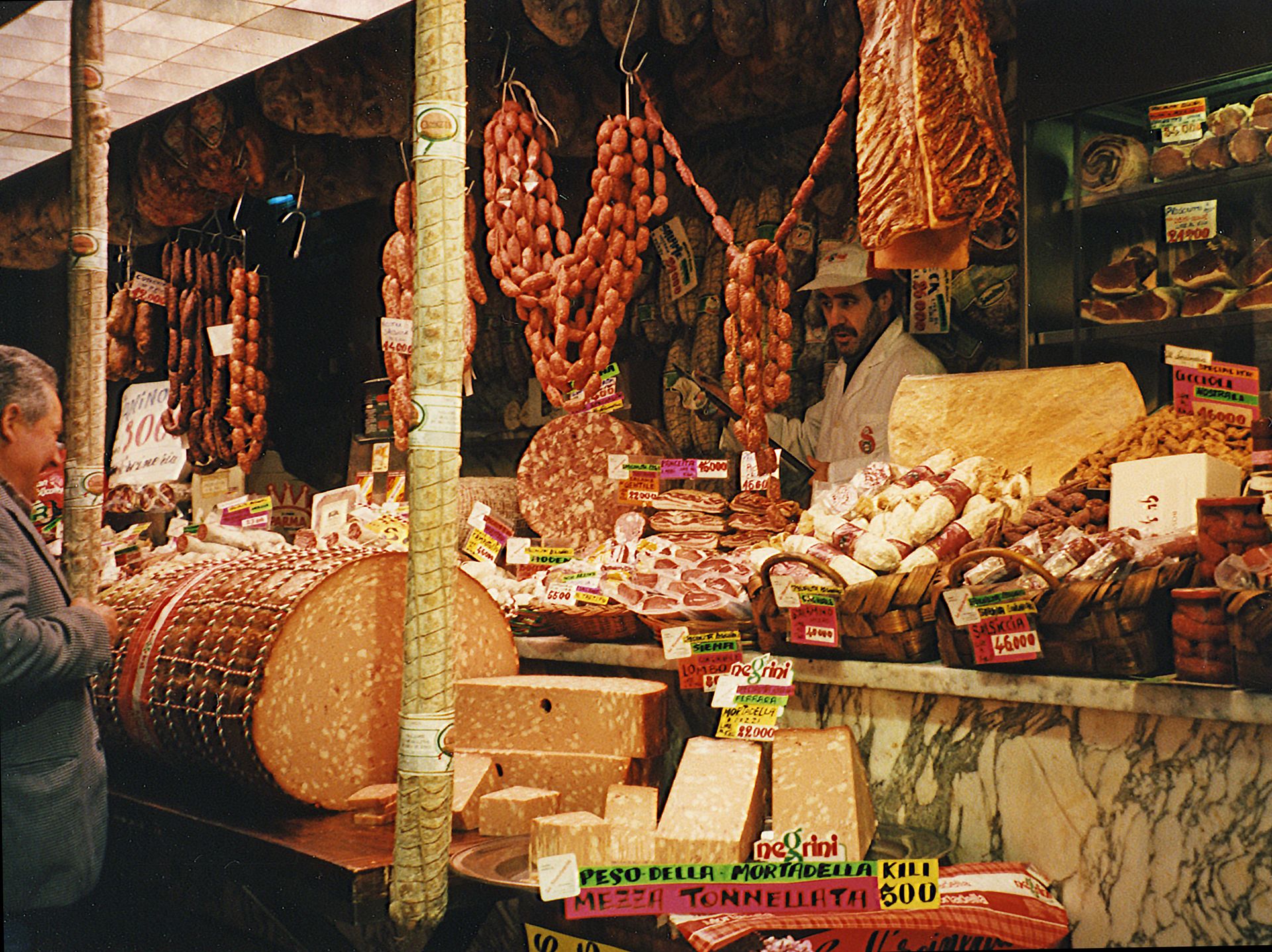
The valley's cuisine is rustic and features good ingredients—not sophistication. There are four things you have to try: pici, Pecorino di Pienza, Cinta Senese and the olive oil.
Pici are thick, hand-rolled noodles made from flour and water, without eggs. Traditionally, they are served as pici all’aglione served with a sauce made from large, mild garlic cloves and tomatoes; in the fall, it’s also served with wild boar ragù. The Pecorino di Pienza is the sheep's-milk cheese from the hills around Pienza, which comes in three stages of ripeness: young and mild, semi-aged, or aged and grainy. The Cinta Senese is an old Sienese breed of pig with a light-colored stripe across its shoulders; its meat is mainly used to make salami and ham.
If you have a choice, plan your visit for the Fiera del Cacio, the Pienza Cheese Festival. In 2026, the 64th edition will take place from August 31 to September 6. The producers themselves will be manning the tables.
Bagno Vignoni: 6 Attractions, Thermal Baths & Prices
You’re not allowed to swim in the pool in the piazza: How much the Bagno Vignoni thermal baths will cost in 2026, the six attractions the town has to offer, and how to get there.
How do you get to Val d’Orcia?
The easiest way is by car. From the north, take the A1 to the Firenze Impruneta exit and continue via Siena; from the south, head toward Chiusi-Chianciano Terme or Valdichiana. From the highway, it’s another half to three-quarters of an hour. In the valley itself, take the SR2 Cassia; all other roads are country roads and white roads, that is, unpaved gravel roads, which are often excluded from rental car agreements.
You can take the train right to the edge. Chiusi-Chianciano Terme is located along the route from Florence to Rome and is the most convenient access point from the south, Buonconvento on the route from Siena to Grosseto, coming from the north. The stop Torrenieri-Montalcino Although it exists, it is not served by regular scheduled service—only the historic Treno Natura stops there. The nearest airports are Florence and Pisa, both of which are connected via Siena.
If you don't have a car, the bus is your only option. The regional route 112 of the Autolinee Toscane runs from Siena via Buonconvento, San Quirico d’Orcia, and Pienza to the Montepulciano bus station; Line 114 runs from Siena via Buonconvento and Torrenieri to Montalcino. A regional bus ticket starts at €1.60; tickets purchased from the driver start at €3.00; a book of four tickets starts at €7.10. That’s enough to visit two or three places. It’s not enough to see the chapel in the field, the abbey, and Radicofani.
All larger towns in the valley have a traffic-restricted zone. In Montepulciano, it is in effect 24 hours a day from May 1 through September 30; in April and October, from 8 a.m. to 8 p.m.; and from November 1 through March 31, from 8 a.m. to 5 p.m.; there are no exceptions for electric or hybrid vehicles. Pienza, Montalcino, and San Quirico d’Orcia have their own zones monitored by cameras. Just park your car in one of the parking lots outside the city walls, and you’re all set.
Where's the best place to stay in Val d’Orcia?
It all depends on whether you want to drive in the evening. If you stay in Bagno Vignoni, the thermal baths are right on your doorstep; if you stay in Montalcino, you’ll be the first one at the Fortezza in the morning. Both options are better than a room in Siena, from which you’d have to drive an hour there and an hour back every day.
| Accommodations | Here's what you can expect |
|---|---|
| ADLER Spa Resort THERMAE Bagno Vignoni, 1 Strada di Bagno Vignoni | A large spa resort on the outskirts of town, featuring thermal pools at 36 degrees Celsius covering approximately 1,000 m² of indoor and outdoor water area, as well as a semi-Olympic-sized lap pool. |
| La Posta Hotel Bagno Vignoni, Via Ara Urcea 43 | A five-star resort right in the heart of the village, with three thermal pools ranging from 28 to 38 degrees, open to guests ages 14 and older. Open-air evening swimming on Fridays and Saturdays. |
| Albergo Le Terme Spa & Resort Bagno Vignoni, Piazza delle Sorgenti 13 | Located right next to the historic pool, the thermal area is open until 11:00 p.m. and until 11:45 p.m. on weekends. |
| Hotel dei Capitani Montalcino, Via Lapini 6 | A city hotel in Montalcino with a panoramic terrace overlooking the wine region, just a few steps from the Fortezza. |
Where's the best place to eat in Val d’Orcia?
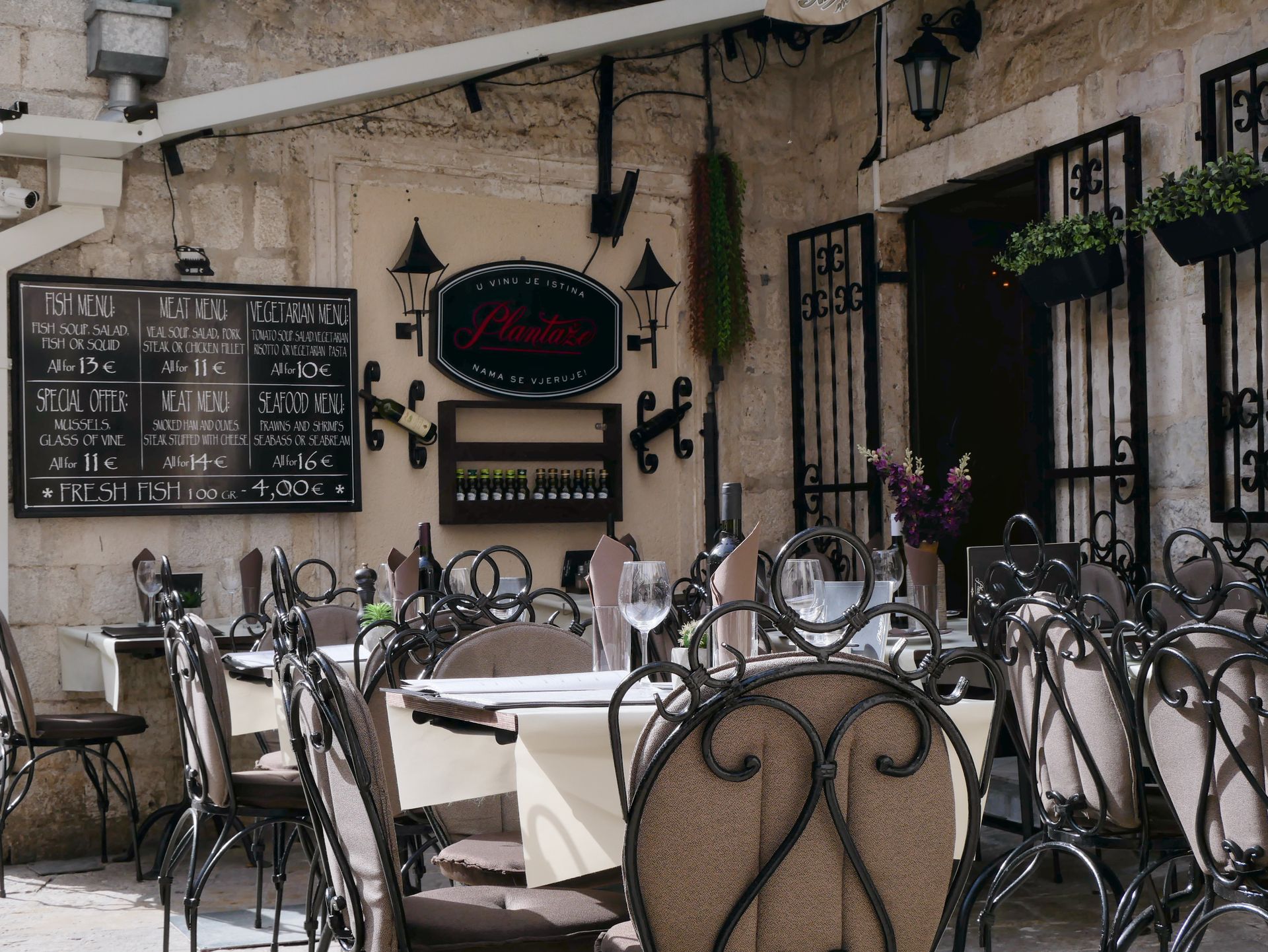
The best restaurants are in Montalcino and Bagno Vignoni, and they’re small. Making a reservation isn’t a luxury—it’s the only way to be sure you’ll get a seat—especially from May through October and on weekends.
| Restaurant | Here's what you can expect |
|---|---|
| Osteria del Leone Bagno Vignoni, Via dei Mulini 3 | Tuscan cuisine with a view of the Mühlenpark; reservations are recommended at 0577 887300. |
| La Bottega di Cacio Bagno Vignoni, Piazza del Moretto 31 | A small shop with a kitchen, perfect for a board snack of Pecorino, salami, and a glass of Orcia DOC. |
| Osticcio Montalcino, 23 Via Matteotti | A wine bar with an extensive Brunello selection and panoramic windows, open from 12 p.m. to 3 p.m. and 7 p.m. to 10 p.m.; closed on Wednesdays. |
| Boccon DiVino Montalcino, Via Traversa dei Monti 201 | Terrace with a view of Sant’Antimo Abbey; closed on Tuesdays; closed for the winter from late December through early March. |
| Trattoria il Leccio Sant’Angelo in Colle, Via Costa Castellare 1 | A village trattoria south of Montalcino, known for its pici and grilled meat; closed on Wednesdays. |
When is the best time to visit the Val d’Orcia?
May and June, as well as September and October. In May and June, the fields range from green to golden, and temperatures remain pleasant; in September and October, the grape and olive harvests are in full swing, the light becomes softer, and there are fewer day visitors. July and August are hot, and by then the fields have usually already been harvested.
Winter has its own charms: fog in the valleys, empty streets, and warm water in Bagno Vignoni. However, it also has the shortest opening hours. In Pienza, the monuments are open only on Saturdays and Sundays from November 15 to 30 and from January 7 to February 28; the evening bath at the La Posta Hotel is available only from April 3 to October 31. In Montalcino, snow is possible at elevations above 400 meters; on average, the area receives 700 millimeters of precipitation per year.
Good to know: The Fortezza in Montalcino will be closed from October 20 to 31, 2026—right in the middle of the most beautiful week of fall. If you’re there during this time, shift your Montalcino day to the museum center and the wineries, and instead climb the tower in Montepulciano. The current Forecast for Siena gives you the best estimate for the valley.

Which holidays should you plan for?
The valley comes alive with festivities from June through December, and three events in particular are significant enough to affect room rates: the Festa del Barbarossa in San Quirico d’Orcia in June, the Bravìò delle Botti in Montepulciano at the end of August, and the Sagra del Tordo in Montalcino on the last weekend of October. If you’re planning to visit on these dates, book early. If you’re looking for peace and quiet, plan your trip for a different time.
Festivals in Val d’Orcia
The 2026 dates, as published by the organizers.
| Date | What happens |
|---|---|
| June 17–21, 2026 | Festa del Barbarossa in San Quirico d’Orcia, 64th edition, featuring archery and flag-waving competitions for the Brocche dell’Imperatore. |
| July 17 through August 2, 2026 | Cantiere Internazionale d’Arte in Montepulciano, 51st edition, a citywide music and theater festival. |
| July 20–26, 2026 | Jazz & Wine in Montalcino: Concerts at Castello Banfi and the Fortezza, starting at 9:45 p.m. each night. |
| August 7–9, 2026 | Opening of the Hunting Season in Montalcino, 63rd Archery Tournament of the Four Districts. |
| August 21–30, 2026 | Bravìò delle Botti in Montepulciano, a week-long festival culminating in a barrel-rolling competition among the eight contrade on the final day. |
| August 31 through September 6, 2026 | Fiera del Cacio in Pienza, 64th edition—the valley's cheese festival. |
| September 11–13, 2026 | "I Colori del Libro" in San Quirico d’Orcia, 17th edition, a book fair featuring readings. |
| The last weekend in October | Sagra del Tordo in Montalcino, 68th edition, featuring a historical parade and a archery tournament. |
| November 19–23, 2026 | Benvenuto Brunello in Montalcino, 35th edition, presentation of the new vintage. |
| December 5, 2026 | Festa dell’Olio in San Quirico d’Orcia: Market and tasting of the new olive oil. |
As of September 2026 · Information provided by the Comune di Montalcino, Comune di Montepulciano, Comune di San Quirico d’Orcia, Pro Loco Pienza, Fondazione Cantiere Internazionale d’Arte, and Consorzio del Vino Brunello di Montalcino. The organizer announces the date of the Sagra del Tordo in late summer.

Via Francigena: 8 Stopover Towns, Prices & Tips
999.7 kilometers and 45 stages from the Great St. Bernard Pass to St. Peter’s Square: the eight most important stops along the Via Francigena, including prices, travel information, and the pilgrim’s passport.
What You Should Know About the Val d’Orcia
Five things that will change the way you plan—and you won't find them in any brochure.
1. Without a car, things get tight. Two bus routes serve the four larger towns, but the chapel in the countryside, the Abbey of Sant’Antimo, Bagni San Filippo, and Radicofani are off the beaten path. Without a car, you’ll have to plan your trip around Bagno Vignoni and San Quirico d’Orcia, which are five kilometers apart.
2. Tuesday is a bad day. In Montepulciano, the Museo Civico is closed on Tuesdays; in Pienza, the monuments are closed on Tuesdays during the winter; and in Montalcino, the museum complex is closed on Tuesdays and Wednesdays. Spend your Tuesday exploring the countryside, visiting wineries, and enjoying the hot springs—that way, you won’t miss a thing.
3. The traffic-restricted zone is to be taken seriously. In Montepulciano, it's in effect around the clock during the summer; electric cars are not exempt, and the cameras automatically record violations. Park outside the city walls—it's never more than a ten-minute walk anywhere.
4. The large pool in Bagno Vignoni is there to be admired. Swimming there carries a fine of between €25.00 and €500.00. You can still get warm water, though: at the three buildings on the square, or for free at the Sinter Terraces in Mühlenpark, below the village.
5. The hills aren't always golden. The grain is in the fields in June; it’s harvested in midsummer, after which the fields turn brown. If you’re looking for postcard-perfect colors, come in May or June—if you want empty streets and soft light, come in October.
Who would enjoy a visit to Val d’Orcia?
Photographers. The valley is her territory, but it requires getting up early: The hour after sunrise, with fog in the valleys, makes all the difference.
Wine drinker. Nowhere else are two DOCG regions of this caliber just a forty-minute drive apart. Tasting Brunello and Vino Nobile on two consecutive days offers a rare opportunity for comparison.
Couples with rental cars. Short distances, small towns, good food, hot water. Three days are enough for a quick tour; a week is enough to feel like you’ve truly arrived.
Pilgrims and hikers. The Via Francigena runs right through the middle, from San Quirico d’Orcia to Radicofani and on to Acquapendente.
Less suitable for families with young children. The thermal baths at the La Posta Hotel are open only to guests 14 and older, and swimming is prohibited in the village pool. There are still plenty of free places to explore: Mühlenpark, Fosso Bianco, and the fortress walls in Montalcino.
Combine a visit to the Val d’Orcia with Siena, the Crete Senesi, and Monte Amiata
It takes three days to explore the valley itself. If you have a week, you can explore three directions: forty kilometers north to Siena—best via the Crete Senesi rather than the Cassia; south up to Monte Amiata, the extinct volcano that borders the valley and is significantly cooler than the valley in summer.
The third direction is not a street, but a path: the Via Francigena from Canterbury to Rome, which passes right through here. Two of the stages can easily be covered as day hikes.
Within the valley, here are four articles to read next: Montalcino with a fortress, museums, and wineries, Bagno Vignoni including all spa prices, San Quirico d'Orcia as a hub and the Chapel of Our Lady of Vitaleta with detailed directions. To find out how the valley fits into Italy's list of World Heritage Sites, see our overview of the UNESCO World Heritage Sites in Italy.
Into the pool once the day visitors have left
During the day, Bagno Vignoni is a place people just pass through: buses stop, people take pictures of the pool, and the buses drive on. Starting at six in the evening, that changes. The lights come on, the steam becomes visible, and those who are staying the night remain in the village.
That’s exactly when the La Posta Hotel opens its open-air evening swim: Fridays and Saturdays from 8:00 p.m. to 10:45 p.m., last admission at 10:00 p.m., €45.00, from April 3 to October 31. You’re lying in the warm water, with steam rising in the night air above you, and you can no longer hear a thing from the village.
Those who’d rather not pay can head down to Mühlenpark at the same time. Swimming isn’t allowed there either, but the sinter terraces in the evening light are the second image that sticks in your mind about this place.
Our takeaway: nine places, three days, one landscape
The Val d’Orcia is one of those rare places where the image in your mind matches reality: the hills look just like they do in the photos, and in Pienza, you can look down on them from a pope’s palace. The fact that it has remained this way is due to its inclusion on the World Heritage List and a management plan—not to chance.
The valley isn’t expensive. Admission fees range from €4.00 to €12.00; the most beautiful spots are free, and only the hot springs will put a dent in your budget. What you’ll need is a car and time: three days for the nine towns—or better yet, four, if you want to include Radicofani and Bagni San Filippo.
The next step: Schedule your arrival for Bagno Vignoni—that way, you’ll have the thermal baths to yourself in the evening and can visit Pienza the next morning before the first bus group arrives. All prices, opening hours, and rules for this first day are listed in the post about Bagno Vignoni.
Map: Val d’Orcia, Tuscany
FAQ - Frequently Asked Questions About Val d’Orcia
Experiences & sights
Prices, hours of operation, and schedules are subject to change—check the official websites for the latest information before your trip.
Sources and Further Information
- UNESCO World Heritage Center – Val d’Orcia (accessed in September 2026)
- Val d’Orcia Natural and Cultural Artistic Park (accessed in September 2026)
- Pienza, City of Light – All-Inclusive Pass (accessed in September 2026)
- Pienza, City of Light – Palazzo Piccolomini and Garden (accessed in September 2026)
- Abbey of Sant’Antimo – Tour (accessed in September 2026)
- Municipality of Montepulciano – Tower and Terrace of City Hall (accessed in September 2026)
- Municipality of Montepulciano – ZTL Guidelines (accessed in September 2026)
- Municipality of Castiglione d’Orcia – Bagni San Filippo and the San Filippo Benizi Cave (accessed in September 2026)
- Municipality of Montalcino (accessed in September 2026)
- Brunello di Montalcino Wine Consortium – The Wines (accessed in September 2026)
- Brunello di Montalcino Wine Consortium – Brunello Forma (accessed in September 2026)
- Consorzio del Vino Nobile di Montepulciano – Production Regulations (accessed in September 2026)
- Orcia Wine Consortium – Orcia DOC Wine (accessed in September 2026)
- Tuscan Bus Lines – Tickets (accessed in September 2026)
- Pro Loco Pienza – 2026 Calendar (accessed in September 2026)
- Fondazione Cantiere Internazionale d’Arte – 51st edition (accessed in September 2026)