Monreale – The Sicilian city of Monreale has been named Italy’s Book Capital for 2027. Culture Minister Alessandro Giuli announced the decision on Friday, October 23, in Rome. For the program „Monreale legge il mondo“ („Monreale Reads the World“), the municipality near Palermo will receive 500,000 euros in funding from the Ministry of Culture.
The jury, chaired by Adriano Monti Buzzetti, unanimously selected the proposal. It particularly commends the way the proposal combines local identity with a national and international perspective. The initiative aims to bring people from diverse backgrounds together and extend beyond the city center to reach the surrounding neighborhoods. A key focus is on programs for young people, older residents, and people with disabilities.
A total of 31 applications were received. Alongside Monreale, the finalists included the cities of Chiaromonte, Iglesias, Nuoro, Pomigliano d’Arco, and Treviso, as well as Teramo, which formed a consortium with surrounding municipalities. Treviso’s mayor, Mario Conte, congratulated the winning city and announced that his city would nevertheless continue to pursue parts of its own bid.
What Monreale Has Planned as the 2027 Book Capital
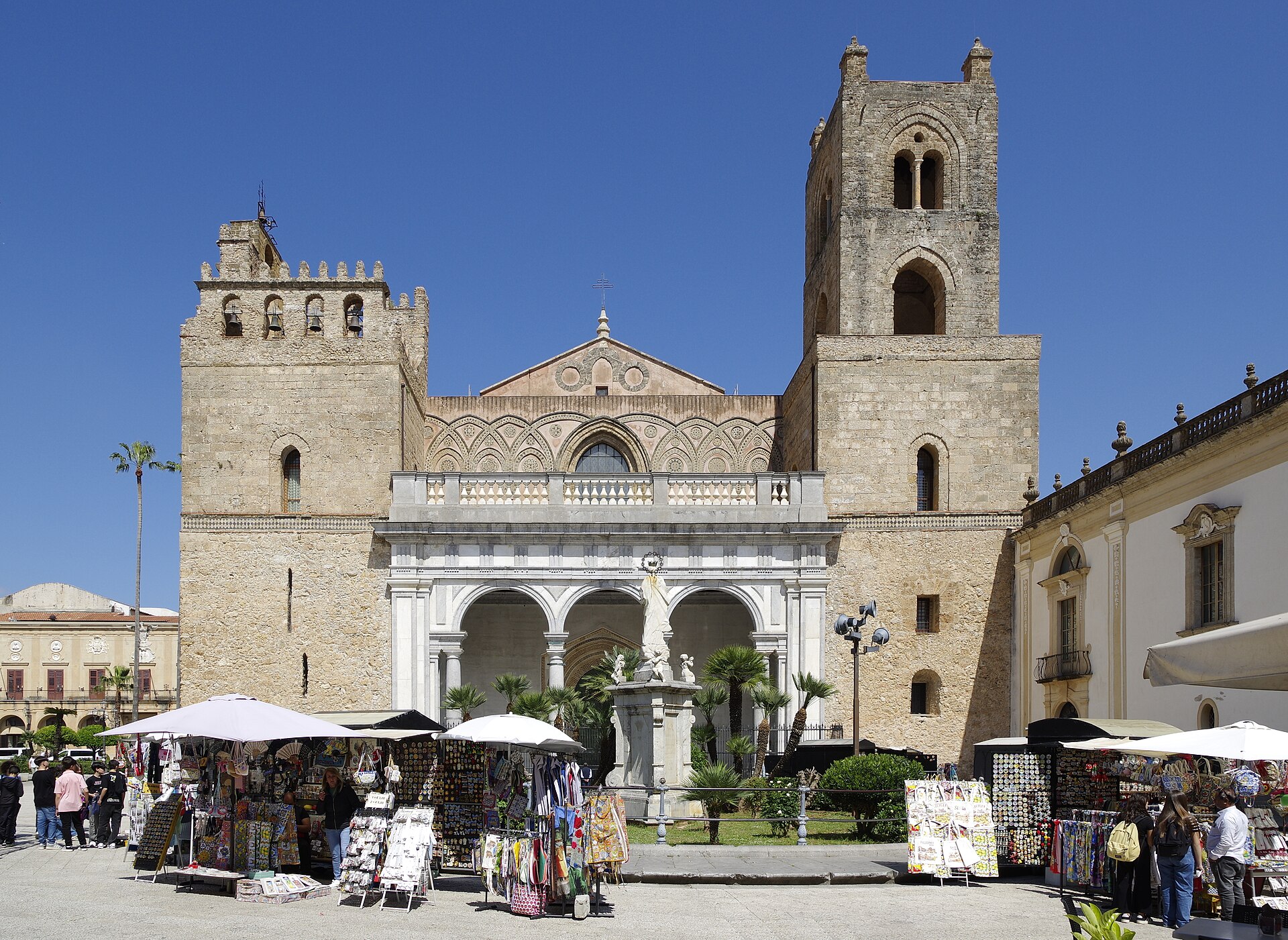
The project draws on the city’s historical heritage. The cathedral and the convergence of Norman, Arab, and Byzantine cultures serve as the starting point for a program that connects books with the places and life stories of the local population. The award-winning concept includes, among other things, a multilingual library portal, digital storytelling workshops for young people, and creative residencies at the Abbey of San Martino delle Scale.
Also planned are 50 georeferenced ceramic panels featuring augmented reality content, as well as an app called „Leggo il Duomo.“ The goal is to allow visitors to explore the cathedral through storytelling. The libraries and a local alliance for the promotion of reading will support this initiative and ensure that the work continues beyond the title year. The ministry views the award as part of a broader effort to promote reading, the book industry, and cultural participation.