
Sights in Palermo: highlights between mosaics and markets
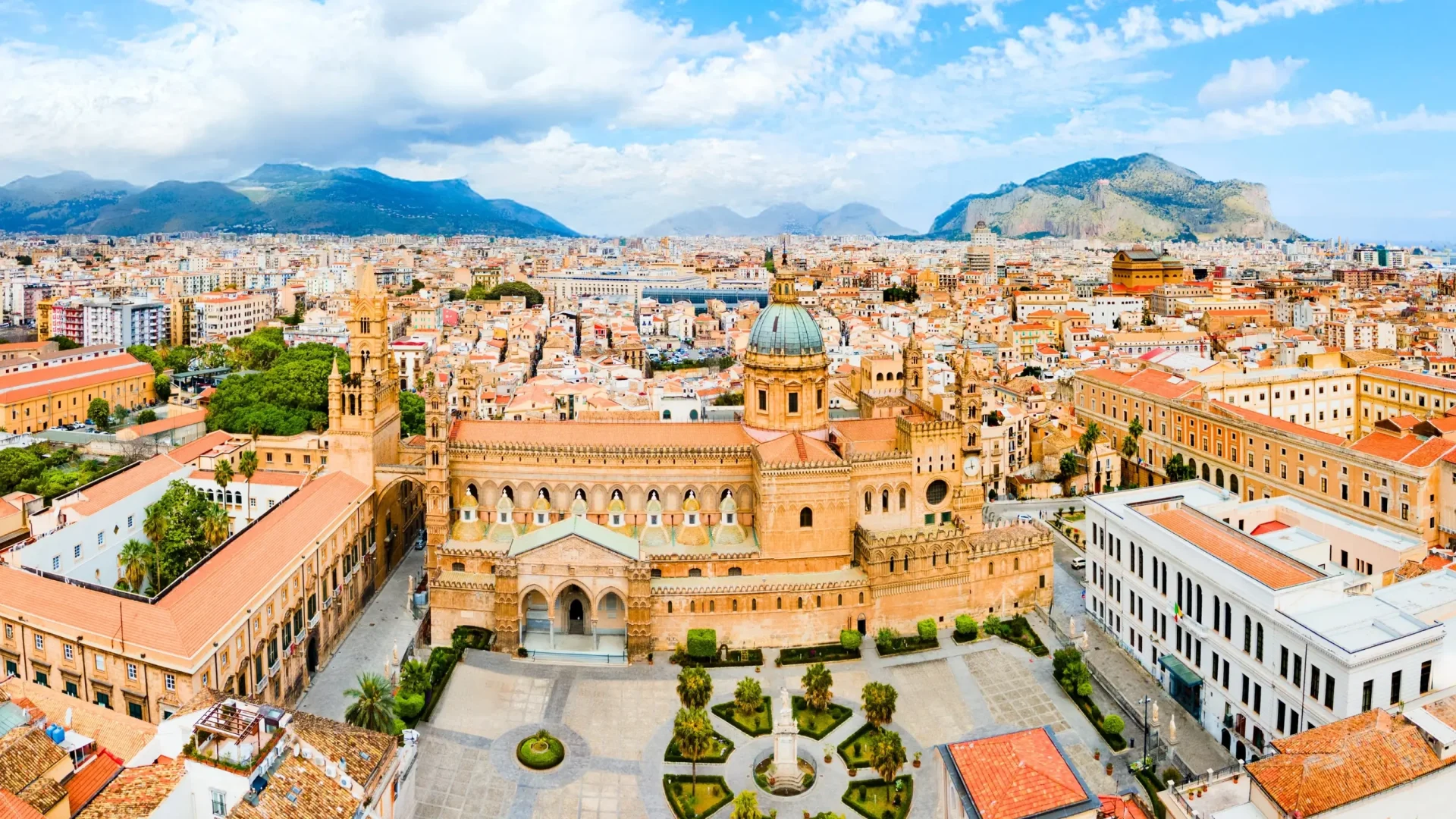
Palermo, the vibrant capital of Sicily, is a city where different cultures and eras come together in a fascinating way. Characterized by a unique mixture of Arabic, Norman and Byzantine influences, the city is a veritable open-air museum of history. Palermo's architectural treasures, such as the majestic cathedral and the impressive Norman palace, tell of a time when cultures mingled in Sicily and left behind an unmistakable legacy.
The Arab-Norman heritage in particular makes Palermo one of Italy's most exciting cities, where history and modernity coexist in harmony. On the island's east coast, it's also worth taking a look at the Catania Attractions at the foot of Mount Etna. In the city’s winding alleys, you’ll come across traces of the past at every turn. But Palermo has more to offer than just culture—its lively markets, distinctive street food, and the sweet “dolce vita” make every visit an experience for all the senses. Immerse yourself in Palermo’s rich history and vibrant present, and discover one of the most fascinating cities in the Mediterranean.
1. the cathedral of Palermo: a stone history book
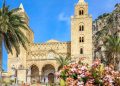
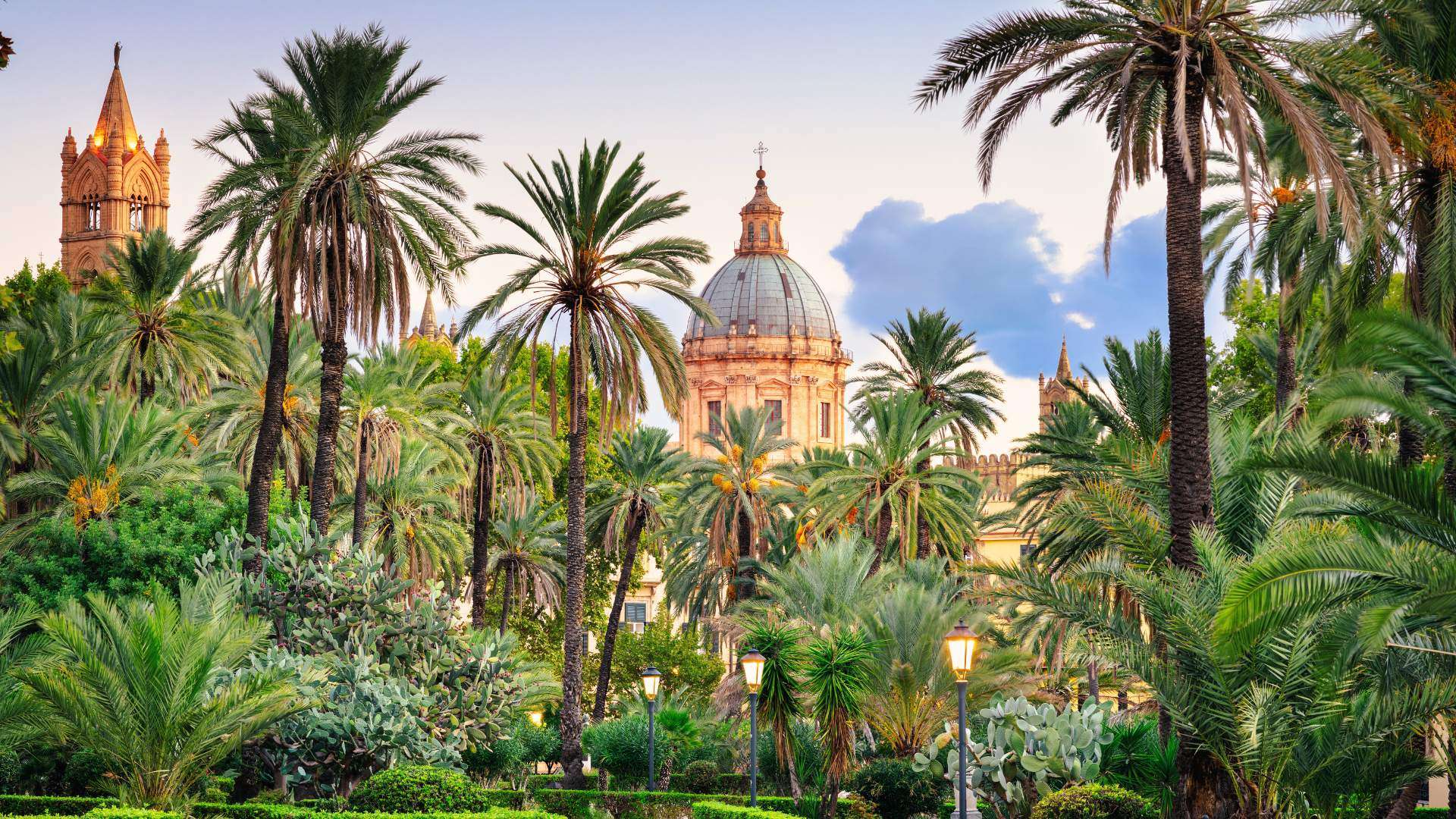
The Cathedral of Palermo, officially dedicated to Santa Vergine Maria Assunta, is far more than just a place of worship; it is a stone palimpsest that reflects the complex and multi-layered history of Sicily. Its foundations rest on an early Christian basilica, which was converted into a magnificent mosque under the Arabs in the 9th century. After the Norman reconquest, it was converted into the monumental sacred building whose basic structure we see today in 1185 on the initiative of Archbishop Gualtiero Offamilio.
From the outside, the cathedral is a masterpiece of the syncretic, Arab-Norman style. This is most evident in the spectacular apsidal area, which is decorated with filigree, intersecting blind arches and geometric inlays of lava stone - a clear legacy of Arab craftsmanship. Further elements have been added to this mix of styles over the centuries, such as the magnificent Gothic-Catalan main portal on the south side from the 15th century.
The interior of the cathedral stands in stark contrast to this external diversity. It was radically redesigned at the end of the 18th century by the architect Ferdinando Fuga and today presents itself in a cool, monumental neoclassical style. This redesign, which included the addition of the characteristic dome, which was often considered inappropriate, largely overshadowed the earlier Gothic and Baroque interior decoration.
Despite its neoclassical sobriety, the cathedral houses priceless works of art and relics. An absolute highlight is located in the right aisle: the chapel of the royal crypt. Key figures in Sicilian history rest here in imposing porphyry sarcophagi, including the Norman King Roger II and the legendary Hohenstaufen Emperor Frederick II, the „Stupor Mundi“ (the wonder of the world).
Nearby, in a magnificent chapel of its own, the relic of St. Rosalia is kept in a massive silver urn. She is the beloved patron saint of Palermo, who is credited with saving the city from the plague. The cathedral treasury (Tesoro), which can also be visited, contains an impressive collection of liturgical vestments, golden reliquaries and royal jewels, including the precious crown of Constance of Aragon. The actual crypt under the choir room also houses the tombs of numerous archbishops, including the founder Gualtiero Offamilio.

Palermo Cathedral, a UNESCO World Heritage Site in Sicily
In the heart of Palermo, the vibrant capital of Sicily, stands one of the most fascinating sights and a world-class monument: Palermo Cathedral. Officially known as the Basilica Cattedrale Metropolitana Primaziale della Santa Vergine...

2. the Martorana church: a mosaic masterpiece of two worlds
Another absolute highlight of the UNESCO World Heritage Site is the Martorana church, officially called Santa Maria dell'Ammiraglio. It was not founded directly by King Roger II in 1143, but by his most powerful admiral, George of Antioch, which explains its original name „Church of the Virgin of the Admiral“. It was later given its current, better-known name „Martorana“ when it was attached to a Benedictine convent founded by Eloisa Martorana.
The church is one of the most fascinating Byzantine churches in Italy and a prime example of the island's syncretic style. The original core building, a Greek cross with a dome, is a masterpiece of Byzantine art, almost completely covered with a glittering sea of golden mosaics from the 12th century - which were in no way inferior in quality to those in Constantinople.
The most impressive of these mosaics is the „Christ Pantocrator“ in the main dome. Surrounded by four adoring archangels, this monumental depiction of the blessing Christ looks down on the faithful - the epitome of Byzantine sacred art. Equally famous are the historically significant mosaics in the narthex (vestibule), which show the founder George of Antioch at the feet of the Virgin Mary and - as an important political statement - King Roger II being crowned directly by Christ, which placed his divine claim to power above the authority of the Pope.
The dramatic contrast in the church today was created around 1600, when the western part of the building was rebuilt and painted over with opulent Baroque frescoes, which now directly meet the austere, golden mosaic art. The current façade is also a Baroque addition. Another special feature is its religious use: although it is under the jurisdiction of the Vatican, the Martorana is now the co-cathedral of the Eparchy of Piana degli Albanesi. It serves the Italo-Albanian Catholic Church and follows the Byzantine rite, which is why the liturgy is often celebrated in Greek or Albanian. The church can be visited daily for an entrance fee, provided no religious ceremonies are taking place.

3. the Palazzo dei Normanni: where cultures turned to gold
The Palazzo dei Normanni (Norman Palace), often referred to simply as the Royal Palace of Palermo, is a world-class monument and the centerpiece of the UNESCO World Heritage Site. It is considered to be the oldest royal residence still in use in Europe, as this place has served as a seat of power without interruption since ancient times. Its foundations rest on a Punic fortress, which was taken over by the Romans and later expanded by the Arabs into the „Qasr“ (Palace of the Emirs). It was the Normans, led by the visionary King Roger II, who transformed the Arab palace into the most magnificent residence in the Mediterranean from the early 12th century.
The priceless jewel and the main reason for a visit is the Cappella Palatina (Palatine Chapel) in the heart of the palace. The „three-aisled basilica“ mentioned in the text is this chapel, which was commissioned by Roger II in 1132 and consecrated in 1140. It is the absolute highlight of the Arab-Norman-Byzantine synthesis: while the ground plan follows a Latin basilica, the entire interior, the arches and the dome are covered with an overwhelming cycle of Byzantine gold mosaics.
The most famous of these mosaics is the monumental Christ Pantocrator in the main dome, who, surrounded by archangels, looks down on the faithful. Although this depiction is a typical motif of Byzantine art, which can also be found in the Martorana church, here it achieves an incomparable intensity in its solemn splendor. The contrast between this Byzantine art and the ceiling of the nave is unique: a spectacular wooden muqarnas ceiling, a masterpiece by Fatimid craftsmen with intricate carvings and paintings that is more reminiscent of an Islamic palace.
In addition to the chapel, the extensive palace complex also houses the state rooms (Appartamenti Reali), such as the „Sala di Ruggero“ (Roger's Hall), which is decorated with rare secular mosaics of hunting scenes. As the Palazzo dei Normanni is now the seat of the Assemblea Regionale Siciliana, the Sicilian regional parliament, these state rooms may be temporarily closed to visitors depending on political meetings, while the Cappella Palatina remains accessible as a museum.

4th Quattro Canti: The baroque heart and navel of the city
The Quattro Canti, officially as Piazza Vigliena are far more than a mere crossroads; they form the spectacular, octagonal Baroque ensemble that marks the exact geographical and symbolic center of historic Palermo. This is where the two main axes of the city collide with almost theatrical force: the ancient Via Vittorio Emanuele, also known as Cassaro, leads from the monumental cathedral down to the sea, while the Via Maqueda which forms the link between the central station and the magnificent Teatro Massimo. Standing in the middle of this „Salotto di Palermo“ (Palermo's living room), you can see four concave curved façades that together form the famous Teatro del Sole form. This nickname comes from the fact that at least one of the magnificent façades is directly illuminated by the Sicilian sun at any time of day thanks to the clever architectural orientation.
This masterpiece of the Sicilian Baroque was begun in 1608 under the direction of the architect Giulio Lasso and later completed by Mariano Smiriglio. It was the centerpiece of a radical urban reorganization under the Spanish Viceroy Marquis of Villena, who gave the square its official name. Each of the four façades follows a strict, allegorical structure that reflects the entire cosmic order of the time. The base is formed by elaborate fountains, whose sculptures represent the four seasons and thus symbolize the connection to transient nature and the earth. One storey higher, on the level of earthly power, the statues of the Spanish Habsburg kings Charles V, Philip II, Philip III and Philip IV, who ruled over Sicily at the time of its creation.
The crowning glory on the top level is formed by the statues of the original four patron saints Palermo's patron saints: Agatha, Ninfa, Oliva and Cristina. These four patron saints watched over the four historic districts - Kalsa, Albergheria, Seralcadio and La Loggia - which meet at this very point. Interestingly, these façades were built shortly before the Saint Rosalia after the devastating plague epidemic of 1624, was elevated to the sole and still most important patron saint of the city, which is why she is still missing from this specific ensemble. As a result, the viewer's gaze continuously ascends the façades - from cyclical nature to imperial rule and the divine sphere. The Quattro Canti are thus not only a traffic junction of the Old town, but a philosophy carved in stone that celebrates Palermo's pride and eventful history in every detail.

Quattro Canti: More than just a crossroads - The baroque Theater of the Sun in Palermo
One of the most impressive sights in Palermo is undoubtedly the Quattro Canti, officially known as Piazza Vigliena. This famous Baroque square forms the vibrant heart...

5. the Capuchin Catacombs: a macabre encounter with history
One of the most bizarre, fascinating and undoubtedly macabre places in Palermo are the Capuchin Catacombs (Catacombe dei Cappuccini), which are located beneath the monastery and church of Santa Maria della Pace. The often quoted phrase that this is „the place where the living meet the dead“ aptly describes the experience. What began in 1599 with the burial of the first monk, Frate Silvestro da Gubbio, developed into a unique burial culture. The monks discovered that the special microclimate of the underground crypt was conducive to natural mummification.
This practice quickly became the ultimate status symbol for Palermo's elite. From the 17th to the late 19th century, aristocrats, wealthy citizens and clerics paid immense sums to have their deceased laid out here in their best clothes for eternity. It was a way of not only allowing relatives to „meet“, but also to demonstrate social status beyond death.
Today, visitors stroll through long, cool corridors in which thousands of mummified bodies (estimates range up to 8,000) hang on the walls or lie in niches, strictly separated according to social status, gender and profession: there are corridors for monks, priests, nobles, „professionisti“ (doctors, lawyers), men, women and a particularly poignant area for children.
The undisputedly most famous and at the same time most shocking mummy is that of Rosalia Lombardo. She was a two-year-old girl who died of the Spanish flu (or pneumonia) in 1920. Her body is not naturally mummified; her father commissioned the famous embalmer Dr. Alfredo Salafia to preserve her. Salafia used a chemical formula that was so effective that the little girl, with her blonde hair and peaceful face, looks as if she is only sleeping. „The sleeping beauty“ of Palermo is one of the last people to be laid to rest here before the practice was finally discontinued.

Capuchin Catacombs of Palermo: 10 amazing secrets of Sicily's underground necropolis
What are the Capuchin Catacombs of Palermo? The Capuchin Catacombs of Palermo are one of the most fascinating and at the same time creepiest sights in Palermo. They are home to hundreds of well-preserved mummies, which are kept in long corridors and...

6. the „Antonino Salinas“ Archaeological Museum: a treasure house of antiquity
A visit to the Antonino Salinas Regional Archaeological Museum is an absolute must for anyone who wants to delve deeper into the complex history of Sicily. The museum is not only housed in an „old palazzo“, but also resides in the magnificent former convent of the Oratorians of San Filippo Neri (Complesso Monumentale dell'Olivella), which makes the visit worthwhile for the architecture alone.
The museum is considered one of the most important in Italy for Magna Graecia and the Phoenician-Punic civilization. While it houses collections of Etruscan, Roman and Egyptian works of art, its priceless core is the collection from Selinunte. On display here are the world-famous metopes from the temples of Selinunte - monumental high reliefs from the 6th and 5th centuries BC that depict scenes from Greek mythology (such as Perseus beheading Medusa) in impressive detail.
The artifacts are didactically presented in an excellent way on the three floors. The surroundings are particularly pleasant thanks to the two magnificent cloisters (inner courtyards), which are decorated with exotic trees, palm trees and splashing fountains. They form a quiet oasis of calm away from the noisy streets of Palermo and invite you to take a relaxing cultural break. A special bonus: admission to the permanent exhibition is usually free (although it is recommended that you check this in advance, especially for special exhibitions).

7 The Teatro Massimo: Pride, scandal and „The Godfather“
The Teatro Massimo Vittorio Emanuele is much more than just an opera house; it is a national symbol. It is the largest opera house in Italy and the third largest in Europe, a monumental masterpiece of neoclassicism. Designed by architect Giovan Battista Filippo Basile (and completed by his son Ernesto after his death), it was opened in 1897 after 22 years of construction. It was intended to symbolize the heyday of Palermo during the Belle Époque and the rise of the new Italian state.
Its magnificent façade with the monumental flight of steps flanked by two majestic bronze lions is world-famous. Inside is a magnificent, horseshoe-shaped hall that is renowned for its perfect acoustics. However, the theater is not only a symbol of splendor, but also of Palermo's decline in the 20th century: in 1974, it was closed for a „brief“ renovation and remained closed for a scandalous 23 years, crippled by corruption and political squabbles.
Its reopening in 1997 therefore became a triumphant symbol of Palermo's „Rinascita“ (rebirth) and the victory of the citizens over the Mafia. The impressive staircase of the theater also gained international fame as the tragic setting for the final scene of Francis Ford Coppola's film „The Godfather III“. Today, the theater once again hosts world-class operas, concerts and ballet performances and can also be visited during the day as part of a guided tour.

Teatro Massimo Palermo: where splendor, opera and "The Godfather" meet
In the beating heart of the Sicilian capital stands one of Palermo's most important sights: the majestic Teatro Massimo Vittorio Emanuele. This world-famous opera house in Palermo is far more than just an architectural jewel; it...

8. the Kalsa district: the Arab soul and creative rebirth of Palermo
The Kalsa district is undoubtedly one of the oldest and most fascinating districts in Palermo, a place full of contrasts where a deep history and a dynamic present overlap. Its origins and name go right back to Arab rule: „Kalsa“ is derived from the Arabic „al-Khalisa“, which means „the chosen one“ or „the pure one“. This was no ordinary residential area, but the fortified citadel of the emirs, which was built in the 9th century as a separate administrative and power center located by the sea outside the old city walls.
This oriental origin can still be felt in the urban structure today, although the narrow, labyrinthine alleyways are intermingled with traces of later eras - from Norman churches to Spanish palaces and Baroque oratories. The Kalsa is a veritable open-air museum: here you will find Palazzo Abatellis, a masterpiece of Gothic-Catalan architecture, which today houses the Galleria Regionale della Sicilia and exhibits major works such as Antonello da Messina's „Vergine Annunziata“ and the impressive fresco „Triumph of Death“. Just a few steps away are the historic Piazza della Magione and the breathtaking church of Santa Maria dello Spasimo, an unfinished Gothic building without a roof that now serves as a magical open-air venue.
However, the recent history of Kalsa is marked by deep scars. During the Second World War, the district was severely devastated by bombing raids and subsequently fell into a neglected, poor and mafia-controlled area for decades. It was only in the course of Palermo's „rebirth“ (Rinascita) in recent decades that an impressive transformation began.
Today, Kalsa is the vibrant, creative and bohemian heart of the city. The „gentrification“ has a unique face here: art galleries, independent artisan boutiques (artigiani) and chic bars have set up shop in the renovated palaces and buildings still scarred by the war. In the evenings, the alleyways and squares transform into a lively meeting place for locals and visitors alike. A stroll through the Kalsa is therefore an incomparable journey into the past, where you can feel the historical charm while at the same time witnessing Palermo's dynamic and hopeful future.

9. the markets of Palermo: the beating heart of the city
If you really want to understand Palermo, you have to experience its historic markets. They are not just places of trade, but noisy, lively and colorful open-air souks that form the social heart of the city. A stroll along the Ballarò, the Capo or the Vucciria is an immersion in a world full of smells, sounds and colors. The most distinctive element is the deafening noise of the „abbanniate“ - the singing, almost melodious calls with which the vendors advertise their wares.
Every market has its own character:
- Ballarò is the largest, oldest and most dynamic, a seemingly endless labyrinth of stalls that stretches deep into the Albergheria district. Here you will find the best produce from all over Sicily: mountains of bright red tomatoes, fresh, still-warm ricotta, olives in all varieties and huge swordfish that are carved on the spot.
- Il Capo, which winds through the district of the same name, is similarly authentic and famous for its fish and spices.
- The Vucciria on the other hand, has undergone a fascinating transformation. Once the city's most famous market (its name means „voices“ or „butcher's shop“), the food market is now a shadow of its former self during the day. However, as soon as the sun goes down, the square transforms into a huge open-air tavern and the center of street food at night, with grilled fish, music and a vibrant atmosphere.
These markets are the true cradle of Palermitan street food. Between the stalls you will find vendors who Panelle (chickpea pancakes), Crocchè (potato croquettes) or the famous Pani câ Meusa (spleen rolls). In addition to the unbeatably cheap food, the chaotic array of handicrafts, household goods, counterfeit branded clothing and cheap electronics reflects the unpolished, real life. A visit here is not a quiet cultural visit; it is a living legacy of long Arab rule and the place where you can feel the soul of Palermo at its purest.

3 markets in Palermo: where the soul of Sicily lives between Ballarò, Vucciria and Capo
Do you know the three most beautiful markets in Palermo? Imagine closing your eyes and taking a deep breath. The scent of sun-ripened lemons mingles with the salty tang of fresh sea air.

10. the famous street food: the soul of Palermo in the palm of your hand
Palermo is not just the Italian capital of street food, but one of the world's capitals. Here, street food is not a modern trend, but a centuries-old institution - a „cucina povera“ (poor people's cuisine) that has been elevated to the highest art form out of necessity. It is a direct reflection of the popular culture that pulsates in the noisy, chaotic alleyways of the Ballarò and Capo markets.
Each dish tells a story of the conquerors: the Arabs brought rice for the arancina (in Palermo it is female and round), sugar and almonds; the Spaniards the preference for strong flavors. You have to try the legendary pani câ meusa at least once - a soft sesame roll (the vastedda) filled with chopped veal spleen and lung, which is first boiled and then deep-fried in lard. It is ordered schettu (single, with lemon only) or maritatu (married, with caciocavallo cheese or ricotta).
They are joined by the inseparable duo of panelle e crocchè: golden-brown fried flatbreads made from chickpea flour (the panelle) and potato croquettes (the crocchè), often served together in a bread roll. The sfincione is Palermo's answer to pizza - a thick, spongy focaccia with a sweet and sour sauce of tomatoes, onions, anchovies and caciocavallo, sprinkled with breadcrumbs. Those who follow the markets will be drawn to the smoky clouds of stigghiola: grilled veal or lamb intestines wrapped around a spring onion.
But with all these hearty delights, Palermo would be nothing without its sumptuous desserts, which often originated in the monasteries and were perfected in the city's pasticcerie. The Sicilian dessert tradition is one of the best in the world. The cannolo, a crispy tube that is filled with sweetened, creamy ricotta only at the moment of sale, is a must-try. The baroque work of art is the Cassata Siciliana, a sponge cake soaked in liqueur, filled with ricotta and covered in a thick layer of marzipan and candied fruit. Not forgetting the Frutta Martorana, deceptively real-looking marzipan fruits, and the perfect summer refreshment: a granita (almond or lemon) with a warm brioche col tuppo. Eating here is not just about nourishment, it is culture and history to bite into.

11th Mondello: Palermo's Caribbean living room
Mondello is not just a seaside resort; it is the collective „living room by the sea“ of the Palermitans. Just a few kilometers from the hectic city center (best reached by bus line 806), a bay opens up that is often referred to as the „Caribbean of Sicily“. Nestled between the rugged cliffs of Monte Gallo to the west and the majestic Monte Pellegrino to the east - which Goethe once described as „the most beautiful promontory in the world“ - Mondello offers a kilometer-long, crescent-shaped beach with the finest white sand and a spectacularly shallow, turquoise-blue sea.
It is hard to believe that this idyllic place was an unhealthy swamp („il pantano“) until the end of the 19th century. It was only after it was drained that Mondello flourished as an exclusive Belle Époque seaside resort. The magnificent villas along the promenade, which are considered outstanding examples of the „Stile Liberty“ (Italian Art Nouveau) and lend the town a sophisticated, nostalgic flair, still bear witness to this today.
The undisputed landmark, elegantly perched on stilts above the water, is the „Antico Stabilimento Balneare“. This magnificent, multi-colored building from 1912 is one of the most beautiful examples of European „Liberty“ architecture and the social center of the beach.
In summer, Mondello transforms into a vibrant, lively and often crowded hotspot. Locals rent their traditional „capanne“ (beach cabins) for the entire season, while sun worshippers and water sports enthusiasts frolic in the water. The promenade and small harbour are lined with restaurants and cafés serving fresh seafood and local specialties such as spaghetti ai ricci (with sea urchins). In the low season, Mondello shows its quiet, elegant side and is the ideal place to escape the hustle and bustle of the city, stroll by the sea and enjoy the beauty of Sicily.
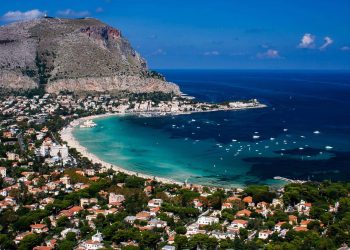
Picturesque seaside resort of Mondello near Palermo: the ultimate guide to the beach, food & flair
Just a short bus ride away from the hustle and bustle of the Sicilian capital, Mondello is an oasis of peace and beauty that is often referred to as the Caribbean of Palermo. This...

12 The Pretoria Fountain: The magnificent „disgrace“ of Palermo
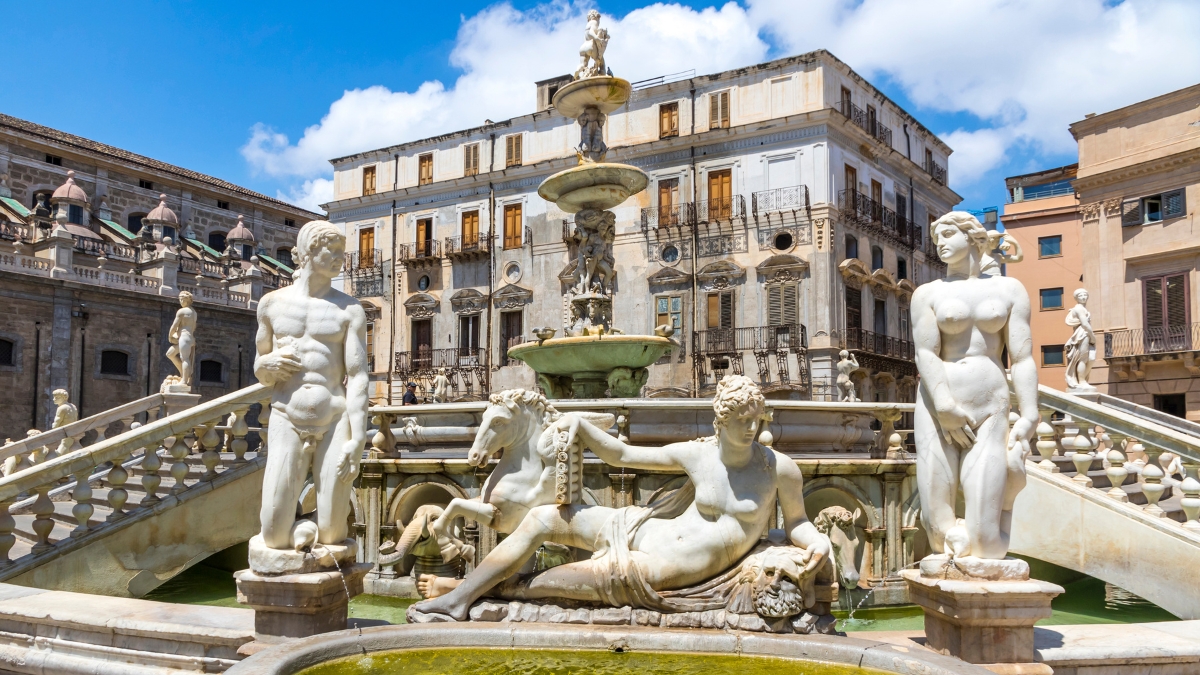
Right in the pulsating heart of the Old town of Palermo, in the majestic Piazza Pretoria, stands one of the most spectacular and at the same time most hotly debated monuments in Sicily: the Pretoria Fountain. Among the locals, the building is almost exclusively known as the Fontana della Vergogna - the fountain of shame. This infamous nickname has its roots deep in the moral outrage of the 16th century. At the time, the Palermitans were deeply shocked by the uncovered nudity and the sensual depiction of the numerous statues. The immediate proximity to the venerable sacred buildings was particularly piquant San Giuseppe dei Teatini and the monastery church Santa Caterina. It is said that when the nuns looked out of their barred windows, they saw the „indecent“ activities of the stone gods as a direct affront to Christian chastity. However, the „disgrace“ in the vernacular referred not only to the exposure of the bodies, but also to the enormous amount of public money that the Senate spent on this luxury object in times of hunger and need.
The story of this masterpiece is an odyssey of the Florentine Renaissance. The monument was originally designed in 1554 by the sculptor Francesco Camilliani for the private garden of the villa of the Spanish nobleman Don Luigi de Toledo in Florence. Decades later, when the family ran into financial difficulties, the Senate of Palermo was presented with the unique opportunity to acquire this prestigious object in order to redevelop the square in front of the Palazzo Pretorio, today's town hall. The transfer of the fountain from Tuscany to Sicily in 1574 was a logistical feat of the early modern era. The gigantic work had to be dismantled into exactly 644 individual parts, packed into crates and shipped across the Mediterranean. In order to create the necessary space for the fountain in Piazza Pretoria, several residential buildings even had to give way - a radical intervention in the medieval cityscape that underlines the importance of this project.
Architecturally speaking, the fountain is made of gleaming white Carrara marble a highly complex ensemble that perfectly embodies the humanist ideals of its time. The structure rests on a wide, oval base and is built up in three concentric levels, which are accessed by elegant flights of steps. What makes the Pretoria Fountain so unique, however, is its exuberant program of figures. An entire pantheon of ancient deities and mythological creatures populate the edges of the basin. In addition to Hercules, Venus, Apollo and Bacchus, there are also allegorical representations of Palermo's four rivers: Oreto, Papireto, Gabriele and Maredolce. Each statue is a testimony to the highest sculptural precision, flanked by mythical creatures, animal heads and elaborate gargoyles. After a comprehensive restoration in the early 2000s, this fountain now shines once again as the proud center of the Piazza Pretoria and attracts visitors from all over the world as an integral part of the must-see tourist program, who can admire the harmonious interplay of Baroque urban planning and Renaissance art.

Naked scandal Fontana Pretoria: Palermo's scandalous marble heart in 7 facts
The Fountain of Shame - Fontana Pretoria: Palermo's sinfully beautiful marble heart Palermo. The Sicilian capital is a melting pot of cultures and a labyrinth of alleyways where the scent of...
Our conclusion: Palermo - an incomparable mosaic of cultures
Palermo is far more than just the capital of Sicily; it is a vibrant, lively work of art that defies any simple definition. Anyone wandering through the streets of this metropolis will experience an architectural symbiosis that is unparalleled anywhere in the world. The Arab-Norman architecture, which today is quite rightly UNESCO World Heritage Site forms the heart of this city. From the breathtaking Byzantine mosaics shimmering in the candlelight of the Cappella Palatina in the Norman Palace to the striking red domes of San Cataldo - these buildings are not mere relics. They are the stone foundation of an identity based on the rare spirit of syncretism. Here, Orient and Occident once merged into an aesthetic unity in which the filigree stone carvings of Palermo Cathedral and the mathematical precision of Islamic architecture entered into a harmonious marriage.
However, this fascinating mix of styles is not a sterile museum setting that can be viewed from a safe distance. Palermo breathes history in every second. The baroque splendor of the Quattro Canti, the magnificent intersection of the four historic quarters, forms a theatrical contrast to the rough, unadorned reality of the alleyways. This is particularly evident in the immediate vicinity of the quiet, Byzantine elegance of the La Martorana Church and the almost oriental, noisy chaos of the Ballarò market. Here, the scent of incense mingles with the aroma of fried panelle. A visit to Palermo is like leafing through a living history book, where the influences of Phoenicians, Arabs, Normans, Spaniards and Bourbons are not only reflected in the façades, but also on the plate. Culinary icons such as the hearty Pani câ Meusa or the colorful, sugar-sweet Cassata Siciliana are direct ambassadors of this multi-layered past.
The true summary of a trip to Palermo lies in the realization that you are not simply visiting this city, but experiencing it in depth. It is a place of extreme contrasts, characterized by immeasurable beauty and visible decay, by royal elegance and an unadulterated, sometimes wild street culture. It is precisely this complexity and the often contradictory soul that creates the allure that captivates travelers from all over the world. Palermo challenges the senses and invites you to look behind the facades and discover the historical richness of the city. Island of Sicily in all its depth. It is a city that resonates in the heart and leaves anyone who engages with its honest nature with a new perspective on the power of cultural fusion.

Map: Palermo
FAQ - Places of interest in Palermo
How many days should I plan for the highlights in Palermo?
To really enjoy the 10 most important highlights of Palermo without rushing, we recommend at least three full days. This will give you enough time to visit the Norman Palace with the Cappella Palatina and the cathedral in depth. There is also room to soak up the atmosphere of the historic markets such as Ballarò and perhaps plan an excursion to Monreale Cathedral, which is often included as part of the Arab-Norman heritage.
What is the best way to get around the center of Palermo and is it safe?
The historic center of Palermo, where most of the 10 highlights are located, can be easily explored on foot. The distances between sights such as the Quattro Canti and the cathedral are short. Public buses can be used for longer distances, for example to the Zisa Palace. Palermo is considered safe during the day in the tourist areas, but as in any big city, you should take care of your valuables, especially in the crowded markets.
When is the best time to visit Palermo?
The ideal times for a trip to Palermo are spring from April to June and fall from September to October. During these months, the temperatures are pleasantly mild and ideal for sightseeing, without the oppressive heat of high summer. August is often very hot and crowded, as many Italians are on vacation then, while winter can be milder than in northern Europe, but also rainier.
What exactly does "Arab-Norman beauty" mean?
The term "Arab-Norman" describes the unique architectural style that characterized Sicily and Palermo in particular in the 12th century. After Arab rule, the Normans conquered the island, but adopted many of the advanced Arab building skills and Byzantine mosaic techniques. This mix of styles can be seen in buildings such as the Cappella Palatina or the cathedral of Monreale, where you can find pointed Arabic arches, golden Byzantine mosaics and massive Norman tower structures combined in a single building.
Top accommodations in Palermo
Video: Palermo
Experiences & sights
Note: Disclaimer - Italien.news is not the owner or organizer of the sights, accommodations and events published here and therefore not responsible for program changes, cancellation of the event and possibly incorrect information. The editorial team of Italien.news always endeavors to provide detailed and accurate information. However, it is possible that events, attractions, etc. may be changed and not updated promptly. Exact details of dates, times and programs can be obtained directly from the owner of the attractions and accommodation.
Please also check the website or social media of the attractions and events for updates before you travel! Our blog articles contain our personal recommendations in the form of affiliate links. If you book or buy something via the links or simply click on them, we receive a small commission. This does not change the price for you at all. Content and texts © Italien.new & KI / Photos © Canva.com / shutterstock.com / Unsplash.com / Pixabay.com / Pexels.com / Others. Please also visit our Italy Shop!
Read more about theTopic