
Scicli – Three gorges converge here, and nestled among them lies a town built of golden-yellow limestone, which was almost entirely rebuilt after the 1693 earthquake. Scicli Located in southeastern Sicily, in the province of Ragusa, it has been a UNESCO World Heritage Site since 2002, along with seven other Baroque towns Val di Noto. TV viewers, however, know it by a different name: Since 1999, Scicli—known as Vigàta—has been the main filming location for the crime series featuring Commissario Montalbano.
Here you'll find out which seven sights in Scicli are worth visiting, where the Montalbano filming locations are, which beaches belong to the municipality, how to get there by car, train, or plane, and when the town's major festivals take place.
The townscape of Scicli took shape in the 18th century following the earthquake of January 11, 1693. The municipality also includes a coastal strip of about 20 kilometers, of which about 18 kilometers are sandy beaches. The beach at Sampieri In 2026, it will be awarded the Blue Flag, the certification for clean beaches. The Chiesa Madre, the city’s main church, has been dedicated to St. Ignatius since 1874.
Scicli by the Numbers
A small Baroque town in the valley, with a long sandy coastline stretching out in front of it. The key figures for your planning are listed here; details follow in the sections below.
As of October 2026 · UNESCO World Heritage Site, Coast, Festivals, and Montalbano according to Visit Sicily of the Regione Siciliana, Blue Flag according to FEE Italia, Fornace Penna according to the Regione Siciliana.
- Baroque enthusiasts who want to experience the Val di Noto on a smaller scale
- Montalbano Fans Follow in the Footsteps of the Series
- A combination of city life and sandy beaches
- Evening walks through a quiet old town
- Travelers without a car who want to explore the coast
- Museum visits with set opening hours
- Nightlife and major shopping streets
- People with mobility impairments who must avoid stairs and slopes
Where is Scicli located?
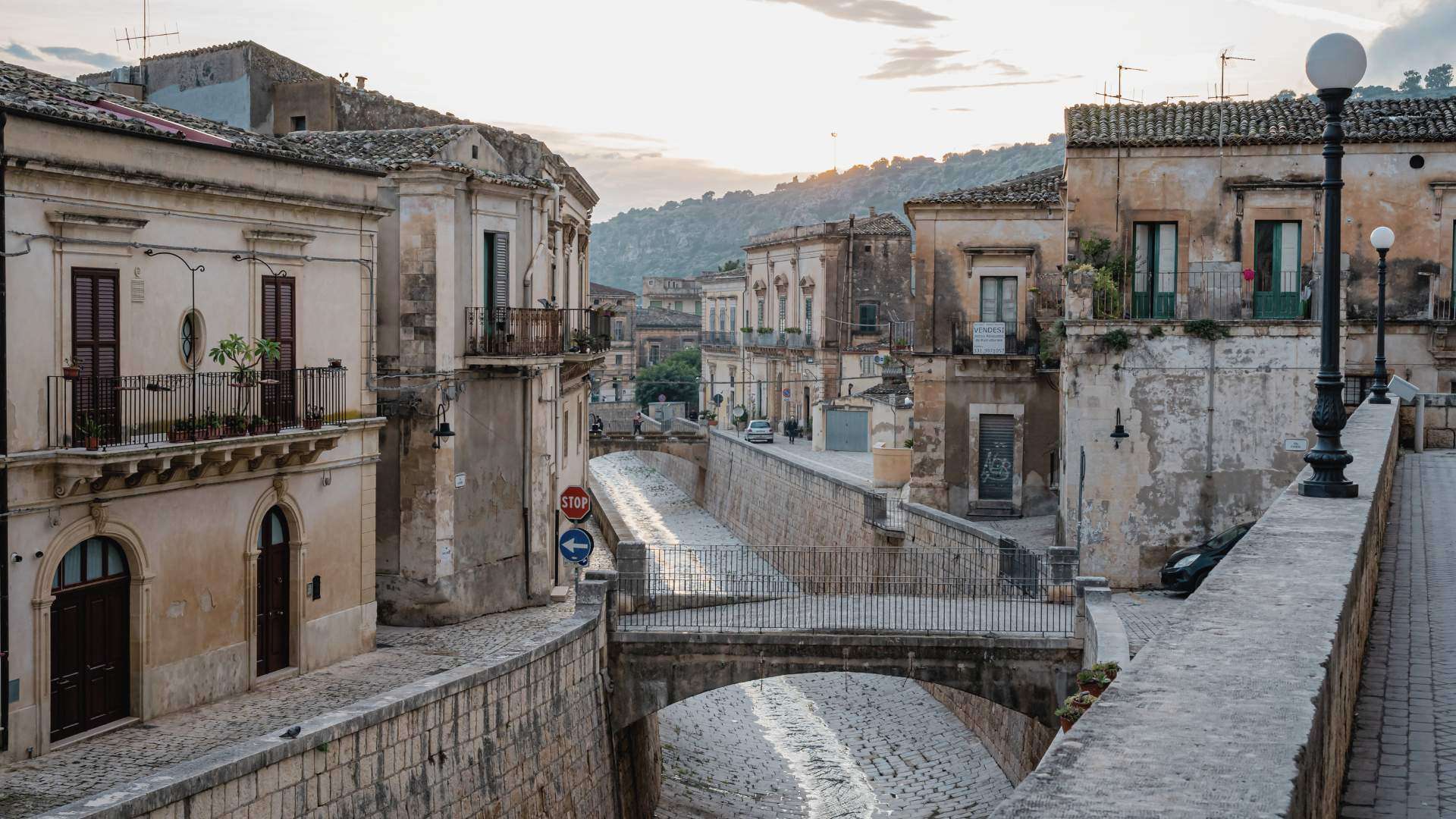
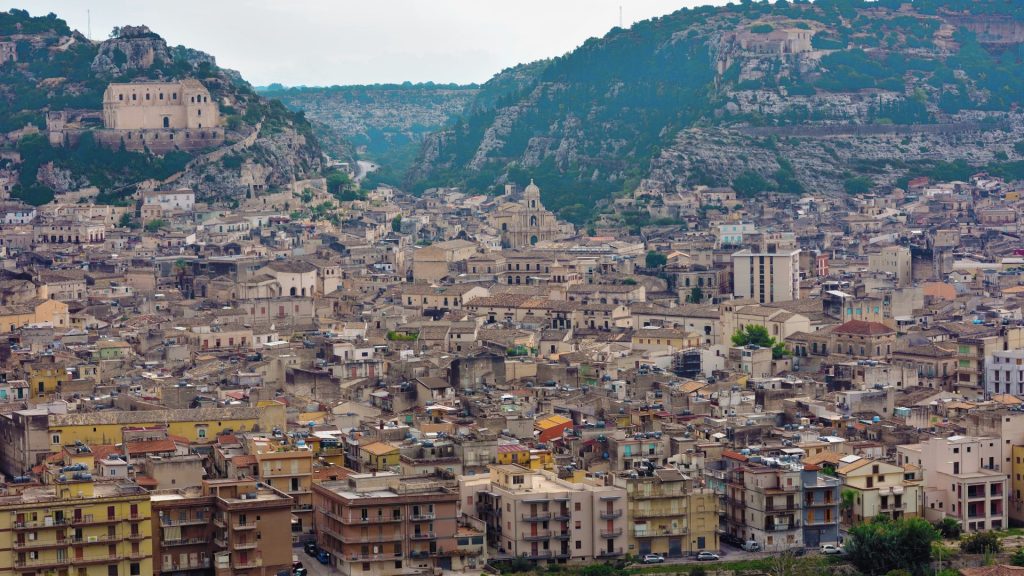
Scicli is located in southeastern Sicily, about ten kilometers south of Modica and about ten kilometers from the sea. The town lies at the bottom of a valley, where three gorges of the Monti Iblei converge at the limestone mountains that form the entire southeastern part of the island. The light-colored rock slopes rise above the rooftops, and the old cave dwellings can still be seen in them.
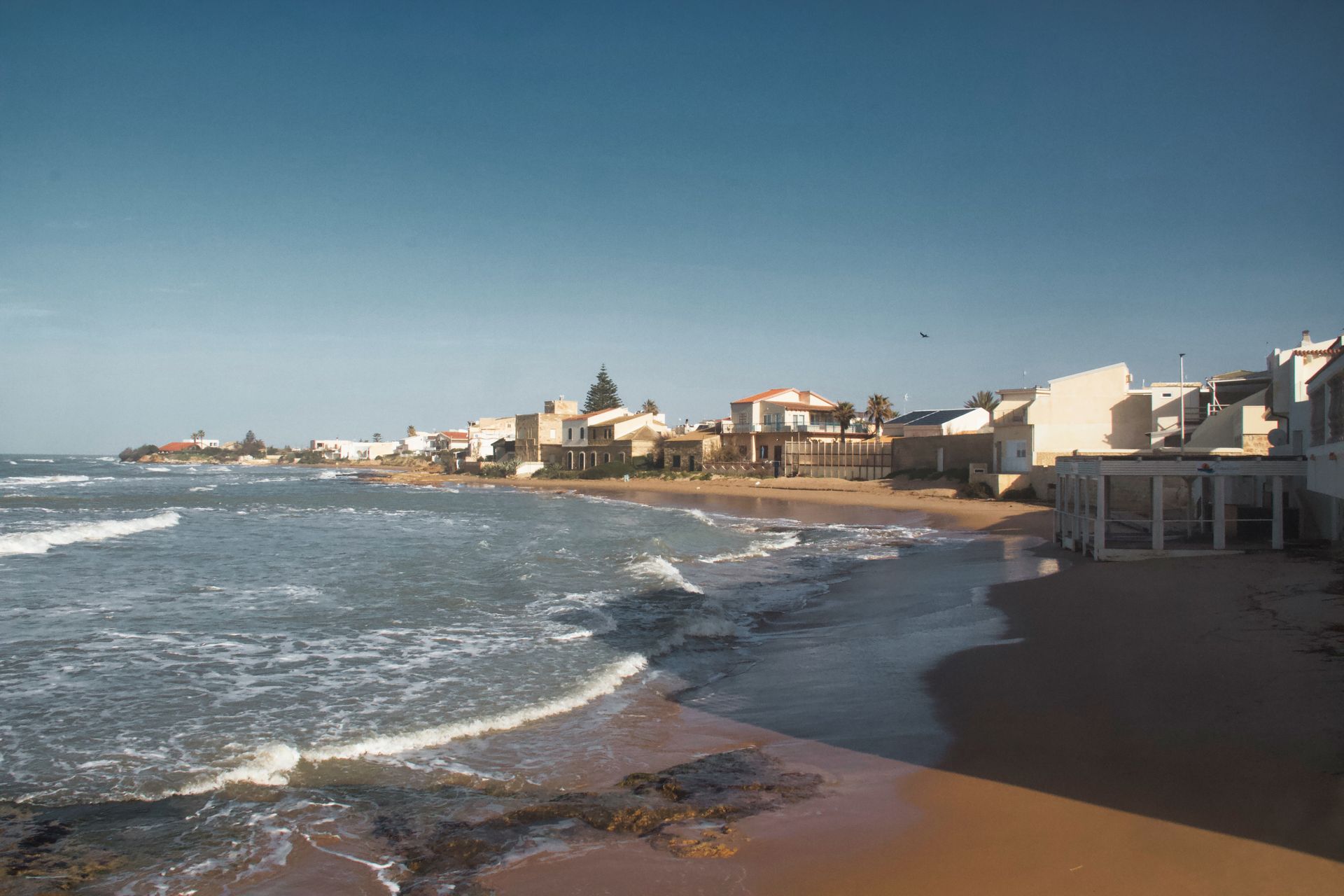
The municipality also includes four coastal districts, from west to east Playa Grande, Donnalucata, Cava d’Aliga and Sampieri. They are located along a coastal strip about 20 kilometers long, consisting mainly of sandy beaches.
Scicli is one of the eight Late Baroque towns on the UNESCO World Heritage List Val di Noto, along with Caltagirone, Militello Val di Catania, Catania, Modica, Noto, Palazzolo Acreide, and Ragusa. The region was rebuilt together after the 1693 earthquake, and you can still see that today: the same stones, the same builders, the same era.


Val di Noto: Sicily's 8 UNESCO-listed Baroque towns
Eight Sicilian towns, rebuilt after the 1693 earthquake and designated a UNESCO World Heritage Site in 2002: the complete guide to the Val di Noto.
Which 7 sights in Scicli should you see?
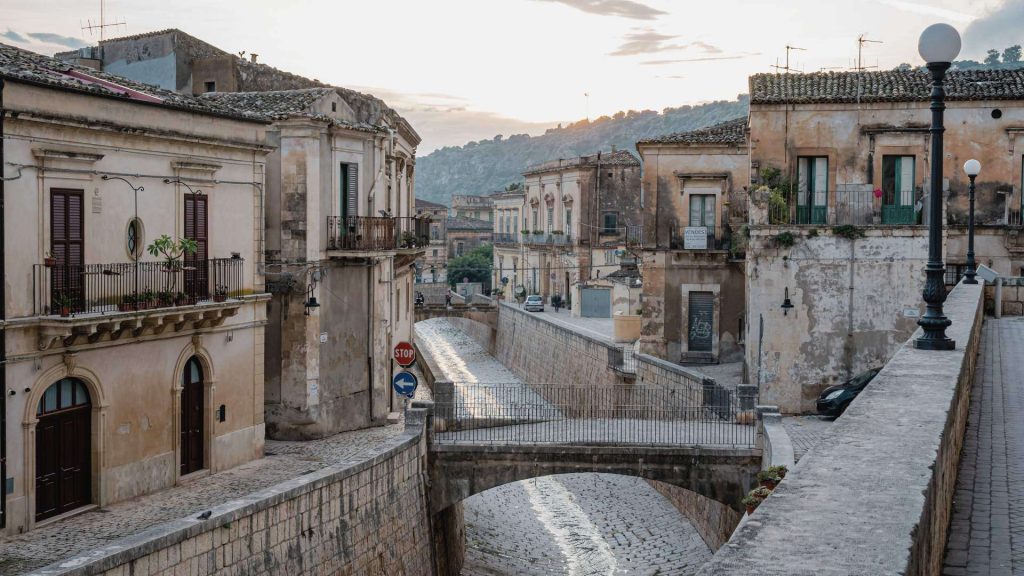
Scicli is compact. Most of the sights are located along a single street and the adjacent squares; the rest can be reached via stairways and short walks up the hillsides. Half a day is enough to explore the old town, but if you plan to climb the hills as well, set aside a full day.
1. Via Francesco Mormino Penna, the Baroque Street
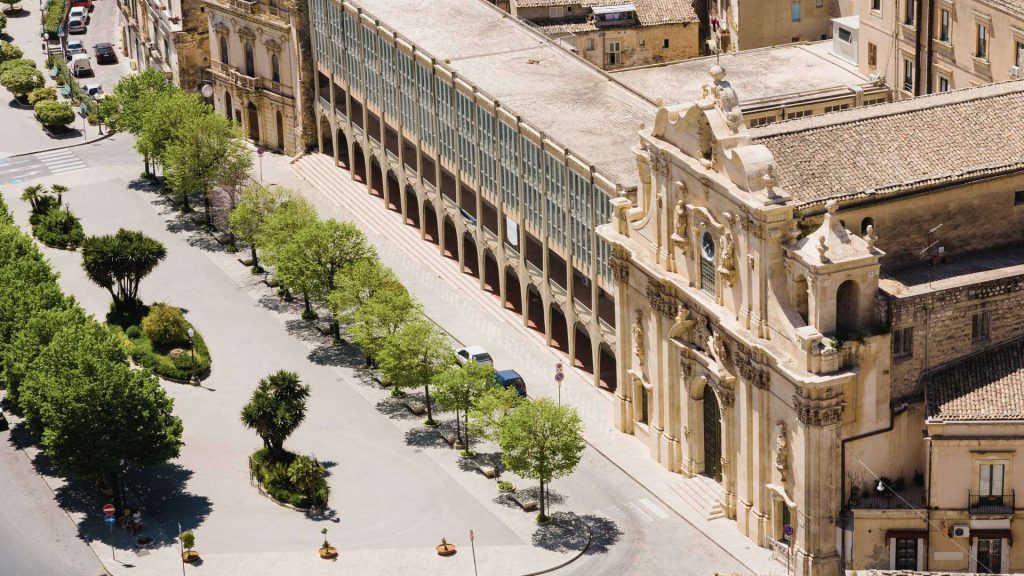
The Via Francesco Mormino Penna, the main street of the old town, is the reason why many people come to Scicli in the first place. Along just a few hundred meters, 18th-century noble palaces and late Baroque churches built of golden-yellow stone line the street. The Regione Siciliana ranks it among the most beautiful streets in Sicily.
The town hall is located on the street, and the church is right next to it on the right St. John the Evangelist, whose floor plan is based on circular shapes. The Old Town is also home to the church St. Michael the Archangel, which was co-designed by Rosario Gagliardi, the leading architect of the reconstruction in the Val di Noto. It was consecrated in 1763. It's best to visit in the late afternoon, when the facades are at their most striking.

2. Palazzo Beneventano, the grotesque figures on the balcony
The Palazzo Beneventano, the city palace of a noble family, is the most famous individual building in Scicli. British art historian Anthony Blunt called it the most beautiful Baroque palace in Sicily. The stone masks on the facade are famous, including Moorish heads that peer down onto the street like grotesque faces.
You can see the palace from the outside; the facade is what makes the trip worthwhile. Take your time to appreciate the details—up close, you'll discover a different face in every mask.
There are two other palazzi nearby: the Palazzo Fava with its Balcony of the Griffins, the Balcone dei Grifi, and the Palazzo Spadaro, which features a permanent exhibition of works by artists from the region, including Piero Guccione and Franco Sarnari.
3. Palazzo di Città, the Vigàta Police Station
The City Hall, the town hall of Scicli in the 92 Via Francesco Mormino Penna, is the spot where Montalbano fans stop to take a look. In the series, the building serves as the police station of the fictional town of Vigàta. A sign at the entrance marks the spot.
City Hall is an administrative building. You can see it from the outside at any time; to find out whether the exhibition rooms are currently open, check at the entrance or at the tourist office.
Read more about theTopic




4. Sant’Ignazio and Piazza Italia
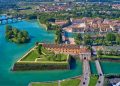
The Mother Church of St. Ignatius, the city's main church, is located on the Piazza Italia, the large, tree-lined square in the center. It was built in the first half of the 18th century as a Jesuit church; its coat of arms still hangs above the portal. Since 1874, it has been the mother church of Scicli, after that title was transferred from San Matteo on the hill down to the town.
Piazza Italia is the city’s living room. In the evenings, families sit here on the benches, and the bars set up their tables under the trees. The city’s patron saint is Saint Guglielmo, a hermit to whom a small hermitage near the city is also dedicated.

5. San Bartolomeo, the church in the gorge
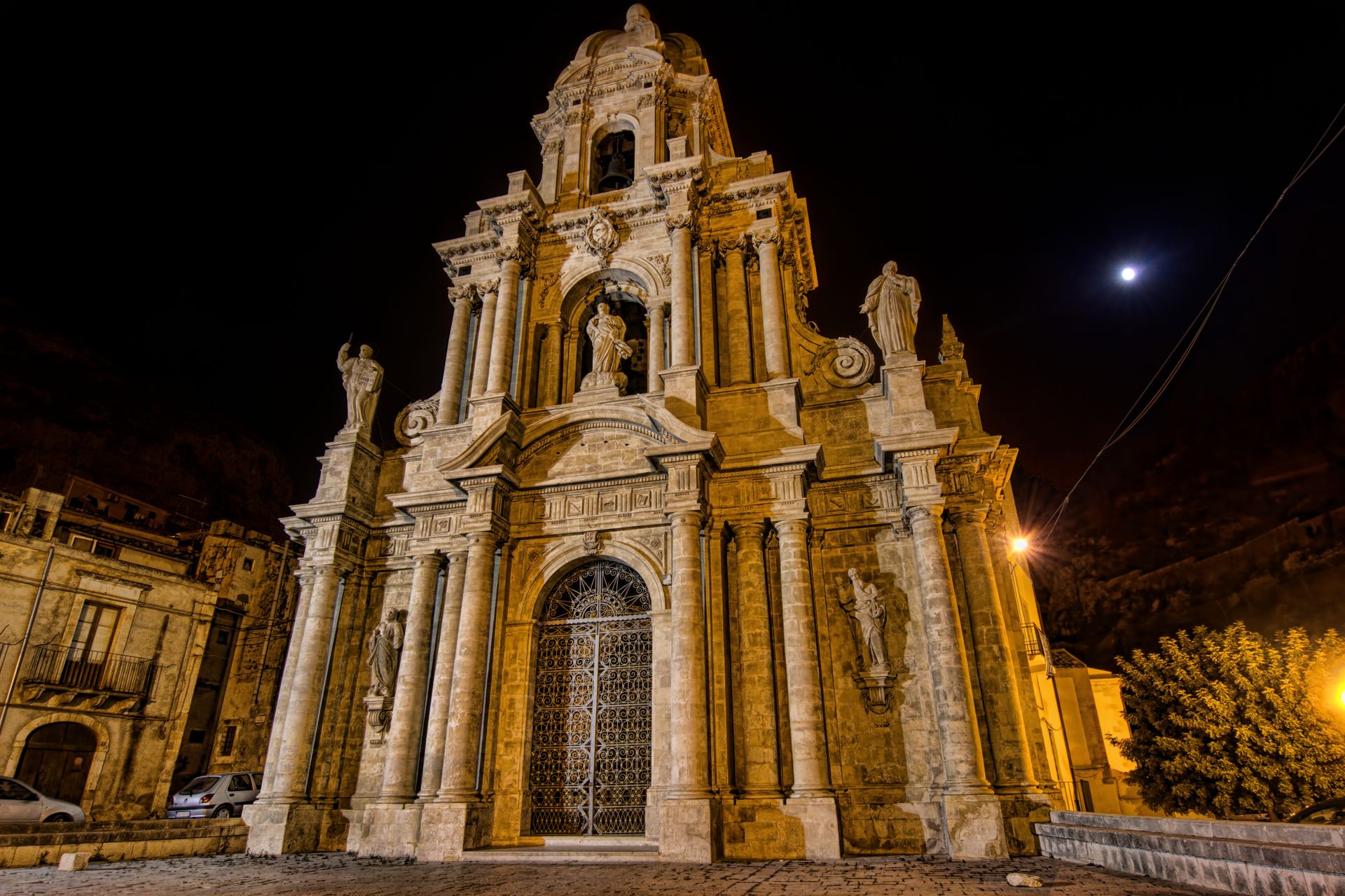
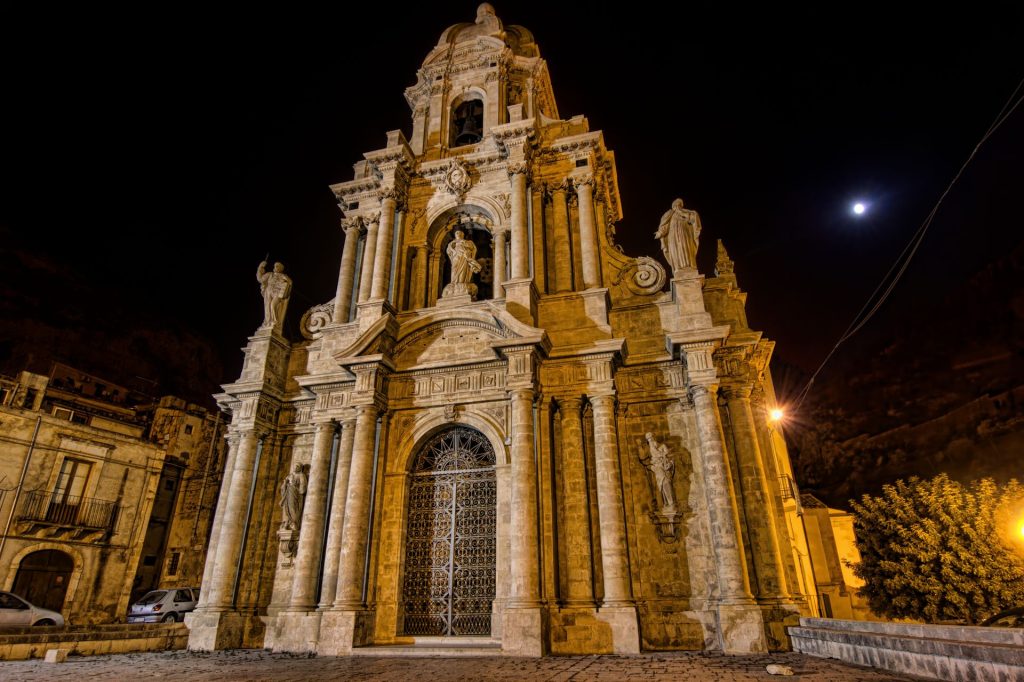
The Church of St. Bartholomew is located at the entrance to one of the canyons, which Cava di San Bartolomeo, right in front of the rock face. It dates from the early 15th century and, according to the Diocese of Noto, was the only church in the city to survive the 1693 earthquake. The tall tower façade was added in the early 19th century, based on a design by architect Salvatore D’Alì.
Inside, the church is a single-nave structure featuring stucco, frescoes, and gilded decorations. The "Descent from the Cross" is also displayed here, which Deposition, by the Baroque painter Mattia Preti. The view of the facade is most beautiful after dark, when it is illuminated.
6. Colle San Matteo and the Chiafura Cave District
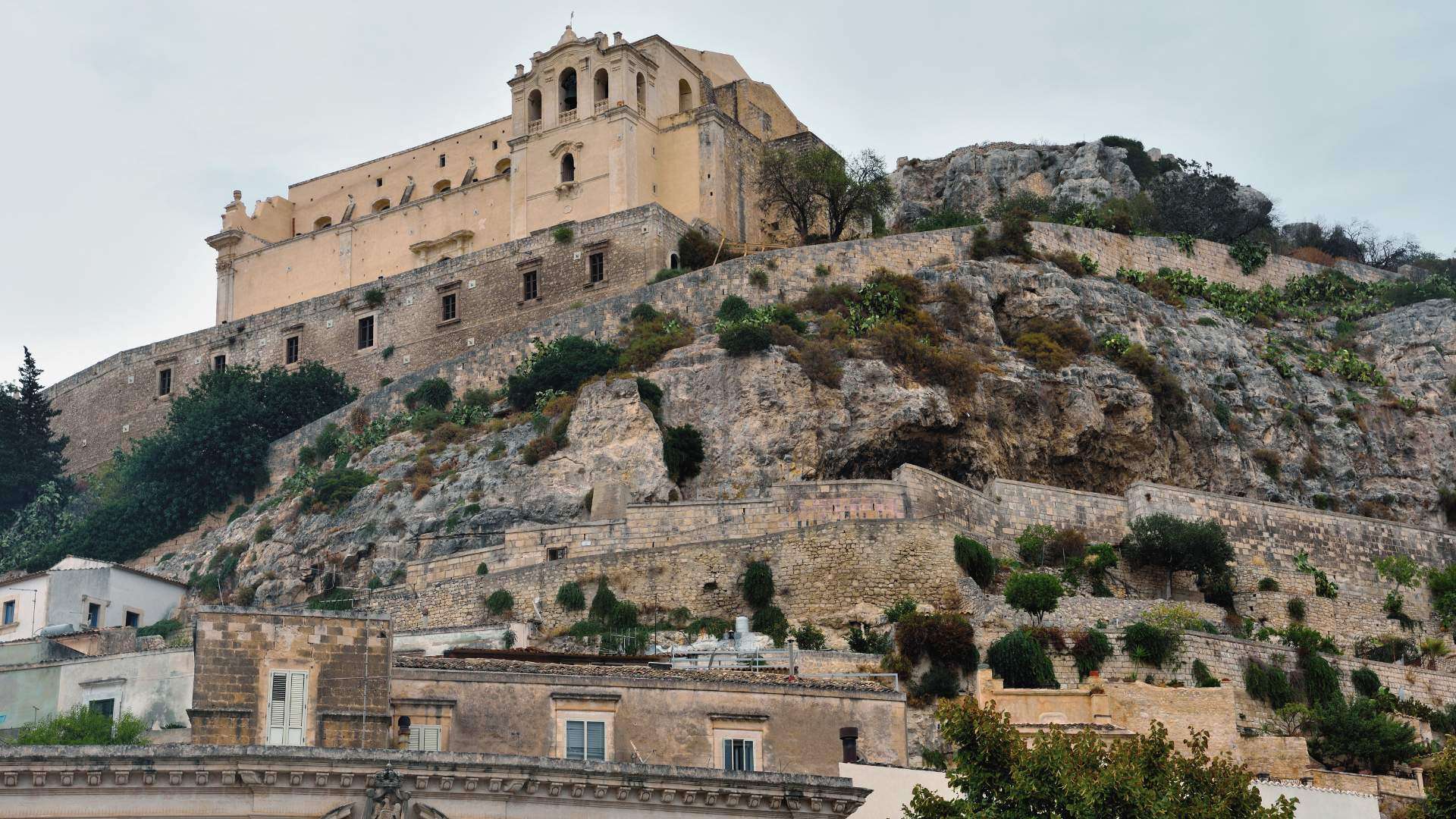
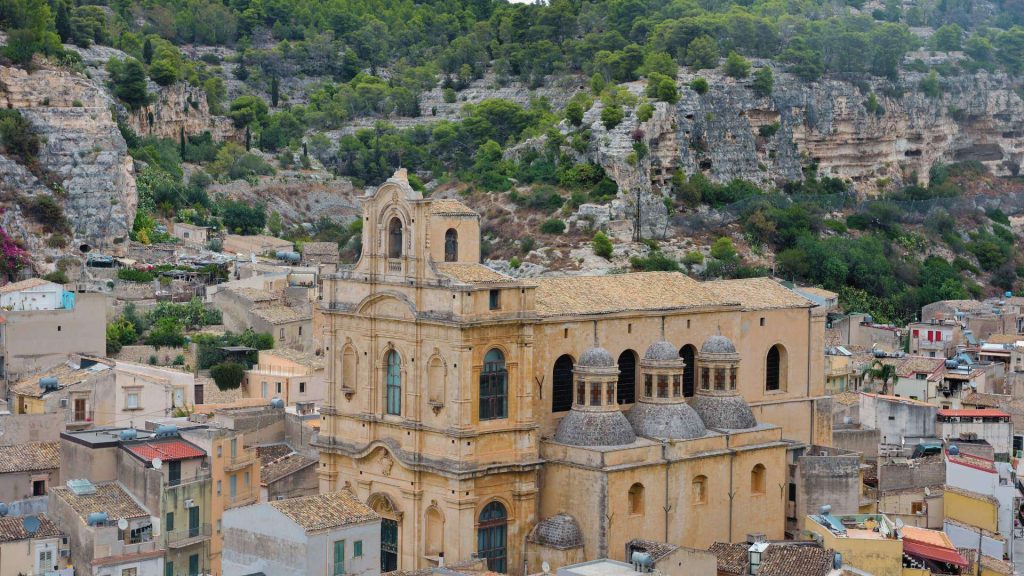
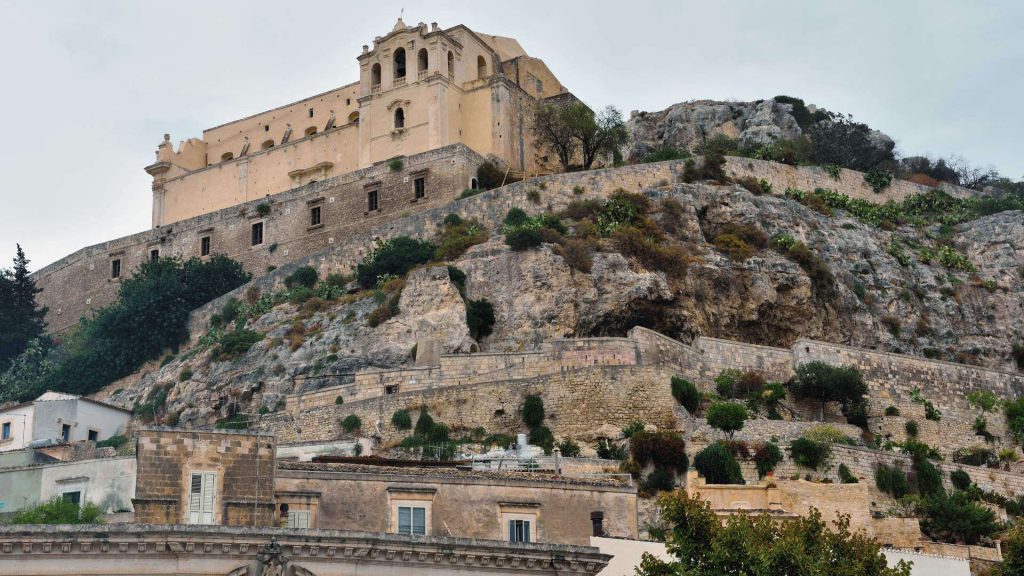
Towering over the city is the Colle San Matteo, the hill directly above the Old Town. At the top stands the Church of St. Matthew, the old mother church, which held that title until 1874. After the earthquake, it was rebuilt in the 18th century, but it was never completed. Today, it stands as an unfinished structure towering high above the rooftops.
On the slope below lies Chiafura, a neighborhood consisting of rock caves whose origins date back to the Byzantine era. The caves were inhabited until the 1950s. The climb is steep and exhausting in the midday sun, but it rewards you with the best view of Scicli.
7. Santa Maria la Nova and the Santuario delle Milizie
The Church of Santa Maria la Nova has a history dating back to the 14th century. It was rebuilt after the earthquake, and its current façade is in the Neoclassical style. Since 1994, it has been a sanctuary dedicated to Maria SS. della Pietà, Our Lady of Sorrows.
Anyone interested in the city's legend should also visit the Shrine of Our Lady of the Militia on the coast near Donnalucata. It was built between 1093 and 1098, shortly after the battle commemorated by Scicli’s biggest festival, and rebuilt in 1721 based on the original design.

Sicily Travel Guide
Sicily Travel Guide: The Most Beautiful Places, Best Time to Visit, How to Get There, and Accommodations—an overview of all Sicily articles from italien.news.
Where in Scicli was *Commissario Montalbano* filmed?
Since 1999, Scicli has been the main filming location for the Rai 1 series Inspector Montalbano, and since 2012, its prehistory as well The Young Montalbano. The series, based on the novels by Andrea Camilleri, is set in the fictional town of Vigàta, and many of its exterior shots were filmed here.
The main setting is Via Francesco Mormino Penna, which the inspector walks down time and again. The town hall on the same street serves as the Vigàta police station. You don’t need a special tour to see it: if you walk down this Baroque street, you’ll automatically find yourself on set.
The second well-known filming location is on the coast. Near Sampieri, on the headland, there is Punta Pisciotto the Fornace Penna, the ruins of a brick factory. Subsequently The Scent of the Night The neighborhood there is called La Mannara. The factory was built between 1909 and 1912 for Baron Penna, based on plans by engineer Ignazio Emmolo. On January 26, 1924, it burned down; the cause remains unknown to this day.
The Sicilian regional government has decided to expropriate and secure the ruins; the building has been seized. You can't go inside. Still, it's worth seeing from the outside and from the beach, especially when the sun is low in the sky.
Which beaches are part of Scicli?
Scicli itself is located inland, but the beaches are part of the municipality. Four neighborhoods line the coast, and there are sandy beaches everywhere.
Sampieri has a wide, crescent-shaped sandy beach and, to the east, Fornace Penna. This section Sampieri-Pisciotto In 2026, it will be the only beach in the municipality to fly the Blue Flag.
Donnalucata It is the largest and oldest district. According to the Regione Siciliana, the name derives from the Arabic "Ayn-Al-Awqat," meaning "the source of the hours.".
Cava d’Aliga lies between the two. To the far west, it borders Playa Grande to the nature reserve Macchia Forest of the Irminio River, which is managed by the WWF.
You'll need a car or a scooter to get from the Old Town to the coast; the trip takes about 15 minutes. If you want to combine the city with the beach, stay in one of the coastal towns and head to Scicli in the evening.
How do you get to Scicli?
The nearest major airport is Catania Fontanarossa, about 120 kilometers away. By rental car, you can reach Scicli in just under two hours—first on the highway toward Syracuse, then on country roads through the province of Ragusa. Closer by is the small airport Comiso, with significantly fewer connections.
Scicli has its own train station on the Syracuse–Modica–Gela line. The trains are slow and infrequent, but they’re suitable for traveling between the Baroque towns. A car is much more practical for visiting the coastal towns and for day trips to the surrounding area.
Between Syracuse and Modica, some regional trains are being replaced by buses. The replacement buses PA161 and PA166 stop in Scicli on the station plaza. Check the current schedule before your trip.
The table summarizes the routes to Scicli. Distances and travel times are rounded.
Here's how to get to Scicli
| Path | Here's what you should know |
|---|---|
| Flight Catania Fontanarossa | Sicily's largest airport, about 120 kilometers away—just under two hours by car. |
| Flight Comiso | A small airport in the province of Ragusa, closer to Scicli, but with few flights. |
| Railroad Scicli Train Station | Stops along the Syracuse–Modica–Gela route. Through December 12, 2026, some trains between Syracuse and Modica will operate as buses. |
| Car between the cities | Modica is about ten kilometers away, Ragusa about 25, and Noto about 40 kilometers. |
| Coast Sampieri, Donnalucata | About a 15-minute drive from the Old Town. |
As of October 2026 · Train service according to RFI (Rete Ferroviaria Italiana). Schedules and substitute transportation are subject to change; please check them shortly before departure.
What should you try in Scicli?
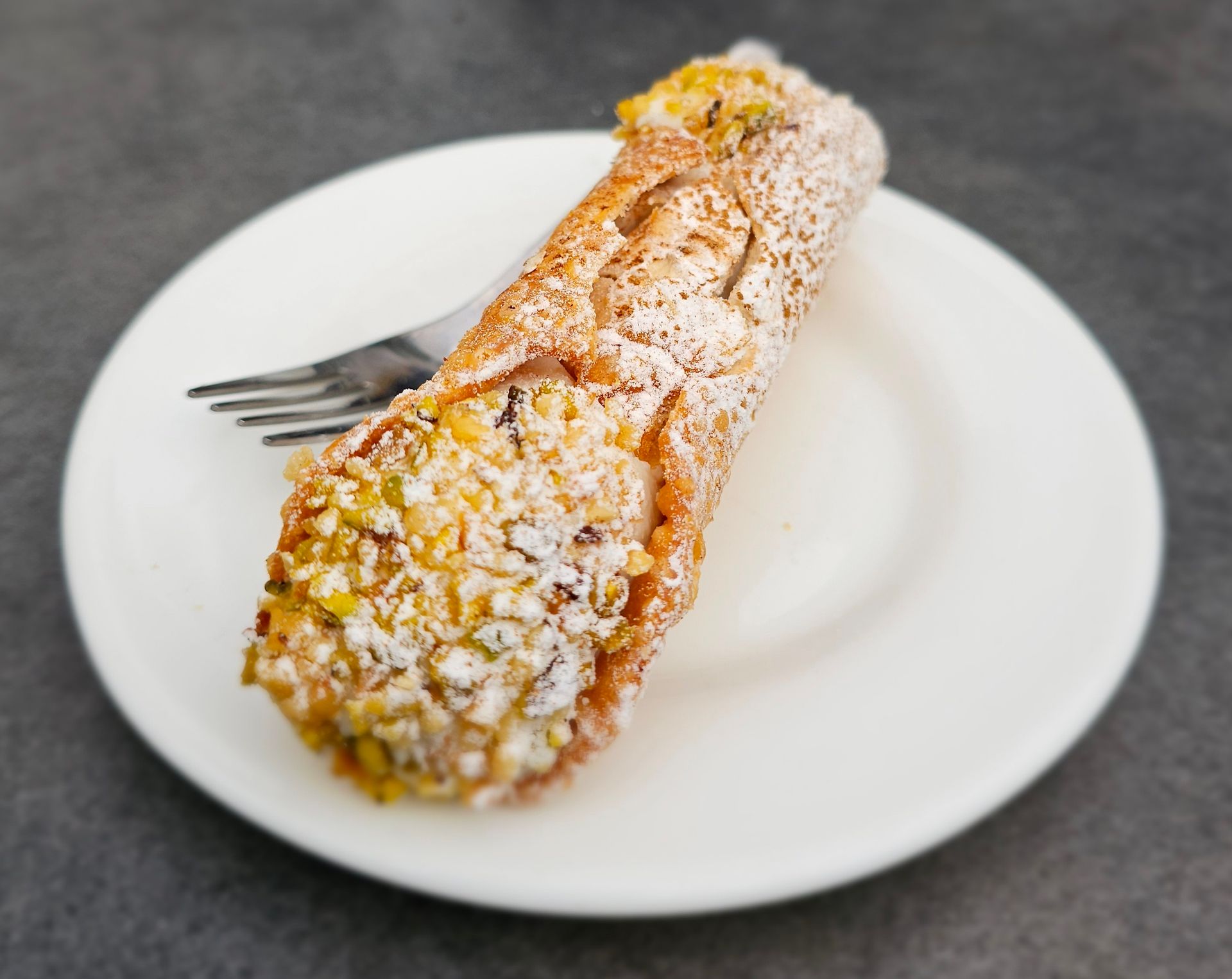
The city's specialty is the scapegoat, literally "Turkish head." This pastry is a large cream puff made from choux pastry, prepared with lard instead of butter and filled with cream or ricotta made from cow's milk, topped with chocolate shavings, almonds, or pistachios.
The shape is said to be reminiscent of the turbans worn by the Saracens, whom Count Roger of Hauteville—the Norman conqueror of Sicily—defeated in 1091 on the plain of Donnalucata. In the past, the Testa di Turco was only available during the Feast of the Madonna delle Milizie, but today you can find it in the city’s pastry shops all year round, especially on Sundays.
In addition, in Scicli you can enjoy the dishes that define the cuisine of the province of Ragusa: vegetables and legumes from the hinterland, ricotta, and fish caught fresh off the coast.
Where's the best place to eat in Scicli?
In the Old Town, you'll find small bistros and wine bars that put a new spin on Sicilian recipes, while the coast is home mainly to seafood restaurants. Here are three spots recommended by the Italian restaurant guide Gambero Rosso:
Three Places to Visit in Scicli
| Restaurant | Here's what you can expect |
|---|---|
| Noka Gastro Bistrot 69 Via Mormino Penna | A family-run business on Barockstraße that offers modern and personal reinterpretations of traditional Sicilian recipes. |
| Ùmmara Wine Bar and Restaurant 9 Via Aleardi | A wine bar with a kitchen where chef Roberta Padua prepares traditional dishes. Known for her hearty take on the Sicilian brioche. |
| Baqqala 3 Piazza Ficili | A seafood restaurant whose menu is based on the day's catch. |
As of October 2026 · Selected by Gambero Rosso. Hours vary by season; make reservations in advance on weekends.
Where's the best place to stay in Scicli?
You have two options: the Old Town or the coast. In the Old Town, you’ll be right in the middle of the Baroque palaces and can experience the city in the evening, once the day-trippers have left. On the coast in Sampieri, Donnalucata, or Cava d’Aliga, you’ll have the beach right outside your door and can drive into town for dinner.
A special place to visit is the RoccaSeta, a small boutique hotel in Scicli that is listed in the Michelin Guide's hotel selection. In addition, there are many bed-and-breakfasts in restored townhouses in the old town, as well as vacation rentals along the coast.
Accommodations in Scicli
When is the best time to visit Scicli?
Scicli is at its most beautiful in the spring and early fall. From March through May, the town celebrates its three major festivals; the countryside is green, and the temperatures are perfect for hiking up Colle San Matteo. In September and October, the sea is still warm, the beaches are empty, and the old town belongs to the locals once again.
It gets hot in July and August, and many day-trippers flock to the coast on the weekends. Visit the old town in the morning or in the late afternoon, and spend the midday hours by the sea. In winter, Scicli is quiet and mild, though some restaurants along the coast close during this time.
Which festivals should you plan to attend in Scicli?
Every spring, Scicli celebrates three festivals that are among the most unique in Sicily. Anyone visiting on these days will find the town more crowded and lively than ever before.
In March, the Procession of St. Joseph through the city, a procession of horses decorated with flowers. It commemorates the Holy Family's flight to Egypt.
Easter marks the end of Holy Week, which begins on Palm Sunday, with the Festival of the Living Man, the festival of the living. The locals also call it ‚U Gioia".
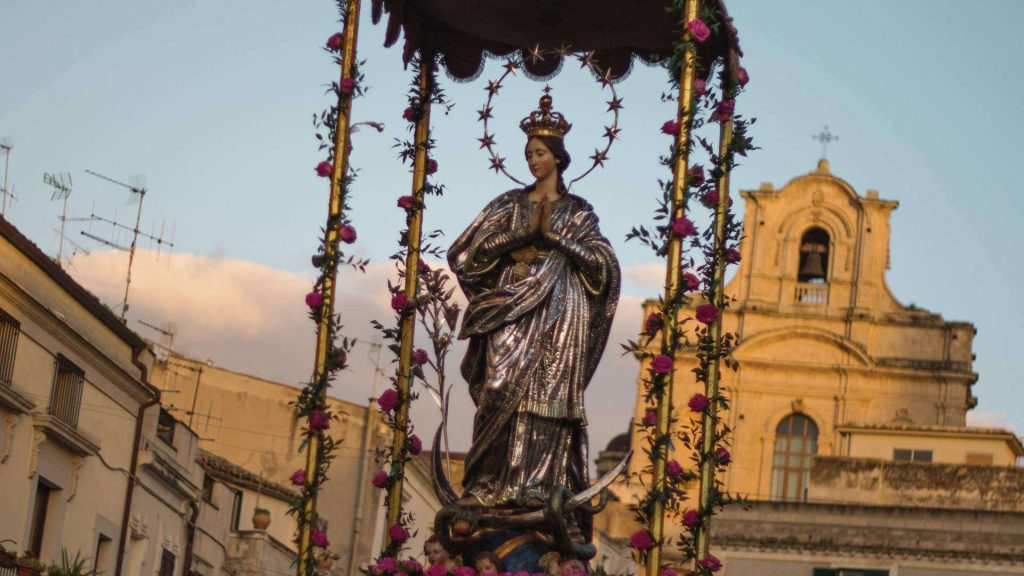
On the last Saturday in May, the Feast of Our Lady of the Militia. It commemorates the Battle of Micenci in the year 1091, when, according to legend, the Virgin Mary appeared on horseback and helped the locals and the Normans fight the Saracens. The festival reenacts the events leading up to the battle. The date isn't set in stone, so check it every year before you travel.
Good to know: Parking spaces and rooms are in short supply during the holidays. If you want to come, book early and leave your car on the outskirts of the old town.

What You Should Know About Scicli
1. The city is steep. The Old Town is located in the valley, while everything else is on the hillsides, accessible by stairs. Sturdy shoes are a must; if you have trouble walking, stick to the flat area in the center around Via Mormino Penna and Piazza Italia—that’s enough for a lovely day.
2. Many churches do not have set opening hours. Churches are open mainly for services. Go in the morning or early evening—that's when the doors are most likely to be open.
3. Without a car, the coast is far away. The train connects Scicli with Modica and Syracuse, but it's not a convenient way to get to the beaches. You'll need a rental car to reach the coastal towns.
4. Montalbano brings buses. On summer weekends, tour groups stop along Via Mormino Penna. If you arrive early in the morning or in the evening, you’ll have the Baroque Road almost all to yourself.
5. The Fornace Penna is closed. You can only see the series' most famous setting from the outside. But it's right on the beach, and the view of the ruins from the sand is better anyway.
Who should visit Scicli?
For Baroque fans Scicli is like a miniature version of the Val di Noto. Here, you can see in one day what would take you two days to see in Catania or Noto.
For Montalbano fans The city is a must-see. The Commissariat, Barockstraße, and the Fornace Penna are so close together that you can walk to all of them in a single day.
For Couples The combination of a quiet old town in the evening and a sandy beach during the day is just right, especially outside of summer vacation.
For Families The sandy beaches along the coast are the better starting point. You can then visit the Old Town as a day trip.
Combine a visit to Scicli with Modica, Ragusa, and Noto
Scicli is an ideal base for a tour of the Val di Noto. Modica, famous for its chocolate, is about ten kilometers away; Ragusa Ibla is about half an hour away; and Noto, with its cathedral, is about 40 kilometers away. You can visit all three cities on a day trip.
If you continue eastward, Scicli connects to Syracuse and antiquity; our overview provides the background to this Magna Graecia. You can find beach days on the East Coast at the Massolivieri Beach near Syracuse. If you land in Catania, it's worth spending a day in the city itself, which Sights in Catania They're all close together.

Catania Attractions: 7 Highlights & Tips
Baroque architecture made of lava stone, the best fish market in Sicily, and Europe’s tallest volcano right on your doorstep: Catania’s highlights, including prices, opening hours, and honest tips—plus the best trattorias and neighborhoods to stay in.
In the evening on Colle San Matteo
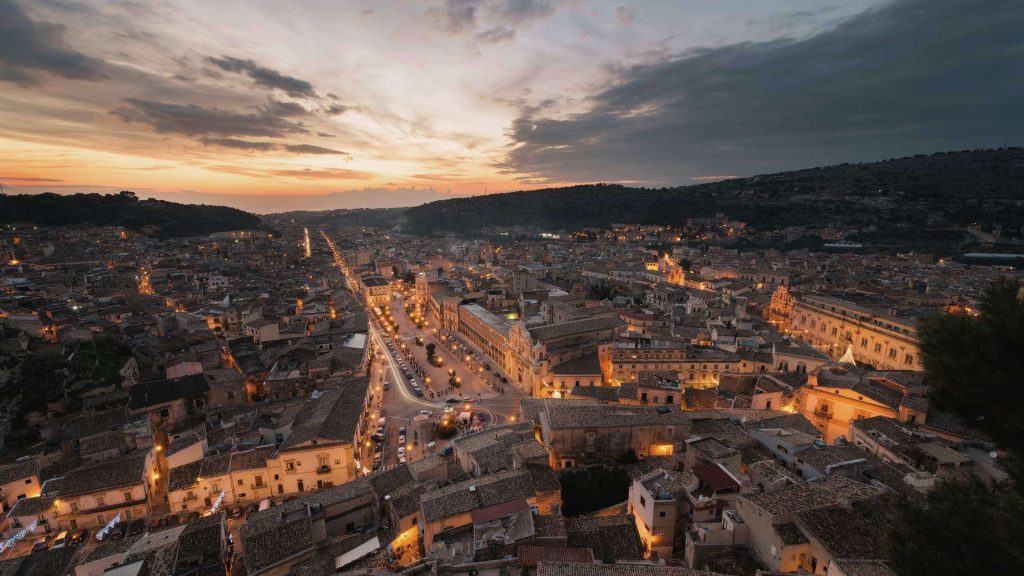
Climb Colle San Matteo—the hill with the old mother church—an hour before sunset. On the way, you’ll pass the Chiafura caves; once at the top, you’ll stand next to the unfinished church, with the entire city spread out below you.
When the sun is low in the sky, the limestone of the churches and palaces takes on a honey-yellow hue, and shortly afterward, the lights come on in the alleys. Then you head back to the old town; Via Mormino Penna is now illuminated and almost empty, and the evening begins in Piazza Italia.
Bring water and good shoes—the trail is steep. A flashlight will come in handy for the walk back after sunset.
Our conclusion: Scicli is a microcosm of the Val di Noto
Scicli is smaller and quieter than Noto, Modica, or Ragusa, and that is precisely what makes it so charming. Within just a few hundred meters, you’ll find Baroque palaces, churches, and facades that are part of the UNESCO World Heritage Site, and behind them rise the rocky slopes with their ancient caves. Montalbano has made the town famous; its beauty dates back to the 18th century.
Scicli is a budget-friendly destination. The old town, the squares, and the facades of the palaces are free to visit; most of your money will go toward food, lodging, and the rental car. A “Testa di Turco” from the pastry shop is the city’s most affordable luxury.
Plan on spending at least one full day—preferably two—including a day at the beach in Sampieri. If you want to explore the entire island, you'll find the next destinations in the Sicily Travel Guide, and those seeking a taste of antiquity should continue on to the Valley of the Temples near Agrigento.
Map: Scicli, Sicily
Photo Gallery: Scicli


Experiences & sights
Opening hours, event dates, and schedules are subject to change. Check the official websites for the latest information before your trip.
Sources and Further Information
- Visit Sicily, Sicilian Region: Scicli, Tips for Your Visit (accessed in October 2026)
- Diocese of Noto: Monuments to Visit in Scicli (accessed in October 2026)
- Italia.it: Church of San Matteo, Scicli (accessed in October 2026)
- Italia.it: Scicli City Hall (accessed in October 2026)
- Sicilian Region: The former Penna Brickworks will be expropriated (accessed in October 2026)
- RFI: Syracuse, Modica, Gela Line (accessed in October 2026)
- FEE Italia: Blue Flag Beaches 2026 (accessed in October 2026)
- Michelin Guide: Testa di Turco, a Millennia-Old Dessert (accessed in October 2026)
- Michelin Guide: Hotels in Scicli (accessed in October 2026)
- Gambero Rosso: Where to Eat in Scicli (accessed in October 2026)
- UNESCO: Late Baroque Towns of the Val di Noto (accessed in October 2026)