Arcades, amore and real tortellini: an insider's guide to Bologna
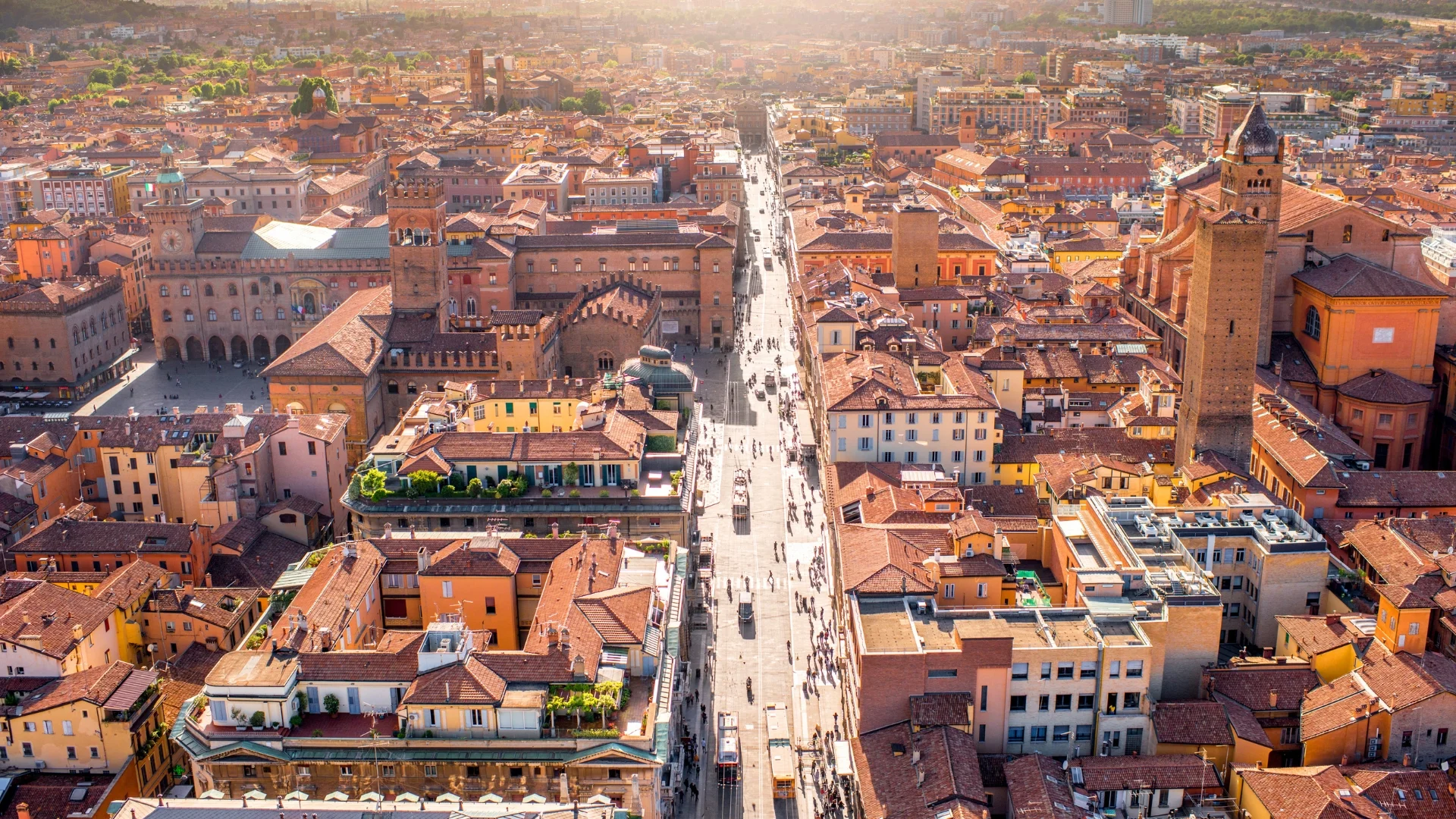
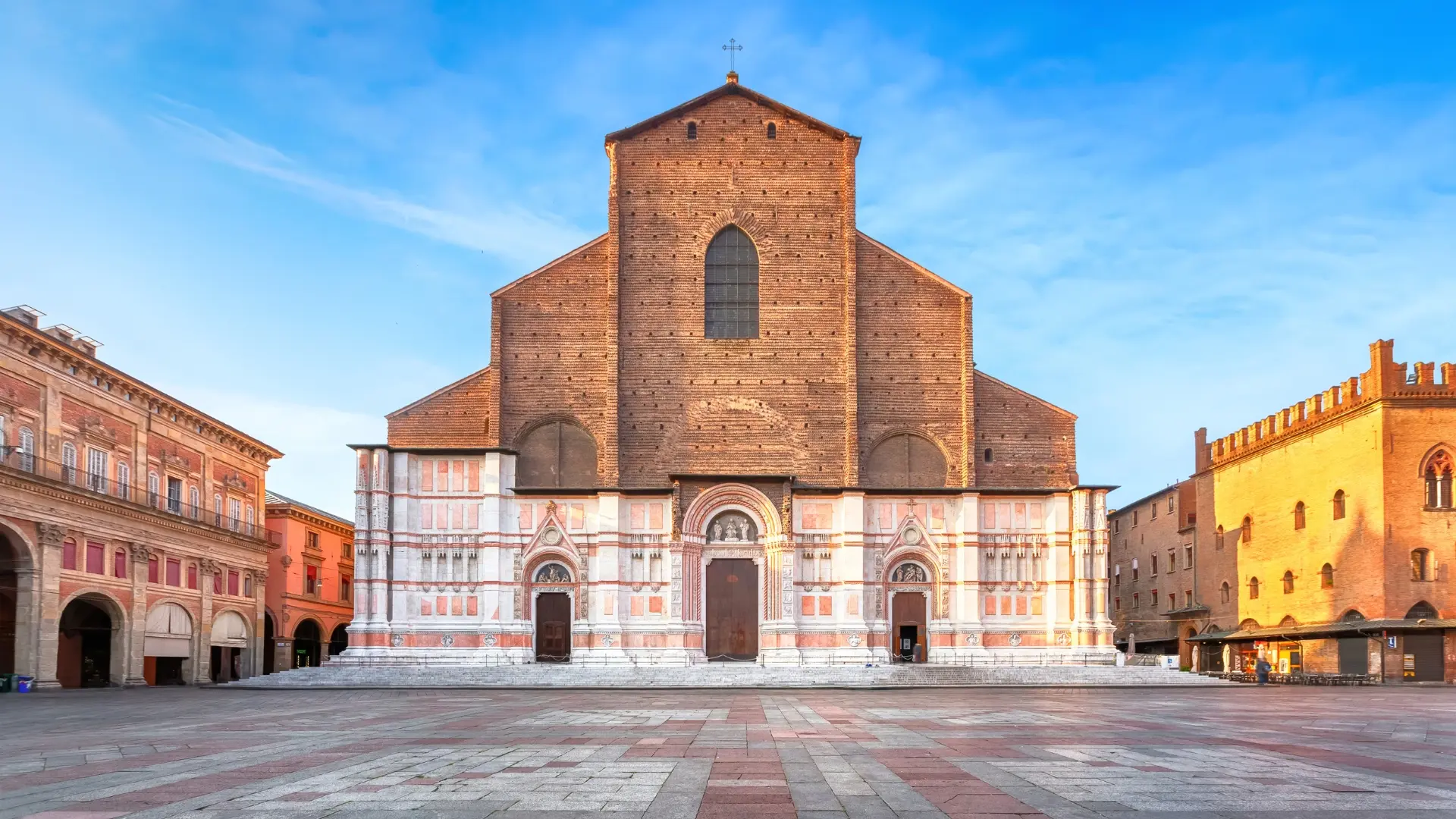
It's just half past seven in the morning and the Piazza Maggiore awakens in a soft, almost unreal shade of pink. While the waiters at the Bar Italiana routinely water the cobblestones in front of the entrance to dispel the dust of the night, the same silent ballet always takes place at the counter: an elderly gentleman in an impeccable jacket drinks his espresso standing up, a brief nod to the barista, then disappears wordlessly into the alleyways. Behind him looms the massive, still unfinished marble façade of the basilica San Petronio into the morning sky - an eternal temporary structure that gives the city its very own pride. Those who now make their way under the protective arcades towards Quadrilatero is accompanied by the rhythmic clatter of the shutters as the pasta makers and owners of the traditional salumerias prepare their treasures for the day. At this moment, you can feel that Bologna doesn't stand up for the tourists, but for himself.
Bologna dispenses with the loud spectacle and garish staging of other metropolises. The city is not „breathtaking“ in the classic sense of a postcard motif, nor does it make any significant attempt to pander to global mass taste - which is precisely what makes it the most exciting for connoisseurs Destination in Italy. While in Florence or Venice you often have the feeling of just being an extra in a huge backdrop, the Emilian capital with its 391,000 inhabitants remains pleasantly unadjusted. Here the oldest university The city is not a museum to the western world, but the beating heart of a city that sees its culinary excellence as a basic daily right. If you're tired of the long queues in front of the Uffizi or the summertime boat chaos in the lagoon, the Emilia-Romagna an honest alternative that has not yet sold its soul to overtourism.
This guide is your personal compass if you have already ticked off the great Italian classics and now want to delve deeper into the real thing. We have updated the information for you: you will find the current admission prices for Palazzo Poggi (as of spring 2026) as well as the stricter rules that have been in force since January for the ZTL zones, that make the historic center even more car-free and livable. Special attention is paid to the honest classification of the Due TorriAs the Garisenda remains closed off due to its structural integrity, we have found alternative ways for you to enjoy the city panorama without disappointment. My aim is to show you routes that lead directly to the trattorias where the Bolognesi spend their lunch break and where the recipe for the ragù is still guarded as a sacred family heritage.
Bologna at a glance
- How many days? At least two full days for the city itself. Three to four days if you plan Modena, Ferrara or Ravenna as day trips.
- Best time to travel: April to mid-June and September to mid-November. July/August are hot (often over 35 °C) and many trattorias close for Ferragosto.
- Arrival: Direct flights from all over Europe to BLQ airport (Aeroporto Guglielmo Marconi). From the airport, take the Marconi Express to Bologna Centrale in 7 minutes (€ 12.80 one way). From Munich with the ÖBB Nightjet or from Innsbruck/Munich with Frecciarossa via Verona.
- What you must see: Piazza Maggiore with San Petronio, Archiginnasio with the Anatomical Theater, the Quadrilatero district, the Portici (UNESCO World Heritage Site since 2021), the view from the Torre dell'Orologio.
- What to eat: Tagliatelle al ragù (not „spaghetti Bolognese“ - you don't get that here), tortellini in brodo, mortadella in one piece, tigelle, crescentine.
- Budget: Medium price range per day/person for food and admissions: € 60-90. Central hotel prices: € 110-220 for a double room in spring 2026.
- Important 2026: The Torre Asinelli is still closed, the Garisenda stabilization is expected to run until 2028.
What makes Bologna so special?
The Bolognesi have carried three nicknames with them for centuries, and they are not a marketing invention, but an honest self-description.
La Dotta - the scholar. The University of Bologna was founded in 1088 and is the oldest in the western world. Today, around 87,000 people study here, which shapes the entire city: in the university district around Via Zamboni, you can hear five languages in ten minutes, there are more bookshops than in any other Italian city of comparable size, and conversations at the tables are noticeably often not about the weather.
La Grassa - the fats. This does not mean the lifestyle, but the richness of the cuisine. Bologna is the capital of Emilia-Romagna, a region that probably has more protected designations of origin per square kilometer than any other in Europe: Parmigiano Reggiano, Aceto Balsamico Tradizionale di Modena, Prosciutto di Parma, Mortadella Bologna IGP, Culatello di Zibello, Squacquerone di Romagna. Anyone who has eaten in a good trattoria here will understand why the Italians take the word „tradizione“ so seriously.
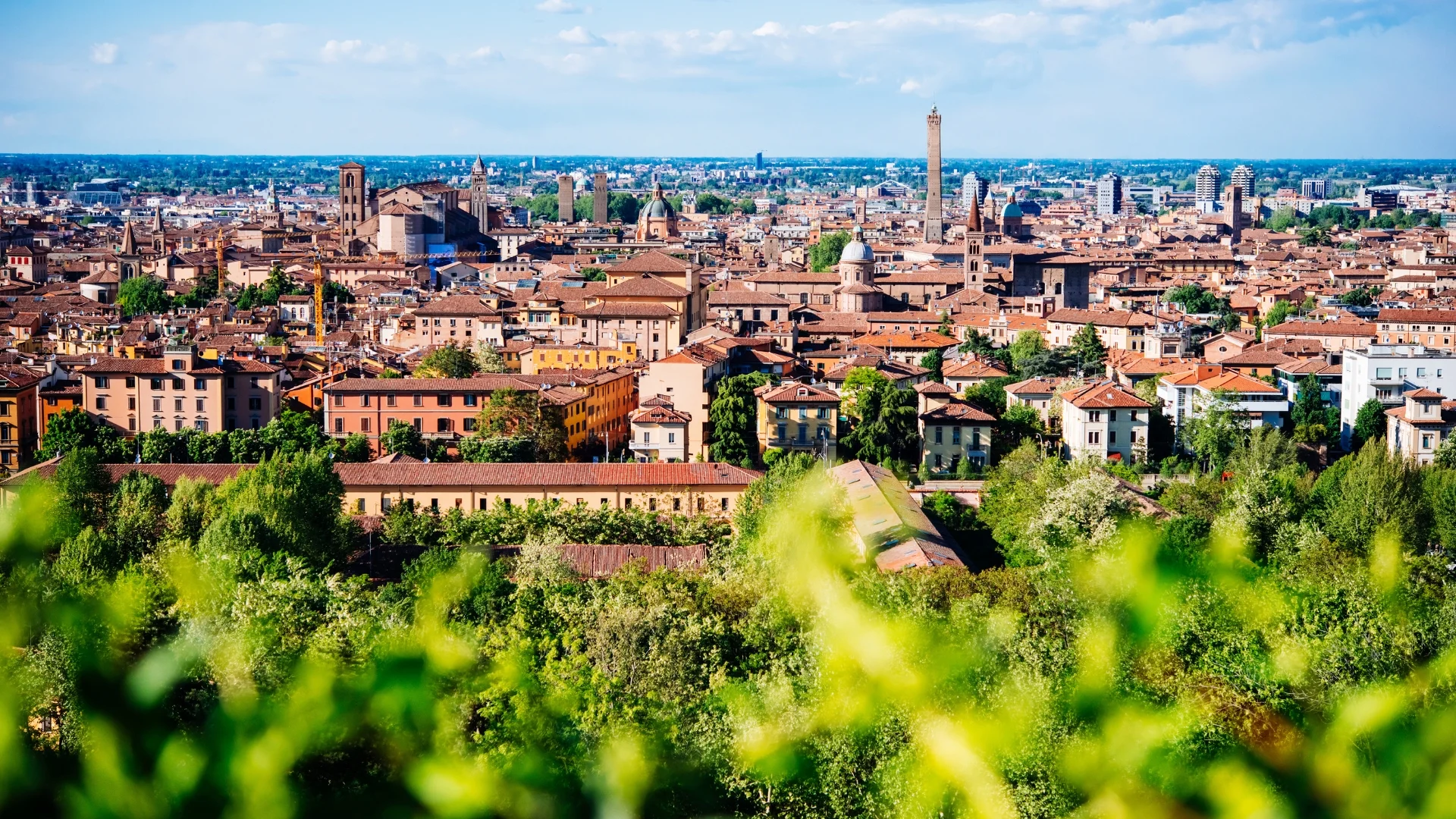
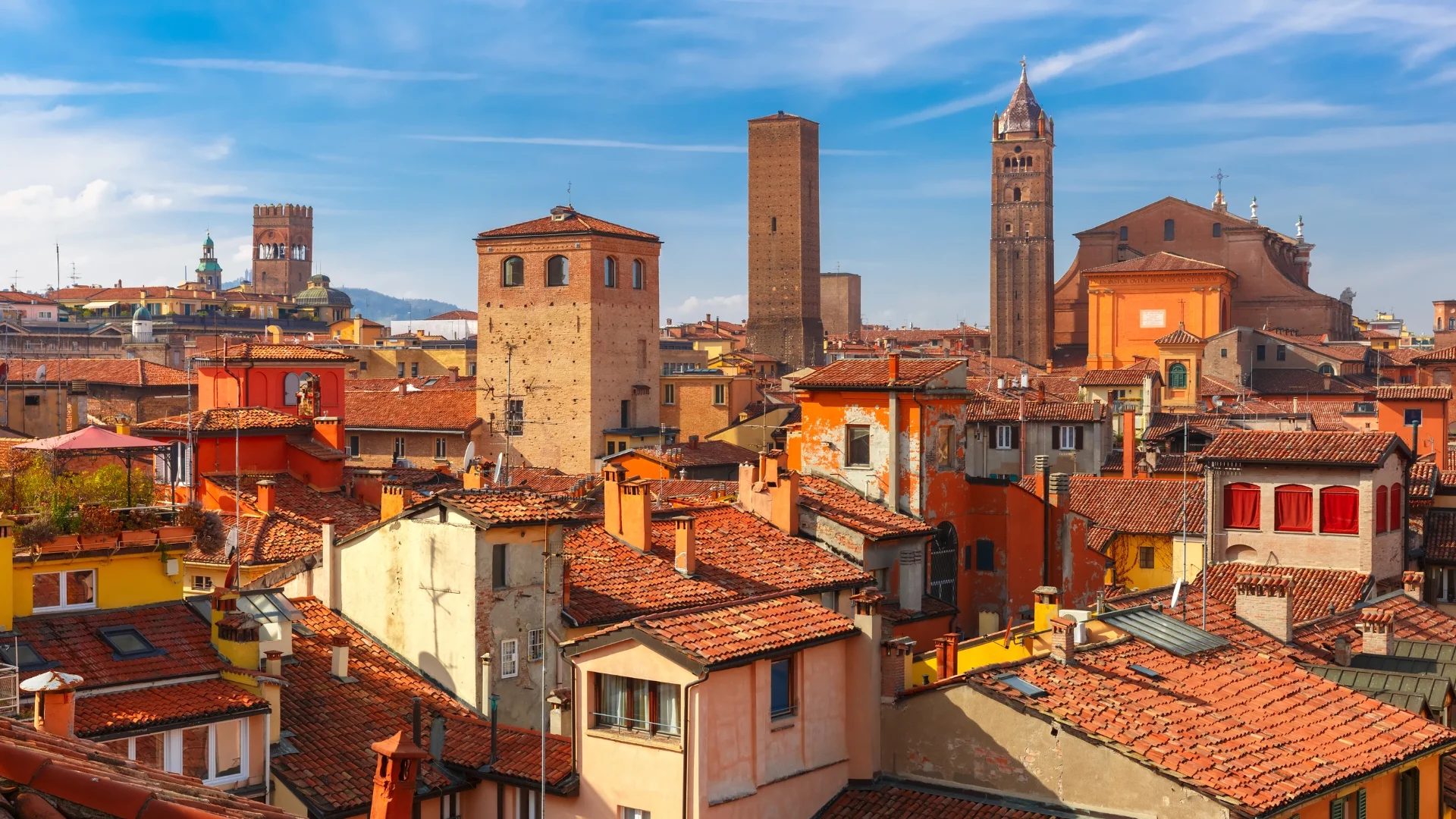
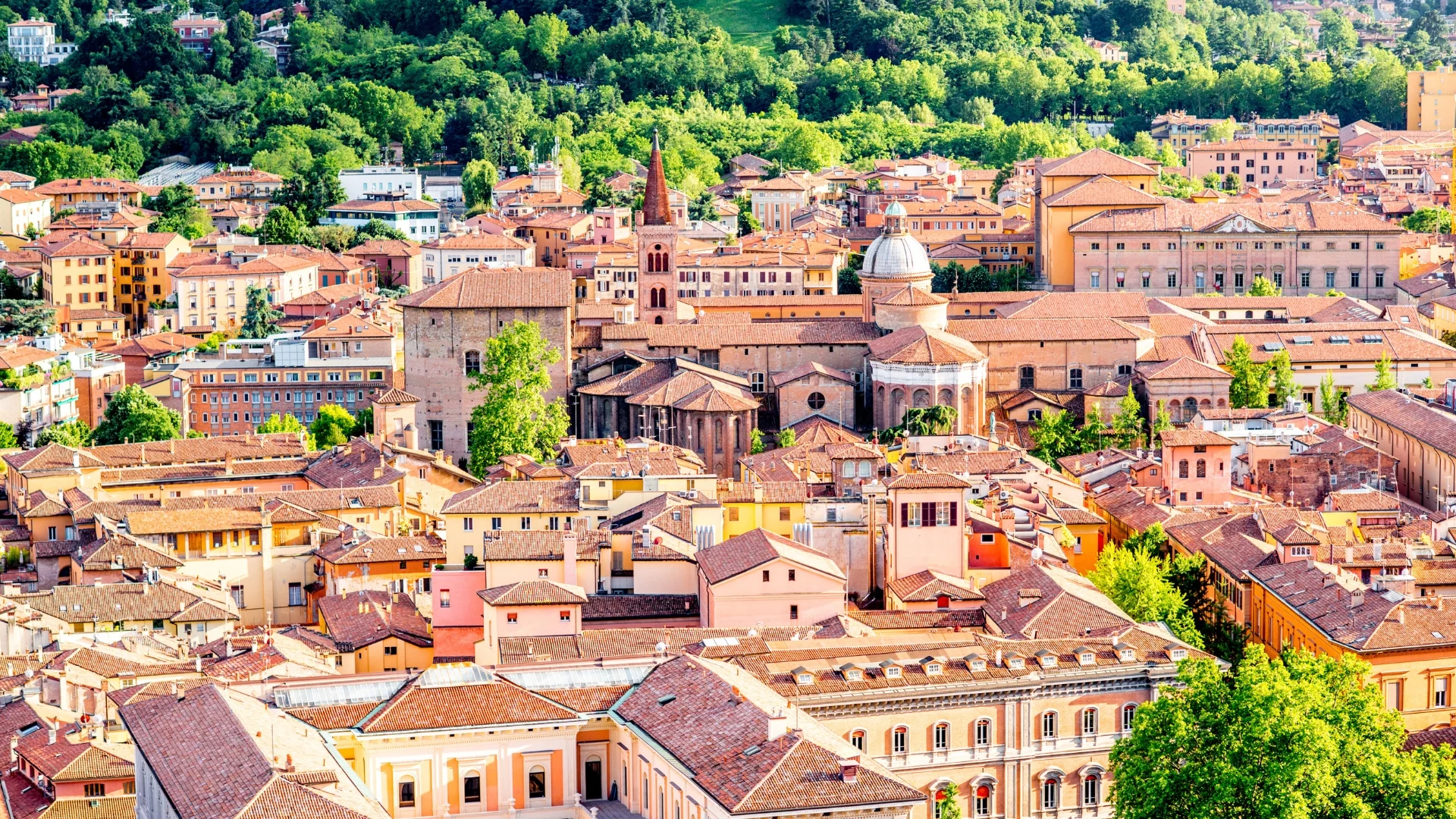
La Rossa - the red one. Two meanings: firstly, the red-tiled roofs and the warm brick hue of the old town, and secondly, the politically left-wing tradition that has shaped the city's self-image since the Second World War. For decades, Bologna was the stronghold of the Italian left, and the open, decidedly anti-fascist atmosphere can still be felt today - on walls, in cafés, in the way people greet each other.
Bologna in comparison. If you love Florence because it is an open-air museum of the Renaissance, you will find something else in Bologna: The Middle Ages dominate here, not the High Renaissance. If you love Venice because it is so distinctive, Bologna has its own distinctiveness - the Portici. If you go to Rome to bathe in history, in Bologna you will find a city that does not exhibit its history, but lives in it: the medieval towers stand in the middle of residential areas, the Anatomical Theater lies between stores, and the most important market - the Quadrilatero - is still a market, not an open-air museum.
Who will love Bologna? Repeat travelers to Italy, culinary enthusiasts, city walkers, university city sympathizers, people who like to sit in bars in the evening and soak up the atmosphere.
Who would rather not? If you are looking for a beach, if you expect „wow-effect“ tourism à la Cinque Terre, if families with small children are dependent on playgrounds and water parks (Bologna is doable with children, but not ideal), if you don't want to deal with the heat under the Portici in the Italian midsummer.
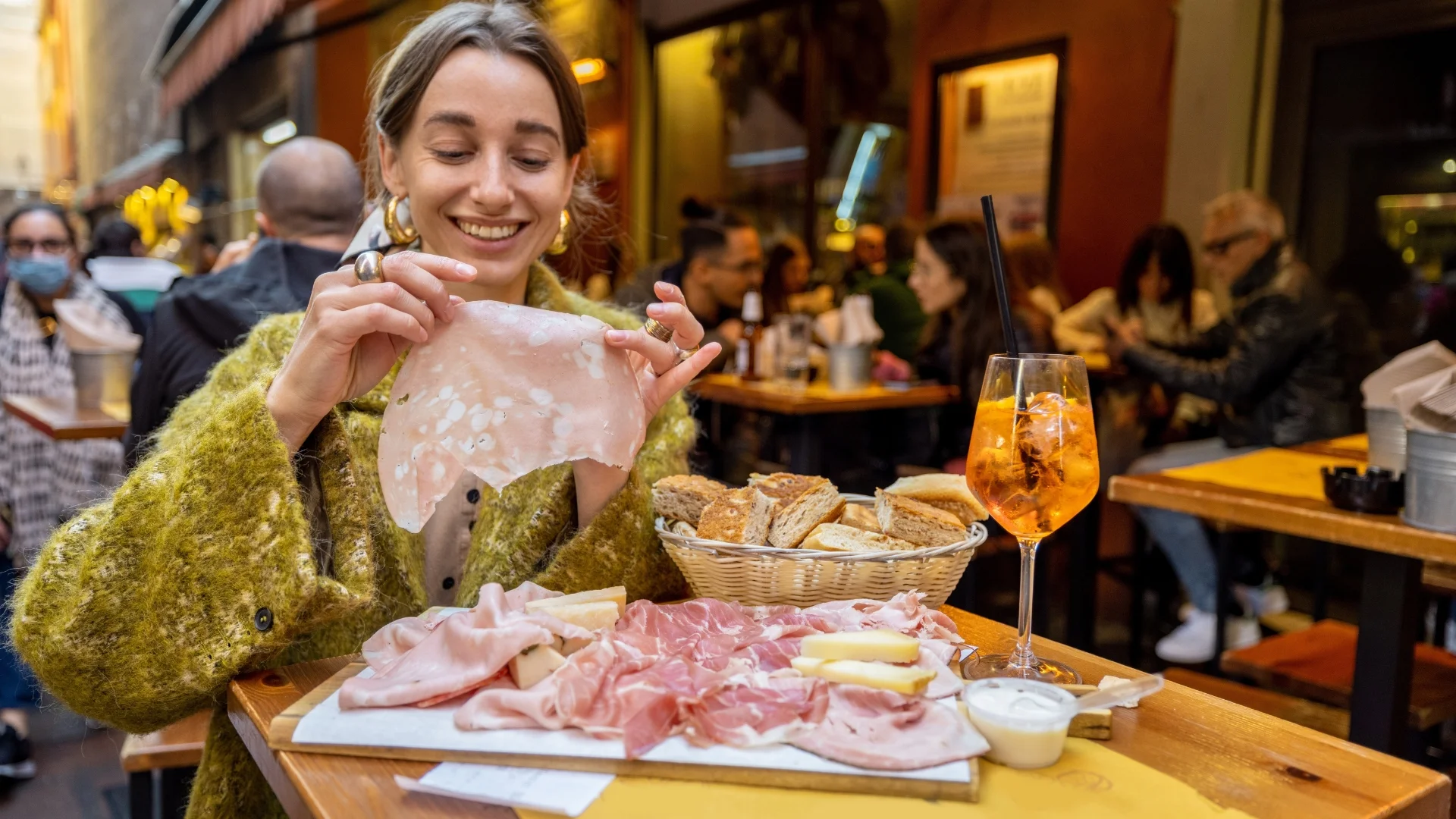
A must in Bologna, between arcades and aperitivo!
It's one of those golden afternoons in Via del Pratello, where student Bologna mixes with the real, unpolished beat of the city. In front of me, an ice-cold spritz and a board that almost insulted the term „appetizer“ - loaded with mortadella, prosciutto, crudo, aged Parmigiano, other cheeses and crescentine that were still steaming. Served without fuss, you could taste the uncompromising quality of Emilia-Romagna in every bite, far removed from the usual tourist deductions. Here in the alleyways of Bologna and the Portici, people don't eat for a photo, but for the soul, and it is precisely this unpretentious nature that makes the city so damn honest.
What is the best time to visit Bologna?
Bologna is a city for four seasons, but not all of them are equally pleasant.
March to May: The ideal time. Temperatures are typically between 8 and 18 °C in April and between 13 and 23 °C in May. It rains from time to time, but under the 38 km of portici in the historic center you will get through mostly dry. May is particularly beautiful because the Bolognese sit outside after work and the aperitivo culture is in full bloom. Please note: the weekends around Easter and May 1st are full and hotels are much more expensive, so book early.
June to August: The difficult time. Bologna is located in the Po Valley, and the heat builds up. Daytime temperatures of over 32 °C are the norm in July and August, it hardly cools down at night, and the humidity is high. The Portici help, but the city feels sluggish. In August (especially around Ferragosto on August 15), many of the best trattorias close for two to three weeks. If you come during this time, you should check in advance which restaurants are open - otherwise you will end up in the tourist restaurants around Piazza Maggiore.
Advantages of summer: fewer business travelers, often cheaper hotel prices (Bologna lives to a large extent from business tourism around the trade fair), and some of the most beautiful open-air events such as the Cinema Ritrovato, an international film festival in Piazza Maggiore at the end of June/beginning of July, with free open-air film screenings.
September to October: The second high season. Probably the strongest culinary season. Daytime temperatures drop from 25 °C to 18 °C, the grapes in the hills around the city are harvested, the aceto season begins in Modena and the Tartufesta weekends start in the region - truffle festivals in villages such as Savigno (Tartufo Bianco) from the beginning of October. In Bologna itself, it is worth observing the shop windows of the salumerie in October: The first white truffles are laid out, often weighed right in front of customers.
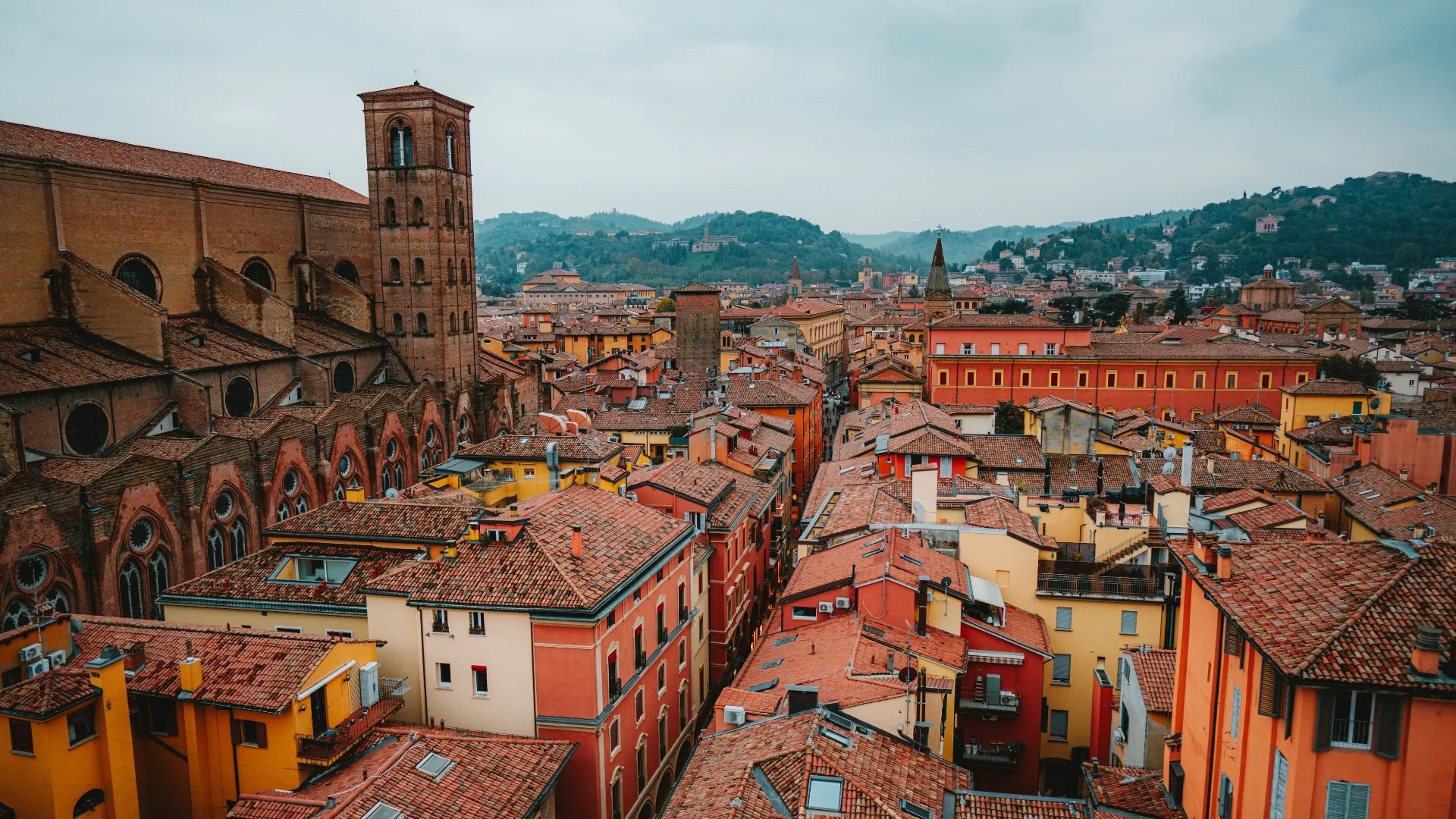
November to February: the Bologna classics season. Bologna in the fog is almost a cliché, but a well-deserved one. When the Po Valley puts on its foggy cap and the towers appear only as silhouettes, the city has its own, almost Romanesque atmosphere. It's truffle season, it's tortellini season, the restaurants are full of locals rather than tourists. The Christmas markets around Piazza Maggiore are small but charming. Temperatures are between 4 and 10 °C during the day, but it can get much cooler in the evening - bring sturdy shoes and warm clothes.
What to consider in 2026: The city has been building the Linea Rossa streetcar since 2023. In 2026, the construction work will mainly affect Via Indipendenza and parts of Via Riva Reno - i.e. precisely the central axes. Anyone booking a hotel directly on Via Indipendenza should ask the hotel directly about the current noise level.
How do I get to Bologna?
By airplane. Guglielmo Marconi Airport (BLQ) is located just 6 km northwest of the city center. There are direct flights all year round from Frankfurt, Munich, Vienna and Zurich, and seasonally also from Berlin, Hamburg, Düsseldorf and Cologne. There are three options from the airport to the city center:
- Marconi Express: A fully automatic, driverless monorail between the airport and Bologna Centrale. Travel time 7 minutes and 30 seconds, frequency every 8 minutes at peak times. Operates from 5:40 am to midnight. Single ticket €12.80, return trip (can be used within 30 days) €23.30. Tickets via smartphone, ticket machine or contactless with credit card directly at the turnstile. Important: At night (between midnight and 5:40 a.m.), the Q bus runs as a replacement, with the standard city bus fare of €2.30.
- Bus 944 / 949: The regular city bus 944 goes directly to Bologna Centrale (standard fare €2.30), the electric bus 949 goes directly to Piazza Malpighi near the old town (€9.80). If your hotel is in the city center, the 949 can be the smart choice - you save yourself the Marconi Express and don't have to walk through the central station with your luggage.
- Cab: 20-25 € to the center, travel time 15-25 minutes depending on traffic. Italian cabs now accept credit cards everywhere - ask just before the journey.
By train. Bologna Centrale is one of the most important rail hubs in Italy. The Frecciarossa takes 1:05 hours from Milan, 35 minutes from Florence, 2:10 hours from Rome and 1:25 hours from Venice. From German-speaking countries, you can usually travel via Munich or Innsbruck with a change in Verona or Milan: early bird prices from Munich to Bologna are around €90-130 one way in second class, with the Nightjet from Munich (via Innsbruck-Brenner-Verona) the journey takes around 9 hours. From Vienna it takes around 9-11 hours with a change in Villach or directly with the Nightjet, from Zurich via Milan around 6-7 hours. If you take the train, you arrive in the middle of the city - Bologna Centrale is 800 m from Piazza Maggiore on foot.
By car. From Munich it is 670 km (just under 7 hours), from Vienna 880 km (just over 9 hours), from Zurich 580 km (just under 6 hours). Toll roads: Brenner highway, Italian highway network. If you are coming by car, you should bear two things in mind: firstly, the old town is a comprehensive ZTL zone (Zona a Traffico Limitato, more on this in the next section). Secondly, you don't need a car in the center - Bologna is an excellent pedestrian city. If you need a car while traveling, you should park outside the ZTL. Reliable options are the day garages around the train station or in the Marsala district (Garage Marconi: approx. 25-30 €/day, Garage Riva Reno and Tanari: similar prices). Hotels in the old town with their own garage charge an extra €25-40 per night.
Recommendation depending on the duration of the trip: For weekends or short trips: flight. For trips of five days or more where you also want to explore the region: Train. For round trips through Emilia-Romagna with several stops (Modena, Parma, Ferrara): Car, but choose the hotel with parking outside the ZTL.
Understanding Bologna: ZTL and mobility in the old town
The ZTL (Zona a Traffico Limitato) is probably the most common - and most expensive - misunderstanding for German drivers in Bologna. It is an electronically monitored zone in which entry by private car is only permitted with a permit. If you enter without a permit, you will automatically be photographed and sent home a few weeks later with a fine - often between €80 and €100 per offense, plus processing fees from the rental company if you were driving a rental car.
When does the ZTL apply? The „Macro-ZTL“ of the Centro Storico is active daily from 7 am to 8 pm. There are even stricter areas within this zone: Zona T (Via Rizzoli, Via Ugo Bassi, Via Indipendenza) is completely closed to motorized traffic during the day, and at night at weekends. The Zona Universitaria is also closed 24 hours a day.
What has changed in 2026? Since January 1, 2026, hybrid vehicles from non-residents are no longer allowed to enter the ZTL - the number of hybrid permits had previously risen from under 18,000 (2019) to around 30,000 (2023), whereupon the city canceled the special regulation for non-resident hybrid drivers. Fully electric vehicles are still allowed to drive in and park free of charge. Diesel and petrol vehicles without a permit must avoid the ZTL.
Practical advice for German travelers: If you have booked a hotel within the ZTL, ask the hotel for a temporary entry permit before you arrive. Most hotels can have your license plates deposited in the municipal system for 24-48 hours so that you can enter for loading and unloading. There is no exception without this registration - not even with a hotel reservation.
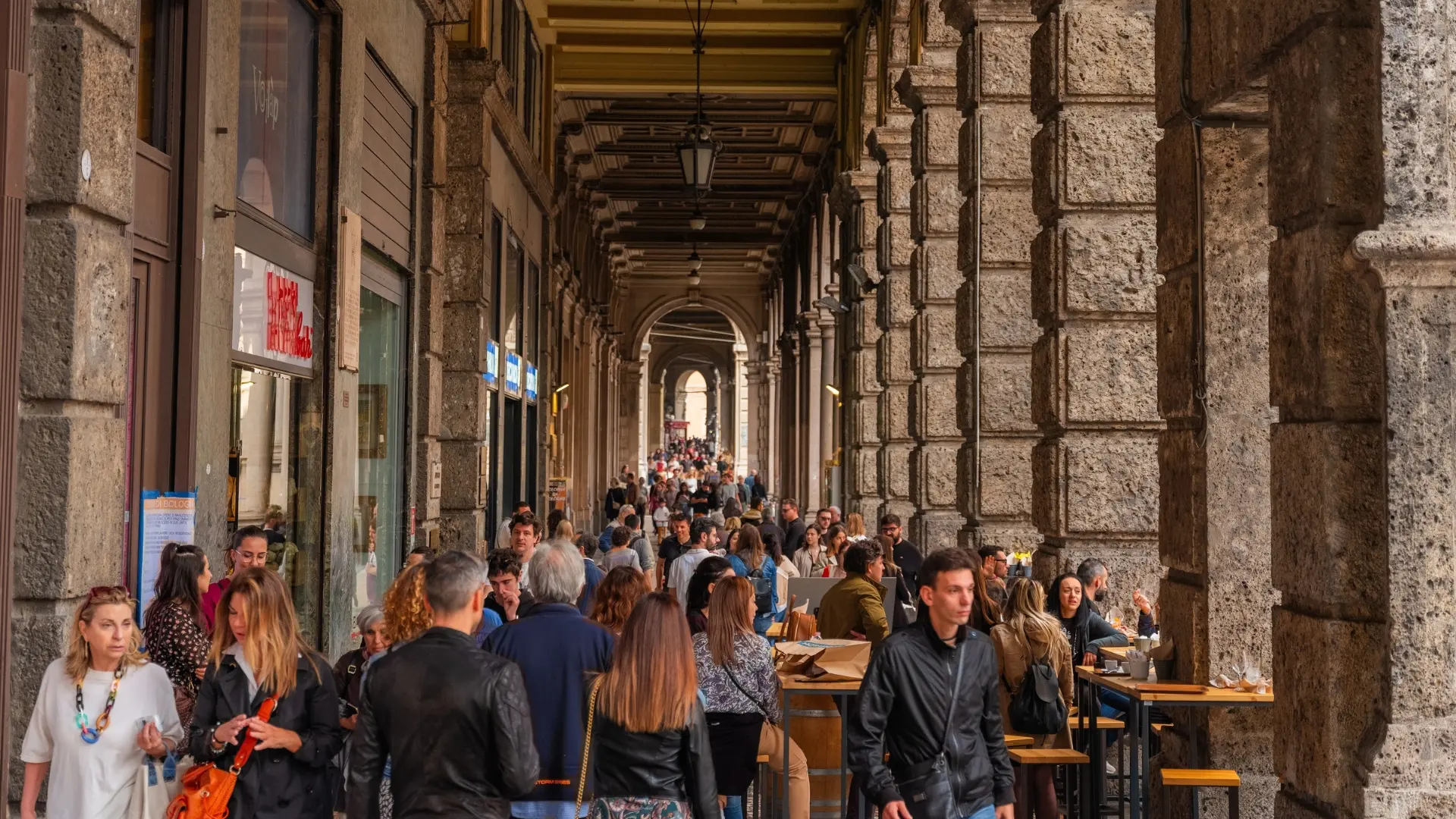
Bologna on foot. The best way to explore the old town is on foot. It is about 12 minutes from the train station to Piazza Maggiore. From Piazza Maggiore to the two towers 4 minutes. From the Quadrilatero to the university 8 minutes. The 38 km of Portici in the historic center are your ally - in rain, in heat, in sun.
City bus. The provider is called Tper. One-way ticket €2.30 (valid for 75 minutes, unlimited changes), day ticket €6. Tickets are available in tobacconists, at ticket machines, in the Roger app or contactless directly on the bus. If you don't travel much by bus, you don't really need one in the old town.
Bicycle and scooter. Bologna is relatively flat, but has few dedicated cycle paths in the city center - the bike rides on the street between buses and mopeds. The city's bike-sharing system is called RideMovi (formerly Mobike) and can be used via an app. If you are here in early 2026, you should note that several central axes will only be usable to a limited extent due to the streetcar construction work.
Sightseeing! What should you see in Bologna?
Piazza Maggiore and Basilica di San Petronio
Piazza Maggiore is not the most imposing in Italy, but it is one of the most populated - Bolognese people sit on the steps of San Petronio in the evenings as if on a public living room sofa. The basilica itself is the fifth largest church in Italy (after the four in Rome) and was actually intended to be even larger - larger than St. Peter's Basilica. It was deliberately never completed: Pope Pius IV stopped the extension by diverting funds to the neighboring Archiginnasio Palace in 1561. As a result, only the lower half of the façade is clad in marble, the upper half is raw brick - this is not a structural defect, but a symbol of Bolognese independence from Rome.
Inside you can see the longest sundial in the world - 67 meters, set into the ground in 1655 by astronomer Gian Domenico Cassini. At midday, a ray of sunlight falls through a hole in the left aisle, marking the exact midday height of the sun.
Admission: Church free of charge, access to three chapels (Re Magi/Bolognini, San Sebastiano, San Vincenzo Ferrer) costs €5, concessions €3. Important 2026: The panoramic terrace on the basilica, which was accessible by appointment for a number of years, is permanently closed following completion of the facade restoration.
Archiginnasio with the Anatomical Theater
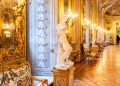
The impressive Archiginnasio Palace was built in 1562 and 1563 at the behest of the Pope in order to finally bring the university's faculties, which until then had been scattered all over the city, together under one roof - and thus better control the often rebellious, free-spirited students. Today, the historic building houses the magnificent city library as well as the historic Sala dello Stabat Mater, the former lecture hall of the lawyers. The absolute highlight, however, is the historic Anatomical theaters The lecture hall, completely clad in fir and spruce wood, where public lectures were once held by candlelight, resembles an ornate jewel box. After it was almost completely destroyed in a bombing raid during the Second World War, it was rebuilt from the salvaged rubble. faithfully reconstructed. During your visit, be sure to look out for the famous „Spellati“ - two masterfully carved, skinned wooden figures that support the canopy of the chair!
As you stroll through the elegant inner courtyard and the spacious staircases, you can't help but raise your eyes: The walls and ceilings are covered with over 7,000 artistically painted Student and family coat of arms decorated. They document in a fascinating way the parts of Europe from which scholars flocked to Bologna at that time and today form one of the largest heraldic complexes in the world.
Admission 2026: Full price €10 (with audio guide), reduced €8, residents of the metropolitan region €3.50. Online booking recommended, closed on Sundays, advance booking required on Saturdays. (Source: bolognawelcome.com)
Museo Civico Archeologico - A journey into the past
Housed in the elegant Palazzo Galvani, right next to the Basilica of San Petronio, the Museo Civico Archeologico is home to one of the most important archaeological collections in Italy. A real gem is the world-renowned Egyptian collection, which, with over 3,500 objects, is one of the most important of its kind in Europe and offers insights into the cult of the dead and everyday life on the Nile. But local history also comes to life: The impressive Etruscan exhibits are the centerpiece of the museum and document the heyday of the city, when it was known as Felsina was a powerful center of this ancient civilization.
The tour takes visitors on a chronological path from prehistoric times through the Roman era - when the city was known as the Bononia was known - right up to finds from the Middle Ages. The museum thus offers a fascinating opportunity to delve deep into the cultural development of the region and understand how the various civilizations laid the foundations of today's Bologna. For history buffs, this place is an absolute must, as it bridges the gap between the great myths of antiquity and the city's real, tangible past.
The two towers: Asinelli and Garisenda
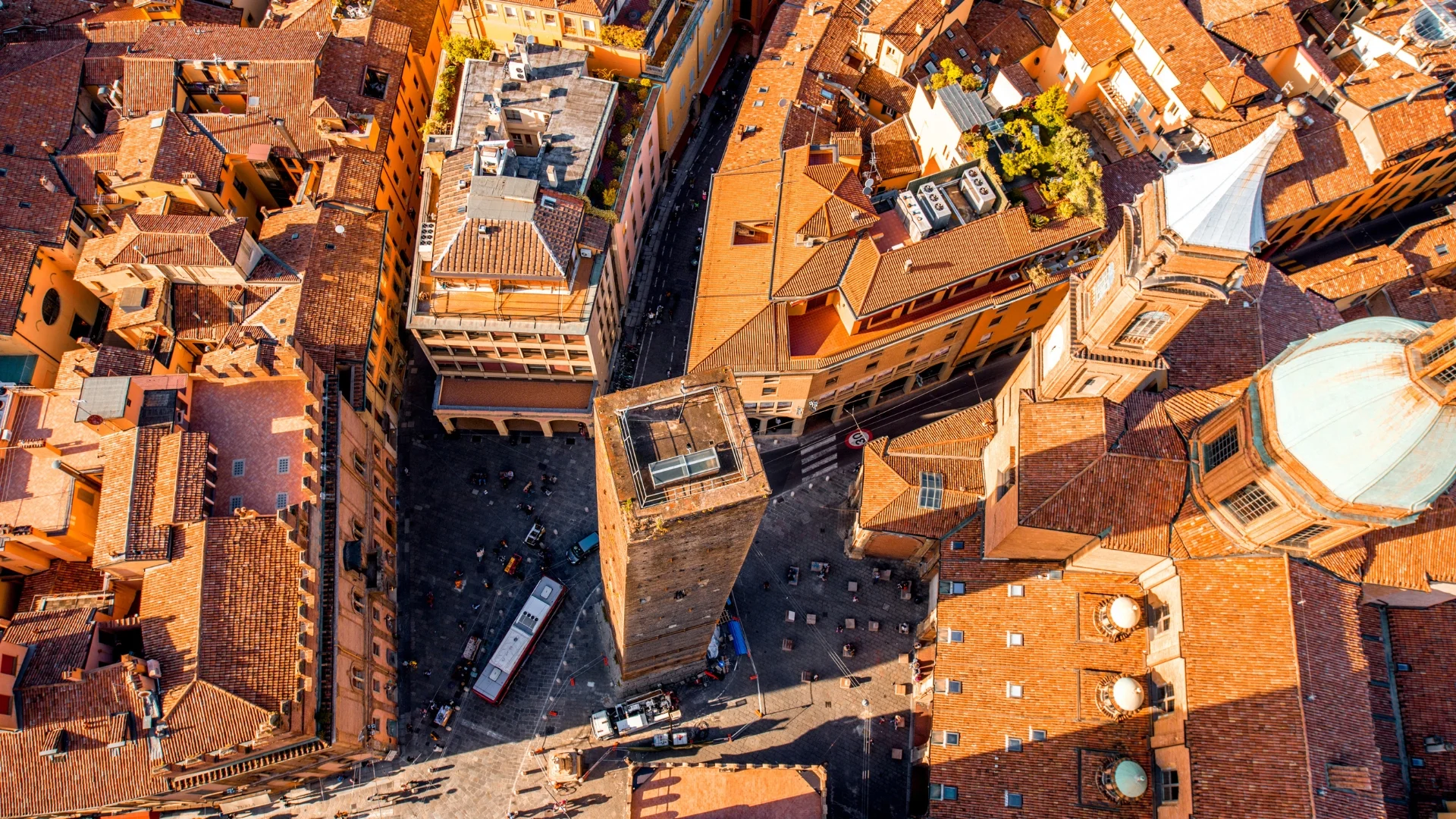
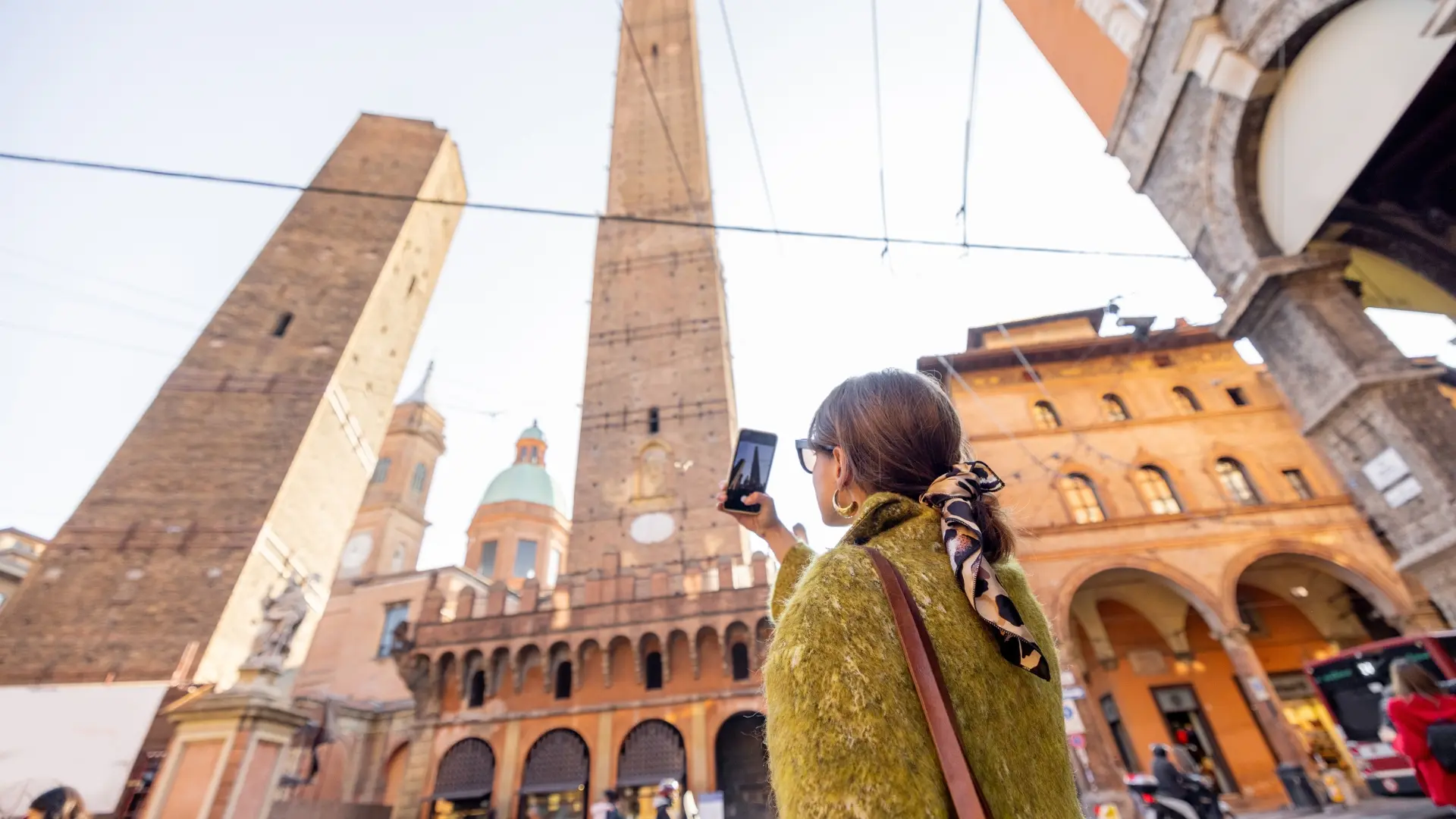
Bologna's world-famous landmark is currently sporting a rather unusual look: the two towers - the majestic Asinelli (97.2 m) and the dramatically inclined Garisenda (48 m) - can currently only be admired from a safe distance. A state of emergency has been in place here since October 2023 after sensors detected critical movements in the masonry of the Garisenda. As the smaller tower is at acute risk of collapse the city had to cordon off the Piazza di Porta Ravegnana. A massive protective wall of containers now surrounds the giants while absolute professionals are at work: The highly complex Stabilization and restoration work are being managed with the participation of Fagioli SpA, the engineering firm that salvaged the wreck of the Costa Concordia and the Leaning Tower of Pisa.
What does this mean for your visit? The bad news first: climbing the almost 500 steps of the Asinelli remains an unfulfilled dream for the time being. Although Mayor Matteo Lepore has raised hopes of possibly reopening the Asinelli before the completion of the overall work planned for 2028, there was still no binding opening date until the summer of 2026. The safety of the construction site is the top priority. However, if you are still looking for the classic city view from above, don't despair - fortunately, Bologna offers wonderful alternatives (see next section). For the current status and progress of the „patients“, it is worth taking a look in advance at sosteniamoleduetorri.it, where you can even support the rescue of the landmarks with a donation to secure up-to-date information for the future.
The Portici - the UNESCO World Heritage Site
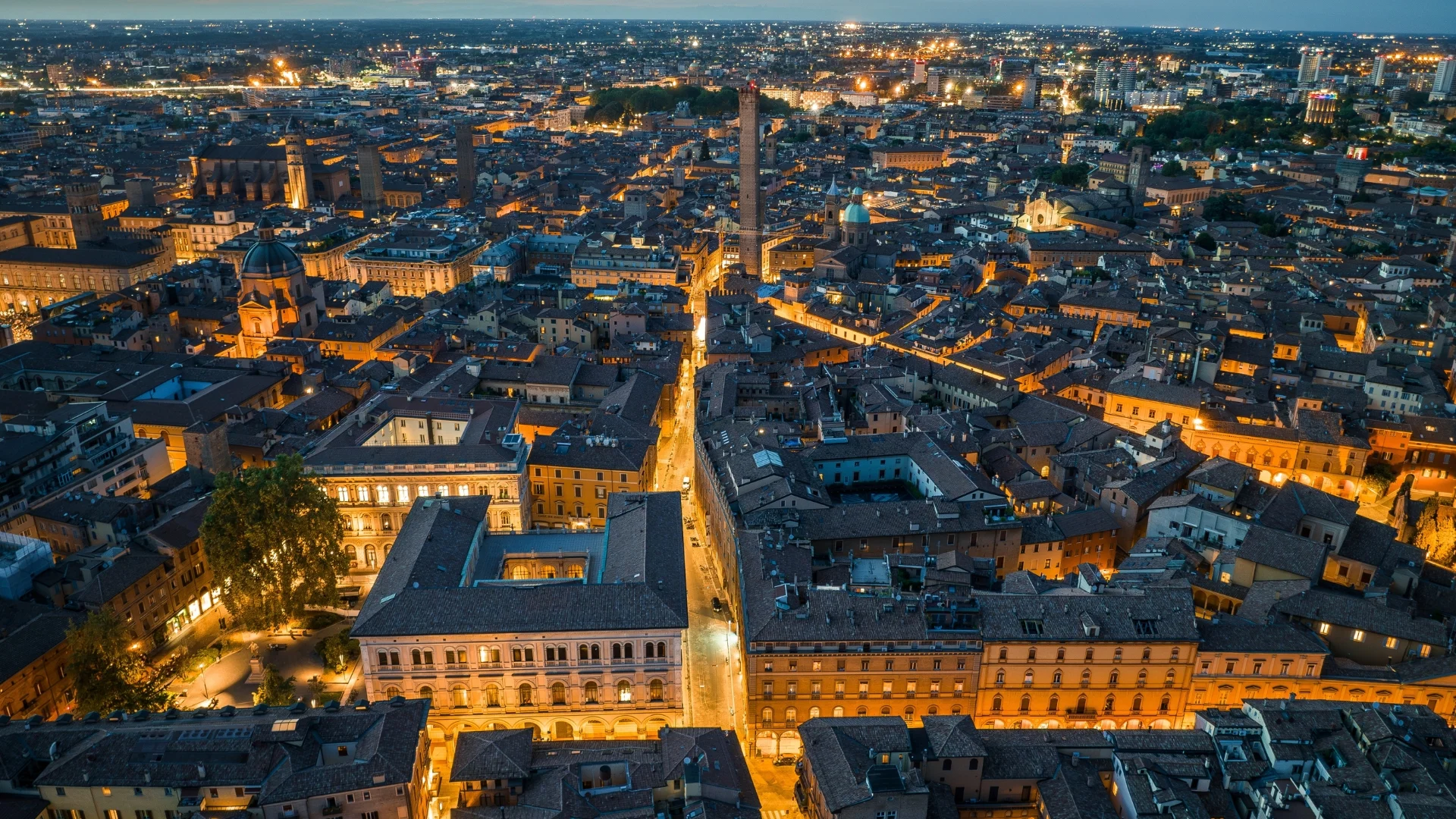
Since 2021, the unique Bolognese arcade system has rightly been part of the UNESCO World Heritage Site. An incredible 62 kilometers of Portici run through the city like a protective net, 38 kilometers of which run through the historic center alone. They are as diverse as the city's history itself: You can stroll under massive Gothic arches, admire magnificent Baroque stone vaults or look up to the rare, medieval wooden structures. Originally, the Portici were not an aesthetic art project at all, but a clever, pragmatic response to the rapid Medieval population growth, triggered by the up-and-coming university. From the 13th century onwards, house owners were obliged by law (in 1288 to be precise) to extend their upper floors beyond the street in order to create urgently needed living space for students. The deal with the city: the space created on the first floor had to be used as a Passage open to the public be kept clear - and, according to regulations, be high enough for a man on horseback to ride through comfortably.
Three fascinating Portici that you should definitely see during your visit: The majestic Portici di San Luca With 3.8 kilometers and exactly 666 arches, they form the longest continuous arcade system in the world and guide pilgrims and hikers from the city up to the pilgrimage church on the hill. For a look at the earliest architectural history, it is worth taking a detour to the Strada Maggiore (Casa Isolani) in addition to the charming Via Santa Caterina - here you will find the most impressive and most beautiful buildings of the city. oldest preserved wooden portici of the city from the 13th century. Those who prefer a more stately atmosphere can stroll through the arcades of the Via Galliera, where one elegant Renaissance palazzo follows the next and the former splendor of the Bolognese nobility is palpable.
The Palazzo del Podestà - a historical center of power
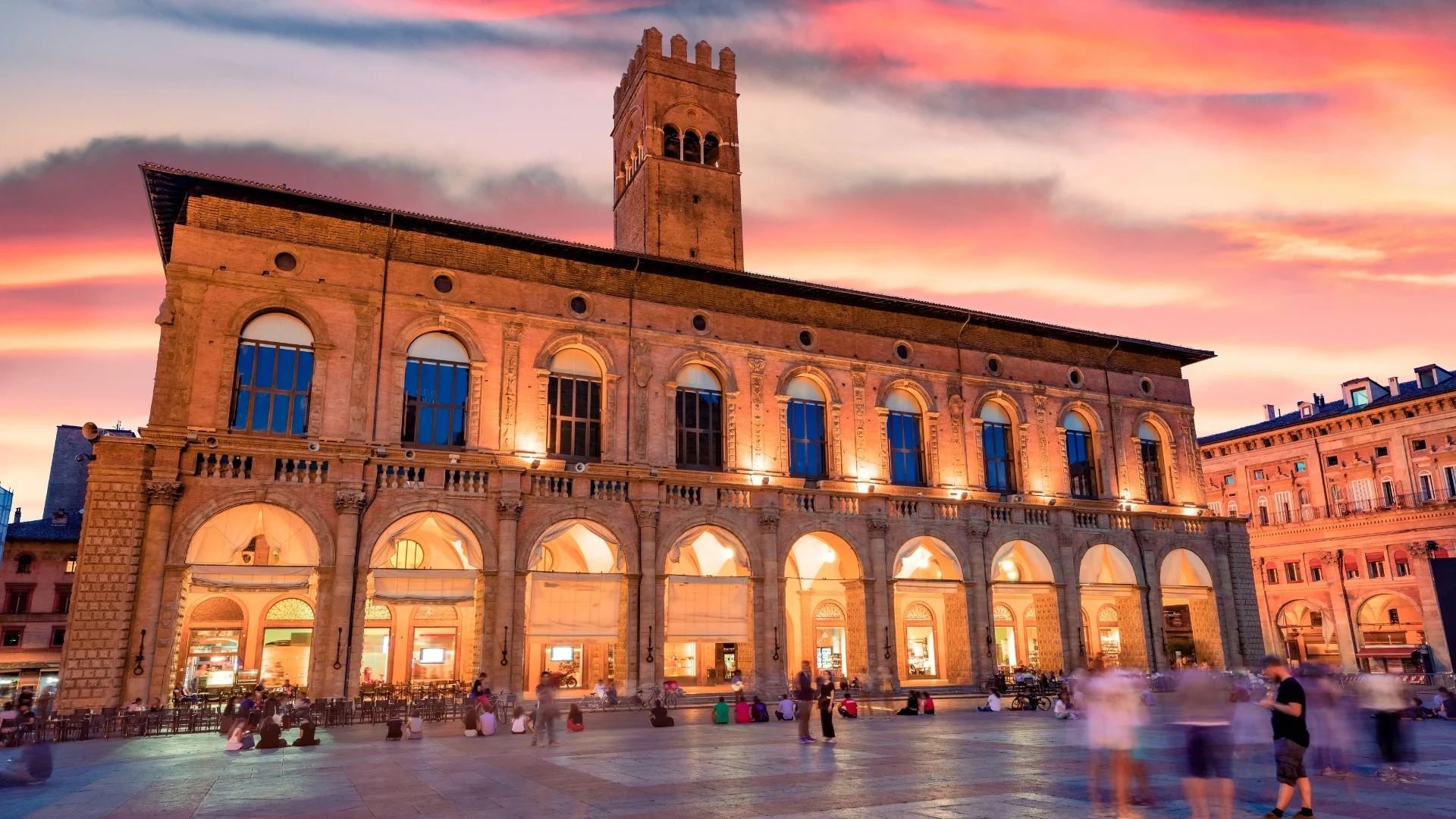
The Palazzo del Podestà is one of the most magnificent buildings in Piazza Maggiore and was once the vibrant political center of Bologna. Originally built in the early 13th century, the imposing building served as the official seat of the Podestà - a neutral magistrate summoned from outside - to mediate between the city's feuding noble families in turbulent times. An exciting detail: While the core of the building is deeply rooted in the Middle Ages, the impressive façade visible today dates back to the Middle Ages. Renaissance façade from the late 15th century. With its elegant columned arches, it still impressively reflects the enormous influence and wealth of the city.
A special, almost magical highlight of the palace is the Voltone del Podestà, the open cross vault directly under the central bell tower. This passage has a fascinating acoustic feature that is often referred to as the Whispering gallery is called: If you turn to face the wall and whisper something into one of the four corners, what you say can be heard crystal clear in the diagonally opposite corner. According to tradition, this architectural trick was once used to hear confessions from plague sufferers at a safe distance. The Palazzo del Podestà is therefore not only of outstanding architectural importance, but also a playful witness to the city's political and social history.
Fontana del Nettuno
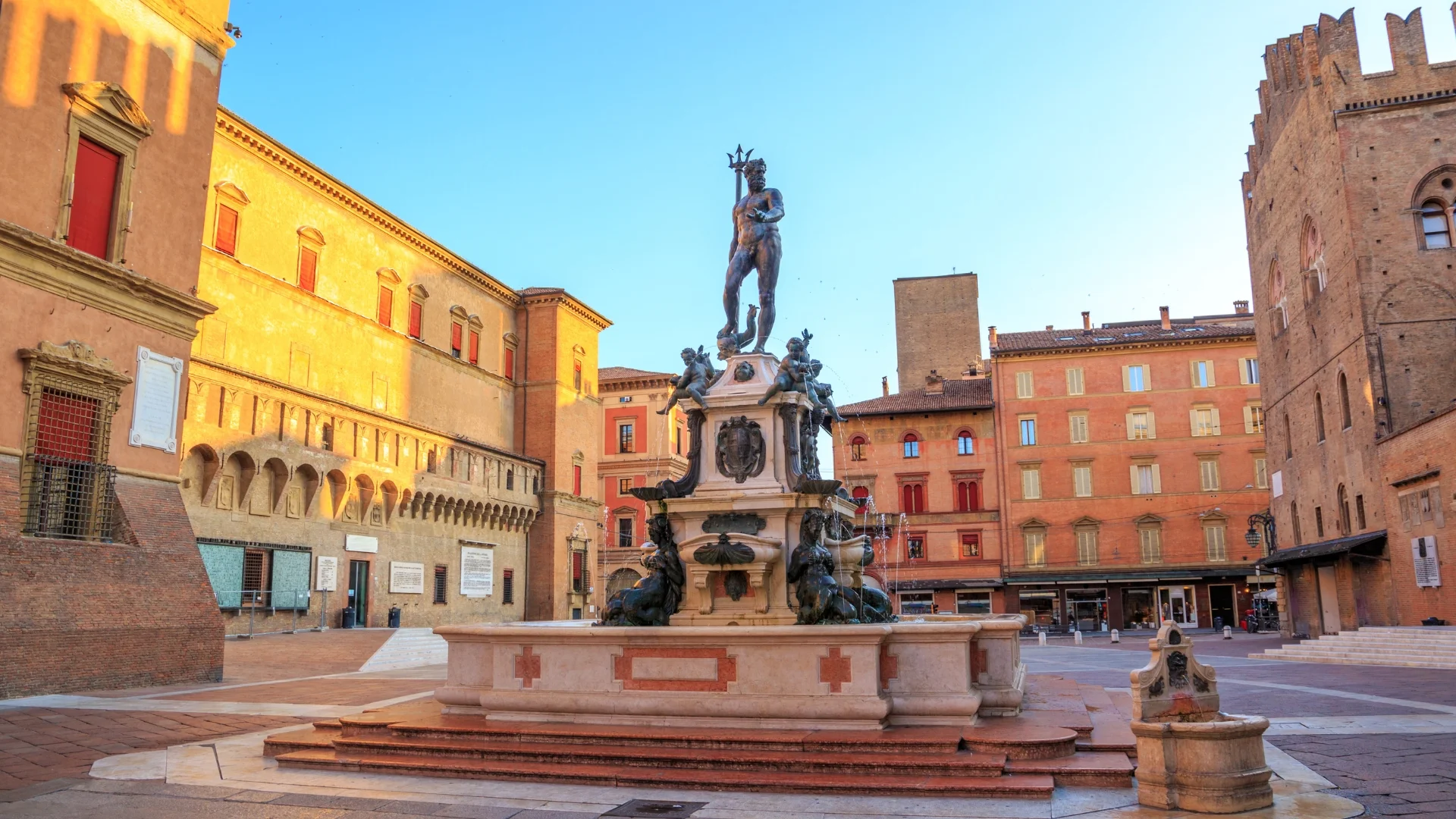
The Neptune Fountain is one of the most famous sights in Bologna and is majestically enthroned on the Piazza del Nettuno, just a few steps away from Piazza Maggiore. The impressive fountain was created in the 16th century by the sculptor Giambologna and symbolizes the power and dominion of Bologna.
The mighty Neptune standing on the fountain and holding his trident in his hand represents the ruler of the seas, while the bronze figures surrounding the basin depict mythological water nymphs, symbolizing the wealth and prosperity of Bologna. Even then, the fountain was a symbol of the power of the Papal States, to which Bologna belonged. Today, the Neptune Fountain is a popular meeting place for locals and tourists and provides a wonderful backdrop for photos and relaxing breaks in the heart of the city.
The Quadrilatero: where does it taste best in Bologna?
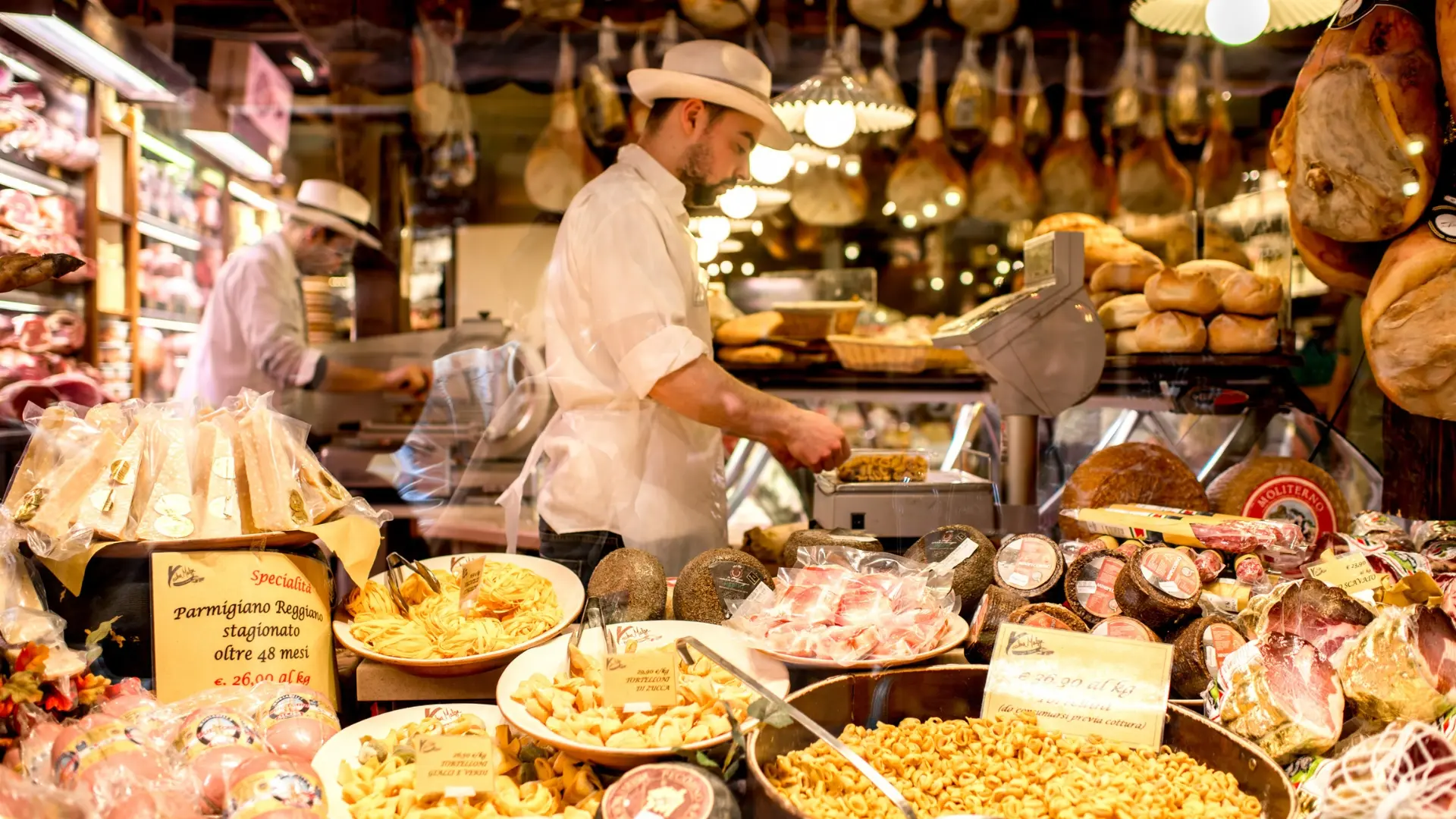
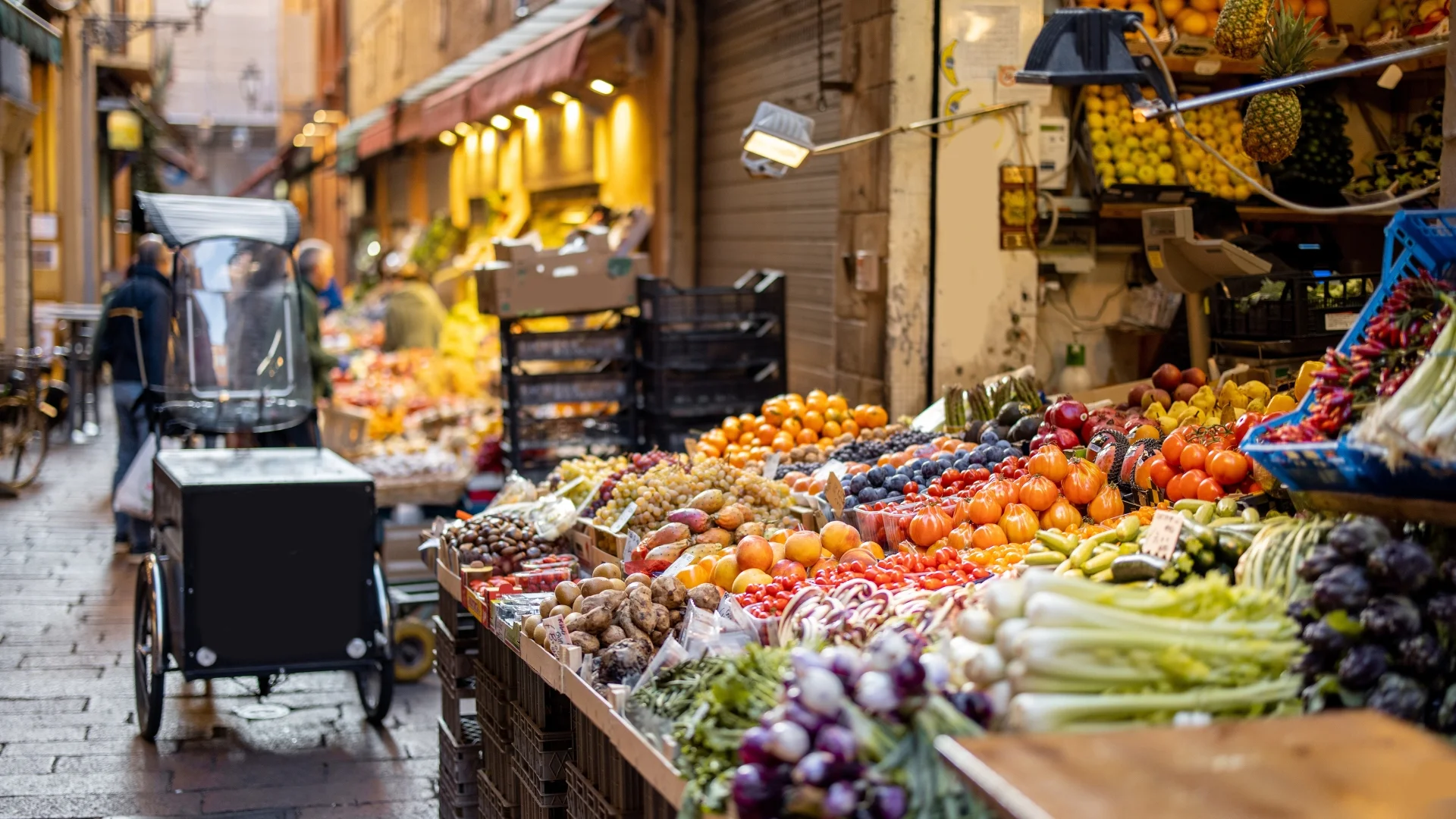
Directly to the east of Piazza Maggiore is the Medieval market district, the heart of Bologna's culinary culture. The name „Quadrilatero“ is derived from the ancient square street grid, which has hardly changed its layout since the 14th century. A glance at the street signs is enough to take you back in time: The names still reveal which guilds were once based here. In the Via Drapperie the cloth merchants haggled, in the Via Pescherie Vecchie freshly caught fish was offered for sale, the Via Caprarie belonged to the goat traders and in the Via Orefici the gold of the forge sparkled.
Today, the district is an Eldorado for foodies, where first-class restaurants Salumerie, cheese stores and pasta factories huddle close together. One institution is the legendary Tamburini (Via Caprarie 1), which has been world-famous for the finest mortadella and handmade tortellini since 1932. Just a few steps further on Atti & Figli, where the shop windows with their artfully piled pasta variations look like small works of art. Between the historic facades, quaint trattorias and modern delicatessens invite you to sample the culinary treasures of Emilia-Romagna on the spot.
The rhythm of the district follows a dynamic all of its own. Early in the morning, when the delivery vans roll over the cobblestones and the traders stock their displays with fresh vegetables and Parmesan cheese, you can still feel the spirit of the old town, working market quarter. But just in time for sunset, the scenery changes: from 6 p.m., the alleyways fill with life as locals and visitors meet for an aperitivo and transform the Quadrilatero into a lively stage for Italian joie de vivre.
Worthwhile additions for a 2-3 day stay
Santuario della Madonna di San Luca: High up on the Colle della Guardia, around 280 meters above the city, sits this impressive basilica. If you don't want to tackle the entire 3.8-kilometre climb under the 666 arches of the Portici - which is physically demanding but extremely rewarding as a historic pilgrimage route - you can also drive. Here is an important small correction for your planning: the regular city bus (line 20) only takes you to the foot of the hill (Arco del Meloncello); from there you have to change to minibus 58. It is more convenient to take the tourist San Luca Express (a funicular) directly from the city center. Once at the top, you will be rewarded with a breathtaking view from the terrace, which on a clear day stretches across the entire Po Valley to the peaks of the Apennines.
Torre dell'Orologio (Palazzo d'Accursio): As the two leaning towers are unfortunately not currently accessible, the clock tower at Palazzo d'Accursio undoubtedly offers the best view in the city. After climbing the historic steps, you can look out over Bologna's endless sea of red roofs directly from Piazza Maggiore. The ticket (€8, reduced €5) is a real highlight, as it conveniently also includes a visit to the magnificent Collezioni Comunali d'Arte in the former papal apartments. Advance booking via bolognawelcome.com is strongly recommended to secure a fixed time slot.
Santo Stefano and the „Seven Churches“: This fascinating complex is often called the „Jerusalem of Bologna“ by the locals. It is a mystical, interlocking complex of only four visible church buildings today - the magical number „seven“ comes more from a medieval wishful thinking and the original building idea. The Pilatus Courtyard (Cortile di Pilato) in particular, with its rough limestone basin in the center and the surrounding arcades, is considered one of the most atmospherically dense places in the entire city; a true oasis of peace. Admission is free, but a small donation for the preservation of this architectural puzzle is appreciated.
University quarter and Palazzo Poggi: Deep in the student heart of the city, at Via Zamboni 33, lies the current headquarters of the university administration. The museum there is an absolute insider tip: it houses a curious collection, including lifelike wax anatomical models from the 18th century, created by masters such as Ercole Lelli and Anna Morandi Manzolini. In addition to historical scientific instruments, you can also admire magnificent frescoed ceilings painted by Niccolò dell'Abate. An often overlooked but very worthwhile museum that breathes the true scholarly spirit of Bologna for an entrance fee of €7.
Pinacoteca Nazionale: For art lovers, there is no way around this building, as it houses Bologna's most important collection of paintings. The extensive halls take you on a journey through Emilian and Italian art history. The absolute masterpieces include works by Giotto, Tintoretto and the world-famous painting The Ecstasy of St. Cecilia by Raphael. The local heroes are not missing either: the Bolognese masters Annibale and Ludovico Carracci and Guido Reni dominate the halls with their dramatic works. For €9 admission, you can enjoy great art here - usually without the crowds of other famous museums.
Giardini Margherita - Bologna's green oasis: Directly south of the historic city walls, not far from Porta Santo Stefano, are the extensive Giardini Margherita. Covering an area of around 26 hectares, they are the city's most important and most popular green lung. Opened in 1879 and named after Queen Margherita of Italy, the park was laid out in the style of a classic English landscape garden. Wide lawns, winding avenues and a central pond, where turtles often sunbathe, make it the perfect retreat for anyone who wants to escape the hustle and bustle of the city center for a moment. The former greenhouses, known as Le Serre, are particularly lively and are now home to a creative center with a popular organic restaurant and a charming bar. While families and joggers bustle along the paths during the day, the park is often transformed into an open-air stage for concerts, film screenings and markets on warm summer evenings. Whether for a relaxed picnic on the grass or an aperitivo under the pine trees, the Giardini Margherita are the perfect place to show off the relaxed, fun-loving side of the people of Bologna.
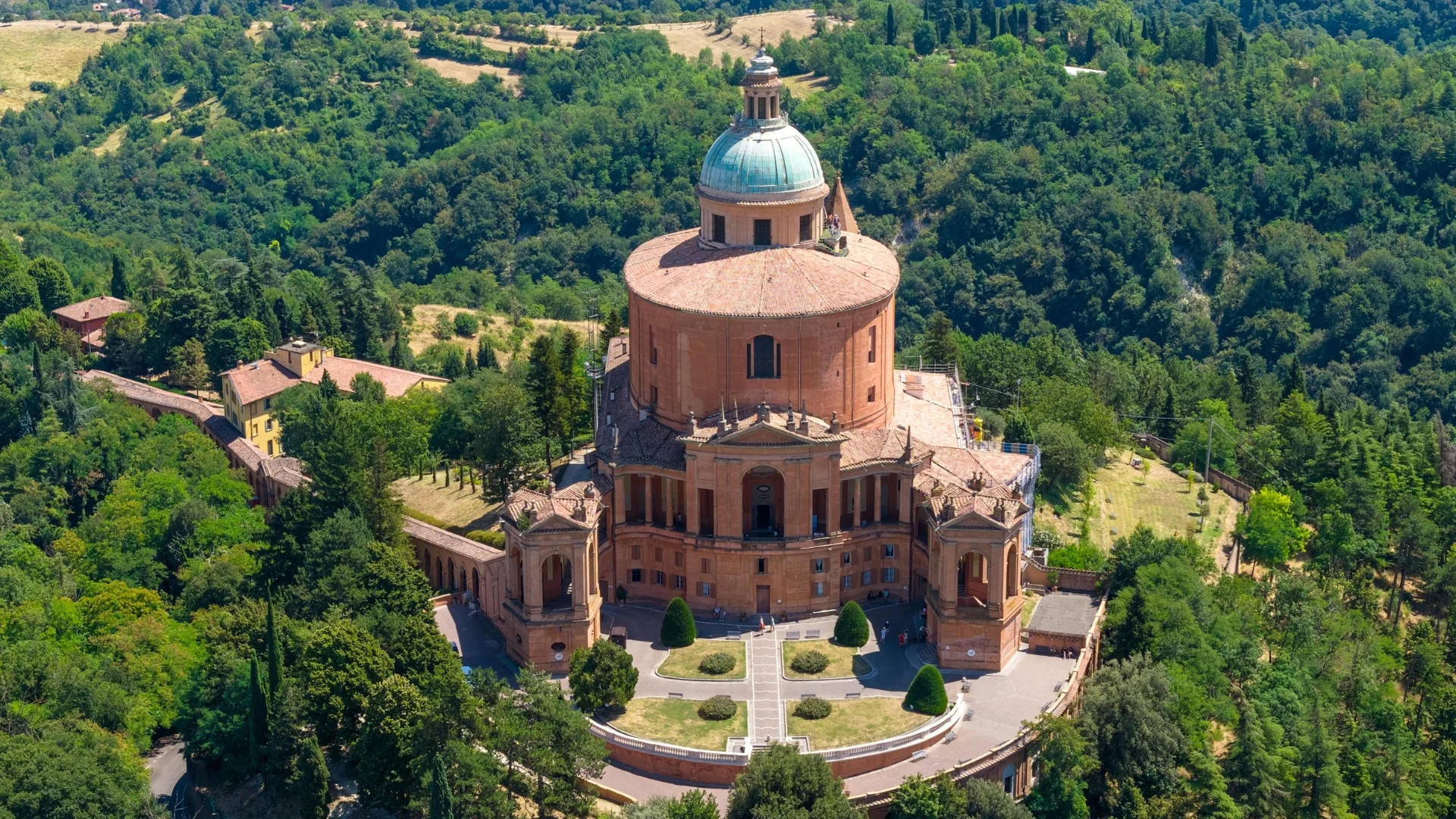

Santuario della Madonna di San Luca in Bologna: The longest portico in the world!
Santuario di San Luca - an oasis of peace and spirituality above the rooftops of Bologna Bologna, the proud capital of Emilia-Romagna, is a popular destination for...
Insider tips and lesser-known places
Finestrella di Via Piella: A small window in a wall in the Via Piella, revealing a hidden canal - remnants of the medieval waterways that flow beneath Bologna. The Bolognesi call it „the little Venice“. No entrance fee, just go there, there is often a small queue of tourists in front of it.
Compianto sul Cristo Morto in Santa Maria della Vita: One of the most intense groups of sculptures you can see in Italy: seven life-size clay figures by Niccolò dell'Arca from the late 15th century depicting the pain of Christ's death. The despair of Mary Magdalene is so powerful that many visitors sit down in front of it in silence. Admission €5.
Oratorio di Santa Cecilia: A frescoed hall right next to the church of San Giacomo Maggiore on Via Zamboni. The frescoes from the late 15th century (Francesco Francia, Lorenzo Costa, Amico Aspertini) are among the highlights of Bolognese Renaissance painting. Free admission. Limited opening hours - best to check online.
Cimitero Monumentale della Certosa: Outside the city center, accessible by bus. A monumental cemetery from the 19th century, where the Bolognese bourgeoisie immortalized themselves with some opulent family tombs. Anyone who appreciates cemeteries as cultural sites will spend several hours here. Freely accessible.
What you can skip!
Grand Tour Italia (the former FICO Eataly World): Important to know: The former FICO theme park no longer exists in this form. After three unsuccessful years, FICO was closed in the fall of 2023 and reopened in September 2024 as „Grand Tour Italia“. The new concept is significantly smaller (50,000 instead of 100,000 m²), admission is now free and the park is designed as a journey through the 20 regions of Italy, each with an osteria and a sales stand. Is it worth the visit? For a compact travel group of families with children: maybe. For travelers who want to experience Bologna as a city: no. The Quadrilatero and the Mercato delle Erbe offer a genuine, grown-up market atmosphere, which is imitated in the theme park. If you still want to go, take the 949 bus (FICObus) from Bologna Centrale.
The tourist restaurants directly on Piazza Maggiore: If you sit there, you pay €18 for a mediocre carbonara. Three streets away you pay the same for tagliatelle, which tastes different.
Where to stay in Bologna? Which district?
Centro Storico: (within the ZTL, around Piazza Maggiore and Quadrilatero): Maximum location, all sights within walking distance. Disadvantage: more expensive, often noisy at night (especially around the university), 2026 construction work on streetcar axes.
University quarter: (Via Zamboni and surrounding area): Lively, many bookshops and small bars, good for cultural travelers. Noisy until late in the evening, more for younger travelers or those who appreciate liveliness.
Bolognina: (north of the train station, formerly working-class district, now up-and-coming): Authentic, less touristy, well connected via the train station, often cheaper. Multicultural, with Vietnamese bistros, Moroccan bakeries, old trattorias and new bars.
Santo Stefano: (between Piazza Maggiore and Via Castiglione): Quiet, with small squares and some of the most beautiful hotels in the city. Very pedestrianized.
Specific recommendations
This selection is intended as a guide - availability and prices vary greatly.
- Grand Hotel Majestic „Già Baglioni“ (Centro Storico, Via dell'Indipendenza): Bologna's classic luxury house, built in the 18th century as a bishop's palace, with frescoes in the breakfast room. Double room from approx. 320 €. For special occasions.
- Art Hotel Commercianti (Centro Storico, directly behind San Petronio): Medieval building, individually designed rooms, excellent location. Double room from approx. 180 €.
- Hotel Metropolitan (Centro Storico, Via dell'Orso): Modern boutique hotel in the 4-star range, upper middle class, high-quality furnishings. Double room from approx. 160 €.
- Albergo delle Drapperie (in the Quadrilatero): Small family hotel in the middle of the market district, charming furnishings, very good breakfast. Double room from approx. 130 €.
- Combo Bologna (San Donato/Bolognina border): Modern design hostel with private rooms and cocktail bar, popular with younger travelers. Double room from approx. 95 €.
- Casa Faccioli (Bolognina): Bed & breakfast in a renovated town house, personally run, good breakfast. Double room from approx. 110 €.
Food and drink: Bologna's true identity!
First of all: there is no spaghetti bolognese in Bologna
Do not order „spaghetti Bolognese“ anywhere in Bologna. You will either get a pitying look or, in the tourist restaurants, a pasta variation that no Bolognese chef would cook at home.
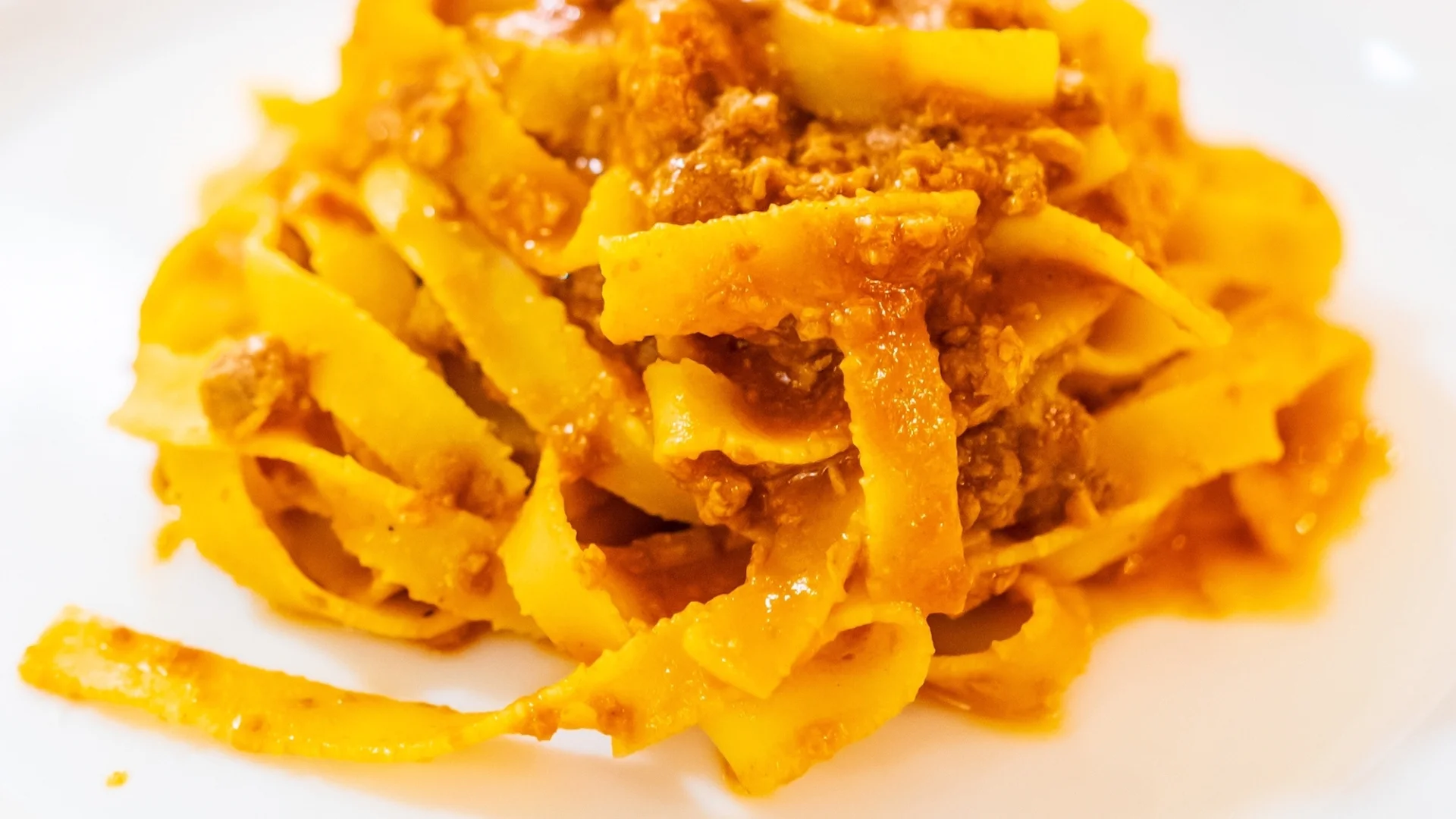
What is available: Tagliatelle al ragù. Tagliatelle are fresh egg pasta with a cross-section of about 8 mm - the Bolognesi say this is exactly 12,270 times the height of the Asinelli tower (a charming exaggeration, but the pasta manufacturer Le Sfogline actually has a golden tagliatelle measure in the Chamber of Commerce building: 8 mm cooked, 6.5-7 mm raw). The sauce is a slowly braised ragù made from beef and pork (often 60/40), pancetta, celery, carrot, onion, tomato paste, wine, milk or cream, simmered for several hours. It has nothing to do with spaghetti - the smooth, round spaghetti cannot hold the ragù.
The classics you should try
- Tortellini in brodo: Wafer-thin pasta buttons filled with pork, mortadella and parmesan in clear broth (capon chicken broth). Classic Sunday primo.
- Tagliatelle al ragù: see above.
- Lasagne alla bolognese: With green spinach dough (lasagne verdi), béchamel, ragù, parmesan - baked in layers, several times.
- Crescentine and Tigelle: Small, round flatbreads served warm with mortadella, ham, squacquerone cheese and lardo. A classic aperitif or lunch dish.
- Mortadella: The real Mortadella Bologna IGP is a completely different world to the German „Mortadella“ from the supermarket chiller cabinet. Freshly sliced, the thickness of ham, with pistachios.
- Cotoletta alla bolognese: Veal escalope gratinated with prosciutto crudo and melted parmesan.

Restaurant recommendations
This list is a selection of tried and tested classics and newer favorites - always book in advance, some do not take reservations, which means long waiting times.
- Trattoria Anna Maria (Via delle Belle Arti 17/A): A Bolognese institution for homemade pasta. Anna Maria Monari makes her own tagliatelle and tortellini, and the walls are full of photos of famous guests. Main courses €14-22. Reservations required.
- Osteria dell'Orsa (Via Mentana 1): In the university district, classic, loud, fast, unpretentious. Students and professors eat here. Main courses 10-16 €. No reservation - be prepared to wait.
- Trattoria di Via Serra (Via Luigi Serra 9, Bolognina): One of the best-rated restaurants in Bologna, Slow Food member, fresh pasta. A little outside the center, but worth the trip. Reservations required well in advance (often 2-3 weeks). Main courses 16-24 €.
- Tamburini (Via Caprarie 1, in the Quadrilatero): More salumeria than restaurant, but at lunchtime and in the evening there is seating and a buffet with high-quality tagliere (antipasti boards). Ideal for aperitivo. Tagliere from € 14.
- Drogheria della Rosa (Via Cartoleria 10): Charmingly designed former pharmacy from the 19th century, more creative cuisine with a traditional base. Main courses 18-28 €.
Aperitivo culture
Bologna has a distinct aperitivo culture. The classic aperitivo goes like this: you order a drink (usually spritz, negroni, a glass of wine) and it comes with a plate of small snacks - olives, pieces of focaccia, ham, cheese. In some bars, this is a sumptuous buffet (in this form it is called „apericena“). Popular districts: the Quadrilatero (upscale, often a little touristy), Via del Pratello (alternative, student), Via Mascarella (university).
Three examples:
- Osteria del Sole (Vicolo Ranocchi 1/D): Italy's oldest osteria still in operation (opened in 1465). Tradition: you bring your own food, the osteria only sells wine. Glass of wine from €2.50.
- Bar Vito (Via Mascarella 1/A): Small, intense, in the university district. Spritz 5 €.
- Camera a Sud (Via Valdonica 5): Quieter than most, good cocktails, small bar food.
Markets
Mercato delle Erbe (Via Ugo Bassi 25): The larger, commercially organized market hall. This is where the Bolognese do their weekly shopping. Inside, there are several stalls with small snacks - ideal for a quick, good lunch.
Mercato di Mezzo (Via Clavature, in the Quadrilatero): More compact, more geared towards tourists, but still authentic. Several pasta stands, cheese counter, pizza. A little more crowded, a little more expensive than the Mercato delle Erbe.
What you should avoid!
- Restaurants whose menus are available in five languages and advertise in prominent locations such as Piazza Maggiore. This is not a harsh judgment, but an empirical observation: in every tourist city, the restaurants that actively attract tourists are almost never the best.
- „Spaghetti Bolognese“ on the menu. If a restaurant offers this, it knows that it is aimed at tourists and probably makes compromises in several areas.
Day trips from Bologna
One of the best arguments for Bologna as a travel base: the city is at the center of one of the densest rail networks in Italy. With a regional Frecciarossa ticket, you can quickly reach five cities, each of which is worth a day trip in its own right.
Modena (40 minutes with Regio, 25 minutes with Frecciabianca). Modena is small, aristocratic and top-class in culinary terms. Three highlights: the Duomo (UNESCO World Heritage Site since 1997), the current Mercato Albinelli (market hall), and the Acetaie - the storage facilities for Aceto Balsamico Tradizionale. Aceto Tradizionale di Modena DOP is matured for at least 12 years, often 25 years, in a series of wooden barrels. A tasting in an acetaia (e.g. Acetaia Pedroni in Rubbiara, just outside the city) is an experience that you will never confuse with the industrial version from the supermarket. For those who love speed: the Museo Enzo Ferrari (in Modena) and the Museo Ferrari (in Maranello, accessible by shuttle bus) are central addresses.
Parma (60 minutes with Frecciabianca/Regionale). City of the three classics: Parmigiano Reggiano, Prosciutto di Parma, and the composer Verdi (born in Bussetto nearby). The town itself has a pink marble battisterio (Benedetto Antelami, 12th century) and a 17th century theater (Teatro Farnese, with wooden rows of seats and a movable stage). Excellent opportunity for a half-day visit to a caseificio (cheese dairy) or salumificio - book this in advance.
Ferrara (30 minutes with Regionale). Renaissance city of the Este family, UNESCO World Heritage Site. The Castello Estense stands right in the center with moats all around, the cathedral is Romanesque-Gothic, and much of the city can be explored by bicycle - Ferrara has the highest bicycle usage rate among Italy's medium-sized cities. The Jewish quarter is well preserved and culturally and historically important.
Ravenna (60-70 minutes with Regionale). If you love mosaic art, head to Ravenna. The Byzantine mosaics from the 5th/6th century in the Basilica di San Vitale, in the Mausoleo di Galla Placidia, in Sant'Apollinare Nuovo and Sant'Apollinare in Classe are UNESCO World Heritage Sites. Dante died here in exile in 1321 and his tomb is in the city.
Maranello (by bus or car from Modena). Fans of the Cavallino Rampante visit the Museo Ferrari with its historic racing cars and the opportunity to drive a Ferrari on a test track (for a fee, book in advance). If you are not a car fan, you can skip this.
How many days should I plan for?
- 3 days: Bologna + 1 day trip (Modena or Ferrara)
- 5 days: Bologna + 2-3 day trips
- 7 days: Bologna as a base + intensive region (all above + wine tours in the hills)


Enzo Ferrari Museum Modena: Where legends live on four wheels
Rosso Corsa in the veins: A journey through time at the Museo Enzo Ferrari The Museo Enzo Ferrari in Modena is much more than a mere...
Practical travel tips for Bologna
Language. English works in hotels and tourist restaurants. In trattorias in the university district and in Bolognina, English can be limited - a few Italian courtesies (buongiorno, grazie, il conto per favore) open doors, more so than elsewhere in Italy because Bologna prides itself on its tradition.
Tip. In Italy, tipping is far less expected than in the DACH region. Rounding up is common, 10 % would be the upper limit. Look out for „coperto“ (place setting) and „servizio“ (service charge) on the bill - these are not tips, but mandatory surcharges.
Security. Bologna is considered one of the safest cities in Italy. Violent crime is rare, pickpocketing occurs mainly around Bologna Centrale, on buses 25 and 30 (to the city center) and at tourist hotspots. The usual precautions are sufficient.
Typical mistakes made by German travelers.
- Drive into the ZTL by car (fine will be imposed two months later).
- „Order “Spaghetti Bolognese" (not available, see above).
- Assume that all restaurants are open all day - most trattorias close between 14:30 and 19:00.
- Plan for Sunday evening without making a reservation - many good restaurants are closed or fully booked on Sundays.
- Try to complete all day trips in two days.
Cash vs. card. Cards are accepted almost everywhere, even in small bars. Cash is worthwhile for markets, small trattorias (sometimes minimum card amount €10) and tips. There are plenty of ATMs („Bancomat“), make sure you use bank machines and not „Euronet“ machines with inflated exchange rates.
Best apps.
- MyBolognaOfficial city app with audio guide function and current events.
- Roger or Muver: Public transport app for bus and Marconi Express.
- Trenit! or ItaloCompare train tickets.
- The ForkRestaurant reservations, widely used in Italy.
Sample routes for Bologna and Emilia Romagna
1 day in Bologna (compact)
Morning: Piazza Maggiore, Basilica di San Petronio, climb up the Torre dell'Orologio. Lunch: Mercato delle Erbe, pasta lunch at Sfoglia Rina (Strada Maggiore 19). Afternoon: Quadrilatero, Archiginnasio with Anatomical Theater, brief view of the two towers. Evening: aperitivo in the Quadrilatero or on Via del Pratello, dinner in a reserved trattoria.
3 days in Bologna
Day 1 as above. Day 2: University quarter, Palazzo Poggi, Pinacoteca Nazionale, Compianto in Santa Maria della Vita, walk through Santo Stefano, ascent to the Madonna di San Luca (by bus or on foot under the Portici). Day 3: Day trip to Modena (cathedral, Mercato Albinelli, Acetaia tasting).
5 days in Bologna as a base
Days 1-2 as above (city). Day 3: Modena. Day 4: Ferrara. Day 5: Repeat and break day in Bologna with a visit to the market, pasta course (several good providers, such as Bologna Cooking School or the sfogline at Trattoria Anna Maria).
7 days in Emilia-Romagna with Bologna as a base
Days 1-2: Bologna intensive. Day 3: Modena + Maranello. Day 4: Parma (cheese factory, city). Day 5: Ferrara with bike. Day 6: Ravenna with mosaics. Day 7: Wine tour in the hills of Bologna (Colli Bolognesi, Pignoletto region) or excursion to Brisighella (small medieval village between Bologna and Ravenna).
Beyond the classics: why Bologna only steals your heart at second glance
Bologna is one of those rare discoveries that many travelers only make on their second or third visit to Italy - but once you've been here, the city never lets you go. It impresses not with a single, monumental building such as the Colosseum, but with its unadulterated attitude to life. At a time when many centers are turning into museums, the Emilian capital remains a lively metropolis where real Bolognesi live, discuss loudly in the markets and spend their evenings together at the Piazza Maggiore spend. It is this authentic Italy, that makes Bologna so valuable and sets it apart from the mass tourism of other regions.
The city is ideal for all those who have a deep passion for first-class Food and know that a handmade pasta can be the highlight of an entire day. Those who love to spend hours drifting through a labyrinth of history will find something to suit them among the UNESCO World Heritage Site Portici offer the perfect protection from the sun or rain without falling into a tourist trap at every corner. Bologna offers cultural depth without the usual hustle and bustle of the big hotspots and in 2026, thanks to the new, calmed traffic zones (ZTL), is more suitable than ever for a relaxed weekend full of enjoyment and discoveries.
However, if you are visiting Italy for the first time and still have the world-famous landmarks in Rome or Venice on your list, Bologna might seem almost too subtle. Even for a classic Beach vacation or a trip focusing purely on children's attractions, there are more suitable destinations in Italy. Bologna requires a certain degree of curiosity and a willingness to get into the rhythm of the locals rather than just working through a sightseeing checklist. Those who bring this openness with them will be rewarded with a city that feels genuine and unadorned.
Experience shows that the first trip to Bologna is often just the beginning, which is clearly reflected in the rising number of bookings for the region. Many visitors return to explore the rolling hills of the Colli Bolognesi or discover charming places like Brisighella and the colorful Dozza. If you want to experience the soul of the Emilia-Romagna even deeper, you will regularly find fresh inspiration on italien.news. Our „Italy briefing“ newsletter also provides you with exclusive monthly Insider tips and culinary highlights, so that your next trip to the south is guaranteed to be a special experience.
💡 Tip from the Italy.news Travel editorial team
Forget about climbing the two towers (for now)! The biggest surprise for travelers to Bologna in 2026 is the extensive barrier fence around the Leaning Tower. Torre Garisenda. It is currently undergoing massive stabilization work and will not be accessible for years. Our tip: save yourself the queue at the neighboring Asinelli Tower and climb the Terrace of the Basilica of San Petronio. You take a glass elevator to the top and have a fantastic view of the red roofs and the hills - and best of all, you can see the two famous towers from there together in the panorama, which makes a much better photo motif than standing directly on them.
Map: Bologna
Tickets: Bologna
FAQ: Bologna
How many days do you need for Bologna?
At least two full days for the city itself, three days to catch your breath. If you want to include the region, you should allow five to seven days. Bologna is doable for a weekend, but you will soon realize that you want to come back.
Is Bologna expensive?
In terms of prices, Bologna is in the Italian midfield - cheaper than Milan, Florence or Venice, slightly more expensive than Verona or Padua. A good lunch pasta costs €10-14, a main course in the evening €14-22, a glass of wine €4-7, an espresso at the bar €1.20-1.50. Central hotel prices in spring 2026 are between €110 and €220 for a double room in the middle class.
When is the best time to visit Bologna?
April to mid-June and September to mid-November. Early summer has ideal temperatures and aperitivo weather, fall offers the most interesting culinary season with truffles and new harvests. Winter is atmospheric (fog, empty streets, packed trattorias) but chilly. High summer (July/August) is hot and many restaurants close.
Is Bologna worth a city trip?
If you've been to Italy before and have ticked off the obvious classics: yes, very. If it's your first trip to Italy, go to Florence or Rome first - and Bologna the second time.
What should you definitely eat in Bologna?
Tagliatelle al ragù in a good trattoria, tortellini in brodo, Mortadella Bologna IGP freshly sliced in a salumeria, crescentine with cold cuts, an aperitivo with tagliere. What you should not order: "Spaghetti Bolognese" - this is a foreign invention and does not exist in Bologna.
Is Bologna child-friendly?
Conditional. The city has no obvious children's attractions such as beaches, water parks or large playgrounds. But: children are very welcome in Italian restaurants, the Portici are perfect for walks in all weathers, and day trips to Maranello (Ferrari) or the mosaics in Ravenna can work depending on the age of the child. With toddlers under three, Bologna is likely to be more exhausting than relaxing.
How do you get from the airport to the city center?
Take the Marconi Express (elevated train) to Bologna Centrale in 7 minutes, single ticket €12.80. Alternatives: Bus 944 (to Bologna Centrale, €2.30), bus 949 (to Piazza Malpighi near the old town, €9.80), cab (€20-25 to the center, 15-25 minutes).
Can the two towers of Bologna be climbed?
Not at the moment. Both towers - Asinelli and Garisenda - have been closed since October 2023 because the Garisenda is in acute danger of collapse. The stabilization and restoration work is expected to run until 2028. An early reopening of the Asinelli is possible, but not guaranteed for 2026. For city views, there are alternatives: the Torre dell'Orologio at the Palazzo d'Accursio (€8/€5 reduced) and the ascent to the Madonna di San Luca.
Is Bologna safer than Rome or Naples?
Statistically yes. Bologna is one of the safest big cities in Italy with a low level of violent crime. As everywhere in tourist cities, pickpocketing is common, especially around train stations and on crowded buses. The usual precautions are sufficient.
Bologna or Florence - which is better for a city break?
They are not comparable - both are great and have different strengths. Florence has the greater density of Renaissance art and a compact city center that can be covered in two days, but you pay the price of the tourist crowds. Bologna has the better cuisine, less tourism, more authentic city life, and is more central for day trips to the region. If you only go to Italy once: Florence. If you are coming for the third time: Bologna.
9 reasons for a beach vacation in Cesenatico on the Riviera Romagnola
Why Cesenatico is more than just a classic seaside resort Nestled in the heart of the famous Riviera Romagnola, the charming seaside resort of Cesenatico is located in the northern Italian region of Emilia-Romagna. As part of the province of...
Top accommodations in Bologna
Video: Bologna
Experiences & activities
Note: Disclaimer - Italien.news is not the owner or organizer of the sights, accommodations and events published here and therefore not responsible for program changes, cancellation of the event and possibly incorrect information. The editorial team of Italien.news always endeavors to provide detailed and accurate information. However, it is possible that events, attractions, etc. may be changed and not updated promptly. Exact details of dates, times and programs can be obtained directly from the owner of the attractions and accommodation.
Please also check the website or social media of the attractions and events for updates before you travel! Our blog articles contain our personal recommendations in the form of affiliate links. If you book or buy something via the links or simply click on them, we receive a small commission. This does not change the price for you at all. Content and texts © Italien.new & KI / Photos © Canva.com / shutterstock.com / Unsplash.com / Pixabay.com / Pexels.com / Others. Please also visit our Italy Shop!
Read more about theTopic