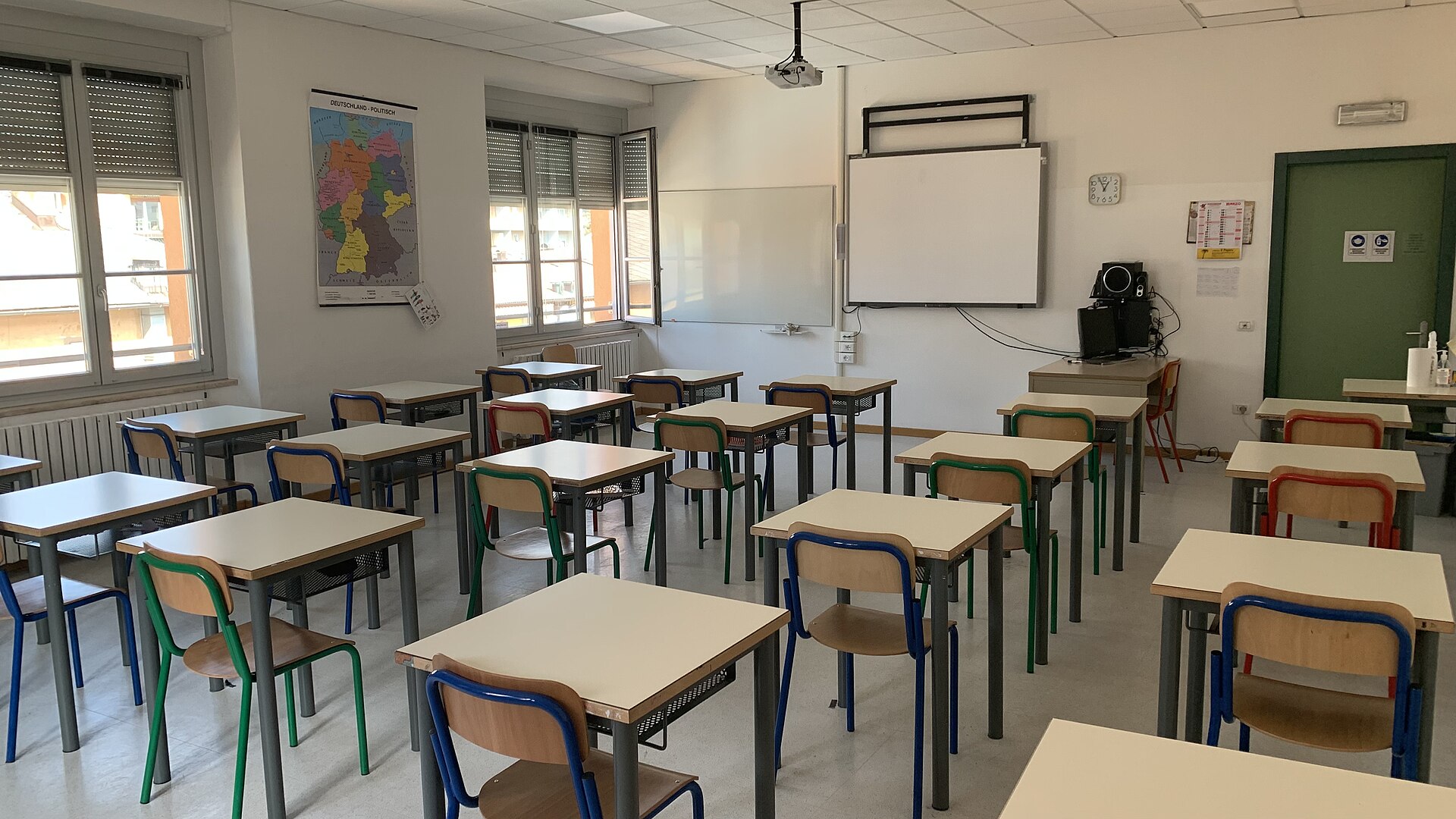
Rome – Italy is starting the 2026–27 school year with about 5,000 fewer classes. Approximately eight million students are returning to school these days. The decline in the number of classes follows years of falling birth rates and is changing how schools plan for locations, staffing, and commutes.
This figure should not be confused with other metrics of the education system. A class is a learning group; a school may comprise multiple classes and locations. In addition, the number of independent public schools will drop from 7,476 to 7,391 in the new school year. These 85 lost autonomous schools do not automatically mean 85 closed buildings. Often, several schools are consolidated under a single administration, while individual campuses remain open.
The demographic pressure extends far beyond a single school cohort. In 2025, approximately 355,000 children were born in Italy, 3.9 percent fewer than in 2024. The average number of children per woman fell to 1.14. Although these newborns will not reach school age for several years, this new low indicates that smaller cohorts will continue to enter the school system in the future. A growing number of students with foreign citizenship is slowing the decline, but does not offset it nationwide.
Fewer School Classes Are Changing Italy's School System
The impact varies by region. In terms of state-run school districts, Campania will have 23 fewer districts in the new school year, Emilia-Romagna 17, Tuscany 16, and Piedmont 15. Together, these four regions account for 71 of the 85 districts being eliminated. This illustrates how heavily the reorganization is concentrated in certain parts of the country.
This increases the organizational burden on schools. School administrators may have to oversee more buildings, municipalities, staff, and students. In rural areas, this trend also affects accessibility: if small classes are merged or school locations are consolidated, commutes to school may become longer. The decline in enrollment does not translate directly to a one-to-one reduction in staff, as the range of subjects offered, special education needs, full-day programs, and small campuses continue to require teachers and administrative personnel.
The government's reform of the school system links the decline in student enrollment to the goal of reducing average class sizes. Whether this will actually result in smaller learning groups or, more likely, further school mergers, however, depends on regional plans and available positions.