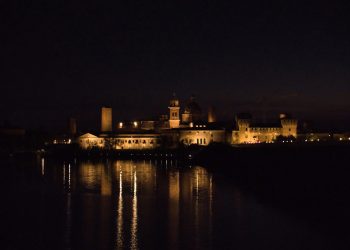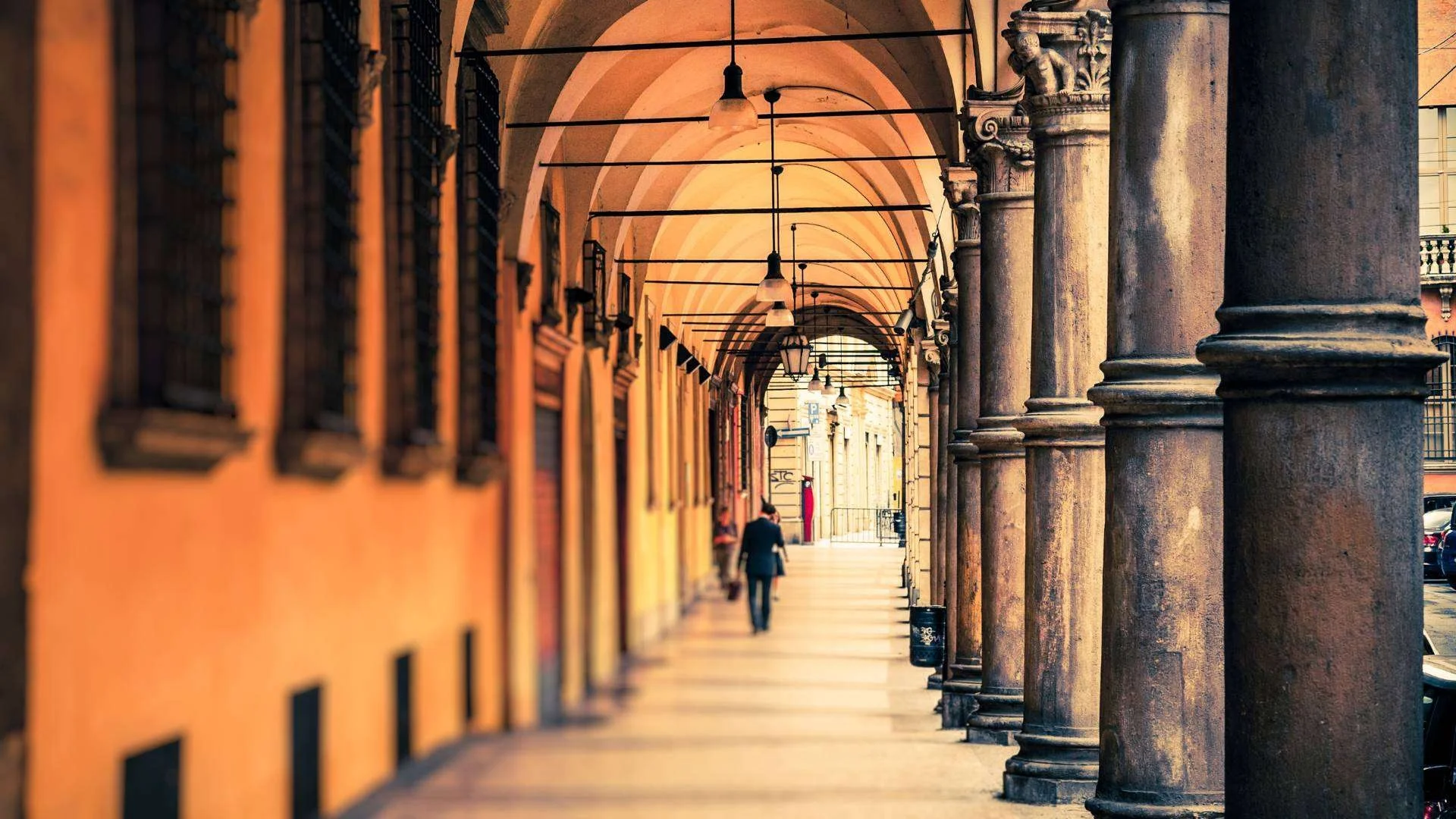

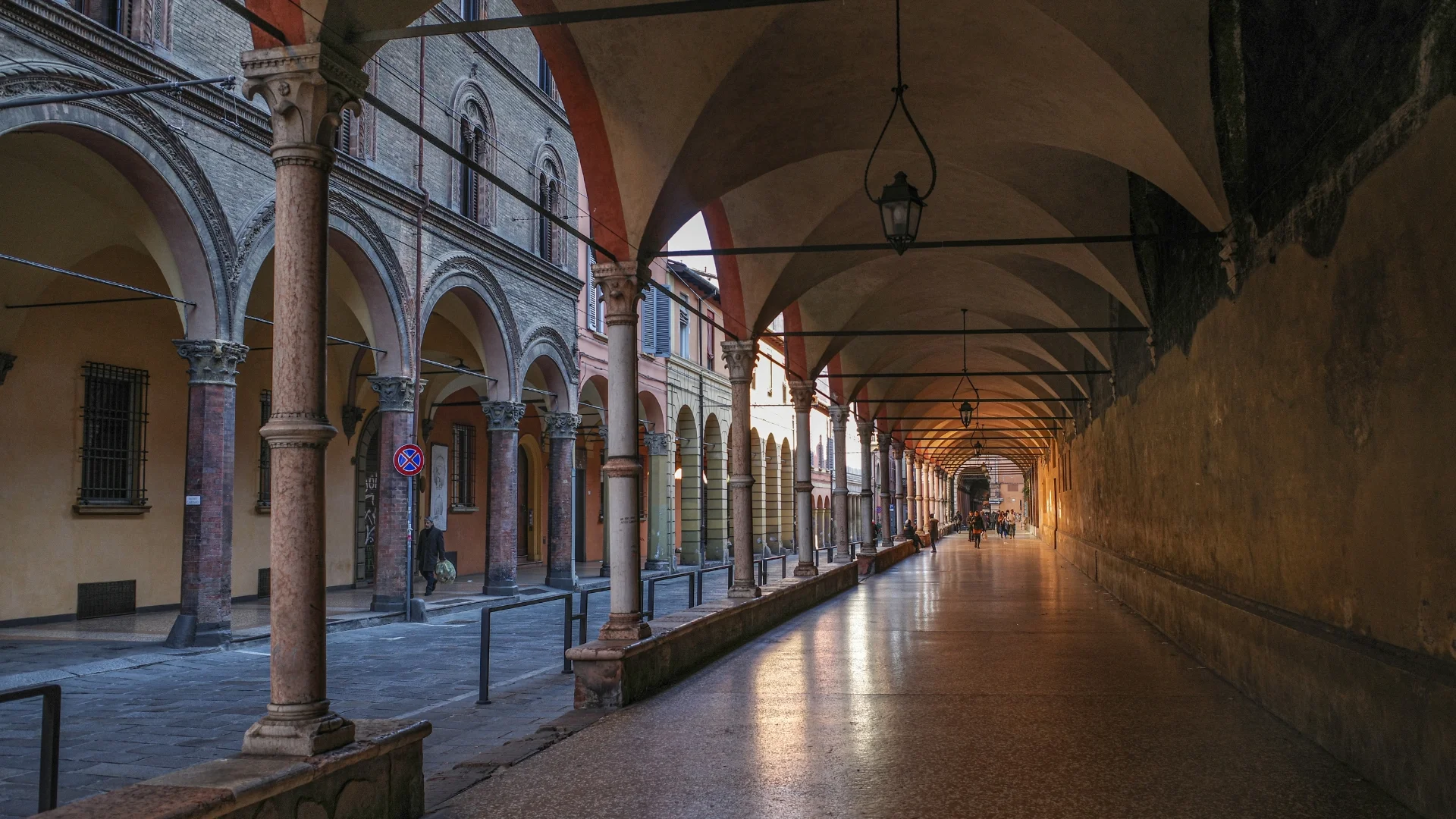
Bologna – It’s pouring rain, and you’re strolling through the old town without an umbrella. It’s not a magic trick—it’s medieval urban planning. The Portici di Bologna extend across 62 kilometers through the city, about 40 of them in the historic center alone—since July 28, 2021, twelve of these sections have been inscribed on the UNESCO World Heritage List.
Terracotta ceilings, old wooden beams, and stone arches arch overhead. The sound of the rain becomes the background music. In the capital of Emilia-Romagna, life doesn’t take place out on the open street, but in the shade of the arches. Admission is free, and the arcades are open around the clock—they are publicly accessible urban spaces under private ownership, according to the official definition.
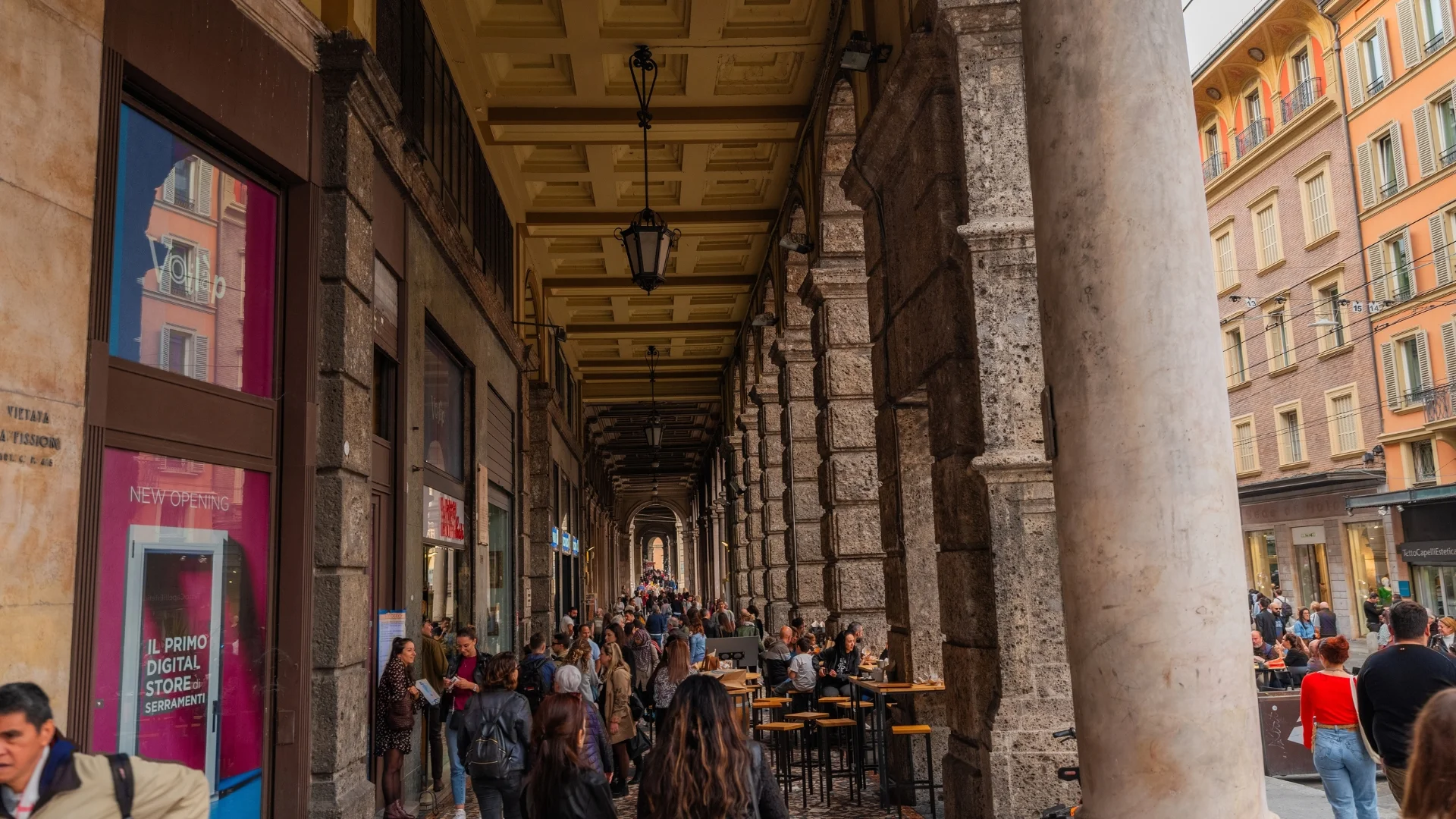
For your first tour of the city center, you should plan on spending two to four hours; for the hike up to the San Luca pilgrimage church, allow another one to two hours. Here’s an overview of the key figures:
The Portici di Bologna by the Numbers
Bologna boasts the world's largest system of arcades. No other structure defines a European city center so completely—and none is so readily accessible.
As of August 2026 · Information provided by the Comune di Bologna (Portici Patrimonio Mondiale), UNESCO, and Bologna Welcome.
Why does Bologna have 62 kilometers of arcades?
Because the city built them out of a lack of space and turned this temporary solution into a rule. The first portici emerged almost incidentally during the High Middle Ages: homeowners expanded the upper floors with wooden projections, the sporti (Overhangs above the ground floor). When these became too heavy, they were supported from below with columns. The first written mention of a Bolognese portico dates back as far as 1041.
This development was driven by the city’s growth—not least by the students of Europe’s oldest university, founded in 1088. Instead of tearing down the haphazard additions, the city made them mandatory by decree in 1288: Every new building had to have a portico, and existing houses had to be retrofitted. The decree even specified the dimensions—at least seven Bolognese feet, that is, 2.66 meters high and just as deep, so that a rider on horseback could pass through. The statutes of 1352 later increased this to ten feet (3.60 meters).
The land remained the property of the homeowners, while its use was reserved for the general public. To this day, the official principle remains: private property for public use.
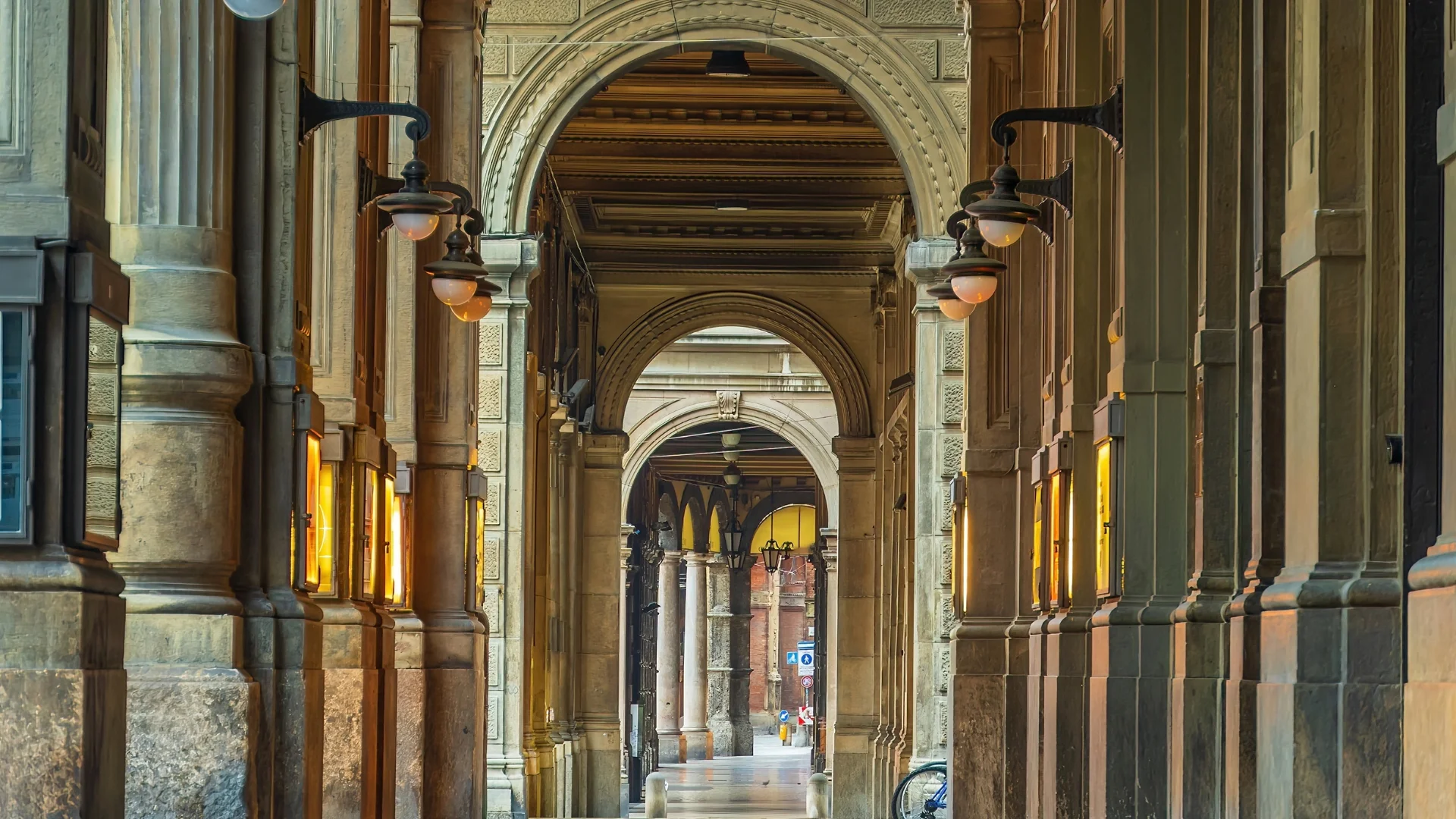
Because the wooden galleries kept catching fire, the papal governor Giovanni Battista Doria and Gonfaloniere Camillo Paleotti ordered on March 26, 1568 to replace them with brick and stone. A few noble families bought their way out of this requirement because they wanted to follow Roman fashion—which is why there are still a few palaces in Bologna without arcades, such as the Palazzo Fantuzzi and the Palazzo Bevilacqua.
Which portici should you see first?
The Pavaglione, the portico of Santa Maria dei Servi, and the Portico di San Luca—in that order, the impression of an elegant urban salon builds to that of a truly magnificent structure.
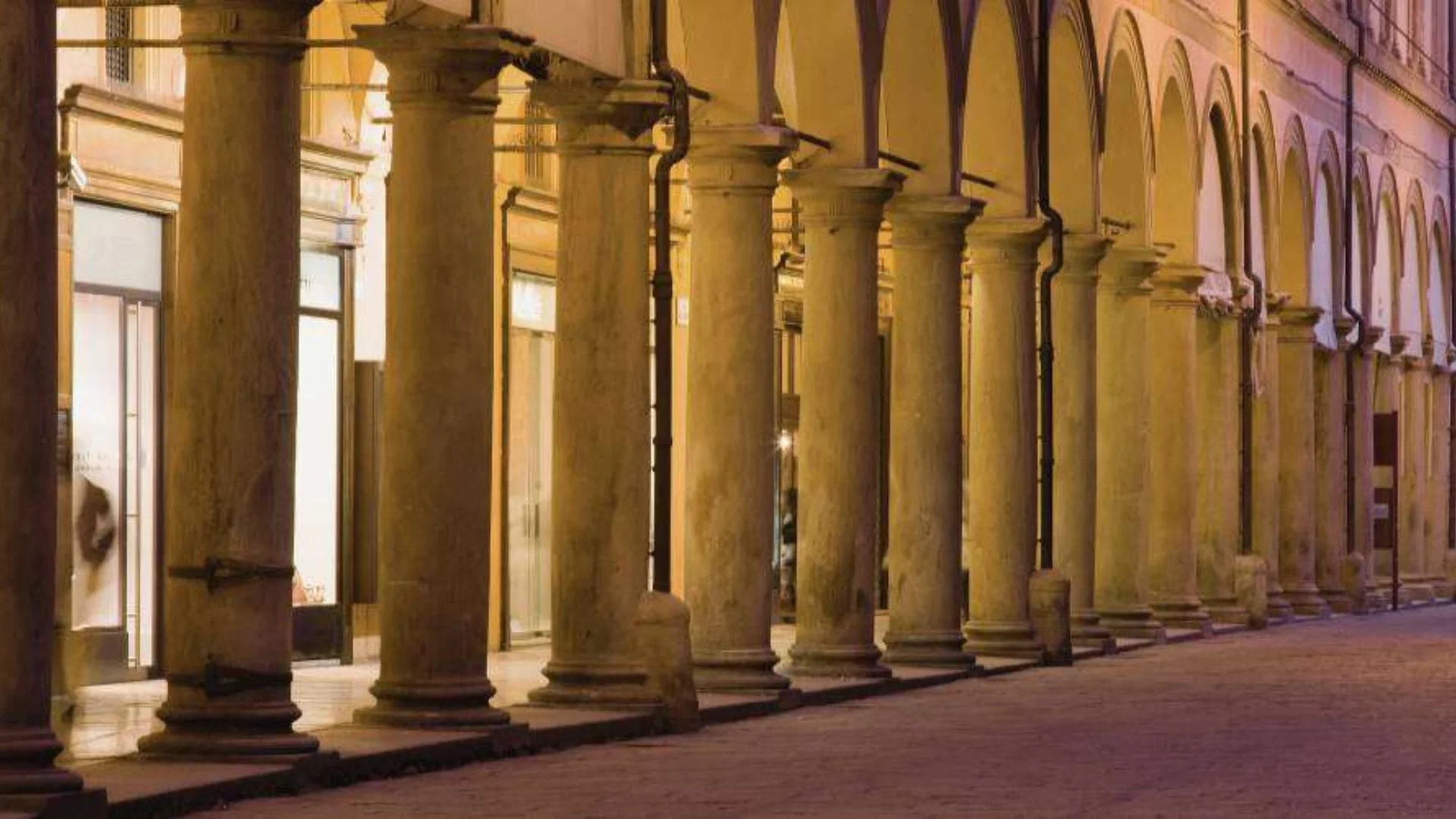
The Portico of the Pavaglione Via dell’Archiginnasio is home to the longest continuous portico in the city center: 139 meters, 30 arches, high vaults, bookstores, and the aroma wafting from the historic cafés. It owes its name to the former Piazza del Pavaglione—now Piazza Galvani—where the silk cocoon market was held for centuries— pavajån is simply called "Pavillon" in the Bolognese dialect. At the end of the corridor lies the Archiginnasio, which served as the university's first shared location from the mid-16th century onward and is now a library housing the famous anatomical theater.
A few minutes further east, on Strada Maggiore, stands the the city's widest portico: the Basilica di Santa Maria dei Servi. The design is attributed to Antonio di Vincenzo, the architect of San Petronio; construction began in 1393. However, the Quadriportico in front of the basilica was not added until 1855—meaning that work on this single structure spanned some 460 years.
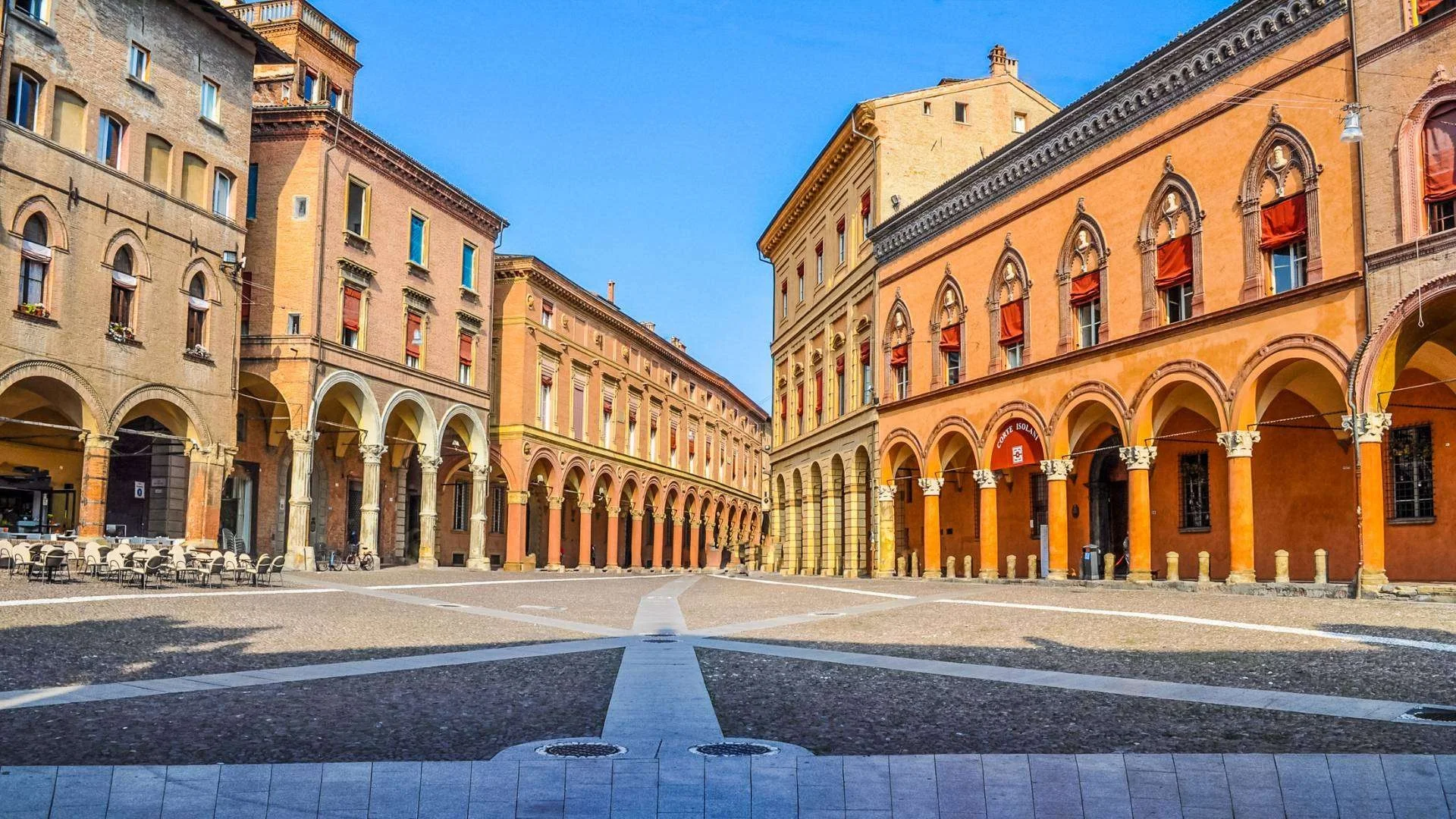
The highlight awaits on the outskirts of town. The Portico of San Luca is the longest covered colonnade in the world: 3,796 meters According to standard measurements—the city of Bologna itself lists the length as approximately 3,600 meters on its World Heritage website. It was built between 1674 and 1721 with donations from the entire citizenry, based on designs by Camillo Saccenti and Gian Giacomo Monti, and completed by Carlo Francesco Dotti. He also designed the Meloncello Arch from 1718, the dramatic bridge over which the portico crosses the street and transitions from the plain to the hill.
The route begins at the Arco Bonaccorsi at Porta Saragozza, continues for one and a half kilometers on flat ground along Via Saragozza, and then climbs steadily for two kilometers to the Madonna di San Luca Shrine on the Colle della Guardia. In niche 170 stands the Madonna Grassa, the „Fat Madonna“ by Andrea Ferreri, dating from around 1706—so named because of her voluptuous figure. On January 10, 2026, the completion of the portico’s restoration was celebrated at the sanctuary.
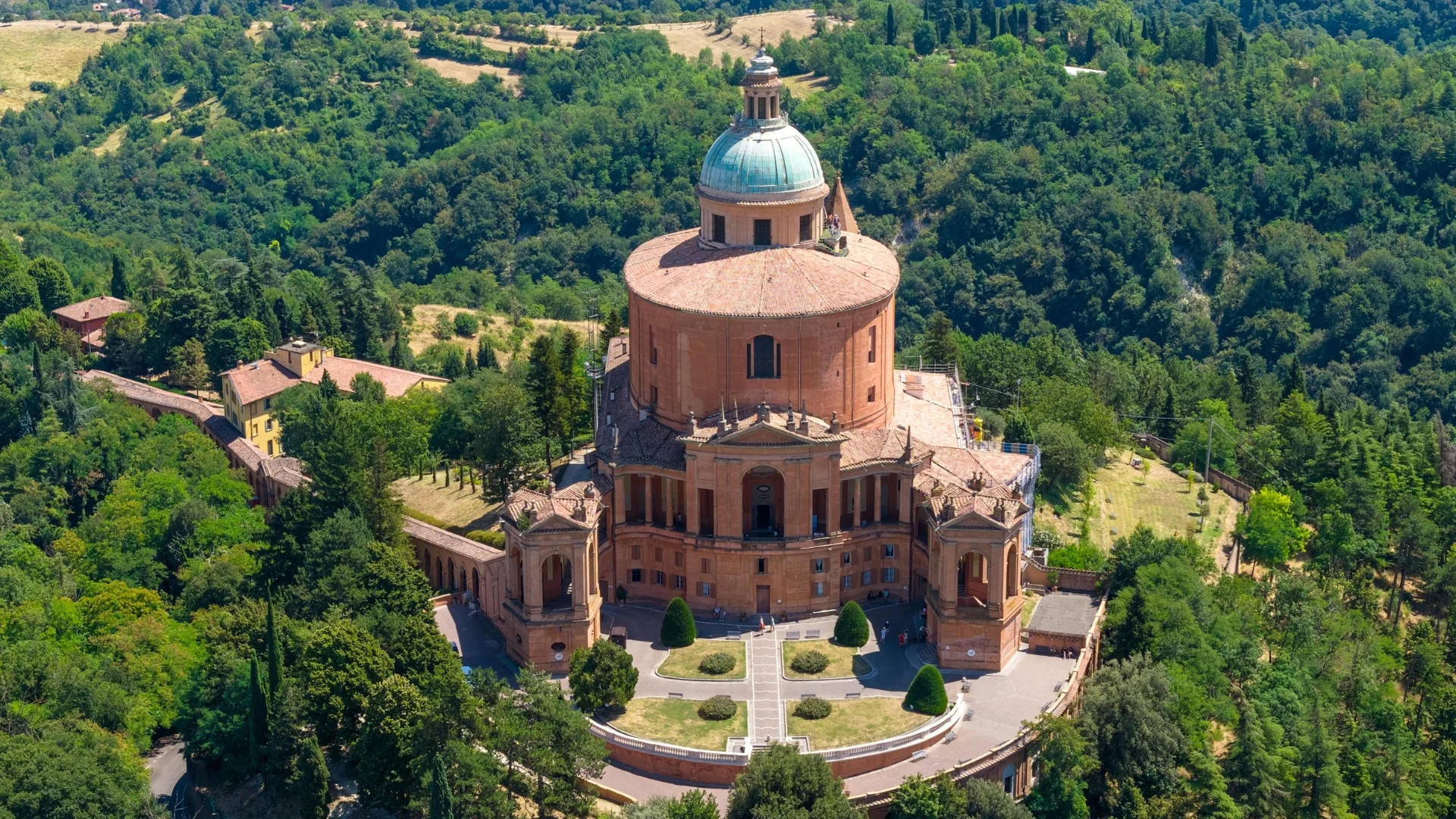

Santuario della Madonna di San Luca in Bologna: The longest portico in the world!
Santuario di San Luca – An Oasis of Peace and Spirituality Above the Rooftops of Bologna Bologna, the proud capital of Emilia-Romagna, is often visited primarily for its lively atmosphere, which...
How much does it cost to visit the Portici di Bologna?
Nothing. The arcades are public urban spaces; there’s no admission fee, no set hours, and no requirement to take a guided tour. You only have to spend money if you want to skip the climb up to San Luca: that’s what the San Luca Express tourist train is for.
The trip takes about an hour; the ticket is valid for a round trip on the same day and includes an audio guide in ten languages. The tour departs from the stop at the Piazza Galvani, right next to the Pavaglione—not on Piazza Maggiore. The return trip starts at the Basilica di San Luca.
How much does the San Luca Express cost?
| Offer | Price |
|---|---|
| Adults, round trip | 15.00 € |
| Children ages 6–10, school groups, people with disabilities and their companions | €8.00 |
| Children under 6 years of age | 3.00 € |
| Bologna Welcome Card PLUS | including |
Admission to the portico itself, the basilica, and all the arcades in the center is free.
As of August 2026 · Prices according to Bologna Welcome. Departures subject to daily availability.
When are the arcades at their most beautiful?
Before eight o'clock in the morning, on a Sunday morning. That's when the sun is low in the sky, bathing the terracotta facades around Piazza Santo Stefano and Via Farini in warm light, and the arches cast long shadows that lend depth to every scene.
It’s worth moving to a different spot to take in the sweeping panorama: From the observation deck near San Michele in Bosco, you can look out over the sea of red rooftops and see how the portici wind through the city like veins.
On the other hand, avoid Via dell’Indipendenza, Via Ugo Bassi, and Via Rizzoli on weekend afternoons. These three main thoroughfares carry all of the city’s shopping traffic, and you won’t see much of the architecture with all those shopping bags in the way.
Where's the best place to eat under the arcades?
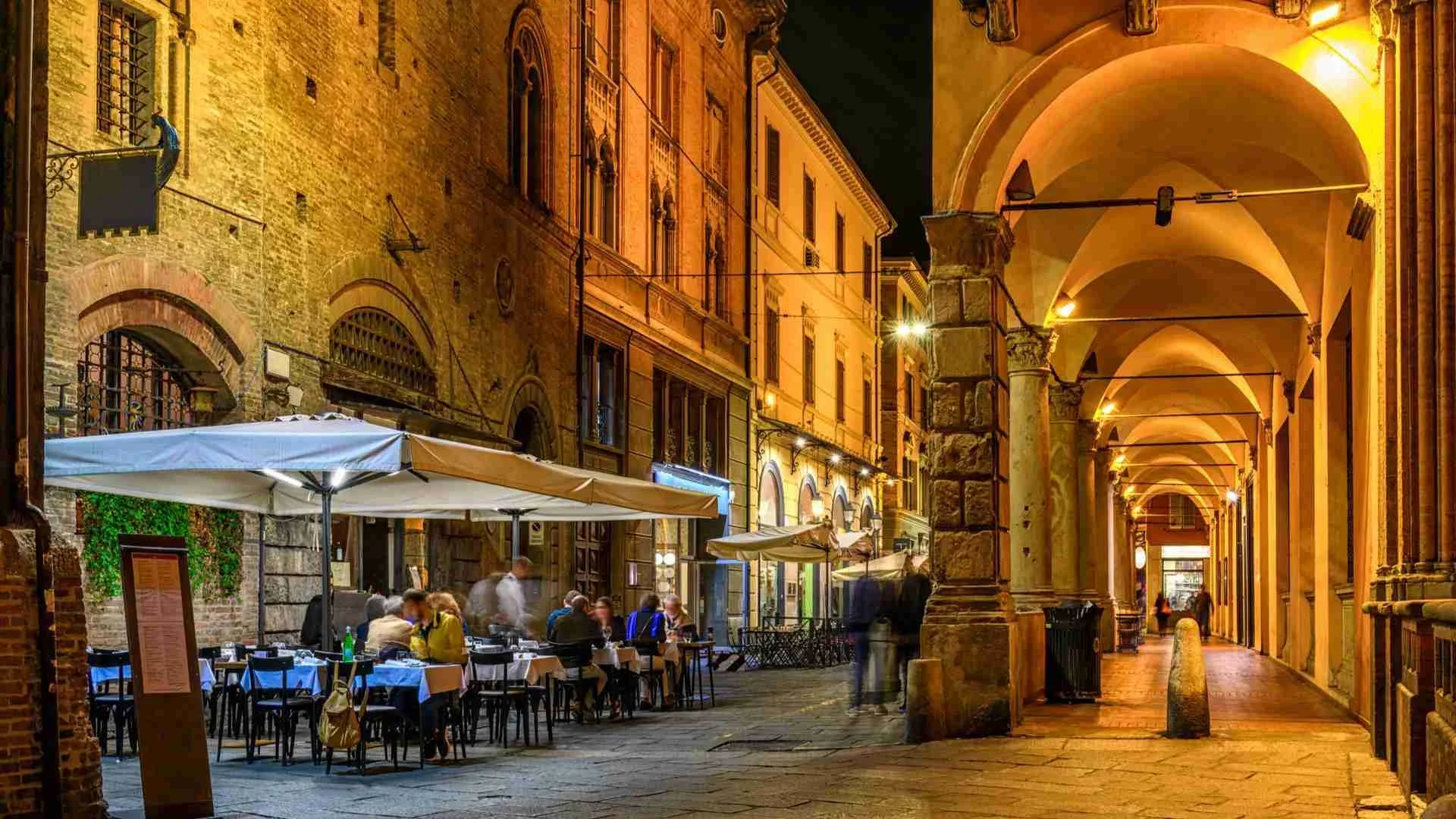
All five spots on this editorial team’s list are just a few minutes’ walk from the most beautiful arcades and range from Michelin-starred restaurants to ice cream shops. Be sure to make a reservation well in advance at Trattoria da Me—the place is small and always packed.
| Restaurant | Here's what you can expect |
|---|---|
| Ristorante I Portici 69 Via dell’Indipendenza | One Michelin star, held continuously since 2012, in the former Café-chantant of the Teatro Eden, built in 1899, beneath Art Nouveau frescoes. Executive Chef Nicola Annunziata, born in 1991, serves creative Mediterranean cuisine. Part of the hotel of the same name. |
| Trattoria da Me 50/a Via San Felice | A Bolognese trattoria, founded in 1937 by her grandfather as Trattoria da Danio and reopened in 2016 by Elisa Rusconi. Freshly made pasta every day; the classic dish is the Cotoletta alla Bolognese with ham and Parmigiano. |
| Osteria Bartolini 16 Piazza Malpighi | Bib Gourmand 2026, fish from the Adriatic Sea at Palazzo Dondini Ghiselli; in the summer, tables are set up under an old plane tree. Only some of the seats are reserved—if you don’t have a table, you’ll have to wait for the next one to open up. |
| Ranzani 13 5/12 Via Camillo Ranzani | A pizzeria with a pub-like atmosphere in the university district, off the beaten path. Pizza made with semi-whole-wheat flour, gourmet burgers, and a rotating selection of craft beers. |
| Santo Stefano Dairy 70/c Via Santo Stefano | An artisanal ice cream shop on the edge of Piazza Santo Stefano, rated three cones in the Gambero Rosso guide—the highest possible rating. The pistachio comes from Bronte, and the vanilla from Tahiti. There’s a line during peak hours. |
Where are you staying in Bologna?
For the most authentic arcade experience, stay between Piazza Maggiore and Via dell’Indipendenza; if you’re leaving early the next day, you’re better off staying near the train station. These seven accommodations cater to every budget.
| Accommodations | Here's what you can expect |
|---|---|
| Grand Hotel Majestic „formerly Baglioni“ 8 Via dell’Indipendenza | The only hotel in Italy's top category Five-Star Luxury Located in Emilia-Romagna, this hotel features 109 rooms in an 18th-century palazzo that has been a hotel since 1912. The adjacent Palazzo Fava and the restaurant „I Carracci“ are adorned with frescoes by the Carracci brothers. |
| Art Hotel Commercianti 11 Via de‘ Pignattari | A four-star hotel in a medieval building located directly behind the Basilica of San Petronio, featuring Gothic architectural elements and partially exposed wooden beams. Bike rentals included. |
| I Portici Hotel 69 Via dell’Indipendenza | A four-star hotel located in the 19th-century Palazzo Maccaferri, which has been a hotel since 2007. During the restoration, 1,500 square meters of Art Nouveau murals were uncovered. It’s a five-minute walk to the main train station and a ten-minute walk to Piazza Maggiore. |
| Il Guercino Boutique Hotel 7 Via Luigi Serra | A four-star hotel with 61 rooms, less than 300 meters from the main train station. A quiet courtyard, a small wellness area, bike rentals, and on-site parking—perfect after a long day exploring the arcades. |
| Starhotels Excelsior 51 Viale Pietramellara | A four-star hotel right across from Bologna Centrale Station, with modern furnishings, a restaurant, and a free fitness center. The stress-free choice when traveling with heavy luggage. |
| Dopa Hostel 41 Via Irnerio | A design hostel in the university district with dorms and private rooms; breakfast included. Just a few minutes from the train station and Piazza Maggiore—the most affordable option on this list. |
| Casa Munay 3 Via Angelo Venturoli | A family-run bed and breakfast with six rooms in a restored early 20th-century villa, featuring a palm garden and private parking. Just over two kilometers from Piazza Maggiore, with a bus stop right outside the door. |

How do you get to the Portici di Bologna?
The best way to get there is by train. Bologna Centrale is one of Italy’s major transportation hubs, and from the station plaza, the arcaded Via dell’Indipendenza leads you straight into the historic center—about a fifteen-minute walk, entirely under cover.
It gets more complicated if you're driving. The Old Town is a strictly regulated low-emission zone (ZTL - Zona a Traffico Limitato), the cameras read every license plate. Unauthorized entry is punishable under Article 7 of the Italian Highway Code; in Bologna, the base fine is about 84 euros, and with delivery fees, the total comes to about 100 euros. Therefore, make sure to Piazza VIII Agosto Parking Garage (Operated by APCOA, approximately 980 spaces, open around the clock), which is located just outside the ZTL and is about a ten-minute walk from Piazza Maggiore. Access it via Via Irnerio. On Fridays and Saturdays, it’s often full because of the Montagnola Market.
When it comes to accessibility, Bologna is more advanced than many other Italian historic centers: Most of the portici along the main streets are step-free and accessible via ramps, and a tactile map of the World Heritage sites has been available since 2026. The old wooden porticoes and the climb up to San Luca, with its uneven historic cobblestones and sections of stairs, remain challenging.
By the way: Cycling and riding e-scooters are prohibited under the arcades—the portici are considered sidewalks. Enforcement is rare, which is why you’ll still encounter oncoming traffic in narrow spots. Walk carefully there.

Are the Portici worth it for you?
To be honest: it’s not the same for everyone. The arcades aren’t a museum with specific highlights, but rather an atmosphere that unfolds as you walk through them. Those who want to check items off a list will be disappointed—but those who let themselves be carried along will discover what is perhaps the most pleasant downtown area in Italy.
- Strollers with no set plan
- Architecture and history enthusiasts
- Traveling in the Rain or Heat
- Photographers in the early morning hours
- Runners and hikers heading toward San Luca
- Short Visits with a Sightseeing List
- A stroller on old cobblestones
- Wheelchair on the way to San Luca
- People seeking peace and quiet on a weekend afternoon
- For those looking for places to eat only along the main street
What other excursions can be added to this itinerary?
Bologna is located along the high-speed rail line; you can reach three worthwhile destinations in under an hour. For the region as a whole, you'll find information in the Emilia-Romagna Travel Guide the overview, for the city itself in the Bologna Travel Guide The insider tips.
| Objective | Here's what you can expect |
|---|---|
| Modena about 40 minutes by train | Home of Aceto Balsamico Tradizionale, the Romanesque cathedral, and Piazza Grande—a UNESCO World Heritage Site—as well as the Enzo Ferrari Museum. It's a full-day trip; you'll be back in the evening. |
| Parma about 1 hour by train | Ham and Parmigiano are just the beginning: Baptistery, Teatro Regio and a relaxed, elegant urban vibe. Perfect with a tasting. |
| Ferrara about 30 minutes by train | A Renaissance city of the Este family with a moated castle and wide, bike-friendly streets—a stark contrast to medieval Bologna. In May, the Palio di Ferrara. |
| Colli Bolognesi by bus or car | The hills just outside the city, with wineries and panoramic views. A peaceful way to spend an afternoon when the city center gets too crowded for you. |

Bologna travel guide: insider tips for the red city under the arcades
Arcades, Cupids, and Authentic Tortellini: An Insider's Guide to Bologna It's just half past seven in the morning, and Piazza Maggiore is waking up in a soft, almost surreal shade of pink. While the waiters at the...
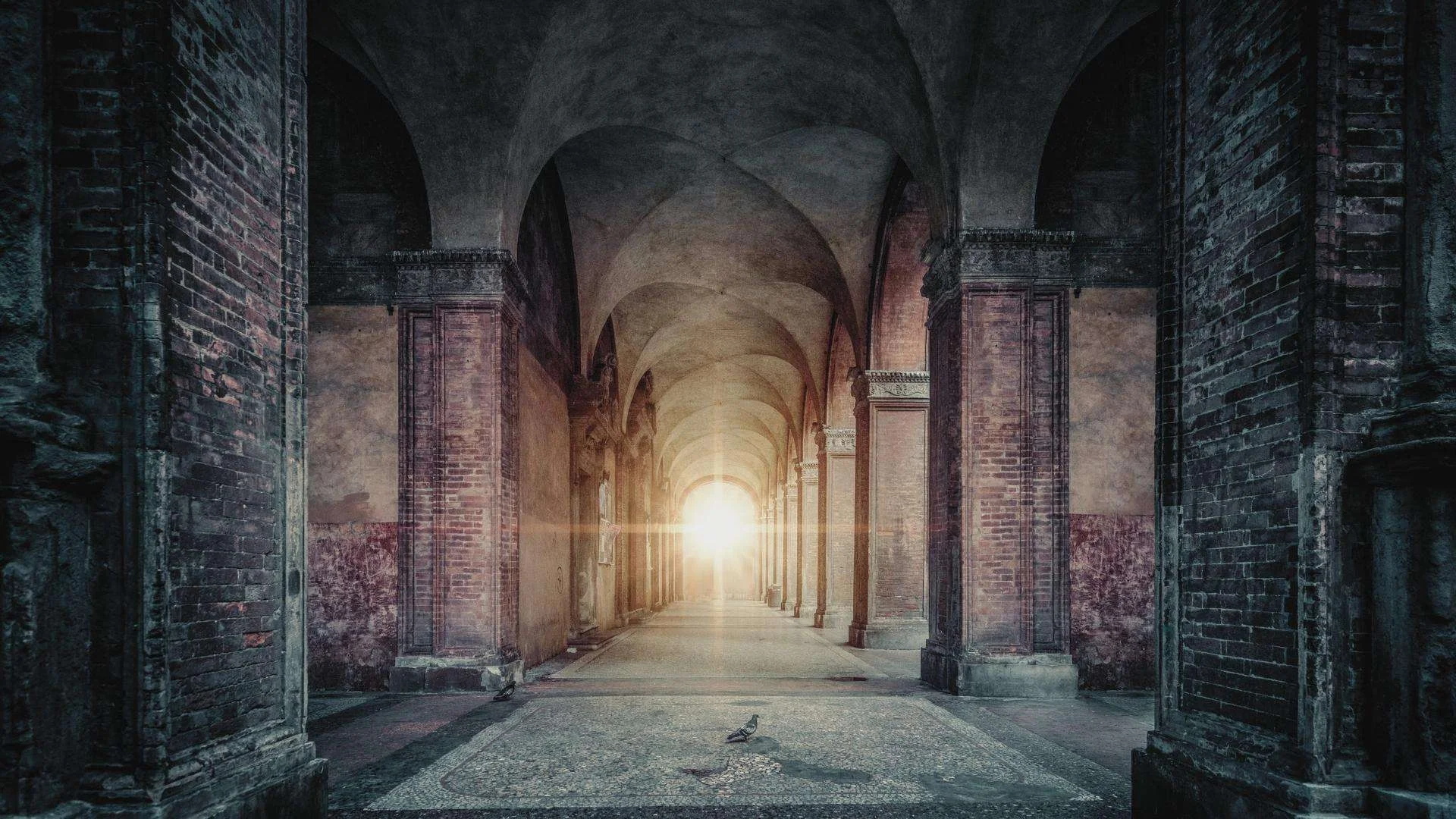
One last tip that you won't find in any travel guide—and that you can check for yourself in five minutes:
The wooden arcades of Via Marsala
Today, almost all portici are made of brick or stone—the decree of 1568 had a profound effect. On Via Marsala, however, there are still several of the rare wooden arcades, and a few streets away, on Strada Maggiore, the Corte Isolani’s portico rests on nine-meter-high oak beams dating from around 1250.
Place your hand on one of these cracked beams. The wood is the original, not restored stone—and it’s the only place in Bologna where you can actually touch the Middle Ages. It’s just two minutes from Via dell’Indipendenza and is usually completely empty.
A walk that costs nothing
The portici aren’t just an architectural bonus—they are the city. And since admission is free, your travel budget is entirely available for what Bologna is also world-class at—the food. When the sky over Emilia-Romagna clouds over in the late afternoon and the first raindrops fall on the rooftops, that’s when you truly understand the structure: turn up your collar, tuck your umbrella in your pocket, and head on to the next plate of tagliatelle.
The next concrete step: Start at Piazza Galvani under the Pavaglione, walk across Piazza Santo Stefano to Via Marsala, and only then decide whether to head to San Luca on foot or by tram.
Map: Bologna, Emilia-Romagna
Things to Do in Emilia-Romagna
FAQ - Frequently Asked Questions About the Portici di Bologna
Experiences & sights
Note: Italien.news does not own or operate the attractions, accommodations, or events described here and is not liable for program changes, cancellations, or incorrect information. Prices, opening hours, and schedules are subject to change—please check the official websites for the latest information before your trip. Our posts contain recommendations in the form of affiliate links: If you book through them, we receive a small commission, but the price remains the same for you. Content and text © Italien.news & AI · Photos © canva.com / shutterstock.com. Be sure to also visit our Italy Shop.
Sources and Further Information
- City of Bologna — Portici, a World Heritage Site (accessed August 2026)
- UNESCO World Heritage Center — The Porticoes of Bologna (accessed August 2026)
- Bologna Welcome — UNESCO Portici and San Luca Express (accessed August 2026)
- Michelin Guide Italy 2026 — Bologna (accessed August 2026)
- APCOA — Piazza VIII Agosto Parking Garage (accessed August 2026)