Verona – Just two minutes away from Juliet’s balcony stands an amphitheater where operas have been performed since 1913, and in between lies the city’s largest market square. The most important Verona sights are so close together that you can walk to all of them in a single day: The Arena costs €12.00, the Casa di Giulietta costs €12.00, the Torre dei Lamberti costs €6.00, and if you want to see more than three houses, you’re better off getting the VeronaCard for €33.00.
This guide tells you how much each attraction costs, when it's open, which eight places you really need to see, where to eat well, and when the city gets so crowded that you'd be better off planning your visit for a different time.
Verona by the Numbers
Verona keeps costs low. No municipal attraction costs more than €12.00; admission to the four major churches combined is €8.00; and the most beautiful view of the city costs €3.00 for the funicular. The only time it gets expensive is on opera nights between June and September.
As of September 2026 · Data provided by the Comune di Verona, AGEC, Associazione Chiese Vive, and ATV.
- Opera and concert audiences
- City travelers staying two to three days
- Wine Lovers Heading to Valpolicella
- Vacationers at Lake Garda Without a Car
- For those who want to drive to the Old Town
- Summer Travelers Who Are Sensitive to Heat
- Anyone who wants to see the arena from the inside without the stage set-up
- Beach vacationers

How much do the attractions in Verona cost?
Not much. The Arena costs €12.00, Castelvecchio and the Archaeological Museum at the Roman Theater each cost €9.00, and the Torre dei Lamberti costs €6.00. Young adults between the ages of 18 and 25 pay only €3.00 or €2.00 at municipal attractions; admission is free for those under 18. Starting with the third attraction, the VeronaCard—which also includes city buses—is worth the cost.
A special case is the Casa di Giulietta: Since April 1, 2026, the way to the balcony has been via the Teatro Nuovo at the Piazzetta Navona, and even just entering the courtyard now costs €5.00. The old tradition of getting a free view of the balcony from below is now a thing of the past.
Admission Prices in Verona at a Glance
All amounts are adult rates at the box office.
| Offer | Price |
|---|---|
| Arena di Verona | 12.00 € · reduced rate 9.00 € · ages 18 to 25 3.00 € |
| Casa di Giulietta with a courtyard | 12,00 € |
| Only the courtyard of the Casa di Giulietta | 5,00 € |
| Torre dei Lamberti | €6.00 · reduced price €4.50 |
| Castelvecchio Museum | €9.00 · reduced rate €6.00 |
| Archaeological Museum at the Roman Theater | €9.00 · reduced rate €6.00 |
| Galleria d’Arte Moderna in the Palazzo della Ragione | €6.00 · reduced rate €4.00 |
| Museo Lapidario Maffeiano on Piazza Bra | 6,00 € |
| Combined Ticket for Four Churches | €8.00 · reduced price €7.00 |
| A single church | 4,00 € |
| Funicular to Castel San Pietro | €3.00 round trip · €2.00 one way |
| VeronaCard | €33.00 for 24 hours · €38.00 for 48 hours |
As of September 2026 · Data provided by the Comune di Verona, AGEC, Associazione Chiese Vive, and ATV.
Admission to the Arche Scaligere is free if you’ve visited another municipal museum on the same day, as well as to Piazza Bra, Piazza delle Erbe, Piazza dei Signori, Ponte Pietra, Ponte Scaligero, Porta Borsari, and the Arco dei Gavi. From November through March, admission to municipal museums costs €1.00 on the first Sunday of the month; the Casa di Giulietta is excluded from this offer. Holders of the VeronaCard get free admission to almost all of these sites but must still make an online reservation for the Casa di Giulietta.

3 Days in Verona: The Perfect Itinerary with a Route & Tips
3 Days in Verona, Smartly Planned: Our tried-and-true itinerary takes you straight to the Arena, Juliet’s Balcony, and across the Adige River—complete with a route, budget, and honest tips.
These 8 sights in Verona are a must-see
The itinerary follows a walking tour that begins at Piazza Bra and ends at the Basilica of San Zeno. It will take you a full day to complete on foot, or two days if you include museum visits.
1. Verona Arena
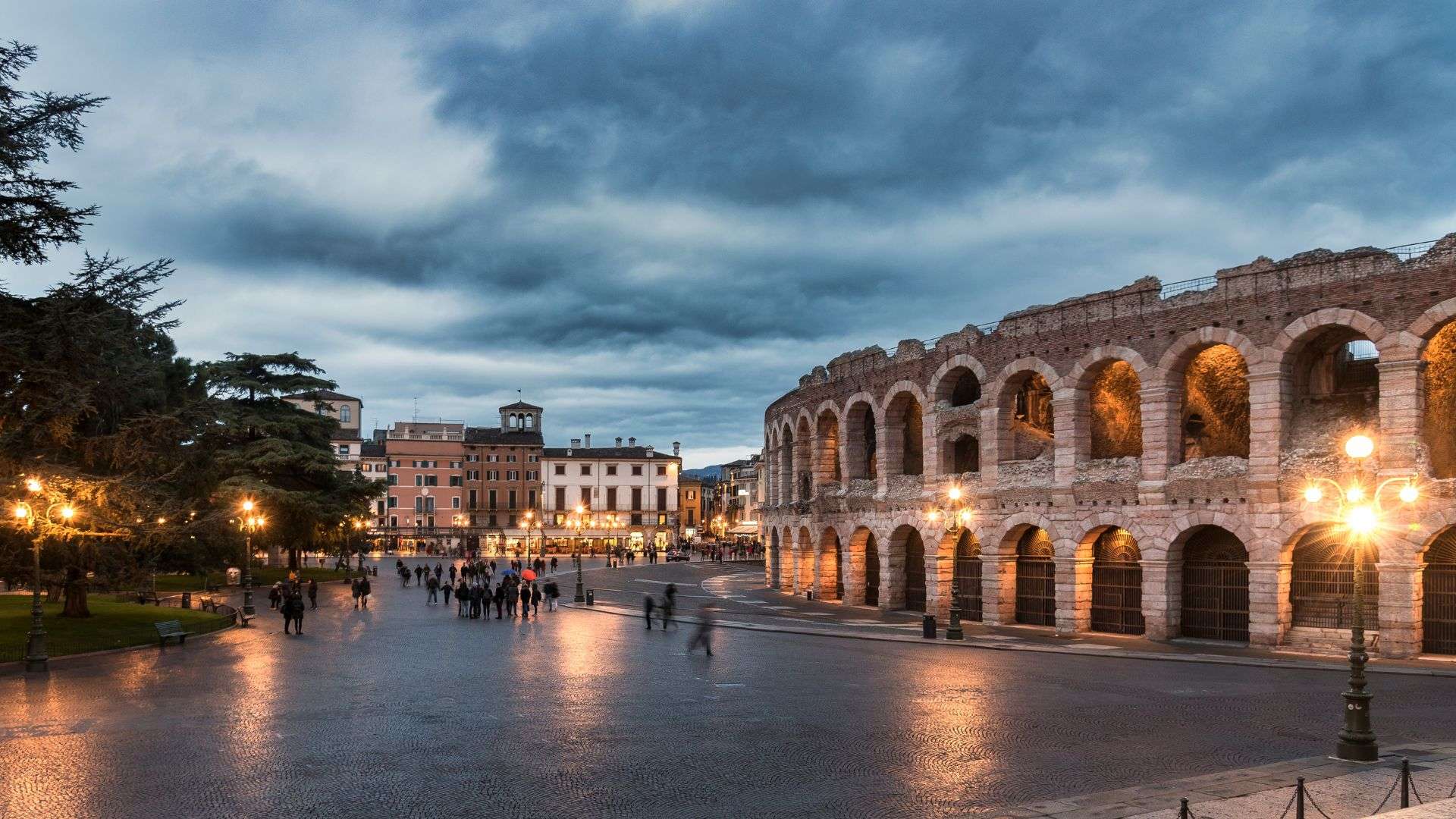
A bronze artifact dates the construction to the years between 30 and 42 A.D., that is, during the reign of Emperor Claudius. This makes the arena older than the Colosseum, which was not built until between 70 and 72. After the earthquake of 1117, only a single section of the outer wall remained standing, the so-called Ala, the wing. The remaining stones were incorporated into the second city wall around the year 500.
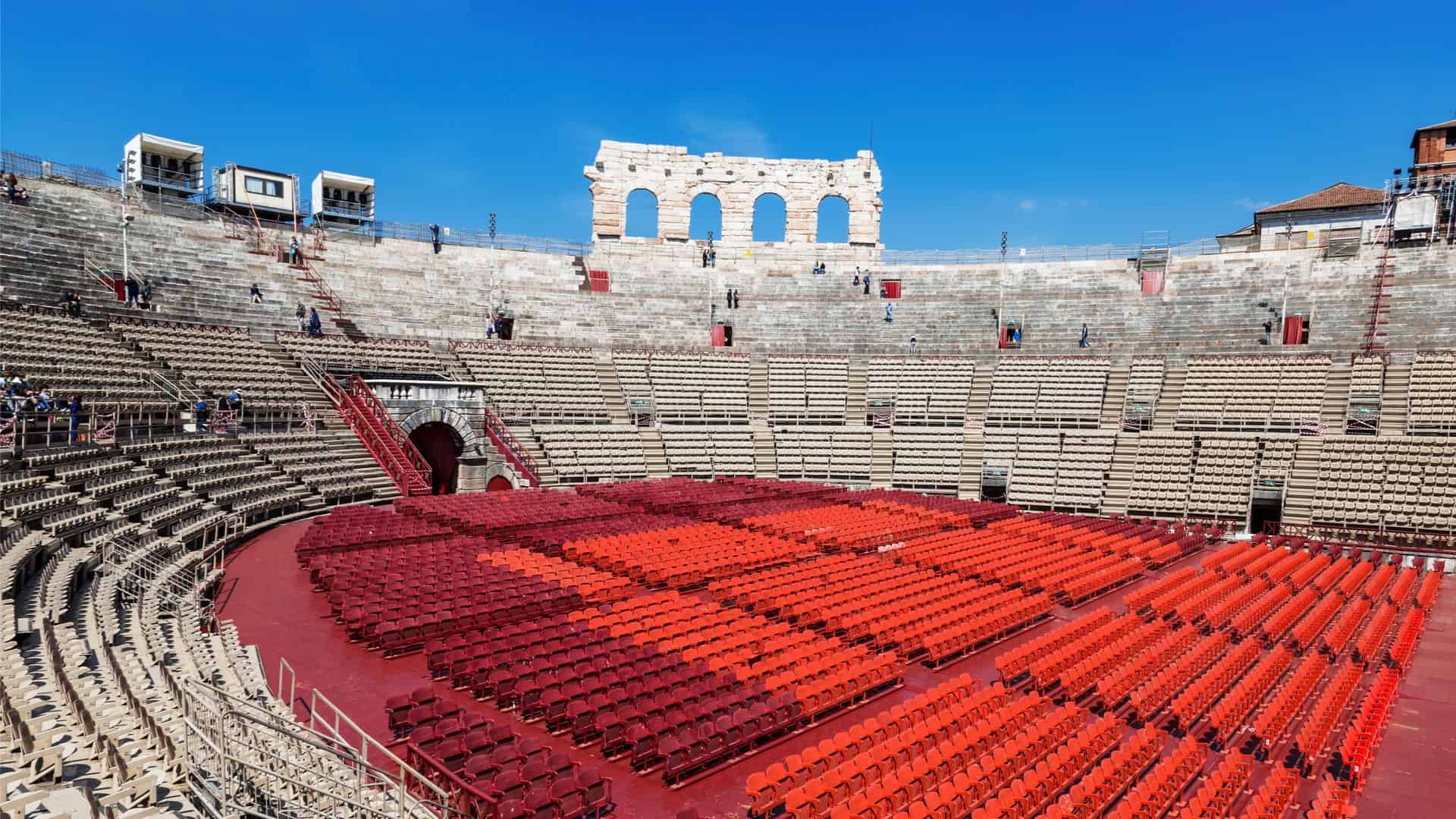
Operas have been performed here since 1913, when *Aida* was staged to mark the 100th anniversary of Giuseppe Verdi’s birth. Admission for a tour is €12.00; the theater is open Tuesday through Sunday from 9 a.m. to 7 p.m. Good to know: From April through October, stage sets are installed in the auditorium, so you won’t be able to explore the entire building. If you want to see the empty interior, visit in the winter; if you want to experience the acoustics, buy a ticket for an evening performance. Read more about this in our Highlights of the Verona Arena.
2. Piazza Bra and the Liston
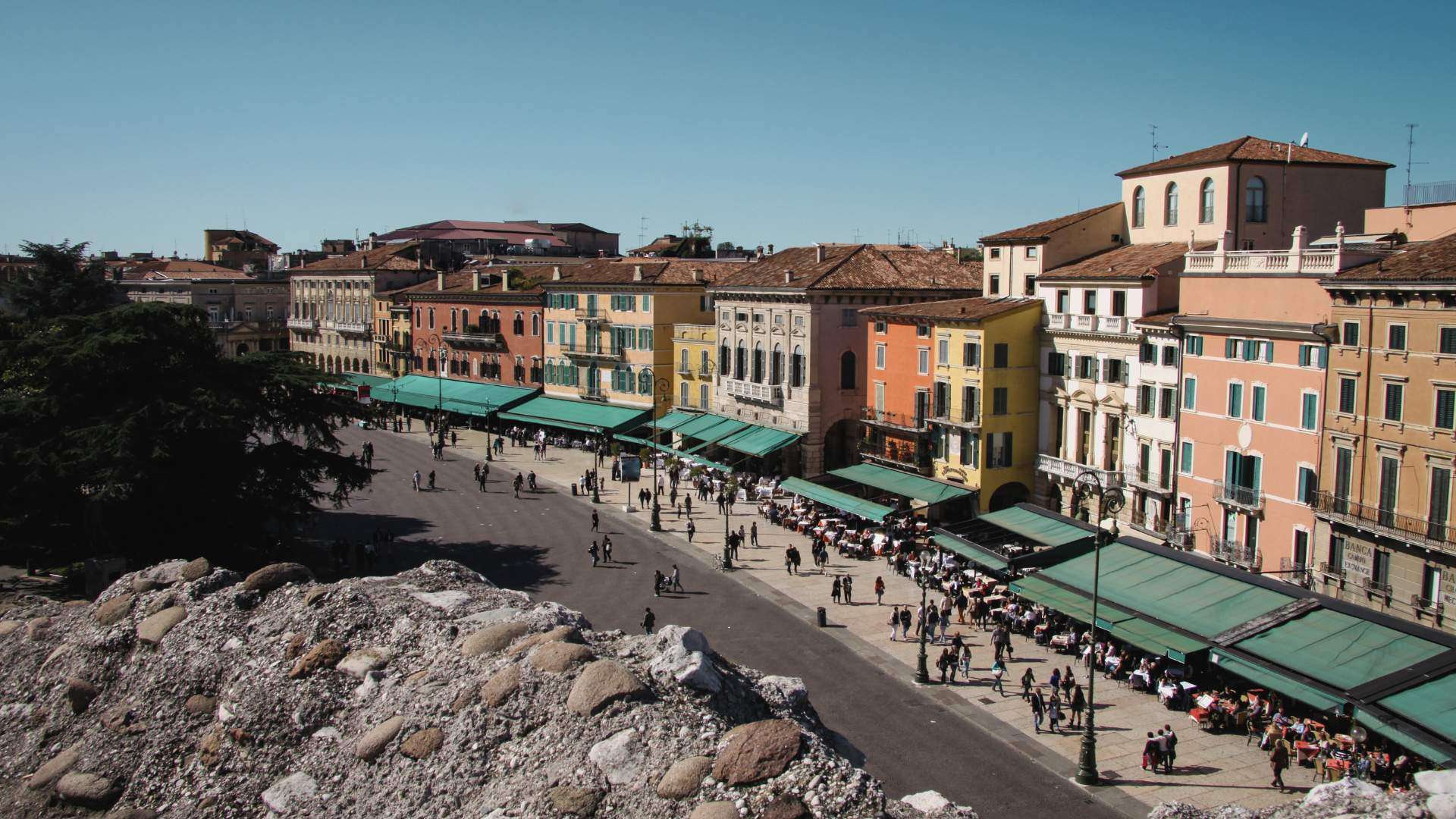
The Piazza Bra, the city's largest square, is located right in front of the arena and is where everything begins in Verona. On one side stands the Palazzo Barbieri, City Hall, next to it the Palazzo della Gran Guardia with its exhibitions. The wide pink marble sidewalk is called Liston and has been the city's main promenade since the 18th century.
On the north side, the Portoni della Bra, the double gate with the clock tower, through which you enter the area leading to Castelvecchio. The square itself is also home to the Maffeiano Lapidary Museum, one of the oldest public collections of antiquities in Europe; admission €6.00. The Walk from the Arena to the Liston It takes less than ten minutes and is best enjoyed in the early evening.
3. Piazza delle Erbe and Torre dei Lamberti
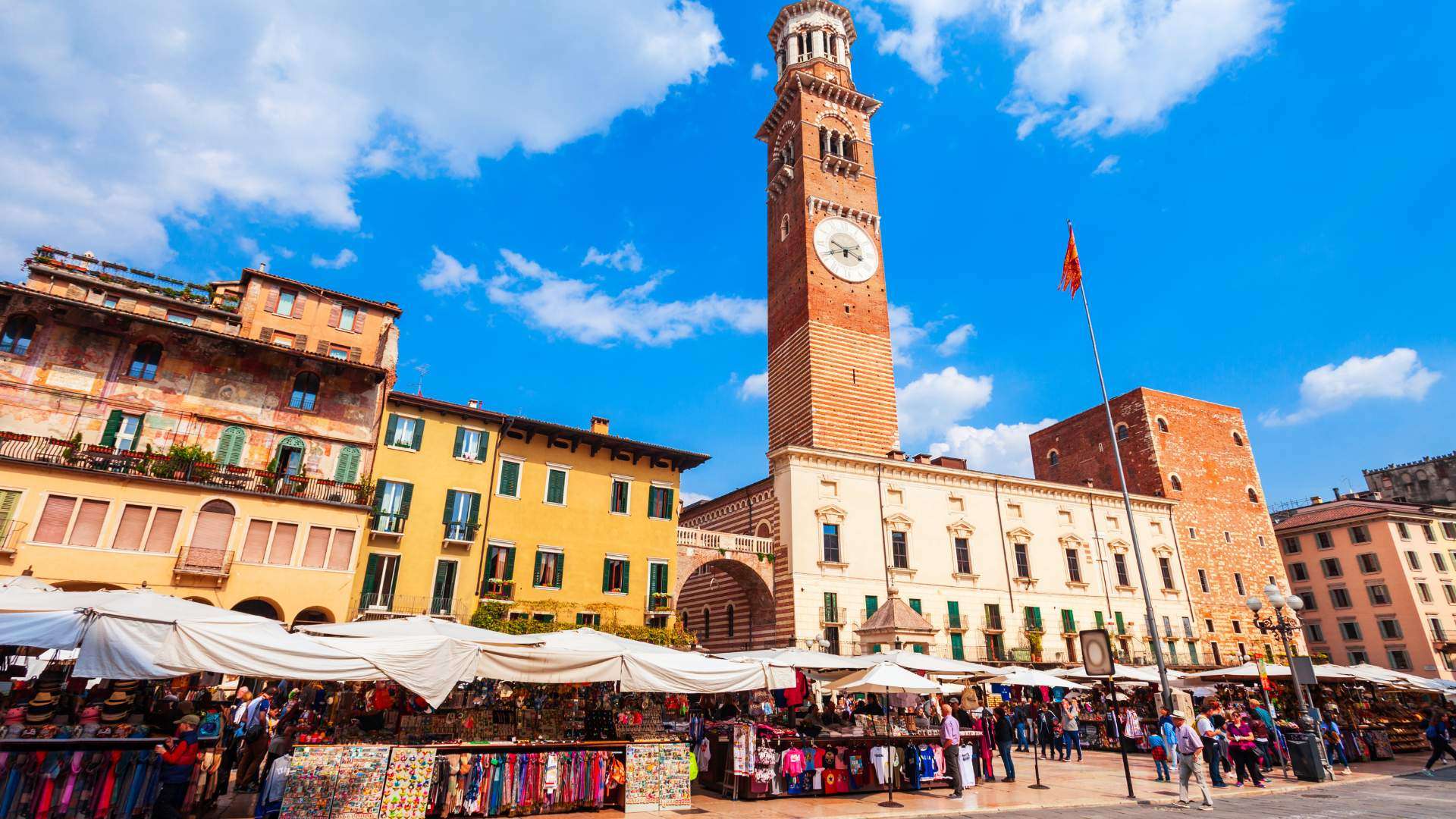
Verona's oldest square is located on the site of the Roman Forum, and it has remained a marketplace to this day. Surrounding it are the Casa dei Mercanti, the Baroque Palazzo Maffei with its statues of gods on the attic and the Torre del Gardello. In the center, the fountain splashes with the Madonna of Verona.
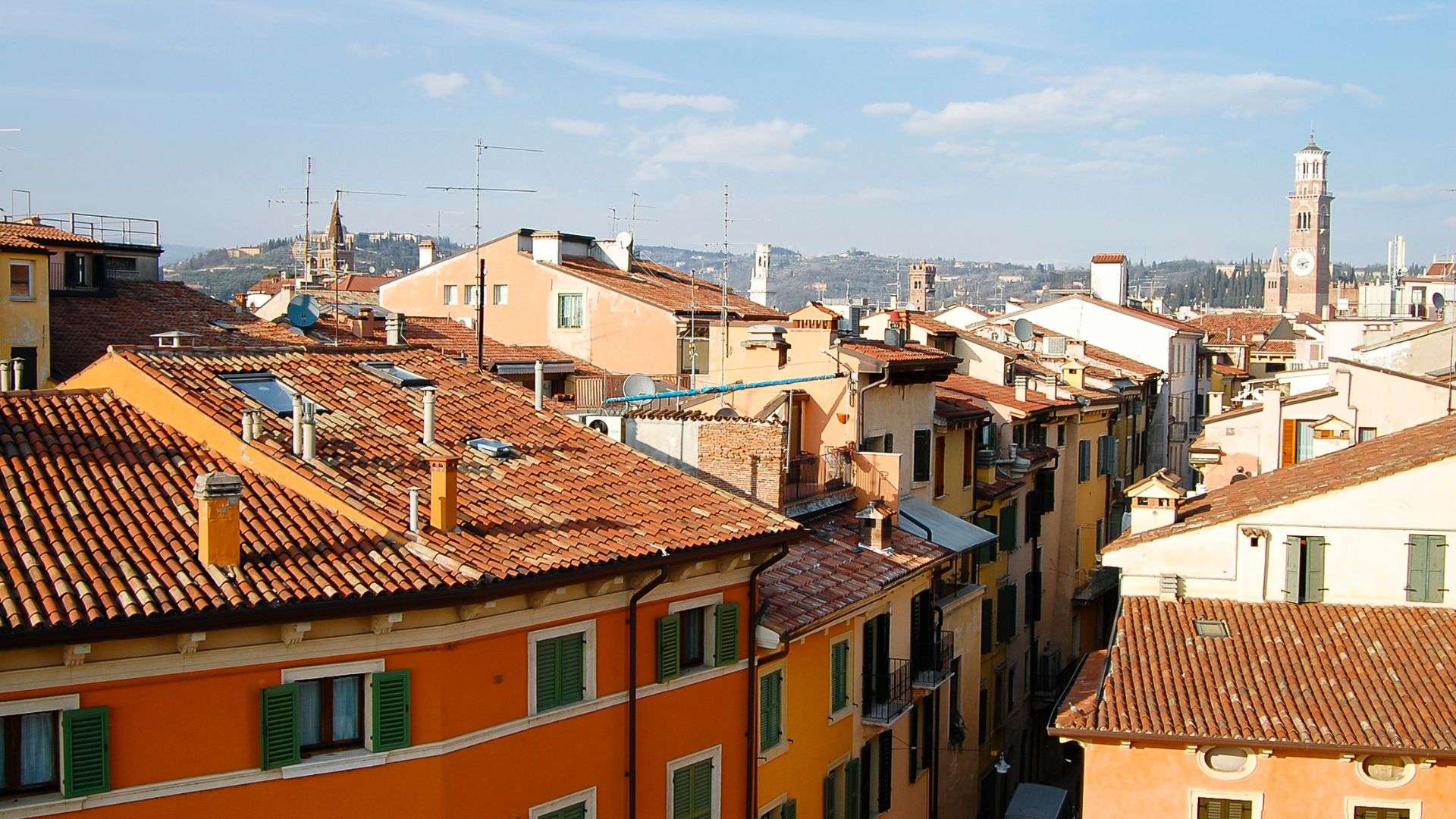
Above all else is the Torre dei Lamberti, begun in 1172 by the patrician family of the same name, it is the tallest tower in the Old Town at 84 meters. There are 368 steps leading to the top, or you can take a glass elevator; admission costs €6.00. Since the end of August, the tower has been open daily from 9:30 a.m. to 9:00 p.m.; reservations are recommended. We have the Piazza delle Erbethe Torre dei Lamberti and the Palazzo Maffei dedicated to their own contributions.
4. Juliet's House
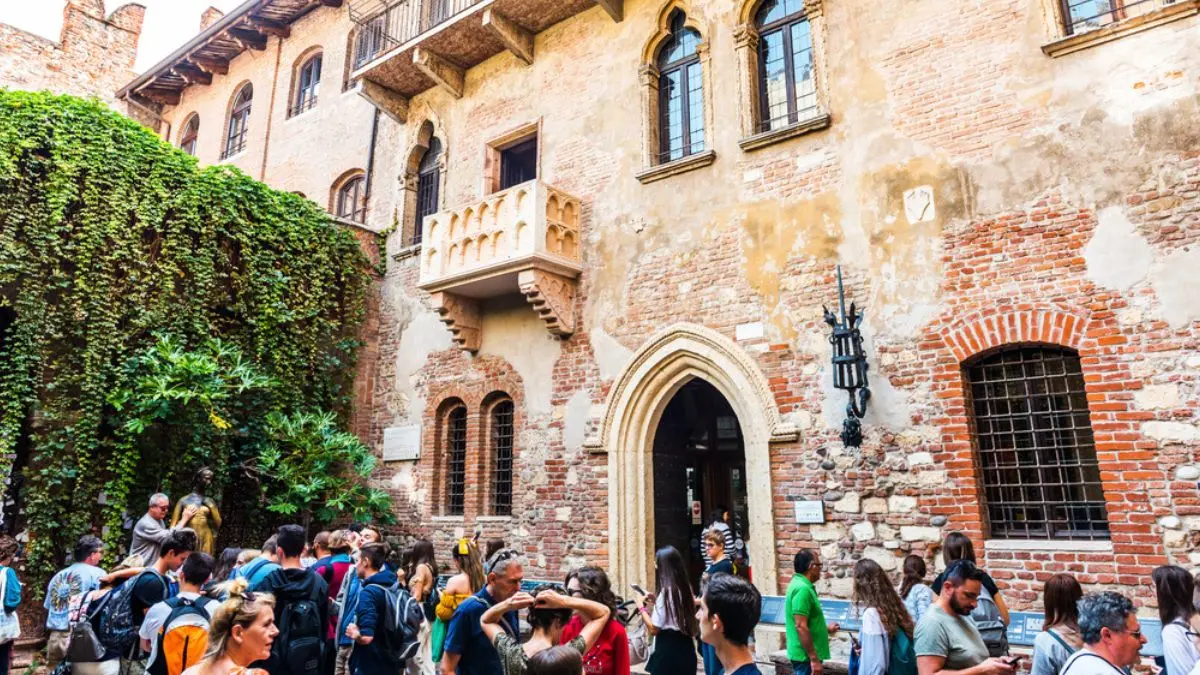
The medieval house on Via Cappello belonged to a family named dal Cappello, and in the 20th century, this gave rise to the Capulets from Shakespeare’s tragedy. The balcony does not date back to Juliet’s time but was added in the 1930s. A bronze statue of Juliet stands in the courtyard, and costumes from Franco Zeffirelli’s 1968 film adaptation hang inside the house.
Admission is €12.00 for the house and courtyard, and €5.00 for the courtyard only. It’s open Mondays from 2:00 p.m. to 7:00 p.m., and Tuesday through Sunday from 9:00 a.m. to 7:00 p.m. Good to know: The courtyard is one of the most crowded places in Italy, and since the switch to time slots, the crowds have been much better distributed. Come during the first time slot, and you’ll have the balcony almost to yourself. Find out what’s behind the legend in our article on Casa di Giulietta.
Tickets for the Casa di Giulietta are available exclusively in advance through the city’s museum website. Even with the VeronaCard, you must book your time slot in advance, and as of April 2026, the entrance is located at the Teatro Nuovo on Piazzetta Navona, not on Via Cappello.
5. Piazza dei Signori and the Arche Scaligere
One archway further on is the Piazza dei Signori, the quieter of the two large squares, with the Dante monument in the center and the Loggia del Consiglio on the north side. From here, walk into the courtyard of the Palazzo della Ragione, where the Achille Forti Gallery of Modern Art which houses the city's collection of modern art; admission is €6.00.
Right next to them are the Arche Scaligere, the Gothic tombs of the Scaliger family, who ruled Verona from the late 13th to the late 14th century. The wrought-iron fence featuring a ladder in its coat of arms is clearly visible from the alley. You can only enter on weekends, and admission is free if you’ve already visited another municipal building that same day.

6. Castelvecchio and the Ponte Scaligero
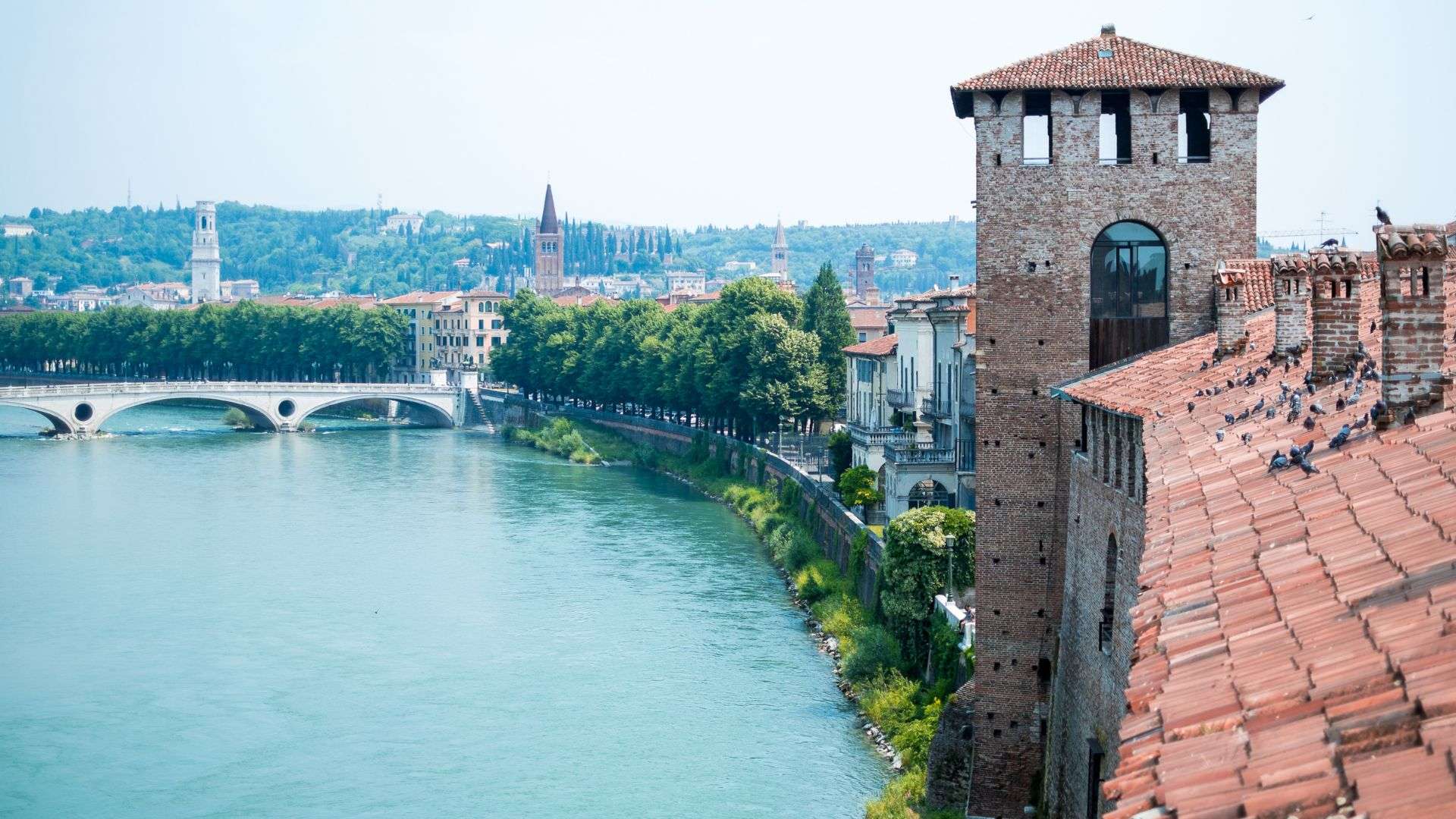
The brick fortress on the banks of the Adige River was built between 1354 and 1356 under the Scaliger family and served as both their residence and a refuge: The adjoining Ponte Scaligero leads across the river into the open. Both were blown up in 1945 and subsequently rebuilt.
The house is worth seeing today mainly because of the museum: Between 1958 and 1974, the architect Carlo Scarpa The halls were rearranged, and this renovation is considered one of the most important works of postwar Italian architecture. The way he suspended the equestrian statue of Cangrande in midair is more famous than many of the paintings inside. Admission: €9.00; open Tuesday through Sunday from 10 a.m. to 6 p.m., last admission at 5:15 p.m.
7. Ponte Pietra, the Roman Theater, and Castel San Pietro
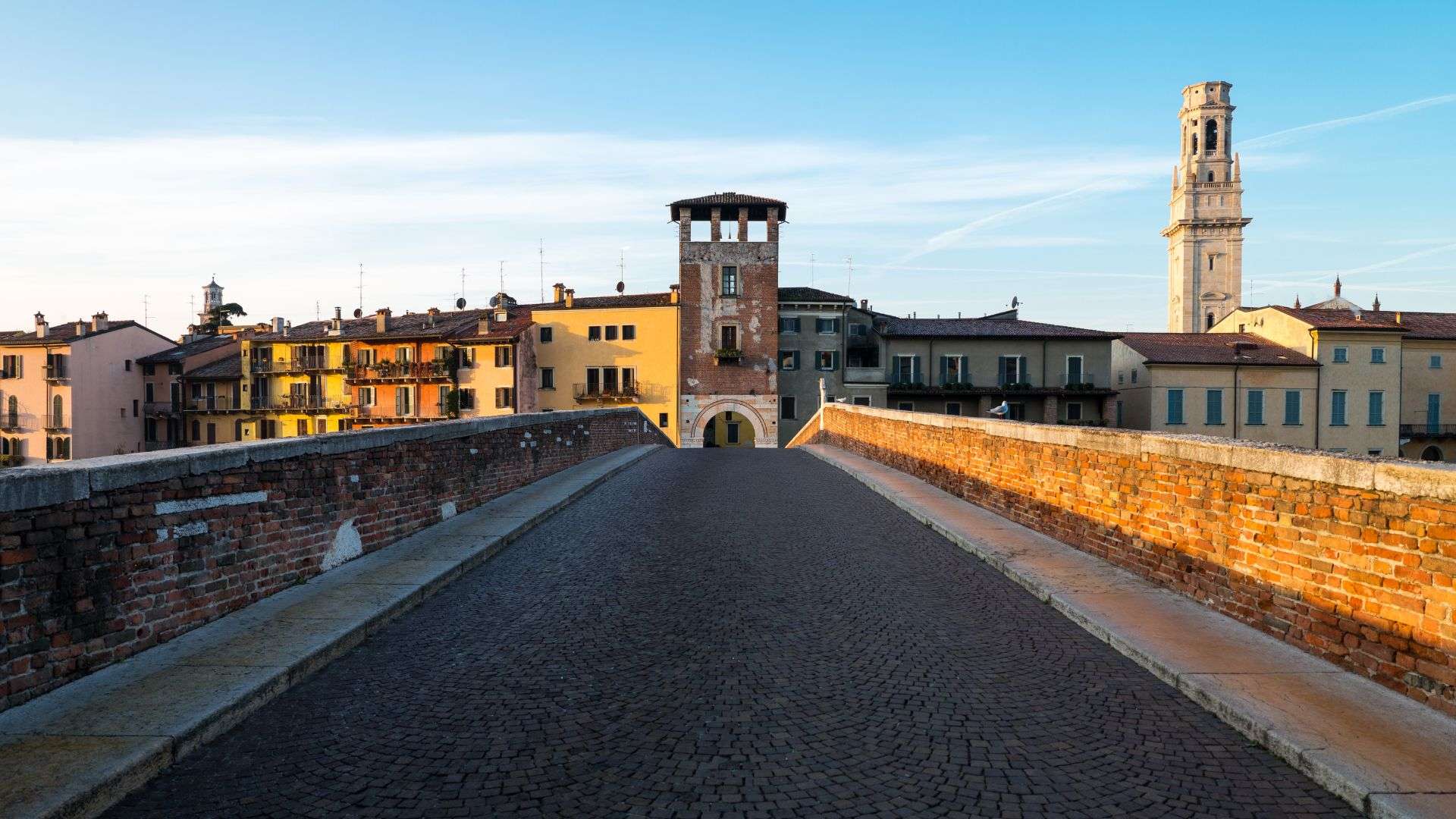
The Ponte Pietra It is the only surviving one of Verona’s two Roman bridges and dates back to the 1st century B.C. At the end of World War II, retreating German troops blew it up; a few years later, it was rebuilt using the original materials recovered from the Adige River. The fact that the arches look different is not the result of shoddy workmanship, but rather the result of two millennia of repairs.
On the other side of the river lies the Roman Theater Dating from the 1st century B.C., it is one of the best-preserved theaters in northern Italy. Since 1948, the Veronese Theater Company, the city's summer theater festival. Behind it rises the hill leading to the Castel San Pietro ...and up there is the view of Verona that will stay with you forever.
8. Basilica of San Zeno Maggiore
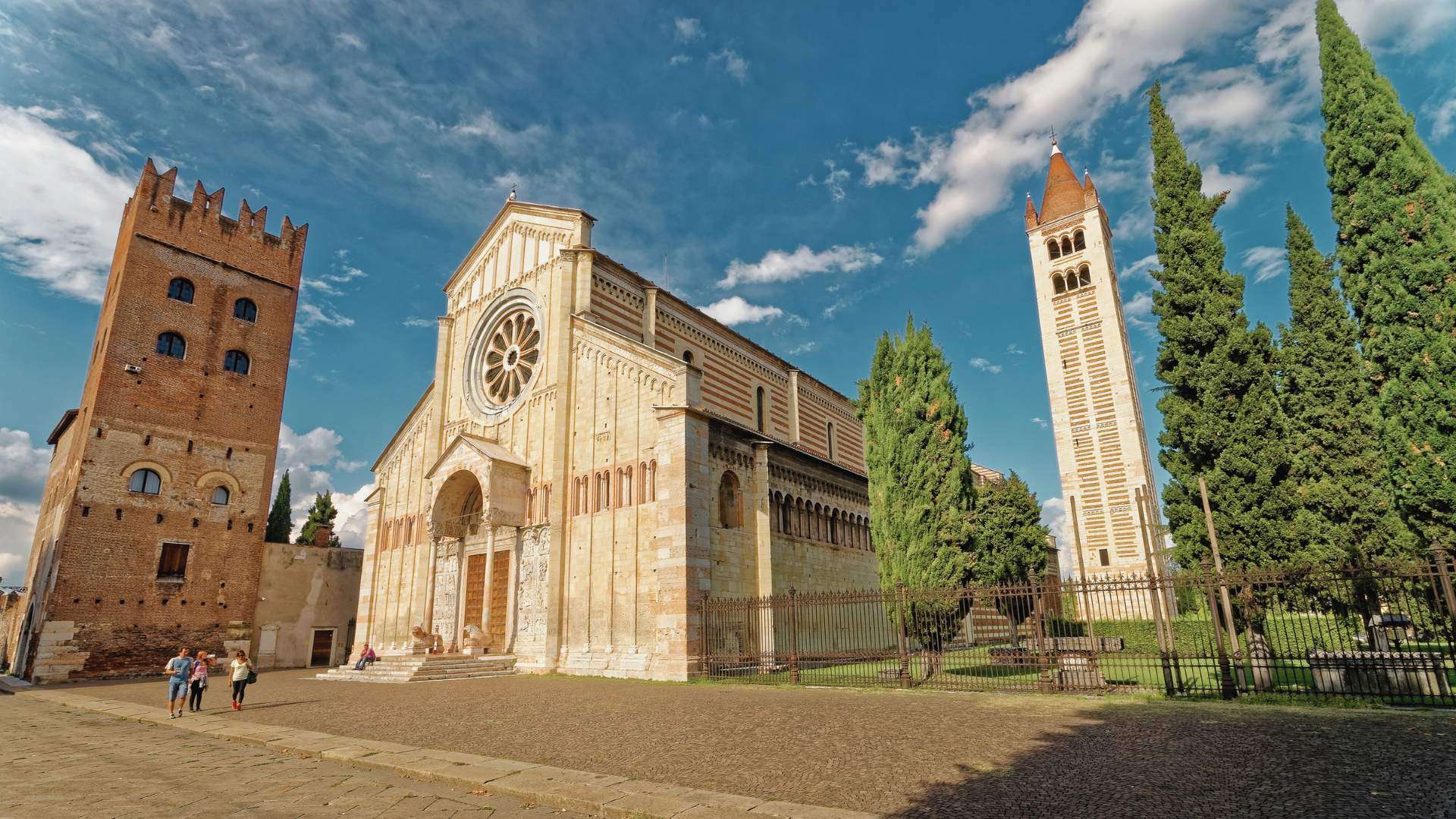
The basilica is located west of the Old Town and is the most beautiful Romanesque church in Veneto. Its façade alternates between light-colored tuff and brick; to the left stands the 13th-century abbey tower, and to the right, the 12th-century campanile. The building stands over the tomb of Saint Zeno, who was bishop of Verona in the 4th century and remains the city’s patron saint to this day.
There are three things you have to see: the bronze portal with its biblical panels, the triptych by Andrea Mantegna at the high altar and in the crypt. Admission costs €4.00 or is included in the combined ticket for four churches. From March through October, the church is open Monday through Saturday from 9 a.m. to 6 p.m., and on Sundays starting at 1 p.m. For more details, see here: Basilica of San Zeno Maggiore.

7 must-know highlights about the Verona Arena!
Anyone who enters the historic center of Verona will inevitably be captivated by a monument of global historical significance: the magnificent Verona Arena. This Roman amphitheater, nearly 2,000 years old...
Which churches are worth visiting in Verona?
Four major churches operate under a joint ticket issued by the Associazione Chiese Vive, from the association that oversees the city’s historic churches: the Cathedral, San Zeno, Sant’Anastasia, and San Fermo. Each ticket costs €4.00 individually, or €8.00 for all four, and the combo ticket is valid for 90 days. That’s the best deal in town.
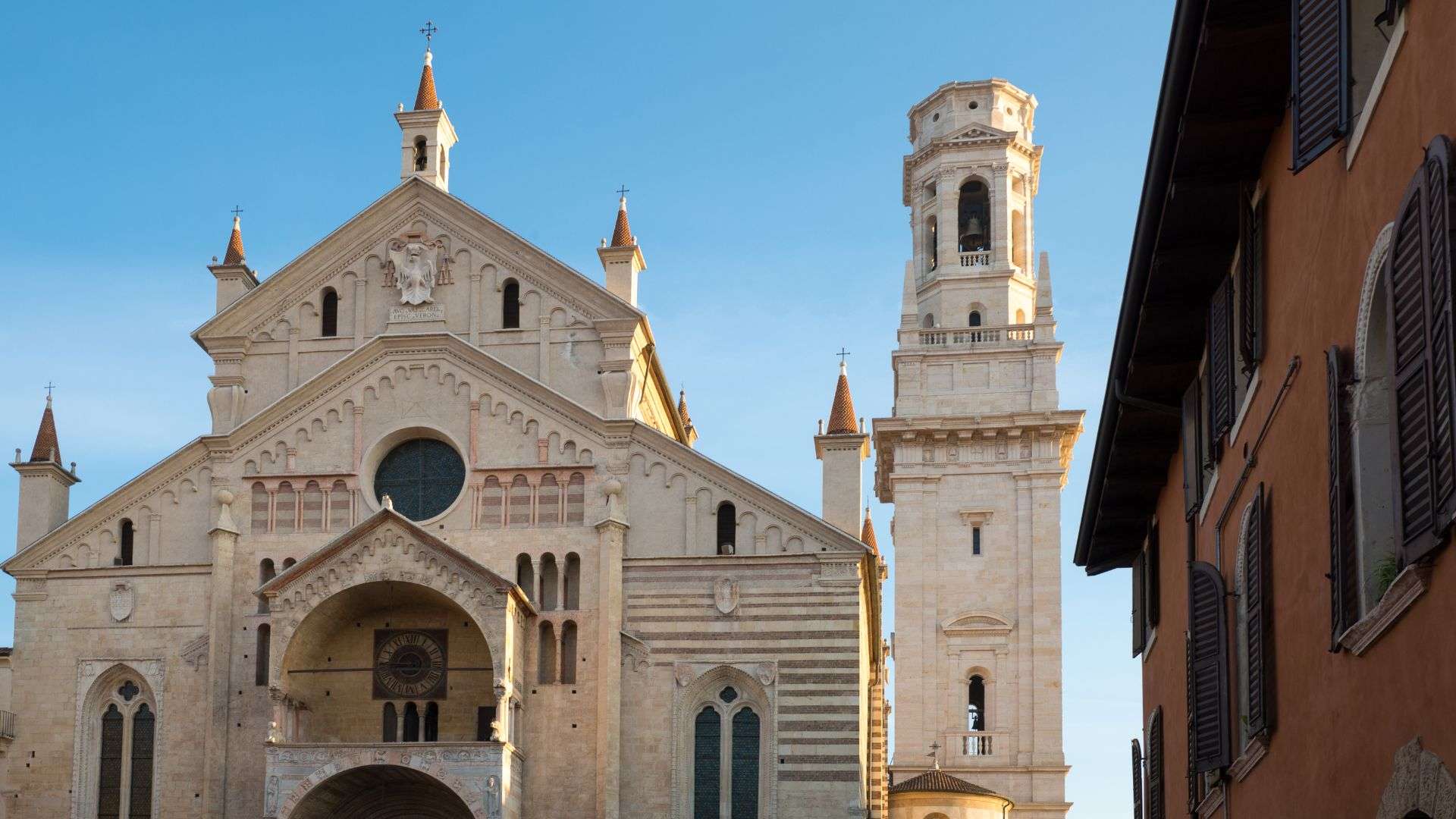
The Cathedral, officially Cathedral of Santa Maria Matricolare, is not a single building, but an entire complex that includes the baptismal church San Giovanni in Fonte, the church Sant’Elena and the canons' cloister. Beneath Sant’Elena lie the mosaic floors of the two earlier early Christian structures. The earthquake of 1117 severely damaged the church; during its reconstruction, it was expanded to its current size and given its two Romanesque narthexes.
Sant’Anastasia It is Verona’s largest church, a masterpiece of Italian Gothic architecture, built by the Dominicans beginning around 1290 and funded by the Scaliger family. Three naves rest on twelve columns of red Veronese marble; at the entrance, two crouching stone figures support the holy water fonts, which Gobbi, the Hunchbacks. The fresco by Pisanello hangs in the right transept.
What remains of Roman Verona?
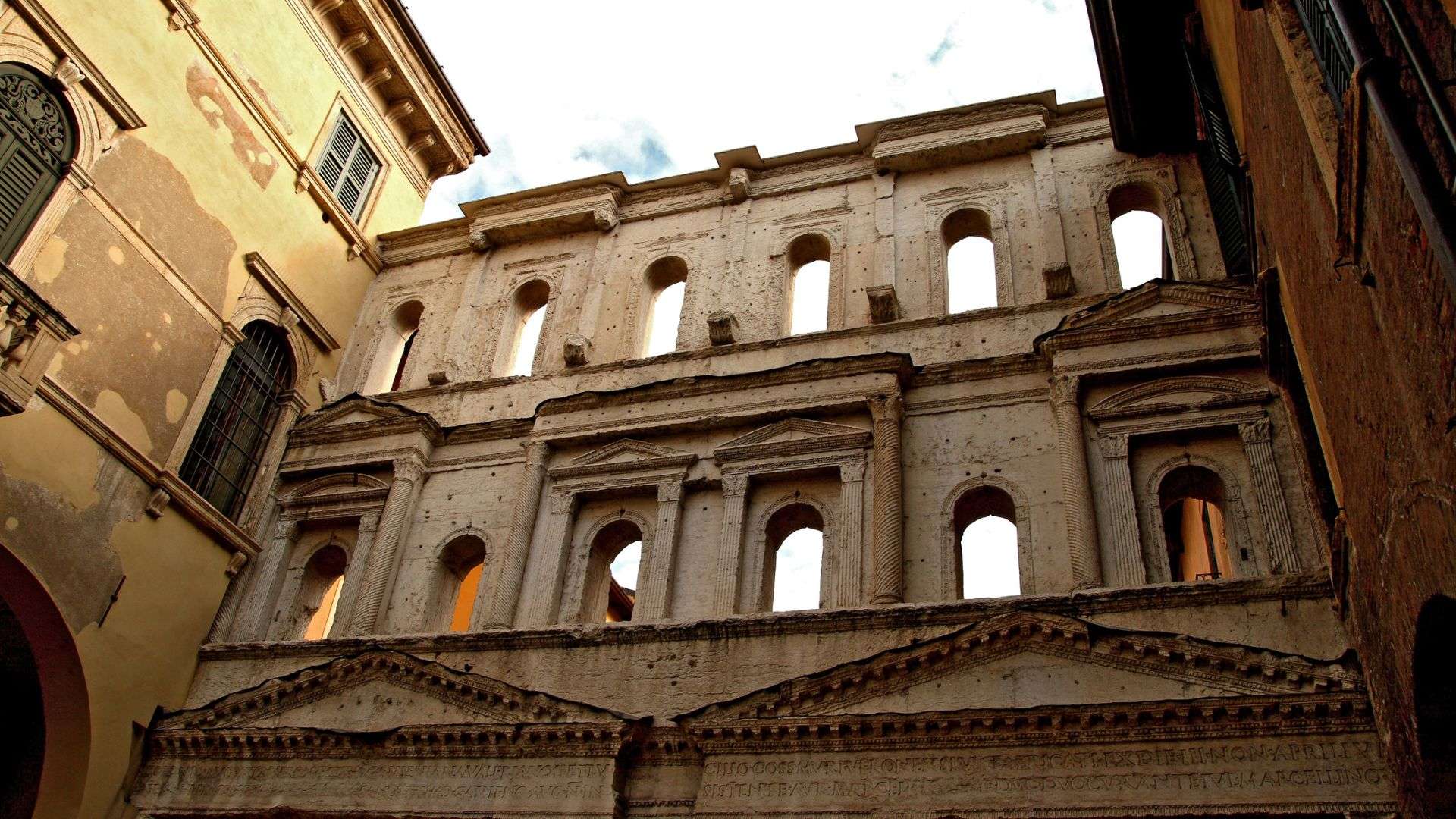
More than in most cities in northern Italy, and most of it is free. The Porta Borsari was the main gate of the Roman city on the road from Aquileia to Genoa; the two-story white limestone facade remains intact and stands today between residential buildings. A few alleys away lies the Porta Leoni, half of which is embedded in the wall of a house.
The Arco dei Gavi It was not part of the city wall but rather a triumphal arch dedicated to the Gavi family. Napoleon’s troops tore it down in 1805, and in 1932 it was rebuilt next to Castelvecchio using the original stones that had been stored away. In addition, there are the Arena, the Roman Theater, and the Piazza delle Erbe, which still retains the layout of the forum to this day. That is why the Old Town has been designated as City of Verona is listed on the UNESCO World Heritage List.
How do you get to Verona?
The easiest way is by train. The train station Verona Porta Nuova It’s located on the Brenner route and the Milan–Venice line; you can get there from Munich and Innsbruck without having to change trains. It’s about a 20-minute walk from the train station to Piazza Bra, or just a few stops by city bus; a ticket costs €1.50 when purchased in advance and is valid for 90 minutes, or €2.00 when purchased on board for a single trip without transfers. A day pass costs €5.00.
The airport Verona-Villafranca „Valerio Catullo“ hangs over the Verona Airlink At the train station: every 20 minutes, 15-minute ride, €7.00. The ticket is valid for another 75 minutes on city bus routes, so you can keep traveling right away. If you're arriving by car, it's best to park in the parking garage: The Downtown Parking at the Via Campo Marzo It costs €1.00 per hour and €10.00 per day; the parking garages at the train station are free for the first 30 minutes and cost €1.50 per hour after that.
The Old Town, located in the Adige River bend between Ponte Scaligero and Ponte Aleardi, is a Zona a Traffico Limitato (restricted traffic zone) and is monitored by cameras. If you’re staying at a hotel within the zone, you can register your license plate there and are allowed to drive in. This rule does not apply to vacation rentals; in that case, you’ll need to park outside the zone.

What should you definitely try in Verona?
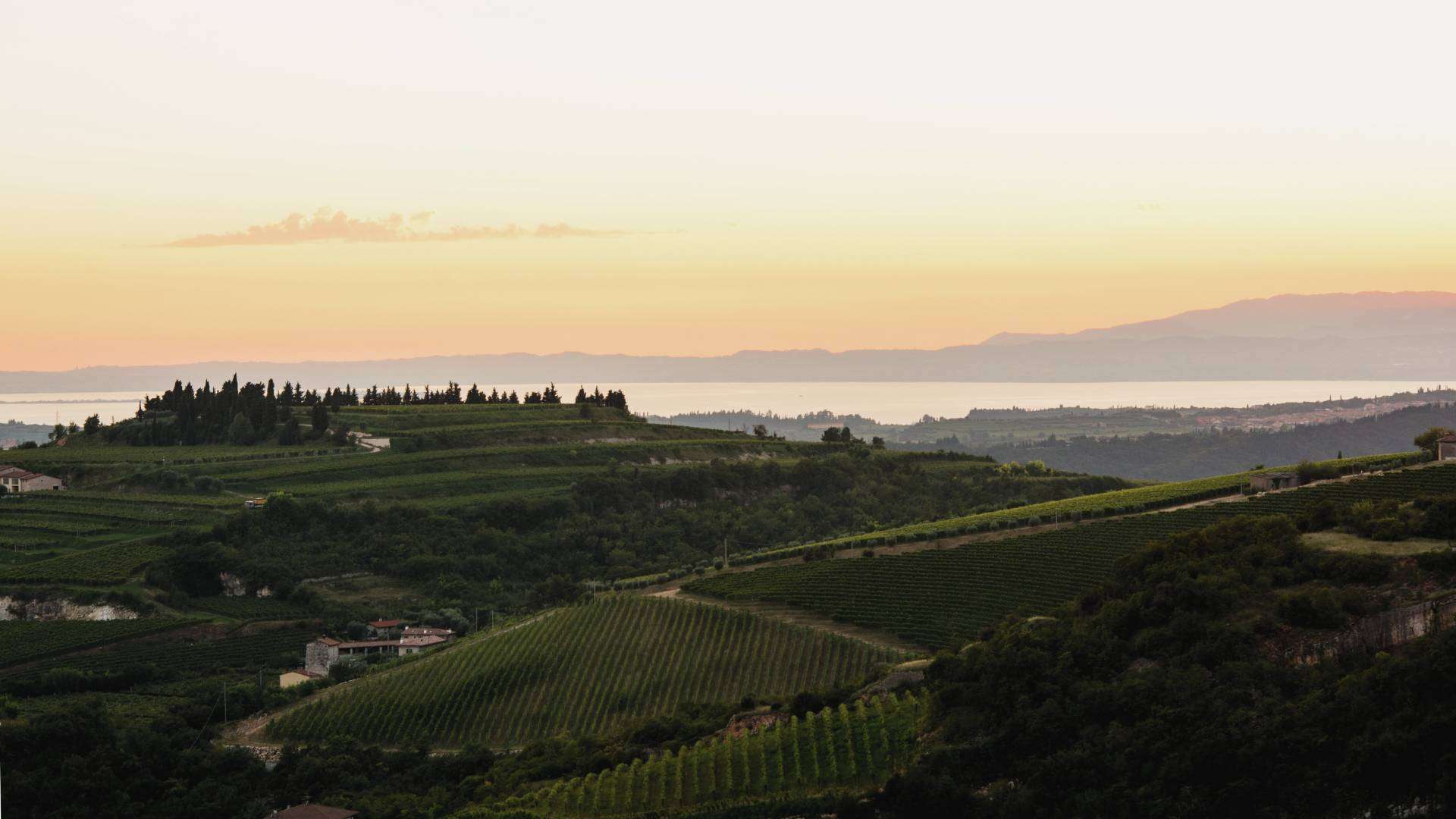
Verona is the capital of one of Italy's largest wine-growing regions, and you can really taste that in its cuisine. The most famous wine is the Amarone della Valpolicella, a dry red wine made from partially dried grapes: Corvina, Corvinone, and Rondinella are aged for 100 to 120 days in the fruit vendor, the well-ventilated drying room, before they are pressed. The same grapes are used to make the sweet Recioto, and the Ripasso ferments on its pomace.
In addition, there is the white Soave made from at least 70 percent Garganega—a variety that has been protected since 1968 and is grown east of the city—and the light Bardolino from the eastern shore of Lake Garda, which has been a DOC since that same year. On winter evenings, the boiled with pearà, boiled beef with a sauce made from breadcrumbs, beef marrow, broth, and plenty of black pepper. In the spring, risotto all’Amarone is added to the menu, and in December, the Pandoro, the star-shaped cake that Verona gave to the whole world for Christmas.
Where's the best place to eat in Verona?
The Old Town is home to four restaurants, each perfect for a different kind of evening: a three-star restaurant, a trattoria from the last century, a wine bar, and a seafood restaurant on the old Fischmarktgasse. You should make reservations at all four—and definitely on opera nights.
Four Restaurants in Verona's Old Town
| Restaurant | Here's what you can expect |
|---|---|
| Casa Perbellini 12 Apostles 3 Vicolo Corticella San Marco | Three Michelin stars, Executive Chef Giancarlo Perbellini. The restaurant is closed on Saturday evenings, Sundays, and Mondays. |
| Trattoria Al Pompiere 5 Vicolo Regina d’Ungheria | Opened as an osteria in the first half of the 20th century by a retired firefighter. Cured meats and cheeses from regional producers, and homemade pasta and desserts. |
| Antica Bottega del Vino 3 Vicolo Scudo di Francia | A wine bar in the heart of the Old Town; the menu features wines from the Valpolicella and Soave regions. |
| I Masenini 9a Piazzetta Pescheria | A fish market and trattoria under one roof, on the alley leading to the old fish market near the Adige River. |
As of September 2026 · Information provided by the establishments. Closing days vary by season; please call before visiting.
Where's the best place to stay in Verona?
If you’re planning to see an opera, it’s best to stay within a five-minute walk of the Arena: the performances end after midnight, and you won’t want to be searching for a bus at that hour. If you’re out and about during the day, the area around Piazza delle Erbe is just as good a place to stay. Three hotels in the Old Town:
| Accommodations | Here's what you can expect |
|---|---|
| Hotel Gabbia d’Oro 4/A Corso Porta Borsari | A historic home in an 18th-century building featuring wooden ceilings, frescoes, and antiques, as well as a sunroom. It’s just a few steps from Piazza delle Erbe. |
| Hotel Milano & SPA 11 Vicolo Tre Marchetti | About 50 meters from the arena, with a rooftop terrace offering a view of the amphitheater and a wellness area featuring a sauna and steam room. |
| Escalus Luxury Suites 12 Vicolo Tre Marchetti | A boutique hotel located between the Arena and Via Mazzini, a member of Small Luxury Hotels of the World. Named after Lord Escalus from Shakespeare's tragedy. |
When is the best time to visit Verona?
April, May, September, and October. That’s when it’s warm enough to spend the evening in the piazza and cool enough for the hike up to Castel San Pietro. In July and August, the heat is intense in the Adige River loop, and the city shares its visitors with Lake Garda.
The opera season, which runs from mid-June to mid-September, is the reason to visit even in the height of summer. However, it comes at a double cost: room rates go up, and access to the arena during the day is limited due to stage setups. Winter is the quietest time of year, though the city fills up again in the first weeks of December for the Christmas markets. From November through March, admission to the city’s museums costs €1.00 on the first Sunday of each month.
Which festivals should you plan to attend in Verona?
The Opera Festival at the Arena is the biggest event of the year. The 2027 season runs from June 11 to September 11; it is the 104th edition. The program features two productions of *Aida*—one modeled after the 1913 premiere and one by Stefano Poda—as well as *La Traviata*, *Carmen* in Franco Zeffirelli’s production, *Nabucco*, and, for the first time in 34 years, a ballet: Prokofiev’s *Romeo and Juliet*. With the early-bird discount available through November 4, 2026, the cheapest ticket costs €28.00 on the stone steps; starting November 5, 2026, the price is €35.00.
The city celebrates around Valentine's Day Verona in Love, most recently from February 13 to 15, 2026. In April, Vinitaly Italy's most important wine fair will take place at the exhibition halls from April 11 to 14, 2027; it is a trade show, while the general public celebrates at its spin-off event Vinitaly and the City in the Old Town. In September, it transforms Tocatì the neighborhood Veronetta into a playground for street games from around the world, most recently from September 18 to 20, 2026, for its 24th edition. And in early November, the Fieracavalli The trade show, which will take place from November 5 to 8, 2026, marking its 128th edition.
What You Should Know About Verona
Five things that no brochure mentions—but that can still save your day.
1. The city museums are closed on Mondays. Castelvecchio, the Museo Archeologico, the Galleria Achille Forti, the Museo Lapidario, and the Arena remain closed. On Mondays, the Casa di Giulietta (open from 2 p.m.), the Torre dei Lamberti, and the churches are open. So a Monday in Verona is a day for visiting churches and enjoying the views.
2. There is an admission fee to enter the courtyard of the Casa di Giulietta. Since April 2026, the route has gone through the Teatro Nuovo, and the €5.00 admission fee for the courtyard feels like a lot for a balcony from the 1930s. On the other hand, the crowds have become predictable, and for an additional €7.00, you get the whole theater.
3. The arena is a construction site in the summer. From April through October, the stage sets are in place in the amphitheater. If you want to see the ancient amphitheater, visit between November and March. If you want to experience the arena, come in the summer and go inside in the evening.
4. The Old Town is a restricted traffic zone (ZTL). If you want to park your car in front of the hotel, you'll need the hotel's license plate registration form. Without it, the bill will be mailed to your home. The parking garages at the train station solve this problem for €15.00 a day.
5. Prices vary on opera nights. Between mid-June and mid-September, you'll pay noticeably more for the same room, and the bars and restaurants are packed starting at 6 p.m. If you don't need to see the opera, plan your visit for May or October and save on both.
Who should visit Verona?
For opera audiences. No other theater in Europe is located in an ancient amphitheater, and the stone seats cost less than a night at the movies for two.
For city travelers with limited time. The eight highlights are all within a one-kilometer radius. Two days are enough to see everything; three days will let you take your time.
For wine travelers. Valpolicella, Soave, and Bardolino all begin about a half-hour's drive from the city, and Verona is the only place where you can enjoy all three in a glass on the same evening.
For vacationers at Lake Garda. From Peschiera del Garda, the regional train takes a quarter of an hour to reach Porta Nuova. That's the best rainy day the lake has to offer.
Combine Verona with Lake Garda, Valpolicella, and Valeggio sul Mincio
Verona is located in such a way that almost any day trip is worth it. It's a 15-minute train ride to Lake Garda, and Peschiera del Garda, and from there the bus continues on to Lazise. Southwest of the city lies Valeggio sul Mincio including the mill village of Borghetto and Parco Giardino Sigurtà.
To the north lies Valpolicella with its wineries; to the east, the Soave region surrounding the Scaliger Castle in the town of the same name. If you have more time, make the town your base: Our travel plans for 3 Days in Verona and 5 Days in Verona divide the city and the surrounding area into daily stages, and in the Verona City Guide You'll find all the individual posts in one place.

5 Days in Verona: Itinerary with Route, Excursions, and Tips
Three days exploring Verona on foot, two days of day trips to Lake Garda and Valpolicella—with an itinerary, verified ticket prices, and train connections instead of a rental car.

The funicular that hardly anyone uses
Almost everyone walks to Castel San Pietro, up the stairs behind the Roman Theater, and arrives at the top out of breath. Yet a funicular has been running up there since 1941; a round-trip ticket costs €3.00, and the ride takes less than two minutes.
The valley station is located in the Via Fontanelle, Santo Stefano, a few steps upstream from the Ponte Pietra. From April through October, it runs until 9 p.m.; in winter, until 5 p.m. Take it up and walk back down: The path ends right at the bridge, and the light over the old town is at its best half an hour before sunset.
Our take on Verona's sights
Verona is one of those rare cities where the famous sights and the must-see attractions are largely one and the same. The Arena lives up to its name, Piazza delle Erbe is still a great spot even on your tenth visit, and San Zeno is one of the three most beautiful Romanesque churches in Italy. Only the Casa di Giulietta is what you’d expect: crowded, a modern invention, and yet still worth a visit.
The city is budget-friendly. For €40.00, you can see the arena, the tower, a museum, and two churches in a single day; with the VeronaCard for €33.00, it works out even cheaper once you add a third attraction. The only thing that gets expensive is an evening at the opera—but it’s worth it.
The next step: Set aside two full days, book your time slot at the Casa di Giulietta in advance, and take the rest as it comes. You can find the detailed breakdown in our itinerary for 3 Days in Verona.
Map: Verona, Veneto
FAQ - Frequently Asked Questions About Verona
Experiences & sights
Prices, hours of operation, and schedules are subject to change. Check the official websites for the latest information before your trip.
Sources and Further Information
- City of Verona, Civic Museums: Current Admission Fees (accessed in September 2026)
- City of Verona, Municipal Museums: Hours and Events (accessed in September 2026)
- City of Verona, Tourism: VeronaCard (accessed in September 2026)
- City of Verona: Arena Amphitheater (accessed in September 2026)
- City of Verona: Lamberti Tower (accessed in September 2026)
- City of Verona: Castelvecchio Museum (accessed in September 2026)
- City of Verona, Tourism: Ponte Pietra (accessed in September 2026)
- AGEC: Torre dei Lamberti, ticket office (accessed in September 2026)
- AGEC: Castel San Pietro Funicular, Ticket Office (accessed in September 2026)
- Associazione Chiese Vive: The Churches of Verona (accessed in September 2026)
- Fondazione Arena di Verona: Opera Festival (accessed in September 2026)
- ATV Verona: Service to Catullo Airport (accessed in September 2026)
- AMT3: Indoor parking lots in Verona (accessed in September 2026)
- Fieracavalli: Dates and Times (accessed in September 2026)