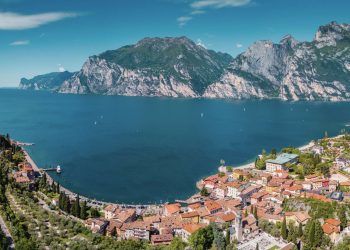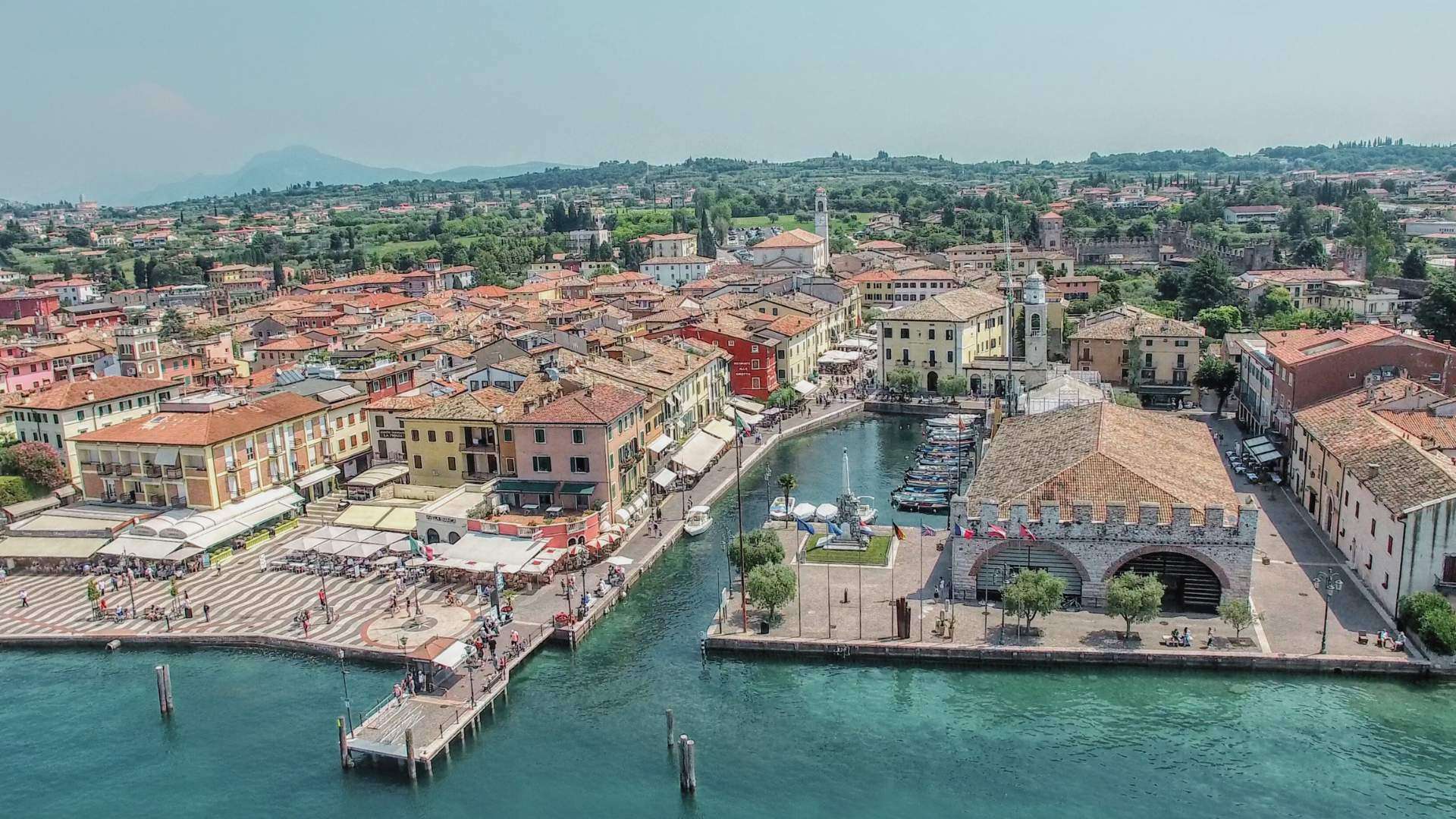


Lazise—the town on the eastern shore of Lake Garda—includes a year in its letterhead: 983. On May 7 of that year, in Verona, Emperor Otto II granted eighteen specifically named citizens of Lazise the right to fortify their castle, collect tolls on the shore and for transit, and fish in the lake. It was the first time an emperor had granted such rights not to a church or a feudal lord, but to a community of citizens. To this day, Lazise’s sights cost you almost nothing: the old town, the city walls, the three city gates, the old harbor, and the lakeside promenade are all freely accessible; admission is charged only at the thermal park in the district of Colà and the amusement parks just outside town.
This guide will introduce you to the seven highlights of the town, the verified prices for 2026, the route through the restricted traffic zone, both market days, and the thirteen wineries that produce wine in the Bardolino municipality.
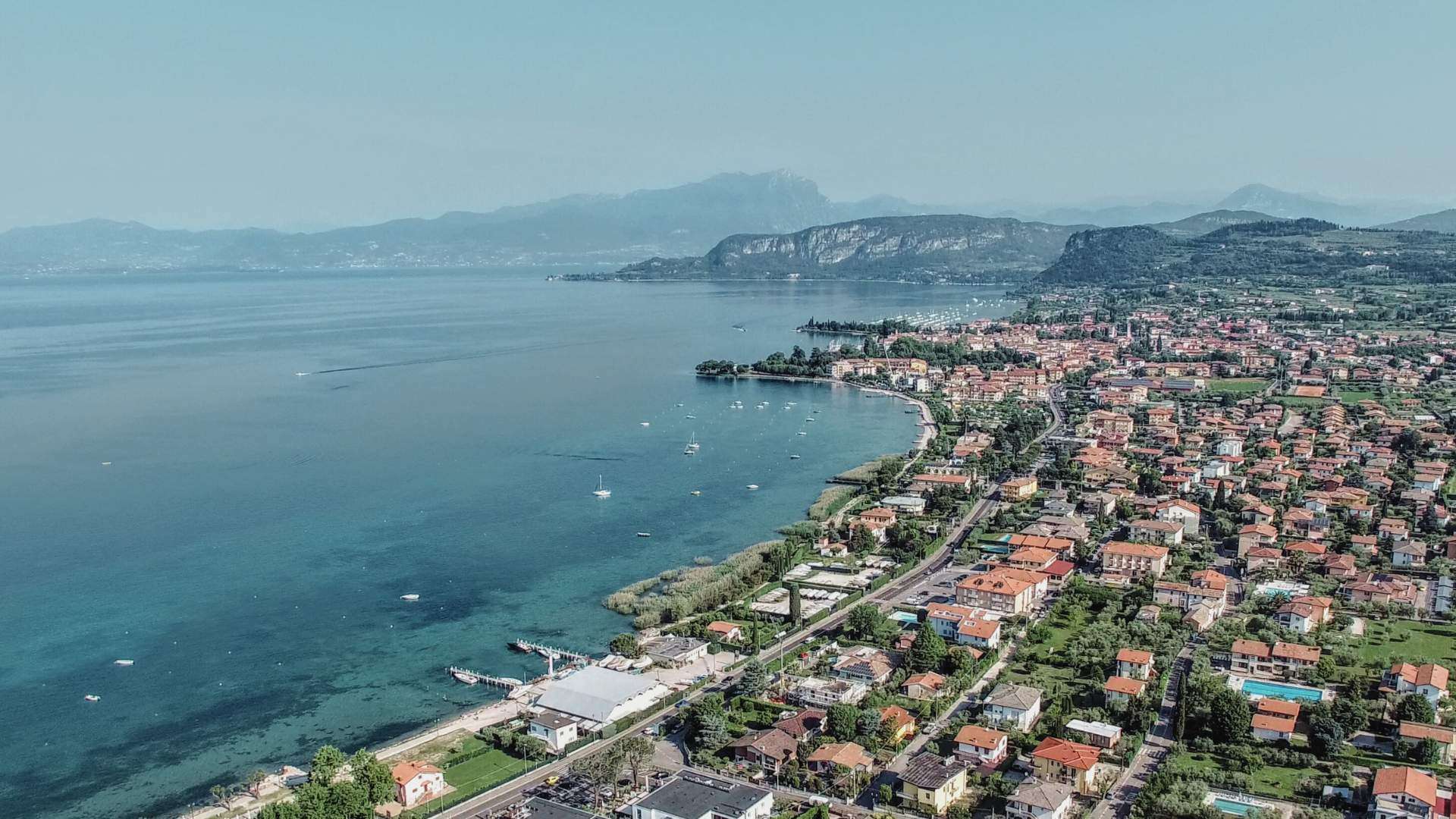
Lazise is located in the province of Verona, is part of the Veneto region, and has two districts: Colà in the hinterland, where the thermal park is located, and Pacengo in the south, with its own harbor. The municipality has nine kilometers of lakeshore; the local directory lists 184 lodging establishments, and the Wednesday farmers’ market features 194 stalls. The patron saint is San Martino.
Lazise by the Numbers
The town is small enough to explore on foot in a morning, yet large enough to have its own vineyard, a thermal park, and two weekly markets.
As of September 2026 · Information provided by the Comune di Lazise, TourismLazise, and the Consorzio di Tutela Chiaretto e Bardolino.
- Families with children
- Cyclists on the flat south bank
- Wine Tourists
- Campers and RV owners
- Spa guests
- If you're looking for a sandy beach
- Anyone who wants to drive right up to the front door
- For those looking for museums and galleries
- Anyone expecting peace and quiet in August
How much do the attractions in Lazise cost?
Nothing in the town itself. The Old Town, the city walls, the three city gates, the old harbor, and the parish church San Nicolò and the lakeside promenade Marconi Lakeside Promenade Admission is free. Payment is made outside the walls: at the thermal park in Colà, at the amusement parks, and on the ship.
How Much Does a Day in Lazise Cost?
The four lines above explain why Lazise is considered an affordable destination: The entire tour of the old town is free.
| Offer | Price |
|---|---|
| Old Town, City Wall, and the Three City Gates | free |
| Lungolago Marconi Lakeside Promenade | free |
| Porto Vecchio, the Old Harbor | free |
| Church of St. Nicholas | free |
| Castello Scaligero, exterior view | free |
| Movieland Park near Lazise, one-day ticket | €36.00 for heights of 140 cm and up · €29.00 for heights between 100 and 140 cm |
| Caneva Aquapark near Lazise, Day Pass | €34.00 for heights of 140 cm and up · €28.00 for heights between 100 and 140 cm |
| Combined Ticket for Both Parks, One Day | 44,00 € |
| Combined ticket for both parks, seven days | 66,00 € |
| Parco Natura Viva in Bussolengo, Park | €25.00 at the box office · starting at €20.00 online |
| Parco Natura Viva: A Park and Safari Combined | €30.00 at the ticket window |
| Boat Tour, South Bank Day Pass | €27.00 · €13.50 (reduced) |
| Boat Tour, Day Pass for the Entire Lake | €39.50 · €20.00 (reduced) |
| Visitor's tax per person per night | €1.00 to €3.50, depending on the category |
As of September 2026 · Prices according to Canevaworld, Parco Natura Viva, Navigazione Lago di Garda, and the Municipality of Lazise.
In Gardaland, the amusement park in neighboring Castelnuovo del Garda, children under 90 centimeters in height get in for free. Also free are both weekly markets, the view of the Castello from the lakefront, and a stroll along the Piazza Vittorio Emanuele II, the main square behind the harbor. The guide to the Riviera degli Ulivi.


Riviera degli Ulivi on Lake Garda: Towns, Olive Oil, and Honest Tips
Seven towns, an olive oil with protected designation of origin, and a gravel shoreline: The Riviera degli Ulivi, stretching between Peschiera del Garda and Malcesine, is Italy’s northernmost olive oil coast—featuring prices, dates, and honest...
What are the 7 must-see attractions in Lazise?
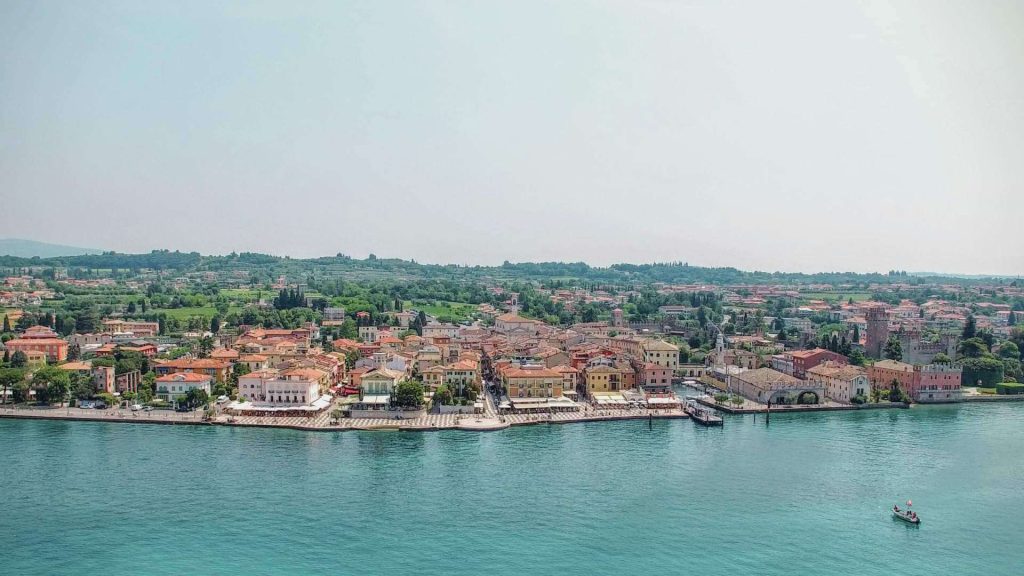
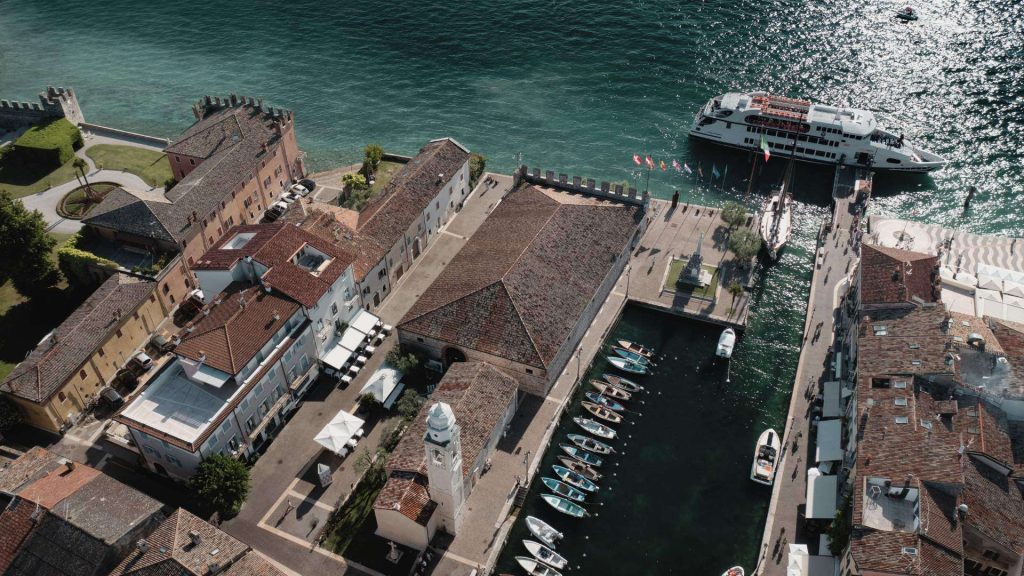
Seven destinations, all within a little less than half an hour's walk—except for the last one: Castello Scaligero, Dogana Veneta, and the church San Nicolò, Porto Vecchio, the city walls with their three gates, the piazza along with the lakeside promenade, and the thermal park in the district of Colà.
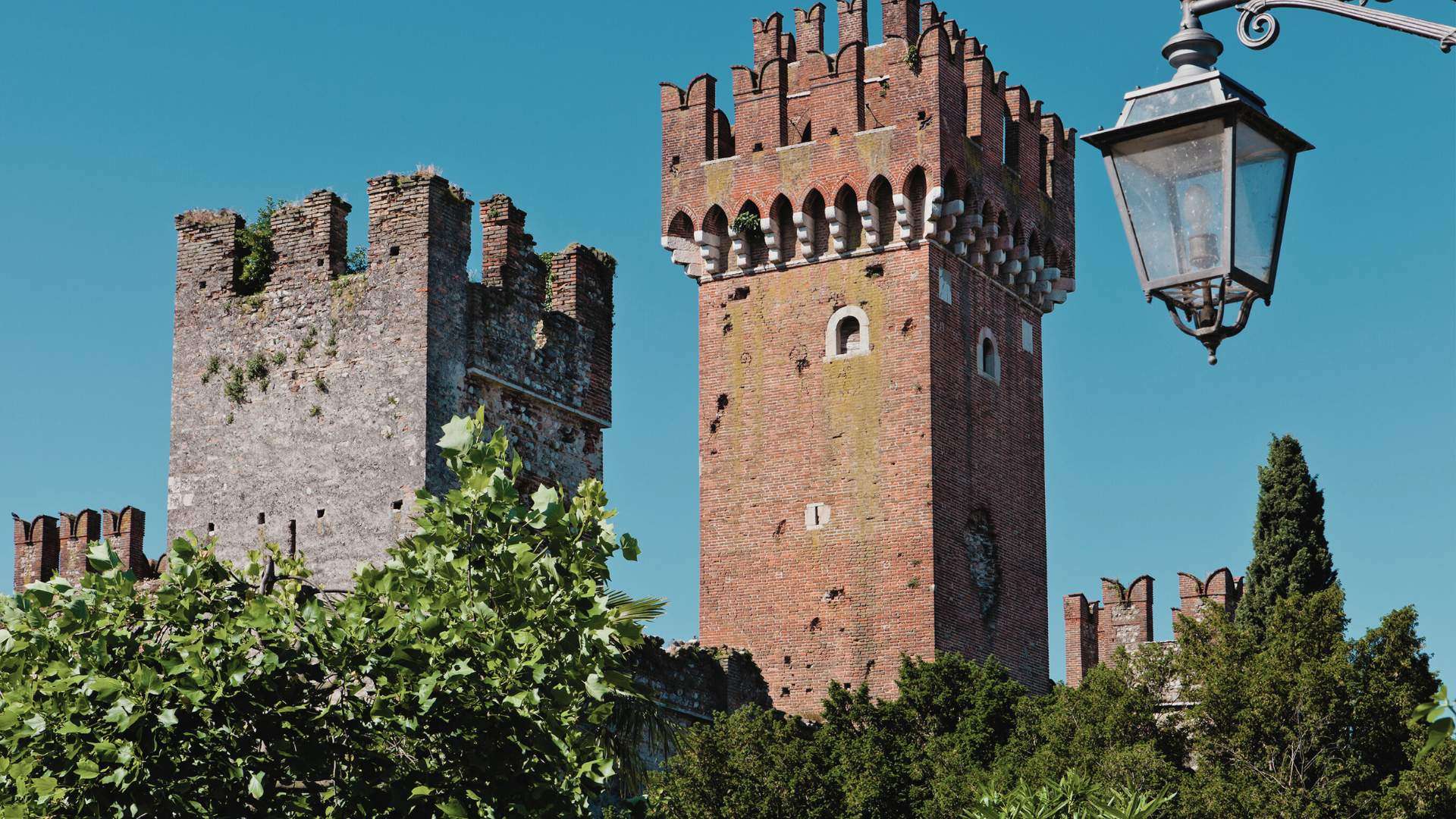
1. The Castello Scaligero, the castle overlooking the Old Town
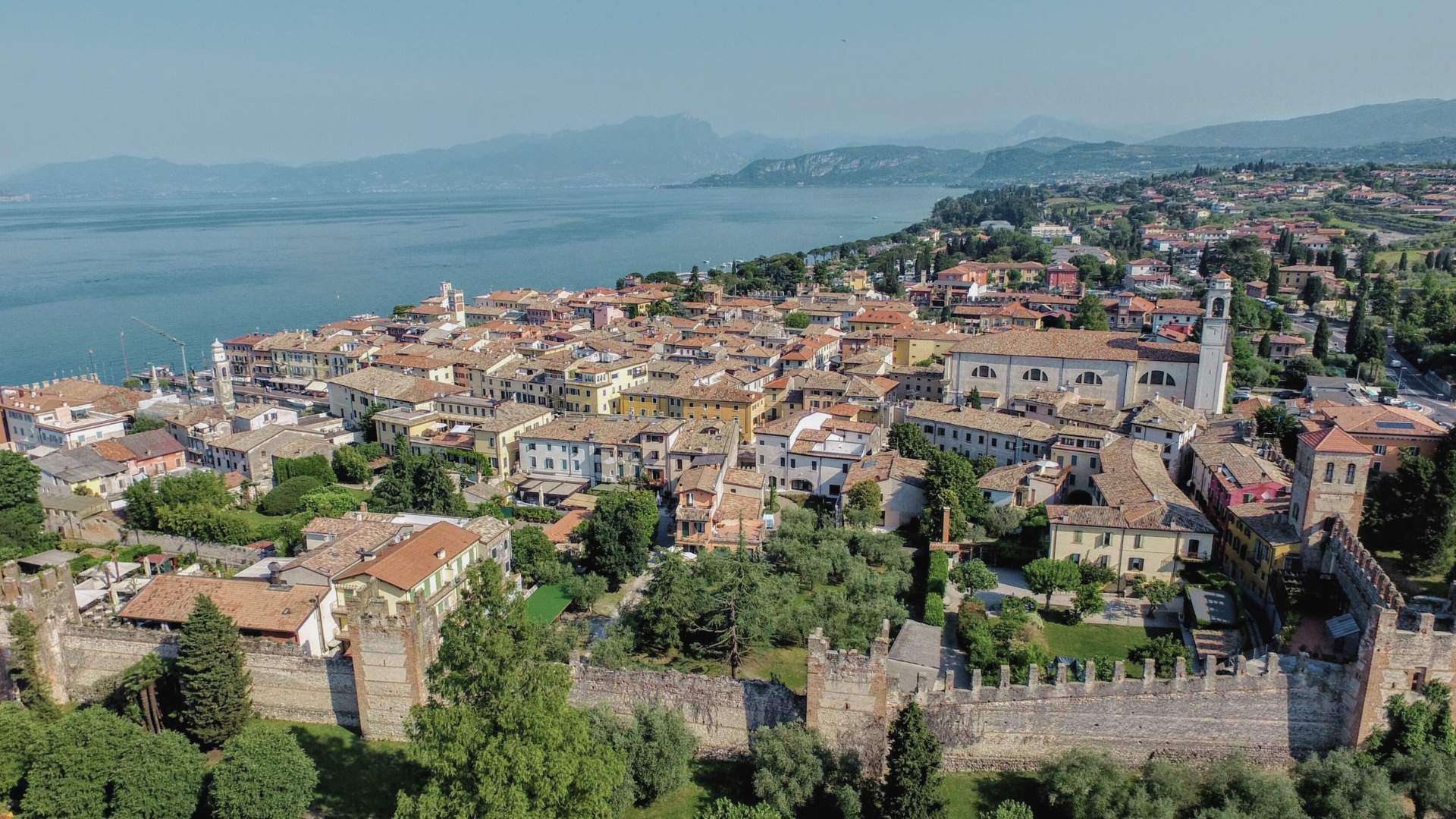
The castle was built between 1375 and 1381 and is part of the defensive system of the Scaliger, the 14th-century ruling family of Verona. Brick-red towers with swallowtail battlements, a walled enclosure that extends all the way to the water. Anyone arriving from the south along the waterfront road will see it first.
The best way to approach it is via the Rosenheim Street, which is named after Bavaria's sister city and leads down from the waterfront road to one of the three old city gates. Good to know: The Castello has neither a ticket office nor set opening hours. But the view is free, and you can see more of the complex from the water than from any street.
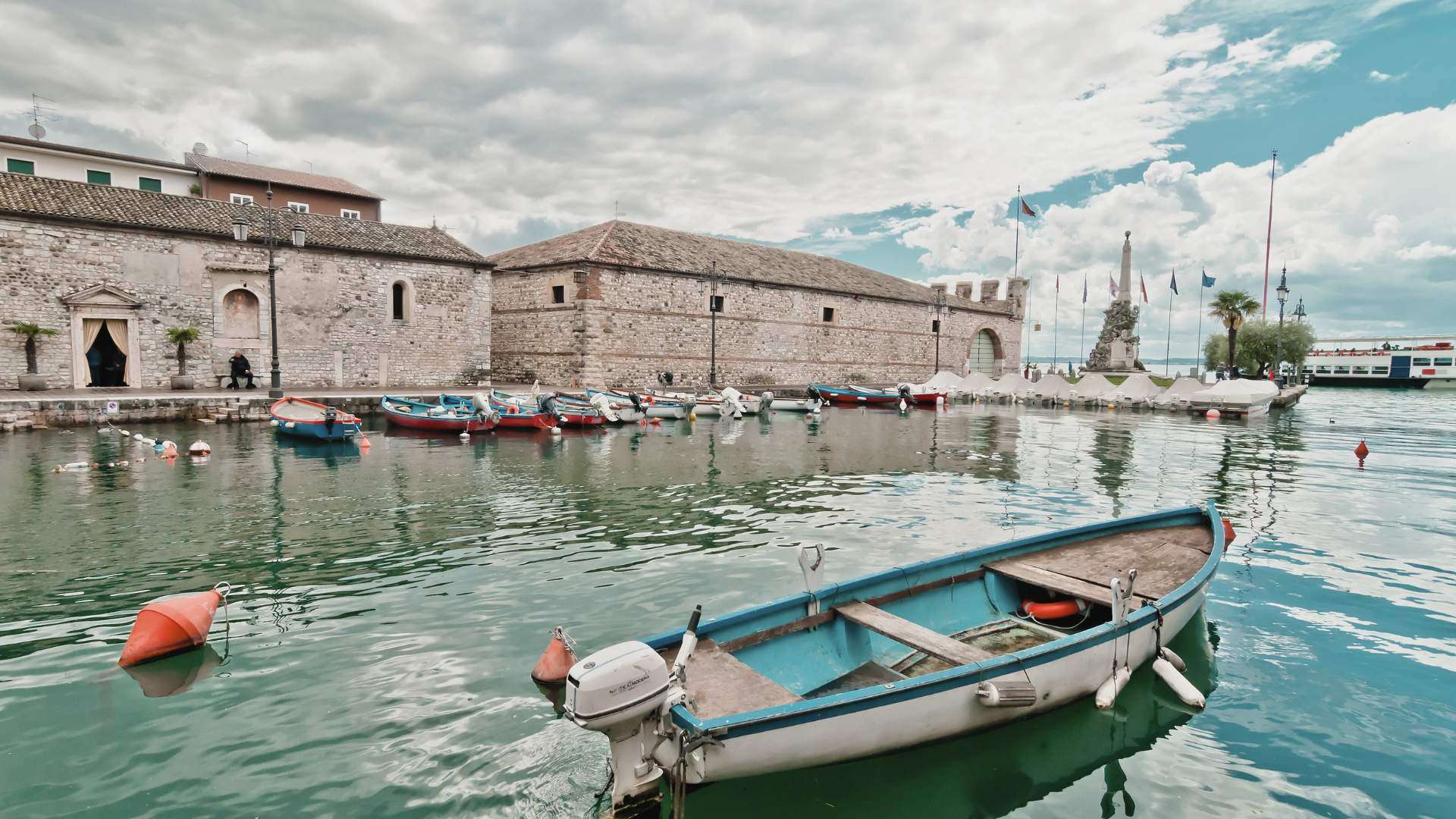
2. The Dogana Veneta, the Venetian customs house on the waterfront
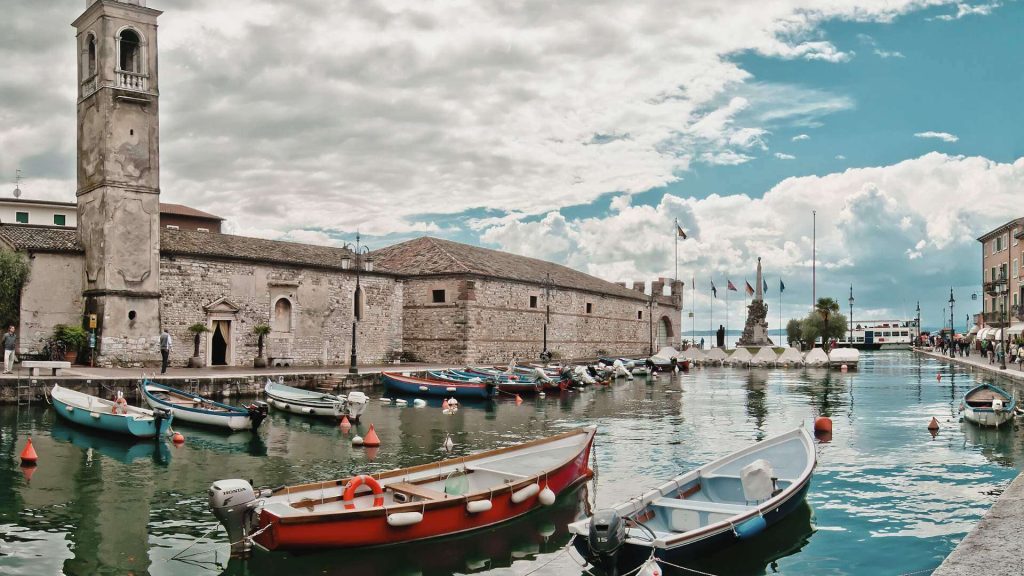
The long stone building by the harbor basin is a symbol of the town's commercial history. Its arches were built Cangrande della Scala, the most famous lord of Verona, had it built so that boats could enter it. There is no exact date of construction; evidence suggests the second half of the 13th century.
Under the Serenissima, during the time of the Republic of Venice, the building served as an arsenal and a transshipment point for goods between Lombardy and the lagoon. The municipality later purchased it and used it as a customs office until the first half of the 16th century. It subsequently served as a sheepfold, a saltpeter factory for gunpowder, the town’s first cotton mill, and, during the Fascist era, the Casa del Fascio. It has belonged to the municipality again since 1961, and since its restoration in 2003, weddings, concerts, conferences, and exhibitions have been held there. That’s why you can only see the interior during events. In December, your chances of seeing it are good, as that’s when the Christmas program takes place.
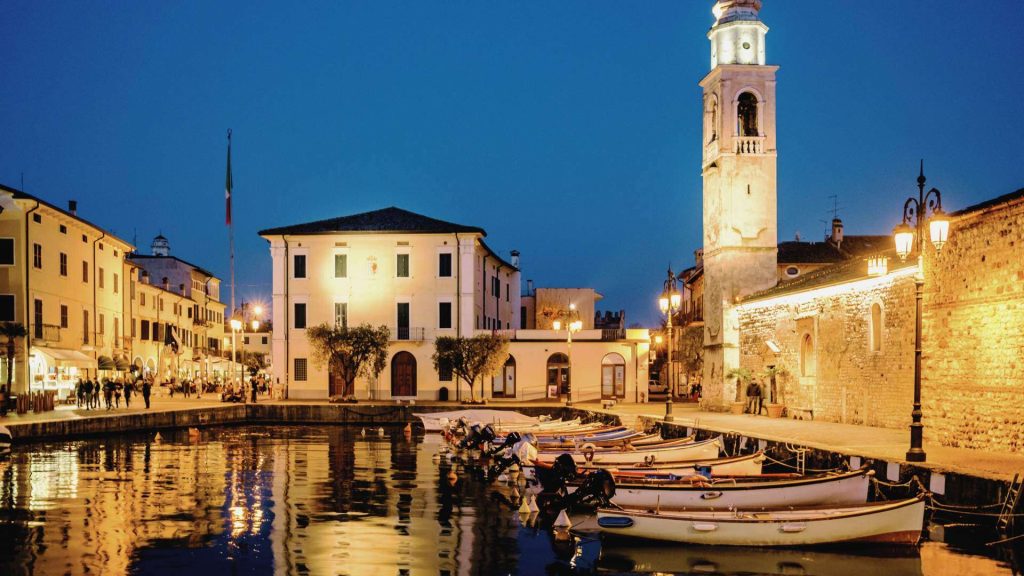
3. The Chiesa di San Nicolò, the Romanesque harbor church
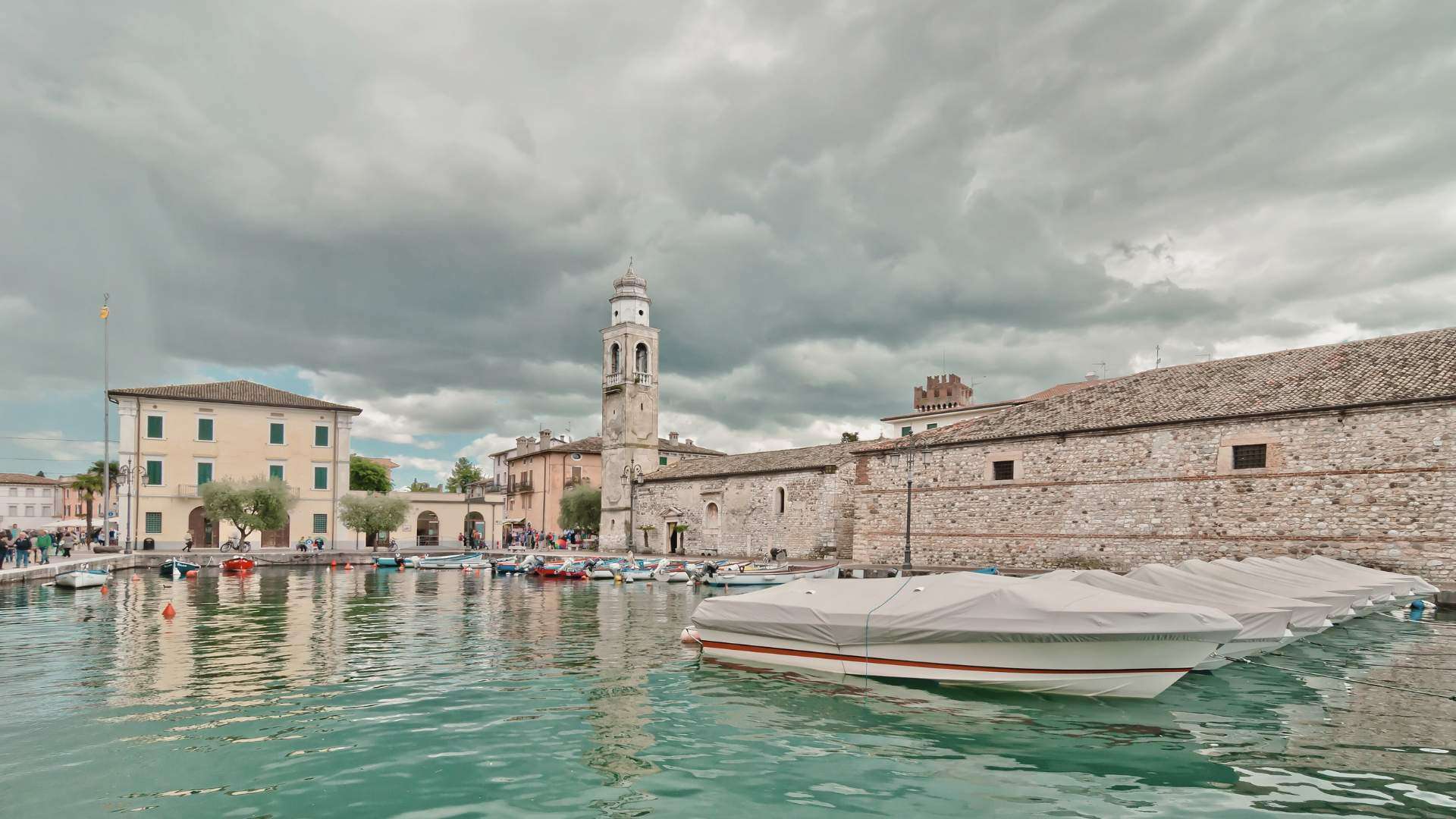
The small parish church at the harbor dates from the late 12th century and features medieval frescoes. It was consecrated San Nicolò, the patron saint of fishermen and sailors, which makes perfect sense in this context.
Two disasters changed it: The earthquake of 1117 and the fire of 1595 destroyed the apse and the bell tower; both were rebuilt. Between the church and the Dogana there was also a colonnaded hall where notaries drew up commercial documents; it fell into disrepair and was demolished in 1792. To this day, the bell tower remains the focal point of every photo of the harbor.
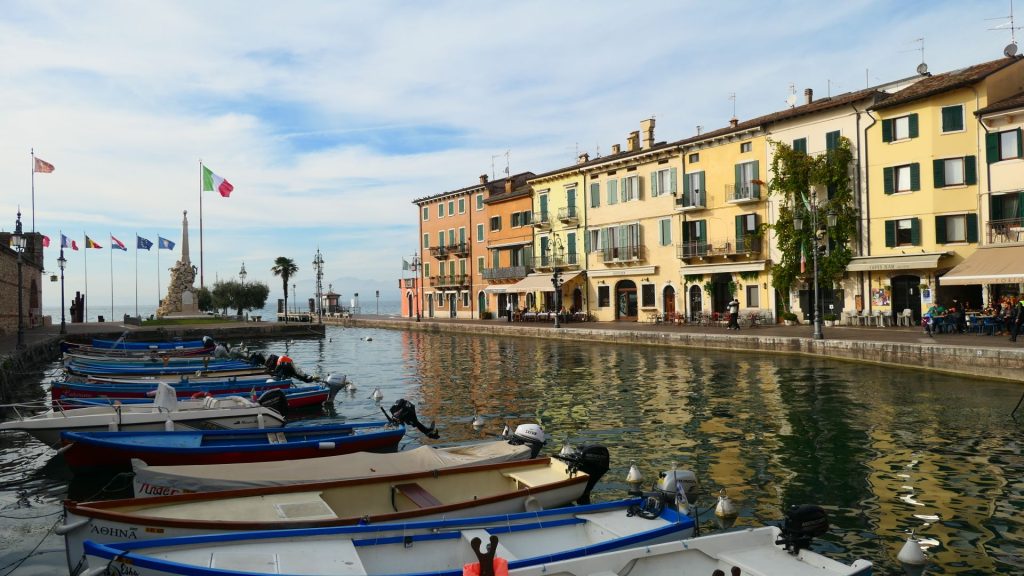
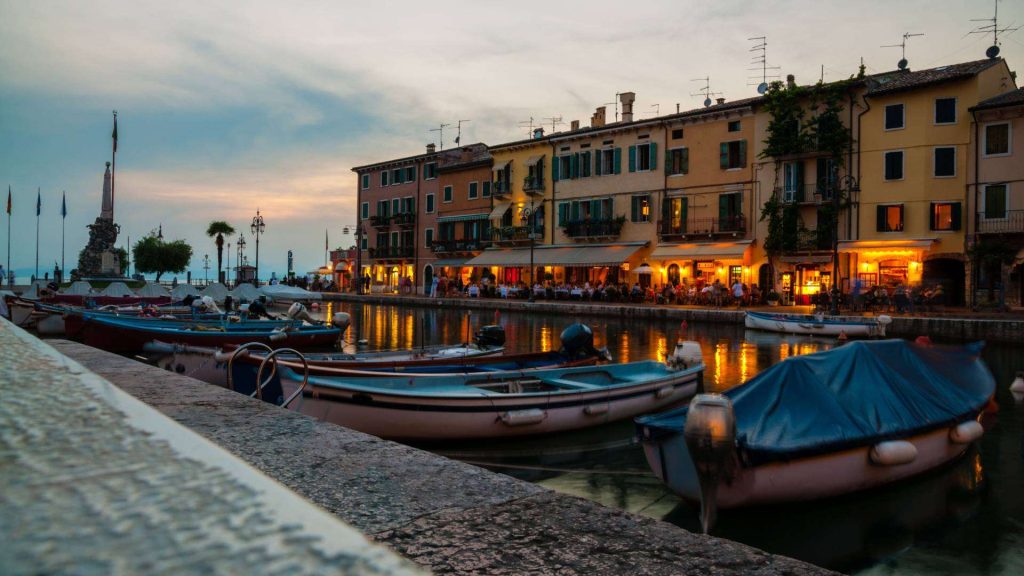
4. Porto Vecchio, the old harbor
The port is first mentioned in historical records as early as the 10th century; it enjoyed its heyday under Venetian rule: At that time, it was home not only to fishing boats but also to cargo ships traveling between Venice, Trentino, and Lombardy.
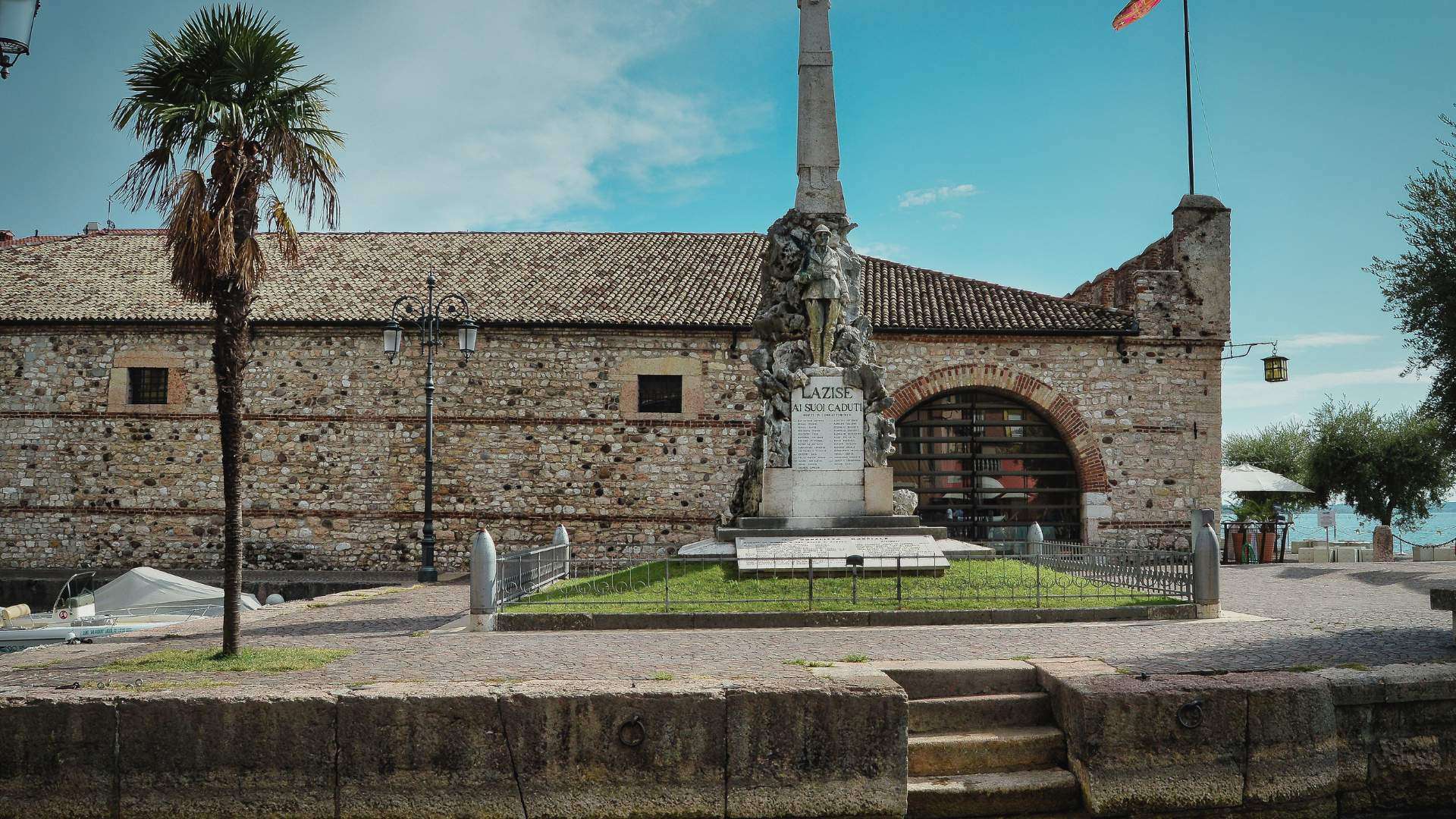
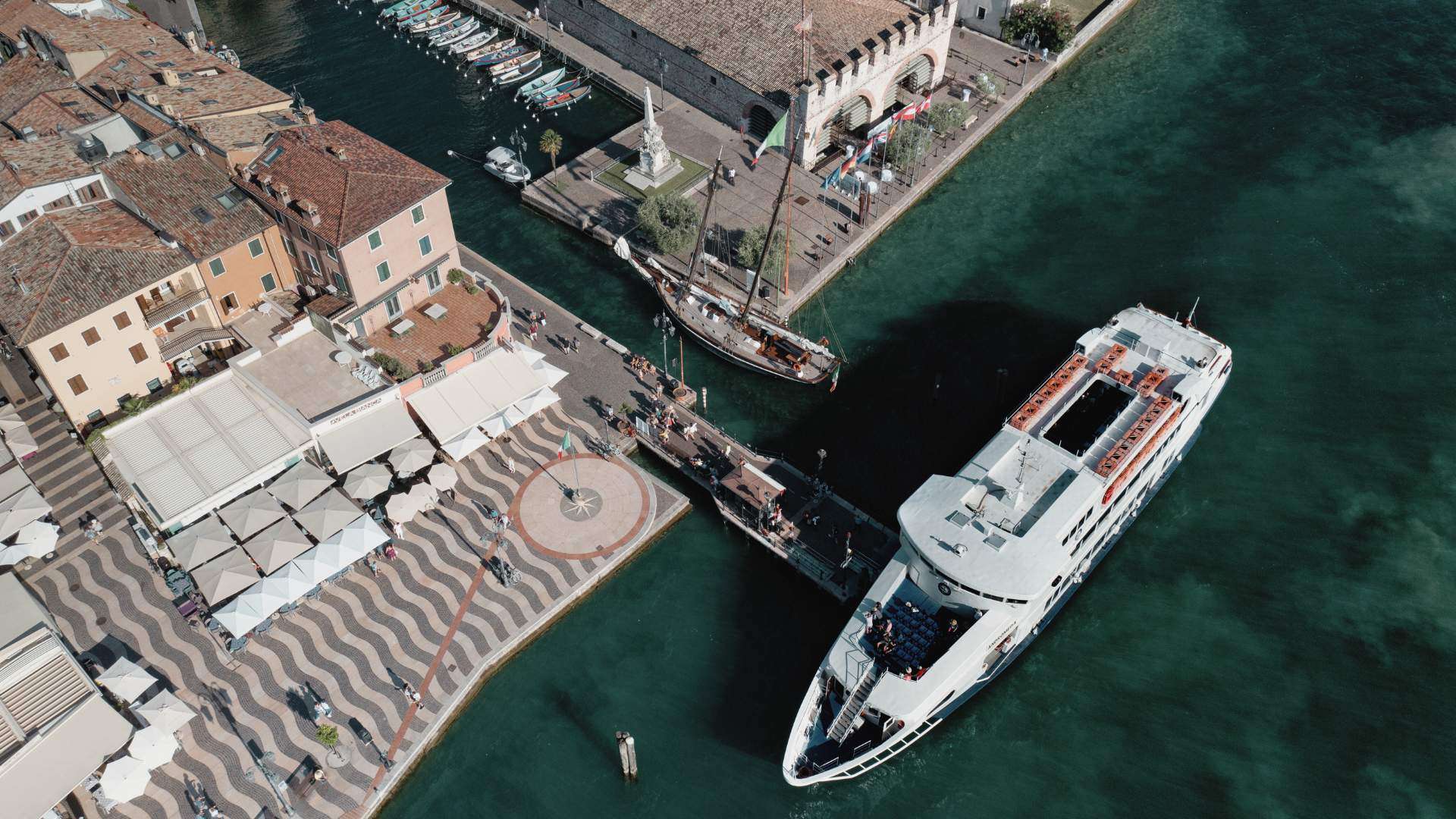
Two towers, Cadenon and Cason, stood at either end and tied it to the wall. In 1924, they were demolished to make way for the war memorial. The arcades on the north side, under which wood and coal were unloaded, were demolished in 1939 to make way for the riverside road. Today, excursion boats and ferries dock here, and anyone arriving by boat can moor for an hour at a time.

5. The City Wall and the Three City Gates
Three gates remain from the medieval fortifications: Porta San Zeno To the east was the civilian gate, Porta Cansignorio in the north and Porta del Lion There were military gates on the south side. The wall ran between them, connecting the castle and the harbor towers into a single complex.
The walk around the outside takes less than half an hour and is the best way to understand just how small the protected core area was and how much of it is still standing.
6. Lungolago Marconi and Piazza Vittorio Emanuele II
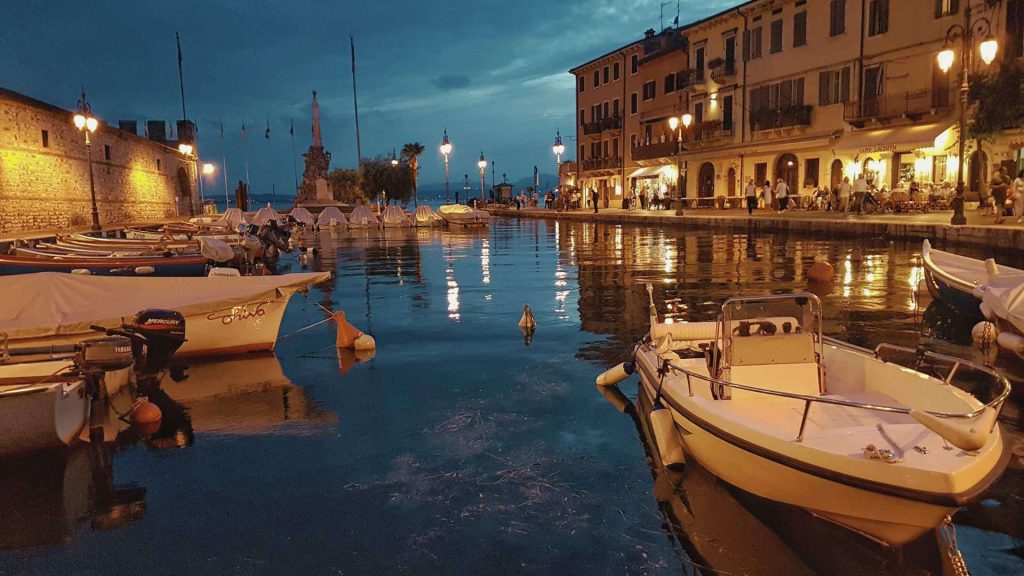
The Lakeside Promenade Marconi Lakeside Promenade It leads north toward Bardolino, Cisano, and Garda, and south to the beaches of Peschiera del Garda. Its pavement features a mosaic of waves, and there’s a reason for that: The water used to reach right up to the arches of today’s restaurants.
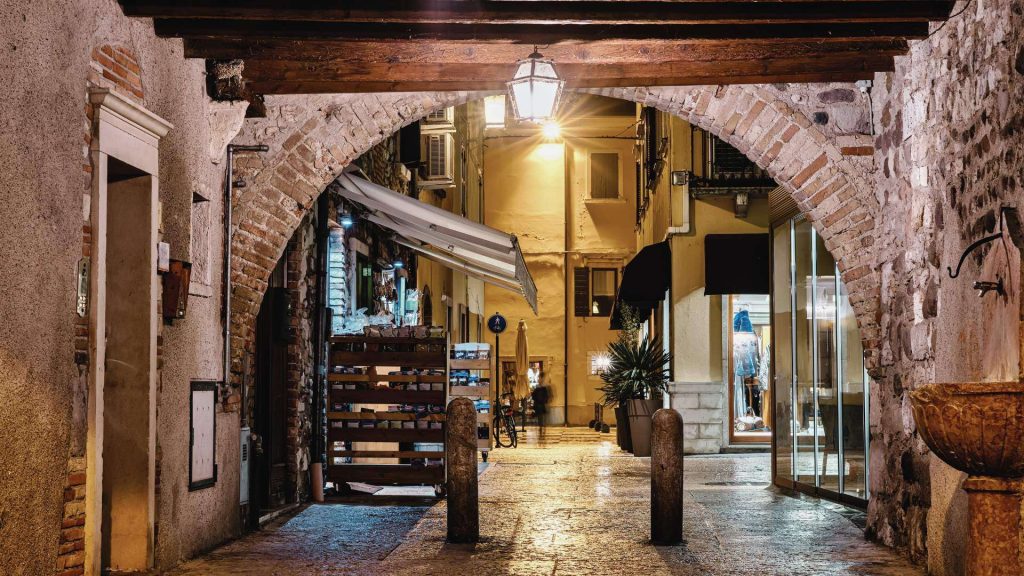
That is why Lazise was called "Little Venice." Its alleys are called calli, just like the narrow alleys between the houses in Venice. They were accessible only by boat and protected from attackers by palisades. At the end of the promenade, the Piazza Vittorio Emanuele II with its checkerboard-patterned cobblestones, the monument, and the arcades, under which tables are set up in the evening.
7. The Villa dei Cedri Thermal Park in Colà
The thermal park is located in the neighborhood of Colà, about four kilometers inland, at the 4 Piazza di Sopra. Its water is an alkaline mineral water with a pH of 7.8 and high levels of bicarbonate, calcium, silicon, and magnesium.
According to official recognition, bathing in these waters is effective for rheumatic joint pain, in physical rehabilitation, and for venous and skin conditions. So this is not just a heated recreational pool, but a certified therapeutic spring. Rates and hours vary by season; call +39 045 7590988 to confirm both before you go.

Peschiera del Garda Attractions: 6 Highlights & Tips
The Venetian fortress in Peschiera del Garda has been a UNESCO World Heritage Site since 2017 and has no admission fee—six highlights on the southern shore of Lake Garda, including 2026 prices, travel information, and honest tips.
What amusement parks are located near Lazise?
Four, and all within driving distance. Movieland Park and the Caneva Aquapark are part of the Canevaworld Resort near Lazise: A one-day ticket costs €36.00, or €34.00 for visitors 140 centimeters or taller; €29.00 and €28.00 for children between 100 and 140 centimeters; admission is free for children under 100 centimeters. Those who want to visit both parks in one day pay €44.00; the seven-day pass costs €66.00.
Gardaland is located south of Castelnuovo del Garda and admits children under 90 centimeters tall for free. The Parco Natura Viva in Bussolengo, an animal and safari park, is open from March through December; admission at the ticket office is €25.00 for the park and €30.00 for the park and safari combined; Online tickets start at €20.00, and evening admission (after 4:00 p.m.) starts at €16.00. Children under three years of age are admitted free of charge.
How do you get to Lazise?
By car via the A4 Milan–Venice highway, exit Peschiera del Garda, continue on the Eastern Gardesana Toward Malcesine and Riva del Garda. From the north, the A22 Modena–Brenner highway leads to the exit Affi.
Lazise does not have its own train station. The nearest one is Peschiera del Garda, on the Milan–Venice line. From there and from the train station Verona Porta Nuova The intercity buses of the ATV, operated by the Verona Public Transportation Authority; they stop at the bus station on Via Gardesana at the beginning of the Corso Cangrande. For more information, call +39 045 7255833. The nearest airport is Valerio Catullo in Caselle di Sommacampagna near Verona.
The Lake Garda Ferry Company's ships depart from the harbor; a one-day ticket for the south shore costs €27.00 and for the entire lake, €39.50. If you're traveling by RV, you'll find a parking spot at the Viale Roma. Which mode of transportation is best for which part of the lake is shown in the comparison to the Journey to Lake Garda.
The historic center of Lazise is restricted traffic zone, a restricted-traffic zone and, in some areas, a pedestrian zone. If you're staying overnight in the city center, you must register your license plate in advance through the municipality's ZTL portal. You'll be charged a fee for parking at the Piazzale Marra, in which Via Barum, the Via San Martino, in which Casara and on Viale Roma, in Pacengo on Piazzale Porto and in the Via Porto.
What should you definitely try in Lazise?
Bardolino—specifically from here. Lazise is one of the six municipalities in the classic zone, the historic heart of the Bardolino DOC. The other five are named Affi, Bardolino, Cavaion Veronese, Costermano sul Garda and Garda. The designation of origin encompasses a total of 16 municipalities; the protection consortium has been in existence since 1969, making it one of the oldest in Italy.
The main variety is the Corvina Veronese, the same grape used to make Amarone in Valpolicella. On Lake Garda, it is processed fresh, immediately after the harvest. It is also used to make the Chiaretto di Bardolino, the pale pink rosé wine from the eastern shore. Thirteen wineries based in Lazise belong to the consortium, including Le Caldane, Le Ginestre, Corte Gioliare and Villa La Bagatta.
On top of that, there’s what the lake has to offer: The port of Lazise was a fishing port for centuries, and the restaurants under the arcades still serve fresh lake fish today. If you’re driving through the wine-growing villages anyway, it’s worth stopping by the Overview of Lake Garda.

Where's the best place to stay in Lazise?
The selection is unusually broad for a town of this size: 184 registered establishments, including 55 hotels, 31 agritourism properties, 36 room rentals, 25 vacation apartments, 21 bed-and-breakfasts, 13 campgrounds, and two residences. One property has a five-star “Lusso” rating, two have five stars, and twelve have four. Thirty-four properties include a restaurant, and 22 are wheelchair accessible.
If you want the lake right outside your door, stay in the city center or along the Lungolago; if you're looking for peace and quiet, head to Colà into the countryside; those traveling with children will find large camping villages between Lazise and Pacengo.
| Accommodations | Here's what you can expect |
|---|---|
| Quellenhof Luxury Resort Lazise Lazise | A five-star luxury hotel and the only property in this category in the entire municipality. |
| Hotel Corte Valier Lazise | Four-star Superior, one of only two hotels in this category in town. |
| Hotel Villa dei Cedri Colà di Lazise | The hotel section of the thermal park, located on Piazza di Sopra in the Colà neighborhood. |
| La Quercia Camping Village Lazise | Four stars and one of thirteen campgrounds in the municipality. |
Add the tourist tax to that. As of March 1, 2026, you’ll pay €3.50 per person per night at a five-star hotel, €2.50 at a four-star hotel, €1.50 at a three-star hotel, and €1.00 at one- and two-star hotels. Bed and breakfasts, vacation rentals, and residences cost €1.20; agriturismos cost €1.00; campsites rated up to three stars cost €1.00, and those rated higher cost €1.30; and a motorhome parking spot costs €2.00 per day. A maximum of 21 consecutive nights will be charged; children under 14 stay free.
Where do you go swimming in Lazise?
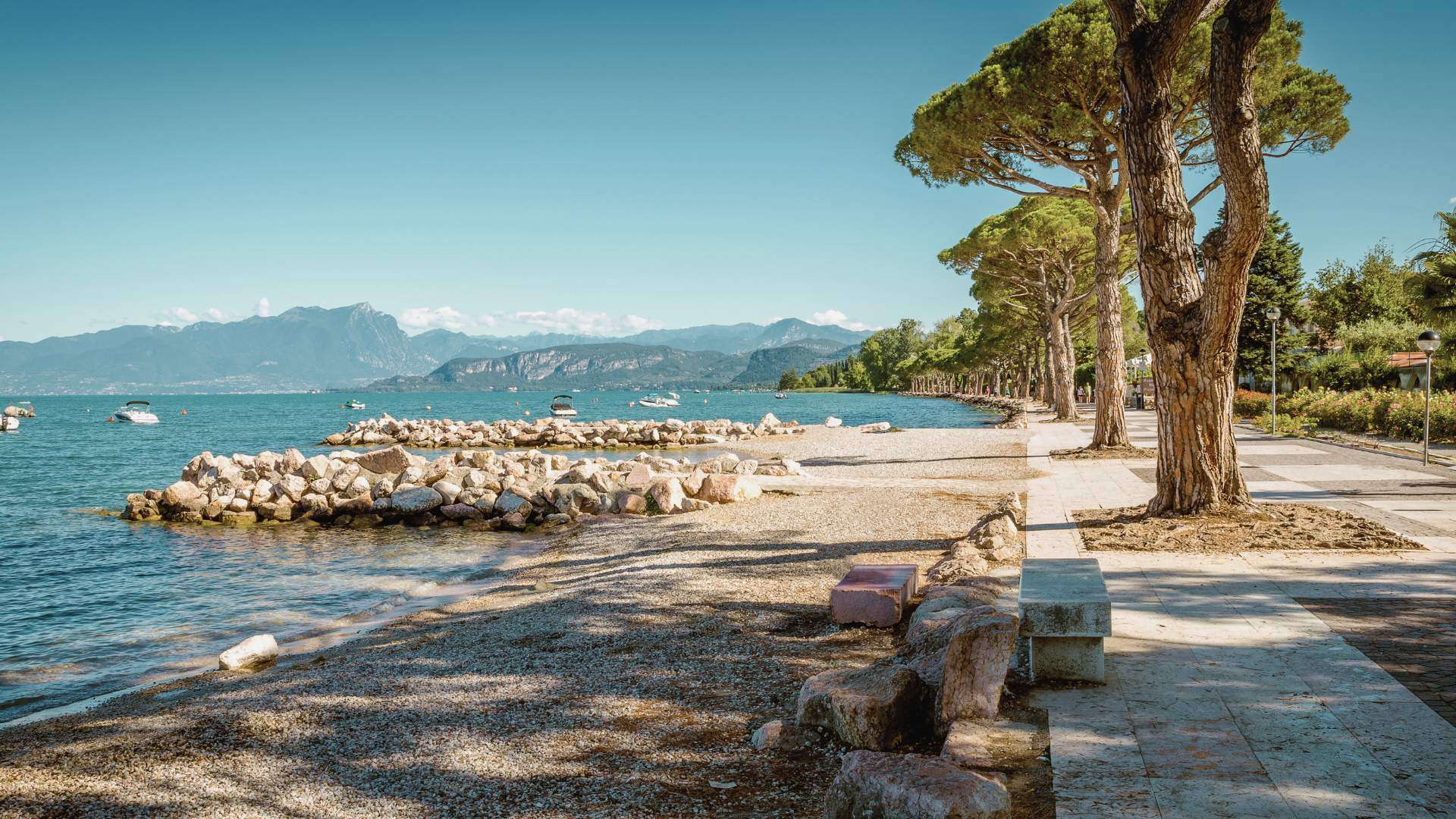
Nine kilometers of lakeshore belong to the town, and you can reach the water almost anywhere: The Lungolago Marconi stretches from the gates of the old town and extends outward in both directions—north toward Bardolino and Cisano, and south toward Peschiera del Garda.
Good to know: There’s no sandy beach here; the shore consists of gravel and grass, with trees reaching right down to the water in some places. Packing a pair of water shoes solves the problem, and the advantage of the gravel shore is that the water doesn’t get churned up and stays clear.
When is the best time to visit Lazise?
From late March to early November, and the most reliable source for the town's seasonal calendar is its own tourism office. The IAT Lazise, the tourist information office in the 5 Via Porto Vecchio Open from March 27 to May 31, 2026, Tuesdays through Thursdays from 9:30 a.m. to 12:30 p.m. and from 1:30 p.m. to 4:30 p.m., Fridays through Sundays from 9:30 a.m. to 12:30 p.m. and from 2:30 p.m. to 5:30 p.m.
From June 1 through September 30, during peak season, it is open Monday through Wednesday from 9 a.m. to 2 p.m. and from 3 p.m. to 6 p.m., and Thursday through Sunday continuously from 9 a.m. to 6 p.m. From October 1 through November 6, it is open daily from 9:30 a.m. to 12:30 p.m. and from 2:00 p.m. to 5:00 p.m. After that, from November 7, 2026, through February 28, 2027, it is open only on Fridays from 2:30 p.m. to 6:30 p.m. and on weekends from 9:30 a.m. to 1:30 p.m. That tells you more about winter than any climate table ever could.
The quietest weeks with warm water are in June and the first half of September. In August, you'll be sharing the town with visitors to the amusement parks.
Which festivals and markets should you plan to attend?
Two market days and December. The Lazise weekly market is held on Wednesdays from 7 a.m. to 2 p.m. in the historic center and on a section of the Viale Roma. It's larger than the town's size would suggest: 194 booths spread over 30,000 square meters, including eight food booths and one for direct sellers.
In Pacengo On Saturdays from 7 a.m. to 2 p.m., there is a second market at the Piazzale del Porto, with 30 booths spread across 1,500 square meters. The overview of the Ostufer lists additional market days: Markets on Lake Garda.
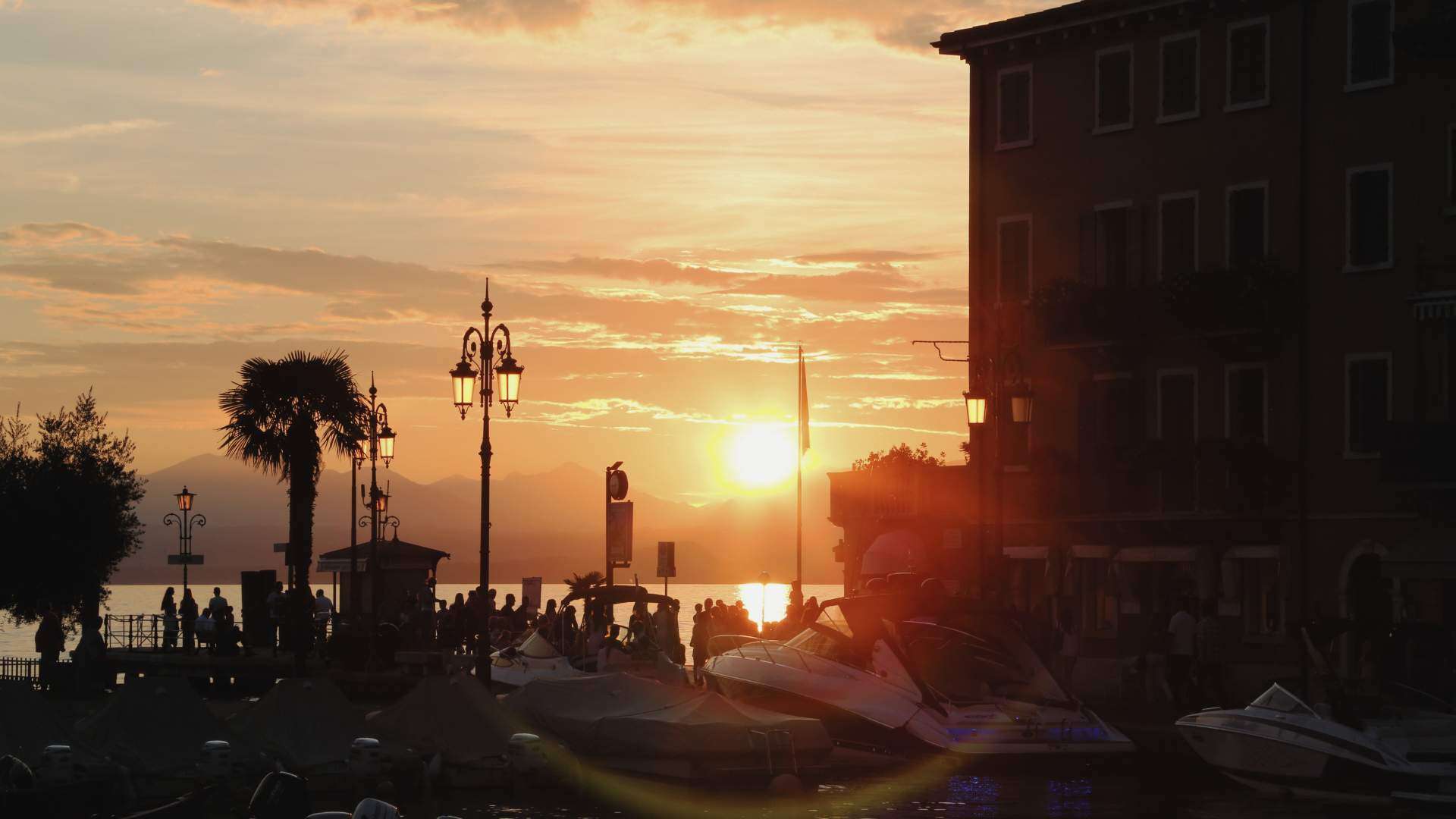
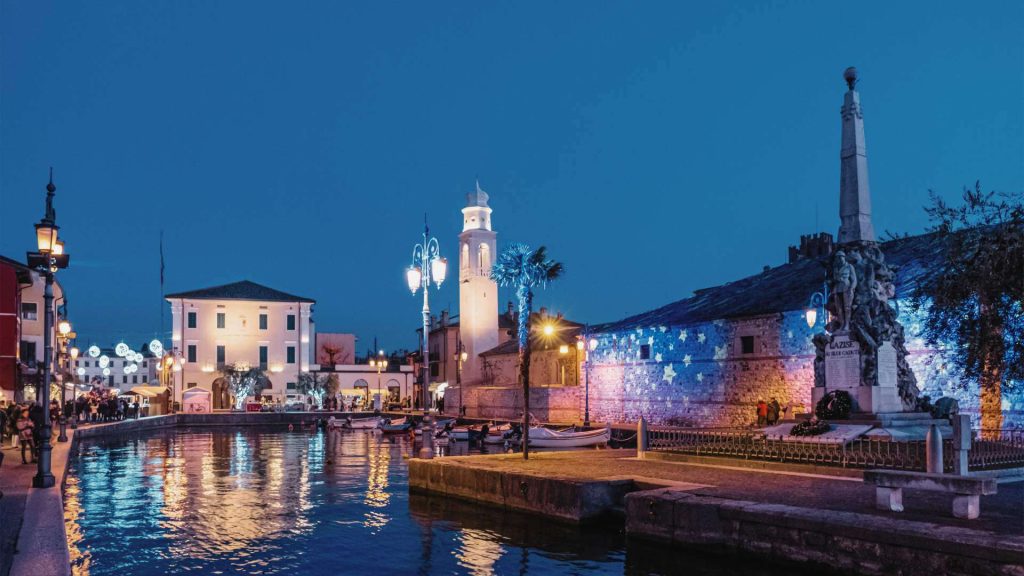
In December, the Christmas market winds its way through the alleys of the Old Town and remains open until January 6. There’s also a Christmas village with an ice rink, concerts at the Dogana Veneta, and fireworks over the Lungolago Marconi on St. Stephen’s Day. The city announces the exact dates every year in late fall.

What You Should Know About Lazise
1. The castle is left out. The Castello Scaligero has no ticket office, no set hours, and no guided tour. Instead, you can view it from three sides for free, and it looks best from a boat.
2. You can't drive right up to the door. The Old Town is a no-vehicle zone and partially a pedestrian zone. However, you can walk through it in ten minutes, and the paid parking areas are all located on the outskirts of the city center.
3. There is no sandy beach. The shore is made up of gravel and grass. With water shoes, it's no problem, and the water stays clear.
4. In the height of summer, you'll split the town. Four amusement parks within driving distance bring a lot of traffic in July and August. Anyone walking across the piazza early in the morning or lingering along the lakefront after dinner hardly notices it.
5. The tourist tax is added on top. Depending on the category, the fee ranges from €1.00 to €3.50 per person per night, calculated for a maximum of 21 nights. Children under 14 are exempt, and many accommodations do not collect the fee until checkout.
Who would enjoy a visit to Lazise?
Families. Four parks within driving distance, a flat shoreline, and star-rated campgrounds: Hardly any other lakeside location offers all of this in such close proximity.
Wine travelers. The classic zone The Bardolino region begins right on the doorstep; thirteen consortium member wineries are based in the municipality.
Camper. Thirteen campgrounds and a RV park on Viale Roma, plus a short highway connection via Peschiera.
Cyclists. The southeastern shore is flat, and the lakeside promenade connects Lazise with Bardolino to the north and Peschiera to the south.
Short-stay vacationers without a car. Take the train to Peschiera, then a bus or boat to Lazise, and once you're in town, you won't need a car anymore.
Combine a visit to Lazise with Bardolino, Peschiera del Garda, and Verona
Bardolino is located six kilometers to the north and gives the wine its name. You can reach it via the lakeside promenade on foot or by bike. Peschiera del Garda, to the south, is home to the train station, the Venetian fortress, and the connection to the A4; the guide shows just how much there is to see there without paying an admission fee Peschiera del Garda.
Verona is a good half hour away and is perfect for a day trip. The itinerary for 3 Days in Verona can be shortened to one day. And if you're looking for the quietest stretch of shore on the eastern edge, head to Punta San Vigilio.
The Saturday Market at the Port of Pacengo
Everyone heads to Lazise on Wednesdays, when 194 stalls fill the old town. We prefer to go to Pacengo, the southern part of town, on Saturdays: 30 stalls at the Piazzale del Porto, right on the water, from 7 a.m. to 2 p.m.
This is a market for locals, not a souvenir shop. If you get there around nine, you can finish your shopping in half an hour and spend the rest of the morning at the lake.
Our conclusion: Lazise offers the most affordable stroll through the historic district on the east bank
No other place on the eastern shore of Lake Garda offers so much history without an admission fee: a ring wall, three gates, a view of the castle, a customs house, a Romanesque church, and a 10th-century harbor—and you don’t pay an admission fee for any of it. The year 983 in the town’s letterhead is more than just a bit of local lore—it marks the starting point of the entire complex.
As far as your budget goes, that means a day in town will only cost you what you eat and drink. You can spend money at the Colà Thermal Park, at the amusement parks, or on the boat, where a day pass for the south shore costs €27.00. On top of that, there’s a visitor’s tax of €1.00 to €3.50 per person per night.
The next step: Set aside a Wednesday for the weekly market and plan an afternoon in Bardolino to taste the wine right where it’s made. The following shows which nearby places are also worth visiting: Lake Garda Travel Guide.
Map: Lazise, Veneto
Photo Gallery: Lazise


Markets on Lake Garda: All dates & locations
Weekly Markets on Lake Garda – Tradition, Delight, and Joy of Life The weekly markets around Lake Garda are much more than just places to shop—they are lively gathering spots where authentic life...
FAQ - Frequently Asked Questions About Lazise
Experiences & sights
Prices, hours of operation, and schedules are subject to change. Check the official websites for the latest information before your trip.
Sources and Further Information
- Municipality of Lazise, Lazise and the Privilege of Otto II of 983 (accessed in September 2026)
- Municipality of Lazise, Tourist Tax, Rates for 2026 (accessed in September 2026)
- Municipality of Lazise, Traffic, Limited Traffic Zones (ZTL), and Parking (accessed in September 2026)
- TourismLazise, the municipality's official tourism portal (accessed in September 2026)
- Consortium for the Protection of Chiaretto and Bardolino, Production Area (accessed in September 2026)
- Lake Garda Navigation, Rates (accessed in September 2026)