


From north to south, from the small villages to the big cities, all of Italy is filled with events during the carnival season, an explosion of music, colors and traditions that bring together adults and children alike.
Carnival and Shrovetide in Italy, celebrated as the most anticipated masquerade festival of the year, has a history of almost a thousand years and was inspired by pagan Greek and Roman festivals. Today it is a Christian Catholic festival celebrated in the days before the beginning of Lent, a time of austerity and strict rules.
What sets it apart from other festivals is the joyful spirit of masks, disguises and boundary-crossing that subvert social conventions and hierarchies, where everyone can feel free to be whoever they want to be as thousands of floats parade through all the centers of Italy under a rain of confetti and streamers.
There are two ways of celebrating Carnival in Italy, with different start and end dates. Most of the country celebrates Carnival according to the Roman rite, which begins on Ash Wednesday and ends on Shrove Tuesday, while in the north, in the diocese of Milan and the neighboring dioceses, Carnival is celebrated according to the Ambrosian rite.
In Italy, however, there are dozens of folkloric festivals and typical masks that have enlivened the streets of all the country's cities for centuries with their originality and centuries-old tradition.
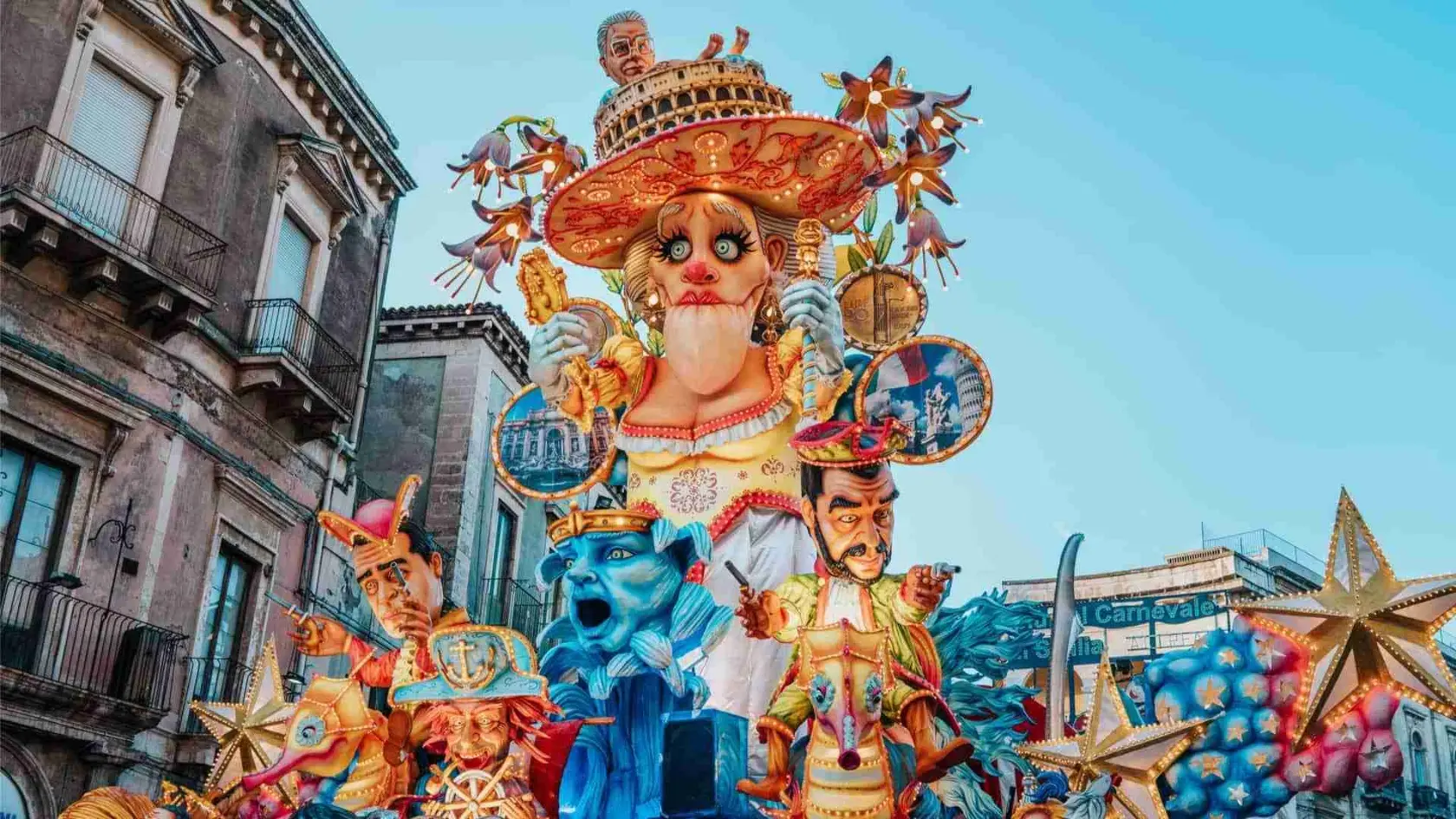
Carnevale di Venezia
The Venice Carnival is much more than just a folk festival; it is a living monument to Italian cultural history and one of the oldest spectacles in the world. Its roots date back to 1162, but it experienced its most glamorous era in the 18th century, when Venice was the center of baroque debauchery and Venetian joie de vivre. As the geography of the lagoon city with its narrow streets and bridges does not allow for traditional floats, Venice has developed its very own magical form of celebration. Instead of loud parades, elegance and mysticism dominate the cityscape here. Every year, millions of visitors are enchanted by this special atmosphere where time seems to stand still.
At the heart of the carnival are the magnificent costumes and the famous handmade masks, which are often modeled on the Venetian Rococo style. These masks were originally used to briefly erase class distinctions and grant citizens complete anonymity. Today, the mask wearers transform the city into an open-air stage: from magnificent boat parades on the Grand Canal to spontaneous theatrical performances and competitions for the most beautiful mask, every corner of the historic center is played out. The sumptuous masked balls in the private palazzi in particular preserve the exclusive heritage of this tradition.
The festivities traditionally last for around two weeks and end on Shrove Tuesday. The undisputed highlight and the official emotional climax is the „Volo dell'Angelo“, the angel storm. Last year's winner of the „Festa delle Marie“ beauty contest floats down from the proud bell tower of St. Mark's Basilica, secured by a steel cable. As she glides majestically over the cheering crowds on St. Mark's Square, confetti rains down on the people - a sight that symbolizes Venice's deep connection with its centuries-old customs in a spectacular way.
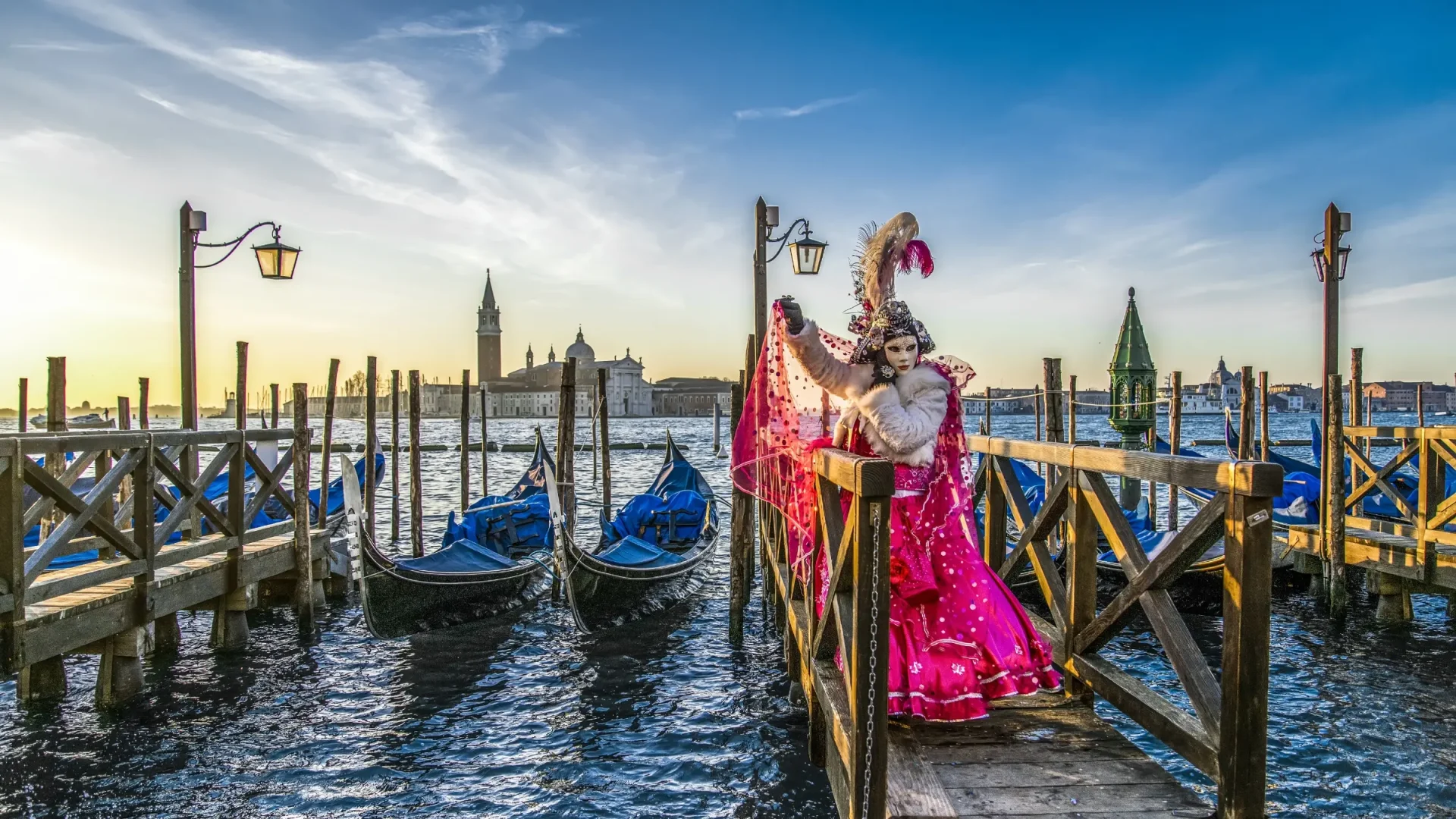
Il Carnevale di Fano
While Venice is known for its masked elegance, the Carnival of Fano in the Marche region has its own unique blend of historical depth and exuberant joie de vivre. With the first official document dating back to 1347, which describes a reconciliation festival between two rival families, many historians even consider it to be the oldest documented carnival in Italy. The emblem of the festivities is the „Pupo“, a symbolic figure that embodies the sins of the city and is traditionally burned at the end of the celebrations to make room for the new.
The spectacle in Fano is particularly unique thanks to the acoustic accompaniment of the legendary folklore group „Musica Arabita“. The name, which means „crazy“ or „angry music“ in the local dialect, says it all: the musicians have been roaming the streets since 1923, almost completely dispensing with classical instruments. Instead, they elicit rhythmic melodies from everyday objects such as coffee pots, tin cans, funnels and washboards, which radiate an incomparably raw and cheerful energy and get the audience dancing.
However, the undisputed highlight of the parades is the „Getto“, a sweet rain that makes Fano probably the most child-friendly carnival in the world. Tons of chocolates, sweets and chocolate specialties from famous Italian manufacturers are thrown into the crowd from the huge, up to 18-metre-high floats. It is a fascinating spectacle when thousands of visitors raise their specially designed „prendigetto“ - funnel-shaped cardboard containers or upturned umbrellas - into the air to catch as much of the sweet prey as possible. This „throw“ transforms the streets into a sea of flying treats and makes the Fano Carnival an experience for all the senses.
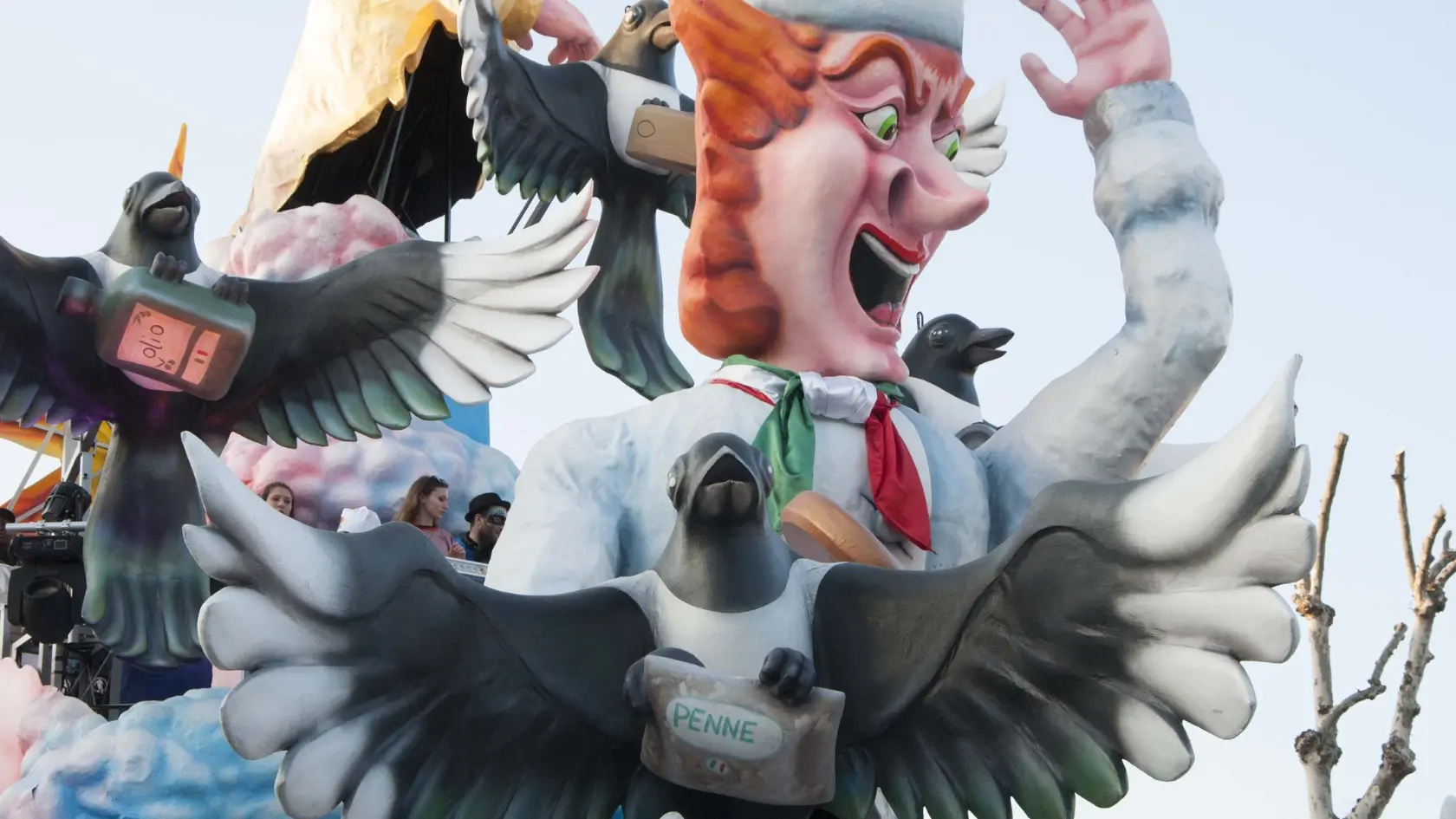
Carnevale di Cento
Located in the picturesque Emilia-Romagna region, the Carnevale di Cento has developed from a traditional regional festival into a world-class spectacle. Its international significance was cemented in the 1990s when it became the first carnival in the world to enter into an official partnership with the legendary carnival in Rio de Janeiro. Since this fraternization, a touch of Brazilian temperament has wafted through the historic streets: The parades are accompanied by samba rhythms, and the winning group of Centenes floats even gets to take part in the world-famous parade in Rio's Sambodrome. This connection is also reflected in the sheer size of the allegorical floats. The monumental papier-mâché constructions often reach heights of up to twenty meters and are so wide that they almost seem to touch the facades of the buildings in the city center as they compete fiercely against each other for the artisanal and artistic crown.
Similar to Fano, the „Getto“ in Cento is the absolute crowd puller, but on an almost lavish scale. Not only sweets, but tens of thousands of inflatables, high-quality cuddly toys and balls are thrown into the crowd from the huge floats. This „rain of gifts“ creates an ecstatic atmosphere in the squares as participants try to catch the coveted trophies straight from the air. It is this generosity that makes the Carnival of Cento so distinctive and clearly sets it apart from the more contemplative masked parades of Venice.
The undisputed symbol of the celebrations, however, is „Tasi“, a character based on a real 19th century citizen named Luigi Tasini. Legend has it that Tasi was a bon vivant who preferred wine to his wife. In a solemn ceremony at the end of the carnival, his will is read out in the local dialect, in which he bequeaths his (mostly fictitious or ironic) possessions to the town's most important personalities. The spectacle culminates in the burning of a giant Tasi doll against the backdrop of the Rocca fortress and a spectacular firework display that marks the end of the carnival season and the beginning of Lent.

Il Carnevale di Viareggio
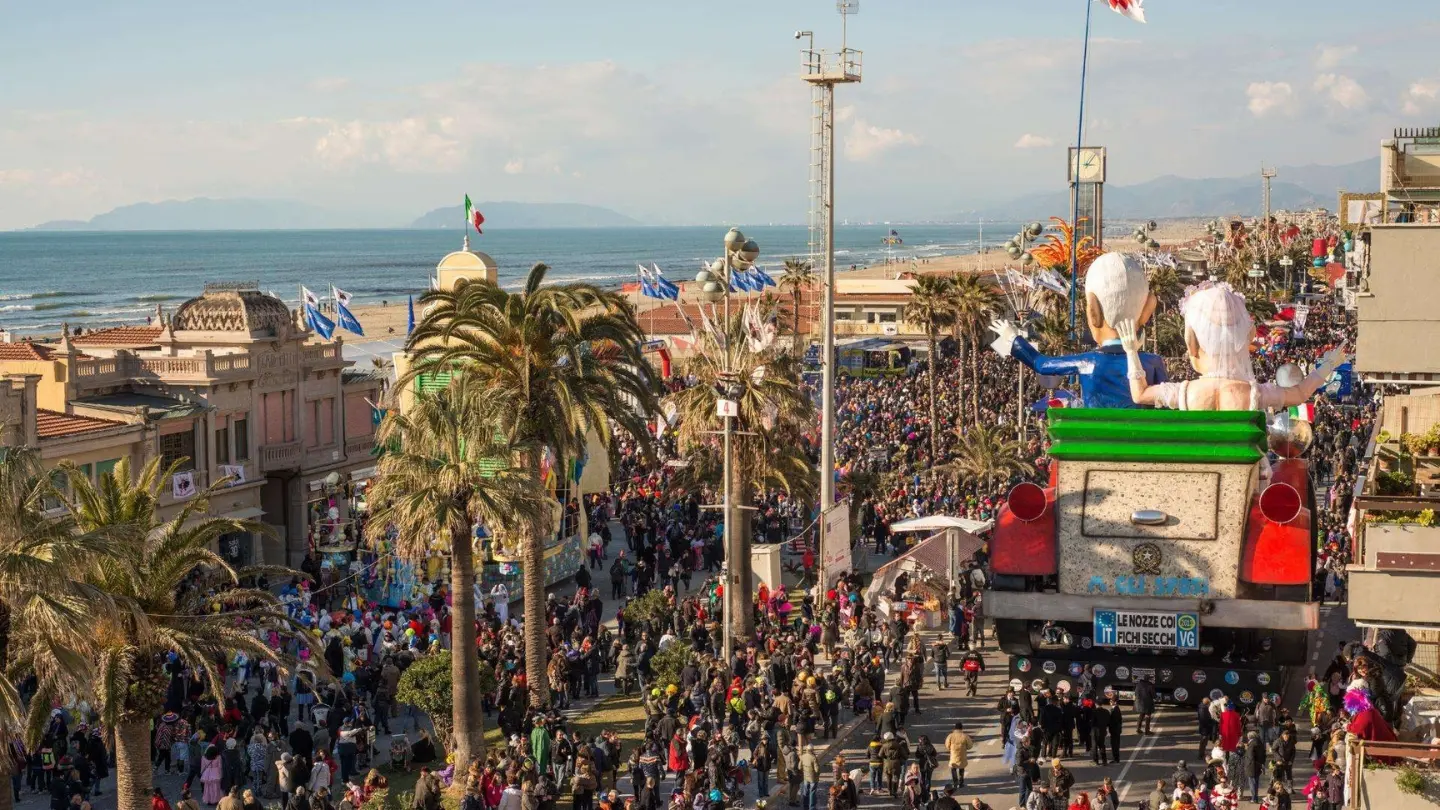
On the sun-drenched Versilia coast, where the Tuscan sea breeze meets historic Art Nouveau architecture, one of the most spectacular carnivals in the world comes to life every year. The Carnevale di Viareggio looks back on a proud tradition that began in 1873, when wealthy citizens of the city decided to protest against high taxes with a parade. This spirit of resistance developed into a form of popular art that is now considered the most important carnival in Italy after Venice. The heart of this spectacle is the „Cittadella del Carnevale“, a huge complex of workshops where over a thousand craftsmen, engineers and artists spend months working on the gigantic constructions in more than 25 specialized workshops.
What makes Viareggio unique in the world is the perfection of the „cartapesta“ technique, a special form of papier-mâché. By using layered paper and molds, sculptures are created that are surprisingly light and agile despite their monumental dimensions of over twenty meters in height. These giants are far more than mere decoration; they are moving editorials. Viareggio is famous for its biting political satire and social criticism. In the form of giant, moving caricatures, statesmen, sports icons and Hollywood stars are ridiculed as they parade along the famous „Viale a Mare“ promenade on the allegorical floats.
The parades, the so-called „Corsi Mascherati“, are accompanied by the official symbol of the city: the Burlamacco. This mask, created by the artist Uberto Bonetti in 1930, combines elements of commedia dell'arte with the futuristic style of the time and watches over the colorful hustle and bustle. When the floats are illuminated in the evening and the mechanical monsters roll their eyes or stretch out their arms towards the tens of thousands of spectators, the boundaries between theater, artwork and folk festival become blurred. It is this mixture of master craftsmanship and sharp-tongued humor that makes Viareggio an unmissable highlight in the Italian calendar of events.
Read more about theTopic




Lo Storico Carnevale di Ivrea
In the picturesque alleyways of Ivrea, in the heart of Piedmont, a spectacle takes place every year that is hard to beat in terms of archaic energy and symbolic power. The Storico Carnevale di Ivrea is much more than a colorful parade; it is the passionate staging of a medieval popular uprising against tyranny. The undisputed symbol of this freedom is the Vezzosa Mugnaia, the „charming miller“. Contrary to widespread misconceptions, her name is not derived from her Flemish origins, but from her grace. She embodies the legendary Violetta, a miller's daughter who refused to grant the cruel baron the „right of the first night“ in the 12th century and instead summarily beheaded him - the spark that ignited the general uprising.
The heart of the festivities is the world-famous Battaglia delle Arance, the Battle of the Oranges. Every afternoon, the city's squares are transformed into an epicenter of controlled chaos. Two sides face off here: The „Aranceri a piedi“, who fight as rebels on foot and represent the people, and the „Aranceri sui carri“, who represent the tyrant's heavily armored bodyguard on heavy horse-drawn carriages. Tons of oranges fly through the air, symbolizing the stones with which the people once attacked the baron's castle. It is a visceral experience of colors, scents and adrenaline, marked by a deep respect and strict chivalric rules despite the physical hardship.
Anyone moving around Ivrea during these days is subject to a strict, albeit charming, dress code. The red Phrygian cap (berretto frigio) is an obligatory accessory for every visitor. This headgear, which has been a universal symbol of freedom and fraternity since the French Revolution, not only serves as a political statement in Ivrea, but also as practical protection: anyone wearing the red cap signals their affiliation to the insurgents and - in theory - will not be directly pelted with oranges. The celebrations culminate in the ceremonial burning of the „Scari“, large poles encased in heather, whose flames herald the end of tyranny and the cleansing of the city for the coming year.

Il Carnevale Ambrosiano Canturino
The Lombard province of Como is home to a very special form of Italian jesters„ freedom: the Carnevale Ambrosiano Canturino. While in most parts of the country, Ash Wednesday marks the start of the contemplative Lenten season, in Cantù things really get going. The reason for this is the Ambrosian rite, an ecclesiastical peculiarity of the Archdiocese of Milan, which extends Carnival by four days and only ends on “Sabato Grasso„, Fat Saturday. This extra time is used extensively in Cantù to celebrate one of the most impressive parades in Lombardy. The heart of the festivities is inextricably linked to the town's proud identity as a center of furniture art and woodcarving. This is personified in the official mask called “Truciolo„ - a friendly carpenter whose name translates as “wood shaving" and honors the centuries-old craft tradition of the region.
On a closed circuit in the city center, monumental allegorical floats pass by the spectators, which have been crafted with the utmost precision from papier-mâché over months of work by local associations. In a passionate competition, these masterpieces of craftsmanship compete for the coveted title of most beautiful float, with the parade reaching its spectacular climax on the final Saturday. The atmosphere in the alleyways is characterized by a deep pride in one's own craft, which is reflected in the attention to detail of the huge, often mechanically moving figures. For visitors, Cantù thus offers the rare opportunity to enjoy the carnival hustle and bustle to the full when the church bells are already calling for penance in the rest of Italy.

Il Carnevale di Offida
In the province of Ascoli Piceno, deeply rooted in the hills of the Marche region, the Offida Carnival is one of the most archaic and ritualistic festivals in Italy. It is less about pageantry and more about an almost ecstatic communal experience. The hot phase begins with the „Caccia lu Bove Finto“ - the hunt for the false ox. A wooden frame covered in white fabric, carried on the shoulders of two men, charges through the narrow streets while the crowd, dressed in white linen smocks (guazzarò), provokes and symbolically hunts the ox. This rough, energetic spectacle is reminiscent of ancient bullfights and culminates in a ritual „death blow“ in front of the town hall, symbolizing the people's victory over the animal.
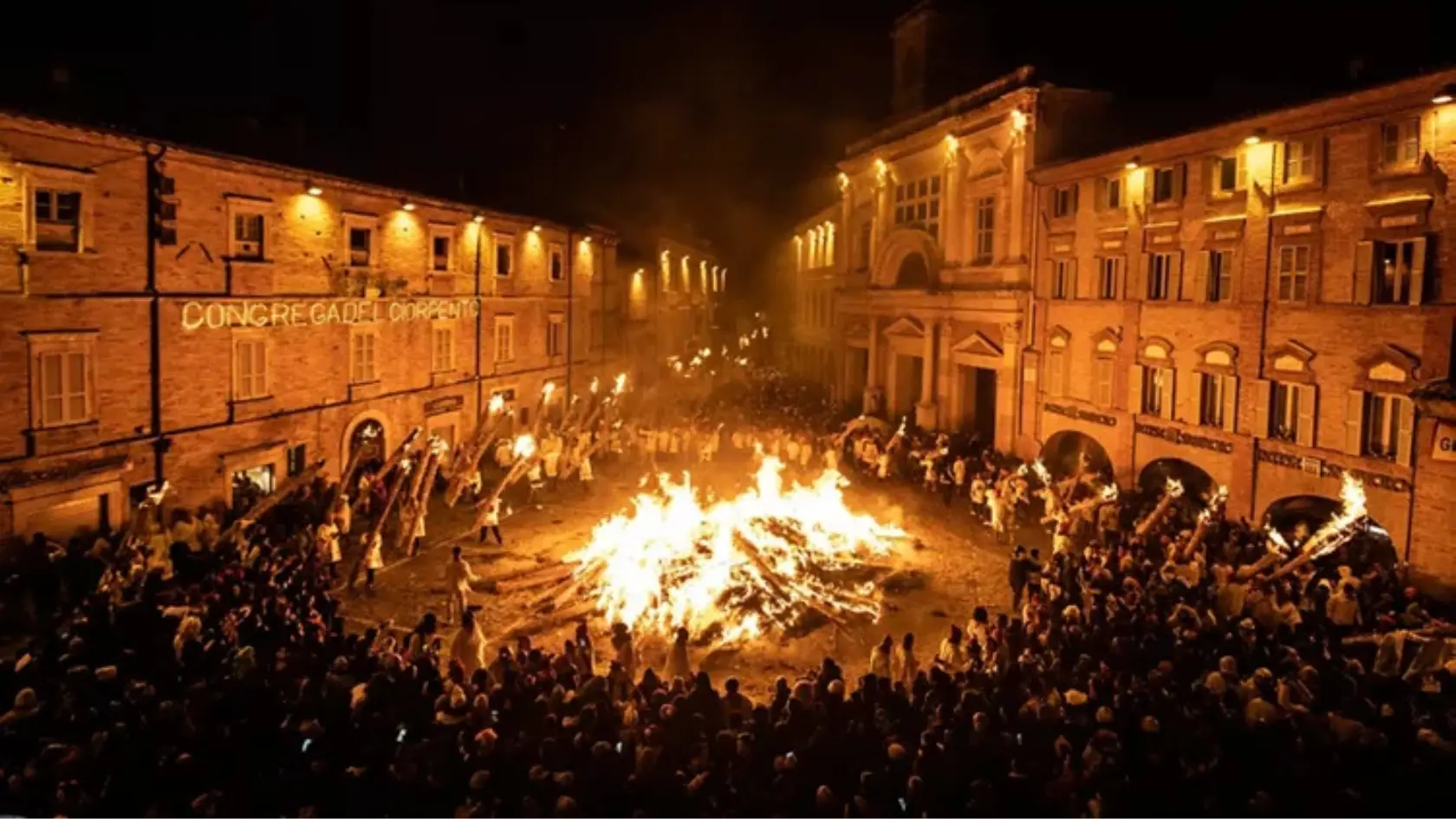
The dramatic finale takes place on Shrove Tuesday, when Offida is engulfed in a sea of fire. In the „Vlurd“ procession, hundreds of costumed participants carry long, burning bundles of reeds on their shoulders. In a solemn, almost mystical procession, they march through the town until they finally throw the burning torches together on the main square to form a gigantic bonfire. As the flames blaze into the night sky, people dance in a circle around the fire until the embers go out, symbolically bidding farewell to winter and welcoming Lent - a deeply impressive experience that celebrates the purifying power of fire.
Il Carnevale di Putignano
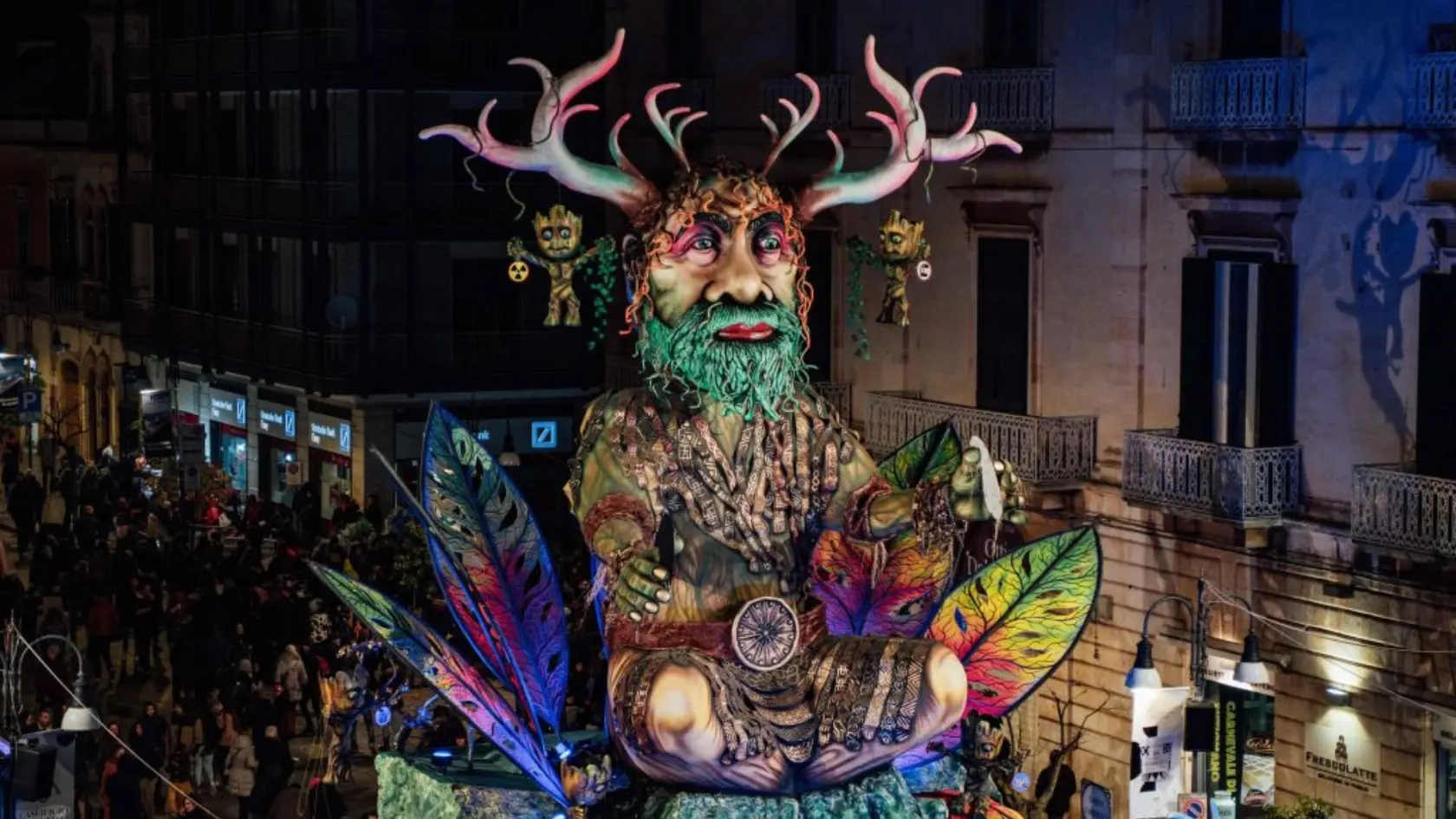
In Puglia, however, the history of the carnival goes back a little further: the Putignano Carnival is considered one of the oldest in the world, dating back to 1394. Contrary to the assumption that it only begins in January, it officially starts on December 26, St. Stephen's Day, with the „Propaggini“ rite, in which local poets recite satirical verses about the past year in dialect. Putignano is famous for its ultra-modern papier-mâché floats, which often address current political and social issues. But the real trademark is the „Giovedì“ - the Thursdays of the carnival. From mid-January, each Thursday is dedicated to a different social group, resulting in a series of humorous and sometimes biting celebrations.
The „Thursday of the Husbands“ (often referred to as the Thursday of the „Cornuti“, the horned ones) is particularly bizarre. On this day, the famous „cutting off of the horns“ takes place - a humorous rite that symbolically cleanses the men of the city of the sorrows of infidelity. The atmosphere in the streets is a mixture of exuberant mockery and a deep sense of tradition. When the festivities reach their zenith, the end is heralded by the „Campana dei Maccheroni“. The macaroni bell strikes exactly 365 times: one strike for each day of the year. It is the signal for the inhabitants to eat pasta and meat together one last time before the chimes fall silent and the contemplative time of penance begins.
Other famous carnival events
In Basilicata you will find the Carnival of Tricarico with its strong connection to the animal world. Inspired by St. Anthony the Abbot, the protector of nature and the city, the traditional masks here take the form of heifers or oxen parading through the streets of the city with a cowbell around their necks and led by a shepherd.
Famous in Basilicata is also the Carnival of Satriano, which is considered one of the last tree rituals to have survived to this day. Here, the carnival becomes a real walking forest with hundreds of men dressed as trees, known as rumit, parading through the streets of the city in a slow and atmospheric parade.
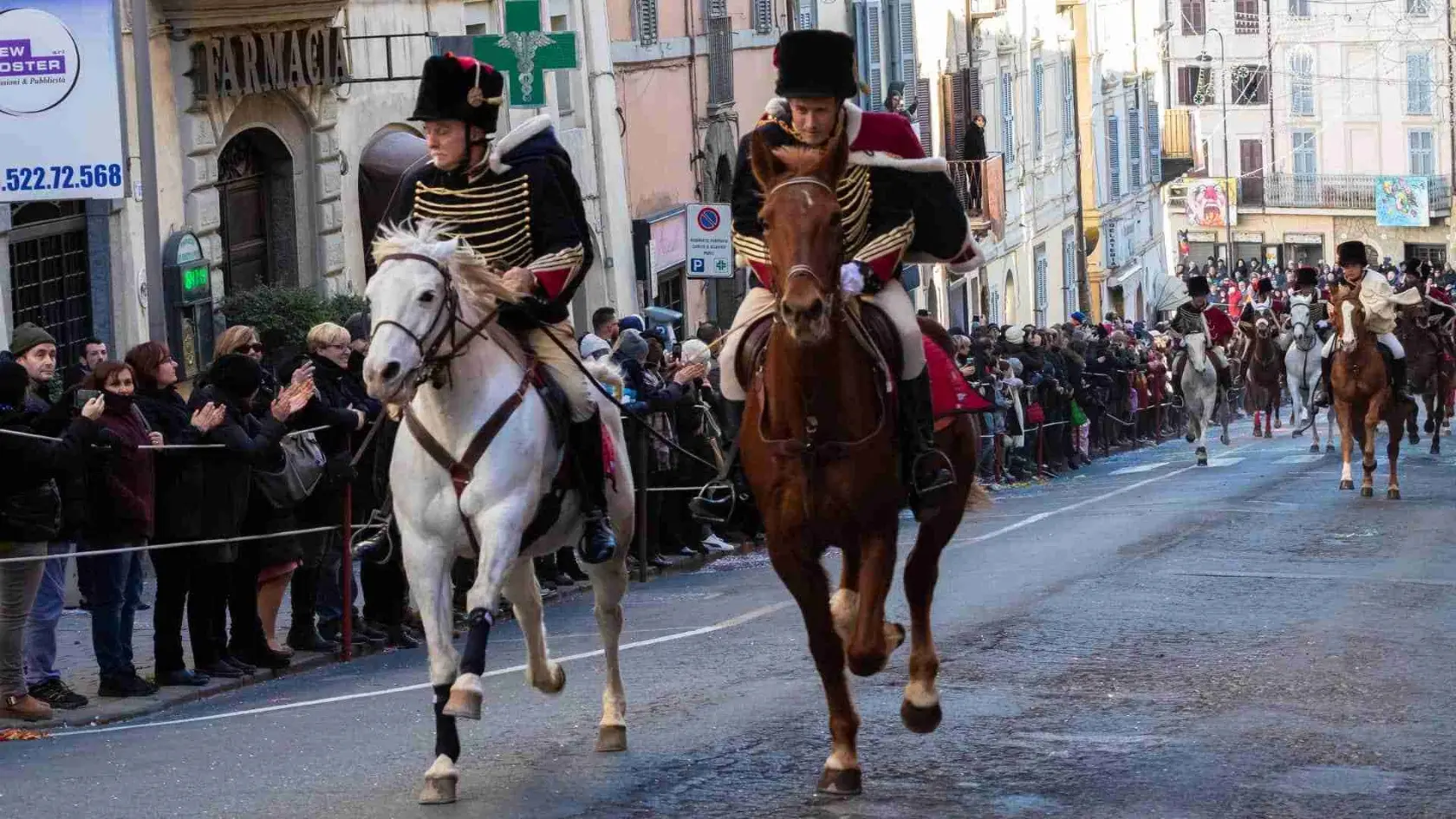
The Carnival of Ronciglione in Lazio is famous for its equestrian tradition and is considered one of the most beautiful and characteristic in the region. The carnival begins with the cavalcade of the Hussars, which commemorates the battle in defense of the Papal States, and ends with the „Corse dei Barberi“, a horse race without jockeys. Among the various festivals, the Pilata dei Nasi Rossi, a parade in honor of the god of wine Bacchus with dances that praise debauchery, is worth mentioning. Don't miss the last evening of the carnival, when the carnival king symbolically releases a hot air balloon.
Another original event is the Carnival of Martignanoalso Carnival of the Grecia Salentina which all the villages in the Griki area take part in and whose highlight is the traditional ritual „La Morte te lu Paulinu“, a theatrical performance in which the most curious and important events that have taken place in the community during the year are presented.
In the city of Romeo and Juliet The festivals in the Veneto region are also unique. The Carnival of Verona is one of the oldest in Italy and passionately involves all citizens, who paralyze the city center on the last Friday before Lent with a 7 km long parade, in which groups from South America and other European countries also participate.
In the Dolomites, in the Ladin valleys of Trentino, the Ladin carnival, the Carnevale Ladino one of the most famous with its typical wooden masks, the so-called facets, and the disguise of the Bufòn, a storyteller with a funny conical hat and a small wine bottle on his nose.
The carnival is also very well known in Tramin on the South Tyrolean Wine Road with its extraordinary Egetmann parade, which takes place every two years on Shrove Tuesday. The wedding of the Egetmann-Hansel is celebrated. Various figures and carnival floats parade through the village in the South Tyrolean lowlands with plenty of spectacle.
The Madonna di Campiglio Carnival, Also known as the Habsburg Carnival, it is truly spectacular with its princely style reminiscent of the 1800s and the imperial couple, Princess Sissi and her husband, parading through the streets in a ladies' procession.
In Milan, the capital of Lombardy, the carnival begins when everyone else stops and is characterized by large parades with medieval costumes and numerous flag-wavers waving large flags in elaborate figures.

Carnival is also a popular festival on the islands. In Sicily, the Carnival of Sciacca with the handing over of the keys to the Carnival King Peppe Nappa, who parades through the crowd handing out wine and sausages before being burned, and the Carnival of Acireale with floats consisting exclusively of fresh flowers, the most famous festivals.
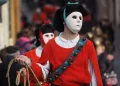
In Sardinia, the Carnival of Mamoiada with lots of superstition and folklore, in which there are no floats, but instead original masks, the Issohadores. They wear a white mask, a red bodice, rattles and a rope with which they catch hostages from the audience during the carnival procession. The figures of the Mamuthones are dressed in sheepskins, wear a wooden mask and walk bent under the weight of 30 kg bells that they carry on their shoulders.
Italy is rich in history, culture and unique events and has a lot to offer during the carnival season. So if you are traveling between February and March Go on vacation all you have to do is choose the carnival that appeals to you the most and go in search of guaranteed fun!

Map: Rome, Italy
FAQ: Carnival in Italy
When is the best time to visit the carnival in Italy?
The main season for the Italian carnival is usually in February and is based on the Christian Lenten calendar, so the highlights take place in the two weeks before Ash Wednesday. Especially at the weekends and on "Martedì Grasso", Shrove Tuesday, the celebrations reach their absolute peak with the most impressive parades and balls, which is why you should plan your trip around these days.
Do I have to wear a costume as a tourist?
While wearing an elegant mask or historical costume is almost a must in Venice, in towns such as Viareggio or Ivrea it is not a must at all. Many visitors opt for discreet accessories such as a small hand-painted mask or a colorful scarf to soak up the festive atmosphere without having to invest in a complete and often expensive costume.
How safe is it to visit the famous Battle of the Oranges in Ivrea?
The historic Battle of the Oranges is an intense experience where spectators are best advised to stay behind the special protective nets to avoid being accidentally hit by flying fruit. If you want to actively participate, you should join one of the official groups and be aware that it is physically demanding and very muddy, which is why sturdy shoes and sturdy clothing are essential for this day.
Is a day trip to Venice during Carnival enough?
A day trip will give you a first impression of the magical atmosphere of St. Mark's Square, but the true mystique only unfolds in the evening hours, when the large tour groups depart and the illuminated palaces become the backdrop for exclusive masked balls. We recommend planning at least one overnight stay in the lagoon city or in nearby Mestre so that you can take advantage of the early morning hours to take photos without the crowds.
Experiences & sights
Note: Disclaimer - Italien.news is not the owner or organizer of the sights, accommodations and events published here and therefore not responsible for program changes, cancellation of the event and possibly incorrect information. The editorial team of Italien.news always endeavors to provide detailed and accurate information. However, it is possible that events, attractions, etc. may be changed and not updated promptly. Exact details of dates, times and programs can be obtained directly from the owner of the attractions and accommodation.
Please also check the website or social media of the attractions and events for updates before you travel! Our blog articles contain our personal recommendations in the form of affiliate links. If you book or buy something via the links or simply click on them, we receive a small commission. This does not change the price for you at all. Content and texts © Italien.new & KI / Photos © Canva.com / shutterstock.com / Unsplash.com / Pixabay.com / Pexels.com / Others. Please also visit our Italy Shop!


