Pesto alla Genovese: A symbol of the Italian way of life
When you think of the culinary soul of Italy, images of steaming pasta usually immediately appear in your mind's eye. But hardly any other creation embodies the vibrant freshness and aromatic depth of Mediterranean cuisine as directly as pesto alla genovese. At its core, it is an uncooked cold process that derives its fascination not from the heat of the stove, but exclusively from the outstanding quality of the raw ingredients and their mechanical combination in the marble mortar.
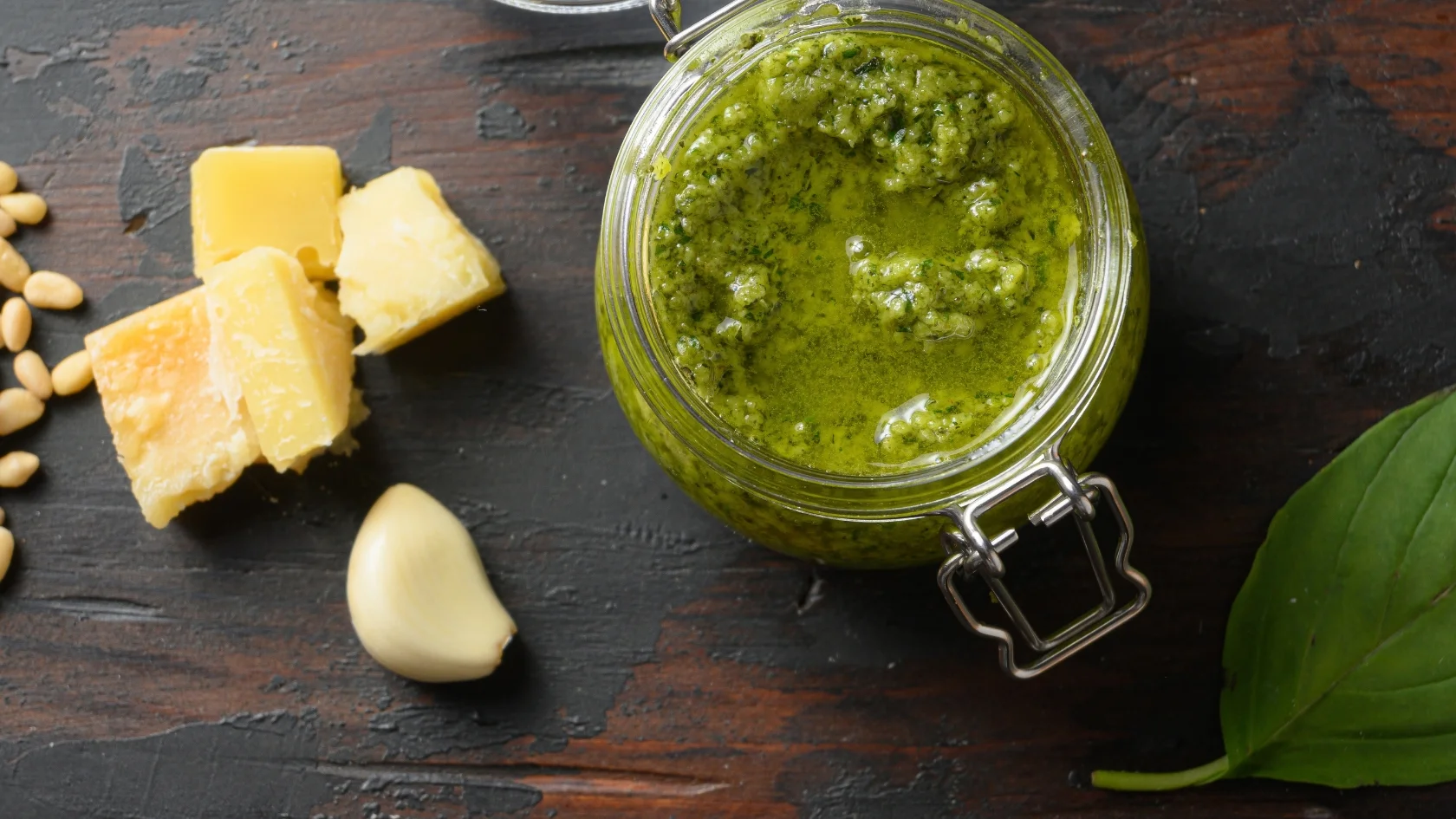
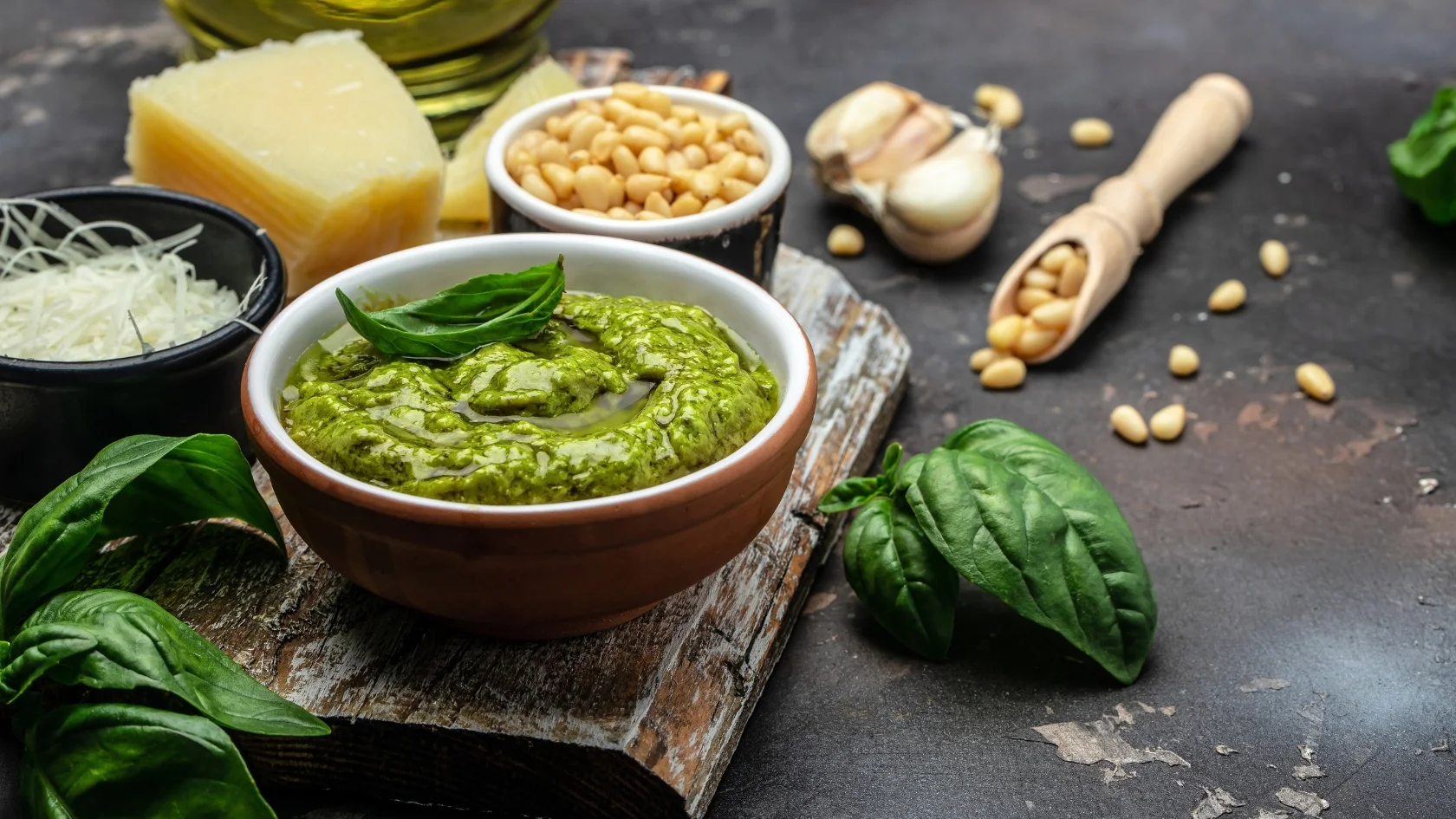
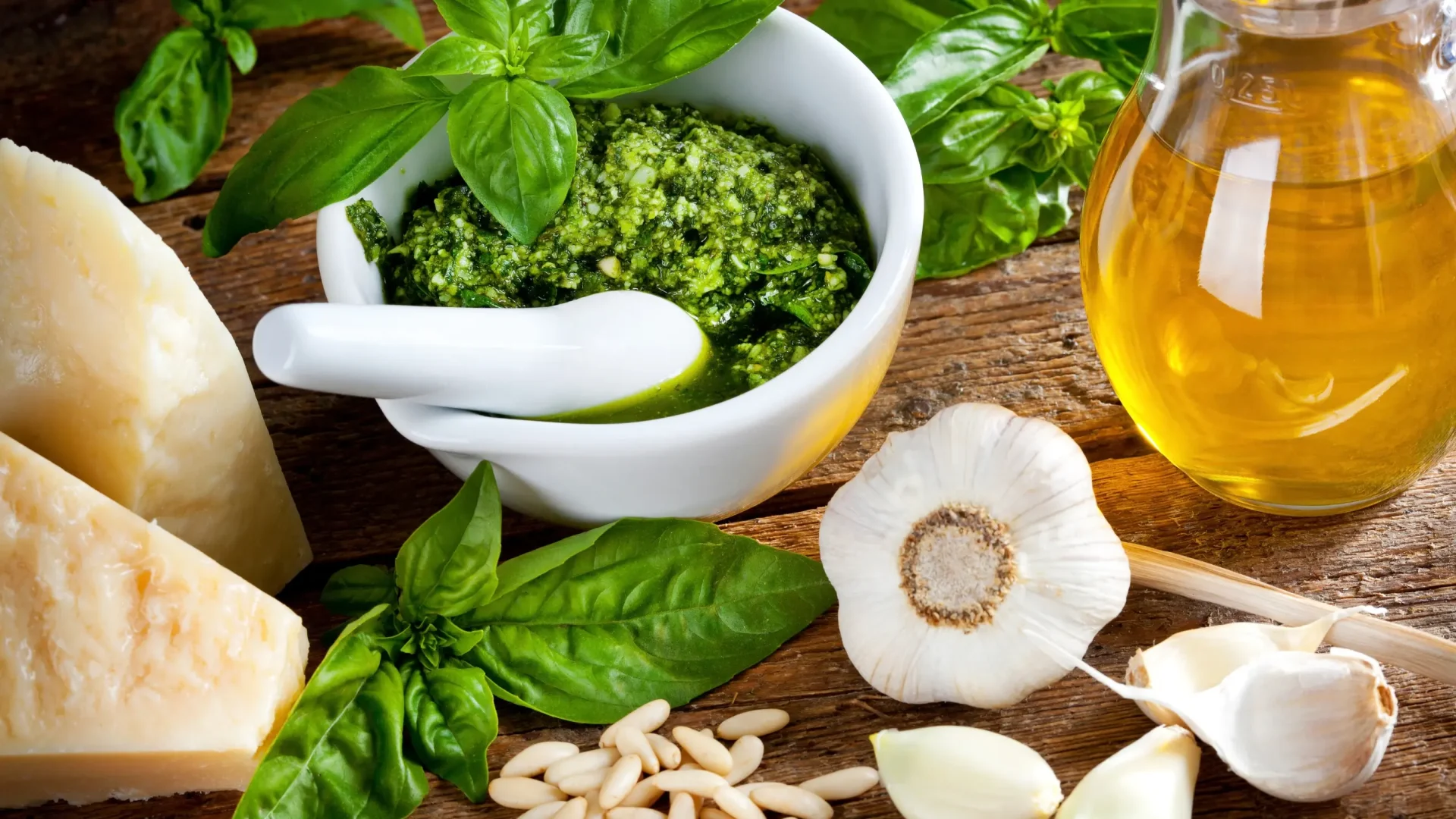
Yet the name is far more than just a recipe name; it is a protected cultural asset. In its native Genoa and the entire coastal region of Liguria, pesto is revered almost like a religion whose unwritten dogmas have been closely guarded for generations. A genuine pesto alla Genovese does not tolerate shortcuts: Only the small-leaved basil from Prà, high-quality olive oil from the Riviera, spicy pecorino, mature Parmigiano Reggiano, Italian pine nuts, garlic and coarse sea salt are allowed to find their way into the mortar. The friction with the wooden pestle releases the essential oils without oxidizing the delicate leaves with the heat of blender blades, which makes the decisive difference between a simple sauce and an emerald green culinary experience.
Origin and history: from moretum to modern classic
The genealogical roots of pesto go back deep into European cuisine, long before basil became the undisputed protagonist of Ligurian herbology. Even in Roman antiquity, there was already the Moretum a direct ancestor: a paste of fresh herbs, garlic, salt, hard cheese, olive oil and a dash of vinegar pounded in a mortar and usually spread on bread. During the Middle Ages, the Ligurian port cities developed the Agliata, a spicy garlic sauce that was particularly popular among sailors as an essential condiment. Thanks to its antiseptic properties, it not only added flavor, but also helped to preserve food on long voyages and prevent illness.
However, pesto in its current, basil-heavy form only came into the light of written tradition surprisingly late. The first official codification of the recipe can be found in 1863 in Giovanni Battista Ratto's seminal work La Cuciniera Genovese. A fascinating detail of this early period is the mention of Dutch cheeses such as Gouda or Edam as an acceptable ingredient. This was by no means a sign of a lack of authenticity, but rather evidence of Genoa's flourishing maritime trade, which exchanged northern European goods for local olive oil.
It was only over the course of the 20th century that the combination of regional hard cheeses that is perceived today as „uniquely true“ was consolidated. In order to preserve this identity in an era of global mass production, today the Consorzio del Pesto Genovese meticulously about maintaining the traditional composition. This protection ensures that the cultural heritage of Liguria does not disappear behind industrial imitations with cashew nuts or sunflower oil, but can still be experienced as genuine craftsmanship.
Culinary specialties of Liguria
Liguria presents itself as a narrow, dramatic strip of land squeezed almost vertically between the rugged peaks of the Maritime Alps and the Apennines and the deep blue Ligurian Sea. This vertical geography creates a microclimate that is unique in the world: the mountains protect the land from cold northerly winds, while the constant, salty sea breeze provides natural ventilation for the terraced slopes. In this protected and sun-drenched niche, the Basilico Genovese DOP, the heart of regional identity. In contrast to large-leaved, often peppery varieties, this basil is characterized by its small, delicate and oval leaves. Its aroma is characterized by an extraordinary mildness and sweetness, which is completely free of the annoying aftertaste of mint that often dominates other varieties.
An equally indispensable cornerstone of local gastronomy is Ligurian olive oil, which is mainly produced from the small, dark Taggiasca olive. This oil is considered by connoisseurs to be one of the most elegant in the world, as it is known for its particularly mild, almost creamy and fruity character. Due to its low bitterness and restrained pungency - often referred to in Italy as Dolce it forms the perfect stage for the essential oils of basil without masking them.
The entire Ligurian cuisine can be described as a „cucina di magro“ (lean cuisine) and at the same time as a „cucina del ritorno“ (cuisine of homecoming). It is the result of historical frugality and the joy of sailors returning to the flavors of their homeland after months at sea. Characterized by wild herbs, pine nuts, fresh vegetables and what the barren, laboriously wrested land and sea have to offer, it celebrates the art of extracting maximum flavour from a few, but perfect ingredients.

Recipe: Pesto alla Genovese
(for 4 persons)
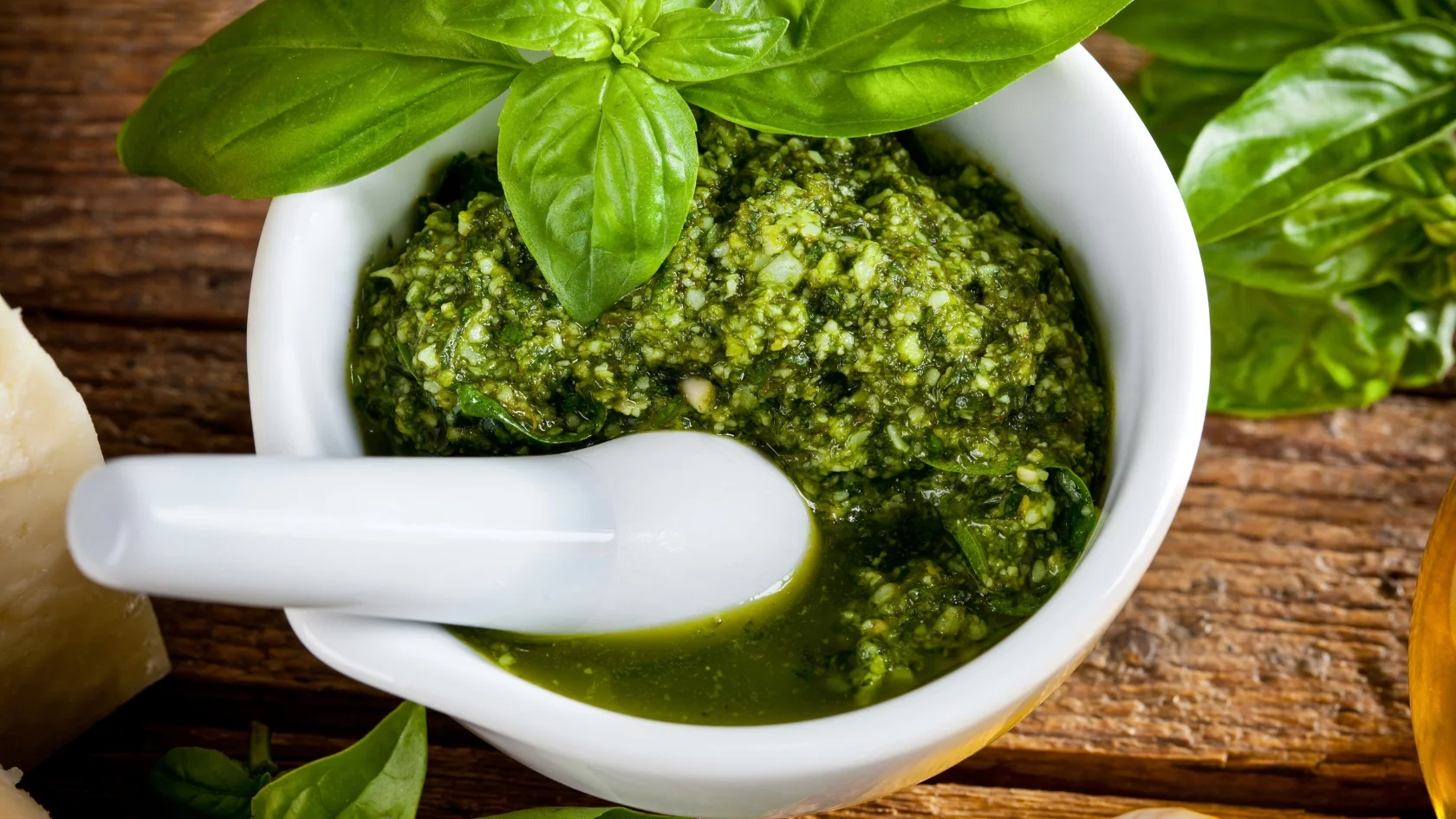
The secret of a real pesto lies in the tools: a marble mortar and a wooden pestle. Blenders generate heat and oxidize the leaves, making the pesto bitter and dark.
Ingredients
- Basil: 50g Basilico Genovese DOP leaves (small leaves are more aromatic).
- Olive oil: approx. 100ml extra virgin olive oil (preferably from the Riviera Ligure DOP).
- Pine nuts: 15g (European, not Asian, as these are often bitter).
- Cheese 1: 70g Parmigiano Reggiano DOP (matured for at least 24 months), freshly grated.
- Cheese 2: 30g Pecorino Sardo DOP (Fiore Sardo), freshly grated.
- Garlic: 1-2 cloves (ideally from Vessalico, as this is milder).
- Salt: A pinch of coarse sea salt.
Preparation tips
- Preparation: Wash the basil carefully in cold water and leave to dry completely on a cloth. Do not squeeze!
- The beginning: Place the garlic and a pinch of salt in the mortar. Crush everything until a creamy paste is formed.
- The pine nuts: Add the pine nuts and crush them into the cream.
- The basil (the most important step): Do not add the basil leaves all at once, but gradually. Now it is no longer mashed, but rotates. Move the pestle in a gentle circular motion along the edge of the mortar while turning the mortar itself in the opposite direction. This breaks up the essential oil capsules in the leaves without heating them.
- The cheese: When a bright green paste has formed, stir in the two types of cheese.
- The oil: Finally, slowly pour in the olive oil and continue to stir until a homogeneous, creamy emulsion is formed.
Where tradition lives: culinary pilgrimage sites in Genoa
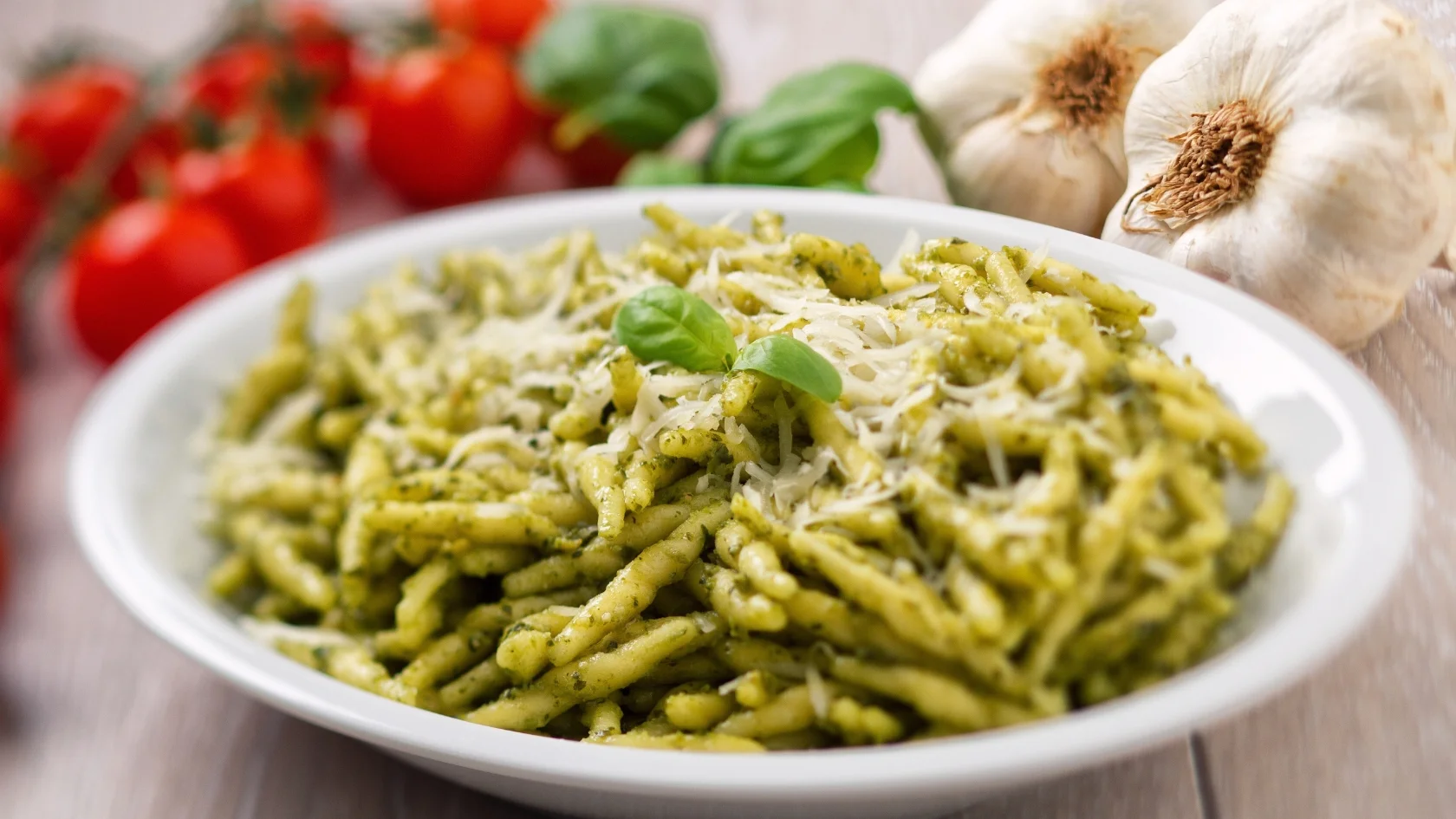
If you want to experience pesto alla genovese in its purest form, there's one place to go: the Il Genovese in the heart of the city is the realm of Roberto Panizza. As the founder of the Pesto World Championship he is considered the „ambassador of the mortar and pestle“ worldwide. In his restaurant, the pesto is prepared with almost scientific precision, with every basil leaf and every gram of cheese having to meet the highest standards. Especially in combination with the classic, twisted trofie or the buttery, homemade gnocchi, it becomes clear why this dish is celebrated as a world culinary heritage.
Just a short walk away, at the old harbor, you can dive into the Cavour 21 into a completely different but equally fascinating world. This rustic and wonderfully lively restaurant is loud and authentic. It is an institution known for its award-winning recipes, which regularly take top places in local competitions. You sit close together on wooden benches, drink the honest house wine from stemless glasses and enjoy excellent trenette al pesto at prices that reflect the down-to-earth attitude of Genoese dock workers.
Deep in the winding alleyways of the old town, the so-called Caruggi, hides with the Sa Pesta another jewel. Originally as Sciamadda - a historic form of street snack with a wood-fired oven - this place is particularly famous for its farinata. But connoisseurs know that the pesto served here has a rare intensity that is deeply rooted in tradition and perfectly captures the spirit of the old seafaring town.
Not far from the majestic San Lorenzo Cathedral, the Trattoria delle Grazie an intimate, almost familiar refuge. In this charming restaurant, particular emphasis is placed on the balance of flavors. The pesto here impresses with a remarkable creaminess and a subtle, never intrusive garlic content that blends harmoniously with the handmade pasta. It is the ideal place for all those who want to enjoy the fine nuances of Ligurian herb cuisine in a peaceful atmosphere.
The crowning glory of a culinary journey is the Antica Osteria di Vico Palla in the historic harbor district. In premises that have been serving guests since the 17th century, living history meets the highest culinary art. A special feature of the restaurant is the way the pesto is served with Mandilli de Saea. These wafer-thin lasagne sheets, whose name translates as „silk handkerchiefs“, are so fine that they literally soak up the emerald green sauce and melt in the mouth - an experience that perfectly sums up the elegance of Genoese cuisine.
Variations and types: the many different ways in which pesto alla genovese is related
Although the original recipe enjoys the status of an inviolable sanctuary in Liguria, history, geography and the changing seasons have given rise to fascinating variations over time. One of the best known and most popular traditions is the so-called Pasta avvantaggiata - mostly served as Trenette avvantaggiate. This does not change the pesto, but „enriches“ the dish: Fresh, crunchy green beans and fine potato cubes are cooked in the same salted water as the pasta. When the classic pesto is mixed in at the very end, the starch released from the potatoes combines with the oil and cheese to create an incomparably creamy emulsion that forms the heart of Ligurian home cooking.
But there are also adjustments to the pesto itself. Many restaurants in Liguria now offer a version for sensitive stomachs or modern eating habits. senz'aglio (without garlic). Even if local purists often dismiss this variation as culinary sacrilege, it has established itself as a common alternative. A far more historical variation is the Pesto with walnuts. In economically difficult times or in the barren, wooded mountain regions of the Ligurian hinterland, the precious pine nuts were often unaffordable or simply unavailable. The use of local walnuts was a pragmatic solution that gave the sauce a more bitter, distinctly earthy flavor profile and is still popular today.
Read more about theTopic



If you take a look across the nearby border to France, you can see the close relationship between the Mediterranean coastal cuisines. In neighboring Provence, the Pistou, which looks strikingly similar to its Genoese cousin at first glance. It shares the base of basil, garlic and olive oil, but usually dispenses completely with the addition of nuts and, depending on the recipe, often also cheese. Its purpose is also different: Instead of shining as a pure pasta sauce, it traditionally acts as an aromatic explosion of flavor that ends up in the famous vegetable soup Soupe au Pistou is stirred in.
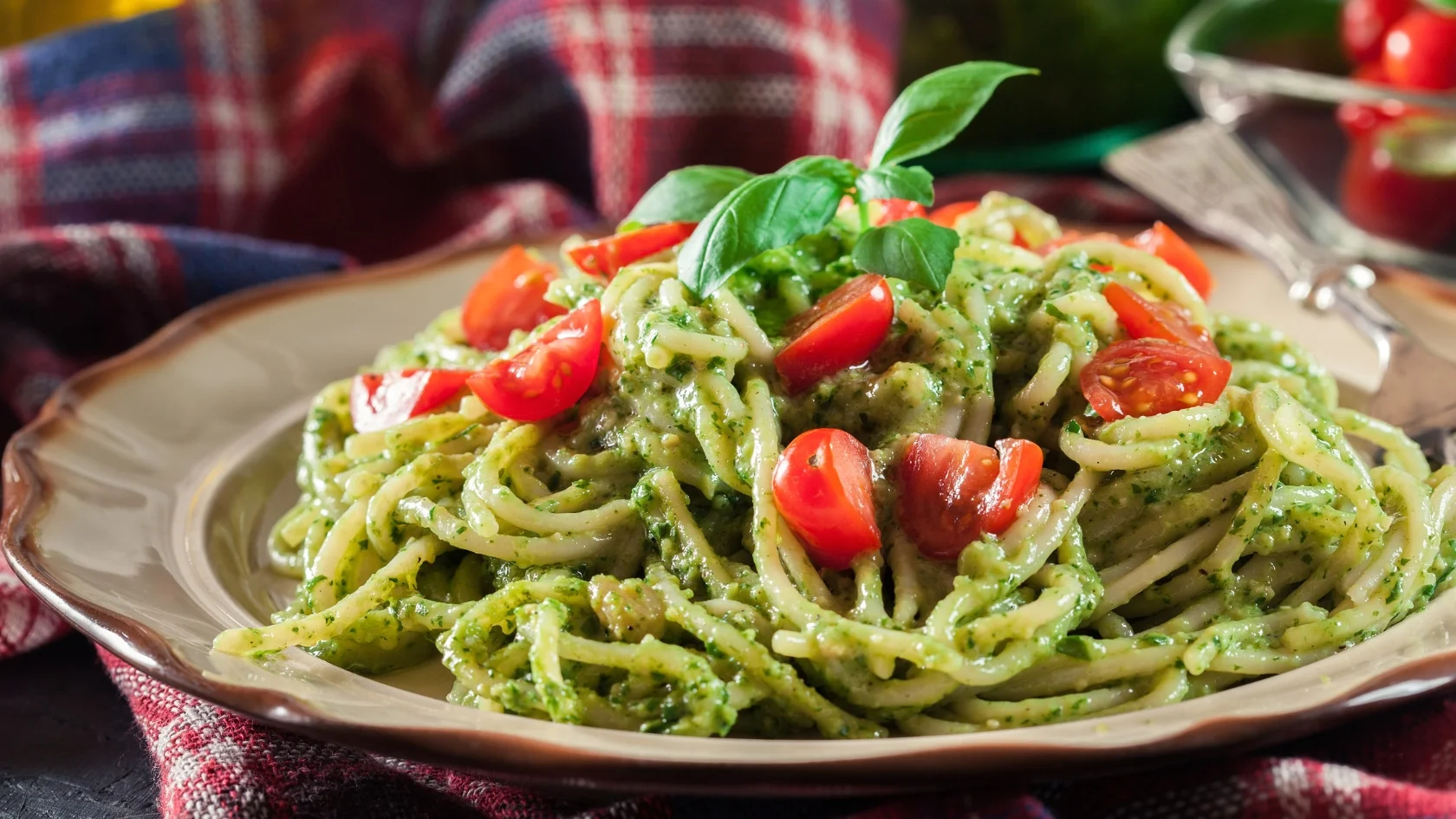
Pesto alla Genovese: The emerald green masterpiece of Liguria
Pesto alla Genovese is perhaps the most beautiful proof in Italian cuisine that the real magic often lies in absolute reduction - provided you are uncompromisingly dedicated to the quality of the ingredients and traditional craftsmanship. This bright green sauce is far more than just a quick everyday dish; it is a culinary ritual that requires careful patience and punishes the taste of any hectic preparation.
Once you have experienced the almost life-changing contrast between a heat-pasteurized, industrial pesto from the supermarket jar and a cold emulsion freshly ground in a marble mortar, there is simply no going back. The true fascination only unfolds when the delicate Basilico Genovese DOP meets the fine, slightly sweet and particularly digestible spiciness of the rare Vessalico garlic. When these treasures are combined with gyrating muscle power, coarse sea salt and first-class olive oil to create a creamy perfection, the result is not just a sauce. It is an emerald green masterpiece that conjures up the unbridled sun, the terraced mountain landscape and the salty breeze of the Ligurian Sea directly onto the plate with every bite.
Map: Genoa, Liguria
FAQ: Pesto alla Genovese
Where can I find the best and most authentic pesto alla Genovese in Genoa?
In the old town of Genoa, there are numerous traditional trattorias and small manufactories that prepare their pesto fresh daily in marble mortars and are often located right next to the famous palazzi on Via Garibaldi. Look out for the quality seal of the Consorzio del Pesto Genovese, which guarantees that only local basil from Prà and high-quality Ligurian olive oil have been used to make the pesto.
Can I take fresh Pesto alla Genovese home with me on the plane as a souvenir?
At Genoa Airport, there is a special exemption for the "Il Pesto è Buono" project, which allows travelers to carry jars of up to 500 grams of pesto in their hand luggage, provided they make a small donation to a children's foundation. At all other airports, however, the usual security regulations for liquids and gels apply, which is why you should definitely stow larger quantities safely in your checked baggage.
What are the most important ingredients I should look out for when buying pesto in Liguria?
Genuine pesto alla Genovese consists exclusively of seven specific ingredients, namely young basil from the region, extra virgin olive oil, pine nuts, fine sea salt, garlic and a blend of Parmigiano Reggiano and mature pecorino. As soon as you discover substitutes such as cashew nuts, sunflower oil or potato flakes on the list of ingredients, it is no longer the protected original product, but an inferior copy.
What type of pasta is traditionally served with pesto in Liguria?
What type of pasta is traditionally served with pesto in Liguria?
In the local cuisine of Genoa, pesto is almost exclusively combined with trofie or trenette, whereby the trofie is a short, twisted type of pasta made from durum wheat semolina, to whose grooves the sauce adheres particularly well. The dish is often traditionally served with boiled green beans and diced potatoes, which gives the meal a special creaminess and is considered the only true way to enjoy pesto alla Genovese.
Experiences & sights
Note: Disclaimer - Italien.news is not the owner or organizer of the sights, accommodations and events published here and therefore not responsible for program changes, cancellation of the event and possibly incorrect information. The editorial team of Italien.news always endeavors to provide detailed and accurate information. However, it is possible that events, attractions, etc. may be changed and not updated promptly. Exact details of dates, times and programs can be obtained directly from the owner of the attractions and accommodation.
Please also check the website or social media of the attractions and events for updates before you travel! Our blog articles contain our personal recommendations in the form of affiliate links. If you book or buy something via the links or simply click on them, we receive a small commission. This does not change the price for you at all. Content and texts © Italien.new & KI / Photos © Canva.com / shutterstock.com / Unsplash.com / Pixabay.com / Pexels.com / Others. Please also visit our Italy Shop!