When the days get shorter and the scent of melted butter and fine vanilla wafts through the streets of Verona, a very special pastry moves into the limelight of Italian festive culture. The pandoro is far more than just a simple cake; it is an architectural work of art made from fluffy yeast dough, which embodies the elegance of Venetian tradition in its distinctive star shape.
During the Panettone Often polarized by its variety of fruits, the Pandoro wins hearts with its purist perfection and a texture as delicate as freshly fallen powder snow. But behind this simple, golden yellow façade lies a story that tells of aristocratic splendor, artistic design and the courage of visionary bakers. Join us on a culinary journey through time and discover how a simple „bread of gold“ became the undisputed star of Italian Christmas.

Origin and history of Pandoro: the gold on the table
The Pandoro, whose name is sonorously derived from the Venetian „Pan de Oro“, sits alongside the Milanese Panettone as the undisputed monarch of the Italian Christmas table. Its origins are a fascinating journey through the bakeries of Veneto, closely interwoven with the region's aristocratic heritage. The „Nadalin“, a traditional Christmas cookie from 13th century Verona, is considered to be its direct ancestor. Although this forerunner was already star-shaped, its texture was more compact and less substantial than today's specialty. A far more sumptuous theory takes us to the palazzi of the Venetian Renaissance, where wealthy patricians had a cone-shaped bread served that was actually covered in wafer-thin gold leaf - a symbol of boundless wealth that gave the pastry its enduring name.
However, the birth of the modern Pandoro, as it characterizes the festive season today, can be dated precisely to October 14, 1894. On this day, the Veronese confectioner Domenico Melegatti revolutionized the art of baking by applying for an official patent for a „sweet bread“ with a completely new texture. Melegatti massively increased the butter and egg content and used a special sourdough method to achieve the incomparable lightness. For the aesthetic finish, he demonstrated a real sense of style: he commissioned the impressionist painter Angelo Dall'Oca Bianca to design a baking tin that transformed the cake into a perfect, eight-pointed star. In contrast to the panettone, the pandoro consistently dispenses with the addition of raisins or candied fruit. It relies entirely on the purist elegance of its golden crumb, which is created by a generous amount of egg yolk, as well as the harmonious interplay of the finest cocoa butter and natural vanilla.
While Melegatti is considered the visionary creator, it was another name that finally brought the pandoro from the local pastry shops of Verona to households all over the world: Ruggero Bauli. After miraculously surviving the sinking of the steamship „Principessa Mafalda“ in 1927, he returned from Argentina years later and opened his own bakery in Verona in 1950. Bauli combined the traditional craft of slow dough preparation with modern industrial production methods without sacrificing the quality of the original recipe. His clever vision transformed the Pandoro from a handmade luxury item for the few into an affordable festive symbol for millions. Today, the characteristic purple of the Bauli packaging dominates the image of Italian supermarkets at Christmas time and is emblematic of the democratization of this golden cake, which, despite its industrial success story, has never lost its poetic core as „bread of gold“.

Verona: A combination of romance and maximum enjoyment
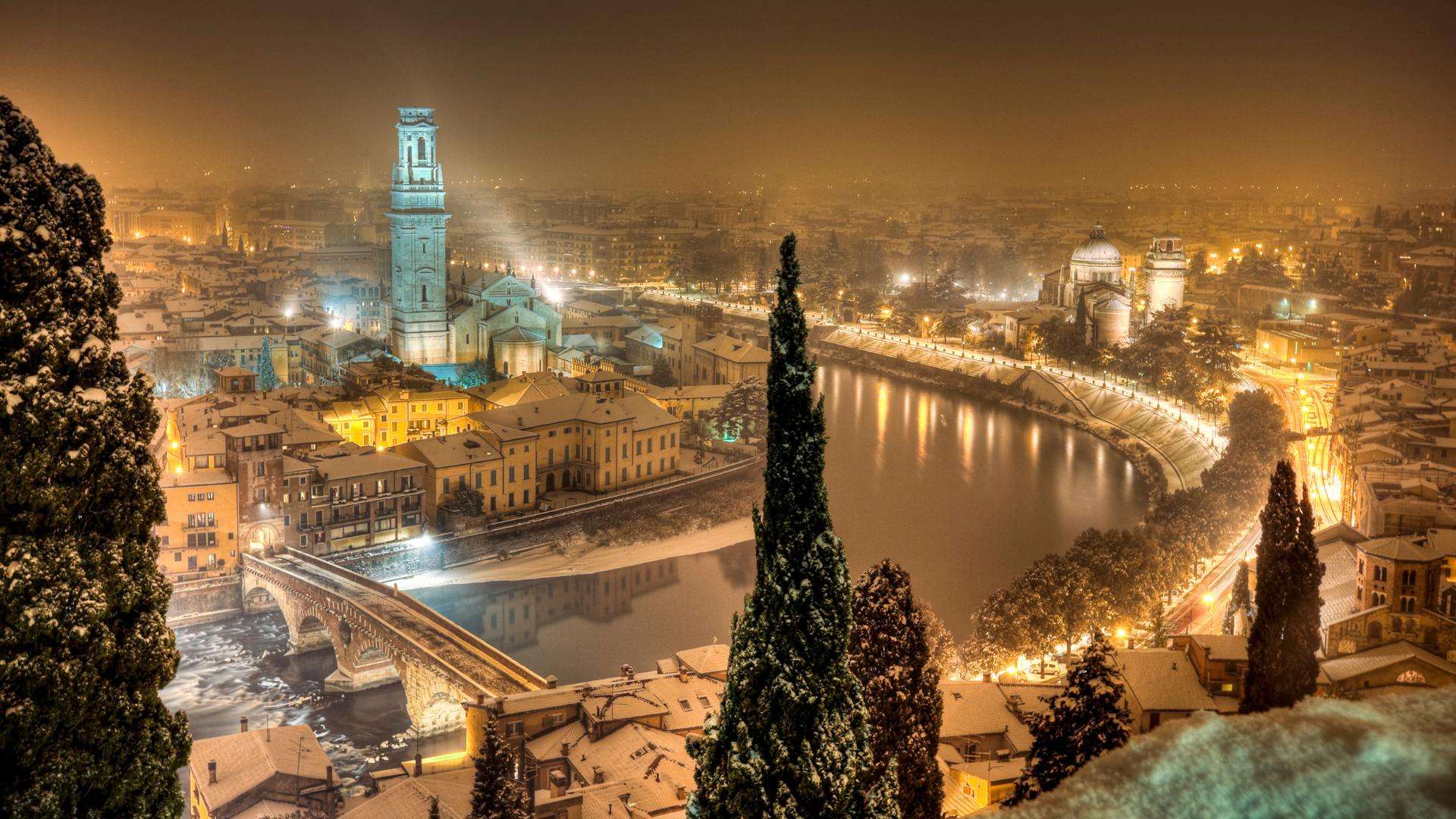
Verona, the proud cradle of Pandoro, defines itself in world history far beyond the tragic setting of Shakespeare's „Romeo and Juliet“ beyond. As a UNESCO World Heritage Site, the town on the winding banks of the Adige River presents itself as a living open-air museum in which Roman antiquity, medieval splendor and the modern way of life intertwine seamlessly. Geographically favored by the protective foothills of the Lessinian Mountains and its close proximity to Lake Garda, the region enjoys a microclimate that not only drives the world-famous Valpolicella winegrowing to peak performance, but has also given rise to a deep-rooted passion for first-class agricultural products and the resulting art of baking.
With the arrival of the pre-Christmas season, the stone heart of Verona is transformed into an enchanting sea of lights that exerts an almost magical attraction. The undisputed symbol of this festive era is the monumental, gleaming white steel comet star that majestically shines down from the ancient arena onto the Piazza Bra towers above it. This „Stella di Natale“ is far more than just decoration; it creates a visual bridge to the iconic star shape of the Pandoro and celebrates the city's inseparable identity with its most famous export. Verona's culinary DNA has always been based on the uncompromising selection of local ingredients - from the rich butter of the nearby mountain pastures to the finest flours of the region. This philosophy of quality and reduction to the essentials is reflected in every bite of an authentic Pandoro, which carries the elegance and gentle character of its home town.
Authentic recipe: Pandoro Veronese
The preparation of a real pandoro is the supreme discipline of yeast dough baking. It requires patience, time and precise temperatures. This recipe is for a 500g Pandoro mold (ideal for approx. 4 people) and has been adapted for home preparation without compromising on taste.
Ingredients
- Pre-dough (biga): 40g flour (type 00 or Manitoba), 20g fresh yeast, 25g lukewarm water.
- First dough: The biga, 80g flour (Manitoba), 20g sugar, 1 egg (size M), 15g soft butter.
- Second dough: The first dough, 170g flour (Manitoba), 70g sugar, 2 egg yolks, 10g honey, 1 pinch of salt, 100g soft butter (high-quality sweet cream butter), 1 vanilla pod (pulp), zest of half an organic lemon.
- For dusting: Powdered sugar (preferably flavored with real vanilla).
Preparation
- The biga (pre-dough): Dissolve the yeast in the water and knead with the flour. Shape into a ball and leave to rise in a warm place (approx. 26°C) until it has doubled in volume (approx. 45-60 mins).
- First dough: Knead the biga with the flour, sugar and egg. When the dough is smooth, knead in the soft butter. Leave to rise again in a warm place (approx. 1.5 to 2 hours) until doubled in volume.
- Second batter & emulsion: Knead the first dough with the remaining flour, sugar, honey, salt, lemon zest and vanilla pulp. Gradually add the egg yolks. As soon as the dough is elastic („window test“ passes), slowly work in the soft butter in small pieces. Knead until the dough is silky smooth and comes away completely from the sides of the bowl.
- Forming & resting: Roll out the dough on a lightly buttered work surface and place in the well-buttered 500g Pandoro star tin. Cover and leave to rise in a warm place (26-28°C) until the dough has reached the edge of the mold. This can take 4 to 8 hours, depending on the rising time.
- Baking: Preheat the oven to 170°C (top/bottom heat). Bake the pandoro for approx. 30-35 minutes. If the surface gets too dark, cover with aluminum foil. Test with a skewer!
- Cool down: Leave the cake to cool completely in the tin before turning it out.
Tips for preparation
Be sure to use Manitoba flour (or a very gluten-rich flour with a high W value), as normal household flour cannot support the long fermentation and the high amount of fat. Make sure that all ingredients are at room temperature. Patience is the most important ingredient: never try to artificially speed up the rising times by increasing the heat, as this destroys the structure.

Where to get the best pandoro in Verona
Anyone visiting the city of origin of „golden bread“ should turn their back on the industrially produced pandoro from the supermarket shelves for a moment and instead seek out the seductive aroma that wafts from the city's traditional pasticcerie. An absolute place of pilgrimage for gourmets is the Pasticceria Perbellini. Although its headquarters in Isola Rizza is located just outside the city center, the Perbellini family is considered one of the most important institutions in the Italian art of baking. Their „Pandoro Classico“ is revered by connoisseurs worldwide as one of the best in the country, as it is still made strictly according to old artisan methods and wrapped in the characteristic paper that preserves its freshness.
Right in the vibrant heart of Verona, not far from the elegant shopping streets, you will find the Pasticceria Flego another first-class address. Flego is known in the city for its exquisite, almost artistic patisserie. At Christmas time, however, the range is completely transformed into the service of the star cake: the pandoro offered here is perfectly balanced and so sought-after that regular customers often reserve their copies weeks in advance so as not to be left empty-handed on Christmas Eve. If you like it a little off the beaten track, you should make your way near the university to the Pasticceria Tommaso e Francesco search. This charming insider tip cultivates the tradition of Veronese baking with an almost obsessive dedication. Their Pandoro impresses with a particularly intense, noble butter note and a texture that is so incredibly soft that it literally melts in the mouth.
But a journey in the footsteps of the Pandoro would not be complete without paying tribute to the modern heritage of the Bauli family, who have made the pastry the symbol of an entire nation. In Verona, the Bauli name is not only found on the shelves, but also in exclusive brand stores and the flagship store „Minuto Bauli“. Here, a bridge is built between industrial perfection and the experience of a fresh bakery. In these modernly designed stores, visitors can experience the Pandoro in an almost playful form - for example as a „Minuto“, a small, oven-warm pastry that captures the characteristic fluffiness of its big brother in pocket size. It is the perfect address for anyone who wants to taste the legacy of Ruggero Bauli in a contemporary setting and experience a piece of Veronese industrial history right at its origins.
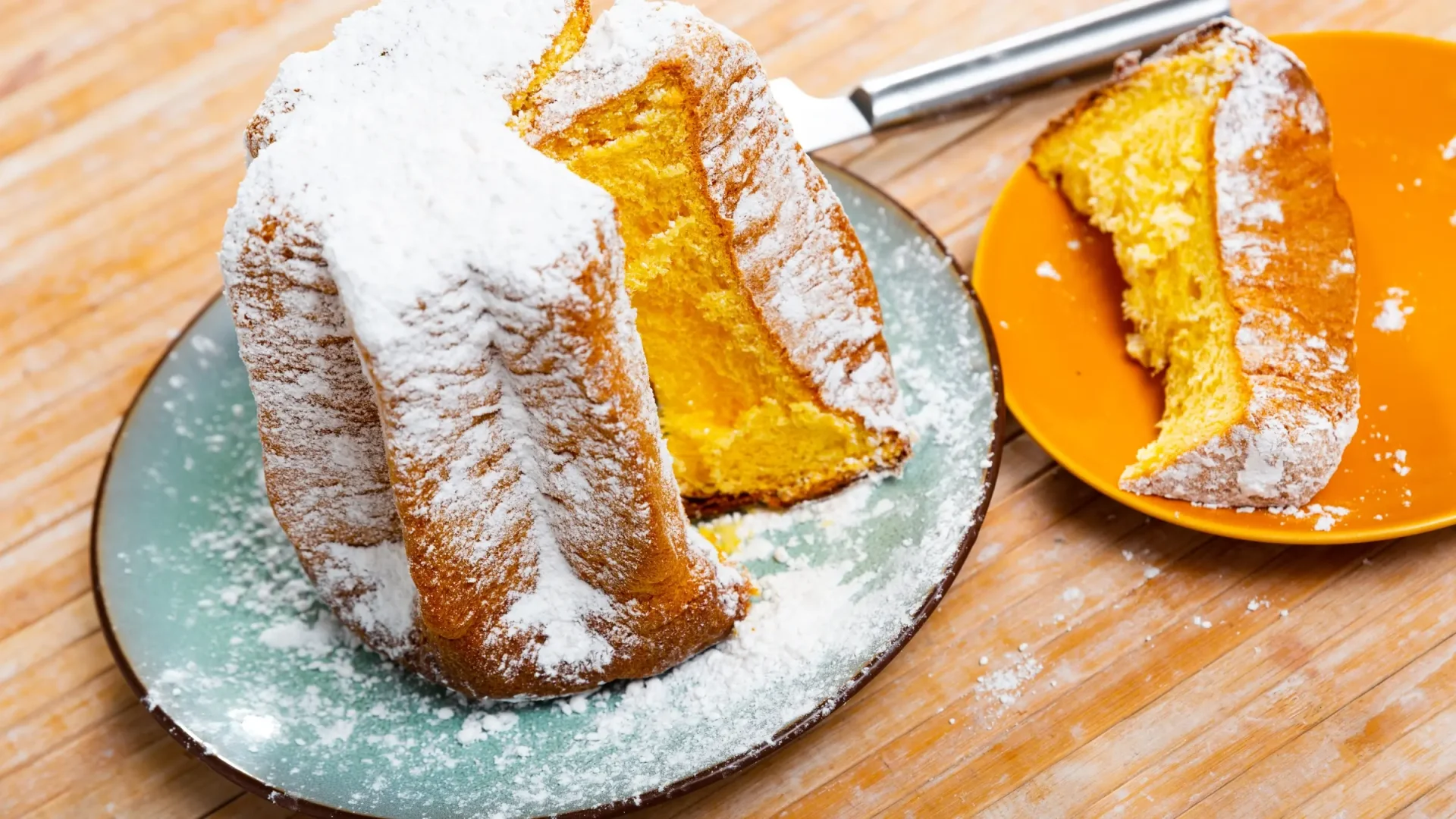
A golden star for the festive season
The Pandoro from Verona is far more than just a traditional Christmas cookie; it embodies the essence of Italian joie de vivre paired with the highest level of artisanal precision. While its Milanese rival, the panettone, captivates with the opulence of its candied fruit and raisins, the pandoro is the pinnacle of purism. In its simple elegance, it does not forgive any mistakes in production - every nuance of fermentation and every nuance of ingredient quality is crucial to its success. A perfectly prepared Pandoro reveals itself as a sensory experience that melts like a delicate cloud on the tongue, exuding the noble scent of fresh butter and the finest vanilla.
If you try your hand at this masterpiece of the art of baking with the recipe above, you will bring an authentic piece of Veronese magic straight into your kitchen. To bring out the full flavor of the cocoa butter and the ethereal vanilla notes, it is recommended to warm the cake very slightly before eating. In combination with a generous layer of powdered sugar, which covers the golden spikes like a glistening blanket of snow, you can create the ultimate taste experience that brings the festive atmosphere of Italy straight to your home.

Map: Verona, Veneto

FAQ: Pandoro from Verona, Italy
Where can I find the most authentic Pandoro directly in Verona?
For a truly authentic experience, you should visit the traditional pasticcerias in the old town of Verona, where the pastries are often still freshly baked according to family recipes without artificial additives. Look out for shop windows away from the crowds of tourists around the Arena, as smaller artisan businesses often offer the highest quality and the most intense butter flavor.
What is the key difference between pandoro and panettone?
While the Milanese panettone is known for its raisin and candied fruit filling, the Pandoro from Verona impresses with its simple elegance without fruit and an extremely airy, golden yellow texture. The star-shaped form of the Pandoro and its fine vanilla scent clearly distinguish it from the more dome-shaped and richly filled texture of its Milanese rival.
Read more about theTopic



How is pandoro traditionally served and enjoyed in Italy?
A real pandoro is usually warmed briefly on the radiator or in the oven before serving, so that the butter aroma can fully develop, before being shaken vigorously in the enclosed bag of powdered sugar. Many Italians serve it with a mascarpone cream or drink a sweet sparkling wine such as Moscato d'Asti to perfectly complement the lightness of the pastry.
When is the best time to experience the Pandoro tradition in Verona?
The ideal time for a culinary trip to Verona is from the end of November to the beginning of January, when the city is ablaze with festive lights and the bakeries are in full swing. During these weeks, you can not only try the freshest varieties, but also experience the special pandoro tastings at the Christmas markets in Piazza dei Signori.
Experiences & sights
Note: Disclaimer - Italien.news is not the owner or organizer of the sights, accommodations and events published here and therefore not responsible for program changes, cancellation of the event and possibly incorrect information. The editorial team of Italien.news always endeavors to provide detailed and accurate information. However, it is possible that events, attractions, etc. may be changed and not updated promptly. Exact details of dates, times and programs can be obtained directly from the owner of the attractions and accommodation.
Please also check the website or social media of the attractions and events for updates before you travel! Our blog articles contain our personal recommendations in the form of affiliate links. If you book or buy something via the links or simply click on them, we receive a small commission. This does not change the price for you at all. Content and texts © Italien.new & KI / Photos © Canva.com / shutterstock.com / Unsplash.com / Pixabay.com / Pexels.com / Others. Please also visit our Italy Shop!