
Naples – Six of the seven concrete sails are gone; the seventh remains standing. Anyone visiting Scampia today will see a construction site, not a movie set.
Scampia is a neighborhood in northern Naples with a population of about 39,000. It became famous because of the Vele, the "Sails": seven massive residential complexes, built between 1962 and 1975 and later becoming symbols of the Camorra and drug trafficking. They have been demolished since 1997; the second-to-last one came down in December 2025. Only one remains, the Vela Celeste, and by 2028, about 500 new apartments are expected to be built in their place.
This guide explains what the Vele were, why the project failed, what's currently under construction, and what you should know before taking Metro Line 1 to the last stop.
Scampia by the Numbers
Scampia is part of Naples' eighth municipal district, along with Chiaiano and Piscinola-Marianella. The neighborhood was built on open land on the northern outskirts of the city, in accordance with the Italian Housing Act Law 167 from 1962. The numbers below show just how large the project was and how little of it remains.
As of September 2026 · Information provided by the Comune di Napoli, ANSA, the Ministry of Culture, and Legambiente Campania
- People interested in architecture and urban planning
- Readers who want to know what lies behind the image of Gomorrah
- Naples connoisseurs who see the city beyond the historic center
- a classic half-day sightseeing tour
- Travelers with limited time in Naples
- Anyone looking for a film set
What are the Vele di Scampia?
The Vele were seven residential complexes designed by the Neapolitan architect Franz Di Salvo (1913–1977) and built between 1962 and 1975 on a 115-hectare development site. Each Vela consists of two building wings angled toward each other, separated by an open interior space 10.80 meters wide. Viewed from the side, this creates the silhouette of a taut sail, hence the name.
Di Salvo thought big. He referred to the Unité d’habitation, Le Corbusier's "living machine," and the bridge structures designed by the Japanese architect Kenzo Tange. Individual apartments should remain small, but all communal spaces should be moved outside: to long, open pergolas that ballatoi, which ran through the interior like suspended streets. That was where the life of the neighborhood was supposed to take place.
The buildings were constructed of reinforced concrete in two phases: Vele A through D in one phase, and F through H in the other. There was never an E. The residents later named the buildings after colors, celeste for light blue, gialla for yellow, rossa for red and verde for green. In the end, each Vela building measured 46 meters instead of the planned 35 and had up to 14 stories at its center.

Why did this flagship project turn into a trouble spot?
Because only half of it was built. The Italian Ministry of Culture’s architectural census lists what was included in the plans but never came to fruition: social centers, community facilities, playgrounds, green spaces, and connections to the wider road network. What remained were apartment blocks without the central core around which they were originally conceived.
Cost-cutting measures were also taken during construction itself. Di Salvo had developed and patented a prefabricated component system; the contractors replaced it with cast-in-place concrete and reduced the planning grid. The ground-floor areas, which were supposed to remain open, were subsequently closed off.
The earthquake in Irpinia in November 1980, which left tens of thousands homeless in Campania. Many families moved to the Vele, some of them without a lease. The neighborhood filled up faster than schools, transportation, and administrative services could keep up. The housing project became a place where the state was virtually absent, and the Camorra took over whatever the state left behind.
Good to know: The phrase „Europe’s largest open drug market“ has been floating around in news reports for years, though no government agency or court has ever officially designated it as such. Meanwhile, the superlative keeps moving on, usually to Caivano. Take it for what it is: a journalistic exaggeration, not a measured value.

How many Veles are still standing today?
One. Of the seven buildings, only the Vela Celeste, and she deliberately stops. Demolition began as early as 1997 and dragged on for nearly three decades because replacement apartments had to be found for each resident first.
The final stage has been delayed. The cancellation of the Vela Rossa Construction began on December 17, 2025, and was scheduled to be completed in March 2026. During the night of May 19–20, 2026, part of the elevator shaft collapsed while work was underway and struck a neighboring building that was occupied. No one was injured, but about 300 people had to spend the night away from home and were able to return the next day. The district attorney’s office is investigating the incident as a case of negligent collapse, and work continued.
The Demolition of the Vele di Scampia
| Vela | What happened |
|---|---|
| Vela F | December 1997: Blasting test; excavated with excavators in August 1998 |
| Vela G | Blown up in February 2000 |
| Vela H | Demolished in April 2003, even though it had originally been slated for preservation |
| Vela Verde | Demolition from February through July 2020 |
| Vela Gialla | Demolition beginning March 10, 2025 |
| Vela Rossa | Demolition beginning December 17, 2025; still underway in May 2026 |
| Vela Celeste | will remain in place and be renovated |
As of September 2026 · Information according to ANSA, Il Mattino, and the City of Naples

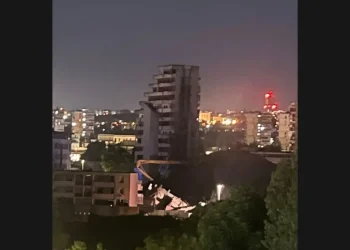
Partial collapse of the Vela Rossa in Scampia: 47 families evacuated!
In Naples, part of the uninhabited Vela Rossa in Scampia collapsed during the night. No one was injured, but 47 neighboring families had to be temporarily evacuated.
What Happened During the Collapse at Vela Celeste
On the evening of July 22, 2024, a fire broke out in the Vela Celeste a ballatoio one of those open arcades that Di Salvo had envisioned as a communal space. Three people died, and eleven were injured, including seven children. About 800 residents had to evacuate the building.
According to the ANSA news agency, the Vela Celeste should have been evacuated following an order issued on October 12, 2015. The order was never carried out. In October 2025, the Naples Public Prosecutor’s Office filed charges against six city officials; the preliminary hearing began on April 1, 2026, and was adjourned until June.
The area around the Vele is a construction site and is cordoned off. Entry is prohibited, and the barriers are moved as construction progresses. You can see whatever you want to see from the public road.

What is being built on the site of the Vele now?
A new residential neighborhood. The project is called Restart Scampia, is funded by the Italian National Recovery and Resilience Plan (PNRR) and calls for 433 new apartments, with plans to eventually build around 500. The first construction phase, comprising 18 apartments, began in September 2024, and another block with 160 apartments is being built on the sites of the demolished Vela Gialla and Vela Rossa.
In addition, there is a school, a row of stores, a neighborhood park, and community gardens. Mayor Gaetano Manfredi In December 2025, it set two milestones: four completed buildings with approximately 150 apartments by the end of 2026, and the entire neighborhood by 2028.
The Vela Celeste The building itself will not be demolished, but rather renovated. It will house offices for the Metropolitan City of Naples will be demolished, in the Naples metropolitan area. This leaves exactly one building from which the neighborhood’s history can still be traced. A date for the move-in has not yet been set.
Good to know: Depending on the source, the figures for the construction project range from 433 to 500 apartments. Anyone standing in the neighborhood sees one thing above all else: cranes, construction fences, and building shells.

What has *Gomorra* done to Scampia?
It has made the neighborhood's name known around the world, while at the same time reducing it to a single theme. Roberto Saviano published his book in 2006 Gomorrah about the Camorra; according to the Italian encyclopedia Treccani, the book sold about 2.5 million copies in Italy and 10 million worldwide. Incidentally, Saviano is not from Scampia: he was born in Naples in 1979 and grew up in Caserta.
Adapted into a film in 2008 Matteo Garrone the material and won the Grand Prix du Jury for it at Cannes. The series premiered on Sky in 2014 Gomorrah, produced by Cattleya, five seasons through 2021, filmed in Scampia, among other locations, Ponticelli, Secondigliano and San Giovanni a Teduccio.
That didn't go over well in the neighborhood. As early as January 2013, they refused to Angelo Pisani, who was then president of the eighth municipal district, granted the production permission to film on public property. His criticism: The series only ever highlights the negative aspects and permanently stigmatizes the neighborhood.
What remains is the Gomorrah Tourism. Commercial tour operators take visitors to the Vele, to Forcella and to San Giovanni a Teduccio. Rosario Caldore, spokesperson for the Vele Committee, a representative of the residents, said in the newspaper in 2020 Il Giornale: „People need to understand that there are people living there—we live in these places. And seeing ourselves being photographed like monkeys at the zoo really bothers us.“ Anyone traveling to Scampia should keep this in mind.

The Maradona murals in the Quartieri Spagnoli in Naples
Myth and Masonry: Maradona's Legacy in the Alleys of the Old City Diego Armando Maradona is far more than just a historic soccer legend to Naples: He is a cultural icon whose influence...
Those Who Stand Up in Scampia
The neighborhood has never relied solely on the city. The most important name is Felice Pignataro (1940–2004), an artist and muralist who created some 200 murals in the greater Naples area. In 1981, he founded, together with his wife, Mirella La Magna and other fellow members, the association GRIDAS, as advertised Risveglio Dal Sonno Group, the group "Awakening from Sleep.".
A middle name is Gianni Maddaloni, a judo instructor who teaches in a gym on the Viale della Resistenza He coaches kids from the neighborhood. His son Pino Maddaloni won the gold medal in the 73-kilogram weight class at the 2000 Olympic Games in Sydney. The club is called Star Judo Club and explicitly positions itself as an alternative to the Camorra.
In addition, the university has been there since 2022. A new building now stands on the site of the demolished Vela H, University of Naples Federico II, where health care programs are taught. Where a student residence once stood until 2003, students now come and go.
Places in the neighborhood that actually exist
| Location | Here's what you can expect |
|---|---|
| GRIDAS Via Monte Rosa 90/b | Cultural association, co-founded in 1981 by the artist Felice Pignataro. Murals throughout the neighborhood and, since 1983, organizer of the Carnevale di Scampia. |
| Star Judo Club Viale della Resistenza | Gianni Maddaloni's judo school, open to children from the neighborhood, to youth in rehabilitation, and to children with disabilities. |
| Some do… some don't Section 12 | A social service organization since 2002, providing educational support to Romani and Italian families. In 2014, the Chikù restaurant emerged from this organization. |
| Scugnizzeria 20 A Via Circumvallazione Esterna | A bookstore and cultural center run by the Marotta & Cafiero publishing house, featuring a theater workshop, a printing workshop, and an audiobook project. It is located in Melito di Napoli, right on the border with Scampia. |
| University Complex Viale della Resistenza | A campus of the Università Federico II, which opened on October 17, 2022, offering degree programs in the health professions. |
| Corto Maltese Park Via Hugo Pratt | Approximately 22,000 square meters of green space with basketball and tennis courts, developed by the volunteer initiative I Pollici Verdi. |
As of September 2026 · Information provided by the clubs, the Università Federico II, and the Comune di Napoli

How do you get to Scampia?
By subway. The Line 1 the municipal transit authority ANM (Azienda Napoletana Mobilità) departs from the main train station Garibaldi across town to the northern terminal Piscinola, which is also known as Piscinola-Scampia is clearly marked. The line stops at 20 stations, including Toledo, Museum and Dante.
From Sunday through Thursday, the first train departs from Piscinola at 6:00 a.m., and the last one at 10:30 p.m. On Fridays and Saturdays, the ANM extends service until 1:20 a.m. Trains run every ten minutes between 6:00 a.m. and 8:00 p.m., and every fourteen minutes thereafter.
There is a second rail line: the EAV Railway, also known in Naples as Metro Arcobaleno called, connects Aversa Center via Piscinola-Scampia, with stops along the way at, among other places, Mugnano. If you're coming by car, take the Bypass or the Asse Mediano, but that's just how traffic is in Naples.
Line 1 is the most convenient option and, for visitors, also the easiest. Validate your ticket before entering the platform, and keep an eye on the last departure time for your return trip.

Is Scampia safe for visitors?
There is neither a travel warning nor an official advisory that specifically mentions Scampia. The travel and safety advice from the Federal Foreign Office for Italy, last updated on September 4, 2026, warns of pickpocketing in tourist areas and, for Naples, specifically mentions only the R2, 152, and 202 bus lines between the city center and the train station. In other words, they do not specifically mention the northern outskirts.
That doesn’t mean Scampia is a safe neighborhood to walk around in. It means that the danger travelers actually face in Naples is different from the one depicted in the series. Anyone who arrives by metro during the day, sticks to the main thoroughfares, doesn’t point a camera at apartment windows, and doesn’t take photos of anyone without asking first is no different from a visitor to any other residential neighborhood.
What You Should Know About Scampia
Five things that never happen in a TV series—and that you should know beforehand.
1. There are no tourist attractions here. No museum, no notable church, no scenic overlook. Anyone looking for a tourist attraction will be disappointed. But anyone who wants to understand why European housing construction of the 1960s failed will find a valuable lesson here.
2. The Vele have almost disappeared. Six out of seven are gone; the site is a construction zone. Anyone looking for the silhouette they saw on TV is ten years too late. But you can watch a neighborhood being rebuilt—and that’s a sight you don’t see very often.
3. People live here. The Comitato Vele has repeatedly objected to being photographed. Keep the camera low, so that apartments aren't in the frame. If you want to strike up a conversation with someone, go to a bar and ask.
4. There is no infrastructure for visitors. No information desk, no café with a view, no signage. Make sure to grab a bite to eat and use the restroom at the center beforehand; the metro ride takes a good half hour.
5. Guided tours are two very different things. In addition to commercial Gomorra tours, there are tours offered by the neighborhood itself, organized by GRIDAS, the Star Judo Club, and the soccer school Arci Scampia. Before booking, ask who organizes the tour and where the money goes. The answer will determine whether your visit benefits the neighborhood or simply takes a back seat.

Who should make the trip to Scampia?
For those interested in architecture. The Vele are among the most famous failed architectural projects in Europe. The new building next to them shows what the city claims to have learned from them.
For those who've been to Naples before. Anyone visiting the Old Town, Vomero and is familiar with the coast will see here the other half of the city, where the majority of Neapolitans actually live.
For readers of Saviano. An afternoon spent there really brings home the impact the book and the series have had.
Not really for first-time visitors who have three days to spare. Then the following belong to Spaccanapoli, Archaeological Museum and Pompeii forward.
Combine a visit to Scampia with Spaccanapoli and the Maradona murals
Scampia alone isn't enough to fill a day. But Metro Line 1 makes it easy to combine visits, since it runs from the north all the way to the Old Town.
Get on at the station on the way back Dante and run the Spaccanapoli along the dead-straight alley that divides the Old Town. From there, it's a ten-minute walk to the Quartieri Spagnoli to the Maradona Murales, a neighborhood that has already made the transition from a troubled area to a popular destination. If you have more time, take the Naples sights to do that, or head to the coast of the Gulf of Naples.

Naples Attractions: 7 Highlights You Can't Miss
From the Veiled Christ to 40 meters beneath the city: Naples’ highlights, including prices, hours, and honest recommendations—plus the best neighborhoods to stay in and the pizza that’s worth every...
The Scampia Carnival in February
The Scampia Carnival It is not a carnival parade in the usual sense, but rather a political neighborhood festival. GRIDAS has been organizing it since 1983, with a different theme each year based on what is currently on the neighborhood’s mind.
The 44th edition took place on February 15, 2026, under the title „Evictions, Paradoxes, and Rights.“ The train departs around 10 a.m. from the club’s headquarters at the Via Monte Rosa, winds its way through the streets for about four hours and ends at the Piazza Giovanni Paolo II. If you want to experience Scampia on a day when the neighborhood truly reveals itself, come on Carnival Sunday.
Our conclusion: a neighborhood in the midst of redevelopment
Today, Scampia is no longer just a backdrop, nor is it yet a fully developed neighborhood. Six Vele have been demolished; the seventh is being converted into an administrative building, with cranes standing between them. This is less spectacular than the image the series left behind—and far more interesting.
The visit costs nothing except a subway ticket and half an afternoon. That's exactly the point: For the price of a single ride, you get to see how a city is undoing one of its biggest planning mistakes.
Plan to spend the second half of the day there, followed by the trip back to the historic center. And if you’re not sure where to start in Naples, our overview of the Naples sights Continue.
Map: Scampia, Naples
FAQ - Frequently Asked Questions About Scampia and the Vele
Things to Do in Naples
Schedules, construction periods, and operating hours are subject to change. Check the information on the official websites of ANM, EAV, and the City of Naples before your trip.
Sources and Further Information
- City of Naples, Municipality 8 (accessed in September 2026)
- Ministry of Culture, Census of Contemporary Architecture: Le Vele di Scampia (accessed in September 2026)
- ANSA, Even the Red Sail Is Down (Dec. 17, 2025) (accessed in September 2026)
- ANSA, Collapse at the Vela Celeste: Preliminary Hearing Begins (April 1, 2026) (accessed in September 2026)
- Napoli Fan Page, Partial Collapse of the Vela Rossa (May 21, 2026) (accessed in September 2026)
- Napoli Fan Page, Restart Scampia, and the First 18 Apartments (August 22, 2024) (accessed in September 2026)
- ANM, Line 1 of the Naples Metro (accessed in September 2026)
- Federico II University, Opening of the Scampia Campus (2022) (accessed in September 2026)
- Il Giornale, That "Gomorra" Tour Among the Sails (February 11, 2020) (accessed in September 2026)
- Legambiente Campania, Mappatura Scampia (2023) (accessed in September 2026)