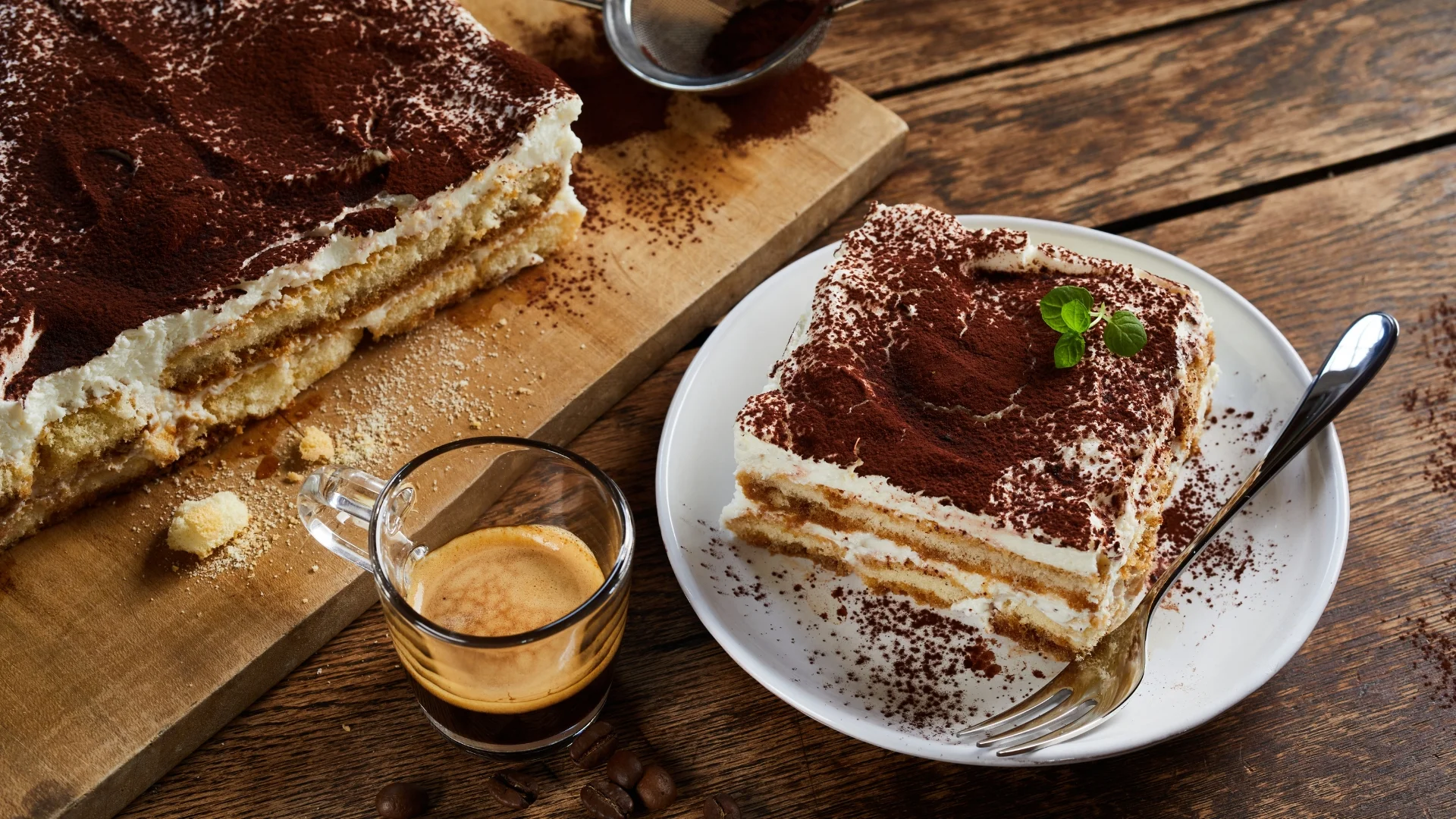
Tiramisu: The legendary dessert from Treviso
Tiramisu is Italy's most famous dessert—a creamy treat made with mascarpone, espresso, and savoiardi, which are soaked in Treviso, Veneto, . The name literally means „pull me up“—and indeed, it takes just a spoonful of this melt-in-your-mouth dessert to understand why it has spread to every corner of the world.
Anyone sitting in a small pasticceria in Treviso’s historic center, with a glass of Prosecco in front of them and this cool, rich dessert on the table, immediately realizes: Tiramisu isn’t just a recipe. It’s a feeling. The intense aroma of espresso mingling with the mild, almost buttery scent of mascarpone—then the first forkful breaking through the layer of cocoa powder to reveal the soft, creamy layer beneath. This is Venetian cuisine in its purest form.
In this article, you'll learn all about the origins of tiramisu, which authentic recipe Serves 4, the best restaurants in Treviso—and why this dessert is so much more than the sum of its ingredients.
Origins and History: Who Invented Tiramisu?
The name „Tiramisù“ is derived from the words tirami (pull me) and sù (up) together – „Pull me up“ or „Lift me up.“ The popular interpretation suggests that the dessert has an invigorating effect thanks to the sugar and espresso—which is why it was often served as a pick-me-up in Venetian taverns in the past.
The origins of tiramisu are the subject of one of Italy’s most heated culinary debates. The widely accepted version dates its invention to the 1960s at the trattoria „Le Beccherie“ in Treviso. Pastry chef Roberto Linguanotto is said to have developed the recipe together with the owner, Alba di Pillo—as a variation on an older Venetian dessert called Sbatudin, a mixture of egg yolk and sugar that gondoliers traditionally ate for energy.
A competing theory from Friuli claims that tiramisu was invented at the restaurant „Al Vetturino“ in Pieris (Gorizia). In 2013, the Friuli-Venezia Giulia region even added tiramisu to the national register of traditional food products—which in Veneto which sparked considerable controversy. In 2017, an Italian court ruled in favor of Treviso: the Campeol family’s recipe from the trattoria „Le Beccherie“ was officially recognized as the original. Pellegrina Campeol, the founder’s widow, has since been regarded by many as the true „mother of tiramisu.“.
The first written mention can be found in the book Veneto Wine by Giuseppe Maffioli (1981), in which tiramisu is described as a typical Venetian dessert: „a dessert made with ladyfingers soaked in coffee and topped with a cream of mascarpone, egg yolks, and sugar.“ Maffioli could hardly have expected that it would be served in every country in the world today.
Veneto and the Marca Trevigiana: The Birthplace of Tiramisu
Veneto is one of Italy's most gastronomically rich regions. While the Serenissima – the era of the Venetian Republic – which left a legacy of spices, rice, and Oriental influences – gave rise to the Trevigiana Brand, the countryside around Treviso, has its own deeply rooted culinary tradition. Mascarpone, a creamy variety of fresh cheese, found its way into Venetian kitchens early on; combined with the region’s intensely roasted espresso and the light-as-air Ladyfingers This is how the culinary synthesis of the 20th century came about.
The Prosecco Route between Treviso and Valdobbiadene, now a UNESCO World Heritage Site, has a significant influence on the region’s dining culture. Here, every tiramisu is traditionally served with a glass of Prosecco Superiore DOCG accompanied. As the people of Treviso say, „Without Prosecco, it’s not a real tiramisu.“ The rolling vineyards and quiet villages of the Marca Trevigiana provide a setting without which the dessert would be almost unthinkable.
Seasonality plays a special role in tiramisu: in the summer, many chefs replace the espresso with Prosecco or Amaretto to create a lighter dessert. In the winter, bakeries in Treviso and Montebelluna often add a touch grappa added to the cream—a nod to the Alpine culinary traditions of northern Italy. Anyone visiting Veneto in the fall will encounter tiramisu in its classic form: rich, dark, with a lingering coffee aftertaste.

Recipe: Tiramisu
(for 4 persons)
Degree of difficulty: Light | Prep time: 20 min. | Cooking time: 0 min. | Total time: 20 min. (+ at least 4 hours of chilling time)
Ingredients
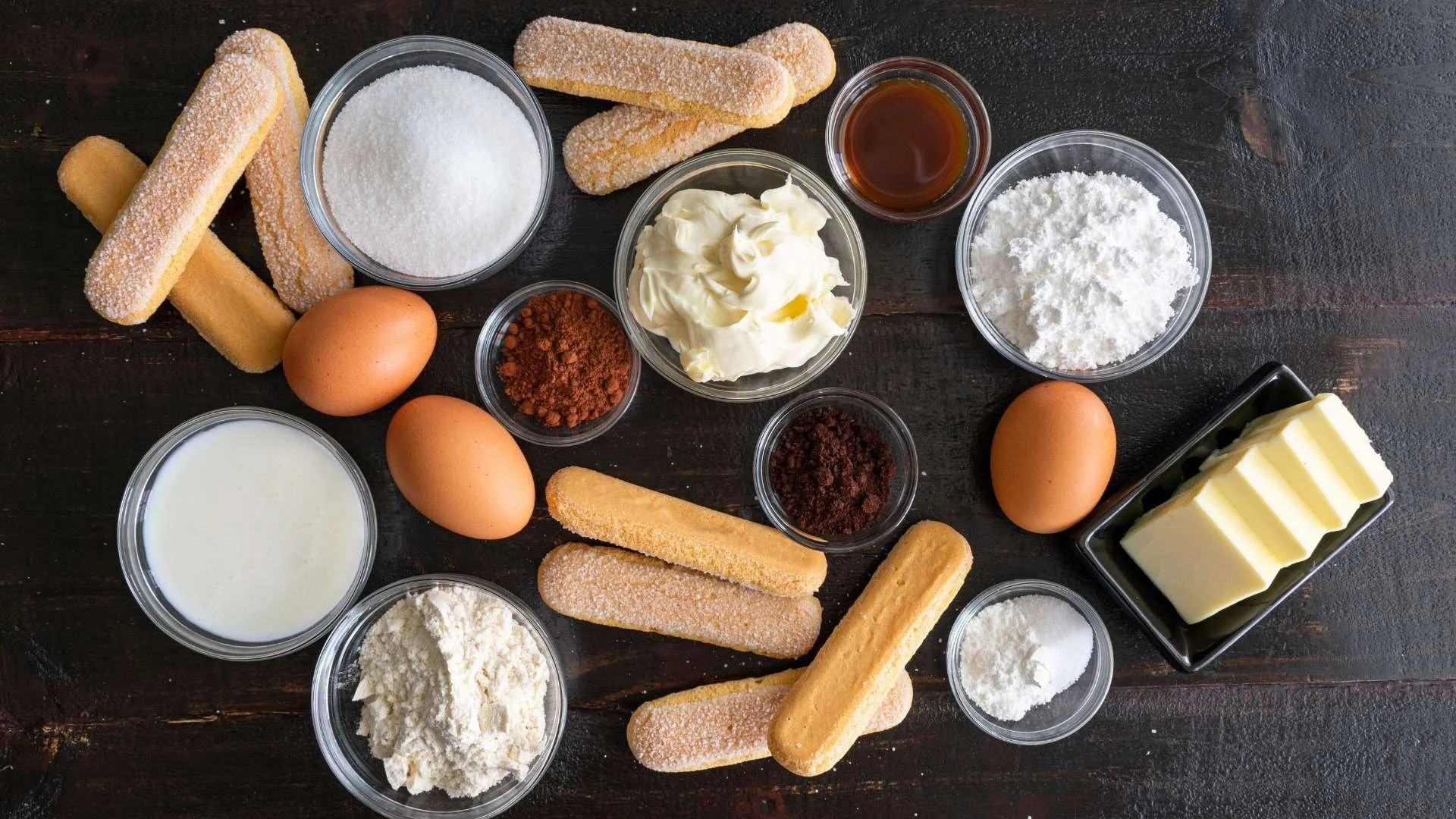
- For the cream: 500 g mascarpone (at room temperature), 4 fresh eggs (size M, separated), 80 g fine granulated sugar, 1 pinch of salt
- For the base: 300 g savoiardi (ladyfingers, or Biskotten), 300 ml freshly brewed espresso (cooled), 2 tbsp Marsala or Amaretto (optional)
- In conclusion: 2–3 tablespoons unsweetened baking cocoa (e.g., Valrhona or van Houten)
Preparation
- How to make espresso: Brew a fresh cup of espresso and let it cool completely. If you like, stir in 2 tablespoons of Marsala or Amaretto. The coffee must be completely cold—warm espresso will make the Savoiardi soggy too quickly.
- Whisk the egg yolks (Zabaione method): In a bowl set over a double boiler (50–60 °C), beat the egg yolks with the sugar until the mixture is pale, thick, and fluffy—about 5–7 minutes. The double boiler method largely pasteurizes the egg yolks. Remove from the heat and let cool to room temperature.
- Fold in the mascarpone: Gently fold the mascarpone into the cooled egg yolk mixture, one spoonful at a time. Do not stir, but fold it in gently (to mount), so that the cream stays light and fluffy.
- Fold in the egg whites: Beat the egg whites with a pinch of salt until stiff peaks form. Vigorously fold one-third of the mixture into the mascarpone mixture, then gently fold in the rest—this will keep the cream as light as a mousse.
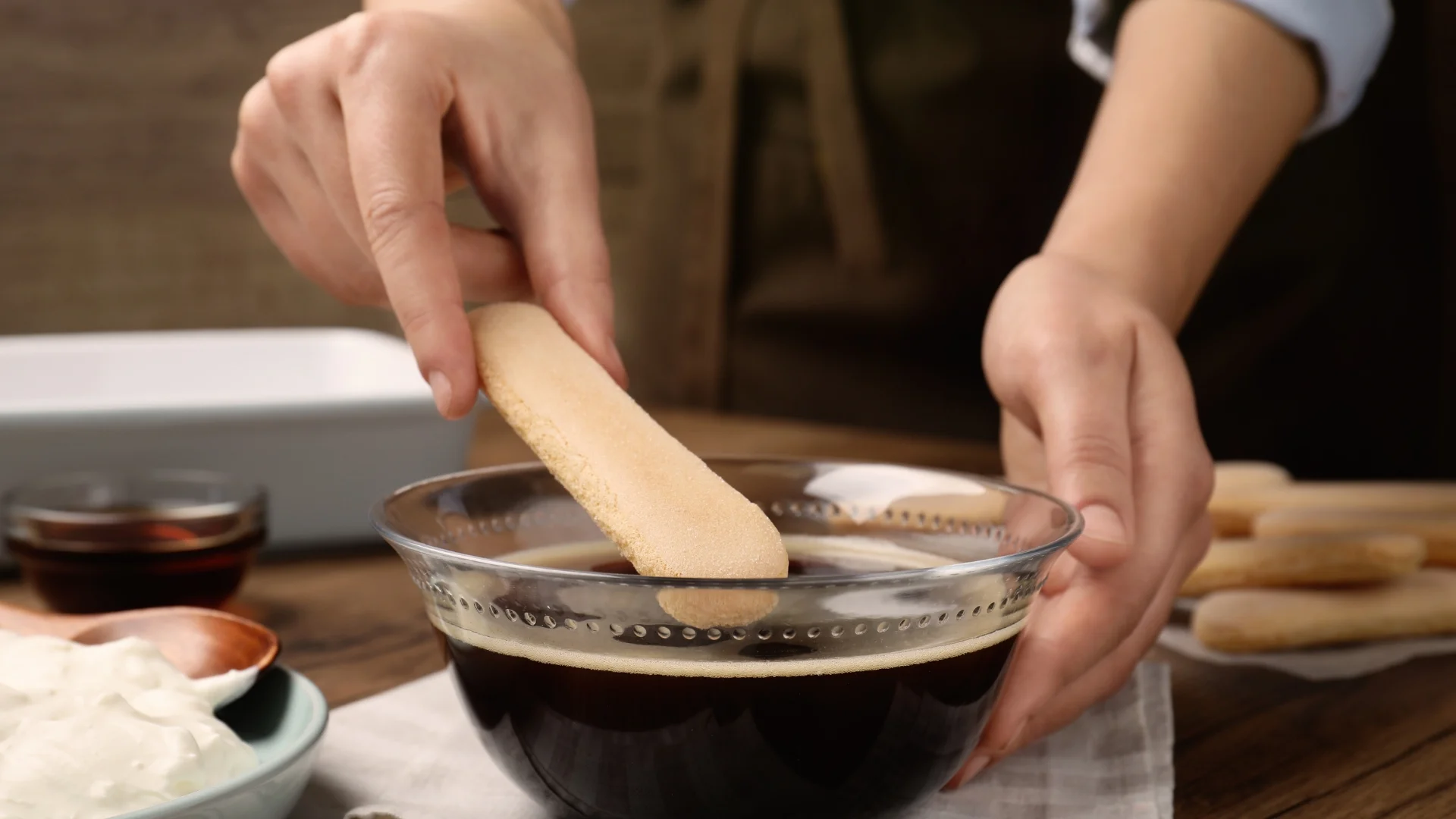
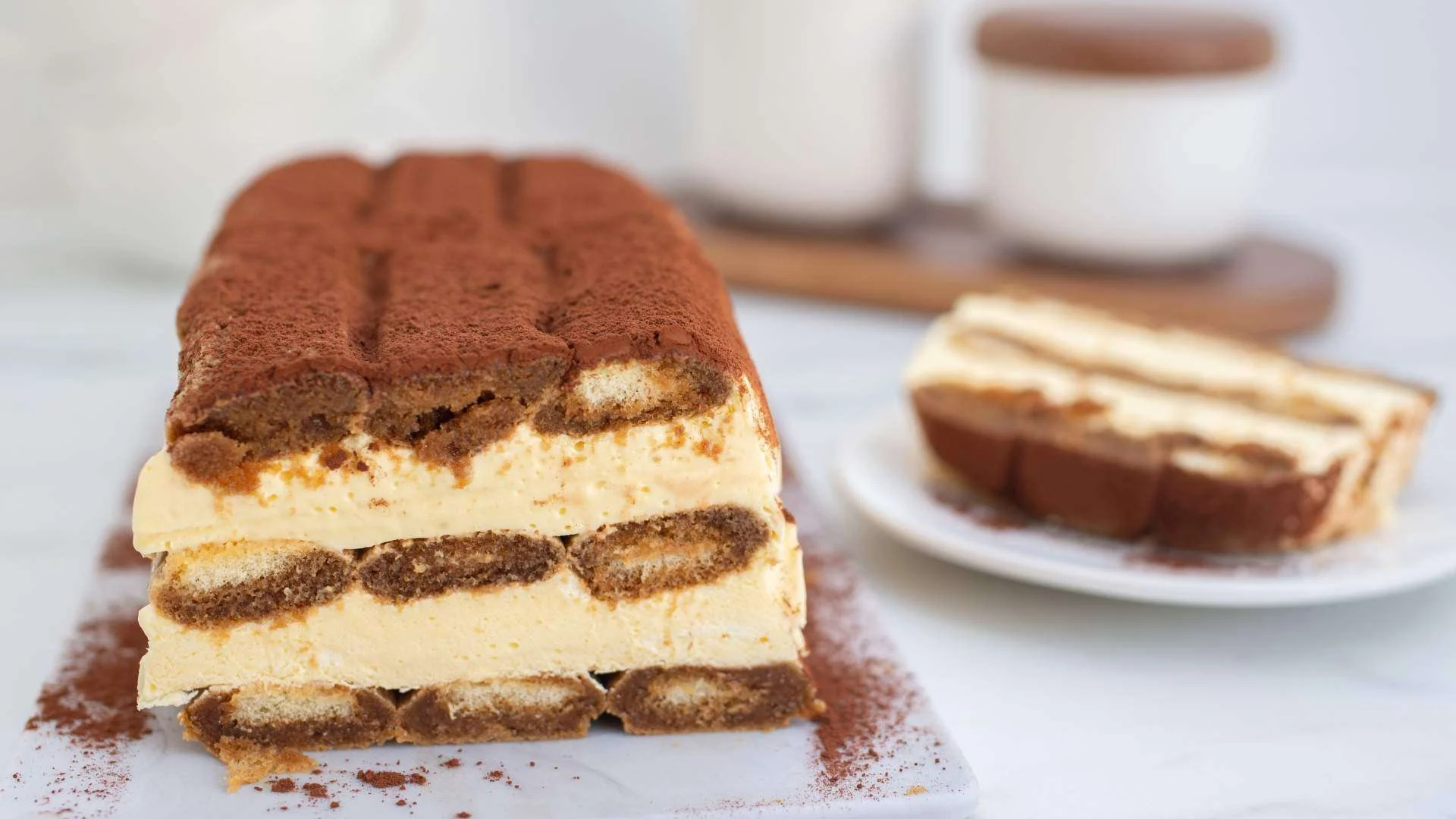
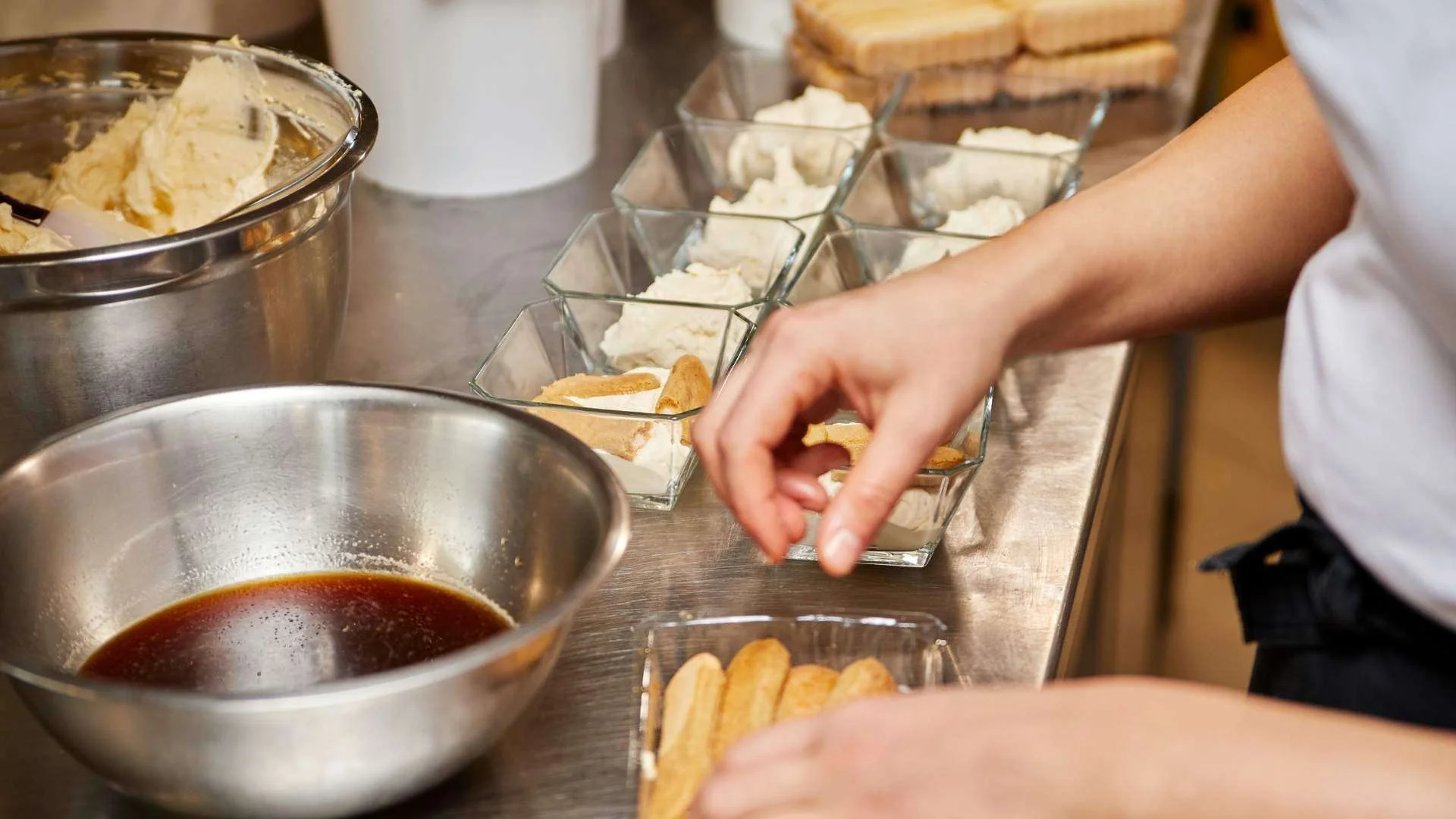
- Building layers: Dip the Savoiardi one at a time briefly into the espresso—really just 1–2 seconds per side. Arrange a layer of ladyfingers in a baking dish (approx. 20 × 30 cm), spread half of the mascarpone cream over them, and smooth it out. Add a second layer of ladyfingers, then the remaining cream.
- Chill and serve: Let it rest in the refrigerator for at least 4 hours—preferably overnight. Just before serving, dust the top evenly with cocoa powder using a fine sieve.
Tips from the expert
- An alternative to raw egg: If you want to be on the safe side, heat the egg yolk and sugar mixture over a double boiler until it reaches 70°C and turns a pale yellow, or use store-bought pasteurized eggs.
- Mascarpone substitute for Germany, Austria, and Switzerland: 250 g double-cream cream cheese + 250 g stiffly whipped cream yield a similar consistency—not identical, but a decent substitute.
- Not an espresso machine: Strongly brewed filter coffee (made with double the usual amount of coffee) works as a substitute and gives a slightly different, full-bodied flavor.
- The Marsala Question: The original recipe from „Le Beccherie“ does not contain any alcohol. Marsala or Amaretto were added later—recommended for adults, but of course omitted for children.
Where to find the best tiramisu in Treviso
If you want to try tiramisu in its place of origin, there are three must-visit spots in Treviso. The best tiramisu in Treviso can be found at the trattoria „Le Beccherie“ (Via Ancillotto 11), where the recipe was first created in the 1960s.
Le Beccherie – The mecca for all tiramisu lovers is located in the historic center of Treviso, near Piazza dei Signori. Here, tiramisu is served in its original form: no alcohol, no glass dish, but instead a rich, almost dense layer of cream made from the finest mascarpone. The atmosphere is wood-paneled, quiet, and completely focused on the essentials.
Osteria all’Antico Portico – In medieval Treviso, just a few steps from the cathedral, this osteria serves up a more modern take on the dish: a bit lighter than the original, with a hint of Marsala in the cream. Perfect for those who want to strike a balance between tradition and contemporary lightness. Very busy in the evenings—reservations are recommended.
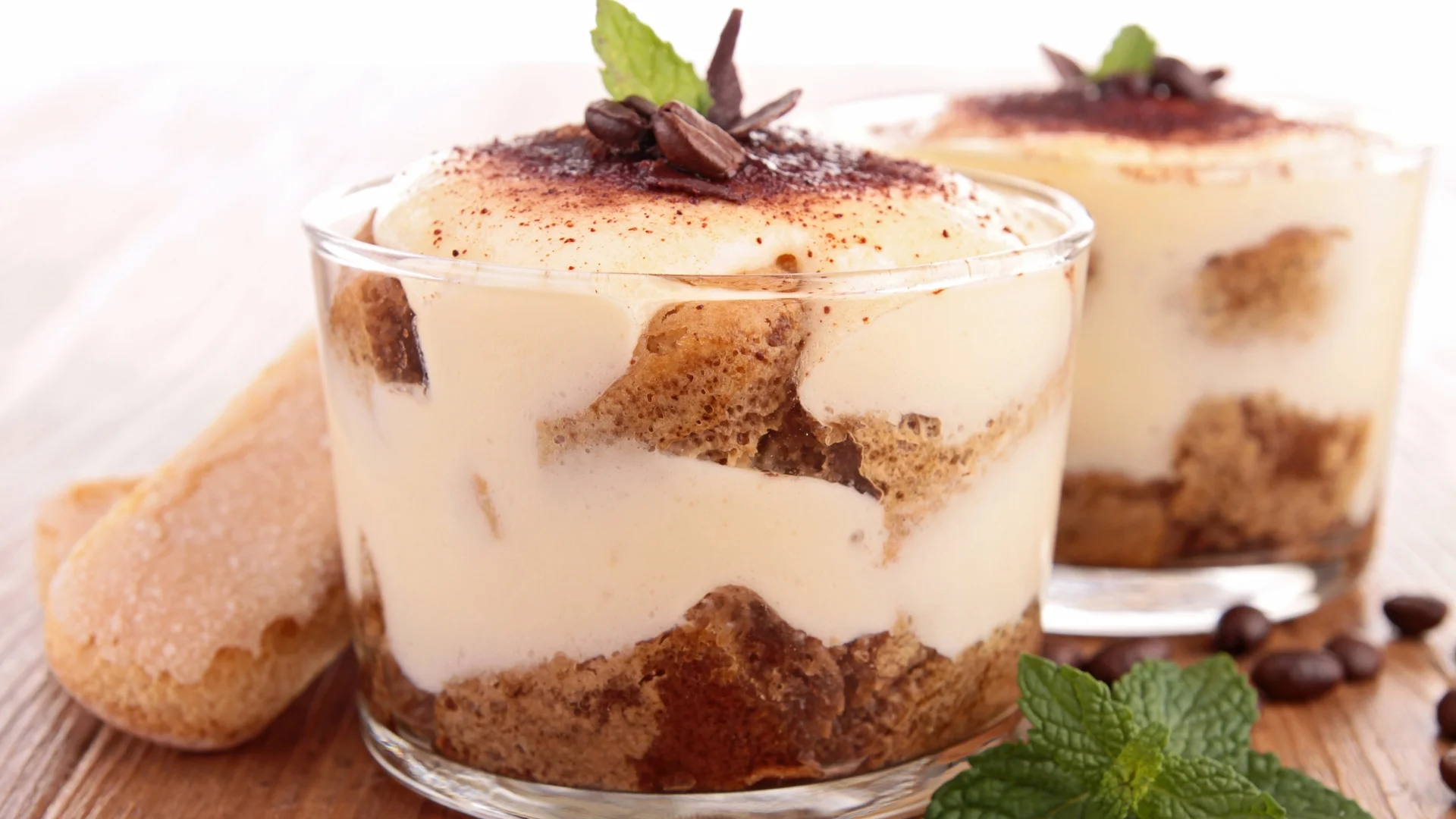
Nascimben Pastry Shop – A local insider's tip: This small pastry shop in the Old Town serves tiramisu as single-serving in a glass. The espresso-to-savoiardi ratio is perfectly balanced, and the cream has a lightness reminiscent of a Venetian mascarpone cream is best enjoyed at lunchtime, after a stroll along the city walls of Treviso.

Variations and regional adaptations
The basic concept of tiramisu—ladyfingers, cream, layering, cocoa—is surprisingly versatile. In Veneto, restaurants serve a Prosecco variant, in which espresso is replaced by Prosecco Superiore DOCG: light, sparkling, with a fruity undertone. In the summer, the Strawberry version (Strawberry Tiramisu) is very common—the Savoiardi are soaked in strawberry juice with lemon, and the cream is flavored with a touch of limoncello. For those who prefer to avoid animal products, there is now vegan versions with cashew mascarpone and aquafaba (chickpea water) as an egg white substitute—the coffee flavor remains completely intact. A modern Treviso trend: tiramisu by the glass – served in individual serving glasses for even, precise layering.
Read more about theTopic





Conclusion: A dessert that’s like a trip to Veneto
Tiramisu is more than just a recipe—it’s the essence of the Venetian way of life in a bowl. The combination of cool mascarpone cream, the bitter kick of espresso, and the feather-light savoiardi cookies creates a culinary balance that has lost none of its appeal in over 60 years.
Anyone who tries making this dessert according to the original recipe—with fresh espresso, good mascarpone, and the necessary patience while it chills—will find that none of the countless variations are needed. The original is simple enough to be magnificent. And for those who haven’t yet visited Treviso: Tiramisu is the best reason to finally visit this city nestled between the Prosecco hills and the Po Valley. The old town with its city walls, the Calmaggiore and Lorenzo Lotto’s frescoes provide an unforgettable setting for the world’s most famous dessert.
Enjoy your meal!
Map: Treviso, Italy
Top Accommodations in Treviso

Follina near Treviso - the hidden village on the Prosecco road
Follina, one of the most beautiful villages in Italy Nestled in the gentle foothills of the Treviso Prealps, the tranquil village of Follina is a place where time seems to pass more slowly....
Experiences & sights
Note: Disclaimer – Italien.news is not the owner or organizer of the attractions, accommodations, and events listed here and is therefore not responsible for changes to the program, event cancellations, or any incorrect information. The editorial team at Italien.news always endeavors to provide detailed and accurate information. However, it is possible that events, attractions, etc. may be changed and not updated promptly. Exact details of dates, times and programs can be obtained directly from the owner of the attractions and accommodation.
Please also check the websites or social media accounts of the attractions and events for updates before you travel! Our blog posts contain our personal recommendations in the form of affiliate links. If you book or purchase something through these links—or even just click on them—we receive a small commission. This does not affect the price you pay in any way. Content and text © Italien.news & KI / Photos © Canva.com / shutterstock.com / Unsplash.com / Pixabay.com / Pexels.com / Others. Be sure to also visit our Italy Shop!