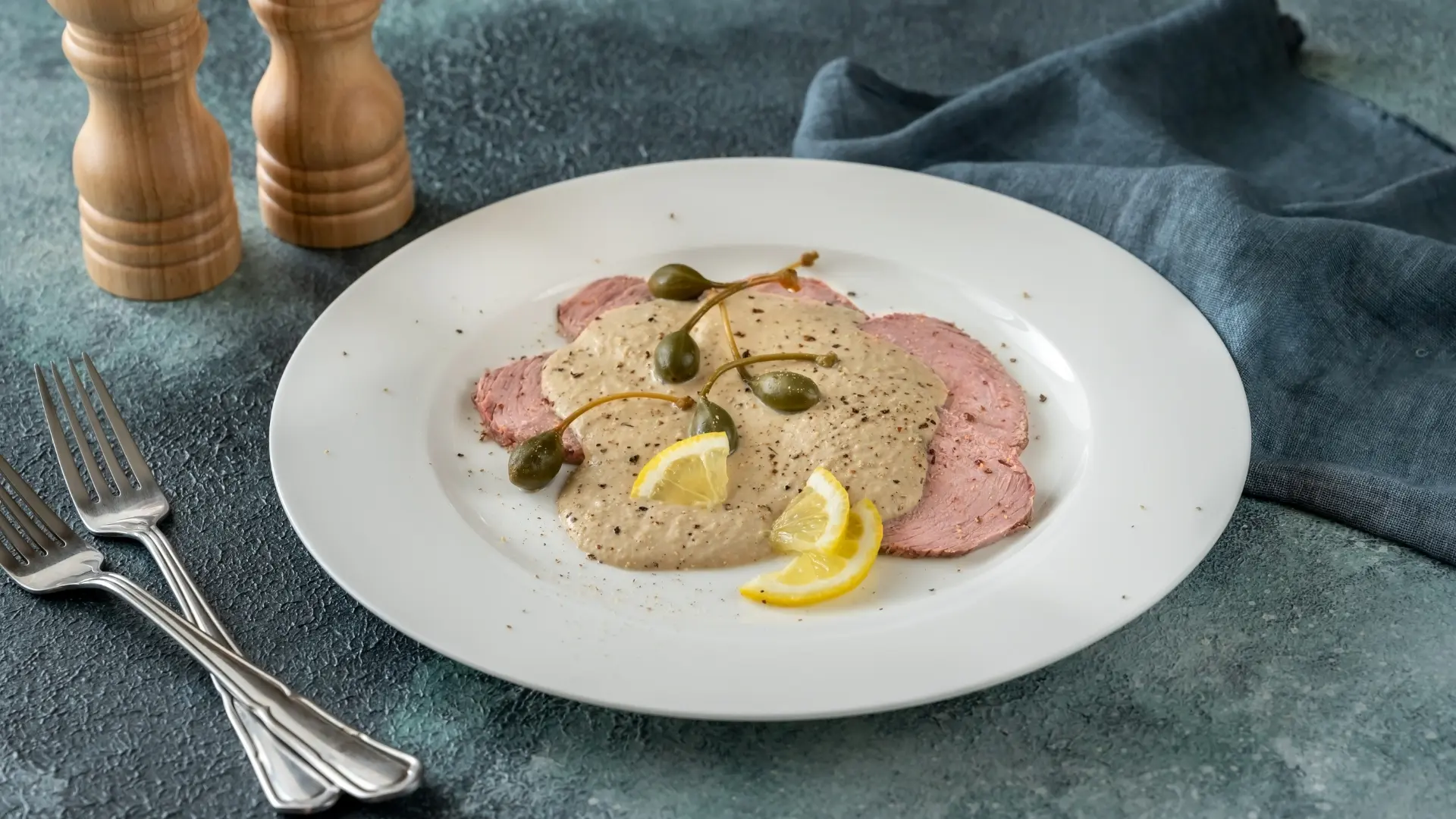

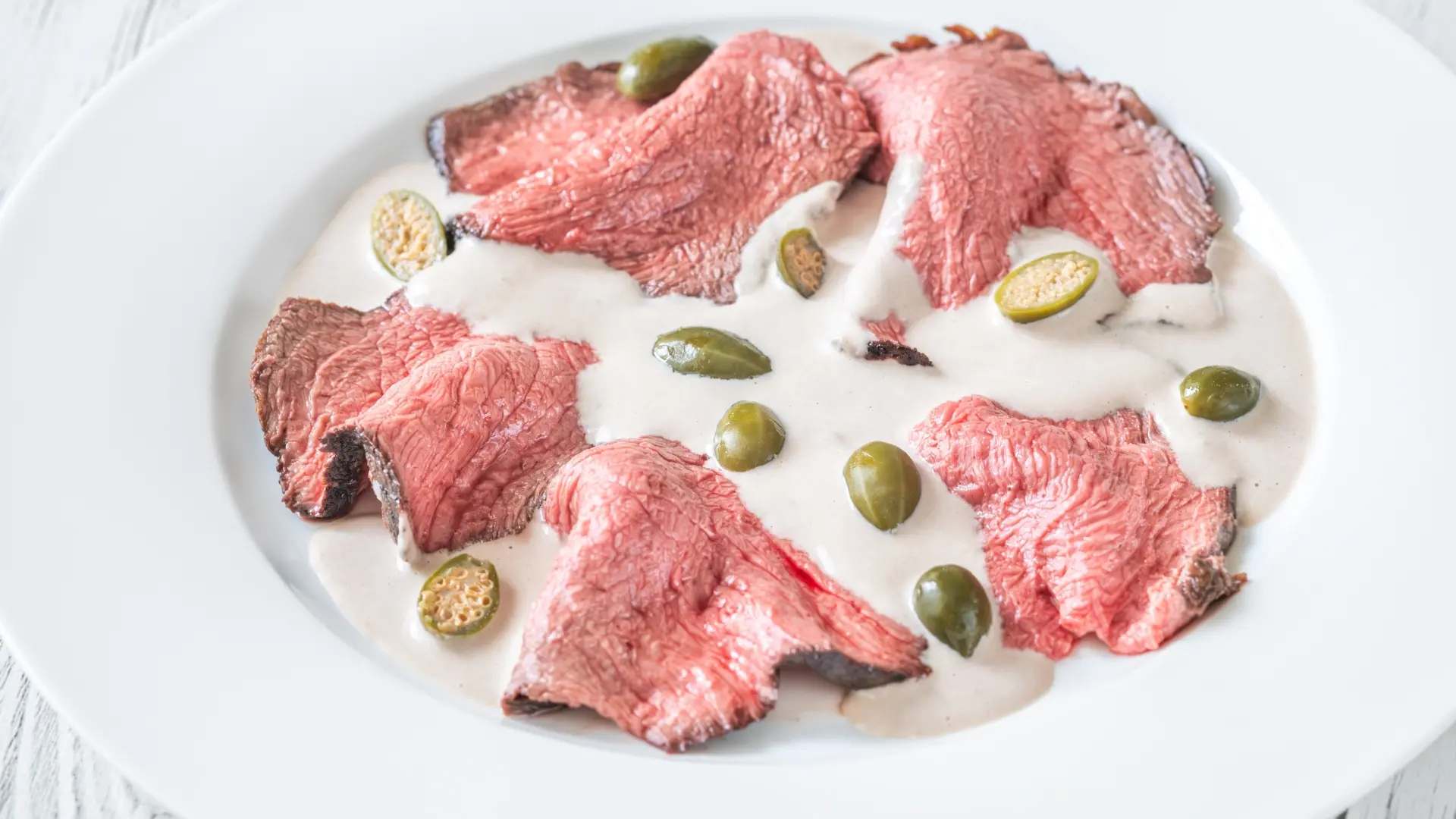
When you think of authentic Italian cuisine, steaming pasta dishes or the characteristic crust of a Neapolitan pizza almost inevitably spring to mind. But the true, subtle elegance of Italian cuisine is often revealed away from the prominent main courses in the art of antipasti. The undisputed masterpiece and secret king of cold starters is vitello tonnato. This dish thrives on a fascinating duality of ingredients, which at first glance seems like a bold experiment: tender, pink-cooked veal from the nut or back meets a strong, pleasantly salty sauce based on the finest tuna, capers and anchovies.
Although the combination of meat and fish is now considered the epitome of sophistication, it was originally a clever move by the rural cuisine of Piedmont to enhance the flavor of the meat with the spicy components of the sea. In the modern interpretation, these contrasting worlds merge into a harmonious symphony of flavors that is harmoniously rounded off by the fine acidity of lemon juice or white wine. It is a play on textures and nuances of taste that has been perfected over generations and is now an integral part of fine dining. As an expert in Italian cuisine, I invite you to join me on a deep dive into the artisanal secrets and history of this Piedmontese classic to understand why this delight never goes out of fashion.
From the mountains to the sea: the historical roots of Vitello Tonnato
The cradle of Vitello Tonnato undeniably lies in the rugged beauty of Piedmont, the northern Italian region that owes its name - „at the foot of the mountains“ - to the majestic Alpine backdrop. At first glance, it is a paradox: why did a dish with such distinctive maritime notes develop in a landlocked region known for its strong red wines and fine truffles? The answer lies in the history of the legendary Vie del Sale, the old salt roads. For centuries, these arduous trade routes connected the Ligurian Sea with the hinterland and were primarily used to transport the precious „white gold“.
However, as salt was heavily taxed, the enterprising traders resorted to a ruse to avoid the oppressive customs duties at the border crossings: They often hid barrels of anchovies or tuna marinated in oil under the thick layers of salt. In this way, the treasures of the sea reached the rural areas around Cuneo and Turin almost as „by-catch“. The rural kitchens of the 18th and 19th centuries knew how to make clever use of this wealth. What is considered a delicacy today was originally a creative use of leftovers or a method of preserving meat and making it more flavorful. Pragmatic smuggling and cultural exchange between mountain and sea laid the foundations for culinary icons such as the spicy Bagna Cauda and finally the sophisticated Vitello Tonnato, which only achieved national fame in its present form when it was published in Pellegrino Artusi's legendary cookbook of 1891.
The culinary chameleon: how tuna found its way into veal
The fascinating predecessors of Vitello Tonnato can be traced back to well into the 18th century, although the etymology of the dish poses a bit of a culinary puzzle. A look at the archives reveals that, curiously, the original recipe did not include any tuna at all. The term „tonnato“ (or „tonné“ in the Piedmontese dialect) primarily referred to the method of preparation all'uso di tonno - In other words, to treat and marinate the meat in the same way as tuna was preserved back then. In a time before modern refrigeration technology, this was an ingenious method used in peasant cooking to preserve meat by marinating it in a spicy vinegar and oil base with anchovies and capers, while at the same time enhancing its flavor.
It was only in the course of the 19th century that the dish made a decisive evolutionary leap. With the emerging industrialization of fish preservation - primarily thanks to the pioneering work of the Florio family in Sicily - tuna preserved in oil suddenly became more affordable for the aspiring bourgeoisie in the north. The fusion of veal and actual fish in the sauce was therefore not a planned invention, but a logical culinary fusion of two worlds. This combination was finally acclaimed in 1891 by Pellegrino Artusi, the forefather of Italian culinary literature. In his monumental work „La scienza in cucina e l'arte di mangiar bene“ he recorded a recipe for the first time under number 363 that comes amazingly close to today's version, even though he dispensed with the mayonnaise base that is common today and instead relied on an emulsion of oil, lemon juice, hard-boiled eggs and, of course, tuna. This transformed vitello tonnato from a pragmatic method of using up leftovers from Sunday roasts into a glamorous star of haute cuisine that is now a must on any sophisticated menu between Turin and Tokyo.
Truffles, Barolo and Fassone: a journey through the culinary epicenter of Italy
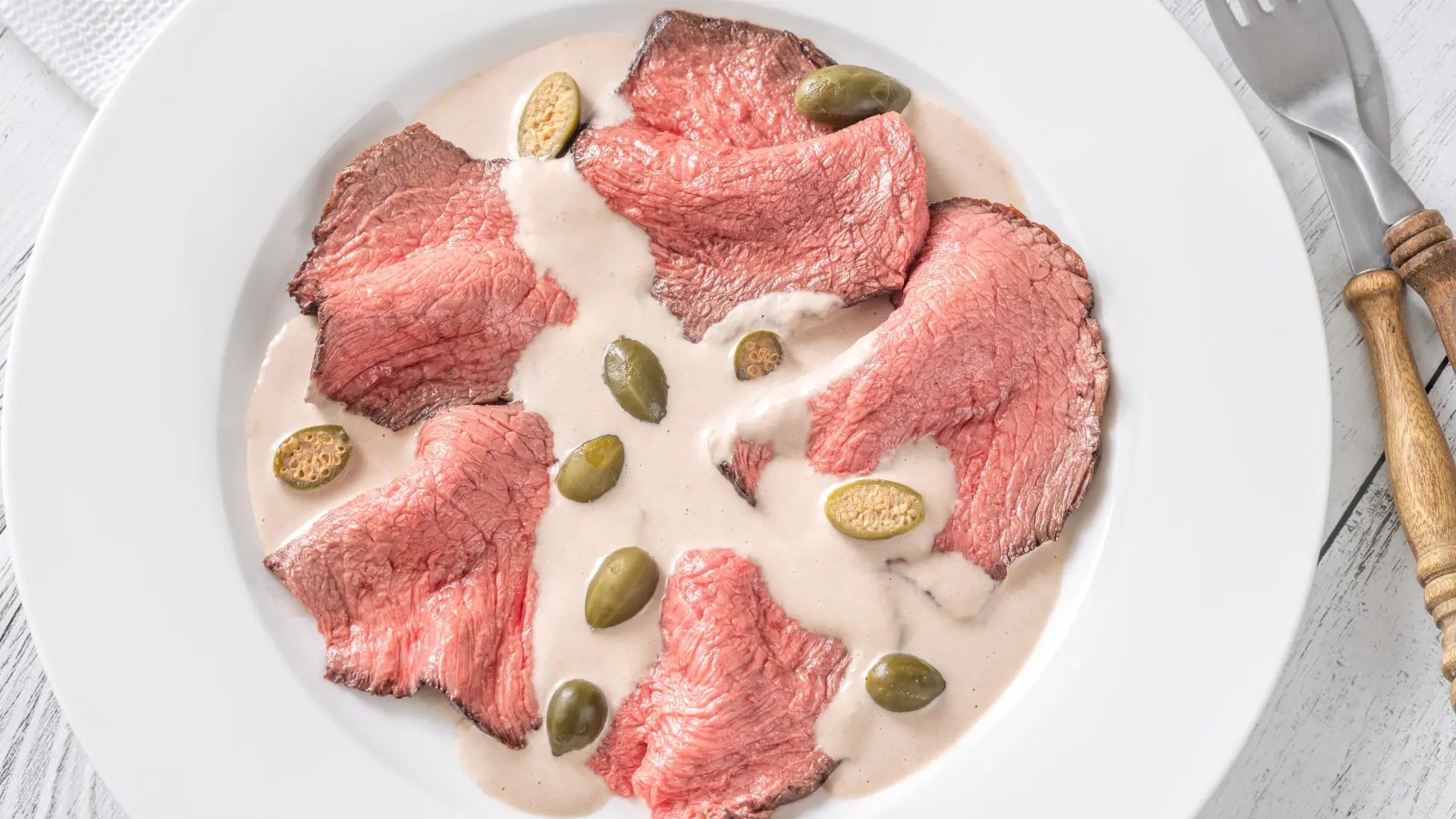
Piedmont is much more than just a geographical region; it is a truly praised land for gourmets and is internationally regarded as one of the finest wine and food regions in the world. The local cuisine is a fascinating interplay of the strict rhythm of the seasons, the immediate proximity to France and an almost obsessive dedication to top-quality local products. An absolute specialty, which forms the basis for many meat dishes, is the Fassone beef. This autochthonous breed, scientifically known as Razza Piemontese is characterized by a natural muscle hypertrophy that makes the meat extremely lean, yet of unparalleled tenderness and flavour intensity - the absolutely perfect base for a first-class Vitello Tonnato or the classic Carne Cruda.
But the culinary heritage extends far beyond the pastures. Piedmont is the home of the legendary white truffle from Alba, whose earthy aroma attracts gourmets from all over the world every autumn, as well as the cradle of world-famous red wines such as Barolo and Barbaresco, which are often referred to as the „wines of kings“. The sweet treasures of the region, above all the protected hazelnut Tonda Gentile delle Langhe, have achieved world fame and form the basis for fine chocolate creations. Piedmontese cuisine is characterized by a palpable opulence that is hard to find in the rest of Italy. This is reflected in the bright yellow pastries made with up to forty egg yolks per kilo of flour. Tajarin or the filigree Agnolotti del Plin reflected. This sophistication is no coincidence: as Turin was the center of power of the House of Savoy for centuries, rural down-to-earthness and aristocratic finesse merged here to create a high cuisine that is proudly known today as the birthplace of the Slow food movement and places the unconditional quality of the ingredients above all else.
An authentic Vitello Tonnato recipe (serves 4)
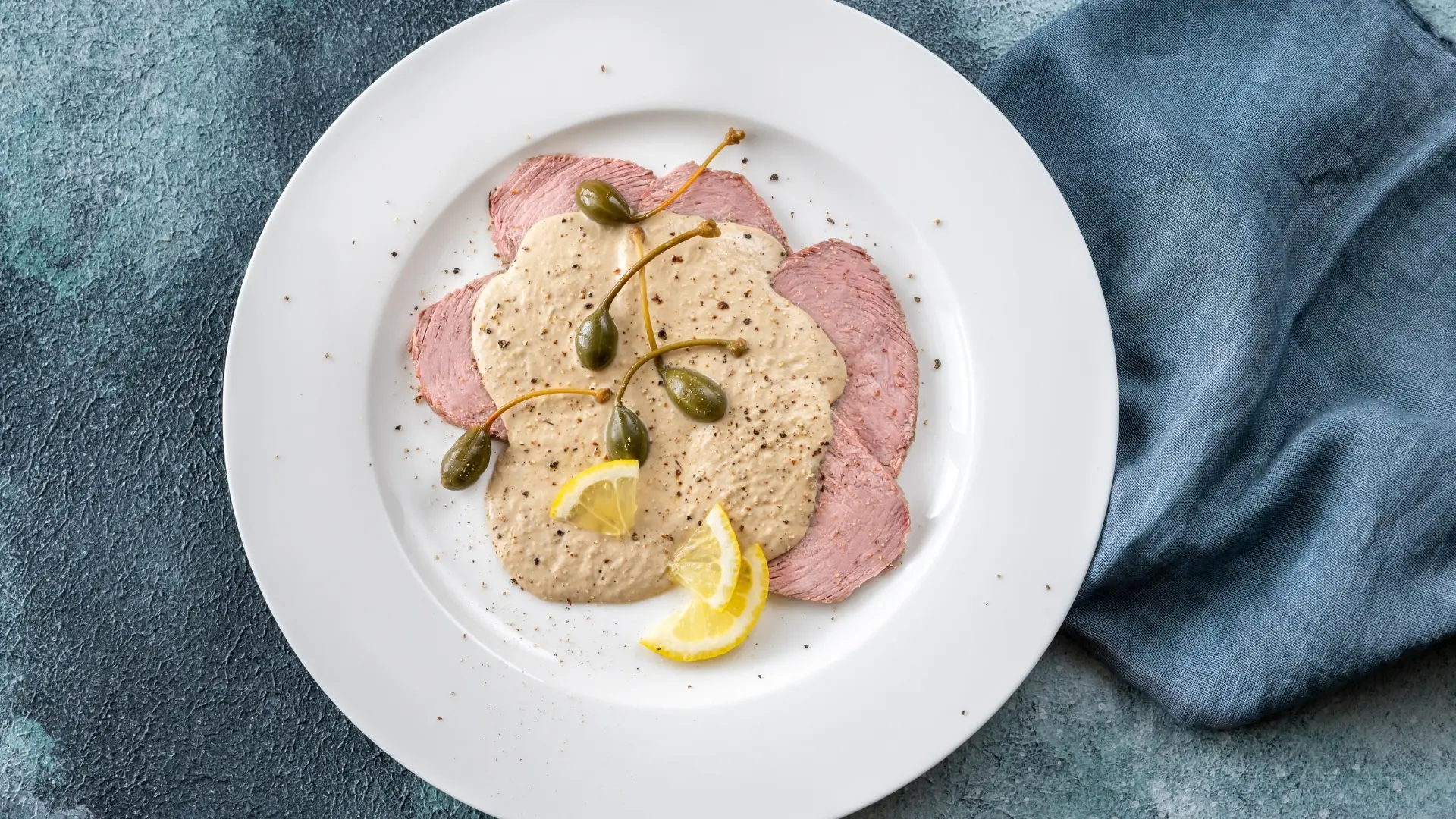
Forget mayonnaise! A real, traditional „Antica Maniera“ Vitello Tonnato does without it altogether. The creaminess is created solely by emulsifying the ingredients with olive oil and a little veal stock.
Ingredients for the meat:
- 600 g veal or Maggiolino (preferably from Piedmontese Fassone beef)
- 1 carrot, 1 celery stick, 1 onion (with skin)
- 2 bay leaves, 3 cloves, 5 black peppercorns
- 250 ml dry white wine (e.g. Gavi or Roero Arneis)
- Water or light meat stock
- Salt
Ingredients for the tonnato sauce:
- 150 g high-quality tuna in olive oil (drained)
- 4 anchovy fillets (in oil)
- 1 heaped tablespoon of salted capers (thoroughly rinsed)
- 3 hard-boiled egg yolks
- 1 dash white wine vinegar
- approx. 80-100 ml best extra virgin olive oil
- A few spoonfuls of the cooled veal stock
Preparation & tips:
1. cook the meat: Roughly chop the vegetables. Place the veal in a pan with the vegetables, spices, a good pinch of salt and the white wine. Add water (or stock) until the meat is just covered. Bring to the boil and then cook gently over a very low heat for around 45 to 60 minutes until the core temperature is around 60-65°C. Important tip: Make sure you leave the meat to cool completely in the stock! This is the only way it will soak up the flavors again and remain incomparably juicy.
2 Prepare the sauce: Chop the hard-boiled egg yolks, tuna, anchovies and capers in a blender or mortar. Gradually add the olive oil and a splash of white wine vinegar. To achieve the perfect silky consistency, add a little of the strained cold veal stock in sips until you have a smooth, creamy sauce. Season to taste - often no additional salt is needed as the capers and anchovies provide enough seasoning.
3. dressing: Cut the completely cooled meat into wafer-thin slices against the grain. Arrange on a large serving platter, overlapping and spread generously with the tonnato sauce. Garnish with a few caper apples or small capers. Leave the dish to stand in the fridge for at least two hours before serving so that the flavors can combine perfectly.
Where the heart of Piedmont beats: Five restaurant tips for connoisseurs
If you really want to understand the soul of Piedmont, you have to try vitello tonnato in places where tradition and passion meet. There are countless interpretations in the region, but these five addresses have earned a legendary reputation for their master craftsmanship and the uncompromising quality of their ingredients.
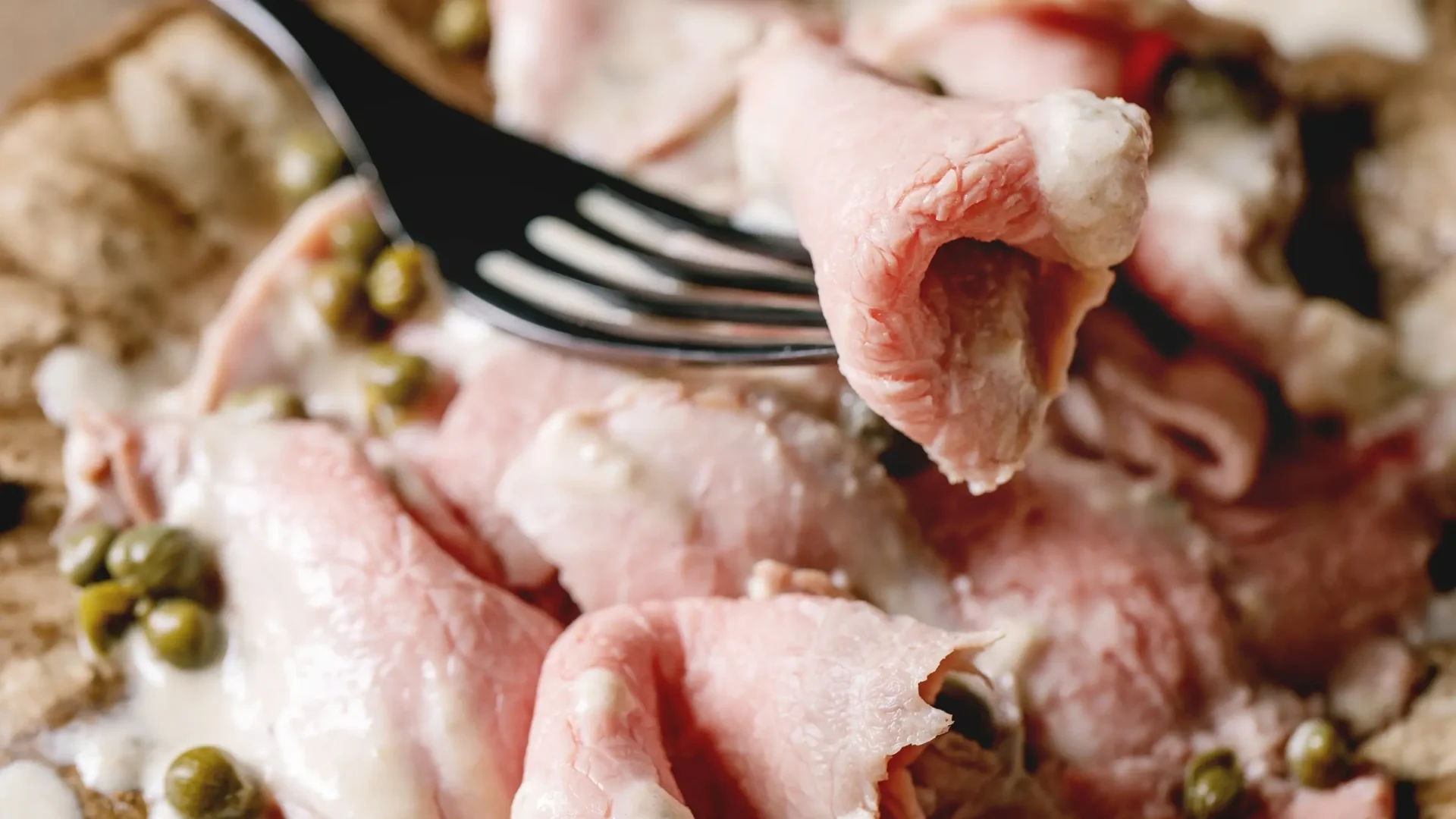
In the regional capital Turin, the Ristorante Consorzio an indispensable place to go. A true Mecca for fans of the slow food movement, the restaurant celebrates a philosophy of slowing down and appreciation. Here, the vitello tonnato is served to almost purist perfection: The meat is a delicate pink, while the sauce impresses with a fine balance that never masks the veal's own flavor, but elegantly underlines it.
Also in Turin is the Tre Galline, one of the most historic houses in the city. Dining here takes you on a journey back in time to the culinary past of the nobility. The Vitello Tonnato is prepared strictly according to the „Antica Maniera“ - a traditional method that is considered the gold standard in Turin and shows how much depth can be found in this seemingly simple classic.
If you leave the city in the direction of the picturesque hills of the Langhe, there is no way around the Trattoria della Posta in Monforte d'Alba. This charming restaurant, housed in a historic farmhouse, is famous for its authentic Piedmontese starters. Their Vitello Tonnato is characterized by a texture where the meat literally melts on the palate, framed by the warm hospitality of a family business.
In the truffle metropolis of Alba, the Osteria dell'Arco an unadulterated experience. Amidst the hustle and bustle of the city, you will find an oasis of down-to-earthness here. The dish is based on first-class local produce and eschews trendy gimmicks, making the Vitello Tonnato a thoroughly honest and deeply satisfying treat.
Read more about theTopic





The crowning glory of a culinary journey is the Ristorante Bovio in La Morra. While enjoying the breathtaking panoramic view over the famous Barolo vineyards, the restaurant serves upscale traditional cuisine. The vitello tonnato at Bovio is a delicate work of art that perfectly combines the elegance of haute cuisine with the rustic, rural roots of the region.
Tradition meets modernity: the many faces of Vitello Tonnato
Although purists tirelessly swear by the classic preparation, Vitello Tonnato has undergone a remarkable evolution over the decades and today presents itself in various, sometimes contradictory facets. The historical anchor is the so-called „Antica Maniera“. With this traditional method of preparation, no mayonnaise is used. The sauce is bound exclusively by a fine emulsion of hard-boiled egg yolk, the best olive oil and a dash of the aromatic cooking juices. The result is a texture that is significantly lighter and more nuanced than the modern, often very creamy version.
This contrasts sharply with today's globally widespread Vitello Tonnato „Sbagliato“ - which translates as „wrong“ or „mistaken“. This version, which became particularly popular in the 1980s, uses a base of mayonnaise to make the sauce fuller and smoother. While gourmets often see this as a dilution of the delicate veal flavor, this rich interpretation is what made the dish popular globally. In today's Top gastronomy on the other hand, the dish is experiencing a technical renaissance: the meat is often Sous-vide process cooked for hours at low temperatures, which gives it an incomparable pink color and juiciness. Instead of wafer-thin slices, you will often find precise cubes or slices on which the sauce is arranged in artful dots to create a play of textures.
An almost forgotten, but historically highly interesting variant is the Vitello Tonnato Caldo. In its early days, the dish was not necessarily served cold; the freshly poached, still steaming meat was often served directly with a slightly warmed sauce. This comforting form of preparation emphasizes its character as a main course and is now a rare insider tip in remote trattorias in Piedmont. For everyday enjoyment, delicious variations such as the Maiale Tonnato (with pork loin) or the Tacchino Tonnato (with turkey breast). Although these alternatives are less expensive, they still capture the unmistakable spirit of the Italian original with their characteristic sauce and prove the enormous versatility of this culinary concept.
A timeless summary: the soul of Piedmont on a plate
Ultimately, Vitello Tonnato is far more than just a carefully arranged starter dish; it is an edible chronicle that reflects the deep connection between the culture, geography and history of the Piedmont region. Every bite documents the fascinating journey from a pragmatic use of leftovers in peasant kitchens to a world-class culinary masterpiece. It tells of the salt merchants' arduous journeys over the Alpine passes and how the treasures of the sea found their way into the heart of a landlocked country to form one of the boldest symbioses in gastronomy. The fact that this historical necessity has become a worldwide synonym for the Italian way of life is testament to the unbroken strength of the Piedmontese tradition.
However, the delicate balance between the fine, tender meat of the Fassone beef and the impetuous sauce kissed by the Ligurian sea requires more than just a recipe - it demands the highest quality ingredients and an almost instinctive flair for craftsmanship. Regardless of whether you enjoy this dish in its strictly traditional form amidst the gentle vineyards of the Langhe, taste an avant-garde interpretation in a Michelin-starred restaurant in Turin or prepare it at leisure at your own dining table: A perfectly balanced Vitello Tonnato remains a timeless declaration of love to Italian cuisine. It is an invitation to pause and celebrate the richness of simple but excellent ingredients. Those who take the time to prepare it in the classic way and boldly forgo industrial shortcuts such as ready-made mayonnaise will be rewarded with the true, unadulterated taste of Piedmont - an experience that lingers long after the moment of enjoyment.
Map: Piedmont
FAQ: Vitello Tonnato
What exactly is Vitello Tonnato and where does this specialty originally come from?
Vitello Tonnato is a world-famous cold starter that originated in the northern Italian region of Piedmont and is now an integral part of any authentic Italian menu. The dish traditionally consists of very thinly sliced, slow-cooked veal, served completely covered with a creamy sauce of pureed tuna, mayonnaise, anchovies and capers.
What should I look out for when ordering this dish in a restaurant in Italy?
In first-class Italian restaurants, the meat is usually cooked pink and the sauce is prepared fresh just before serving to preserve the delicate flavors. Make sure that the sauce has a silky consistency and does not taste too heavy like mayonnaise, as the quality of the olive oil and the tuna used is crucial for the authentic taste.
Are there regional differences in the preparation of this classic dish in Italy?
While the basic recipe is appreciated throughout the country, some traditional chefs in Piedmont forgo the addition of mayonnaise and instead bind the sauce with hard-boiled egg yolk and high-quality olive oil. In coastal regions, you will occasionally find variations with fresh herbs or lemon zest, although the classic combination of capers and tuna almost always forms the basis.
What is the best wine to accompany this delicate meat dish?
Due to the creamy texture of the sauce and the salty notes of the capers, a dry Italian white wine such as a Gavi di Gavi or an Arneis from Piedmont harmonizes perfectly. Those who prefer red wine should opt for a very light and fruity wine such as a Barbera, which will not overpower the subtle nuances of the veal.
Experiences & sights
Note: Disclaimer - Italien.news is not the owner or organizer of the sights, accommodations and events published here and therefore not responsible for program changes, cancellation of the event and possibly incorrect information. The editorial team of Italien.news always endeavors to provide detailed and accurate information. However, it is possible that events, attractions, etc. may be changed and not updated promptly. Exact details of dates, times and programs can be obtained directly from the owner of the attractions and accommodation.
Please also check the website or social media of the attractions and events for updates before you travel! Our blog articles contain our personal recommendations in the form of affiliate links. If you book or buy something via the links or simply click on them, we receive a small commission. This does not change the price for you at all. Content and texts © Italien.new & KI / Photos © Canva.com / shutterstock.com / Unsplash.com / Pixabay.com / Pexels.com / Others. Please also visit our Italy Shop!