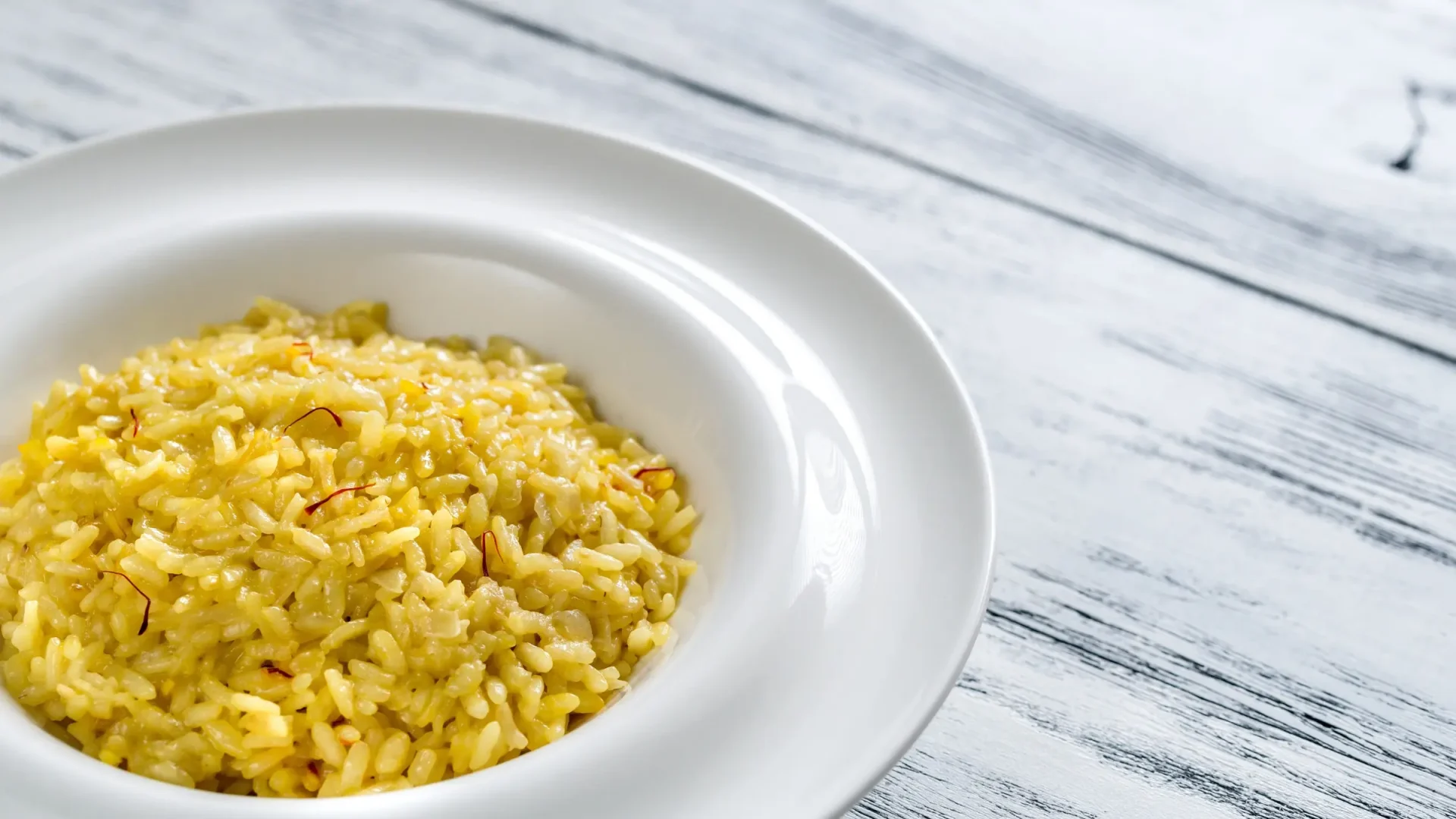

Milan’s most famous dish is a rice dish: Risotto alla Milanese owes its bright yellow color to saffron, and its velvety texture to beef marrow and Lombardy butter. On this page, you’ll find the origins of this classic dish, the original recipe for four people, and the places in Milan where it’s still celebrated today.
Risotto alla Milanese at a Glance
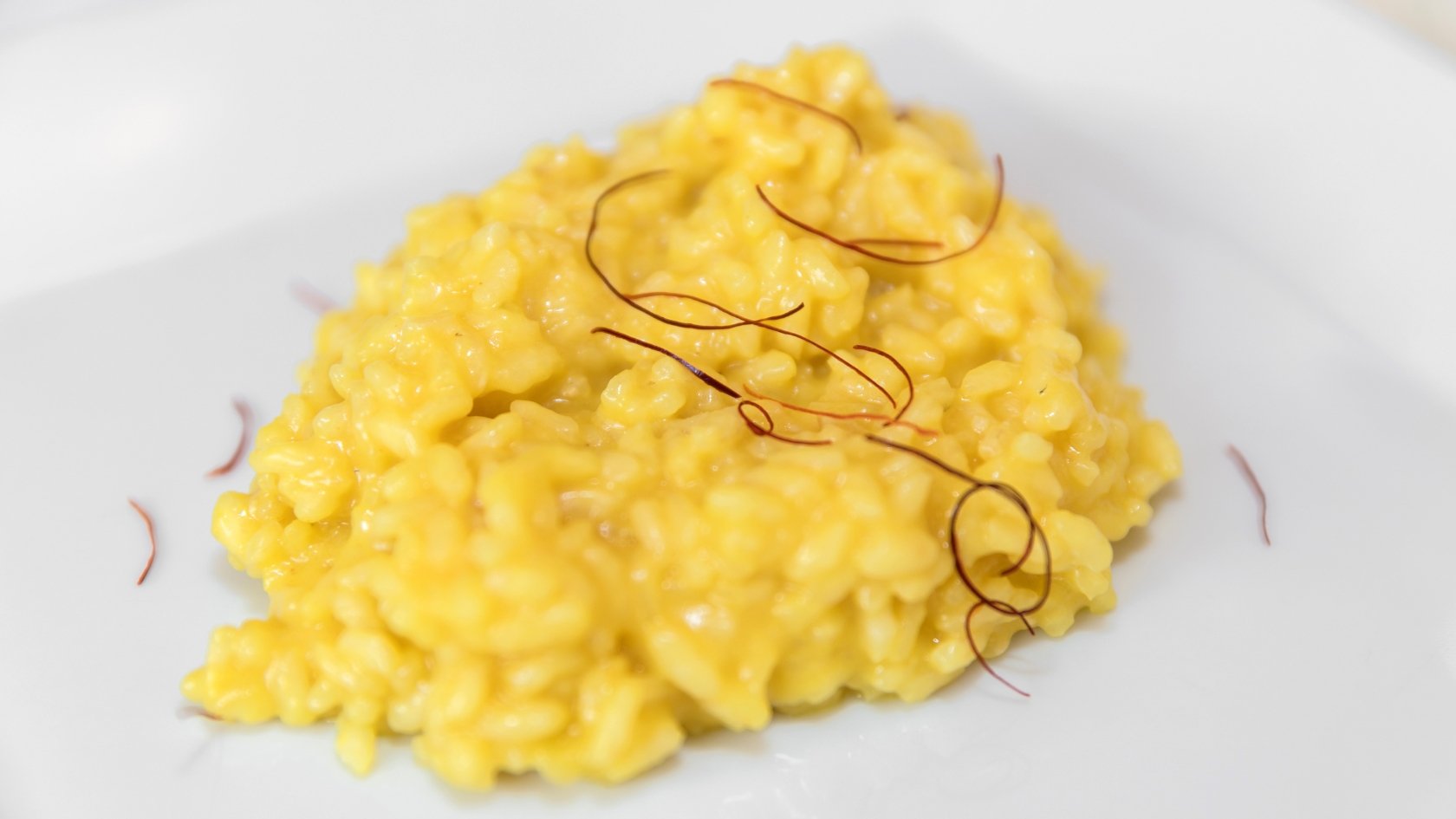
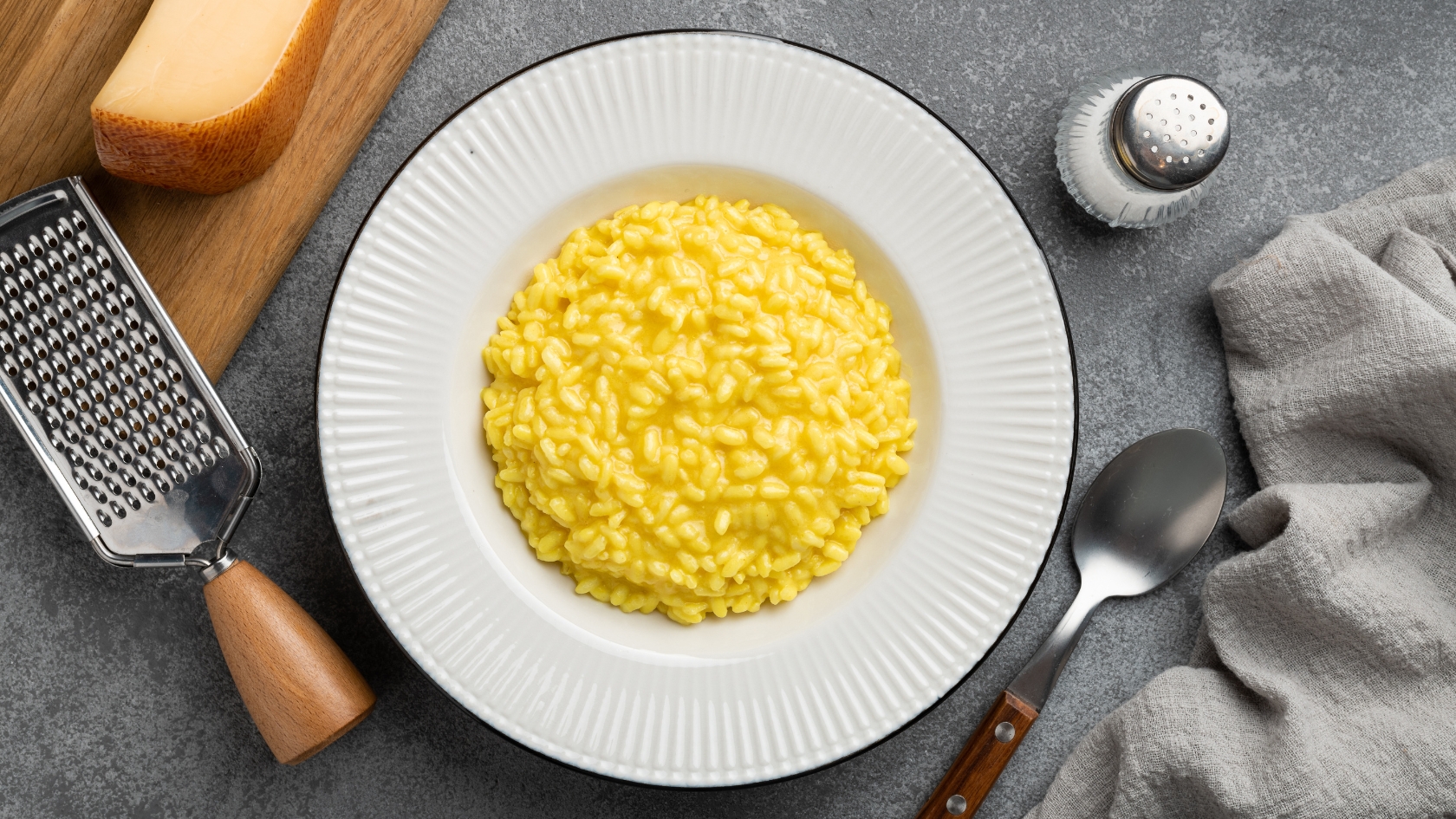
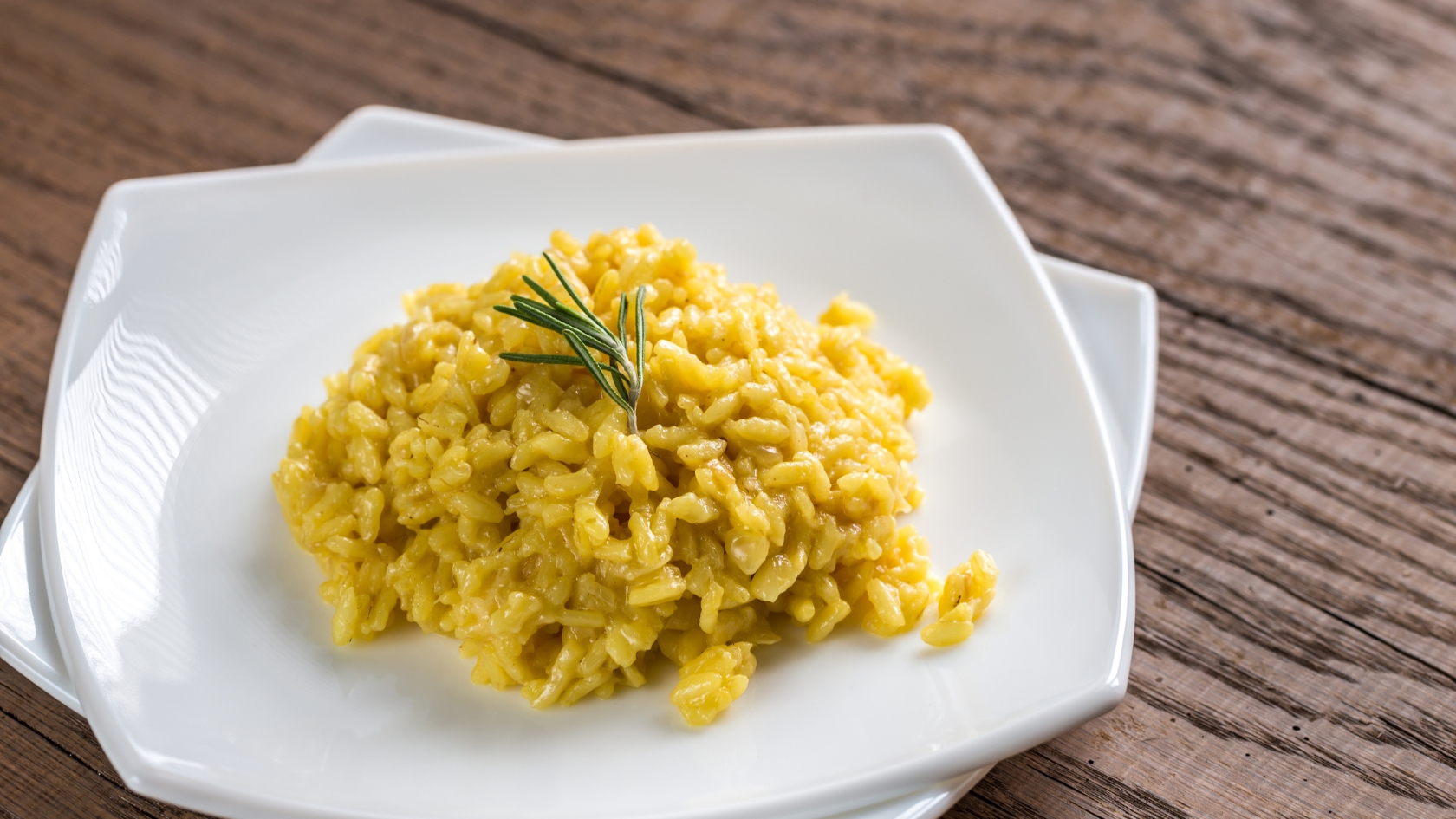
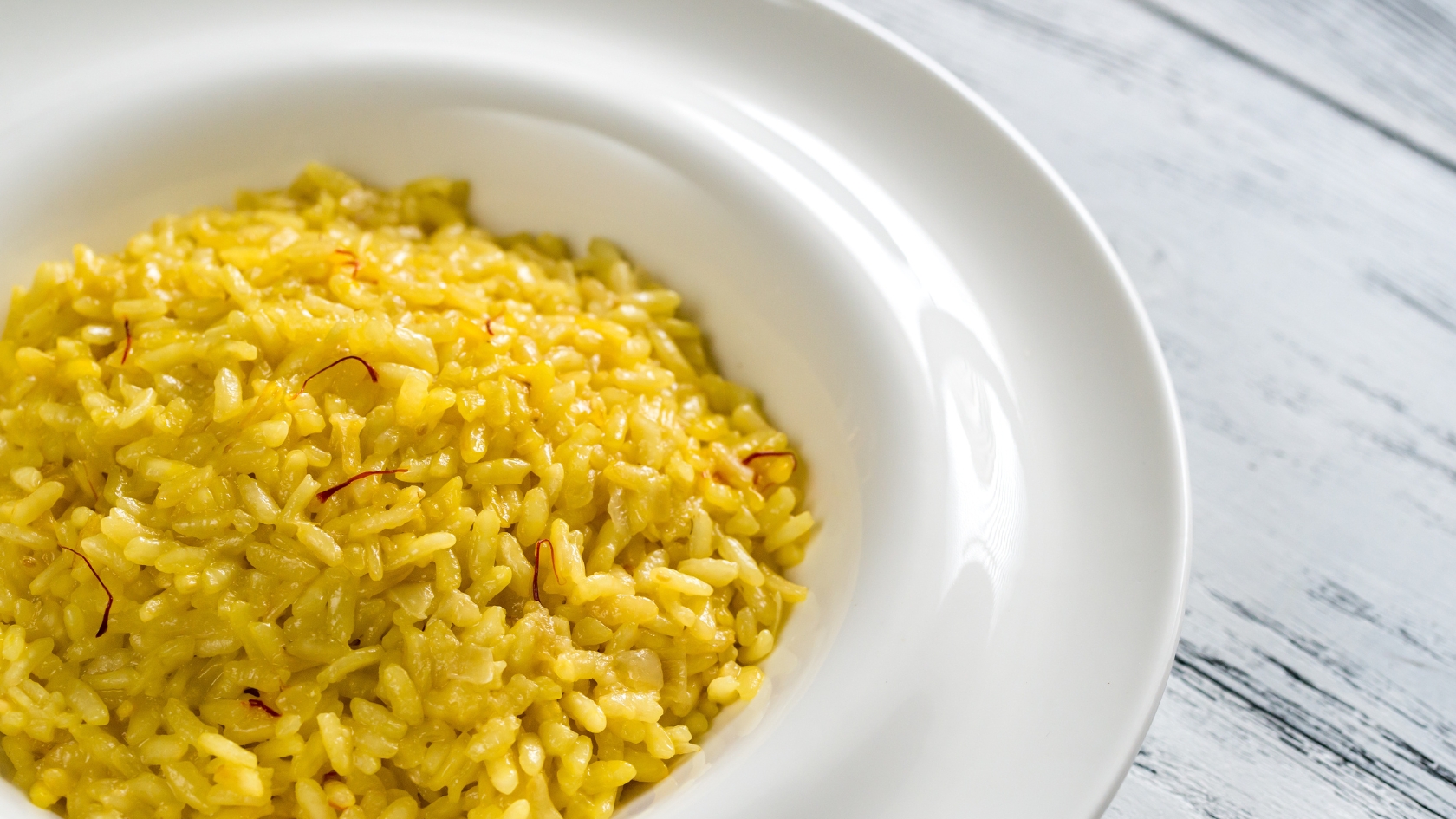
Risotto alla Milanese made with Carnaroli rice, beef marrow, butter, white wine, and saffron. The recipe follows the strict tradition of the Confraternita del Risotto.
As of February 2026. All time and quantity information is taken from the recipe section of this post.
Origin: the symbol of Milanese identity
Risotto alla Milanese, affectionately known in the local dialect as Risott giald - the yellow risotto - is Milan's culinary flagship far beyond the city limits. Its creation is no coincidence, but the result of a centuries-long symbiosis with the geographical characteristics of Lombardy. The vast Po Valley, also known as Pianura Padana, has been the vital center of European rice cultivation since the Renaissance. From the 15th century onwards, farmers used the region's sophisticated irrigation system to transform the flat land into a productive rice chamber.
While the cuisine of southern Italy is largely characterized by olive groves and their liquid gold, the culinary soul of Lombardy is defined by its lush pastures. This explains why an authentic Milanese risotto gets its creamy perfection not from oil, but from the generous use of butter and beef marrow. It is these animal fats that give the dish its characteristic velvety texture. However, the absolute unique selling point and the pride of every Milanese kitchen is the use of high-quality saffron. This precious ingredient not only gives the rice its deep, sunny aroma, but also the bright yellow color that has always made the dish the epitome of elegance and prosperity.
History: A happy accident in the shadow of the cathedral
The story of the origins of risotto alla Milanese resembles a fairy tale, the origins of which are closely linked to the monumental construction of Milan Cathedral. Probably the most popular legend takes us back to the year 1574, right in the middle of the glass painters„ workshops. A young apprentice of the Flemish master Valerius di Fiandra was known for always adding a pinch of saffron to his pigments to give the stained glass windows an incomparable golden sheen. His penchant for this precious spice was so pronounced that his colleagues teasingly called him “Zafferano’. On the day of Master Valerius' daughter's wedding, the apprentice is said to have mixed a generous amount of his yellow dye into the festive rice, which was usually prepared simply with butter at the time - either as a joke or in protest, depending on the narrative. What was intended as sabotage turned into a culinary triumph: the wedding party was so enraptured by the visual brilliance and deep aroma of the golden rice that the birth of a classic was sealed.
Despite this charming tradition, it was centuries before the dish found its place in high-end gastronomy. The transition from the medieval dish to the risotto we appreciate today was a gradual one. It was not until the 19th century that the recipe was officially canonized in its modern form. The year 1829 marked a decisive milestone, when the chef Felice Luraschi wrote in his work „Nuovo cuoco milanese economico“ first set down the „Risotto alla Milanese giallo“ in writing. This not only defined the use of saffron, but also the technique of slow cooking with meat stock and onions, which is still the basis for the perfect risotto today. Cremosità forms.
Special features of the region: the culinary soul of Lombardy
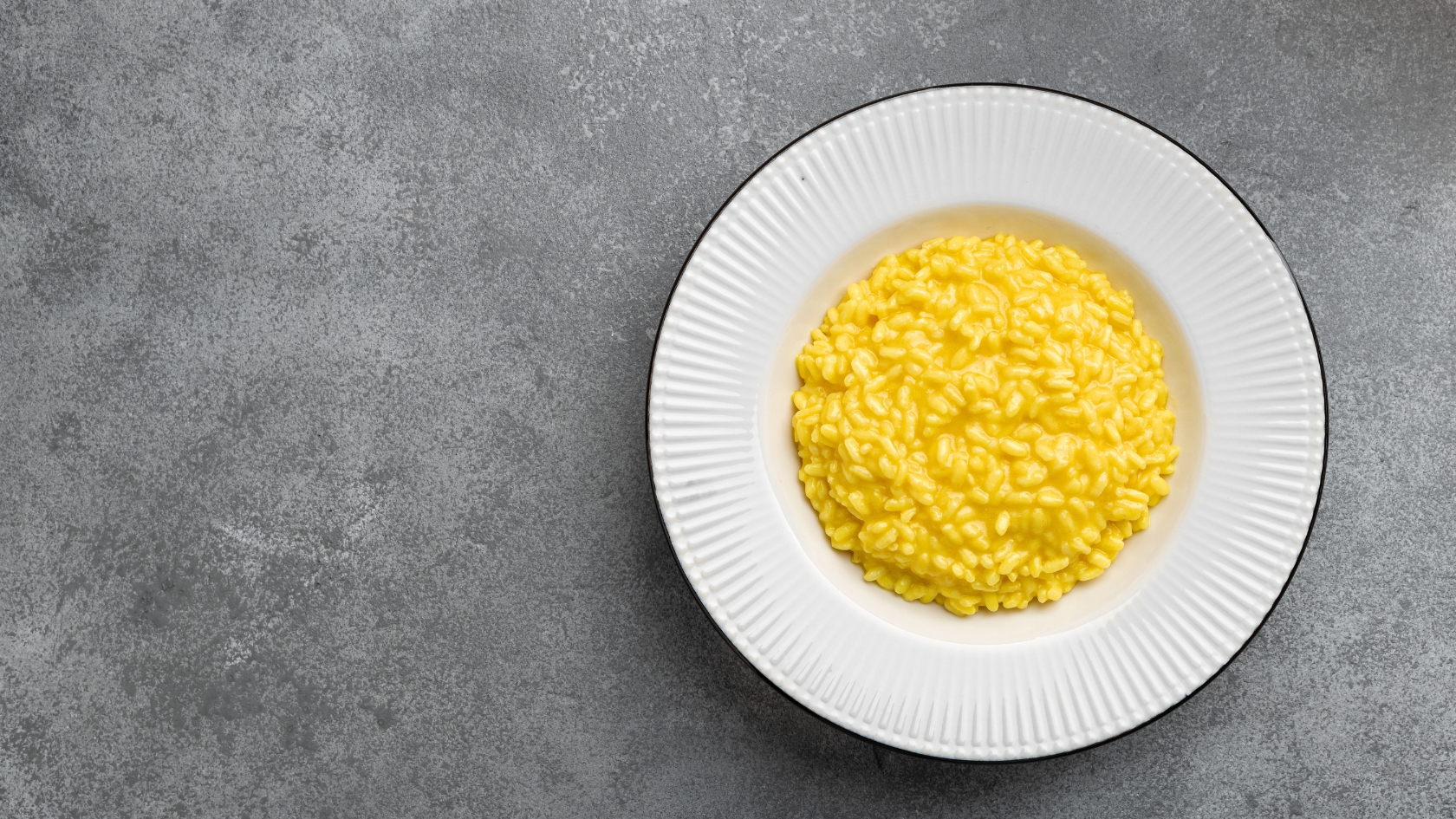
Lombardy presents itself as a region of fascinating contrasts, whose character ranges from the rugged peaks of the Alps in the north to the endless expanses of the Po Valley in the south. In culinary terms, this province radically breaks with the usual Mediterranean stereotype of Italy. Anyone expecting the dominance of sun-ripened tomatoes and olive oil will be surprised by a cuisine that focuses on consistency and strength. The foggy plains and cooler climates of Lombardy have always been dominated by rice, golden Polenta and meat dishes stewed for hours. This preference is a direct legacy of the hard agricultural work and the climatic conditions that required nourishing, warming food.
The heart of this cooking culture is the „mantecatura“ - the almost meditative art of stirring the risotto to a perfect creaminess at the end of the cooking time. However, this culinary miracle can only be achieved by using specific, starchy rice varieties such as Carnaroli or Arborio, which are mainly cultivated in the water-rich provinces of Pavia and Vercelli. While carnaroli is often considered the „king of rice“ as it keeps its shape perfectly, the starch released provides the desired binding. An often underestimated but essential detail for the authentic Milanese version is the beef marrow (Midollo di bue). It is traditionally left out with the onions at the beginning and gives the dish an incomparable depth and a silky melt that butter alone could never replicate. This is how Lombard cuisine combines rural tradition with the luxurious sophistication of a metropolis.

Ingredients for Risotto alla Milanese
- 320 g Carnaroli ricepreferred because of its starch structure
- 1.5 liters Rich meat brothBeef or chicken, kept warm
- 50 g Beef Marrowhave it cut up by the butcher
- 80 g Cold Butter
- 100 ml Dry white winee.g., Pinot Grigio
- 1 Small white onionfinely chopped
- 1 teaspoon Saffron threadsNo powder for the best quality
- 60 g Grana Padano or Parmigiano Reggianofreshly grated, aged 24 months
- to taste Salt
Preparation
- PreparationSoak the saffron threads in a small cup of hot stock and leave to infuse for at least 20 minutes. Gently simmer the meat stock in a separate pan (it must be boiling hot when it is added to the rice).
- SoffrittoIn a heavy pot (casserole), melt the beef marrow and 30 g of butter. Add the finely chopped onion and sauté over very low heat until translucent. Do not let it brown.
- Tostatura (Roasting)Increase the heat and add the rice. Stirring constantly, toast the rice for approx. 2-3 minutes until it is hot and the grains appear slightly transparent.
- Sfumare (Blending)Deglaze with the white wine and allow the alcohol to evaporate completely.
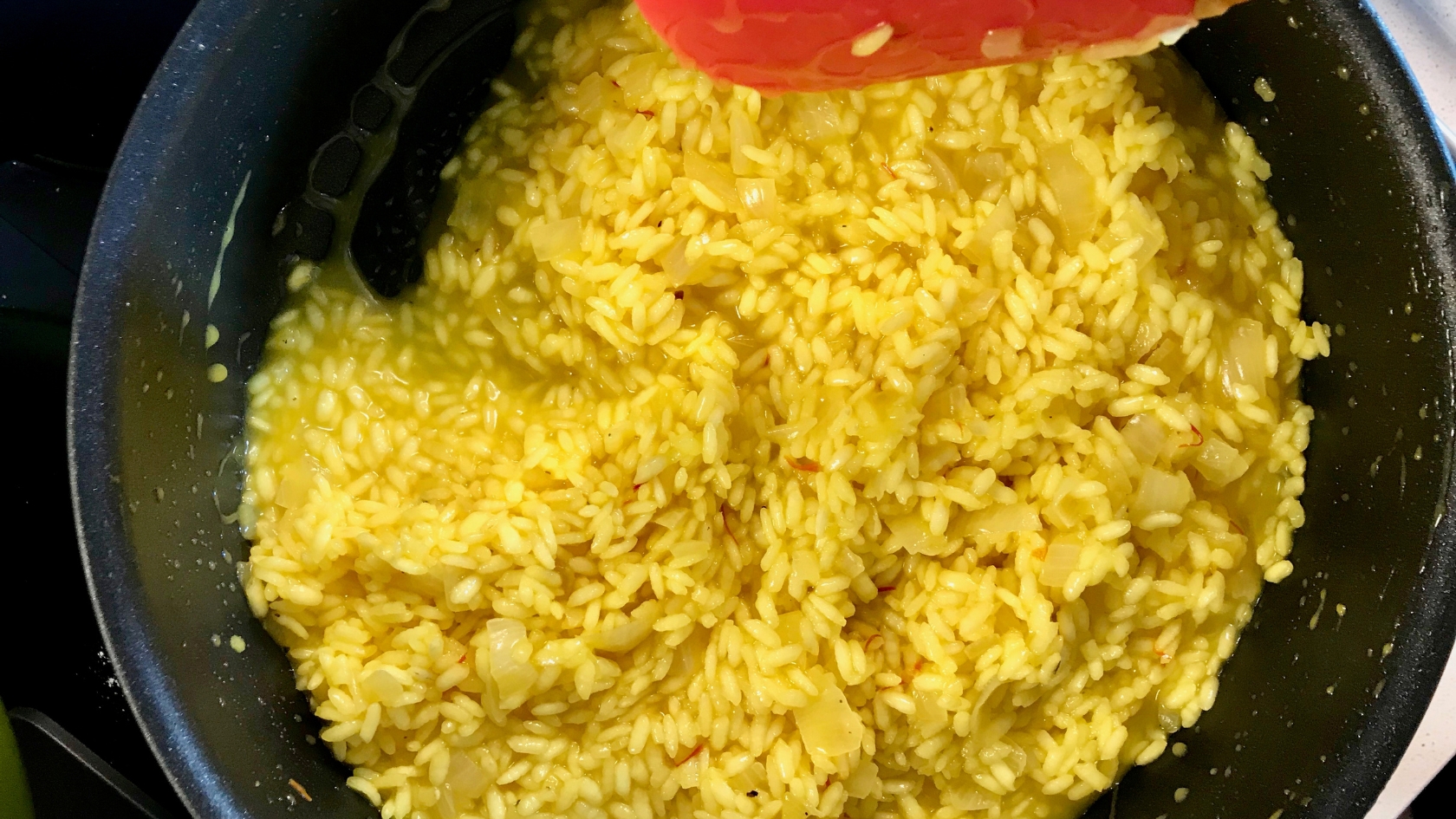
- CookingNow add the hot stock ladle by ladle. Only add enough to just cover the rice. Simmer, stirring frequently. As soon as the liquid is almost absorbed, add more stock.
- DyeingAfter approx. 10-12 minutes, add the saffron-broth mixture (including the threads) to the risotto. The rice will now take on its characteristic golden color.
- Mantecatura (Refining)When the rice is „al dente“ (after approx. 16-18 minutes, depending on the variety), remove the pan from the heat. This is the most important step! Add the rest of the cold Add the butter and grated cheese. Stir vigorously (or swirl the pan) until a creamy emulsion is formed („all'onda“ - flowing like a wave).
- ServingLeave the risotto to rest for 2 minutes, then serve on flat plates.
Preparation tips from the experts
The secret to a perfect risotto lies in the temperature and patience.
Never rinse the rice before cooking, as this will cause it to lose the starch needed to achieve a creamy texture. The broth must be boiling hot; cold broth interrupts the cooking process and causes the rice grains to split open on the outside while remaining hard on the inside.
For the Mantecatura Ice-cold butter is essential, as the difference in temperature helps to thicken the sauce and make it more velvety. If you don't like beef marrow, you can leave it out, but you will lose the typical hearty flavor of the Milanese original.
The art of accompaniment: from solo performance to the perfect duo
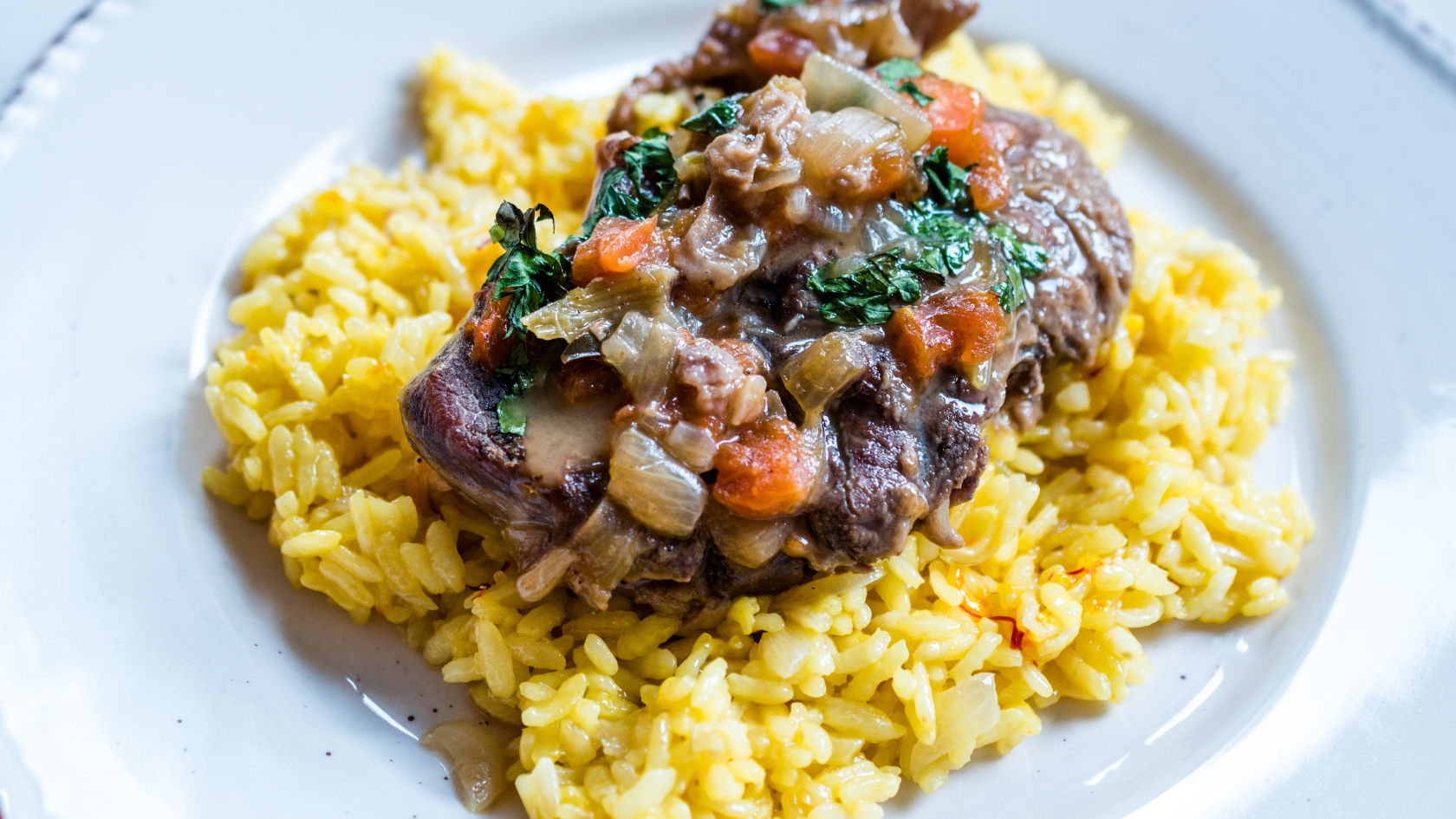
Although risotto alla Milanese is often considered a separate dish in modern gastronomy, it is Primo Piatto - It shines as a first main course, but only reveals its true purpose when paired with the strong flavors of Lombardy's meat cuisine. Probably the most iconic combination that no traditional Milanese restaurant should be without is the Ossobuco alla Milanese. Here, the braised veal shank is served in an aromatic sauce of vegetables and white wine, with the saffron rice serving as a golden stage to soak up the rich meat juices. Especially the Gremolata - a fresh mixture of parsley, lemon and garlic, which crowns the meat - forms a brilliant contrast to the creamy earthiness of the rice.
But the versatility of the „yellow classic“ goes even further. In the rural tradition, risotto is also often served with the Luganega, a typical thin sausage from the region, which is either cooked directly in the rice or served fried. If you like it even more rustic, enjoy the risotto with stews such as the Cassoeula, a hearty savoy cabbage and pork stew that is particularly popular in the cool winter months. Served as a starter, risotto usually calls for a light accompaniment due to its richness, such as a tender veal escalope (Cotoletta alla Milanese). Regardless of the combination, however, one rule remains ironclad: A true Milanese risotto does not tolerate any side dishes that could drown out its delicate saffron flavor - it seeks partners on an equal footing who emphasize the melting and spicy flavors of the north.

From Michelin-starred cuisine to retro trattorias: Milan's best addresses for risotto lovers
If you want to experience risotto alla Milanese to perfection in its place of origin, you will find a handful of institutions in the Lombard metropolis that cultivate the dish like a shrine. Each of these establishments tells its own story and approaches the classic dish from a different perspective. In the vibrant Porta Nuova district, the Ristorante Ratanà A benchmark for modern Lombard cuisine. Head chef Cesare Battisti, who is often referred to as the „king of risotto“ in professional circles, cooks in an aesthetically restored 19th century industrial building. His „Risotto alla Vecchia Milano“ is a homage to tradition, which is brought into the present day through precise craftsmanship and the selection of excellent primary ingredients. The balance between the melting taste of the beef marrow and the freshness of the saffron is simply unsurpassed.
A deep dive into Milan's city history is made possible by the Trattoria Masuelli San Marco. Since 1921, this family business has been run with a passion that can be felt in every detail - from the original Thonet chairs to the warm service. Here, the risotto, prepared according to strict rules, is the classic accompaniment to the Ossobuco alla Milanese. For lovers of authentic old Milan, the Antica Trattoria della Pesa an absolute must. This restaurant has been breathing history since 1880 and is famous for its „risotto al salto“, in which the rice is fried in a pan to form a crispy golden flatbread.
Anyone looking for an avant-garde interpretation should try the Sine By Di Pinto visit. Here, chef Roberto Di Pinto breaks with convention and presents a „gastro-diplomacy“ that crosses Milanese heritage with Neapolitan soul. His risotto is an explosion of flavors that shows just how versatile tradition can be. It gets even more exclusive in the Seta, the Michelin-starred restaurant at the Mandarin Oriental. Under the direction of Antonio Guida, the risotto becomes an almost sacred experience in which technique and aesthetics merge into a perfect symbiosis.
A charming contrast is provided by the Risoelatte. In this restaurant, which is furnished like a Milanese apartment from the 1960s, the risotto tastes like an Italian grandmother's - unagitated, honest and served with a large portion of nostalgia. More down-to-earth and deeply rooted in the neighborhood is the Trattoria Da Abele Temperanza. Here they are particularly proud of the daily variation in the art of rice, with the classic yellow risotto always remaining the centerpiece. Finally, if you are looking for the typical hospitality of Lombardy, the Locanda del Menarost find it. A version is served here in a rustic, cozy ambience that impresses with its creaminess and the genuine taste of regional butter and immediately makes guests feel why this dish is the soul of the city.
A plate of pure gold: the conclusion of a culinary journey
Risotto alla Milanese is far more than just a traditional rice dish; it is a purist masterpiece of northern Italian cuisine. It is impressive proof of how a culinary work of art with global appeal can be created from a handful of exquisite ingredients. In every spoonful, the gentle sweetness of glazed, steamed onions is combined with the hearty depth of the beef marrow to form a harmonious whole. This interplay is crowned by the noble, slightly tart and almost metallic aroma of saffron, which gives the risotto its unmistakable identity.
Preparing this classic is like a ritual that requires undivided attention and a genuine love of detail. However, those who commit to the slow stirring and gradual infusion of the broth will be rewarded with a texture that hovers between velvet and silk. The result is a dish whose bright color conjures up the sunshine of Lombardy on the plate and more than makes up for every minute of patient waiting. A genuine risotto alla Milanese is not just a meal, but a tribute to the history and craftsmanship of an entire region. Enjoy your meal!
Map: Milan, Italy
Top accommodations in Milan
Experiences & sights
Note: Disclaimer - Italien.news is not the owner or organizer of the sights, accommodations and events published here and therefore not responsible for program changes, cancellation of the event and possibly incorrect information. The editorial team of Italien.news always endeavors to provide detailed and accurate information. However, it is possible that events, attractions, etc. may be changed and not updated promptly. Exact details of dates, times and programs can be obtained directly from the owner of the attractions and accommodation.
Please also check the website or social media of the attractions and events for updates before you travel! Our blog articles contain our personal recommendations in the form of affiliate links. If you book or buy something via the links or simply click on them, we receive a small commission. This does not change the price for you at all. Content and texts © Italien.new & KI / Photos © Canva.com / shutterstock.com / Unsplash.com / Pixabay.com / Pexels.com / Others. Please also visit our Italy Shop!
Sources and Further Information
- Felice Luraschi: „Nuovo cuoco milanese economico,“ 1829—the first written record of „Risotto alla Milanese giallo.“.
- Confraternita del Risotto – Traditional guidelines that serve as the basis for the recipe presented here.