
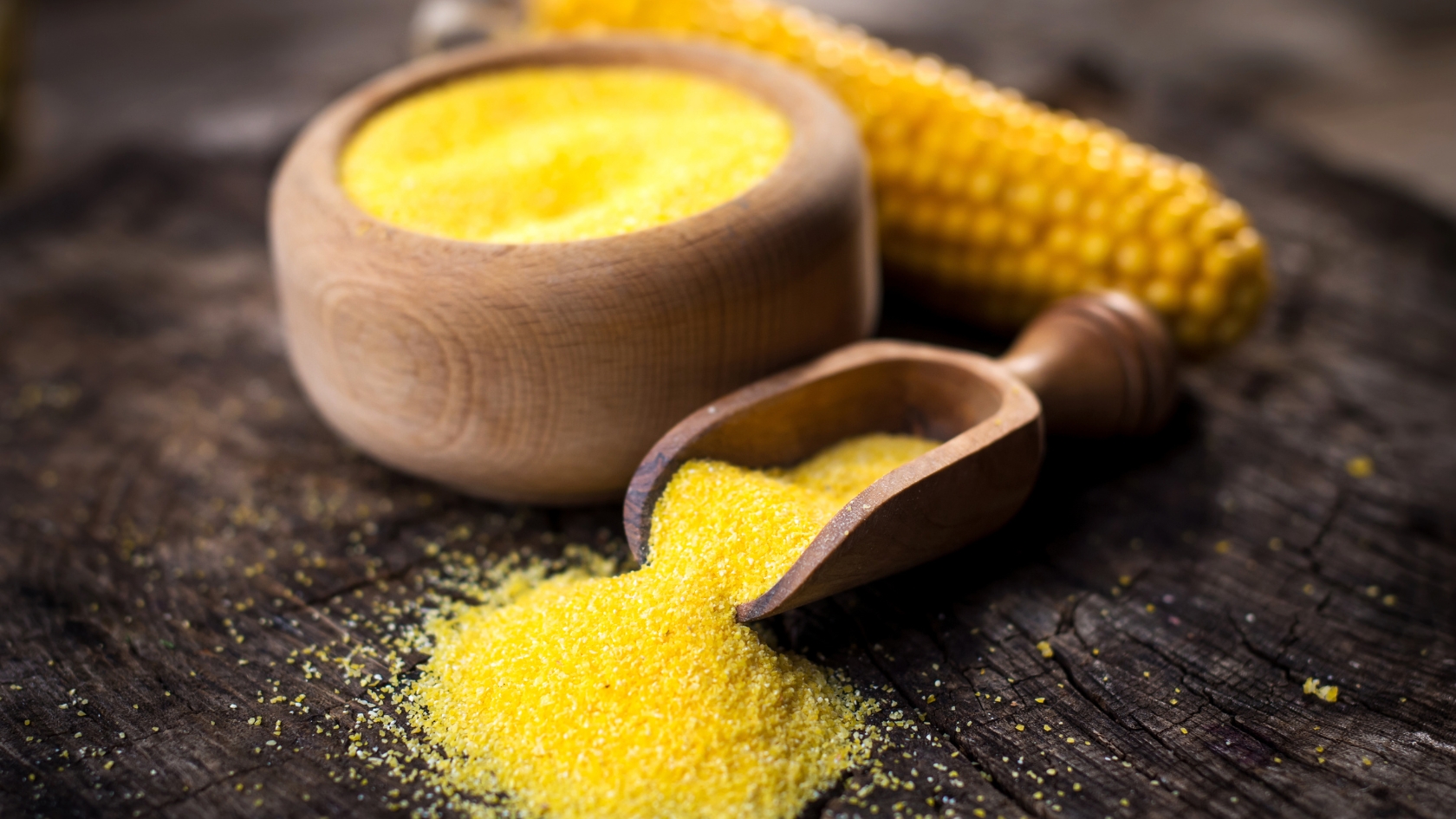
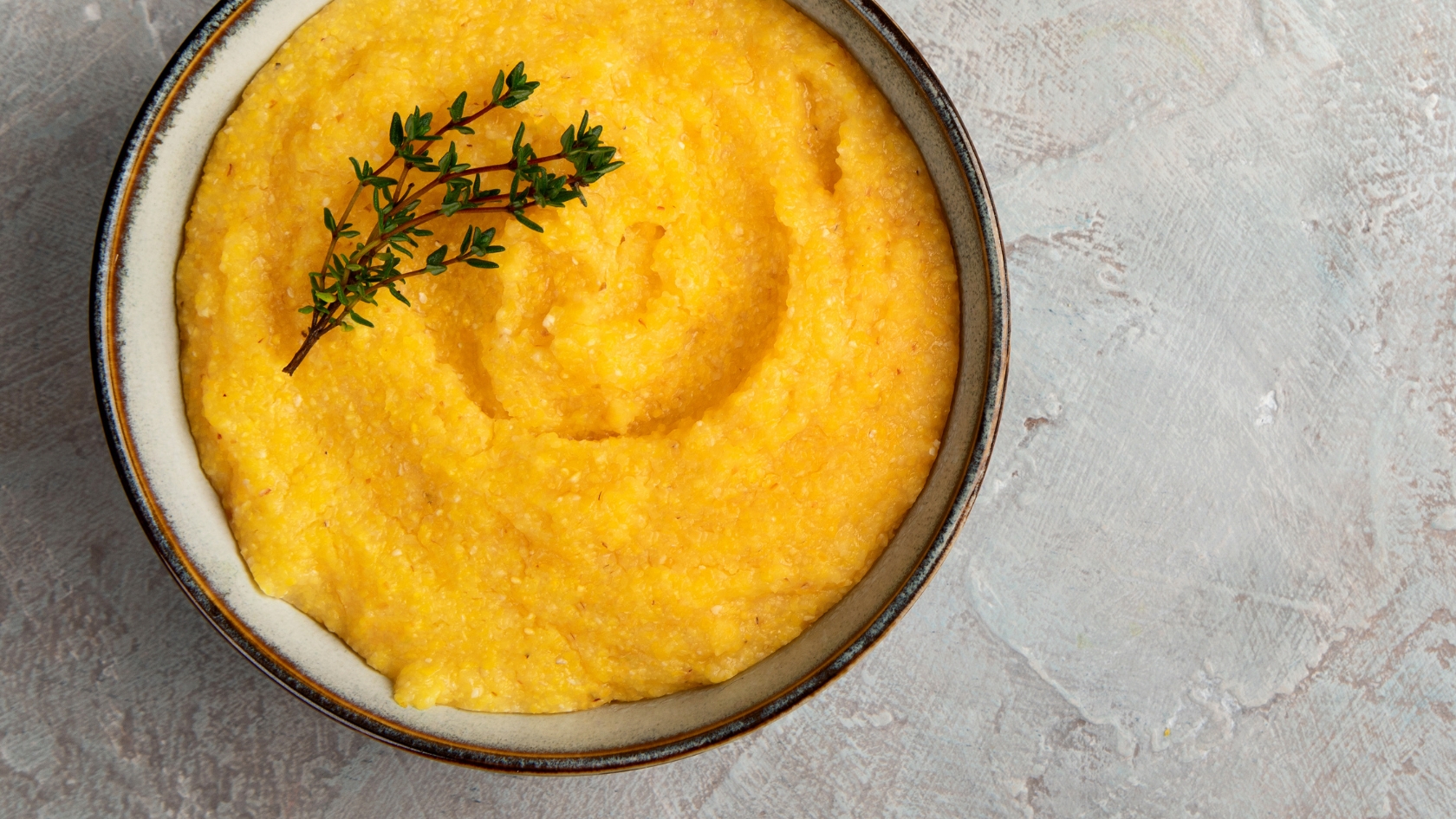
Polenta is much more than a simple maize porridge; it is the culinary foundation of northern Italy and a piece of living history. Its character is already determined during the production of the semolina: In traditional mills, the dried corn kernels are slowly ground between heavy natural stones, which preserves the germ and the valuable oils - a decisive difference to industrially degerminated semolina. Originally obtained from ancient grains such as millet or buckwheat, the now mostly golden yellow food developed into an indispensable survival food and valued cultural asset after the discovery of America. The secret of its perfection lies in its slow preparation: patiently stirred in a traditional copper kettle, the semolina - from rustic bramata to fine fioretto, depending on the degree of grinding - is transformed into a wholesome delicacy. Whether served as a velvety-creamy mirror for hearty braised dishes or in a firm, cooled form crispy from the pan, the former „poor man's food“ today impresses as a multi-faceted canvas of gourmet cuisine, which enhances the strong flavors of Alpine cuisine in yellow, white or black.
From the grain of the New World to the heart of northern Italy
Polenta, as it steams onto plates today as a golden yellow symbol of northern Italian cuisine, is inextricably linked to the discovery of America, but its culinary DNA extends far beyond the arrival of the Spanish galleons. Roman legionnaires were already marching through Europe with the power of „puls“ - a nutritious porridge that was mashed from ancient grains such as spelt, millet or protein-rich chickpea flour. This original form of polenta was the fuel of the empire for centuries, long before the bright yellow of maize dominated the Italian landscape.
The real revolution began when Christopher Columbus brought corn (granoturco) from the New World to Europe. The Po Valley in particular, the vast Pianura Padana, proved to be predestined terrain for this botanical newcomer. The moist, fertile alluvial land between the protective Alps in the north and the Apennines in the south offered maize exactly the conditions it needed for its explosive growth. In the 16th and 17th centuries, the plant replaced traditional varieties in a rapid triumphal march and fundamentally changed agriculture from the lagoons of Venice to the fertile fields of Lombardy and the hills of Piedmont.
For the Contadini, For the rural population, who often worked under precarious conditions, maize polenta became an existential anchor. It was inexpensive to grow, achieved far higher yields than wheat and could be cooked over an open fire in a traditional copper kettle (Pajolo). But there was a downside to this success: the almost exclusive dependence on polenta led to the insidious deficiency disease pellagra among the poorest people, as, unlike in Central America, maize in Europe lacked the chemical pre-treatment (nixtamalization) to release the vital vitamin niacin. What was once considered the epitome of Cucina Povera has today become a proud culinary identity. In the Po Valley, polenta is no longer considered a poor man's food, but is almost religiously revered as a cultural heritage and served in countless variations - from the coarse Bramata to the fine white polenta.
From the gold of Veneto to the black flour of the Alps: the regional soul of polenta
The Po Valley has always been considered the undisputed granary of Italy, but its true cultural treasure lies in the sophisticated polenta culture that has developed into a veritable art form in regions such as Lombardy, Veneto and Emilia-Romagna. Anyone who travels to these regions quickly realizes that polenta is much more than a mere side dish; it is a geographical signpost. While in the Veneto, especially in the coastal regions and around Venice, the elegant Polenta Bianca made from white corn, which, with its subtle sweetness, goes perfectly with fine fish dishes such as Baccalà Mantecato the classic, strong yellow polenta dominates in the heart of the plain and in the rugged mountain valleys around Bergamo and Brescia.
What makes the Po Valley so unique in culinary terms is the renaissance of old, indigenous maize varieties, which stand out massively from standardized industrial maize. Connoisseurs pay meticulous attention to the origin of the grain: varieties such as the deep red „Rostrato Rosso“ or the tapered „Spinato di Gandino“ offer an aromatic profile that ranges from nutty nuances to earthy roasted notes. The Alpine foothills of Lombardy are also home to a very special tradition: the Polenta Taragna. The addition of local buckwheat flour not only gives the porridge its characteristic dark color and a rustic, almost grainy texture, but in combination with butter and mature alpine cheese such as Valtellina Casera or Bitto, it acquires a flavor complexity that is second to none.
An unwritten law applies throughout the region: polenta is never an „instant affair“ from the packet. It is a timeless ritual that requires patience and physical dedication. Stirring for hours in a copper kettle over a low flame is not a tedious step, but the necessary metamorphosis in which starch and water combine to create the creamy perfection that is almost revered as a sanctuary in the Po Valley.
An authentic recipe: Polenta Classica
This recipe for 4 people is based on the traditional preparation method used in the farmhouses of Lombardy.
Ingredients
- 500 g corn semolina: Be sure to use „Farina di mais bramata“ (coarse-grained) for the authentic bite. Stay away from instant polenta!
- 2 liters of water: The classic ratio is 1:4.
- 1 tbsp coarse sea salt
- Optional: 1 tablespoon of olive oil or a small knob of butter to refine at the end.
Preparation
- Prepare the water: Bring the 2 liters of water to a boil in a large, heavy pot. Traditionally, a „paiolo“ (a copper pot) is used, as copper conducts the heat evenly, but a heavy cast iron pot also works perfectly.
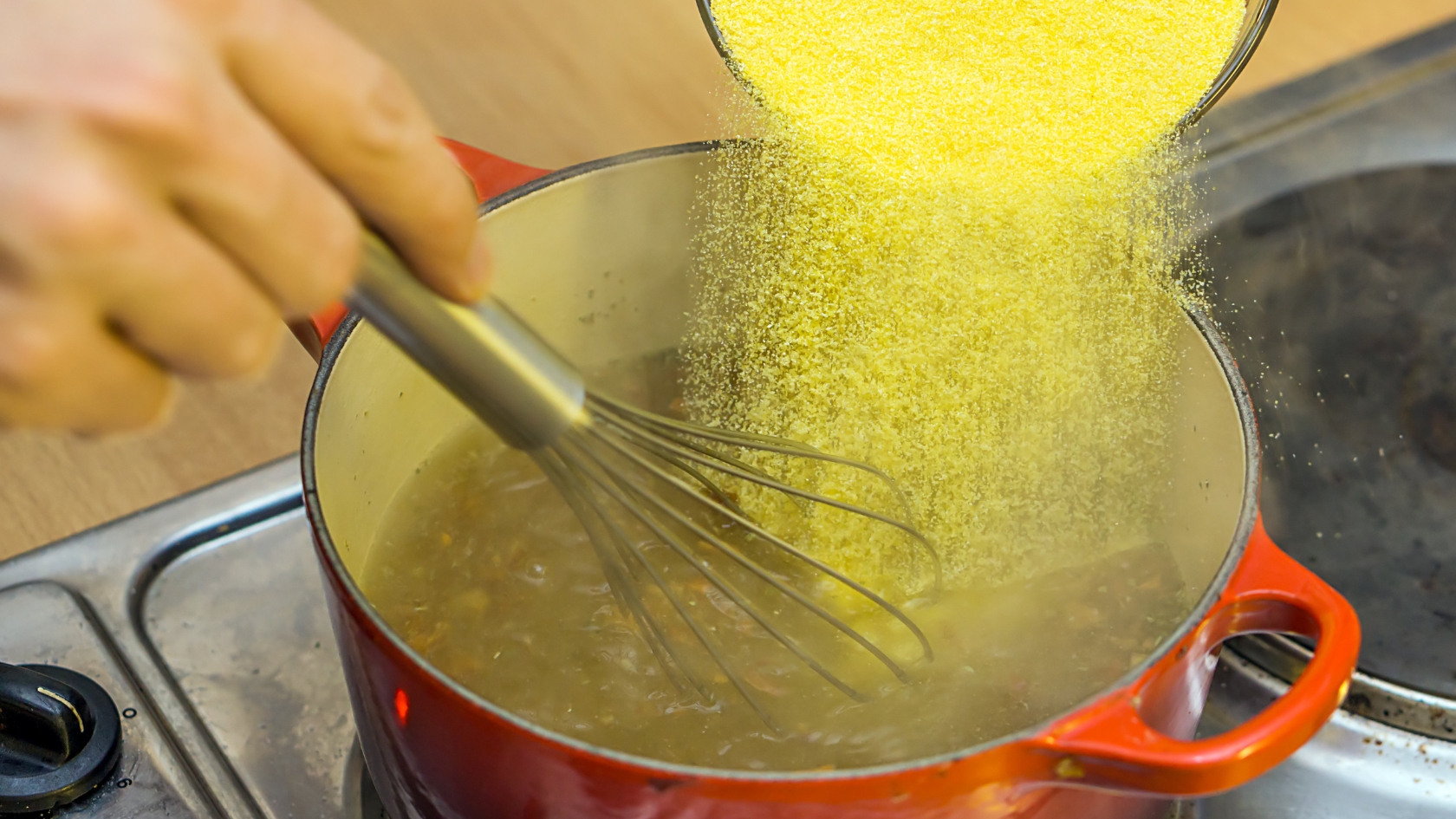
- Salting and trickling: As soon as the water boils, add the salt. Briefly remove the pan from the high heat or reduce the heat. Now slowly pour in the corn semolina, stirring constantly with a whisk to prevent lumps from forming.
- The test of patience: As soon as all the semolina is in the water, switch from the whisk to a long wooden spoon. The polenta must now simmer over a low to medium heat for at least 45 to 60 minutes.
- Stir: It is essential to stir regularly (ideally almost continuously) so that the polenta does not stick to the bottom and cooks evenly. The polenta is ready when it starts to pull away from the sides of the pan and has reached a creamy but firm consistency.
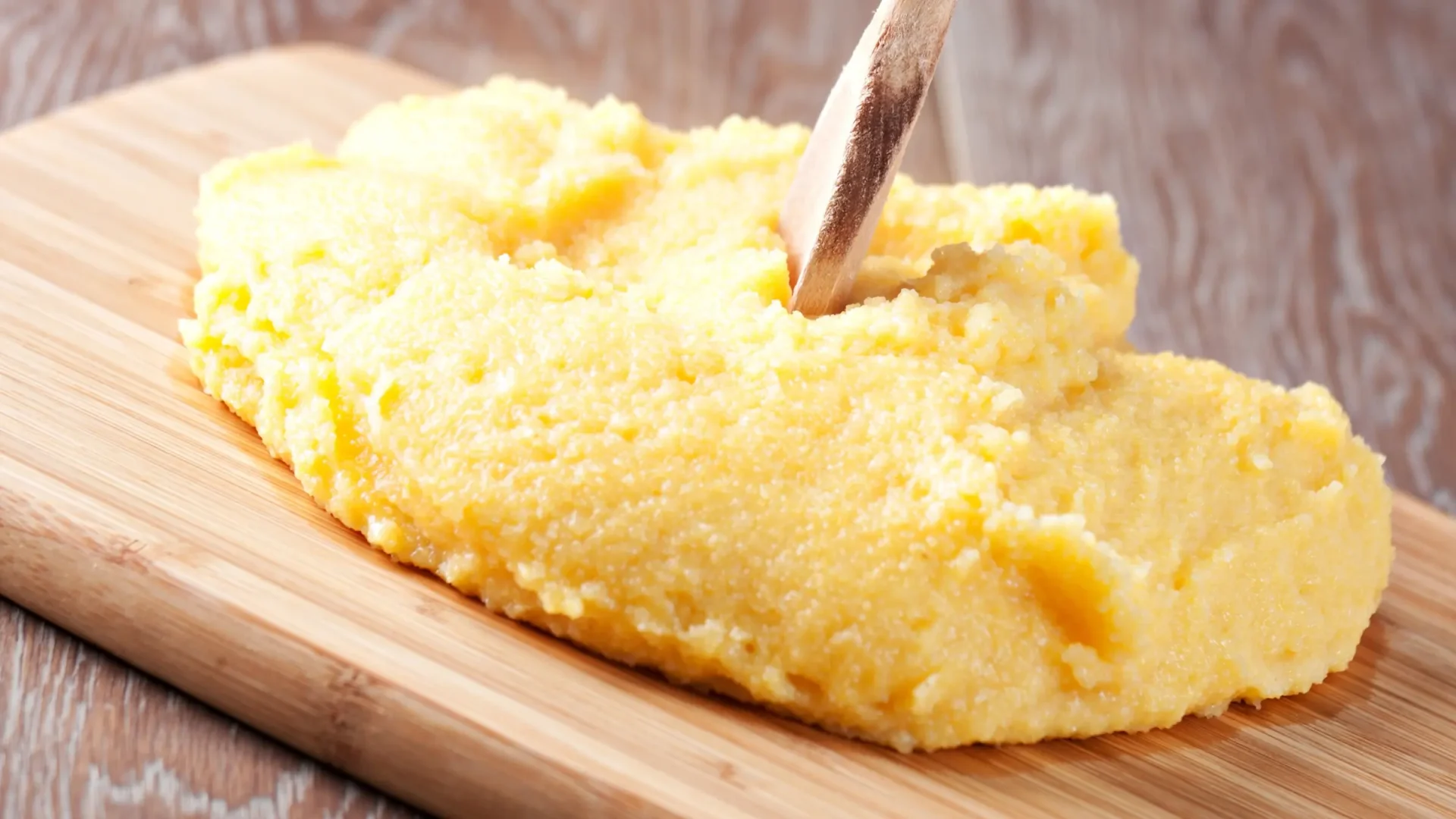
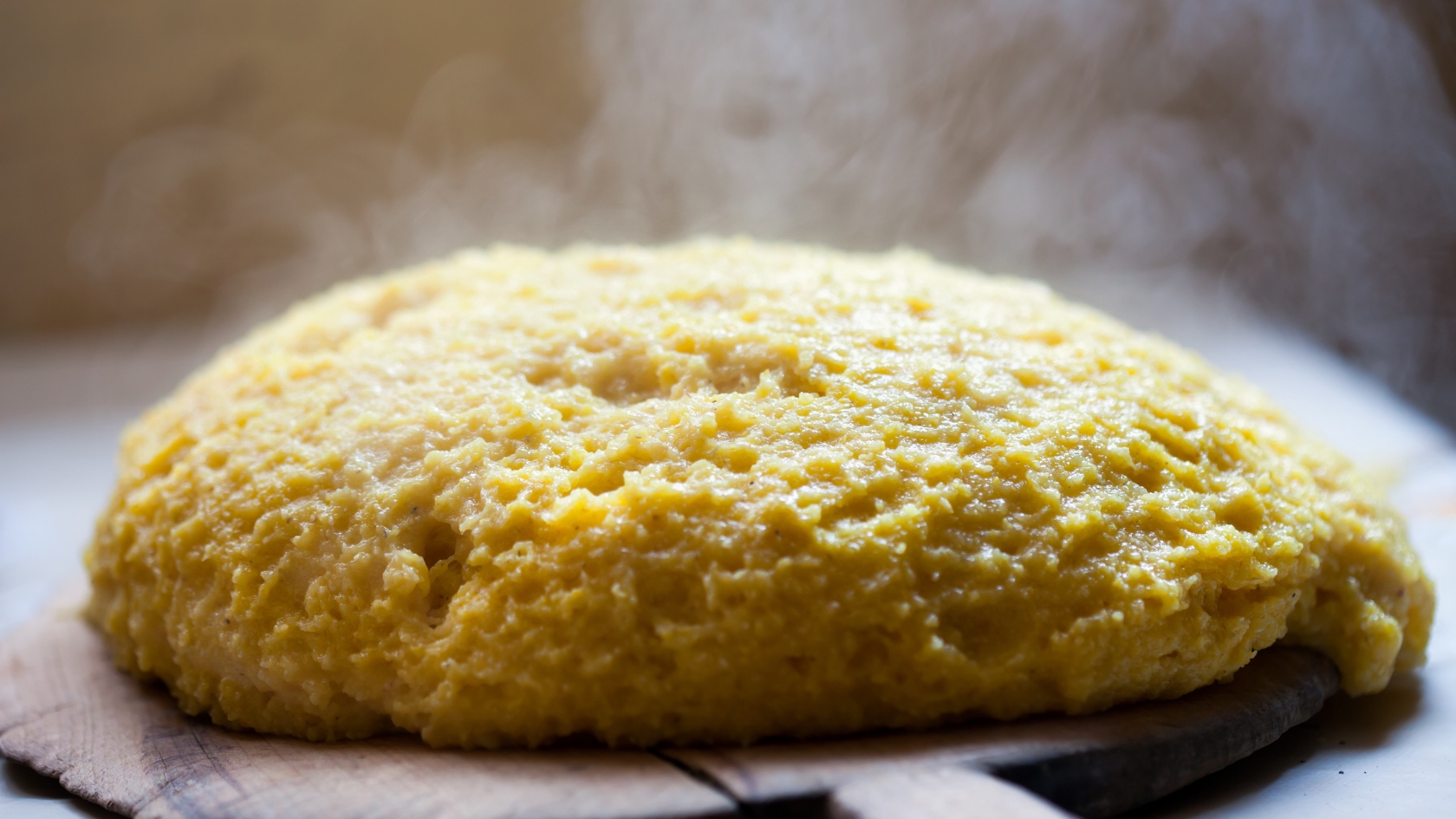
- Serve: Tip the hot polenta onto a large wooden board (tagliere). In the Po Valley, it is often not cut, but „sawed“ into slices with a cotton thread or served directly by the spoonful.
Tips for preparation
The secret to perfect polenta lies not in the ingredients, but in the stirring. An old saying in the Po Valley says that you should stir the polenta until your arm hurts and then stir it for another ten minutes. If you like it more substantial (polenta concia), stir in a generous amount of butter and regional cheese such as Taleggio or Gorgonzola at the end of the cooking time.

From mountain cheese to lagoon prawns: Italy's most famous polenta specialties
To fully understand the culinary versatility of polenta, it is worth taking a look at Italy's regional classics, which show that golden corn is much more than just a side dish. Probably the most famous feel-good dish of the Alpine region is the Polenta Concia, a deliciously creamy specialty from the Aosta Valley and Piedmont. The hot polenta is mixed with generous amounts of young Fontina cheese and foamed butter while still in the pot until it becomes stringy and almost sinfully creamy. In Lombardy, on the other hand, people celebrate the Polenta Taragna, in which a proportion of nutty buckwheat is added to the corn semolina. This darker, stronger version is traditionally refined with Casera cheese and often served with hearty wild boar ragout or porcini mushrooms.
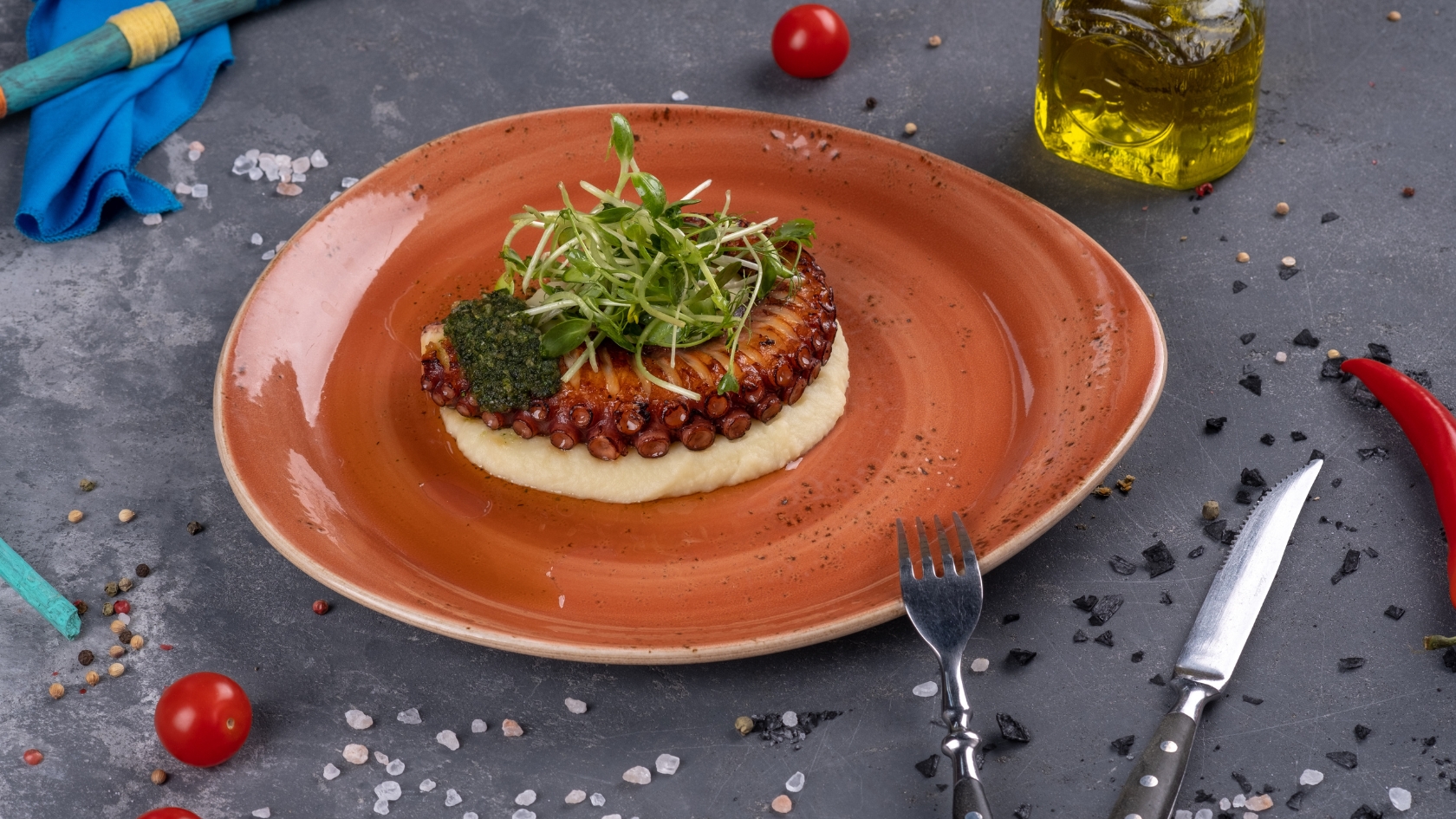
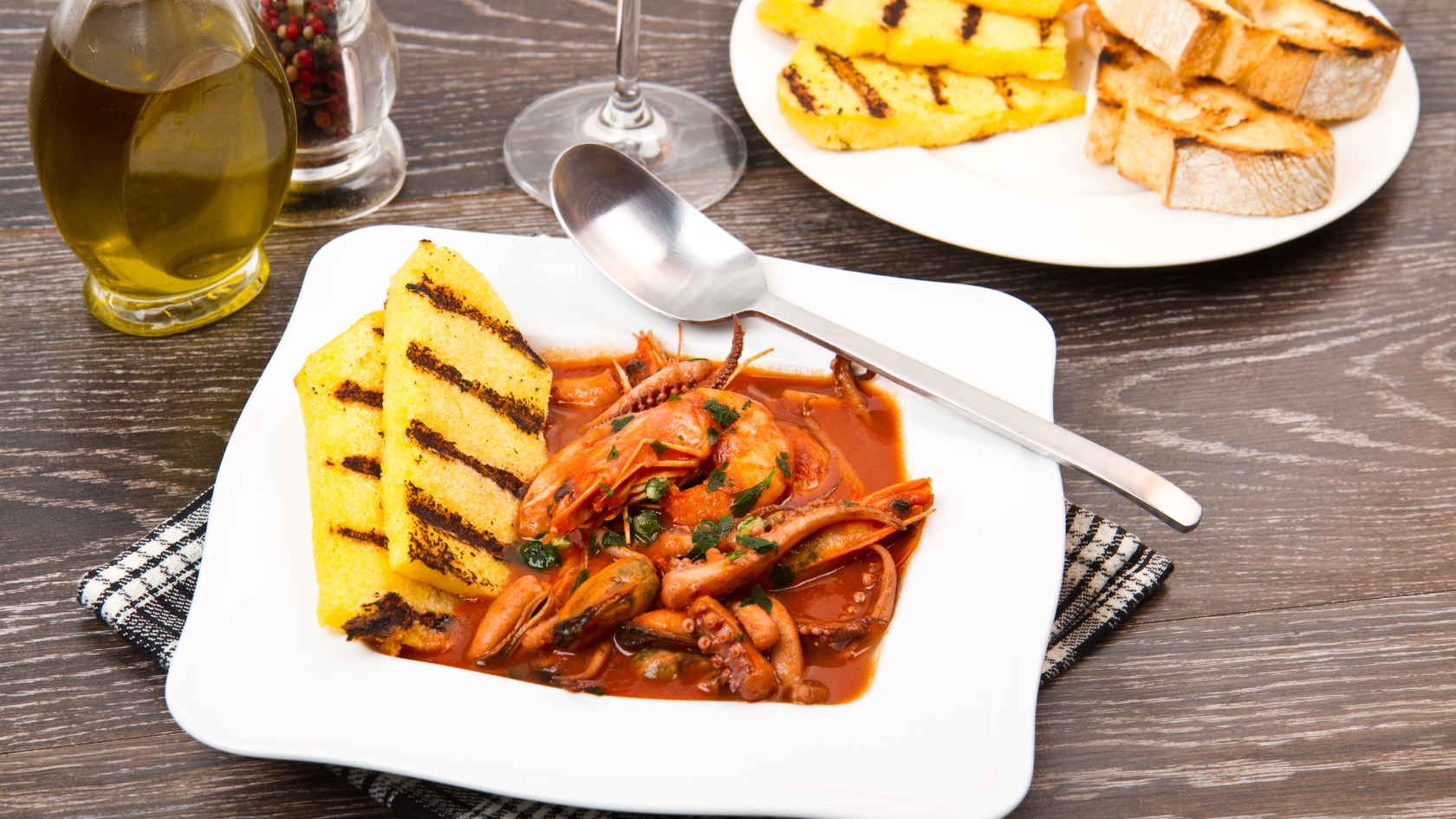
Another cornerstone of the tradition is the Polenta e Osei, which is particularly appreciated in Veneto; while it was historically served with small skewers of game birds, today it is more often found with succulent quails or as a sweet pastry imitation in the pasticcerias of Bergamo. Also from the Venetian lagoon is the delicate Polenta e SchieHere, tiny sand shrimps from the Adriatic, deep-fried in olive oil and garlic, meet a mostly very soft, almost liquid white polenta - a fascinating interplay of rustic grain and the finest seafood. Similarly maritime and deeply rooted in coastal cuisine is Polenta e Moscardini, in which small musk octopuses stewed in a spicy tomato sauce sit enthroned on the soft corn bed and release their aromas directly into the semolina.
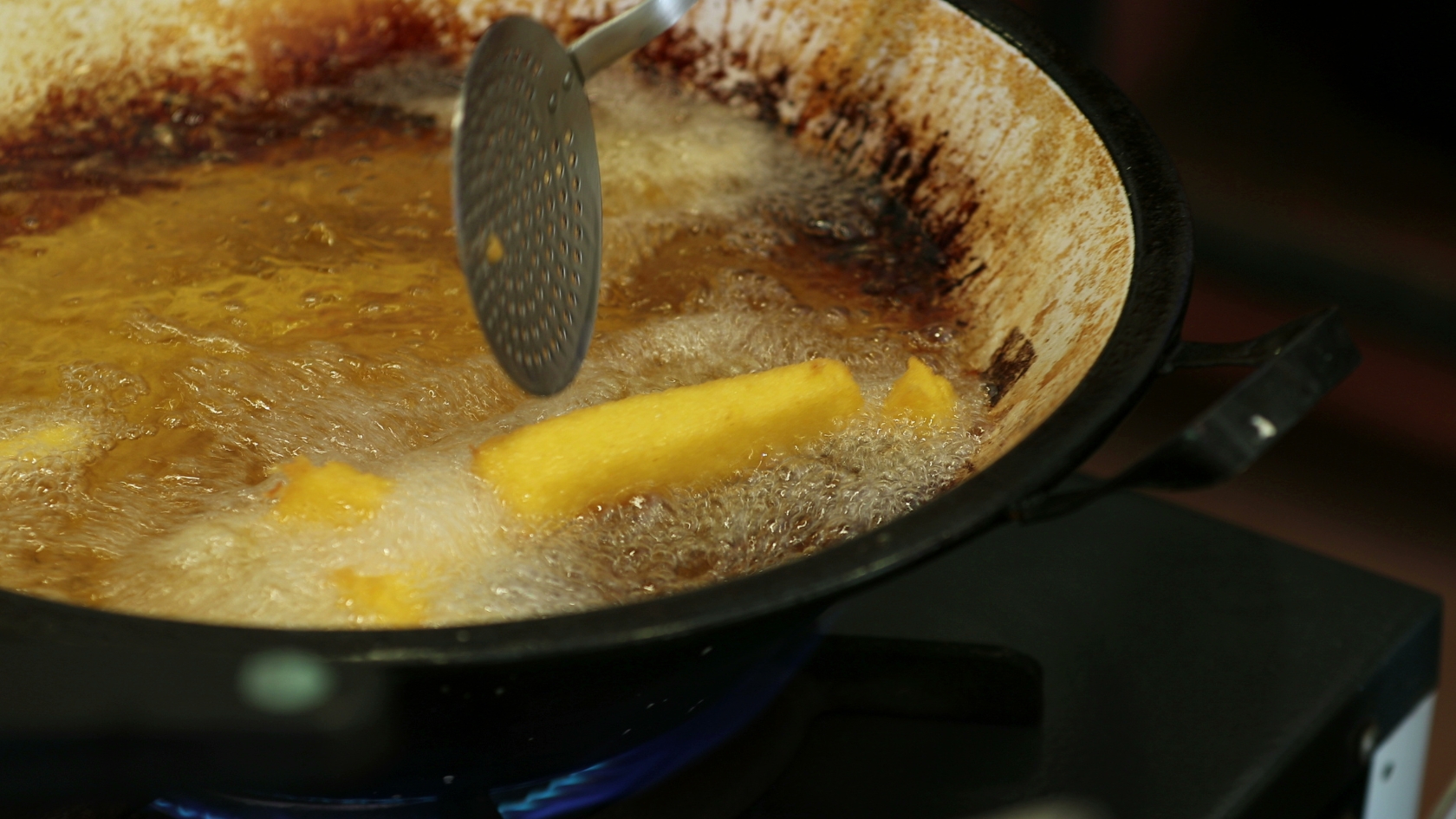
However, if you like it particularly savory, go for the Polenta pasticciata, a layered casserole in which slices of polenta are baked in the oven with ragù alla Bolognese, béchamel sauce and Parmesan - an Alpine answer to lasagne, so to speak. Not forgetting the simple elegance of the Polenta e Baccalà alla Vicentina, where the soft corn porridge forms the perfect contrast to the hearty cod stewed in milk and onions. As the crowning glory of many meals or as a snack between meals, the Polenta frittaThis involves frying cooled polenta strips in plenty of olive oil until they form an irresistibly crispy crust on the outside, while the center remains soft. Grilled polenta tastes similar and is often served as a side dish. These dishes are impressive proof of how polenta changes its texture and character depending on the region in order to perfectly showcase the local treasures - from mountain cheese to sea fish.
Tip: The Polenta fritta or grilled is also a fantastic way to use up leftovers from the previous day.
Where the kettle never rests: Three authentic addresses for true polenta lovers
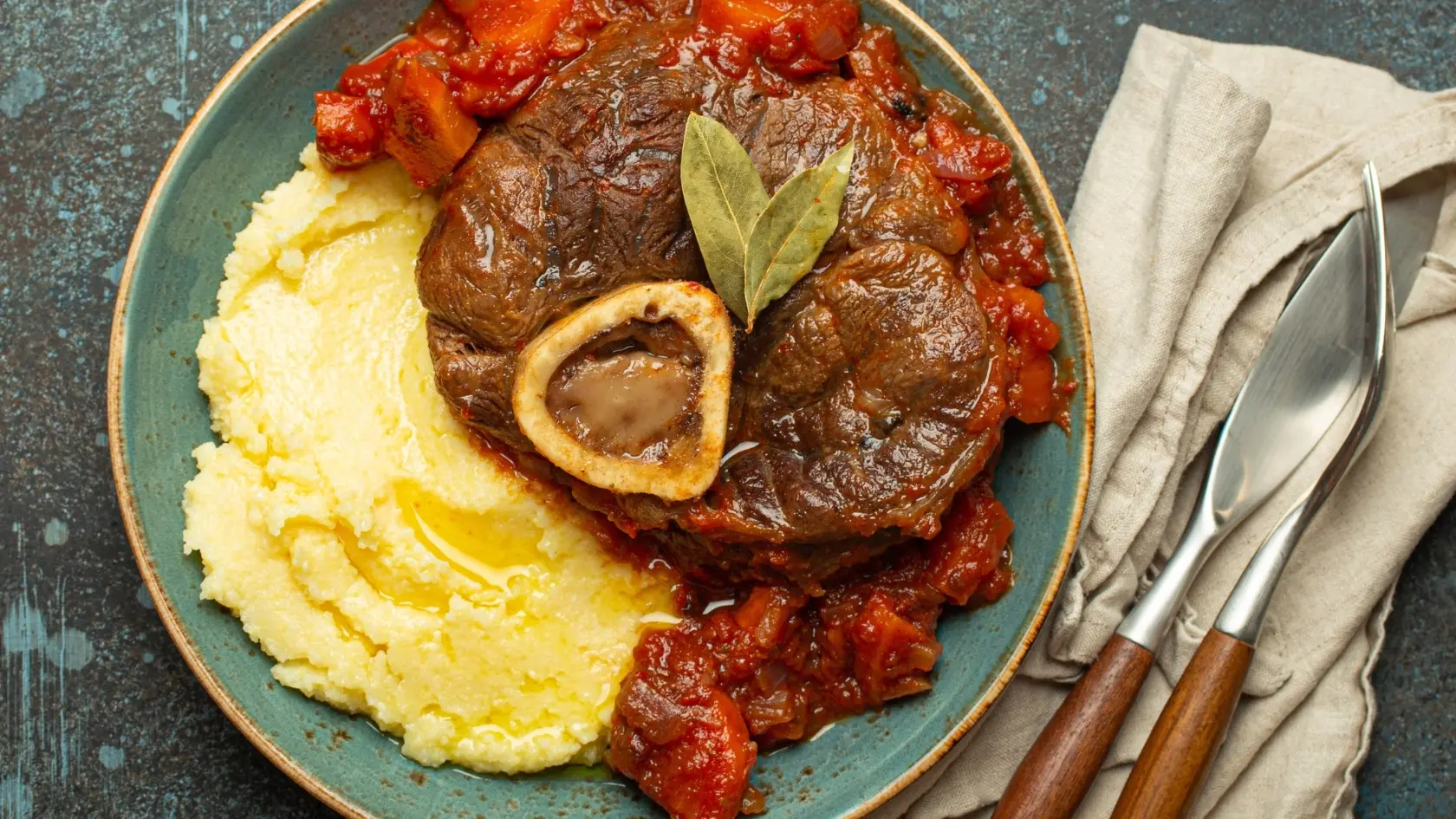
To really get to know the deep soul of polenta, there is no way around a visit to the region's traditional inns, where the craft of stirring is still considered a matter of honor. An outstanding example of the preservation of this culinary identity in the midst of the modern metropolis is the Trattoria del Nuovo Macello in Milan. Despite the metropolitan pace, this historic establishment cultivates the slowed-down traditions of Lombardy with an almost nostalgic devotion. Here, polenta is not just a side dish, but a golden mirror for perfectly braised meat dishes such as the classic Ossobuco, Its legendary reputation is based on its precise texture and deep corn flavor, which is rarely found anywhere else in the city.
Those who appreciate the rustic perfection of Polenta Taragna must penetrate deeper into the valleys where the Trattoria Dentella in Bracca is a true place of pilgrimage for connoisseurs. Situated in the picturesque Val Serina, the art of mixing corn and buckwheat is taken to a new level here. The chefs work the dark flour with such mastery and such generous amounts of alpine butter and local cheese that polenta is not just an accompaniment, but takes the leading role on the table as a powerful main course in its own right.
An equally authentic experience is offered by the Osteria della Villetta in Palazzolo sull'Oglio, a jewel in the province of Brescia, which has been in family hands for generations and breathes the spirit of the slow food movement. In this ambience steeped in history, you will encounter polenta in its most honest form. Here, it often serves as a soft bed for the sardines from nearby Lake Iseo, which are full of character and marinated in oil, or is served with hearty stews that have been simmering on the stove for hours. It is places like these where polenta tells its story - from the frugality of days gone by to today's culinary excellence.
Living tradition: festivals and rituals around the copper kettle
If you want to experience polenta in its most convivial and original form, you should start your journey after the numerous Sagre - the traditional folk festivals that animate the marketplaces of northern Italy throughout the year. These festivals are much more than mere food events; they act as cultural anchor points that show that polenta remains the social heart of the region even in the 21st century. An absolute highlight in the fall is the Festival della Polenta in Storo in Trentino, where the famous „Gold of Storo“ (Farina Gialla) takes center stage. In a passionate open-air competition, various cooking teams, the so-called Polenteri, to find the best Polenta Carbonera - a full-bodied, almost monumental version, refined with butter, mature cheese and spicy salami.
Read more about theTopic




But it is not just the harvest season that is celebrated with devotion: In February, places such as the medieval town of Sermoneta or the Piedmontese town of Ivrea are transformed into scenes of historical rites. Especially during the famous carnival of Ivrea, the distribution of Polenta e Merluzzo (polenta with cod) on Ash Wednesday is a centuries-old communal act that symbolically marks the transition from festive debauchery to contemplative Lent. This distribution is often made from huge cauldrons to the entire population, which underlines the deeply rooted communal character of this dish.
Lombardy is particularly atmospheric in late autumn, when the fog drifts over the fields and places like Spirano or Zogno become the Sagra della Polenta Taragna load. In gigantic, steaming copper kettles, the Pajoli, The dark, rustic mixture of corn and buckwheat is stirred at full speed while the spicy aroma of melted Casera cheese wafts through the medieval alleyways. Many of these events are now certified as sustainable „green events“, thus preserving not only the culinary heritage but also the valuable cultural landscape of the Po Valley for future generations.

Gold of the Po Valley: a plea for slowness and true enjoyment
The polenta of the Po Valley is far more than just a remnant of the Cucina Povera; It is living proof that true luxury often lies in radical simplicity and the quality of honest ingredients. In an increasingly fast-paced world, this dish acts as a culinary corrective. Polenta grounds us because it refuses to be rushed: it forces the cook to pause and the connoisseur to devote themselves entirely to the moment. From the first turn of the wooden stick in the heavy copper kettle to the last steaming spoonful on the wooden plate, it requires a level of dedication that is hard to find in modern system gastronomy.
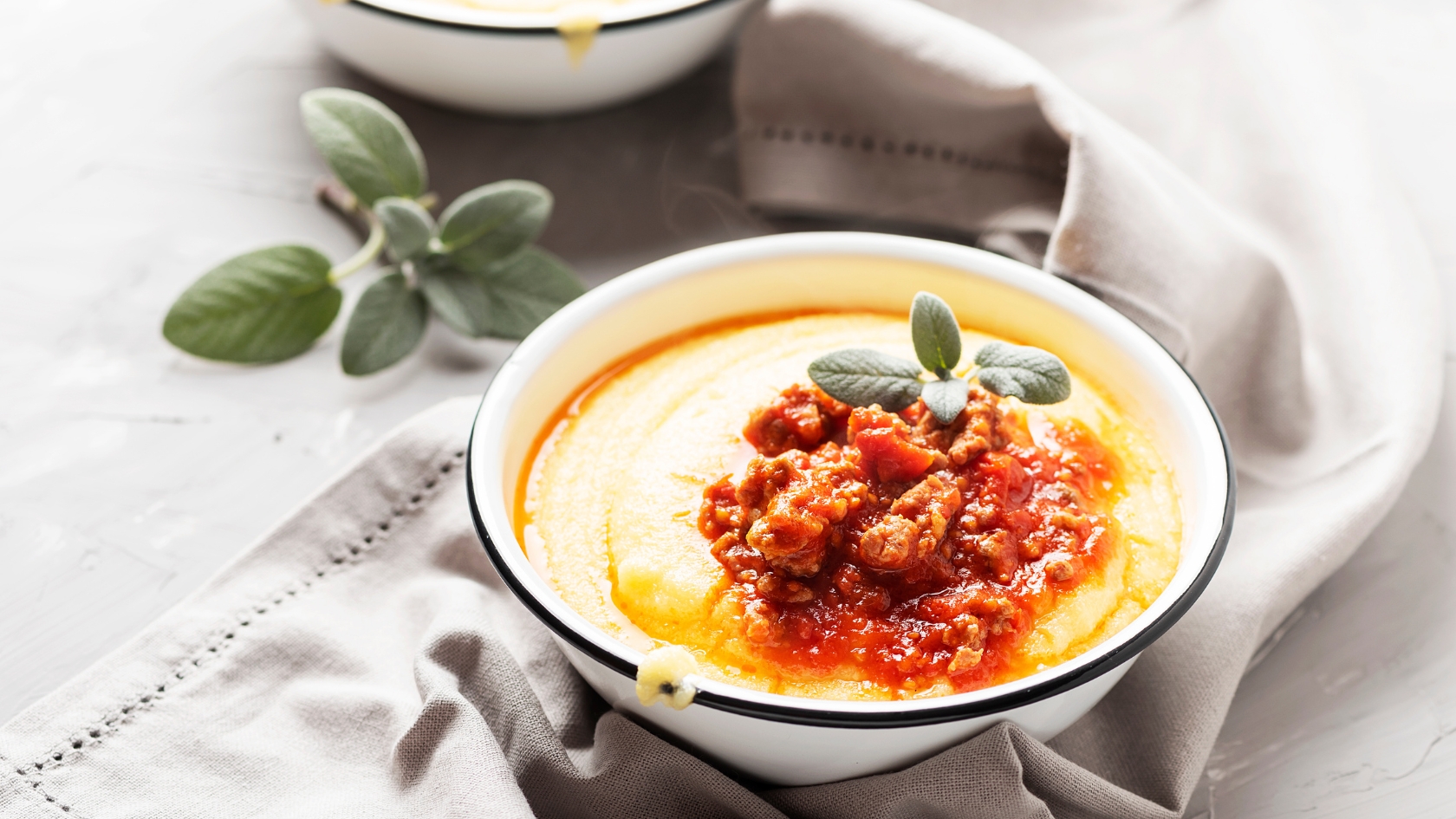
Whether they are used as an elegant, golden yellow bed for a delicate Ossobuco alla Milanese or as a rustic dish refined with buckwheat and spicy alpine cheese. Taragna is its greatest strength - its versatility. Anyone who has ever had the privilege of tasting a genuine, handmade polenta in the mystical, misty atmosphere of a late autumn in northern Italy will forever taste the huge difference to industrial fast food. It is this unmistakable taste of home, time and artisanal perfection that makes polenta the undisputed centerpiece of northern Italy. One bite is enough to understand that tradition here does not mean standing still, but living passion. Enjoy your meal!
Map: Veneto
FAQ: Polenta
What different types of polenta should I definitely try when traveling through northern Italy?
In the Po Valley, travelers mainly encounter the classic polenta gialla made from yellow corn flour, which is often served creamy or firm and grilled as a side dish. In the region around Venice, polenta bianca made from white corn is also very popular, which has a more delicate taste and goes excellently with fish dishes. If you prefer something more rustic, look out for polenta taragna, a hearty mixture of buckwheat and corn, which is usually refined with plenty of local cheese and butter.
What time of year does polenta taste best in the Po Valley and why?
Although polenta is available all year round, it really comes into its own in the cooler fall and winter months. When the fog rolls in over the Po Valley, hot, steaming polenta is the perfect comfort food and is traditionally served with hearty stews, mushrooms or game. During this time, there are also numerous sagra festivals, where entire village communities celebrate the corn dish outdoors and prepare it in the traditional way.
Are there any special rules of etiquette or traditions that I should observe when eating out?
In many traditional trattorias in the Po Valley, polenta is served directly on a large wooden board in the middle of the table, from which all guests help themselves. It is considered particularly authentic to divide the polenta into portions with a wooden spoon or, in the past, even with a tightly stretched string instead of a metal knife. You should also make sure that the polenta is the main feature of the dish and that the sauces or cheeses often served with it are harmoniously mixed with the corn porridge.
What should I look out for if I want to take high-quality polenta flour home with me as a souvenir?
When buying polenta flour in local markets or delicatessens, the designation Macinata a Pietra is an important quality feature, as this indicates that it has been gently stone-ground. Also pay attention to the grain size, with bramata indicating a coarse texture and fioretto a finer consistency. Particularly high-quality products often bear protected designations of origin of the respective region, which guarantees that the corn has been ripened under optimal conditions in the Po Valley.
Experiences & sights
Note: Disclaimer - Italien.news is not the owner or organizer of the sights, accommodations and events published here and therefore not responsible for program changes, cancellation of the event and possibly incorrect information. The editorial team of Italien.news always endeavors to provide detailed and accurate information. However, it is possible that events, attractions, etc. may be changed and not updated promptly. Exact details of dates, times and programs can be obtained directly from the owner of the attractions and accommodation.
Please also check the website or social media of the attractions and events for updates before you travel! Our blog articles contain our personal recommendations in the form of affiliate links. If you book or buy something via the links or simply click on them, we receive a small commission. This does not change the price for you at all. Content and texts © Italien.new & KI / Photos © Canva.com / shutterstock.com / Unsplash.com / Pixabay.com / Pexels.com / Others. Please also visit our Italy Shop!