Venice – Four kilometers of water instead of asphalt, and not a single sidewalk: The Grand Canal is the main street in this city. It winds in a wide S-curve for 3,800 meters from the train station Santa Lucia until St. Mark's Basin, the open-air pool in front of St. Mark's Square. You can take a ride on it starting at €9.50 with the Vaporetto, the Venetian waterbus—including the Rialto Bridge and a dozen palace facades.
This article tells you how much the ride costs, which route is worth taking, why a gondola ride costs 90 euros while a ferry ride costs two euros, and on which days the canal is completely closed to regular service. All figures come from official sources and are dated.
The Grand Canal by the Numbers
The canal is not a tourist attraction with an admission fee, but a public waterway: It costs nothing to watch, but there is a fare to cross it. The dimensions are listed at the Treccani, the Italian National Encyclopedia, the fare schedules of the municipal transit authority, and those of the City of Venice itself.
As of August 2026 · Dimensions according to Treccani; fares according to AVM/Actv and the City of Venice.

What makes the Grand Canal Venice's main thoroughfare?
The Grand Canal is the only waterway that runs the entire length of the historic center, and everything else is connected to it. According to the measurements of the Treccani It is 3,800 meters long, between 30 and 70 meters wide, and no more than five meters deep—shallower than most people expect. Forty-five smaller canals branch off from it, which rii, and they distribute traffic among the six city districts.
A depth of five meters may not sound like much, but it’s enough for everything that travels here: commuter boats, delivery barges, garbage boats, ambulances, and gondolas. There are no cars, and no bicycles either. Anyone moving to Venice does so via this canal, and if you order a pizza, it’ll eventually be delivered to you via it as well.
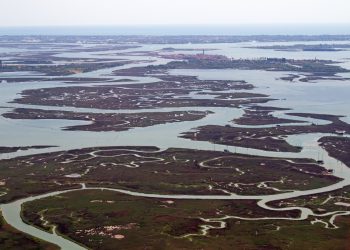
The curve he describes is no coincidence: it follows the course of an ancient river through the lagoon. That is why the city is laid out the way it is—the merchant houses along the water, the churches in the squares behind them. Venice and its lagoon have been on the UNESCO World Heritage List since 1987, listed under number 394. Despite years of debate, the committee has not yet placed the city on the List of World Heritage in Danger.

Four bridges spanning four kilometers of water
Over a distance of 3.8 kilometers, exactly four bridges span the Grand Canal. That’s why getting around Venice on foot is so exhausting: if you’re on the wrong side, you might have to walk a kilometer to the next crossing.
The best-known one is the Rialto Bridge, the Rialto Bridge in the heart of the city. Its architect was Antonio da Ponte, back then proto al Sal – the Republic’s chief engineer. In 1587, the Senate put the new bridge out to bid; on January 20, 1588, it selected da Ponte’s single-arch design, and by the end of 1590, the arch had been completed. The single, wide arch was a gamble: it allowed merchant ships to pass without placing any piers in the shipping lane.
The other three are named Ponte degli Scalzi at the train station—the Treccani lists it simply as Station Bridge –, the Ponte dell’Accademia in front of the Gallerie dell’Accademia and the Constitution Bridge between the train station and the bus station, commonly referred to as the Calatrava Bridge after its designer. It is the newest and most controversial: After numerous falls, the city government decided in October 2018 to replace individual glass steps with trachyte, a non-slip volcanic rock, on a trial basis. The retrofit took years to complete.

Which palaces can you see from the water?
The riverbanks have been built up over the course of six centuries, and because every family made the side of their house facing the water look impressive, there is now a row of facades with no backsides. You can tour the interiors of four of these palaces, and all four have fixed admission prices.
The Ca‘ d'Oro, the late-Gothic palace housing the Galleria Giorgio Franchetti, is closed for restoration and renovation work; a reopening date has not yet been set. From the outside, its façade remains the most beautiful example of late Gothic architecture along the canal—you can see it from the vaporetto at the „Ca‘ d’Oro“ stop.
The Palazzo Venier dei Leoni is home to the Peggy Guggenheim Collection, the collection of the American patron of the arts who lived here starting in 1949. Admission is €17.00; it is open daily except Tuesdays from 10 a.m. to 6 p.m. The Ca‘ Rezzonico displays as Museum of the Venetian Eighteenth Century 18th-century Venice, for €15.00. The Galleria dell'Accademia Located near the bridge of the same name, this museum features a collection of Venetian paintings up through the 18th century—€20.00; closed Mondays; free admission on the first Sunday of the month.
The Palazzo Grassi and the Punta della Dogana, the triangular customs house at the mouth of the canal—both are part of the Pinault Collection and showcase contemporary art; a ticket for €20.00 is valid for both venues. At the end of the canal stands the Basilica of Santa Maria della Salute, the Church of the Plague with its large dome—the view of it from the water is the image most people have in mind when they think of Venice.
The Museums on the Grand Canal
| House | Price and Times |
|---|---|
| Peggy Guggenheim Collection Palazzo Venier dei Leoni | €17.00 · €14.00 for visitors 70 and older · €9.00 for students under 26 · Daily 10 a.m.–6 p.m., closed on Tuesdays |
| Ca‘ Rezzonico Museum of the Venetian Eighteenth Century | €15.00 · €7.50 (reduced rate) · April through October, 10 a.m.–6 p.m.; other times, 10 a.m.–5 p.m.; closed on Tuesdays |
| Galleria dell'Accademia at the Accademia Bridge | €20.00 · €2.00 for EU citizens ages 18 to 25 · Free for visitors under 18 · Tuesday through Sunday, 9 a.m.–7 p.m. |
| Palazzo Grassi and Punta della Dogana | €20.00 · €15.00 (reduced rate) · €7.00 (ages 20–26) · Daily 10 a.m.–6 p.m., closed Tuesdays |
Admission is free at the Gallerie dell’Accademia on the first Sunday of every month, at the Pinault Collection for visitors under 20, and at the Guggenheim Collection for children under 10.
As of August 2026 · Information sourced from guggenheim-venice.it, carezzonico.visitmuve.it, gallerieaccademia.it, and pinaultcollection.com.

What's the cheapest way to cross the Grand Canal?
With the Vaporetto Line 1. It is the only line that serves every stop along the canal: from Piazzale Roma, the bus station on the western outskirts of the city, via Ferrovia, Rialto, and Accademia, all the way to San Marco-Vallaresso and on to the Lido. There are 17 stops between Piazzale Roma and Vallaresso; depending on the time of day, the trip from Santa Lucia Station to St. Mark's Square takes about 13 to 17 minutes. It runs every 10 to 12 minutes, from 6:57 a.m. to 11:35 p.m.
The Line 2 draws a circle around the Giudecca, the long island across from St. Mark's Square, and the bus terminal Tronchetto. Trains on this line run much less frequently, only every 20 minutes. So remember: If you want to see the buildings, take Line 1; if you want to get there fast, take Line 2.
A single-ride ticket is valid for 75 minutes and costs €9.50—that’s more than enough for the trip from the train station to San Marco. Starting with your second trip of the day, the 24-hour pass is the better deal. If you’re between 6 and 29 years old, you can get the Rolling Venice-A discounted 72-hour ticket; the transit authority does not publish the price online—you'll need to ask for it at the ticket window. For a list of other admission fees, see our Overview of Venice Tickets.
How much does a ride on the Grand Canal cost?
| Ticket | Price |
|---|---|
| One-way trip, 75 minutes Applies to the entire water system | 9,50 € |
| 24-Hour Travel Card | 25,00 € |
| 48-Hour Travel Card | 35,00 € |
| 72-Hour Travel Card | 45,00 € |
| 7-Day Travel Card | 65,00 € |
| Ferry, one crossing Gondola ferry across the canal | €2.00 · €0.70 for locals |
As of August 2026 · Information from avm.avmspa.it and comune.venezia.it.

How much does a gondola ride cost—and what does the abbreviation stand for?
The City of Venice sets an official fare for gondolas, and it applies to everyone: €90.00 for 30 minutes between 9 a.m. and 7 p.m., and €110.00 for 35 minutes after 7 p.m. A gondola may carry a maximum of five people; the price applies to the boat, not per person—for five people, that’s €18 per person; for one person, it’s €90. Anyone who wants a longer ride pays additional fees based on the time used. This is based on a city council resolution from 2023, which remains in effect unchanged in 2026.
The abbreviation stands for Parada Ferry: a work gondola that crosses the canal where there isn’t a bridge in sight. Two euros for visitors, seventy cents for locals, and traditionally, Venetians stand during the crossing. It’s the cheapest gondola ride in the world and takes less than two minutes—but it counts.
Five crossings will be in operation in 2026; San Samuele and San Marcuola, which still appear in older guidebooks, have been discontinued. On Ferragosto (August 15), as well as on Christmas and New Year's Day, the ferries do not run at all; on Christmas Eve and New Year's Eve, they run only until 1:00 p.m.
For those in a hurry, there is motorboats, the water taxis. The city also sets maximum fares for these services; these dates back to decisions made in 2011 and are posted at every taxi stand—from Tronchetto and Piazzale Roma to Ferrovia, Rialto, and San Marco. It’s worth checking the posted rates before boarding.
The Traghetto Crossings Over the Grand Canal
| Transition | Hours of Operation |
|---|---|
| Hagia Sophia near the Ca‘ d'Oro | Monday through Friday, 8:30 a.m.–7:00 p.m.; Saturday, Sunday, and holidays, 9:00 a.m.–6:00 p.m. |
| San Tomà between Rialto and Accademia | Monday through Friday, 8:30 a.m.–7:00 p.m.; Saturday, Sunday, and holidays, 9:00 a.m.–6:30 p.m. |
| Santa Maria del Giglio just before San Marco | Daily from 9:00 a.m. to 6:00 p.m. |
| Dogana at the mouth of the canal | Daily from 9:00 a.m. to 6:00 p.m. |
| Carbon right next to the Rialto Bridge | Monday through Friday, 9:00 a.m.–12:00 p.m.; closed on weekends |
As of August 2026 · Information from comune.venezia.it, Traghetti da parada.

The Regata Storica turns the canal into a racecourse
Once a year, on the first Sunday in September, the Grand Canal belongs to the rowers. The Regata Storica, Venice's historic regatta, begins with a water parade featuring 16th-century costumes and ends with four races. In 2026, it will take place on the September 6.
The race starts at St. Mark's Basin all the way up the canal to the turning post at the Rialto bend and back again to the Ca‘ Foscari, where the machina is—the floating grandstand where the winners are honored. If you just want to watch, you don't need a ticket: The riverbanks are open to the public. For more information on the schedule and the boat classes, see our Guide to the Regata Storica.
On September 6, 2026, the Grand Canal will be closed to vaporetto traffic from 3:00 p.m. to 7:30 p.m., and the basin in front of St. Mark’s from 2:30 p.m. to 7:00 p.m. Anyone who needs to get from one side of the canal to the other that afternoon should walk across one of the four bridges.
Regata Storica on September 6, 2026
| Time | Program |
|---|---|
| 3:30 p.m. | Corteo Storico – the historic water procession up the Grand Canal |
| 4:00 p.m. | Regatta for the Youngest Sailors at Maciarele and Schie |
| 4:30 p.m. | Women's Regatta at Mascarete |
| 6:10 p.m. | Gondolini Regatta – the main race for two-person teams |
As early as Thursday, September 3, the boats will set out across the canal starting at 5:30 p.m. for the gondola blessing at the Campo della Salute, which begins at 5:45 p.m.
As of August 2026 · Schedule according to regatastoricavenezia.it.

When is the best time to visit the Grand Canal?
As for the ride itself: early in the morning or in the hour before sunset. Between 10 a.m. and 4 p.m., the boats on Line 1 are so crowded that you’ll be standing inside and won’t see much of the facades. At 7 a.m., you’ll often have the aft deck all to yourself, and the light will be shining low on the palaces.
On an annual basis, April through June and September through October are the most reliable months. From mid-September through the end of April, acqua alta It’s possible that the lagoon will flood—the city only removes its piers between May 1 and September 15. Summer is hot and crowded; winter is quiet and damp.
Events That Change the Channel: The 61st Art Biennale, titled In Minor Keys runs through November 22, 2026, and draws crowds to the city even on weekdays. In 2027, Carnival will take place from January 23 to February 9. And the Feast of the Redeemer, the grand fireworks display over the lagoon in front of St. Mark's Square, took place on July 18, 2026—it is traditionally held on the third weekend in July. Our guide shows you how to incorporate this into your travel plans: 3-Day Itinerary for Venice.
The daily fee access fee The regulation for day visitors has been in effect since July 27, 2026; the trial period for 2026 has ended. The city has not yet made or announced any decisions regarding 2027. Check the current status on cda.ve.it shortly before your trip.

Acqua alta, MOSE, and what that means for your visit
The Grand Canal doesn't overflow—it's deep enough. What about acqua alta While St. Mark’s Square is submerged, the low-lying areas adjacent to it are not. The city estimates that flooding becomes noticeable in St. Mark’s Square at around 82 centimeters, in the area around the Rialto Bridge at 105 centimeters, and on the station forecourt only at 135 centimeters. Anything above 140 centimeters is considered an exceptional event and is rare.
Since 2020, it has been protecting MOSE The lagoon, a system of movable floodgates at the three openings to the sea. They are raised when the forecast calls for a tide level above 110 centimeters. The frequency with which this is necessary varies greatly: 13 activations in 2020, 28 in 2024, 27 in 2025—and in the 2025–26 season alone, the lagoon authority responsible recorded 49 sollevamenti.
For you, this means: Between October and January, you might find yourself walking along the jetties to catch the vaporetto in the morning. Boat traffic on the canal almost always continues as usual, though the landing stages may occasionally change. You don’t need to buy rubber boots—there are vendors selling shoe covers on every corner, and the water usually recedes after a few hours.

Who Should Take This Trip
The Grand Canal isn't just another item to check off your list; it's the route you'll naturally take as you make your way around Venice. Still, it doesn't suit every traveler's style.
- People interested in architecture
- Photographers Early in the Morning
- Families with a day pass
- First-time visitors with no set plans
- People in a hurry with a tight schedule
- who avoids crowds
- Wheelchair users without prior notice
- Travelers Caught in the Rain Without a Plan B
Good to know before you get started
Let’s get the honest part out of the way first: If you board Line 1 at Ferrovia at noon, you’ll most likely be standing in the enclosed cabin and won’t see a single thing of the palaces. The most sought-after seats are the benches at the open stern, and those are taken by the second stop. Solution: board at the terminal stop, Piazzale Roma, instead of at Ferrovia—the boat is still empty there, and the ride doesn’t cost a cent more.
Second, the gondola. 90 € for 30 minutes isn’t a negotiable price—it’s the official rate—and anyone who quotes you a different price on the spot is either miscalculating or being dishonest. If that’s too much for you, take the Traghetto for two euros—it’s the same type of boat, the same rowing position, just sideways instead of lengthwise.
And third: The canal isn’t just a backdrop—it’s a commuting route. Garbage boats, delivery barges, and ambulances navigate between the gondolas, and on a typical workday, it’s noisy on the water. But that’s exactly what makes it more interesting than any postcard scene—you get to watch a city in action.
The last Line 1 before midnight
Around 10:30 p.m., board Line 1 heading toward the Lido at the Ferrovia. The day-trippers are already on the train, the boats are nearly empty, and lights are on in rooms of the palaces that you never get to see during the day. The line runs until 11:35 p.m., which is enough time for a round trip.
With a 24-hour pass, the trip costs nothing extra; with a single-ride ticket, it costs €9.50 each way. Sit at the open stern and look back—the Rialto Bridge from behind, illuminated, with not a single person in front of it.

Our Thoughts on the Grand Canal
For €9.50, you can take a 3.8-kilometer ride through Venice, passing by six centuries of architecture—which, considering how expensive this city is otherwise, is the best value money can buy. The canal requires no ticket, no reservation, and no waiting—just the right time of day.
The next concrete step: Before you leave, download the Actv schedule page to your phone, buy a 24-hour pass for €25.00 from the ticket machine at the train station, and take the first ride in the morning. Everything else will fall into place along the way. If you want to see more of the region afterward, our Veneto Travel Guide as you continue planning.

Regata Storica in Venice - The complete guide to the historic boat festival on the Grand Canal
Immerse yourself in a world of tradition and splendor. The Regata Storica is much more than just a sporting event—it is a dazzling festival that captures the soul of Venice in its...

Venice Tickets: St. Mark's Square, the Doge's Palace, and More—Skip the Lines
Venice Tickets at a Glance (as of May 2026) Venice’s top attractions with current starting prices from Tiqets. All prices are „starting at"—they may vary depending on the date, time slot, and options. Doge’s Palace (Palazzo...

3 Days in Venice: The Perfect Itinerary with Highlights, Islands, and Tips
3 Days in Venice: A Smart Itinerary—The Perfect Route for St. Mark’s Square, Dorsoduro, and the Islands of Murano and Burano—with verified prices, opening hours, days closed, and honest tips.
Map: Grand Canal, Venice
Top accommodations in Venice, Italy
FAQ - Frequently Asked Questions About the Grand Canal
Video: Grand Canal, Venice
Experiences & sights
Sources and Further Information
- Treccani – Grand Canal: Length, Width, Depth, Side Canals, and Bridges (accessed August 2026)
- Treccani, Biographical Dictionary – Antonio da Ponte and the Construction of the Rialto Bridge (accessed August 2026)
- AVM Venezia – Vaporetto Fares and Travel Cards (accessed August 2026)
- Actv – Timetable Booklet: Navigation, valid as of January 1, 2026 (accessed August 2026)
- City of Venice – Water Buses: Fares, Routes, Operating Hours (accessed August 2026)
- City of Venice – Official Gondola Fares (accessed August 2026)
- City of Venice – Maximum Fares for Water Taxis (accessed August 2026)
- Peggy Guggenheim Collection – Admission and Hours (accessed August 2026)
- Ca‘ Rezzonico – Admission and Hours (accessed August 2026)
- Gallerie dell’Accademia – Admission and Hours (accessed August 2026)
- Pinault Collection – Palazzo Grassi and Punta della Dogana (accessed August 2026)
- Ca‘ d’Oro – Notice of Closure Due to Restoration Work (accessed August 2026)
- Regata Storica – 2026 Schedule and Restricted Hours (accessed August 2026)
- Venice Lagoon Authority – MOSE: Threshold and Number of Raises (accessed August 2026)
- City of Venice – Venice and the Floods: Water Level Thresholds (accessed August 2026)
- City of Venice – Access Fee, suspended as of July 27, 2026 (accessed August 2026)
- UNESCO – Venice and its Lagoon, Ref. 394 (accessed August 2026)
- La Biennale di Venezia – 61st Art Exhibition, 2026 (accessed August 2026)
- Venice Carnival – Dates for 2027 (accessed August 2026)
- City of Venice – Feast of the Redeemer 2026 (accessed August 2026)
Prices, hours of operation, and schedules are subject to change—check the official websites for the latest information before you travel.