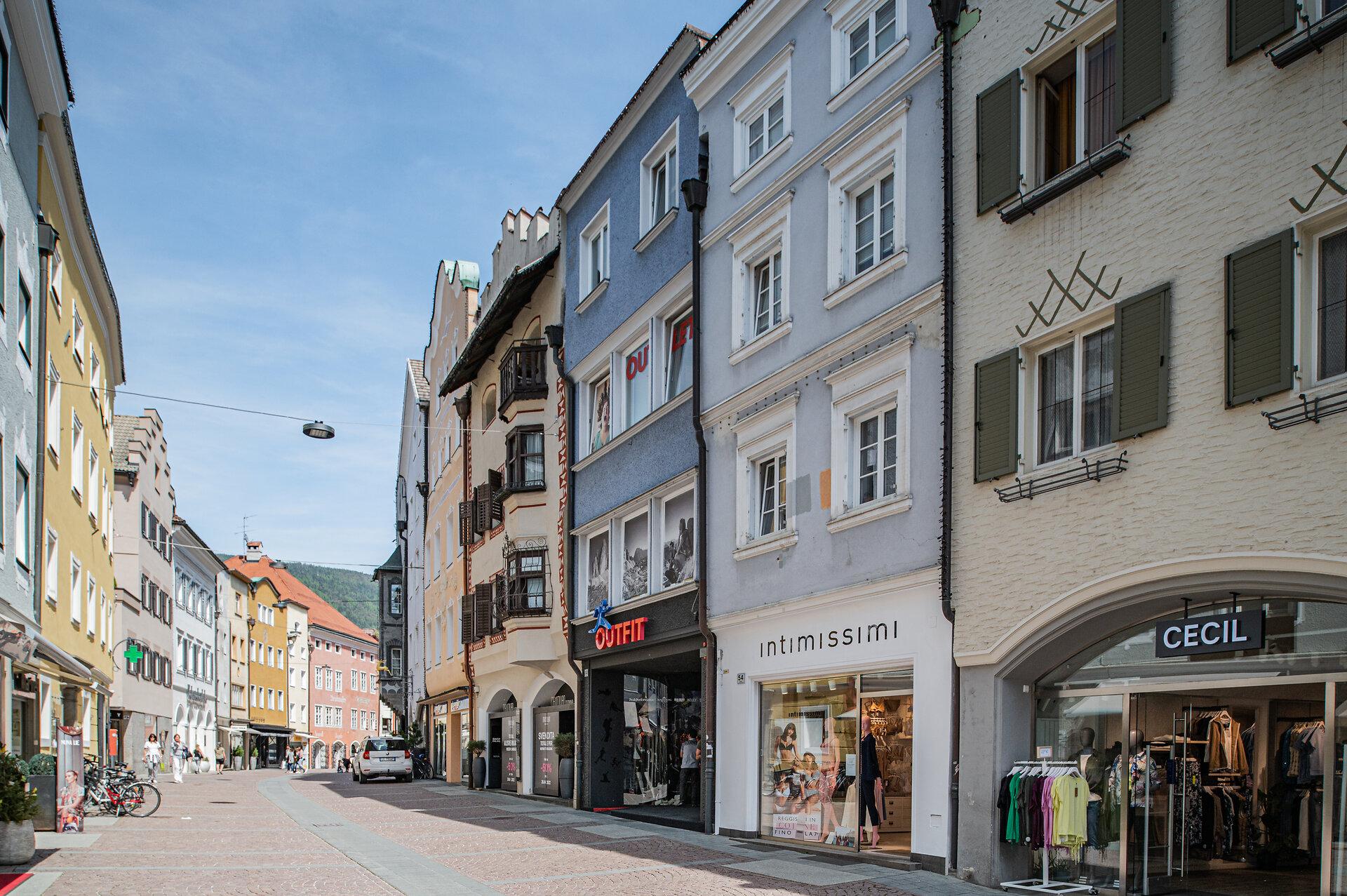
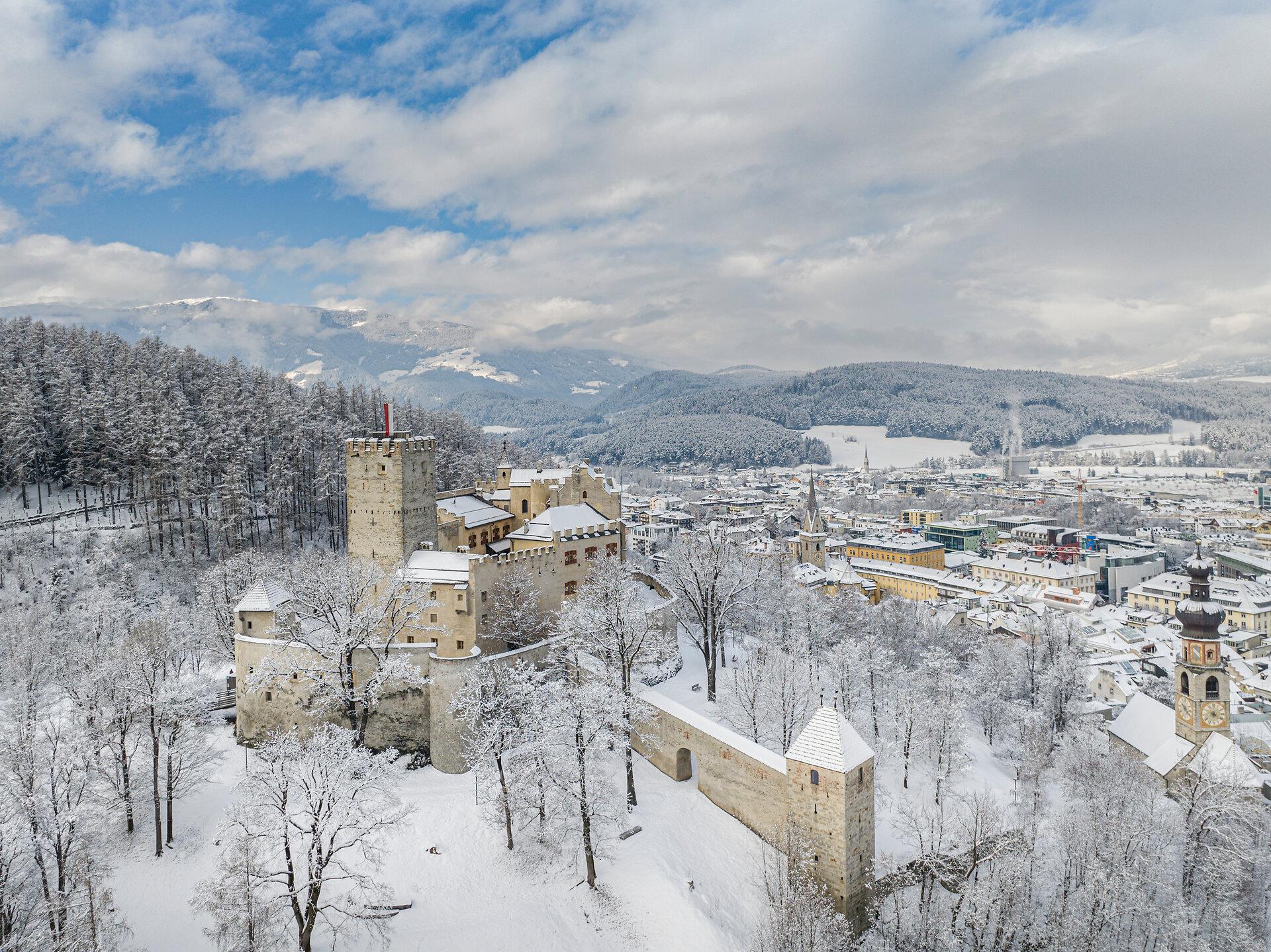
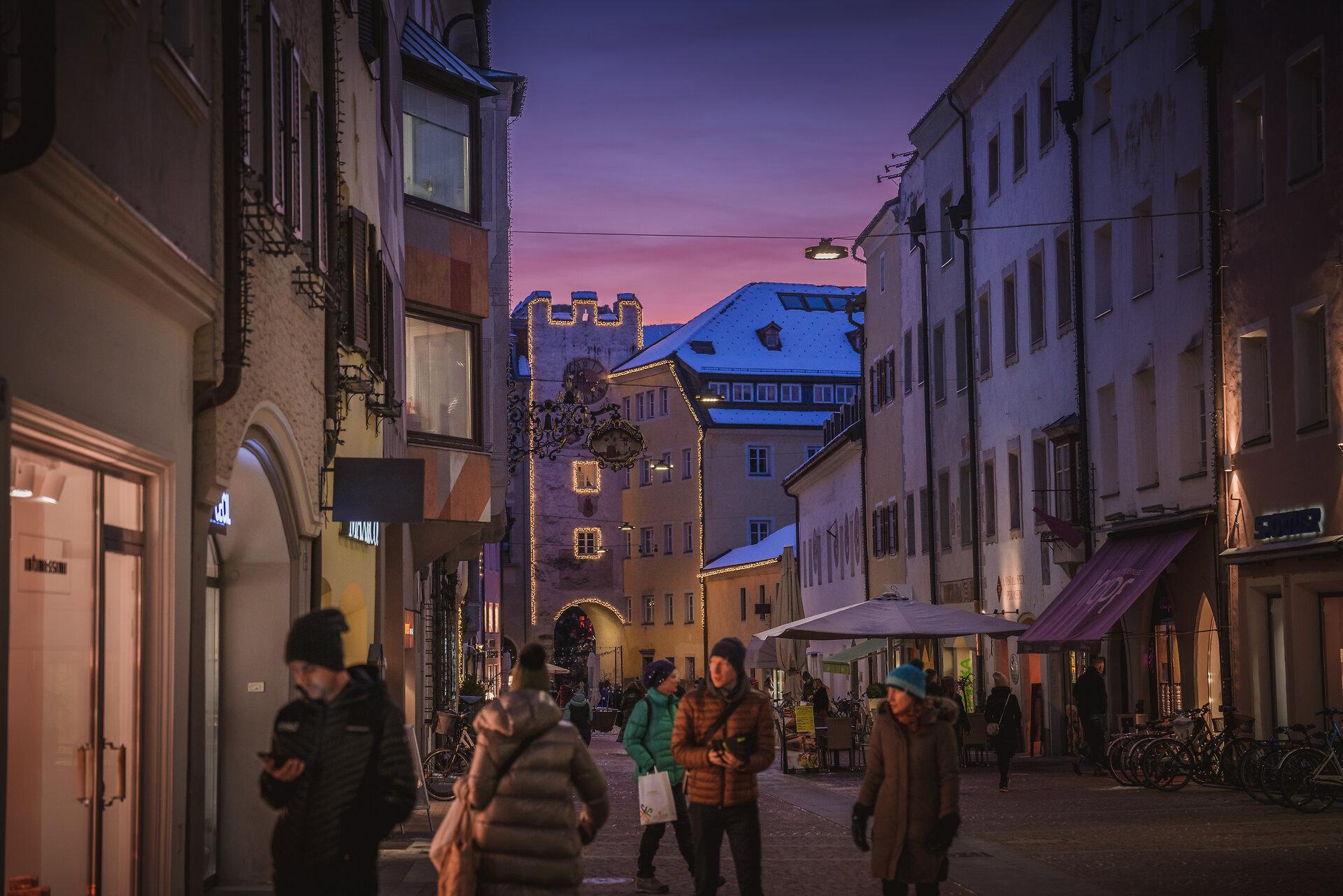
Bruneck – Anyone strolling down Stadtgasse in the morning passes beneath crenellated gables, bay windows, and pointed-arch portals, some of which have stood here since the 15th century. The castle towers above the rooftops, and Kronplatz awaits at the end of the street.
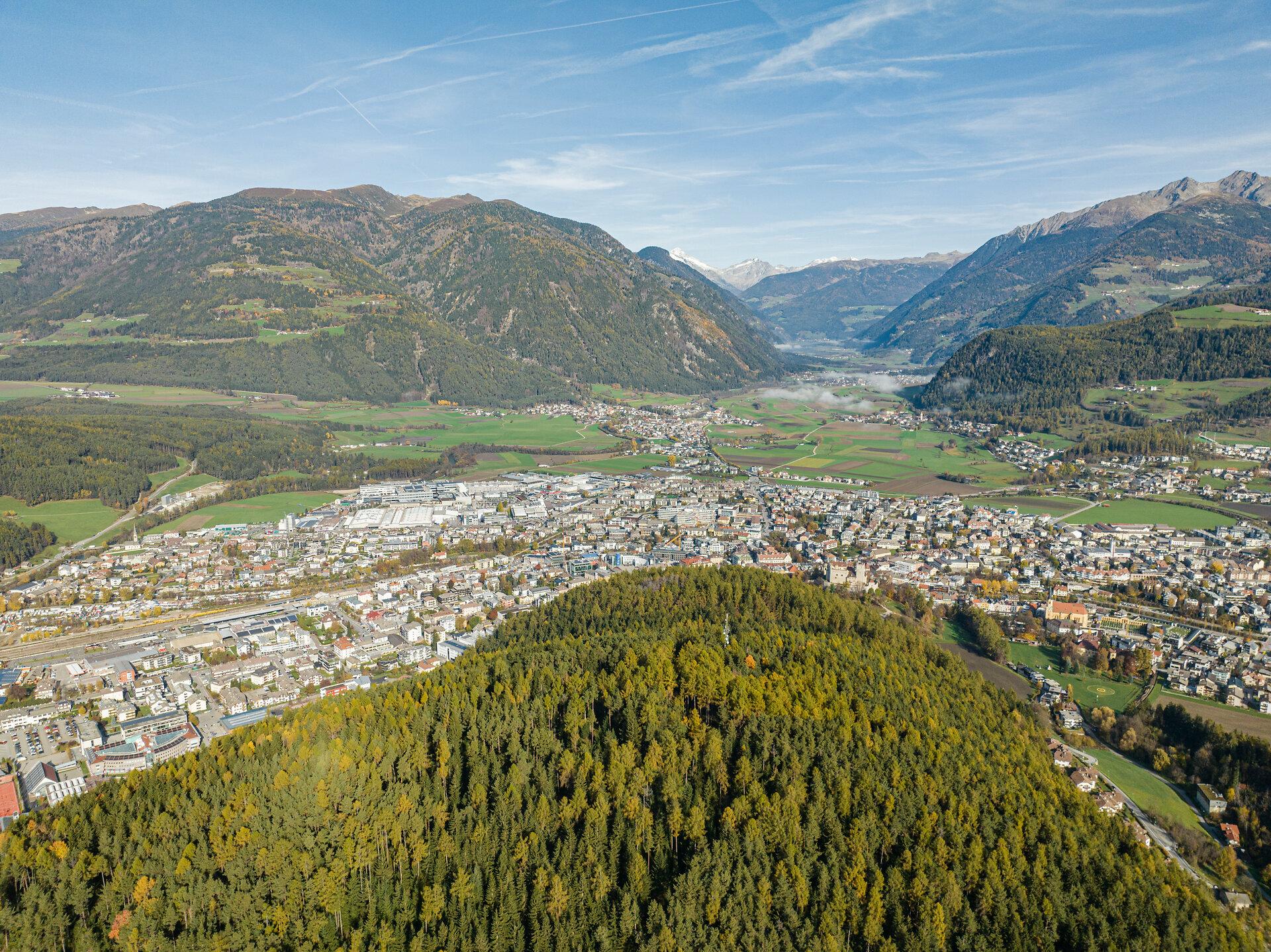
Bruneck's main attractions are all located close together: the Stadtgasse, the heart of the Old Town, and Bruneck Castle with the Messner Mountain Museum Ripa, the Rainkirche, the parish church in Oberragen, the Ursuline Church, the military cemetery at Kühbergl, and the Folklore Museum in Dietenheim. Bruneck With a population of 17,173, it is the main town of the Puster Valley in South Tyrol and is located at an elevation of 838 meters on the Rienz River.
In this guide, you'll find out how much the attractions cost and when they're open, how to get there without any stress, where to eat and stay, and why you're better off not visiting in November.
What makes Bruneck such a great travel destination?
Bruneck is a small town with a large surrounding area. You can explore the old town on foot in just a few hours, and yet you can reach Kronplatz, the Dolomites, or the Antholz Valley in no time. The tourism association describes Bruneck as the economic and cultural center of the Puster Valley. The town includes the districts of Reischach, St. Georgen, Stegen, Dietenheim-Aufhofen, Luns, and Amaten.
The Bishop of Brixen is considered the founder of the city Bruno von Kirchberg, who had the castle built around 1250. His image can still be seen on the Florian Gate today. According to the 2024 language group survey, 78.71 % of Bruneck’s residents belong to the German language group, 19.31 % to the Italian language group, and 1.98 % to the Ladin language group. So in everyday life, you’ll mainly hear German; place and street signs are bilingual.
Key facts for your visit: Brunico has a population of 17,173 and is located at an elevation of 838 meters. The castle was founded around 1250, and admission to the MMM Ripa costs €14. The nearest airport is Bolzano, about 80 kilometers away.
Bruneck by the Numbers
Six facts to help you get a sense of the city, ranging from its population and elevation to admission to the castle museum.
As of October 2026 · Population, elevation, and language groups according to the ASTAT municipal profile for Bruneck; prices according to the operators; other information according to bruneck.com.
- City strollers who like short walks
- Culture enthusiasts interested in Gothic art and mountain peoples
- Skiers and Hikers at Kronplatz
- Families who want to combine city life with the mountains
- Traveling in November
- Guests looking for big-city charm
- Night owls with plans to go clubbing
- Travelers who are planning only a short stop
How much do the attractions in Bruneck cost?
Most of the sights in Bruneck are free: the Stadtgasse, the churches, and the military cemetery are open to the public at no charge. You’ll have to pay an admission fee for three museums. The most expensive one is the MMM Ripa Admission to the castle is €14 for adults; the Folklore Museum in Dietenheim costs €9; the ECK Museum of Art In the Old Town, it's 5 €. If you're taking the train to Kronplatz, add the cost of the ride up the mountain.
Admission Prices in Bruneck
| Offer | Price |
|---|---|
| MMM Ripa, Adults | 14 € |
| MMM Ripa, students up to age 28 and those 65 and older | 12 € |
| MMM Ripa, children and adolescents ages 6 to 18 | 6 € |
| MMM Ripa, Family Ticket: 2 adults and children under 14 | 32 € |
| Dietenheim Folk Museum, Adults | 9 € |
| Folk Museum, reduced-price admission | 6.70 € |
| Folklore Museum, Family Ticket | 18 € |
| ECK Museum of Art, Adults | 5 € |
| ECK Museum of Art, ages 65 and older | 3 € |
| ECK Museum of Art, Under 26 | free |
| Kronplatz, round-trip from Reischach through November 8, 2026 | 36 € |
| Kronplatz, Single Upward Ride in Winter 2026/27 | 25 € |
As of October 2026 · Prices according to messner-mountain-museum.it, volkskundemuseum.it, eck.museum, and kronplatz.com.
Admission is free to the Stadtgasse and its city gates, the Rainkirche, the parish church, the Ursuline Church, the military cemetery at Kühbergl, the town hall square, and the Rienz Promenade. Children under six get in free at the Folklore Museum; at the ECK Museum, this even applies to everyone under 26.

LUMEN at Kronplatz: Museum of Mountain Photography at 2,275 meters
LUMEN at Kronplatz: Museum of Mountain Photography located in the old mountain station at 2,275 meters. Tour, temporary exhibitions for 2026/27, admission prices, hours of operation, directions, and the AlpiNN restaurant.
Which 7 sights in Bruneck are must-sees?
These seven places offer a glimpse of Bruneck, from its medieval alleyways to rural life in centuries past. Six of them are located in the Old Town or within walking distance; to visit the Folklore Museum, you’ll need to drive to the Dietenheim neighborhood.
1. Stadtgasse: The Medieval Heart
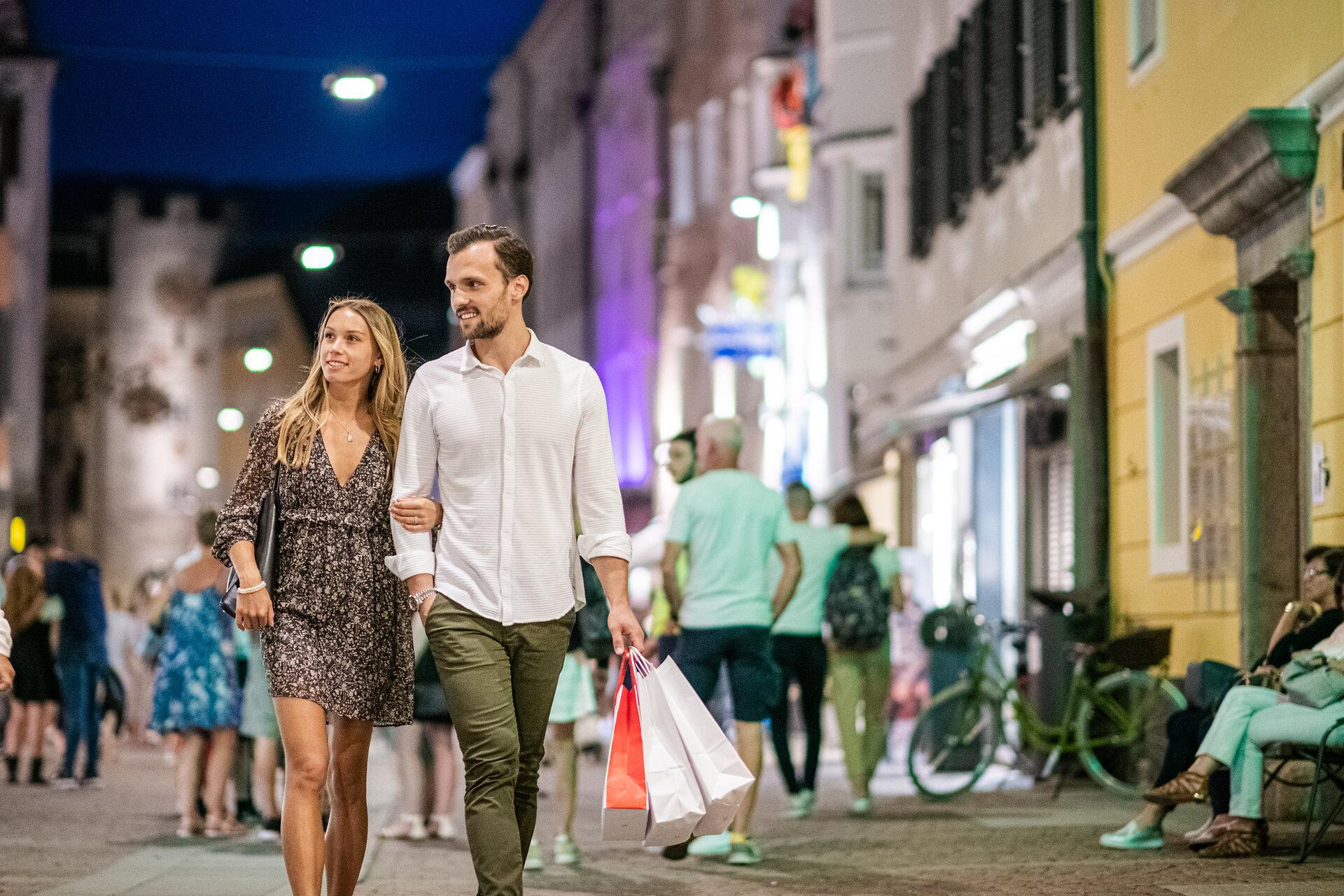
The Stadtgasse was once the entire town. Together with the castle and Hintergasse, it formed the walled center where the citizens of Bruneck lived. According to the tourism association, many of the houses have stood there since the 15th century: stately townhouses with crenellated gables, bay windows, window grilles, and pointed-arch portals. Today, the street is the Puster Valley’s shopping and strolling district, lined with shops, cafés, and pastry shops.
Pay attention to the city gates. The Florianitor, formerly known as „Lucke,“ features a painting by the South Tyrolean artist Rudolf Stolz: Saint Florian, the Bruneck coat of arms, and Bishop Bruno, the city's founder. The Ursuline Gate At the western entrance to the alley, a section was cut away in 1758 so that a large fountain could be transported into the city. Due to the Raintor you'll arrive in the Upper Town. In the past, the only path here was the „Totensteg,“ along which the deceased from Außerragen were carried to the cemetery.
2. Bruneck Castle with the MMM Ripa
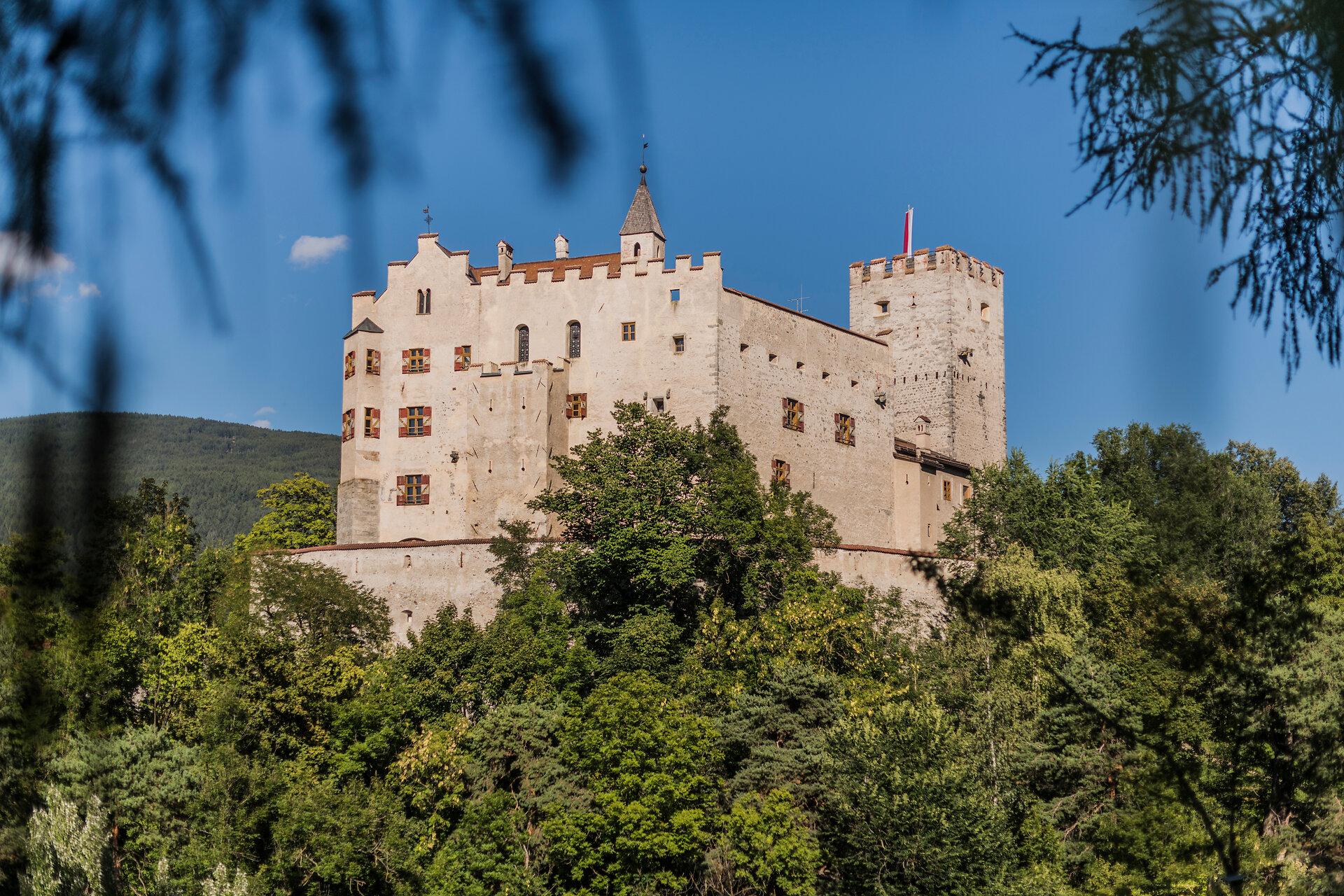
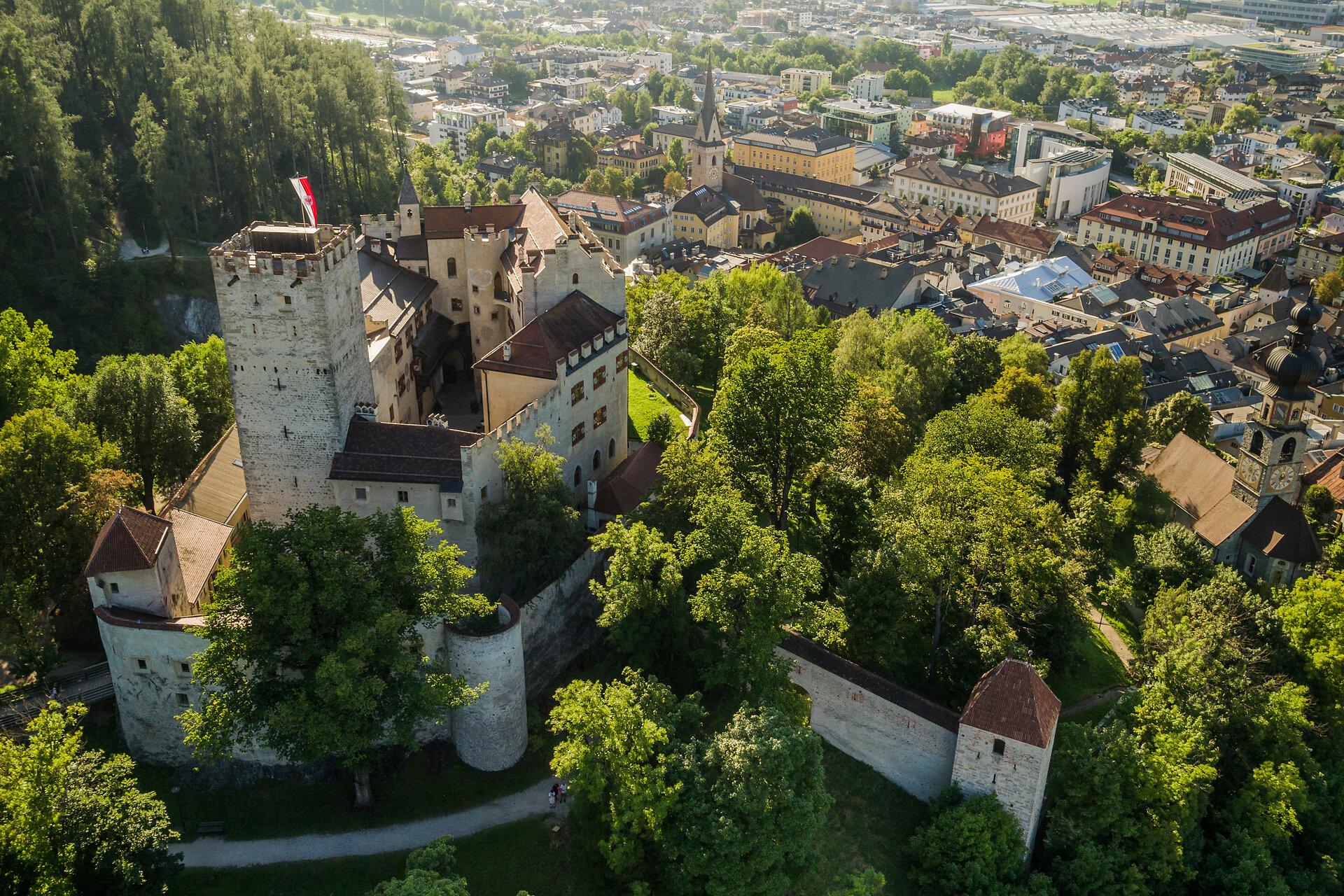
Towering over the Old Town is the castle, which Bishop Bruno of Kirchberg founded around 1250. For a long time, it served as the summer residence of the prince-bishops of Brixen. Today, it houses the Messner Mountain Museum Ripa, one of the mountain museums of the South Tyrolean extreme mountaineer Reinhold Messner. The MMM Ripa is dedicated to the mountain peoples of the world, from the Sherpa and the Inca to the Tibetans and Mongols. Through everyday objects, it illustrates how people in the mountains live, practice their faith, and make a living.
The museum is open daily except Tuesdays from 10 a.m. to 6 p.m.; last admission is at 5 p.m. The summer season runs from the second Sunday in May through the first Sunday in November—that is, from 2026 through November 1. In winter, the MMM Ripa is open from December 7, 2026, through April 25, 2027; it is closed on December 24 and 25. Admission is €14 for adults and €32 for families with children under 14.
A word of advice: If you just want to see the castle from the outside, the best view is from below, in the Old Town. The museum is especially worth a visit if you’re just as interested in the people of the mountains as you are in the mountains themselves. You can find more castles in the region in our overview of the Castles and Fortresses in South Tyrol.
3. The Rainkirche and the Upper Town
Right behind the Raintor stands the Rain Church. Around 1340, the Brunecker had it built Nikolaus der Stuck It was built. It is dedicated to Saint Catherine, whose life story is depicted in numerous frescoes both inside and outside the church: the wealthy heiress from Alexandria who was baptized, convinced 50 philosophers to embrace the Christian faith, and was ultimately executed.
The tower didn’t get its onion-domed spire until 1724, after the great city fire. Beneath it is a room where the Bruneck night watchman was on duty until 1972, and the balcony with the wrought-iron railing was part of his patrol route. The Rainkirche is open daily from 10 a.m. to 7 p.m.; admission is free.
4. The Parish Church in Oberragen
The Bruneck Parish Church in the neighborhood Oberragen This is already the fourth church to stand on this site. The first building was a small church in the village of Ragen dating from the 13th century; Bruneck has been its own parish only since 1610. Before that, the town belonged to the parish of St. Lorenzen.
Inside, the first thing that catches your eye are the vault frescoes by Georg Mader by a painter of the Nazarene School. The so-called Pacher Crucifix was not created by Michael Pacher It is not the original, but was built in the 16th century based on its design. Music lovers should take note of the Mathis organ: it was built in 1983 and, according to the tourism association, is the largest organ in South Tyrol. Embedded in the wall along the path to the cemetery is a gallery of portraits depicting the noble families of Bruneck. The church is open daily from 8 a.m. to 8 p.m.
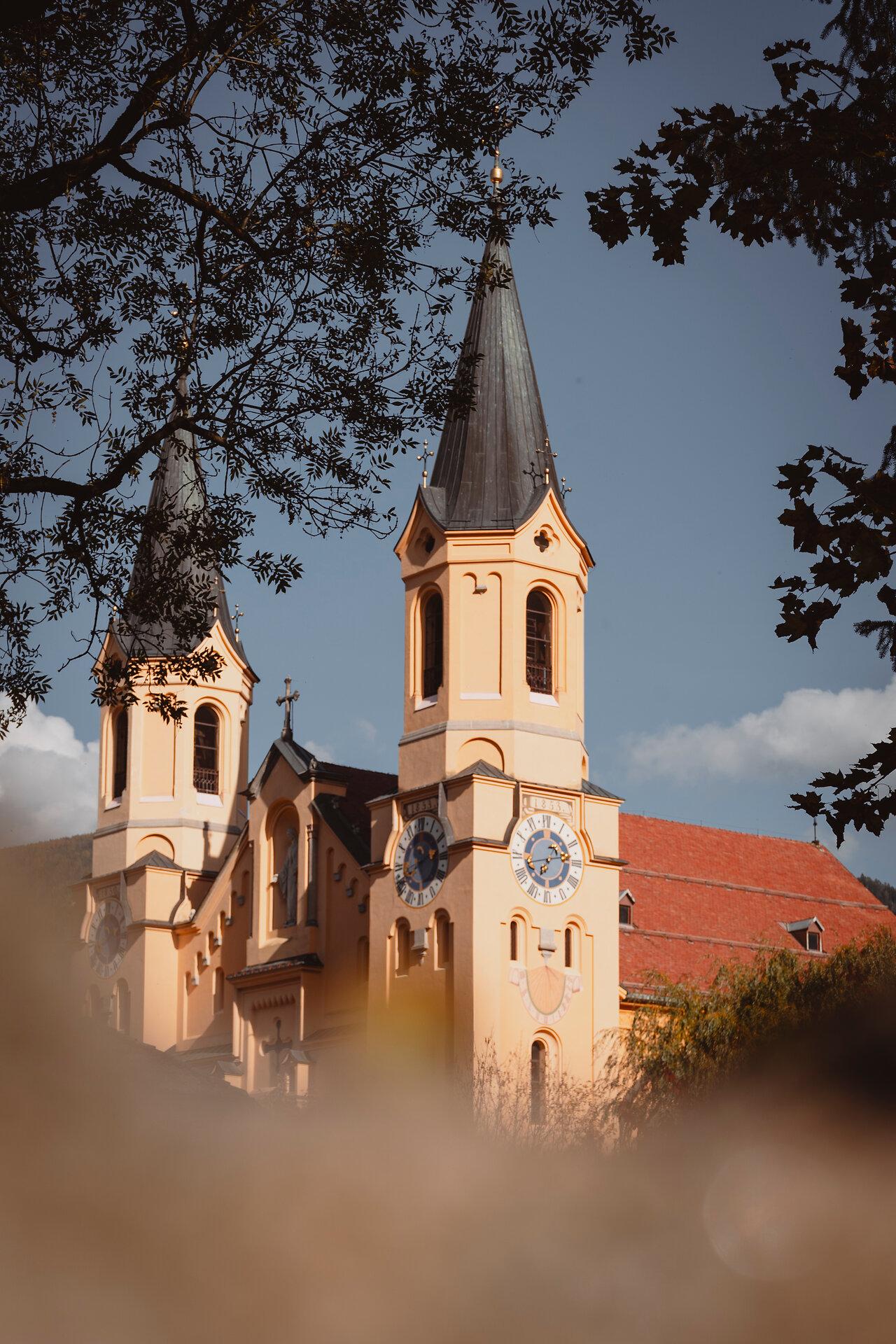
5. The Ursuline Church on Tschurtschenthaler Platz
Right at the western entrance to the Old Town stands the Ursuline Church. It was built in the Gothic style at the beginning of the 15th century; the frescoes are by Johannes von Bruneck Around 1420. The oldest part of the monastery is the crypt, dating from around 1410: an almost empty, quiet room that is all the more impressive for that very reason. The church is open daily from 8 a.m. to 8 p.m.
In front of the monastery lies the Paul-Tschurtschenthaler-Platz, which was redesigned between 2023 and June 2024. Concerts and events are held here, and during Advent, the Christmas market stalls are set up here.
6. The Military Cemetery at Kühbergl
One of the quietest places in the city is located in the forest. During World War I, there were several military hospitals in Bruneck, where many wounded and sick soldiers and prisoners of war died. The city provided the military with a plot of land at the Kühbergl, a wooded hill south of the city. The architect A. Bechtold An architect from Bregenz designed the cemetery so that it blends into the forest.
Buried here are 669 soldiers of the Austro-Hungarian Army, as well as 103 Russian, 13 Serbian, and 7 Romanian prisoners of war. The 77 Italian soldiers were transferred in 1932 to the mausoleum in Pocol reinterred; the 45 German soldiers were reburied at the Pordoi Pass. From World War II, 19 German soldiers, one Italian officer, and five residents of Brunico are buried here. A women’s committee tends to all the graves equally. Admission is free.
7. The Folklore Museum in Dietenheim
The South Tyrolean Provincial Museum of Folklore in the neighborhood Dietenheim is South Tyrol's oldest provincial museum. Its centerpiece is the Baroque Mair am Hof Manor, built at the end of the 17th century, whose stately rooms house the collections. Outside is an open-air area spanning about three hectares, featuring original farmhouses, craft workshops, and farm gardens. It depicts rural society, ranging from self-sufficient farmers and artisans to smallholders and day laborers.
The 2026 season runs from April 15 to November 9. The park is open Tuesday through Saturday, as well as on Sundays and holidays, from 10 a.m. to 5 p.m.; last admission is one hour before closing. It is closed on Mondays. Adults pay €9; a family ticket costs €18. Plan on spending two to three hours there—or a bit longer if you have children—since there’s plenty to discover in the outdoor area.
What other museums are worth visiting in Bruneck?
Located in the heart of the Old Town is the ECK Museum of Art, the former city museum. It opened in 1995 in the restored post office stables, where the stagecoach horses used to be kept. On the ground floor, a permanent exhibition features late Gothic works by Michael Pacher and his collaborator Friedrich Pacher and his students Simon and Veit von Taisten. The second focus is 20th-century graphic art; the museum also has a collection of approximately 7,500 bookplates. It is open Wednesdays through Saturdays from 10 a.m. to 4 p.m. during ongoing exhibitions. Admission is €5; admission is free for visitors under 26.
You can reach two other museums by train from Reischach: the LUMEN, the Museum of Mountain Photography, and that Messner Mountain Museum Corones, both located on the Kronplatz summit plateau. Together with the MMM Ripa in the castle, you can visit two Messner museums in Bruneck in a single weekend.
What else is worth seeing in Bruneck?
Town Hall Square: The large square between Graben and Europastraße was built in 2003 on the site where the bus station and prison used to stand. Slanted stelae from Paul Feichter feature poems by the South Tyrolean poet Norbert C. Kaser. The weekly market is held here on Wednesdays from 8 a.m. to 1:30 p.m. all year round.
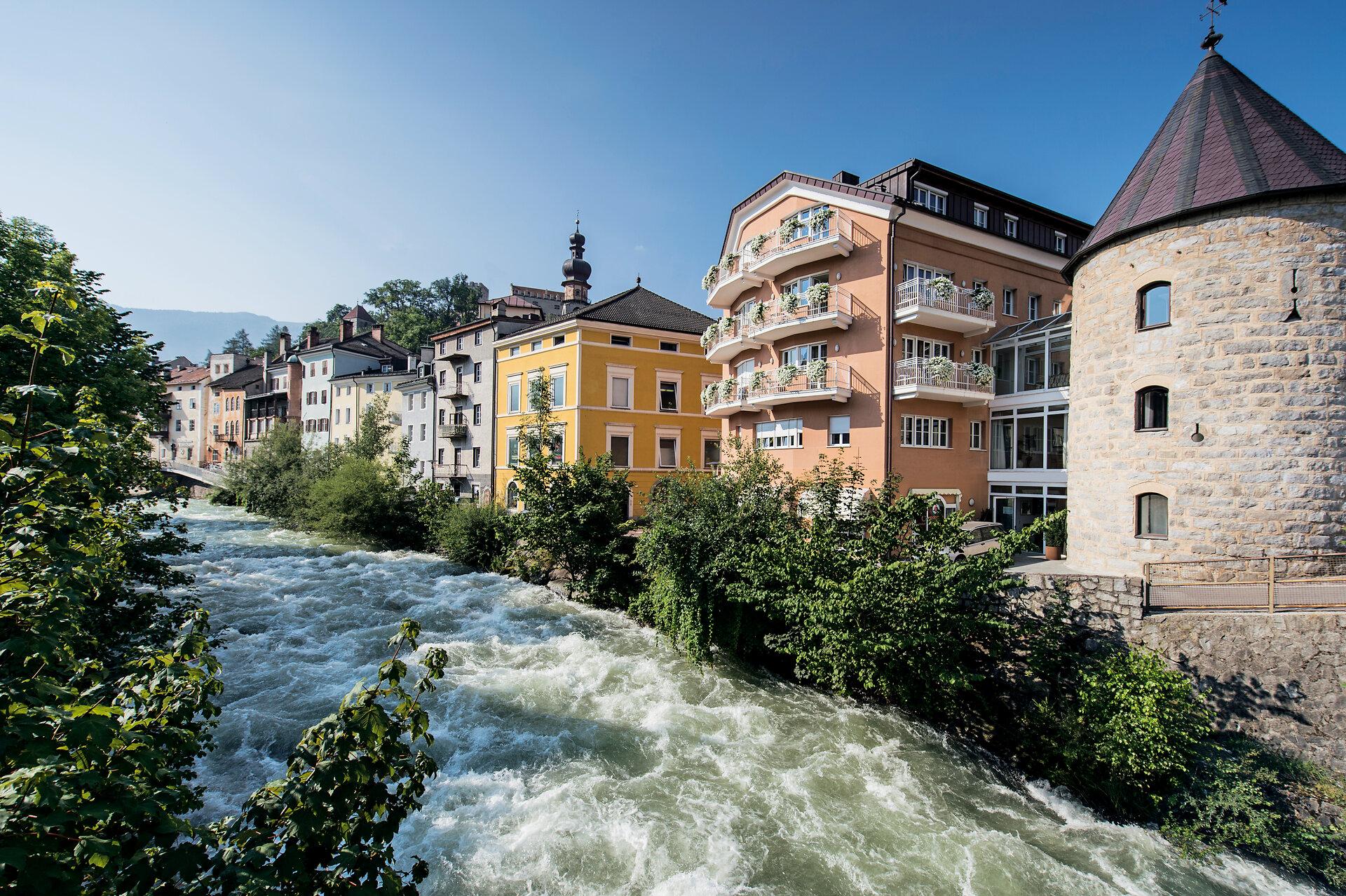
Rienz Promenade: The Puster Valley Bike Path and a walking trail—which is also suitable for strollers and wheelchairs—run along the Rienz River. Here you can see the back sides of the Old Town houses, with the river in the foreground.
Capuchin Garden: The Capuchin monastery was consecrated in 1628. The garden behind the church is now a peaceful oasis with a children's playground, ideal for a break between sightseeing stops.
How do you get to Bruneck?
By train: Long-distance trains operated by the Italian, Austrian, and German railways travel via the Brenner Pass to Franzensfeste. There, you'll transfer to the Pustertalbahn. There are two train stations in Bruneck: the main station and Bruneck Nord. To get to Kronplatz, get off at the neighboring town Percha ...where the train station has direct access to the gondola.
By airplane: The nearest airport is Bolzano, about 80 kilometers away. Innsbruck is about 105 kilometers from Bruneck, and Munich is a good 300 kilometers away. The shuttle departs from the Brixen and Bruneck train stations South Tyrol Transfer, For airport transfers, the tourism association recommends private transfer services.
By car: Take the A22 Brenner Highway until you reach the exit Brixen/Puster Valley and from there, about 30 kilometers on the state highway through the Puster Valley. From East Tyrol, you can get there via Lienz—about 40 kilometers. From November 15 through April 15, winter tires or snow chains are required on designated roads.
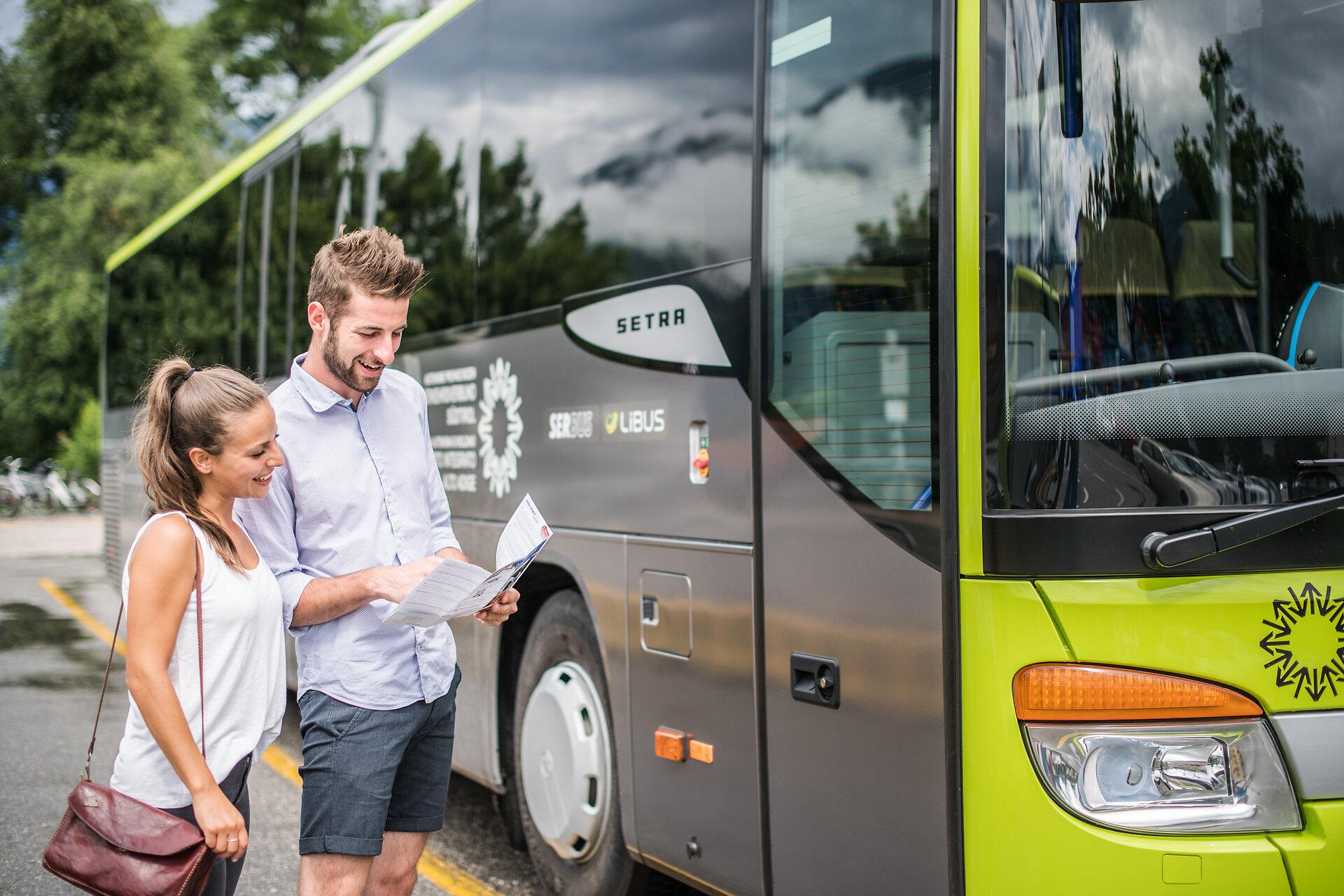
On site: You can explore the Old Town on foot. The Citybus 420.1 connects St. Georgen, the city center, and Reischach, where the gondola to Kronplatz begins. Guests staying at a participating business receive the Kronplatz Guest Pass for buses and trains.
It's best to park your car in one of the underground parking garages: Parking Rathaus, Parking NOBIS, or Gilmparkgarage. At Parking Rathaus, the first 30 minutes are free, and from there, you can reach Stadtgasse in just a few minutes.
What should you definitely try in Bruneck?
Puster Valley cuisine is down-to-earth and rooted in rural traditions. Be sure to try Tirtlan, deep-fried dumplings that, depending on the household, are filled with spinach and cottage cheese or sauerkraut. These include Schlutzkrapfen, crescent-shaped dumplings filled with spinach, served with brown butter and Parmesan. For a snack, there’s South Tyrolean speck and spicy Graukäse, a low-fat sour milk cheese from the Puster Valley and the Ahrntal.
If you want to buy local products, head to the weekly market on Rathausplatz on Wednesday mornings. In the fall, it’s worth checking out the Törggelen festivities at the farms around town—read more about it in our guide Kronplatz in the Fall.
Where's the best place to eat in Bruneck?
Bruneck is home to one of the most renowned establishments in Italian haute cuisine: The Atelier Moessmer Norbert Niederkofler has three Michelin stars. You’ll also find classic restaurants serving South Tyrolean cuisine, both in the old town and in the surrounding neighborhoods. Here are three places we recommend:
Three Restaurants in Bruneck
| Restaurant | Here's what you can expect |
|---|---|
| Atelier Moessmer Norbert Niederkofler 17 Walther-von-der-Vogelweide Street | Three Michelin stars. Creative Alpine cuisine based on the „Cook the Mountain“ philosophy, served in a historic villa set in a large park near the city center. A single tasting menu is served. |
| Krone Restaurant Oberragen 8 | A 17th-century vaulted cellar, once a stable, combined with modern architecture. South Tyrolean and Italian cuisine; hot meals served from 12:00 p.m. to 2:00 p.m. and from 5:30 p.m. to 11:00 p.m. |
| Oberraut Inn Amaten 1 | An inn in the Amaten neighborhood with a garden. Beef from our own cattle, game from our own hunting grounds, and herbs from our own meadows. |
As of October 2026 · Information based on the Michelin Guide and bruneck.com. Check opening hours and days off before your visit.
At Kronplatz, Norbert Niederkofler also cooks at the AlpiNN inside the LUMEN building. Anyone who wants to dine with a view of the Dolomites can combine a visit to the museum with lunch there.
Where's the best place to stay in Bruneck?
In the town itself, you’ll be close to shops, restaurants, and the train station. Reischach, at the foot of Kronplatz, is the better choice for skiers and hikers, since that’s where the gondola starts. According to state statistics, there were 246 lodging establishments in Bruneck in 2025, offering 4,491 beds. Three properties in different locations:
| Accommodations | Here's what you can expect |
|---|---|
| Hotel Royal Hinterhuber Reischach | A four-star hotel, quietly situated on the edge of the forest at the foot of Kronplatz, with ten hectares of private grounds, an indoor pool, a spa, and tennis and padel courts. |
| Kronplatz Hotel ANDER Bruneck, outskirts | A four-star hotel on the outskirts of town, just a few minutes' walk from downtown, featuring a year-round heated pool in the garden, a spa, and a restaurant serving regional cuisine. |
| Hotel Blitzburg European Route 10 | A three-star hotel in the city center, run by the Baumgartner family, featuring a sauna, steam room, underground parking, and a restaurant. The Old Town is just a short walk away. |
You can find more homes in the Puster Valley and throughout South Tyrol in our overview of the Hotels in South Tyrol.
When is the best time to visit Bruneck?
Sommer: Von Mitte Mai bis Oktober haben das MMM Ripa und das Volkskundemuseum gleichzeitig geöffnet, und die Bahnen fahren auf den Kronplatz. Bruneck ist dann Ausgangspunkt für Wanderungen und Radtouren, etwa auf dem Pustertaler Radweg entlang der Rienz.
Herbst: Der Oktober ist eine schöne Zeit für die Stadt. Die Wälder um Bruneck färben sich, Ende Oktober findet der Stegener Markt statt, und das Volkskundemuseum hat noch bis 9. November geöffnet. Die Kabinenbahn auf den Kronplatz fährt 2026 noch bis 8. November.
Winter: Vom 27. November 2026 bis 6. Januar 2027 läuft der Christkindlmarkt, die Skisaison am Kronplatz dauert vom 28. November 2026 bis 11. April 2027. Das MMM Ripa öffnet seine Wintersaison am 7. Dezember. Für den Wintersport findest du alles in unseren Guides zum Ski Vacation at Kronplatz and to the Cross-Country Skiing at Kronplatz.
Im November ist in Bruneck Zwischensaison. Das MMM Ripa schließt nach dem 1. November und öffnet erst am 7. Dezember wieder, das Volkskundemuseum nach dem 9. November, und auf den Kronplatz fährt nach dem 8. November bis zum Skistart keine Bahn. Die Altstadt mit Geschäften und Kirchen kannst du trotzdem besuchen.

What festivals and markets should you plan to visit in Bruneck?
Wochenmarkt: Jeden Mittwoch von 8 bis 13.30 Uhr stehen die Stände auf dem Rathausplatz, das ganze Jahr über.
Stegener Markt: Vom 26. bis 28. Oktober 2026 findet im Ortsteil Stegen der traditionelle Herbstmarkt statt, mit Wanderhändlern, Bauern, Handwerkern und Ausstellern aus Landwirtschaft und Lebensmittelhandel. Der Markt ist täglich von 8 bis 17 Uhr geöffnet, der Vergnügungspark von 10 bis 21 Uhr. Die Gemeinde zitiert dazu einen alten Spruch: Wer gut überwintern will, muss am „Stega Morscht“ gewesen sein.
Christkindlmarkt: Vom 27. November 2026 bis 6. Januar 2027 ist die Altstadt weihnachtlich geschmückt. Die Stände stehen am Graben, auf dem Paul-Tschurtschenthaler-Platz und in Oberragen. Geöffnet ist täglich von 10 bis 19 Uhr, an Heiligabend bis 14 Uhr, am 25. Dezember bleibt der Markt geschlossen. Der Markt ist als Green Event eingestuft, mit Holzständen und LED-Beleuchtung, für Kinder gibt es eine Holzkugelbahn.
An den Tagen des Stegener Markts und an den Adventswochenenden ist die Stadt voll. Parke dann in einer Tiefgarage oder komm gleich mit dem Zug.
Bruneck Christmas Market: Dates and Program
The Bruneck Christmas Market will take place from November 27, 2026, through January 6, 2027, in three areas of the Old Town.
What You Should Know About Bruneck
1. Bruneck ist klein. Die Altstadt hast du in zwei bis drei Stunden gesehen. Wer mehrere Tage bleibt, plant den Kronplatz, das Antholzertal oder die Dolomiten mit ein. Genau das macht die Stadt zum guten Standort.
2. Im November ist vieles zu. Museen und Bergbahnen machen Pause, bevor die Wintersaison beginnt. Komm lieber im Oktober oder ab Anfang Dezember.
3. Das MMM Ripa hat dienstags Ruhetag. Leg deinen Schlossbesuch auf einen anderen Tag. Das ECK Museum öffnet nur mittwochs bis samstags und nur während laufender Ausstellungen.
4. Der Kronplatz kostet extra. Im Herbst 2026 zahlst du für Berg- und Talfahrt ab Reischach 36 €. Lohnend wird das, wenn du oben wanderst, ins LUMEN gehst oder im Winter ohnehin Ski fährst.
5. Markttage und Advent bringen Gedränge. Zum Stegener Markt und am Christkindlmarkt kommen viele Besucher. Wer Ruhe sucht, schlendert unter der Woche am Vormittag durch die Stadtgasse.
Who would benefit from visiting Bruneck?
Families finden im Volkskundemuseum ein großes Freigelände zum Entdecken, im Kapuzinergarten einen Spielplatz und an der Rienz einen kinderwagentauglichen Weg.
Culture enthusiasts kommen mit gotischen Fresken, Pacher-Werken im ECK Museum und dem MMM Ripa im Schloss auf ihre Kosten.
Skifahrer und Wanderer wohnen in Bruneck oder Reischach direkt am Kronplatz und haben abends die Stadt vor der Tür.
Connoisseur reisen für das Atelier Moessmer mit seinen drei Michelin-Sternen an und bleiben für die Gasthäuser.
Cyclist starten an der Rienz auf den Pustertaler Radweg.

Combine Bruneck with Kronplatz, the Antholz Valley, and St. Vigil
Der Kronplatz ist der Hausberg von Bruneck. Im Sommer und Herbst wanderst du auf dem Gipfelplateau, im Winter fährst du Ski, und das ganze Jahr über lohnen die Museen auf 2.275 Metern. Alles dazu steht in unserem Guide Kronplatz in the Fall.
Östlich von Bruneck öffnet sich das Antholz Valley mit dem Biathlonzentrum und dem Antholzer See, im Winter ein Zentrum für Langlauf und Biathlon. Von St. Vigil in Enneberg auf der Südseite des Kronplatz geht es in den Naturpark Fanes-Sennes-Prags und auf die Fanes Plateau.


The 8 Fascinating Cities of South Tyrol! Discover the Top Attractions!
Bolzano, Merano, Bressanone, Brunico, Vipiteno, Glurns, Chiusa, and Laives: a look at South Tyrol’s 8 cities and their top attractions.
The sundial where you are the hand
Die meisten Besucher überqueren den Rathausplatz auf dem Weg in die Altstadt, ohne nach unten zu schauen. Dabei liegt nahe dem Rathaus eine Bodensonnenuhr des Künstlers Luis Seiwald. Stell dich auf den richtigen Punkt am Boden, und dein eigener Schatten zeigt die Uhrzeit an.
Schau dir danach die schrägen Stelen in der Mitte des Platzes an. Sie tragen Zeilen des Südtiroler Dichters Norbert C. Kaser. Zwei Minuten Umweg, die dir die Stadt von einer Seite zeigen, die kaum jemand kennt.
Our conclusion: Bruneck is the perfect mountain town
Bruneck verbindet eine mittelalterliche Altstadt mit einem der großen Skiberge der Dolomiten. Die Stadtgasse, das Schloss mit dem MMM Ripa, die Rainkirche, die Pfarrkirche und die Ursulinenkirche liegen nur wenige Gehminuten auseinander, und mit dem Soldatenfriedhof und dem Volkskundemuseum kommen zwei Orte dazu, die viel über die Geschichte der Region erzählen.
Das Budget bleibt überschaubar. Die meisten Sehenswürdigkeiten kosten nichts, und mit 14 € für das MMM Ripa, 9 € für das Volkskundemuseum und 5 € für das ECK Museum siehst du die drei wichtigsten Museen für 28 €.
Plane zwei Tage ein: einen für die Stadt, einen für den Kronplatz. Wer im Advent kommt, verbindet den Besuch mit dem Christmas Market in Bruneck. Einen Überblick über alle Städte der Region gibt dir unser Porträt der Cities of South Tyrol.
Karte: Bruneck, Südtirol
FAQ - Häufig gestellte Fragen zu Bruneck
Experiences & sights
Preise, Öffnungszeiten und Termine können sich ändern. Prüfe die Angaben vor deinem Besuch bei den Museen und beim Tourismusverein Bruneck.
Sources and Further Information
- Tourismusverein Bruneck: Sehenswürdigkeiten (accessed in October 2026)
- Messner Mountain Museum: MMM Ripa (accessed in October 2026)
- Südtiroler Landesmuseum für Volkskunde: Preise und Öffnungszeiten (accessed in October 2026)
- ECK Museum of Art: Tickets und Preise (accessed in October 2026)
- ASTAT: Gemeindeprofil Bruneck (accessed in October 2026)
- Gemeinde Bruneck: Stegener Markt (accessed in October 2026)
- Tourismusverein Bruneck: Christkindlmarkt (accessed in October 2026)
- Tourismusverein Bruneck: Anreise (accessed in October 2026)