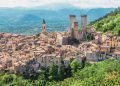
Cervo in Liguria is one of those villages that you will never forget. Perched on a hill overlooking the Ligurian Sea, this medieval gem with pastel-colored houses, winding, car-free alleyways and a baroque church that watches over the coast like a lighthouse. The village is officially one of the most beautiful places in Italy and combines culture, culinary delights and coastal magic in a very small space. If you want to experience the Ligurian Riviera away from mass tourism, Cervo is a destination with soul.

Cervo in Liguria: 7 reasons for Italy's most beautiful village
There are places in Italy that feel like a journey through time. Cervo in Liguria is just such a place. The small village with barely more than a thousand inhabitants lies on the Riviera di Ponente, nestled between olive groves and the deep blue Ligurian Sea. From the coastal road, the first thing you see is the mighty baroque façade of the church of San Giovanni Battista, which rises above the interlocking roofs like a stone crown. Below it, pastel-colored houses cling to the steep slope, crisscrossed by alleyways so narrow that even a cat could get lost in them. Cervo is one of the most beautiful villages in Italy - and anyone who has strolled through its cobbled streets will immediately understand why.
Yet Cervo is far more than just a pretty backdrop for vacation photos. Behind the pastel-colored facades lies an eventful history that tells of coral fishermen, Genoese nobles and Saracen raids. Today, the village attracts visitors with a world-famous chamber music festival, a lively artistic scene and Ligurian cuisine that is second to none. All this in an area of just three square kilometers. This article takes you through the history, the sights and the best experiences in Cervo - and explains why this village belongs on every travel list for Liguria.

From coral village to cultural jewel: the history of Cervo
The name Cervo is probably derived from the Roman goddess of hunting Diana - the Latin word „Cervus“ for deer points to the ancient roots of the town. The Romans were already familiar with the coast here: The legendary Via Aurelia, the ancient trade route from Rome to Gaul, runs directly through the municipality. After the end of the Western Roman Empire, Cervo became a Byzantine settlement and the first fortification walls were built as protection against marauding invaders.
In the Middle Ages, the village grew under the protection of the Counts of Clavesana, who built a mighty castle on the highest point of the hill in the twelfth century. The sea could be monitored from there, as the threat of Saracen pirates was omnipresent. In the fourteenth century, Cervo placed itself under the protection of the powerful Republic of Genoa and gained the status of an independent municipality. However, the real heyday began in the sixteenth century, when coral fishing became the most important economic sector. The fishermen of Cervo traveled as far as Corsica and Sardinia to harvest the coveted red coral, which was then processed in Liguria. The wealth that this trade brought is still visible today: the magnificent baroque church of San Giovanni Battista was financed with money from the coral fishermen and is therefore affectionately nicknamed the „Church of the Coral Fishermen“.
After the fall of the Republic of Genoa, Cervo first became part of the Ligurian Republic, then fell under the rule of Napoleon’s French Empire, and finally became part of the unified Kingdom of Italy in 1861. Despite all these upheavals, the village has preserved its medieval character like almost no other place on the Ligurian coast. Today, Cervo is not only a member of the association „I borghi più belli d’Italia,“ but was even named the „Borgo dei Borghi“—the most beautiful village among the most beautiful villages—by a well-known Italian television show in 2016. Another member of this select list lies a good hour’s drive further east along the Riviera: the Saracen village Borgio Verezzi home to Italy's most colorful stalactite caves.

Places of interest in Cervo: what not to miss
Anyone visiting Cervo should take their time - not because the village is so big, but because there is a new detail hidden around every corner. The undisputed centerpiece of the village is the Church of San Giovanni Battista, which was built between 1686 and 1734 in the Baroque style. Its towering façade dominates the townscape and seems to rise directly from the sea in certain light. Inside, the elaborate stucco work, frescoes with biblical scenes and a magnificent high altar made of marble and gilded elements are impressive. The vaulted ceiling tells the story of the life of John the Baptist in elaborate paintings. This sight alone is worth the climb up the steep alleyways.
Above the church sits the Castello dei Clavesana, the medieval castle from the twelfth century, which was once reinforced with three round towers. Today it houses the Ethnographic Museum of Western Liguria, which is dedicated to the working and seafaring traditions of the nineteenth century. A permanent exhibition is dedicated to the everyday life of Ligurian women between 1850 and 1950 - with handmade dresses, lace and dolls in historical costumes. The castle terrace offers a breathtaking view over the entire coastline as far as the Gulf of Diano Marina.
Below the castle, it is worth taking a look at the Oratorio Santa Caterina, a small medieval church that nestles close to the fortifications for reasons of space. Further down the slope, you pass the Mezzodì bastion, a fortified tower from the mid-sixteenth century, which once protected the coast from Turkish barbarian raids and is now used for cultural events. Numerous Palazzi from the seventeenth and eighteenth centuries line the streets and bear witness to the former prosperity of the coral fishing families. Palazzo Viale, Palazzo De Simoni and Palazzo Arimondo are particularly impressive, with their elegant façades and frescoes bearing silent witness to a glorious era.

Chamber music under the stars: Cervo's famous festival
What has made Cervo famous beyond the borders of Liguria is its International Chamber Music Festival. Since 1964, when the Hungarian violinist Sándor Végh launched the concert series, the forecourt of the Coral Church has been transformed into a unique open-air stage every summer. On several evenings in July and August, works by Tchaikovsky, Schubert, Chopin and other masters are performed by international soloists and ensembles. The natural acoustics of the church forecourt, the view of the moonlit sea and the scent of salt water and pine trees create an atmosphere that you won't find anywhere else.
The festival has long since achieved cult status and attracts music lovers from all over Europe. Tickets can be booked online in advance, and on concert evenings a shuttle bus runs from the large parking lot in the valley up to the upper town. In addition to chamber music, Cervo has also established itself as a literary meeting place: The „Cervo ti Strega“ event regularly brings the finalists of the prestigious Italian literary prize Premio Strega to the stage. In the summer months, jazz concerts and other cultural events take place in Piazzetta Dante, filling the village with life late into the night.

Beaches, hiking trails and nature around Cervo
Even though Cervo is primarily perceived as a cultural village, it has a lot to offer on the coast. The most famous beach is the Spiaggia dei Corallini directly below the old town - a narrow strip of pebbles with turquoise water that looks as if someone had designed it for a movie set. The stretch of beach Bagni L'Angolo is particularly popular with families: there are sun loungers, parasols and a small beach bar where you can end the day with an Aperol Spritz. Other small bathing bays stretch along the coast and are perfect for swimming and snorkeling in crystal-clear water.
Those who prefer to keep their feet on solid ground will find a rural idyll in the Ciappà Nature Park above the village. From here, there is a fantastic view of the Gulf of Diano, and hiking trails lead through olive groves and pine forests up to Colle Castellaretto. Up there you will find the remains of pre-Roman walls that bear witness to the ancient settlement of the hill. The long Santo Stefano coastal cycle path connects Cervo with the neighboring villages and leads along a flat, well-maintained route to Sanremo - perfect for a relaxed cycle tour along the Riviera. And the neighboring towns Alassio with its long sandy beach and Diano Marina with its lively markets are ideal destinations for a day trip.

Mountain biking around Cervo: trails with a sea view
What many people don't know: The hills around Cervo have become a real insider tip for mountain bikers in recent years - far away from the crowded mecca of Finale Ligure. Creative freeride trails have been built into the terraced slopes above the village, which inspire with banked turns, smaller jumps and flowing passages through olive groves and maquis vegetation. The legendary „Antenna” trail starts above San Bartolomeo al Mare and ends directly in Cervo. It is particularly famous for the „Salto nel Blu” ski jump, which takes its name from the fact that it looks like you are jumping directly into the Ligurian Sea. Other routes lead over the Colle di Cervo into the hinterland to Laigueglia, where there is an area with countless downhill options that is reminiscent of a bike park.
The trails offer typical Ligurian terrain: they are stony, natural and sometimes loamy and grippy, sometimes dry and sandy. They are far rougher and more technical than the built flow trails north of the Alps. A particularly attractive circular tour leads from the village via the Strada Consorziale San Bernardo up to the top of the ridge and through huge olive groves to Villa Faraldi. The tour is around thirty kilometers long in total, there are almost a thousand meters of altitude to conquer and the panorama extends from the coast far into the Piedmont hinterland. In Diano Marina, the neighboring town, specialized bike hotels such as the Hotel Raffy Accommodation with workshop, rental and guided tours. Whether you have your own mountain bike or e-bike, the region around Cervo is quietly and steadily growing into one of the most versatile single trail areas in Liguria. Here, dolce vita and adrenaline kicks are just one descent away from each other.

Ligurian cuisine: enjoyment between the sea and olive groves
Ligurian cuisine is considered by connoisseurs to be one of the most refined and at the same time most honest traditions in Italy, as it creates an incredible depth of flavor with few but excellent ingredients. In the winding alleyways of Cervo, this culinary heritage is condensed in a fascinating way. The golden thread of regional gastronomy is undoubtedly the oil of the Taggiasca olive. This small, inconspicuous fruit produces a mildly fruity, almost sweet oil that has been painstakingly extracted from the terraces in the hinterland of Cervo for centuries. It serves not only as a mere fat, but also as a refining base for almost every dish. Together with the sun-kissed basil of the Riviera, hand-picked pine nuts and tangy cheese, it is used to make the world-famous Pesto alla Genovese, whose fresh aroma often wafts through the steep stairways of the village. If you want to start the day in style, reach for the focaccia: the traditional flatbread is baked in the local bakeries in the early hours of the morning with plenty of olive oil and coarse sea salt and tastes best when it is served steaming directly onto your hand.
The immediate proximity to the Ligurian Sea naturally also shapes the menus of the local gastronomy. The catch of the day sets the rhythm in the kitchens, where sea bream, sea bass and red prawns are prepared with the utmost respect for their natural flavor. Whether puristically grilled, gently steamed in white wine or as crispy fritto misto - freshness always remains the main protagonist. Ristorante San Giorgio, which is known for its sophisticated interpretation of traditional recipes and reinterprets Ligurian classics with modern finesse, is a special place to go for gourmets. Just a few steps away, the Osteria San Giorgino offers an authentic, somewhat more informal alternative, where the handmade ravioli and typical meat dishes of the hinterland are particularly impressive. If you want to let your gaze wander over the wide horizon, Ristorante Serafino right on the coastline is the ideal place. On the terrace overlooking the cliffs, you can enjoy freshly caught fish and homemade pasta variations as well as artisan ice cream, the perfect way to round off an evening at sunset. Before leaving Cervo, it's worth making a detour to the small delicatessen stores in the old town to take home a piece of Ligurian quality of life with pickled Taggiasca olives or a local Vermentino.
Read more about theTopic




Where to stay in Cervo: hotels and vacation rentals
Although Cervo has retained its medieval structure and at first glance looks like a habitable museum, the historic walls conceal a surprisingly diverse selection of accommodation. Those who want to experience the vibrant life of the Borgo up close and personal in the lovingly restored vacation apartments in the old town. An outstanding example of this is the L'Antica Dimora. This historic domicile in the heart of the village is particularly appreciated by guests for its authentic atmosphere, which combines antique furnishings with modern, personal service. The accommodation is also deeply rooted in the historical fabric La Finestra sul Borgo, From here, the view sweeps over the interlocking rooftops down to the deep blue Ligurian Sea, while the beach is just a few minutes' walk away through the steep alleyways.
Travelers who prefer the gentle sound of the surf as a lullaby tend to head towards the coastline. The accommodation Mimosa Blu scores points here with its exposed location directly on the water and even has its own stretch of beach, which is a real privilege in the rocky bay of Cervo. Those looking for peace and space, on the other hand, will find it in the Eco del Mare a hideaway just outside the immediate center. The complex is famous for its terraced garden landscape and panoramic location, which offers an unobstructed view of the entire village ensemble.
Lovers of nature-oriented travel are also catered for, as the immediate surroundings of Cervo are home to some of the most beautiful campsites in the region. Especially the Camping del Mare and the Camping Lino have developed a regular guest status over decades, as they offer pitches right by the sea. However, it should be noted that Cervo is no longer an insider tip; especially in the high season between June and September, the village turns into a sought-after retreat. Early booking is therefore essential to secure one of the coveted pitches with a sea view.

Light, shadow and pastel: a guide to the best photo opportunities in Cervo
Cervo presents itself to the viewer as a total work of art that looks like a carefully composed oil painting from almost every angle. If you want to capture the village in all its architectural splendor, the most iconic viewpoint by far is along the Via Aurelia coastal road. From there, the famous pyramid shape of the village is revealed: the interlocking, pastel-colored facades literally stack on top of each other, culminating in the magnificent baroque facade of the Coral Church. This motif is one of the most photographed views in all of Liguria and perfectly captures the essence of the Riviera. The forecourt of the church of San Giovanni Battista, on the other hand, conveys a completely different, almost floating feeling. Situated high above the cliffs, a spectacular panorama opens up over the azure Ligurian Sea. Especially in the evening hours, when the sun sinks behind the hills and bathes the sky in shades of purple and gold, this place becomes a stage for light artists.
But the true soul of Cervo is often only revealed in the details of the winding old town streets, where a new little treasure lurks around every bend. It is the bright cascades of bougainvillea that form a stark contrast to the centuries-old stone steps, or the characteristic, half-open wooden doors in weathered blue that suddenly reveal a view of the glistening water. As dusk falls, the historic lanterns transform the village into a golden labyrinth of light and shadow, which is particularly attractive for long exposures. The photogenic discovery tour comes to a far-reaching conclusion on the castle terrace of the Castello dei Clavesana. From this highest point, not only can the entire Gulf of Diano Marina be captured in a wide-angle shot, but with particularly clear visibility and the right atmospheric conditions, the silhouette of Corsica can even be seen on the horizon.

Reach Cervo with ease: Everything you need to know about access, parking and mobility
The journey to Cervo takes you to the heart of the Riviera di Ponente in the province of Imperia and is easy thanks to the excellent connection to the A10 highway - also known as the Autostrada dei Fiori - is very straightforward. If you are traveling by car from Genoa or from the French border near Ventimiglia, take the strategically located San Bartolomeo al Mare exit. From there, a short provincial road winds its way directly to the foot of the village in just a few minutes. While the journey from Nice takes around an hour, travelers from Genoa should allow around an hour and a half. There is an important note for rail travelers: the old Cervo train station, located directly by the sea, was closed as part of the relocation of the line. Trains now stop at the modern station Diano, which is located around seven kilometers inland. From there, regular bus lines or cabs connect the train station with the coastal town, so traveling by rail remains a charming option. Those flying in from further afield have the choice between Nice and Genoa airports, both of which are around 80 to 100 kilometers away and allow for flexible onward travel by rental car.
Once you arrive in Cervo, one golden rule applies: the historic center is a strictly car-free zone. The medieval alleyways are so narrow and steep that only the agile, three-wheeled Piaggio Apes - the unofficial emblem of Italian logistics - are allowed to circulate there. Visitors leave their vehicles in the designated parking areas in the valley below the village or along the Via Aurelia coastal road. As the route to the upper town is exclusively via historic stone steps and cobbled ramps, sturdy, comfortable footwear is far more than just a recommendation - it is a prerequisite for an enjoyable exploration tour. There is one convenient exception during the famous summer evenings of the international chamber music festival: on concert days, a special shuttle bus runs from 7:30 p.m., taking guests in comfort from the valley parking lot up to the church square. Active vacationers also get their money's worth, as the famous coastal cycle path Pista Ciclabile runs in the immediate vicinity and offers safe parking facilities at the foot of the village to make the steep ascent on foot.

Our conclusion: Cervo, a timeless jewel that touches the soul
Cervo belongs to that rare category of destinations that you don't just visit, but take home with you in your heart. The medieval village is far more than a mere collection of historical stones; it is a living distillation of what has always made the Ligurian Riviera so fascinating. In a very small space, thousands of years of history, which can be felt in every cool alleyway, merge with a vibrant cultural scene, the shining centerpiece of which is the legendary international open-air chamber music festival. Coupled with a culinary scene that celebrates the purism of high-quality regional ingredients and panoramic views that take in the azure blue of the Ligurian Sea, the result is an overall experience that appeals to all the senses in equal measure.
However, what sets Cervo so pleasantly apart from many other coastal towns in Italy is its deep-rooted authenticity. Here you will look in vain for the usual tourist mass products or noisy souvenir stalls. Instead, the village retains a proud, almost aristocratic character: the shady corners are home to genuine artisan workshops, owner-run galleries and osterias where the culinary tradition of the Nonna is not just a marketing slogan, but part of everyday life. Whether as an inspiring day trip from the neighboring towns of Alassio or Diano Marina, as a cultural weekend retreat or as a fixed anchor point during a longer vacation on the Riviera di Ponente - Cervo easily asserts its place on any demanding itinerary. When you finally climb the last steep step to the church square, feel the warm wind on your skin and hear the sacred silence or the distant sounds of a cello, you realize that you have found one of those magical places that you will want to return to again and again throughout your life.

Map: Cervo, Liguria

FAQ: Cervo, Liguria, Italy
What is the best way to get to Cervo?
Cervo can be reached via the A10 highway (exit San Bartolomeo al Mare). There is also a train station on the Genoa-Ventimiglia line. The nearest airports are Nice and Genoa, both around 80 kilometers away.
When is the best time to visit Cervo?
The main season is from June to September with warm weather and the chamber music festival in July and August. Spring and fall are ideal for hiking and relaxed sightseeing without the hustle and bustle.
Are there parking facilities in Cervo?
The old town is car-free. Parking is available outside the historic center in the valley. There is a shuttle bus to the upper town on concert evenings.
Is Cervo also suitable for families with children?
Yes, Cervo is well suited to families. The pebble beaches offer shallow water, there is a beach bar and the nearby seaside resort of Alassio has a long sandy beach. However, you should bear in mind that the steep alleyways can be challenging with baby carriages.

Top accommodations in Cervo, Liguria
Video: Cervo, Liguria
Experiences & sights
Note: Disclaimer - Italien.news is not the owner or organizer of the sights, accommodations and events published here and therefore not responsible for program changes, cancellation of the event and possibly incorrect information. The editorial team of Italien.news always endeavors to provide detailed and accurate information. However, it is possible that events, attractions, etc. may be changed and not updated promptly. Exact details of dates, times and programs can be obtained directly from the owner of the attractions and accommodation.
Please also check the website or social media of the attractions and events for updates before you travel! Our blog articles contain our personal recommendations in the form of affiliate links. If you book or buy something via the links or simply click on them, we receive a small commission. This does not change the price for you at all. Content and texts © Italien.new & KI / Photos © Canva.com / shutterstock.com / Unsplash.com / Pixabay.com / Pexels.com / Others. Please also visit our Italy Shop!