
The miracle of Rome: Your guide to the Pantheon
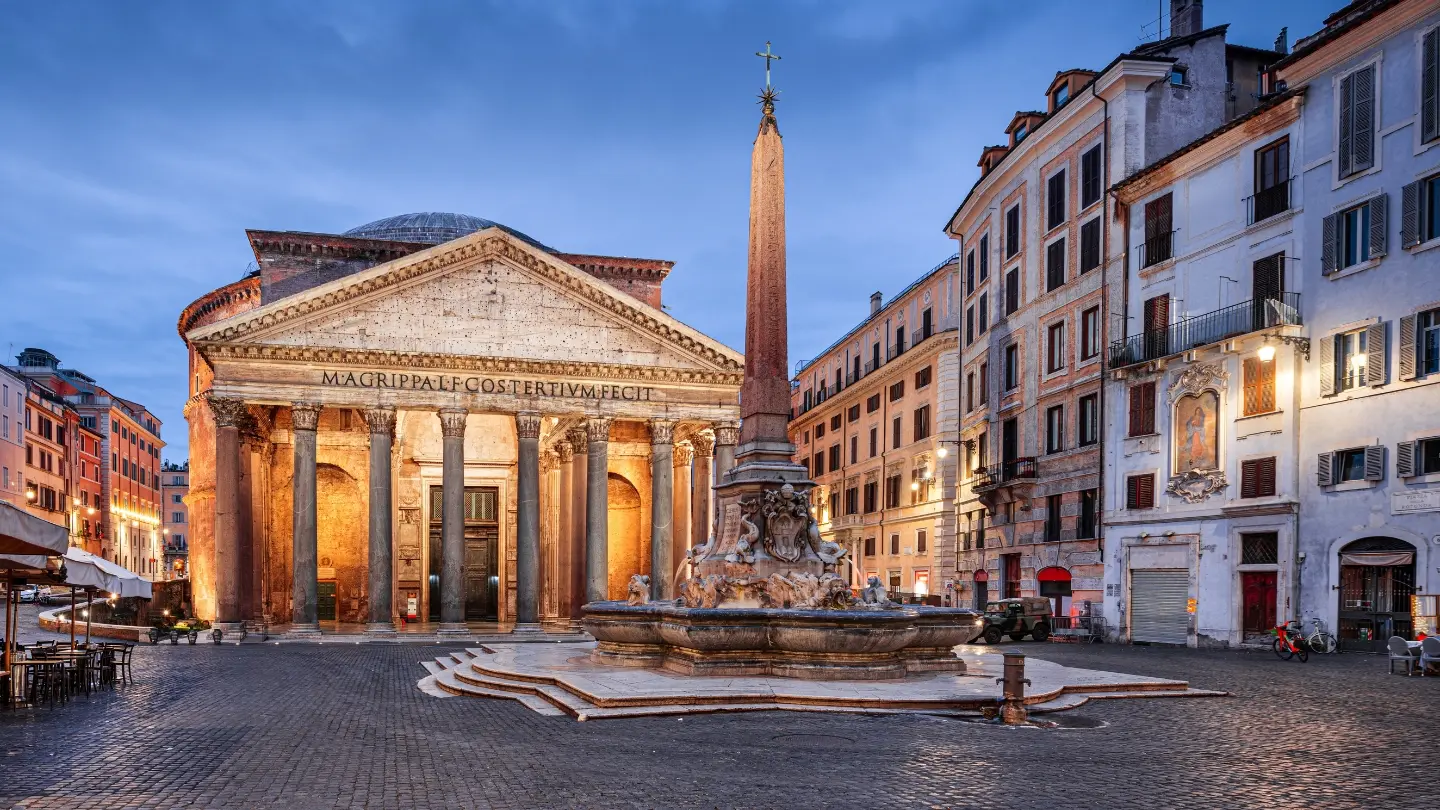
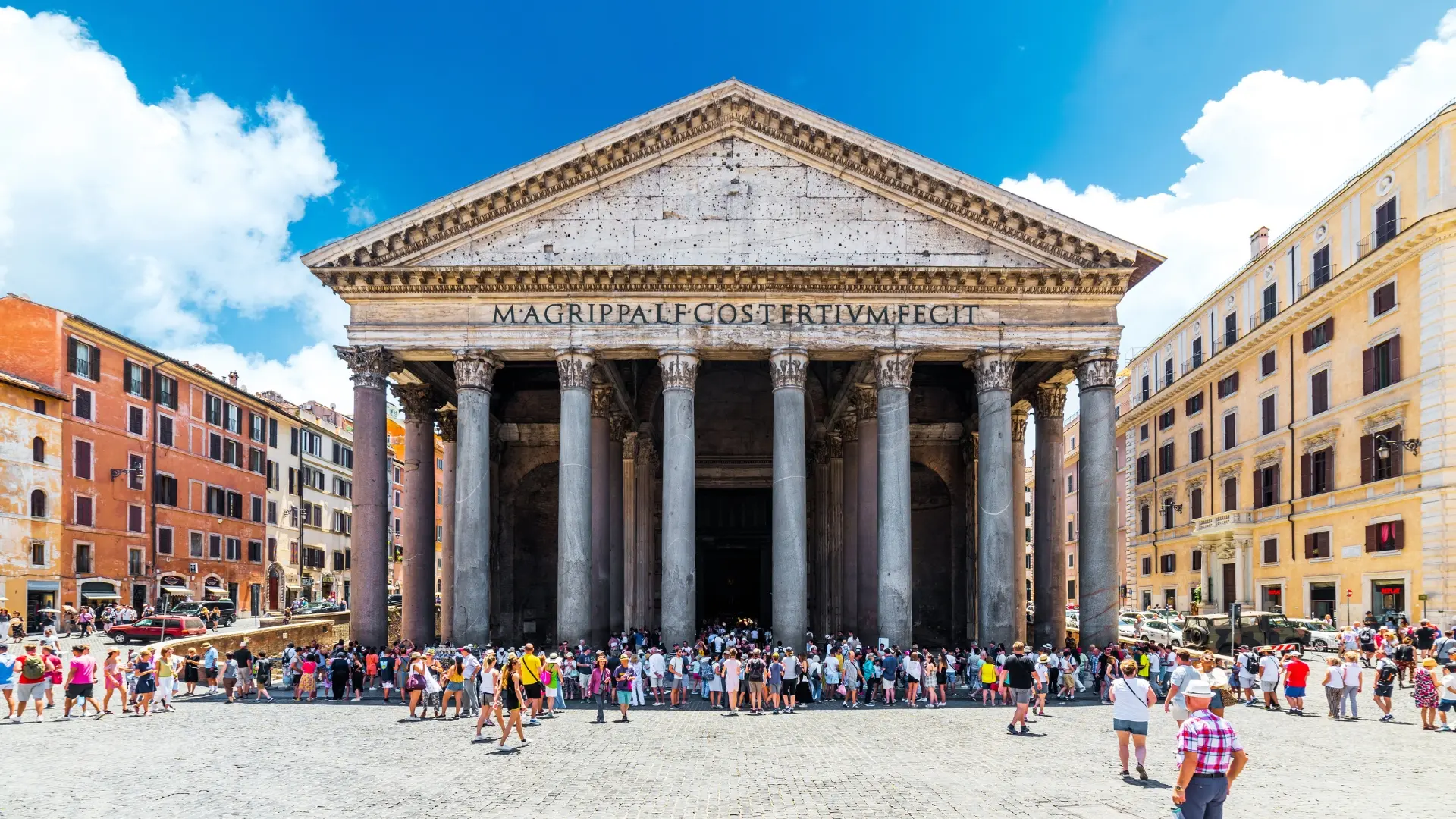
The Pantheon in Rome is far more than just another ancient monument on your sightseeing list; it is a monumental time capsule resting amidst the modern hustle and bustle of the Eternal City. As soon as you step through the massive Corinthian granite columns of the portico, you are instantly transported back to an era when emperors ruled and gods were worshipped. As the best-preserved building of Roman antiquity, the Pantheon radiates an almost supernatural permanence - a „lyrical grandeur“ that is particularly evident in the magical play of light under the world's largest unreinforced concrete dome to this day. It is this unique symbiosis of technical mastery and aesthetic harmony that has awed visitors for almost two millennia.
However, in order to not only see this architectural marvel, but also to truly understand its history and the current visiting rules, some preparation is required. To ensure that your visit to the temple of all gods is a smooth and unforgettable experience, we have compiled the most important information for you: Here are four essential facts you should know before entering.


1. An unsolved mystery: temple, gallery, or image of the cosmos?
Although the Pantheon appears architecturally perfect, its original purpose remains a mystery to historians to this day. The name itself provides the most obvious clue: it comes from the Greek (pan for „everything“ and theos for „God“) and suggests that this monumental rotunda was intended as Temple for all gods But was it really a place of active worship, or rather a magnificent gallery?
The mighty niches of the interior once housed colossal statues, including those of the planetary gods Mars and Venus—the mythical protectors of the Julian imperial family. From today's perspective, this gathering of various deities gives the Pantheon the character of an ancient museum or hall of fame rather than a classical temple, which was usually dedicated to a single deity.
One of the most fascinating explanations was provided by the Roman senator and historian Cassius Dio. In the 3rd century—only about 100 years after the building was completed—he wrote that the name „Pantheon“ was not only due to the large number of statues of gods, but above all to the architecture itself: the enormous dome arches over visitors like the vault of heaven over the earth. The Pantheon was therefore more than just a building; it was a stone representation of the cosmos, in which the emperor stood under the protection of all the gods. Whether sacrifices were made here or whether the building primarily served as a representation of imperial power remains one of Rome's great mysteries.
2. A historical deception: Why the inscription does not tell the whole truth
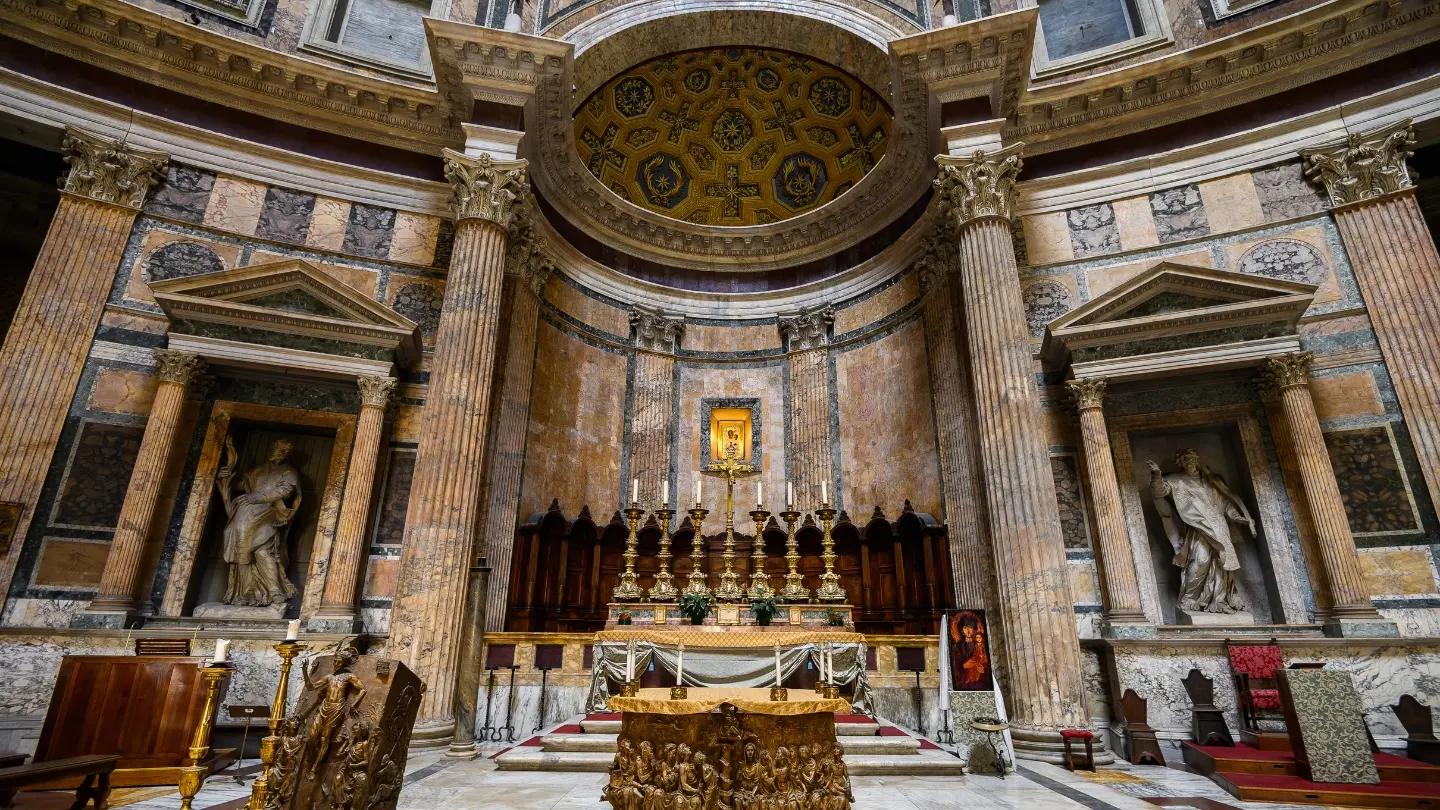
When you stand in front of the Pantheon and look up at the imposing façade, your gaze is immediately drawn to the monumental inscription in the frieze of the portico. Written there in large bronze letters is: „M. AGRIPPA L. F. COS. TERTIUM FECIT“. Translated, this means: „Marcus Agrippa, son of Lucius, consul for the third time, built this.“ But don't let this phrase, set in stone, mislead you—it only tells half the story.
What you see before you today is not the building that Marcus Agrippa, close confidant and son-in-law of Emperor Augustus, had built in 27 BC. Although Agrippa's original temple—a structure of unsurpassed beauty—stood on this very spot, it fell victim to a devastating fire in 80 AD. A subsequent building was also destroyed later by a lightning strike.
The Pantheon in its current, iconic form is rather a masterpiece from the time of Emperor Hadrian, built between 118 and 125 AD – almost 150 years after Agrippa. Hadrian, a great lover of architecture, probably commissioned the famous architect Apollodorus of Damascus with the planning of this revolutionary circular building. But why is Hadrian's name not on the temple?
Hadrian was known for his modesty when it came to buildings, but also for his political skill. Instead of immortalizing himself, he decided to have the original inscription reinstalled as a tribute to the original builder, Agrippa. In doing so, he wanted to establish a direct link to the glorious era of Augustus and demonstrate continuity. In this way, he honored the past while creating one of the most advanced buildings of the future—a noble gesture that nevertheless puzzled archaeologists and historians for centuries until brick stamps revealed the true date of construction under Hadrian.
3. The saving transformation: From pagan temple to Christian church
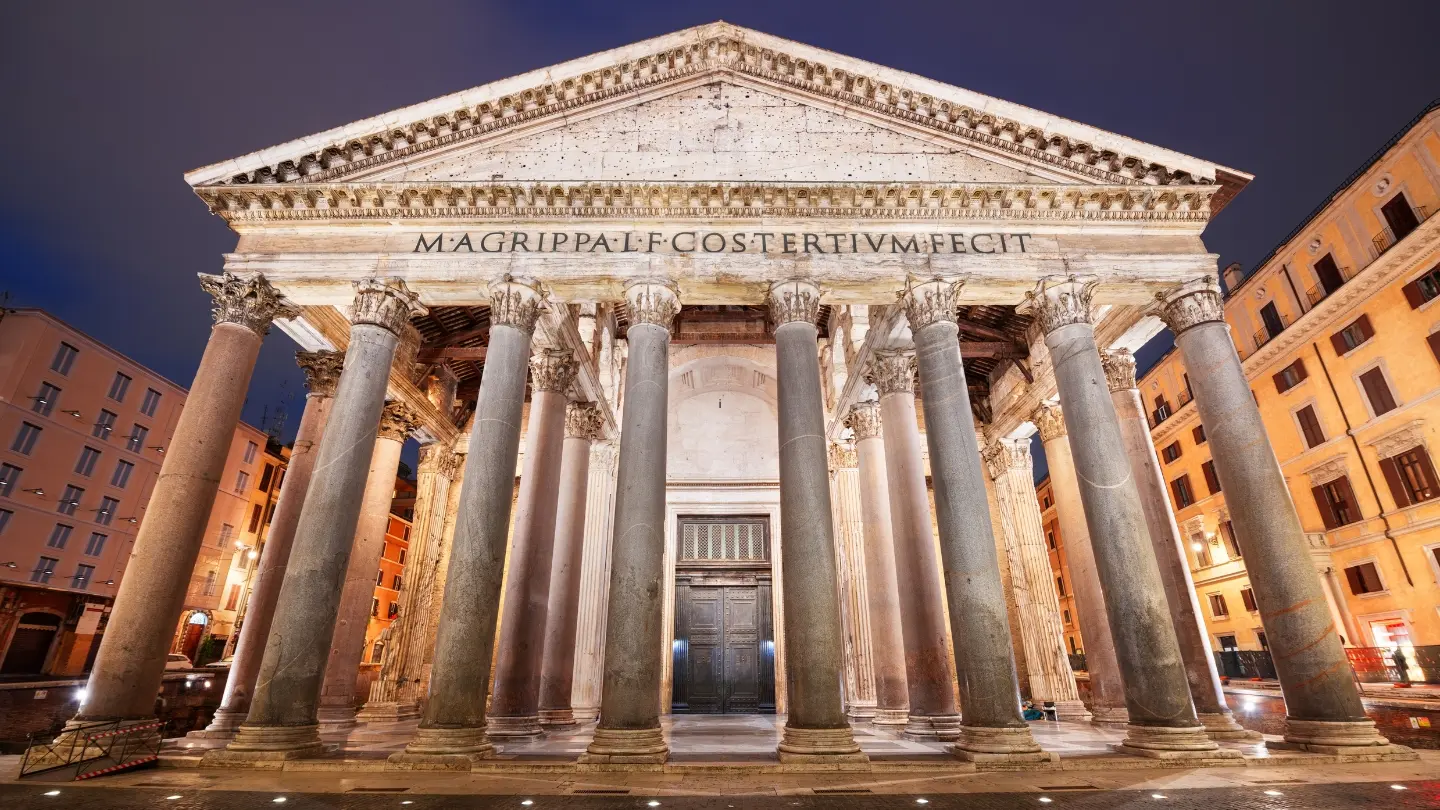
The fate of the Pantheon took a dramatic turn in 609 AD when the Byzantine emperor Phocas donated the building to Pope Boniface IV. In a historic act, the pope consecrated the former „temple of all gods“ as a Christian church. This was a radical step and marked the first time in Rome that a pagan temple had been converted into a Christian place of worship.
This change had two profound and quite contradictory effects:
On the one hand, consecration meant a cultural break, which some historians consider a form of spiritual vandalism. Where Jupiter, Mars, and Venus were once worshipped, Christian rituals now took their place. To finally drive out the „pagan demons,“ the pope allegedly had 28 cartloads of Christian martyrs' bones transferred from the catacombs to the Pantheon. This also explains the official name of the church, which is still valid today: Basilica of Saint Mary of the Martyrs (Saint Mary and the Martyrs).
On the other hand, it is precisely thanks to this act of religious appropriation that we can still marvel at the Pantheon today. While almost all other ancient marble buildings in Rome—such as the Roman Forum and the Colosseum—were misused as convenient quarries and stripped down to their skeletons in the Middle Ages, the Pantheon remained untouchable thanks to its status as a consecrated church. The new religious identity acted as a Protective shield against looting, wars, and decay. It is an irony of history: the very religion that supplanted the ancient pantheon became the savior of its most magnificent structure.
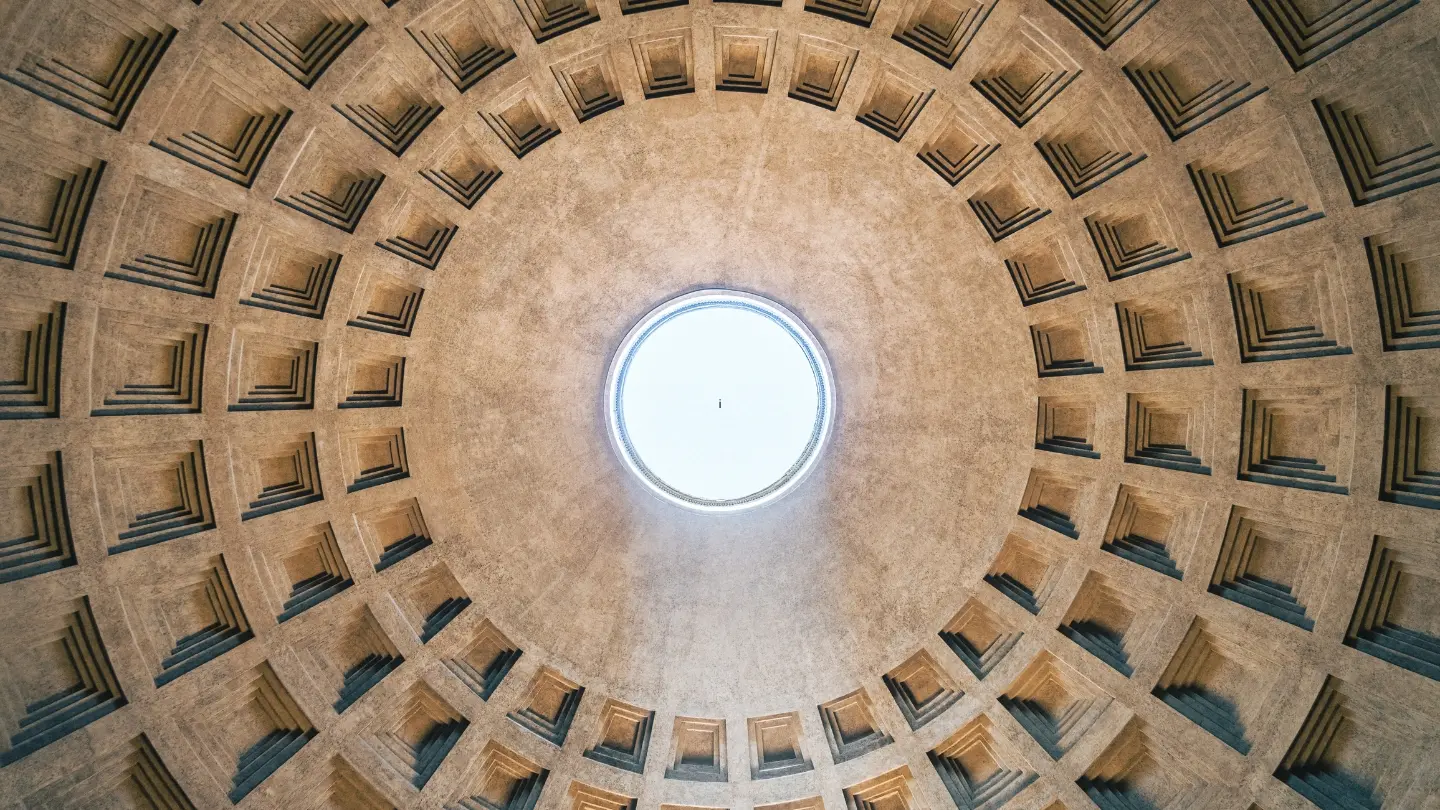
4. the view of the sky: the ingenuity of the open Pantheon dome
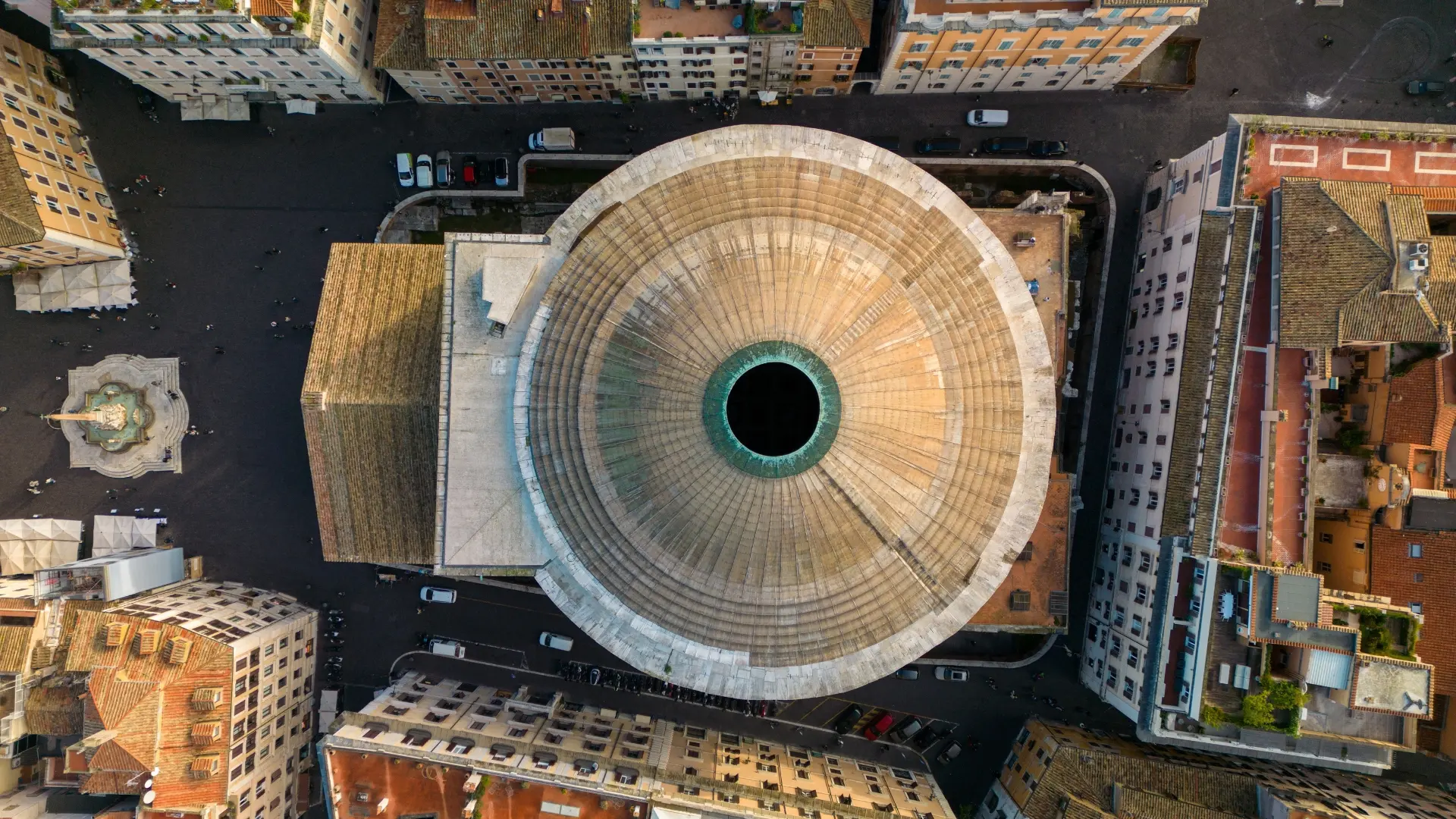
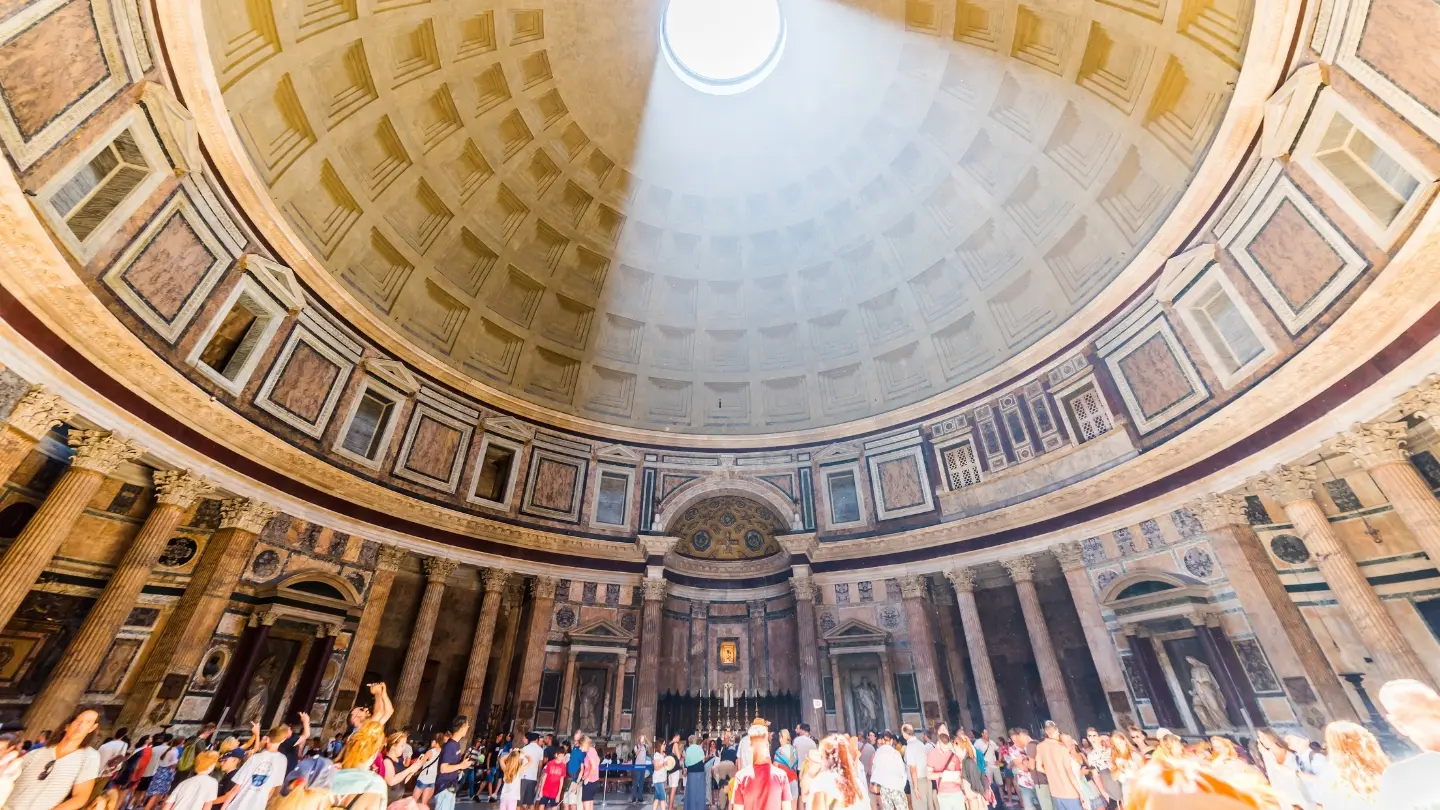
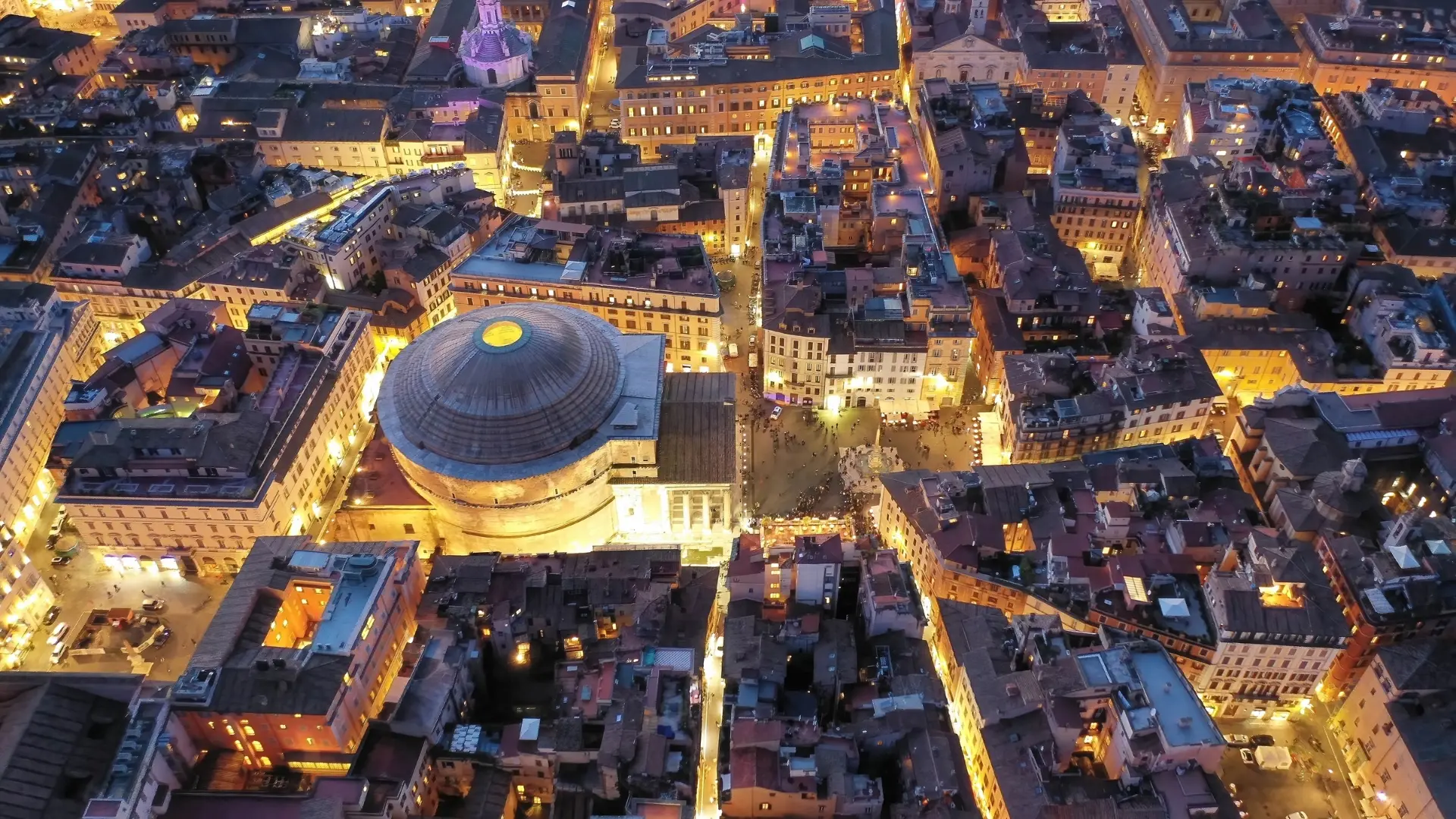
Anyone entering the interior of the Pantheon will inevitably be magically drawn upwards - directly to the open dome, the absolute architectural centerpiece of the ancient building. With a gigantic diameter of 44.4 meters, it still holds the record as the world's largest dome built entirely without reinforced concrete. What is particularly fascinating about the proportions is the flawless symmetry: the height from the floor to the highest point corresponds exactly to the diameter, so that theoretically a complete sphere would fit perfectly into the interior. To achieve this static masterpiece, the Roman master builders used an ingenious trick to distribute the weight.
While the dome is a massive seven meters thick at its edges and was made from heavy types of stone, it tapers to just 1.2 meters at the top and is primarily made from extremely light pumice stone. The proverbial highlight is the so-called „oculus“, the striking round window with a remarkable diameter of 8.7 meters. Emperor Hadrian deliberately had this opening integrated into his design. It not only serves as a spectacular source of light, conjuring up a constantly changing play of light on the walls, but was also intended to bring visitors to the temple into direct, unobstructed contact with the sky - although this also means that rain falls unhindered into the building when the weather is right.
Another exciting detail of the dome's history is a famous Roman legend: Originally, a magnificent bronze covering adorned the coffered ceiling. However, Pope Urban VIII had this melted down, which led to the persistent rumor that the master sculptor Gian Lorenzo Bernini had used this very bronze for the mighty canopy over the tomb of St. Peter the Apostle in St. Peter's Basilica. However, this has since proven to be untrue, as Bernini simply did not consider the ancient alloy to be reliable enough for his ambitious project.
5 A mausoleum for geniuses and monarchs: The final resting place in the Pantheon
Today, the Pantheon is much more than an ancient temple or a Catholic church; it is a national mausoleum and a place of pilgrimage for admirers of art and history. The thick walls of the rotunda house the tombs of some of the most important figures in Italian history.
The tomb of the „divine“ Raphael
For art lovers, the emotional highlight of the visit is undoubtedly the tomb of Raphael (Raffaello Sanzio). Before his untimely death in 1520—he died on his 37th birthday—the superstar of the Renaissance decreed that he wanted to be buried right here, in this ancient masterpiece of symmetry. His tomb is located in a marble sarcophagus beneath the statue of the Our Lady of the Rock. The Latin inscription by humanist Pietro Bembo on his tomb is particularly moving and definitely worth seeing:
„Here lies Raphael, whom the gods feared while he lived, and whom mortals mourn as they die.“ (Here lies Raphael. When he was alive, the great mother of all things [nature] feared being surpassed by him, and when he died, she feared dying with him.)
Other masters of art history who felt connected to him are buried near Raphael, including the architect Baldassare Peruzzi and the Baroque painter Annibale Carracci. The famous composer Arcangelo Corelli also found his final resting place here.
The Royal Crypt
In addition to the artistic elite, the Pantheon also serves as the burial place of the Italian royal house of Savoy. Here rests Vittorio Emanuele II., who is revered as the „Padre della Patria“ (Father of the Fatherland) for uniting Italy in the 19th century. His massive bronze tomb is hard to miss. Opposite him lie his son, King Umberto I., and his wife, Queen Margherita. Incidentally, the latter is not only known as a queen, but also as the namesake of the most famous pizza in the world. You will often see volunteer guards here who still guard the royal tombs to this day and lay fresh flowers—a sign that history is still alive in the Pantheon.

Pantheon Tickets: Current admission prices and clever combination offers
Since the latest regulation in summer 2023, admission to the Pantheon's architectural masterpiece is no longer free, but the new ticket prices are pleasingly fair and worth every penny. A regular ticket for adults costs a modest 5 euros, while young EU citizens between the ages of 18 and 25 benefit from a reduced price of just 2 euros. Children and young people under the age of 18 and residents of Rome continue to have free access (as well as on the first Sunday of the month for everyone). Tickets can be purchased at the entrance to the Pantheon or online at museiitaliani.it be purchased.
Read more about theTopic






As the Pantheon is one of the undisputed visitor magnets of the Eternal City, it is advisable to look for practical Combined tickets that are offered on our partner booking platform. Such packages are extremely useful to maximize the sightseeing experience. Combine the regular Pantheon ticket with a reserved time slot directly with an exciting audio guide on your smartphone or a professional guided tour. Even more worthwhile are comprehensive Rome bundles that include admission to the Pantheon with, for example, the Access to Castel Sant'Angelo, tours to the Trevi Fountain, tickets for the Colosseum or even flexible hop-on hop-off bus tours. These combined solutions not only save you the organizational effort of individual bookings, but also avoid the long ticket queues on site.
Our conclusion: An eternal monument between heaven and earth
The Pantheon in Rome is much more than just a well-preserved relic from the travel guide; it is the ultimate testament to Roman engineering and a bridge between the millennia. For almost two millennia, the mighty rotunda has dominated the cityscape and captivated people from all over the world—not only because of the technical masterpiece of the floating concrete dome, but also because of the almost tangible spiritual atmosphere that fills the space. What once began as a temple for all gods has become a basilica. Saint Mary of the Martyrs reinvented and thus prevented its destruction.
The fact that this place is not a dead ruin but a living monument is most impressively felt at Pentecost. Once a year, the Pantheon becomes the scene of one of Rome's most poetic customs: during the „Shower of roses“ After Mass, Roman firefighters throw thousands of red rose petals through the open oculus. As they slowly fall like purple snow onto the faithful, they symbolize the descent of the Holy Spirit—a moment when architecture, faith, and beauty merge into an unforgettable unity.
In a world that is changing rapidly, the Pantheon stands like a rock in the surf. It has survived barbarian invasions, looting, wars, and the ravages of time without losing its dignity. The view through the oculus reminds us of the transience of human life, but also of the permanence of what we can create. A visit here is therefore more than just sightseeing; it is an encounter with eternity in the heart of Rome.
Map: Pantheon Rome
FAQ: Pantheon Rome
Is tap water safe to drink in Rome?
Yes, tap water in Rome is of excellent quality and completely safe to drink. Throughout the city, you will find small fountains called „Nasoni“ (big noses) that dispense cool, fresh water. Just bring a reusable bottle and fill it up for free—you'll save money and avoid plastic waste and overpriced water vendors.
Do you have to tip in restaurants in Rome?
In Italy, tips (coperto or servizio) are often already included in the bill or charged as a flat service fee. They are not as mandatory as in the US or Germany. Nevertheless, it is a nice gesture to round up the amount or leave a few euros on the table for good service. Locals often just leave their small change.
When is the best time to visit the top attractions?
To avoid the largest crowds, visit attractions such as the Trevi Fountain or the Spanish Steps very early in the morning (before 8:00 a.m.) or late in the evening. For museums such as the Vatican or the Colosseum, book tickets for the first available time slots in the morning or, if available, take advantage of special evening opening hours in the summer.
How should I dress appropriately for visiting churches in Rome?
Rome is the center of the Catholic Church, and appropriate clothing is required in religious sites. Shoulders and knees must be covered. This applies to both men and women. This rule is strictly enforced, especially in St. Peter's Basilica. It is advisable to always carry a light scarf or shawl with you, which you can put on if necessary when wearing sleeveless clothing in summer.

Rome Tickets: Colosseum, Vatican, and More—Skip the Lines
Rome tickets at a glance (as of May 2026) The most important sights in Rome with current starting prices at Tiqets. All prices „from" - may vary depending on date, time slot and options. Colosseum + Roman Forum + Palatine Hill -...
Top accommodations in Rome, Italy
Video: Pantheon, Rome
Experiences & sights
Note: Disclaimer - Italien.news is not the owner or organizer of the sights, accommodations and events published here and therefore not responsible for program changes, cancellation of the event and possibly incorrect information. The editorial team of Italien.news always endeavors to provide detailed and accurate information. However, it is possible that events, attractions, etc. may be changed and not updated promptly. Exact details of dates, times and programs can be obtained directly from the owner of the attractions and accommodation.
Please also check the website or social media of the attractions and events for updates before you travel! Our blog articles contain our personal recommendations in the form of affiliate links. If you book or buy something via the links or simply click on them, we receive a small commission. This does not change the price for you at all. Content and texts © Italien.new & KI / Photos © Canva.com / shutterstock.com / Unsplash.com / Pixabay.com / Pexels.com / Others. Please also visit our Italy Shop!