

Rome – When you walk from Via del Corso onto Piazza Venezia, you suddenly find yourself facing a mountain of white marble. The Altare della Patria, officially known as the Monumento Nazionale a Vittorio Emanuele II and simply called the Vittoriano by Romans, is Italy’s national monument. There is no admission fee: the monument, terraces, and the Tomb of the Unknown Soldier are open to the public free of charge; only the glass panoramic elevator to the roof costs €18.00.
Hardly any of the major Places of interest in Rome It divides opinion just as reliably as this colossal monument between the Capitol and Piazza Venezia. Here you’ll find everything you need to know for your visit to the Altare della Patria: prices, hours, the history behind the monument, the view from the panoramic terrace, and how to get there through the city’s largest construction site.
The Altare della Patria in Numbers
Eight figures tell you everything you need to know about the monument: free admission, the price of the elevator ride, and a structure that took Italy fifty years to build.
As of September 2026 · Information provided by VIVE – Vittoriano e Palazzo Venezia and the Ministry of Culture.
- First-time visitors who want to see Rome from above
- History buffs with a passion for the 19th century
- Families looking for a place to visit between the Colosseum and the Pantheon
- Photographers in the Evening Sun
- Purists who recognize only the Classical and Baroque periods
- Drivers: ZTL and construction around the square
- For anyone looking for a quiet spot: this place is Rome's hub
How much is admission to the Altare della Patria?
Admission to the Altare della Patria is free: the staircases, terraces, and the Tomb of the Unknown Soldier don’t cost a cent. You only pay if you want to go higher: The glass panoramic elevator to the rooftop terrace costs €18.00 for adults; EU citizens between the ages of 18 and 25 pay €5.00; and those under 18 ride for free. The ticket also includes admission to the Museo Centrale del Risorgimento inside the monument and the Palazzo Venezia, the Renaissance palace on the west side of the square. Our guide to the city’s major attractions gives you an overview of all the important admission fees. Rome Tickets.
Admission and Tickets at the Vittoriano
| Offer | Price |
|---|---|
| Monument with the Tomb of the Unknown Soldier | free |
| Panoramic terrace with an elevator | 18,00 € |
| Reduced rate: EU citizens ages 18 to 25 | 5,00 € |
| Children and adolescents under 18 | free |
| People with disabilities and their companions | free |
| First Sunday of the month | free |
| Central Museum of the Risorgimento | Included in the ticket |
| Palazzo Venezia | Included in the ticket |
The ticket is valid for seven days at all venues of the VIVE Museum Institute. You can book it online through the official platform at vive.midaticket.com; it is also available for purchase at the ticket office at the monument.
As of September 2026 · Information provided by VIVE – Vittoriano e Palazzo Venezia.

When is the Vittoriano open?
The Vittoriano is open daily from 9:30 a.m. to 7:30 p.m.; last admission is at 6:45 p.m. It is open every day of the week, and the same hours apply to the monument, the panoramic terrace, and the museum.
In the summer, the monument goes the extra mile: On select evenings between June 5 and September 27, 2026, it will remain open from 7:30 p.m. to 11:30 p.m., with last admission at 10:45 p.m. Rome by night from the center’s highest terrace: it’s worth adjusting your plans for this.
On the first Sunday of the month, the panoramic terrace and museums are free. The free tickets are valid only on the day they are issued, and the line for the elevator is longest then.

Rome Tickets: Colosseum, Vatican, and More—Skip the Lines
Rome Tickets at a Glance (as of May 2026) Rome’s top attractions with current starting prices from Tiqets. All prices are „starting at"—they may vary depending on the date, time slot, and options. Colosseum +...
Why Italy Built This Marble Colossus
When Vittorio Emanuele II, the first king of Italy after its unification in 1861, died, the young nation wanted more than just a tomb: it wanted a monument that would represent the nation itself. Two international competitions were held. The first, in 1880, was won by the Frenchman Henri-Paul Nénot, but his design was never built. In the second competition, held in 1882, the young Italian architect Giuseppe Sacconi prevailed.
On March 22, 1885, work began on the slope of the Capitoline Hill, and it continued for over half a century. Sacconi died in 1905 without seeing his work completed; the architects Gaetano Koch, Pio Piacentini, and Manfredo Manfredi continued the construction. The monument was dedicated on June 4, 1911, just in time for the 50th anniversary of unification, under King Vittorio Emanuele III. It was not fully completed until the 1930s: the final work was finished in 1935.
White Marble from Brescia: The Architecture of the Vittoriano
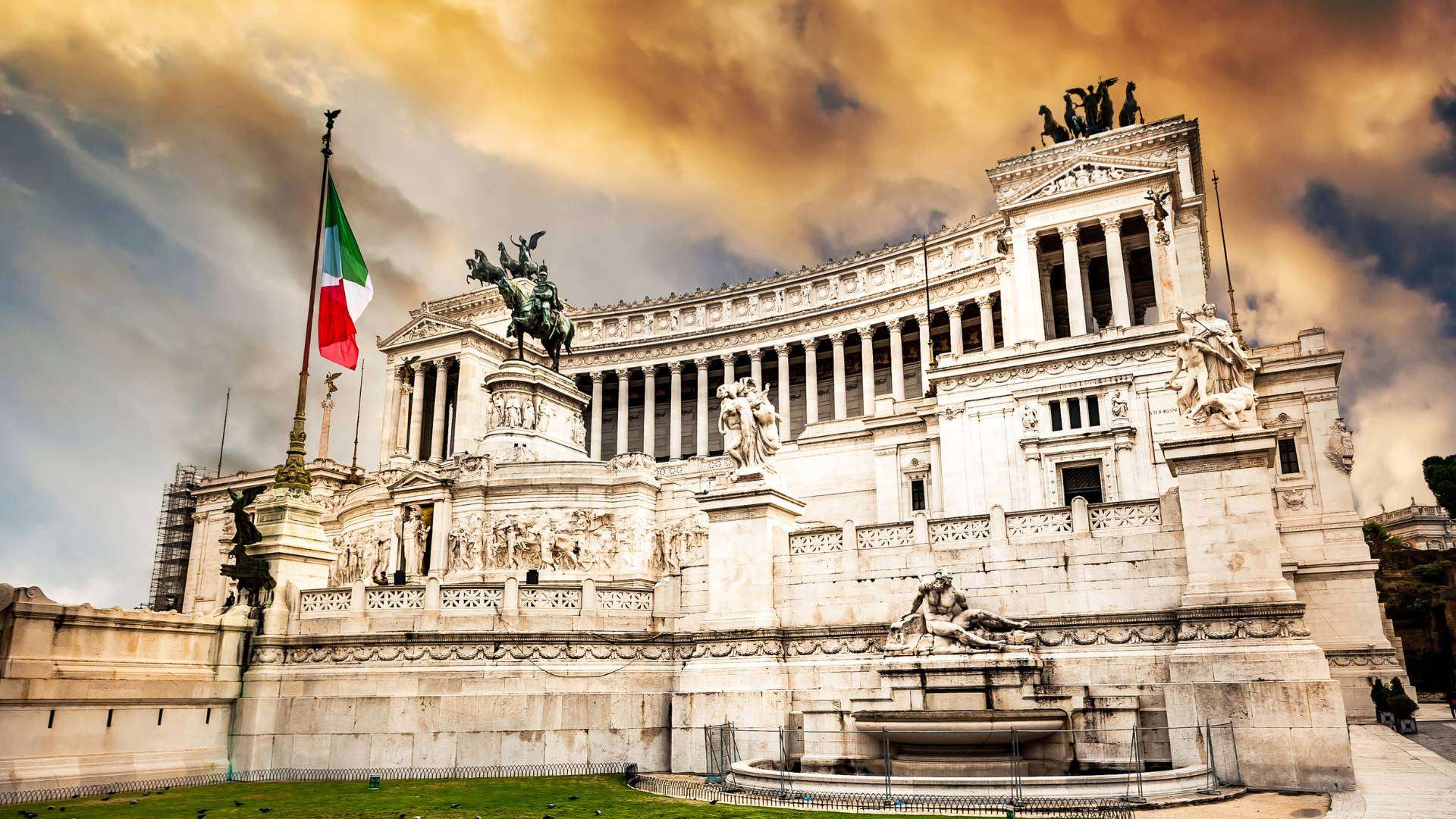
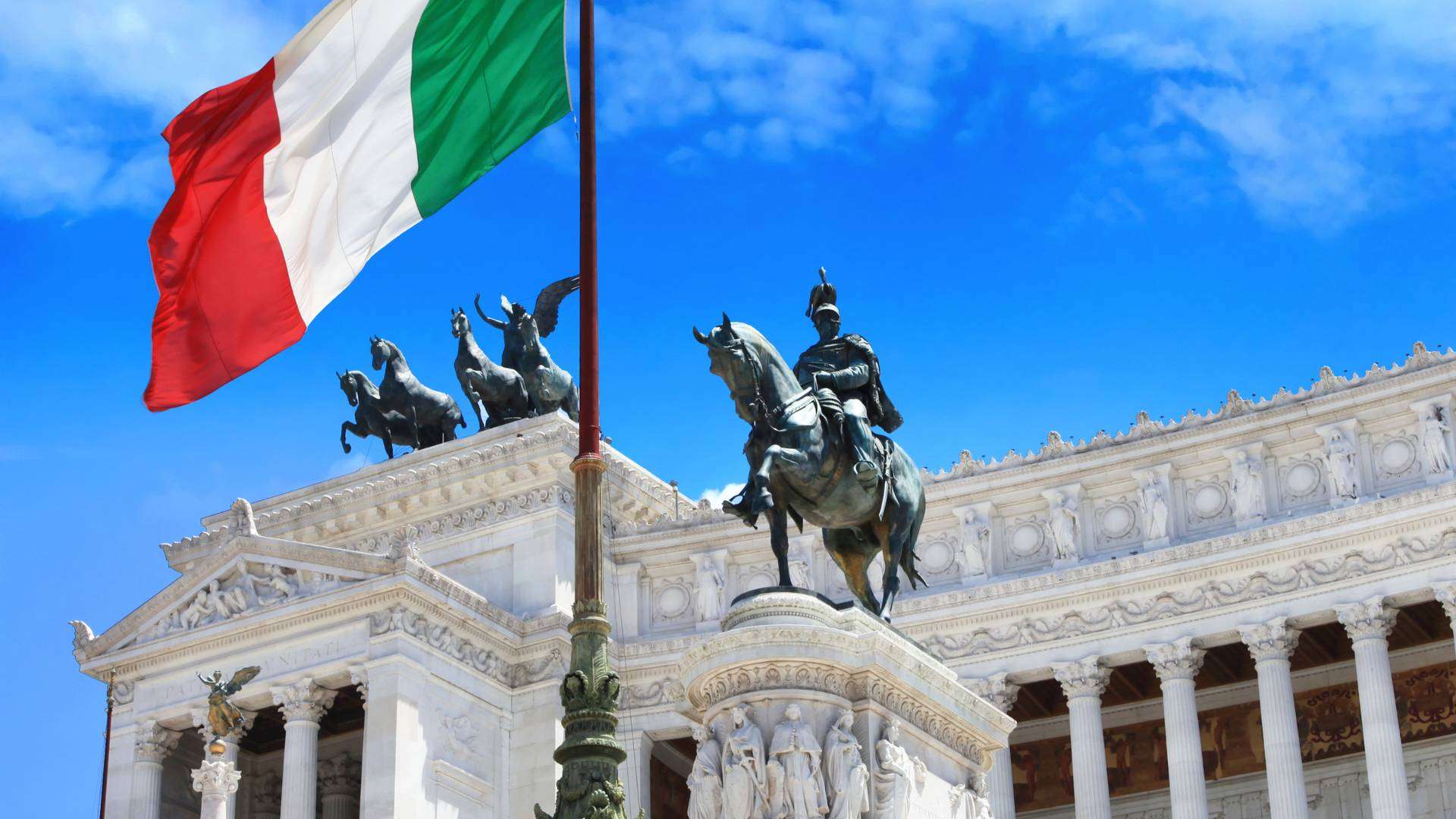
The Vittoriano measures 81 meters from Piazza Venezia to the quadrigas on the Propylaea, the two colonnades at the top. Although Roman travertine was originally planned, it was ultimately built using Botticino, a brilliantly white limestone from the province of Brescia. It is precisely this white color that continues to distinguish the building from everything around it to this day.
Since 1927, two bronze four-horse chariots have been soaring toward the sky atop the two Propylaea: the Quadriga dell’Unità by Carlo Fontana, a sculptor from Carrara, and the Quadriga della Libertà by Paolo Bartolini. Fontana’s goddess of victory carries a shield bearing a quote from Livy Here we will stay for the best of times: We'll stay here—it doesn't get any better than this. The inscriptions below dedicate the structure to the unity of the fatherland and the freedom of its citizens.

The Tomb of the Unknown Soldier
The heart of the monument is the Altare della Patria in the strict sense: the terrace featuring the tomb of the Milite Ignoto, the Unknown Soldier, beneath the statue of Roma, the city’s patron goddess. This altar was designed by the sculptor Angelo Zanelli, who won the competition for it in 1906.
The soldier was laid to rest on November 4, 1921. He had been chosen by Maria Bergamas of Trieste, the mother of a fallen and never-identified soldier: In the Basilica of Aquileia in Friuli, she selected one from among eleven coffins of unknown soldiers who had fallen in World War I. Eternal flames burn before the grave; the honor guard stands watch day and night, and you can see the changing of the guard every hour.
Three times a year, the terrace becomes a national stage: On April 25, June 2, and November 4, the President lays a wreath here in honor of the fallen; on Republic Day, a military parade follows along the Via dei Fori Imperiali.
The Equestrian Statue and the Banquet Inside the Horse's Belly
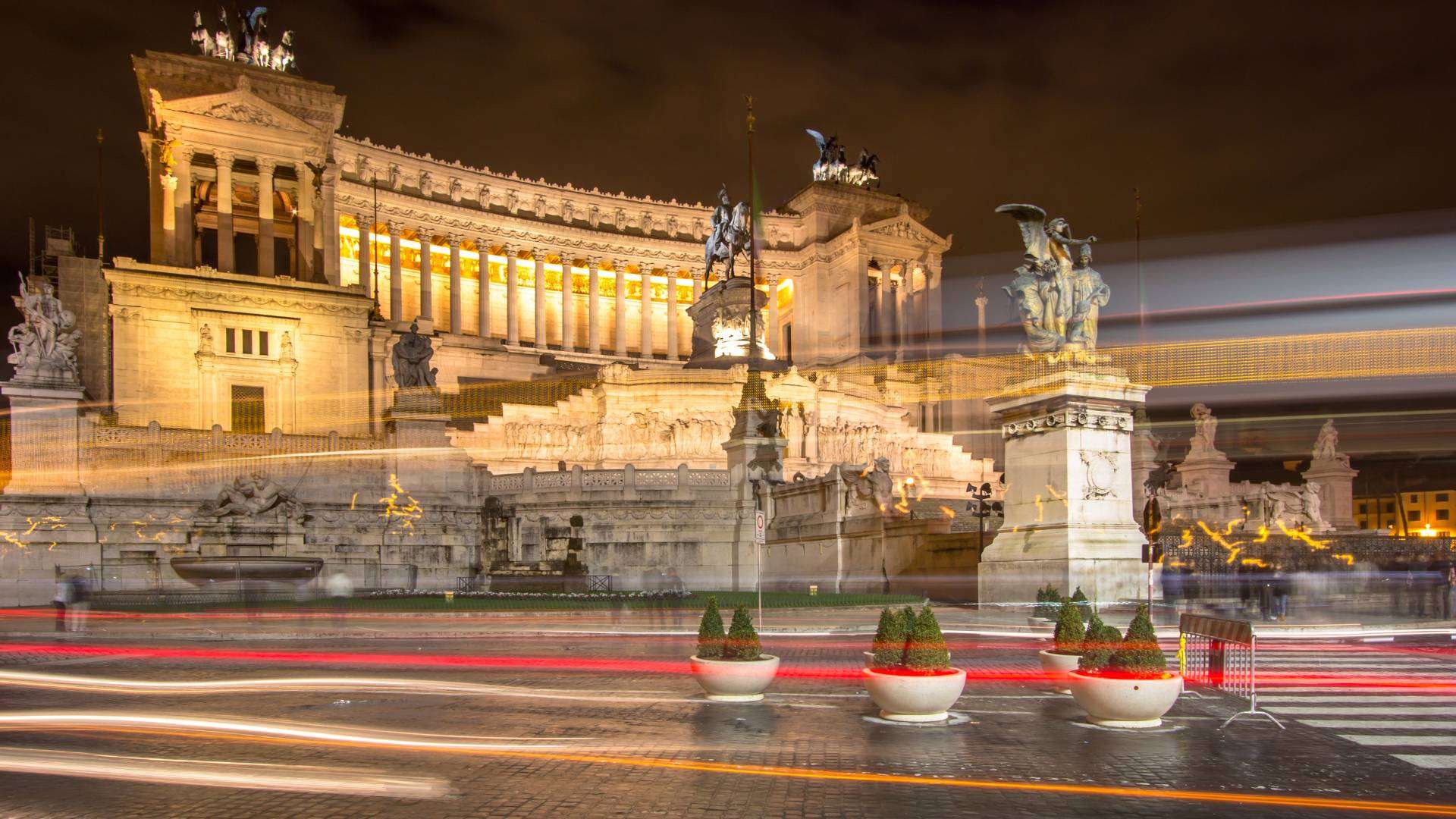
Above the altar stands the king himself: the bronze equestrian statue of Victor Emmanuel II by Enrico Chiaradia. Its dimensions are a story in themselves: twelve meters high, ten meters long, weighing about 50 metric tons of bronze; the king’s mustache alone measures one meter.
The most beautiful story about this is well-documented: Before the statue was erected, a reception was held for about twenty people, and the table was set inside the horse’s belly. If you stand down below in Piazza Venezia and don’t really perceive the statue as large, that’s the perspective you’re missing.

Typewriter or National Symbol? The Controversial Giant
The Romans have nicknames for their national monument that say it all: typewriter, the typewriter, or the wedding cake. The building is too white, too big, and too loud for a city whose beauty lies in brick, travertine, and patina, critics have said since its inauguration.
The second criticism is more serious. To make way for the monument, a large section of medieval Rome on the slope of the Capitoline Hill was demolished, including the towers of Pope Paul IV and the cloister of Santa Maria in Aracoeli, the church right next to the current monument. Good to know: This debate is part of the visit—not a reason to skip it. Precisely because the Vittoriano seems so out of step with the times, it tells us more about Italy’s path to nationhood than many a museum, and you’ll find the best way to come to terms with the building up on its terrace, where you can no longer see it yourself.

A Museum in a Historic Building: the Museo Centrale del Risorgimento
Inside the Vittoriano is a museum: The Museo Centrale del Risorgimento chronicles the Italian unification movement from the uprisings through World War I and is open daily from 9:30 a.m. to 7:30 p.m., with last admission at 6:45 p.m. Admission is included in the same ticket as the panoramic terrace.
The complex is operated by the state museum institute VIVE – Vittoriano e Palazzo Venezia, which also hosts rotating art exhibitions in the Ala Brasini exhibition wing. You can find the current program at vive.cultura.gov.it, and with 672,230 paying visitors, the institute ranked 11th among Italy’s state museums in 2024.

7 highlights in Piazza Venezia - from the Vittoriano to Via del Corso
Sights at Piazza Venezia You Should Know About Piazza Venezia, in the heart of Rome, is much more than just a transportation hub—it’s a fascinating place where...
Roma dal Cielo: The View from the Rooftop Terrace
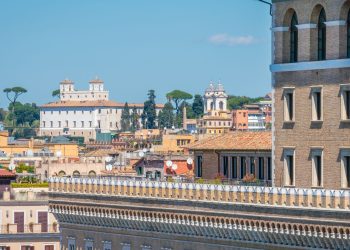
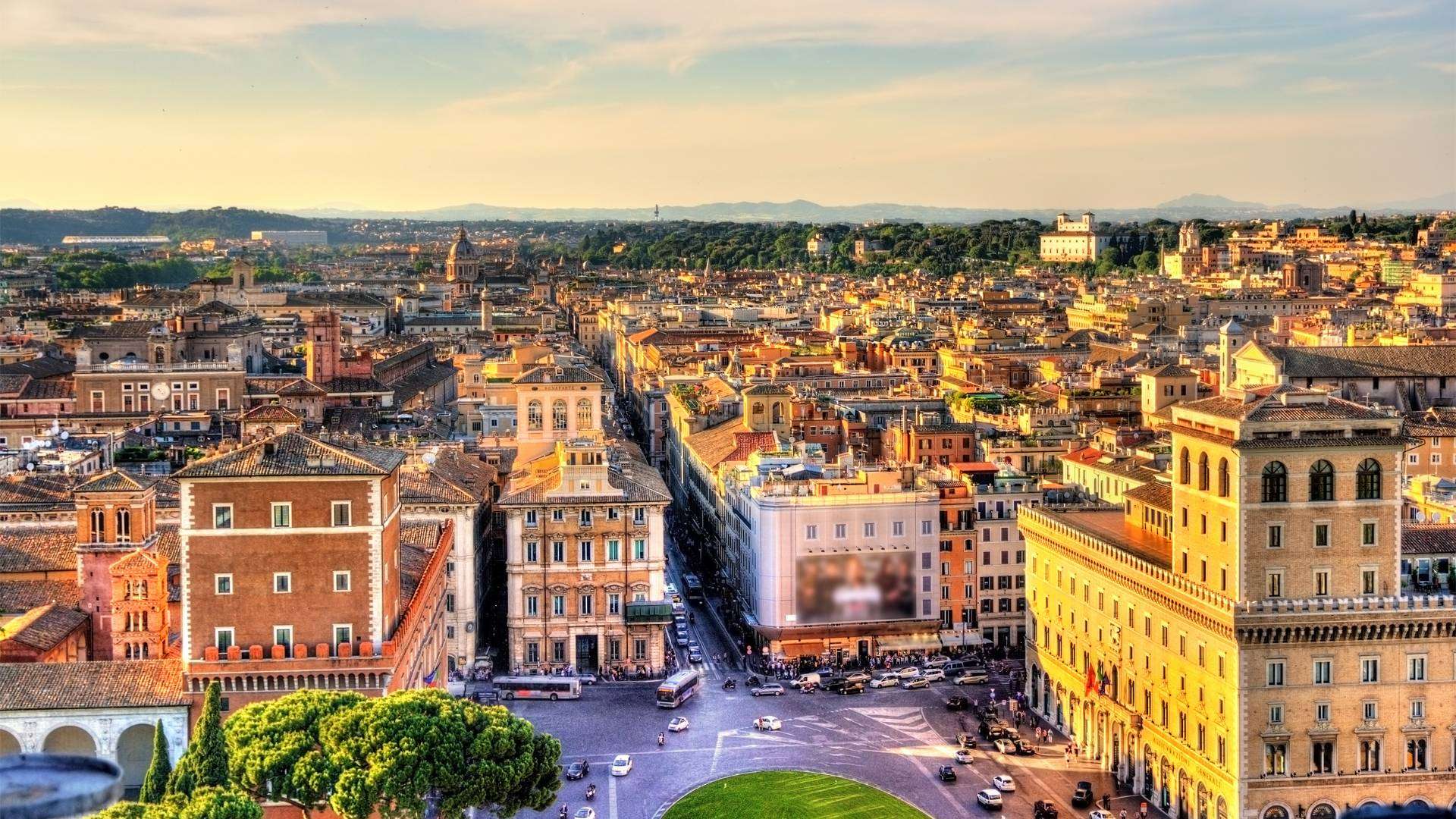
The glass elevator at the back takes you up to the terrace between the two quadrigas, and the panoramic view is the best in the city center: the Roman Forum and the Colosseum on one side, the domes of the historic center stretching all the way to St. Peter's Basilica on the other, with Piazza Venezia and the dead-straight Via del Corso right below you.
€18.00 is a fair price for this, since the ticket grants you access to all VIVE locations for seven days. Even if you don’t want to ride the rides, there’s still something to enjoy: the freely accessible terraces halfway up are already significantly higher than the square.
How do you get to the Altare della Patria?
The Altare della Patria is located in Piazza Venezia, the city center’s transportation hub, and is within walking distance of almost everywhere: it’s about a 15-minute walk from the Colosseum via Via dei Fori Imperiali, and about a 10-minute walk from the Pantheon. The nearest metro station is Colosseo on Line B; from there, it’s about a ten-minute walk.
Connections to Piazza Venezia
| Connection | Here's what you need to know |
|---|---|
| Metro | Take Line B to Colosseo, then walk about ten minutes along Via dei Fori Imperiali |
| Bus | Routes such as 40, 60, 64, 85, 87, and H serve the area; the bus stops move along with the construction site |
| Streetcar | Line 8 toward Trastevere; check the schedule at atac.roma.it before your trip |
| ATAC Tickets | BIT €1.50 for 100 minutes · Roma 24H €8.50 · 48H €15.00 · 72H €22.00 |
| From Fiumicino Airport | Leonardo Express to Termini, €14.00, 32 minutes; then take the bus or walk 20 minutes |
| Cab | Flat rate of €55.00 from Fiumicino, €40.00 from Ciampino; surcharges included |
| Car | Not a good idea: ZTL cameras all around the city center, but there are no parking spaces in the square |
As of September 2026 · Data provided by ATAC, Aeroporti di Roma, and Roma Servizi per la Mobilità.
The Venezia Metro station on Line C is being built beneath Piazza Venezia. The second major phase of construction has been underway since November 2025: parts of the square are fenced off, traffic is restricted to a single lane, and bus stops are being temporarily relocated. There is no official opening date, and the monument itself remains open to the public as usual.
The Best Time to Come
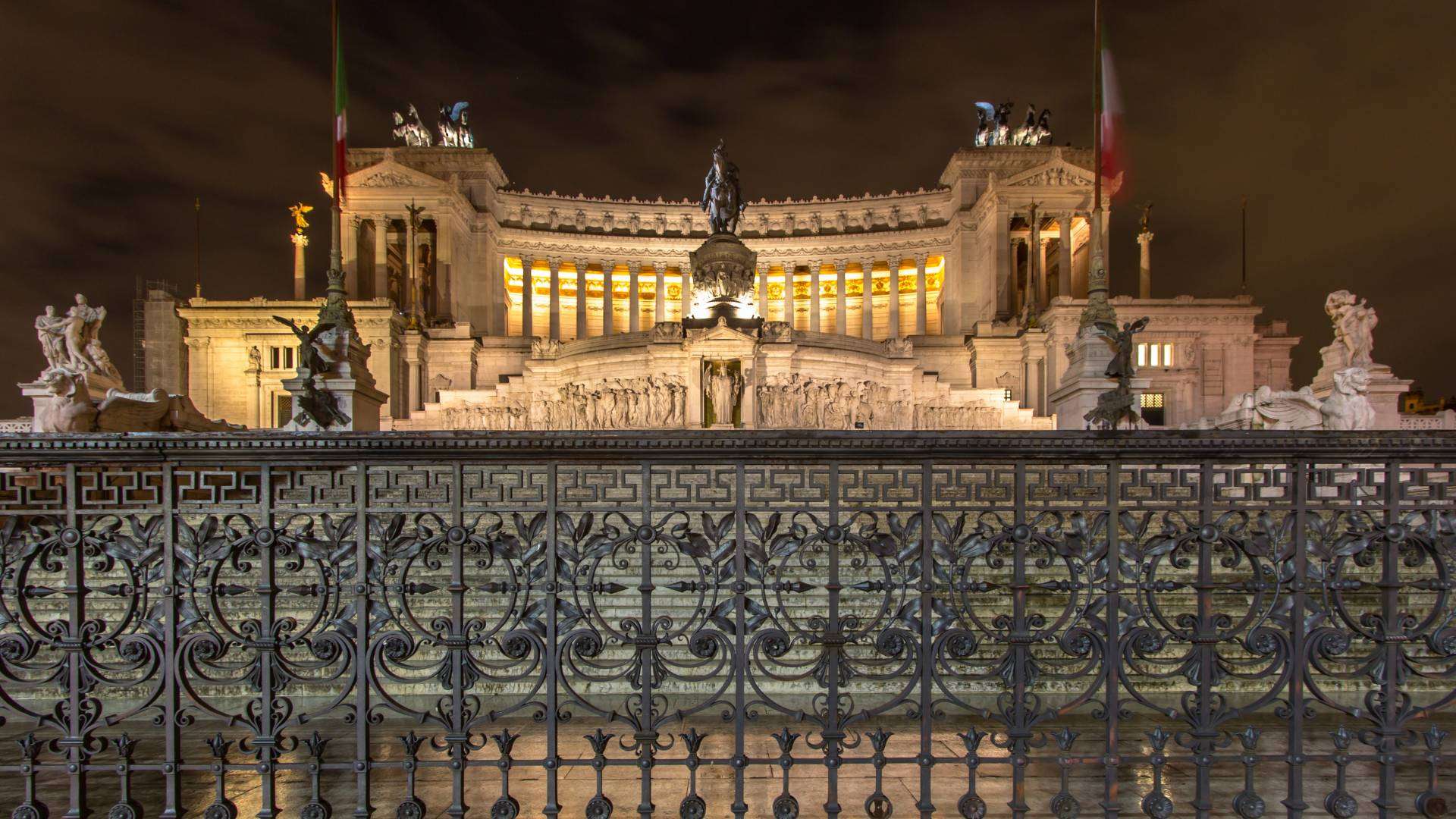
The best time to visit is early in the morning, starting at 9:30 a.m., or in the late afternoon, when the low sun casts a warm glow on the Botticino marble and the tour groups have moved on. To take photos of the entire monument, stand on the opposite side of Piazza Venezia.
On the three national holidays—April 25, June 2, and November 4—the morning is devoted to official ceremonies: wreath-laying, honor guards, and barriers. So either come as a bystander to watch the ceremony, or wait until the afternoon, when the square is open to the public again.

The evening when Rome glows beneath you
Through September 27, 2026, the Vittoriano will be open on select summer evenings from 7:30 p.m. to 11:30 p.m., with last admission at 10:45 p.m. Then you’ll head up to the rooftop terrace after dark, with the Forum, the Colosseum, and the domes of the historic center glowing below you, and little trace of the day’s crowds remaining.
And if you're watching your budget, mark the first Sunday of the month on your calendar: that's when the elevator and museums are free. Be sure to arrive early—the free tickets are valid only on the same day.
Good to know before you come
1. Admission to the monument is free; only the elevator costs money. You can visit the terraces, the stairs, and the Tomb of the Unknown Soldier without a ticket; the rooftop terrace is accessible only with a lift ticket costing €18.00.
2. Piazza Venezia is a construction site. Construction on the Venezia Metro station is constantly changing routes, traffic lights, and stops. Allow a few extra minutes and follow the signs to the monument.
3. The grave is a memorial, not a backdrop. Soldiers stand guard at the eternal flame; visitors are expected to behave respectfully and observe a moment of silence.
4. The terrace ticket is a seven-day pass. This applies to all VIVE locations, including the Palazzo Venezia. So you don't have to see everything in one day.
Who Should Visit
For first-time visitors to Rome, the Vittoriano is practically a must-see: it couldn’t be more central, and the free admission makes it easy to stop by. History buffs will find the Risorgimento Museum and the Milite Ignoto—the place where Italy’s path to statehood is epitomized. Families use the terraces as a place to catch their breath between the Forum and the Pantheon. And if you want to take in just one panoramic view of Rome, take the elevator here instead of going to an expensive rooftop bar.
Combine a visit to the Vittoriano with the Roman Forum and the Capitoline Hill
There’s hardly a better monument for a packed day of sightseeing. Right behind it, a staircase leads up to the Capitoline Square with the Capitoline Museums; just a few steps further on is the Roman Forum, and the other locations in the Piazza Venezia is right outside your door anyway. If you want to go further, follow Via dei Fori Imperiali to the Colosseum or take the Corso toward the Trevi Fountain and the Pantheon.

The Roman Forum in Rome: 7 Landmarks, Tickets & Tips
Admission to the Roman Forum in Rome costs €18.00: prices, hours, seven landmarks from the Curia to the Basilica of Maxentius, how to get there, and honest tips.
Our Thoughts on the Altare della Patria
The Altare della Patria is Rome’s most striking landmark, and that’s exactly why you should check it out: as a monument to a young nation, as a memorial featuring the Tomb of the Unknown Soldier, and as the best freely accessible observation deck in the city center. The visit is free; an hour is enough to get a first impression, and with the elevator ticket, you can spend half a day there, including the museum and Palazzo Venezia.
Plan your visit for early morning or a summer evening, book your elevator ride online in advance, and then head over to the Roman Forum: nowhere else are 2,000 years of Italian history so closely packed together.
FAQ - Frequently Asked Questions About the Altare della Patria
Prices, hours of operation, and schedules are subject to change—check the official websites for the latest information before your trip.
Sources and Further Information
- VIVE – Vittoriano and Palazzo Venezia: Information and Hours (accessed in September 2026)
- VIVE – Panoramic Terrace: Hours and Tickets (accessed in September 2026)
- VIVE – Museo Centrale del Risorgimento: Hours and Tickets (accessed in September 2026)
- Treccani – Vittoriano (accessed in September 2026)
- Treccani, Biographical Dictionary – Sacconi, Giuseppe (accessed in September 2026)
- Treccani – Unknown Soldier (accessed in September 2026)
- Office of the President of the Republic – Il Vittoriano (PDF) (accessed in September 2026)
- Tourism in Rome – Monument to Vittorio Emanuele II (accessed in September 2026)
- Ministry of Culture, Statistics Office – State Museums 2024 (PDF) (accessed in September 2026)
- Roma Mobility Services – Piazza Venezia Construction Site (accessed in September 2026)