


Between the sky and the sea: the soul of the fishermen's huts
When you think of the Adriatic, you often think of endless rows of colorful parasols and lively promenades. But away from the summer hustle and bustle, where the fresh water of the canals meets the salt of the Adriatic, there is a hidden treasure that reveals the true soul of Romagna: the Capanni da pesca. These wooden pile dwellings, which float above the water like delicate works of art, are far more than mere architecture. They are the memory of an entire region made of stone - or rather, wood. In Cesenatico, one of the most charming harbor towns in Emilia Romagna, these constructions achieve a density and beauty that is unparalleled in Italy.
The atmosphere surrounding these huts is marked by an almost sacred stillness, especially in the early morning hours or when twilight bathes the sky in a dramatic shade of purple. The soft creaking of the wooden planks, the gentle lapping of the water against the stakes, and the salty scent in the air transport visitors into a state of meditative calm. Unlike the „trabocchi“ in Abruzzo, which are often more solidly built, the capanni in this region appear more delicate, almost fragile—and yet they have withstood the tides and storms for generations. They are symbols of the frugality and ingenuity of the fishermen, who once had to secure their catch without exposing themselves to the dangers of the open sea. Our guide to the same principle, some 300 kilometers further south along the same coast, shows how it works. Costa dei Trabocchi, with its imposing fishing platforms and the Via Verde.
Today, many of these huts have been lovingly restored and are no longer used purely for food, but as private retreats, meeting places for families or even as exclusive locations for an intimate dinner. A walk along the piers of Cesenatico, past these iconic silhouettes with their huge, spider-web-like lifting nets (the so-called „bilancioni“), is a journey into a decelerated world. It is precisely this contrast between living history and modern vacation flair that makes Cesenatico a place of longing for travelers looking for authenticity.

A legacy of Leonardo da Vinci: history and tradition on the canal
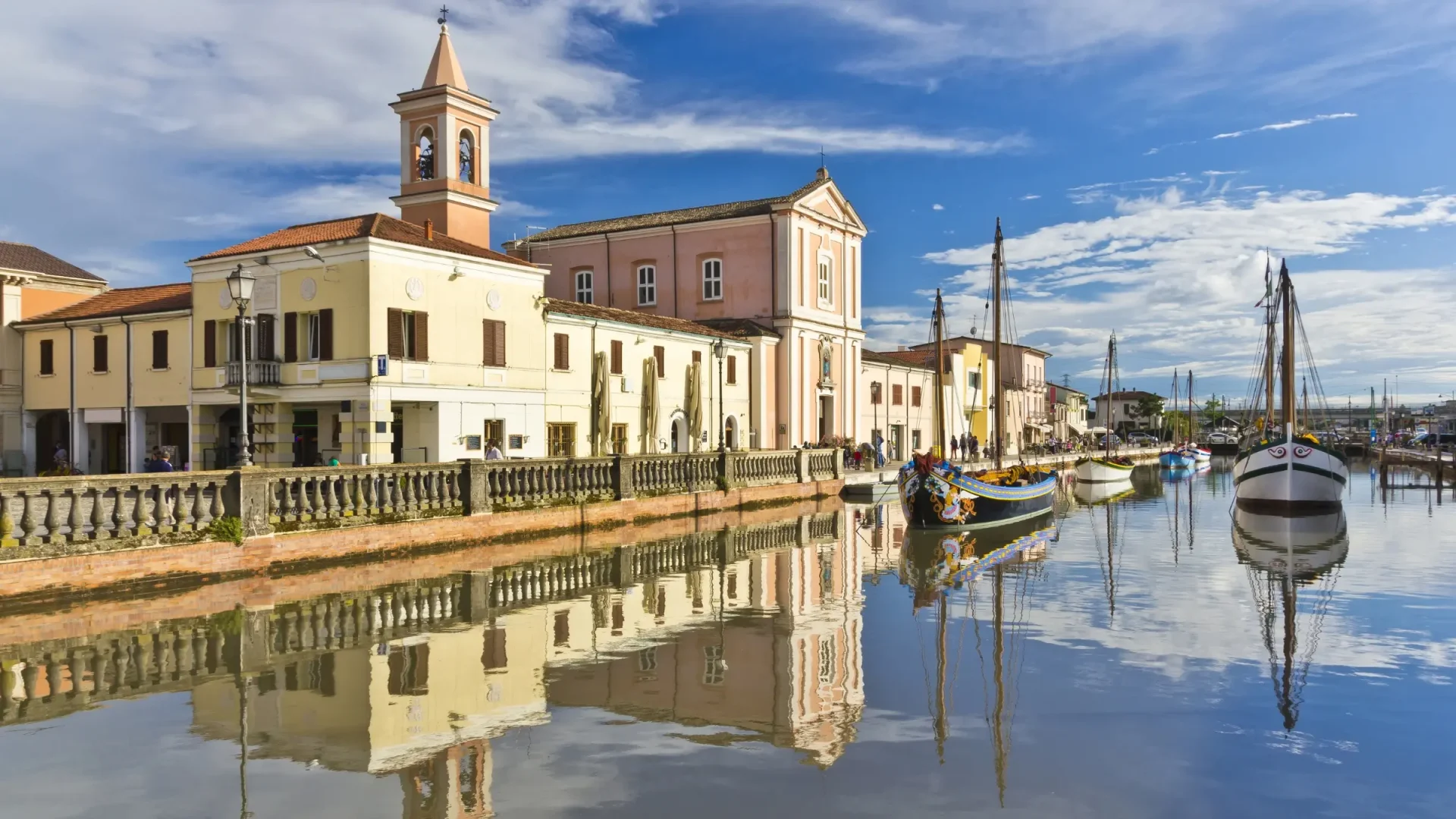
To really understand the importance of the Capanni da pesca, you have to look at the heart of Cesenatico: the Porto Canale Leonardesco. It is no exaggeration to say that this place was touched by genius. In 1502, commissioned by Cesare Borgia, none other than Leonardo da Vinci sketched out plans to improve the harbor basin. His aim was to prevent the entrance from silting up - a problem that plagued many ports at the time. Even if the Capanni themselves only dominated the scene in their current form later on, the entire hydraulic and architectural structure of the city is inextricably linked to this historical legacy.
The history of fishermen's huts is closely linked to the development of fishing techniques in the lagoons and canals. Originally, they were used by poor fishermen to earn a living when the sea was too rough to go out in boats, or for those who could not afford their own boat. The principle is ingeniously simple: a large, square net is lowered into the water using a system of winches and levers and after a certain time, often blindly, pulled up again. What wriggles in the net is the luck of the moment - often small fish, shrimps or crabs.
This tradition of „fishing while sitting down“ has developed into a cultural phenomenon over the centuries. In the 20th century, when tourism flourished on the Adriatic, many huts were modernized. Nevertheless, the locals are meticulous about preserving the original character. There are strict regulations on how a capanno should look, what colors may be used and how maintenance should be carried out. This protects the city's visual heritage from decay or commercialization. When you stroll along the canal today, you don't just see huts; you see living museums. Older gentlemen often sit on the small verandas, repairing nets or playing cards while the radio plays in the background - a scene straight out of a Fellini film, who himself came from this region and whose aesthetics can be felt on every corner here.
Pure romance: the most beautiful photo spots and moments
The Capanni da pesca in Cesenatico are a revelation for photographers and romantics. There is hardly any other place on the Italian Adriatic coast that is so photogenic. But to capture the perfect picture or experience the most magical moment, you need to know when and where to position yourself. The lighting conditions play the main role here and transform the wooden structures into completely new works of art several times a day.
The absolute highlight is undoubtedly the sunset. When the sun sinks behind the hills of Romagna and bathes the sky over the Adriatic in a firework display of orange, pink and gold, the black silhouettes of the Capanni and their nets form a breathtaking contrast. The best spot for this is the end of the pier, where the canal flows into the open sea. From here, you can look back at the row of huts that line up like pearls on a string, while the lights of the city begin to reflect in the water.
But the early morning also has its very own charm. When the mist is still light over the water and the town is still asleep, the huts radiate a melancholy beauty. This is the time of silence, interrupted only by the cry of the seagulls. Another fantastic photo spot is on the bridges that span the canal. The symmetry of the nets and jetties can be captured wonderfully from up there. In winter, when it can snow in Emilia Romagna or hoarfrost covers the woods, the Capanni offer an almost fairytale-like, surreal image that is very different from the classic summer postcards.
Not forgetting the Christmas season. Cesenatico is famous for its floating nativity scene („Presepe della Marineria“) on the historic boats in the canal. Although the Capanni are not the center of attention, they form the perfect dark setting for the illuminated spectacle on the water. The illuminated nets and fairy lights, which are often also found on the huts, create an atmosphere that will enchant even the biggest Christmas grouch.

Culinary excellence: feasting with a view of the nets
A visit to Emilia Romagna without culinary discoveries is unthinkable, and in Cesenatico the love of food blends perfectly with the surroundings of the Capanni. The region is home to some of Italy's finest ingredients, and here on the coast, fish naturally dominates. But it's not about expensive luxury fish, it's about the „Pesce Azzurro“ - the blue fish of the Adriatic. Sardines, mackerel and anchovies are the heroes of local cuisine, rich in flavor and omega-3 fatty acids.
Although most of the Capanni are privately owned and not public restaurants, the lifestyle they embody can be found in the numerous trattorias and osterias along the Porto Canale and the seafront promenade. Many of these restaurants are housed in historic buildings and offer terraces with a direct view of the fishermen's huts. Imagine sitting with a glass of well-chilled Albana di Romagna or a sparkling Trebbiano while the water laps against the piles just a few meters away.
An absolute must for gourmets is the „Fritto Misto“, a mixture of deep-fried seafood and small fish, which is served in a paper bag or on a plate. The art here lies in the lightness of the breading and the freshness of the oil. There are plenty of recommended addresses, but you should pay attention to the restaurants that are frequented by locals. Look for restaurants that are proud of their traditional „grigliata“ (grilled fish) or serve handmade pasta with clams („vongole“). Fine dining has also established itself in Cesenatico. Some chefs are reinterpreting poor fisherman's cuisine and conjuring up star-worthy creations without losing their touch. If you prefer something more rustic, look out for the small kiosks offering „Piadina Romagnola“ - the region's famous flatbread, often filled with „Saraghina“ (grilled sprat) and radicchio.

Dreamlike overnight stays: Stylish oases of peace in Cesenatico
To make your vacation in Cesenatico a complete success, you need the right accommodation. The town offers a wide range of hotels, from historic charm to modern luxury. Those who love the flair of the Capanni and the canal should try to find a place to stay near the historic center or directly on the promenade.
For travelers who appreciate the splendor of times gone by, there are beautiful grand hotels that breathe the elegance of the 1920s and 30s. These hotels often boast high ceilings, magnificent lobbies and excellent service that leaves nothing to be desired. Breakfast on a terrace with a view of the sea is the perfect start to the day. Particularly noteworthy are those hotels that have been renovated in recent years and now combine modern comfort with classic architecture. Many of these top hotels have their own pools and wellness areas, which is particularly attractive in the early or late season.
Those who prefer a more individual and familiar atmosphere are in good hands in the numerous boutique hotels and high-quality bed & breakfasts. Often run by owner families, the warm hospitality of the Romagnoli is particularly noticeable here. Some of these little gems are tucked away in the alleyways behind the canal and offer quiet courtyards where you can relax after a long day. Vacation apartments are also a popular option, especially for families or long-term vacationers who like to self-cater and shop at the local markets. When booking on portals such as Booking.com, pay attention to the location: „Centro Storico“ or „Porto Canale“ are the keywords for short distances to the sights.

Practical travel tips: Getting there, parking and the best time
Planning a trip to Cesenatico is pleasantly uncomplicated, as the infrastructure in Emilia Romagna is excellent. Those arriving by car usually take the A14 highway (Bologna-Taranto) and exit at Cesena. From there, it is only a few kilometers to the coast. As in many Italian coastal towns, parking is a bit of a challenge in high summer, but it can be solved. There are several large public parking lots on the edge of the historic center. An insider tip is the parking lot near the train station or at the western end of the Porto Canale, from where you can take a leisurely stroll to the Capanni. Many hotels also offer private parking spaces or agreements with parking garages - be sure to ask about this before you arrive.
The airports of Bologna (Guglielmo Marconi) and Rimini (Federico Fellini) are ideal for air travelers. Bologna is served by many international airlines and is around an hour's drive away. Rimini is much closer, but is served to varying degrees depending on the season. There are shuttle services or good train connections from both airports. Cesenatico train station is on the Rimini-Ravenna line and is well integrated into the regional network, which also makes day trips to these cities very easy.
When is the best time to travel? That depends entirely on your preferences. If you want to combine a beach vacation with culture, come between June and August. This is when life is buzzing, the Capanni are often illuminated and the town is full of energy. However, if you want to enjoy and photograph the authentic, quiet atmosphere of the fishermen's huts, you should choose the months of May, September or October. The light is softer then, the beaches emptier and the temperatures pleasantly mild. Even in winter, Cesenatico has its charm, especially at Christmas time, when the nativity scene on the boats transforms the town into a sea of lights and you can warm up afterwards in a trattoria.

A conclusion for connoisseurs
Cesenatico is more than just another seaside resort on the Adriatic. By preserving its maritime identity, symbolized by the proud Capanni da pesca and the visionary Leonardesco Canal, the town offers a depth that is often sought in vain elsewhere. It is a place that invites you to slow down, take a closer look and enjoy with all your senses. Whether you are a photographer on the hunt for the perfect light, a foodie wanting to taste the treasures of the sea or simply want to relax and unwind - the fishermen's huts of Cesenatico will remain in your memory for a long time as an image of tranquillity and constancy. Pack your bags and let yourself be seduced by the magic of Romagna.

Map: Cesenatico, Emilia Romagna

FAQ: Capanni da pesca in Cesenatico, Emilia Romagna
Where exactly are the most beautiful Capanni da pesca in Cesenatico for a walk?
The most picturesque fishermen's huts can be found along the canals and piers leading to the sea, especially at the end of the famous harbor canal designed by Leonardo da Vinci. A walk towards the outer piers gives you the best view of these traditional stilt houses against the backdrop of the Adriatic Sea.
At what time of day is the atmosphere at the fishermen's huts most impressive?
The Capanni da pesca are particularly magical during the golden hour just before sunset, when the warm light bathes the wooden structures and the large sinking nets in a golden glow. The early morning also offers a peaceful stillness that is ideal for photographers who want to capture the authentic coastal atmosphere without the crowds.
Is it possible to visit the inside of the fishing huts or eat in them?
Most of these huts are privately owned and serve as a retreat for locals to socialize in the evenings, but during local festivals or special cultural tours, the doors sometimes open to visitors. It's worth asking at local tourist offices about seasonal events that offer tastings or tours right on the waterfront.
What clothing and equipment is recommended for an excursion to the Capanni?
As the paths along the piers are often susceptible to wind, you should plan to bring a light windbreaker in the evening, even in summer, so that you can enjoy a carefree stay by the water. As the fishermen's huts are among the most sought-after photo opportunities in the region, a camera with a wide-angle lens or a smartphone with a good night mode for twilight is highly recommended.
Top accommodations in Cesenatico
Video: Cesenatico
Experiences & sights
Note: Disclaimer - Italien.news is not the owner or organizer of the sights, accommodations and events published here and therefore not responsible for program changes, cancellation of the event and possibly incorrect information. The editorial team of Italien.news always endeavors to provide detailed and accurate information. However, it is possible that events, attractions, etc. may be changed and not updated promptly. Exact details of dates, times and programs can be obtained directly from the owner of the attractions and accommodation.
Please also check the website or social media of the attractions and events for updates before you travel! Our blog articles contain our personal recommendations in the form of affiliate links. If you book or buy something via the links or simply click on them, we receive a small commission. This does not change the price for you at all. Content and texts © Italien.new & KI / Photos © Canva.com / shutterstock.com / Unsplash.com / Pixabay.com / Pexels.com / Others. Please also visit our Italy Shop!
Read more about theTopic


