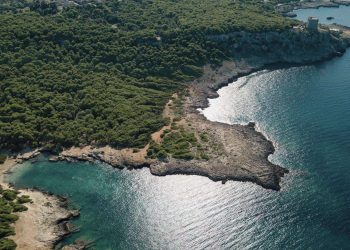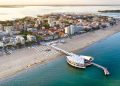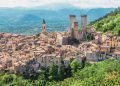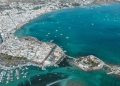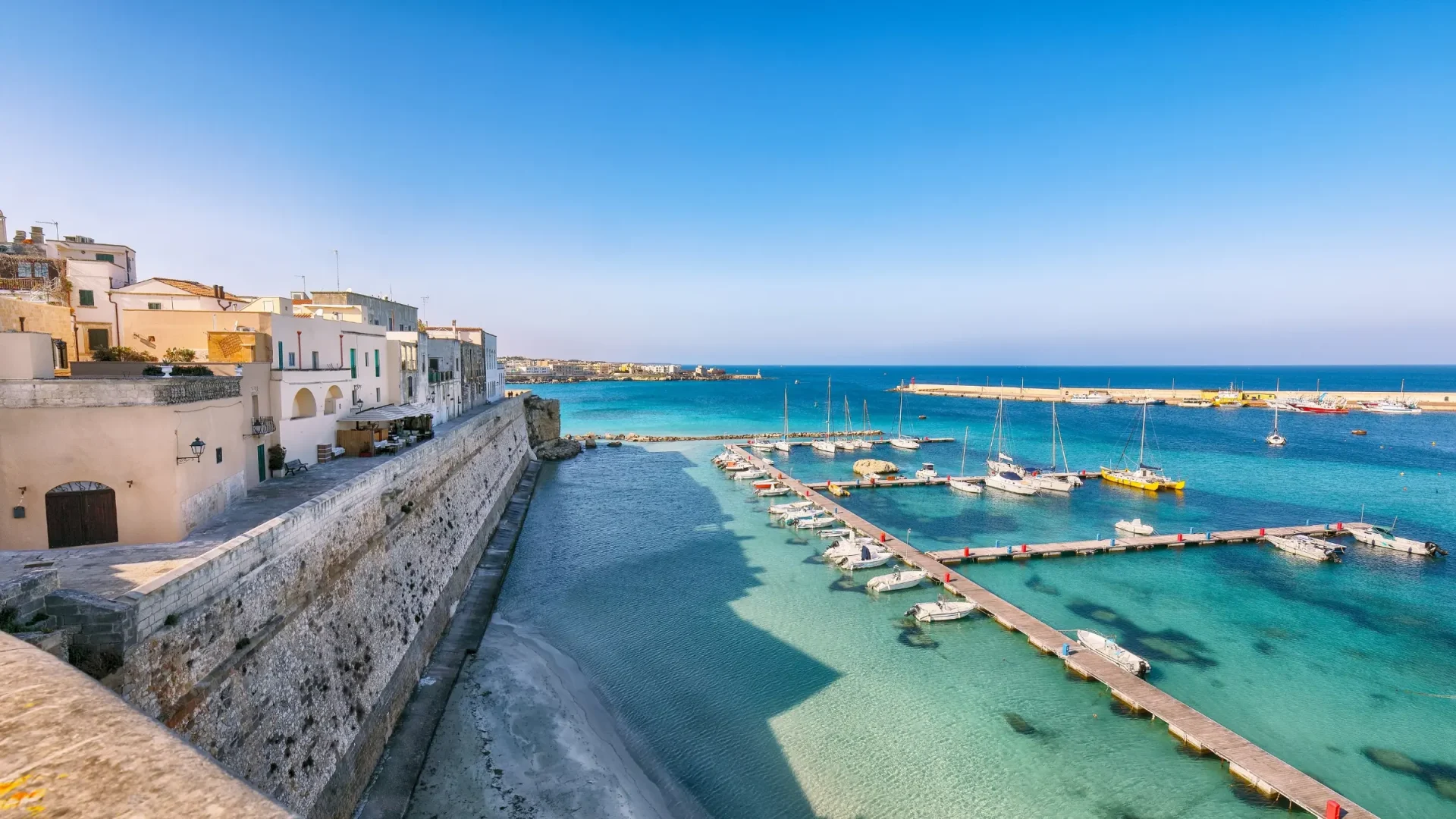

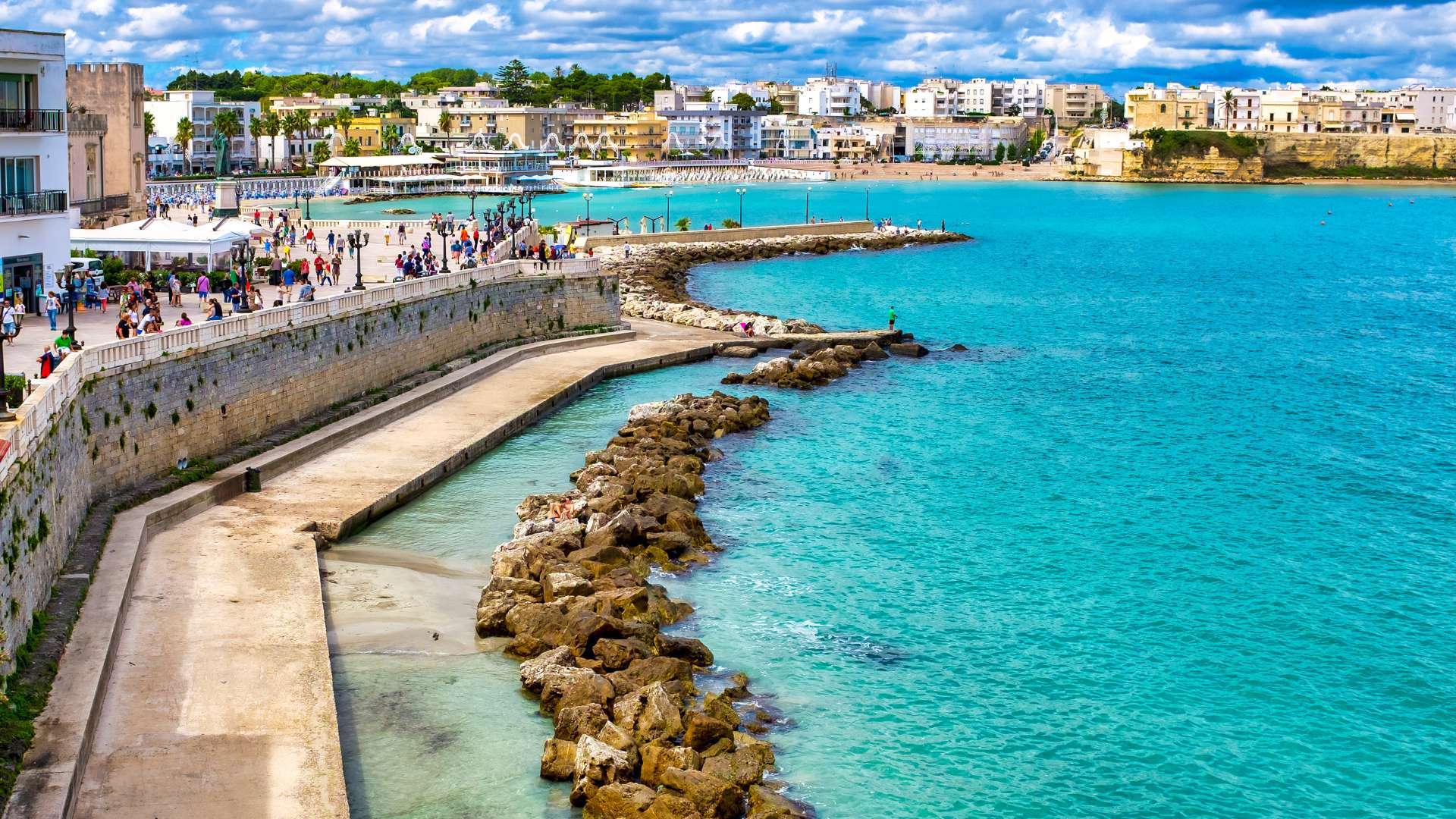
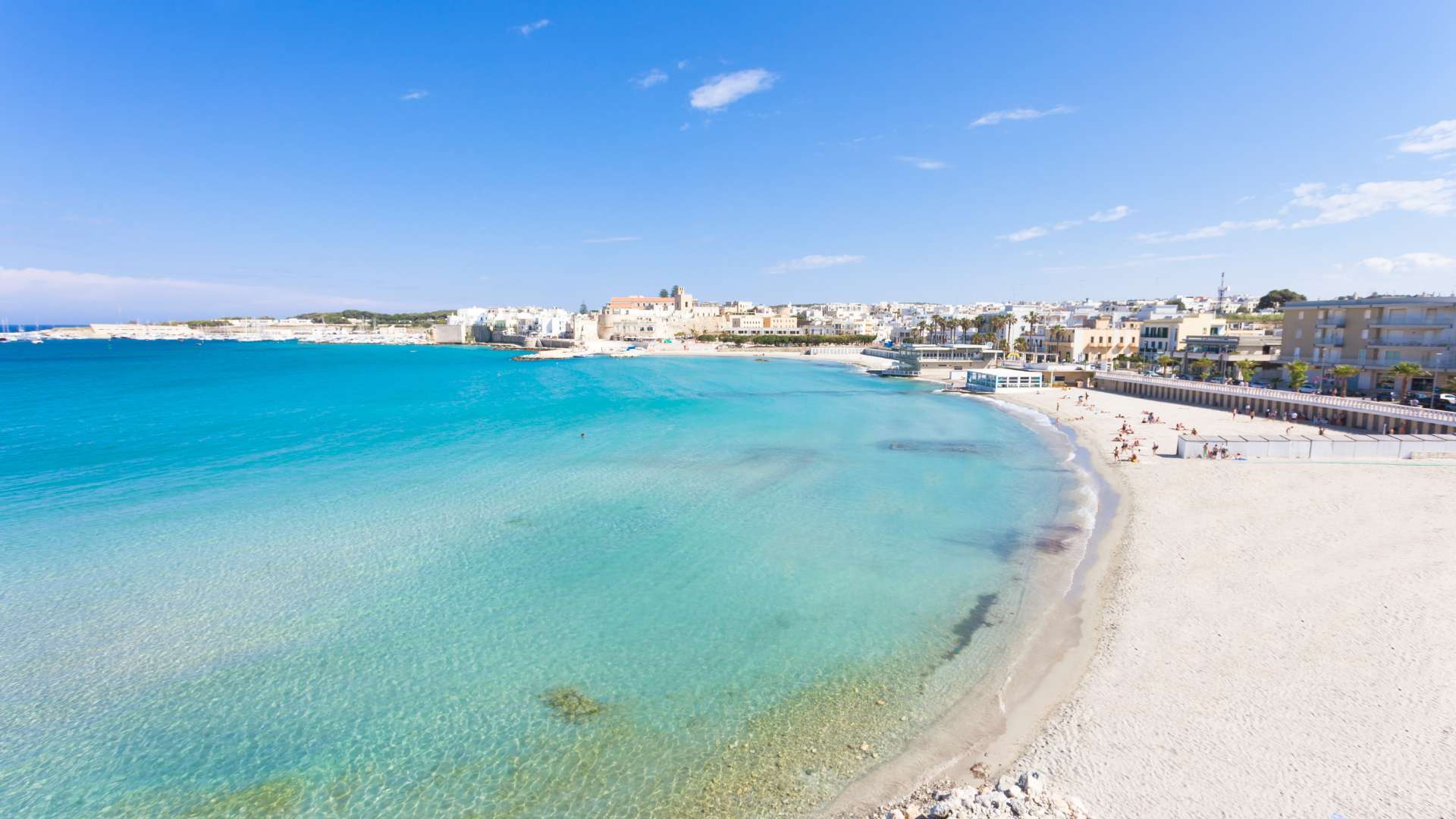
Otranto is far more than just a charming coastal town in the sun-drenched region Apulia. Embedded in the rugged coastline of the Salento, the south-easternmost tip of the Italian „boot heel”, this magical place combines breathtaking natural landscapes with an incomparable cultural wealth. Otranto is a place of geographical superlatives: the light of the morning sun first hits Italian soil at the nearby Punta Palascìa lighthouse. Otranto proudly looks out over the Adriatic Sea. At the narrowest point of the strait, the city lies just 70 to 80 kilometers as the crow flies from the coasts of Albania. This special strategic location has earned the city the illustrious nickname „Gateway to the Orient“, which still has a noticeable effect today.
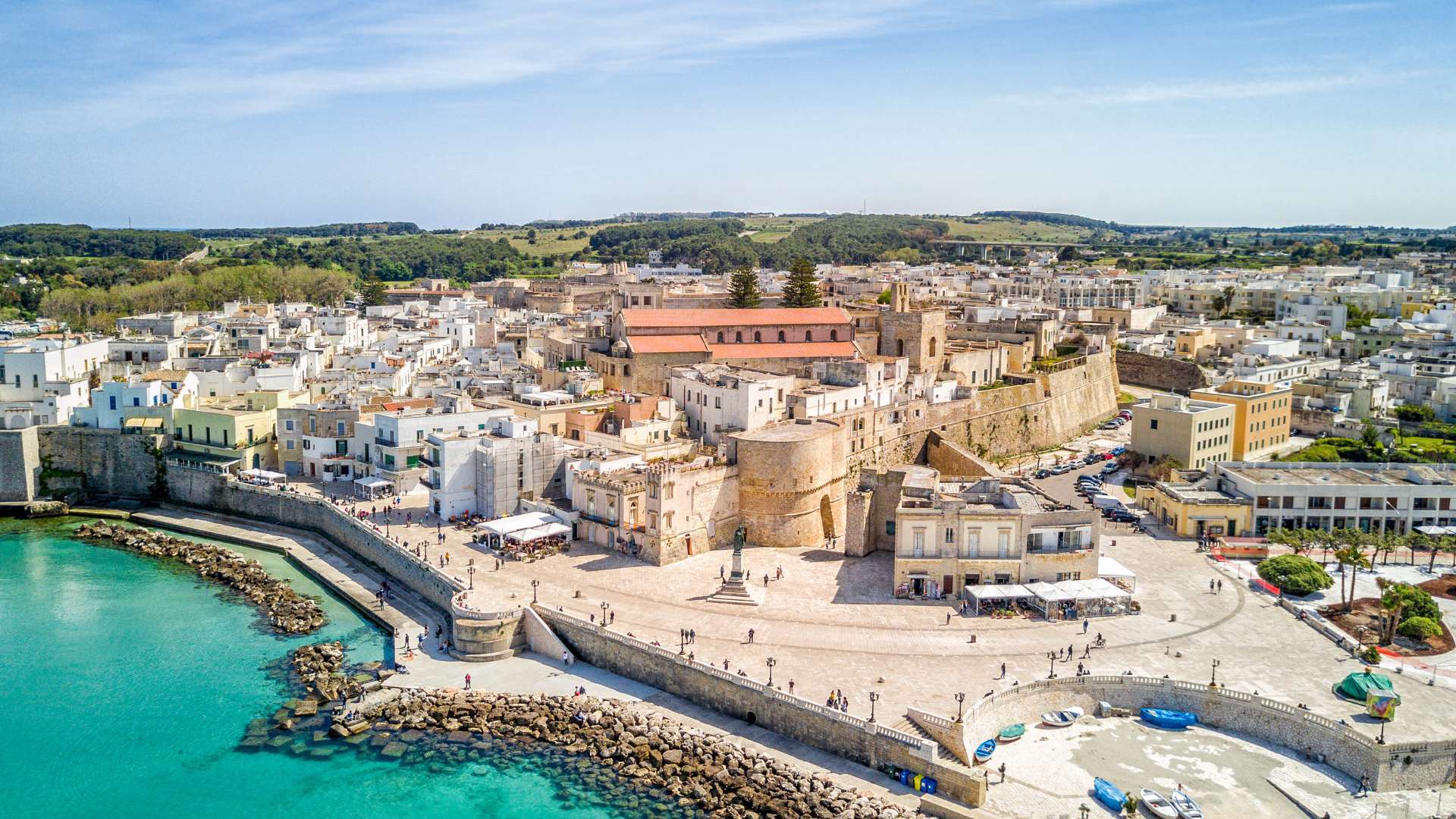
A stroll through the historic old town is like a fascinating journey through time. Otranto masterfully combines the cool grandeur of the Norman cathedral with the defiant power of the massive Aragonese fortress walls that protectively enclose the historic center. The turquoise waters of the Adriatic glisten at the gates of the city, while one of the most impressive works of art in southern Italy is hidden inside the Cathedral of Santa Maria Annunziata: a gigantic floor mosaic that is almost a thousand years old. It depicts a mystical tree of life that unites world history, religion and myths. At the same time, the city is inextricably linked to one of Italy's most dramatic episodes: the tragic fate of the martyrs of Otranto during the Ottoman siege in 1480.
Those who come to Otranto will find much more than just an idyllic Seaside resort. As soon as the sun goes down, the whitewashed, winding alleyways turn into a vibrant labyrinth full of life. With its countless trattorias, bars and small craft stores, it is one of the liveliest centers in the entire Salento region. In this blog article, we take you on an unforgettable journey through Otranto and its picturesque surroundings. This guide will show you everything you need to know for your visit: from the most important historical sights and authentic restaurant tips to the most hidden beaches and bays in this enchanting region.
History of Otranto: between antiquity and the Ottoman siege
Otranto can look back on over two thousand years of fascinating history, which is inextricably linked to its strategic location on the edge of Europe. Even in ancient times, the city flourished as a vibrant hub between the western and eastern Mediterranean. The Greeks initially called the city Hydrus, before the Romans developed the port as Hydruntum into an indispensable transshipment point for maritime traffic to Greece and the Orient. Merchants, Roman soldiers and later crusaders and pilgrims on their way to the Holy Land shaped the cosmopolitan streetscape of this era.
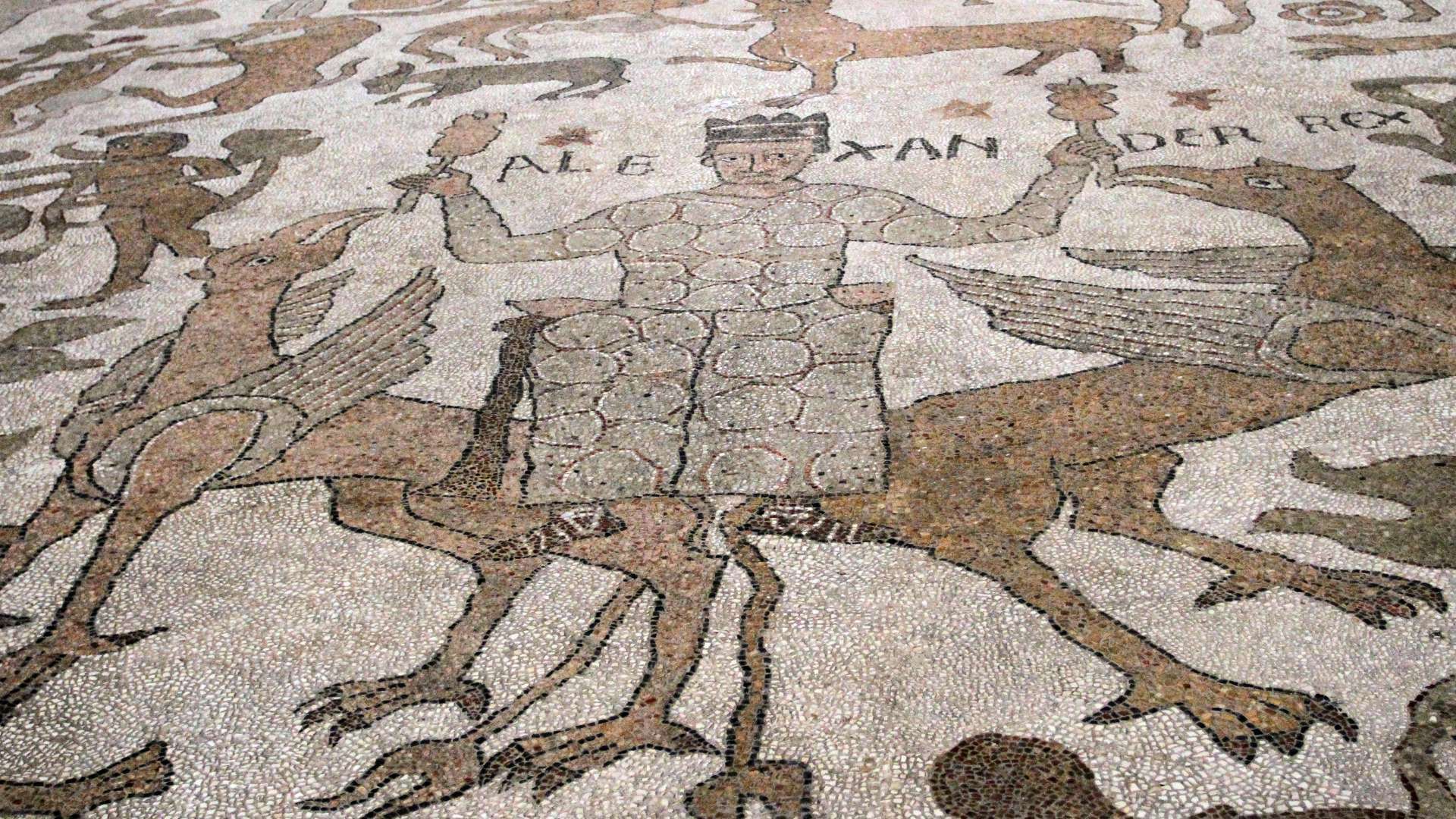
In the 11th century, the Normans left an indelible architectural mark on the city, most notably with the construction of the majestic Cathedral of Santa Maria Annunziata. It was consecrated in 1088 and is still the spiritual and historical heart of Otranto today. Its interior contains a true marvel: between 1163 and 1165, the monk Pantaleone created a monumental floor mosaic from the once important nearby monastery of San Nicola di Casole. A detailed tree of life spreads across a gigantic surface, bringing together hundreds of scenes. This masterpiece is a veritable stone encyclopaedia of the Middle Ages, in which biblical stories merge seamlessly with zodiac signs, pagan myths and even legendary figures such as King Arthur.
The coastal town experienced a dramatic turning point in the summer of 1480, when a huge Ottoman fleet under the command of Gedik Ahmed Pasha landed, broke through the defenses and carried out a devastating massacre after the conquest. Those 800 male inhabitants who, according to tradition, heroically refused to renounce their Christian faith and convert to Islam have gone down in the collective memory of southern Italy. They were beheaded on the Colle della Minerva hill. Today, their bones and skulls fill the ceiling-high, glass shrines in the so-called Martyrs' Chapel inside the cathedral. Visitors are still awestruck by this sight. In 2013, these martyrs of Otranto were officially canonized by Pope Francis.
After recapturing the city in 1481, the Aragonese responded to this trauma with monumental military determination. In order to protect the city from attacks from the sea forever, they built a massive defense system. The fortified Castello Aragonese and the thick, almost impregnable city walls, which today frame the historic center so picturesquely, date back to this time. Incidentally, the dark aura of the fortress inspired the English author Horace Walpole to write „The Castle of Otranto“ in the 18th century, the first horror novel in literary history. Today, the port city has long since left its bloody past behind. Not only does it proudly belong to the association „Borghi più belli d'Italia” (the most beautiful villages in Italy), but it was also recognized by UNESCO in 2010 for its historical role as a peace ambassador site.
What is there to see? - Top highlights and sights
Despite its small size, Otranto is exceptionally rich in sights ranging from Norman sacred art to spectacular natural phenomena.
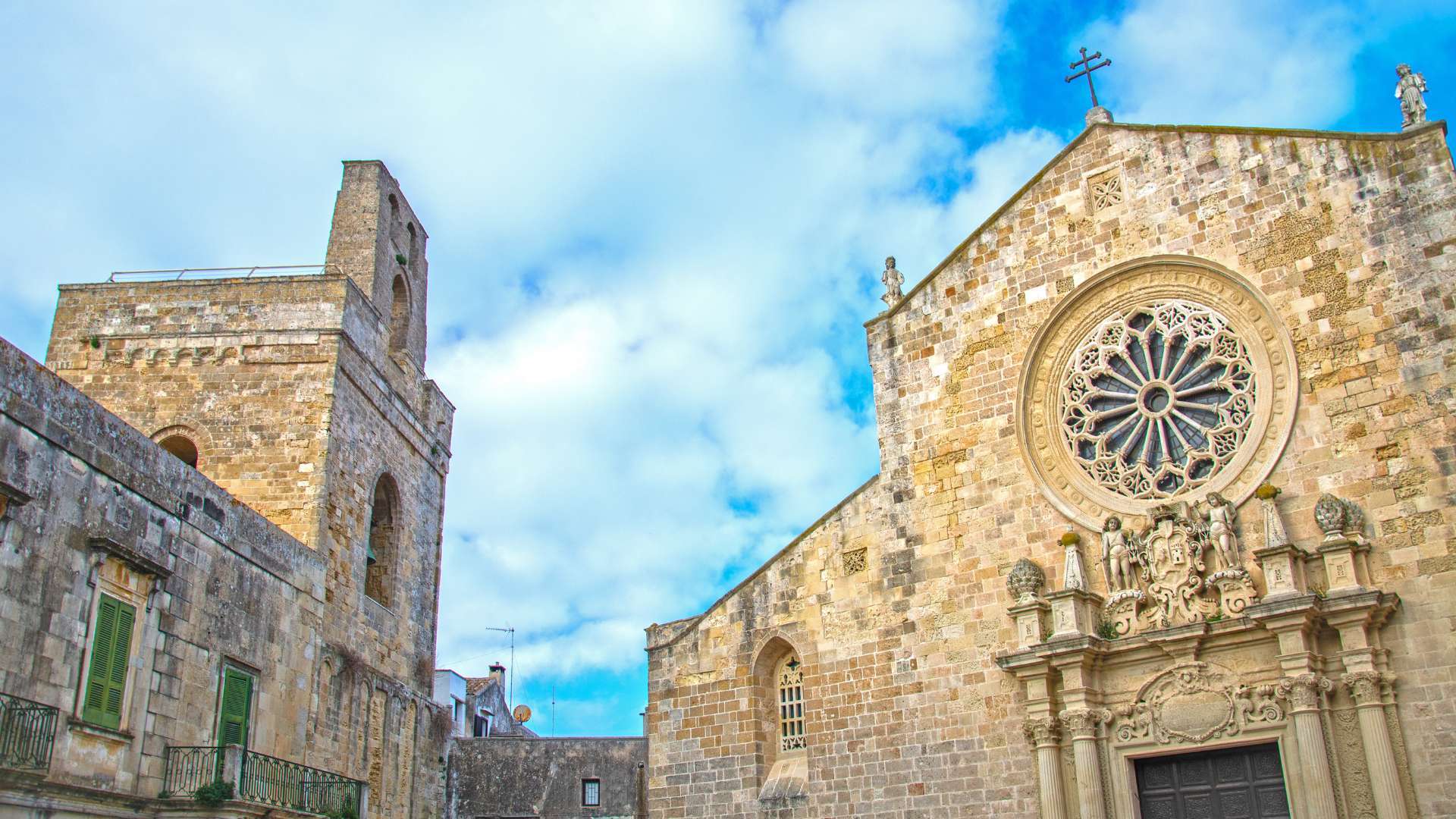
Cathedral of Santa Maria Annunziata
The majestic Norman cathedral of Santa Maria Annunziata is the undisputed spiritual and historical heart of Otranto. When you enter the cool interior of this venerable building from the sun-drenched, white alleyways, you are immediately faced with one of the most important and enigmatic works of art in southern Italy. The almost complete floor of the central nave, transept and apse - a gigantic area of around 800 square meters - is covered by a masterful mosaic. It was painstakingly created by hand by the monk Pantaleone in the 12th century. It forms a huge, mystical tree of life, whose branches tell a fascinating story of the way the world was conceived at the time. Here, biblical leitmotifs such as the Tower of Babel merge quite naturally with pagan signs of the zodiac, ancient myths and historical figures such as Alexander the Great to form a veritable stone encyclopaedia of the Middle Ages.
However, the cathedral also hides a deeply dark chapter in the city's history. The impressive Chapel of the Martyrs is located in the right aisle. The bones and skulls of the 800 inhabitants who lost their lives in the devastating Ottoman massacre of 1480 are lined up here in floor-to-ceiling glass shrines. This sight inevitably gets under your skin and calls for quiet contemplation. Fortunately, entry to the church is free of charge. However, please note the closing times at midday when planning your visit. My very special tip for your visit: it's best to come here in the late afternoon. As the main façade faces west, the warm light of the low sun shines through the magnificent Gothic rose window at this time, bathing the centuries-old floor mosaic in an incomparably magical, soft glow.
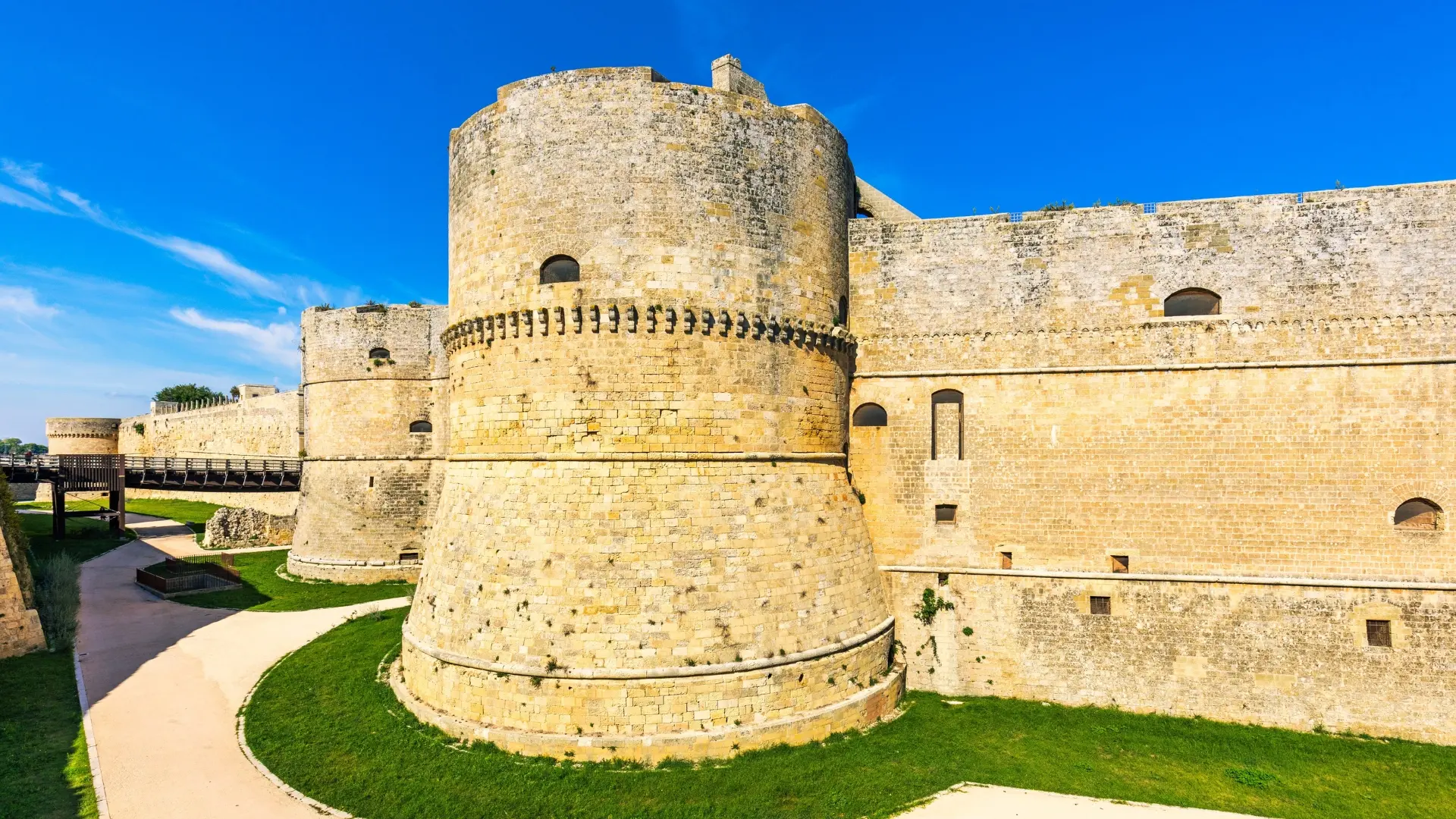
Castello Aragonese: The fortress by the sea
Anyone approaching the historic center of Otranto can hardly miss the colossal Castello Aragonese fortress at the harbor. Surrounded by deep moats, the massive fortress is the stony result of a historical trauma: after the devastating Ottoman siege and massacre of 1480, the rulers of the House of Aragon had the defenses massively expanded from 1481 and continuously reinforced over the following centuries in order to protect the city from attacks from the sea forever.
Today, the seemingly impregnable fortress with its thick walls and defensive towers forms a fascinating contrast to the light, Apulian vacation atmosphere. A stroll through the cool vaults is not only worthwhile for history buffs. The spacious rooms house exciting permanent exhibitions on the history of the city and the region, including fascinating insights into the prehistoric „Grotta dei Cervi“ of Porto Badisco. The original cave is closed to the public.
In recent years, the Castello has also established itself as a first-class venue for top-class, changing art exhibitions. This is an important aspect for your travel budget: the frequently mentioned 3 euro entrance fee is usually only charged in the depths of winter when no exhibitions are taking place. In the regular season, especially in summer, you should expect to pay between 10 and 12 euros for the combined ticket.
Another highlight awaits literature fans: the dark, fortified aura of these walls inspired the English writer Horace Walpole to write „The Castle of Otranto“ in 1764, which is now considered the very first horror novel in literary history. The crowning glory of your visit is the ascent to the massive fortified towers and the extensive terrace. From up here, you can enjoy a breathtaking panoramic view of the lively harbor, the deep blue waters of the Adriatic and the labyrinth of the adjacent city walls. These then invite you to take another wonderful walk.
Basilica di San Pietro: the hidden Byzantine jewel
In the middle of the winding labyrinth of the historic old town, the St. Peter's Basilica a real art-historical treasure, which could all too easily be overlooked if you were just passing by. To discover it, you have to look carefully for the rather inconspicuous portal in the narrow alleyways. However, once you have found it and enter the church, you will find yourself standing in what is probably the oldest church in Otranto and an absolutely unique piece of architecture. Built in the style of a classical Greek cross with a central dome, the building from the 9th or 10th century is considered the most outstanding surviving example of purely Byzantine sacred architecture in the whole of Apulia.
An almost mystical atmosphere awaits you in the pleasantly cool semi-darkness of the interior. The walls are covered all over with breathtaking, colorful Byzantine frescoes, which were created in different centuries and depict impressive motifs such as the washing of Christ's feet or the Last Supper. A particularly fascinating detail, which wonderfully underlines the role of Salento as an ancient crossroads of cultures, is hidden in the fine decorations of the paintings. In addition to the ancient Greek lettering typical of the Byzantine rite, so-called pseudo-Kufic elements can also be discovered here: elaborate ornaments that appear to the viewer like Arabic inscriptions and were naturally woven into the Christian works of art as exotic decoration. This quiet place is an absolute must for anyone who wants to delve deep into the complex, oriental-influenced past of southern Italy.
Old town and Lungomare
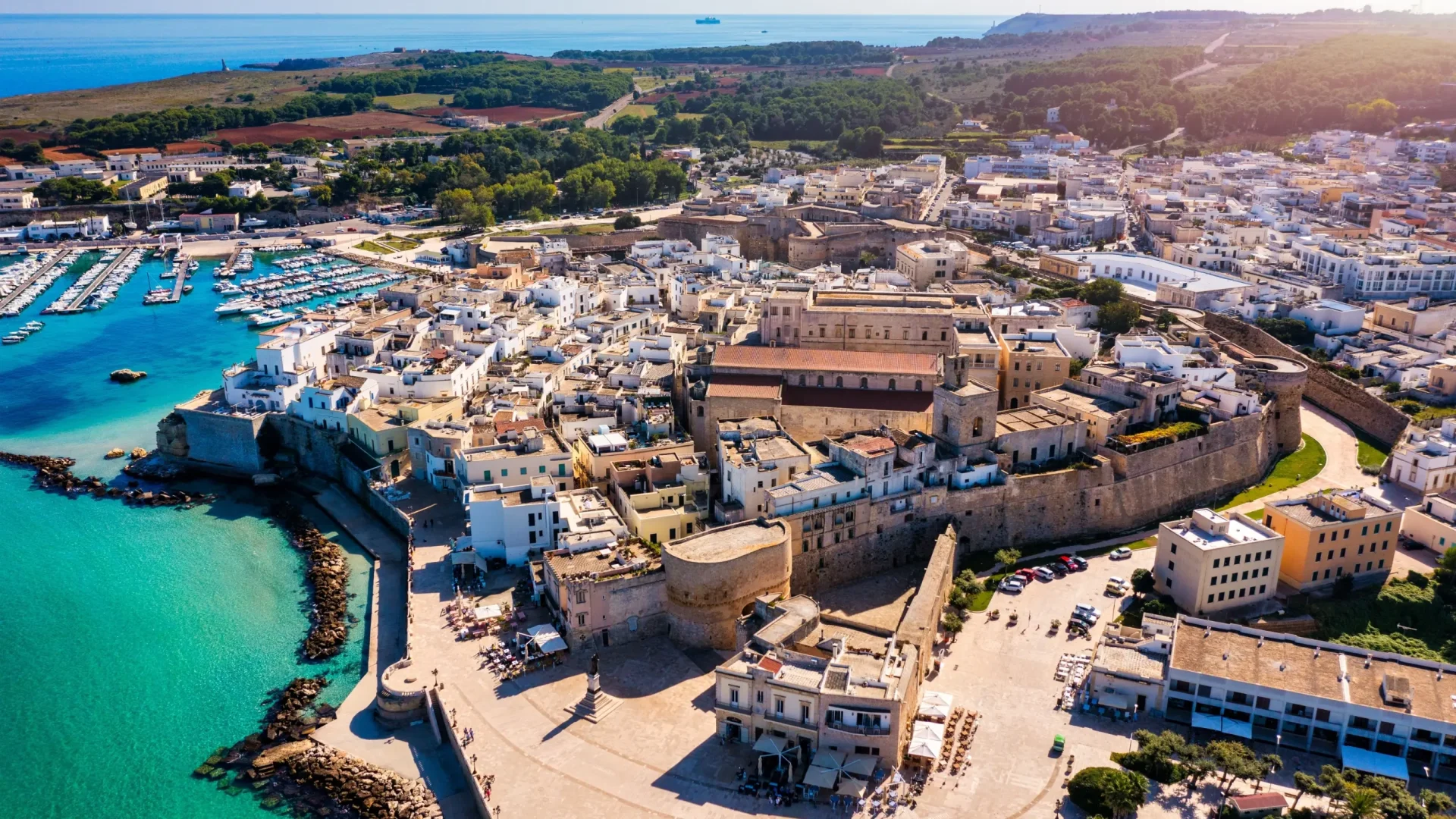
The best way to reach the historic heart of Otranto is through the Porta Alfonsina. This mighty Aragonese city gate was built after the liberation from the Ottomans. It is flanked by two defiant round towers and marks the imposing entrance to a completely different world. As soon as you walk through the gate, a picturesque labyrinth of gleaming whitewashed alleyways and hidden little squares opens up before you. During the day, countless charming boutiques and workshops invite you to browse for regional handicrafts such as hand-painted Apulian ceramics or lovingly crafted leather sandals.
However, as the day draws to a close, the old Centro Storico into a lively, almost magical stage. An irresistible aroma from the many excellent trattorias wafts through the narrow streets. Small bars set up their tables on the historic cobblestones and street musicians accompany the colorful hustle and bustle with southern Italian sounds. Afterwards, a stroll along the elegant Lungomare degli Eroi an absolute must. This wide „Promenade of Heroes“, whose name is a reverent reminder of the city's historical martyrs, seamlessly connects the old town with the fine sandy city beach. As Otranto is located on the east coast, the sun does not sink into the sea in the evening, but rather inland. But this makes for a spectacular natural spectacle in the evening: the warm light of the low sun illuminates the coastal town and bathes the massive fortress walls, the bright promenade and the gently lapping water in an unforgettable golden glow.
Punta Palascìa - Italy's easternmost point
Around five to six kilometers south of Otranto, the dazzling white lighthouse of Punta Palascìa, also known as Capo d'Otranto, is a place of absolute geographical superlatives. It impressively marks the easternmost point of the Italian mainland. It is here that the light of the morning sun first kisses the Italian soil. It is a deeply rooted, almost magical ritual in Salento to stand on the cliffs in the quiet morning twilight and watch the spectacular spectacle of the country's first sunrise. On a clear day, the Balkans come fascinatingly close, allowing you to look across the narrow strait of the Adriatic Sea and see the rugged peaks of the Albanian mountains on the horizon.
Getting there is a wonderful little adventure in itself, but one that needs to be well planned. Take a relaxed drive along the picturesque SP87 coastal road, park your car at the top of the cliffs and make your way down to the lighthouse on foot. Sturdy footwear is not only a good idea, but essential, as the descent and especially the rather steep, partly rocky way back uphill require a bit of stamina and surefootedness. But the small effort is rewarded with a wildly romantic natural backdrop, a fresh sea breeze and a boundless panorama that is guaranteed to take your breath away.
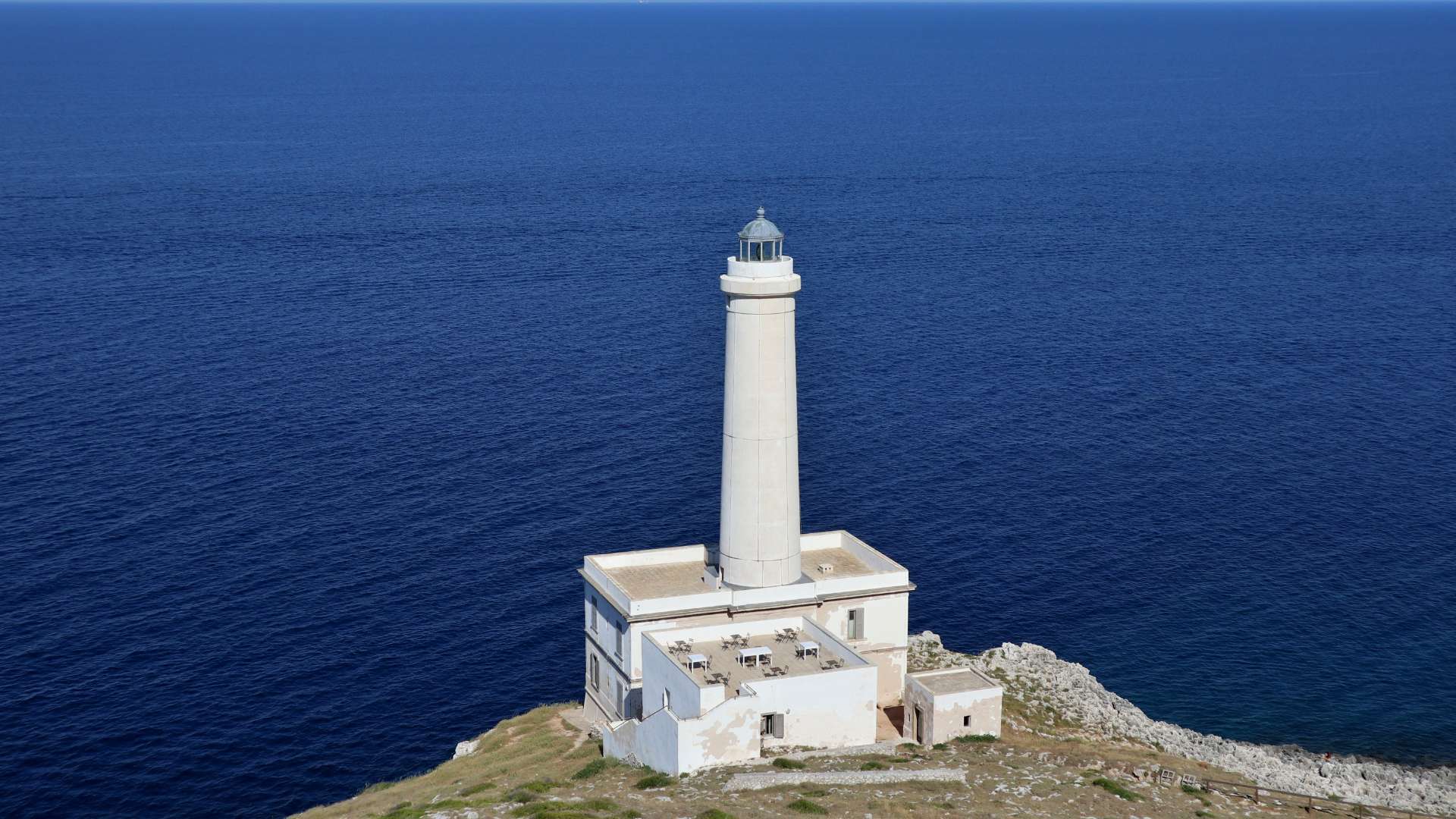

Punta Palascìa near Otranto: Italy's easternmost point
The rugged nature on the eastern edge of Italy welcomes visitors with archaic violence: the wind pushes incessantly against the jagged limestone cliffs,...
Cava di Bauxite: The emerald green lake in the red rock
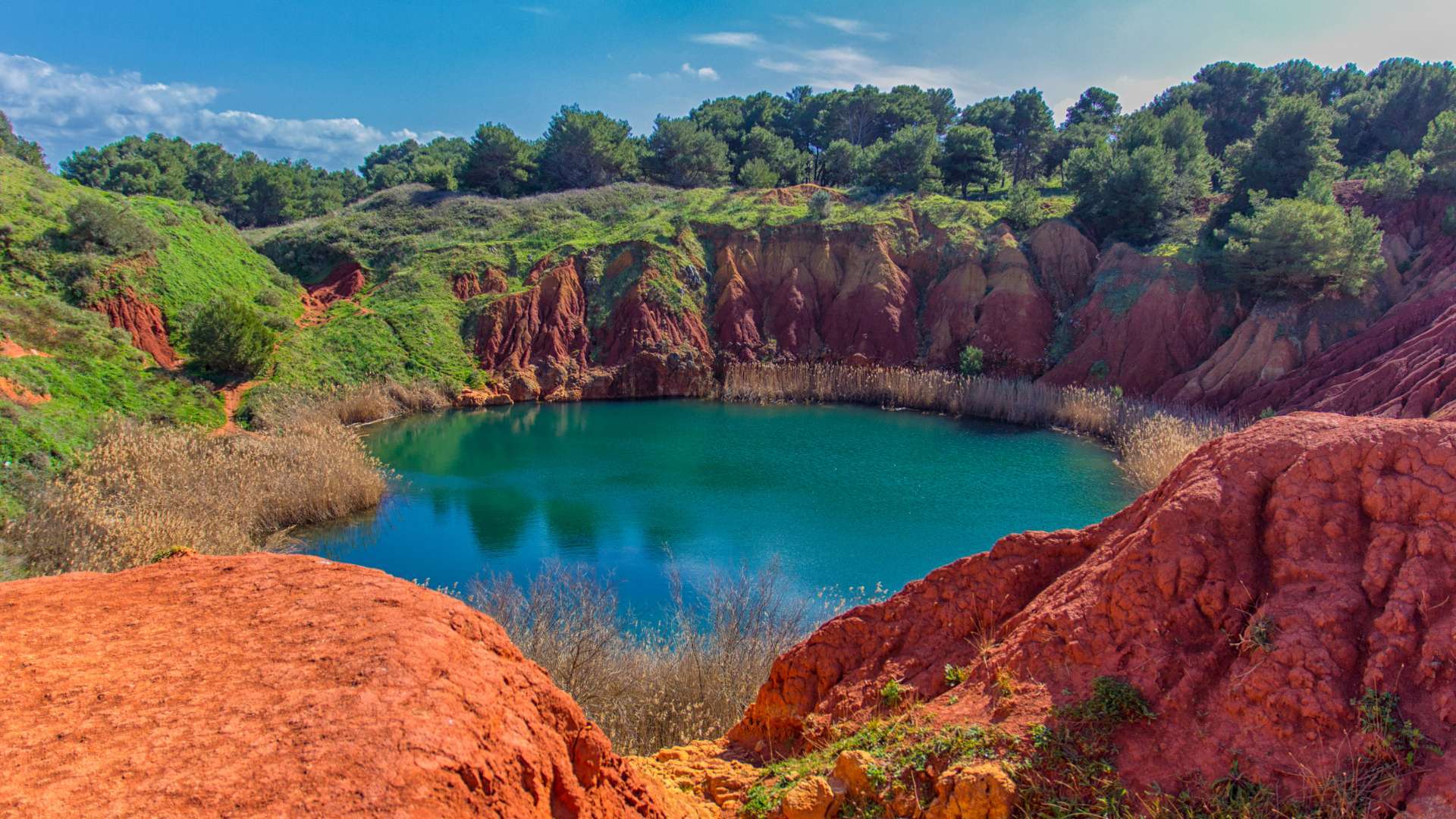
Just a few kilometers south of Otranto, an absolute visual highlight and one of the most surreal natural spectacles in Salento awaits you: the Cava di Bauxite. When you enter this place, you will inevitably feel like you are on an alien planet. The eponymous aluminum ore bauxite, which is rich in iron, was mined in this former quarry until it was shut down in 1976. The earth here owes its deep red color to this. Since then, the abandoned crater has gradually filled with water from underground springs and rainwater, forming a small lake. The intense emerald green of the water, together with the rust-red glowing, jagged rock faces and the wild, sprawling green vegetation, creates an unreal, extremely photogenic color contrast. Especially in the late afternoon hours, when the soft sunlight makes the warm red tones of the earth glow almost fiery, the backdrop is transformed into one of the most impressive photo motifs in southern Italy.
An important current background to your visit: as the site is privately owned, there have always been uncertainties here. Most recently, a sudden closure by the owners at the beginning of 2026 caused a stir, as the area was unceremoniously fenced off. Fortunately, the municipality was quick to mediate, meaning that the footpath to this fascinating natural wonder is once again officially safe for visitors. You can easily park your car in a nearby designated parking lot (the fee is usually a fair 3 euros) and reach the crater from there via a short, unpaved footpath. A small but absolutely golden tip on the side: don't wear brand new, white sneakers for this excursion, as the fine, red bauxite dust is extremely stubborn.
The Grotta della Poesia and the excavations of Roca Vecchia
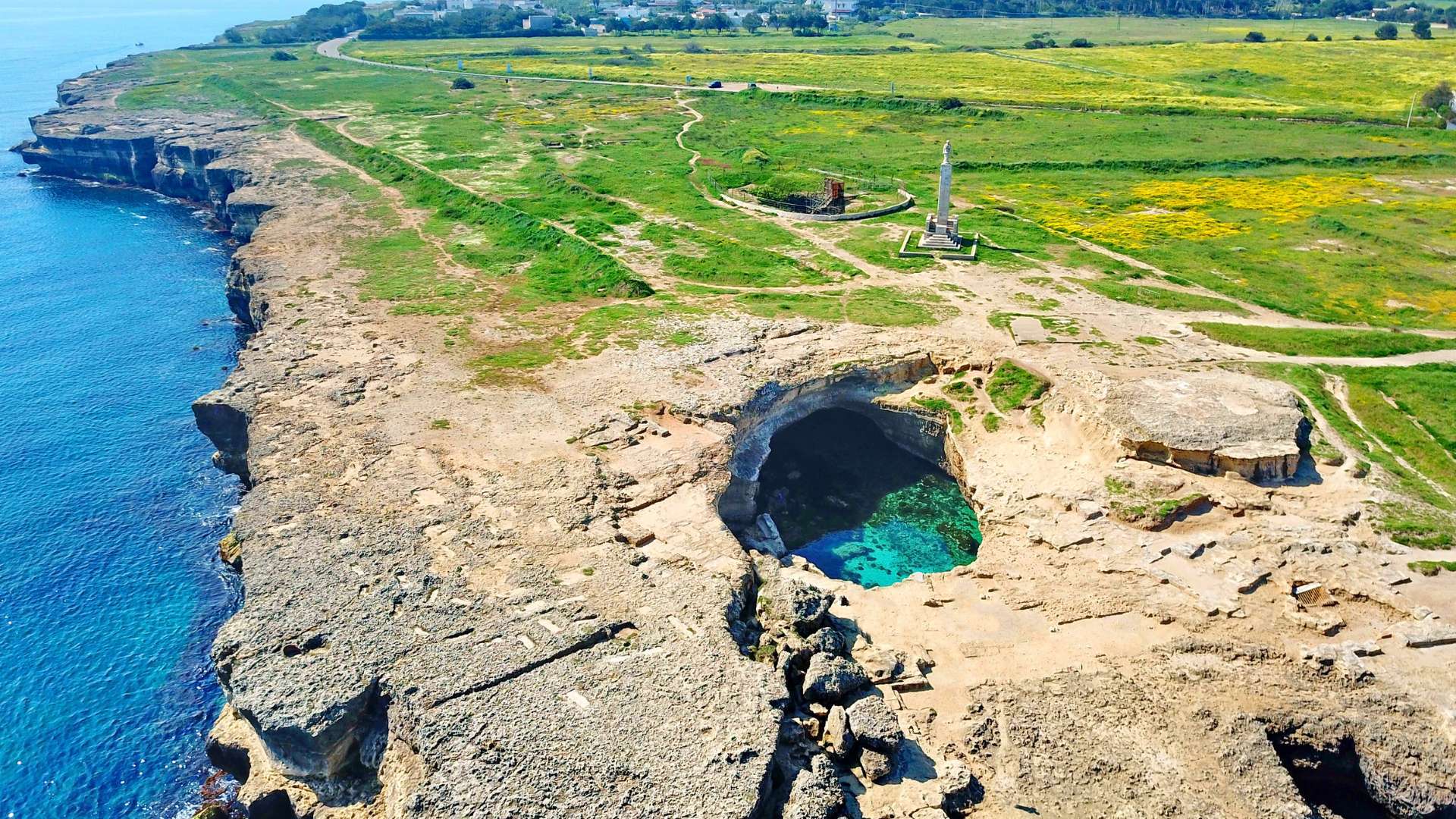
Just a short and scenic trip from Otranto, around 20 kilometers further north between the coastal towns of San Foca and Torre dell'Orso, lies the Grotta della Poesia, one of Puglia's most fascinating natural wonders. The spectacular, collapsed karst cave forms a circular, natural rock pool in which the waters of the Adriatic Sea glow in the most intense shades of turquoise and emerald. The melodious name „Cave of Poetry” goes back to a romantic local legend. According to the legend, a beautiful princess once bathed regularly in this hidden natural pool. Word of her beauty spread throughout the south and poets and poets flocked to the cliffs to write verses about her. An important note for your visit: even though the grotto is often touted as one of the most beautiful natural swimming pools in the world, swimming and cliff jumping is now strictly forbidden to protect the fragile rocks and archaeological sites. However, the magical view from the cliffs is still well worth the visit.
Directly adjacent to this natural wonder is the archaeological site of Roca Vecchia. This ruin site is invaluable for historians, as it extends far beyond the Roman era and provides deep insights into the earliest history of the Mediterranean region. The remains of the gigantic fortifications from the Bronze Age are particularly impressive. They prove that this strategically favorable coastal plateau was already densely populated between the 15th and 11th centuries BC. The archaeologists discovered clear traces of fire and layers of destruction here, which are silent witnesses to ancient sieges and violent conflicts. Later, the Messapians, an ancient indigenous population of southern Italy, used the site and left inscriptions on the cave walls. These indicate that the area was not only a flourishing city, but also an important place of worship for local deities.
After the decline of the Messapian culture, the settlement was initially abandoned until the early Middle Ages, when Basilian hermit monks sought refuge in the caves. In the 14th century, the place experienced a brief renaissance under the French Count Gualtieri di Brienne as the fortified town of „Roca”. However, the dark shadows of history also caught up with this stretch of coast: Like the nearby town of Otranto, Roca was brutally plundered by Ottoman troops in 1480. After its liberation, the abandoned fortress quickly became a notorious hideout for pirates, who terrorized the Salento coast from here. To put an end to this threat once and for all, the Spanish viceroy ordered the complete destruction of the city in 1544. This dense, multi-layered history - from Bronze Age wars to Messapian rituals and pirate hideouts - combined with the dramatic landscape of the Grotta della Poesia, makes Roca Vecchia an absolute must-see for every Salento traveler today.
Laghi Alimini: natural idyll and Caribbean sand
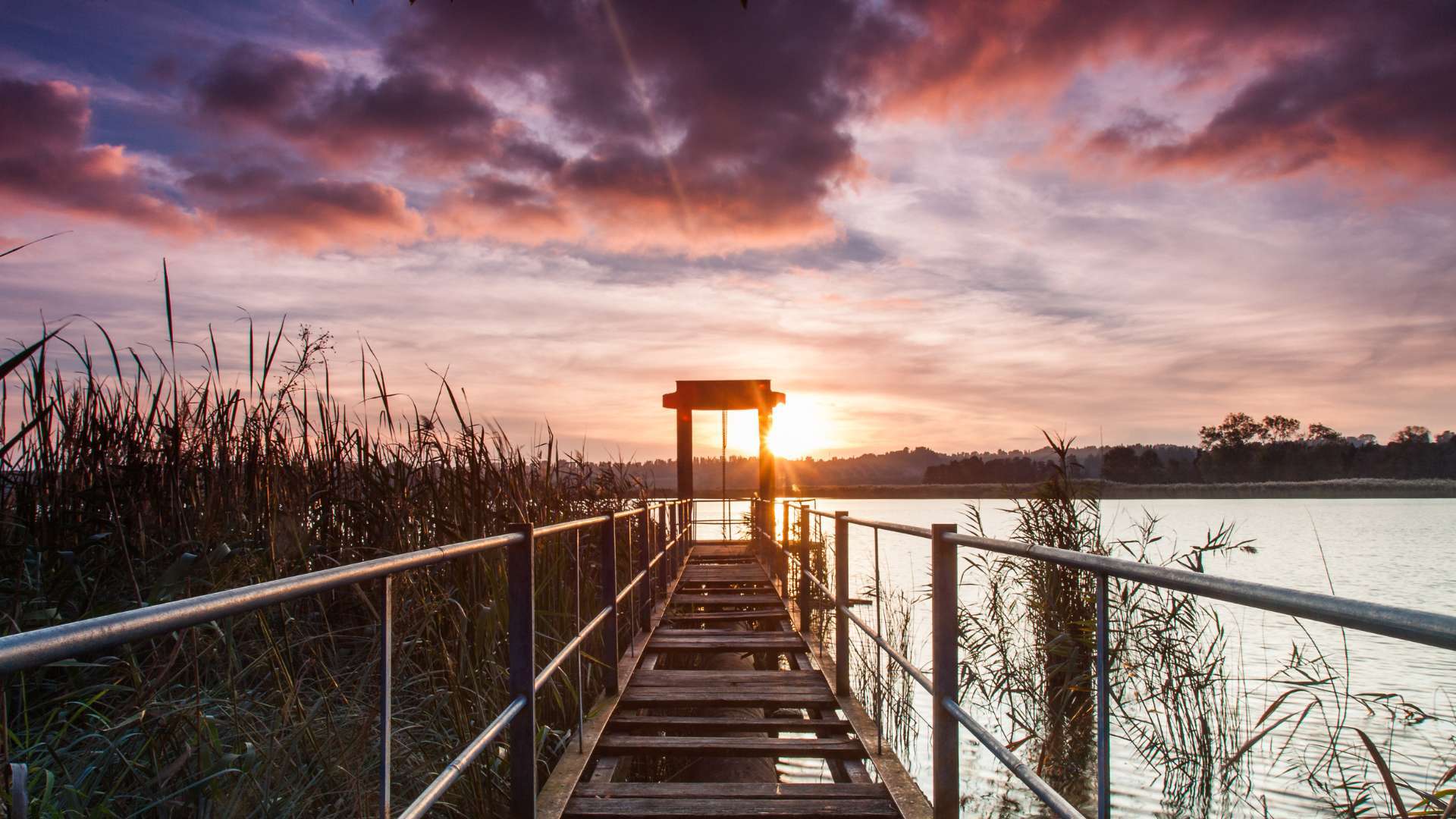
Around eight kilometers north of Otranto, the Laghi Alimini are a fascinating double face of the Apulian landscape. The protected nature reserve consists of two bodies of water that are connected by a narrow channel, but could hardly be more different. The larger lake, Alimini Grande, is highly saline and is fed directly by the nearby sea. The smaller lake, Alimini Piccolo, owes its clear fresh water to numerous underground springs. Surrounded by lush Mediterranean scrub and dense, wonderfully resin-scented pine forests, this vast oasis is a wonderful, shady retreat away from the summer coastal hustle and bustle. The quiet shores are ideal for long walks and are a paradise for nature lovers and birdwatchers. With a little luck and patience, you can admire majestic pink flamingos, herons and storks in their natural habitat.
But this natural idyll also has an irresistible side to offer sun worshippers. Just a short walk away through the dense pine forest, which separates the lakes from the coast like a green protective belt, is the lively Spiaggia di Alimini beach. This wide stretch of coast is considered one of the widest and finest sandy beaches in the entire Salento. In contrast to the wilder bays in the region, you will find an excellent tourist infrastructure here. Numerous well-equipped lidos offer comfortable sun loungers, small beach bars and a variety of water sports. As the powdery white sand slopes gently and gently into the crystal-clear, turquoise waters of the Adriatic, Alimini beach is very popular with families with children and guarantees a carefree day of swimming.
Baia dei Turchi: Caribbean flair in Salento
Just six to seven kilometers north of Otranto lies one of the most famous and spectacular beaches in Puglia: the Baia dei Turchi. The name „Bay of the Turks” is a reminder of a dark chapter in the region's history: the Ottoman fleet landed on this picturesque stretch of coast in 1480 to attack Otranto. Today, however, there is no trace of this dramatic past. The beach is a true natural paradise and part of the protected „Parco Naturale Regionale“ nature park. It is often quite rightly referred to as the „Caribbean of Salento“. Here, fine, dazzling white sand meets crystal-clear water that glows in the most intense shades of turquoise. As the sea is wonderfully shallow and has hardly any currents, the bay is particularly suitable for a relaxing day of swimming with the family and for smaller children.
An important tip for planning your visit: you cannot drive directly to the water's edge. The designated parking spaces are located slightly inland. The daily fees are usually between 5 and 10 euros, depending on the operator and season. From there, you can either take a free shuttle bus to the bay or walk through the dense, shady pine forest. Its intense scent of needles and Mediterranean scrub immediately evokes a pure vacation mood. On the beach itself, you will find a good mix of well-equipped lidos with sun loungers and spacious, freely accessible areas where you can simply spread out your own towel. To secure a good spot in this natural idyll at the height of summer, however, you should definitely arrive early in the morning.

Practical travel tips for your trip to Otranto
The most flexible way to get to Otranto is by car or rental car, which is also highly recommended for exploring the beautiful coastal landscape around Salento later on. If you start in Lecce, you can reach the coastal town via the well-developed highway in a comfortable three quarters of an hour. From Brindisi-Salento Airport, the nearest airport around 100 kilometers away, you should allow a good hour and fifteen minutes, while the journey from Bari Airport takes a good two and a half hours. Alternatively, you can use public transportation. Especially in the summer months, regional buses, such as the „Salento in Bus“ line, will take you reliably from Lecce directly to your destination in just around an hour. Although a trip on the historic FSE narrow-gauge railroad exudes a great deal of romantic nostalgia, you usually have to change trains in Maglie, which can quickly increase the journey time from Lecce to up to two hours.
Once on site, finding a parking space is often a test of patience, especially in the high season between July and August. All parking spaces close to the city center are subject to charges (marked by blue lines) and in high demand. My most important piece of advice is therefore to either arrive early in the morning to secure one of the spaces close to the city center or head straight for the large parking spaces a little further away at the harbour or on the outskirts of the city. From there, it's just a short walk to the compact, largely car-free old town, which is best explored on foot anyway.
When planning your sightseeing tours, you should definitely keep the traditional Italian lunch break, the extended „pausa“, in mind. Although you can admire the famous cathedral completely free of charge, its doors usually close between 12:00 and 15:00. The same applies to the imposing Castello Aragonese: while admission is often only around three euros in the quiet winter months, there are usually changing art exhibitions in the high season, which can push the ticket price up to twelve euros. Opening hours also vary depending on the season. In high summer, the fortress is often open from morning until late evening, while in winter there is a long lunch break. However, Otranto is at its most magical in the late afternoon. When the oppressive midday heat slowly subsides and the soft light of the low sun bathes the limestone façades in a golden glow, the winding alleyways come to vibrant life. As soon as the historic squares are atmospherically illuminated, countless small trattorias, gelaterias and bars invite you to round off the day perfectly with a glass of Apulian wine and excellent regional food.
Culinary discoveries: The best restaurants in Otranto
The gastronomy in Otranto is a wonderful declaration of love to the sea and the rural traditions of Puglia. Freshly caught fish, seafood and the wonderfully rustic, sun-drenched flavors of Salento characterize the coastal town's menus. If you are looking for upscale cuisine, you should definitely book a table at „Retrogusto” in Via Tenente Eula. This elegant but unpretentious restaurant is quite rightly recommended in the Michelin Guide. The cuisine here masters the balancing act between deeply rooted Salento tradition and refined, modern accents. This is reflected in the excellent fish dishes and masterfully handmade pasta. Prices range from around 35 to 55 euros per person. As the restaurant has a beautiful outdoor area, early booking is absolutely essential in the summer high season.
If you are looking for an uncomplicated but tasty snack, then All'Etto in Via San Francesco di Paola is the place for you. This charming little restaurant near the old town has long since established itself as a real insider tip and is regularly ranked top on review portals. Instead of classic plate dishes, you can expect lovingly and artfully prepared gourmet sandwiches with the finest regional ingredients such as fresh burrata, spicy capocollo and crispy bread. The prices are extremely moderate at under 15 euros, the portions are pleasingly generous and the staff welcome every guest with exceptional Apulian cordiality.
For an authentic dinner with excellent fish, I recommend the Nettuno. The restaurant is just a short walk from the harbor and offers a charming and sheltered seating area in a typical, atmospheric Salento courtyard instead of a direct sea view. In this wonderfully relaxed and romantic atmosphere, the kitchen serves fabulously prepared fish of the day, homemade pasta and classic antipasti from the sea. With prices in the mid-range between 25 and 40 euros per person, it is an excellent place to fully enjoy the culinary soul of Otranto away from the hustle and bustle.

From historic masseria to boutique hotel: top accommodation in Otranto
Salento and Otranto in particular offer a wide variety of accommodation to suit every taste and budget - from simple, cozy guesthouses to luxurious resorts. If you like to be in the middle of the action and are looking for affordable accommodation, the family-run Hotel Bellavista is an excellent choice. It is very centrally located, offers spotlessly clean rooms with their own balcony and a great view of the sea. In the low season, prices here start at a fair 70 euros per night. In the middle class, the Corte di Nettuno is a real insider tip from around 120 euros. This charmingly converted accommodation with a maritime design is just a ten-minute walk from the historic old town, has its own parking lot, which is worth its weight in gold in Otranto, and two roof terraces with a view of the harbour. If you prefer the personal and warm service of a bed & breakfast, we recommend the Vele d'Otranto B&B. It enchants with great local hospitality and a rich breakfast. Those looking for pure luxury in the old alleyways will love the Palazzo Papaleo. In this elegant boutique hotel directly behind the cathedral, you can enjoy an exclusive spa and spend the evening aperitif on a breathtaking roof terrace.
However, an absolute highlight of a trip to Puglia is an overnight stay in a traditional „masseria”. These historic, often fortified country estates and farms have been transformed into dreamlike agriturismi or stylish luxury hotels with great attention to detail. A prime example of this is the Masseria Montelauro. Located just a few kilometers outside of Otranto, this country hotel in the middle of centuries-old olive groves combines historical ambience with contemporary design. With its own pool, cooking courses and excellent regional cuisine, it offers pure relaxation from around 200 euros per night. The Masseria Panareo is similarly spectacular in the top class, offering fantastic panoramic views over the vast, sun-scorched coastal landscape.
If you're looking for an authentic agriturismo experience where you can enjoy fresh, local produce straight from the farm without sacrificing modern resort comforts, the Masseria Muntibianchi AgriResort is a wonderful alternative. Travelers looking for the complete independence to cook for themselves and feel at home will find accommodation in more charming vacation apartments such as Palma Residence Salento in the small coastal town of San Foca, just north of Otranto. Regardless of which of these dream accommodations you choose: As Otranto is an extremely popular destination, especially in the summer months, you should definitely book well in advance. You can find many more beautiful accommodations in Otranto and Salento right here!

Salento road trips: the most beautiful excursion destinations around Otranto
Otranto proves to be the perfect starting point for exploring the many beauties of southern Salento within a short distance. About 45 kilometers inland, which corresponds to a relaxed drive of around 35 minutes, awaits you Lecce. The magnificent capital of the province is quite rightly celebrated as the „Florence of the South“. Its incomparable architecture is built from the soft, golden tuff of the region („Pietra Leccese“), which literally begins to glow at sunset. Half a day is enough to wander through the alleyways of the old town and marvel at the exuberant Baroque details of the Basilica di Santa Croce, the impressive cathedral and the elegant Piazza del Duomo.
If you follow the breathtaking, steeply sloping coastal road south from Otranto instead, you will reach the picturesque little harbor town after just 25 minutes Castro. The town is dramatically perched on the cliffs and, in addition to its historic cathedral, is particularly impressive for its famous stalactite cave, Grotta Zinzulusa. Contrary to many travel guides, you don't necessarily have to go there by boat - you can also access it via a spectacular footpath carved directly into the rock face, which offers wonderful photo opportunities.
If you drive further down the coast to the very southern tip of the Italian boot heel (approx. 50 kilometers from Otranto), you will end up in Santa Maria di Leuca. The Romans once called this place „Finibus Terrae“ - the end of the world. Here, where the Adriatic and Ionian Seas traditionally meet in an eternal whirlpool, a monumental lighthouse and an important pilgrimage church are enthroned high above the water. Down on the harbor promenade, the extravagant, almost eccentric Art Nouveau villas from the 19th century invite you to take a fascinating architectural stroll.
A contrasting change to the opposite Ionian coast finally brings you to Gallipoli (about 60 minutes' drive away). The historic old town is a real gem: it was built on a tiny limestone island that is only connected to the mainland by an old stone bridge. Gallipoli attracts visitors with its rugged, authentic charm, noisy fish markets and the undisputedly most beautiful, Caribbean-style sandy beaches in the whole of Salento. A combination of Otranto and Gallipoli also offers you a very special, unforgettable travel experience: as Otranto lies to the east and Gallipoli to the west, you can admire the sunrise over the Adriatic and the picturesque sunset over the Ionian Sea in a single day.
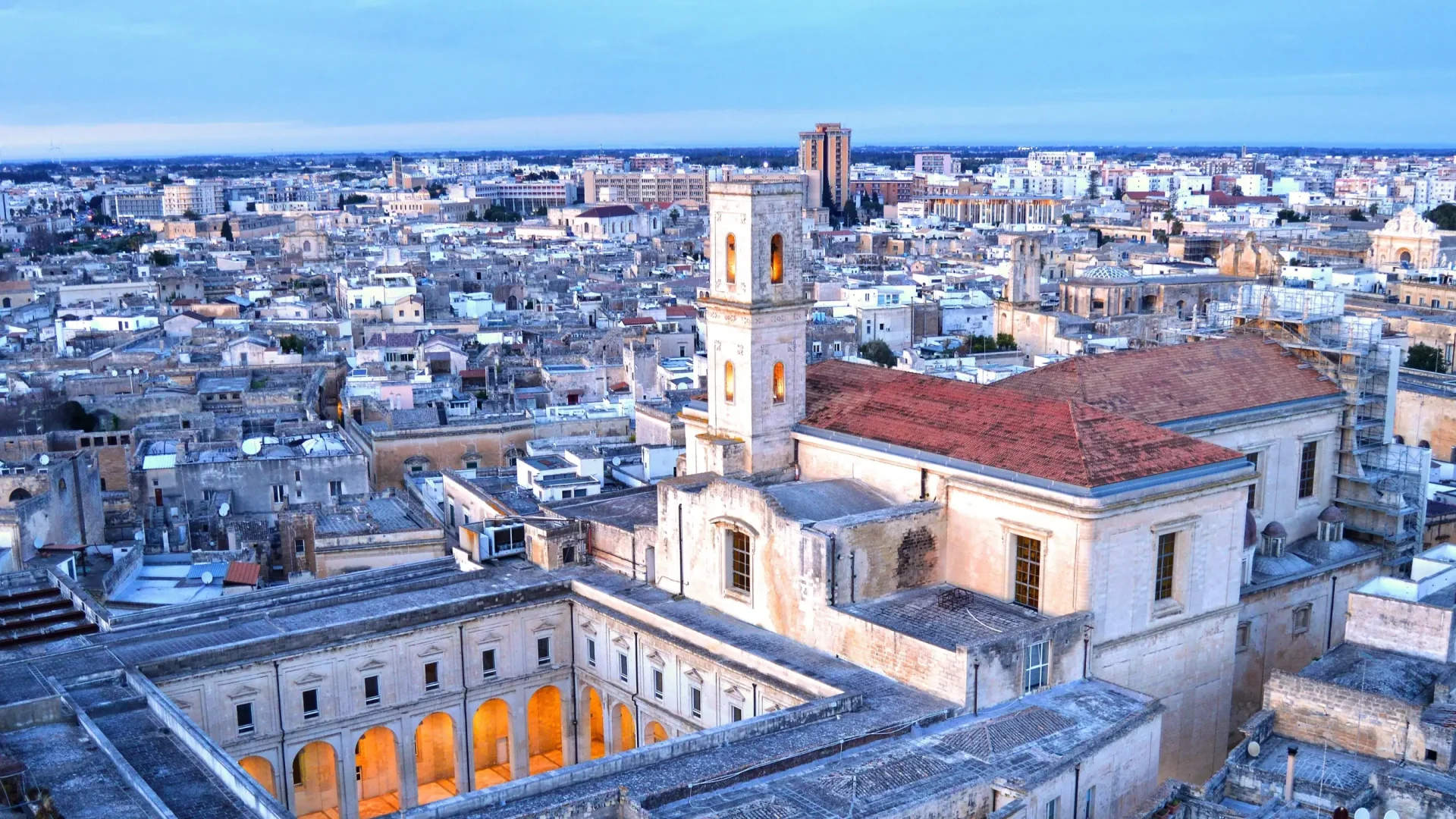
A place that gets under your skin: where the West meets the Orient
Otranto is definitely not a place for fleeting, superficial sightseeing that you simply tick off as you pass through. This city literally demands that you immerse yourself in it with all your senses - in the fascinating tension between the deep gravity of its often dramatic history and the wonderfully carefree lightness of its Apulian present. The gigantic floor mosaic in the cool silence of the cathedral is not just a work of art, but a huge stone book that conveys the secrets, myths and fears of the Middle Ages much more impressively than printed words ever could. And then there are those balmy, absolutely timeless evenings on the massive Aragonese city wall. When you stand up there, feel the salty wind of the Adriatic on your face and let your gaze wander over the deep blue sea, behind which the rugged mountains of Albania appear in the haze on the horizon on clear days, the special magic of this coast becomes tangible.
For me, the port city is one of those rare places that you have to see at least once in your life. Not because everything here is immaculate or polished to a high gloss for tourists, but because Otranto has remained unadorned and genuine with every joint in its limestone walls. If you want to understand the true, unfiltered soul of Salento, then you should start your journey right here: at the easternmost point of Italy, where the familiar west fades away noticeably and the wide horizon stretches majestically towards the Mediterranean and the Orient.
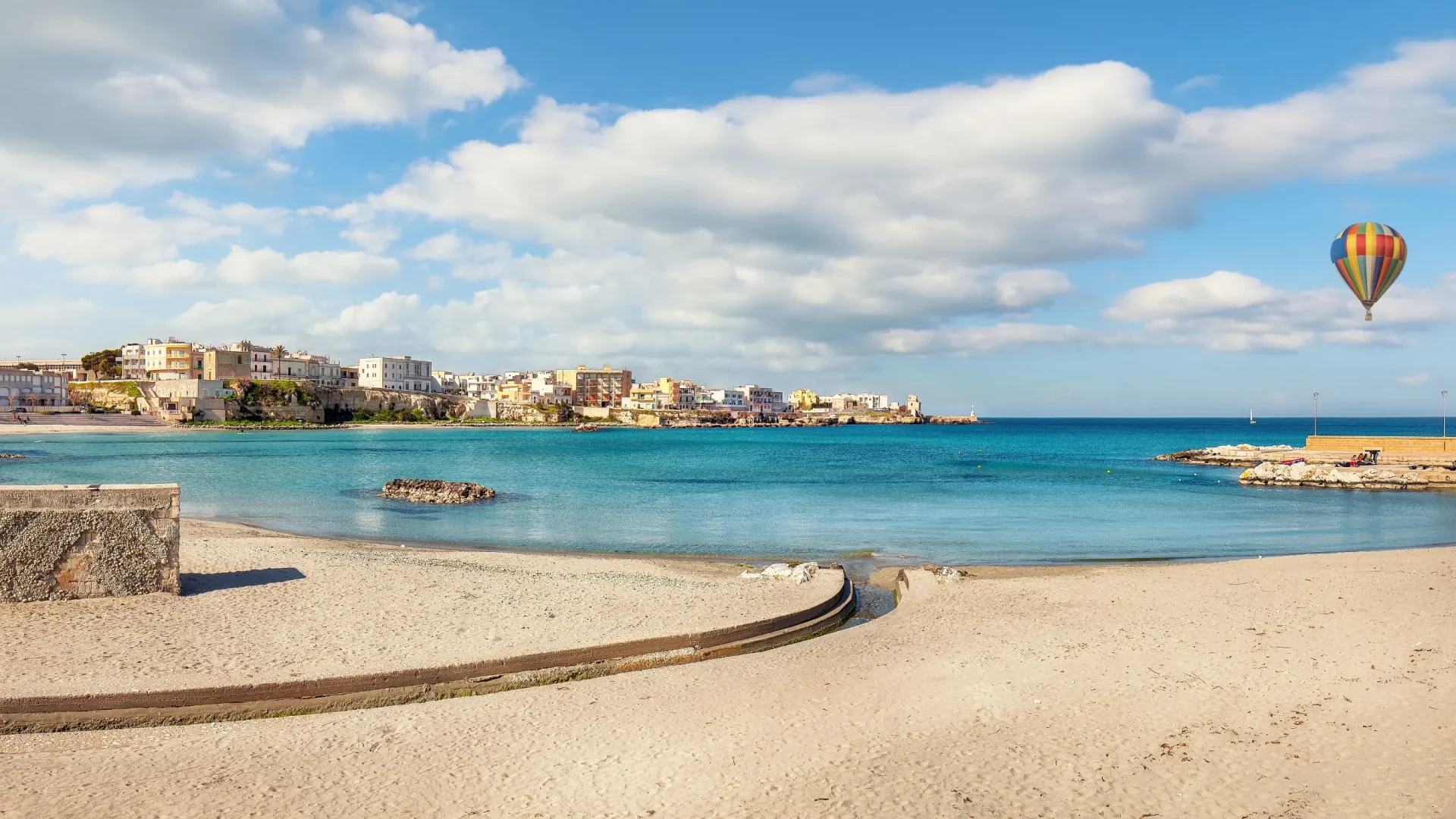
Map: Otranto, Apulia
FAQ: Otranto, Apulia
When is the best time to visit Otranto?
The ideal months for a trip to Otranto are May, June and September, as the temperatures are pleasantly warm and the large crowds of tourists during the Italian summer vacations have not yet arrived in August. During this time, you can explore the historic old town and the surrounding beaches in peace and quiet in a mild climate and a much more relaxed atmosphere.
What is the best way to get to Otranto by public transport?
You can easily reach Otranto from Lecce with the regional Ferrovie del Sud Est trains or, in the summer months, with the special Salento in Bus service. The journey offers you picturesque views of the olive grove landscapes of Salento and takes you directly to the historic center, so you don't need a car on site.
What makes Otranto Cathedral so special for visitors?
The Cathedral of Santa Maria Annunziata is home to one of the most important floor mosaics in the world, which depicts a giant tree of life and covers almost the entire floor area. In addition to this art-historical treasure, the church impresses with the Chapel of the Martyrs, in which the remains of the inhabitants who resisted the Ottoman siege in 1480 are kept.
Are there any good swimming spots near Otranto for a day trip?
Just a few kilometers north of the city are the famous Laghi Alimini, which are among the most beautiful bathing spots in the region with their extensive sandy beaches and crystal-clear water. Nature lovers can also take a trip to the Baia dei Turchi, which is hidden behind a pine forest and impresses with its unspoiled beauty and turquoise sea.
Top accommodations in Otranto, Puglia
Video: Otranto, Salento
Experiences & sights
Note: Disclaimer - Italien.news is not the owner or organizer of the sights, accommodations and events published here and therefore not responsible for program changes, cancellation of the event and possibly incorrect information. The editorial team of Italien.news always endeavors to provide detailed and accurate information. However, it is possible that events, attractions, etc. may be changed and not updated promptly. Exact details of dates, times and programs can be obtained directly from the owner of the attractions and accommodation.
Please also check the website or social media of the attractions and events for updates before you travel! Our blog articles contain our personal recommendations in the form of affiliate links. If you book or buy something via the links or simply click on them, we receive a small commission. This does not change the price for you at all. Content and texts © Italien.new & KI / Photos © Canva.com / shutterstock.com / Unsplash.com / Pixabay.com / Pexels.com / Others. Please also visit our Italy Shop!
Read more about theTopic