Amid the winding alleys of Bari Vecchia, the Old Town of Bari, where life pulses amid clotheslines, the scent of olives, and centuries-old walls, stands a structure of extraordinary spiritual and historical significance: the Basilica di San Nicola. It is more than just a church—it is a symbol. A place where history, faith, and identity intertwine in a unique way.
Year after year, it attracts countless visitors - pilgrims from the Orthodox world, Catholic believers, architecture fans, historians and curious people in search of the deeper meaning of places. Because here, on this coast of Apulia, a man has been resting for over 900 years whose story has moved generations to this day: Nicholas of Myra, the saint who would later become the source of inspiration for Santa Claus - and yet was so much more.

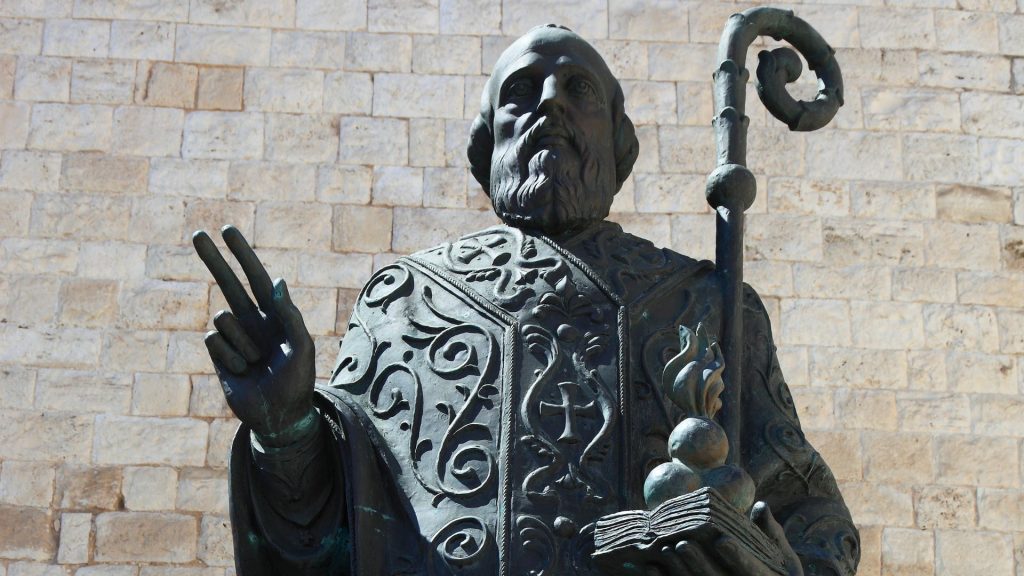
Nicholas of Myra: The man behind the myth
Saint Nicholas, born around 270 AD in Patara (then Lycia, now Turkey), became a symbol of Christian charity early on. As Bishop of Myra, he was known for his deep piety, sense of justice and generosity. Many of the stories surrounding him are of a symbolic depth that goes far beyond mere legends.
For example, he saved three young girls from a life of poverty by secretly throwing money for their dowry through the window - a gesture that became the root of today's Christmas gift-giving tradition. In another tradition, he saved three innocent convicts from execution by confronting the judge. St. Nicholas became the patron saint of children, sailors, merchants, but also of prisoners and students - a saint who touched the whole spectrum of human life.
After his death in 343, he was buried in Myra. His tomb quickly became a place of veneration - especially in the Byzantine world, where Nicholas was revered as a thaumaturge, or miracle worker.
The relic heist: a holy coup
The story of how the relics of St. Nicholas of Myra came to Bari reads like a medieval adventure. In 1087, at a time of political uncertainty, Myra was threatened by the expansion of the Seljuks. Bari, an important port and trading city at the time, sensed a historic opportunity: the transfer of the saint would bring the city immense religious significance and an economic upturn.
A group of 62 men, merchants and sailors, set sail and arrived in Myra under the pretense of diplomatic intentions. They found the tomb, opened it - and took the saint's bones with them. Despite resistance from the monks there, they returned to Bari with the relics. On May 9, 1087, they arrived in the port - greeted by a cheering crowd. A new spiritual center was born.
The transfer of the relics of St. Nicholas quickly became a turning point in the history of the city. Bari developed into one of the most important pilgrimage destinations in Europe, comparable to Rome or Santiago de Compostela. The relics of the saint were not only a spiritual jewel, but also a symbol of the power and influence of the city on the Adriatic Sea.
The construction of the Basilica di San Nicola: confession turned to stone
As soon as the relics arrived in Bari, the construction of a new, dignified church began. Construction of the Basilica di San Nicola began in the same year, 1087, over an existing Byzantine palace that was available to Abbot Elia. The construction was a political and religious statement: Bari was to become a new center of Western spirituality - with Saint Nicholas as its patron and protector.
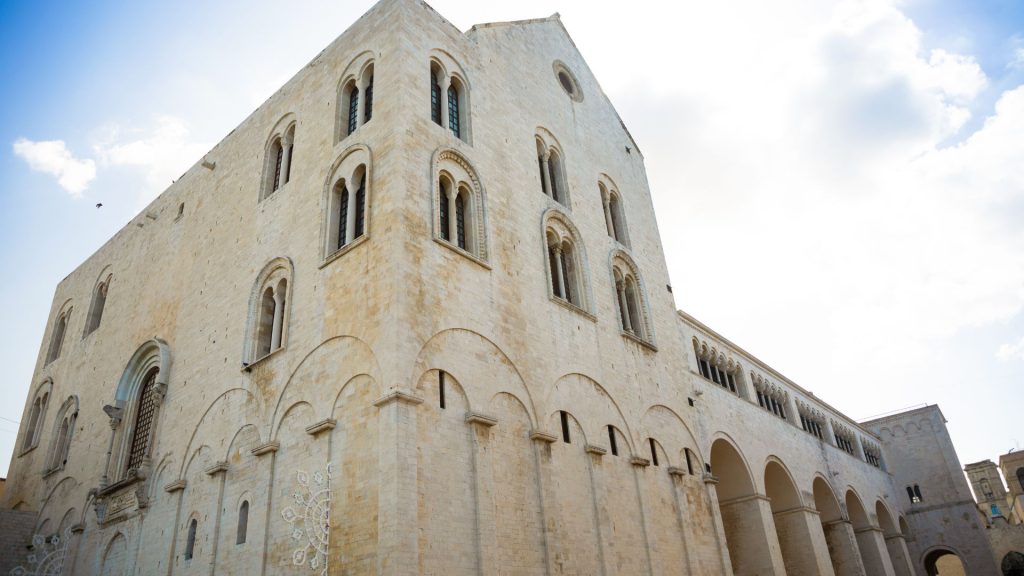
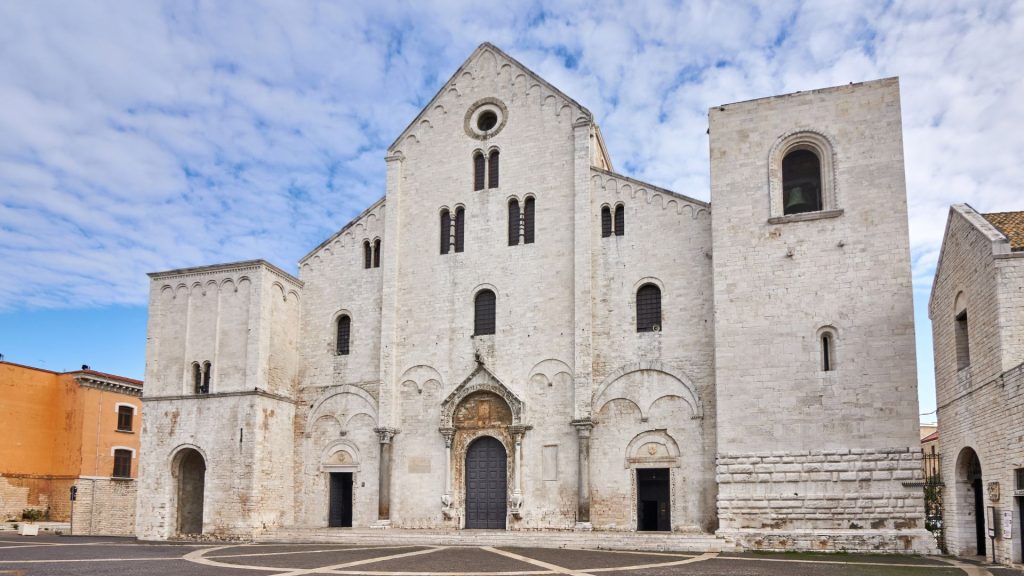
The basilica was built in the Romanesque style of Apulia, which is characterized by its simplicity, solidity and clear forms. It took over 100 years to build and was officially consecrated in 1197 under the patronage of Emperor Henry VI. Since then, the church has shaped the cityscape of Bari - not only architecturally, but also emotionally and spiritually.

Architecture: Romanesque power and Byzantine soul
The first impression of the Basilica di San Nicola is impressive. Its monumental west façade, built of light-colored limestone, rises clearly and powerfully against the Apulian sky. No obtrusive ornamentation, no baroque exuberance - instead architectural austerity, which has a profound effect precisely because of its simplicity.
Inside, a three-aisled room opens up with massive columns made from ancient spolia - a bridge to antiquity. The wooden roof stalls and the raised apse give the church an unusual spatial effect. The choir area can be reached via steps, which represents a kind of symbolic "elevation" - towards the divine space.
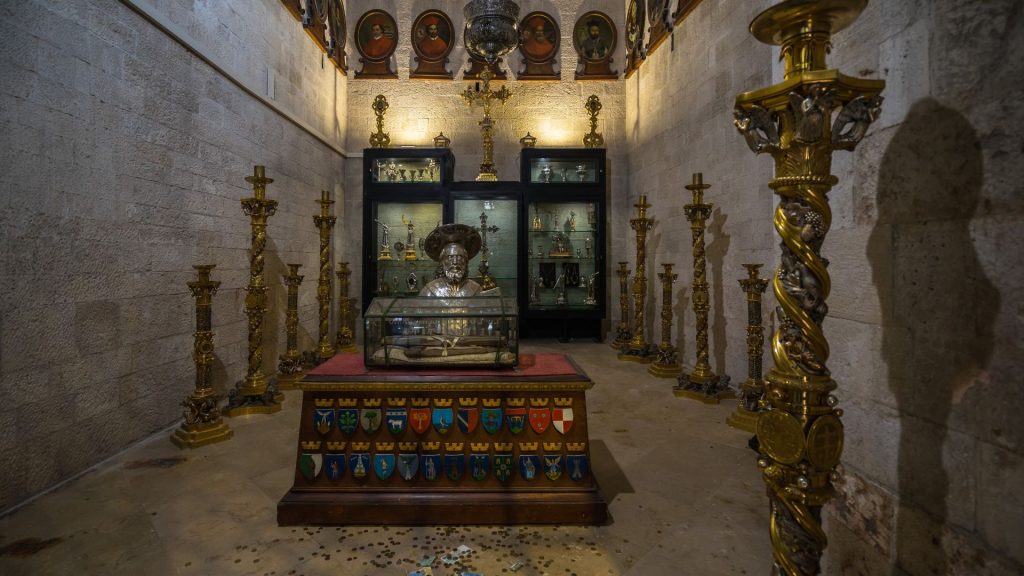
The crypt deserves special attention: a low, vaulted labyrinth of columns and arches that beats like a silent heart beneath the altar. The relics of St. Nicholas rest here in a simple marble sarcophagus. Centuries-old lamps and the scent of incense lend the room an almost unearthly atmosphere.
The significance for East and West: a saint for all
The Basilica di San Nicola in Bari is far more than just an important building of Western Christianity. It is a living symbol of unity across denominational boundaries - a sacred place where the Eastern and Western churches, Orthodox and Catholic believers, come together in their common faith in St. Nicholas.
In a world where religious divides have led to division, mistrust and even conflict for centuries, this basilica is a shining example of what is possible: ecumenism in action, not as an abstract idea but as a spiritual reality.
St. Nicholas is one of the few saints who are venerated equally by all major Christian traditions. For the Roman Catholic Church, he is a popular folk saint - patron saint of children, the poor and sailors. But in Orthodox Christianity, especially in the Russian Orthodox Church, he plays an even more central role: There he is considered one of the most powerful miracle workers, an intercessor with God and the moral ideal of a merciful shepherd.
This universal devotion has made the basilica in Bari an important pilgrimage destination for Orthodox Christians from all over the world - especially for believers from Russia, Greece, Serbia, Georgia and Ukraine. Every year, thousands of believers make their way to the south of Italy to visit the place where the relics of St. Nicholas rest.
Read more about theTopic



The church has responded to this deep bond - and created space: A separate Orthodox chapel has been set up in the basilica, where Orthodox liturgies are regularly celebrated. It is located in a side area of the crypt, just a few meters away from the reliquary. There, Orthodox pilgrims find a space for prayer, devotion and tears - often accompanied by long, silent moments in which the connection to their home church remains tangible, even far from home.
It is particularly remarkable that this coexistence of rites in Bari does not lead to tensions, but on the contrary to a special form of spiritual respect. While the Catholic liturgy maintains its form, the Orthodox celebrations are not merely "tolerated", but are an integral part of life in the basilica. It is a quiet, yet powerful form of dialog: Not through words or commissions, but through common prayer, common worship - through the sharing of a saint.
An outstanding example of this connection between East and West is the annual ecumenical procession during the Feast of St. Nicholas in May. On this occasion, not only Catholic clergy from Italy come together, but also high-ranking Orthodox representatives, including metropolitans, bishops and theologians. Together they accompany the statue of the saint through the city, pray together in the crypt and share the bread of the pilgrimage - often with tears of emotion.
At a time when many religious identities are seen more as a demarcation than an invitation, the Basilica di San Nicola is a place of in-between: between rites, between cultures, between centuries.
It proves that holiness knows no denominational boundaries. That a single saint - a bishop from Asia Minor who lived almost 1700 years ago - serves today as a bridge between the Christian East and West.
And that a place like Bari is not only geographically located at the transition between worlds - but also spiritually: a meeting place of faith that connects across walls.
St. Nicholas Festival in May: when Bari becomes a pilgrimage capital
Every year in May, around the 9th of the month, the Bari into a vibrant pilgrimage capital. The Festa di San Nicola is not just a religious celebration, but a multifaceted cultural event that attracts believers and visitors from all over the world. The whole city prepares weeks in advance for this festival, which commemorates the arrival of the relics in 1087.
The celebrations usually begin with historical re-enactments: Dressed in medieval clothing, locals re-enact the arrival of the sailors who enter the port with the relics of the saint. This is followed by festive processions through the old town, accompanied by music groups, flag bearers and pilgrims in traditional costumes.
The highlight is the so-called sea procession, in which the statue of St. Nicholas is carried from the basilica to the coast. There it is loaded onto a decorated ship, which is accompanied by a fleet of boats. At sea, people pray, sing and cry. Thousands of onlookers line the shore as the sun sets on the horizon and bathes the water in gold. The scenery is deeply moving - a moment of collective devotion that combines faith, community and tradition in an inimitable way.
After the return of the statue to the Basilica di San Nicola, a large mass is held, often celebrated by high-ranking church dignitaries. The city blossoms in a sea of light, color and voices. The festival ends with a grand firework display by the sea, lighting up the sky and hearts alike.
Tips for your visit to the Basilica di San Nicola: what you need to know!
A visit to the Basilica di San Nicola is not just an item on a sightseeing tour - it is a spiritual experience. If you really want to immerse yourself in this place, you should not only plan an hour, but also take time to observe, pray, listen and marvel.
Address: Largo Abate Elia, 70122 Bari
Admission: free of charge
Opening hours: Daily approx. 7:00 a.m. to 8:30 p.m. (except on public holidays)
Recommended time to visit: Early in the morning or at sunset
Guided tours: Local providers offer guided tours in several languages, and private religious tours are also available.
Don't miss it:
- The ciborium above the main altar
- The crypt with the relics of St. Nicholas
- The orthodox chapel
- The small museum with liturgical treasures
- A visit to the cloister and monastery courtyard next door
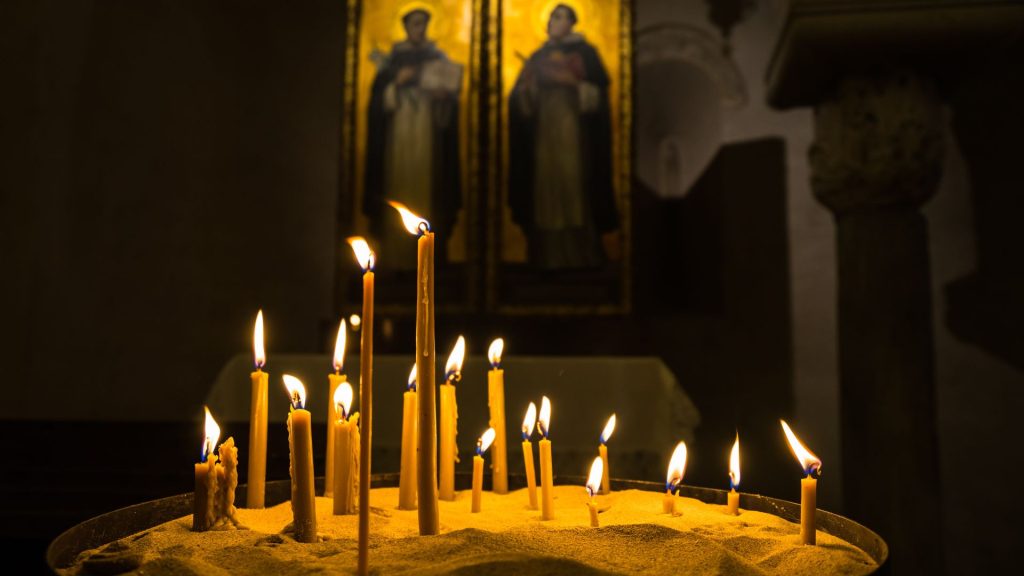
A visit during an Orthodox church service is also a special experience. The mixture of Byzantine chanting, candlelight and incense in the crypt creates a reverent atmosphere that can hardly be put into words.

Our conclusion: The Basilica di San Nicola is a place that touches and stays with you!
The Basilica di San Nicola is not a place that you routinely visit on an itinerary and then forget about. It stays in your heart long after you have left the winding alleyways of Bari Vecchia. Its impression is not one that overwhelms you loudly - as perhaps St. Peter's Basilica in Rome does - but one that quietly but deeply inscribes itself. It is the "silent force" of the massive, light-colored stone blocks that tell of almost a millennium of prayers, hopes and conflicts. It is the "humility" of an architecture that, despite its imposing size, never appears ostentatious, but is entirely focused on the spiritual, on the protection of the precious relics in the crypt. This rare mixture of raw, almost defiant architecture and a tangible, deep piety touches the visitor on a fundamental level.
Anyone who comes to Bari encounters a dynamic port city in transition, a proud bridge between tradition and modernity, Orient and Occident. But it is only when you enter the basilica that the true face, the real soul of this city is revealed. Here, the often-used term "melting pot of cultures" becomes a living, visible reality. You can see Orthodox pilgrims from Russia or Greece deeply immersed in prayer and lighting their candles, just a few meters away from Apulian believers worshipping "their" San Nicola. The basilica is the ultimate "stronghold of faith", a place where East and West meet not in confrontation, but in a shared spiritual quest. It is the living symbol of a European history that was shaped not only by power, war and empires, but also by the unifying power of holiness and common devotion.
That is why the Basilica di San Nicola is much more than an architectural sight; it is a destination for the soul. It is a place for the traveler who admires the perfection of Apulian Romanesque architecture, for the seeker who finds solace or answers in the mystical silence of the crypt, and for the questioner who can sense the multi-layered identity of Europe here. It is an anchor point in a fleeting world and perhaps for this very reason one of the most essential, profound and significant places that Italy has to offer.
Map: Bari, Apulia
FAQ - Basilica di San Nicola in Bari
Why is the Basilica di San Nicola so famous?
The worldwide fame of the Basilica di San Nicola is based on two main reasons. Firstly, it is an architectural jewel and the main example of Apulian Romanesque architecture, which served as a model for many later buildings. By far the most important reason, however, is the crypt where the relics of St. Nicholas of Myra are kept - the saint who is known as the model for the figure of Santa Claus. This makes the basilica one of the most important pilgrimage sites in Europe, venerated not only by Catholics but also by Orthodox Christians, especially from Russia.
Is there a dress code for the visit?
As the Basilica di San Nicola is an active and highly revered place of pilgrimage, visitors are expected to dress respectfully. There is a dress code that requires shoulders and knees to be covered. Visitors wearing shorts, short skirts or sleeveless tops may be refused entry. It is therefore advisable to carry a light scarf or shawl with you, especially in summer, so that you can cover yourself quickly and appropriately if necessary and pay respect to this spiritual place.
How much is the entrance fee and what are the opening hours?
Entry to the main church of the Basilica di San Nicola is generally free of charge, allowing visitors access to the impressive nave and side aisles. However, there may be a small charge to visit the crypt, where the relics are kept, or the adjoining museum (Museo Nicolaiano). Opening hours are typically mornings and late afternoons, with the church closing for a break over lunchtime, often between 12:30 and 16:00. As times can change seasonally, it is advisable to check the exact daily opening times shortly before your visit.
Where exactly is the basilica located in Bari?
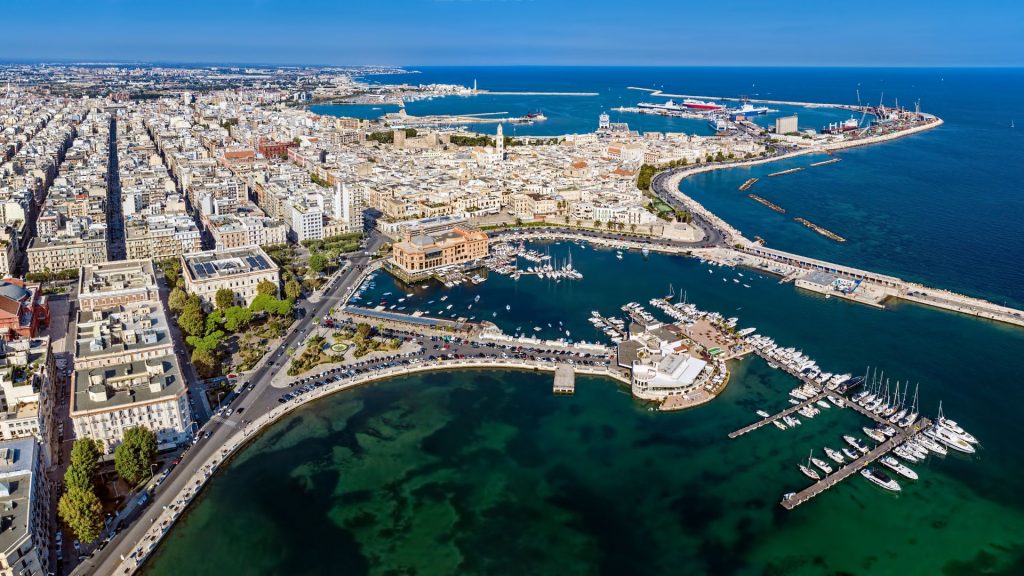
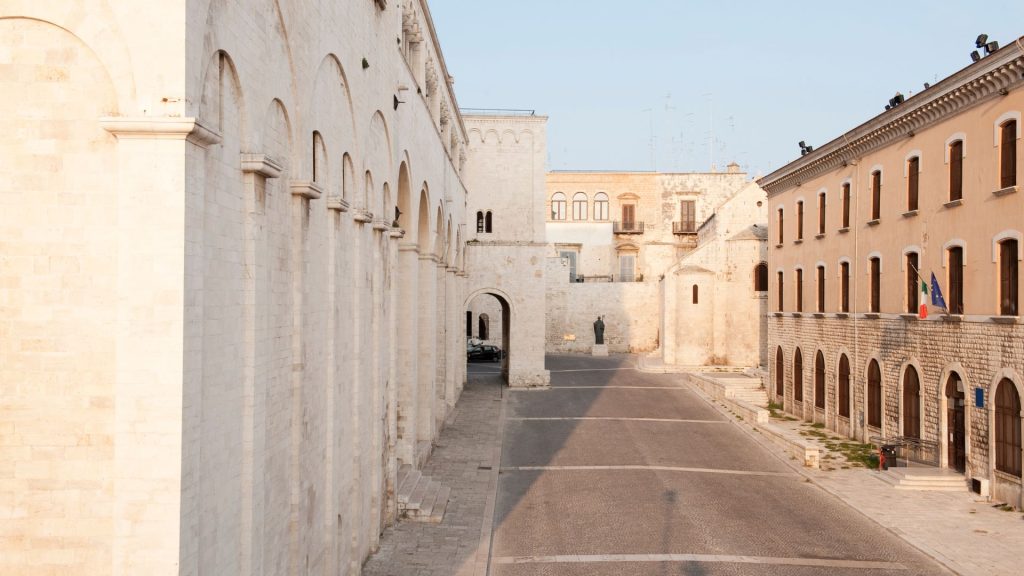
The basilica is located in the heart of Bari Vecchia, the atmospheric old town of Bari, and is very picturesquely situated close to the Adriatic coast and the old harbor. It is within easy walking distance of the main squares of the new town (Murat district). The church is a central point in the winding streets of the old town and often serves as a starting point for exploring Bari Vecchia. Due to its prominent location, it is clearly visible from many points along the promenade (Lungomare) and is hard to miss.

Top accommodations in Bari
Video: Basilica di San Nicola in Bari
Experiences & sights
Note: Disclaimer - Italien.news is not the owner or organizer of the sights, accommodations and events published here and therefore not responsible for program changes, cancellation of the event and possibly incorrect information. The editorial team of Italien.news always endeavors to provide detailed and accurate information. However, it is possible that events, attractions, etc. may be changed and not updated promptly. Exact details of dates, times and programs can be obtained directly from the owner of the attractions and accommodation.
Please also check the website or social media of the attractions and events for updates before you travel! Our blog articles contain our personal recommendations in the form of affiliate links. If you book or buy something via the links or simply click on them, we receive a small commission. This does not change the price for you at all. Content and texts © Italien.new & KI / Photos © Canva.com / shutterstock.com / Unsplash.com / Pixabay.com / Pexels.com / Others. Please also visit our Italy Shop!