There are few dishes that divide the minds of the culinary world as much as pasta alla carbonara. It is the ultimate paradox of Italian cuisine: with just a handful of humble ingredients, it creates a creaminess and depth of flavor that is hard to beat in terms of complexity. But while gourmets around the world philosophize about the perfect emulsion of egg and cheese and purists throw up their hands at the mere mention of cream, one question often remains unanswered: where does this Roman classic actually come from? Before we venture to the stove to perfect the art of the golden sauce, it is worth taking a look back to the misty mountain forests and turbulent post-war years of Italy, where the history of this dish began.
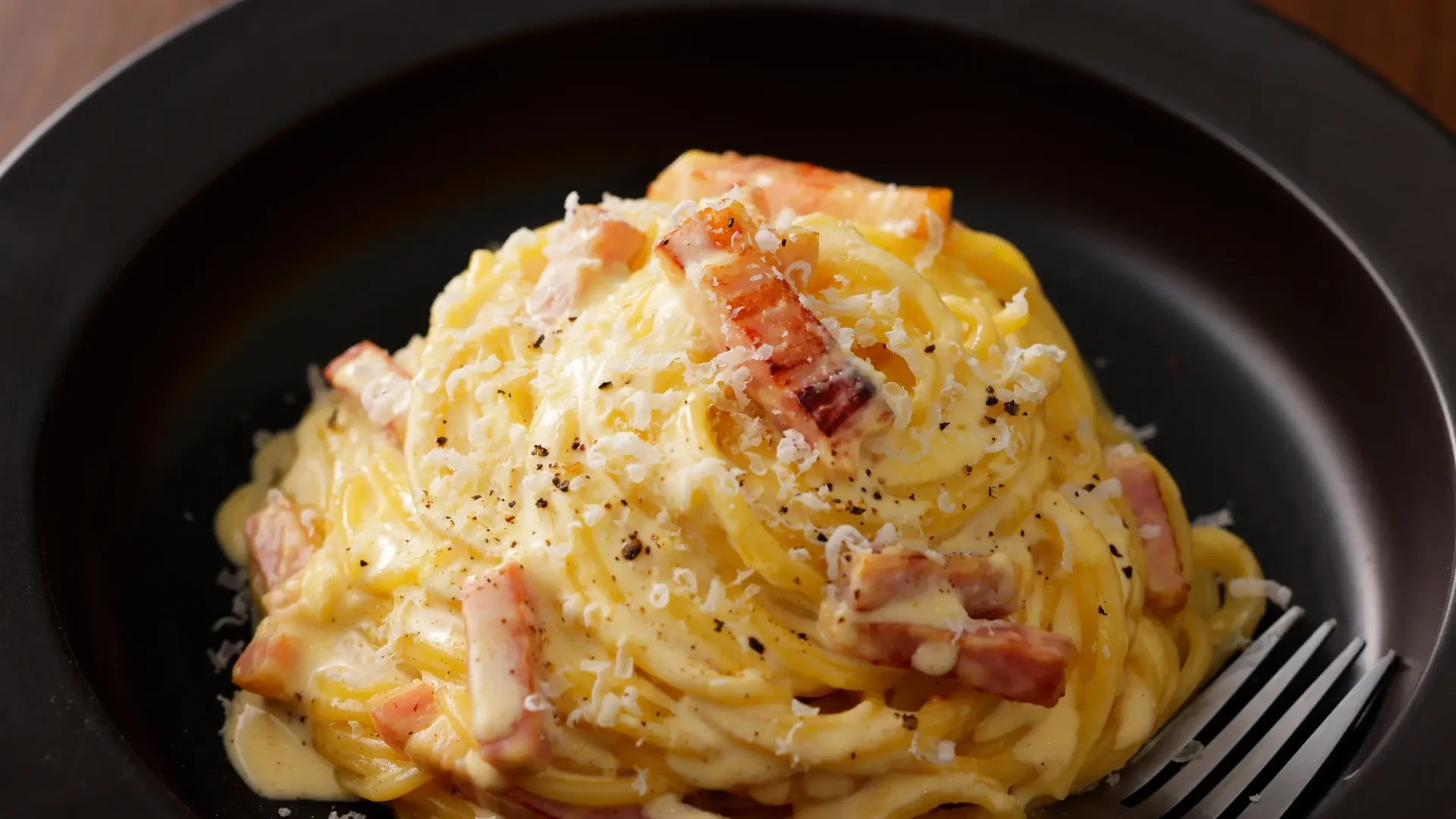
From coal fire to world fame: who really invented spaghetti alla carbonara?
The genesis of spaghetti alla carbonara resembles a culinary criminal case in which legends and historical evidence are irreconcilably opposed to this day. Two narratives have established themselves among gastronomes and historians that could hardly be more different. The more romantic of the two tales takes us deep into the forests of the Apennines to the „carbonari“, the charcoal burners. These men spent weeks away from civilization and relied on food that required neither refrigeration nor elaborate storage. Hard cheese, dried pork, pasta and eggs provided the perfect energy base for their hard work. The coarsely ground black pepper, which is obligatory today, is often interpreted in this version as a visual homage to the omnipresent coal dust that speckled the workers' meals.
On the other hand, there is a far more pragmatic theory that sees the dish as a child of the chaos and culinary improvisation at the end of the Second World War. When the Allies liberated Rome in 1944, the scarce supplies of the local population met the lavish rations of the US soldiers. The GIs' egg powder and smoked bacon in particular are said to have inspired Roman chefs to create a new sauce that satisfied the occupiers' hunger and at the same time honoured Italian pasta tradition. The sources show that this theory is historically more serious: while classic Roman cookbooks from the early 20th century do not mention the dish at all, the first documented mention of carbonara is interestingly found in a restaurant guide for Chicago in 1952. It only appeared in Italian publications shortly afterwards. What once began as a pragmatic emergency solution has developed over the decades into a culinary dogma whose purist preparation is now defended worldwide as a hallmark of Roman cuisine.
The terroir of taste: why carbonara could only be created here
The Lazio region, geographically nestled between the volcanic soils of the surrounding countryside and the rugged foothills of the Apennines, forms the indispensable foundation for the identity of spaghetti alla carbonara. It is no coincidence that this barren but characterful land produced the ingredients for one of the most famous pasta dishes in the world. Agriculture around the Eternal City has always been characterized by transhumance, seasonal transhumance, which made sheep the most important livestock in the region. The herds grazed on the wide, herb-covered areas of the Agro Romano, whose milk provided the basis for the Pecorino Romano DOP forms. This cheese is far more than just an ingredient; it is the liquid salt of the region. Due to its long maturation, it develops a distinctive sharpness and crystalline structure, which stands in stark contrast to the rather mild, nutty Parmigiano Reggiano from the north and gives the carbonara its unmistakable, almost rustic depth.
The art of butchery is just as deeply rooted in the farming tradition of Lazio, especially the refinement of pork cheeks. While other parts of Italy rely on pancetta, in Lazio the Guanciale the measure of all things. The use of the pork cheek - Italian guancia - is a decision for maximum aromatic intensity. As this cut is significantly richer in fat and more muscular than classic pancetta, the fat melts into a golden elixir when slowly released in the pan, which later envelops the pasta like a velvet coat. It is the symbiosis of this strong bacon and the tangy pecorino cheese that creates the complex flavor profile that elevates spaghetti alla carbonara from a simple egg pasta to a culinary monument of the Roman Campagna.

Authentic recipe: Spaghetti alla Carbonara
(for 4 persons)
Forget cream, cooked ham or onions. The real secret lies in the quality of just four main ingredients and the emulsion technique.
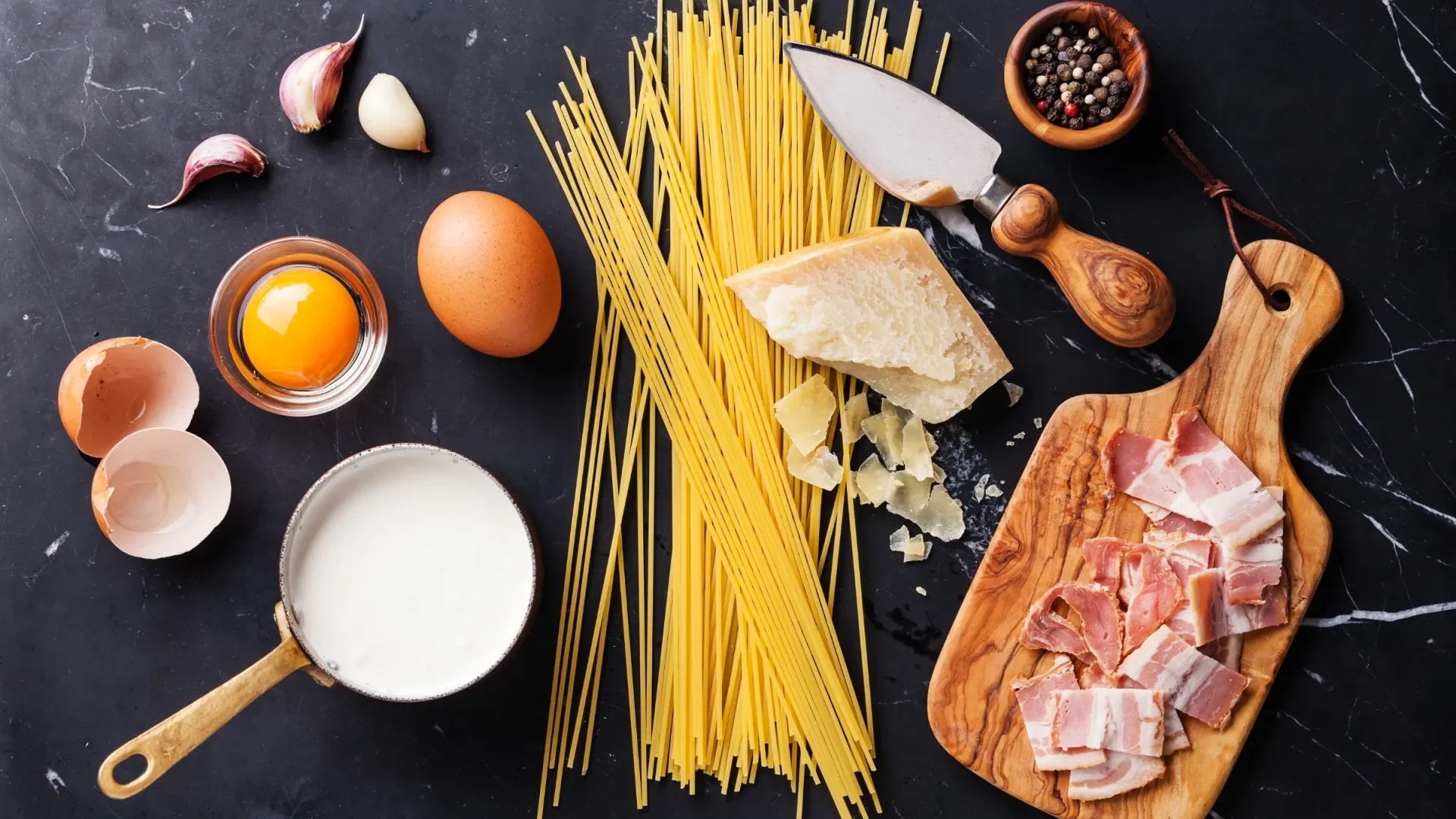
Ingredients
- 400 g - 500 g spaghetti (or spaghetti for more bite; rigatoni is also an acceptable alternative).
- 200 g guanciale (in one piece to cut it fresh into strips).
- 150 g Pecorino Romano (fresh and finely grated; optionally you can replace 50g of this with Parmesan if you like it a little milder, but the original calls for pure pecorino).
- 4 egg yolks + 1 whole egg (size M/L, as fresh as possible).
- Black pepper (whole grains, fresh and coarsely ground).
Preparation
- Preparation: Cut the guanciale into small strips or cubes (approx. 0.5 cm thick). Grate the pecorino very finely.
- The cream (La Carbocrema): Place the egg yolks, whole egg and about 80% of the grated cheese in a bowl. Add plenty of freshly ground black pepper. Stir everything together with a fork or whisk to form a thick, almost pasty mixture.
- Fry the guanciale: Place the guanciale in a cold pan and heat slowly over a medium heat. No oil is needed as the fat will come out of the cheek. Fry the bacon until it is crispy and the fat is a translucent golden yellow. Remove the pan from the heat. Lift out the crispy bacon and set aside, but leave the rendered fat in the pan!
- Cook pasta: Cook the spaghetti in plenty of salted water (use less salt than usual, as guanciale and pecorino are very salty). Cook the pasta until it is „al dente“.
- The marriage of the ingredients (Mantecatura): This is the critical step. Skim off a cup of the starchy pasta water. Place the spaghetti directly (dripping wet) into the pan with the guanciale fat. Important: The pan must no longer be on the hot hob! The residual heat is sufficient. Mix the pasta with the fat.
- Emulsify: Now pour the egg and cheese mixture over the pasta. Add a small sip of the hot pasta water. Stir vigorously and continuously. The heat from the pasta (but without a direct heat source that would cause the egg to stick) will pasteurize the egg and combine with the cheese, fat and pasta water to form a creamy, glossy mixture.
- Final: Mix in the crispy guanciale (keep a few pieces for the garnish).
Tips for preparation
The most common mistake is the scrambled egg syndrome. If the pan is too hot, the egg will stick. If you are unsure, you can also make the emulsion in a metal bowl over the pasta water bath (bain-marie). Never use cream - the creaminess comes exclusively from the emulsion of egg yolk, cheese, fat and starch water.
Where Rome tastes best: the altars of carbonara
If you want to experience the genuine taste of the original in its native city, Rome is a kind of culinary pilgrimage. Every kitchen keeps its own secret about the perfect ratio of egg yolk to pecorino, but some addresses have achieved almost legendary status over the years. One of these institutions is the Roscioli Salumeria con Cucina. In this hybrid of delicatessen and restaurant, carbonara is approached with an almost scientific meticulousness. Nothing is left to chance here; the selection of eggs from special farms and the precise degree of ripeness of the guanciale result in a sauce that impresses with its density and aromatic intensity.
A contrasting program offers Da Enzo at 29 in the picturesque Trastevere district. This small trattoria, which is usually full to the brim, embodies Roman cordiality in its most rustic form. The carbonara here is of an unparalleled creaminess, while the guanciale is served so crispy that it provides the perfect textural counterbalance. As reservations are a difficult undertaking here, waiting in line is almost part of the authentic experience - an effort that is rewarded with the first bite.
On the other hand, those who prefer a more modern and technically perfected Luciano Cucina Italiana on. Chef Luciano Monosilio is considered the „King of Carbonara“ by experts. In his bright, contemporary ambience, he serves a version that impresses with its precision craftsmanship and shows how a traditional dish can be brought to perfection using modern kitchen techniques.
Off the beaten track, it is also worth visiting the Armando al Pantheon. Located in close proximity to the ancient monument, this family-run restaurant has been preserving the classic Roman school for decades, with their carbonara prized for its wonderful balance and lightness.
For lovers of the rugged charm of working-class neighborhoods Felice a Testaccio another indispensable address. Although the house is primarily known for its Cacio e Pepe famous, their carbonara is one of the most honest and strongest in the city and reflects the soul of the Testaccio district.

The legacy in the deep dish: a plea for purity
Spaghetti alla carbonara is far more than just a quick pasta dish; it is a culinary distillation of the Roman soul. Its captivating simplicity conceals a technical challenge that demands absolute precision and respect for the product. The dish is living proof of the Italian credo that a handful of excellent ingredients is superior to any overloaded recipe. Anyone who has ever had the privilege of tasting an authentic Roman carbonara - in which the salty, spicy Pecorino Romano combines with the melting fat of the guanciale and the velvety sweetness of the egg yolk to form a perfect emulsion - will see the local interpretations with cream or cooked ham with completely different eyes from now on.
This proud heritage of Lazio teaches us that true mastery often lies in omission. Carbonara does not need artificial volume or unnecessary spices; it thrives on the quality of craftsmanship and the history that resonates in every bite. It is an invitation to transform your own kitchen into a small Roman trattoria and to try your hand at the perfect „cremina“ with patience and dedication. The end result is not just a meal, but a deep understanding of a region that has preserved its identity for generations in these golden threads of pasta.
Map: Piazza Venezia, Rome
FAQ: Spaghetti Carbonara
Where can I find the most authentic carbonara in Rome without tourist traps?
To enjoy a truly first-class carbonara in Rome, you should avoid the typical restaurants right next to the main sights and instead dive into the Testaccio or Trastevere districts. Look for small trattorias that explicitly list guanciale and pecorino romano on their menu, as these are the surest signs of artisanal traditional preparation in the ancient style.
Why is carbonara prepared strictly without cream in Italy?
For Italians, the addition of cream is a culinary sin, as the desired creaminess is created exclusively through the emulsion of fresh egg yolk, grated hard cheese and the starchy pasta water. This technique preserves the intense flavor of the high-quality ingredients and ensures a silky texture that would merely be masked and distorted by heavy cream.
Which type of pasta is actually the right one for real carbonara?
Although the name spaghetti alla carbonara suggests the classic, many renowned chefs in Rome prefer to serve the dish with rigatoni or mezzi rigatoni, as the hollow shape absorbs the creamy sauce particularly well inside. As a traveler, you will find both variants in the Italian capital, whereby the choice of pasta type often depends on the personal tradition of the house and both are considered absolutely authentic.
Is carbonara safe for people with sensitive stomachs or pregnant women?
As the original recipe is based on the fact that the eggs only set slightly due to the residual heat of the pasta and are not fully cooked, travelers with sensitive stomachs or pregnant women should be careful in restaurants. In these cases, it is advisable to ask the restaurant whether the egg has been sufficiently heated or to use an alternative such as Pasta Amatriciana, which is based on a cooked tomato sauce.
Top accommodations near Piazza Venezia, Rome
Experiences & sights
Note: Disclaimer - Italien.news is not the owner or organizer of the sights, accommodations and events published here and therefore not responsible for program changes, cancellation of the event and possibly incorrect information. The editorial team of Italien.news always endeavors to provide detailed and accurate information. However, it is possible that events, attractions, etc. may be changed and not updated promptly. Exact details of dates, times and programs can be obtained directly from the owner of the attractions and accommodation.
Please also check the website or social media of the attractions and events for updates before you travel! Our blog articles contain our personal recommendations in the form of affiliate links. If you book or buy something via the links or simply click on them, we receive a small commission. This does not change the price for you at all. Content and texts © Italien.new & KI / Photos © Canva.com / shutterstock.com / Unsplash.com / Pixabay.com / Pexels.com / Others. Please also visit our Italy Shop!