
During a coffee break, the saucer clinks on the counter. Two customers drink standing up; one stays to chat. What feels typically Italian here are familiar rituals: coffee at the bar, an evening stroll and a meal that brings people together. The details depend on the city and the person you meet.
In Milan, old machines reveal the history of espresso. In Florence, even the corridors of the Uffizi tell of Medici power. And in Naples, protection against the evil eye hangs in a shop window as a little red horn. Ten observations take you into the heart of everyday life in Italy, from the first coffee to the last conversation in the piazza.
1. Why do Italians drink espresso at the bar?
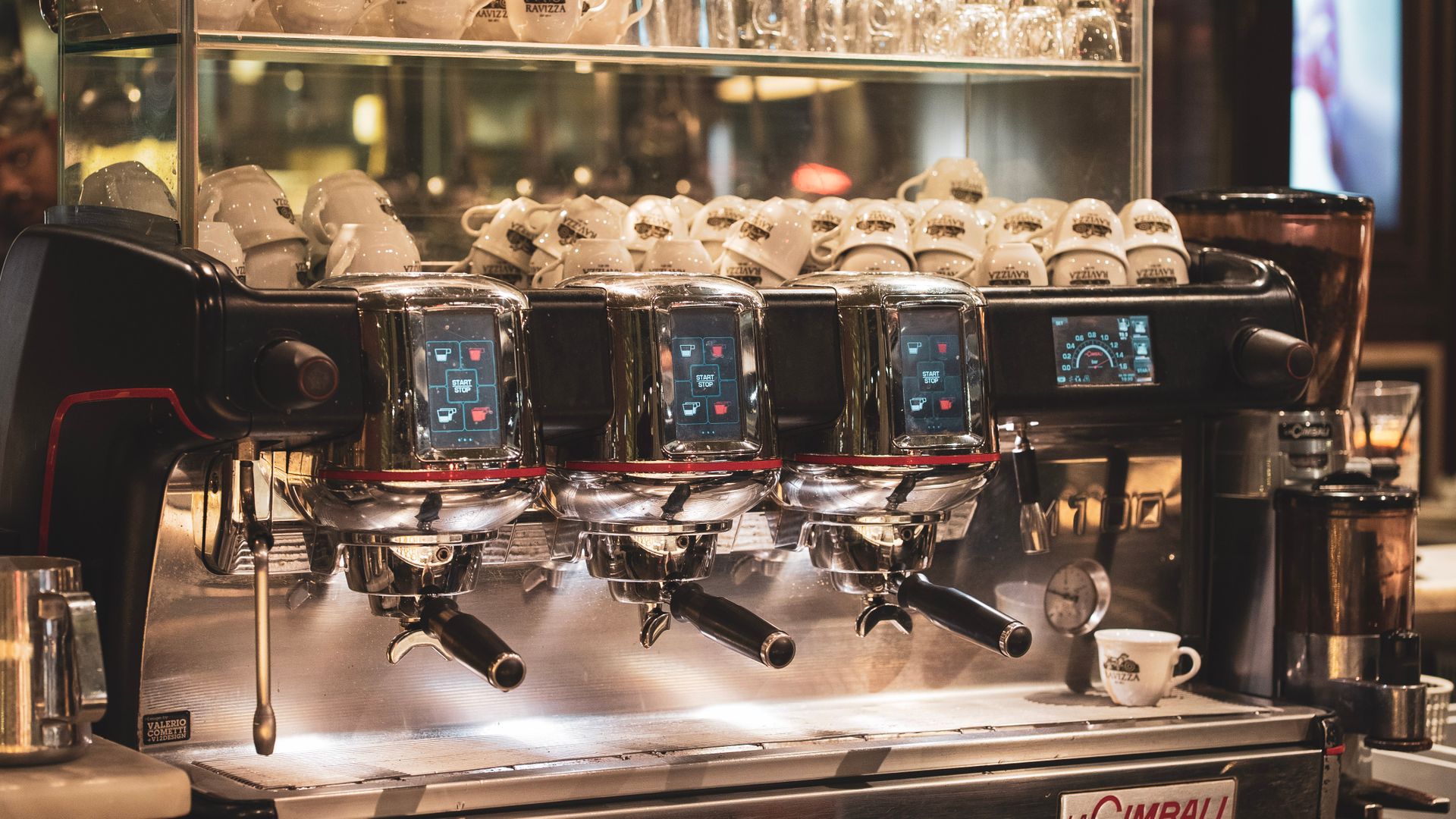
In an Italian bar, it is usually enough to say a coffee, if you want an espresso. At the banco, the counter, you finish your cup quickly. Even so, the pause may be long enough to hear how yesterday's match ended or why the street outside has been dug up. Those who arrive at the same time every morning often meet the same people.
The quick coffee has a long technical history. Luigi Bezzera, an inventor from Milan, patented a machine for making coffee quickly in 1901. Desiderio Pavoni brought the technology into commercial production. An early machine was shown at the Milan World's Fair in 1906. In the late 1940s, Milanese barista and inventor Achille Gaggia adopted a lever system. The higher pressure created the foamy layer called crema , now a familiar feature of espresso.
At home, the moka, the octagonal stovetop pot, often takes the place of the bar's machine. Its coffee tastes strong, but the method uses much less pressure. Naples also has the caffè sospeso, a coffee paid for in advance for a later customer. If you want to take part, ask at the bar whether they follow the custom. For more on ristretto, macchiato , and other coffee terms, read our guide to Italian coffee.
2. What remains of la dolce vita in everyday life?
Federico Fellini's film La dolce vita made the sweet life an international catchphrase in 1960. On screen, the nights of Roman high society also lead to emptiness. An evening stroll, the passeggiata, is more modest. You take the same street as yesterday, meet acquaintances and perhaps stop for an ice cream.
In the Tuscan coastal town of Viareggio, the stroll follows the seafront promenade. In a small inland town, the main street and the square in front of the church are enough. The timing depends on the heat, the season and working hours. Lunch breaks also differ from place to place. If you find a shop closed, check the sign and use the break for a walk.

3. La mamma and the long Sunday lunch
For Sunday lunch, one question reveals more than asking for the family recipe: who starts cooking in the morning? The figure of mamma, the mother, stands in many family stories for someone who organises these gatherings and passes on dishes. In memory, even the smell of a particular sauce can bring the whole kitchen back.
Caring also involves shopping, cooking, washing up and looking after children or older relatives. In its time-use studies, Italy's statistics institute Istat has shown how unequally unpaid domestic and care work was shared between women and men. At the table, you first see the result. If you enter the kitchen before the meal, you also see the work.
Today, a family recipe can travel in a voice message. One person films how the dough should feel; another cooks the dish later in another city. Sunday lunch changes when working hours, distance or new family arrangements make gathering difficult. A recipe can still connect people even when they meet less often.
4. Why does Italian food differ from city to city?
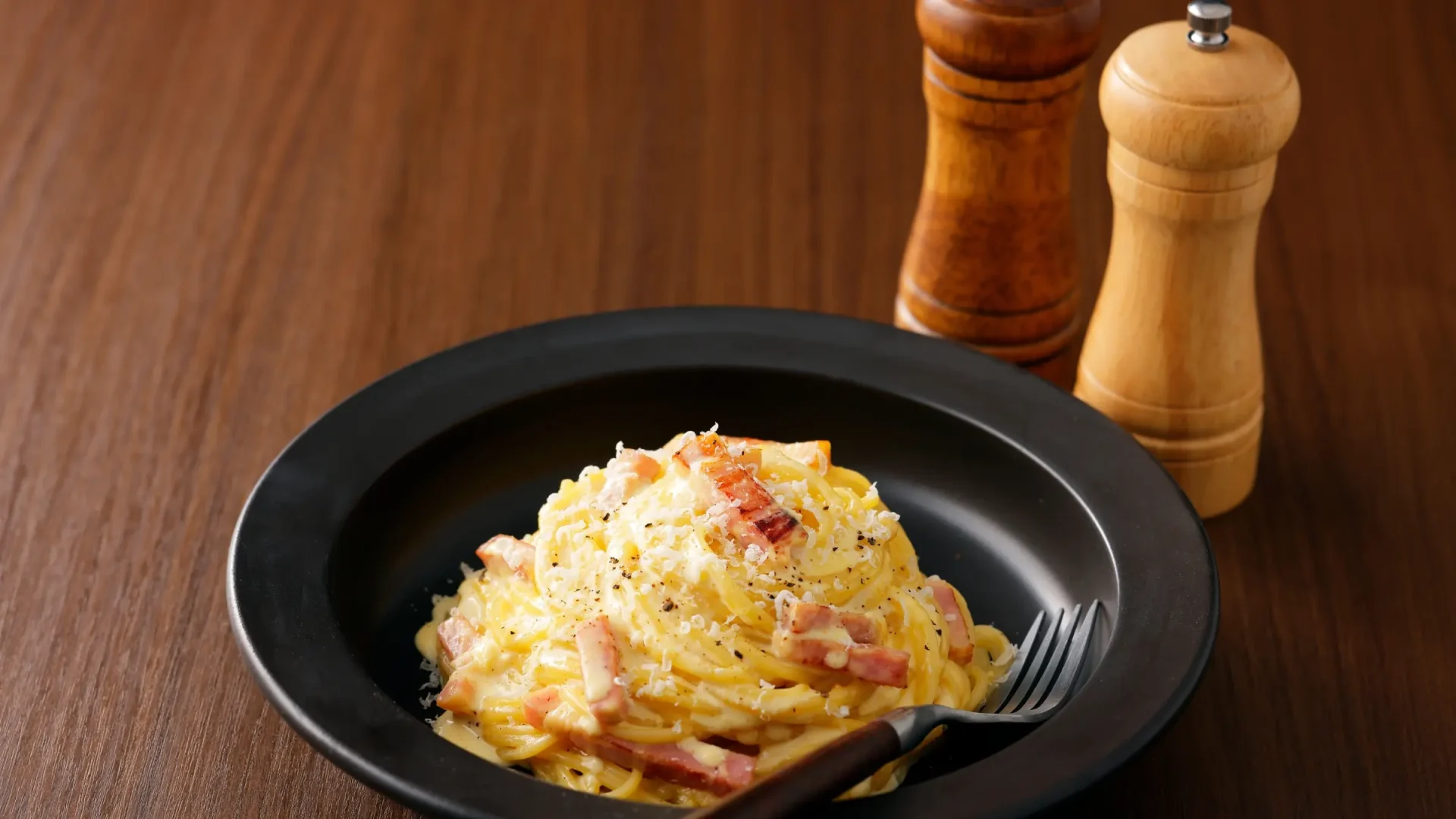
In Rome, a mixture of egg and grated cheese binds the pasta in spaghetti alla carbonara . Fried guanciale, cured pork cheek, adds fat and flavour. In Bologna, ragù, a slowly cooked meat sauce, goes with wide ribbons of egg pasta. Even the shape of pasta says something about how a dish should be eaten. The sauce clings well to the rough tagliatelle.
In Naples, making pizza also involves the work before it enters the oven. In 2017, UNESCO added the craft of Neapolitan pizza makers to its list of intangible cultural heritage. A pizzaiuolo must know how to shape the dough by hand and turn the pizza in the wood-fired oven. If you can watch at the oven, you will see how much experience lies behind those few movements.
The easiest introduction to a region is a walk around the market. Ask at a stall how locals prepare an ingredient. The same artichoke may end up very differently on a home table and in a restaurant. At your next meal, you may recognise what you saw at the market that morning.
5. Fashion between shop windows and craftsmanship
In Milan's fashion district Quadrilatero della Moda , it is worth looking closely at the details: a coat's cut, a shoe's seam, the few pieces displayed behind a huge window. During Milan Fashion Week, the international business of designs and collections comes to the city. On ordinary days, you can explore the same street on foot at your own pace.
In everyday life, the expression bella figura, literally 'to make a good impression', helps explain the idea. It may mean presenting yourself appropriately, from how you greet someone to what you wear. Visiting friends brings different expectations from a job interview. The price of a garment says little about whether it suits the occasion.
The downside of famous shopping streets is their prices. Even without buying anything, you can learn a lot from the cut, material and presentation. If craftsmanship interests you, look for small alteration shops, cobblers or leather workshops afterwards. There you can see how clothes and shoes are maintained in everyday life.

6. What does a museum visit reveal about a city?
In the Uffizi, Florence's art museum beside the Arno, Sandro Botticelli's The Birth of Venus stands for a Renaissance that gave new life to ancient forms. The painting shows the goddess arriving at the shore on a shell. The Uffizi points out a detail easily missed in small reproductions: Botticelli used gold for the light reflected in her hair.
After the museum, walk down to the river. From there you can see the Vasari Corridor, the Medici's elevated passageway, continuing over the Ponte Vecchio, the bridge lined with buildings across the Arno. One structure thus shows how the ruling family arranged its routes through the city.
Rome offers a very different view. In San Luigi dei Francesi, the French national church near the Pantheon, Baroque painter Caravaggio uses a shaft of light in The Calling of Saint Matthew to draw your gaze into a dark room. Look first at the centre of the painting and then follow the light: you will notice how the artist guides your attention through the space.

7. When hands join the conversation
Thumb and fingertips touch as the hand points upwards. The movement can accompany a question such as Ma che vuoi?, roughly 'What do you want?' How it comes across depends on facial expression and tone. Among friends it can be playful; during an argument, impatient.
Some signs are riskier than the famous pinched-fingers gesture. With the corna, a hand with index and little finger extended, its direction can change the meaning. Pointed downwards, it may be used to ward off misfortune. Pointed at a person, it can be insulting. If in doubt, a friendly Scusa, puoi ripetere?, meaning 'Could you repeat that?', is the better choice. Find more examples in our guide to Italian hand gestures.
8. How cinema shaped the image of the Italian macho
Marcello Mastroianni plays in Fellini's La dolce vita a journalist moving among parties, celebrities and changing relationships. The character shows how cinema can export a memorable image of men. A few scenes can establish a film character. How a family organises daily life usually remains outside the frame.
In public, bearing, volume and quick wit can shape an impression. How people share responsibility becomes clear in less visible tasks: who stays home when a child is ill? Who takes a relative to the doctor? These questions are where gender roles are negotiated in daily life. The answers also depend on working hours, income and available care.
9. Calcio between the national team and the neighbourhood
The Azzurri, Italy's national team in blue, won the football World Cups in 1934, 1938, 1982 and 2006. In daily life, football often begins a level lower: with the club someone grew up supporting. A derby, a match between local rivals, can even divide a family. In Milan, Inter and AC Milan play in the same stadium, San Siro.
You may understand what a club's colours mean more quickly in a bar than by looking at the scoreboard. Who jumps up after a goal and who folds their arms tells you something about the room. On an amateur pitch, the story is smaller: someone knows the referee, someone went to school with the goalkeeper. There you can see particularly clearly how closely calcio, football, can be tied to a neighbourhood.

10. Why is a red horn hanging in a Naples shop window?
The cornicello, a curved lucky horn, belongs to Neapolitan folk belief. It is said to protect against the malocchio , the evil eye supposedly caused by envy or ill will. As a gift, the little horn can express a wish for good luck. How seriously someone takes its protective power is a personal matter.
Another expression comes up when someone says tocca ferro or actually touches iron. The gesture serves roughly the same purpose as knocking on wood in English. And while Friday the 13th is considered unlucky in many places, in Italy Friday the 17th has that reputation. Our article on Italian superstitions explains the customs and the story behind the number.
How to discover these rituals on your trip
Start your morning in a bar away from the main sights. Watch briefly to see whether customers first pay at the till or order directly. With Un caffè, per favore you order an espresso. If you want to sit down, ask about the table price: especially in well-known squares, it can be higher than at the counter.
Walk across the same square again in the late afternoon. The market may have packed up and the first customers may be sitting down for an aperitivo, a drink before dinner. A simple question is enough to start a conversation: Come si chiama?, 'What is it called?' It works for a pastry in a display case as well as for a lucky charm in a shop window.
If you have little time on a trip, choose a square and a bar in the same neighbourhood. Visit both at two different times of day. The change from a quick morning coffee to evening conversations often tells you more about a place than a packed sightseeing itinerary.

Sources and Further Information
- Bezzera and Gaggia – the history of the espresso machine · Gaggia (accessed November 2026)
- Italia.it – Italian breakfast and caffè sospeso (accessed November 2026)
- Treccani – Federico Fellini's La dolce vita (accessed November 2026)
- Istat – time use and the division of work in Italy (accessed November 2026)
- UNESCO – the craft of Neapolitan pizza makers (accessed November 2026)
- Uffizi – Botticelli's Birth of Venus (accessed November 2026)
- Italian Football Federation FIGC – history of the Azzurri (accessed November 2026)