Verona – At the Piazza Bra, the large square on the edge of the Old Town, features a 1st-century amphitheater, where operas are performed on summer evenings. The city has held Roman citizenship since 49 B.C.; the Scaliger family ruled here from 1259 to 1387, the Lion of St. Mark of Venice from 1405 to 1797, and until 1866, it was Verona an Austrian fortress. Each of these eras has left behind a structure that you can reach on foot today, and that is precisely why the Old Town has been on the UNESCO World Heritage List since 2000.
This guide to Verona's history traces the city's development through eight eras, shows you where you can still see the sites associated with each era, and tells you how much the historic buildings cost and how to visit them all in a single day.
Verona: A Brief History—From Rome to UNESCO
Verona's history repeats itself in one respect: Anyone who wanted to rule northern Italy needed the city on the Etsch, the river that flows from the Alps and forms a narrow bend here. For this reason, the Romans, Ostrogoths, Lombards, Franks, Scaligeri, Venetians, French, and Austrians successively occupied, expanded, and fortified Verona. The table organizes the historical periods and lists one building for each that you can still visit today—or at least see from the outside.
Verona's Historical Eras and Where You Can See Them Today
| Era | Period | Today's Highlights |
|---|---|---|
| Roman City | 89 B.C. Latin law, 49 B.C. Roman citizenship | Arena, Porta Borsari, Porta Leoni, Ponte Pietra, Roman Theater |
| Ostrogoths | 489: Theodoric's Victory at Verona | Mythological relief on the facade of San Zeno |
| Lombards and Franks | until 774: the Lombards; thereafter, the Franks | 8th-century capitals in San Zeno |
| Free Municipality | 1136: First Consuls | San Zeno Maggiore, New Construction 1117–1227 |
| Skaliger | 1259 to 1387 | Arche Scaligere, Castelvecchio |
| Venice | 1405 to 1797 | St. Mark's Column on the Piazza delle Erbe, Loggia del Consiglio |
| France and Austria | 1796: French; 1814–1866: Austria | Outlying belts surrounding the city |
| Kingdom of Italy | since 1866 | Opera festival in the arena since 1913; UNESCO World Heritage Site since 2000 |
As of October 2026 · Dates based on the UNESCO report on the City of Verona and the *Enciclopedia Italiana* (Treccani).
Roman Verona: Citizenship, the Arena, and the City Gates
Rome brought Verona under its control in two stages. With the Lex Pompeia, Under a law governing the territories north of the Po, the settlement was granted Latin rights in 89 B.C.; in 49 B.C., it received full Roman citizenship, which Caesar granted to the cities beyond the Po. An inscription confirms this year as the founding date of the Roman city, which was established in the second half of the 1st century B.C. in a grid pattern within the Adige River bend.
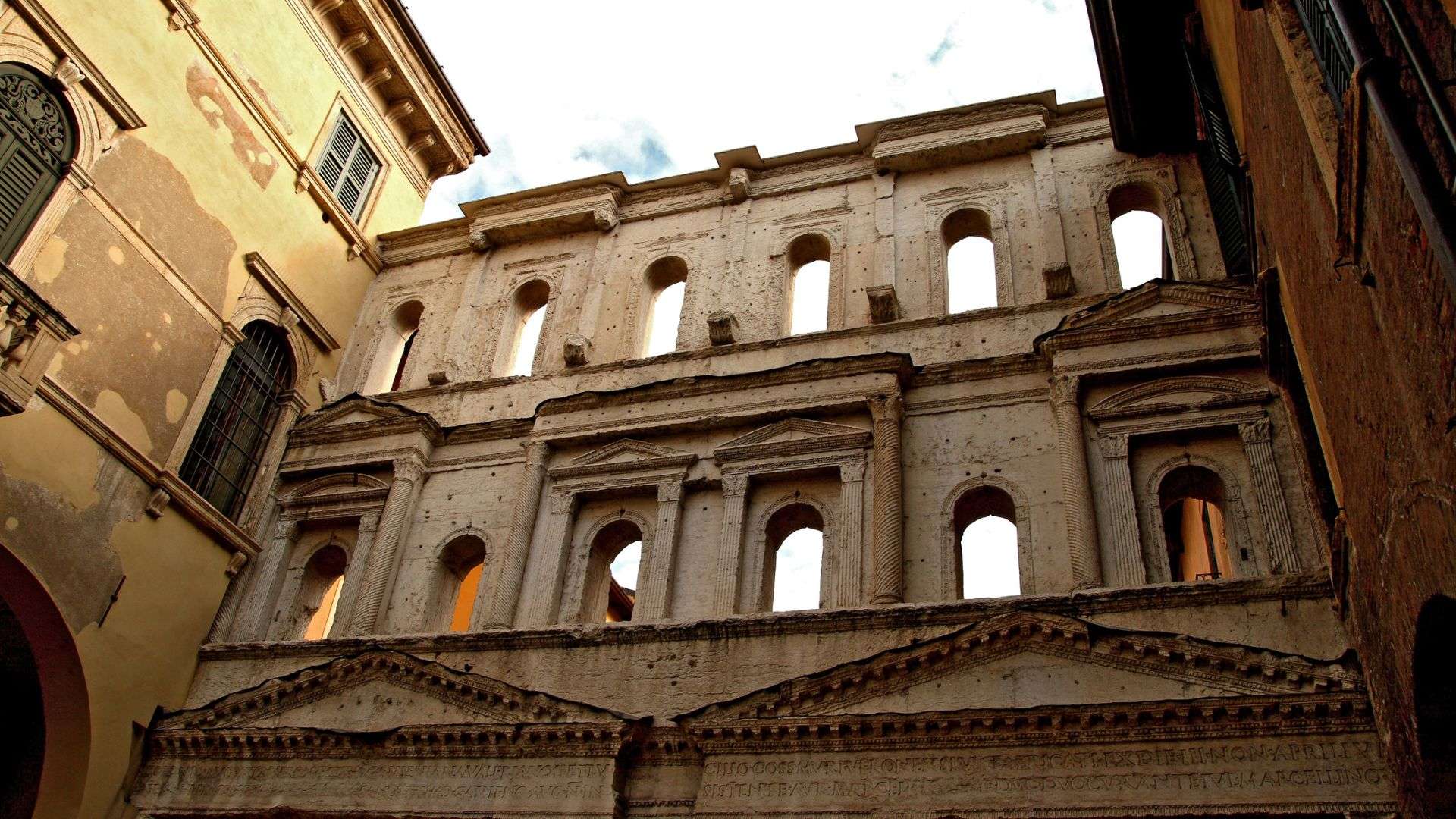
The best-known legacy is the Arena di Verona, the amphitheater on Piazza Bra. It was built in the first half of the 1st century A.D., measures 139 by 109 meters, and originally had an outer ring of walls, which collapsed during an earthquake in the 12th century. The following date from the same period: Porta Leoni and the Porta Borsari, two city gates whose stone facades now stand between residential buildings.
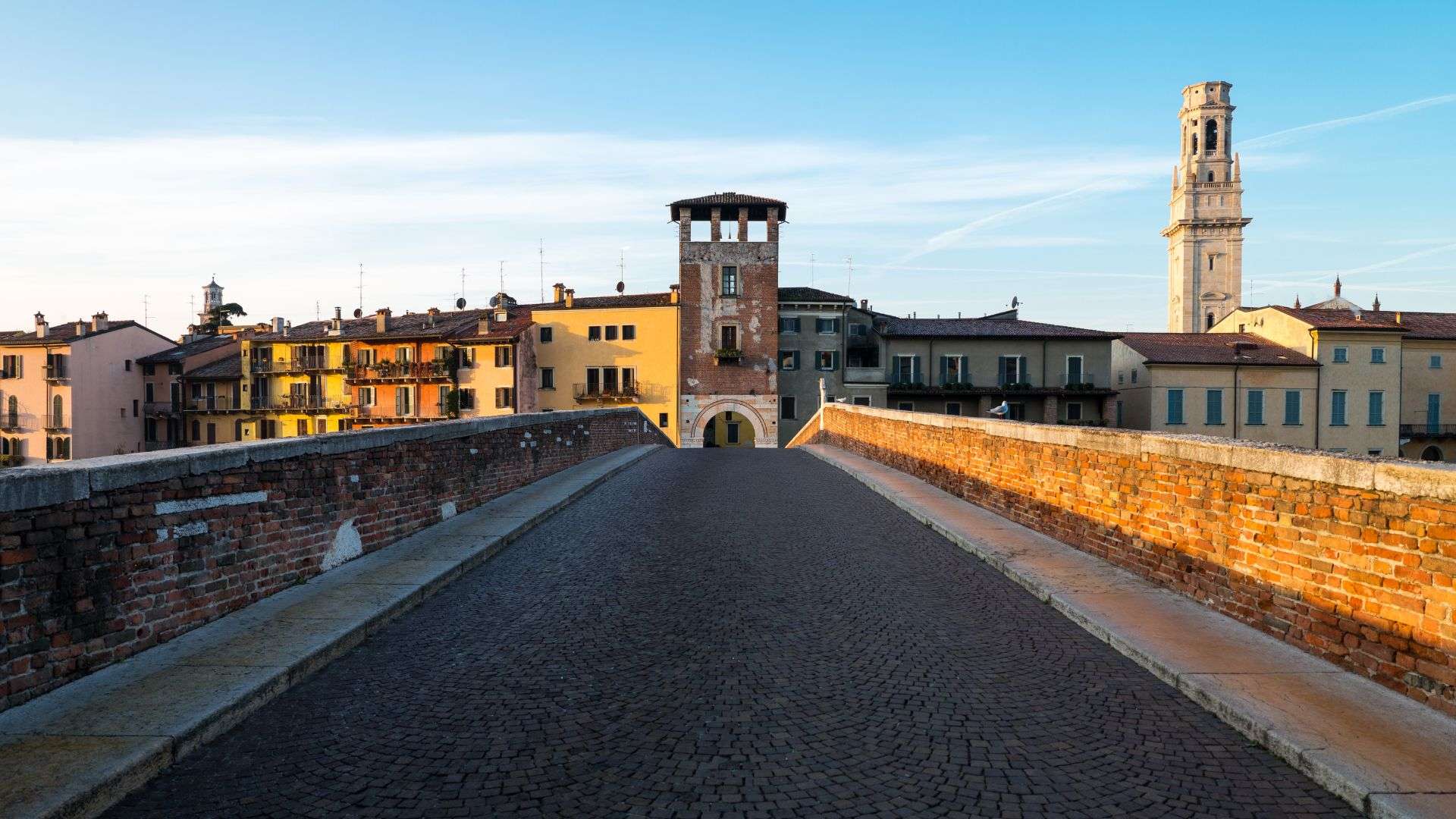
On the other bank of the Adige River lies the Roman Theater, the Roman theater at the foot of the hill San Pietro. It was built around the turn of the era and was not excavated again until the mid-19th century. Even back then, the Ponte Pietra, the stone bridge, whose first two arches are still Roman.
Theodoric, the Lombards, and the Franks: Verona as the Royal Seat
On September 27, 489, Theodoric the Great, King of the Ostrogoths, defeated Odoacer, the then-ruler of Italy, near Verona. Theodoric built himself a palace in the city and often stayed there, so that Verona became the second capital of his empire alongside Ravenna. Only a few remnants of his buildings remain, but legend made him the King of Verona: it named him after the city, and scenes from this legend were later depicted on the facade of the basilica San Zeno had been carved.
After the Ostrogoths, Alboin, king of the Lombards, took up residence here and also died in Verona. In 774, the Lombard king Adelchis made his last stand against Charlemagne in the city. Under Frankish rule, Verona became the seat of a county, and the Frankish king Pippin, who often resided in the city, had the Church of San Zeno rebuilt. Capital stones from the 8th century are still embedded in its masonry today.
In the 10th century, Otto I, the Holy Roman Emperor, granted the Mark of Verona—the territory surrounding the city—to the Dukes of Bavaria. This marks Verona’s first connection to Bavaria; the most recent is its sister-city relationship with Munich.
The Free Commune: Consuls, the League of Cities, and a Pope in Verona
As early as 1107, 42 citizens of Verona signed a treaty with the Doge of Venice, and in 1136 the city emerged as a free commune with its own consuls. In 1164, together with Vicenza and Padua, it founded the Lega della Marca Veronese, a confederation of cities opposed to Emperor Frederick Barbarossa, which merged into the Lombard League in 1167.
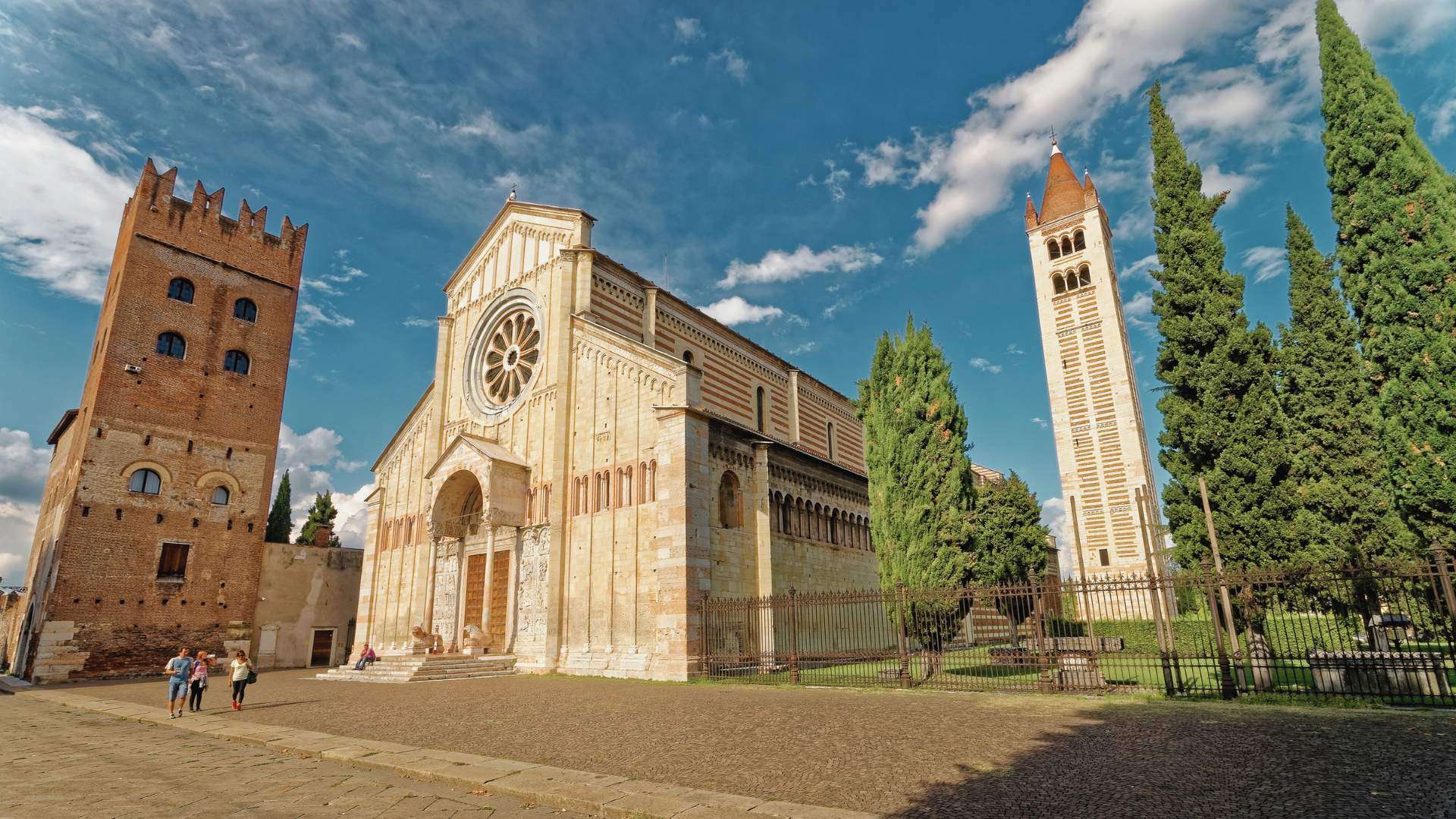
The construction of San Zeno Maggiore, the Romanesque basilica dedicated to the city’s patron saint, located in the western part of the Old Town: It was built between 1117 and 1227, and its bronze portal doors date from the 12th century. In the summer of 1184, Pope Lucius III permanently moved his seat to Verona. He died here on November 25, 1185, and was buried in the city.
The Scaliger Family: 128 Years Under the Ladder
The Family della Scala, known in German as the Scaliger, carries the ladder; in Italian scala, in the name of. Their rise began in September 1259, following the death of Ezzelino III da Romano, who had ruled Verona, Vicenza, and Padua with an iron fist. In 1262, the city elected Mastino I della Scala as Captain of the People, as captain of the people for one year. This led to the establishment of a dynasty that ruled Verona until 1387.
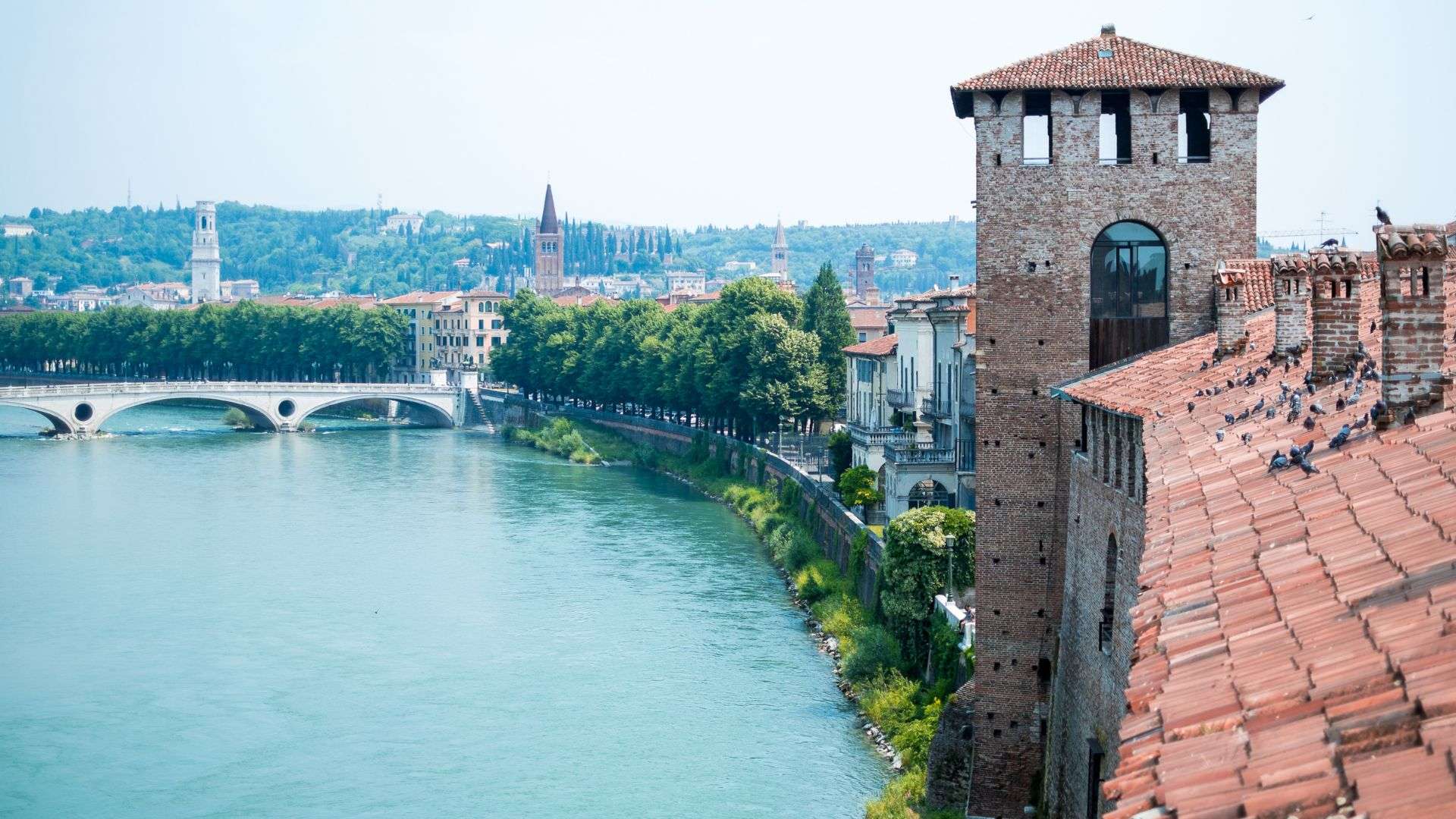
It reached its peak under Cangrande I, who reigned from 1311 to 1329 and granted asylum to the exiled poet Dante. Cangrande II had the Castelvecchio build the castle on the Adige River, which has housed the city's art museum since 1926 Castelvecchio Museum ...as well as the bridge in front of it. Under the Scaliger dynasty, Verona had more than 40,000 inhabitants—a number it would not reach again for a long time afterward.

The Scaliger family buried their dead right in the middle of the city: The Arche Scaligere, the Gothic tombs next to the small church Santa Maria Antica, stand behind a wrought-iron gate just a few steps from the Piazza dei Signori, the square in front of the former Scaliger residence. The tomb of Mastino I dates from 1277; the magnificent tomb of Cansignorio, a later Scaliger ruler, was created by the sculptor Bonino da Campione. In 1387, Gian Galeazzo Visconti, the lord of Milan, conquered the city, bringing the Scaliger rule to an end.
Venice: Nearly 400 Years Under the Lion of St. Mark
After the Visconti and a brief interlude by the Carraresi, Under the lords of Padua, Verona came under the rule of the Republic of Venice in 1405. Venetian rule lasted until 1797 and was interrupted only once: from 1509 to 1517, the city was occupied by the troops of Emperor Maximilian I. Afterward, Venice surrounded Verona with new bastions, on which the architect Michele Sanmicheli (1484–1559) played a key role.
The city recovered during this period: in 1473, it had only 30,000 inhabitants, but by the mid-16th century, the population had risen again to about 52,000. The Venetian era is evident in the St. Mark’s Column on the Piazza delle Erbe, the marketplace on the grounds of the Roman Forum, and at the Loggia del Consiglio in Piazza dei Signori, attributed to the architect Fra Giocondo.

Napoleon and Austria: How Verona Became a Fortified City
On June 1, 1796, the French marched in. In April 1797, the people of Verona rose up in the Pasque Veronesi, the Easter Uprising from April 17 to 23, against the occupying forces. Under the Treaty of Campoformio, Verona was ceded to Austria, and in January 1798, the Austrians took control of the city.
After that, Verona changed hands twice more: The Treaty of Lunéville in 1801 divided the city along the Adige River between Austria and the Italian Republic; from 1805 on, it belonged entirely to the Kingdom of Italy under Napoleon. On February 4, 1814, Austrian troops reoccupied the city and remained there until October 16, 1866.
Over the course of these five-plus decades, Verona was transformed into a fortress. Beginning in 1848, the military engineer Franz von Scholl repaired and expanded the city walls and constructed a double ring of forts around the city. UNESCO specifically lists these Austrian structures among the elements it protects in Verona.
Since 1866: An opera house, war damage, and a World Heritage Site
In 1866, Verona became part of the Kingdom of Italy. In 1913, music made its debut in the Arena with the premiere of Verdi's opera *Aida*, and this led to the Arena di Verona Opera Festival, which will hold its 104th edition from June 11 to September 11, 2027.
During World War II, the Ponte Pietra was destroyed in 1945. After the war, the people of Verona rebuilt it, retrieving the original stones from the Adige River. In 1960, Verona signed a sister-city agreement with Munich, commemorated by the Münchner-Kindl Fountain—a gift from the Stadtsparkasse München—located directly next to the Arena on Piazza Bra.
In 2000, UNESCO inscribed the city as a whole on the World Heritage List. The rationale: Verona illustrates how a fortified city has grown over 2,000 years and preserves an important architectural monument from nearly every era of European history.
Did Romeo and Juliet really exist?
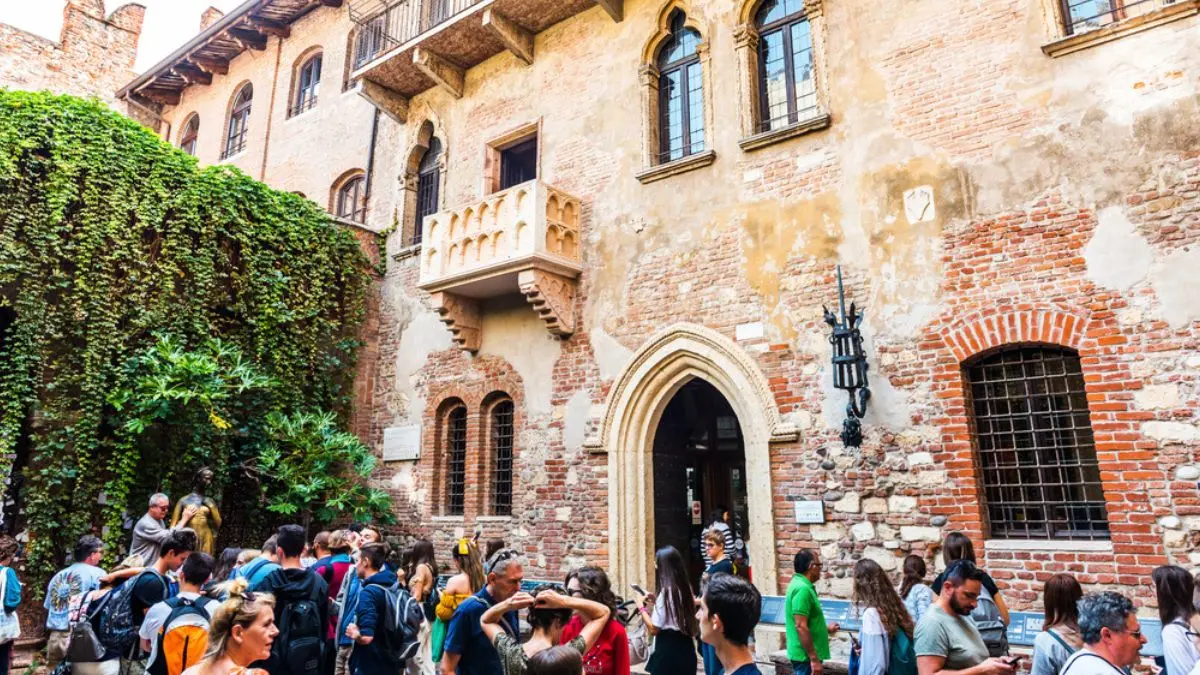
Romeo and Juliet are part of the city's legend; they were made famous by Shakespeare's play. Juliet's House in the Via Cappello is, on the other hand, real: a 14th-century residential building listed in the *Enciclopedia Italiana* as the house said to be Juliet's is operated as the so-called House of Juliet. The statue of Juliet in the courtyard is a replica.
Starting in May 2025, there will also be an admission fee to enter the courtyard. You can access it through the Teatro Nuovo, the Theater an der Piazzetta Navona, with the courtyard ticket for €5.00 or the ticket for the courtyard and the house for €12.00. Both are available only online. To see where else the city has erected monuments to the lovers, check out our article on the Places Associated with Romeo and Juliet in Verona.
How much do the historical attractions in Verona cost?
The Arena costs €12.00, Castelvecchio €9.00, the Teatro Romano and the Archaeological Museum €9.00, and the Torre dei Lamberti, the city tower on Piazza dei Signori, €6.00. The VeronaCard, priced at €25.00, provides 24-hour access to the Arena, Castelvecchio, Torre dei Lamberti, and city buses.
The city museums are closed on Mondays. The Arena is open Tuesday through Sunday from 9 a.m. to 7 p.m., with limited hours on performance days; Castelvecchio and the Teatro Romano are open Tuesday through Sunday from 10 a.m. to 6 p.m. Admission to the city museums is free for visitors under 18, and on the first Sunday of every month from November through March, admission to most of them costs only €1.00.
How much do Verona's historic sites cost?
| Offer | Price |
|---|---|
| Arena di Verona | 12.00 € · reduced rate 9.00 € · ages 18 to 25 3.00 € |
| Castelvecchio Museum | €9.00 · From October 31, 2026, to January 31, 2027: €12.00 |
| Roman Theater with the Archaeological Museum | €9.00 · reduced rate €6.00 |
| Torre dei Lamberti | €6.00 · reduced price €4.50 |
| Casa di Giulietta with a yard | €12.00 · €5.00 (on-site only) |
| VeronaCard | €25.00 for 24 hours · €32.00 for 48 hours |
The Arche Scaligere are open on weekends during the season; admission is free with a day pass from another municipal museum. The four major churches—San Zeno, the Cathedral, Sant’Anastasia, and San Fermo—sell their tickets at the first church you enter.
As of October 2026 · Prices according to the Musei Civici di Verona, AGEC, and Verona Tourism. Castelvecchio is hosting a special exhibition through January 31, 2027.
All municipal museums are closed on Mondays, and the Arena has different opening hours on days when the Opera Festival is in session. Therefore, plan your history tour for a day between Tuesday and Sunday, and during the festival season, check the Arena’s hours in advance with the Musei Civici, the municipal museums.
How do you get to the historic sites in Verona?
The easiest way is by train: Verona Porta Nuova, the main train station, is located about 1.5 kilometers south of the arena, about a 20-minute walk away. The trip takes about an hour and a half from Bolzano and a good five hours from Munich on a direct train.
From the airport Valerio Catullo the bus is running Verona Airlink Every 20 minutes, it takes 15 minutes to get to Porta Nuova Station; the ticket costs €7.00. If you're driving, park outside the Old Town, because inside the ZTL, the restricted-traffic zone in the city center; as a visitor from outside the city, you are not allowed to drive into it. Exceptions are made for guests staying at accommodations within the zone, whose license plate numbers are reported by the establishment. The parking garage Downtown Parking in the Via Campo Marzo costs €1.00 per hour.
How to Get to Verona's Old Town
| Path | Here's what you'll need |
|---|---|
| Airport | Bus Verona Airlink To Porta Nuova Station, every 20 minutes, 15-minute ride, €7.00; ticket valid for 75 minutes, including on city buses |
| Railroad | About 1.5 hours to Bolzano, a little over 5 hours to Munich by direct train; from Porta Nuova, it's about a 20-minute walk to the Arena |
| Car | ZTL in the city center is closed to visitors, with the exception of registered guests staying at accommodations within the zone; the Parcheggio Centro parking garage charges €1.00 per hour and €10.00 for 24 hours, starting from the tenth hour |
As of October 2026 · Information based on ATV Verona, AMT3, and the City of Verona. Train times are rounded.
2,000 Years in a Day: A Tour Through Verona's History
If you want to experience the different eras in the correct order, don’t start at the Arena, but rather in the west at San Zeno. From there, walk along the Adige River to Castelvecchio, then continue through the Porta Borsari to Piazza delle Erbe and on to Piazza dei Signori with the Arche Scaligere. Cross the Ponte Pietra to reach the Teatro Romano, then cross the river again to return to the Arena. The route is about 4 kilometers long; the walking time alone is about an hour, but if you include sightseeing, you’ll need a full day.
If you're looking for the highlights without a historical lens, you'll find them in our guide to the Verona sights.
Map: Verona's Historic Old Town

Start at San Zeno, not at the balcony
Most visitors start at the Arena, walk to Juliet’s Balcony, and then consider Verona a beautiful backdrop. But anyone who stands in front of San Zeno in the morning, with the 12th-century bronze doors and the legendary reliefs depicting Theoderic before them, will understand within ten minutes why this city was contested for nearly 2,000 years.
For history buffs, Verona is a real treat, because the Romans, the Scaligeri, and the Venetians are all within four kilometers of each other. If you only have half a day and are mainly looking for that opera vibe, skip Castelvecchio and the Teatro Romano and plan an evening at the Arena instead.
Verona Attractions: 8 Highlights & Tips
The Arena, Juliet's Balcony, and seven other highlights: How much Verona's attractions cost, when they're open, and the best ways to get there.

3 Days in Verona: The Perfect Itinerary with a Route & Tips
3 Days in Verona, Smartly Planned: Our tried-and-true itinerary takes you straight to the Arena, Juliet’s Balcony, and across the Adige River—complete with a route, budget, and honest tips.
FAQ - Frequently Asked Questions About the History of Verona
Sources and Further Information
- UNESCO World Heritage Center: City of Verona (accessed in October 2026)
- Treccani, Italian Encyclopedia: Verona (accessed in October 2026)
- Verona Civic Museums: Arena, Castelvecchio, Roman Theater, Juliet's House (accessed in October 2026)
- ATV Verona: Verona Airlink (accessed in October 2026)
- Fondazione Arena di Verona: Opera Festival 2027 (accessed in October 2026)