

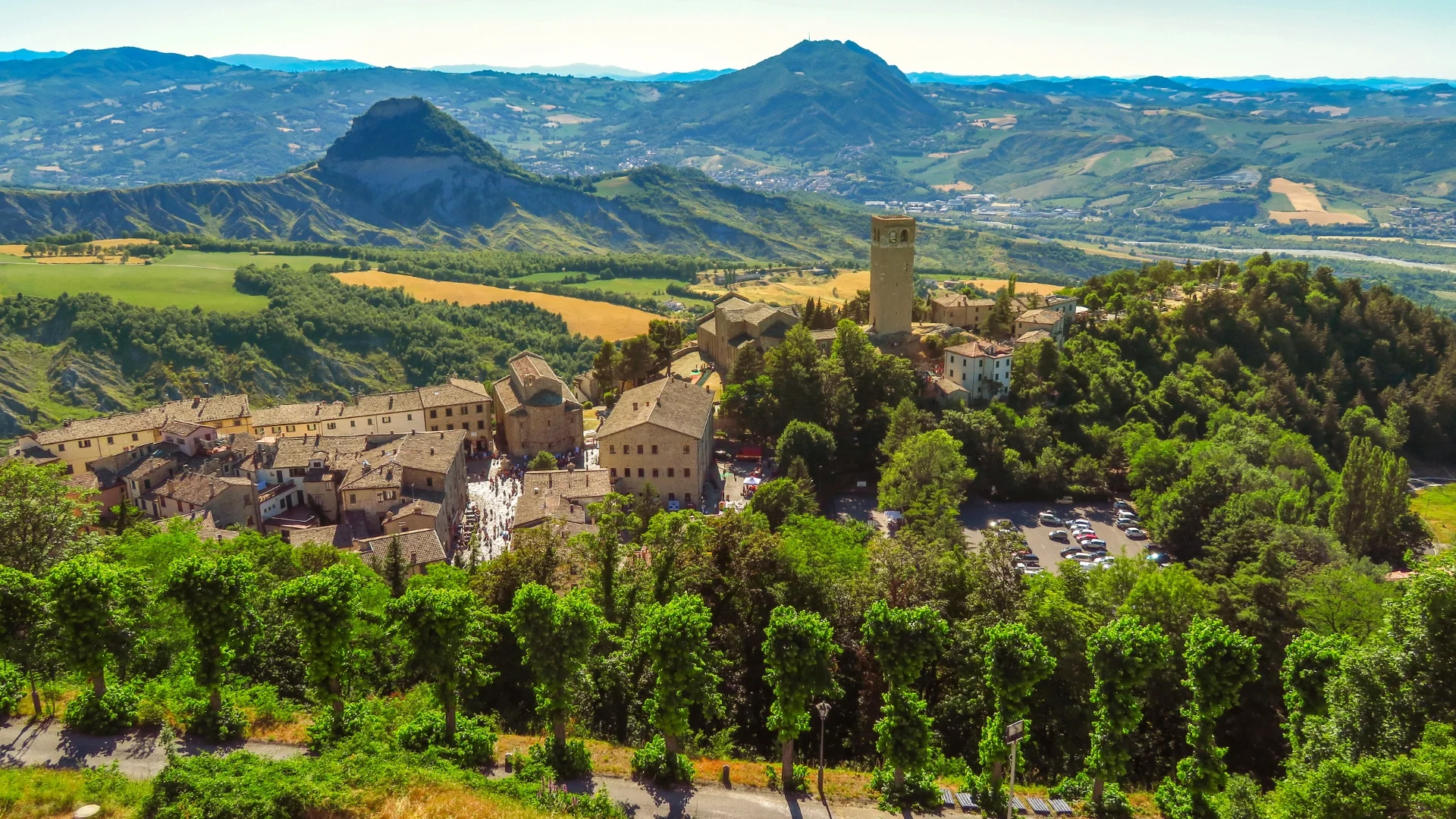

San Leo – From the valley road in the Val Marecchia From a distance, it looks as if someone had placed an entire village on a single boulder. The most important San Leo Attractions are crowded together on this Rocky Plateau at 589 meters above the Montefeltro: a Renaissance fortress at an elevation of about 640 meters, two Romanesque churches, and a freestanding bell tower. Admission to the Fortezza costs €11.00; the town center and both churches are free.
San Leo is one of the Borghi più belli d'Italia (among Italy's most beautiful villages) and bears the Bandiera Arancione of the Touring Club Italiano. The town is famous for its fortress, where the alchemist Cagliostro who died in 1795 as a prisoner of the Papal States. In this article, you’ll find the seven highlights of the Borgo—along with prices, opening hours, how to get there, the best time to visit, and an honest assessment of what’s worth seeing and what you can skip.
The municipality of San Leo has about 2,800 residents, but only about 250 people live in the historic center on the rock. The town center is located at 589 meters, while the Fortezza, at the highest point, stands at about 640 meters. Here is an overview of the key facts:
San Leo in the Montefeltro: By the Numbers
San Leo is located in Emilia-Romagna, in the province of Rimini, on a rocky plateau overlooking the Val Marecchia. The village is tiny, and the distances between the fortress, churches, and museum are short.
As of August 2026 · Fares and elevation data according to IAT San Leo; population figures according to ISTAT 2024 (2,833 in the municipality).
- History buffs and Borgo enthusiasts
- Couples and Food Lovers
- Day-trippers from Rimini or San Marino
- Hikers on the Cammino di San Francesco
- Beach and party vacationers
- Guests with limited mobility
- Families with strollers
- Travelers without a car who are pressed for time


Emilia-Romagna Travel Guide
Emilia-Romagna Travel Guide: The Most Beautiful Places from Bologna to Rimini, Best Time to Visit, How to Get There, and Accommodations—an overview of all Emilia-Romagna articles from italien.news.

What are the 7 must-see attractions in San Leo?
The seven highlights are the Fortezza, the Pieve di Santa Maria Assunta, the Duomo di San Leone, the Torre Campanaria, the Palazzo Mediceo with the Museo dell’Arte Sacra, the Piazza Dante, and the Convento di Sant’Igne. Six of them are located on the rocky plateau; only the monastery lies below in the forest. You can walk from one end of the plateau to the other in just a few minutes—and that’s exactly what makes it so charming.
1. The Fortezza—Cagliostro’s prison overlooking the valley
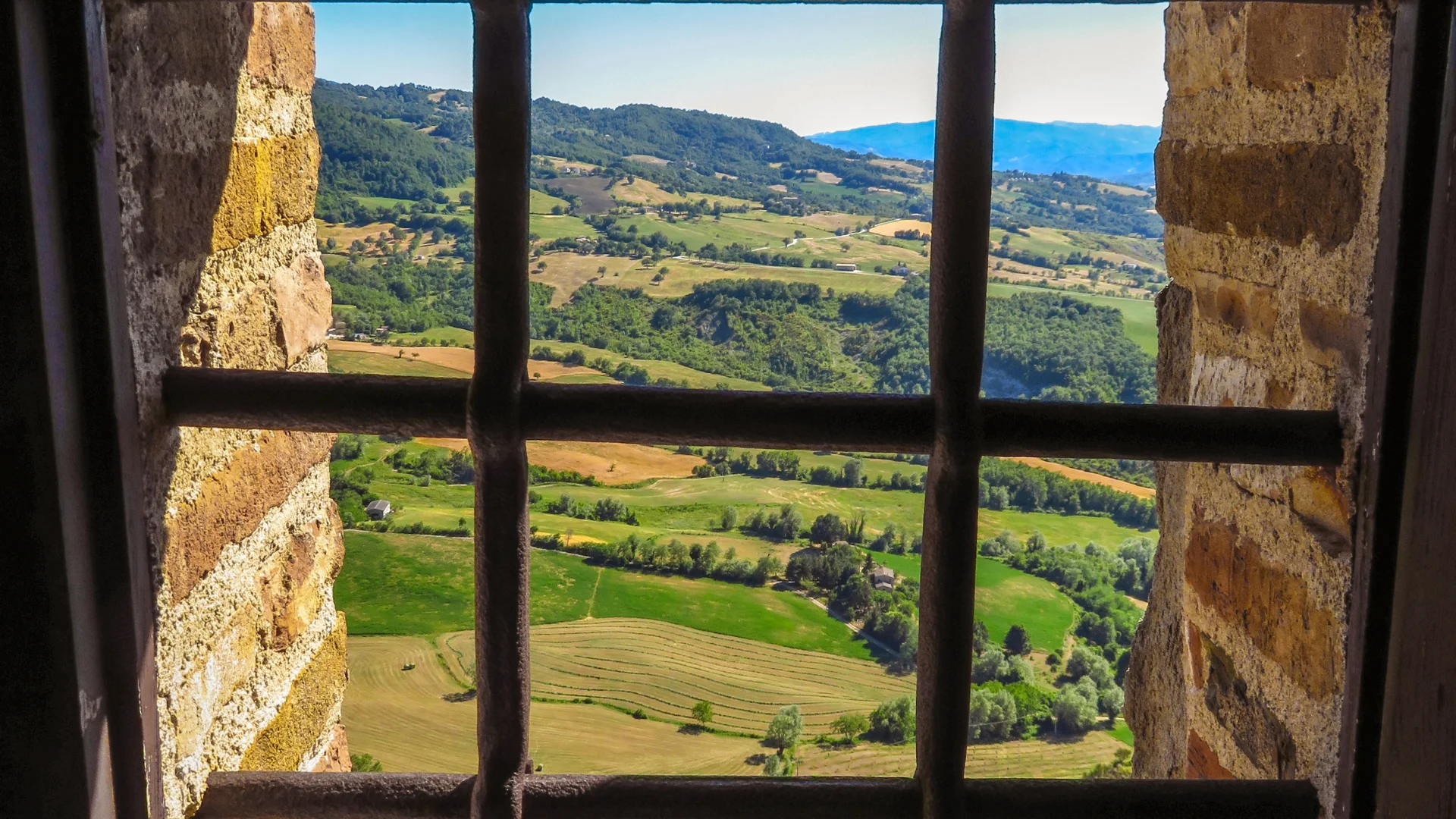
The Fortress of San Leo It is the Borgo’s landmark and stands at an elevation of about 640 meters at the highest point of the rock. It owes its current appearance to the Sienese architect Francesco di Giorgio Martini, who rebuilt the old castle starting in 1479 for the Duke Federico da Montefeltro converted it into one of the most modern fortifications of its time—designed to defend against the new weapon, the cannon. Beginning in 1631, after the Duchy of Urbino passed to the Papal States, the impregnable fortress served as Prison. Its most famous prisoner: the adventurer and alchemist Giuseppe Balsamo, known as Count Cagliostro, who was brought here in 1791 and died in captivity in 1795. Today, the tour takes you through the armories, along the battlements, and to a viewpoint that, on a clear day, offers a view all the way to the Adriatic Sea.
2. The Pieve di Santa Maria Assunta—Montefeltro’s oldest church
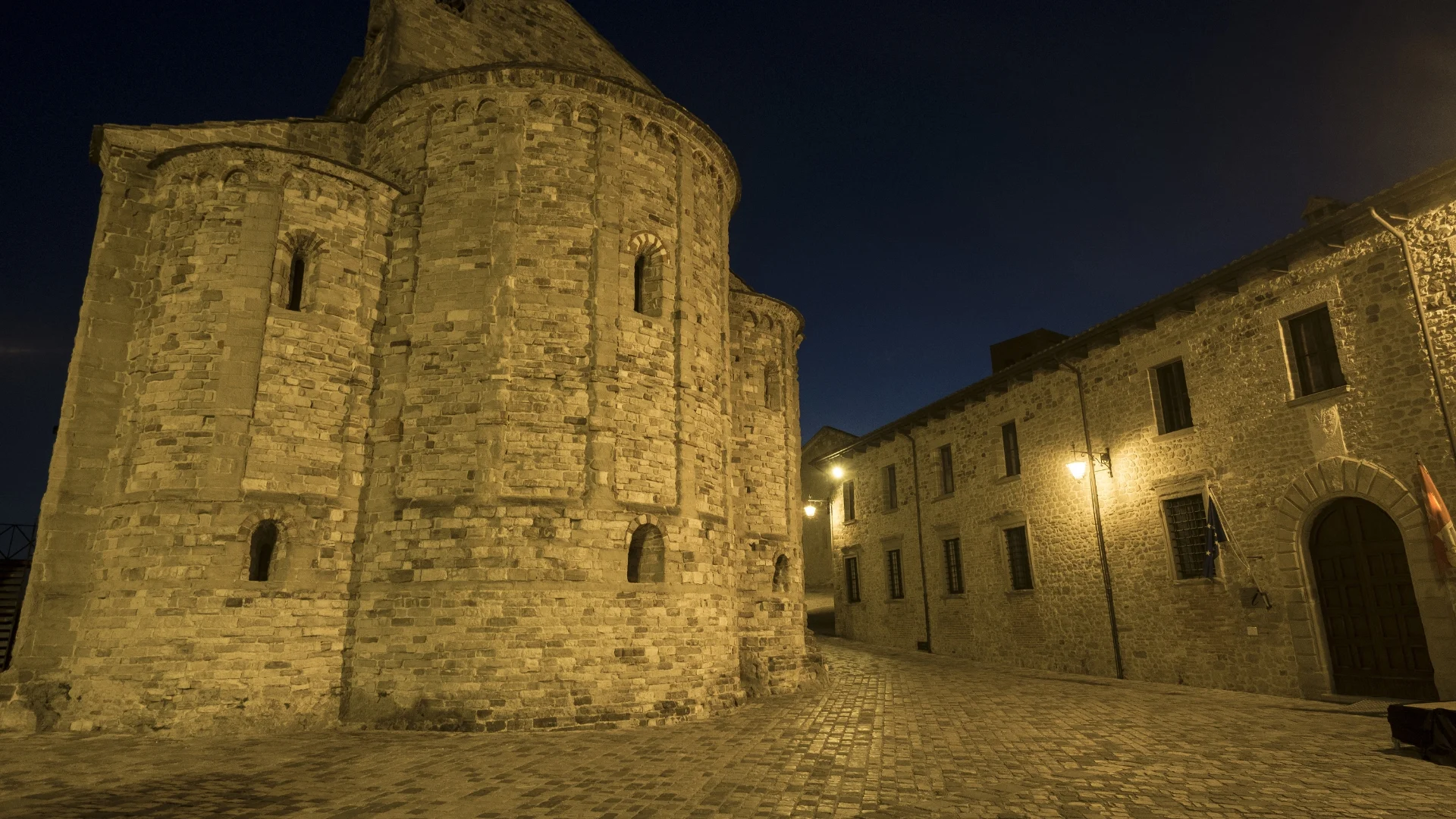
Just below the Duomo stands the Pieve di Santa Maria Assunta, which, according to the municipality, is the oldest religious building in the entire Montefeltro region. Its origins date back to between the 8th and 10th centuries, and it was later rebuilt in the Romanesque style. It stands where St. Leone who, according to tradition, had his hermitage there in the 4th century—a stonemason from Dalmatia who gave the place its name, while his companion Marino founded the neighboring Republic of San Marino. The building has an almost archaic appearance: few windows, rough sandstone, and in the crypt, the Sacello (the small burial chapel) of the town's patron saint. The Pieve is open daily from 9:30 a.m. to 12:30 p.m. and from 2:30 p.m. to 7:00 p.m.; admission is free.
3. The Duomo di San Leone—a Romanesque cathedral built on a rock
The Cathedral of San Leone was rededicated in 1173 and is made entirely of Sandstone from the cliff on which it stands. It was built over the remains of a much older church from the 7th century, from which the capitals, fragments of the ciborium, and the winged lions of the vestibule originate—all of which have now been incorporated into the structure. It is striking that the façade no input Note: The portal is located on the side, flanked by the busts of St. Leo and St. Valentine. The crypt once housed the sarcophagus of the city’s patron saint, whose lid, bearing an inscription, dates to the 6th century. The cathedral is considered the most significant medieval building in the Montefeltro region and is open daily from 9:30 a.m. to 12:30 p.m. and from 2:30 p.m. to 7:00 p.m.
4. The Torre Campanaria – the solitary bell tower
A short distance from the Duomo and the Pieve stands the Bell Toweralso Torre Civica called: the freestanding Bell Tower on Monte della Guardia, the second peak of the rock. It rises about 28 meters directly from the bare rock, square on the outside and round on the inside—the round core is thought to be part of an older tower. Its outer structure dates from the same period as the cathedral (1173), while the clock was added in 1793. An important consideration in its design: The tower is Usually closed to visitors and is open only on holidays or during events. The short walk between the three Romanesque buildings is nonetheless one of the most atmospheric spots in San Leo.

5. Palazzo Mediceo and Museo dell’Arte Sacra
On the edge of the piazza stands the Medici Palace, built between 1517 and 1523 as the seat of the governor of San Leo and Montefeltro for the Republic of Florence—the coat of arms of the Medici The year 1521 is still prominently displayed on the facade today. Inside, the museum—founded in 1996—displays Museum of Sacred Art the sacred art from the surrounding region: panel paintings, wooden sculptures, and liturgical objects from local churches, arranged chronologically from the 8th to the 18th century, along with a lapidarium featuring sculptural fragments. The museum is open Monday through Saturday from 10:00 a.m. to 12:00 p.m. and Sunday from 10:30 a.m. to 12:30 p.m.—a narrow time window that you’ll need to factor into your plans. The same building also houses the IAT tourist office, the municipal archives, and the library.
6. Piazza Dante – the heart of the Borgo
The Dante Alighieri Square This is the central square and the best place to simply soak up the atmosphere of San Leo. Surrounding it are the Palazzo Mediceo, churches, and a few cafés from which the scent of coffee and truffles wafts; the tourist office is located at number 14. The square bears two famous names: Dante is said to have known the town during his time in Montefeltro and in the Purgatory as I mentioned, and according to tradition, St. Francis on Graf Orlando da Chiusi, which led him up the mountain La Verna bestowed—the very place where Francis later received the stigmata.
7. Convento di Sant’Igne – Francis’s Quiet Retreat
Below the cliff, hidden in the woods, lies the small Convent of Sant’Ignea Franciscan Monastery dating from the 13th century, which was built after St. Francis’s visit in 1223. Since the 16th century, the name has often been interpreted as „holy fire“ (holy fire)—which is said to have guided Francis through the night—though the simpler form is documented for the year 1300 Santegna. The cloister and church are unadorned; the peace and quiet here is the real draw. There are no set opening hours; if you want to go inside, it’s best to visit during church services or check with the tourist office.
What other sights in San Leo are worth seeing?
If you’re staying longer, you’ll find four other attractions around the Borgo that don’t require an additional admission fee. All are within walking distance, either on the outskirts of town or below the cliff.
- The battlements and towers of the Fortezza: From the bastions, the view stretches across the entire Val Marecchia all the way to San Marino—the best viewpoint far and wide, included with the fortress ticket.
- The Palazzo della Rovere and the Palazzo Nardini: Two noble palaces on the main street; a commemorative plaque on the Palazzo Nardini marks the site where St. Francis once stayed.
- The The Way of St. Francis: San Leo is a stop along the pilgrimage route to La Verna—ideal for hikers who want to explore the Montefeltro region on foot.
- The observation decks on the outskirts of town: From the belvedere Below the churches, you can see how the entire Borgo hovers over the valley like the bow of a ship.
Which museums are worth visiting in San Leo?
Two houses are worth visiting, and both are less than a five-minute walk apart. The Museum of Sacred Art The Palazzo Mediceo is the premier destination for sacred art in the Borgo. Inside the Fortezza itself, it is complemented by MusLeo, a virtual ecomuseum, the tour, and multimedia stations that tell the story of the fortress, its prisoners, and the Dukes of Montefeltro—access is included with the fortress ticket.
How much do San Leo's attractions cost?
The best part of San Leo doesn’t cost a cent: strolling through the narrow streets, sitting in Piazza Dante, and visiting both Romanesque churches is free. You’ll mainly spend money on the fortress—€11.00 for adults 26 and older, €2.00 for 18- to 25-year-olds, and free for those 17 and younger. On Saturdays, Sundays, and holidays, there are two combination tickets that include access to other monuments in the province.
| Offer | Price |
|---|---|
| Fortezza di San Leo, Adults 26 and older | 11,00 € |
| Fortezza, discounted for ages 18 to 25 | 2,00 € |
| Fortezza, children and teens up to age 17 | free |
| Combined Ticket for Saturdays, Sundays, and Holidays: Fortezza, Rocca Malatestiana in Verucchio, Archaeological Museum | €14.50 for adults |
| The same combo ticket, plus the Camminamento di Ronda in Gradara | €18.00 Adults |
The town center, Piazza Dante, the Duomo di San Leone, and the Pieve di Santa Maria Assunta are all free to visit. You can buy tickets for the Fortezza online through TicketOne; groups must make reservations in advance at the tourist office. If you explore the town on foot and only tour the interior of the fortress, you’ll spend about ten euros per person. On top of that, there are parking fees below the Borgo—cars must be parked at the base of the cliff, and you can make your way up on foot or by shuttle bus, whose schedule is published seasonally by the tourist office.

When is the Fortezza di San Leo open?
The Fortezza is open from April through June, Monday through Friday at 10:30 a.m.; starting June 29, it opens at 10:00 a.m.; on weekends and holidays, it is open from 10:00 a.m. Last admission is 45 minutes before closing. Churches and museums have their own, significantly shorter hours—in particular, the Museo dell’Arte Sacra closes at noon. Here is an overview for the current season:
An Overview of the Fortress, Churches, and Museum in San Leo
The opening hours for the fortress vary by season, while those for the churches remain the same. There are no regular visiting hours for the Torre Campanaria.
| Location | Opening hours |
|---|---|
| Fortezza, April 1 through June 28, 2026 | Mon–Fri 10:30 a.m.–6:45 p.m., Sat, Sun, and holidays 10:00 a.m.–7:45 p.m. |
| Fortezza, June 29 through September 13, 2026 | Mon–Fri 10:00 a.m.–6:45 p.m., Sat, Sun, and holidays 10:00 a.m.–7:45 p.m. |
| Cathedral of San Leone | Daily from 9:30 a.m. to 12:30 p.m. and 2:30 p.m. to 7:00 p.m. |
| Pieve di Santa Maria Assunta | Daily from 9:30 a.m. to 12:30 p.m. and 2:30 p.m. to 7:00 p.m. |
| Museum of Sacred Art | Mon–Sat 10:00 a.m.–12:00 p.m., Sun 10:30 a.m.–12:30 p.m. |
| Bell Tower | Usually closed; open only on holidays and during events |
| IAT Tourist Office, Piazza Dante 14 | Mon–Fri 10:30 a.m.–12:00 p.m., Sat and Sun 10:00 a.m.–12:30 p.m. |
As of August 2026 · Information provided by IAT San Leo. Last admission to the Fortezza is at 6:00 p.m. on weekdays and 7:00 p.m. on weekends. As of press time, no schedule was available for the period after September 13, 2026.


Vacations in Riccione: experience beaches, shopping & dolce vita on the Adriatic Sea
More Than Just a Beach: Discover the Vacation Paradise of Riccione Riccione, affectionately known as the „Green Pearl of the Adriatic,“ is a true gem on the sun-drenched Riviera Romagnola in the Italian region of Emilia-Romagna. Its...
How do you get to San Leo?
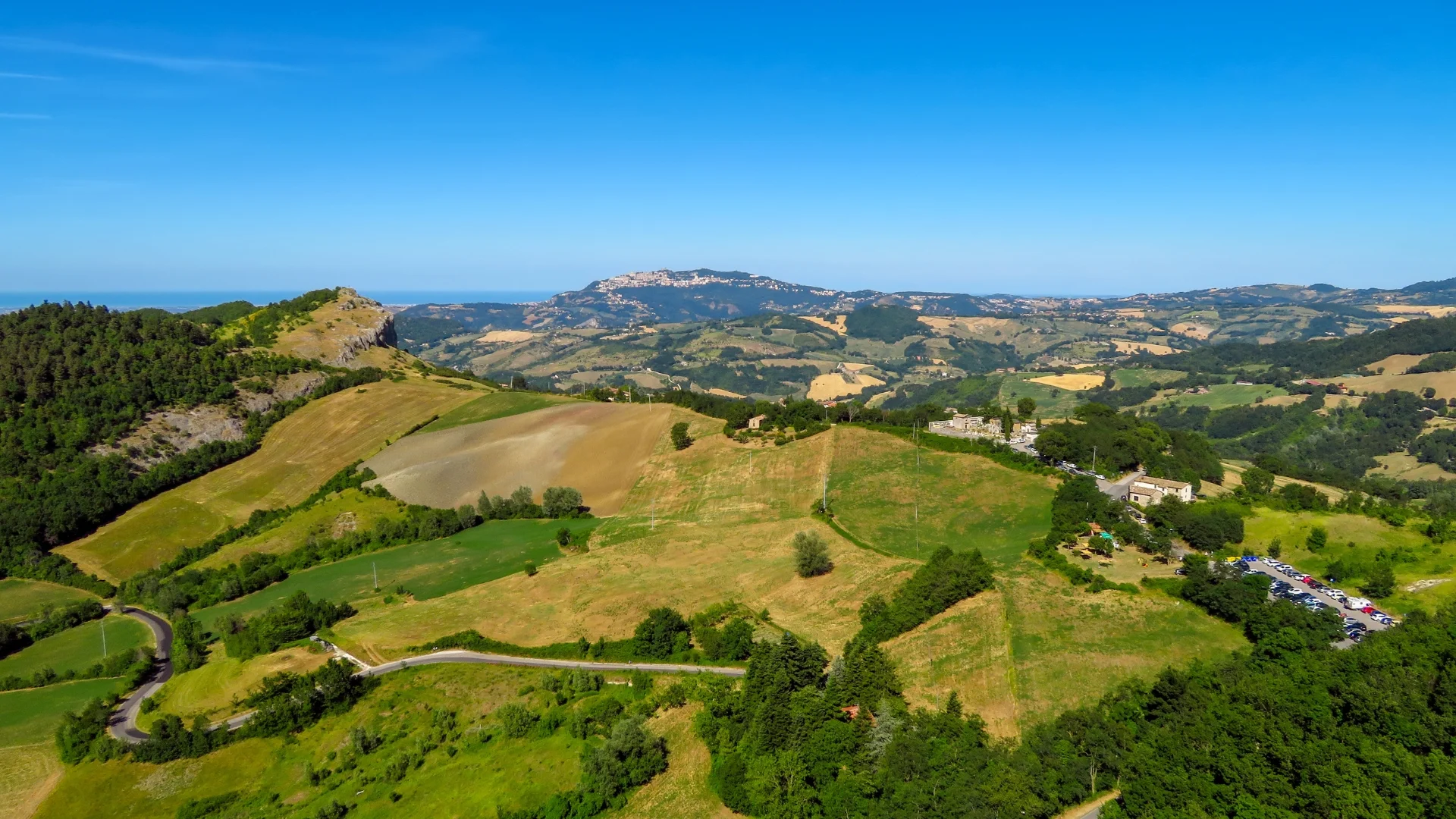
San Leo is located 33 kilometers southwest of Rimini; by car, you'll need to take the SS258 Marecchiese About 45 minutes. Without a car, it’s more of a hassle because the Borgo is located off any train line, and the bus service to the valley only runs on weekdays.
- By car: From Rimini via the SS258 Marecchiese Drive up the Val Marecchia to Pietracuta, then take the winding mountain road to the base of the cliff. Cars must be parked in the parking lots below the Borgo; the rest of the way up is on foot or by shuttle bus.
- By train and bus: Take the train to Rimini Station on the main Adriatic line; from there, take Start Romagna bus line 160 to Pietracuta, and then continue on the Valmabus to San Leo. This route operates only on weekdays; as of June 2026, a single-zone ticket costs €2.00, and a 10-ride pass costs €18.00.
- By airplane: The nearest airport is Rimini-Miramare (Federico Fellini), 38 kilometers away, with scheduled flights operated by Ryanair, Wizz Air, easyJet, and British Airways, among others. Bologna is 135 kilometers away and offers more connections—from there, you can continue your journey by rental car or train.
- Combined with San Marino: The Republic of San Marino is 22 kilometers away—about a half-hour drive—so you can easily visit both rock formations in a single day.
What should you definitely try in San Leo?
The cuisine of Montefeltro is hearty, rustic, and authentic—shaped by the Val Marecchia and the surrounding forests. Two products have made the area’s name known far beyond the region: the Formaggio di Fossa di Sogliano DOP and the white truffle.
- Formaggio di Fossa di Sogliano Director of Photography: A sheep's milk or blended cheese that matures in tuff caves, where it develops its savory, earthy flavor. The protected designation of origin also includes the nearby Talamello.
- White Truffle: The forests surrounding the neighboring Sant’Agata Feltria are among the best truffle-hunting grounds in the region—in the fall, the white truffle on fresh pasta.
- Piadina and handmade pasta: the thin flatbread from Romagna, served with tagliatelle, strozzapreti and cappelletti with ragù or truffles.
- Meat from the Montefeltro region: Rabbit with Herbs, Game, and the Grigione del Montefeltro, a semi-wild breed of pig that a farm in San Leo has revived.
- A glass to go with it Sangiovese: Red wine from Romagna—such as Colli di Rimini DOC—pairs well with hearty dishes.

Where's the best place to eat in San Leo?
Four restaurants cover practically the entire culinary scene in Borgo—San Leo is small, and that’s all you need. The cuisine centers on truffles, Fossa cheese, and handmade pasta from the Val Marecchia—mostly down-to-earth and reasonably priced. During peak season and on weekends, it’s best to make a reservation in advance, as the few restaurants in the town center fill up quickly.
| Restaurant | Here's what you can expect |
|---|---|
| Osteria Belvedere San Leo, Via Toselli 19 | An osteria and pizzeria in the town center, serving Romagna classics with homemade pasta, truffles, and Fossa cheese. In the summer, enjoy the terrace with a view of the valley; in the evenings, fresh pizza comes straight from the oven. |
| Osteria La Corte di Berengario II San Leo, 74 Via Michele Rosa | A cozy trattoria in the Borgo offering regional dishes, generous portions, and unpretentious service. Ideal for a relaxed lunch after visiting the fortress. |
| Ristorante Locanda La Rocca San Leo, 16 Via Giacomo Leopardi | Traditional Montefeltro cuisine featuring rabbit, game, and truffles (depending on the season), served on a terrace overlooking the Val Marecchia. The same building also offers guest rooms. |
| Locanda San Leone San Leo, 102 Strada Sant’Antimo | An agriturismo-style inn in an old mill at the foot of the cliff, with a garden and pool. The cuisine here is more seasonal and upscale than up in the Borgo—reservations are recommended. |
If you're feeling a little hungry between meals, you can get a fresh Piadina – fast, inexpensive, and typical of the Romagna region.

Where's the best place to stay in San Leo?
There are only a handful of beds in the historic center—and that’s exactly what makes staying overnight so special: as soon as the day visitors have left, you’ll have the Borgo almost all to yourself. If you want to stay in a central location, book early; otherwise, you’ll have to settle for accommodations at the foot of the cliff, which require a car.
| Accommodations | Here's what you can expect |
|---|---|
| San Leo Albergo Diffuso San Leo, Piazza Dante Alighieri 11 | A "albergo diffuso" with rooms in historic buildings surrounding Piazza Dante. Churches, a museum, and restaurants are right on your doorstep—you can't get any more central than this in the Borgo. |
| Locanda La Rocca San Leo, 16 Via Giacomo Leopardi | A simple, sturdy house with a restaurant in the town center. The rooms are unpretentious, and some offer views of the fortress or the valley—a good choice for a central place to stay. |
| Osteria Belvedere San Leo, Via Toselli 19 | A B&B with three rooms located above the osteria of the same name, right in the heart of the action. The restaurant and breakfast are on-site—convenient for foodies who appreciate short walks. |
| Locanda San Leone San Leo, 102 Strada Sant’Antimo | A stylish guesthouse in a converted mill at the foot of the cliff, with a garden and pool. Here, you’ll trade the proximity to the piazza for peace and comfort; a car is necessary. |
Top Accommodations in San Leo, Italy
When is the best time to visit San Leo?
San Leo is at its most beautiful from May through June and in September and October: mild weather, clear views, and a pleasantly quiet Borgo. In the height of summer, it gets hot on the exposed rock, but the Fortezza stays open the longest during this time—until 7:45 p.m. on weekends. In winter, the town is at its quietest and is often shrouded in fog; the tourist office publishes the fortress’s opening hours on a seasonal basis, so be sure to check them before you arrive so you don’t find yourself standing in front of a closed gate.
What holidays and celebrations should you plan for?
The most important date is the Feast of St. Leo on August 1, the city’s patron saint’s day: Mass at 9:00 a.m., Pontifical Mass with a procession at 6:00 p.m., music in the evening, and fireworks around 11:00 p.m. Throughout the year, markets, historical parades, and events centered on the figure of Cagliostro also bring the streets to life. The exact dates vary from year to year—it’s worth checking the municipality’s calendar of events before your trip.
What You Should Know About San Leo
To make sure your visit isn't ruined by false expectations, here are the honest facts:
- The climb is steep: The only access road is carved into the rock, and in the village, the path leads uphill over cobblestones. This can be difficult for people with strollers and guests with limited mobility.
- San Leo is small and quiet: Only about 250 people live in the historic center. If you're looking for hustle and bustle and nightlife, you're better off on the coast.
- Without a car or bus, you can't get very far: The Borgo is located off the railroad line, and the bus service from Rimini runs only on weekdays, with a transfer in Pietracuta.
- The bell tower will remain closed: The Torre Campanaria is not usually open to visitors—you can see it from the outside, but that's all.
- The museum closes at noon: The Museo dell’Arte Sacra is open for only two hours in the morning. If you don’t arrive until the afternoon, you won’t be able to see it.
Who would enjoy San Leo?
San Leo is ideal for History buffs and Borgo enthusiasts, who love fortresses, Romanesque churches, and great views. This place is perfect for Couples and Food Lovers For those looking for a quiet day with truffle pasta and sweeping views—and for anyone who’s had enough of Rimini, Riccione or take a trip into the countryside from San Marino. On the other hand, those looking for a beach vacation, nights out, or an accessible getaway will be better off looking elsewhere.
What's going on in San Leo in the evening?
Honestly, it's not much—and that's exactly the point. Once the day-trippers have left, it gets Piazza Dante Quiet. One or two osterie open for dinner, and after that, the square belongs to the few overnight guests and the starry sky above the cliff. To the aperitivo Before dinner, it's best to sit down with a view of the valley. The real nightlife takes place 33 kilometers away at the Riviera Romagnola from.
Combine San Leo with San Marino, the Riviera, and the Montefeltro
San Leo's greatest strength is its location in the Montefeltro region—it's surrounded by destinations that can easily be combined into a single tour.
The Republic San Marino It's 22 kilometers away and takes about half an hour to get there. The second famous rock formation in the area has three towers and is worth spending half a day exploring—the perfect way to spend the afternoon if you've already visited San Leo in the morning.
Further castle villages line the valley: Verucchio, the birthplace of the Malatesta family—whose Rocca Malatestiana is included in the Fortezza combo ticket—and the quiet artists' village Pennabilli. Both are located along the SS258 on the way to or from Rimini and are perfect for a quick stop. If you love truffles, keep driving to Sant’Agata Feltria, which is known for its white truffle fair in the fall.
To make up for it, the coast beckons: In just over an hour, you'll be in Riccione or Rimini on the beach of the Riviera Romagnola. It's a bit quieter further north in Bellaria-Igea Marina . Our guide gives you a complete overview of the region Emilia-Romagna Travel Guide, and it's worth it for a day trip to the city Bologna Travel Guide.

Bologna travel guide: insider tips for the red city under the arcades
Arcades, Cupids, and Authentic Tortellini: An Insider's Guide to Bologna It's just half past seven in the morning, and Piazza Maggiore is waking up in a soft, almost surreal shade of pink. While the waiters at the...
A tip from the editorial team that makes all the difference: The Borgo leads two lives, and day visitors never get to see the second one.
Stay overnight and be the first to visit the Fortezza
During the day, day-trippers fill the narrow streets; in the evening, calm settles in. Those who stay get to experience the Borgo as the last light turns the fortress red and fog rises in the valley.
The next morning, head up to the Fortezza right when it opens at 10:00 a.m., before the tour buses arrive—then you’ll have Cagliostro’s cell and the view over the Val Marecchia almost all to yourself.
And take some time to walk down to the Convento di Sant’Igne. Down there, in the woods, there’s no trace left of the day’s hustle and bustle.
Our conclusion: San Leo is a rock steeped in history
San Leo isn’t one of those places you just check off your list as you drive by. Perched on its rocky plateau, the village packs into a tiny space everything that would otherwise take days to see while traveling through Italy: an impregnable Renaissance fortress with a grim history as a prison, two of the region’s oldest churches, and a view that stretches all the way to the Adriatic Sea.
You’ll get the most out of San Leo if you don’t treat it as just a quick photo stop, but rather as a destination for slow travel: the fortress in the morning, churches and the museum at noon, along with truffle pasta and a glass of Sangiovese. Half a day is enough for the highlights; a full day is needed for the peace and quiet that follows.
Our tip: Combine San Leo with San Marino and the Val Marecchia for a tour of the Montefeltro region—and plan your route with our Emilia-Romagna Travel Guide.
Photo Gallery: San Leo


Map: San Leo, Emilia-Romagna
FAQ - Frequently Asked Questions About San Leo's Attractions
Video: San Leo, Emilia-Romagna
Experiences & sights
Prices, opening hours, and schedules are subject to change—please check the official websites for the latest information before your trip. Italien.news does not own or operate the attractions, accommodations, or events described here and assumes no liability for program changes, cancellations, or inaccurate information. Our articles contain recommendations in the form of affiliate links: If you book through them, we receive a small commission, but the price remains the same for you. Content and text © Italien.news & AI · Photos © shutterstock.com, pexels.com
Sources and Further Information
- IAT San Leo – Hours and Admission Fees for the Fortress (accessed August 2026)
- San Leo – Cathedral of San Leone (accessed August 2026)
- San Leo – Museum of Sacred Art in the Palazzo Mediceo (accessed August 2026)
- San Leo – The Civic Tower (accessed August 2026)
- San Leo – Church and Convent of Sant’Igne (accessed August 2026)
- The Most Beautiful Villages in Italy – San Leo (accessed August 2026)


