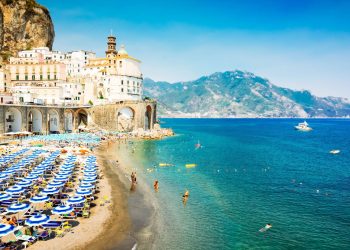

Sorrento – When the first ferries set sail from the harbor early in the morning and the scent of lemons wafts through the narrow streets, this city shows itself at its best. Sorrento (Italian Sorrento) towers over steep Tuff Cliffs high above the Gulf of Naples – an elegant balcony with a view of Mount Vesuvius, the ferry terminal for Capri, and the classic gateway to the Amalfi Coast.
The most important Sorrento Attractions are surprisingly close to each other: the lively Piazza Tasso, the colorful fishing district Marina Grande, a quiet 14th-century cloister, and viewing terraces that frame the entire gulf. In this article, you’ll find the city’s seven most beautiful highlights—along with prices, how to get there, the best time to visit, and honest assessments of what’s really worth seeing and what you can skip.
Sorrent at a Glance
- It's worth it for: Connoisseurs, couples, first-time visitors to the region, and anyone who wants to explore Capri and the Amalfi Coast without a car.
- Less suitable for: People looking for a pure beach vacation and partygoers—and for budget-conscious travelers during peak season.
- Region/Location: Campania, the Metropolitan City of Naples, on the Sorrento Peninsula, high above the Gulf of Naples.
- Population: about 14,950.
- Top 3: Piazza Tasso, Marina Grande, and the observation deck at the Villa Comunale.
- Costs: Most of the highlights are free; Museo Correale: €15; train from Naples: starting at €5.
- Recommended duration: 1–2 days for the city; more if you include day trips to Capri, Pompeii, and the Amalfi Coast.
- Best time to travel: April–May and September–October.
- Attention: Restricted traffic zone (ZTL) in the city center; few parking spaces; the Circumvesuviana is often crowded.
- Arrival: Train (Circumvesuviana/Campania Express) from Naples, Curreri bus from the airport, or by ferry.


Naples Attractions: 7 Highlights You Can't Miss
From the Veiled Christ to 40 meters beneath the city: Naples’ highlights, including prices, hours, and honest recommendations—plus the best neighborhoods to stay in and the pizza that’s worth every...
Which 7 sights in Sorrento are a must-see?
Sorrento is compact: You can reach most of its highlights on foot in just a few minutes. Here are seven you won't want to miss—from the famous piazza to the sunken mill valley right in the heart of the city.
1. Piazza Tasso – the heart of Sorrento
Everything in Sorrento revolves around the Piazza Tasso. The central square is named after the poet Torquato Tasso named after a man who was born here in 1544 and whose statue overlooks the hustle and bustle. During the day, the square serves as both a transportation hub and a stage; in the evening, the café terraces fill up for the aperitivo (a drink before dinner). The pedestrian zone starts here Corso Italia and down the narrow gorge to Marina Grande. A coffee at the bar costs about one euro—the best price for the best people-watching in the city.

2. Marina Grande – the old fishing district
A few hundred meters and many steps below the Old Town lies Marina Grande, Sorrento’s original fishing harbor. Colorful houses cluster along a small cove here, nets dry on the quay wall, and the smell of grilled fish wafts from the trattorias along the water’s edge. The neighborhood feels like a village in its own right—in fact, for a long time it had its own customs and even its own patron saint. Thanks to the ancient Porta Marina Grande, a city gate with Greek roots, you'll find yourself strolling right into the maze of narrow streets. For a late lunch with a view of the water, Marina Grande is the place to go.

3. Chiostro di San Francesco – the cloister
Right next to the Church of San Francesco lies what is perhaps the most beautiful, quiet spot in the city: the Cloister of St. Francis, a 14th-century cloister. Intersecting pointed arches, reused ancient columns, and lush bougainvillea make the courtyard an architectural gem—no wonder weddings are constantly held here and concerts take place in the summer. The Admission is free, and since many visitors rush straight to the observation deck, you often have the courtyard almost all to yourself in the morning.

4. Villa Comunale – the balcony overlooking the gulf
Just behind the cloister, the Villa Comunale, a small public park offering what is arguably Sorrento’s most famous view. From the balustrade, the view drops straight down to the Marina Piccola and far beyond the Gulf of Naples to the Vesuvius. At sunset, the terrace is the place to be. An elevator takes you conveniently down to the harbor from here—which is handy if you want to catch a ferry afterward. Admission to the Villa Comunale is also free.

5. Vallone dei Mulini – the Sunken Mill Valley
Right in the heart of the city, from the railing at the Via Fuorimura, you look down into a deep, overgrown green gorge: the Vallone dei Mulini, the Valley of the Mills. At the bottom stand the ruins of an old grain mill that was in operation until the 19th century. When Piazza Tasso was filled in in 1866, the valley was cut off from the sea—humidity rose, the mill was abandoned, and nature reclaimed the site. Today, the area is overgrown with jungle-like vegetation. The view from above is free and one of the most unusual sights in the city.

6. Bagni della Regina Giovanna – the natural swimming area among the ruins
About three kilometers west of downtown, on the Capo di Sorrento, is home to one of the peninsula's most photogenic spots: the Queen Giovanna's Baths. Through a natural rock arch, the sea laps into a small, sheltered basin; right next to it are the remains of the Roman Villa Pollio Felice Dating from the 1st century. The path there leads on foot through an olive grove; admission is free. To be honest: There’s no bar, no showers, and no sand—just rocks, clear water, and history. That’s exactly what makes it so appealing. It’s most beautiful here early in the morning or outside of peak season.

7. Museo Correale di Terranova – Art with a View of the Sea
If you want to look beyond the picture-perfect facade, head to the Correale di Terranova Museum. Located in a noble palace on the eastern edge of the Old Town, it features Neapolitan paintings, exquisite porcelain, inlaid furniture, and handicrafts—as well as a garden with a terrace offering a view of the sea. The Admission Admission is €15 (reduced rate €7.50); it is open Tuesday through Saturday from 9:30 a.m. to 5:30 p.m. and Sundays from 9:00 a.m. to 5:00 p.m.; The museum is closed on Mondays. It's the best spot in town for rainy days or a break to take in some art history between scenic overlooks.


Positano: 7 Highlights & Insider Tips on the Amalfi Coast
Pastel-colored houses overlooking the sea, the majolica dome of Santa Maria Assunta, and the Path of the Gods: Positano’s most beautiful sights, complete with prices, how to get there, best time to visit, and honest tips from our editorial team.
What other sights are worth seeing?
Sorrento has more to offer than can be covered in seven points. These places are worth checking out if you're staying longer:
- Historic Center and Sedile Dominova: In the heart of the Old Town stands a rare open loggia from the 15th century—a former meeting place for the nobility with a painted dome, which can be admired from the outside.
- Duomo and Basilica of Sant’Antonino: The cathedral features intricately carved wooden inlays; the basilica dedicated to the city’s patron saint houses his relics in the crypt—and, according to legend, whale bones as a memento of a child who was saved.
- Corso Italia: The city's main shopping street, which becomes partially pedestrianized in the evening—perfect for an evening stroll and an ice cream.
- Lemon Gardens: Farms such as The Gardens of Cataldo They open their lemon groves for a short tour that includes a limoncello tasting.
Which museums are worth visiting in Sorrento?
Two houses stand out. The one mentioned earlier Correale di Terranova Museum is the top choice for painting and arts and crafts. Anyone interested in the city’s traditional crafts should also visit the Tarsialignea Museum Workshop: It is dedicated to the wood inlay, the Sorrento art of wood inlay, in which delicate images are created by assembling pieces of wood of different colors. Admission is about €8.

How much do Sorrento's attractions cost?
The good news: Sorrento itself costs almost nothing. The historic center, the viewpoints, and even the city’s most beautiful cloister are all free to visit. You’ll mainly spend money on museums, transportation, and boat tours. Here’s an overview of the main expenses:
- Piazza Tasso, Marina Grande, Corso Italia, view of the Vallone dei Mulini: Free.
- Chiostro di San Francesco (Cloister): Admission is free.
- Correale di Terranova Museum: 15 € (reduced rate: 7.50 €).
- Museobottega della Tarsialignea (Marquetry Museum): about 8 €.
- Circumvesuviana Naples–Sorrento: 5 € per ride; the more comfortable one Campania Express costs 15 € (25 € round trip).
- Curreri Bus: Naples Airport–Sorrento: 10 €.
- Sorrento–Capri Ferry: Depending on the provider, about 21–27 € one way.
So if you're exploring the city on foot and only plan to visit one museum, you can get by on just a few euros. Sorrento only gets expensive because of the day trips—and the restaurants with ocean views.
How do you get to Sorrento?
Sorrento is located about 50 kilometers south of Naples—and is surprisingly easy to reach without a car.
- By train: The Circumvesuviana The EAV connects Naples and Sorrento in about 75 minutes for €5, with stops in Herculaneum and Pompeii. It’s purely a commuter train: often crowded, with no air conditioning and little space for luggage. You’ll travel more comfortably on the Campania Express on the same route—with reserved seats and air conditioning for €15 (€25 round trip).
- From Naples Airport: The Curreri- A bus runs several times a day directly from Naples-Capodichino Airport to Sorrento; the trip takes about 80 minutes and costs €10.
- By car: Take the A3 and the winding coastal road SS145. In the summer, the route is heavily congested, the city center has a restricted traffic zone (ZTL), and parking spaces are scarce and expensive. A car is more of a burden than a help in Sorrento.
- By ferry: Hydrofoils and ferries depart from Marina Piccola for Capri (about 20–30 minutes) and—during the season—for Positano and Amalfi.

What should you definitely try in Sorrento?
Sorrento's cuisine has the flavors of lemon, the sea, and the sun. Don't miss out on this:
- Sorrento Lemon IGP: The oval, thick-skinned Sorrento lemon grows under pagliarelle, protective straw mats, and is particularly aromatic. It forms the basis for almost everything sweet and sour in the city.
- Limoncello: The lemon liqueur made from the zest, served ice-cold as a digestif—the peninsula’s liquid emblem.
- Gnocchi alla Sorrentina: Potato gnocchi in tomato sauce with fior di latte (cow's milk mozzarella) and basil, baked in a clay pot.
- Lemon Delight: A sponge cake half-sphere, filled and coated with lemon cream—the dessert of the coast.
- Provolone del Monaco Director of Photography: A semi-hard cow's milk cheese from the Monti Lattari in the hinterland, full-flavored and long-aged.
By the way: The Cannelloni They are said to have been invented in 1907 at a restaurant in Sorrento—there’s no proof of this, but it fits a city that turns simple ingredients into great classics.

Where's the best place to eat in Sorrento?
Sorrento’s cuisine is all about the sea and lemons—and where you eat depends mostly on what kind of evening you’re looking for. For freshly caught fish with a view of the water, head down to the Marina Grande, for a romantic dinner in the alleys of the Old Town, for simple cuisine at fair prices at the Corso Italia. These five addresses are a safe bet:
- Il Buco – IIª Rampa Marina Piccola · €€€€ · Creative Campanian cuisine in a former monastery cellar, awarded one star by the latest restaurant guide. Tasting menus featuring regional products in an intimate vaulted cellar—the city’s premier fine-dining destination.
- Bagni Delfino Restaurant – Marina Grande · €€€ · Freshly caught fish and seafood, served on a terrace right above the water. Perfect for a leisurely lunch with a view of the boats.
- Trattoria da Emilia – Marina Grande · €€ · Family-run since 1947, serving honest, home-style cooking such as gnocchi alla sorrentina and scialatielli ai frutti di mare. Unpretentious, often cash only—but wonderfully authentic.
- L’Antica Trattoria – Old Town · €€€ · Sophisticated tradition under a leafy arbor—one of the city’s most romantic restaurants. Lemon pasta and attentive service.
- Pizzeria da Franco – Corso Italia · € · A lively institution known for its large, no-frills pizza baked on a baking sheet. Noisy, affordable, and popular with locals and travelers alike.
If you're looking for fine dining, you'll find it at the Terrazza Bosquet At the Grand Hotel Excelsior Vittoria, there’s a second top-rated spot with a panoramic terrace—provided you book early. For a quick coffee break or an aperitif while watching the hustle and bustle, the historic Fauno Bar At Piazza Tasso, this is the classic choice. A practical tip: Popular restaurants fill up quickly in the evenings during peak season—be sure to make a reservation, especially if you want a table by the water. Lunch at Marina Grande is often more relaxed and less expensive than dinner.
Restaurant and hotel recommendations are based on current reviews and market research (as of July 2026)—opening hours and prices are subject to change at any time.

Where's the best place to stay in Sorrento?
Sorrento has a long tradition of hospitality—and the location determines the nature of your stay. In the centro storico You can walk everywhere, but there's more hustle and bustle outside your door in the evening. Along the Via Capo If you live west of downtown, you'll enjoy a quieter setting and the most beautiful views of the bay. And if you're watching your budget, you'll find in the neighboring towns Sant’Agnello and Meta – just one train stop away – often significantly cheaper rooms. These six hotels cater to different budgets and styles:
- Grand Hotel Excelsior Vittoria – Piazza Tasso · 5 stars · €€€€ · Historic grand hotel dating back to 1834, featuring its own citrus garden, a pool, and views of the harbor; Caruso and members of royal families have stayed here in the past.
- Bellevue Syrene – Piazza della Vittoria · 5 stars · €€€€ · Romantic villa perched on a rocky outcrop with spectacular panoramic terraces and direct access to the sea.
- Maison La Minervetta – Via Capo · Design Boutique · €€€ · A colorful little house above Marina Grande with sweeping views of Vesuvius and a highly acclaimed breakfast—a favorite among design-conscious travelers.
- Hotel Antiche Mura – Via Fuorimura · 4 stars · €€–€€€ · Pool set in a lush citrus garden, just a few steps from Piazza Tasso – a good balance of comfort and price.
- Hotel Plaza Sorrento – Near Corso Italia · 4 stars · €€ · Rooftop terrace with a pool and views of the city; very central and reasonably priced.
- Ulisse Deluxe Hostel – Via del Mare · Budget · €/€€ · Affordable, clean, and conveniently located on the way to Marina Grande; some even feature a small wellness area.
During the peak season from June through September, prices rise significantly and the best accommodations book up quickly—so be sure to book early. During the off-season, you can often get the same rooms for half the price, but you should expect some places to be closed.
Top Accommodations in Sorrento, Italy
When is the best time to visit Sorrento?
The most beautiful months are April and May as well as September and October: Mild weather, citrus blossoms in the spring, warm seas in the fall—and significantly fewer crowds than in the height of summer. From June through August, Sorrento is crowded and expensive; it’s best to plan your sightseeing for early morning or evening during that time. In winter, the town is quiet and affordable, though many businesses close. Traditionally, Sorrento comes alive again for the new season around February 14, the feast day of the town’s patron saint.
What holidays and celebrations should you plan for?
Festival of Sant’Antonino (February 14): Every year, the city’s patron saint is honored with an early morning Mass in the crypt of his basilica and a solemn procession through the Old Town. During the procession, a silver statue of the saint dating from 1564 is carried; according to legend, Sant’Antonino once saved a child from the belly of a whale.
Holy Week: Sorrento’s most famous tradition is the processions of the brotherhoods—the White Procession on the night before Good Friday and the Black Procession on Good Friday evening, both accompanied by hooded figures and singing. The exact dates depend on when Easter falls.
What You Should Know About Sorrento
To make sure your visit isn't ruined by false expectations, here are the honest facts:
- Not your typical beach resort: Sorrento has hardly any sandy beaches. People swim off the rocks, from swimming platforms, and at the lidos—the town thrives on its views, not on days at the beach.
- High season means crowds: Between June and August, the streets are crowded and prices are high. If you're looking for peace and quiet, visit during the off-season.
- The Circumvesuviana is a utility railway: Inexpensive, but often crowded and lacking in comfort. For the sake of your luggage and your peace of mind, it’s worth paying the extra fare for the Campania Express.
- A car is a burden: The ZTL, limited parking, and narrow streets make Sorrento feel like a car-free zone—it’s best to travel there by train and ferry.
- Sorrent is the base camp: The real appeal lies in the day trips. Capri, Pompeii, and the Amalfi Coast are all easily accessible from here—be sure to plan them into your itinerary.
Who should visit Sorrento?
Sorrent is ideal for Connoisseurs and Couples, who are looking for good food, a view, and a glass of limoncello in the evening. It's perfect for First-time visitors to the region, who want to explore Capri, Pompeii, and the Amalfi Coast from a convenient location—especially without a car of their own. On the other hand, those looking for a sandy-beach vacation, party nights, or a tight budget during peak season will be better off looking elsewhere.
What's going on in Sorrento in the evening?
Sorrento's nightlife is charming rather than wild. The center of it all is the Piazza Tasso: Here, the café and bar patios line the street, where you can end the evening with a aperitivo begins. Along the Corso Italia And in the alleys of the Old Town, you'll find wine bars, live music, and ice cream shops. If you prefer a quieter atmosphere, head down to the Marina Grande and winds down the evening with fish and the sound of the waves. There isn't much of a club scene—Sorrento celebrates in a laid-back way.

Combine Sorrento with Capri, Pompeii, and the Amalfi Coast
Sorrento’s greatest strength is its location: From here, you can easily reach the highlights of the Gulf of Naples on a day trip—usually without even needing a car. These combinations are especially worth checking out:
- Capri: From the Marina Piccola Hydrofoils will take you to the famous island with the Blue Grotto in 20 to 30 minutes, the Faraglioni-Felsen and the chairlift up to Monte Solaro. It’s worth getting an early start—it gets crowded in the afternoon.
- Amalfi Coast: You can reach the peninsula by bus or—even better—by boat, traveling over the mountain ridge Positano, Amalfi and Ravello. The winding coastal road is spectacular, but it’s often congested in the summer; taking the boat from Sorrento saves time and stress.
- Pompeii, Herculaneum & Vesuvius: The Circumvesuviana stops right at the excavation site of Pompeii and Herculaneum. From there, buses will take you on to the crater of Mount Vesuvius—ancient history and a volcano all in a single day.
- Naples: In just over an hour, for €5, you'll be right in the heart of Naples – for authentic pizza, major museums, and the bustling historic center.
- Hiking: For active people, the Sentiero degli Dei, the "Path of the Gods," running high above the Amalfi Coast; at the tip of the peninsula lies the nature reserve Punta Campanella with a view across to Capri.
Our guide gives you a complete overview of the region Guide to the Highlights of the Gulf of Naples.

Campania Travel Guide
Campania Travel Guide: The Most Beautiful Places from Naples to the Amalfi Coast, Best Time to Visit, How to Get There, and Accommodations—an overview of all Campania articles from italien.news.
Editor's Insider Tip
Turn the day on its head: While day-trippers flood Piazza Tasso at noon, take the first ferry to Capri early in the morning or head to the Bagni della Regina Giovanna for a swim while the bay is still all yours. You’ll enjoy the sunset not amid the crowds in the main square, but at the quiet balustrade of the Villa Comunale—and for dinner, you’ll head down to Marina Grande, where Sorrento still has the feel of a fishing village.
Our conclusion: Sorrento is more than just a stopover
Sorrento is often seen merely as a stepping stone to Capri and the Amalfi Coast—and indeed, its location is unbeatable. But the town itself has enough to offer to fill a few days on its own: a cloister to fall in love with, a mill valley straight out of a dream, viewing terraces overlooking the gulf, and cuisine that smells of lemons.
You’ll get the most out of your trip if you think of Sorrento as a relaxed base: day trips during the day, strolling through the old town in the evening, and a limoncello with a view of the sea. Plan to spend one or two days in the city and add as many days for day trips as your vacation allows.
Our advice: Travel by train and ferry instead of by car, visit in the spring or fall—and take your time. Sorrento rewards anyone who slows down. Next, choose your destination and combine it with our Campania Travel Guide.
Photo Gallery: Sorrento


Map: Sorrento, Campania
FAQ - Frequently Asked Questions About Sorrento's Attractions
Video: Sorrento, Campania
Activities in Campania
Experiences & sights
Note: Disclaimer – Italien.news is not the owner or organizer of the attractions, accommodations, and events listed here and is therefore not responsible for changes to the program, event cancellations, or any incorrect information. The editorial team at Italien.news always endeavors to provide detailed and accurate information. However, it is possible that events, attractions, etc. may be changed and not updated promptly. Exact details of dates, times and programs can be obtained directly from the owner of the attractions and accommodation.
Please also check the websites or social media accounts of the attractions and events for updates before you travel! Our blog posts contain our personal recommendations in the form of affiliate links. If you book or purchase something through these links—or even just click on them—we receive a small commission. This does not affect the price you pay in any way. Content and text © Italien.news & KI / Photos © Canva.com / shutterstock.com / Unsplash.com / Pixabay.com / Pexels.com / Others. Be sure to also visit our Italy Shop!