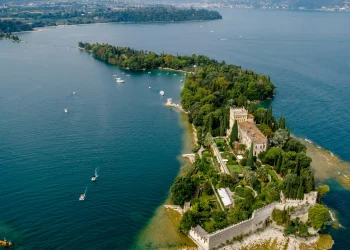
Villa del Principe Genoa: Genoa's most powerful admiral lived in such splendor - and why a visit is worthwhile today more than ever
Anyone strolling through the lively streets of Genoa, past colorful house facades, the smell of fresh focaccia and the sound of the Mediterranean, often has no idea what an extraordinary treasure is hidden just a few minutes' walk from Piazza Principe central station. The Villa del Principe, also known as the Palazzo di Andrea Doria, is much more than just a historic building. It is the legacy in stone of a man who steered the fortunes of an entire maritime republic without ever holding official office. When you enter the palace, you are immersed in a world of Renaissance frescoes, precious tapestries and a story that is as exciting as a novel - all set against the backdrop of one of the most beautiful gardens in Liguria.
Genoa, affectionately called „La Superba“ - the proud one - by the Italians, has one of the largest old towns in Europe, countless marble palaces and a culinary tradition that delights gourmets from all over the world. But amidst the imposing palazzi of Via Garibaldi and the lively Porto Antico, the Villa del Principe is often overlooked. A mistake, because this palace tells the story of Genoa's golden age like no other place in the city. In this article, we take you on a journey through five centuries - and tell you everything you need to know for an unforgettable visit.
Andrea Doria and the story of an unusual ruler
The story of the Villa del Principe begins in 1521, when Andrea Doria acquired an estate from the Lomellini family in the Fassolo district, just outside the city walls at the time. Between 1521 and 1529, he had a palace built there that was to surpass anything Genoa had seen before in its splendor. Doria was no ordinary nobleman. He was born in Oneglia in 1466 and rose to become the most important admiral of his time in the course of his military career. After liberating Genoa from French occupation in 1528, he was offered sole rule of the city. But Doria refused - an act of political wisdom that earned him the title „Father of the Fatherland“. Instead, he set up an aristocratic republic and retired to his villa, from where he held the reins of power as censor for life.
Emperor Charles V appointed him Prince of Melfi, and the palace owes its name to this very title: „Principe“ means „prince“ in Italian. The villa became the only true princely court that the Republic of Genoa had ever known. Doria received kings and diplomats from all over Europe here. Charles V himself stayed here in 1529 and 1533, and later his son Philip II. In the following centuries, the palace hosted other famous guests, including Napoleon Bonaparte, the composer Giuseppe Verdi, the English poet John Milton and Vittorio Emanuele II, the first king of Italy. The Doria Pamphilj family, descendants of the great admiral, lived in the villa for almost five centuries and constantly enriched it with works of art, furniture and tapestries. Today, the palace is still owned by the family and is open to the public as a museum.
Renaissance splendor behind simple walls: Architecture and art treasures
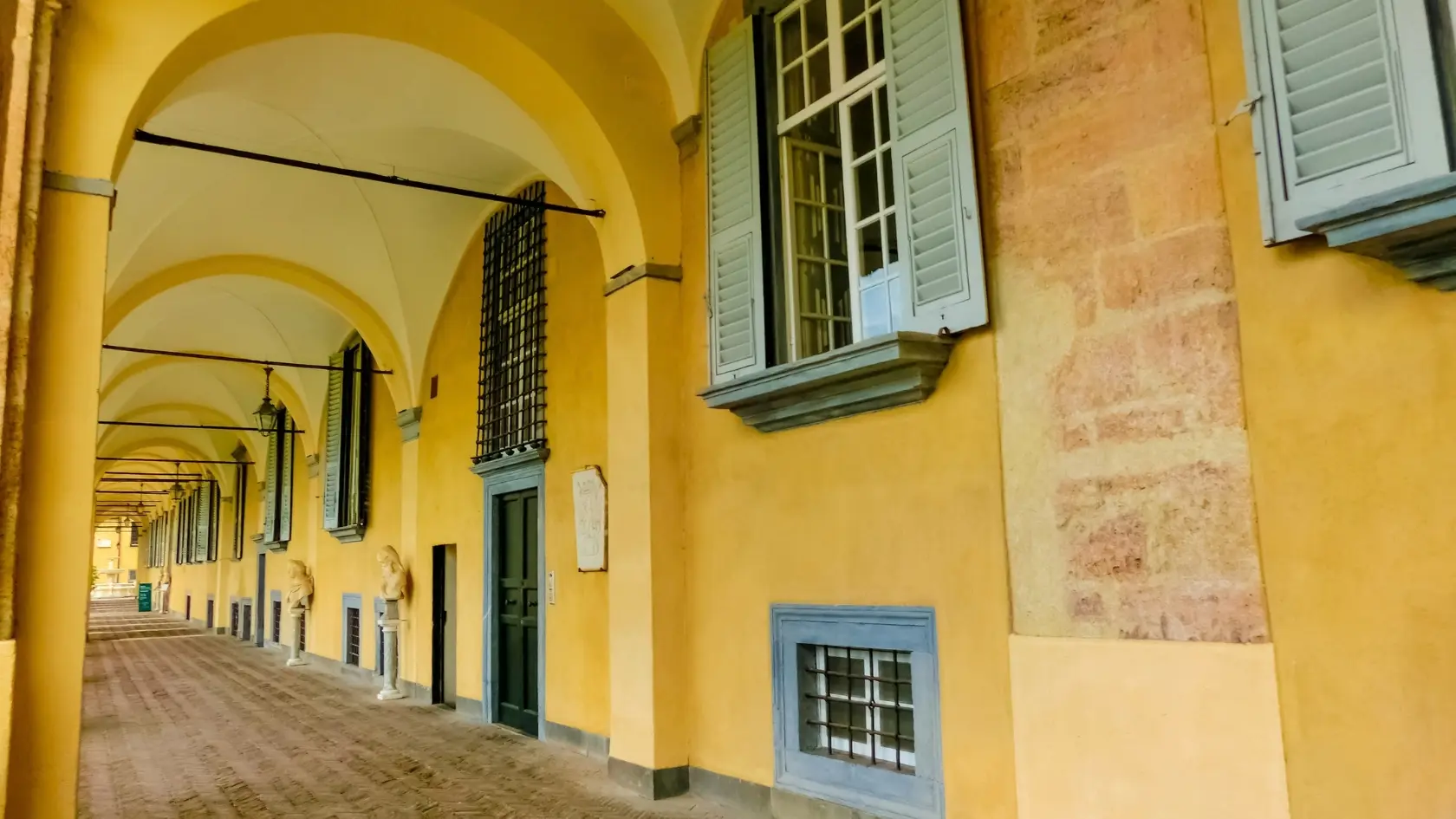
From the outside, the Villa del Principe initially appears surprisingly restrained - a deliberate contrast to what is revealed inside. The north façade on Via San Benedetto is simple and compact, enhanced by a portal designed by Perino del Vaga and Silvio Cosini, which bears the Doria coat of arms on the tympanum. The magic unfolds on the opposite side: the south façade facing the sea is a fascinating interplay of loggias, terraces and colonnades, whose asymmetry lends the building a very special charm. The 130-metre-long building complex is considered a transitional work between medieval Genoese architecture and the Renaissance, inspired by Roman models. Andrea Doria thus set an artistic example that the Genoese aristocracy emulated in the following decades with the magnificent palazzi of the Strade Nuove.
The heart of the palace is formed by the magnificently furnished interiors. The tour begins in the Loggia degli Eroi, the former entrance area to the private chambers of Andrea Doria and his wife Peretta Usodimare. This room is the only one in which the decoration also extends to the walls: frescoes and stucco work depict members of the Doria family in ancient Roman dress, recognizable by the family coat of arms. The intention was clear: every guest should feel the power and prestige of the Doria as soon as they enter.
The absolute masterpiece can be found in the Salone dei Giganti, the Hall of the Giants. Here, Perino del Vaga, a pupil of Raphael and one of the leading artists on the Roman art scene before the Sack of Rome in 1527, created a breathtaking ceiling painting: the fall of the giants struck by the lightning bolts of Zeus, the father of the gods. This fresco is one of the most important cycles of Renaissance painting in northern Italy. Charles V's throne once stood here when the emperor was in Genoa. The room is complemented by an extraordinary collection of Flemish tapestries from the 15th century depicting scenes from the life of Alexander the Great.
Other highlights include the Sala di Perseo, whose frescoes tell the story of the Greek hero - an allusion to Andrea Doria as peacemaker -, the Sala della Principessa, the magnificent bedchamber, and the Galleria Aurea with its gilded ceiling. In one of the main rooms, the portrait of Andrea Doria by Sebastiano del Piombo captivates the eye: The admiral wears a black robe, his face is stern, but his eyes betray a certain weariness - the image of a man who has seen and experienced a great deal. Another remarkable painting is by Bronzino, who depicts Doria in heroic nudity, inspired by Michelangelo's David, with an idealized face and a long, wavy beard reminiscent of the sea god Neptune.
Italy's hidden garden oasis: the Renaissance garden and its fountains
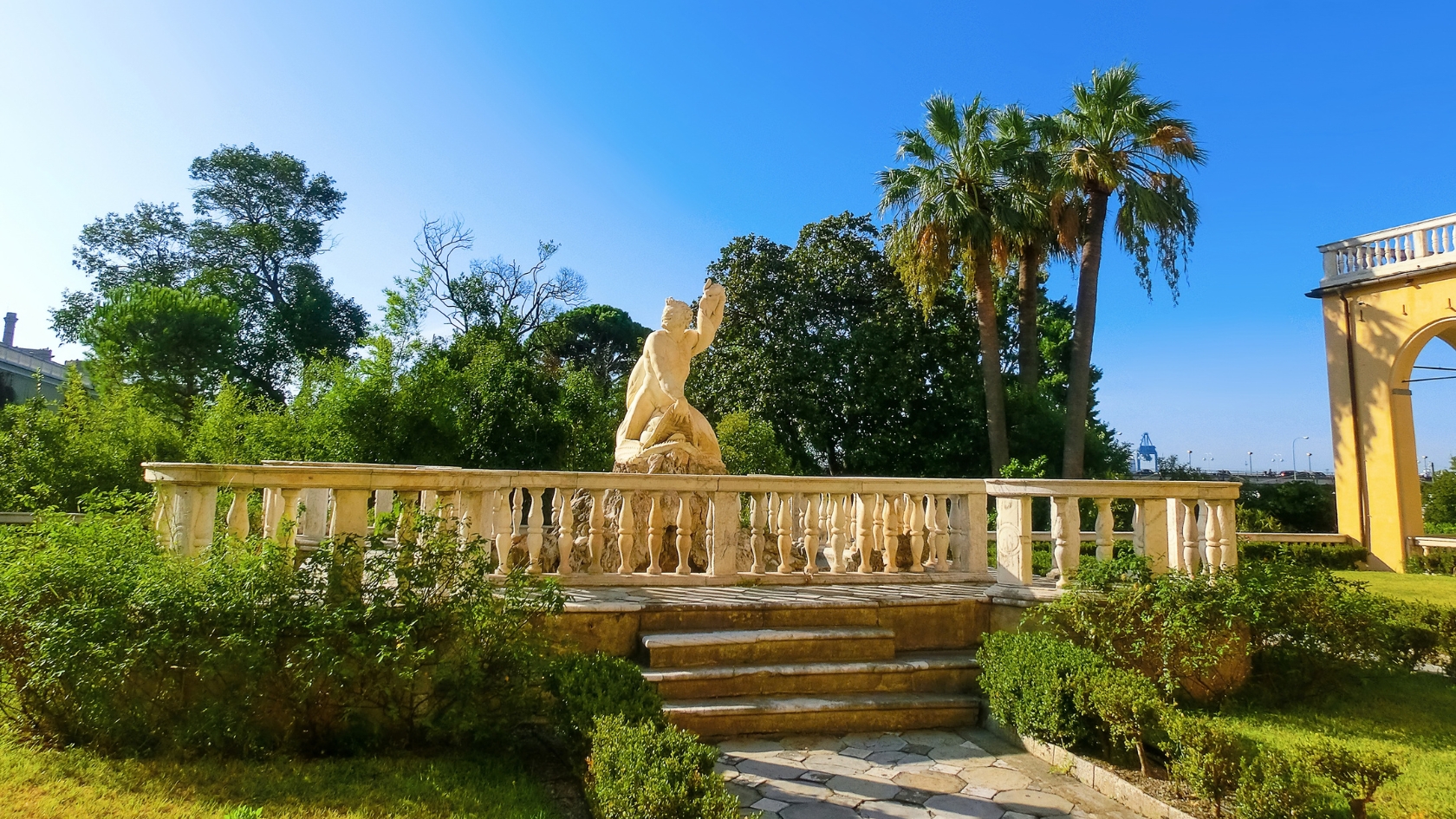
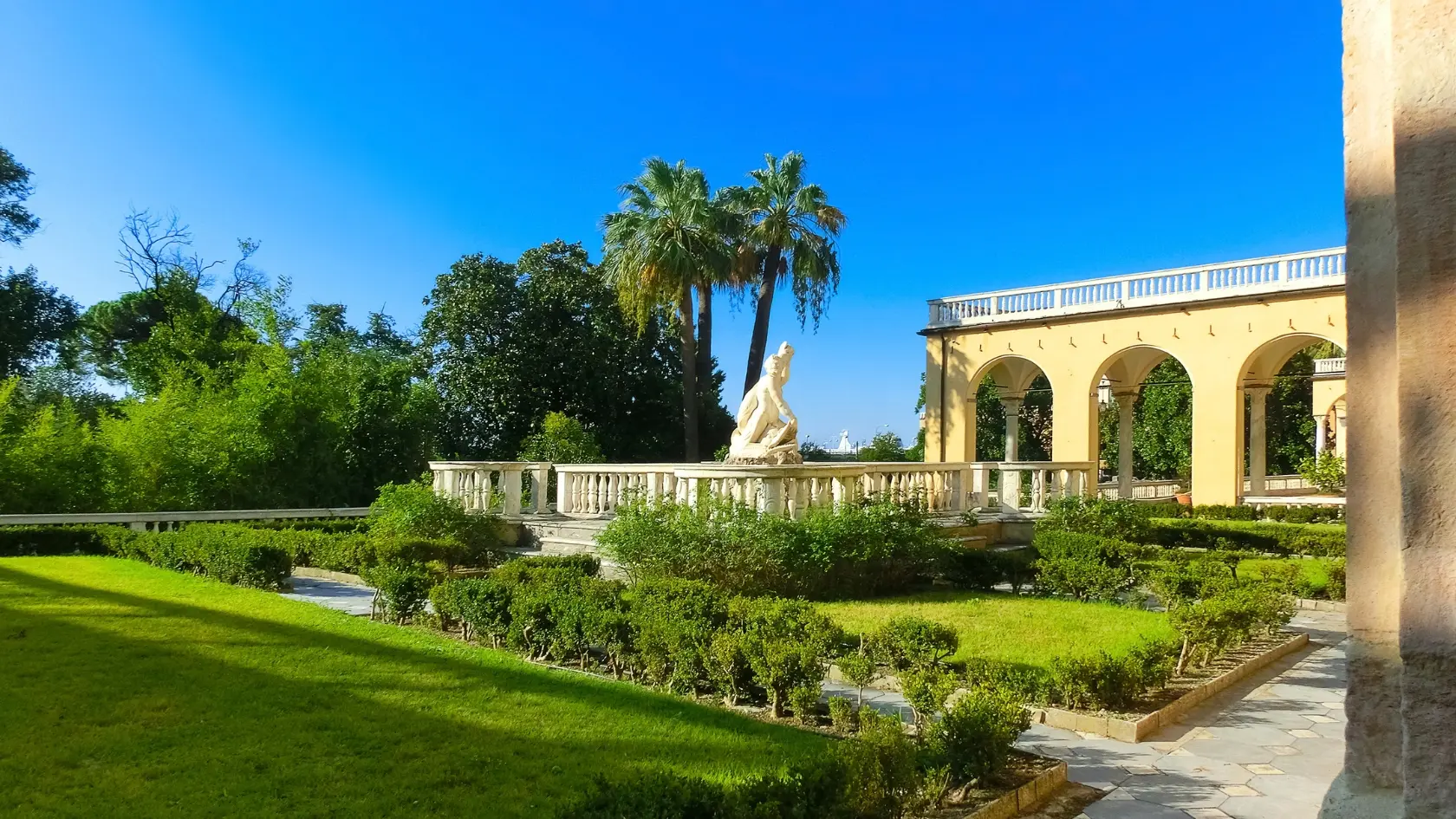
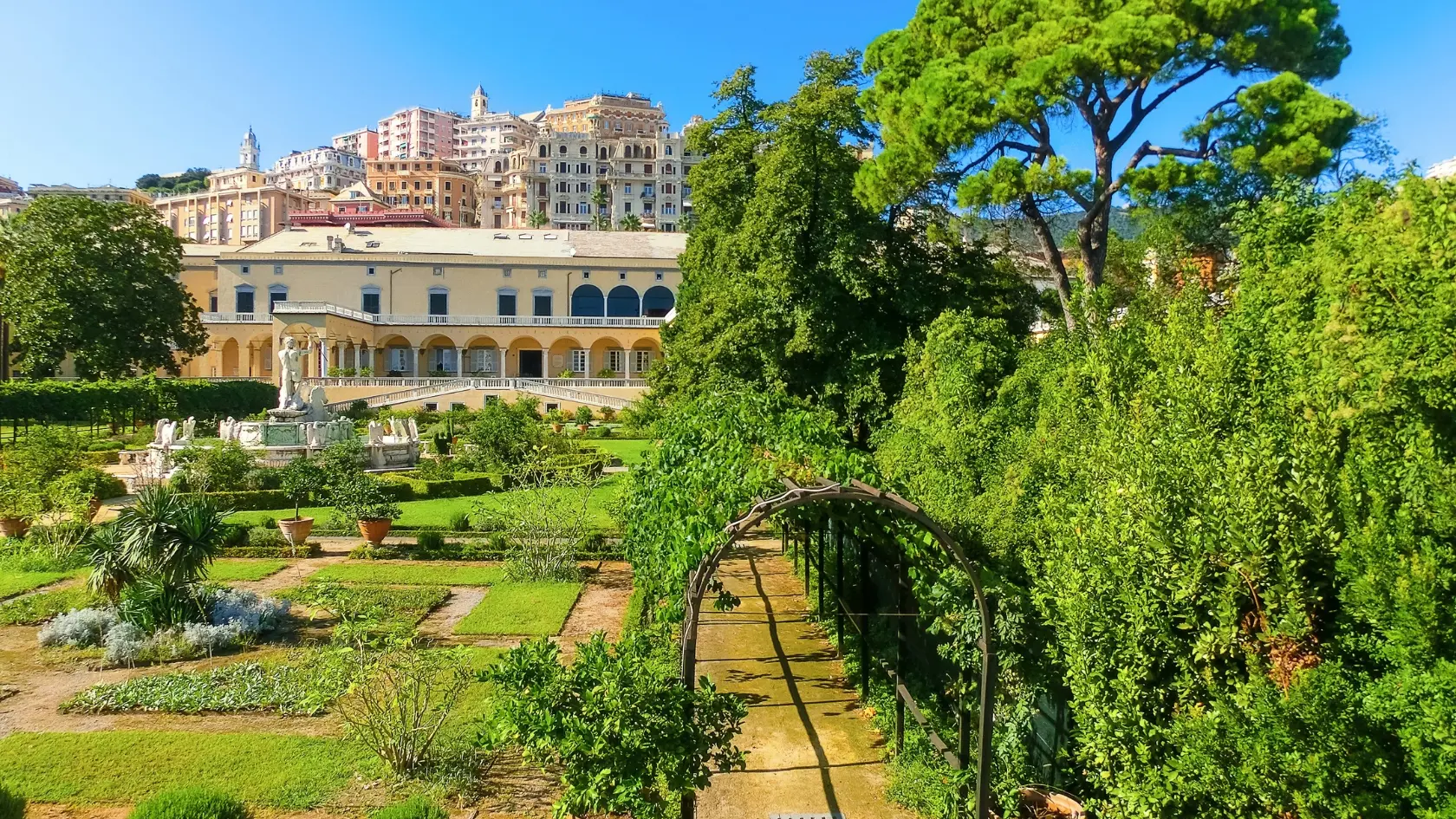
Those in need of fresh air after a tour of the magnificent halls will find a soothing oasis of calm in the garden of the Villa del Principe. The Italian garden facing the sea has recently been restored and offers a welcome change from the hustle and bustle of the city with its well-tended hedges, shady paths and views over the harbor. The grounds once stretched from the hills behind the palace down to the sea, where the Doria even had private harbor facilities. Monumental staircases, nymphaea and an eight-metre-high statue of Jupiter - an allegory of Emperor Charles V - adorned the park. Unfortunately, part of the garden was lost in 1854 due to the construction of the railroad line, and the dilapidated Jupiter statue was demolished in 1939.
Two impressive fountains, however, have been preserved. The Fontana dei Delfini, designed by Perino del Vaga, depicts a Triton riding a dolphin - a playful masterpiece of Renaissance sculpture. Even more impressive is the Neptune Fountain, created by Taddeo Carlone and his sons Giuseppe and Battista between 1599 and 1601. The statue of Neptune, the god of the sea, symbolizes Admiral Doria himself and is now the garden's landmark. The contrast between the historic gardens in the foreground and the modern skyscrapers in the background creates an almost surreal scene, which is particularly suitable for impressive photos. Incidentally, the best photo spot is the view from the garden towards the harbor, when the afternoon light bathes the fountains and hedges in a golden glow.
Planning your visit: opening times, how to get there and practical tips
The Villa del Principe is located at Piazza del Principe 4 in Genoa and is open daily from 10 am to 6 pm, with last admission at 5 pm. The museum is closed on January 1, Easter Sunday and December 25. The entrance fee is around 15 euros for adults, with discounted tickets available for certain visitor groups. It is advisable to book tickets online in advance to avoid waiting times. Photography is permitted in the museum without flash, but videos are not allowed. A museum store offers postcards, books and art-inspired souvenirs.
Getting there is very easy: the villa is just a few minutes' walk from Genova Piazza Principe train station, which has excellent connections to the Italian long-distance train network. There are regular connections from Milan, Turin, Pisa and La Spezia. Cruise passengers also benefit from the proximity to Stazione Marittima, the cruise terminal, which is located directly opposite. Those arriving by car should note that parking in Genoa can be a challenge. The underground parking garages along the Strada Aldo Moro near the Porto Antico are recommended. From there, you can reach the villa in around ten minutes on foot. Alternatively, you can use the paid parking lot in Via Andrea Doria.
Discover Genoa: sights, beaches and excursions around the villa
Anyone visiting the Villa del Principe should definitely plan a whole day for Genoa, as the surrounding area offers a wealth of sights. Just a few minutes' walk away is the Porto Antico, Genoa's old harbor, which was redesigned by star architect Renzo Piano in 1992 to mark the 500th anniversary of the discovery of America. Here you will find the Acquario di Genova, the second largest aquarium in Europe with over 15,000 sea creatures and 71 tanks - an experience for the whole family. The Il Bigo panoramic lift transports visitors to a height of 40 meters and offers a breathtaking 360-degree view of the city and port. Also worth a visit is the Biosfera, a glass sphere designed by Renzo Piano with tropical plants and animals, and the Galata Maritime Museum, the largest maritime museum in the Mediterranean.
A stroll through the old town leads to Via Garibaldi, one of the most magnificent streets in Italy, whose Renaissance palaces are a UNESCO World Heritage Site. The Cattedrale di San Lorenzo impresses with its black and white striped marble façade, and in Piazza de Ferrari, the city's most beautiful square, a picturesque fountain bubbles amidst historic buildings. The Palazzo Reale, the royal palace, is also in the immediate vicinity and houses a valuable collection of paintings. For those who want to visit several museums, the Genova Museum Card is worthwhile, giving 24-hour access to over 28 museums.
Beach lovers will find the picturesque fishing village of Boccadasse with its pebble beach and colorful house facades just a few kilometers from the city center. A day trip to Portofino, the famous jewel of the Ligurian Riviera, is also easily possible from Genoa - either by boat from Porto Antico or by train. The charming Camogli with its pastel-colored houses right by the sea is another worthwhile detour. For shopping enthusiasts, the Via XX Settembre offers elegant stores, while the Mercato Orientale, the historic market hall, entices visitors with fresh food and regional specialties.
Genoa's culinary delights: cuisine, restaurants and Ligurian specialties
A visit to Genoa is not complete without a culinary voyage of discovery. Ligurian cuisine is one of the most refined in Italy and combines simplicity with incomparable flavor. The centerpiece is the famous Pesto alla Genovese, traditionally prepared with fresh basil from Prà, pine nuts, garlic from Vessalico, parmesan, pecorino and extra virgin olive oil. It tastes best on handmade trofie or trenette, garnished with potatoes and green beans, as tradition dictates. No less legendary is the Genoese focaccia: crispy on the outside, wonderfully soft on the inside and refined with coarse salt and olive oil. The Genoese even dunk it in their latte for breakfast. Another must-try is the focaccia al formaggio di Recco, a thin specialty filled with stracchino cheese, which even bears the protected seal of origin. Then there is the farinata, a golden-brown baked flatbread made from chickpea flour and olive oil, and the pansoti con salsa di noci - pasta pockets filled with vegetables in a creamy walnut sauce.
For an authentic dining experience, there are several restaurants near the villa and in the center. The Trattoria da Maria in the historic center is an institution: the food here has been excellent and inexpensive for generations - pesto, minestrone and Genoese-style tripe are among the classics. Equally popular is Ugo, a charming family business where Patrizia is in the kitchen and her brother Fabrizio serves guests with Genoese cordiality. Those looking for more upscale dining will find first-class Ligurian cuisine with a modern twist at Ippogrifo, which has been awarded a Michelin star. For the best street food, it's worth making a detour to Friggitoria Carega under the arcades of Sottoripa, where crispy cuculli and frisceu have been served since the 1940s. And for a sweet end to the day, visit the historic Fratelli Klainguti pastry shop in Piazza di Soziglia, whose famous brioche is said to have been enjoyed by Giuseppe Verdi.
Read more about theTopic


Where to stay in Genoa: the best accommodation near the Villa del Principe
Thanks to its central location near the Piazza Principe train station, there is accommodation to suit all tastes and budgets in the area surrounding the Villa del Principe. The five-star Grand Hotel Savoia is located directly opposite the station and offers elegant rooms, a wellness area and an excellent breakfast buffet - ideal for those who want to relax in luxury after a day full of art and history. Those looking for a charming alternative are in good hands at the Hotel Continental: The restored Art Nouveau hotel impresses with its historic charm and views over the city. In the mid-price segment, the Hotel Bologna, located just 120 meters from the Palazzo Reale in the heart of the old town, offers air-conditioned rooms with free Wi-Fi. An affordable yet comfortable choice is the Hotel Chopin, just a two-minute walk from the train station and the cruise terminal.
For travelers who value more independence, there are the Palazzo Durazzo Suites, elegantly furnished apartments in the historic center that combine all the comforts of a vacation apartment with the flair of a Renaissance palace. The Albergo Posta, a historic hotel right next to the Palazzo Reale and just 300 meters from the aquarium, is also an excellent choice for visitors interested in culture. For families, the Holiday Inn Genoa with its modern design, a restaurant serving Ligurian cuisine and special children's dishes is ideal - the nearest metro station, Dinegro, is just 300 meters away.
Our conclusion: Why the Villa del Principe belongs on every bucket list
The Villa del Principe is far more than just a historic building; it is a quiet monument that often stands in the shadow of popular attractions such as the Aquarium or the winding alleyways of the old town. However, those who take the time to enter this property will discover the true aristocratic heart of Genoa. Here, the history of the city becomes tangible through the figure of Andrea Doria. As the emperor's admiral, a skilled statesman and a passionate patron of the arts, he created a residence that reflects his power and aesthetic aspirations in equal measure. The magnificent interiors house world-class Renaissance cycles, including the impressive frescoes by Perin del Vaga, which bear comparison with the great palaces of Rome or Florence.
The direct encounter between yesterday and today is particularly fascinating: while you stroll between the Renaissance fountains in the carefully restored garden, you can see the hustle and bustle of the modern harbor in the background - a contrast that perfectly captures the maritime soul of the city. Thanks to its strategic location directly opposite the Piazza Principe train station, a visit can be easily integrated into any itinerary. The villa therefore serves as an ideal prelude to understanding monumental Genoa before delving deeper into the alleyways. For an all-round successful day in „La Superba“, we recommend heading towards Porto Antico after the visit and rounding off the excursion with an authentic pesto specialty in one of the nearby trattorias. It is a place that not only imparts knowledge, but also exudes a very special atmosphere that will linger in your memory long after you leave the gates.
Map: Genoa, Liguria
FAQ: Villa del Principe, Genoa
When is the best time to visit the Villa del Principe?
For a particularly relaxed experience, we recommend visiting the palace directly at opening time in the morning, as the natural light then shows off the valuable tapestries and frescoes in the state rooms to particularly impressive effect. It also allows you to avoid the larger tour groups and enjoy the Italian garden in peace and quiet before the midday heat sets in.
Do I need pre-booked tickets to visit the Doria Palace?
Although the Villa del Principe is often less crowded than the museums in Via Garibaldi, it is advisable to book online in high season or at weekends to avoid waiting times at the entrance. Spontaneous visitors usually find it easy to get in, but booking in advance guarantees you access to special guided tours that delve deeper into the family history of the Doria.
Is the Villa del Principe accessible for people with reduced mobility?
The historic rooms on the first floor and large parts of the gardens are easily accessible for visitors with mobility impairments, although the antique floor coverings and some steps on the upper floors can present a challenge. It is advisable to speak to the staff on site, as alternative access or elevators can often be provided for guests with special needs.
Are you allowed to take photos inside the palace and in the gardens?
Photography for private purposes is permitted in the garden and in most public areas of the palace without flash, although the use of tripods or professional equipment remains prohibited. In certain rooms with particularly light-sensitive works of art or private loans, there may be a general ban on photography, which is clearly indicated by signs in the respective rooms.
Top accommodation in Genoa, Liguria
Video: Villa del Principe, Genoa
Experiences & sights
Note: Disclaimer - Italien.news is not the owner or organizer of the sights, accommodations and events published here and therefore not responsible for program changes, cancellation of the event and possibly incorrect information. The editorial team of Italien.news always endeavors to provide detailed and accurate information. However, it is possible that events, attractions, etc. may be changed and not updated promptly. Exact details of dates, times and programs can be obtained directly from the owner of the attractions and accommodation.
Please also check the website or social media of the attractions and events for updates before you travel! Our blog articles contain our personal recommendations in the form of affiliate links. If you book or buy something via the links or simply click on them, we receive a small commission. This does not change the price for you at all. Content and texts © Italien.new & KI / Photos © Canva.com / shutterstock.com / Unsplash.com / Pixabay.com / Pexels.com / Others. Please also visit our Italy Shop!