

Puglia's white pearl: Why Ostuni is the heart of the south
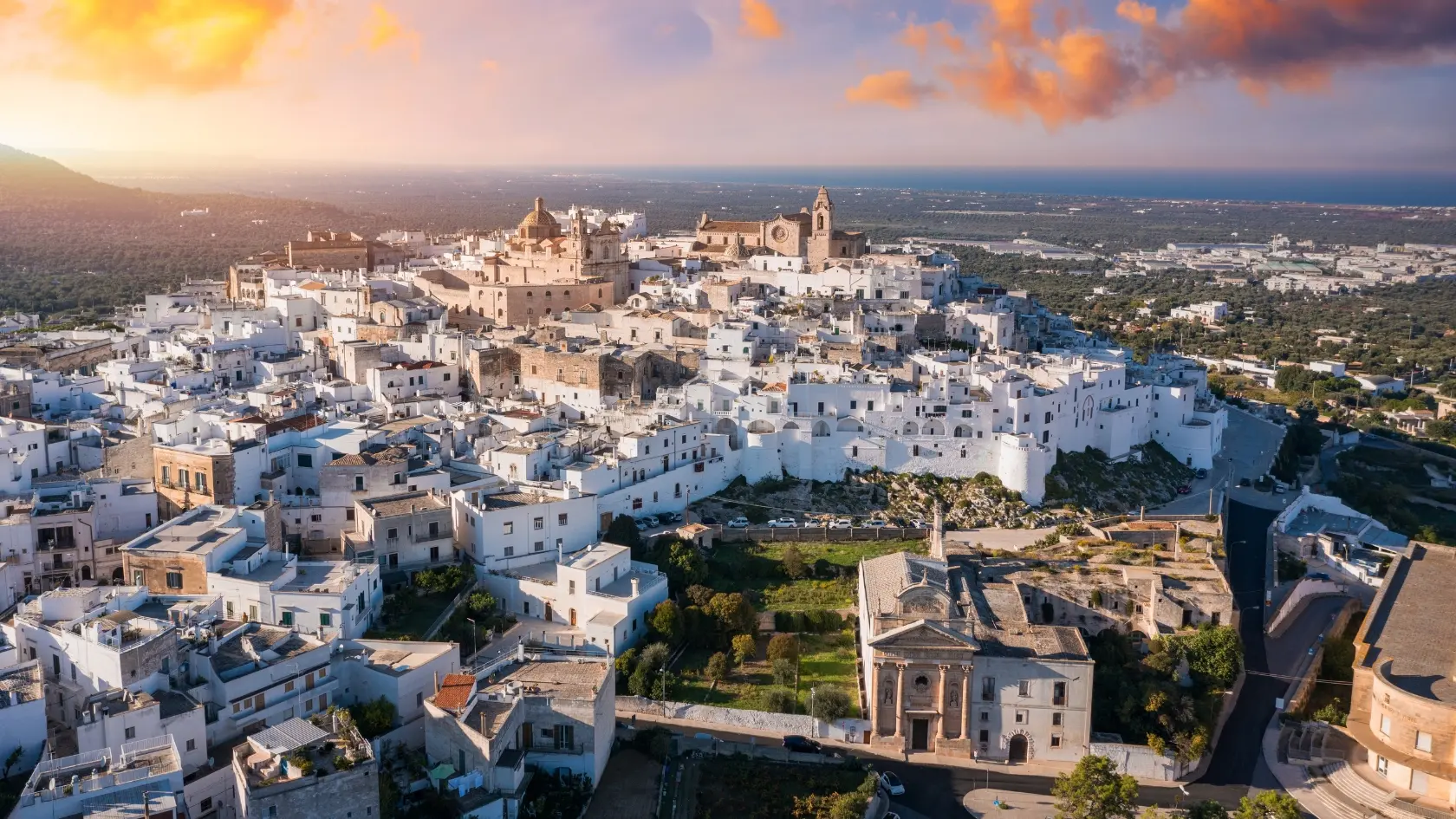
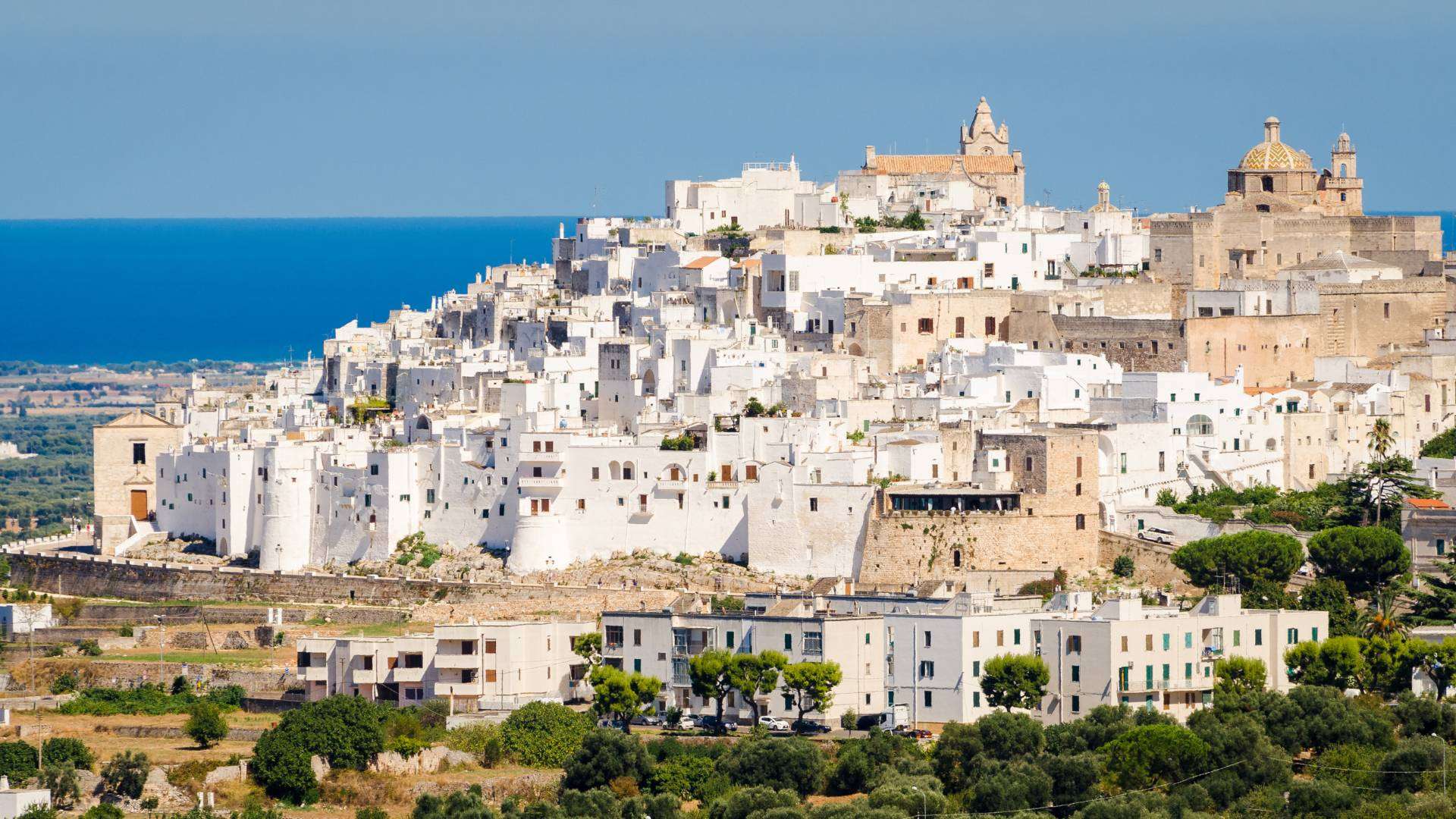
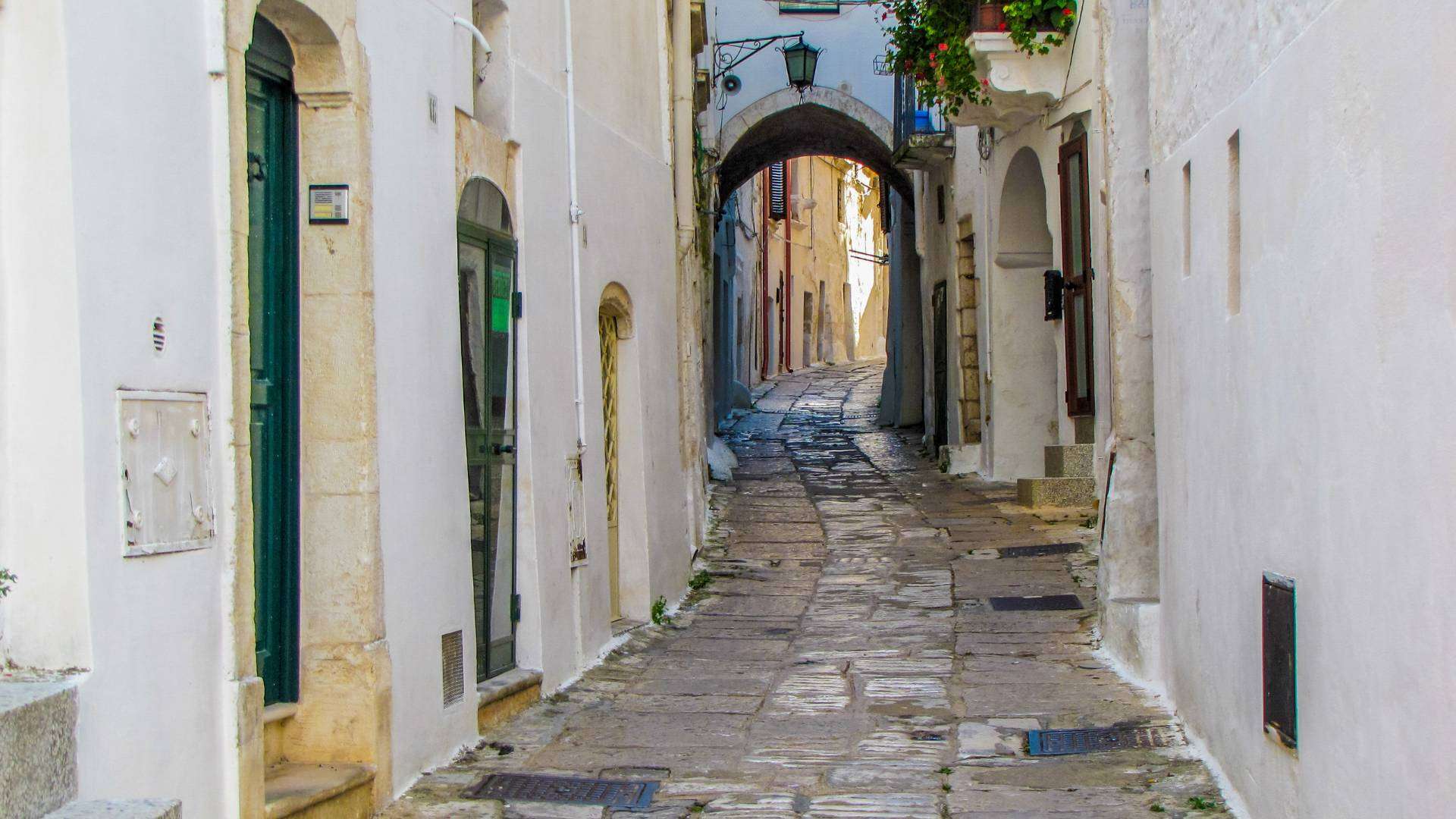
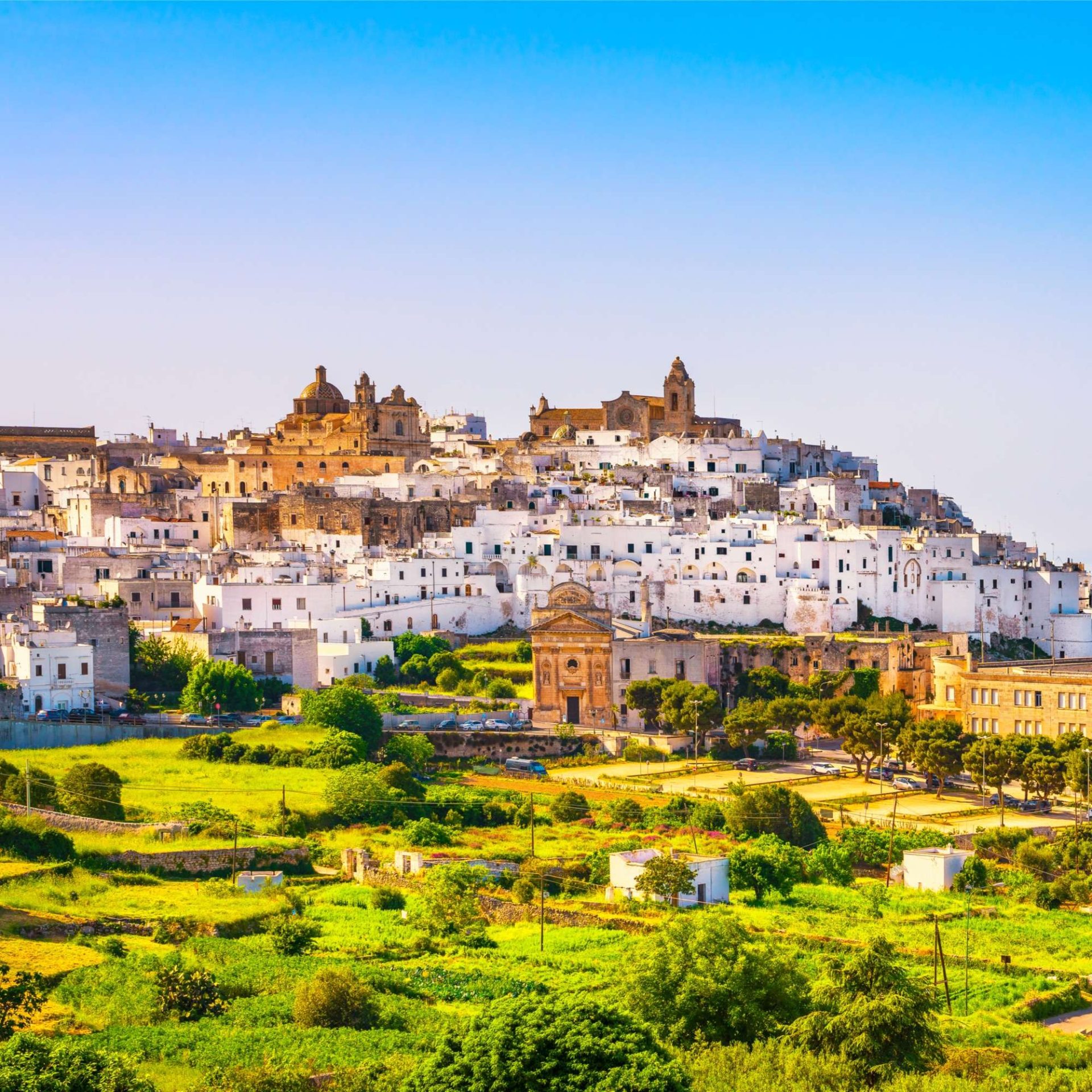
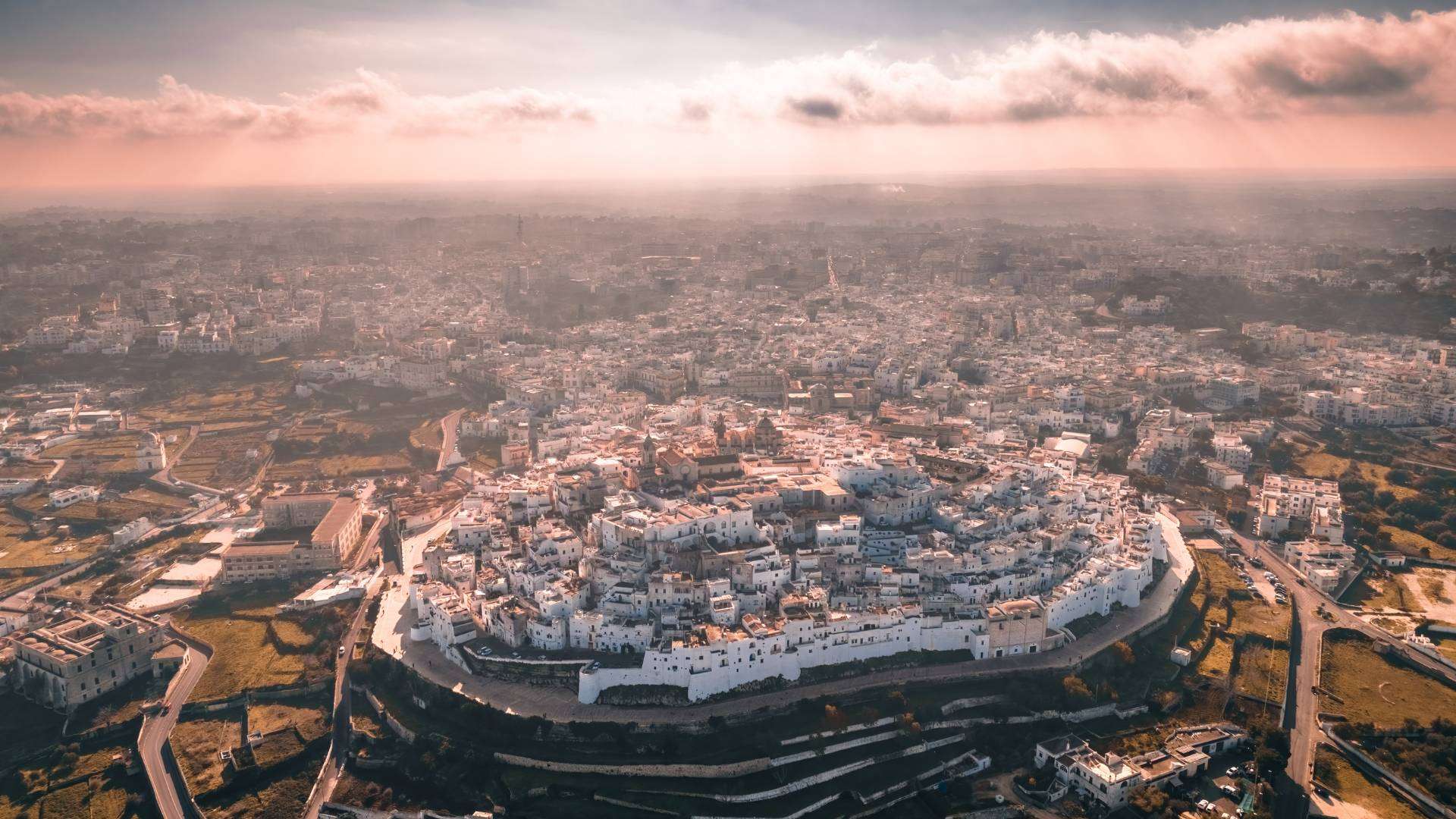
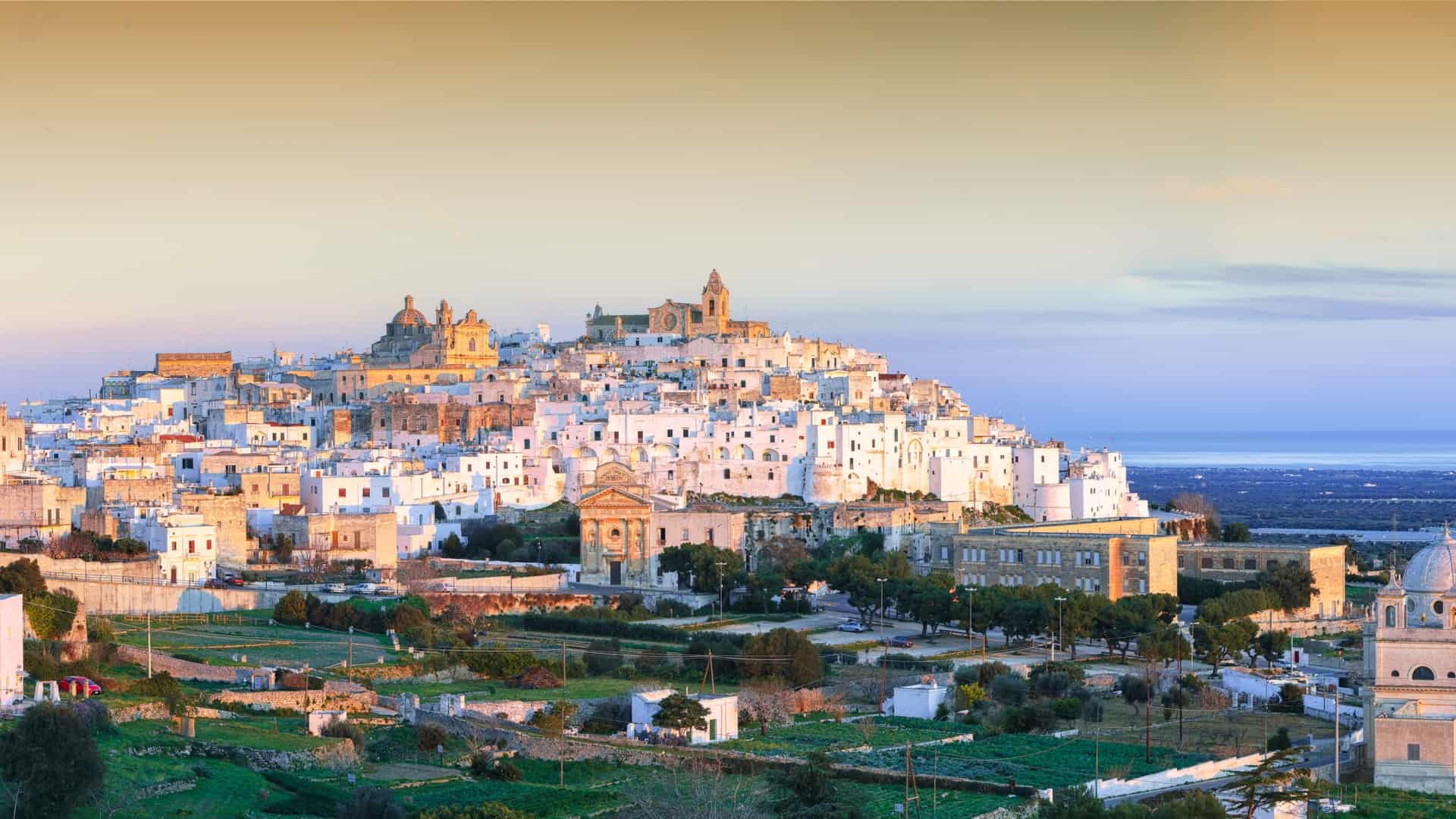
In the sunny south of Italy, where the Salento peninsula begins and the red earth of Apulia meets the azure blue sea, lies Ostuni, a city that takes every heart by storm with its almost surreal aesthetics. As „la città bianca“, the white city, it is famous far beyond the country's borders. The majestic sight of the gleaming white façades rising like a shining crown on the city's three hills is apparent as soon as you arrive. Originally, this tradition of whitewashing was used in the Middle Ages to brighten up the narrow streets and prevent the spread of the plague thanks to the disinfectant effect of the lime. Today, it gives the city its unmistakable glow in the Mediterranean sunlight.
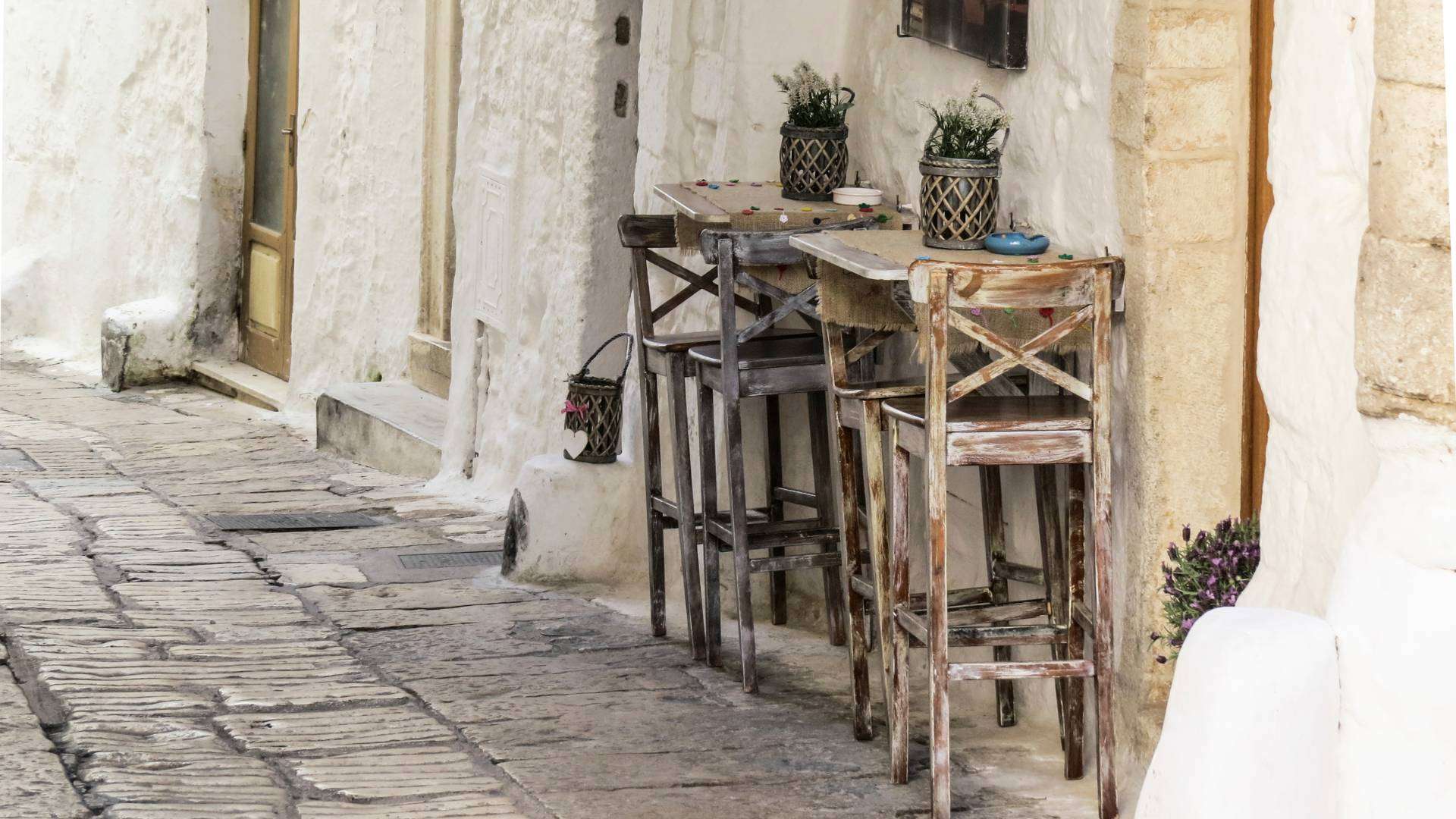
But Ostuni's fascination is not limited to its panoramic effect, as the massive city walls conceal an experience for all the senses. Those who enter the labyrinth of the old town are immersed in a world of winding cobblestone alleyways, where the history of the Middle Ages is reflected in every stone archway and baroque church façade. Authentic Apulian life unfolds between hidden courtyards and small craft stores selling handmade ceramics and textiles. The art of „cucina povera” is celebrated in the traditional trattorias: Here, hand-rolled orecchiette meets fresh vegetables from the region, while the aroma of warm, golden-brown baked focaccia from the local bakeries wafts through the alleyways.
This urban jewel is bordered by an endless sea of silvery olive groves, where trees, some of them thousands of years old, are rooted in the earth like living sculptures. As the day draws to a close and the sun bathes the white city in a soft rosé, life in the lively squares reaches its peak. Over a glass of strong Primitivo or a sparkling Verdeca from the region, history and the present merge into that special serenity that makes the south of Italy so unique. Ostuni is no longer an insider tip, but if you are looking for a genuine combination of culture, enjoyment and wild nature, this monument to Apulian joie de vivre is a must.
A look at the history of the white city
Ostuni's roots go back deep into the history of human civilization. They date back to the Stone Age, as evidenced by spectacular finds such as the „Woman of Ostuni“, the skeleton of a pregnant woman from the Paleolithic period, in the surrounding area. Later, the Messapians, an ancient tribe of Apulian origin, left their mark on the strategically favorable hilltop location before the city became part of the Greek sphere of influence and eventually the Roman Empire. Over the centuries, Ostuni experienced an eventful history under the rule of Ostrogoths, Byzantines, Normans and Hohenstaufen. Each of these eras left behind architectural traces that today shape the historical image of the city like mosaic stones and allow visitors to travel back in time through the cultural layers of southern Italy.
However, Ostuni owes its world-famous nickname „La Città Bianca“ („The White City“) to a tradition that goes far beyond purely aesthetic preferences. The characteristic, gleaming white lime coating on the facades of the houses dates back to the Middle Ages and experienced its most significant phase in the 17th century, during the great plague epidemics. The inhabitants discovered early on that milk of lime has strong antimicrobial properties due to its high pH value. By whitewashing every last corner of their houses, they created a natural barrier against pathogens and significantly improved the hygienic conditions in the narrow alleyways. What today looks enchanting as a postcard motif was then a vital measure of ingenuity in the fight against the epidemic.
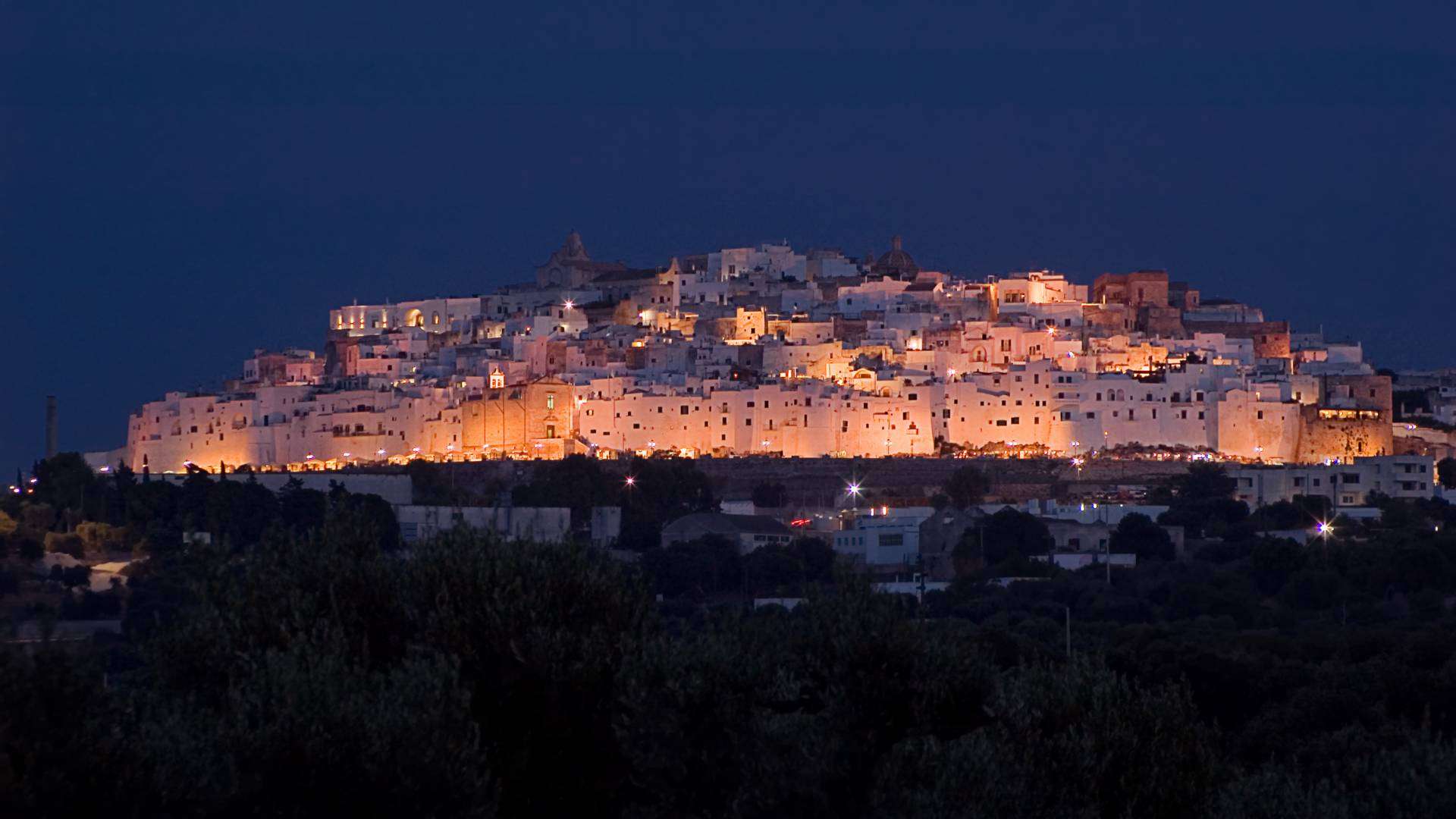
In addition to providing hygienic protection, the white lime proved to be an ingenious climate factor for life in the Mediterranean south. In the scorching hot summer months in Apulia, the light-colored surfaces reflect the intense sunlight and thus prevent the massive stone walls from heating up. This centuries-old knowledge still ensures that the interior temperatures of the houses remain pleasantly cool even without modern technology. The play of light created by this architecture has an almost magical quality, especially at dusk, when the gold of the setting sun meets the dazzling lime and bathes the entire old town in a soft, diffuse glow.
This tradition is maintained with great pride and strict regulations in Ostuni. To this day, house owners in the old town are required to regularly whitewash their façades in order to preserve the cohesive, harmonious townscape. This continuous maintenance makes Ostuni a living monument that reflects the adaptability of the people to their environment. The town is therefore much more than an architectural jewel: it is a symbol of the symbiosis of practical use and timeless beauty that uniquely embodies the charm of the Italian Adriatic coast.
Slow travel in Puglia: slowing down behind white walls
A stroll through the labyrinthine alleyways and quieter side streets of the white town is like a relaxing cure for the soul - especially if you have previously experienced the hectic pace of large metropolises such as Rome, Venice or Florence. Ostuni slows its visitors down almost instantly. The medieval layout of the old town with its steep steps, narrow passages and unexpected dead ends offers a new, fascinating panorama around every corner, which is just begging to be photographed. The mighty city walls, which enclose the historic center like a stone bulwark, are a particular architectural highlight. From their parapets, the view sweeps unhindered over the deep green sea of olive trees to the glittering horizon of the Adriatic. Especially in the golden hour before sunset, this conveys an incomparable feeling of vastness.
To really get a feel for the authentic lifestyle of the region, it is worth taking a trip to the surrounding area to visit the traditional masserie. These historic, often fortified country estates are the beating heart of Apulian agrarian culture. In recent years, they have been lovingly transformed into places of encounter and enjoyment. Here, surrounded by centuries-old walls, it is easy to strike up a conversation with the locals, whose hospitality is as legendary as it is warm. The inhabitants of Ostuni treat strangers with deep warmth and pride in their homeland. It is not uncommon for spontaneous conversations to arise in which they talk about the hidden treasures of their city like passionate tourist guides. It is precisely this mixture of human closeness, archaic architecture and the gentle breeze of the nearby sea that makes a stay in Ostuni a profound, unforgettable experience.
Stone heritage: the architectural treasures of Ostuni
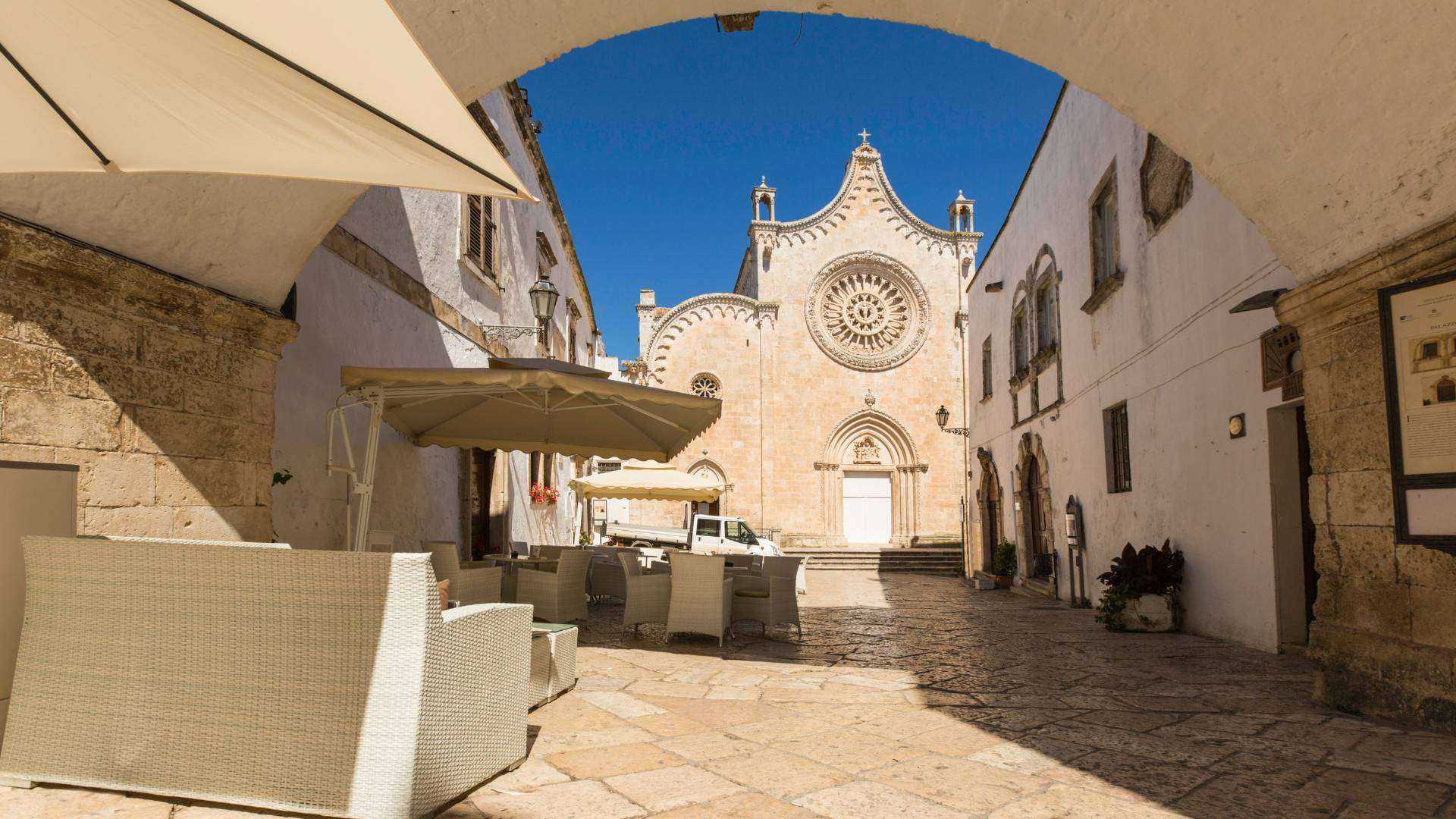
Ostuni attracts travelers not only with its play of white colors, but above all with its rich cultural heritage, which culminates in the magnificent monuments of the upper town. The undisputed jewel of the old town is the Cathedral of Santa Maria Assunta, built in the 15th century on the highest point of the town hill. Its architecture is a rare and masterful example of the late Gothic school in Apulia, elegantly combining elements of the Renaissance. The monumental rose window on the façade, one of the largest of its kind in Europe, is particularly impressive. With its 24 delicate spokes and the central depiction of the „Cristo Sole” (Christ as the sun), it is not only a theological symbol, but also a visual masterpiece. In the light of the midday sun, it almost seems to vibrate. The terraces surrounding this sacred building also offer a breathtaking panoramic view that extends across the sea of white roofs to the shimmering Adriatic.
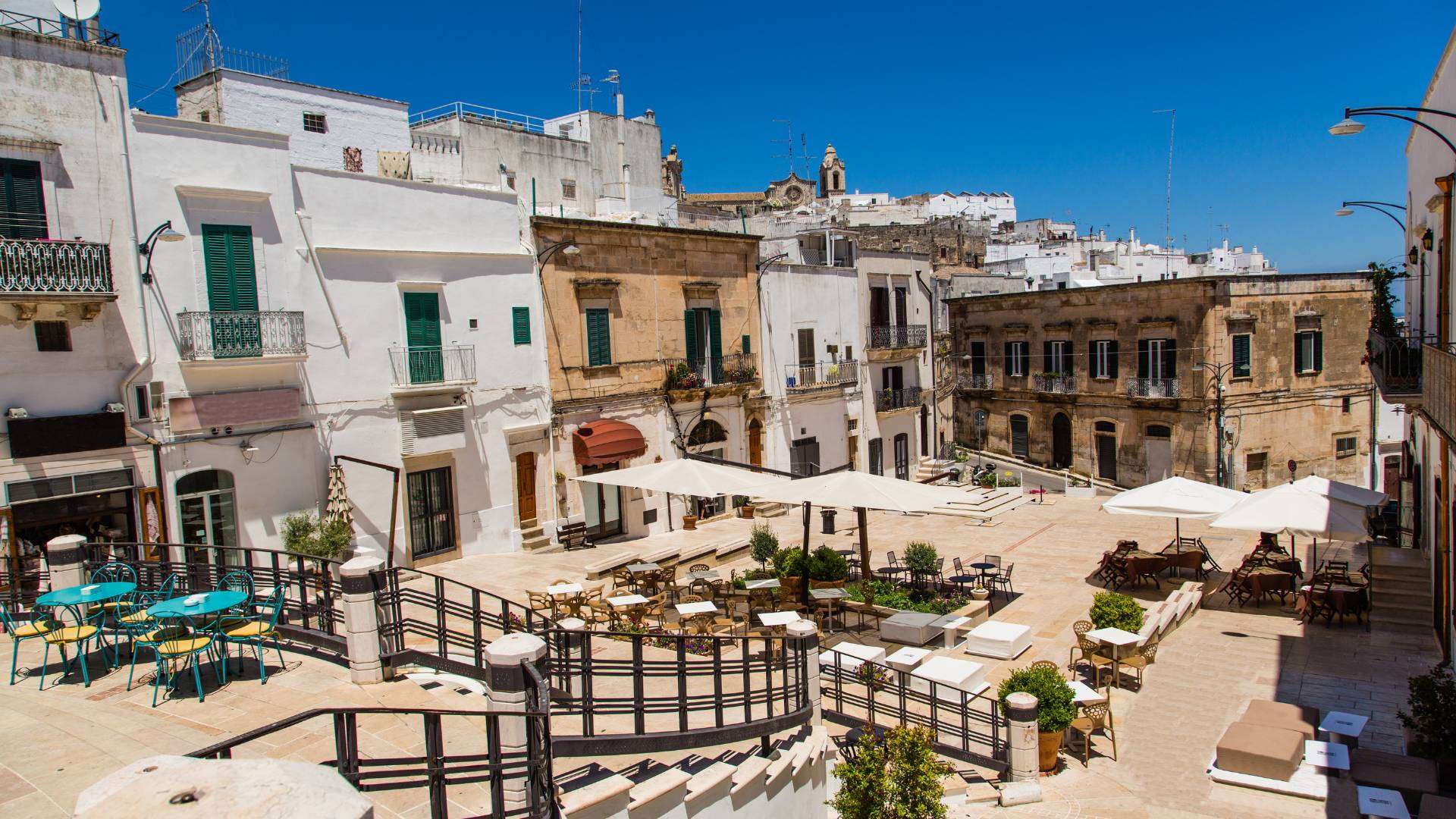
If you wander down from the cathedral to the vibrant heart of the city, you will inevitably come to Piazza della Libertà. This spacious square is Eastuni's social living room and is lined with a number of historically significant buildings. Here you will find the church of Santo Spirito with its ornately decorated portal and the imposing Palazzo Municipale, a former monastery that now houses the town hall. The magnificent halls of the town hall are known far beyond the region as a romantic backdrop for weddings. This is why you can often witness festive parties emerging from the heavy portal to the applause of passers-by.
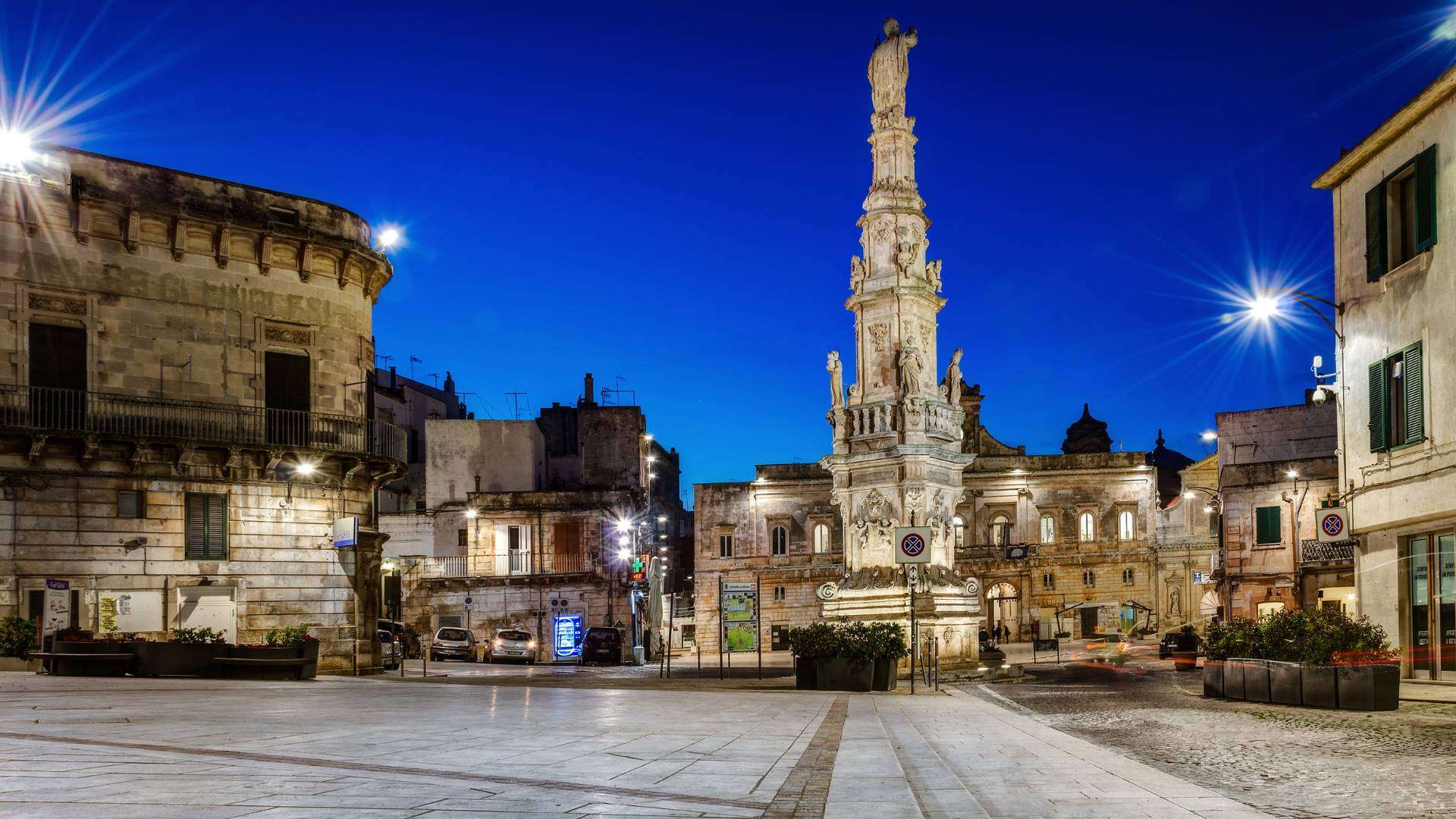
The hustle and bustle on the piazza is dominated by the monumental column of Saint Oronzo, the patron saint of the city. The baroque work of art by Giuseppe Greco from the 18th century is over 20 meters high and is crowned at the top by the statue of the saint, who watches over the residents with a blessing. The intricate decorations and angel figures at the base of the column bear witness to the deep religious pride and master craftsmanship of the time. If you linger over an espresso in one of the cafés, you will immediately sense how closely Ostuni's great history and lively everyday life are interwoven.
The Chiesa della Madonna della Grata
A short distance outside the protective city walls, where the white alleyways merge into the wide, green plain of the olive groves, lies another architectural highlight: the Chiesa della Madonna della Grata. This small but extremely significant church is one of the finest examples of 18th century rural Baroque in this region. While the old town of Ostuni impresses with its simplicity, this church is a true gem of sacred architecture. The ornate façade is particularly eye-catching: with its curved lines and delicate stone carvings made of soft, golden Apulian limestone, it forms a warm contrast to the bright white of the upper town. In the central niche, the statue of the Madonna watches over the valley and welcomes pilgrims and travelers alike.
When you step through the portal into the cool interior, a splendor is revealed that almost surpasses the modest exterior appearance. The ceiling is adorned with masterful frescoes and decorations depicting scenes from the life of the Virgin Mary in vivid colors and dramatic compositions. Every detail, from the altars to the sacred artwork, bears witness to the deep piety and passionate craftsmanship of the era. This spiritual energy is unleashed every year in August, when the town honors its Madonna della Grata with a solemn procession. Believers and visitors from all over Puglia flock together to accompany the statue through the streets - an experience that makes the deeply rooted popular piety and the living tradition of Ostuni tangible in an impressive way. The church is therefore much more than just a building; it is a place of silence and contemplation that combines the artistic elegance of the Baroque with the warm soul of southern Italy.

Local delicacies from Ostuni - a feast for the senses!
Anyone strolling through the bright alleyways of Ostuni soon realizes that this town is not only a feast for the eyes, but also a paradise for the palate. A special attraction for connoisseurs is the traditional weekly market, which enlivens the cityscape every Saturday morning. From 08:00 to 13:00, the area is transformed into a land of milk and honey where you can experience the soul of Puglia with all your senses. The spicy scent of wild oregano mingles with the aroma of ripe chilli peppers, while the traders' displays form a colorful mosaic of produce from the region's fertile soil.
In the midst of this colorful hustle and bustle, you will discover specialties that are deeply rooted in farming tradition. Particularly characteristic are the lupini pickled in brine: bright yellow lupin beans that develop a pleasantly tangy note after careful fermentation. They are prized as a healthy, protein-rich snack. Also typical of the region are dried figs, which are often artfully stuffed with almonds or wrapped in fragrant bay leaves - a natural concentrate of the Apulian sun. Cheese lovers should definitely keep an eye out for the Caciocavallo specialties. This pear-shaped matured cow's milk cheese has a slightly piquant flavour that harmonizes perfectly with a piece of rustic country bread.
An indispensable element of the local identity are the olives, which are celebrated here in impressive variety. From small, almost black fruits with a concentrated aroma to large, fleshy green varieties, every olive bears the signature of the chalky soil. This range is complemented by aromatic bunches of herbs, rare varieties of bell pepper and hand-picked nuts that complete the culinary picture. But what would a visit to Ostuni be without the region's wine? The town is the center of its own DOC area, which is known for its rarities. The „Ostuni Bianco“ is a prime example of freshness and elegance. It is often made from the rare Impigno grape variety, which is found almost exclusively here. If, on the other hand, you are looking for a wine full of character to accompany hearty dishes, go for the „Ostuni Ottavianello“. This fine, slightly spicy red wine or rosé thrives on the sun-drenched hills surrounding the city.
Read more about theTopic




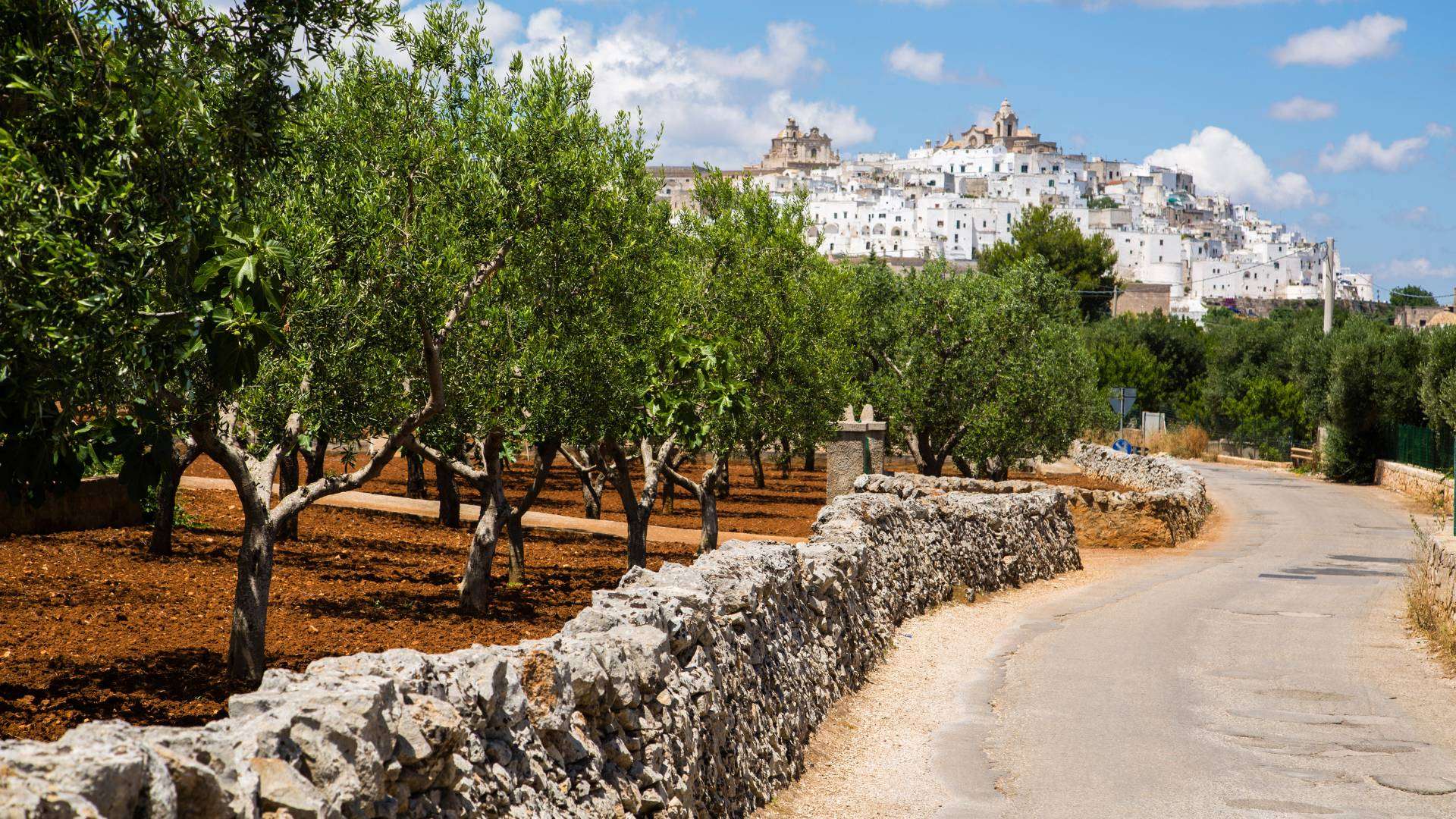
However, Ostuni's liquid gold is undoubtedly its extra virgin olive oil, which is prized worldwide for its quality. The area surrounding the town is lined with historic masserias, those magnificent estates that have often been cultivated for generations in the midst of millennia-old olive groves. Many of these farms open their doors to visitors and provide an insight into the process from harvesting from the gnarled trees to gentle cold pressing. A tasting directly on site, where the intense green-golden oil meets the wine on freshly toasted bread, allows the joie de vivre of the people of Ostuni to be experienced directly. Here in Ostuni, enjoyment is far more than just food, it is a living piece of cultural history that makes every visit complete.
The most beautiful beaches around Ostuni
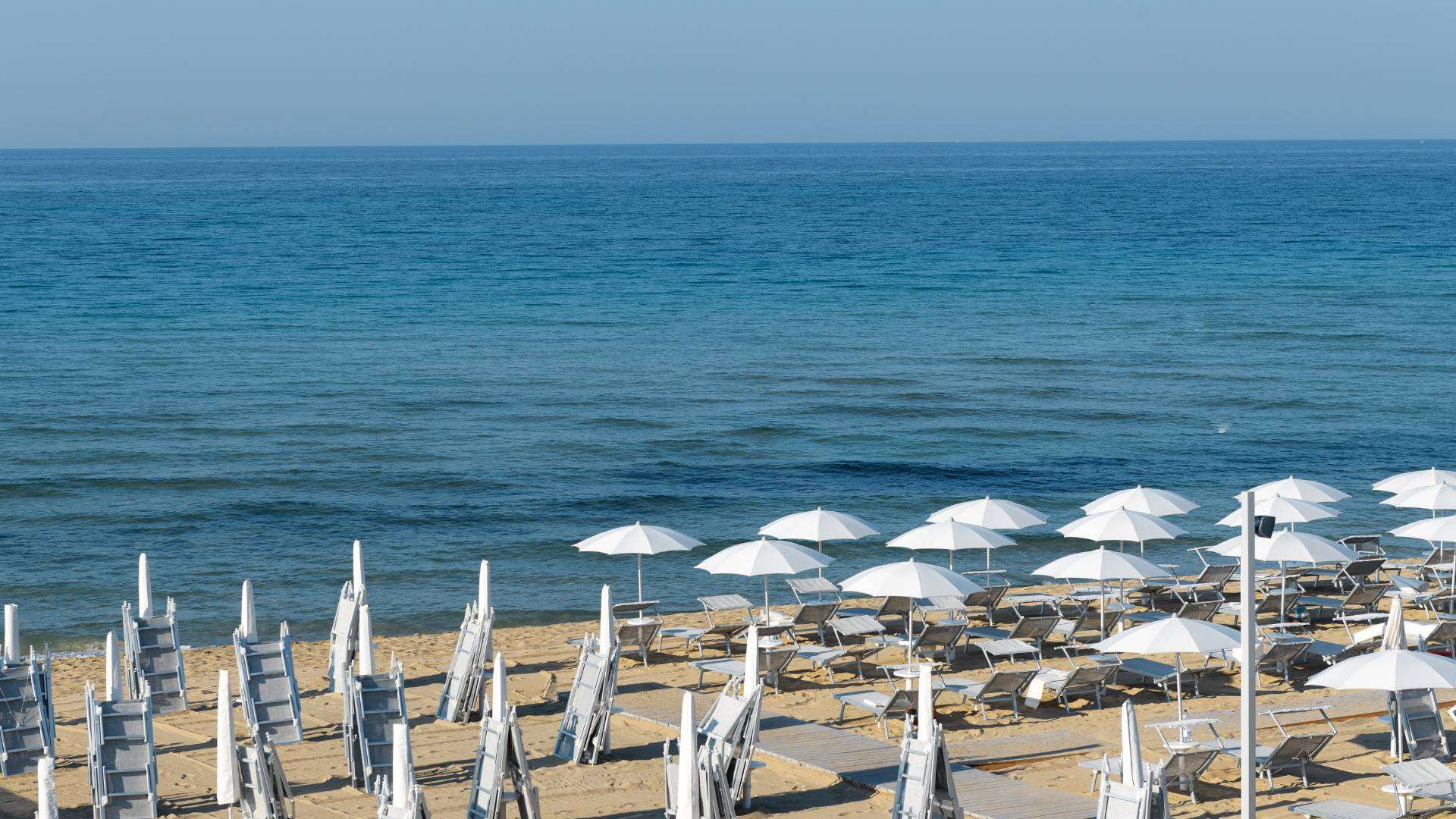
Only around eight kilometers from the historic walls of the white city, the view opens up onto one of the most charming stretches of coastline in Italy. Ostuni is considered the gateway to Salento and impresses with a shoreline characterized by untouched nature reserves, gentle dune landscapes and the azure waters of the Adriatic Sea. Those seeking relaxation by the sea after the culture of the old town will find a selection of coastal gems in Marina di Ostuni to suit every taste - from lively beach clubs to secluded, rocky bays.
A special attraction for families and nature lovers alike is the Lido Morelli. This extensive sandy beach stretches for several kilometers and is characterized by its shallow, crystal-clear water that merges safely into the gentle waves. Embedded in a system of protective dunes and typical Mediterranean vegetation, the beach retains its wild, original character despite the good infrastructure with bars and water sports facilities such as kitesurfing. Nearby, the beach also offers Pilone an idyllic backdrop. Here, fine sand and turquoise waters meet dense pine forests, which provide welcome shade in the midday heat. Thanks to its location in a nature reserve, the atmosphere here remains pleasantly natural, while a nearby campsite provides the necessary comfort.
For those who like it a little more exclusive and lively, the Rosa Marina its destination. The fine, golden sand is sheltered in a bay and offers an excellent selection of restaurants and lidos thanks to its connection to the vacation resort of the same name, making it particularly attractive for a comfortable day of swimming. In contrast to this is the rugged beauty of Torre Pozzelle. Named after a historic watchtower overlooking the coast, this place is characterized by a succession of small sandy bays framed by striking rocks. These formations make the water particularly calm and clear - a paradise for snorkelers and divers, who can explore the rich underwater world of the Adriatic here.
Similarly jagged and yet inviting is the Costa Merlata. Its name says it all: the „indented coast“ offers a multitude of small bays that invite you to explore and provide quiet retreats for sun worshippers, even in the high season. Those seeking absolute tranquillity should make their way to the Quarto di Monte choose. This charming, lesser-known stretch of beach is ideal for romantic strolls and impresses with its simple beauty far from the crowds. Whether a wide sandy beach or a hidden rocky niche - the coast around Ostuni is a living testimony to the diversity of the Apulian landscape and makes every stay in the „White City“ truly perfect thanks to the interplay of colors between limestone and sea.
Top accommodation in Ostuni - stay in style in the white city
Ostuni is not only a dream destination because of its white houses, but also because of its unique accommodation. From stylish boutique hotels in the historic city center up to quiet masserias in the countryside - Every traveler will find their own personal paradise here. The selection of very good and beautiful accommodation is large and varied - some stand out in particular:
Hotel La Terra
In the heart of the winding old town, nestled between whitewashed façades and centuries-old cobblestones, lies the historic Hotel La Terra. The building dates back to the 13th century and has been lovingly restored without losing its original charm. Old stone walls, wooden beamed ceilings and modern accents create an elegant blend of past and present. Many rooms have a view of the cathedral or the sea on the horizon. The central location is particularly appreciated - ideal for exploring the alleyways of Ostuni, yet pleasantly quiet.
Masseria Santo Scalone
Anyone looking for a rural idyll will find an oasis of peace at the Masseria Santo Scalone. The traditional Apulian stone farmhouse is surrounded by centuries-old olive groves and offers spacious suites with rustic flair and modern comfort. The well-tended garden with pool invites you to relax, and breakfast with regional products is served on the terrace. Many guests rave about the exceptional hospitality and the feeling of being with friends. A perfect retreat for couples, connoisseurs and anyone looking to slow down.
Primo Ostuni Hotel
Modern, elegant and urban, the Primo Ostuni Hotel is a stylish 4-star hotel with clean lines, minimalist furnishings and plenty of light. Its location on the edge of the city center makes it easy to explore the old town on foot as well as to go on excursions in the region. Particularly noteworthy are the spacious rooms with balconies, the excellent breakfast buffet and the courteous service of the staff. The Primo Ostuni Hotel is an excellent choice for anyone who values design and comfort.
Ostuni Palace - Hotel Bistrot & SPA
The OSTUNI PALACE is one of the best addresses in the city for guests who want to combine relaxation with pleasure. The elegant hotel with a view of the old town not only offers stylishly furnished rooms with fine materials, but also its own bistro, where Apulian cuisine meets modern creativity. The hotel's own spa with whirlpool, steam bath and range of massages rounds off the experience. Ideal for romantic stays, wellness weekends or as a luxurious retreat after a long day in the city.
Masseria Salinola
Nestled in the gentle hills around Ostuni is the charming Masseria Salinola, a real insider tip for anyone looking for an authentic country house atmosphere with a high level of comfort. The rooms are decorated in warm natural tones and some have a fireplace and terrace. The complex includes an organic vegetable garden, a saltwater pool and a rustic kitchen that uses fresh, home-grown produce. Guests praise the sumptuous breakfast and the family atmosphere, which makes every stay special.
White city, blue sea: why Ostuni will be remembered!
Ostuni is far more than just a picturesque stopover on a journey through the south: the „white city“ is a feast for the senses. Anyone who has ever stood at the top of the hill and let their gaze wander over the shining sea of roofs to the deep blue horizon of the Adriatic will understand the magical attraction of this place. In the labyrinthine alleyways of the old town, time seems to beat to a different rhythm. Here, the monumental heritage of the Messapians and the architecture of the Middle Ages merge seamlessly with the lively, modern flair of Italy. It is precisely this harmony of historical depth and Mediterranean lightness that makes Ostuni so unmistakable.
A visit to the „Città Bianca“ means immersing yourself in the authentic heart of Puglia. Whether admiring the architectural mastery of the cathedral, being enchanted by the quality of regional products at the markets or ending the day with a glass of wine in the golden rays of the evening sun - Ostuni offers pure dolce vita. The town is a symbol of the adaptability and pride of its inhabitants, who cultivate their traditions with warmth and welcome every guest immediately.
To summarize: Ostuni is not a place you visit just once - it stays in your heart forever. For every traveler to Puglia, the white city is an absolute must and the perfect proof that beauty, history and pleasure are nowhere more closely and elegantly interwoven than here. If you are looking for true, unadulterated Italy, you will undoubtedly find it in the white alleyways of Ostuni.
Map: Ostuni, Apulia
FAQ Ostuni - Frequently asked questions for your vacation in Apulia
Top accommodation in Ostuni and the surrounding area
Video: Highlights in Apulia
Experiences & sights
Note: Disclaimer - Italien.news is not the owner or organizer of the sights, accommodations and events published here and therefore not responsible for program changes, cancellation of the event and possibly incorrect information. The editorial team of Italien.news always endeavors to provide detailed and accurate information. However, it is possible that events, attractions, etc. may be changed and not updated promptly. Exact details of dates, times and programs can be obtained directly from the owner of the attractions and accommodation.
Please also check the website or social media of the attractions and events for updates before you travel! Our blog articles contain our personal recommendations in the form of affiliate links. If you book or buy something via the links or simply click on them, we receive a small commission. This does not change the price for you at all. Content and texts © Italien.new & KI / Photos © Canva.com / shutterstock.com / Unsplash.com / Pixabay.com / Pexels.com / Others. Please also visit our Italy Shop!