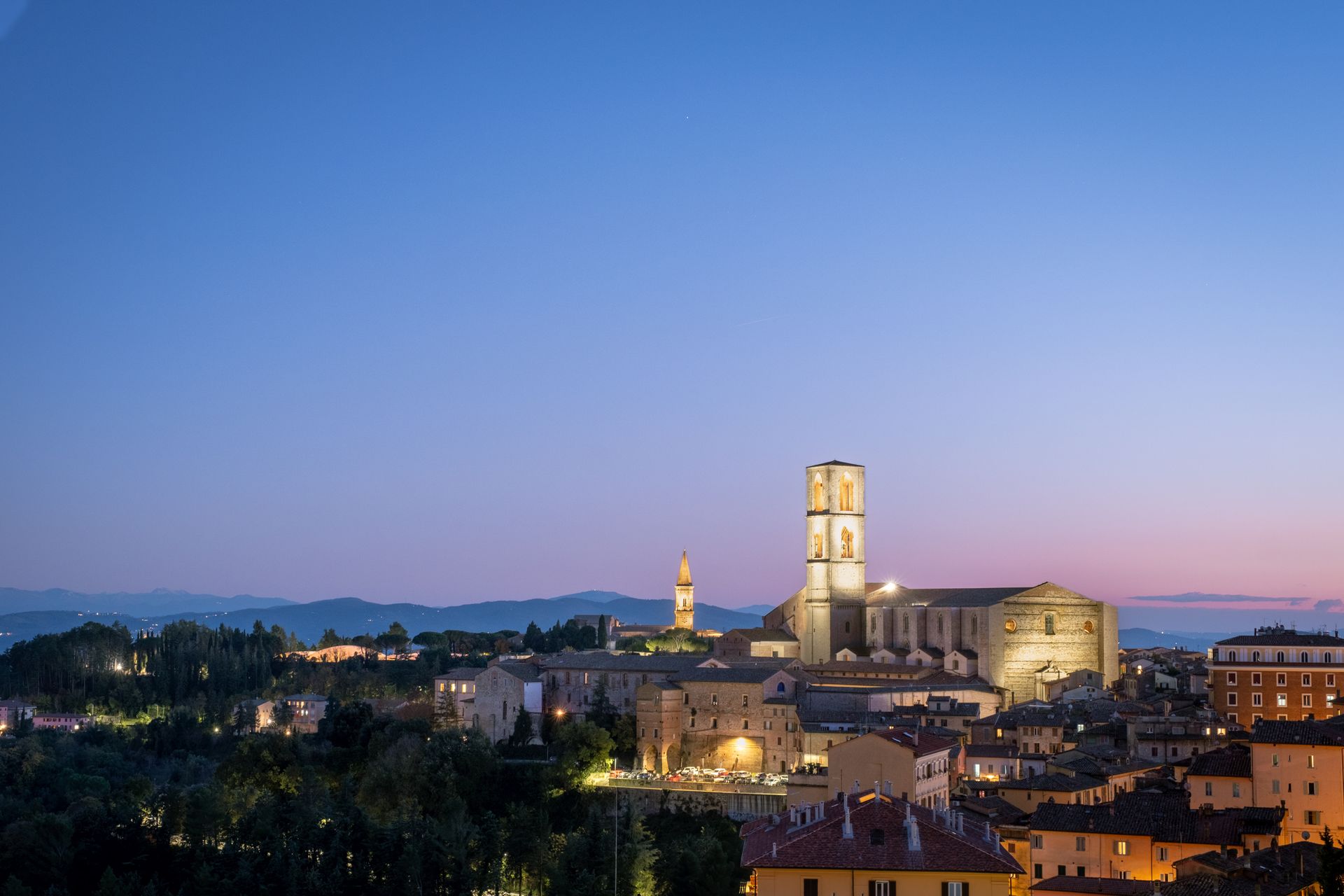

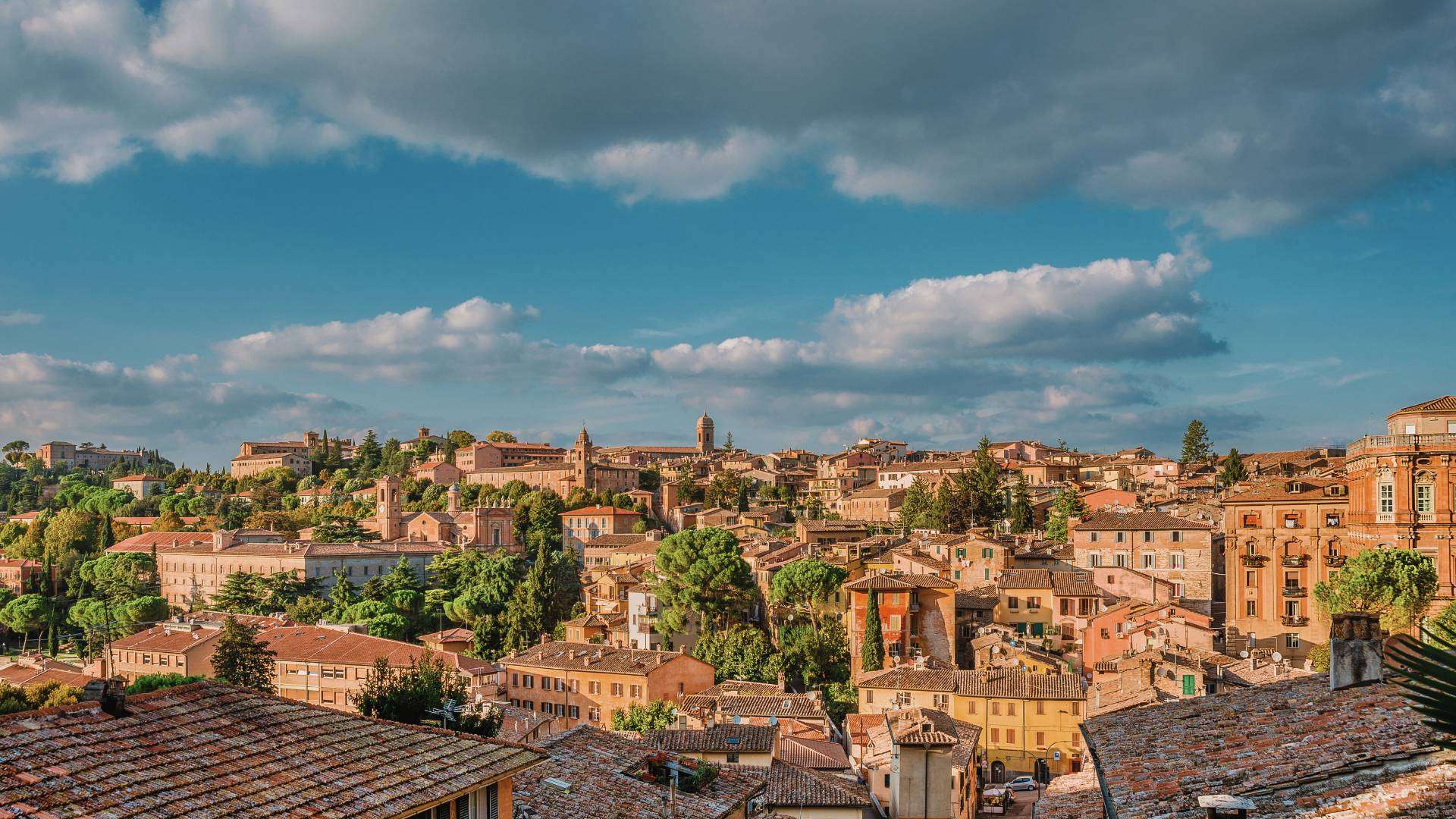
Perugia – The capital of Umbria is situated on a hill high above the Tiber Valley. Those arriving by train take an automated cable car up the hill and get off at the edge of the old town, which has been under construction since Etruscan times.
Perugia's main attractions are all located close together: the Fontana Maggiore on the Piazza IV Novembre, the Palazzo dei Priori with the National Gallery of Umbria For €10, the frescoes by Perugino in the Collegio del Cambio For €6, the cathedral San Lorenzo and the Rocca Paolina, which lead up to the Upper Town via the escalators. There is also an Etruscan fountain and a fresco by Raphael.
This guide tells you how much admission costs and when the venues are open, which two attractions are currently closed, how to get to the Old Town without a car, and what events will be taking place in the city in 2026 and 2027.
With a population of about 162,000, Perugia is the largest city in Umbria and the seat of the regional government. The historic center is located at an elevation of about 484 meters, and the train station Fontivegge and the newer neighborhoods further down the valley. Here's an at-a-glance overview of what you should plan for in terms of admission fees, hours, and dates.
Perugia by the Numbers
You can explore the Old Town on foot; the Minimetrò and escalators help you navigate the elevation changes. Prices are for adults without discounts.
As of October 2026 · Admission prices and hours of operation according to the Galleria Nazionale dell’Umbria, Nobile Collegio del Cambio, Isola San Lorenzo, Pozzo Etrusco, Comune di Perugia, and Minimetrò S.p.A.; population and elevation according to ISTAT.
- Art lovers with an appreciation for Perugino and Pinturicchio
- For train travelers, the Minimetrò runs from the train station uphill
- Anyone looking for traces of the Etruscans in the cityscape
- Music fans in July, when Umbria Jazz is in full swing
- If you have trouble walking, the Old Town is steep
- Anyone who wants to drive through the Old Town
- Beachgoers, the ocean is far away
- For those seeking peace and quiet while the big festivals are in full swing
How much do the attractions in Perugia cost?
For each of the three major art attractions, you pay €24: €10 for the National Gallery of Umbria, 6 € for the Collegio del Cambio and 8 € for the Cathedral Museum Capitolo Museum. The Etruscan Fountain Etruscan Well and the Chapel of San Severo Those featuring Raphael's fresco cost €4 each.
There's a lot you can see without a ticket: the Piazza IV Novembre with the Fontana Maggiore, the vaults of the Rocca Paolina along the escalators, the Etruscan Arch and the walkway across the medieval aqueduct. On the first Sunday of the month, admission to the Galleria Nazionale is free if you pick up your ticket directly at the ticket office. If you're under 18, you never have to pay anything there.
Admission Fees in Perugia
Depending on the venue, discounted rates apply to children, teenagers, and young adults; the age limits vary. Toddlers are admitted free everywhere.
| Offer | Price |
|---|---|
| National Gallery of Umbria | €10.00 · €12.00 for special exhibitions · Free for visitors under 18 |
| Galleria Nazionale, EU citizens aged 18 to 25 | 2,00 € |
| Noble College of the Cambio | 6,00 € |
| Collegio del Cambio Plus Collegio della Mercanzia | 7,00 € |
| Cathedral Museum Capitolo Museum | €8.00 · reduced rate €6.00 or €4.00 · families €20.00 |
| Audio Guide at the Cathedral San Lorenzo | 3,00 € |
| Etruscan Well | 4.00 € · reduced rate 2.50 € · ages 4 to 12 1.00 € |
| Pozzo Etrusco Plus Palazzo Sorbello House Museum | 9,00 € |
| Chapel of San Severo | €4.00 · Ages 18 to 25: €2.00 · Ages 7 to 17: €1.00 |
| Minimetrò, single ride | €1.50 · Valid for 70 minutes |
| Minimetrò, Day Pass | 5,40 € |
As of October 2026 · Prices according to the Galleria Nazionale dell’Umbria, Nobile Collegio del Cambio, Isola San Lorenzo, Pozzo Etrusco, Comune di Perugia, and Minimetrò S.p.A.
Gubbio Attractions: 7 Highlights & Tips
How much admission costs in Gubbio, when the museums and the cable car open, how to get there without a car, and why May 15 is the most important date of the year for the city.
What are the 7 must-see sights in Perugia?
There are seven attractions to visit. Five of them are located on Piazza IV Novembre and at the Corso Vannucci, just a few minutes' walk from each other. To get to the Etruscan Fountain, San Severo, and San Bernardino, walk a few more alleys down.
1. Piazza IV Novembre and the Fontana Maggiore
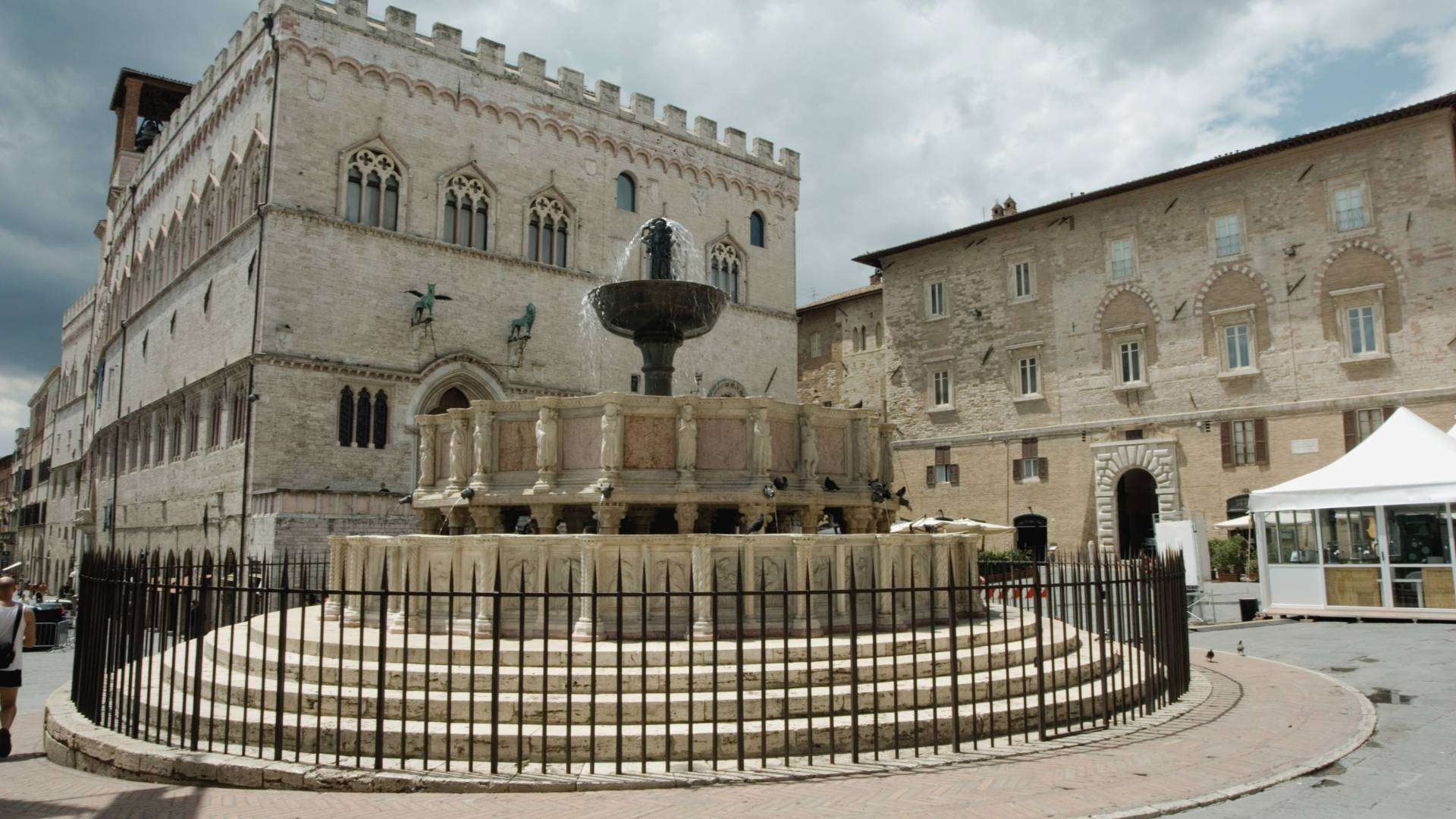
The Piazza IV Novembre is the center of the Old Town. On one side stands the Palazzo dei Priori, and on the other side, the cathedral San Lorenzo, and in between the Fontana Maggiore. Nicola Pisano and his son Giovanni created the fountain between 1278 and 1280.
Two polygonal marble basins are stacked one above the other, with a bronze bowl featuring three nymphs on top. Fifty reliefs and 24 statues run around the basins; the upper basin consists of 24 slabs separated by statues. The water came via its own aqueduct from the Monte Pacciano into the city, where you can still take a walk today.
The spot is free and worth visiting at any time of day. Sit on the steps along the side of the cathedral and take your time admiring the fountain. You’ll only really appreciate the reliefs once you’ve walked all the way around the basins.
2. The Palazzo dei Priori, with the Sala dei Notari and the Collegio del Cambio
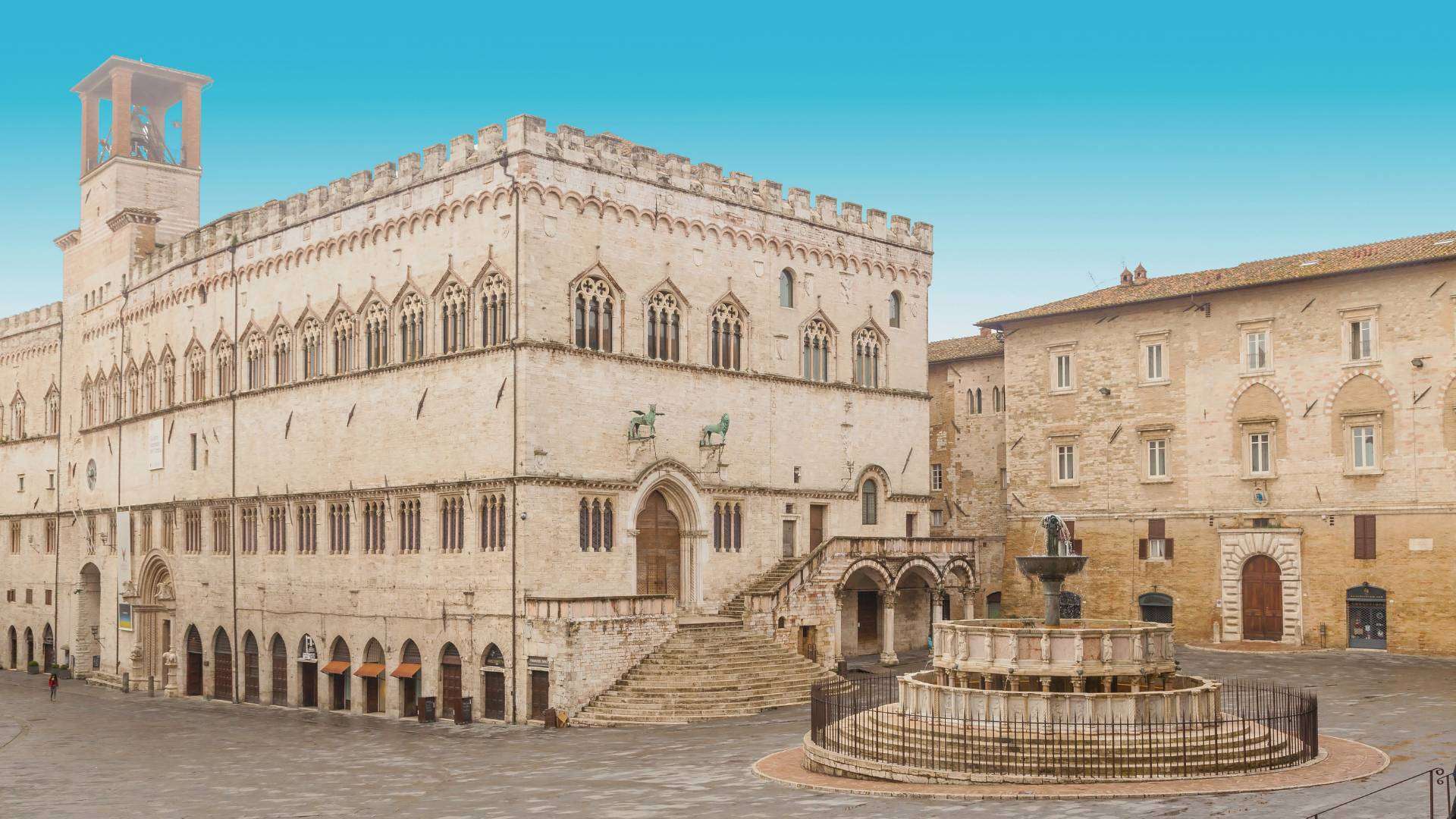
The Palazzo dei Priori was the seat of power for the free commune, and the city administration is still based there today. The first section on the left was built by Jacopo di Servadio and Giovannello di Benvenuto from 1293 to 1297; the right section was added in 1335. Above the Gothic portal to the Hall of the Notaries The griffin, Perugia's heraldic animal, and the Guelph lion stand there. The bronze statues outside are replicas; the originals are inside the palace.
The Hall of the Notaries With its majestic arches, you can visit daily from 9 a.m. to 1 p.m. and from 3 p.m. to 7 p.m. It is closed during concerts and conferences, so it’s worth trying again the next day.
A few steps further along the Corso Vannucci is that Noble College of the Cambio, the headquarters of the Money Changers' Guild, built from 1452 to 1457. On January 26, 1496, the guild decided to have its audience hall painted and commissioned Pietro Vannucci, known as Perugino. By 1500, he had painted the Audience Hall, on the vault depicting the seven planetary gods and grotesques. Perugino bears the city’s name, but he was born around 1450 in what is now City of Pieve.
Admission costs €6, along with the Collegio della Mercanzia €7 at the same palace. It is open Monday through Saturday from 9 a.m. to 1 p.m. and from 2:30 p.m. to 5:30 p.m., Sundays and holidays from 9 a.m. to 1 p.m.; it is closed on December 25 and January 1. The hall is small; half an hour is enough. Spend half of that time looking at the ceiling.
3. The Galleria Nazionale dell’Umbria
On the upper floors of the Palazzo dei Priori is the National Gallery of Umbria, the region's largest collection of paintings. Spread across two floors, it covers approximately 3,500 square meters in 40 galleries, plus a tower and a chapel.
The most famous single work is Piero della Francesca’s Polyptych of Saint Anthony, painted around 1467–1469 and crowned by an Annunciation, which can be found in Room 13. According to the museum, it houses the world’s richest and most complete collection of works by Perugino. Pinturicchio, who was born in Perugia in 1454, has his own galleries. In addition, there are works by Duccio di Buoninsegna, Gentile from Fabriano and Fra Angelico.
It is open daily from 8:30 a.m. to 7:30 p.m.; the ticket office closes at 6:30 p.m. Admission is €10, and €12 for special exhibitions. EU citizens aged 18 to 25 pay €2; admission is free for those under 18. On the first Sunday of the month, admission is free for anyone who picks up their ticket directly at the ticket office—but it does get more crowded then. Plan on spending two hours; if you want to see every gallery, you’ll need more time.
4. San Lorenzo Cathedral and the Ring of Mary
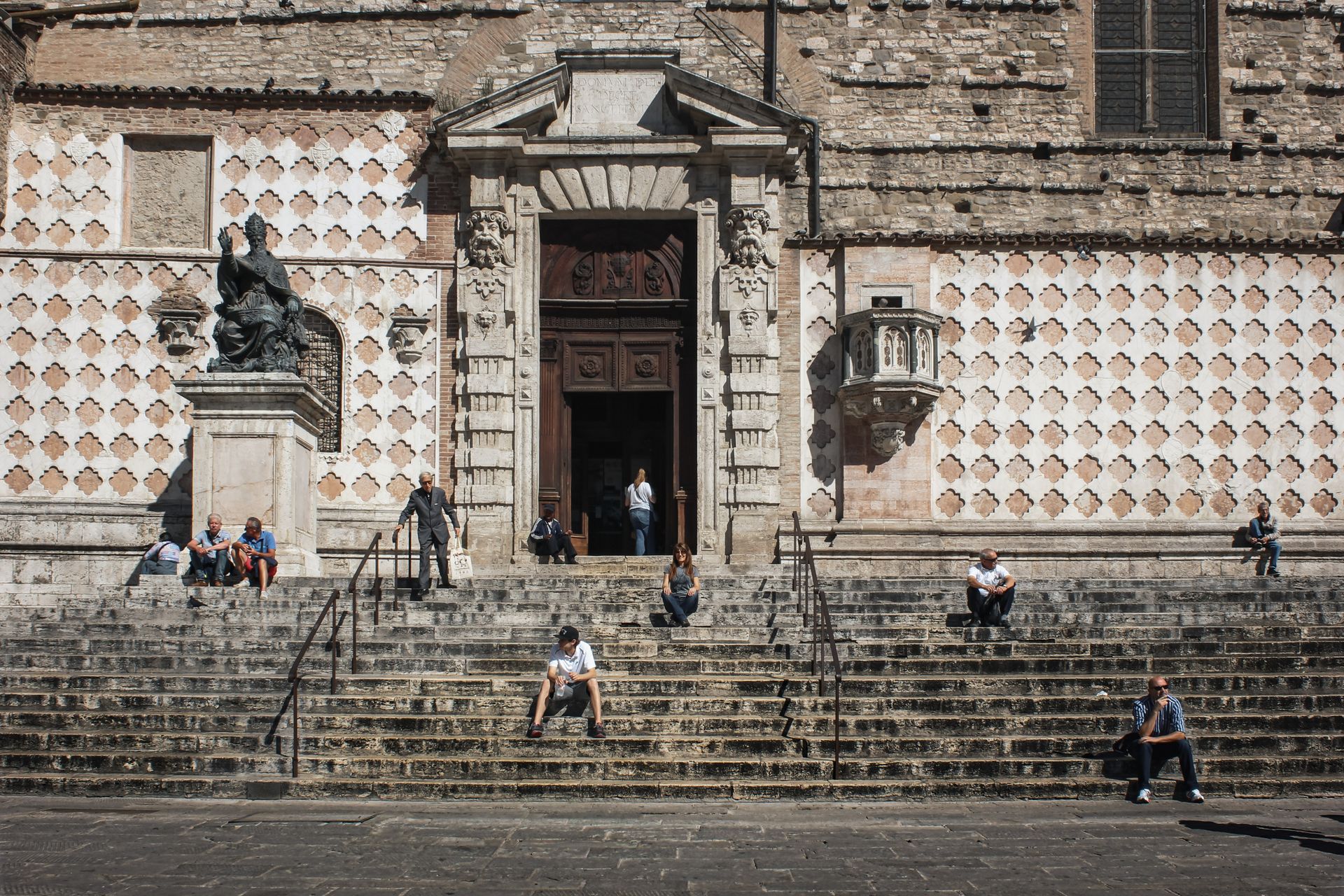
The Cathedral San Lorenzo shows the Piazza IV Novembre not its main facade, but its long side. Construction was authorized in March 1300, but it was not completed until the 15th century. The cladding of white and pink marble extends only to a certain height; above that, the wall remains unfinished. On this side are also the loggia, the Braccio Fortebraccio da Montone commissioned in 1423, the bronze statue of Pope Julius III, a work by Vincenzo Danti from the 16th century, and a pulpit from the 15th century associated with the preacher Bernardine of Siena.
Inside, the Chapel of the Holy Ring A relic that is particularly venerated in Perugia: a ring believed to be the Virgin Mary’s wedding ring. It arrived in Perugia on July 29, 1473, and is kept in a vault eight meters above the altar, which can only be opened with 14 keys. It is on display twice a year. On July 29, it is brought out during the calata, the ceremonial removal from the vault, and displays it for a few days, from 2026 until August 2. The cathedral will display it a second time on September 12 and 13. There will be no procession through the city on these occasions.
The cathedral is open daily from 8:30 a.m. to 12:30 p.m. and from 3:30 p.m. to 6:00 p.m.; it is closed to visitors during Masses at 11:00 a.m. and 6:00 p.m. You can rent an audio guide for €3. The Cathedral Museum Capitolo Museum It is open daily from 10:30 a.m. to 1:30 p.m. and from 2:30 p.m. to 7:00 p.m., and admission is 8 €.
5. The Rocca Paolina
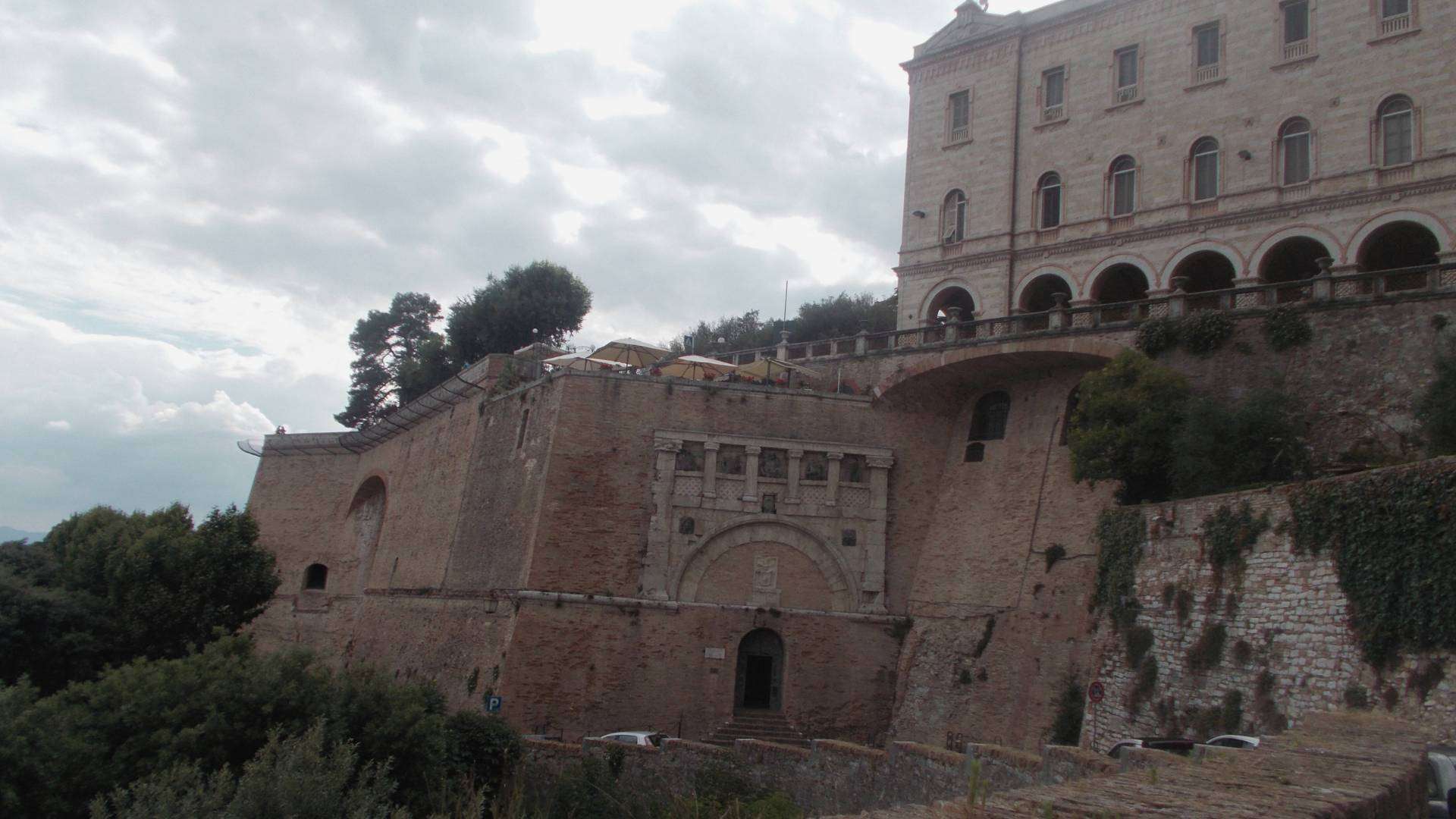
During the Salt War of 1540, Perugia rebelled against the Pope and was defeated. Afterward, Paul III Farnese had a fortress built in the city, based on plans by Antonio da Sangallo the Younger, from 1540 to 1543. To this end, the houses of the Baglioni—the family that had ruled Perugia until then—were demolished.
For the people of Perugia, the fortress remained a symbol of papal rule. It was partially destroyed in 1848 and almost completely razed in 1860. The vaults in the basement have been preserved, and today escalators run through them from the Piazza Partigiani up to the Piazza Italia. You walk through the ruins of the old neighborhood under the arches. One of the entrances is the Porta Marzia, an Etruscan gate dating from the 3rd century B.C., which Sangallo had incorporated into the fortress wall.
Anyone who is at the Piazza Partigiani If you park there, you'll automatically pass through the Rocca on your way up. Get out of the car along the way and walk through the corridors for a few minutes before continuing on. At the top of the Piazza Italia you're right at the beginning of the Corso Vannucci, and of the Carducci Gardens From there, the view stretches far across the valley.
6. Etruscan Perugia: Arco Etrusco, Pozzo Etrusco, and San Severo
Perugia was one of the great cities of the Etruscans, and three sites in the old town still bear witness to that today. The Etruscan Arch It was built around the middle of the 3rd century B.C. and is one of the ancient city gates that you can still walk through today.
Right next to the cathedral, a path leads down into the Etruscan Well, a well dating from the 3rd to 2nd century B.C. The shaft is 36 meters deep and up to 5.6 meters wide, built of travertine blocks. It is located beneath the Palazzo Sorbello, at the top of the Piazza Piccinino Only a 16th-century fountain basin serves as a reminder of him. Admission costs €4, €2.50 for seniors, and €1 for children ages 4 to 12. It is open daily from 10 a.m. to 2 p.m. and from 3 p.m. to 6:30 p.m.; from mid-September onward, it closes at 5:30 p.m.
A few blocks away, on the Piazza Raffaello in the neighborhood Porta Sole, the Chapel of San Severo. Between 1505 and 1508, Raphael painted a fresco here for the monks of the Camaldolese Order, which he never completed. After Raphael’s death in 1520, the monks commissioned Perugino to complete it. It became his last work in Perugia. Admission costs €4; the church is closed on Mondays, except in April and August.
The National Archaeological Museum of Umbria within the complex Saint Dominic is closed until further notice due to construction work to improve earthquake resistance and accessibility. The Cippo of Perugia, a stone bearing a long Etruscan inscription and the symbol of Etruscan Perugia.
If you want to see the Etruscans in their original setting, head to the suburbs Ponte San Giovanni to the Volumni Hypogeum. The burial chamber of the Velimna family—known in Latin as Volumni—dates from the second half of the 2nd century B.C.
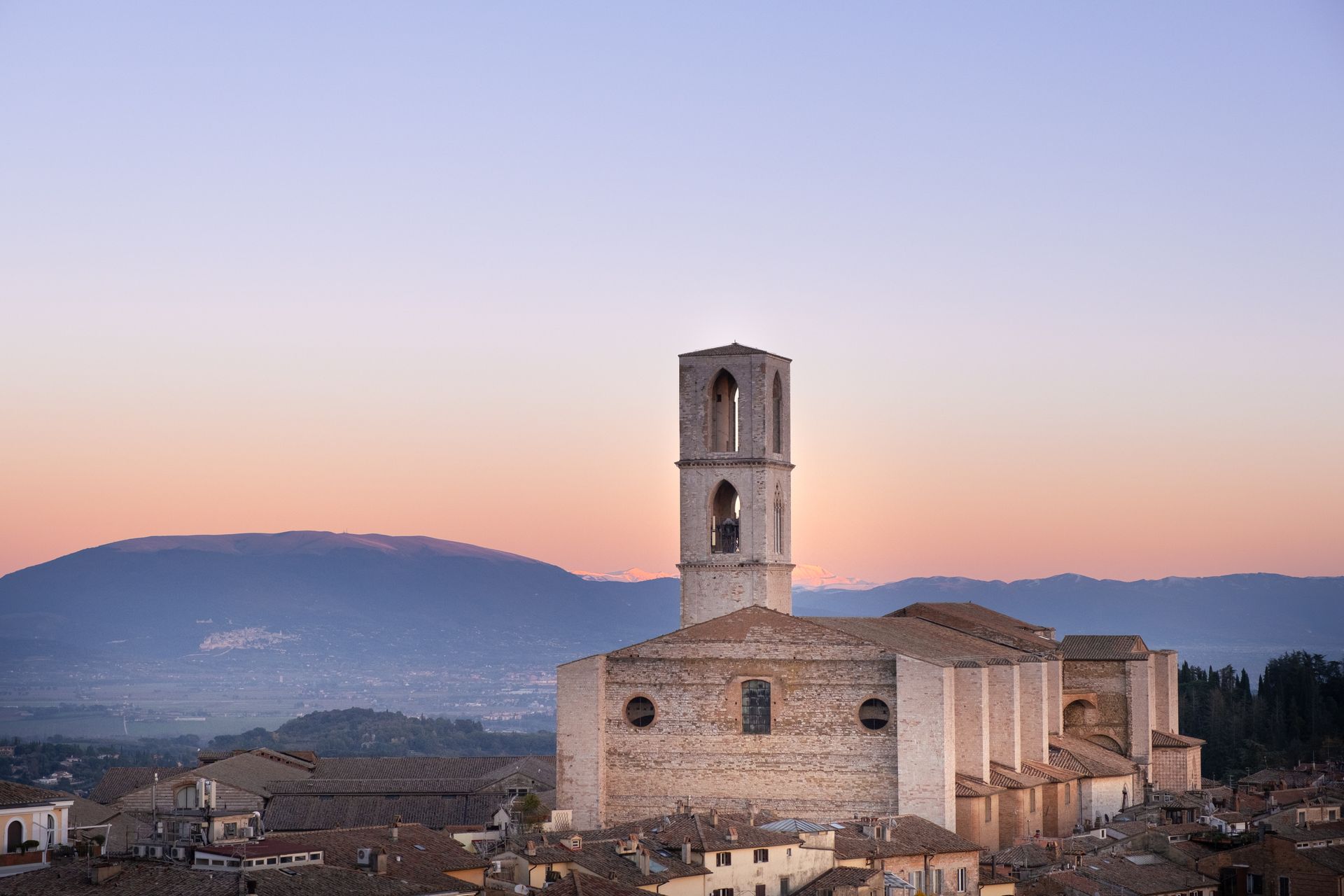
7. The Oratory of San Bernardino
About the Via dei Priori Do you start from the Piazza IV Novembre handed over until San Bernardino Oratory. This small church was built in 1452 and is dedicated to St. Bernardine of Siena.
It is famous for its facade. The Florentine sculptor Agostino di Duccio From 1457 to 1461, he adorned it with reliefs; the year 1461 is included in the inscription itself August 1, 1461.
The oratorio is currently closed temporarily. It’s still worth the trip, though, because the facade is what you’re here to see, and you’ll get a view of it from the outside anyway. Take a few steps back, and you’ll be able to take in the reliefs as a whole.
How do you get to Perugia?
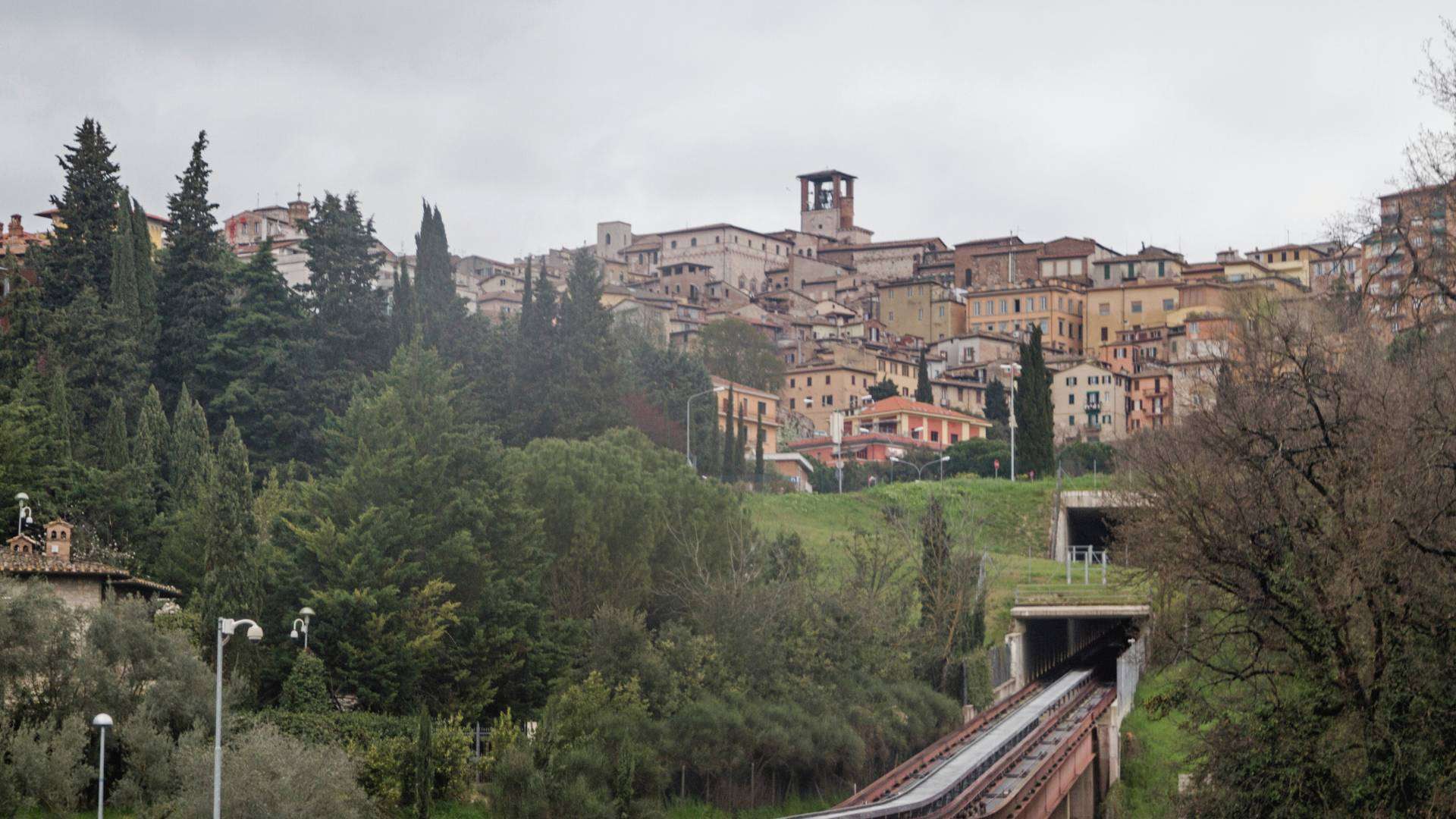
The most convenient way is by train and the Minimetrò. From Florence, you can travel directly or with a transfer to Terontola, from Rome with a transfer in Foligno. Allow about two hours from Florence and just under three from Rome. The train station Perugia Fontivegge It is located below the Old Town; the Minimetrò station next to it is also called Fontivegge.
The Minimetrò is an automated cable car that has been in operation since January 29, 2008. Covering a distance of about three kilometers and a vertical rise of 161 meters, it connects seven stations, starting from the large parking lot in Pian di Massiano to the last stop Tweezers on the outskirts of the Old Town. The entire trip takes about twelve minutes, and on average, a car arrives every two and a half minutes. The architect Jean Nouvel designed the line and its stations.
Monday through Friday, the Minimetrò runs from 7:00 a.m. to 9:05 p.m.; on Saturdays, it currently runs until 1:05 a.m.; and on Sundays, from 9:00 a.m. to 8:45 p.m. A single-ride ticket costs €1.50 and is valid for 70 minutes, including on city buses. A day pass costs €5.40; children six and under ride for free, and you can pay contactlessly at the turnstile using a card or smartphone. From the Tweezers Escalators and an inclined elevator will take you further up—daily until 2 a.m. in the summer, and on weekdays until 9:20 p.m. in the winter.
If you're driving from the north, take the exit off the A1 at Valdichiana and take the expressway from Bettolle To Perugia: If you're coming from the south, take the E45. You can park for free in the parking lot Porta Nova on Umbria Jazz Square and you'll leave Pian di Massiano Take the Minimetrò up. Closer to the Old Town are the paid parking garages Partisans, Pellini, Mercato Coperto and Briglie di Braccio, from which escalators or elevators lead upward.
The Umbria Airport San Francesco d’Assisi is included Sant’Egidio, about twelve kilometers east of the city. From there, you can continue your journey by taxi or rental car. If you're flying to Rome or Florence, take the train from there.
The Old Town is a Zona a Traffico Limitato. Hotel guests may drive to their hotel without a special permit; the hotel will report the license plate number to the municipality. You may only stop there to load or unload, for a maximum of 60 minutes. Before arriving, ask the hotel where you can park afterward.
What should you definitely try in Perugia?
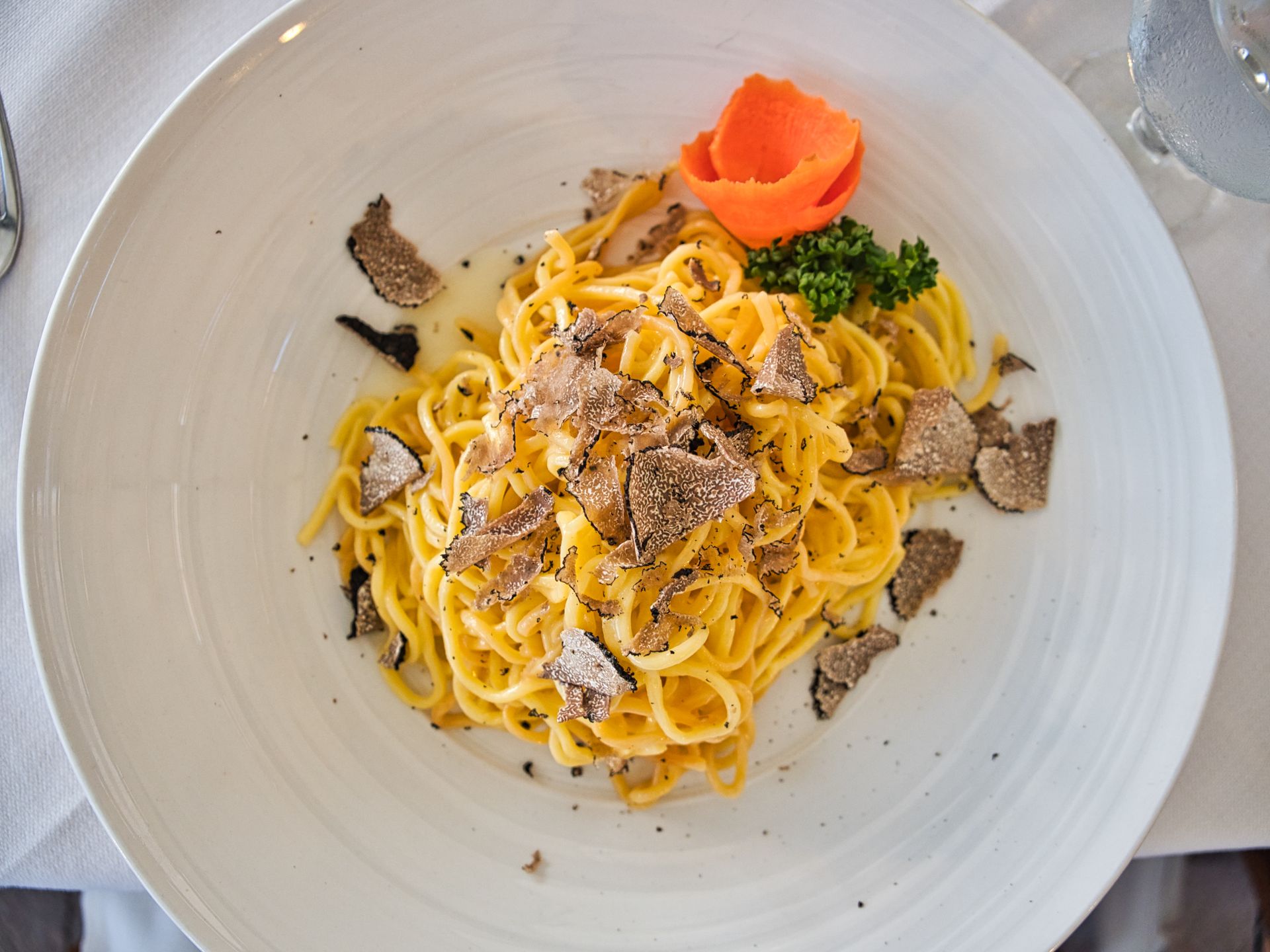
Perugia eats like the rest of Umbria: hearty, down-to-earth, and with plenty of truffles. You’ll find black truffles on many menus, shaved over fresh pasta or in a sauce. The Il Giurista During the season, the restaurant in the Old Town features a separate section of the menu dedicated to truffle dishes.
In between, you eat torta al testo, a flatbread baked on a hot griddle and filled with sausage, cheese, or vegetables. When it comes to pasta, it’s worth checking out the daily specials menu, in the L’Officina For example, there are tagliolini with squid ink and a perch ragù.
Perugia is also a city of chocolate. The Baci, the chocolates with hazelnuts and a love note inside the wrapper are from Perugina from Perugia, and every November the city celebrates the Eurochocolate Festival. At Easter, the pastry shops bake the ciaramicola, a red-colored ring cake topped with white meringue.
Where's the best place to eat in Perugia?
Three restaurants listed in the 2026 Michelin Guide are located in the Old Town or on its outskirts. The Ada holds a Michelin star and is the place to go for a special evening. The Il Giurista serves regional and classic cuisine, which L’Officina combines tradition with international cuisine and is perfect for a relaxed meal with friends.
Restaurants in Perugia
Be sure to make a reservation in advance on weekends and during major festivals. Ada and L’Officina are closed on Mondays.
| Restaurant | Here's what you can expect |
|---|---|
| Ada Via del Bovaro 2 | One Michelin star: creative, modern cuisine by Ada Stifani with a clear regional focus, located in a small alley not far from the Church of Sant’Ercolano. Two dining rooms, one of which features an open kitchen. Closed on Mondays. |
| Il Giurista Via Bartolo 30 | Regional, traditional cuisine served in rooms with brick vaulted ceilings that stay pleasantly cool even in the summer. During the season, the restaurant features its own dishes made with black truffles. Closed on Sundays. |
| L’Officina Borgo XX Giugno 56 | Tradition meets international cuisine—for example, in the tagliolini with squid ink and perch ragù. The menu is written on a blackboard, making it a great spot for dinner with friends. Closed on Mondays. |
As of October 2026 · Information according to the Michelin Guide Italy.
Where's the best place to stay in Perugia?
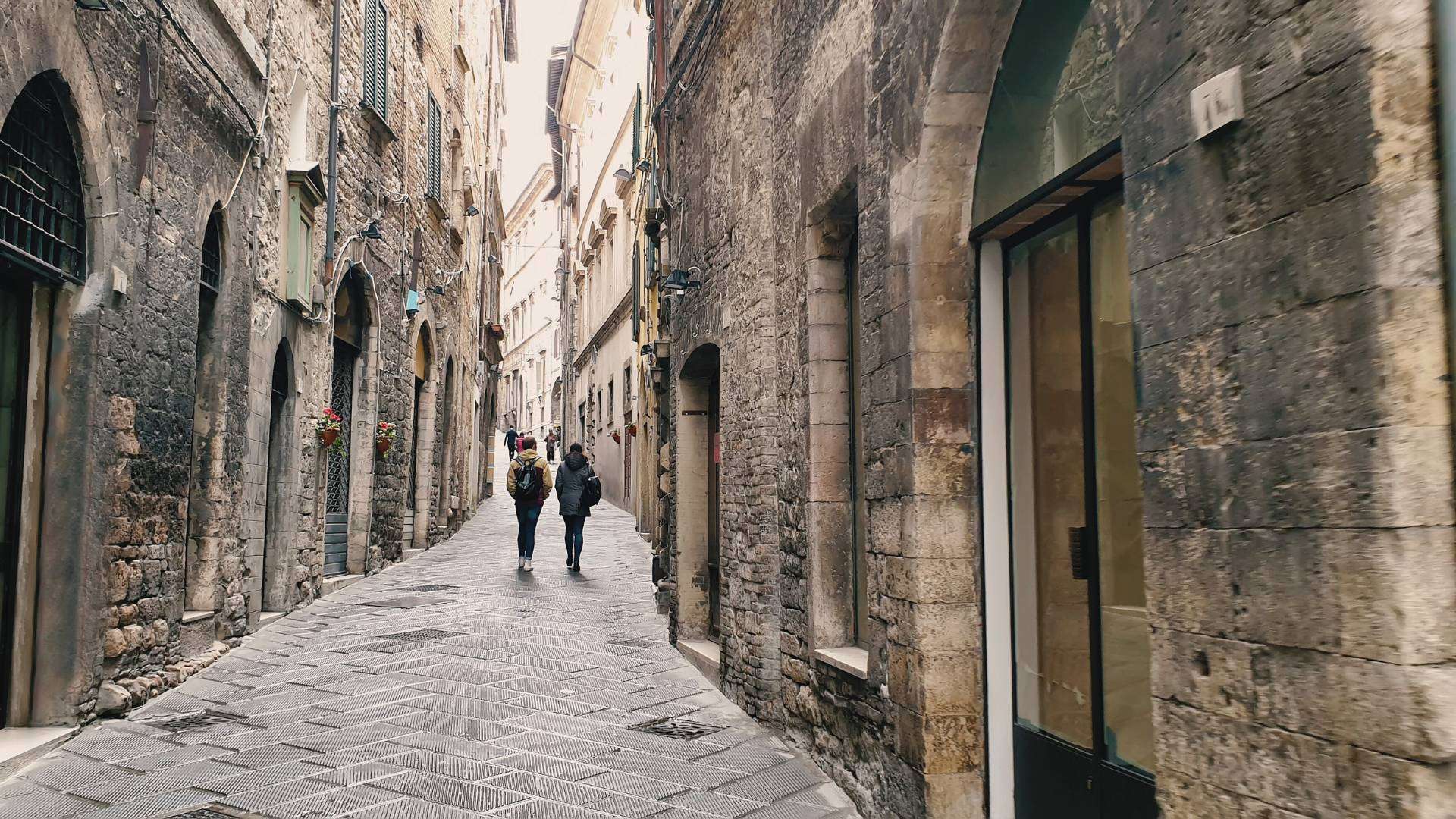
Stay in the Old Town or on its outskirts. That way, you can reach everything on foot in the evening and won’t have to walk up the hill after dinner. If you’re traveling by car and prefer a quiet place to stay, find a place outside the city and take the Minimetrò into town.
Accommodations in Perugia
If you're staying in the Old Town and driving, give the hotel your license plate number for the ZTL. For Umbria Jazz and Eurochocolate, book early.
| Accommodations | Here's what you can expect |
|---|---|
| Sina Brufani Piazza Italia 12 | Five-star luxury, opened in 1884. Rooms and suites, a pool, and a restaurant, located right on Piazza Italia, overlooking the Rocca Paolina and at the beginning of Corso Vannucci. |
| Sangallo Palace Hotel Via Masi 9 | A four-star hotel in the historic center, with a heated pool, fitness center, and restaurant. You can reach the sights on foot. |
| TH Perugia, Castello di Monterone Montevile Road 3 | A hotel in a castle located about three kilometers from the Old Town, ideal for anyone traveling by car who wants a quieter place to stay. |
As of October 2026 · Information based on the venues' websites.
Top accommodations in Perugia
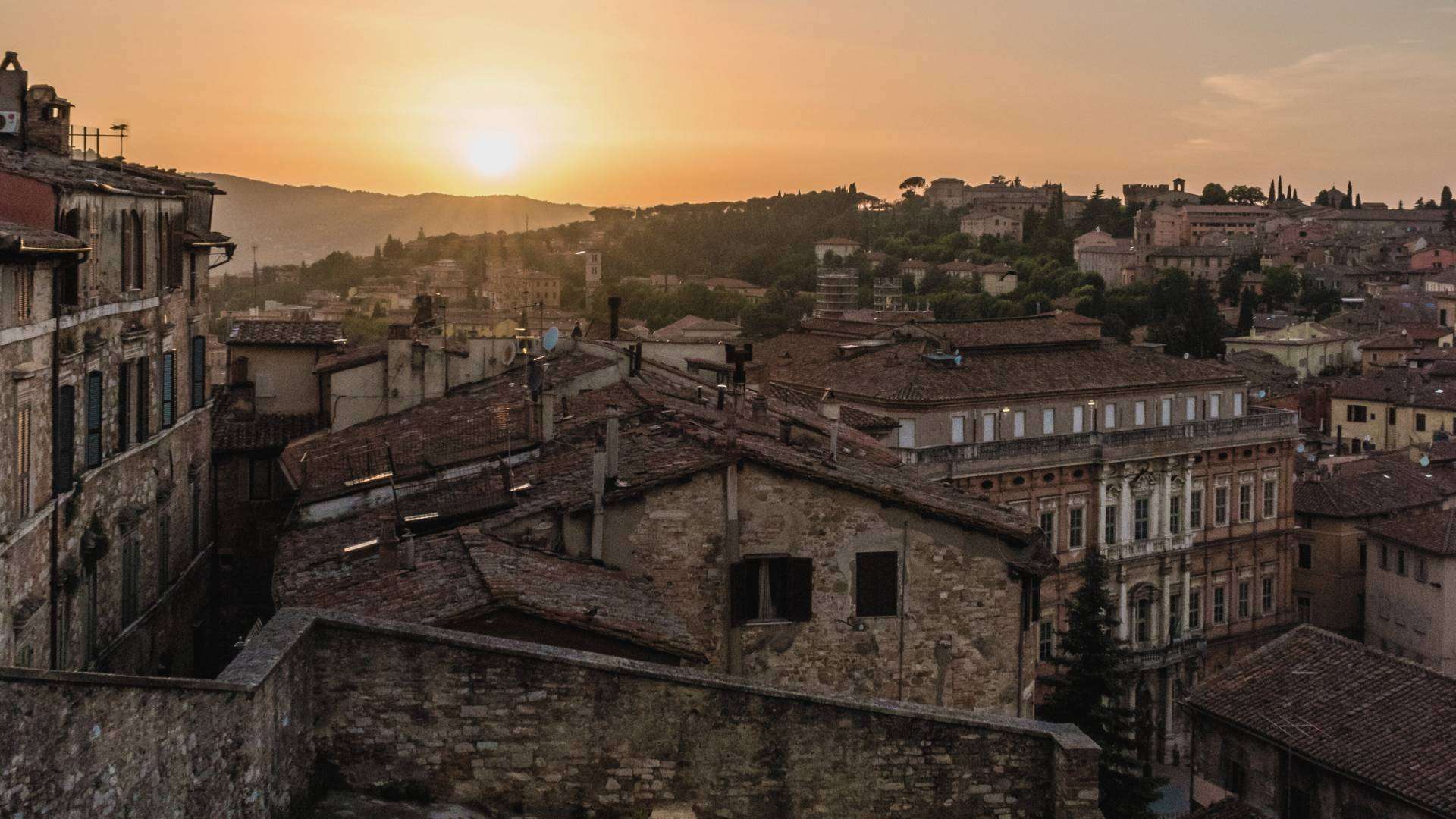
When is the best time to visit Perugia?
Perugia is most pleasant in the spring and early fall—from April through June and in September and October. During these months, the days are long enough to explore the city and its surroundings, and the steep streets are easier to walk up than in the summer heat.
In July, Umbria Jazz takes over the city—from July 9 to 18, 2027. That’s when Perugia is filled with music and people, so book your room early. Next up in November is Eurochocolate—from November 13 to 22, 2026—with bustling weekends in the historic center.
It's quieter in the winter. The major attractions remain open; only the Cathedral Museum closes for just under three weeks in January. To see what the weather is like right now, go to Weather in Perugia.
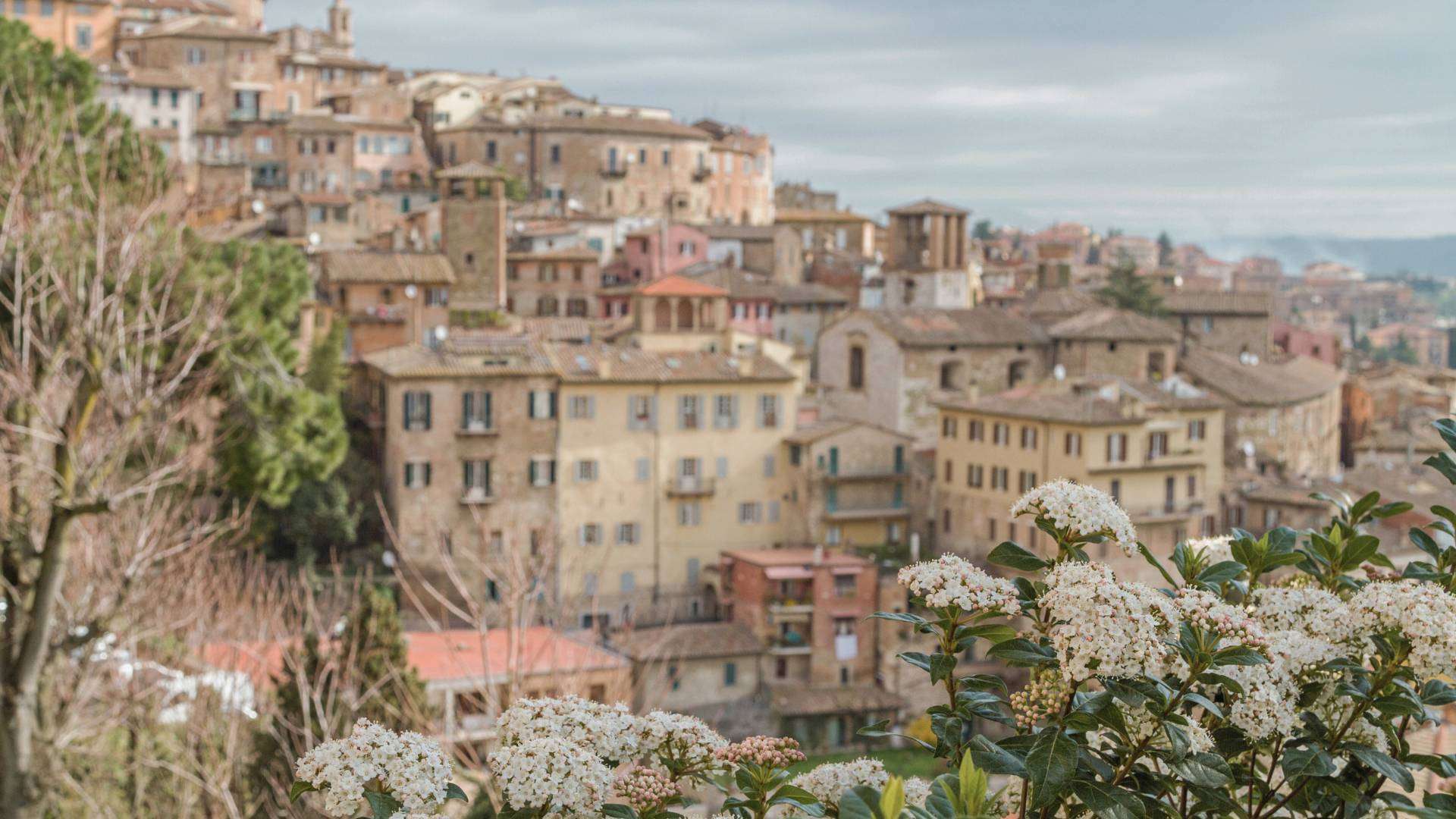
What holidays and events should you plan for?
In April, there will be a gathering at the International Journalism Festival The Media World in the Old Town, April 14–17, 2027. In June, the five city districts will celebrate at Perugia, 1416 its history, featuring the Palio, a grand historical parade, and the race Corsa del Drappo.
Coming in July Umbria Jazz, July 9–18, 2027. On July 29, the Ring of Mary will be lowered from its vault in the cathedral; it will be on display a second time on September 12 and 13. This will be followed in November by Eurochocolate, November 13–22, 2026; free admission.
The Peace March from Perugia to Assisi was initiated by the philosopher Aldo Capitini, a native of the city, who organized it for the first time in 1961. The Umbria Jazz Winter Festival, on the other hand, does not take place in Perugia, but in Orvieto. We're compiling a list of other events in the region at Events in Umbria.
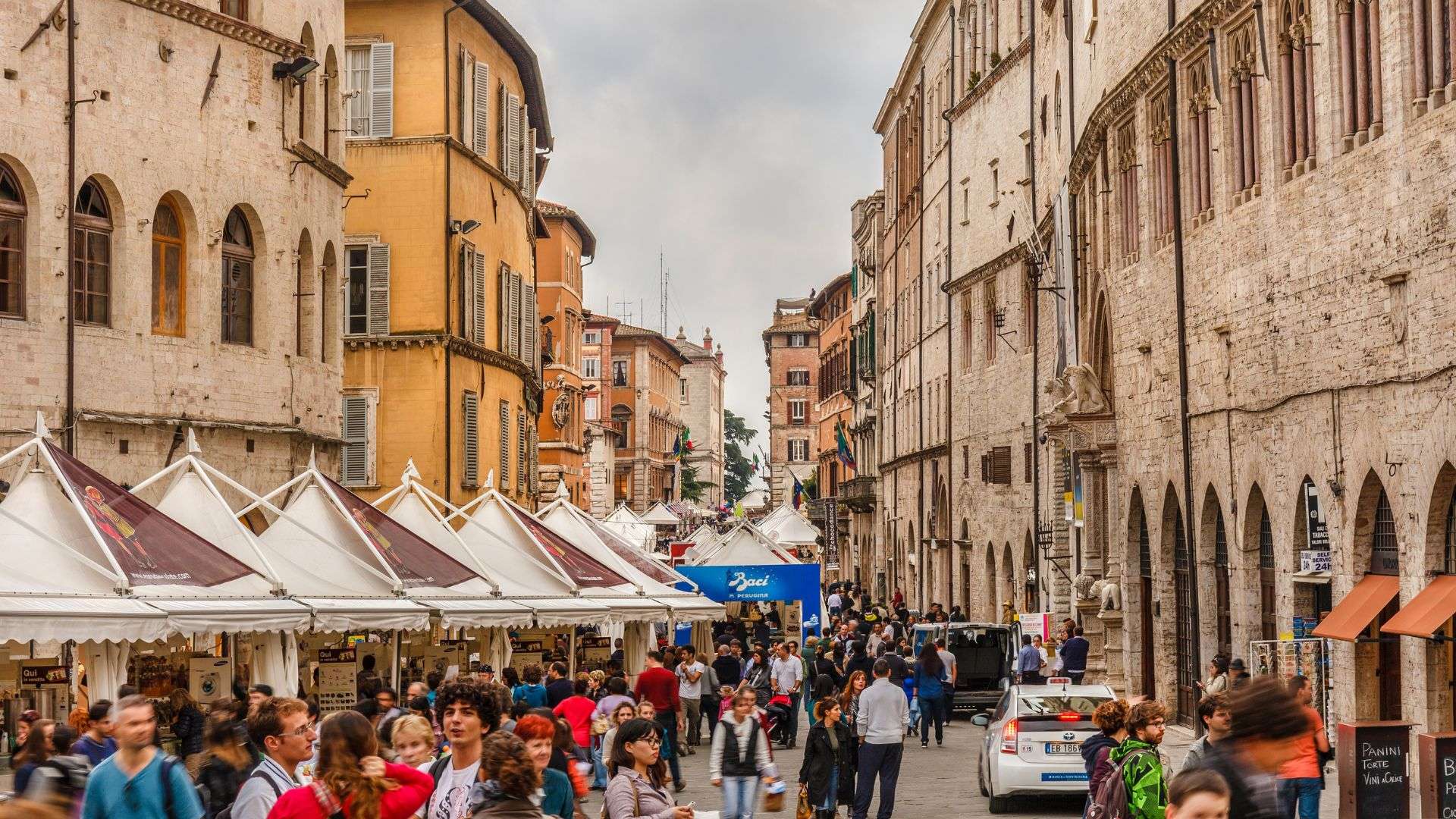

Eurochocolate Perugia: Dates, Program, and How to Get There
Eurochocolate 2026 in Perugia: Dates, hours, the program for the 32nd edition, and the easiest way to get to the historic center.
What You Should Know About Perugia
1. Perugia is steep. The Minimetrò alone climbs 161 meters in elevation, and in the historic center, you’ll also have to navigate stairs and steep alleys. Take the Minimetrò and the escalators—that way, you’ll save your energy for the museums.
2. Two goals are currently off limits. The National Archaeological Museum in San Domenico is closed until further notice, and the Oratorio di San Bernardino is temporarily closed. You can still see the facade of San Bernardino, though.
3. The cathedral is not open to visitors during Mass. Church services are at 11 a.m. and 6 p.m. Plan your visit to the cathedral for early morning or the afternoon.
4. The Old Town is a restricted traffic zone (ZTL). Only drive in if your hotel is located there and your license plate is registered. Otherwise, park downstairs and take the Minimetrò or the escalator up—it's faster anyway.
5. Monday is a slow day. The Cappella di San Severo is closed except in April and August, as are two of the three restaurants on our list. The Galleria Nazionale, on the other hand, is open every day.
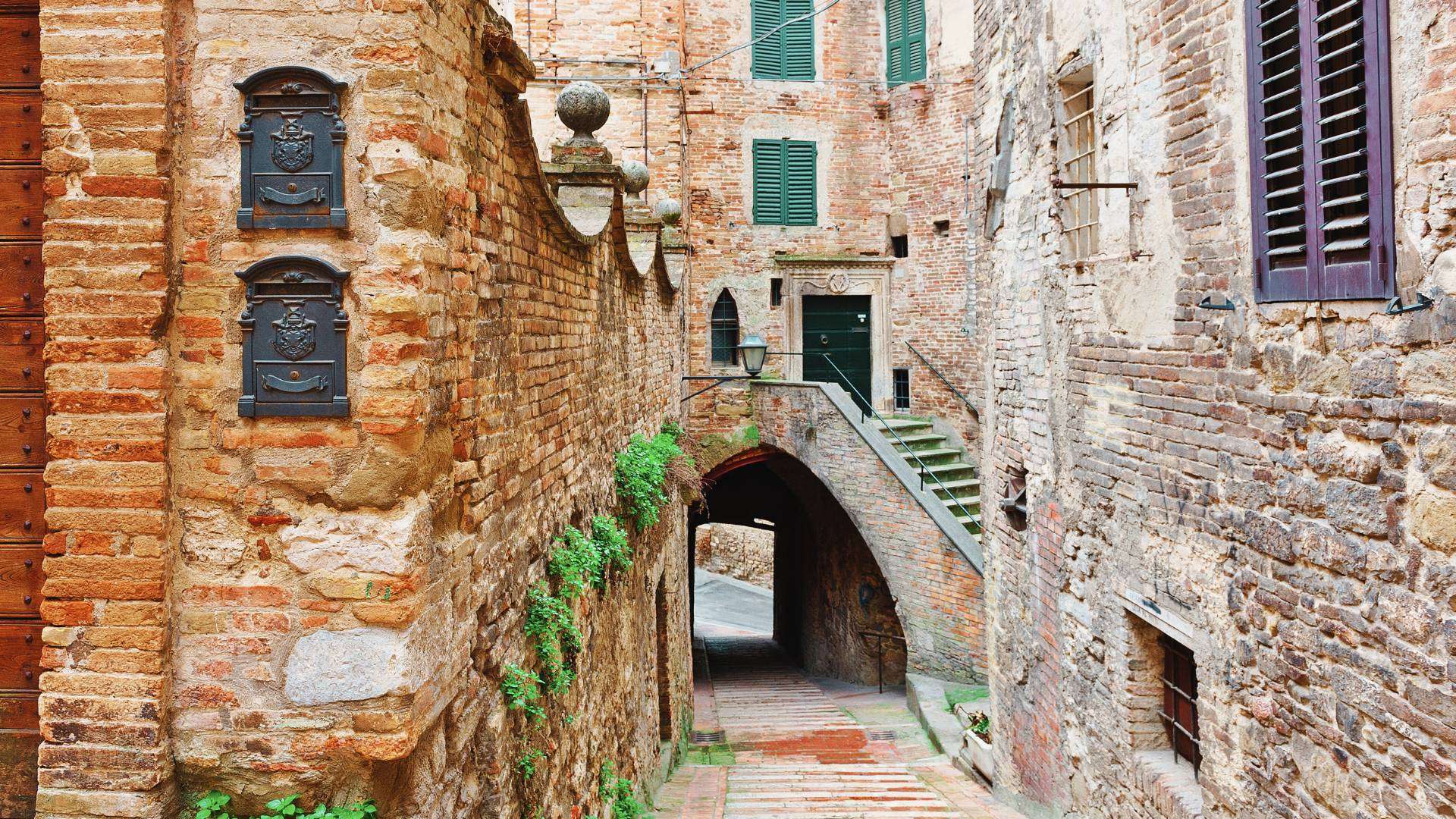
Who should visit Perugia?
Art lovers Here you'll find works by Perugino in three different locations, as well as pieces by Piero della Francesca, Pinturicchio, and a fresco by Raphael. Set aside a whole morning for the Galleria Nazionale and the Collegio del Cambio.
History buffs In Perugia, you can explore three different eras in a single day: Etruscan gates and fountains, the medieval town hall, and the vaults of a papal fortress.
Rail travelers You don't need a car. From the train station, the Minimetrò will take you to the old town in just a few minutes, and you can get everywhere else on foot.
Music fans Come to Umbria Jazz in July and experience the city in a state of excitement.
Families They have three surefire hits: the Minimetrò, the descent into the Etruscan well for €1 per child, and Eurochocolate in November. Golfers will find the Perugia Golf Club.
Combine Perugia with Assisi, Gubbio, and Orvieto
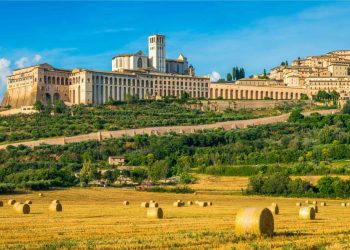
Perugia is located in the heart of Umbria and is a good base for day trips. Assisi, home to the Basilica of St. Francis, lies about 25 kilometers to the east along the railroad line to Foligno.
Gubbio, the medieval town on the Mount Ingino, is located about 40 kilometers to the northeast. You can find out what to see there in our guide to the Gubbio Attractions. Orvieto You can reach it—perched on its tuff rock—in just over an hour via the E45 and the A1; you can find all the details at the Orvieto Attractions.
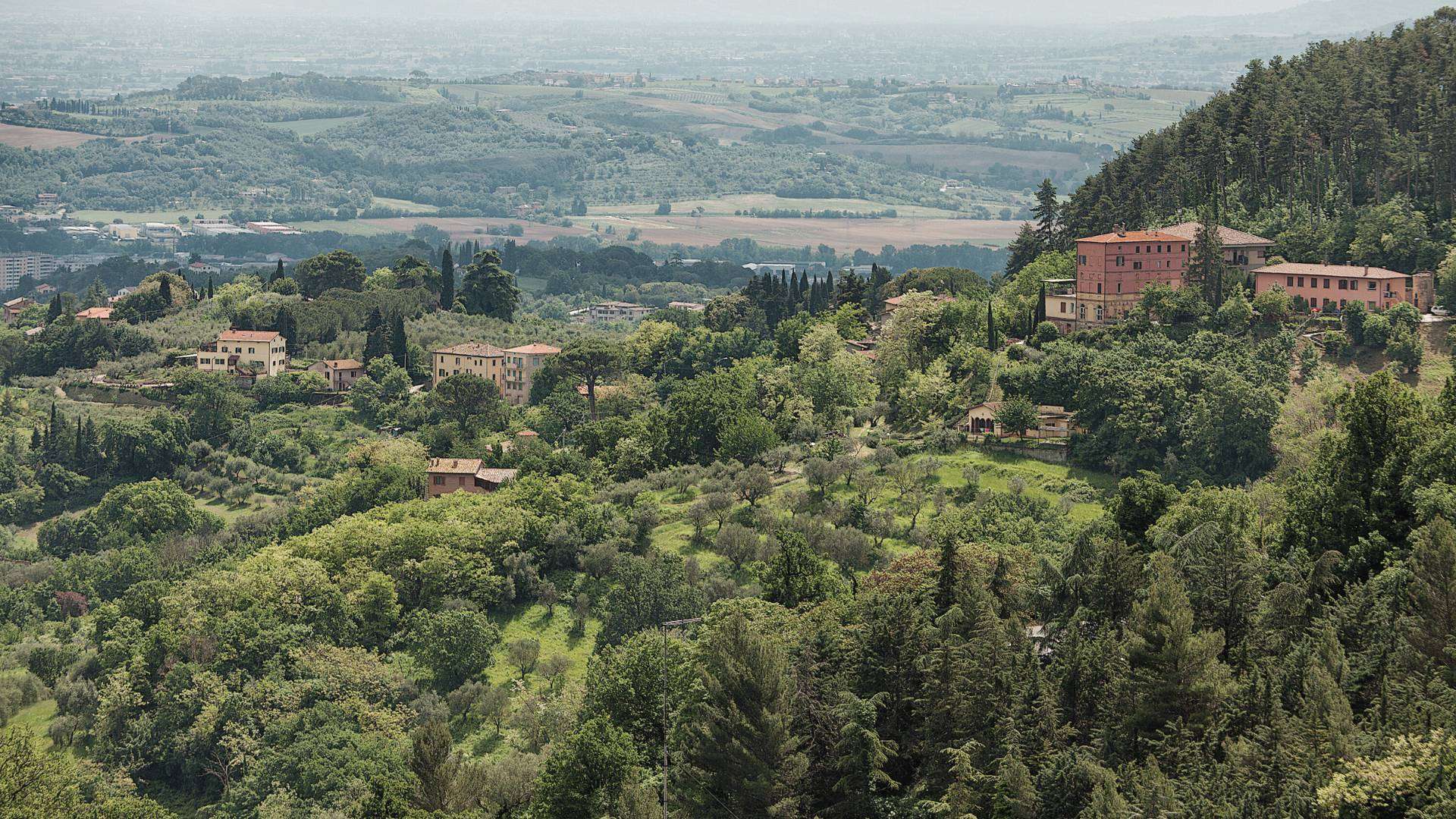

Umbria Travel Guide
Umbria Travel Guide: The Most Beautiful Places, Best Time to Visit, How to Get There, and Accommodations—an overview of all Umbria articles from italien.news.
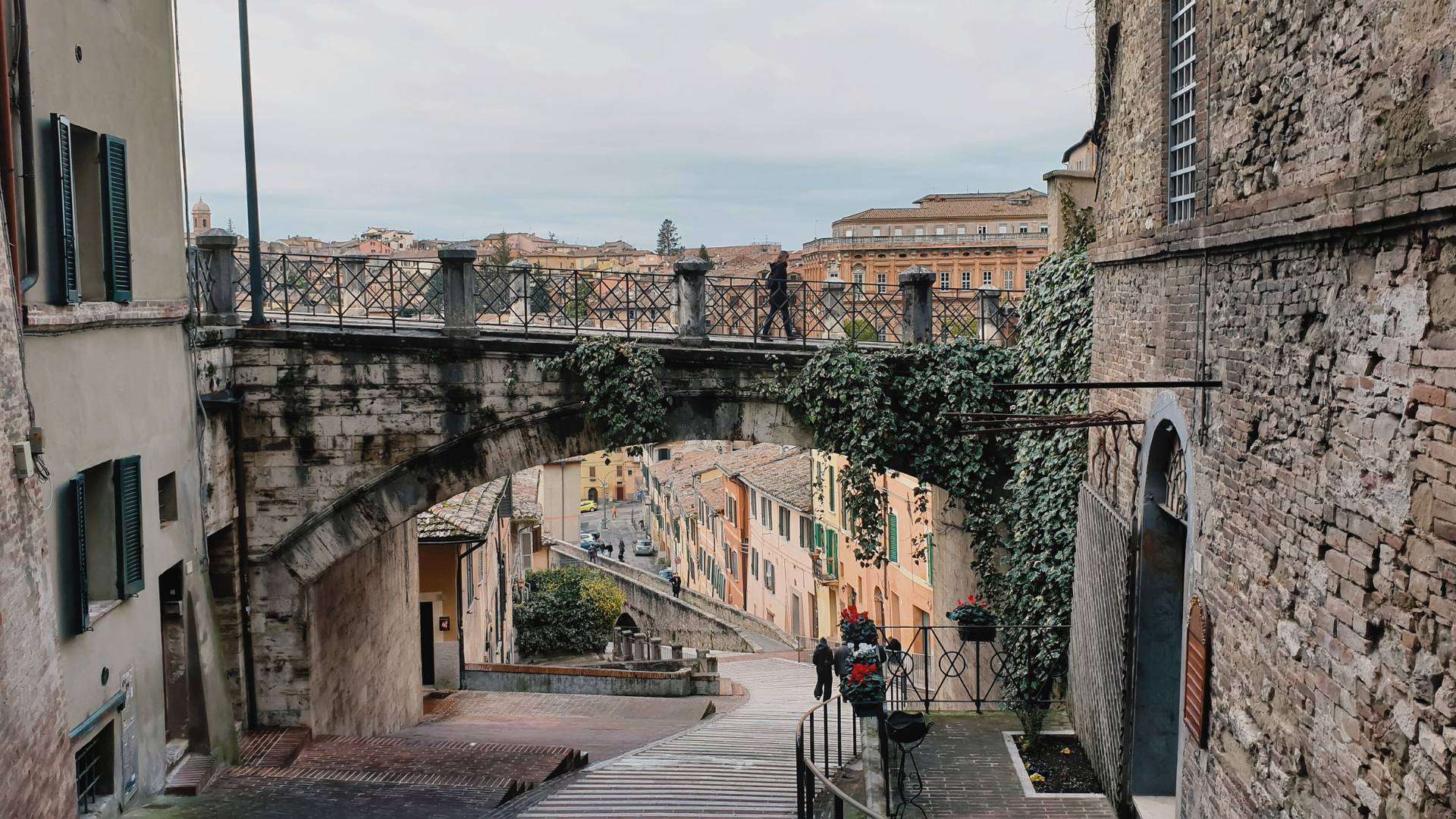
The Walk Across the Aqueduct
From Piazza IV Novembre, it's just a few minutes' walk to a path that many day-trippers miss: the Via dell’Acquedotto. It runs along the arches of the medieval aqueduct, which was built starting in 1254 and carried water from Monte Pacciano to the Fontana Maggiore. The approximately four-kilometer-long aqueduct was completed in 1280, and in the 19th century, the city converted its final section into an elevated walkway.
The path winds through the narrow streets along the hillside, offering views of gardens and rooftops. At the foot of the Old Town, it’s worth taking a detour to the Via Appia: The final, underground section of the pipeline ran beneath this alley. It has nothing to do with the ancient Roman road of the same name.
Our conclusion: Perugia is worth two days, not just one
Perugia is a university town with a lively daily life—not an open-air museum. But there’s so much art to see between the Palazzo dei Priori, the cathedral, and the Galleria Nazionale that one day isn’t enough. The Etruscans, the Rocca Paolina, and the walk across the aqueduct have to wait until the second day.
Do a quick calculation before your visit: The Galleria Nazionale, Collegio del Cambio, Cathedral Museum, Pozzo Etrusco, and San Severo cost a total of 32 €. On the first Sunday of the month, you’ll save €10 on that, and much of what makes Perugia special is free: the piazza with the Fontana Maggiore, the vaults of the Rocca, and a stroll across the aqueduct.
Our suggestion: Take the train, then take the Minimetrò to Tweezers, starting at 8:30 a.m. at the Galleria Nazionale and staying overnight. You can find the next destinations in the region in the Umbria Travel Guide.
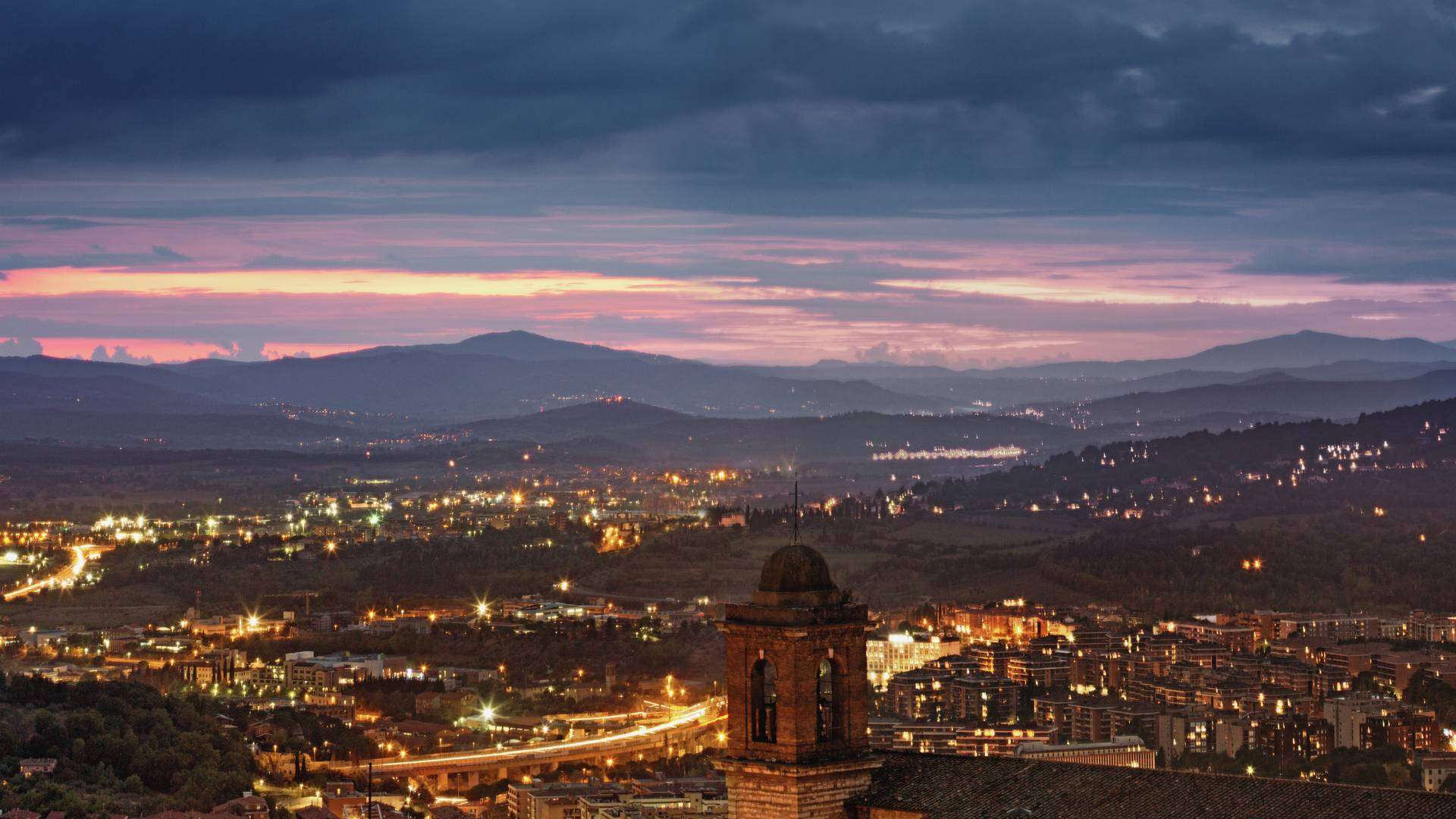
Map: Perugia, Umbria
FAQ - Frequently Asked Questions About Perugia
Experiences & sights
Prices, hours of operation, and schedules are subject to change; please check the official websites for the latest information before your trip.
Sources and Further Information
- National Gallery of Umbria, Visit (accessed in October 2026)
- Nobile Collegio del Cambio, Information and Contact Details (accessed in October 2026)
- Isola San Lorenzo, Information and Hours (accessed in October 2026)
- Etruscan Well, Info (accessed in October 2026)
- Municipality of Perugia, Chapel of San Severo (accessed in October 2026)
- City of Perugia, Tourism: Rocca Paolina (accessed in October 2026)
- City of Perugia, Tourism: Medieval Aqueduct (accessed in October 2026)
- Minimetrò S.p.A., Schedules (accessed in October 2026)
- Regional Directorate of National Museums of Umbria, National Archaeological Museum of Umbria (accessed in October 2026)
- Umbria Jazz (accessed in October 2026)