




Milano Marittima – When you come from the beach, you’re standing under pine trees after just a few steps: Here, the forest stretches right up to the beach resorts. The sights of Milano Marittima aren’t churches and domes, but rather a planned garden city dating back to 1912, featuring Art Nouveau villas, 210 hectares of pine forest, nine kilometers of fine sand, and a thermal spa that uses mud from its own salt works.
The town is part of the municipality Cervia in the province of Ravenna and is the fashionable end of the Riviera Romagnola, the beachfront stretch between Ravenna and Cattolica. This guide highlights seven destinations in and around Milano Marittima, tells you how much they cost, how to get there without a car, where to find good food, and where the town really charges a premium.
Milano Marittima can be summed up in a few figures. The municipality of Cervia maintains nine kilometers of fine sandy beach and will be awarded the Blue Flag in 2026 for the Milano Marittima and Pinarella sections; the pine forest behind the town covers 210 hectares, and the salt flats off the coast span 827 hectares. The garden city was founded in 1912 according to plans by the Milanese painter Giuseppe Palanti.
Milano Marittima by the Numbers
Four key elements define the town: the beach, the pine forest, the salt flats, and the villa districts of the Garden City. The figures are provided by the municipality of Cervia, the region, and the operators.
As of September 2026 · Information provided by the Comune di Cervia, the Emilia-Romagna region, and the operators.
- Families with young children
- Wellness and Spa Enthusiasts
- Cyclists and runners in the pine forest
- Fans of aperitifs and boutiques
- Budget Travelers in August
- City travelers with a list of museums
- People seeking peace and quiet in the city center in the height of summer
- Winter visitors planning to go swimming

How much do the attractions in Milano Marittima cost?
The town itself is free: the beach, pine forest, dune trails, and the villa districts are all open to the public. You'll pay an admission fee for three attractions in the area, and all three are reasonably priced. The Butterfly House House of Butterflies costs €13.00; the Salt Museum MUSA in Cervia, €2.00, and the amusement park Mirabilandia At Ravenna, the online price starts at €27.90.
Attractions in and around Milano Marittima
These prices apply to individual visitors without a discount; families and groups receive discounted rates at the Butterfly House and amusement park.
| Offer | Price |
|---|---|
| Casa delle Farfalle, Adults | 13,00 € |
| Casa delle Farfalle, discounted | 10,00 € |
| Casa delle Farfalle, Family Ticket | 37,00 € |
| Guided Tour of the Butterfly House, Adults | 15,00 € |
| MUSA Museo del Sale, Cervia | €2.00 · reduced price €1.00 |
| Mirabilandia, Online Day Pass | Starting at €27.90 |
| Mirabilandia, Open Ticket with Flexible Dates | 49,90 € |
As of September 2026 · Information provided by Atlantide, the Municipality of Cervia, and Mirabilandia.
The public beach along Viale Forlì, the Pineta with its trails, and a stroll through the villa district remain free of charge. Children under 14 get in free at the Salt Museum; admission to the Butterfly House is free for children under one meter tall; and the MUSA is free on the first Sunday of the month. The Terme di Cervia sell their day passes online through their own booking site.
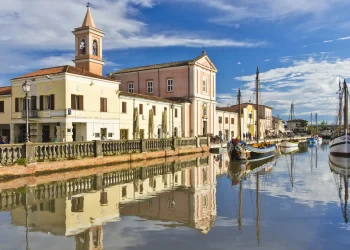
9 reasons for a beach vacation in Cesenatico on the Riviera Romagnola
Why Cesenatico is more than just a classic seaside resort Nestled in the heart of the famous Riviera Romagnola, the charming seaside resort of Cesenatico is located in the northern Italian region of Emilia-Romagna. As part of the province of...
What are the 7 must-see attractions in Milano Marittima?
All seven destinations are located within the municipality of Cervia, none more than a quarter of an hour from the town center. The order follows the geography, starting from the roundabout in the town center and continuing on to Saline and the amusement park.
1. Rotonda Primo Maggio and Viale Gramsci
The Rotonda Primo Maggio, the landscaped roundabout in the town center, is the heart of Milano Marittima: From here, the streets fan out in a star shape, exactly as envisioned in the 1912 garden city plan. All around are cafés, ice cream parlors, and the storefronts of fashion boutiques. The adjacent Viale Gramsci is the town's main shopping street; in the summer, the downtown area belongs to pedestrians in the evenings, and between seven and nine, every bar stool is taken by aperitivo, the pre-dinner drink. If you want to understand this place, sit down at the edge with a glass for an hour and watch.

2. The Liberty Villas of the Garden City
Between Rotonda and Pineta stand the villas where it all began. The Milanese painter Giuseppe Palanti planned Milano Marittima based on the British garden city concept Ebenezer Howard: Houses that blend into nature rather than crowding it out. Your own house on the Via 2 Giugno was one of the first in town. Many villas in the Liberty styles, the Italian variation of Art Nouveau, are still inhabited today; you can see them as you walk by, nestled among hedges and pine trees. Our article explains how the summer retreats of Milanese industrialists evolved into the Italian beach vacation: A Hundred Years of Villeggiatura.
3. The Pineta di Milano Marittima
The pine forest isn't just a backdrop—it's the very reason this place exists: 210 hectares of Italian pines between Cervia and Milano Marittima, protected as a Natura 2000 site and part of the Po Delta Park, the large nature park in the Po Delta. There are five entrances, including one at the Viale Ravenna and the Via Jelenia Góra; Inside, there is a dense network of walking and running trails, along with ten themed trails and two marked running routes. On hot days, the forest is the coolest place far and wide.

4. Casa delle Farfalle
At the Pineta Entrance 6/d Jelenia Gora Avenue is the House of Butterflies, a tropical greenhouse full of freely flying butterflies. Among the banana trees and passionflowers, the butterflies land on slices of orange—and, with a little luck, on your shoulder too; a self-guided tour takes a good hour, while the guided tour lasts about 75 minutes. Adults pay €13.00, seniors €10.00, and families €37.00. It’s open from late March through early October; in the summer, daily from 9:30 a.m. to 1:00 p.m. and from 3:00 p.m. to 7:00 p.m. For families with young children, the museum is the most reliable option in town when the weather is bad.

5. Cervia Thermal Baths
On the edge of the Pineta lie the Cervia Thermal Baths, the thermal baths of the salt town on the 16 Via Forlanini. The work involves two methods found only here: the acqua madre, the mineral-rich residual water from salt production, and the Liman sludge from the saltworks. The thermal circuit leads through several pools up to the sun terrace with hydromassage, plus a Kneipp path and a fitness area. The 2026 season runs from May 4 through December 19, so the spa will keep you coming back well beyond the summer. You can book day passes online via the spa’s website.

6. Salina di Cervia and the MUSA Salt Museum
Just past the town, the Salina di Cervia, 827 hectares of salt marshes and, at the same time, the southern gateway to the Po Delta Park. This is where the sweet treat, the mild salt from Cervia: over 20,000 metric tons a year, plus the hand-harvested salt from the historic Salina Camillone, the last of what were once 144 small saltworks, whose salt has been recognized by Slow Food. Herons wade among the basins, and in the summer, algae turn the water pink. The connection is explained by the MUSA – Salt Museum in Cervia, with a €2.00 admission fee, housed in an old salt warehouse on the 24 Via Nazario Sauro.
7. Mirabilandia
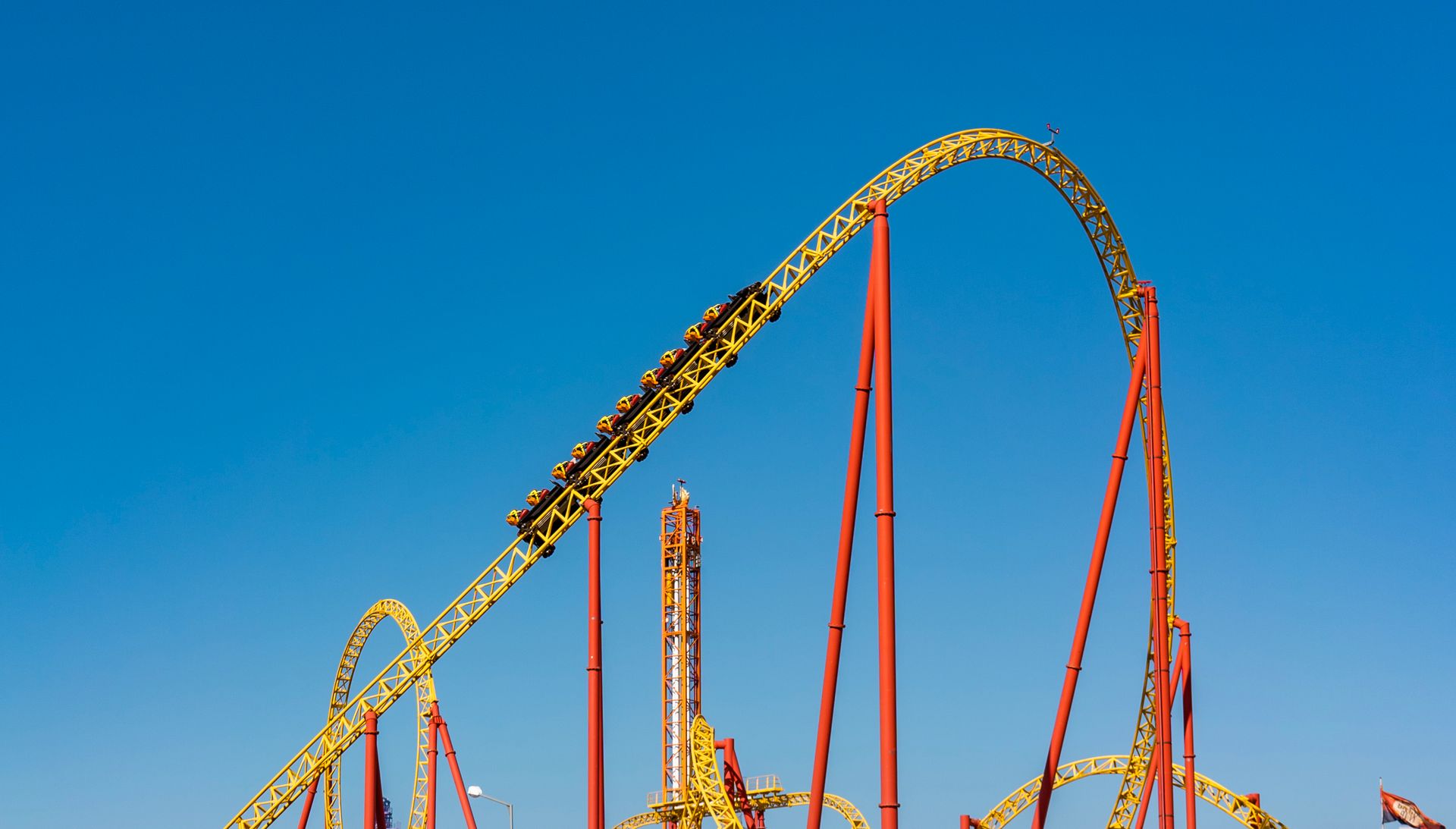
About ten kilometers in the direction of Ravenna lies Mirabilandia, one of Italy's largest amusement parks. Roller coasters, water rides, and shows will keep you busy all day; a one-day pass starts at €27.90 online, and an open-date ticket costs €49.90. Starting September 26, the park will launch its Halloween program with additional evening hours. Bus line 176 from Start Romagna It stops right at the park, so you can get there even without a car.
What makes the beach at Milano Marittima special?
The sand is fine, the water slopes gently, and lifeguard coverage is extensive: The municipality rightly boasts nine kilometers of safe beach, and the 2026 Blue Flag certification confirms the water quality at Milano Marittima and Pinarella. Our overview shows which other beaches have received this award: Blue Flag in Italy. The beach is divided into numbered "bagni," the classic Italian beach clubs with umbrellas, lounge chairs, a bar, and lifeguards; in Milano Marittima, they are numbered 235 through 340.
If you don't want to rent an umbrella, head to the open section near the Viale Forlì, between Bagni 268 and 269: equipped with showers and restrooms and staffed during the summer. At the northern end of town, near the former summer camp Colonia Varese, the municipality protects one of the last natural dunes along the coast; the section between 19th and 22nd Cross Streets is a restoration zone and not a swimming beach. A second dune is hidden in the Pineta at the entrance to Via Jelenia Góra.

When it comes to sports, the beach has more to offer than just lounge chairs: Beach volleyball courts are a standard feature at many bagni, and there are also SUP rentals and sailing schools such as the Cervia Sailing Club „Amici della Vela“ at the Via Leoncavallo, which also offers courses for children. Golfers will find the Adriatic Golf Club Cervia 27 holes right in the pine forest between the town and the saltworks.

How do you get to Milano Marittima?
If you're coming by car from the north or west, take the A14 to the Cesena Nord exit and continue toward the coast; the SS16 Adriatica runs right past Cervia and Milano Marittima. If you're coming from the south, take the E45 to Cesena. From Munich, the trip takes about five and a half to six hours, depending on the route.
Take the train to Cervia–Milano Marittima: The train station is located on the Ferrara–Ravenna–Rimini line, about two kilometers south of the Rotonda; from Bologna, you’ll need to change trains once along the way. Once there, bus line 176 runs from Start Romagna Ravenna via Cervia, with stops in Milano Marittima and at Mirabilandia. The nearest airports are Rimini, the Federico Fellini Airport, about 30 kilometers south, and Bologna, about 100 kilometers away; from Bologna, an airport shuttle that stops in Cesena will take you to the coast.
During the tourist season, the center of Milano Marittima is a traffic-calmed zone, and street parking is metered. Park your car at the hotel or in one of the marked parking spaces, and get around the rest of the way on foot or by bike.

What should you definitely try in Milano Marittima?
Romagna’s cuisine is down-to-earth, even in neighborhoods where the cars parked out front are expensive. You should start with the Romagnola piadina, the thin flatbread that comes fresh off the griddle at kiosks and is filled with raw ham, squacquerone cream cheese, and arugula. In the trattorias, the following cappelletti, stuffed pasta in broth or with ragù, and grilled fish from the Adriatic Sea for dinner.
The town has its own unique charm: The sweet treat Salt from the Cervia saltworks has a milder taste than ordinary sea salt because it lacks bitter salts, and it’s found on many tables here. You can read about how the salinari still harvest it by hand today in our report on the Salina Camillone. The wines of Romagna belong in the glass, first and foremost Sangiovese, along with Albana and Trebbiano from the hills of the hinterland.


Cervia still harvests its sweet salt the same way it did in the 18th century
At the Camillone Salt Pans near Cervia, the sweet salt of the Adriatic coast is still harvested by hand today using shovels, rakes, and wheelbarrows.
Where's the best place to eat in Milano Marittima?
Two restaurants cover the spectrum: one for simple fried and grilled fish, the other for a long Romagna-style evening.
Two locations in Milano Marittima
| Restaurant | Here's what you can expect |
|---|---|
| Osteria Bartolini 26 Via Boito | Seafood restaurant in the style of a fishing boat, opened in 2004 as the Osteria del Gran Fritto: mixed fried seafood, grilled fish, piadina, served daily for lunch and dinner, no reservations required. |
| Al Caminetto 46 Viale Matteotti | A local institution since 1970: Romagna cuisine featuring fish and meat, a large dining room, and the kind of hospitality for which the Romagna region is known. |
As of September 2026 · Osteria Bartolini does not take reservations: Come before 7:30 p.m. in the summer, or be prepared to wait.
In between lies half the town center, full of bars and ice cream shops, and for a quick lunch on the beach, the piadina kiosk on the next side street will do.
Where's the best place to stay in Milano Marittima?
Milano Marittima is a traditional resort town at the high end of the spectrum: two five-star hotels, a wide range of four-star options, and guesthouses and vacation rentals heading toward Cervia. These three types of accommodations represent the full spectrum of options.
Three Houses in Milano Marittima
| Accommodations | Here's what you can expect |
|---|---|
| Palace Hotel 60 Viale 2 Giugno | Five stars on the promenade: Dolce Vita Spa with a sauna and steam room, a heated pool with a children's pool, a private beach, and an underground parking garage. |
| MarePineta Resort 40 Viale Dante | A five-star hotel with 161 rooms in three buildings, including the original main building from 1927: its own beach club, a pool in the garden, a sports club with a spa, and a kids' club. |
| Grand Hotel Gallia 16 Piazzale Torino | A four-star hotel just a few steps from the ocean: heated pool with a hot tub, spa, private beach, kids' club, and babysitting services for families. |
As of September 2026 · During peak season, many hotels prefer to offer half-board and week-long stays: You'll need to book well in advance for an August weekend.

When is the best time to visit Milano Marittima?
The swimming season runs from May through September, with water temperatures reaching bathwater levels in the height of summer. July and August are peak season: packed beaches, full-price rates, and a bustling nightlife. You’ll find the best balance in June and September, when the water is warm and the town takes a breather. Spring belongs to the city gardeners’ flowers, and late fall to the spa guests: the Terme di Cervia are open until December 19. In winter, things quiet down, many businesses close, and the beach belongs to the strollers. You can find the current weather along the coast on our page at Weather on the Romagna Riviera.

What holidays and celebrations should you plan for?
The framework is set by Cervia, the Garden City, the large open-air flower show that transforms the roundabouts and green spaces of Cervia, Milano Marittima, Pinarella, and Tagliata into show gardens throughout the summer; the 54th edition took place in 2026 and opened at the end of May. In May, Cervia also celebrates the Wedding of the Sea, the "Sea Wedding": Since 1445, the city has been throwing a ring into the Adriatic Sea on Ascension Day weekend; in 2026, the festival fell on May 16 and 17.
In June, the entire coast turns pink: The Notte Rosa, the Riviera Romagnola’s joint summer festival, took place from June 19 to 21, 2026, featuring concerts and fireworks from Ravenna to Cattolica. Accommodations along the coast are booked up well in advance around these dates: Those who want to experience the spectacle book months in advance, while those seeking peace and quiet opt for the weeks that follow.

La Notte Rosa: The Riviera Romagnola's Pink Summer Festival
One weekend in early summer, the entire Riviera Romagnola turns pink: concerts on the beach, pink lights, and fireworks transform the coast into one giant party zone. All the info on the Notte Rosa,...
What You Should Know About Milano Marittima
1. It's a glamorous place, and that comes at a price. Milano Marittima is in a league of its own when it comes to prices along the Adriatic; in August, you’ll pay noticeably more for a beach umbrella, a room, and dinner than you would in neighboring Cervia or Pinarella. In return, you get well-maintained beach clubs, authentic cuisine, and a place that really works.
2. Public beaches are the exception. Almost the entire coastline is divided into sections in Bagni; the only public beach in town is on Viale Forlì. It’s well-equipped, but gets quite crowded in August. If you want to go swimming for free every day, hop on your bike and ride along the coast.
3. In the city center, you don't sleep well with the window open. Bars and clubs keep summer evenings going late. You’ll find a quieter place to stay in the residential neighborhoods toward Pineta or right in Cervia. But no matter where you are, it’s just a short walk to an aperitivo.
4. In the summer, the car is more of a burden than a help. A traffic-calmed zone in the center, paid parking, and traffic jams on Saturdays. The town is flat and compact: You’ll get around faster by bike, and the Bagni rent them out.
5. The train station is not located in town. Cervia–Milano Marittima It's located about two kilometers south of the Rotonda. During the day, you can take the bus or a hotel shuttle; late at night, your only option is a taxi. Plan accordingly, and traveling without a car will still be the more relaxing option.
Who would enjoy Milano Marittima?
Families They have shallow water, supervised beaches, the butterfly house, and Mirabilandia right on their doorstep; many hotels offer a kids' club and a children's pool.
Wellness Guests With thermal baths, Liman mud, and the spas at the major resorts, they have a program that runs through December.
Active Go running and biking in the Pineta, sail from the club’s dock, and play a round of golf on the 27-hole course in the pine forest.
Couples with a sense of style the boutiques on Viale Gramsci, the aperitivo at the Rotonda, and a five-star hotel with a beach club.
Night owl Along the coast, between beach clubs and bars, you'll find a lineup of events that really gets going after midnight.
Combine Milano Marittima with Cervia, Ravenna, and Cesenatico
The next destination is in sight: Cervia, the old salt town with its harbor canal, salt warehouses, and the MUSA, is just a 15-minute bike ride away. A good 20 minutes south lies Cesenatico with its harbor channel, surveyed by Leonardo da Vinci, and the historic sailing ships of the Maritime Museum.

The cultural reserve in the area is called Ravenna: about 30 kilometers, roughly 40 minutes by bus or train, and you’ll find yourself standing in front of the early Christian mosaics, which are a UNESCO World Heritage Site, in San Vitale to the basilica Sant’Apollinare in Classe Just outside the city gates. Half a day is enough to get a first impression; a full day is more than enough.

There are also evening activities away from the bar and the promenade, and they cost almost nothing.
The Salt Museum After Sunset
In the summer, the MUSA in Cervia doesn’t open until 8:30 p.m. and closes at midnight. Ride your bike over there after dinner: The harbor canal lies still, the locals are sitting in front of the old salt warehouse, and inside, for €2.00, the museum explains why this salt once paid for popes. On the way back through the Pineta, you’ll smell what Palanti built this place for.
Our conclusion: Milano Marittima is the most elegant way to experience the Adriatic
Milano Marittima brings together elements that are rarely found together on the Adriatic: a fully equipped beach, a real forest right behind it, and a town that caters to guests without being generic. The “garden city” concept from 1912 endures to this day, and you can feel it every time you stroll between the pine trees and the water.
It only gets expensive if you let it. Admission fees in the area range from €2.00 to €27.90; the beach, dunes, and pine forest are free, and outside of peak summer, even the larger hotels offer rooms at reasonable prices.
The next step: Plan your trip for June or September, take the train to Cervia-Milano Marittima, and start your first evening with an aperitivo at the Rotonda. You can find more destinations between the Po River and the Apennines in our section on Emilia-Romagna.

Map: Milano Marittima, Emilia-Romagna
FAQ - Frequently Asked Questions About Milano Marittima
Experiences & sights
Prices, hours of operation, and schedules are subject to change. Check the official websites for the latest information before your trip.
Sources and Further Information
- Cervia Municipal Tourism Office, Sea and Beaches (accessed in September 2026)
- Cervia Municipal Tourism Office, The Pine Forest of Cervia and Milano Marittima (accessed in September 2026)
- Cervia Municipal Tourism Office: The Founding and Development of Milano Marittima (accessed in September 2026)
- AmaParco, Butterfly House, Prices and Hours (accessed in September 2026)
- MUSA Museo del Sale, Hours and Admission Fees (accessed in September 2026)
- Terme di Cervia, Spa Season (accessed in September 2026)
- Mirabilandia, Schedule and Prices (accessed in September 2026)
- Blue Flag, 2026 List of Beaches (accessed in September 2026)


