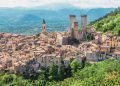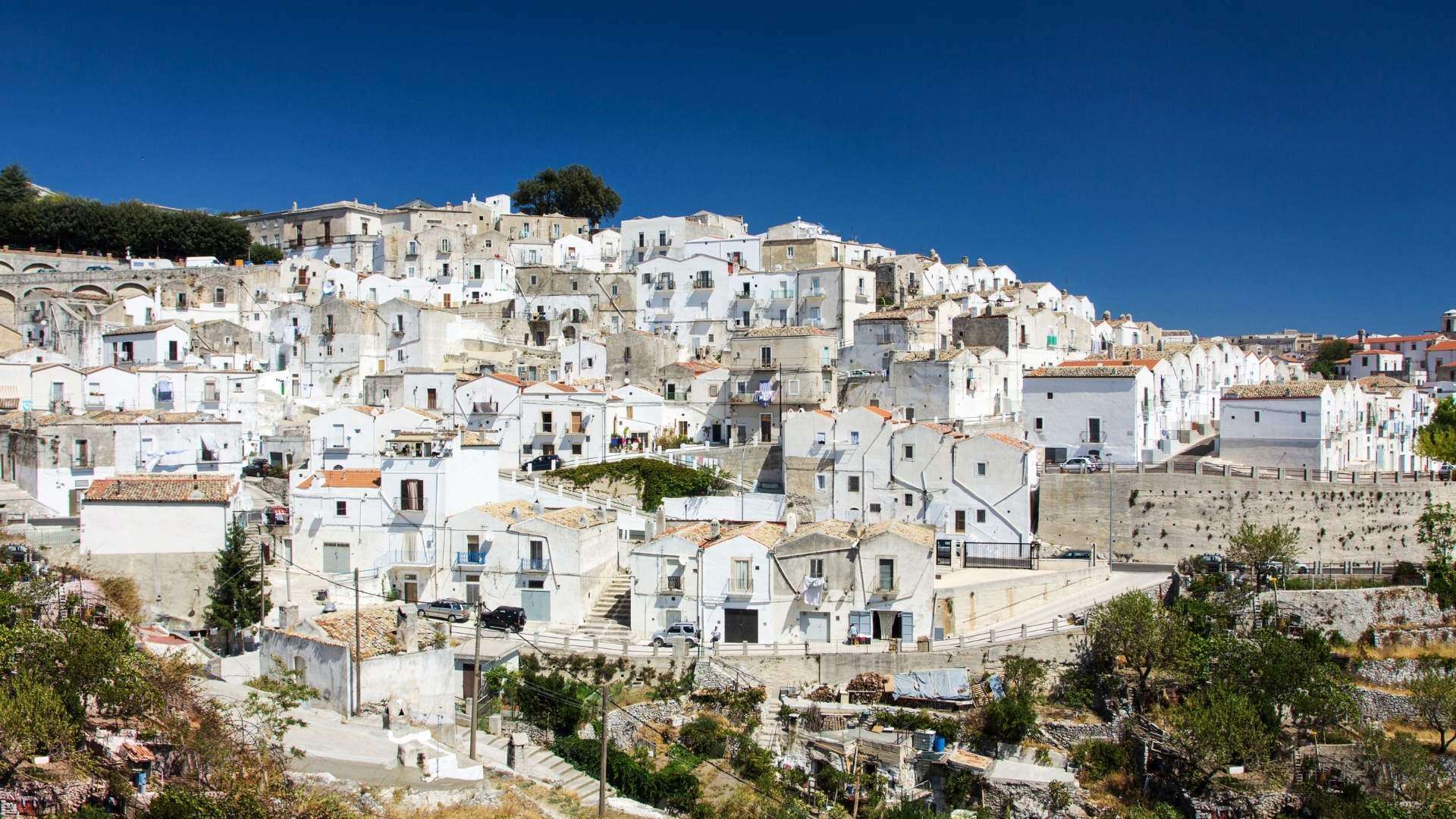

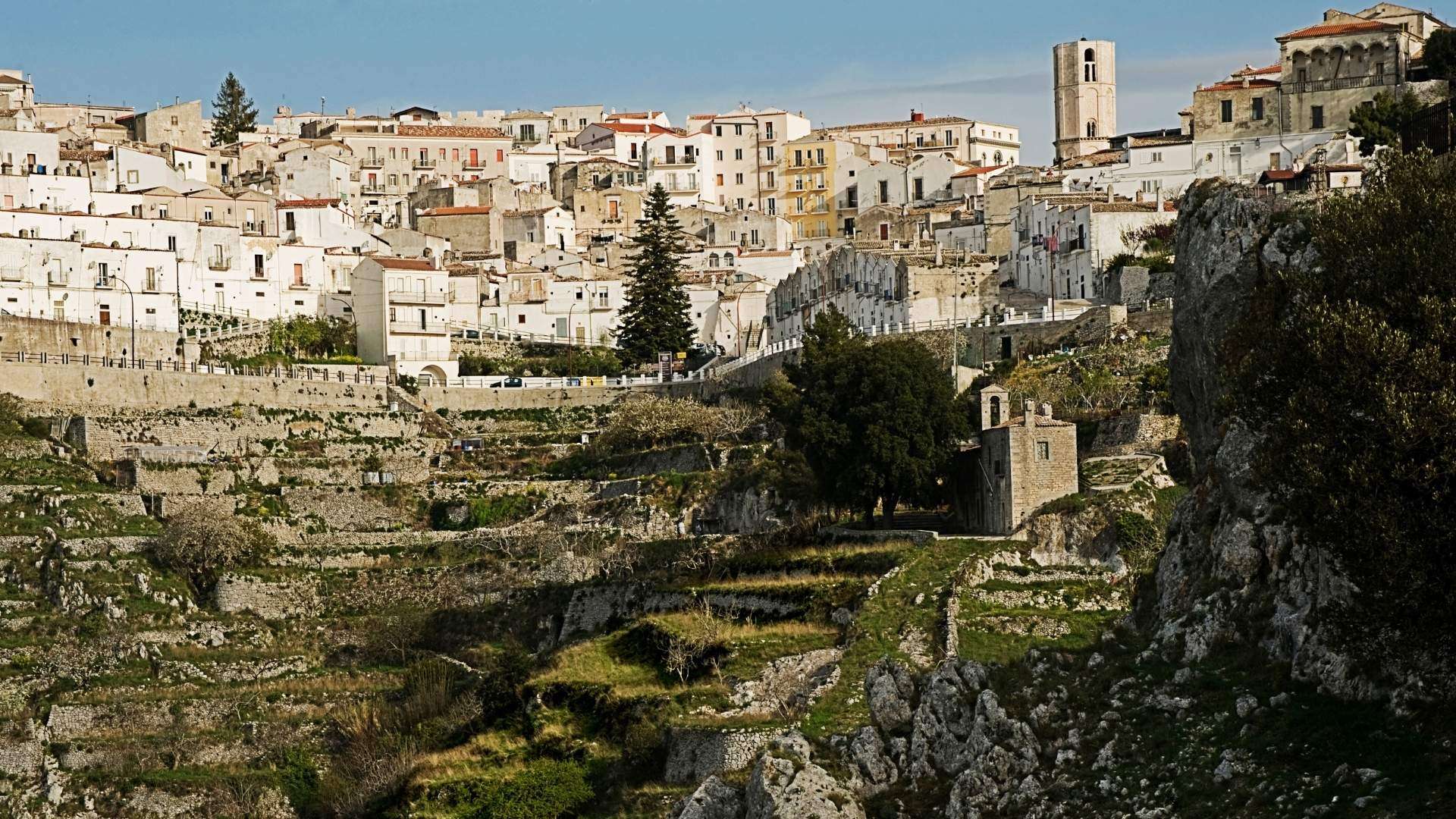
Monte Sant’Angelo – The wind blowing in from the Adriatic Sea pleasantly cools the skin as the gaze wanders over the seemingly endless expanse of the Gulf of Manfredonia. Here, at over 800 meters above sea level, beats the rugged, mystical heart of the Gargano National Park. Monte Sant’Angelo is not a place you can simply pass through in a hurry. It is a village clinging to steep limestone cliffs that welcomes visitors with a deep, almost tangible silence—provided you know which alleys to turn into.
Monte Sant’Angelo at a Glance
- Region / Province: Apulia (Puglia) / Province of Foggia (Subregion: Gargano)
- Character: A medieval mountain and pilgrimage village with a spectacular location on the Gargano Plateau
- Population: Approx. 11,000 (most of whom live outside the historic center)
- Elevation: About 800–840 meters above sea level.
- UNESCO World Heritage Site: Santuario di San Michele Arcangelo, part of the site „The Lombards in Italy—Places of Power“ since 2011“
- Recommended duration: Half a day (sightseeing) to 1–2 nights (hiking base)
- Who would benefit from this? For history and culture enthusiasts, pilgrims, nature lovers, and anyone looking to escape the hustle and bustle of the coast
- Best time to travel: May–June and September–October (pleasant temperatures, fewer crowds)
The „Why“ – the soul of the place
Monte Sant’Angelo exudes history from every crevice in its stone. The town’s most formative periods were Late Antiquity and the Middle Ages. According to legend, the Archangel Michael is said to have appeared in a cave on the mountain around 490/492 A.D.—first to a shepherd who found his bull kneeling in the grotto, and shortly thereafter to the Bishop of Siponto himself. This event is said to have transformed the remote mountain village into one of the most important pilgrimage centers of the Christian West.
It was the Lombards who first elevated the mystical grotto to the status of a national shrine. They were followed by the Normans, the Swabians (the Staufers), and finally the Aragonese, all of whom left their mark on the village’s massive defensive system and fortified architecture. Even today, the village retains a deeply spiritual character; the steady, centuries-old stream of pilgrims lends the place a reverent, almost timeless aura. You can sense it in the way the white houses seem to glow in the midday heat, and in the muffled murmur of prayers that occasionally drifts out from the entrance to the grotto.
The best way to understand Monte Sant’Angelo is to realize that for one and a half millennia, this mountain has drawn people from all over Europe—Crusaders who stopped here on their way to the Holy Land seeking absolution, saints such as Francis of Assisi, who felt unworthy to enter the grotto, and countless popes. This long line of believers has imbued the place with a depth that no travel guide can fully capture.
The Santuario di San Michele Arcangelo: The Oldest Shrine in the West
No place in Monte Sant’Angelo is more significant than this cave church, and no visit is complete without descending into its sacred darkness. The Santuario San Michele Arcangelo is the oldest sanctuary in Western Europe dedicated to the Archangel Michael and has been an important place of pilgrimage since the early Middle Ages.
What you see at first glance belies the true nature of the sanctuary: From the outside, only the octagonal bell tower, dating from 1273/74, is visible, along with a two-part entrance hall from 1395. The church itself lies deep inside the mountain. A staircase leads down into the natural cave, around which the Romanesque-style pilgrimage church was built in the 13th century.
At the entrance to the grotto, the bronze door from 1076 deserves special attention—it is the oldest of its kind in Apulia. The finely engraved scenes on the bronze panels depict biblical stories and offer a glimpse of the atmosphere that awaits you inside: subdued lighting, incense, and the whispers of worshippers praying in many languages. Inside the grotto itself are a marble statue of the archangel and the legendary footprint attributed to the Archangel Michael, which is considered proof of his heavenly consecration.
Among the pilgrims who have visited the shrine are many popes as well as saints such as Bernard of Clairvaux and Thomas Aquinas; Francis of Assisi also stopped here. The spiritual significance of the site grows when one realizes that it is part of the so-called Michaelic Line—an imaginary straight line stretching from Ireland through Cornwall, Mont Saint-Michel, and Monte Sant’Angelo all the way to Jerusalem, connecting seven shrines dedicated to the Archangel. Monte Sant’Angelo is the starting point of this European pilgrimage route.
The sanctuary is open daily from 7:30 a.m. to 7:00 p.m. from April through October, and from 7:30 a.m. to 6:00 p.m. from November through March. Admission is free; modest attire (shoulders and knees covered) is required. Plan to spend at least an hour there—not just for the tour, but for what comes afterward: the silence that stays with you for a while longer.

The City Walk – Strolling & Discovering
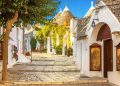
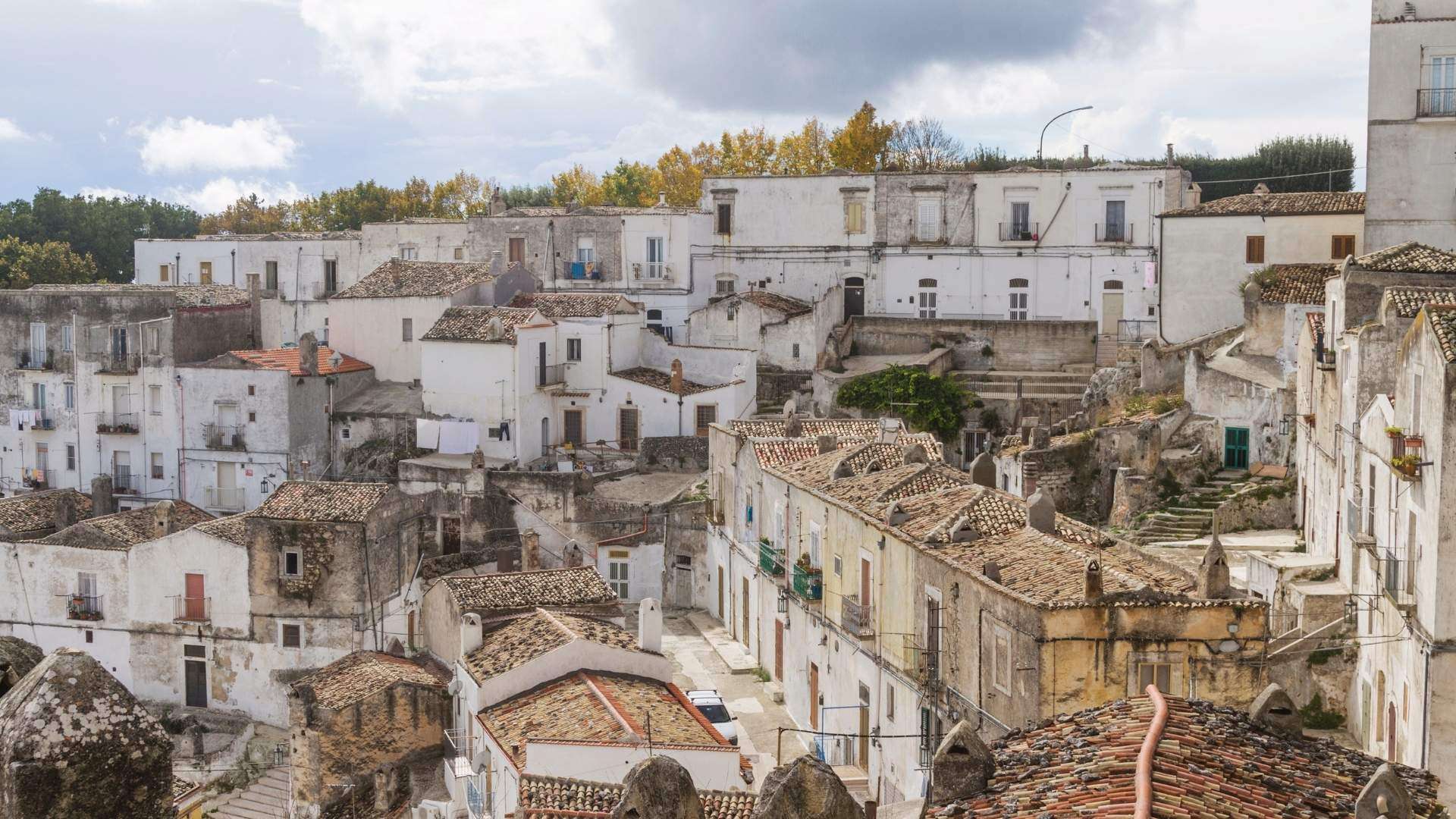
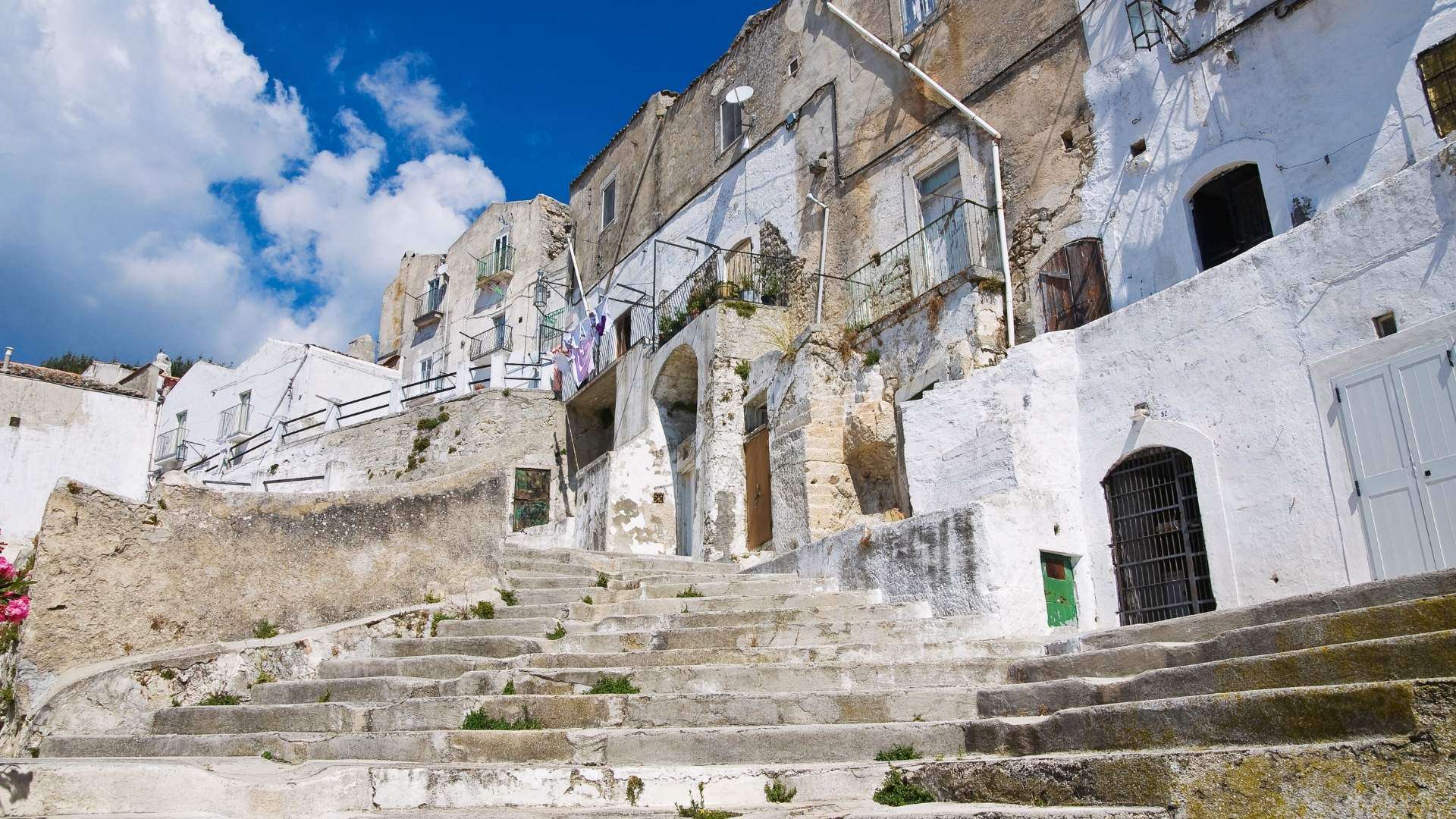
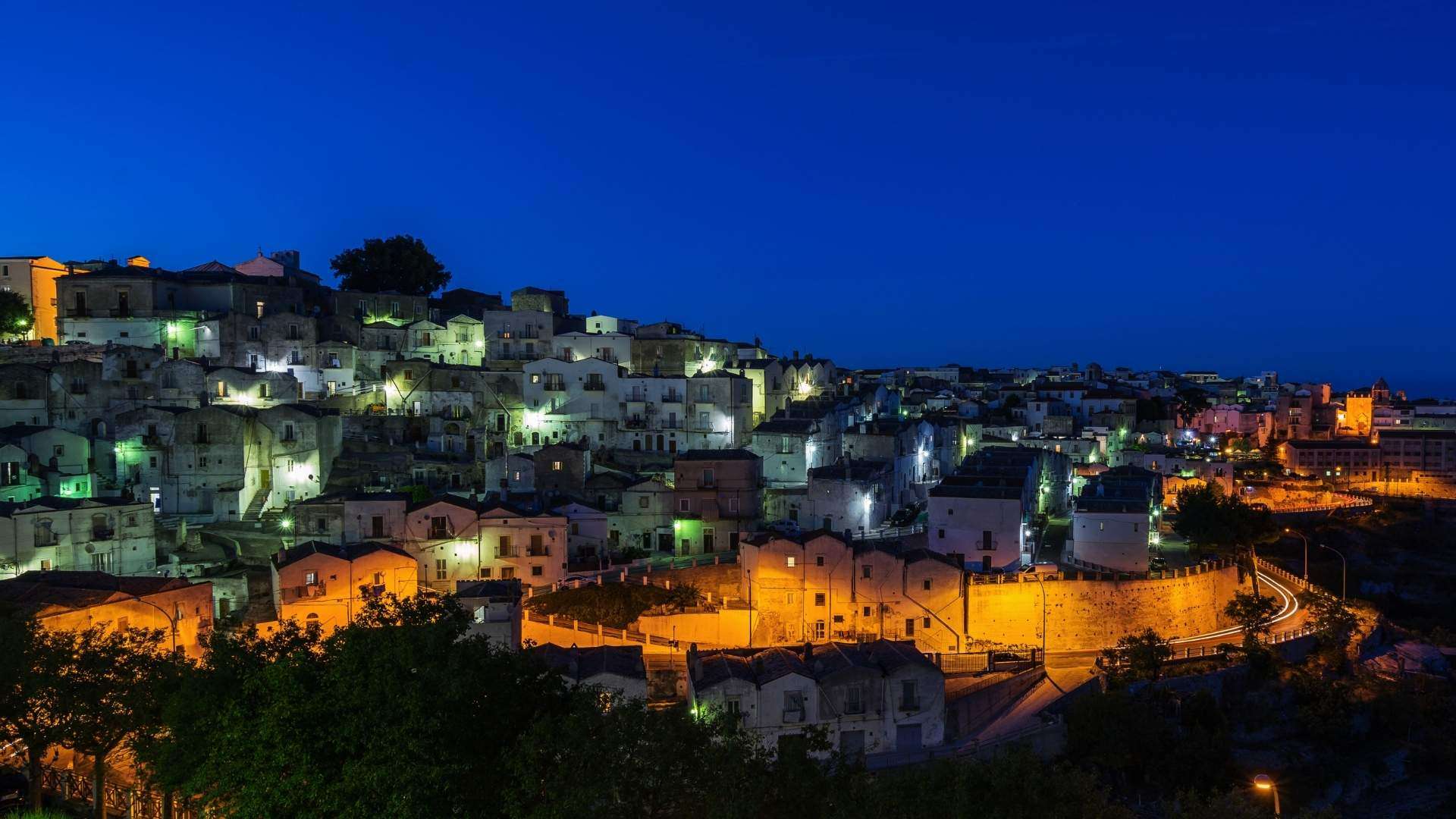
The absolute highlight for strollers is the historic Rione Junno district. Anyone who steps inside loses themselves in a fascinating labyrinth. The extremely low-rise, snow-white row houses are packed closely together, separated only by narrow, stair-lined alleys and the characteristic chimneys, some of which are curiously shaped. You can hear the muffled clatter of dishes from the kitchens and smell the aroma of fresh olive oil and toasted bread. There’s no set route here—you simply let the countless steps guide you until, suddenly, a gap opens up again, revealing a view down to the coast.
Please note: With its many steep steps and narrow alleys, the Rione Junno is not suitable for strollers. Sturdy shoes are essential—the cobblestones can get slippery when wet.
Panoramic Spots & the Best Viewing Angles
Monte Sant’Angelo offers two particularly rewarding viewpoints:
Belvedere (Via Belvedere)
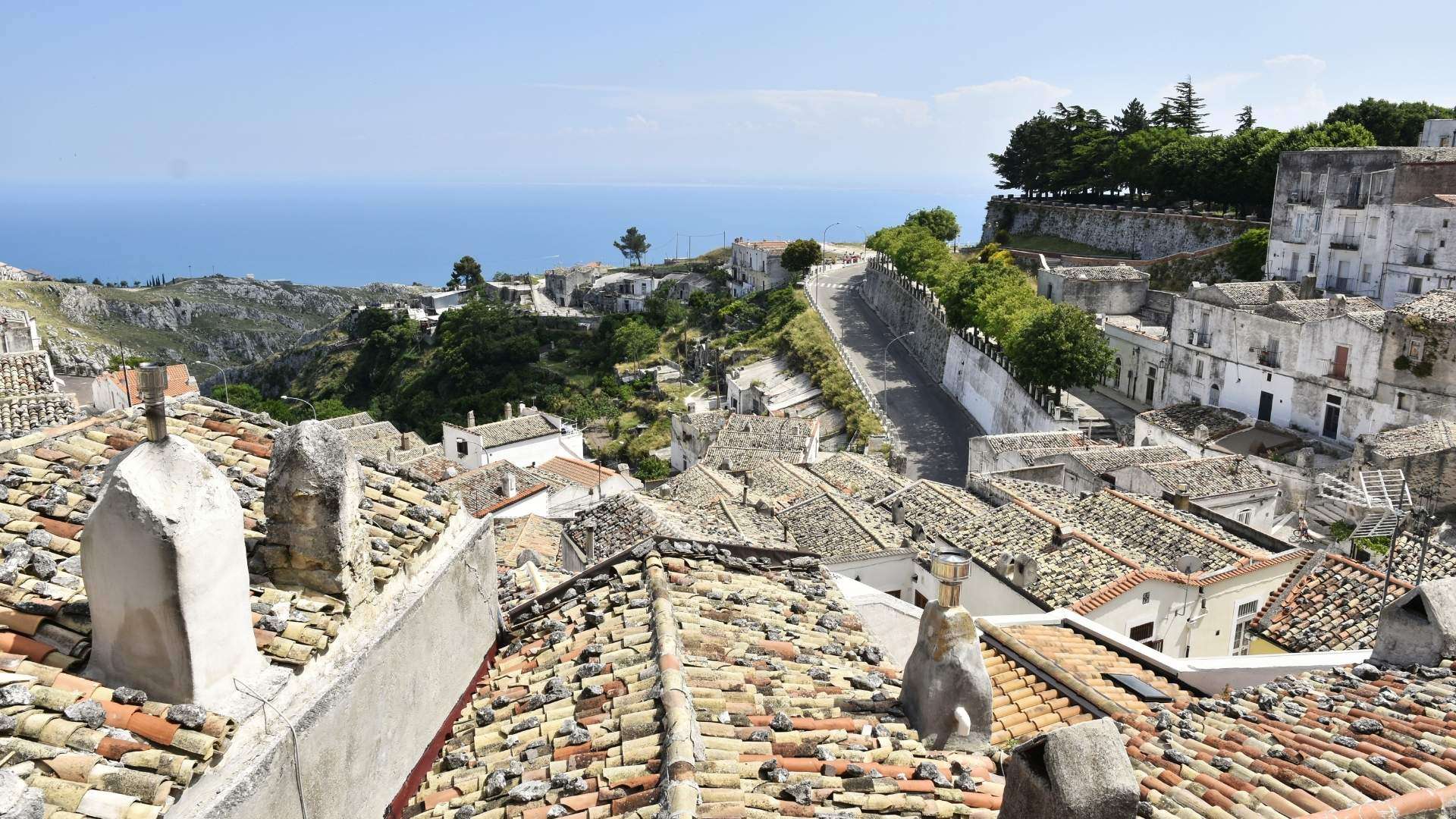
The panoramic terrace on the southern edge of the city is the most impressive vantage point for landscape photographers. From here, you have a direct, unobstructed view of the deep-blue waters of the Gulf of Manfredonia.
Norman-Swabian-Aragonese Castle
Wait for the golden hour in the late afternoon. When the low-hanging sun bathes the rugged limestone walls of the fortress in rich light, it creates a dramatic, unforgettable scene. The view from the Castello Hill also takes in the entire Tavoliere della Puglia all the way to the horizon.
Insider tips
- How to Smartly Avoid Crowds: The area immediately surrounding the Santuario is often very crowded with groups of pilgrims. Instead, venture into the quietest, most secluded alleys of the Rione Junno, where you’ll have the architecture almost all to yourself. The early morning hours (before 9 a.m.) are ideal for visiting the Santuario.
- Pure mysticism – Abbazia di Pulsano: Drive about 8 km out of town to the Abbey of Santa Maria di Pulsano, nestled in a deep rocky gorge in the Gargano. More than 24 hermit caves surround the abbey—cells carved into the rock where hermits lived and prayed for centuries. Access is via a narrow road; a private vehicle is required. A visit is especially worthwhile during the off-season, when few travelers make their way here.
- Caution: ZTL: If you’re traveling by car, you must strictly observe the vehicle access restrictions (Zona a Traffico Limitato). The red zone is closed to non-residents during vacation periods and rush hours; camera surveillance at the gates is active. Use the Parcheggio Via Carlo d’Angiò outside the ZTL as a safe alternative; additional parking options are available at the Parcheggio Piazza Angelillis and in the Zona Castello. The exact restricted hours change annually—check them on the official website of the municipality of Monte Sant’Angelo before you leave.

Dining – Recommended Places
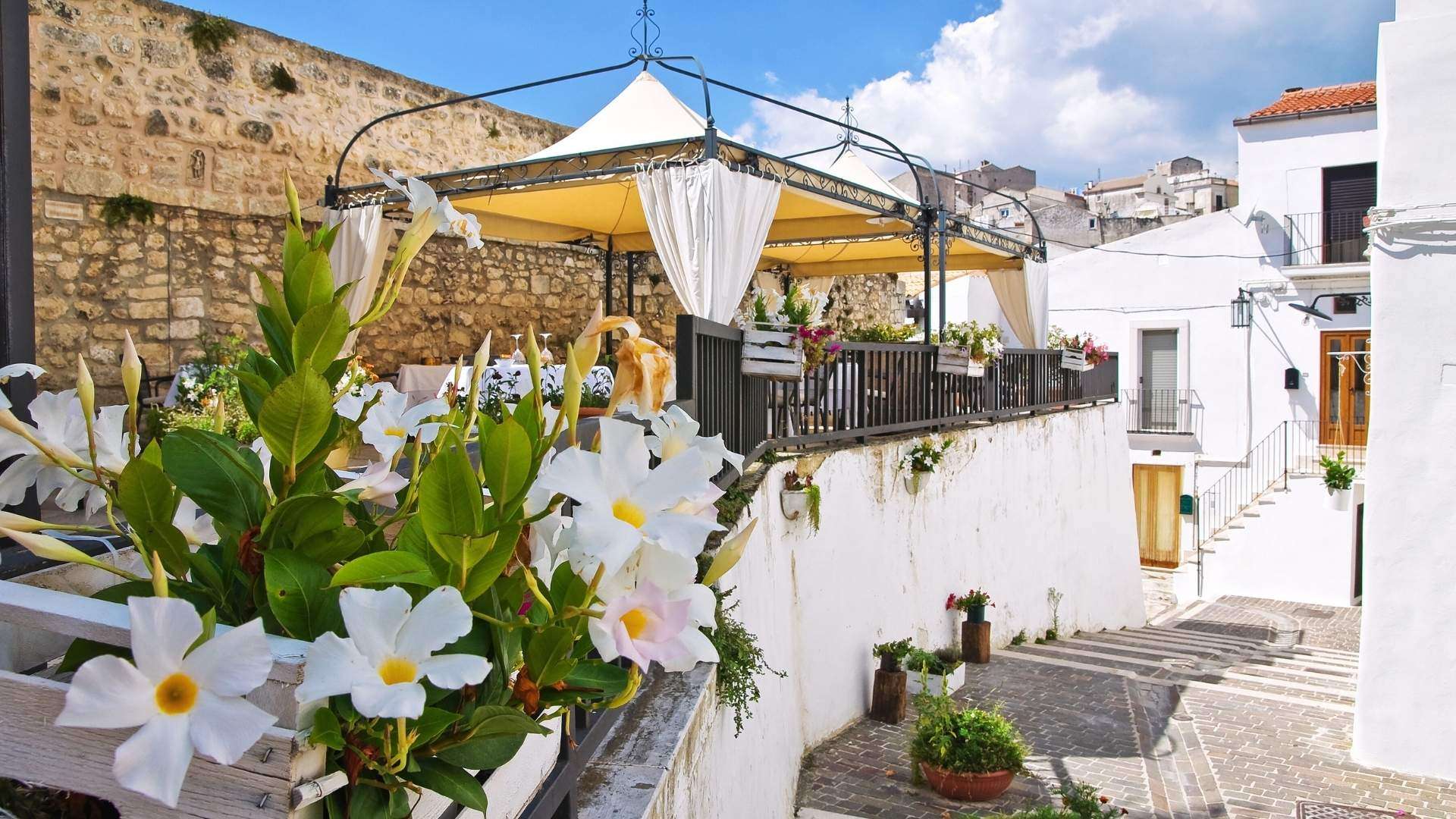
- Osteria del Corso (Via Belvedere 11): The town’s top-rated restaurant and a true institution. A warm, laid-back atmosphere with authentic Apulian cuisine: homemade pasta, regional antipasti, and local wines. The outdoor seating on Via Belvedere offers a taste of the old town’s atmosphere. Be sure to make a reservation—it’s very popular year-round.
- Templari Restaurant (Via del Torrione): A highly rated restaurant, pizzeria, and lounge in a historic setting with medieval décor (shields, armor, candlelight). The menu ranges from innovative Apulian dishes to pizza; the wine list is solid. Ideal for evenings when you want to combine atmosphere with comfort.
- Al Barone (Via Bartolomeo Gambadoro 3): Ristorante-Pizzeria Al Barone is located in the heart of the historic center, just a few steps from the basilica. Traditional cuisine from the Gargano hinterland—caciocavallo, meat dishes, pasta with ragù—at reasonable prices, with outdoor seating in the old town atmosphere.
- Il Rifugio Elda Hotel (Foresta Umbra, SP52B): Nestled in the heart of the Foresta Umbra, this extraordinary restaurant is located in the newly reopened Elda Hotel: Chef Libero Ratti serves creative, distinctive forest cuisine featuring ingredients sourced directly from the Foresta Umbra—from venison and wild boar to wild herbs and surprising vegetarian creations. This isn’t your everyday spot, but rather an experience for special evenings. Reservations are absolutely required; a short drive into the forest is the price you pay for this extraordinary experience.
- Pasticceria / Bakery on the Corso – Stuffed Ostie: For the traditional *ostie ripiene*—the typical sweet pastry from Monte Sant’Angelo, consisting of two crispy wafer layers filled with toasted almonds and honey—all you need to do is stop by any of the bakeries along the main street. According to legend, this pastry was created by a happy accident in the kitchens of the Santissima Trinità convent: nuns preparing communion wafers are said to have dropped almonds into a bowl of warm honey—and thus accidentally created this delicacy, which remains popular to this day.
The Main Attractions
Santuario di San Michele Arcangelo (UNESCO World Heritage Site)
The iconic landmark is not an ordinary church, but a cave sanctuary carved out of natural limestone. The cave is accessible via a long staircase and forms the spiritual heart of the sanctuary. In front of the entrance hall is a portal with a bronze door dating from 1076—the oldest of its kind in Apulia. Admission is free; shoulders and knees must be covered. Opening hours vary by season—please check the sanctuary’s website in advance.
Norman-Swabian-Aragonese Castle
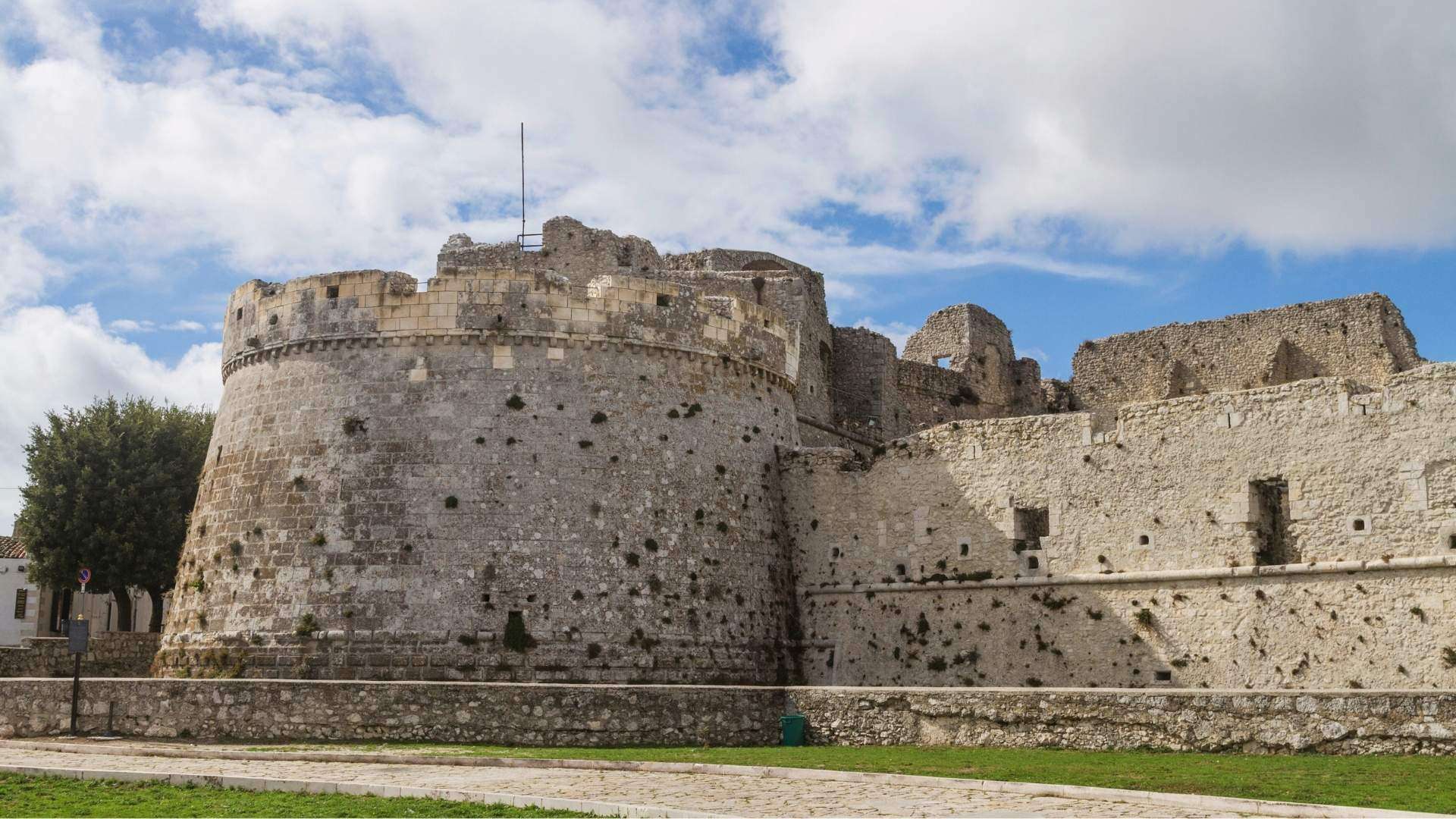
This imposing mountain fortress bears witness to the history of military power from the early Middle Ages to modern times. During Norman rule, Roberto il Guiscardo had the Torre dei Giganti built—a massive pentagonal tower 18 meters high with walls three meters thick. Emperor Frederick II resided here for a time with his wife, Isabella of England, and had the Sala del Tesoro (Treasury Hall)—which still stands today—built. Admission: 2 euros. The castle is well worth a visit for children and history buffs alike—the underground passages are also open to the public.
Rione Junno
An architectural marvel from centuries past. The snow-white houses, built extremely close together, nestle against the hillside like an amphitheater. Exploring the area is free; sturdy shoes are essential due to the many steep steps and cobblestone streets. Not suitable for strollers.
Tomb of Rotari (Baptistery of San Giovanni in Tumba)
A mysterious structure with an impressive dome. For a long time, it was believed—based on its name—to be the tomb of the Lombard king Rothari; according to more recent findings, it is likely an early Christian baptistery. It is much more likely that Rothari is buried in Pavia, where he died, and that the legend arose from a misinterpretation of the term „tumba.“ Access is usually through the adjacent church grounds of San Pietro; a small admission fee is charged.
Abbey of Santa Maria di Pulsano
Located about 8 km outside the city, this abbey lies nestled deep within a rugged rocky gorge in the Gargano. It was founded in 591 and has been a place of contemplative spirituality for centuries. Twenty-four hermit caves carved into the rock surround the abbey, some of which were accessible only by ropes and ladders. Access by car is via a narrow mountain road; the panoramic view of the Gulf of Manfredonia is worth the long drive.
Where to Stay – 5 Recommended Places
- Palace Hotel San Michele (near Castello, 4 stars): The town’s premier hotel, housed in a restored early 20th-century city palace. The hotel is situated high above the Gulf of Manfredonia and offers its guests a breathtaking panoramic view of the Adriatic coast. Outdoor pool with a view of the sea, wellness area, restaurant. The top choice for discerning travelers.
- Palazzo „Di Palma“ B&B (historic center): Historic charm in a well-maintained city palazzo right in the heart of the old town. Ideal for anyone who wants to experience the character of the place up close—its proximity to the Santuario is hard to beat. A light breakfast is included.
- Hotel Relais dei Normanni: A solid, well-maintained mid-range hotel with direct access to the Old Town and high-quality rooms. The hotel is part of the same group as the Palace Hotel San Michele and offers guests access to the wellness area of the neighboring hotel. A reliable choice for anyone who prefers comfort without paying extra.
- Albergo Casa del Pellegrino (right next to the Santuario): Simple, clean, and unbeatably close to the sanctuary. The pilgrim house is designed for anyone seeking not luxury but a connection to the spirituality of the place—and for budget-conscious travelers who still want a comfortable place to stay.
- Elda Hotel (Foresta Umbra, SP52B): For anyone looking for something completely different: The newly reopened Elda Hotel is located in the heart of the Foresta Umbra, nestled among ancient beech forests. The hotel offers a unique nature experience with a restaurant right in the forest. It’s not a city hotel, but a retreat—ideal after a long day of hiking or as a starting point for exploring the Foresta Umbra.
Getting Here & Practical Information
The drive there in your own car is an experience in itself: State Road SS272 connects San Severo to Monte Sant’Angelo via San Marco in Lamis and San Giovanni Rotondo—the most direct route from the north. If you’re coming from the coast, take the SP55, which winds its way up from Macchia (the coastal hamlet of Monte Sant’Angelo) through tight switchbacks into the town. For parking, it’s best to use the Parcheggio Via Carlo d’Angiò outside the ZTL or the parking lots in the Zona Castello.
SITA Sud operates a public bus route between Manfredonia and Monte Sant’Angelo; the trip takes about 40 minutes on average along the steep mountain road. There is also a direct connection from Foggia. If you’re traveling by train, take it to Foggia or Manfredonia and transfer to the bus there.
You’ll need to be in good physical shape: With almost nothing but cobblestone streets, countless steps, narrow alleys, and steep sections, sturdy shoes are a must. Monte Sant’Angelo is only accessible to a very limited extent for wheelchairs and strollers.
What Else You Should Know About Monte Sant’Angelo
- Crowds in the height of summer and on holidays: The sanctuary attracts pilgrims and visitors from all over the world throughout the year; on holidays and in July and August, it can get very crowded around the sanctuary. Visiting early in the morning on a weekday makes a significant difference.
- ZTL Trap: Vehicle access restrictions are in effect and are strictly monitored by camera. Anyone who unintentionally drives into the restricted zone risks a hefty fine. The exact restricted hours vary by season—please check the municipality’s website in advance.
- Accessibility: Due to its stepped layout, the Rione Junno and large parts of the historic center are virtually inaccessible to people with limited mobility, as well as to those using wheelchairs or strollers. The Abbazia di Pulsano is also accessible only on foot via uneven paths.
- Seasonality in Restaurants: Some establishments have limited hours during the winter or close entirely. A quick check in advance or a phone call can save you from disappointment—especially at the Il Rifugio Elda Hotel (Foresta Umbra), which is open by request and not every day.
- Heat Protection in the Summer: Despite the pleasant mountain temperatures, the midday sun can be very intense on the white pavement. It’s a good idea to bring plenty of water, use sunscreen, and take a break during siesta time (around 1:00–4:00 p.m., when most restaurants are closed anyway).

Pair with …
Hiking in the Foresta Umbra: Its immediate proximity to the Gargano beech forest makes Monte Sant’Angelo the ideal starting point for day hikes into one of southern Italy’s last remaining primeval forests. The Foresta Umbra, also a UNESCO World Natural Heritage Site, is just a few minutes’ drive away. Highly recommended as a complement to a cultural visit to Monte Sant’Angelo: the Santuario in the morning, the forest in the afternoon—a day full of contrasts and rich in experiences on the Gargano.
San Giovanni Rotondo and the Shrine of Padre Pio: Those traveling in the footsteps of Christian pilgrimage sites will find a second major pilgrimage destination in the Gargano region in San Giovanni Rotondo (about 25 km along the SS272). The shrine of the Capuchin friar Padre Pio, who himself venerated Monte Sant’Angelo, attracts millions of believers. Both sites can easily be combined on a long day trip—or visited on foot as part of a multi-day pilgrimage.
Vieste and the Gargano Cliffs: If you’re looking for the sea after a refreshing mountain adventure, Monte Sant’Angelo is the perfect starting point. The winding SP55 road leads down to Macchia (the coastal town in the municipality of Monte Sant’Angelo) and continues along the spectacular coastal road to Mattinata and Vieste. This combination—a mountain village in the morning, the Gargano coast in the afternoon—is a classic and well worth it.

Vieste, coastal pearl of the south on the Gargano
Vieste Insider: beaches, grottos and pure dolce vita On the easternmost tip of the Gargano promontory, that striking „spur“ of the Italian boot, the gleaming white town of Vieste towers above the azure Adriatic Sea. Far...
Editor's Insider Tip
Buy a bag of traditional ostie ripiene at a bakery on the Corso and take a stroll with them in the late afternoon sun to the edge of the Rione Junno. Nowhere does this centuries-old treat taste better than with the warm Gargano breeze on your face and the Adriatic Sea at your feet.
Monte Sant’Angelo is more than just a side trip from the beaches of the Gargano—it is a profound experience for all the senses that, even in 2026, has lost none of its original magic. Those who climb the challenging stairs are rewarded with an atmosphere unlike any other on the Apulian coast. It is precisely this rugged, white labyrinth high above the clouds that lingers in the memory long after you return.
Map: Monte Sant'Angelo, Gargano
Photo Gallery: Monte Sant'Angelo


Things to Do in Apulia
FAQ - Frequently Asked Questions About Monte Sant'Angelo
Experiences & sights
Note: Disclaimer – Italien.news is not the owner or organizer of the attractions, accommodations, and events listed here and is therefore not responsible for changes to the program, event cancellations, or any incorrect information. The editorial team at Italien.news always endeavors to provide detailed and accurate information. However, it is possible that events, attractions, etc. may be changed and not updated promptly. Exact details of dates, times and programs can be obtained directly from the owner of the attractions and accommodation.
Please also check the websites or social media accounts of the attractions and events for updates before you travel! Our blog posts contain our personal recommendations in the form of affiliate links. If you book or purchase something through these links—or even just click on them—we receive a small commission. This does not affect the price you pay in any way. Content and text © Italien.news & KI / Photos © Canva.com / shutterstock.com / Unsplash.com / Pixabay.com / Pexels.com / Others. Be sure to also visit our Italy Shop!