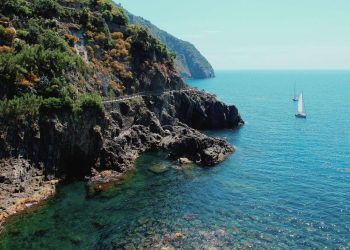
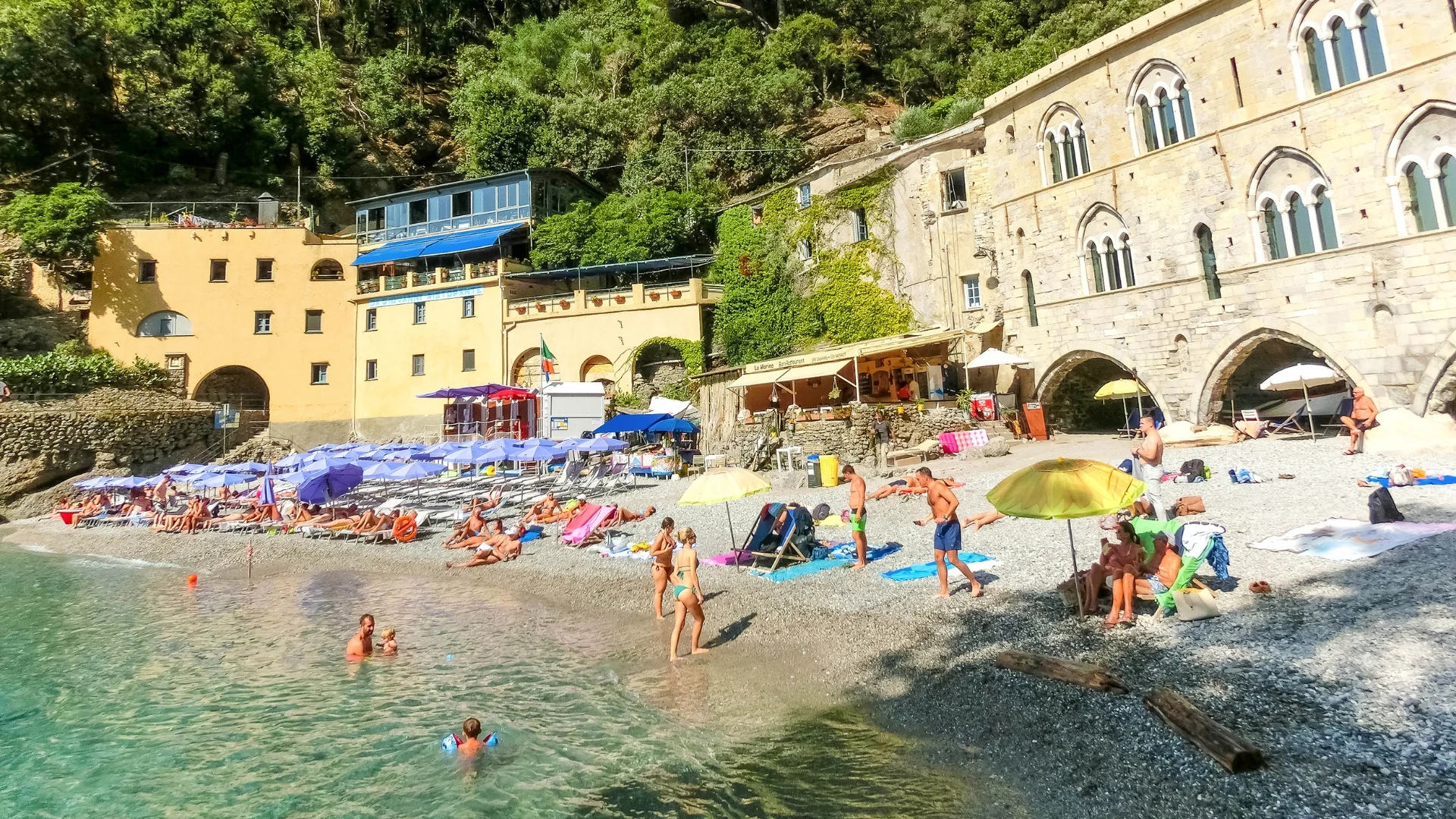
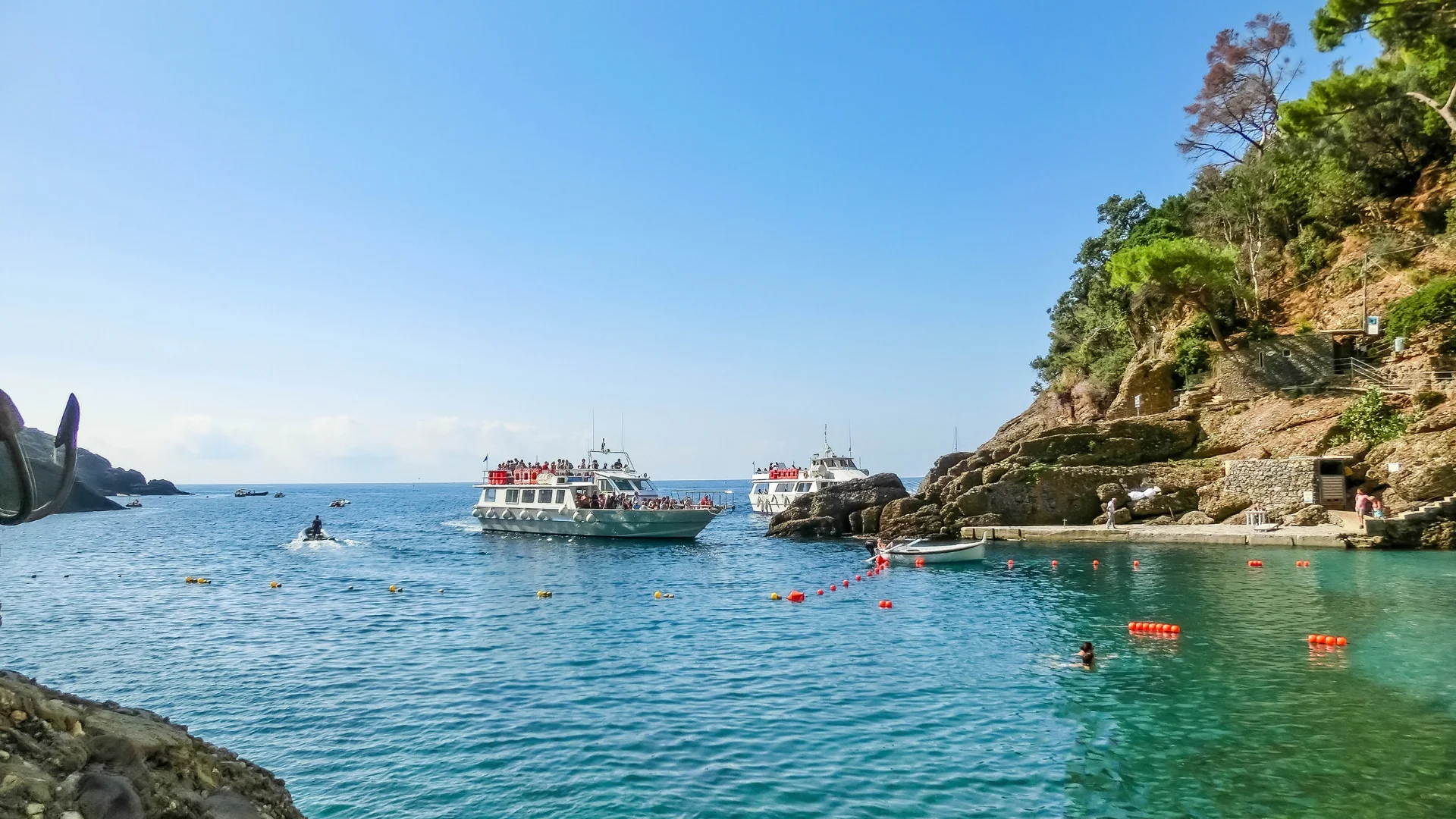
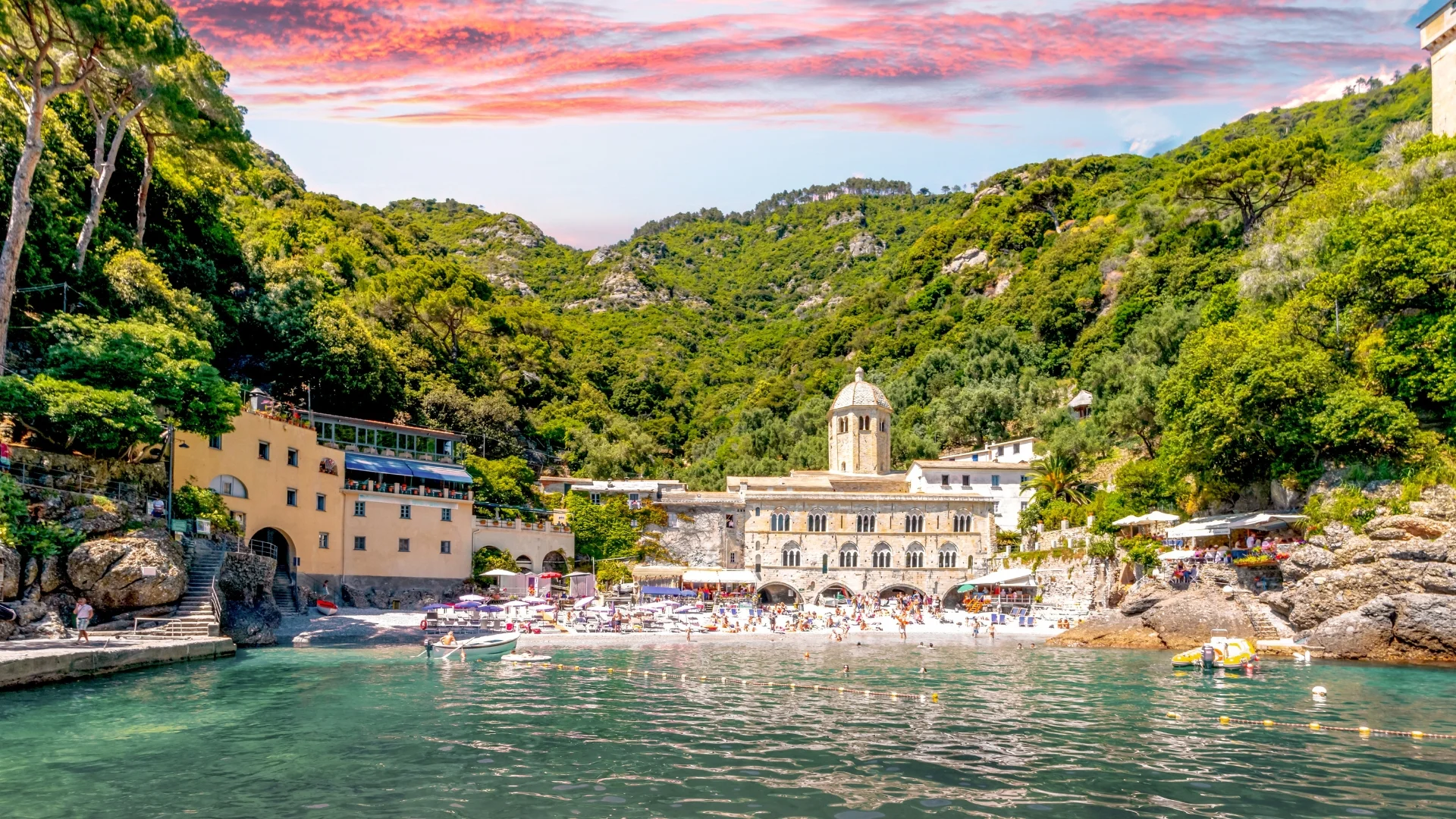
Liguria – There’s that moment when the boat rounds the last rocky outcrop: Suddenly, there it is—the small cove of San Fruttuoso, a semicircle of light-colored pebbles, turquoise water, and steep, pine-covered slopes. Right in the middle of it all, its feet almost in the sea, stands a Benedictine abbey over a thousand years old. Hardly any other beach in Liguria is as remote as this one—no asphalt, no parking lot, just the boat or the hiking trail over the mountain. That’s exactly what makes this tiny beach between Camogli and Portofino one of the most special places on the entire Riviera. A place to swim, drift away, and marvel, where nature takes center stage—not the umbrella rental stands.
San Fruttuoso at a Glance
- Location: Ligurian Sea, Riviera di Levante – Bay between Camogli and Portofino (Municipality of Camogli, Genoa (GE))
- Beach type: small pebble beach (swimming cove) at the foot of steep slopes
- Water entry: Pebbles, quickly getting deeper—clear, calm water
- Families/children: Limited access—only by boat or on foot; deep water; little shade
- Free/Lido: Mostly free access (natural beach), small lido area with an admission fee
- Highlights: Swimming cove & pebble beach, Benedictine Abbey (FAI), Torre dei Doria
- Blue Flag: Yes – Municipality of Camogli, including San Fruttuoso (2026; please check annually for updates)
- Food nearby: A few simple beach bars in the bay; a wide selection at the Camogli harbor
Swimming beneath a thousand-year-old abbey
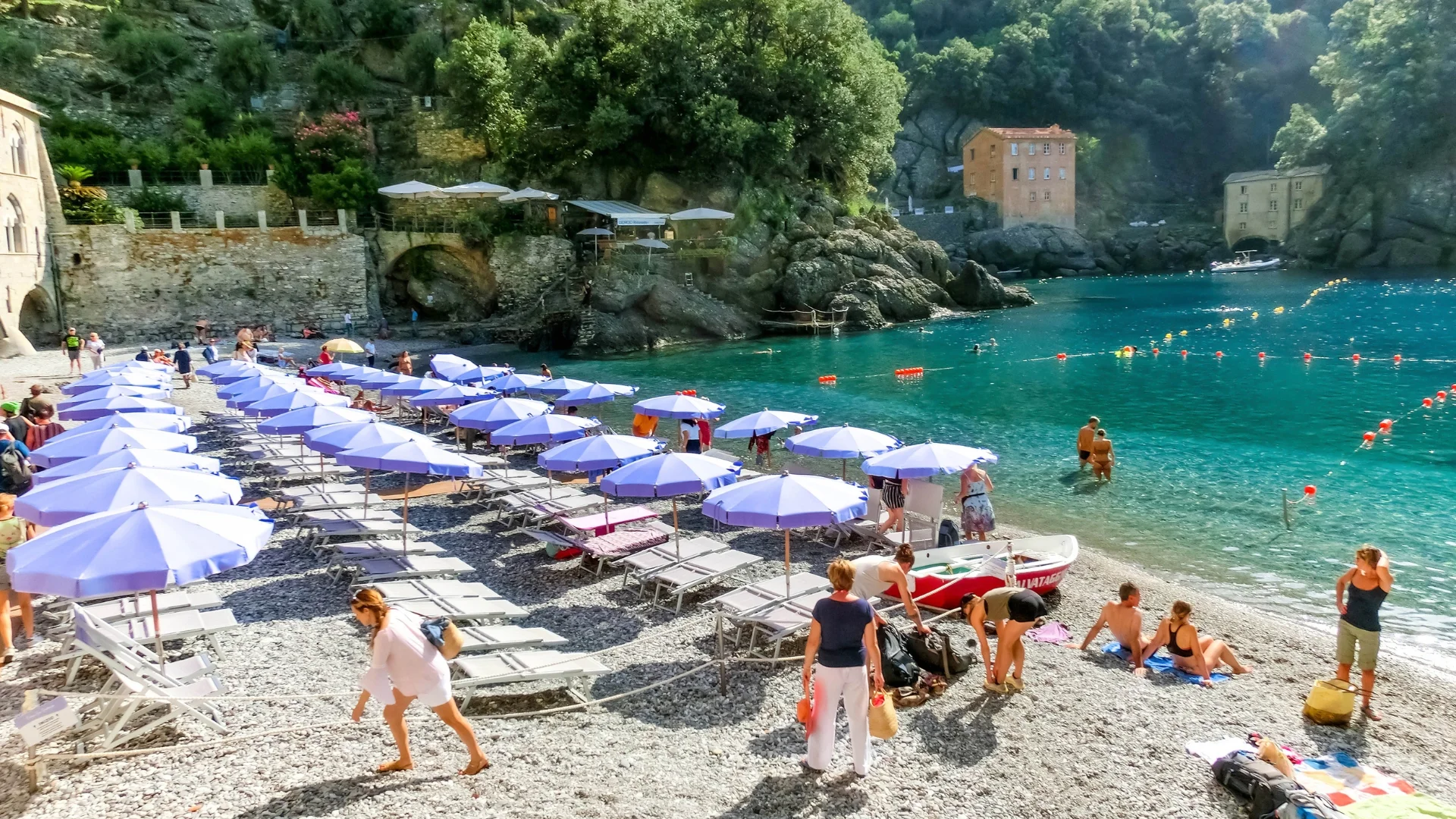
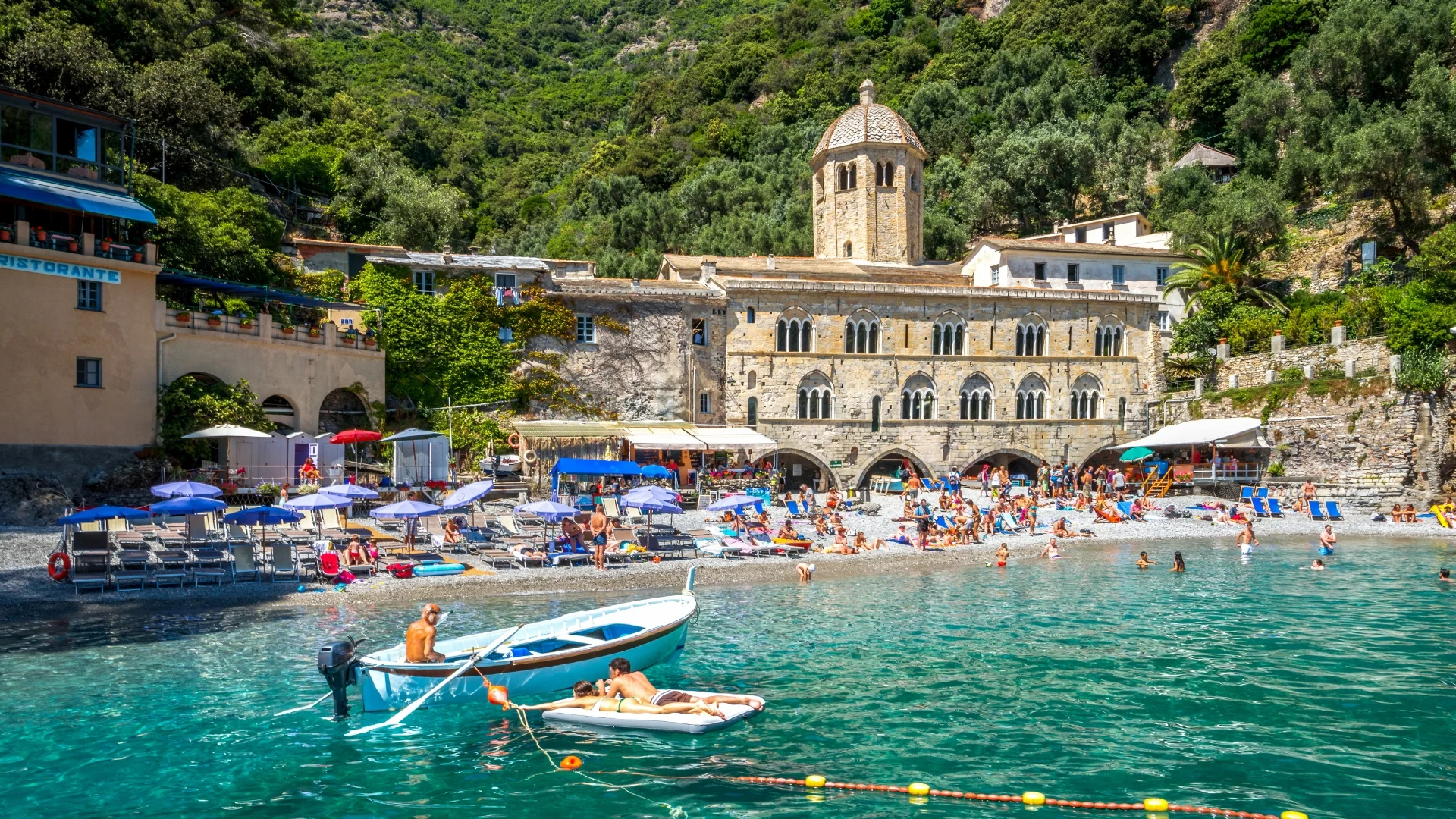
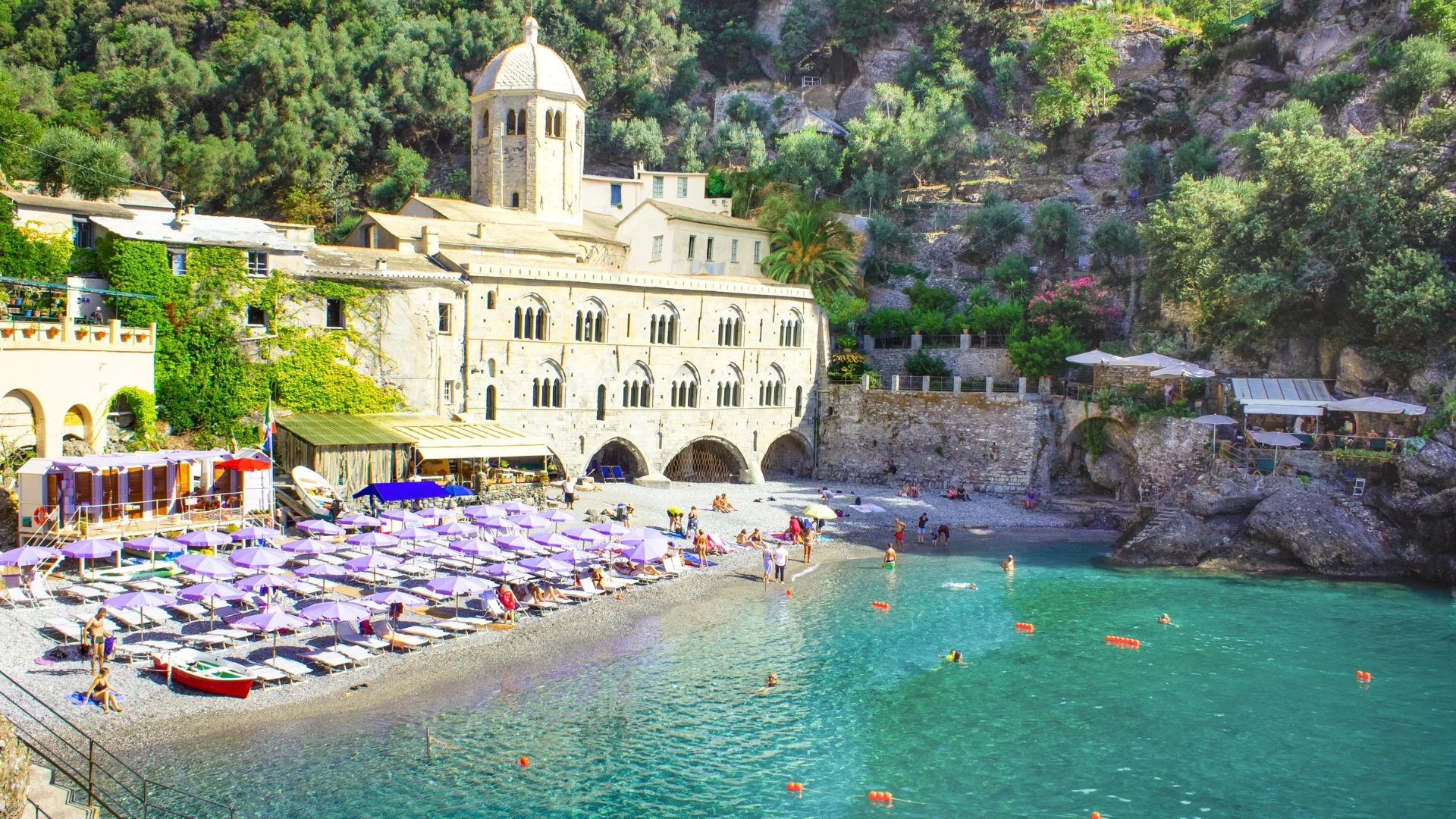
The beach at San Fruttuoso is small, almost intimate—and that’s exactly what makes it so charming. A narrow strip of light-colored pebbles winds its way between the abbey and the water, with the steep, green slopes of the Portofino Nature Park rising behind it. It’s cozy here, sheltered, almost like a hand cradling the sea. You lay your towel on the warm stones, take a few steps into the crystal-clear water—and as you swim, you gaze at a medieval monastery wall whose base almost stands in the sea. You won’t find another beach with this backdrop anywhere else on the Ligurian coast.
Pebbles, clear water, and a quick plunge into the depths
The beach is made up of pebbles—smooth, round, and warm underfoot in the sun. The water drops off quickly: if you want to swim, you’ll be in deep water in no time. For strong swimmers, this is a treat, because the sea here is calm, sheltered, and exceptionally clear; with a mask and snorkel, you can see the seabed gradually receding, past rocks and small schools of fish. For small children, this is exactly what you should keep in mind—you can only stand safely right at the water’s edge. San Fruttuoso isn’t a beach for lounging for hours with the whole extended family, but rather a swimming cove for a special day: swim out a bit, lie on your back, and look back toward the abbey.
A natural beach instead of rows of lounge chairs
San Fruttuoso is largely open to the public—a true natural beach, not a highly organized lido spectacle with endless rows of umbrellas. Besides that, there’s just a small, paid section with lounge chairs. That defines the character of the place: you find yourself a spot on the pebbles, and the rest is just the sea and a wall. It’s precisely this simplicity that makes it so appealing. There’s no boardwalk, no bar at every turn—and that’s how it should stay. If you’re hoping for soft sand and full-service amenities, you’re in the wrong place; but if you’re looking for an authentic experience, you’ll find it here.
The Abbey as a Backdrop
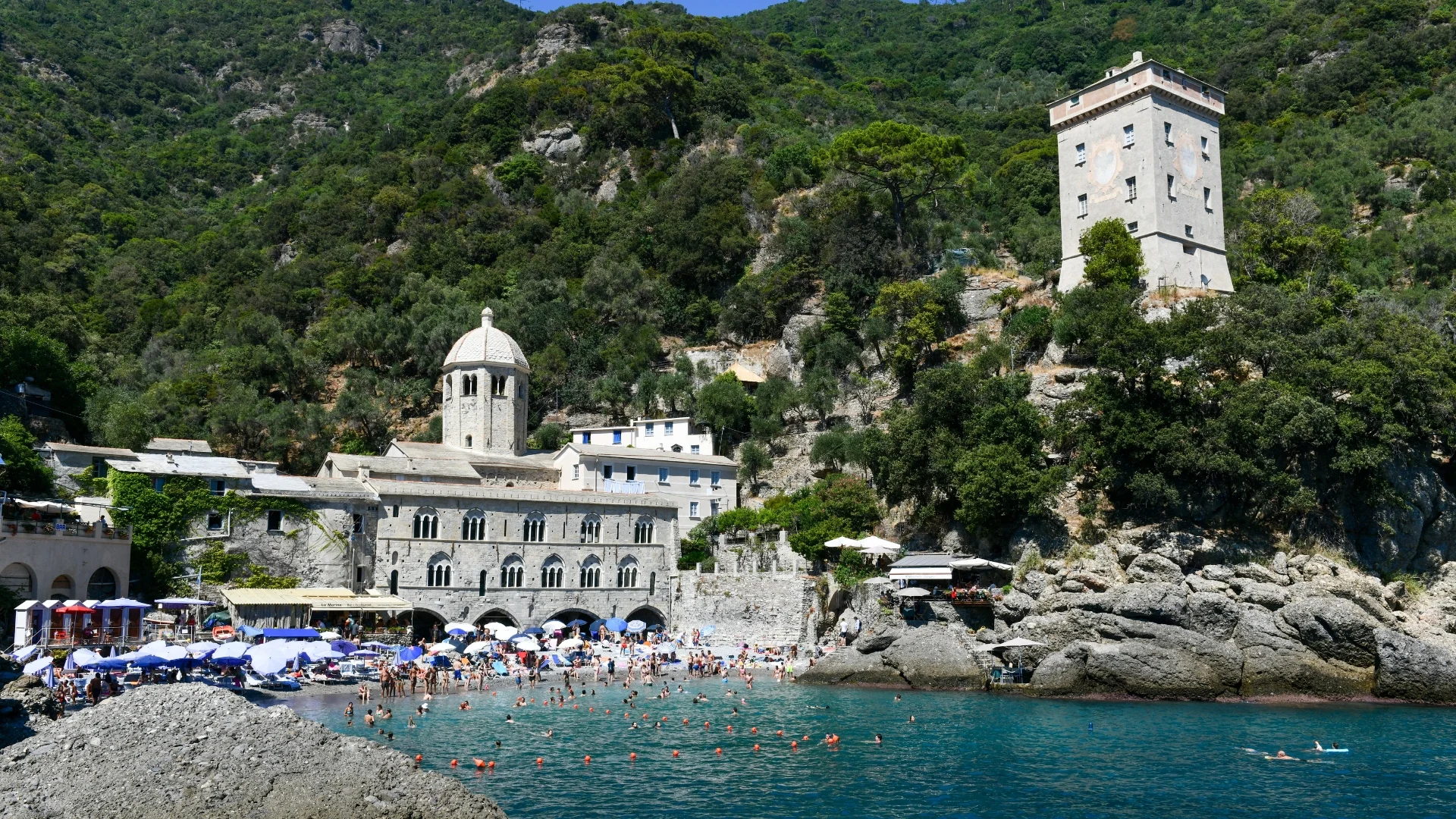
The Benedictine Abbey of San Fruttuoso di Capodimonte is the backdrop against which you’ll be swimming here—and what a backdrop it is. Its origins date back to the 8th century; in the 10th century, Benedictine monks rebuilt the church and monastery. Starting in the 13th century, the powerful Genoese Doria family made the abbey their burial site and, in 1562, had the striking defensive tower built to ward off corsairs; it still stands guard over the bay today. Since 1983, the complex has been owned by the FAI Heritage Foundation and is open to visitors—admission fees and hours vary by season, so it’s best to check them shortly before your visit. But you don’t even have to go inside to feel the magic: even from the water, when the walls are reflected in the bay, you’ll understand why this beach is considered one of the most beautiful in Italy.
The Secret Underwater
In the middle of the bay, about 17 meters below the surface, lies the famous Cristo degli Abissi—a bronze statue from 1954 that commemorates those who lost their lives at sea. You won’t be able to see it while swimming, but on clear days, snorkelers can make out its outline, and a replica is on display in the abbey. If you’d like to dive deeper and learn all about scuba diving and the history of the „Christ of the Depths,“ read our own article about San Fruttuoso and the Cristo dei Abissi. Here on the beach, it remains a quiet secret, right beneath your strokes.
Portofino Nature Park: Camogli, Portofino, and Monte di Portofino
The bay lies in the heart of the Portofino Park and the adjacent Marine Protected Area, one of the most beautiful and best-protected coastal landscapes in Liguria. To the west lies Camogli, an old fishing village with tall, colorful house facades that crowd closely around the harbor—once painted so that sailors could recognize their homes even from the water. A little further toward Genoa, you’ll find Bogliasco on the Riviera di Levante Add another quiet fishing village on the Golfo Paradiso to your coastal tour. To the east, beyond the mountain ridge, lies the glamorous Portofino, with its famous Piazzetta. In between rises Monte di Portofino, whose hiking trails connect both towns with San Fruttuoso. If you’d like, you can continue on to Punta Chiappa, the outermost point of the marine protected area, where the water is especially clear.
Fish, focaccia, and pesto: dining around the bay
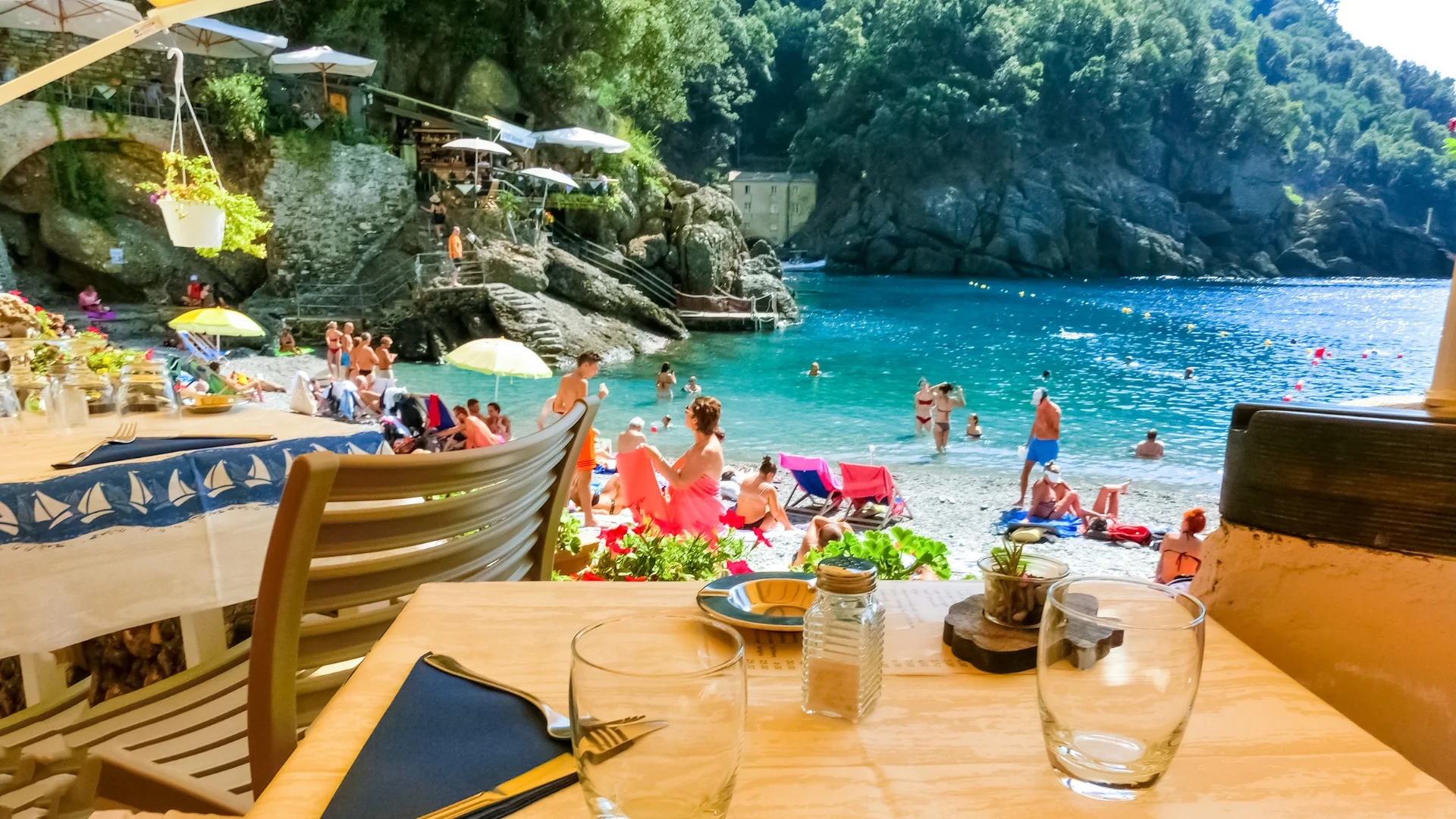
Right on the bay, there are a few simple beachside restaurants serving fried fish, focaccia, and a glass of white wine—you’ll find more variety, and usually better prices, around the harbor in Camogli. There, trattorias line the streets, and what’s served on your plate is what was still in the sea that morning. Liguria is also the home of pesto alla genovese, thin trofie, and the famous Focaccia di Recco from the neighboring town. Honest, hearty cuisine—no frills, but authentic.
Arrival and location
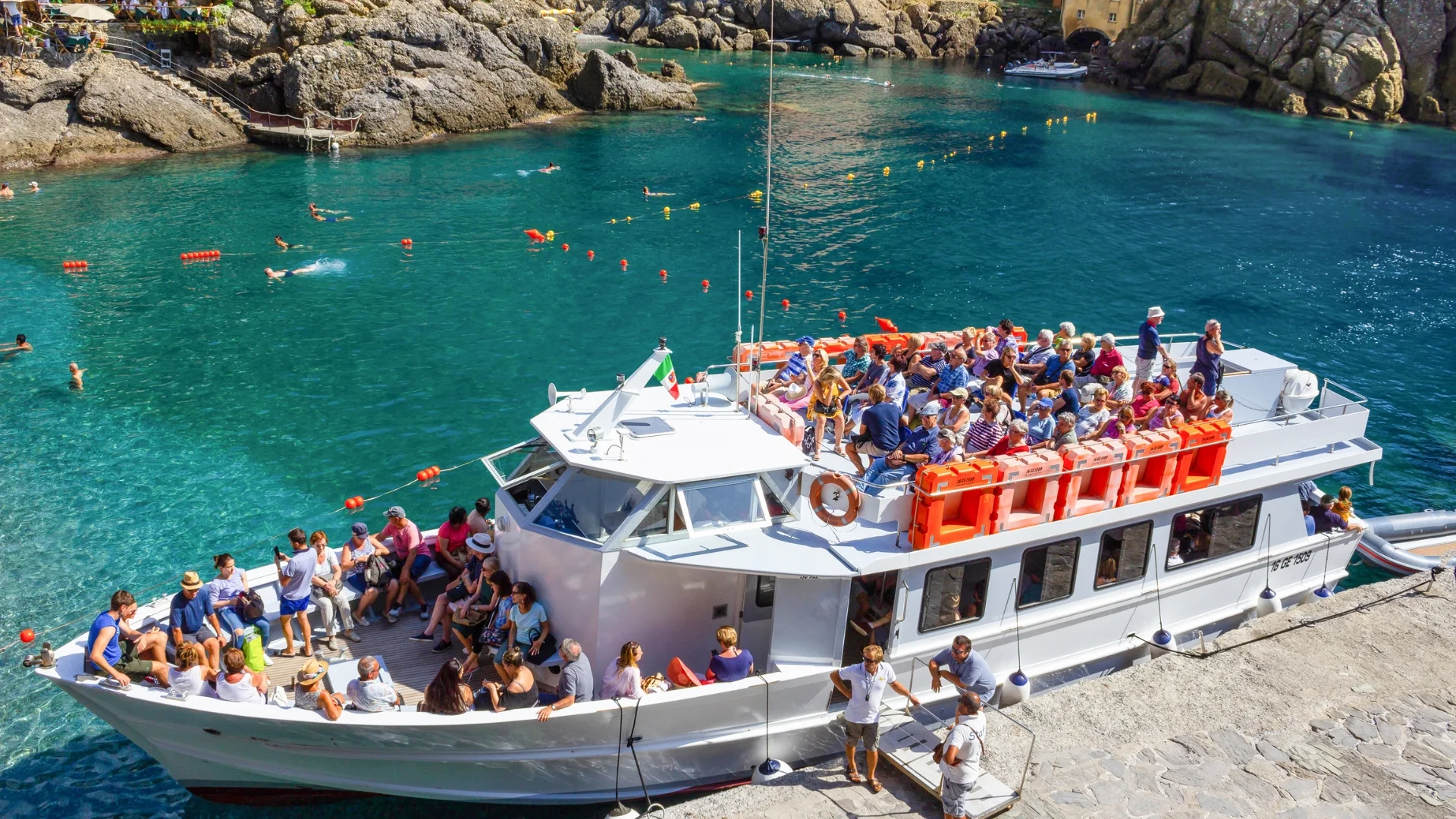
You can’t reach San Fruttuoso by car—and that’s part of its charm. There are two ways to get to the cove: by boat or on foot. In the summer, ferries and small tour boats run regularly from Camogli (about 30–40 minutes), as well as from Portofino, Santa Margherita Ligure, Rapallo, and Recco. The hike usually starts in San Rocco di Camogli and leads through the nature park: The more scenic route via the Pietre Strette takes about two to two and a half hours, depending on your pace, while the more spectacular coastal path along the old „Batterie“ is more challenging and is occasionally closed. Be sure to bring sturdy shoes, water, and be in decent physical condition—the hike over the mountain is no walk in the park. You should check detailed schedules, boat connections, and the current condition of the hiking trails before your trip, as they vary depending on the season and weather. You can find more about the region in our overview of Liguria and its beaches.
To be honest, you should know that!
San Fruttuoso isn't the kind of place you just happen to stumble upon. Getting there is the biggest hurdle—and at the same time, its greatest protection. Those who come by boat are at the mercy of the schedule and the weather; those who hike there need stamina and good shoes.
- Crowd: In the height of summer, the small cove fills up quickly. If you're looking for peace and quiet, come early in the day or during the off-season.
- Limited infrastructure: Apart from a few bars, there's hardly any shade and nothing that resembles a developed beach resort. Be sure to bring sunscreen, water, and a hat.
- Pebble: Water shoes make getting into the water much more comfortable—the round stones are warm, but they can be a bit of a challenge for sensitive feet.
- Deep water: The water gets deep quickly. Keep an eye on children and inexperienced swimmers.
- Last boat: Don't miss it. If you get stranded here, you're in trouble—so make sure you plan your return trip ahead of time.
Is it really worth the effort?
Yes—if you know what you’re getting into. San Fruttuoso isn’t a laid-back beach where you can spend the whole day with a toddler and a cooler. It’s an outing, an experience, a swimming cove that demands a bit of effort but rewards you with something rare: crystal-clear water for swimming, a cove free of cars and concrete, with an abbey that has been overlooking the sea for centuries. The best time to visit is early morning or late afternoon, when the light softens and the day-trippers take the boat back. The best months are May, June, September, and early October—in July and August, it’s hot and crowded. If you time it right, you’ll have the cove almost all to yourself.
My insider tip: Hike there and take the boat back. The hike up Monte di Portofino brings you closer to the town little by little—every drop of sweat makes that first glimpse of the bay all the more precious. And when you finally step into the cool, clear water, tired and drenched in sweat, that swim feels like a reward. In the evening, you’ll glide back across the water to Camogli, relaxed, instead of climbing over the mountain again. Before you leave, grab a piece of focaccia in Camogli to take with you—it tastes twice as good up at the pass.
Map: San Fruttuoso, Liguria
FAQ - Frequently Asked Questions About San Fruttuoso


Top Accommodations Around San Fruttuoso, Liguria

Discover 7 highlights in Portofino: luxury, nature and dolce vita on the Ligurian Riviera
Imagine strolling along Italy's picturesque coastline, surrounded by breathtaking beauty and timeless elegance. That's exactly what awaits you in Portofino, a little gem on the Ligurian coast....
Experiences & sights
Note: Disclaimer – Italien.news is not the owner or organizer of the attractions, accommodations, and events listed here and is therefore not responsible for changes to the program, event cancellations, or any incorrect information. The editorial team at Italien.news always endeavors to provide detailed and accurate information. However, it is possible that events, attractions, etc. may be changed and not updated promptly. Exact details of dates, times and programs can be obtained directly from the owner of the attractions and accommodation.
Please also check the website or social media of the attractions and events for updates before you travel! Our blog articles contain our personal recommendations in the form of affiliate links. If you book or buy something via the links or simply click on them, we receive a small commission. This does not change the price for you at all. Content and texts © Italien.new & KI / Photos © Canva.com / shutterstock.com / Unsplash.com / Pixabay.com / Pexels.com / Others. Please also visit our Italy Shop!