

For millions of Italy vacationersn from Germany, Austria and the Netherlands, the most beautiful route to the south leads through Switzerland. Whether via the legendary Gotthard Tunnel to Ticino and on to Lake Como, Lake Maggiore or Tuscany, or via the scenic San Bernardino Tunnel towards Milan and Liguria - the Swiss Confederation is the most important transit country for many on their way to the Mediterranean.
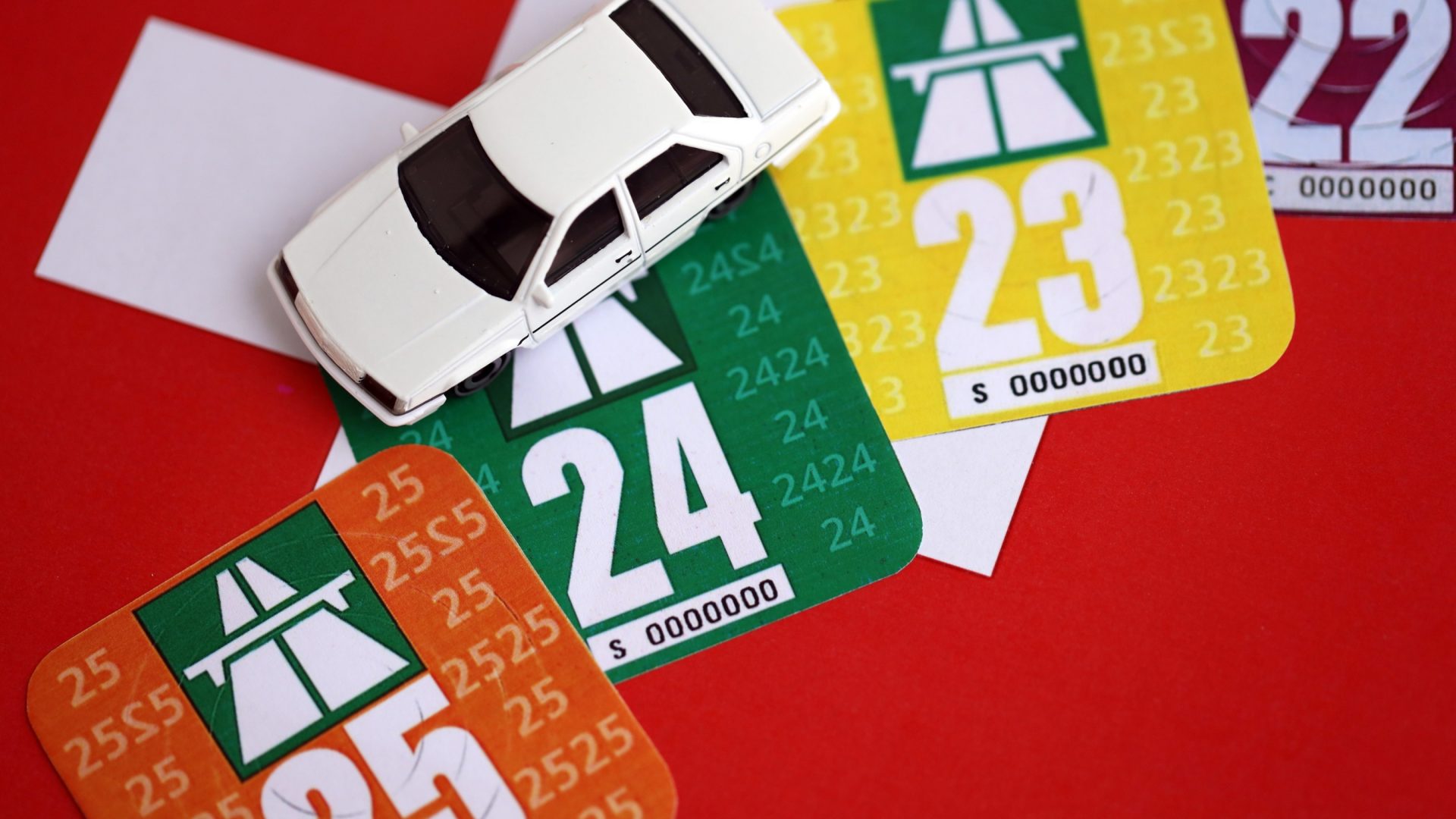
But if you want to drive even a single meter of freeway in Switzerland, you can't avoid a small blue sticker - or its digital version: the Swiss freeway sticker. Anyone caught without one will pay a hefty fine. And from next year, there could even be an additional charge for those just passing through. We have compiled all the important information for your trip to Italy in 2026.
What is the Swiss vignette anyway?
Simply put, the vignette is the Swiss version of the highway toll. Unlike in Italy, France or Spain, where you are charged for the distance you actually drive, in Switzerland you pay a flat annual fee and can drive on all toll roads as often as you like.
The vignette was introduced back in 1985, so 2026 will be the 41st time it has been issued. The vignette is mandatory for all domestic and foreign motor vehicles and trailers up to a gross vehicle weight of 3.5 tons as soon as they enter the Swiss national road network. This includes cars, motorhomes, motorcycles, caravans and ordinary trailers alike.
Important to know: There is no grace period. So if you enter the highway directly after the border - for example in Basel, Schaffhausen or Constance - you need the vignette from the very first meter. There is no possibility to drive toll-free „only up to the first exit“.
Price and validity 2026: What does the fun cost?
The good news first: the price will also remain unchanged for 2026. The vignette costs 40 Swiss francs, which, depending on the current exchange rate, is around 44 Euro equivalent. It is sold at the ADAC and ÖAMTC for 44.50 euros. Online orders may incur additional shipping costs of around 5 to 10 euros.
The price applies uniformly to all vehicle types - so a motorcyclist pays the same as the driver of a fully equipped motorhome. Incidentally, since its introduction in 1985, the price has only been increased once, from 30 to 40 francs in 1995. This makes the vignette one of the most stable prices in Europe.
The Vignette 2026 is valid from December 1, 2025 to January 31, 2027 - A total of 14 months. This is particularly practical for anyone who travels to Italy several times a year or spends their skiing vacation in Switzerland in December before heading to the Mediterranean in summer.
By the way, the color of the new vignette is Blue with white year - a detail that is quickly recognized during police checks.
Attention - important point for short vacationers: There are in Switzerland none Daily, weekly or monthly vignettes, as we know them from Austria, for example. Even if you only drive through Switzerland to Italy once, you have to buy the full annual vignette for 40 francs. At first glance, this seems unfair, but it is clearly regulated by law.
Adhesive vignette or e-vignette? A comparison of the two variants
Since August 1, 2023, travelers have had the choice between two options: the classic Adhesive vignette and the digital e-vignette. Both cost exactly the same (40 francs), both have the same period of validity - but they differ in one crucial respect.
The adhesive vignette
This is the well-known sticker that you stick on the inside of the windshield. It is vehicle-bound - Once applied, it can no longer be removed and transferred to another car. If you try anyway, it falls apart into several pieces and is therefore unusable.
The e-vignette
The electronic version, on the other hand, is connected to the License plate (called „license plate“ in Switzerland), not to the vehicle. This has a number of practical advantages:
- Valid immediately after the online purchase - no waiting, no gluing, no shipping times.
- With a Windshield replacement no need to buy a new vignette.
- With Variable license plate a single e-vignette is sufficient for all vehicles.
- When the vehicle is sold, there is no more annoying scraping off of the old sticker.
- Only the vehicle category, country of registration and license plate number are required for registration - no personal data of the owner.
Important warning about the e-vignette: The e-vignette may only be purchased via the official „Via Portal“ of the Federal Office for Customs and Border Security (BAZG) - available at www.e-vignette.ch respectively via.admin.ch/shop. Cases of online fraud have increased in recent months: There are numerous fake websites that charge significantly inflated prices or send phishing emails asking for payment details to be re-entered. Never pay via such channels and always check the URL.
Where can I buy the vignette?
The adhesive vignette is available at numerous locations both in Switzerland and abroad:
In Switzerland:
- On all Gas stations and highway service stations
- In Swiss post offices
- To the Customs offices at the border
- For branches of the Touring Club Switzerland (TCS)
- At cantonal Road traffic offices
Abroad (particularly practical for traveling):
Read more about theTopic





- To ADAC offices in Germany and in the ADAC online store
- To ÖAMTC bases in Austria - as well as at the Hörbranz-Unterhochsteg and Tisis border stations
- At many petrol stations near the border
- Online via various authorized providers
Pro tip: Buy the vignette if possible already before arrival. There are often long queues at border petrol stations during the main holiday season - for example at Easter, Whitsun or at the start of the vacations. If you make provisions before you leave, you can avoid this stress.
How to affix the adhesive vignette correctly
There are also rules for affixing the sticker, which can result in a 200-franc fine if ignored. The sticker must be visible from the outside clearly visible in one of the following places:
- Car and motorhome: On the inside of the windshield, either on the left edge or behind the interior rear-view mirror - without obstructing the driver's view.
- Motorcycle: On a non-replaceable, clearly visible part, for example on the tank or fork.
- Trailers and caravans: On a fixed, non-removable and clearly visible part. In the case of caravans with a windshield, this is often used; alternatively, front wings or another fixed body part can be used.
Prohibited is:
- Attachment with adhesive strips, foils or other aids. The vignette must direct be glued to the substrate.
- Removal and reuse on another vehicle (the vignette disintegrates into its components).
- Attaching it in a place where it is difficult or impossible to check from the outside.
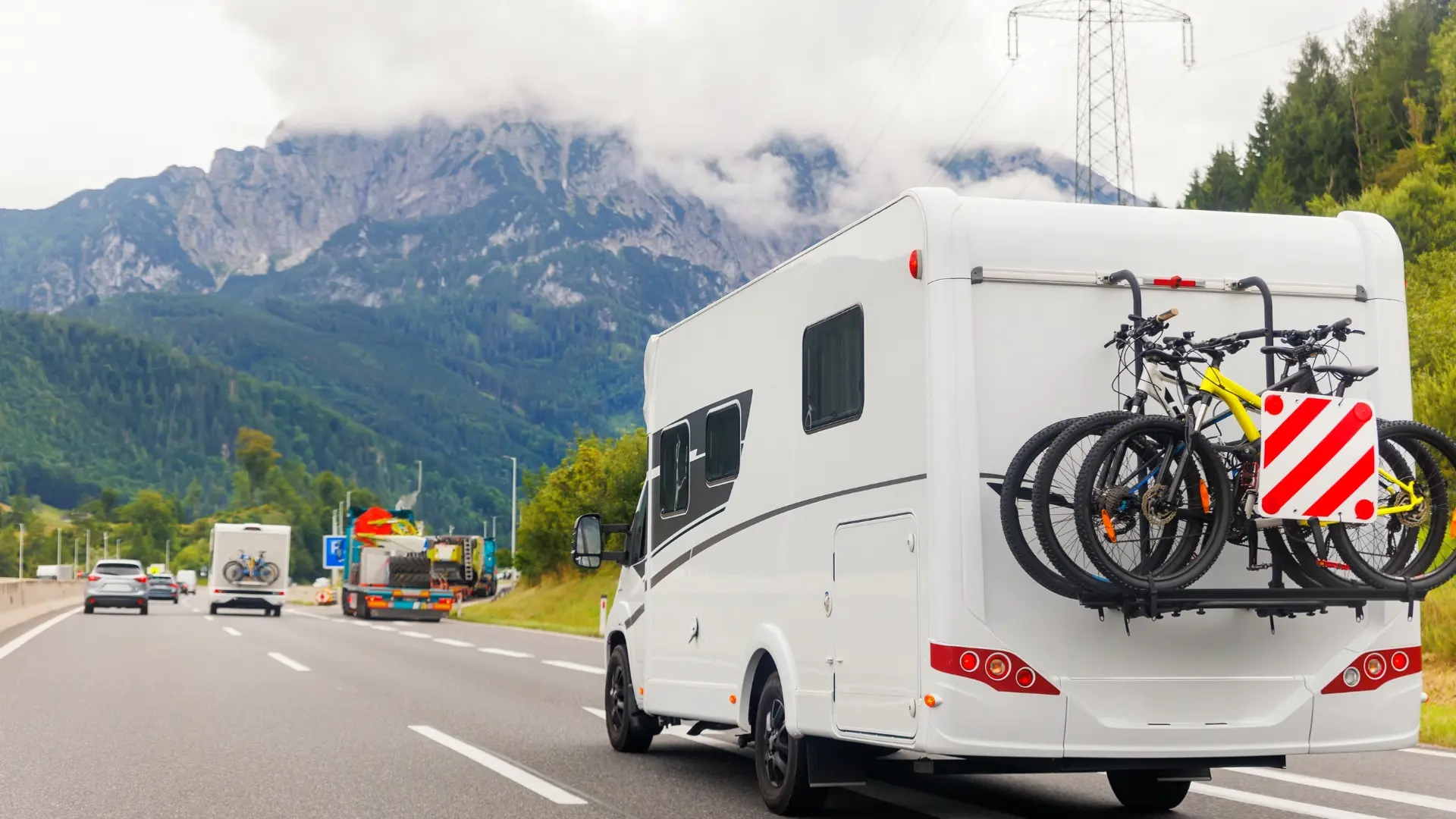
Attention campers: Anyone traveling by car and caravan needs two Vignettes - one for the towing vehicle and one for the trailer. The same applies to a motorhome with trailer. This makes a total of 80 francs. Only trailers pulled by motorcycles are exempt from the vignette requirement.
Heavy vehicles: heavy vehicle charge instead of vignette
If the permissible total weight of the vehicle or trailer is over 3.5 tons, the vignette rule no longer applies. Instead, the so-called Flat-rate heavy vehicle charge (PSVA) must be paid. This mainly affects large motorhomes, coaches, trucks and articulated lorries.
One important difference: the PSVA is not only levied for the use of the freeway network, but also for the entire freeway network. entire Swiss road network - even if the vehicle is only parked, for example on a campsite. The amount of the charge depends on the vehicle weight, emission class and length of stay.
How much does it cost to be caught without a vignette?
The Swiss police and customs authorities carry out regular checks - often just over the border on the first few kilometers of freeway. If you are driving without a valid vignette, have stuck it on incorrectly or are using a fake vignette, you will have to pay:
- 200 CHF fine (about 213 Euro)
- Additional 40 CHF for a vignette to be purchased on site
- A total of around CHF 240 (about 255 Euro)
Anyone who wants a vignette counterfeits or uses counterfeit vignettes, If you do so, you could even face criminal charges from the Federal Public Prosecutor's Office - this is no longer a trivial offense. Multiple use of a vignette on different vehicles is also punishable by the full penalty.
Important to know: Routes, tunnels and special charges
The Swiss vignette covers the the entire national road network subject to vignette payment - i.e. all highways and roads with green and white signs. The following routes are particularly relevant for travelers to Italy:
The classics for traveling to Italy
Gotthard route (A2): The most popular and fastest connection from northern Germany to the Italian south runs via Basel, Lucerne, through the 16.9 km long Gotthard Tunnel into Ticino and on via Bellinzona to Chiasso/Como. With almost 7.1 million vehicles in 2024, it is by far the busiest Alpine crossing. The toll for the tunnel is included in the vignette - there are no additional costs. The downside: at weekends, before public holidays and at the start of the school vacations, there are regular kilometre-long traffic jams between Erstfeld and Göschenen.
San Bernardino route (A13): The alternative for anyone traveling from eastern Switzerland, southern Germany or Vorarlberg to Italy. The route leads via Zurich, Chur and through the 6.6 km long San Bernardino tunnel to Bellinzona, where it meets the Gotthard route. It is around 80 kilometers longer and, depending on traffic, takes around 1.5 hours longer than the Gotthard route, but is usually much more relaxed. Here too, all tunnel fees are included in the vignette.
Tunnel with special toll
There are a few tunnels for which an extra fee is payable in addition to the vignette. Relevant for travelers to Italy:
- Great St. Bernhard Tunnel (Bourg-Saint-Pierre/Wallis - Saint-Rhémy-en-Bosses/Aosta Valley): paid tunnel passage; ideal for travelers to the Aosta Valley or towards Turin.
- Munt-la-Schera tunnel between Zernez (Switzerland) and Livigno (Italy): two-way one-way traffic with traffic lights.
If you want to have your car loaded instead - for example in the Simplon car transport between Brig and Iselle di Trasquera - also pays a separate fee of around CHF 25 per car.
Attention: New transit fee in preparation!
Travelers to Italy should have one particularly important development on their radar for the coming years. In March 2026, the Swiss National Council approved a new transit fee by 173 votes to 13, which is to be levied in addition to the normal vignette. As the Council of States had also already given its approval, there is a clear political majority in favor of such a measure for the first time.
Planned is a Levy of around CHF 21 (approx. EUR 23) per passage for foreign travelers who only use Switzerland as a corridor without staying overnight or spending money there. The background to this is the regular, often kilometer-long traffic jams in front of the Gotthard tunnel and the burden on residents in the Alpine valleys.
Technically, the plan is to use cameras at the borders. Anyone who crosses Switzerland within a certain time window - around twelve hours is currently being discussed - without a recognizable stay will automatically be asked to pay.
However, it is not yet clear when this will happen. Transport Minister Albert Rösti must first draw up a detailed proposal, which will then have to go through parliament again and - if a constitutional amendment is necessary - the Swiss people as well. Until then, the situation remains the same: buy a vignette, drive through, done. However, travelers to Italy should keep an eye on developments in the coming months.
Alternatives for those who don't like vignettes
If you want to avoid the Swiss vignette completely - perhaps because you only drive once a year and would rather save the money - you have two realistic options:
- Switzerland on federal highways: Theoretically, it is possible to cross Switzerland entirely on country and federal roads that do not require a vignette. In practice, however, this means significantly longer journey times, lots of traffic lights, passing through towns and mountain passes. Not a real alternative for those in a hurry.
- Via Austria to Italy: If you are coming from southern Germany, you can also drive to Italy via the Brenner route. Here, however, the Austrian vignette plus the Brenner toll is due - rarely cheaper in the end.
For most travelers to Italy, the Swiss vignette is and remains the quickest, easiest and - calculated over 14 months - also the cheapest solution.
Practical tips at the end
To get your trip to Italy off to a stress-free start, here are a few tried and tested tips:
Buy the vignette in good time before departure - ideally the digital version via the official Via portal. This avoids queues at border petrol stations and gives you immediate certainty. Make a note of the expiration date (January 31, 2027 for the 2026 vignette) in your calendar so that you don't drive off with an expired vignette on your next trip.
Who chooses the adhesive vignette: Clean the windshield thoroughly before applying the sticker so that it holds firmly and does not accidentally fall off. And remove old, expired stickers - several overlapping stickers can also cause problems during checks.
Rental car driver In Switzerland, there is no need to worry: Swiss rental cars are generally already equipped with a valid vignette. However, if you are driving a rental car from Germany or Austria to Switzerland, you should check this when you pick it up.
And if you still have to pay tolls into Italy: In Italy, the toll is charged directly at the toll stations depending on the route. With a Telepass, you don't have to queue at the barrier. But that's another story - and material for another Italy travel article.
The Swiss highway vignette may seem like a chore at first glance - but at 40 francs for 14 months validity, it is surprisingly cheap compared to other European countries. Those who regularly travel to Italy will benefit in particular. The only important thing is to know the rules, affix the vignette correctly and only purchase it through official channels. Then nothing will stand in the way of a relaxed trip to the Italian south - and you can look forward to your first pasta, your first espresso and your first „Buongiorno“ on the Adriatic, on Lake Como or in Tuscany. Buon viaggio!

Tutor system Italy explained: How to avoid expensive fines on the autostrada
From the Tutor system to Vergilius: Italy's revolution in section control (as of 2025) In Italy, safety on the highways (autostrade) has been improved by...
Map: Switzerland
FAQ: Swiss highway toll sticker
How long is the Swiss highway vignette valid and how much does it cost?
The Swiss highway vignette currently costs CHF 40 and is valid for the respective calendar year, although it can be used from December 1 of the previous year until January 31 of the following year. This offers travelers a maximum flexibility of 14 months in total, provided they purchase the document in good time.
Should I choose the classic adhesive vignette or the e-vignette?
Nowadays, travelers have the choice between the classic adhesive vignette and the modern e-vignette, whereby both variants are identically priced and allow the same access to the freeway network. While the adhesive vignette must be permanently attached to the vehicle, the e-vignette is registered online via the license plate, which offers an enormous convenience advantage, especially when changing vehicles or for holders of interchangeable license plates.
Where is the best place to buy the vignette before or during the journey?
The vignette can be purchased at numerous points of sale such as petrol stations, post offices or directly from customs offices at the border, although online purchases via the official portal of the Federal Office for Customs and Border Security are also becoming increasingly popular. If you want to take precautions before entering the country, you can also buy them from major automobile clubs abroad to effectively avoid possible waiting times at border crossings.
What are the penalties for driving on the highway without a valid vignette?
Anyone caught driving on Swiss freeways without a valid or correctly affixed vignette must expect to pay a hefty fine of 200 Swiss francs, plus the cost of the obligatory purchase of a new vignette. Checks are carried out both by the police and by random checks at the borders, although with the e-vignette the license plate number can now be easily checked electronically.

Fueling Up in Italy: Current Prices and the Servito Trap
Fueling Up in Italy: Daily Average Prices for Gasoline, Diesel, LPG, and Natural Gas—Plus the Difference Between "Servito" and "Fai da...".
Top accommodations in Rome, Italy
Experiences & sights
Note: Disclaimer - Italien.news is not the owner or organizer of the sights, accommodations and events published here and therefore not responsible for program changes, cancellation of the event and possibly incorrect information. The editorial team of Italien.news always endeavors to provide detailed and accurate information. However, it is possible that events, attractions, etc. may be changed and not updated promptly. Exact details of dates, times and programs can be obtained directly from the owner of the attractions and accommodation.
Please also check the website or social media of the attractions and events for updates before you travel! Our blog articles contain our personal recommendations in the form of affiliate links. If you book or buy something via the links or simply click on them, we receive a small commission. This does not change the price for you at all. Content and texts © Italien.new & KI / Photos © Canva.com / shutterstock.com / Unsplash.com / Pixabay.com / Pexels.com / Others. Please also visit our Italy Shop!


