
Vieste Insider: beaches, grottos and pure dolce vita
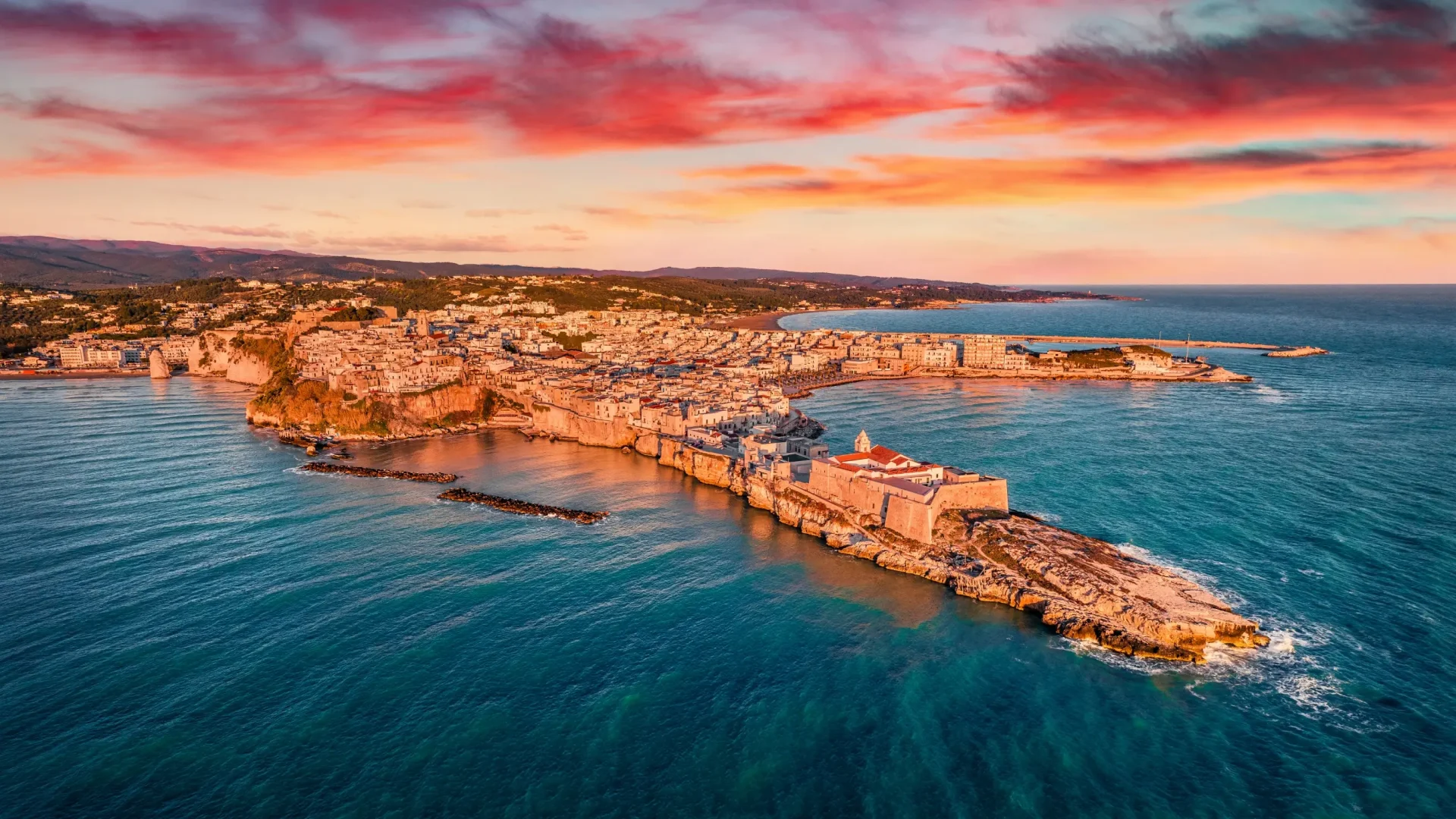
At the easternmost tip of the Gargano promontory, that striking "spur" of the Italian boot, the gleaming white town of Vieste towers above the azure Adriatic Sea. Far more than just a picturesque coastal town, Vieste is a fascinating mosaic of thousands of years of history and dramatic natural beauty. Situated at the beating heart of the Gargano National Park, the town in Apulia exerts an irresistible attraction that arises from the interplay of cultural wealth, ancient legends and breathtaking scenery.
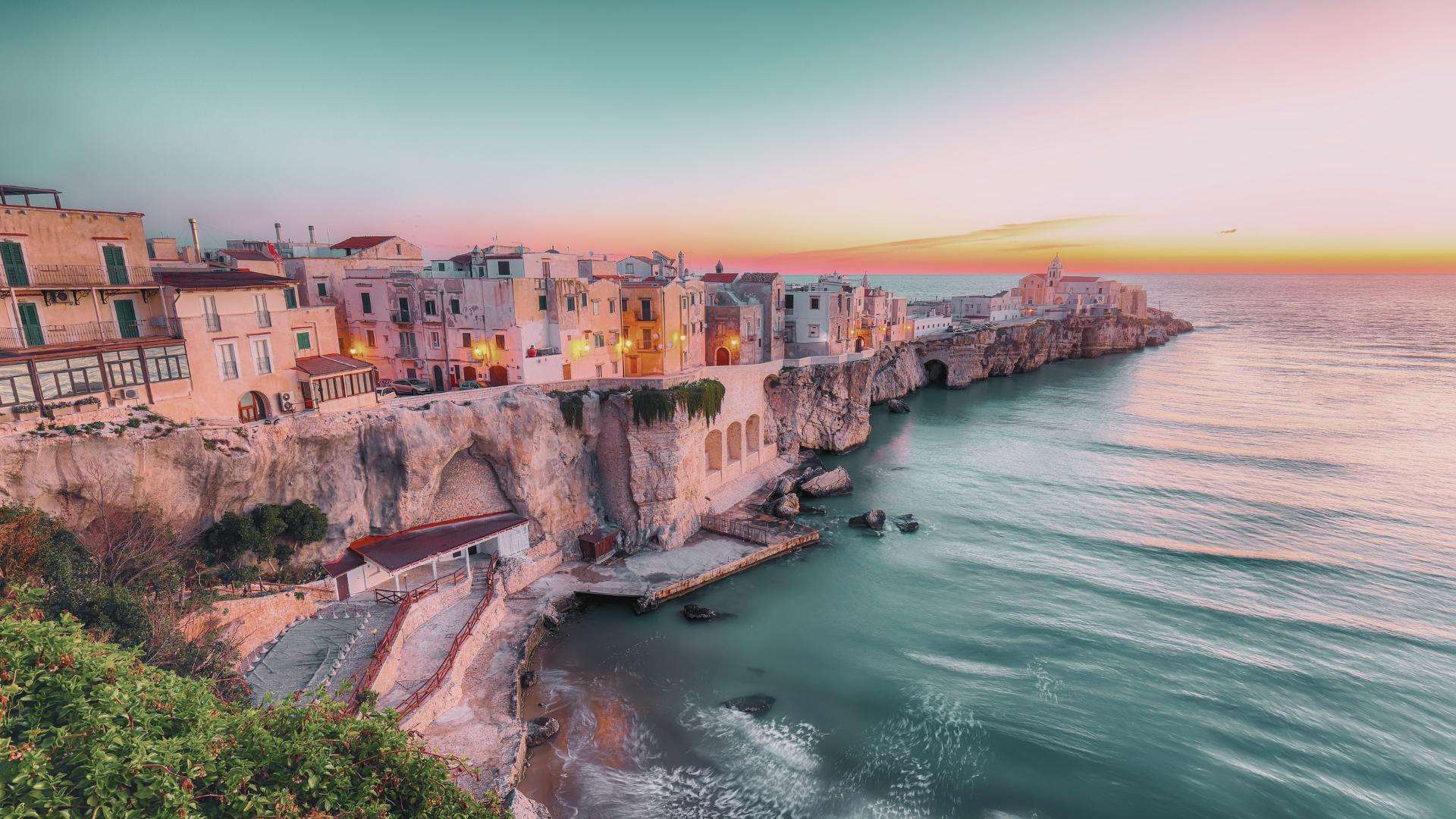
The history of Vieste is inscribed in the sun-bleached stones of its old town and the wave-sculpted cliffs of its coastline. From the ancient Greeks and Romans to the Normans and Hohenstaufen emperors, every era has left its mark. A stroll through the labyrinth of winding, narrow streets feels like a journey through time, past the imposing 11th century cathedral and the majestic Castello Svevo, which once served as a defensive fortress against pirates. At the same time, Vieste is a place where nature displays all its power and poetry: from the countless hidden sea caves, which shimmer in every shade of blue imaginable, to the long, golden sandy beaches and the legendary monolith Pizzomunno, the stone guardian of the town. Here, cultural discoveries merge seamlessly with unforgettable natural experiences, making Vieste a true jewel of the Italian south.

The complex historical significance of Vieste
The history of Vieste is as deep and complex as the mysterious sea caves that line its coast. Its strategically favorable position at the easternmost point of the Gargano promontory has made it a coveted base and cultural melting pot for thousands of years. The traces of this eventful past are engraved in the stones of the town today and bear witness to an uninterrupted history of settlement dating back to prehistoric times.
The earliest chapters of the city's history were written by the Daunians, an Illyrian tribe that settled in northern Apulia in the Iron Age. They left behind a distinctive culture, the evidence of which, such as artistic ceramics and grave goods, gives archaeologists a fascinating picture of that time. Later, the Greeks and then the Romans recognized the importance of the site, which was known as Apeneste. Under Roman rule, the city gained administrative autonomy and flourished as a port city. Numerous archaeological finds, including the remains of Roman villas near the present-day sanctuary of Santa Maria di Merino and an important early Christian necropolis, attest to the prosperity and importance of Vieste in ancient times.
A stroll through the old town of Vieste is like a journey back in time to the Middle Ages. The deliberately narrow and winding alleyways, lined with traditional whitewashed houses, were once a clever defense system against pirates and foreign invaders. This labyrinth made it difficult for attackers to penetrate and offered protection to the inhabitants. Again and again, unexpected little squares and breathtaking vantage points open up between the houses, offering a view of the vastness of the Adriatic.
The Cathedral of Santa Maria Assunta, a jewel of Apulian-Romanesque architecture, sits enthroned in the heart of this historic center. Built in the 11th century, probably on the remains of a pagan temple, its simple yet dignified façade reflects the Norman character of the region. Despite later baroque additions and alterations, which became necessary after earthquakes and destruction, it has retained its original character. Inside, the three-nave basilica impresses with its ornately decorated capitals, which show a mixture of barbarian, Islamic and Byzantine motifs - a silent testimony to the cultural exchange of the time.
Not far from the cathedral, the imposing Castello Svevo dominates the cliffs. Originally built by the Normans, the fortress was massively expanded in the 13th century under Emperor Frederick II of Hohenstaufen. Its impregnable position and mighty walls made it the cornerstone of the coastal defenses and a symbol of imperial power. For centuries, it withstood countless attacks, including the infamous raid by the Ottoman admiral Dragut Rais in 1554, during which thousands of inhabitants are said to have been executed on the "Chianca Amara" (the bitter stone). The fortress and the cathedral together form an architectural ensemble that impressively embodies the rich and often dramatic history of Vieste.

Castello Svevo: the stone guardian over Vieste
An unmissable landmark and stone guardian, Castello Svevo crowns the highest point of the cliff on which the old town of Vieste was built. Its imposing silhouette, which stands out sharply against the sky and the sea, tells a story of power, defense and the strategic importance of Vieste over many centuries.
Although its origins probably go back to an earlier Norman fortress, the Castello acquired its current monumental character in the 13th century under the Hohenstaufen Emperor Frederick II. This visionary ruler recognized the strategic importance of Vieste and integrated the fortress into his sophisticated coastal defence system, which was intended to protect his entire southern Italian empire. The complex was not designed as a magnificent palace, but as a functional and almost impregnable military architecture that had to withstand the frequent pirate attacks and enemy fleets from the sea.
The castle’s architecture is shaped by its military function. It features a distinctive triangular floor plan that fits perfectly into the topography of the cliff. Massive walls rise directly from the rock and blend seamlessly into it, making a storming of the castle from the sea side virtually impossible. At the corners, the fortress is reinforced by massive, lancet-shaped bastions, which were added later—particularly during Aragonese rule—to withstand the emerging threat of artillery.
Over the centuries, the fortress has been a silent witness to dramatic events. It withstood numerous sieges and was repeatedly rebuilt and adapted to new military requirements. One of the greatest disasters occurred in 1646, when lightning struck the powder magazine, causing a huge explosion that destroyed large parts of the complex and the surrounding residential areas. Today's structures are therefore also the result of the subsequent reconstruction.
It is important for visitors to know that Castello Svevo is now an active base of the Italian Navy (Marina Militare) and is therefore generally not open to the public. Its impressive exterior architecture is best admired from the vantage points of the old town, such as Piazzetta Petrone, or from the harbor. The spectacular views from the fortress itself of the coastline, the old town and the open sea are mostly reserved for military personnel. Nevertheless, Castello Svevo is a fascinating example of medieval defensive architecture that is inextricably linked to Vieste's identity and impressively embodies the rich, often contested history of the region.

La Cattedrale, Basilica di Vieste: a millennium of faith and art
Anyone strolling through the narrow, chalk-white alleys of Vieste’s old town is almost automatically drawn to the highest point of the rocky promontory. There stands the Basilica Concattedrale di Santa Maria Assunta, a structure that transcends its religious function. As a spiritual center and architectural palimpsest, this church tells the eventful history of the Adriatic region. It is a place where time seems to be preserved within the thick walls of light-colored Apulian limestone, while one’s gaze wanders over the deep-blue sea that has surrounded this historic cathedral in Vieste for nearly a millennium.
A building through the ages
The architectural journey began as early as the 11th century, when Apulian Romanesque architecture shaped the region’s character. During that era, the church was built as a classic three-nave basilica, whose simple grandeur reflected the Norman era. Yet its exposed location on the Gargano coast brought not only prosperity but also destruction. The cathedral survived the dark days of the Saracen raids in 1554 and withstood the forces of nature, such as the devastating earthquakes of 1223 and 1646. Each era left its mark: In the 18th century, the Baroque style transformed the interior into a magnificent ensemble, in which the former wooden roof truss gave way to an artfully painted coffered ceiling in the Neapolitan style. Thanks to careful restoration in the 20th century, however, visitors can once again admire the original Romanesque columns, which were uncovered beneath the Baroque layers and create a fascinating dialogue across the centuries. The striking campanile of Vieste, which was rebuilt in late Baroque style after its collapse in 1772, completes the iconic cityscape.
Architectural and artistic treasures inside
Upon entering the cool interior, visitors are immediately enveloped by a reverent silence, accentuated by the soft light streaming through the clerestory windows. The architectural uniqueness lies in the details: The capitals of the columns are a one-of-a-kind masterpiece of sculpture, as no two ornaments are alike. Here, ancient symbols blend with floral patterns and depictions of regional animals to create a stone picture book of the Middle Ages. Above the heads of the faithful towers the gold-decorated wooden ceiling, whose monumental canvas paintings honor the Assumption of Mary as well as the patron saints George and Michael. The emotional centerpiece, however, is the wooden statue of Santa Maria di Merino, which is deeply rooted in local tradition. According to legend, she survived the fires of the 17th century unscathed, making her a symbol of hope for the residents of Vieste. When the statue is carried through the narrow streets every May 9 during the grand procession, culture, faith, and the living history of the Gargano merge into an experience that deeply moves travelers and locals alike.

Chiesa Santa Croce: a place of faith in the heart of modern Vieste
Leaving the stone labyrinth of the old town and following the lively pulse of Corso Lorenzo Fazzini, you come upon the Chiesa Santa Croce, which stands like a tranquil anchor in the modern center of Vieste. This church is far more than a mere landmark; it is a stone testament to the city’s expansion beyond the medieval walls. The church’s history is closely linked to the presence of religious brotherhoods, with historical sources often drawing a connection to Saint Peter of Alcantara or Saint Simeon. These name changes are no coincidence; rather, they point to the church’s varied use by different religious orders, which strengthened the region’s spiritual foundation over the centuries and made the church a focal point of local identity.
Architecture and local craftsmanship
In terms of its architectural design, the Chiesa Santa Croce is a prime example of the authenticity of Apulian sacred architecture, which does without unnecessary pomp. The façade was built by the skilled hands of local master builders, known as the Maestranze Pugliesi, who knew how to make masterful use of the light-colored limestone of the Gargano. While the exterior captivates with its almost ascetic simplicity, the interior reveals a sense of protective comfort that stands in deliberate contrast to the hustle and bustle of the piazza. It is precisely this unpretentious elegance that lends the church a special spiritual depth and makes it a place of refuge for those seeking a moment of genuine contemplation in the heart of the Adriatic coast.
A memorial to history and miracles
The significance of Santa Croce extends far beyond its walls, linking civic remembrance with deep popular piety. The building is flanked by two symbolic monuments: on one side, a dignified war memorial honors the town’s fallen, firmly anchoring the church in Vieste’s collective memory. On the other side, the bronze statue of Saint Pio of Pietrelcina, a work by artist Silvano Vismara and dedicated in 1990, draws the eye. For many visitors, this statue is the highlight, as it embodies the region’s deep connection to nearby San Giovanni Rotondo and thus makes the Church of Santa Croce an important stop for pilgrims on the Gargano who are following in the footsteps of the famous Capuchin friar.
A lively center of the community
Today, Santa Croce serves as a vibrant parish church that effortlessly bridges the gap between historical heritage and the living present. It is not a museum but the social and religious heart of the new town, where Vieste’s local traditions come to life during daily Masses and solemn processions. The genuine piety of the residents is particularly evident here during the major religious festivals throughout the year, when they open their doors wide to guests from all over the world. Anyone wishing to discover the true soul of the city beyond its beaches will find in the Santa Croce community an authentic gateway to the cultural heritage of Apulia.

The lighthouse - Faro di Vieste
Anyone who lets their gaze wander out over the sea from the waterfront promenade or the old town will immediately notice the majestic Faro di Vieste. However, it does not stand on an ordinary cliff, but on the offshore Isola di Sant’Eufemia, which lies in the bay like a stone outpost. This lighthouse is far more than just a navigational aid; it is considered the quintessential maritime landmark and symbolizes the city’s deep connection to the Adriatic Sea, which has always set the rhythm of life in the Gargano region.
The history of this impressive structure dates back to 1867, a time when shipping along the Apulian coast required guidance and safety. Amid the rough surf, the striking white tower rises, its simple, cylindrical elegance forming an almost poetic contrast to the deep azure blue of the sea. Although the facility has long since been fully automated, it still reliably sends its light signal across the waves to guide sailors along the often treacherous Apulian coast, even in modern times.
Especially in the evening hours, the island takes on an almost magical atmosphere, when the setting sun bathes the ancient walls in a soft light and offers photographers an incomparable panoramic view of the Vieste skyline. But the site also harbors archaeological treasures: In the Grotto of Venus on Isola di Sant’Eufemia, hundreds of ancient votive inscriptions have been found, proving that sailors sought shelter here and gave thanks to the gods thousands of years ago. Thus, the lighthouse stands as a living testament to the seafaring tradition along the Gargano coast, a legacy that extends far beyond its functional role.
A visit to the harbor to see the lighthouse up close is a must on any cultural tour of the “Spur” of Italy. It symbolizes the endurance and pride of a city that has stood its ground against the storms of time for centuries. Anyone who wants to understand the authentic Vieste and its history must turn their gaze to this luminous monument, which preserves the region’s valuable maritime heritage for future generations and showcases it to the world from afar.

The small fishing port of Vieste
If you’re looking for the authentic Vieste, you have to go where the air smells strongest of salt and history. Vieste’s fishing harbor is far more than just a dock; it is the emotional and economic heart of a town that has been devoted to the Adriatic Sea for generations. Located at the easternmost point of the Gargano, this picturesque neighborhood offers an authenticity that is often hard to find in modernized resort towns. Here, the deep blue of the water and the chalky white of the town blend into a backdrop that could have come straight out of a classic Italian film and perfectly captures the rugged beauty of the Apulian coast.
This bustling harbor basin is the heart of the local fishing industry. Far removed from industrial-scale mass processing, genuine craftsmanship still defines the scene here as the fishermen return with their fresh catch in the early morning hours. It’s a fascinating sight to watch the men mending their nets with almost meditative patience or preparing the colorful fishing boats for their next trip. This traditional fishing industry is not a museum relic for tourists, but a living part of daily life that sets the rhythm for the entire community and continues to play a key role in defining Vieste’s local identity to this day.
After work, the harbor promenade transforms into a lively stage for the „Dolce Vita.“ Where crates were still being stacked in the morning, charming trattorias invite you in the evening to discover the region’s culinary treasures. There’s hardly a more intense experience than sitting in one of the small restaurants right on the water and enjoying seafood specialties that were caught just a few hours earlier. This direct connection between producers and diners makes the harbor an essential destination for food lovers who value authentic Italian cuisine and an unpretentious atmosphere.
But the harbor is not just a place of arrival; it is also the gateway to the region’s natural wonders. It serves as a strategic starting point for the famous cave tours that take visitors to the hidden sea caves along the rugged limestone cliffs. Whether it’s an excursion to the impressive Grotta della Campana or a crossing to the idyllic Tremiti Islands—the adventure in search of the unspoiled Gargano coast begins right here at the pier. The port of Vieste is thus the perfect intersection of hard work, culinary delights, and the boundless freedom of the sea.

The "Trabucchi" fishermen's pile dwellings: masterpieces of engineering and symbols of the Gargano
Along the wild, rugged coastline of the Gargano—especially on the spectacular stretch between Vieste and Peschici—the trabucchi tower over the Adriatic like giant wooden spiders. These fascinating structures are far more than just a popular postcard motif; they form the backbone of local identity and are a symbol of Apulia deeply rooted in history. As silent witnesses to a time when people’s survival depended solely on the sea, they bear witness to the tireless ingenuity of the coastal inhabitants. Anyone standing before one of these „trabocchi“ today immediately senses the archaic power and the harmonious, if fragile, interplay between human activity and the untamed nature of the Adriatic coast.
An ingenious piece of engineering in wood
A trabucco is a highly complex, almost futuristic-looking fishing device made entirely from Aleppo pine. This tree is native to the Gargano region and provides a material that, due to its high resin content, is extremely resistant to the aggressive sea spray and salt. The structure’s framework is firmly anchored in the porous limestone cliffs and supports a platform that juts far out over the water. From there, the characteristic „antennas“ extend like giant feelers over the surf. These long wooden beams support a system of ropes and winches used to lower a massive, square net into the water. This feat of engineering enabled the so-called trabuccolanti to catch huge schools of fish directly from the safety of the cliff—without the danger of a boat trip—as soon as the current drove them beneath the net.


One response to Pirates and stormy seas
The exact origins of these structures remain a mystery, though legends often credit the Phoenicians with their invention, while the earliest documented records in the Gargano National Park date back to the 18th century. In reality, the trabucchi were an ingenious survival strategy: The open sea was an extremely dangerous place due to frequent pirate raids and sudden, violent storms. The stilt structures allowed fishermen to feed their families without exposing themselves to the risks of venturing out onto the often treacherous sea. This stationary form of fishing offered safety and stability at a time when the coasts of the Mediterranean were the scene of constant conflicts and natural hazards, making the trabucco a symbol of protection and human resilience.
From economic factor to cultural heritage
After the trabucchi were nearly forgotten in the mid-20th century due to the rise of industrial trawling, they are now experiencing an impressive renaissance as a protected cultural heritage site. Many of the dilapidated structures have been painstakingly restored by dedicated associations to preserve the spirit of the region for future generations. Some of these wooden giants now serve as exclusive restaurants where visitors can enjoy traditional Apulian cuisine right above the waves. A visit to a trabucco between Vieste and Peschici is now a must for every traveler, as it bridges the gap between the hard-working world of days gone by and a modern awareness of sustainable tourism and local traditions.

Gastronomy, festivals and culture: the beating heart of Vieste
Vieste’s culture is not a static relic confined to museums, but a living experience that you can smell, taste, and hear in every alleyway. The town serves as a stage for traditional festivals that are far more than mere folklore; they are the emotional heartbeat that sets the rhythm of the seasons in the Gargano. From religious processions that have united the community for centuries to modern art events under the Apulian night sky, Vieste offers a Mediterranean spirit that immediately captivates visitors and invites them to actively participate in local life.
A feast for the senses: the gastronomy of Gargano
The cuisine in this part of Italy is a heartfelt ode to simplicity and the uncompromising freshness of its ingredients. In the trattorias of Vieste, two worlds come together on the plate: the rugged wilderness of the hinterland and the inexhaustible treasures of the Adriatic Sea. This culinary symbiosis ensures that every dish tells a story—of the fishermen who set out before dawn and the farmers who have been coaxing the utmost from the barren limestone soils for generations. Local seafood cuisine is the undisputed star here, with classics like the hearty Ciambotto fish soup or Seppie ripiene (stuffed cuttlefish), refined with herbs and breadcrumbs, bring the authentic taste of the sea straight to the table.
The art of making pasta is deeply rooted in rural tradition. While the famous orecchiette can be found throughout Apulia, you should definitely try the troccoli in Vieste. These thick, square spaghetti are traditionally made with a grooved rolling pin and pair perfectly with hearty sauces. Another true culinary highlight is paposcia, a flat, shoe-shaped flatbread made from pizza dough. Although it originally comes from nearby Vico del Gargano, it has achieved cult status in Vieste. Fresh from the wood-fired oven and usually filled with arugula, tomatoes, and local cheese, it’s the ideal street food for a quick snack between meals, without compromising on the quality of Apulian cuisine.
The liquid foundation of every dish is the „Gold of the Gargano.“ The extra virgin olive oil, pressed from the prized Ogliarola Garganica variety, lends the dishes a fruity depth that is unmatched anywhere in the world. But no visit would be complete without the Caciocavallo Podolico. This exceptional cheese is made from the milk of the rare Podolica cattle, which graze freely year-round in the forests and pastures of the national park. Its savory notes evoke wild herbs and the freedom of nature, making it an absolute delicacy for connoisseurs.
The grand finale reveals the region’s sweet side. Especially during the Christmas season, but also at many folk festivals, cartellate dominate the displays at pastry shops. These artfully twisted dough roses, often called „k’lustr“ locally, are deep-fried and then glazed in a bath of honey or dark vincotto (reduced grape must). These traditional sweets are far more than just a dessert; they are a sweet legacy passed down from generation to generation that perfectly complements the festive atmosphere of Vieste.

Saints, horses and rhythm: the event heartbeat of the Gargano
Visitors to Vieste will discover a town that perfectly balances serene tranquility with ecstatic celebration. The spring season kicks off with the spectacular Festa di San Giorgio on April 23. Here, legend and the present merge as a traditional horse race takes place on Spiaggia del Castello beach in honor of the town’s patron saint. It is a deeply moving experience to hear the hooves thundering in the sand while the entire community celebrates its patron saint. Just a few weeks later, on May 9, the Festival of Santa Maria di Merino follows—arguably the most emotional highlight of the year. In a seven-kilometer-long, solemn procession, the wooden statue of the Madonna is carried from the cathedral to her rural sanctuary —a major spiritual event that reflects the region’s deep popular piety and immerses the city in a sea of lights and prayers.
The Festival of Sant’Antonio on June 13 finally marks the official start of the warm season. The alleys of Vieste are then filled with the aroma of freshly blessed bread, which is traditionally distributed, while marching bands set the rhythm and a spectacular fireworks display at the harbor lights up the night sky over the Adriatic Sea. In the summer months that follow, the entire city is transformed into a vibrant open-air stage as part of the Vieste Estate program. From high-profile film screenings at the Archeofilm Festival to the romantic “Vieste in Love” theme week, which bathes the old town in passionate red, summer in the Gargano offers a wealth of cultural experiences that go far beyond classic beach fun.
A special gem of local identity is the Serenata alla Tarantella, which should in no way be confused with the „Notte della Taranta“ in distant Salento. While southern Apulia is known for the pizzica, here in the north we proudly celebrate the Tarantella del Gargano. Against the mythical backdrop of the Pizzomunno monolith, musicians and dancers come together to celebrate the region’s ancient sounds. This festival is a high-energy tribute to folk music, which, with its fast rhythms and the characteristic chitarra battente, possesses a soul all its own that is unmistakable. It’s the perfect opportunity for visitors to immerse themselves in the authentic sounds of the Gargano and celebrate summer in a way that can only be found in Vieste.
Here’s a little insider tip: If you want to experience the Santa Maria di Merino procession, be sure to wear comfortable shoes and mingle with the locals early on—the energy of this kilometer-long march is absolutely contagious and reveals the city’s true character, far from the picture-perfect postcard scene.

Beaches and natural beauty: Where the sea kisses the rock
The coastline around Vieste is far more than just a pretty stretch of shore; it is a spectacular symphony of gleaming white limestone cliffs, golden sandy beaches, and mysterious caves that the sea has carved into the rock over thousands of years. This region is rightly considered one of the most impressive landscapes on the entire Adriatic coast. Just inland, the biodiverse Gargano National Park watches over this maritime paradise, where dense primeval forests meet the azure waters, creating a microclimate that offers a refreshing breeze even in the height of summer. It is this interplay of wild nature and the gentle tranquility of the sea that gives Vieste its special charm.
South of Vieste: drama and legends in white
Right at the city wall, the journey south begins with the iconic Spiaggia della Scialara, also known as Schlossstrand. Here stands the legendary Pizzomunno, a 25-meter-high monolith of gleaming white limestone that is the city’s undisputed landmark. Anyone wading in the shallow waters here cannot help but be drawn into the tragic love story between the fisherman Pizzomunno and his Cristalda—a tale of jealous sirens who turned the young man to stone. It is a magical place that exudes an almost palpable melancholy, especially at sunset, while the fine sandy beach captivates families and romantics alike.
As you continue along the coastal road, nature’s architectural mastery is revealed in the form of the Baia di San Felice. This place is famous for the „Arco di San Felice,“ a rock arch perfectly shaped by erosion that looks like a stone gateway to the open sea. If you really want to understand the coast, you should join one of the many boat tours here, because it’s only from the water that you can appreciate the true splendor of the white cliffs. The crowning glory in the south is the Baia di Vignanotica, a secluded pebble beach framed by sheer, snow-white cliffs, whose turquoise waters have an almost Caribbean feel.
North of Vieste: gentle bays and maritime tradition
In contrast to the dramatic cliffs of the south, the northern part of Vieste is much gentler and more expansive, making it the ultimate destination for a relaxing family vacation. The expansive San Lorenzo Beach is the top choice for anyone who appreciates excellent amenities. Here, the water remains extremely shallow for many meters, so children can play safely in the shallow water while their parents enjoy the panoramic view of the nearby old town. The numerous beach clubs here offer every comfort, yet you’ll still find plenty of open stretches in between for that authentic beach experience.
A little further north lies the idyllic Spiaggia della Molinella, a cove that feels like a small open-air museum of Apulian tradition. In addition to the fine sandy beach and the rock formations gently smoothed by the sea, a well-preserved trabucco immediately catches the eye. These wooden fishing structures perch atop the cliffs and lend the landscape a nostalgic charm that evokes the region’s maritime past. Anyone spending the day here will experience the perfect blend of relaxed beach fun and the cultural heritage of the Gargano, nestled in a landscape that invites exploration.
Vieste's wild hinterland: where the jungle meets the Adriatic Sea
Vieste serves as the dazzling gateway to the Parco Nazionale del Gargano, one of the most ecologically valuable and biologically diverse protected areas in all of Italy. While many travelers initially think only of the spectacular coastal stretches, the hinterland reveals a completely different, almost archaic world that stretches across the entire promontory. This green labyrinth shelters a fragile ecosystem where the salty sea breeze from the Adriatic meets the cool, oxygen-rich air of the Gargano Plateau. It is this fascinating contrast between rugged cliffs and the endless expanse of the forest that makes unspoiled Apulia so unique for nature lovers and explorers.
The mystical heart of this park is the legendary Foresta Umbra, whose name—the „shady forest“—says it all. Beneath the dense canopy of gigantic, centuries-old beech trees—which have quite rightly been a UNESCO World Natural Heritage Site since 2017—an almost surreal coolness prevails, even during the sweltering heat of the Italian midsummer. An extensive network of hiking and mountain biking trails leads deep into this primeval forest, where, with a little luck, you can spot the shy Italian roe deer or rare species of woodpeckers. Especially in the spring, the region becomes a mecca for botanists, as over 90 different species of wild orchids bloom in the clearings—a density unmatched anywhere else in Europe, transforming the Gargano into a colorful sea of flowers.

Baia dei Campi: a turquoise-blue hideaway in the south of Vieste
If you follow the coastal road from Vieste about ten kilometers south, you’ll reach Baia dei Campi, one of the most impressive stretches of coastline on the Gargano. This expansive bay is framed by dramatic, pine-covered limestone cliffs that form a natural windbreak and lend the area an almost intimate sense of seclusion. In contrast to the fine-sand beaches right in Vieste, Baia dei Campi consists mainly of white gravel and pebbles. This offers an invaluable advantage for all nature lovers: the water remains absolutely clear even when the waves are high and shimmers in an intense emerald green that is almost reminiscent of the Caribbean, making the bay one of Apulia’s most picturesque retreats.
One of the bay’s most distinctive features is the striking Scoglio di Campi, a small offshore island that rises from the Adriatic Sea just a few hundred meters from the shore. This islet is a true paradise for active vacationers, as it shields the sea from strong currents, creating ideal conditions for snorkeling and kayaking. Beneath the water’s surface lies a rich variety of marine flora and fauna, which finds a safe home in the crevices of the rocks and nearby sea caves, such as the Grotta Calda. The combination of the rugged rocky coastline and the deep-blue expanse turns every exploration tour into a little adventure for the whole family.
Despite its popularity, especially among guests at the neighboring campgrounds, Baia dei Campi retains a soothing sense of peace and relaxation. Far from the hustle and bustle of the city promenades, the gentle sound of the waves and the aromatic scent of the surrounding Mediterranean scrub dominate the atmosphere here. During the summer months, the bay is also a popular anchorage for sailboats, lending the landscape an exclusive, almost sophisticated touch without disturbing its natural authenticity. Anyone wishing to experience the untamed beauty of the Gargano in its purest form will find their own personal haven of longing along this stretch of coastline.

Vieste's sea cathedral: the play of light in the Grotta della Campana
An absolute highlight of any coastal exploration is the Grotta della Campana, considered one of the most spectacular sights along the rugged Adriatic coast. Its name, which translates to „Bell Cave,“ is no coincidence but rather describes the remarkable geometry of its interior. Through millennia of erosion, the sea has carved a massive dome out of the limestone here, one whose symmetry makes it look almost man-made. With its impressive height and width, the vault resembles the nave of a cathedral, lending the grotto a majestic and almost awe-inspiring aura. This fascinating natural wonder is a prime example of the power of the tides, which ceaselessly shape the white cliffs of the Gargano.
What amazes visitors most, however, is the unparalleled light show that unfolds inside, depending on the position of the sun. When the rays of sunlight enter through the opening at a certain angle, the turquoise-blue sea transforms into a shimmering mirror, casting emerald-green reflections onto the bright cave walls. These natural light reflections create a constant play of colors that makes the rugged rock formations appear soft and vibrant. It is a fleeting moment of magic in which the boundary between water and stone seems to blur, making the Grotta della Campana one of the most sought-after photo subjects in the entire region of Apulia.
To experience this geological gem, a boat tour from Vieste is the ideal way, as many of these hidden coves and caves are completely inaccessible from land. The experienced captains often steer the boats deep into the cool interior of the grotto, allowing you to feel the echo of the surf and the fine spray up close. As a staple of tours through the National Park’s sea caves, the Glockenhöhle offers an unforgettable experience that perfectly captures the wild yet peaceful spirit of the Adriatic coast. Anyone who wants to understand the true diversity of Vieste should not miss this underground work of art created by nature.

Masterpiece of the waves: The rock arch of San Felice
The Arco di San Felice, often affectionately referred to locally as „Architello,“ is far more than just a pretty photo opportunity; it is the ultimate symbol of the untamed beauty of the Gargano National Park. Located about eight kilometers south of Vieste, this delicate arch stands as a testament to nature’s tireless patience. Over thousands of years, the lashing surf of the Adriatic Sea and the salty wind have carved away at the gleaming white limestone until only this elegant gateway remained. It is almost as if the coast itself had opened a window onto the infinity of the sea to frame the view of the horizon for travelers.
If you want to experience the full splendor of this natural wonder, you should definitely opt for one of the many boat tours departing from Vieste. While you can admire the arch from a viewpoint along the coastal road, it’s only from the water that the true scale of this geological sculpture is revealed. The boats often sail directly through the arch into the sheltered bay behind it, which, with its shallow, crystal-clear water, is a true paradise for snorkelers. A fascinating underwater world thrives around the rocks, which has been able to preserve its original biodiversity thanks to the park’s strict nature conservation measures, while above visitors’ heads, the historic Torre di San Felice towers over the cliffs like a silent sentinel.
For the people of Vieste and the entire region, the Architello San Felice is a deeply emotional part of their homeland and an integral part of Apulia’s coastal landscape. It serves as a natural gateway to the mysterious sea caves that line the coast further south. In a world that is spinning ever faster, this rock arch remains a monumental symbol of permanence and the harmonious balance between land and sea. A visit here is not only a lesson in geology but also an invitation to experience the unspoiled nature of the Gargano with all your senses and to let the timeless elegance of the Italian Adriatic wash over you.

Northern lights on the Gargano: pure relaxation in the bay of San Lorenzo
Just north of the port of Vieste lies Baia San Lorenzo, considered the charming counterpart to the southern Castle Beach. While the south is often defined by the dramatic scenery of Pizzomunno, this stretch of coastline in the Gargano National Park captivates visitors with a gentler, almost meditative setting. It marks the beginning of the picturesque northern coast and, for many travelers, is their first encounter with the unspoiled beauty of the Apulian coast. The bay is harmoniously nestled within the Mediterranean landscape and offers an unobstructed view of the Adriatic Sea, while in the background, the white of the town gradually blends into the lush green of the pine trees.
The centerpiece of the bay is undoubtedly the fine, golden sandy beach that curves like a crescent against the crystal-clear water. A major advantage for vacationers is the exceptionally gently sloping shoreline, which often doesn’t get deeper until many meters out. This geological feature makes Baia San Lorenzo one of the safest beach destinations for children in the entire region. On sunny days, the turquoise hues of the Adriatic Sea blend with the light-colored limestone of the seabed, creating a play of light usually found only in the Caribbean.
Although the bay is bustling during peak season, it retains a much more relaxed and intimate atmosphere compared to the beaches in the city center. It’s the ideal retreat for visitors who appreciate the comforts of modern beach resorts (lidos) but are also seeking the open space and tranquility of a natural stretch of coastline. Couples especially enjoy the bay in the late afternoon, when the light softens and the focus is entirely on relaxation and a classic beach vacation. Its easy accessibility on foot or by bike also makes it an integral part of daily life in Vieste.
For active explorers, Baia San Lorenzo offers much more than just a spot in the sun. The rocky shores of the bay are an excellent spot for snorkeling, as an astonishingly diverse array of marine life has made its home in the crevices of the limestone. Those who enjoy being on the water will find ideal conditions here for stand-up paddleboarding or short pedal boat tours to admire the coastal landscape from a new perspective. At the end of a day at the beach, you’re left with the feeling of having been in a place that perfectly combines the wild nature of the Gargano with the relaxed Italian way of life.

Isola La Gattarella and Scoglio Portonuovo
Anyone traveling along the coastal road south of Vieste will discover two striking silhouettes that define the Gargano’s maritime panorama. Isola La Gattarella and the majestic Scoglio di Portonuovo are far more than just rocky splashes of color in the azure sea; they form a delicate and fascinating marine ecosystem. These formations are silent witnesses to the geological dynamics of Apulia and provide a refuge for rare animal species, while also serving as natural landmarks for sailors and explorers wishing to discover the unspoiled southern region of Vieste.
Isola La Gattarella lies like a sleeping giant just a few hundred meters off the sandy beach of the same name. This flat rocky island is a true snorkeling paradise, as its rugged underwater cliffs and the surrounding seagrass beds provide shelter for numerous species of fish. Above the water’s surface, the islet serves as an important resting place for migratory birds and the rare coral gull, making it a highlight for birdwatching. Anyone approaching the island by kayak or stand-up paddleboard immediately senses the almost meditative tranquility that emanates from this uninhabited piece of land, while the crystal-clear Adriatic Sea offers a view all the way down to the seabed.
A little further south rises the striking Scoglio di Portonuovo, a massive monolith that stands alone, jutting out of the waves. Its name is derived from the nearby „New Harbor“—a stretch of coastline now best known for its wide, shallow sandy beach. In contrast to the winding caves of the surrounding area, this rock resembles a natural watchtower, rivaling the famous Pizzomunno in its grandeur. It is a must-see destination for boat tours, as the view from the sea truly highlights the immense scale of the limestone formations and offers photographers a spectacular subject against the backdrop of the white cliffs.
These two natural wonders represent the untamed side of the region and invite visitors to take a closer look at the details of the Gargano’s natural heritage. A visit to this area instills a deep sense of awe for the forces of erosion, which have created a work of art from stone and water here over thousands of years. For travelers who want to enjoy their Apulia vacation away from the crowds, the waters around Gattarella and Portonuovo offer an incomparable coastal panorama that touches the soul and makes everyday life seem a world away.

Your route to Vieste and the right accommodation for every dream
The journey to the easternmost tip of the Gargano is far more than a mere necessity; it is the atmospheric prelude to your vacation on the Adriatic. As you approach the „Pearl of the Gargano,“ you’ll quickly realize that the journey itself is the destination, as the landscape becomes wilder and more breathtaking with every kilometer. Whether you’re seeking the freedom of driving yourself or prefer the relaxed ride on a shuttle—the journey to Vieste will reward you with panoramas you won’t soon forget. Once you arrive, a wide range of accommodation options in Vieste opens up—as diverse as the town itself—to delight every type of traveler, from luxury seekers to nature lovers.
Strategies for a relaxed journey
You’ll undoubtedly enjoy the greatest flexibility with your own car or a rental car, since many of the hidden coves in Gargano National Park can only be reached this way. Coming from the north, exit the A14 highway at Poggio Imperiale and first take the fast SS693 expressway before switching to the legendary coastal road, which winds spectacularly between pine forests and the sea. Travelers coming from the south usually choose the route via Foggia and Manfredonia, finally taking the winding coastal road SP53 through Mattinata to enjoy the full panorama of the white cliffs. For international visitors, Bari Airport is the main hub; during the high season, the convenient „Gargano Easy Rail“ or direct shuttle buses operate from there, while rail travelers reach their destination via the Foggia hub and the connecting bus lines operated by Ferrovie del Gargano.
First-class accommodation: From boutique hotel to country estate
In Vieste, modern comfort and historic architecture blend to create a truly special living experience. Those seeking exclusive service and sweeping views of San Lorenzo Beach will find the ideal retreat in upscale properties such as the Hotel Delle More or the historic 4-star Hotel degli Aranci. These boutique hotels often feature spacious pool areas and are perfect for travelers who want to combine relaxation with easy access to the sea. Here, you can enjoy the luxury of starting your day with breakfast above the rooftops of the town, while the blue of the Adriatic Sea shimmers in the background as a constant companion.
The lovingly restored B&Bs in the Old Town, tucked away in the winding alleys of the historic center, exude a completely different, almost magical charm. Accommodations like the Rais Luxury Rooms or the Dimora del Centro impressively demonstrate how to harmonize minimalist design with historic walls without losing any of the authentic charm. Guests staying here become part of the vibrant local life, hear the morning clatter of espresso cups, and can reach the cathedral or the castle in just a few steps. It’s the perfect choice for explorers who’d like to dine at one of the many trattorias right on their doorstep in the evening.
For travelers looking to escape the hustle and bustle, the countryside around Vieste offers an oasis of tranquility amid gleaming silver olive groves. A typical Gargano agriturismo, such as the picturesque Posta Pastorella estate, offers a deep immersion into the rural soul of Apulia. In these farmhouses—often centuries old and carefully modernized—guests can enjoy regional products straight from the producer and a tranquility interrupted only by the chirping of crickets. This combination of closeness to nature, warm hospitality, and the scent of rosemary and pine trees makes for a relaxing getaway that clears the mind and opens the heart to the beauty of the Gargano.

Vieste - An unforgettable mosaic of culture, nature and joie de vivre
At the end of a journey through this white city, what remains is far more than just the memory of sun-drenched hours on the Adriatic. It is the deep sense of having discovered a place where time pulses to different rhythms. In the winding, whitewashed alleys of the old town, time seems almost to stand still, preserved within the mighty walls of the cathedral and under the watchful gaze of the Staufer-era Castello Svevo. Just a few steps away, on the lively harbor promenade, life pulsates to the beat of a modern Italian summer. Vieste is not merely a postcard scene; it is a historic gem of Apulia that tells the story of the South’s resilience and elegance at every street corner.
The true magic of this place lies in its ability to harmoniously unite contrasting longings. A perfect day here might begin with the first rays of sunshine at the foot of the legendary Pizzomunno rock, lead in the afternoon to the unspoiled, mystical coolness of the Foresta Umbra—part of the UNESCO World Natural Heritage Site—and finally end with a glass of wine on a historic trabucco. As the sun slowly sinks into the sea and the taste of freshly pressed olive oil and grilled fish still lingers on the tongue, the soul of the region reveals itself. It is a world where the archaic sounds of the Tarantella del Gargano and the genuine, unadulterated Apulian hospitality set the pace.
Whether you’re an adventurer exploring the mysterious sea caves by boat, a history buff delving into the world of the Normans, or a family enjoying the safety of the gently sloping Spiaggia della Scialara—Vieste fulfills every desire in a deeply authentic way. Here, you won’t find run-of-the-mill mass tourism, but rather genuine experiences shaped by the treasures of the national park and the mastery of local chefs. Vieste is thus far more than just a dot on the map; it is a holistic experience that appeals to all the senses and remains etched in the memory as that one, very special place of longing in Apulia. Anyone who has been here once takes home a piece of the Gargano’s wild gentleness—and the quiet promise to return someday.
Map: Vieste, Gargano
FAQ - Vieste, Gargano in Apulia
What is the best time to visit Vieste to experience it in all its glory?
The ideal time to visit Vieste is in May, June and September. During these periods, you can enjoy the pleasant Mediterranean climate with plenty of sunshine and warm, but not too hot temperatures, which are perfect for exploring and days at the beach. The sea is already invitingly warm for swimming and nature in the surrounding Gargano National Park is in full bloom. A decisive advantage over the high season in July and August is that the beaches and alleyways are much quieter, which makes for a more relaxed and authentic vacation experience.
What sights should not be missed in Vieste?
A visit to Vieste would not be complete without a long walk through the enchanting old town, which is perched on a steep cliff. Lose yourself in the narrow, whitewashed alleyways, which repeatedly reveal surprising views of the sea. The imposing 11th century cathedral and the Staufer castle, which majestically watches over the town, are well worth a visit. The undisputed landmark is the monolithic limestone rock Pizzomunno, which rises up at the beginning of the town beach. Another absolute highlight is a boat tour along the coast to discover the famous sea caves with their fascinating play of colors and the historic wooden fishing platforms, the so-called trabucchi.
Which beaches in and around Vieste are particularly recommended?
Vieste is blessed with a varied coastline that offers a variety of beautiful beaches to suit all tastes. The most famous is the long, golden sandy beach "Spiaggia del Castello" right at the foot of the old town, which is ideal for families thanks to its shallow waters. A little further south is the picturesque "Baia di San Felice", famous for its natural rock arch, the Arco di San Felice, which is a popular photo motif. Those looking for a spectacular nature experience should visit the "Baia di Vignanotica", a bay surrounded by gleaming white, towering cliffs, giving a feeling of secluded wilderness.
Which culinary specialties must you try in Vieste?
The cuisine of Vieste is an authentic expression of the Apulian tradition, characterized by the gifts of the sea and the land. Fresh fish and seafood are at the top of the menu and are often only refined with local olive oil, garlic and herbs to preserve their pure taste. A typical pasta specialty is "orecchiette" (ear-shaped pasta), which is often served with "cime di rapa" (a regional turnip greens). Don't miss tasting the "Caciocavallo Podolico", an intense cheese made from the milk of a rare breed of cattle. Every meal is rounded off with the juicy citrus fruits of the Gargano and the first-class extra virgin olive oil.
Read more about theTopic




Photo gallery - Vieste, Gargano in Apulia
Top accommodations in Vieste
Video: Vieste in Apulia
Experiences & sights
Note: Disclaimer - Italien.news is not the owner or organizer of the sights, accommodations and events published here and therefore not responsible for program changes, cancellation of the event and possibly incorrect information. The editorial team of Italien.news always endeavors to provide detailed and accurate information. However, it is possible that events, attractions, etc. may be changed and not updated promptly. Exact details of dates, times and programs can be obtained directly from the owner of the attractions and accommodation.
Please also check the website or social media of the attractions and events for updates before you travel! Our blog articles contain our personal recommendations in the form of affiliate links. If you book or buy something via the links or simply click on them, we receive a small commission. This does not change the price for you at all. Content and texts © Italien.new & KI / Photos © Canva.com / shutterstock.com / Unsplash.com / Pixabay.com / Pexels.com / Others. Please also visit our Italy Shop!